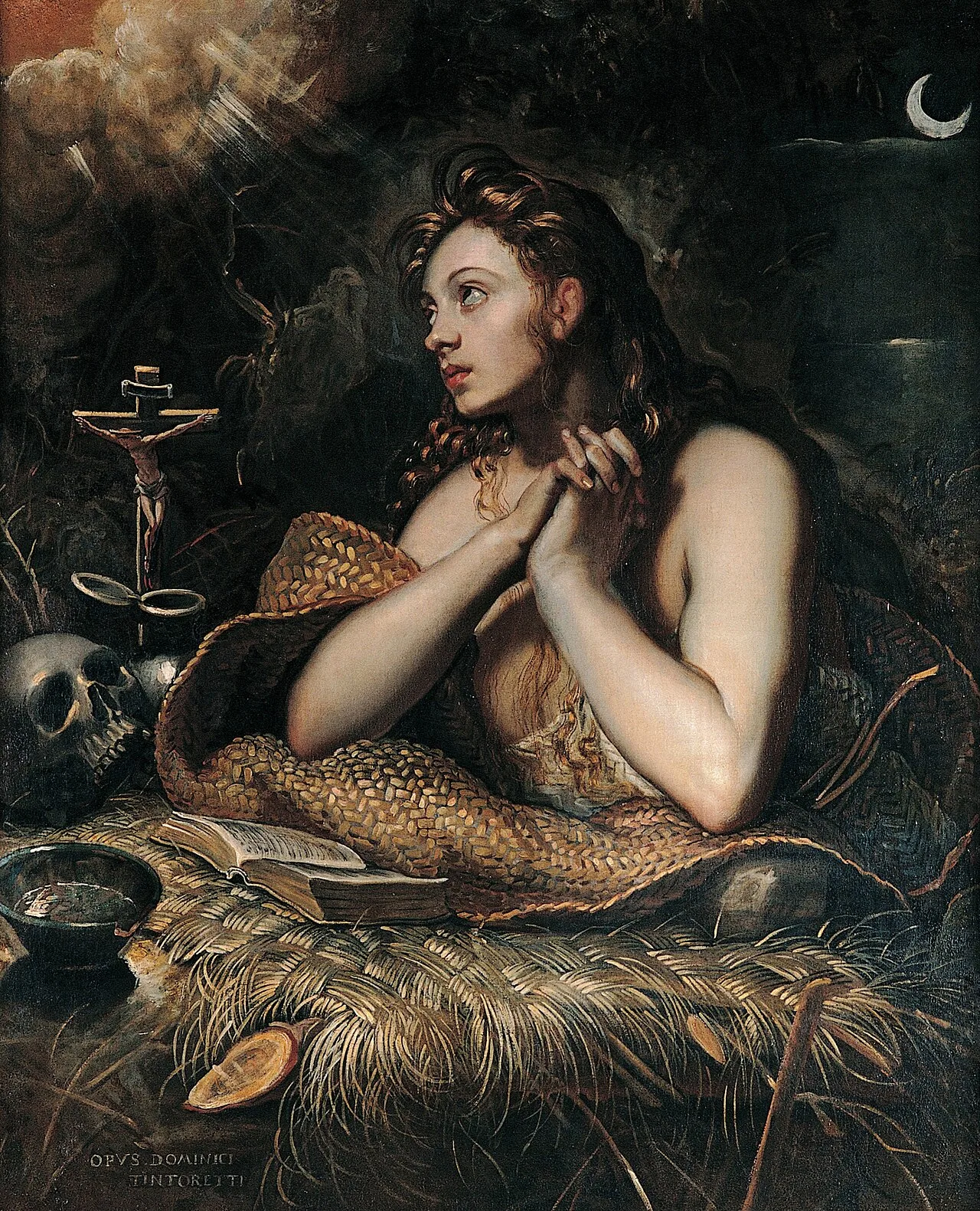
TINTORETTO - Magdalena penitente (Musei Capitolini, Roma, 1598-1602) - copia
![Photograph taken c. 1900 of al-Majdal, a village standing among the ruins of Magdala, Mary Magdalene's hometown[10][11][](https://nwjvzop1xgplmzvt.public.blob.vercel-storage.com/wikifeed/mary-magdalene/1-c0251e88f3.webp)
Photograph taken c. 1900 of al-Majdal, a village standing among the ruins of Magdala, Mary Magdalene's hometown[10][11][12]
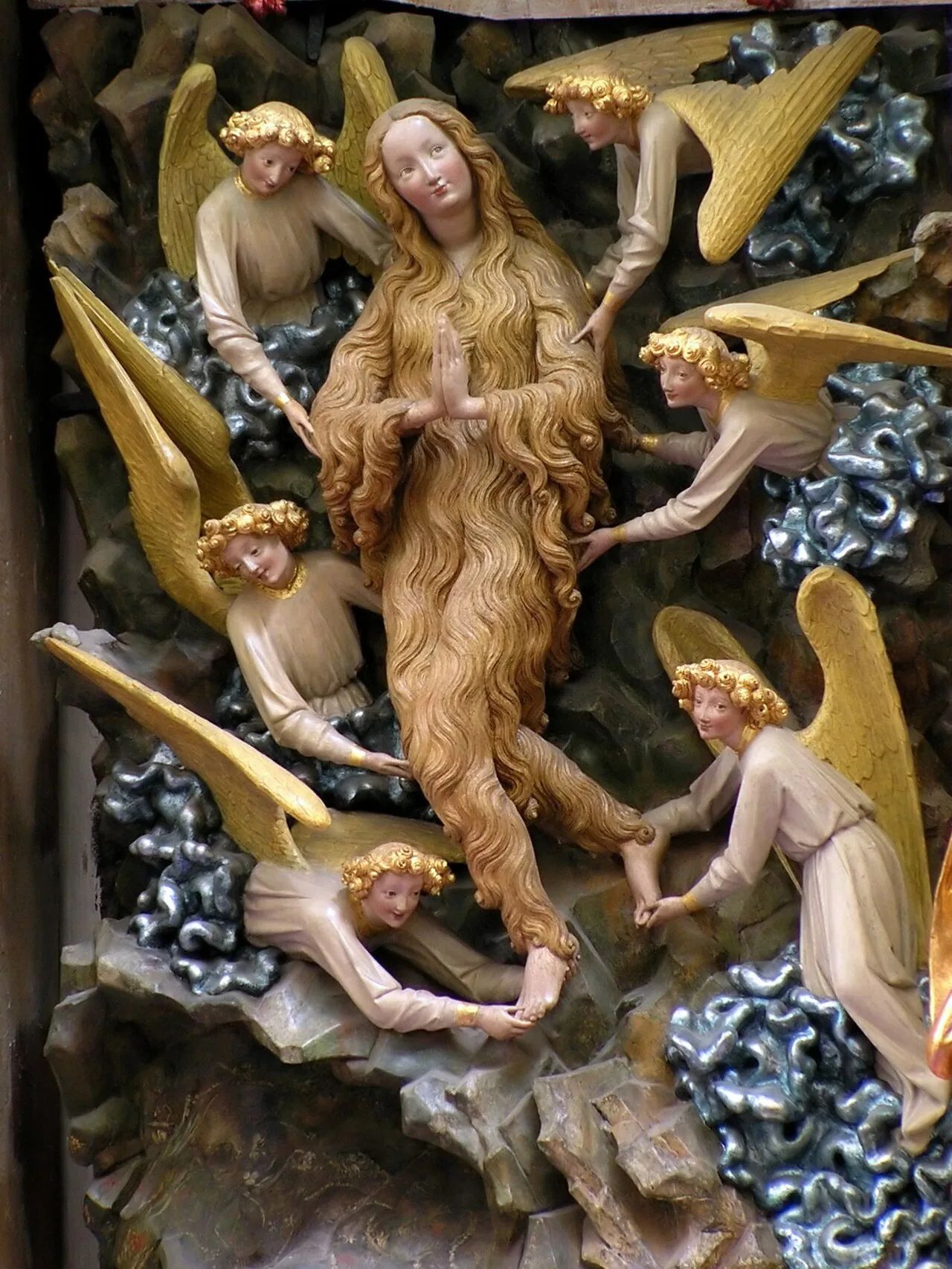
International Gothic Elevation of Mary Magdalene with angels raising her in SS. Johns' Cathedral in Toruń
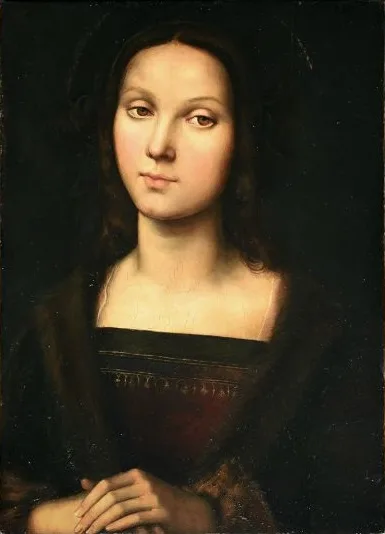
St. Mary Magdalene, attr. Raphael (1505)

Mary Magdalene (1615–1616 or 1620–1625) by Artemisia Gentileschi
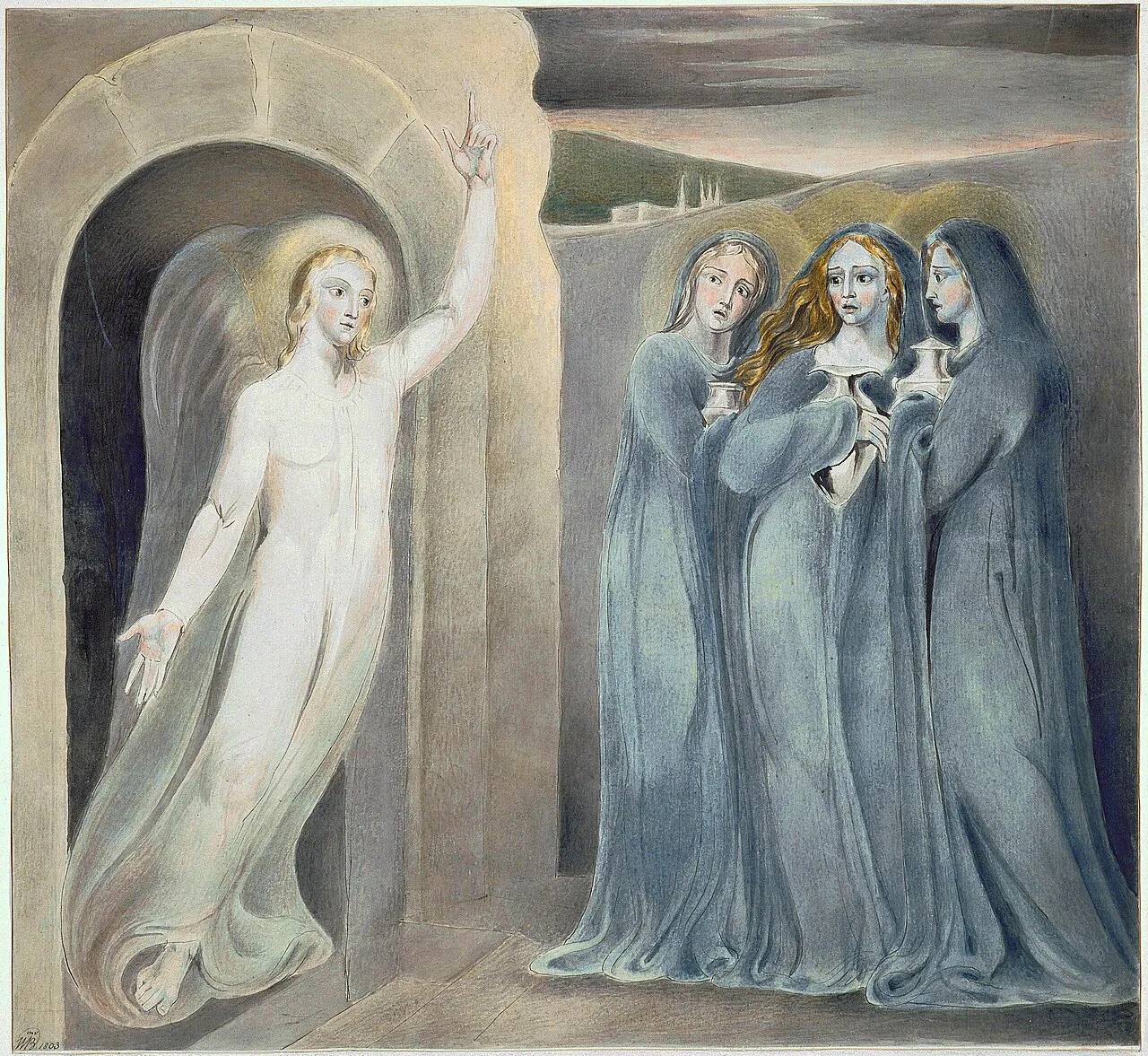
William Blake, The Three Marys at the Sepulchre (1800-3)
Mary Magdalene
Mary Magdalene was a woman who, according to the four canonical gospels, travelled with Jesus as one of his followers and was a witness to his crucifixion and resurrection.
Patronage and the Honorific Tower
Mary Magdalene is widely recognized as a historical figure whose title is often linked to the town of Magdala. Scholars Elizabeth Schrader Polczer and Joan Taylor have proposed that Magdalene might instead translate as "tower," serving as an honorific nickname. Because Mary supported Jesus' ministry financially, historians deduce she was relatively wealthy.
From Wikipedia · CC BY-SA 4.0

Detail from painting depicting Martha
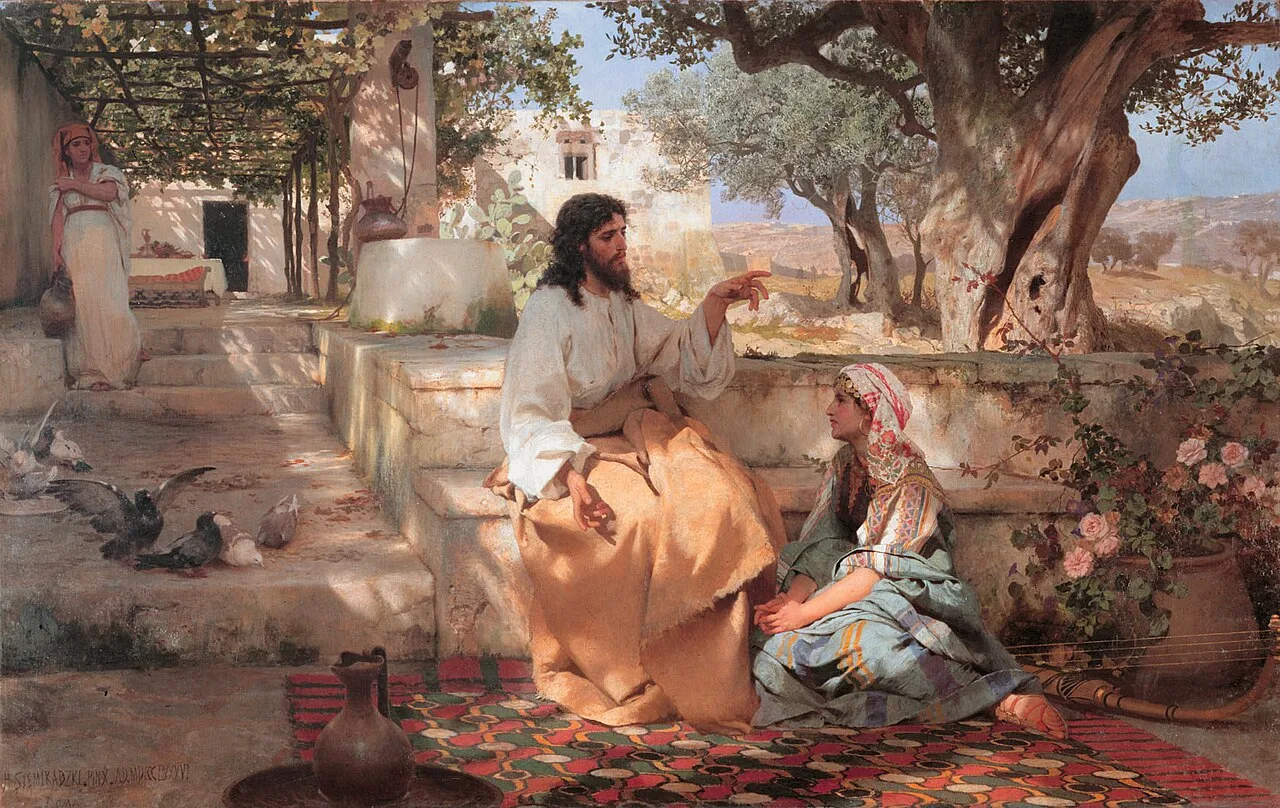
Christ in the house of Martha and Mary, by Henryk Siemiradzki, 1886

Johannes Vermeer Christ in the House of Martha and Mary, 1655

The Parish of Saint Martha in Imus, Cavite. The only parish in the Diocese of Imus dedicated to Saint Martha.

St Martha's Collegiate Church in Tarascon

Saint Martha and the Tarasque, from a 15th-century manuscript
Martha
Martha is a biblical figure described in the Gospels of Luke and John, who lived in Bethany with her siblings Lazarus and Mary and witnessed Jesus resurrect her brother.
Ancient Nabatean Inscription from AD 5
The name Martha originates from the Aramaic title Mârtâ, translating directly to "the mistress" or "the lady" as the feminine counterpart of master. Physical evidence of this Aramaic usage exists outside scripture in a Nabatean inscription dated to AD 5 found at Puteoli, now preserved in the Naples Museum. Another early record appears in a Palmyrene inscription where the Greek translation takes the form Marthein.
From Wikipedia · CC BY-SA 4.0
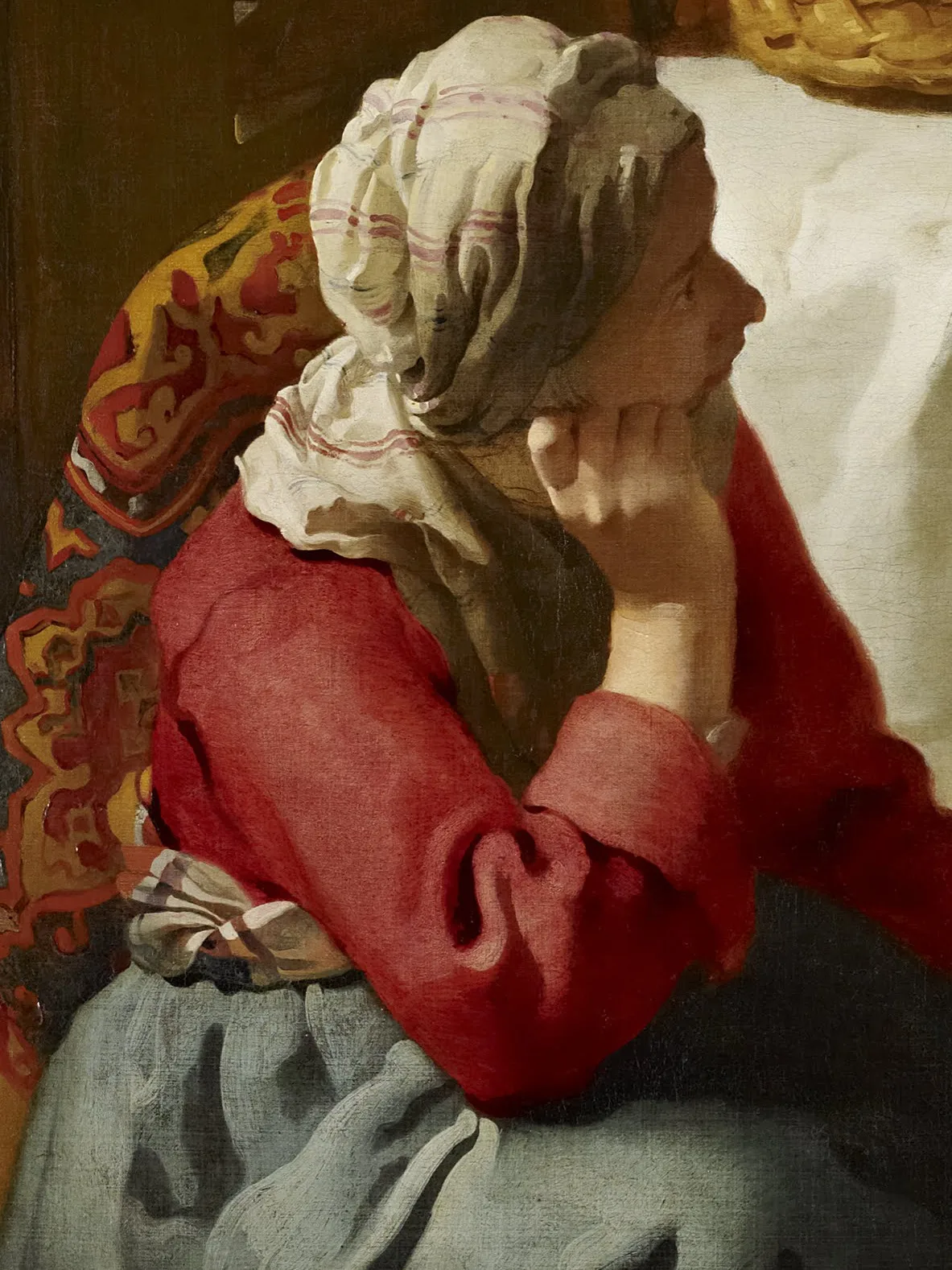
Johannes (Jan) Vermeer - Christ in the House of Martha and Mary - Google Art Project (cropped)
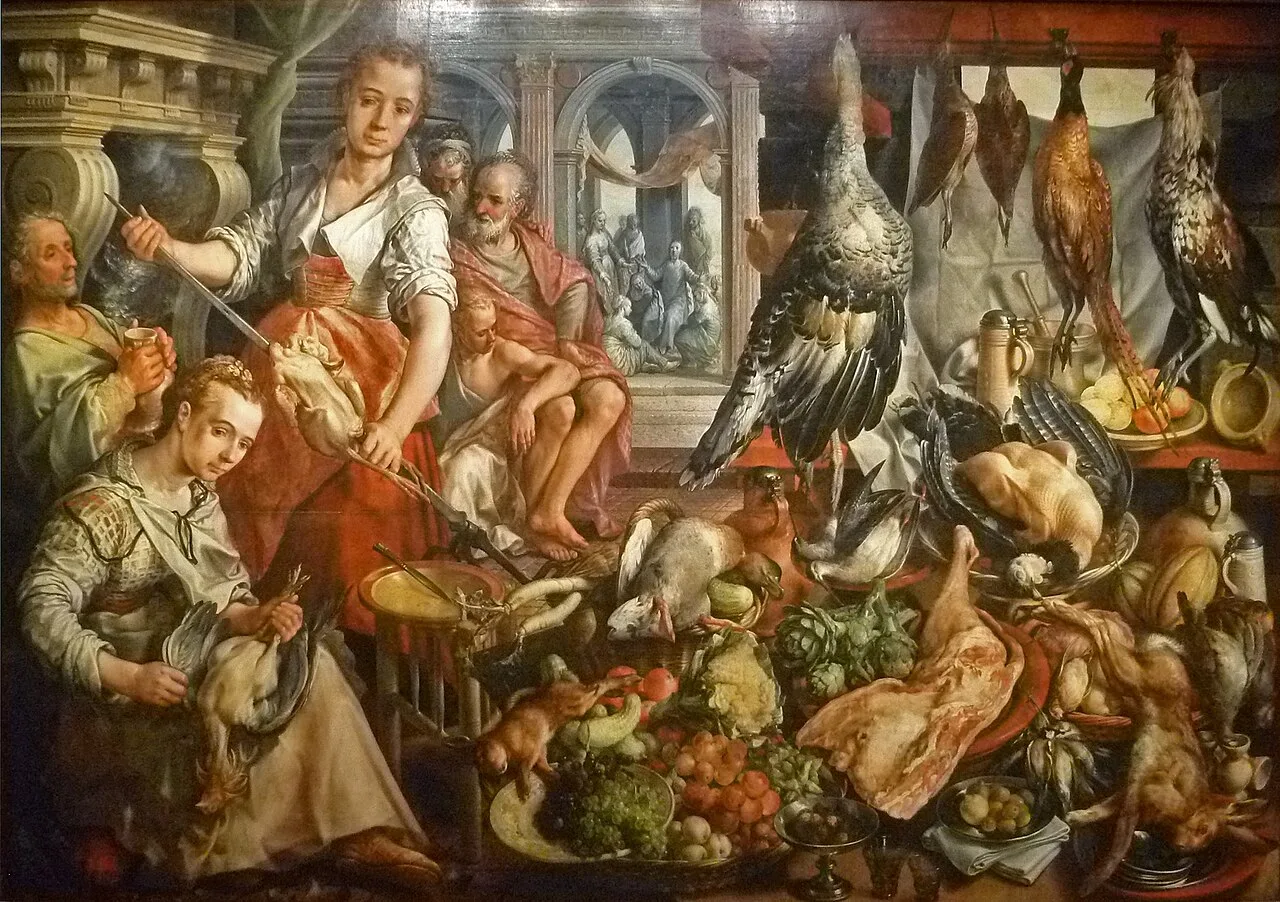
Martha preparing the meal while (in the background) Mary of Bethany sitting at Jesus' feet; painting (1566) by Joachim Beuckelaer

Christ in the House of Simon by Dieric Bouts, 1440s (Staatliche Museen, Berlin)

Processional image of Saint Mary of Bethany in Milaor, Camarines Sur. Her attributes of a perfume bottle and long hair reflect her identification as the “sinful woman” who wiped Jesus’ feet.

Processional image of Saint Mary of Bethany in Dumangas, Iloilo. This image shows her holding her long hair, also identifying her with the woman who anointed Christ.
Mary of Bethany
Mary of Bethany is a biblical figure in the Christian New Testament, described as living in the village of Bethany with her siblings Lazarus and Martha.
The First-Century Discipleship Posture
Sitting at the feet of a religious teacher was not merely a passive, polite posture. In first-century Judaism, adopting this position meant formally assuming the status of a disciple studying under a rabbi. Mary’s choice was therefore controversial, as women were rarely admitted to discipleship, making Jesus’ acceptance of her presence a notable break from contemporary social norms.
From Wikipedia · CC BY-SA 4.0
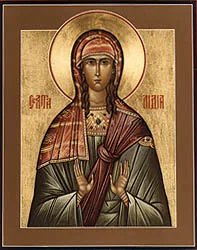
Lidia

A modern Greek Orthodox outdoor chapel on what is said to be the site where Lydia was baptized

Lydia of Thyatira by Harold Copping

Baptism of Lydia by Marie Ellenrieder, 1861

Greek icon of Lydia of Thyatira
Lydia of Thyatira
Lydia of Thyatira is a woman mentioned in the New Testament who is regarded as the first documented convert to Christianity in Europe.
Geographic Identity Behind the European Convert
Lydia is recognized as the first documented convert to Christianity in Europe. Rather than functioning purely as a personal name, her moniker represents an ethnicon indicating her origin in the ancient region of Lydia. This birthplace corresponds to modern-day Akhisar, Turkey, reflecting her deep roots in Asia Minor before her travels westward.
From Wikipedia · CC BY-SA 4.0

Map showing ancient Cenchreae
Coptic cross
Phoebe (biblical figure)
Phoebe was a first-century Christian deacon of the church of Cenchreae, mentioned by the Apostle Paul in his Epistle to the Romans.
Emissary Trusted with a Crucial Roman Delivery
Paul introduced Phoebe as his emissary to deliver his critical epistle to the church in Rome. Entrusted with carrying this document from Cenchreae, she acted as a trusted representative between early Christian communities. Paul provided her credentials explicitly because the Roman congregation was not yet acquainted with her.
From Wikipedia · CC BY-SA 4.0

Thecla in flames, flanked by angels (detail, Tarragona)

Une Martyre (Saint Thechla) (1891) by Sarah Paxton Ball Dodson

St. Thecla Shrine. Latakia, Syria

Aya Tekla in Seleucia

The Convent of St. Thecla in Maaloula

Icon of Saint Thecla from the 11th century Menologion of Basil II
Thecla
Thecla was a saint of the early Christian Church and a reported follower of Paul the Apostle.
Self-Administered Baptism in a Seal-Infested Pool
Facing wild beasts in the arena, the condemned virgin decided to perform her own baptism without ecclesiastical mediation. She threw herself into a lake full of aggressive seals, who were struck down by lightning before they could devour her. The dramatic scene established an extraordinary narrative of female-led sacramental authority that subverted standard baptismal conventions of antiquity.
From Wikipedia · CC BY-SA 4.0
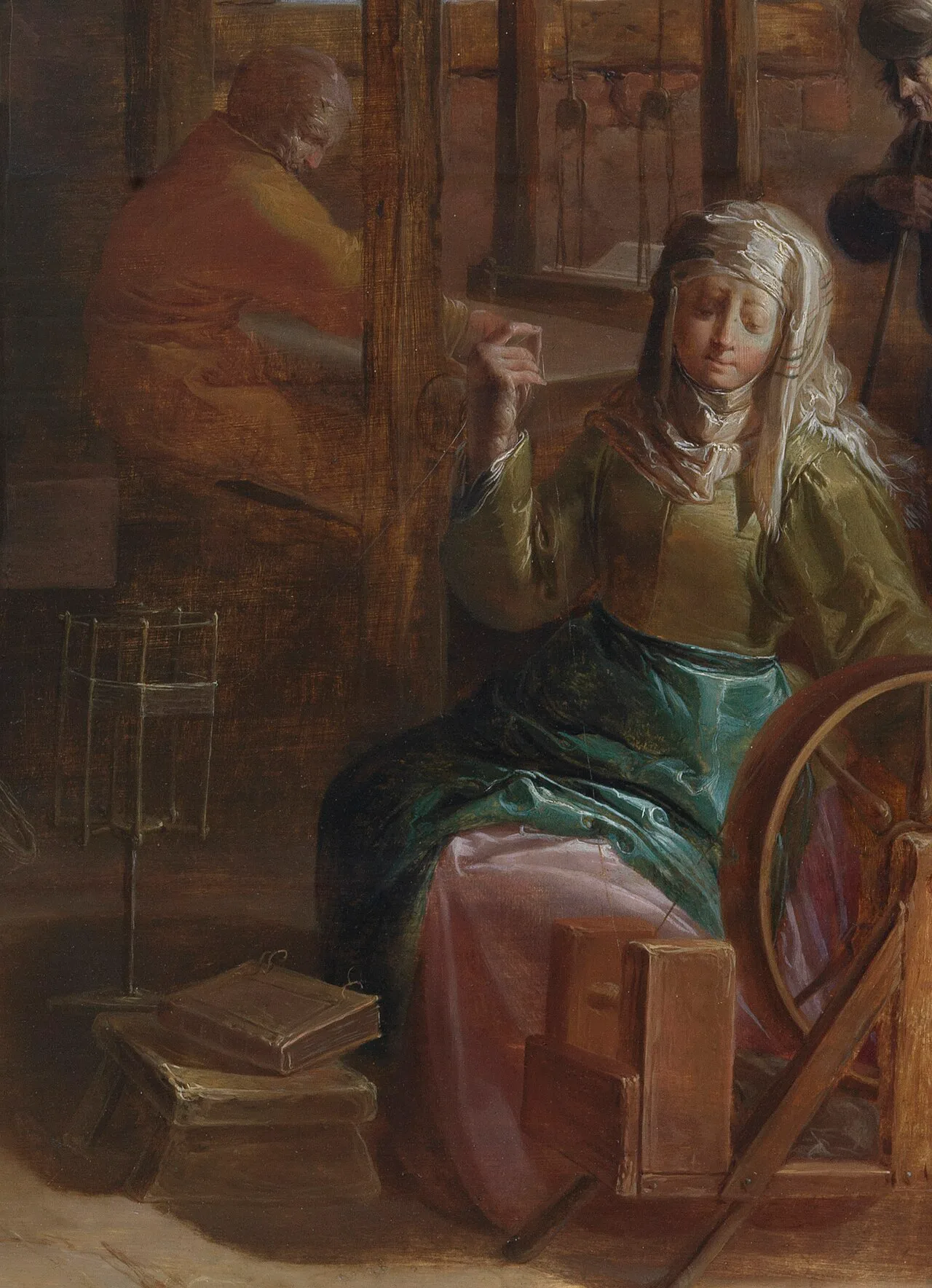
Jan van de Venne - Saint Paul with Saints Aquila and Priscilla (crop)
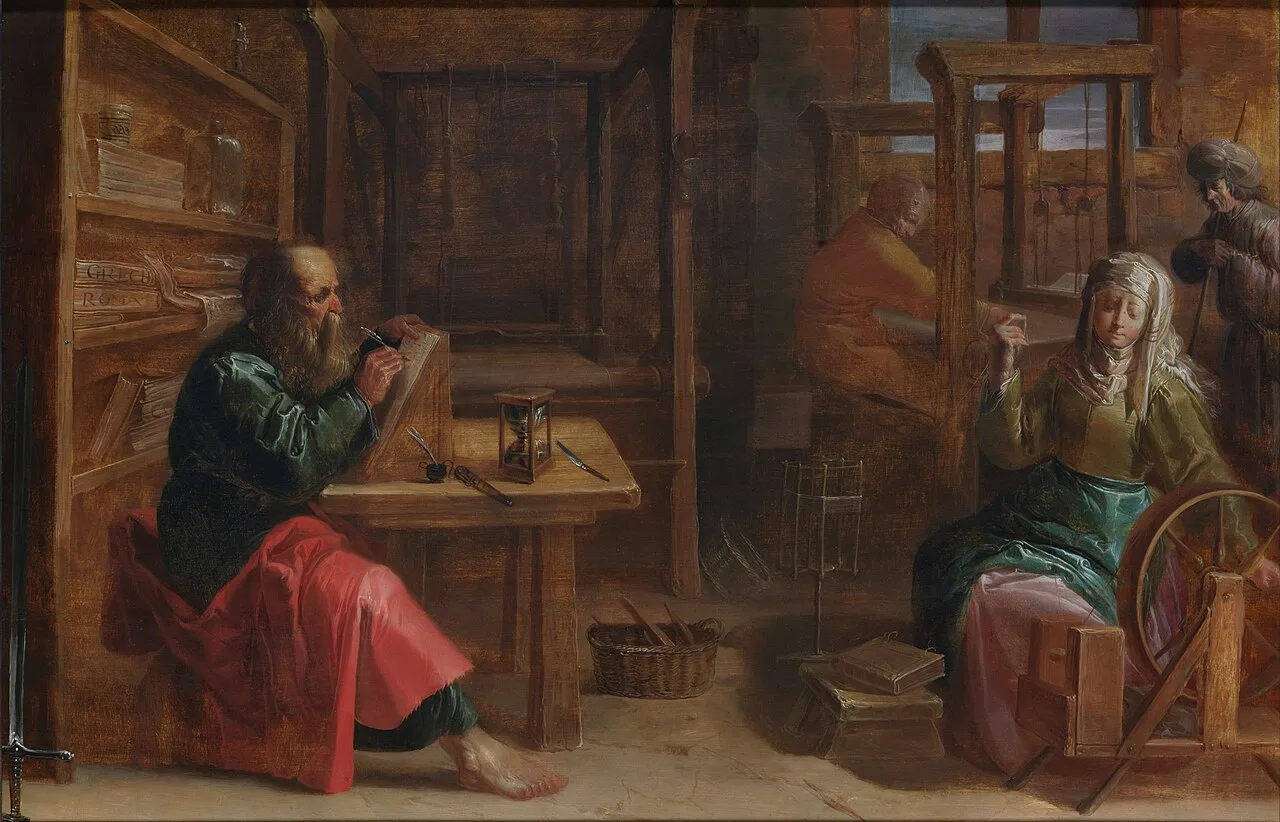
Paul staying in the house of Saints Aquila and Priscilla by Jan van de Venne, 17th century: Paul is at left, writing a letter; Priscilla is at right, spinning, and her husband Aquila is in the background, working on the loom.[6]
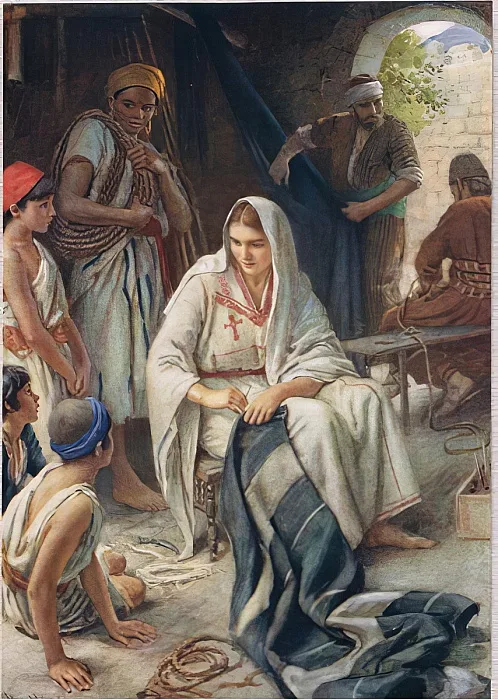
Priscilla illustration from the Women of the Bible, Harold Copping
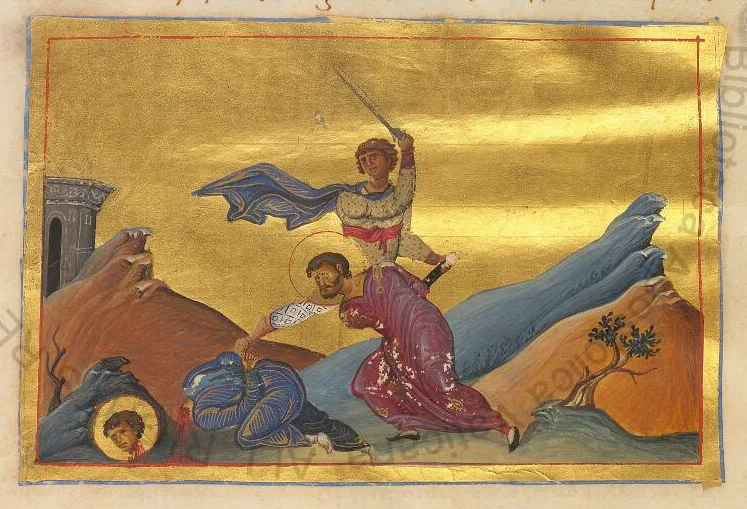
Miniature in the Menologion of Basil II
Priscilla and Aquila
Priscilla and Aquila were a first-century Christian missionary married couple described in the New Testament who lived, worked, and traveled with the Apostle Paul.
Artisanal Sustenance in the Wake of Roman Expulsion
Priscilla and Aquila built their ministry on shared manual labor, working alongside Paul as fellow tentmakers. Their partnership began after the Roman Emperor Claudius expelled Jews from Rome in the year 49, as recorded by Suetonius. Paul subsequently lived and labored with the couple while establishing early Christian communities.
From Wikipedia · CC BY-SA 4.0
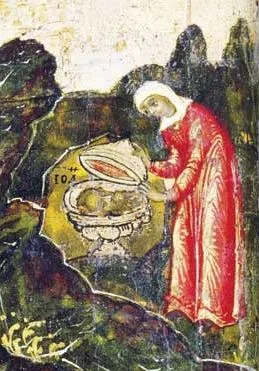
Saint Joanna and the Head of Saint John the Baptist
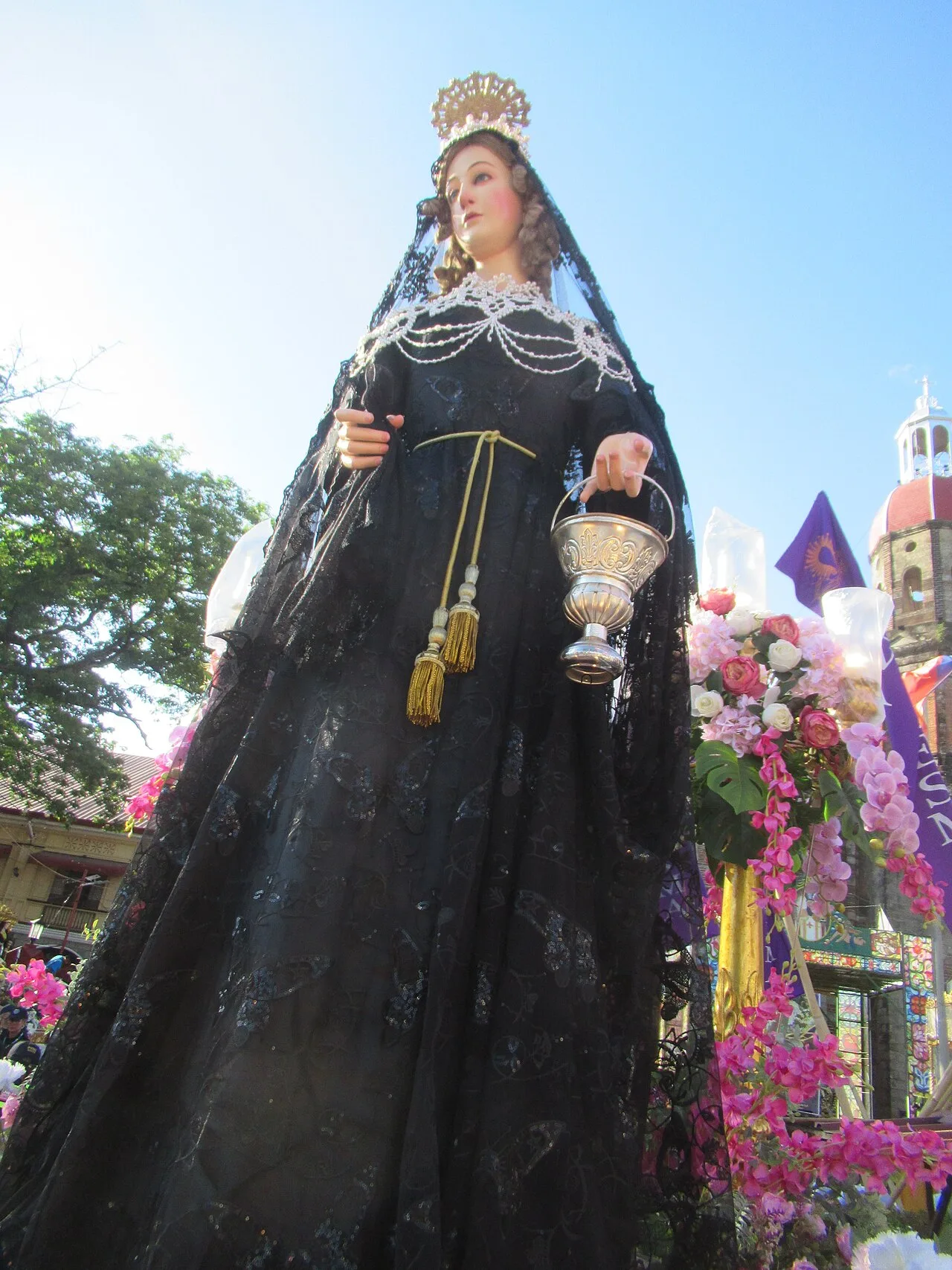
Joanna, wife of Chuza, in the Good Friday processions in Baliwag, 2024
Joanna, wife of Chuza
Joanna, the wife of Chuza, is a woman mentioned in the gospels who was healed by Jesus, supported him and his disciples in their travels, and witnessed his resurrection according to the Gospel of Luke.
Royal Household Financing for an Itinerant Ministry
Joanna held an influential position in Galilee as the wife of Chuza, the steward managing the household of Herod Antipas. After being cured of evil spirits and infirmities, she joined Jesus and his apostles in their travels across cities and villages. Rather than merely being a passive follower, Joanna actively provided for the ministry out of her own substance.
From Wikipedia · CC BY-SA 4.0
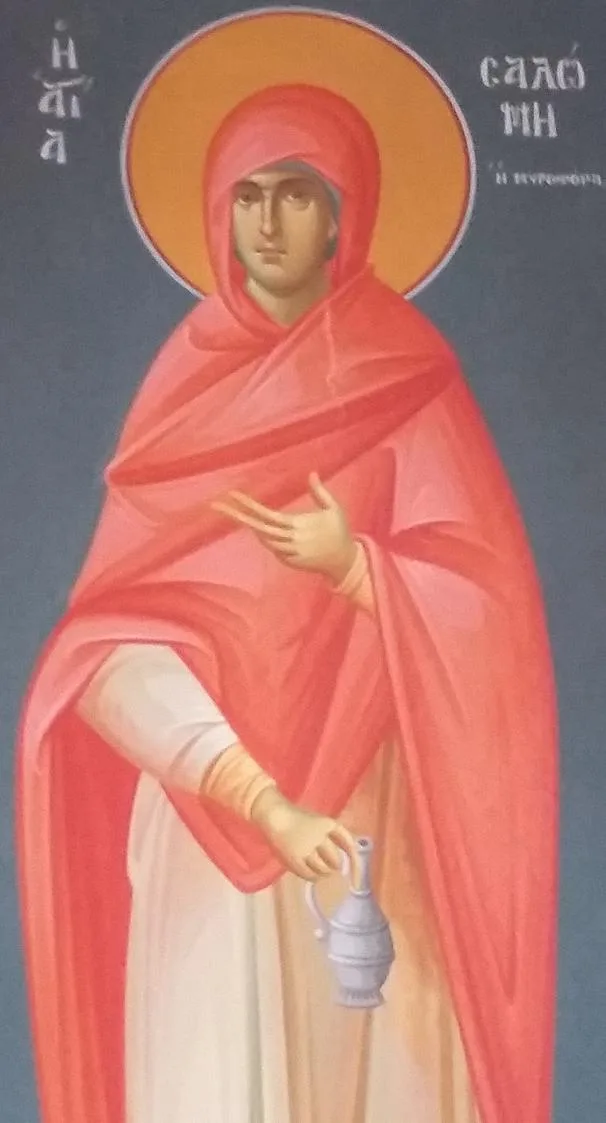
Saint Salome
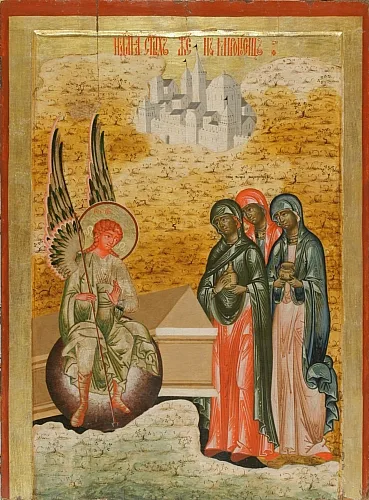
Eastern Orthodox icon of the two Marys and Salome at the Tomb of Jesus (Kizhi, 18th century)
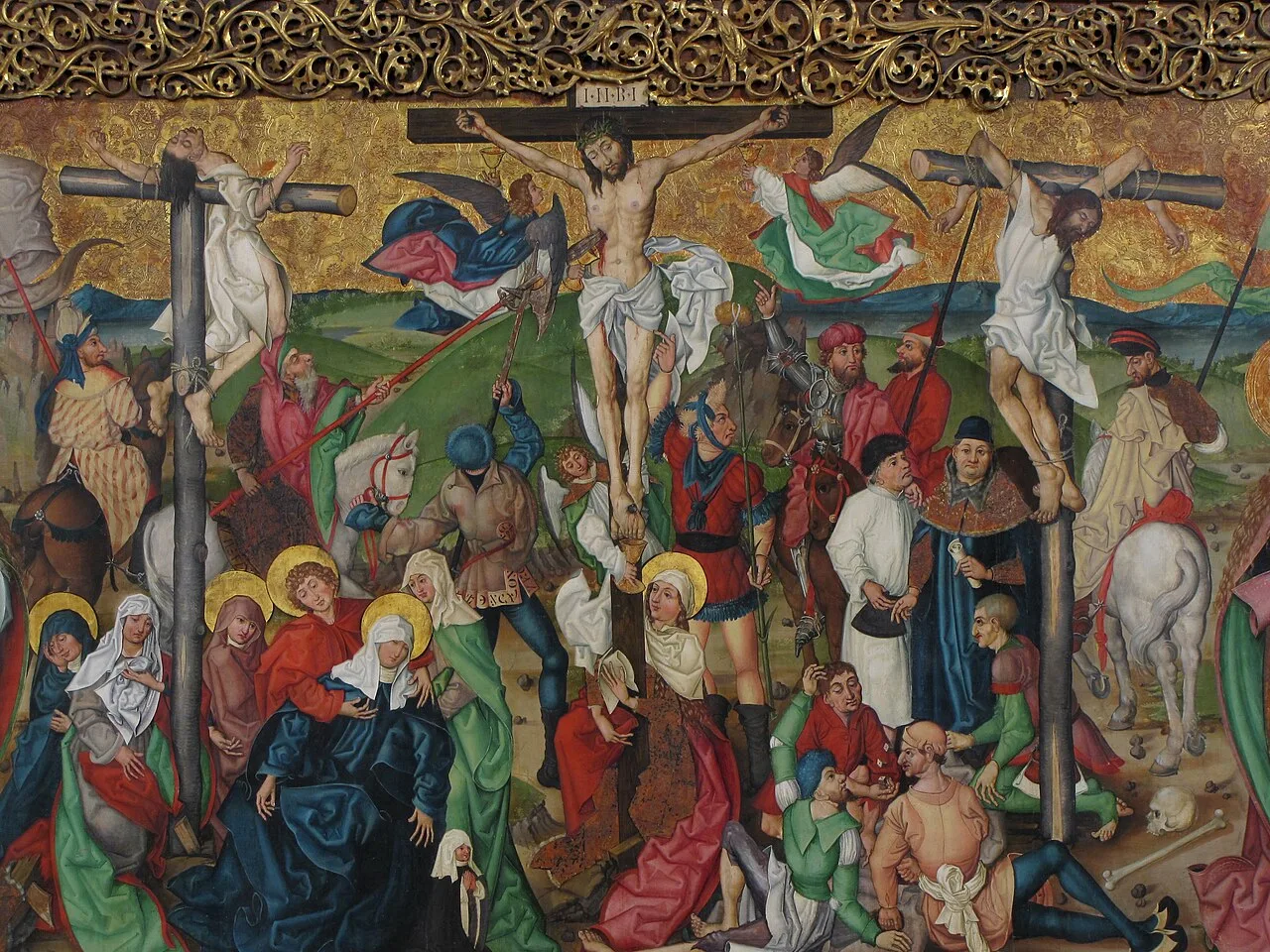
Crucifixion, from the Buhl Altarpiece, 1490s. Salome is one of the two leftmost women with a halo.
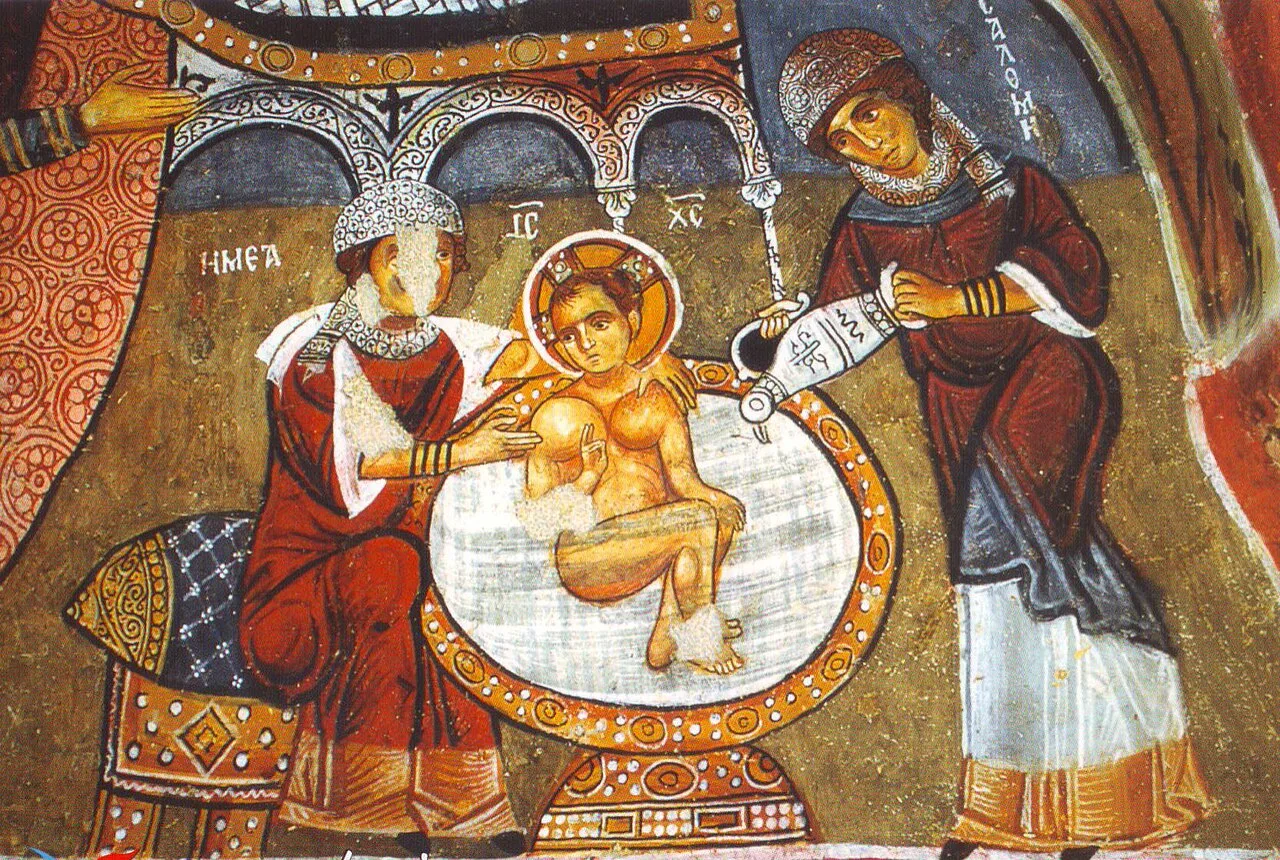
Salome (right) and the midwife (left), bathing the infant Jesus, is a common figure in Orthodox icons of the Nativity (fresco, 12th century, "Dark Church", Open Air Museum, Goreme, Cappadocia).
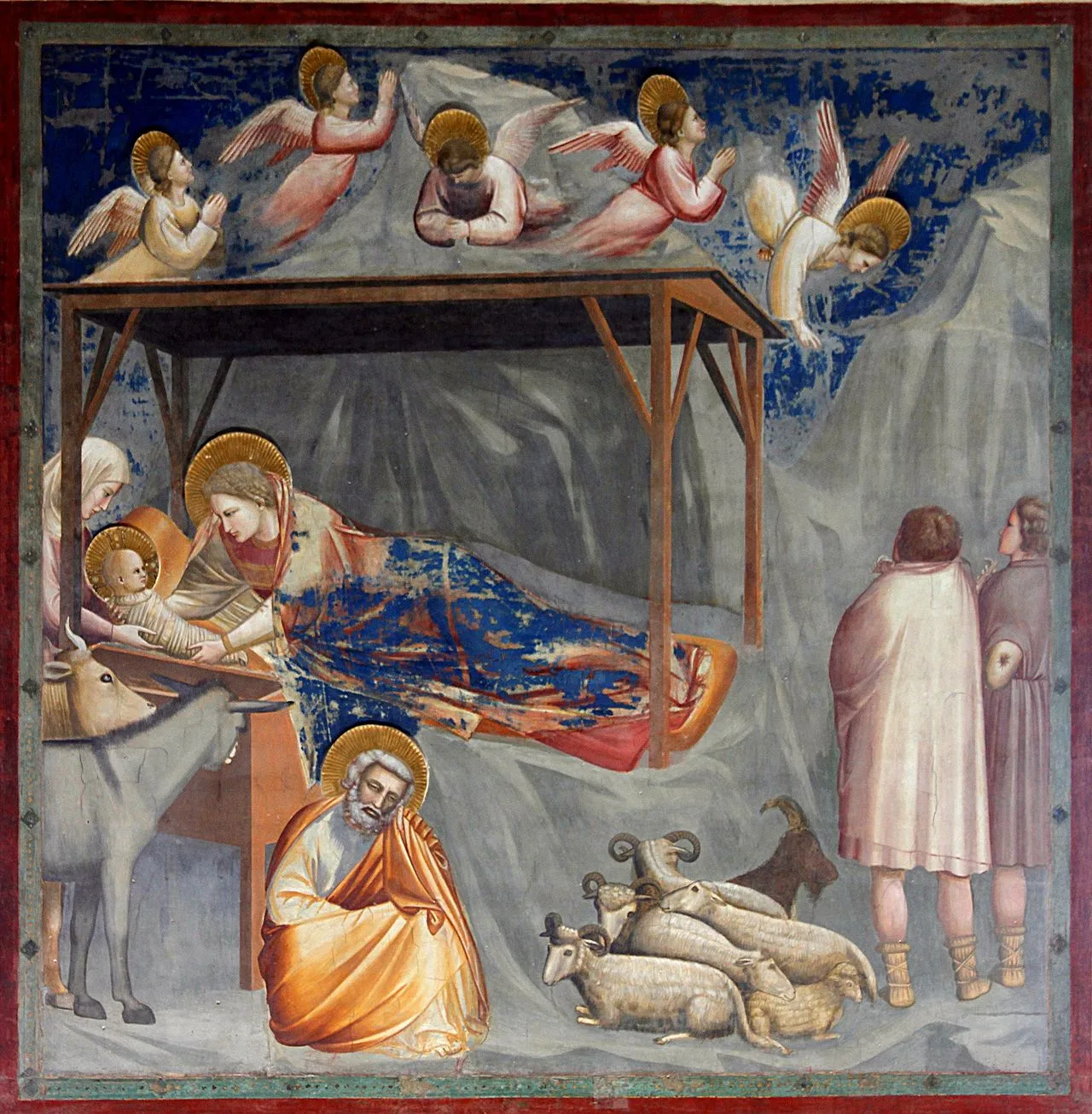
Capella dei Scrovegni, Padua, Giotto (1267–1337)
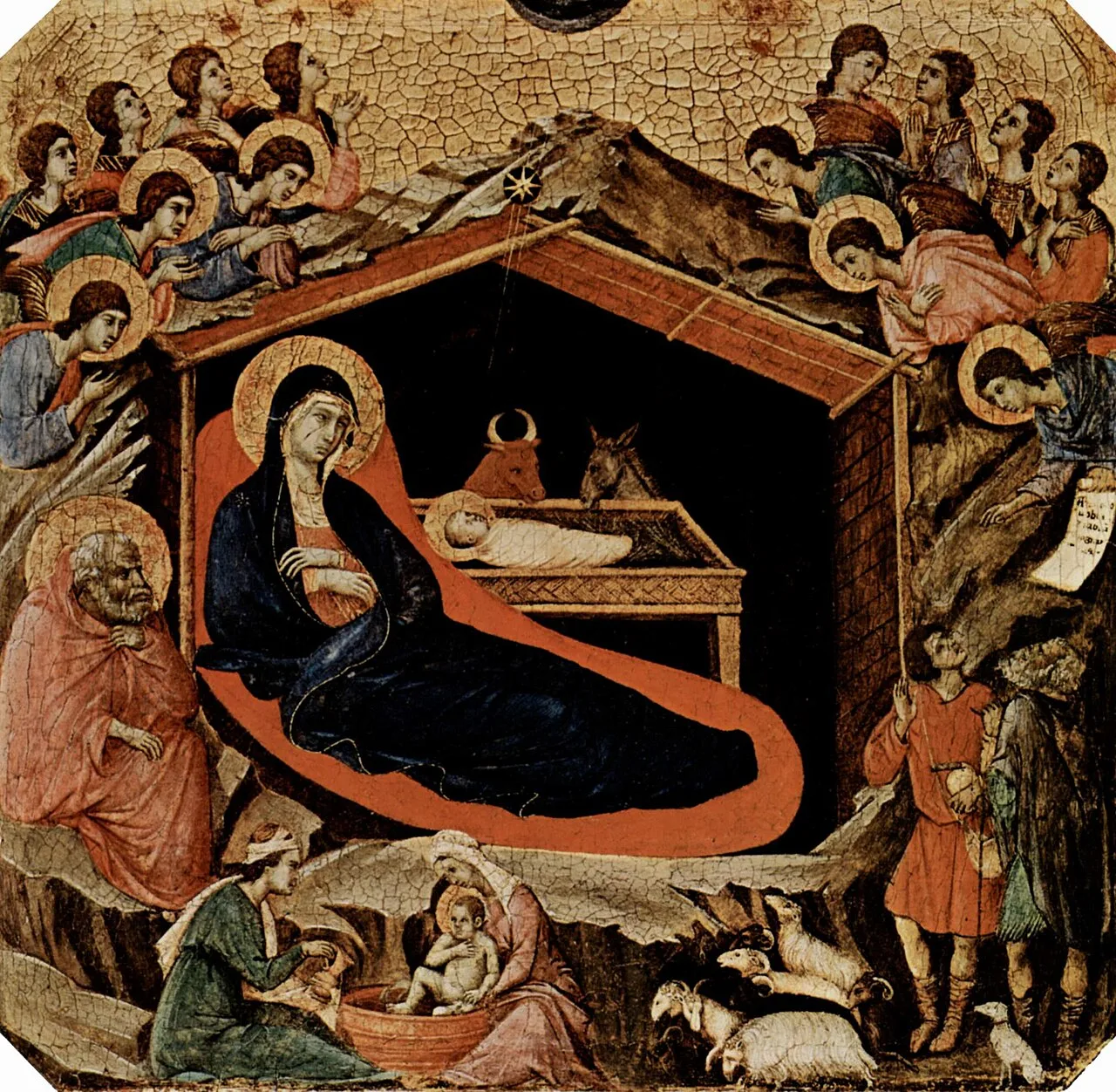
Duccio 1308–1311
Salome (disciple)
In the New Testament, Salome was a follower of Jesus named by Mark as present at the crucifixion and as one of the women who found Jesus's empty tomb.
Royal Namesakes and Hebrew Roots of Peace
The name Salome derives from the Hebrew root word shalom, translating to peace. Far from being unique to the biblical follower of Jesus, it was widely used across ancient Judean royalty. Her namesakes include both a sister and daughter of Herod the Great, alongside Queen Salome Alexandra, who died in 67 BC as Judea's final independent ruler.
From Wikipedia · CC BY-SA 4.0
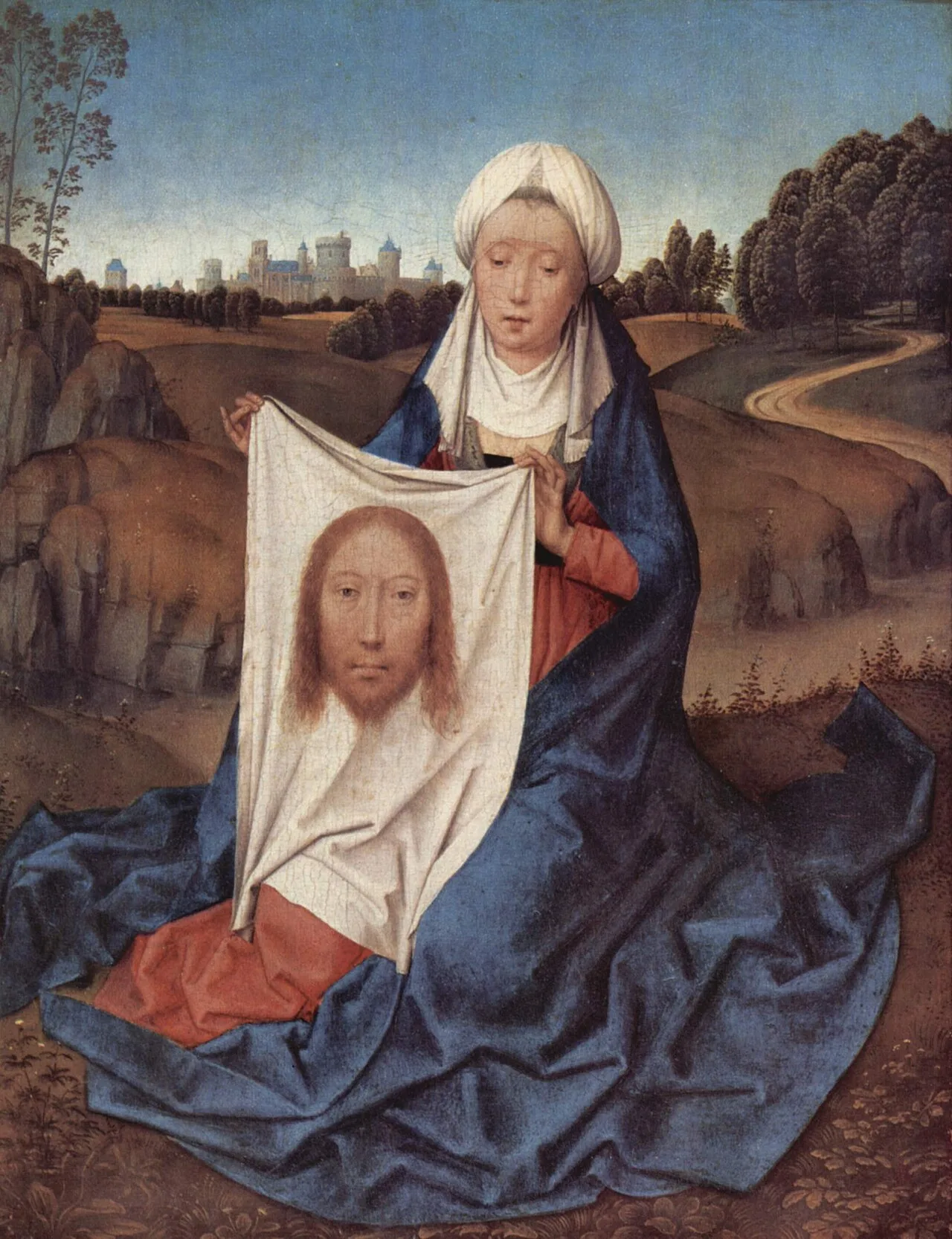
Hans Memling 026
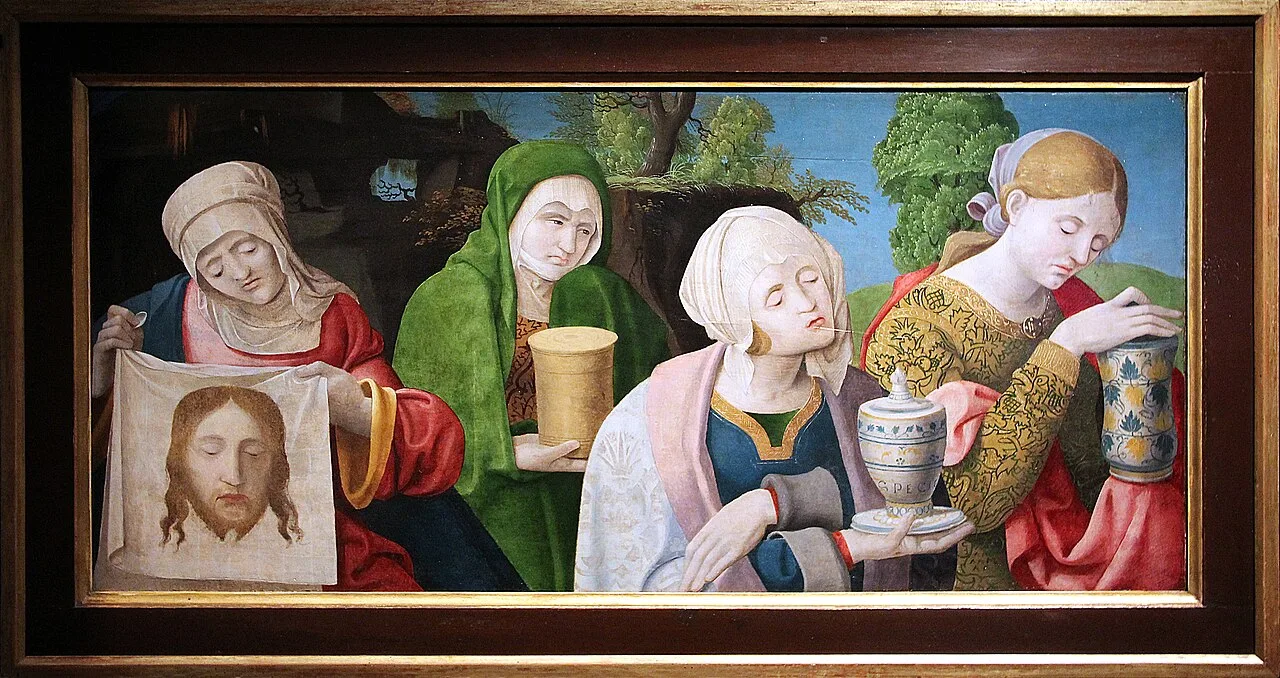
Saint Veronica and the Holy Women, Grégoire Guérard, c.1530
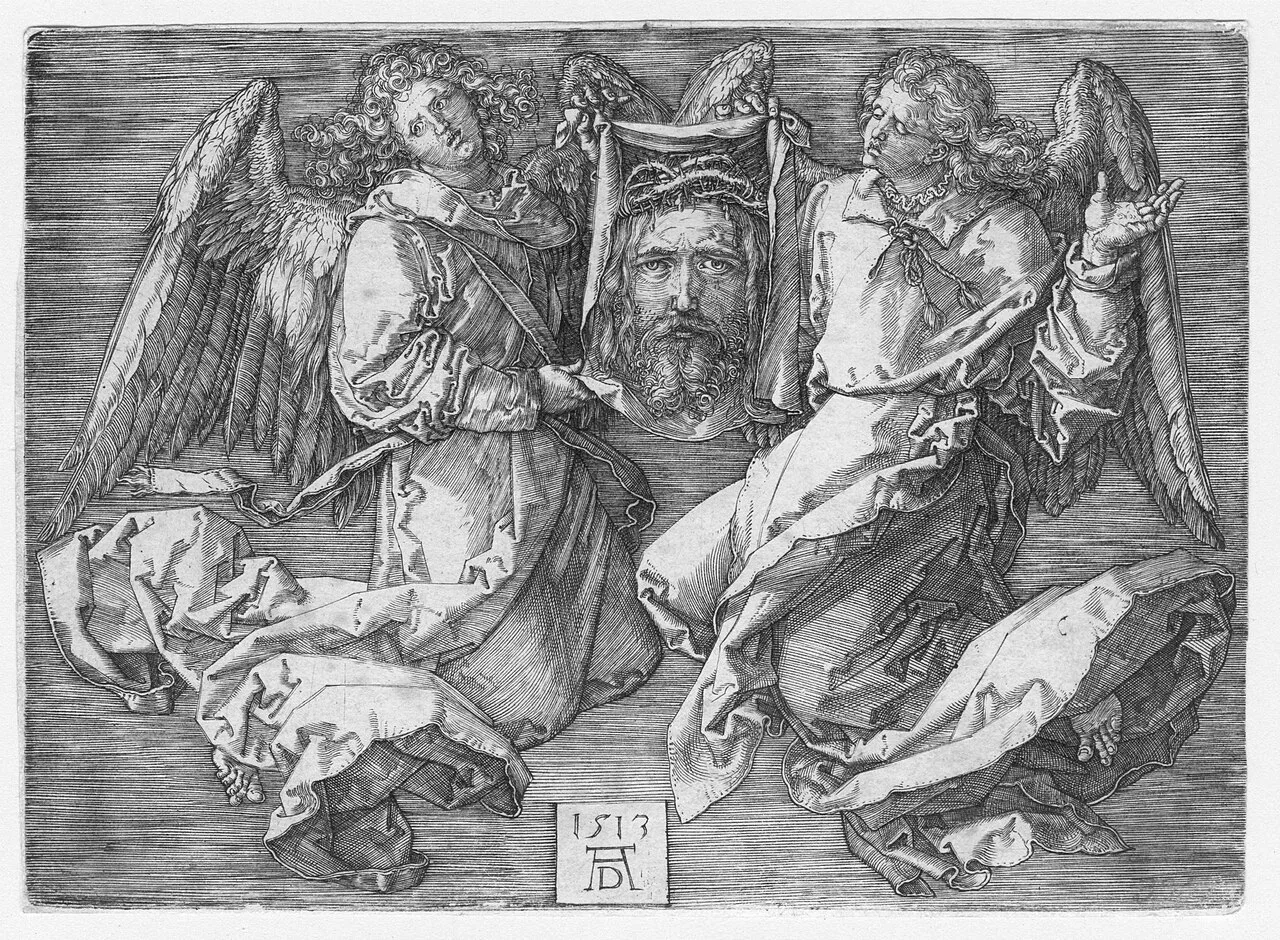
Albrecht Dürer's 1513 Veronica

Saint Veronica with the Veil, Mattia Preti

Saint Veronica by Ángel María Cortellini Hernández

Saint Veronica, 1902 by Rupert Bunny
Saint Veronica
Saint Veronica, also known as Berenike, was a 1st-century AD widow from Jerusalem who, according to Christian tradition, gave Jesus her veil to wipe his forehead as he carried the cross to Calvary.
The Silenced Courtroom Witness
Canonical gospels contain no record of Veronica or her miraculous cloth. Instead, apocryphal traditions like the Gospel of Nicodemus identify her with the unnamed woman healed of a bleeding ailment. In that account, Berenikē attempted to testify in defense of Jesus at his trial, only to be shouted down by the crowd because legal customs barred women from giving testimony.
From Wikipedia · CC BY-SA 4.0
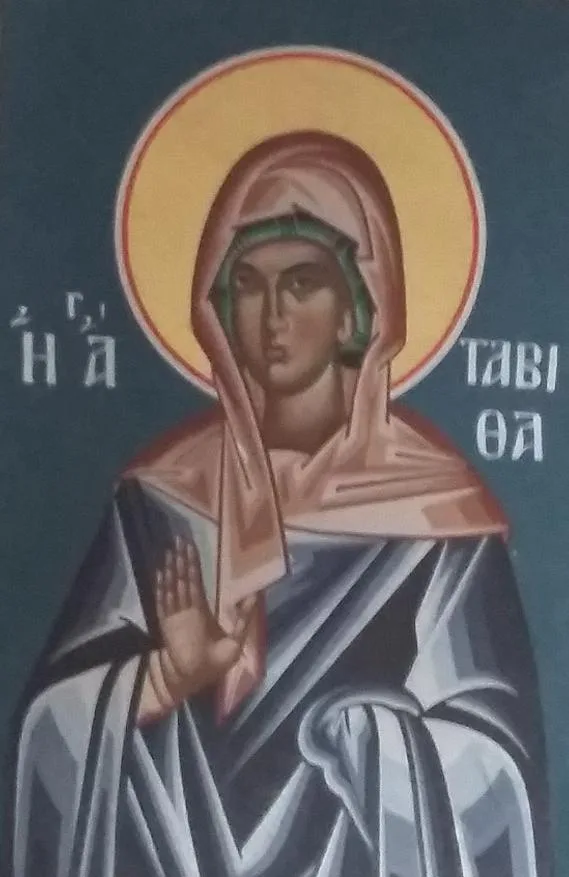
Saint Tabitha
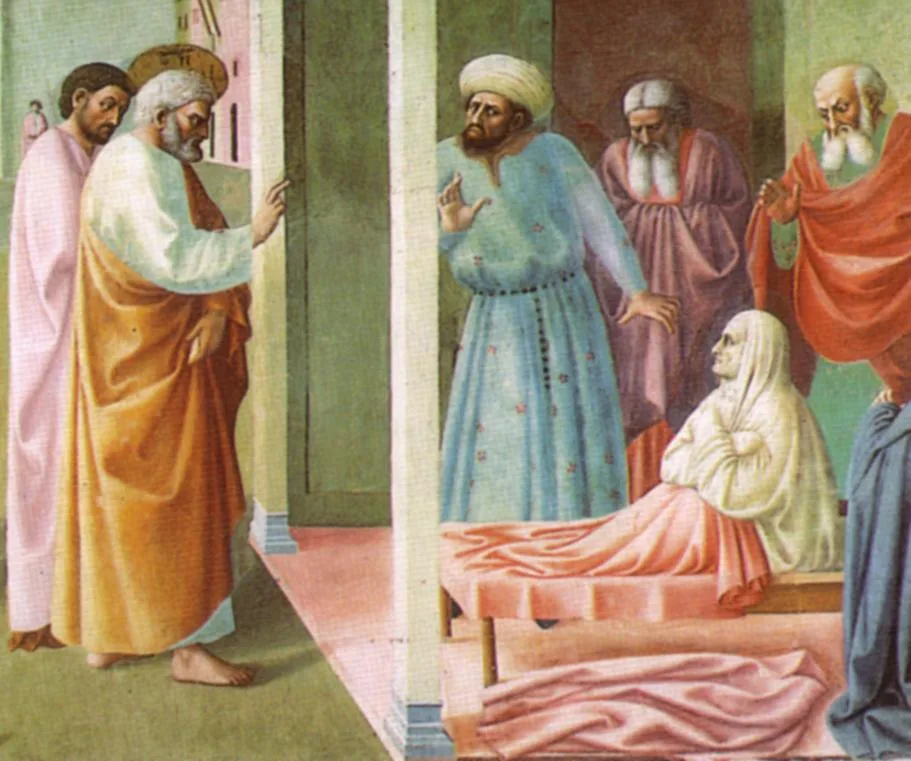
Detail of Healing of the Cripple and Raising of Tabitha by Masolino da Panicale, 1425
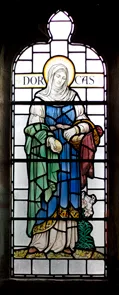
Dorcas Window St. Michael's Parish Church, Mytholmroyd, West Yorkshire
Dorcas
Dorcas, or Tabitha, was an early disciple of Jesus mentioned in the Acts of the Apostles who lived in Joppa and was known for her good works and acts of mercy.
Zoological Echoes of a Port City Translation
Tabitha's bilingual identity reflected her life in the bustling coastal hub of Joppa, where Greek and Aramaic coexisted among merchants and travelers. Both her Aramaic name and Greek equivalent Dorcas translate directly to female gazelle, aligning with the Hebrew name Zibiah carried by an ancient queen mother. Centuries later, this early Christian disciple's Greek appellation crossed into modern taxonomy as the scientific name for the dorcas gazelle.
From Wikipedia · CC BY-SA 4.0
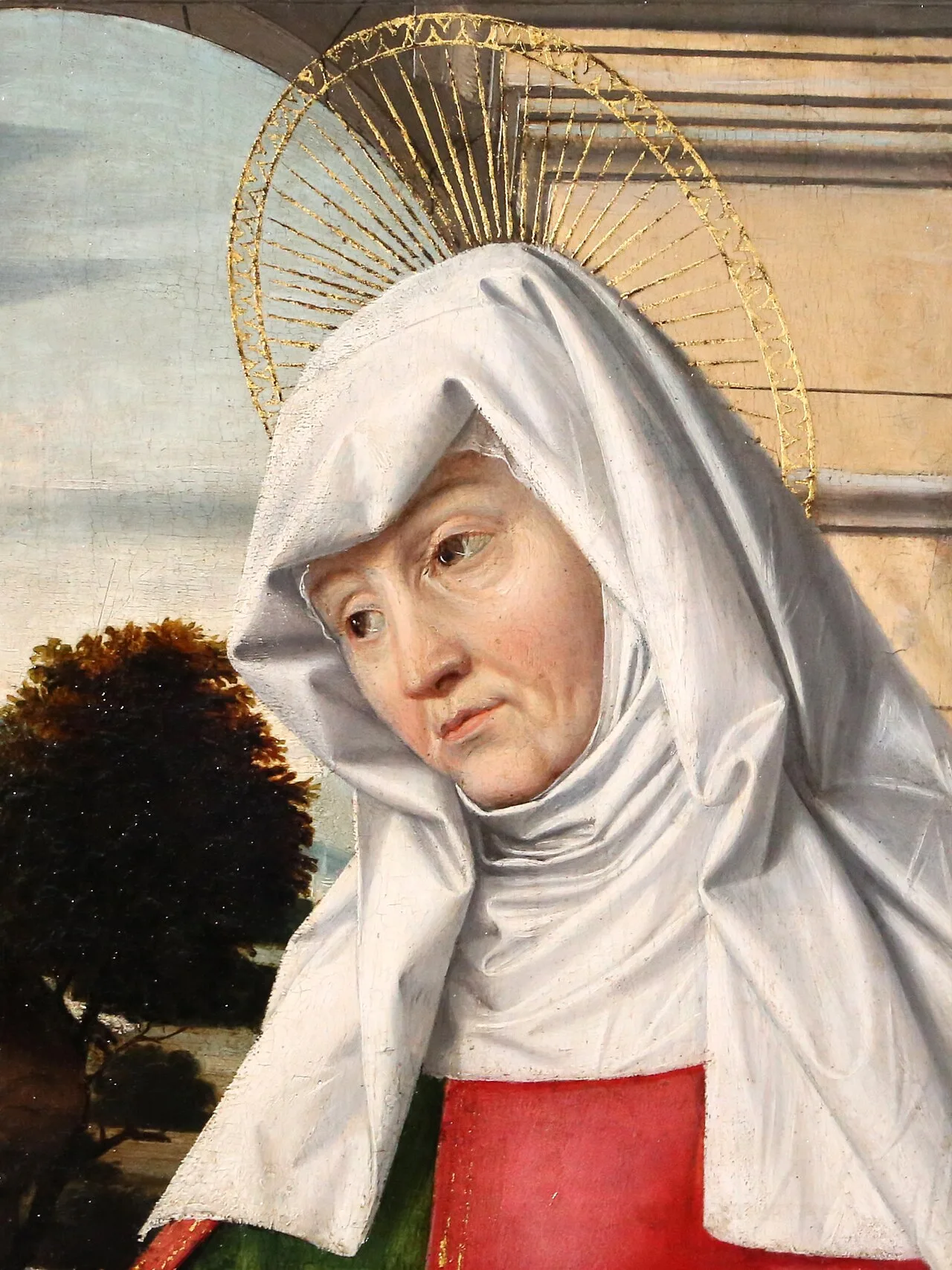
Medieval painting of Elizabeth.
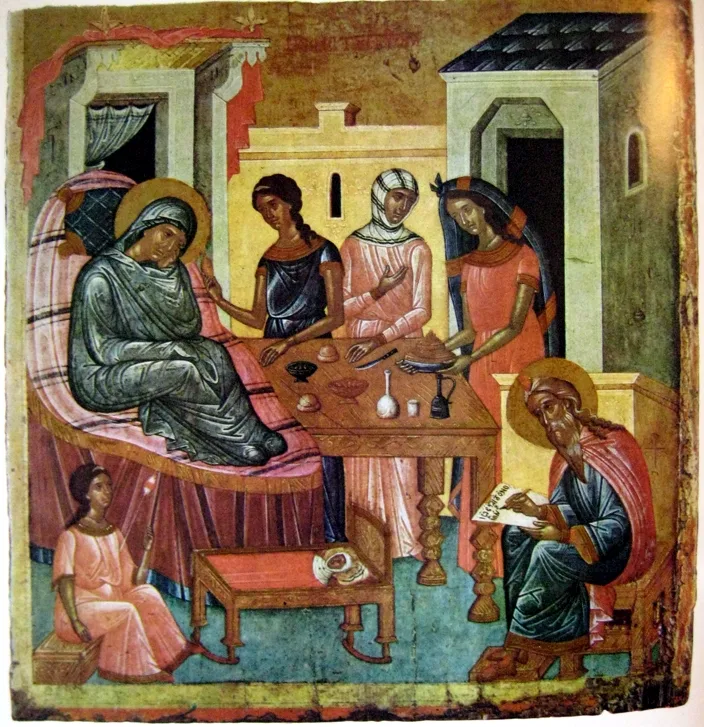
15th century depiction of the Nativity of St. John the Baptist, with Elizabeth on the left
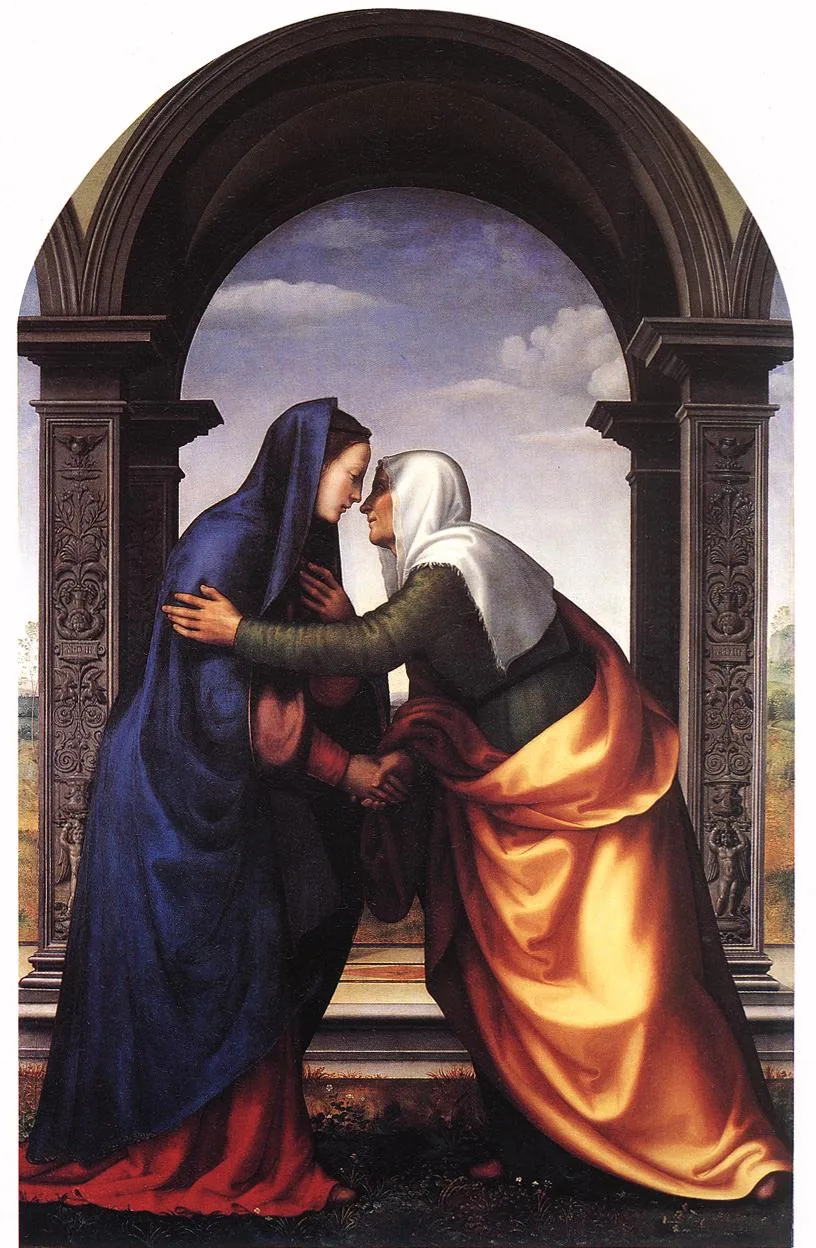
Mariotto Albertinelli's imagining of Elizabeth (right), here pictured with Mary
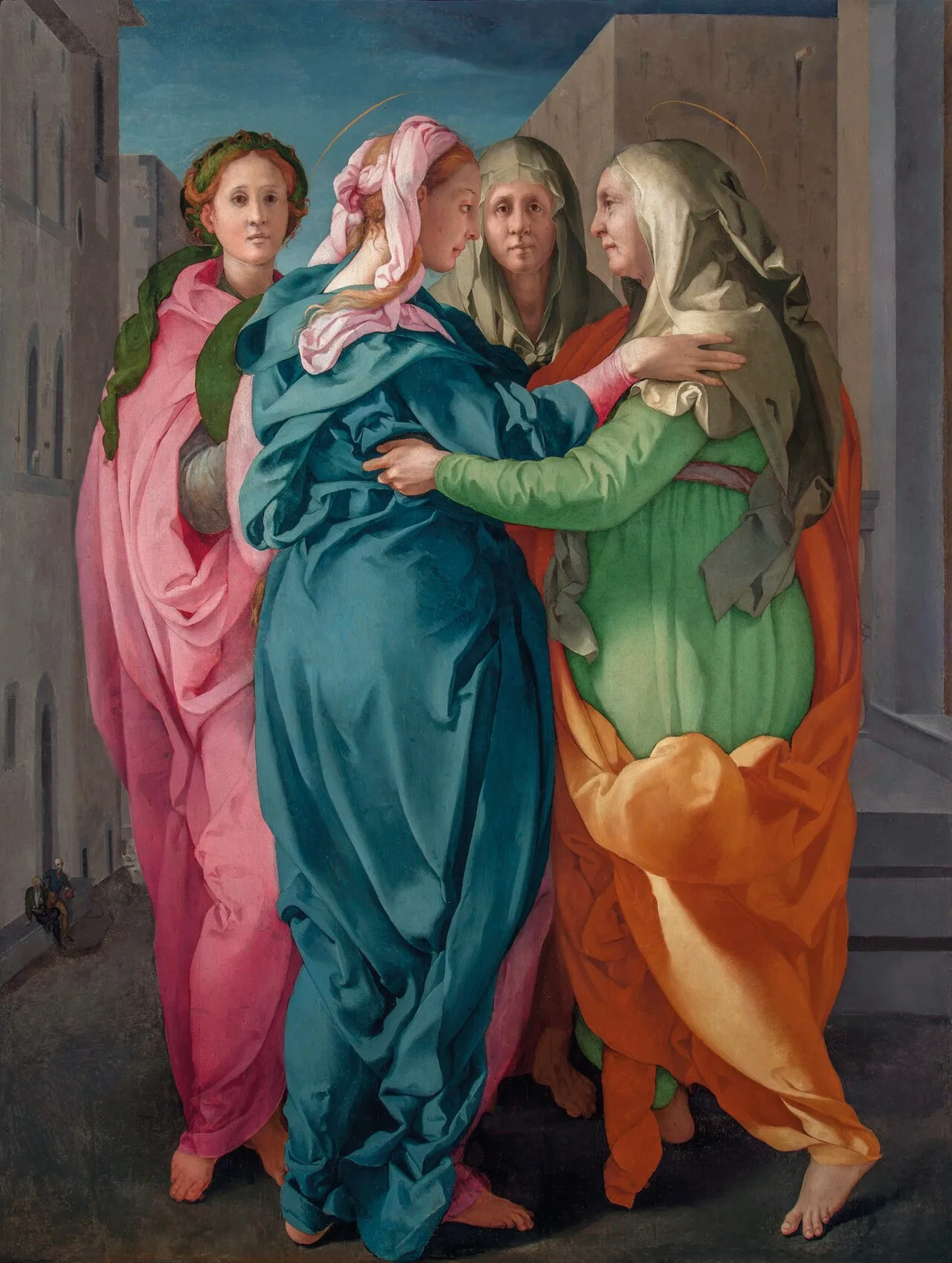
Jacopo da Pontormo, Visitation (1528–1529)
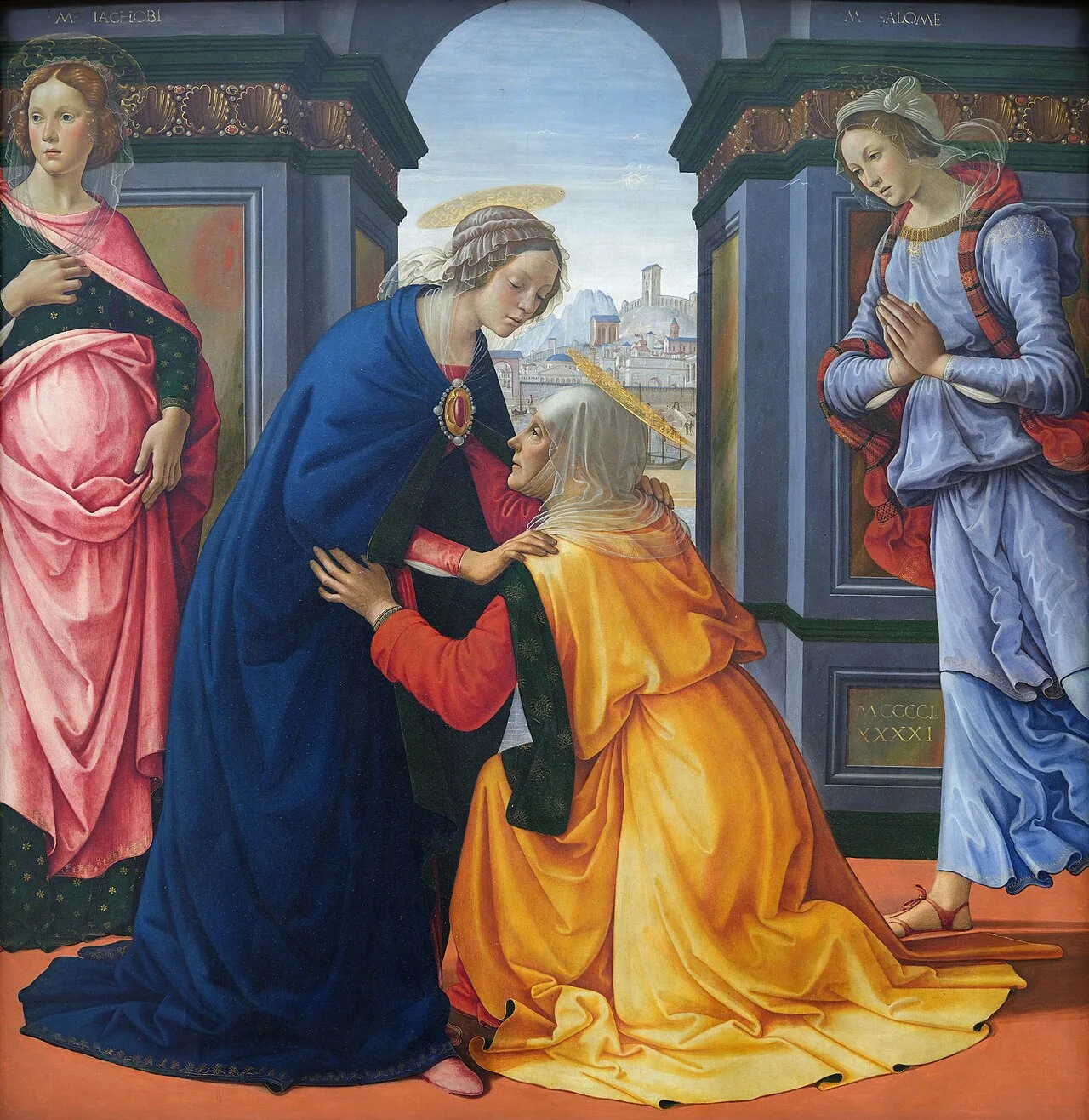
Domenico Ghirlandaio, Visitation (1491)
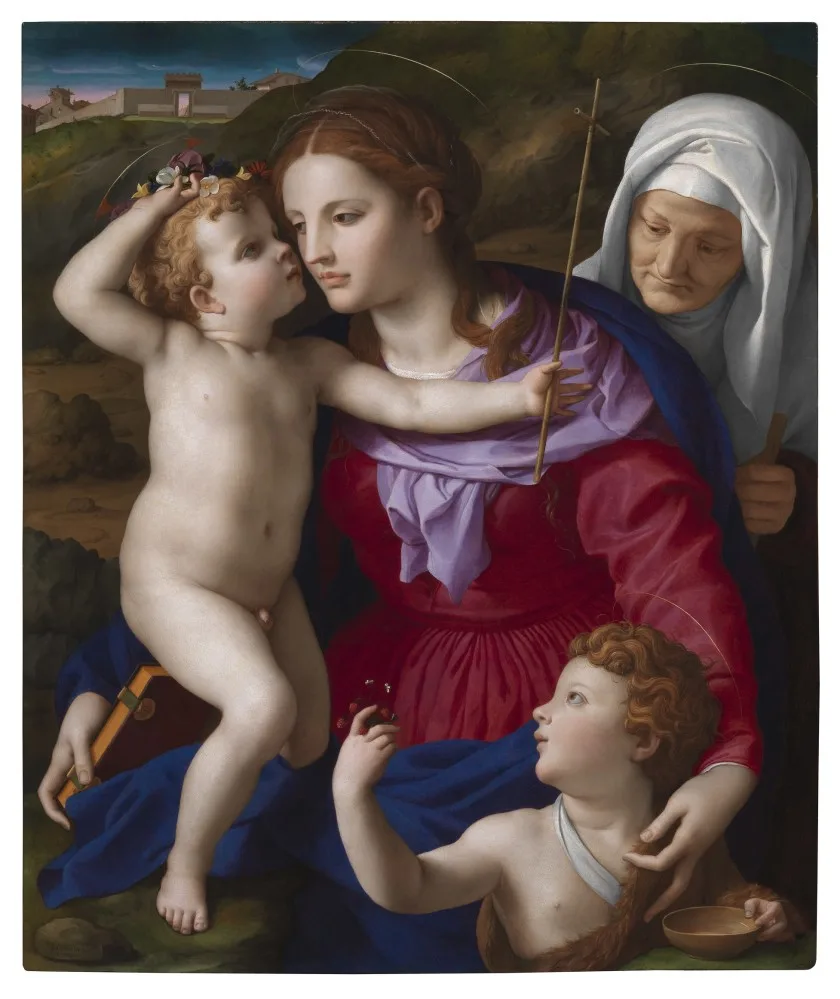
Agnolo Bronzino, Virgin and Child with Saint Elizabeth and Saint John the Baptist (1540–1545)
Elizabeth, mother of John the Baptist
Elizabeth was the mother of John the Baptist, the wife of Zechariah, and a relative of Mary, mother of Jesus, according to the Gospel of Luke.
A Temple Vision Tied to the Day of Atonement
The angelic encounter that foretold John's birth is linked to specific ancient calendar computations. According to theologian Adam C. English, the angel Gabriel appeared to Zechariah on September 24 based on Leviticus 23 ordinances regarding the Day of Atonement. This temporal calculation anchors the miraculous conception announcement directly to established high holy day rituals in the temple.
From Wikipedia · CC BY-SA 4.0