
Saudade (1899), by Almeida Júnior

The distant lands of the Portuguese Empire made a special longing for the loved ones of explorers and sailors.

Saudades de Nápoles (Missing Naples), 1895 by Bertha Worms

Cape Verdean singer Cesária Évora had her biggest hit singing about saudade.

The Spanish region of Galicia (red) lies north of Portugal and shares a cultural history of saudade.
Saudade
Saudade is a Portuguese and Galician word denoting an emotional state of melancholic or profoundly nostalgic longing for an absent person or thing.
Pre-dating the Age of Discovery
Popular belief often links saudade to sailors lost during maritime voyages, but the term existed well before Portuguese expeditions began in 1415. The word appeared in thirteenth-century lyric texts like the Cancioneiro da Ajuda and the Cancioneiro da Vaticana, as well as in poems from the reign of King Denis of Portugal (1279–1325). These medieval literary origins demonstrate that the sentiment was deeply established long before Atlantic seafaring.
From Wikipedia · CC BY-SA 4.0

Illustration of a hygge situation, with Meik Wiking's The Little Book of Hygge

"Hygge" sign in a restaurant in Nørrebro
Hygge
Hygge is a Danish and Norwegian term describing a cozy, contented mood evoked by comfort and conviviality.
A Modern Identity Built on Everyday Vocabulary
The widespread perception that hygge is a timeless pillar of Danish heritage overlooks its recent origin, as cultural emphasis on the practice only dates to the late 20th century. Although the term exists in both Denmark and Norway with identical definitions, only Danes treat it as central to their national identity. In Norway, hygge holds no elevated cultural status and functions merely as a common word similar to cozy.
From Wikipedia · CC BY-SA 4.0
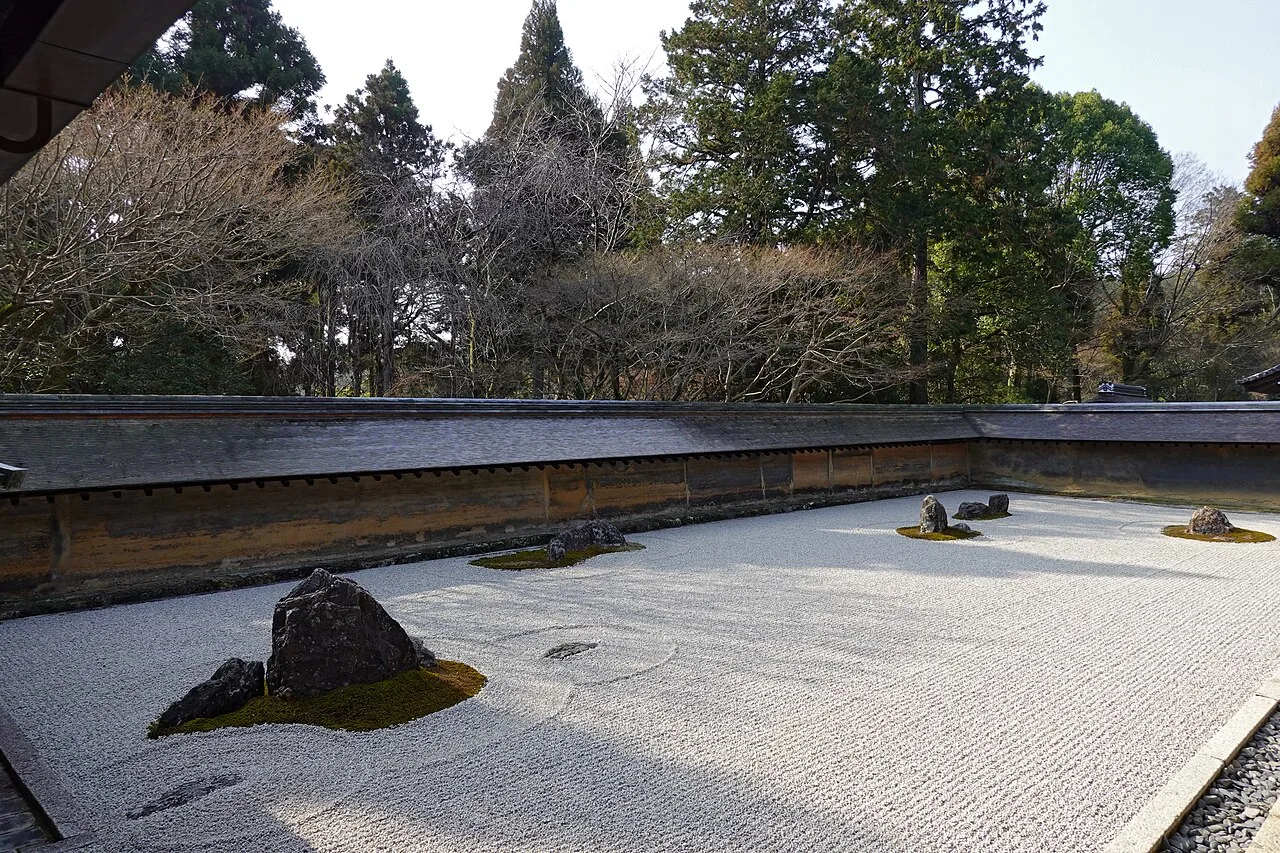
Zen garden of Ryōan-ji, built during the Higashiyama period. The clay wall, stained with subtle brown and orange tones, reflects sabi principles, while the rock garden reflects wabi principles.[1]
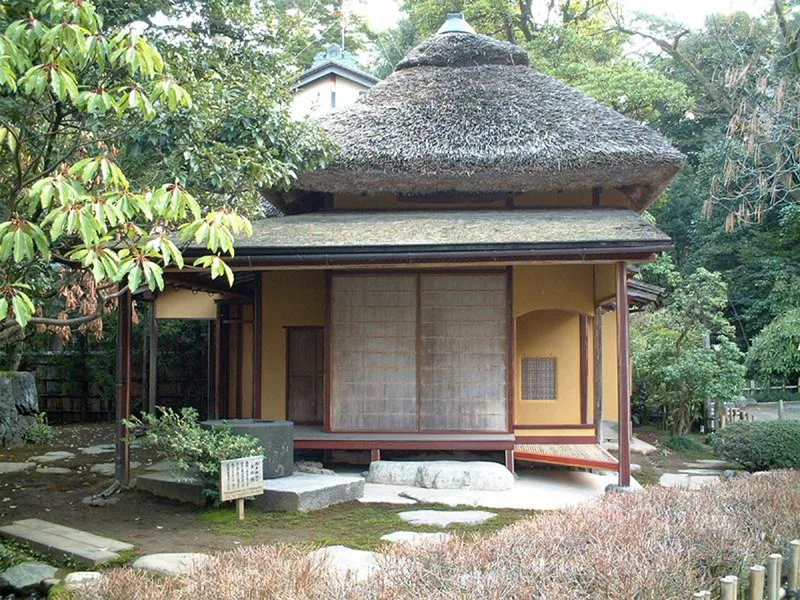
A Japanese tea house reflecting the wabi-sabi aesthetic in Kenroku-en (兼六園) Garden

Wabi-sabi tea bowl, Azuchi–Momoyama period, 16th century

Modern tea vessel made in the wabi-sabi style
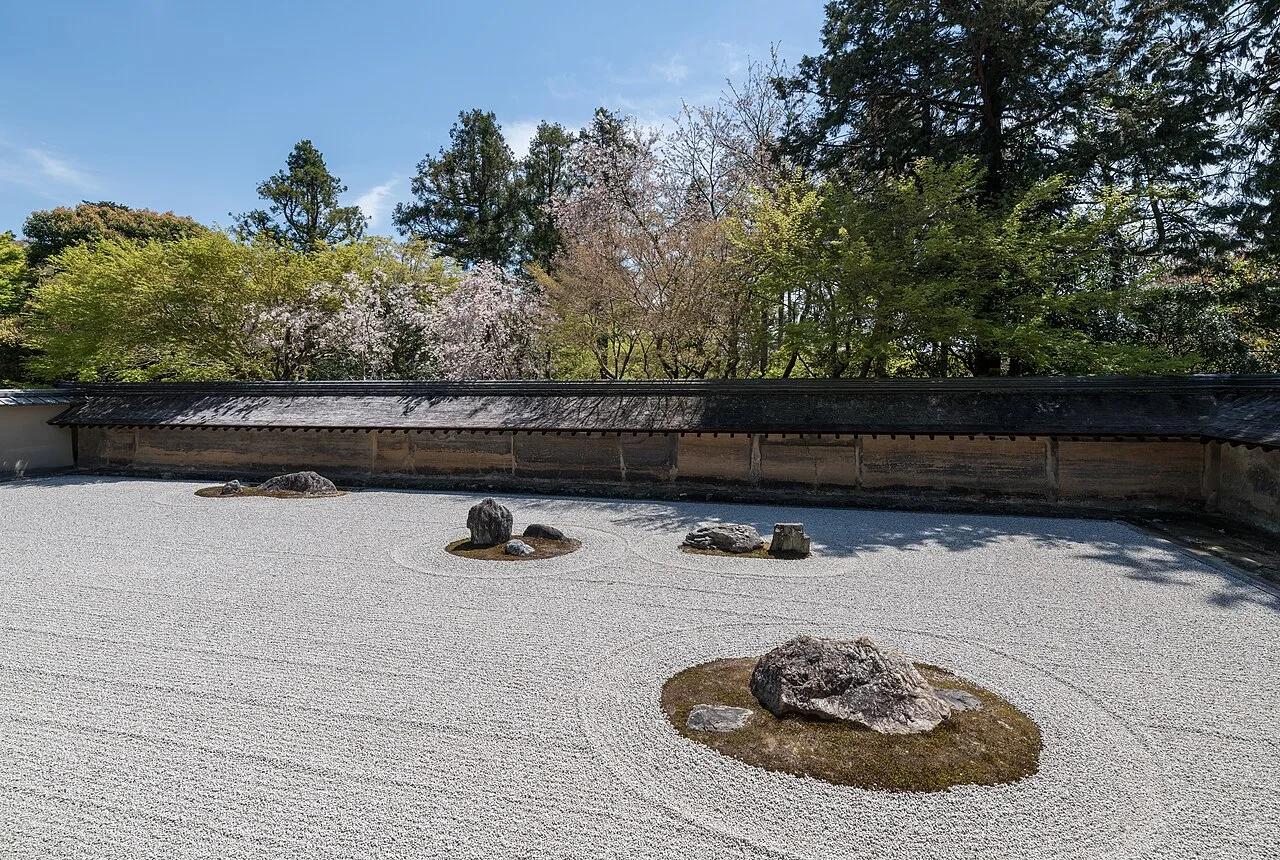
Ryōan-ji (late 16th century) in Kyoto, Japan, a well-known example of a Zen garden
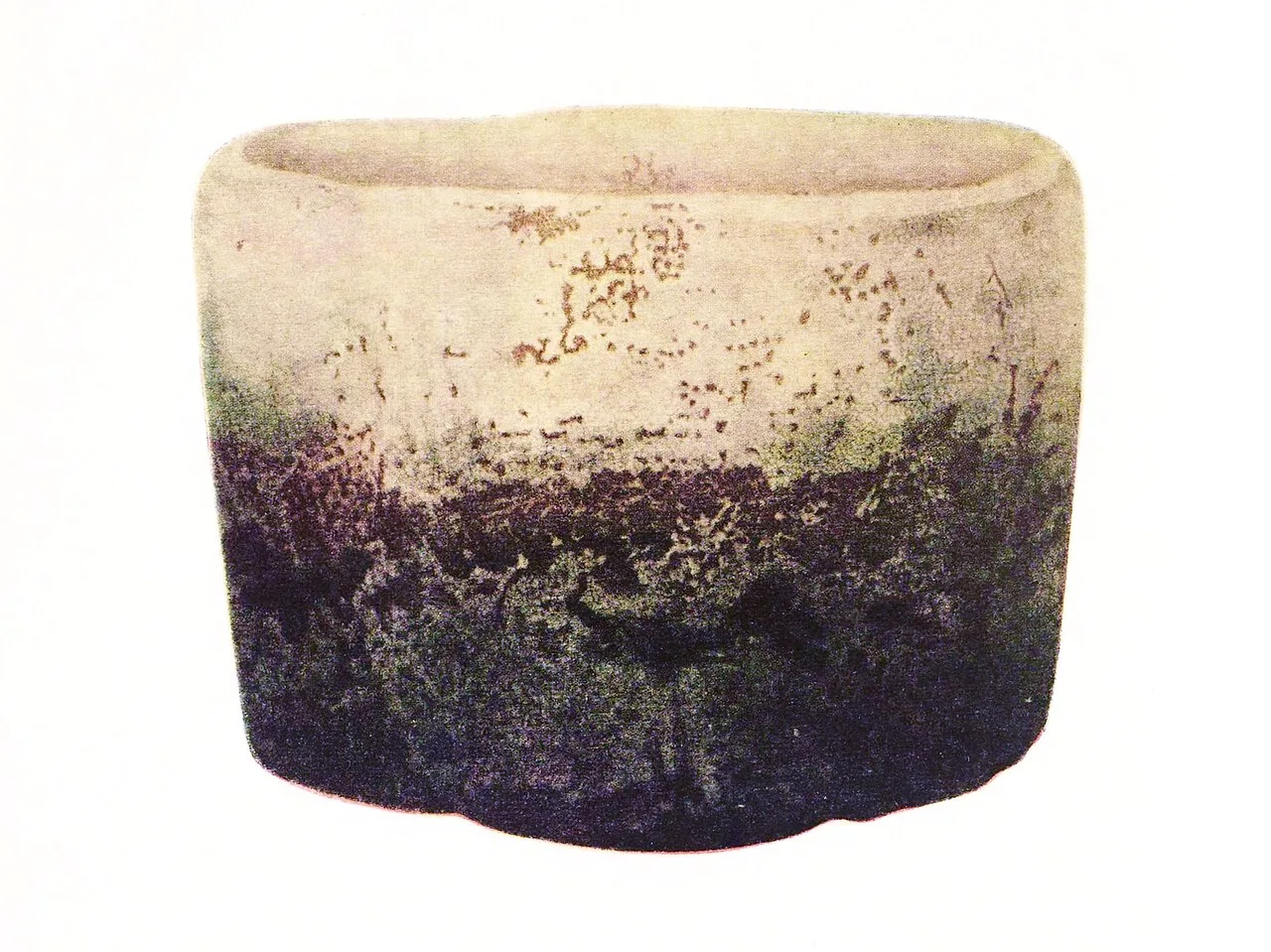
Mount Fuji tea bowl by Hon'ami Kōetsu, designated a national treasure
Wabi-sabi
In traditional Japanese aesthetics, wabi-sabi centers on the appreciation of transience, imperfection, and incompleteness in art and nature.
Nobility Finding Enlightenment in Solitude
Solitude and desolation are rarely treated as virtues, but Mahayana Buddhism reframed them as a release from material attachment. Around 700 years ago, members of the Japanese nobility began viewing the comprehension of emptiness and imperfection as the initial step toward satori, or enlightenment. This philosophical shift transformed once-austere concepts into a celebrated spiritual pursuit, altering how the ruling class understood personal transcendence.
From Wikipedia · CC BY-SA 4.0

Japanese woodblock print showcasing transience, precarious beauty, and the passage of time, thus "mirroring" mono no aware[1]
Mono no aware
This Japanese idiom describes the aesthetic appreciation of the transience of things and a gentle sadness regarding the reality of life.
From an Exclamatory Sigh to Measured Emotion
The concept began not as an abstract philosophical doctrine, but as an instinctive vocal reaction. In the Heian period, the word aware functioned as an expression of measured surprise akin to "ah" or "oh." Rather than igniting a turbulent surge of passion, the phrase gradually shifted into a disciplined, balanced sensitivity toward fleeting moments.
From Wikipedia · CC BY-SA 4.0

Return to the Convent, by Eduardo Zamacois y Zabala, 1868. The painting depicts a group of monks laughing while a lone monk struggles with a donkey.
Schadenfreude
Schadenfreude is the experience of pleasure, joy, or self-satisfaction that comes from learning of the troubles, failures, pain, suffering, or humiliation of another.
Toddler Roots of Inequity Aversion
Schadenfreude manifests remarkably early in human development rather than emerging solely as a learned adult vice. Children as young as two years old exhibit this response, indicating deep social roots. Psychologists hypothesize that experiencing satisfaction at another's setback helps establish inequity aversion during formative childhood interactions. Rather than being purely malicious, the impulse may serve foundational social functions.
From Wikipedia · CC BY-SA 4.0

"Monument to the Finnish sisu" on a fell in Lapland
Sisu
A Finnish word variously translated as stoic determination, tenacity of purpose, grit, and resilience, held by Finns to express their national character.
A Smile on the 5,000-Meter Final Stretch
Folklore researcher Matti Kuusi traced the birth of the concept to the 1912 Summer Olympics in Stockholm. In his 1989 book Möykkyjä ja neulasia, Kuusi described how runner Hannes Kolehmainen overtook Frenchman Jean Bouin while smiling on the final stretch of the 5,000-meter race. This athletic breakthrough felt like the discovery of an unnamed Finnish force of nature, formalizing the modern construct.
From Wikipedia · CC BY-SA 4.0

Swedish Conservatism Flags Symbol
Lagom
Lagom is a Swedish word.
The Viking Mead Myth and Seventeenth-Century Law
Popular folklore often connects the term to Vikings passing a communal drinking horn around the team so everyone received a fair portion. However, historical documentation shows this story is merely a false etymology. The term actually originated as an archaic dative plural form of the word for law, appearing in 17th-century texts to indicate customary or common-sense law.
From Wikipedia · CC BY-SA 4.0
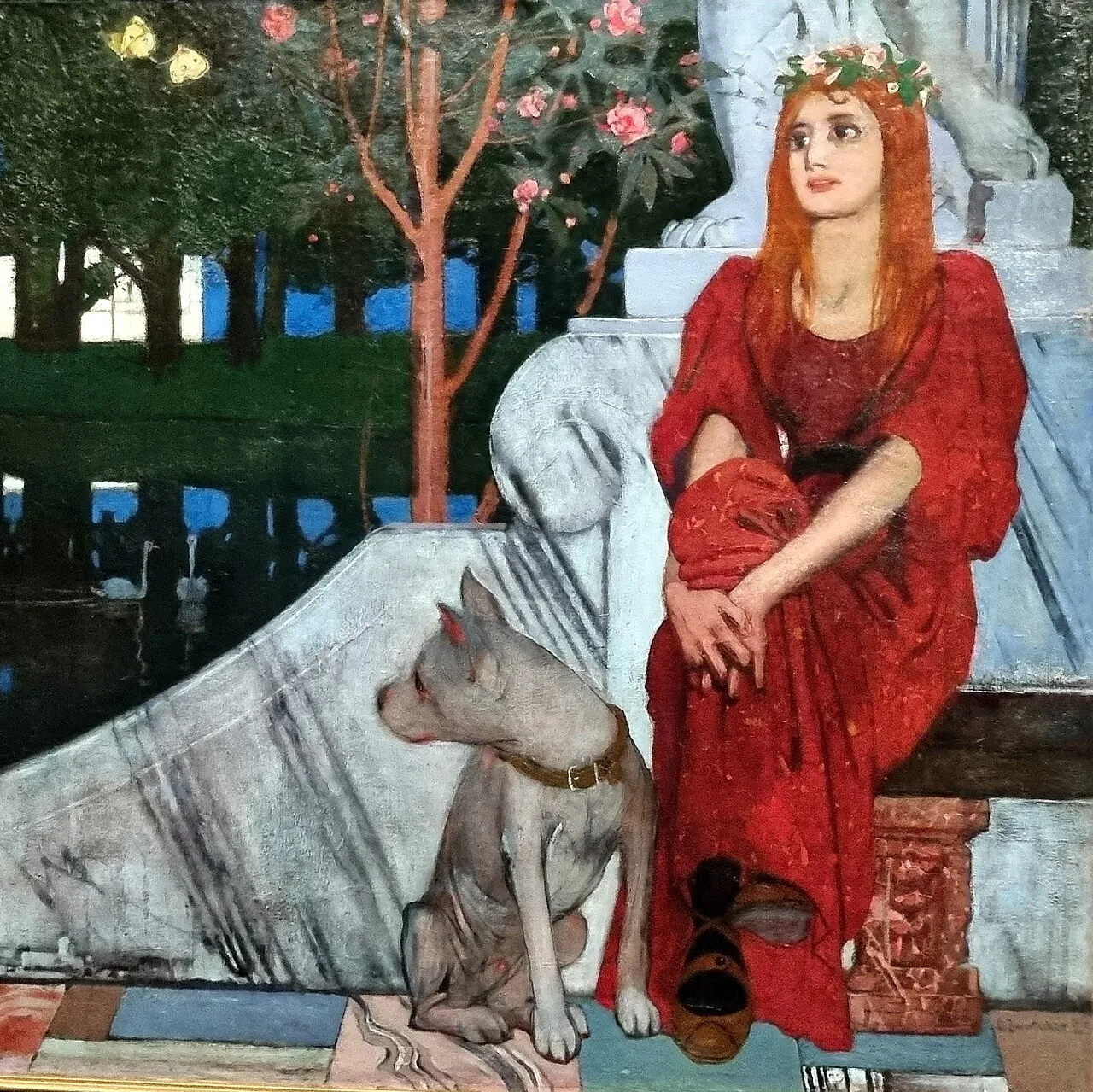
Sehnsucht by Oskar Zwintscher, c. 1900
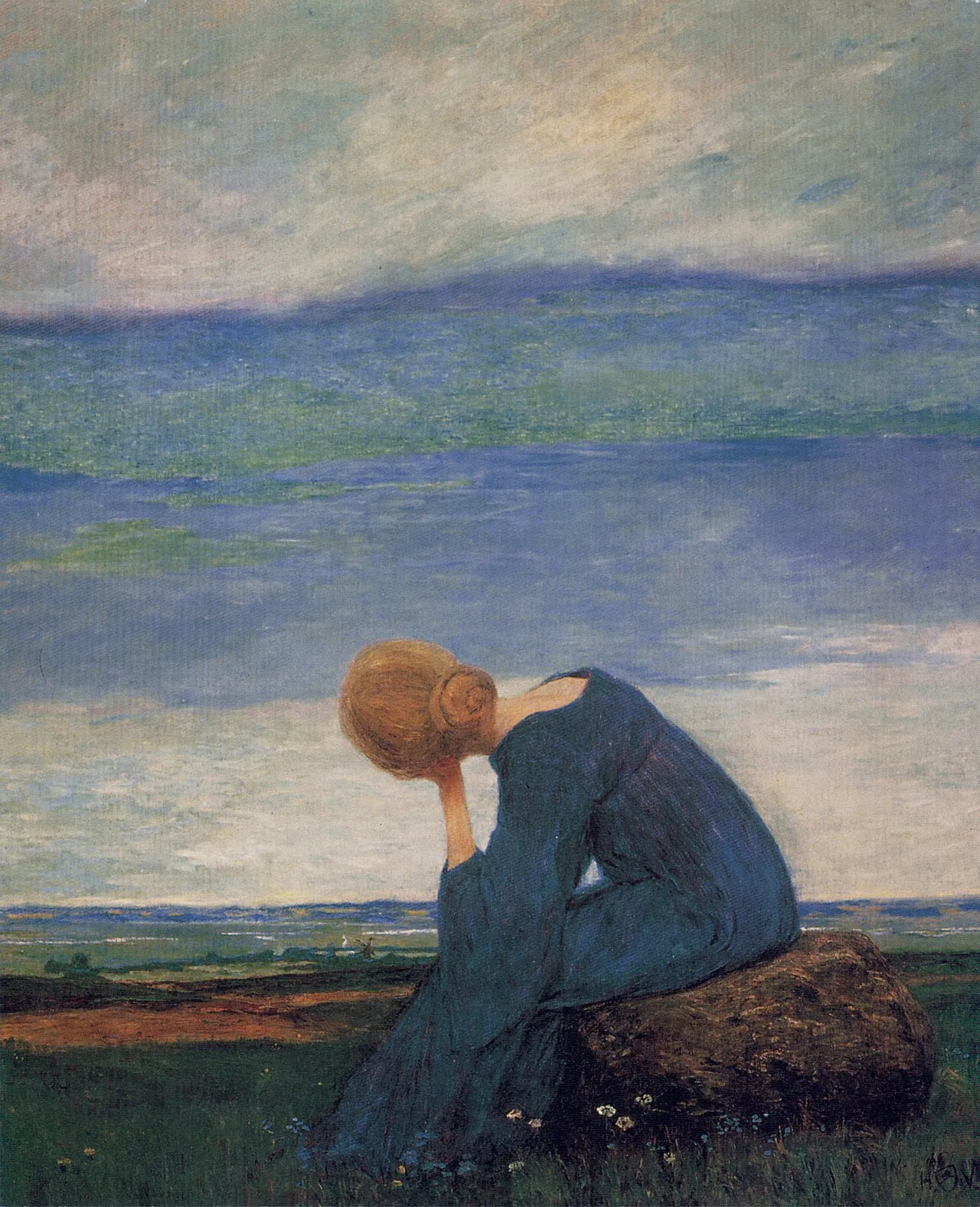
Sehnsucht (Dreaming) by Heinrich Vogeler about 1900

Sehnsucht, sculpture by Susanne Kraißer
Sehnsucht
A German noun translated as longing, desire, yearning, or craving, representing thoughts and feelings about imperfect life facets paired with yearning for ideal experiences.
From Physical Affliction to Incurable Longing
Middle High German roots tied Sehnsucht to Siechtum, an explicit reference to chronic illness and bodily suffering. Over centuries, this association with disease softened into a psychological description of intense, often agonizing desire. The term ultimately came to signify a painful yearning experienced when the desired outcome is distant, uncertain, or completely impossible to attain.
From Wikipedia · CC BY-SA 4.0

An example of a Ikigai diagram
Ikigai
A Japanese concept referring to what an individual defines as the meaning of their life.
A Psychiatrist's 1966 Foundation
Academic study of the concept began decades before modern self-help literature embraced it. Japanese psychiatrist and academic Mieko Kamiya first popularized ikigai in her 1966 book, On the Meaning of Life. Her foundational work established a formal inquiry into personal meaning that shaped subsequent research across Japan.
From Wikipedia · CC BY-SA 4.0