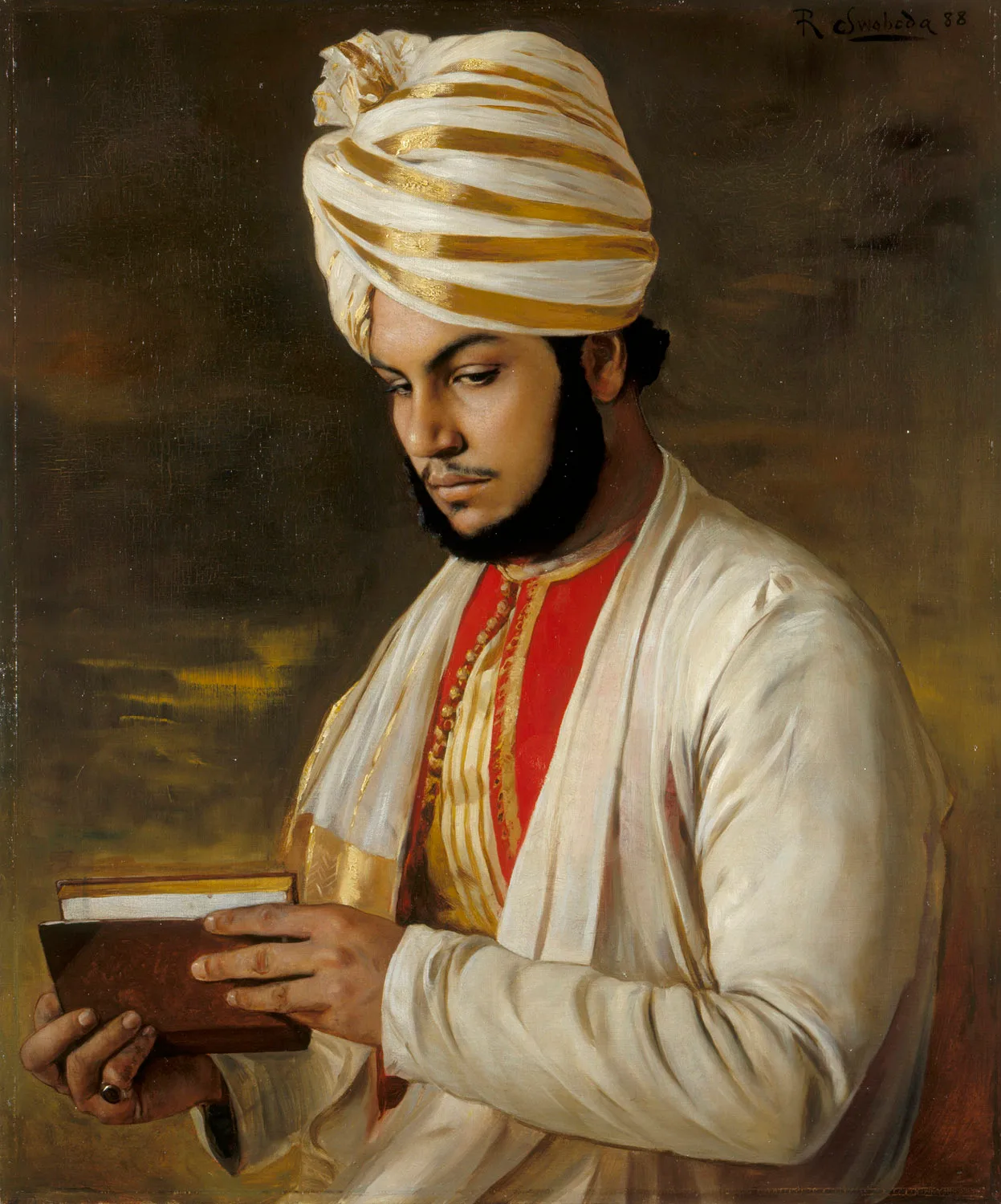
Karim in a turban and holding a book
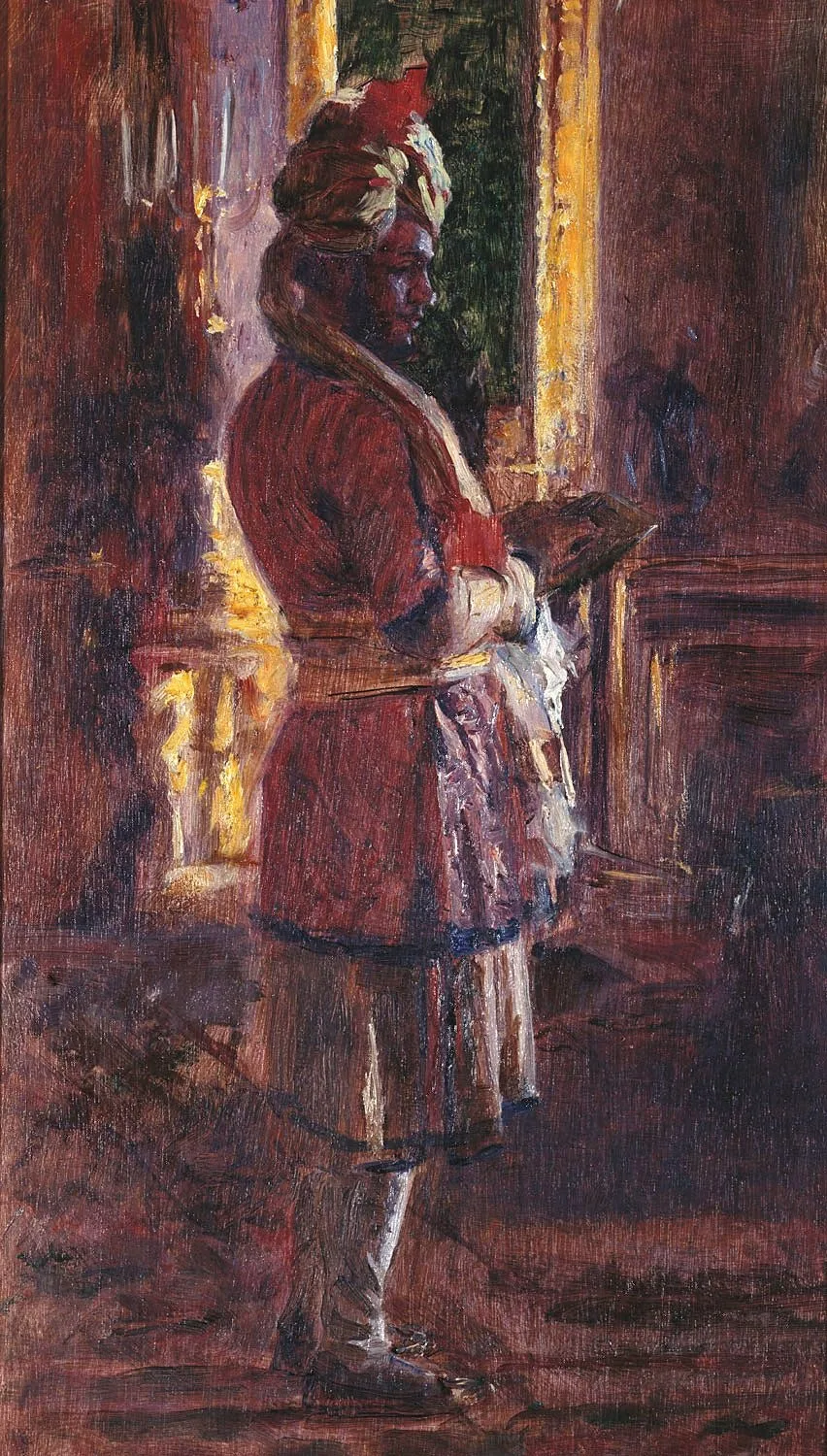
The Munshi in a painting by Laurits Tuxen, commissioned by Queen Victoria, 1887. Royal Collection.

Glas-allt-Shiel: Victoria's remote getaway on the Balmoral estate
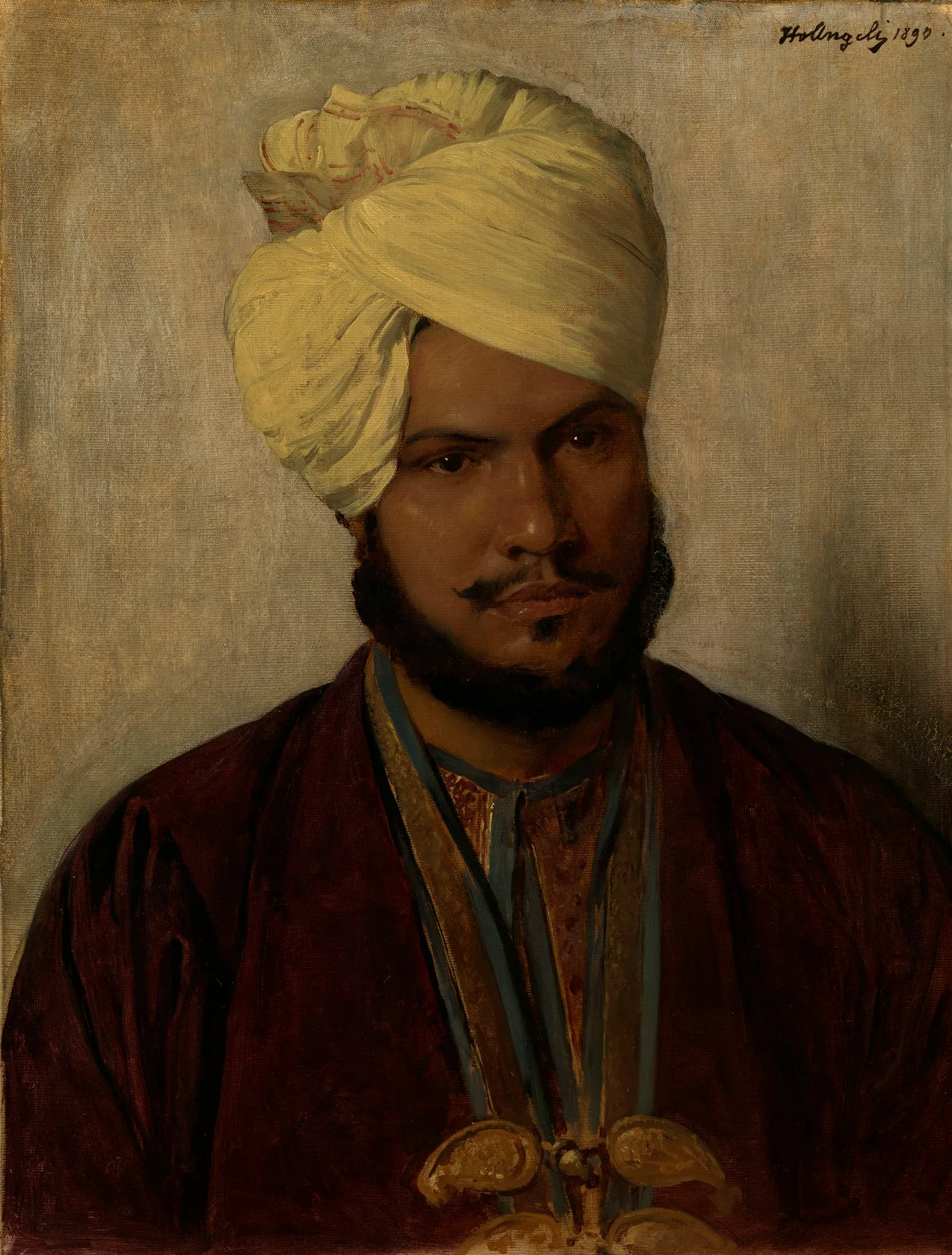
Portrait by Heinrich von Angeli, 1890
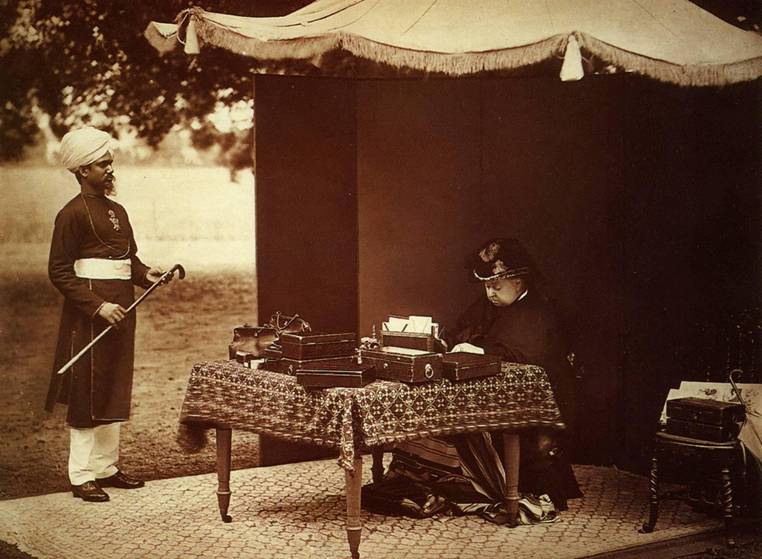
Queen Victoria and an Indian attendant, 1893

Queen Victoria on holiday in Cimiez in the south of France, by Jean Baptiste Guth
Abdul Karim (the Munshi)
Mohammed Abdul Karim, also known as the Munshi, was an Indian attendant of Queen Victoria who served her during the final 14 years of her reign.
Erasing the Serving Trays
In 1886, Karim helped Jail Superintendent John Tyler select carpets and 34 convicts for the Colonial and Indian Exhibition in South Kensington. After arriving in Britain to wait at table, Karim quickly complained that menial service was beneath a former clerk. Queen Victoria elevated him to the role of "Munshi" in August 1888 and ordered the destruction of photographs showing him serving food.
From Wikipedia · CC BY-SA 4.0
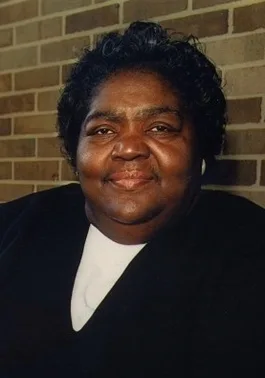
Ann Atwater, 1995
Ann Atwater
Ann George Atwater was an American civil rights activist in Durham, North Carolina, who led grassroots efforts to fight poverty and advocate for Black rights.
Domestic Survival Inside Substandard Housing
Living as a single mother in Durham, Ann Atwater faced extreme poverty while raising two daughters on a meager $57 monthly welfare check. She fashioned clothing for her children out of repurposed flour and rice bags and endured severely dilapidated living conditions. Her plumbing surged so violently that her children named it Niagara Falls, and broken floorboards allowed the bathtub to fall entirely through the floor.
From Wikipedia · CC BY-SA 4.0
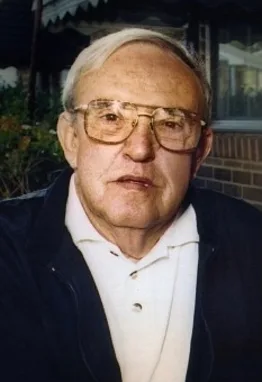
C. P. Ellis, 1995
C. P. Ellis
Claiborne Paul Ellis was an American Ku Klux Klan leader who later became a civil rights activist and trade union organizer.
Inherited Resentment and the Scapegoat Strategy
Ellis grew up in Durham as the son of an impoverished mill worker who belonged to the Ku Klux Klan. Later in life, the heavy financial pressure of supporting a wife and four children, including a child who was blind and non-verbal, provoked his urge to blame others. Seeking self-worth and community respect, he joined the Klan and climbed its leadership hierarchy until reaching the rank of Exalted Cyclops.
From Wikipedia · CC BY-SA 4.0

Daryl Davis wearing a purple button-down shirt, playing a piano, turned right-of-camera, towards a microphone

Davis holding up KKK robes at Blues and Rock for Humanity in November 2017
Daryl Davis
Daryl Davis is an American R&B and blues musician and activist known for his efforts to fight racism by engaging members of the Ku Klux Klan.
The Cub Scout Parade That Sparked a Lifelong Question
Growing up abroad as the son of a Foreign Service officer, Daryl Davis attended integrated schools with diplomat children across various nations. His first direct encounter with racism occurred at age ten during a Cub Scout parade in Belmont, Massachusetts, where spectators hurled rocks and bottles at him while he carried the flag. The utter irrationality of being attacked by strangers without provocation fueled a question about the origins of racial hatred that defined his entire adulthood.
From Wikipedia · CC BY-SA 4.0

Portrait of Antonin Scalia, Associate Justice, U.S. Supreme Court

A cursive, not particularly legible "Antonin Scalia"

Scalia (left) at the University of Virginia School of Law, 2010

Scalia in 2010

Scalia's official portrait, 2005

Scalia accepts the Semper Fidelis Award, 2013
Antonin Scalia
Antonin Gregory Scalia was an American jurist who served as an associate justice of the Supreme Court of the United States from 1986 until his death in 2016.
The Lone Supreme Court Argument
Prior to his appointment to the federal judiciary, Scalia litigated before the highest bench only once in his career. In early 1976, he appeared in Alfred Dunhill of London, Inc. v. Republic of Cuba on behalf of the U.S. government. Scalia successfully argued Dunhill's position to secure a decisive victory.
From Wikipedia · CC BY-SA 4.0

Ginsburg seated in her robe

Ginsburg in 1959, wearing her Columbia Law School academic regalia
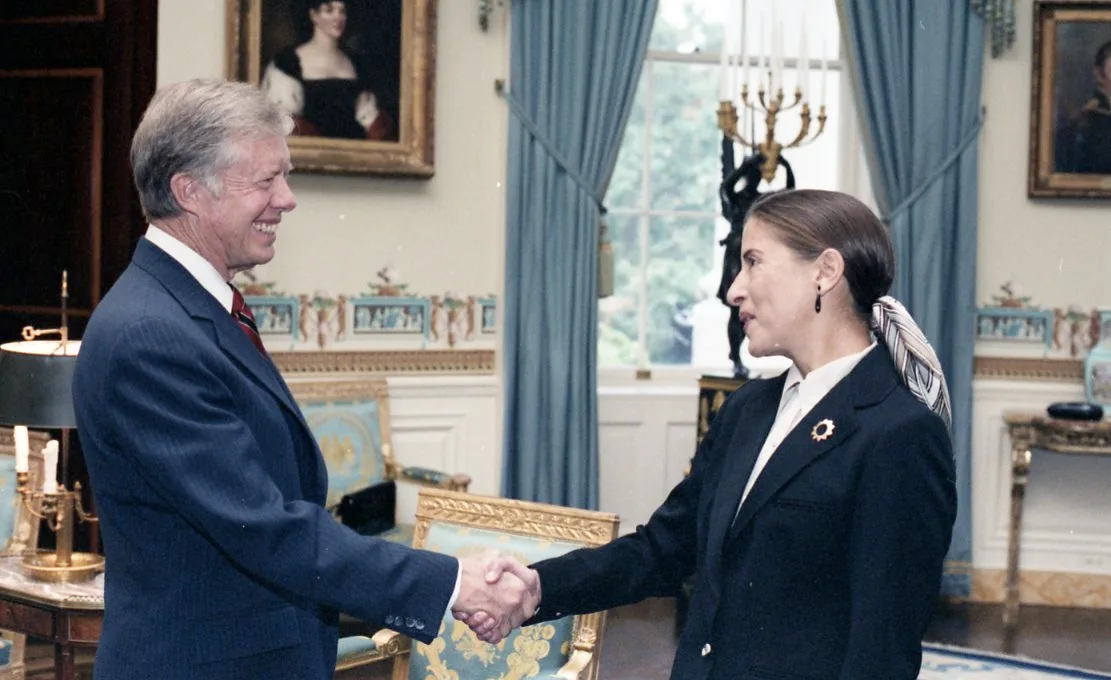
Ginsburg with President Jimmy Carter in 1980

Chief Justice William Rehnquist swearing in Ginsburg as an associate justice of the Supreme Court, as her husband Martin Ginsburg and President Clinton watch
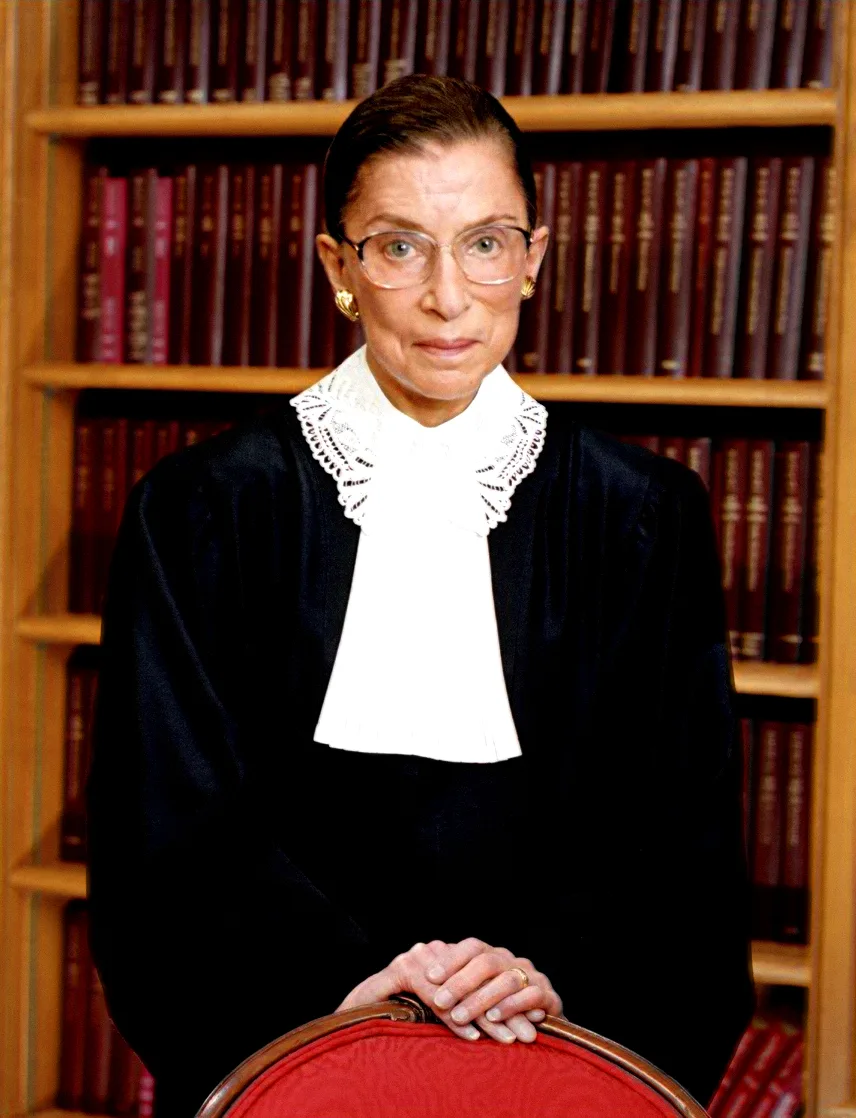
Official portrait, c. 2006

Ginsburg was honored in a ceremony in Statuary Hall, and was the first woman to lie in state at the Capitol, September 25, 2020.
Ruth Bader Ginsburg
Joan Ruth Bader Ginsburg was an American lawyer and jurist who served as an associate justice of the Supreme Court of the United States from 1993 until her death in 2020.
Swedish Precedents for American Equality
Before shaping American constitutional law, Ginsburg gained a transformative perspective abroad from 1961 to 1963. Working alongside Anders Bruzelius, she learned Swedish while researching civil procedure. Witnessing Swedish law classes composed of 20 to 25 percent women and seeing an eight months pregnant judge still on the bench radically expanded her vision of what professional equality could look like in practice.
From Wikipedia · CC BY-SA 4.0
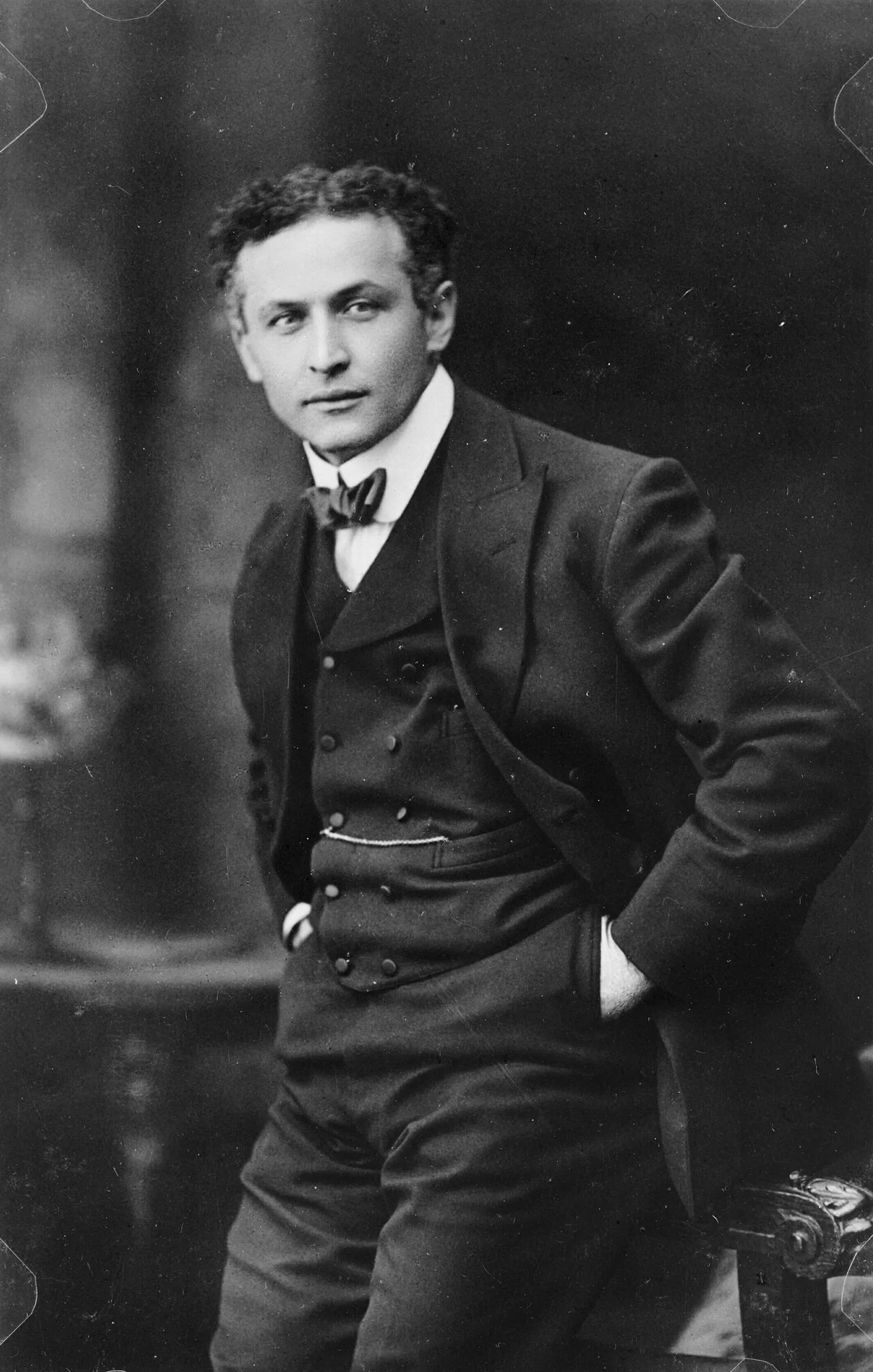
Harry Handcuff Houdini Crop
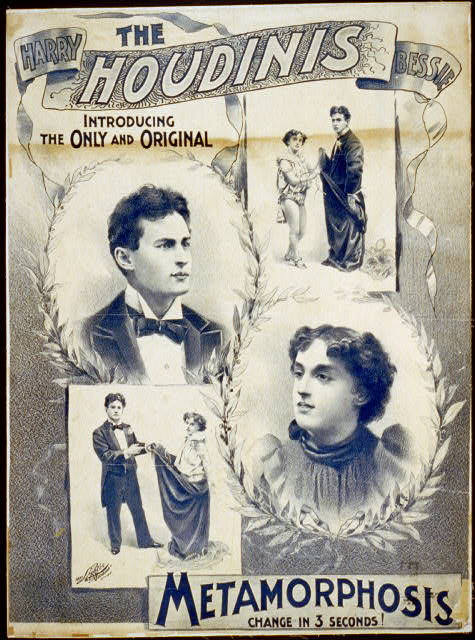
1895 poster for The Houdinis
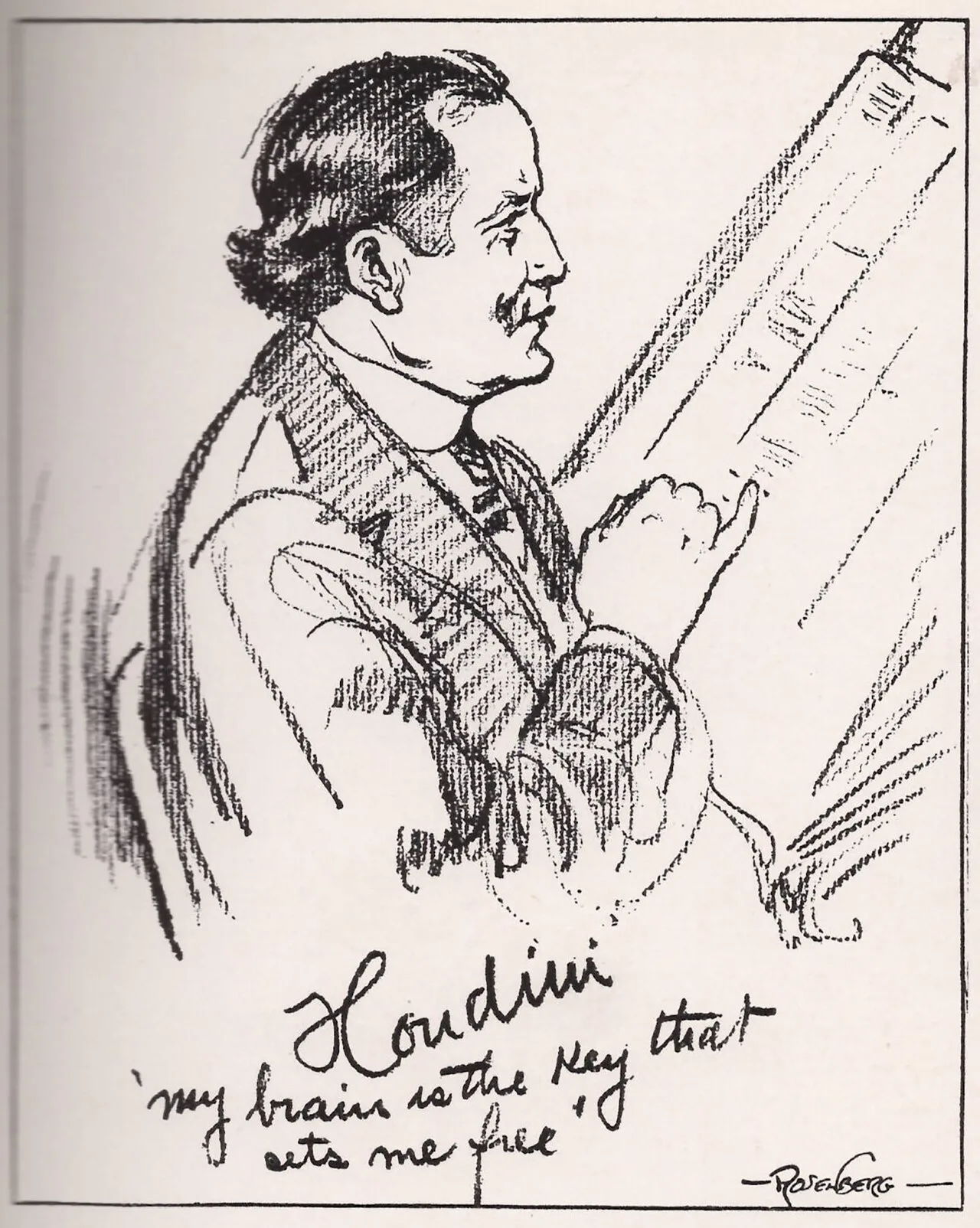
Signed drawing by Manuel Rosenberg 1927

Houdini and Jennie, the Vanishing Elephant, January 7, 1918

The Houdini Serial, 1919 movie poster

Houdini demonstrates how a photographer could produce fraudulent "spirit photographs" that purported to document the apparition and social interaction of the dead.[90]
Harry Houdini
Harry Houdini (born Erik Weisz; March 24, 1874 – October 31, 1926) was an American escapologist, illusionist, and stunt performer noted for his escape acts.
Demolishing His Namesake's Pedestal
While Ehrich Weiss adopted the stage name Harry Houdini as an homage to French illusionist Jean-Eugène Robert-Houdin, the tribute eventually soured into open hostility. In 1908, Houdini published The Unmasking of Robert-Houdin to aggressively dismantle his predecessor's legacy. He attacked his former idol as a fraud who had falsely claimed the invention of automata and aerial suspension. Magicians and researchers subsequently pushed back, defending Robert-Houdin against Houdini's allegations.
From Wikipedia · CC BY-SA 4.0
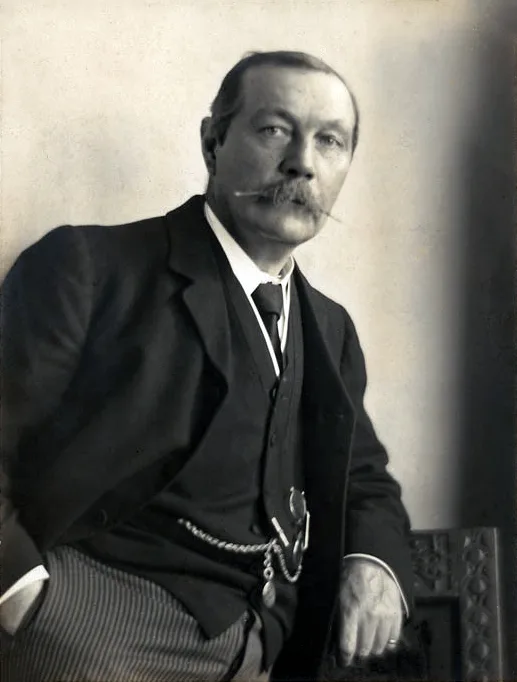
Doyle in 1914
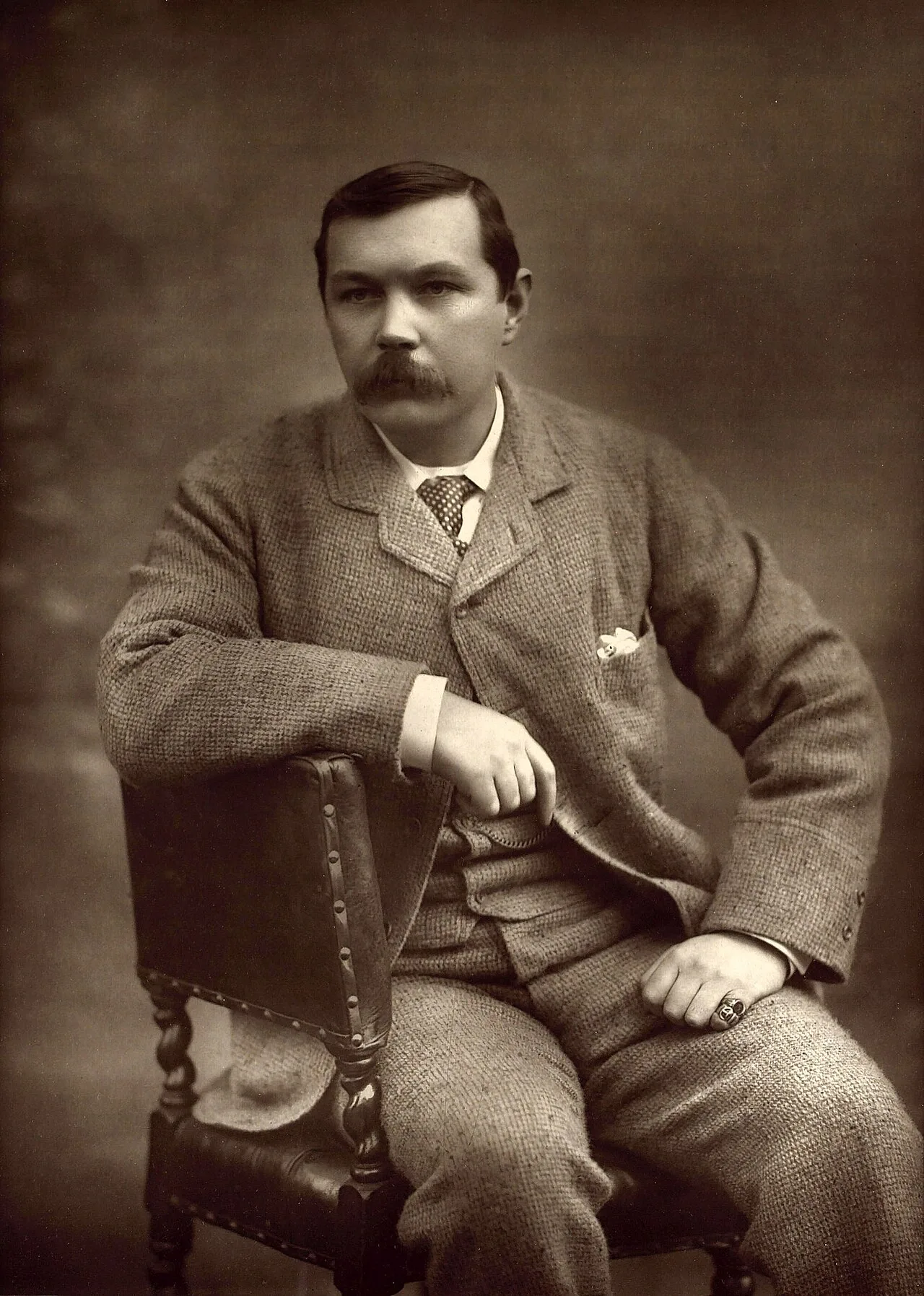
Portrait of Doyle by Herbert Rose Barraud, 1893
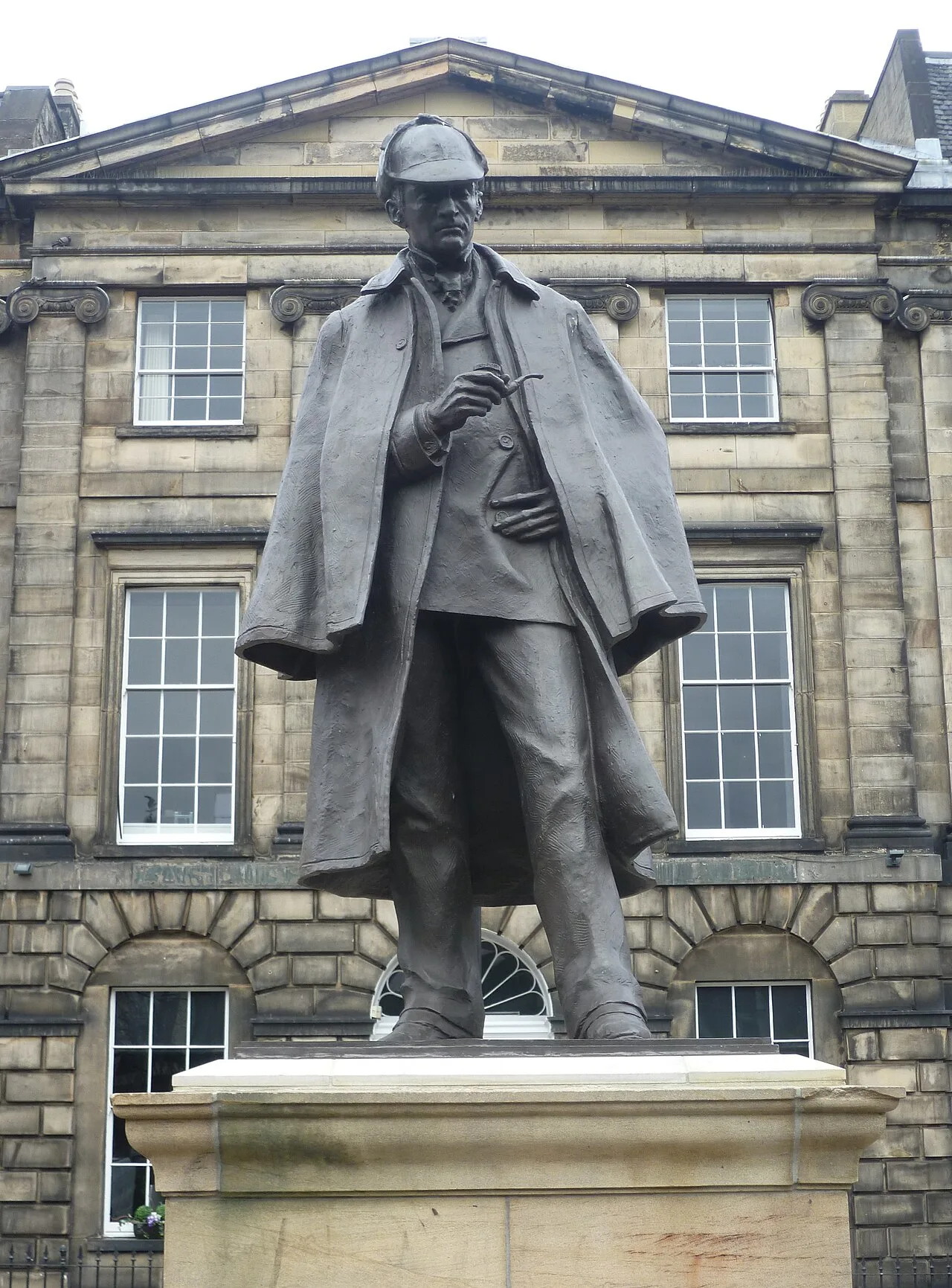
Sherlock Holmes statue in Edinburgh, erected opposite the birthplace of Doyle, which was demolished c. 1970
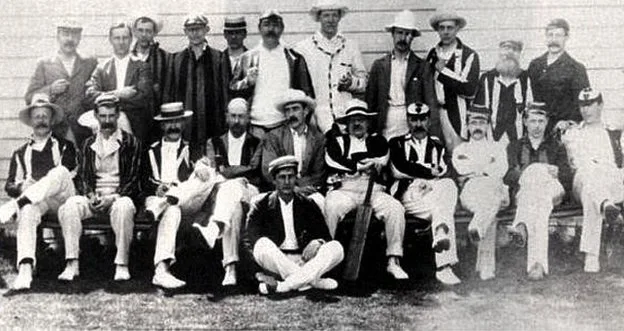
Authors v Artists cricket match in London, May 1903. Doyle is stood in the back row, 6th from left.
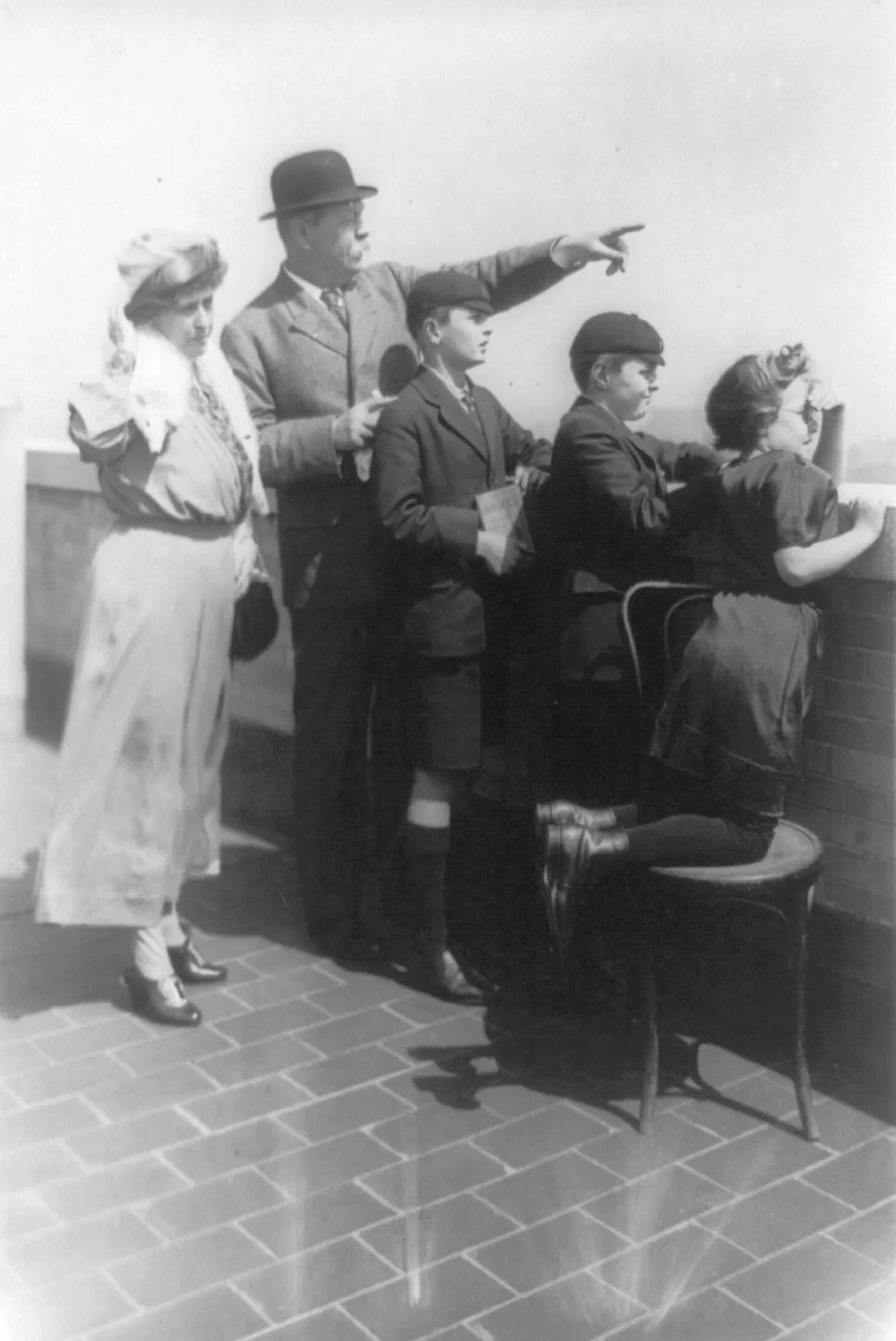
Doyle with his family in New York City, 1922
Façade of Undershaw with Doyle's children, Mary and Kingsley, on the drive
Arthur Conan Doyle
Sir Arthur Ignatius Conan Doyle (1859–1930) was a British writer and physician who created the famed fictional detective Sherlock Holmes.
The Single-Word Surname Behind a Famous Moniker
Many readers assume the author possessed a compound surname, but historical records indicate otherwise. His baptism entry at St Mary's Cathedral in Edinburgh recorded his given names as Arthur Ignatius Conan and his surname as Doyle. Steven Doyle noted that Conan was simply a middle name that Arthur began using as a sort of surname after high school. In official library catalogues and formal records, his last name remains purely Doyle.
From Wikipedia · CC BY-SA 4.0
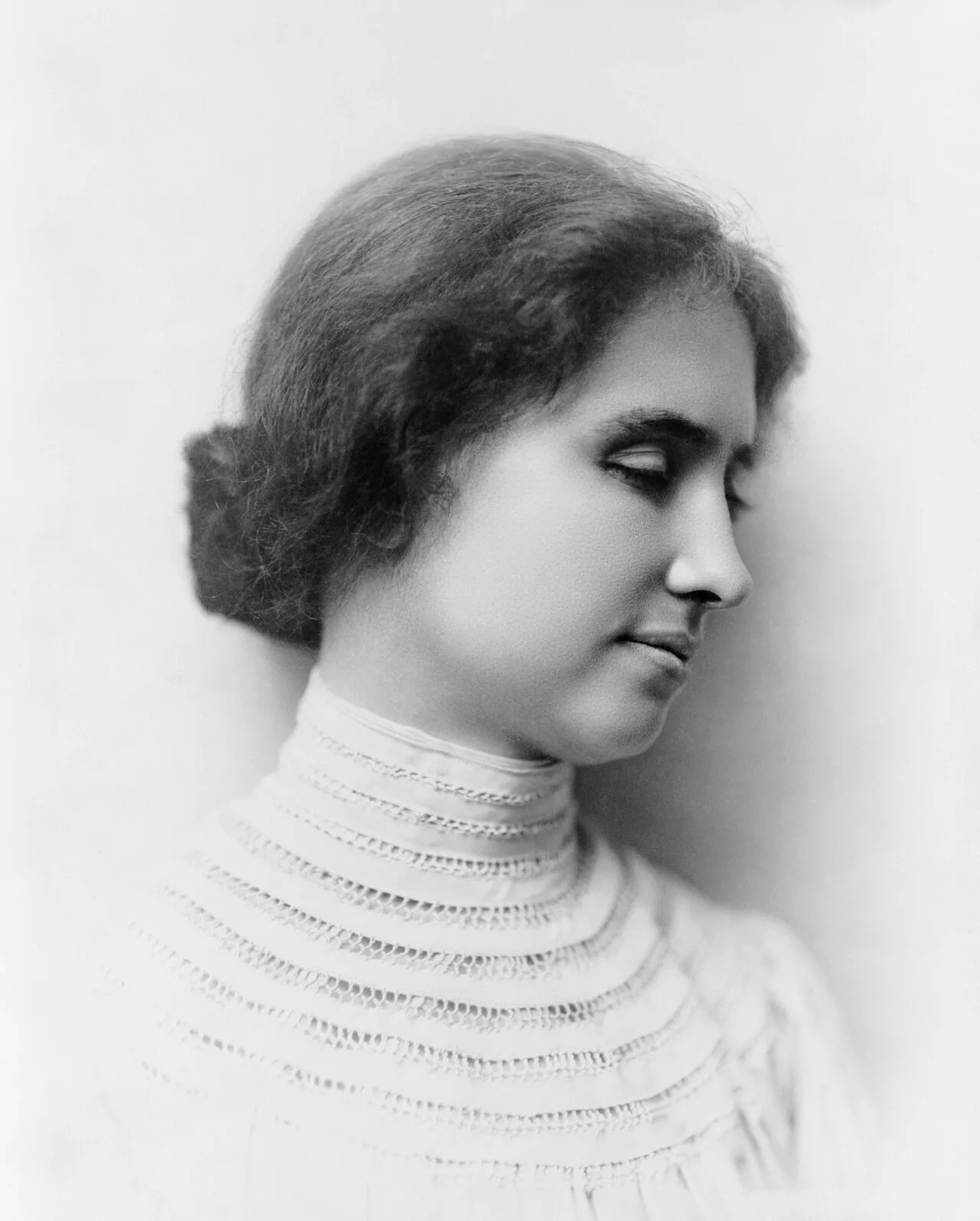
Keller c. 1904

Keller's birthplace in Tuscumbia, Alabama
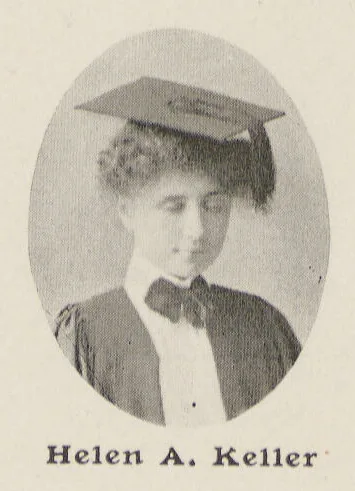
Keller in the Radcliffe College yearbook, 1904
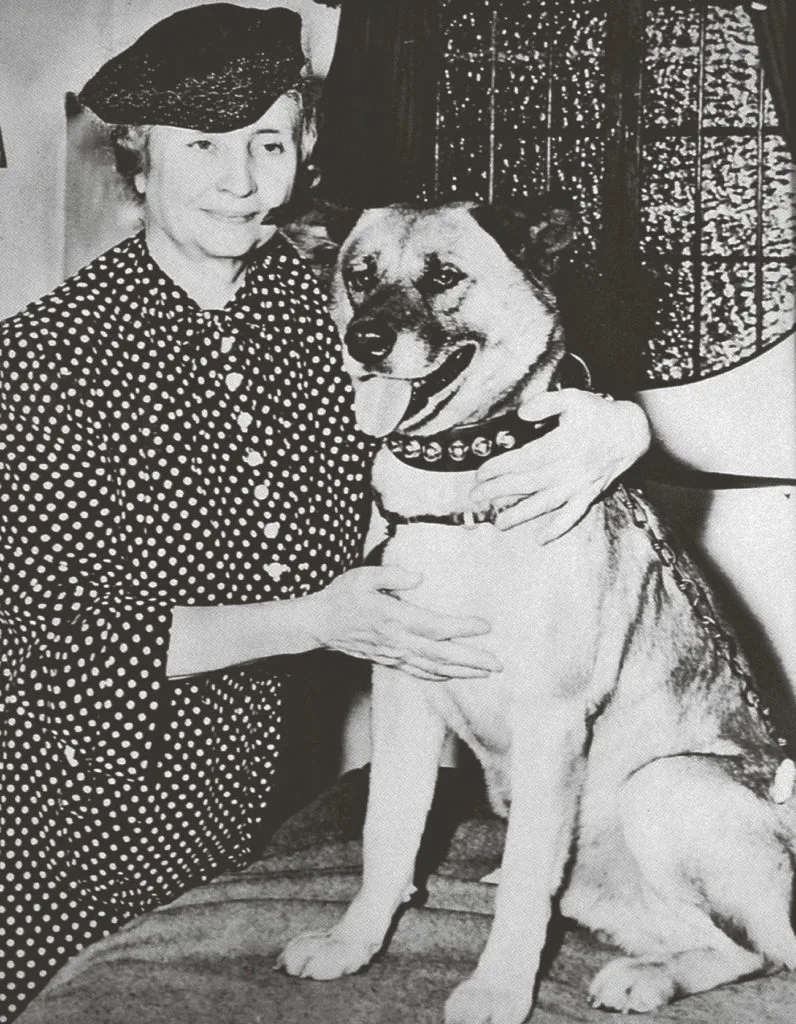
Helen Keller with her second Akita Kenzan-Go
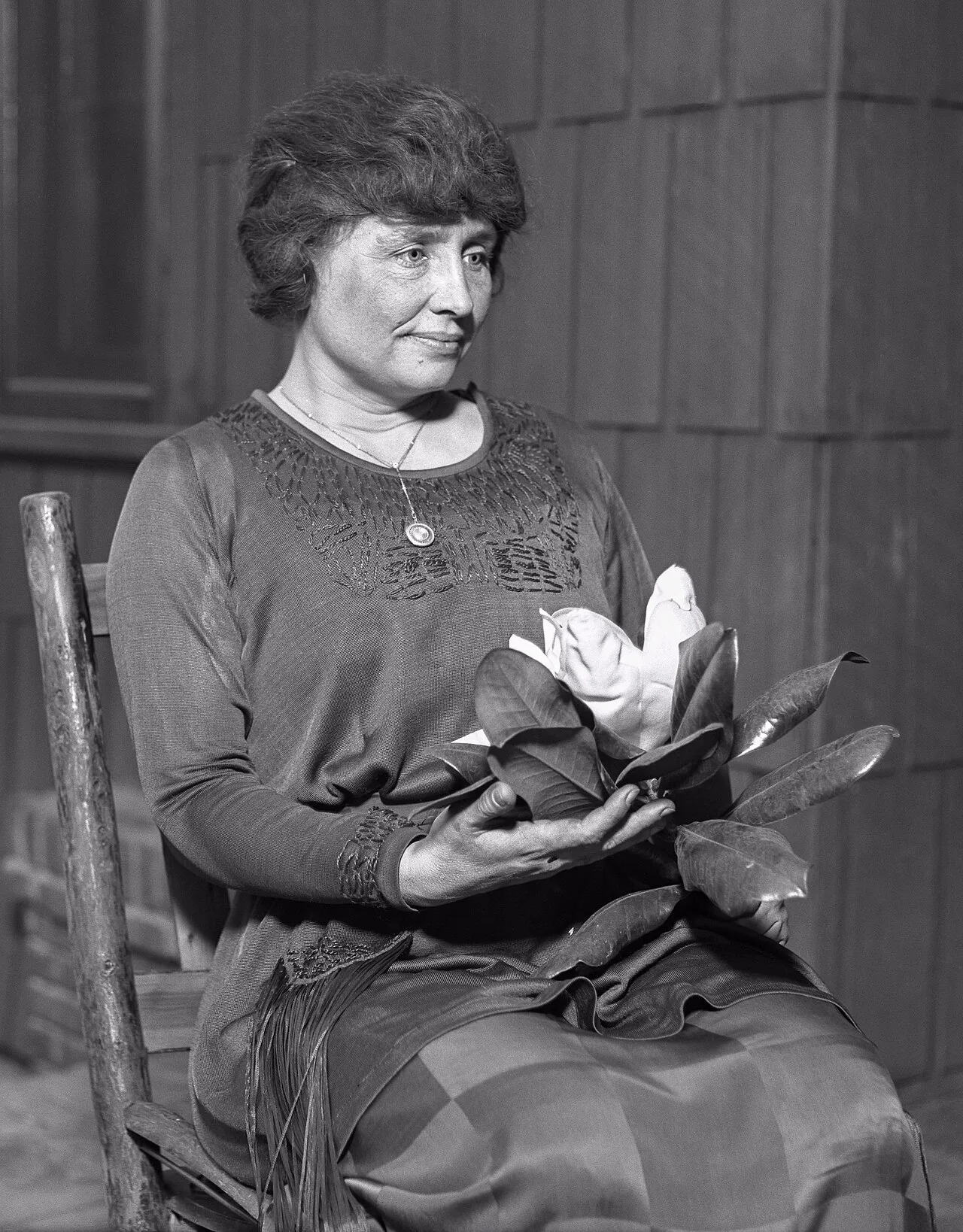
Keller holding a magnolia, c. 1920
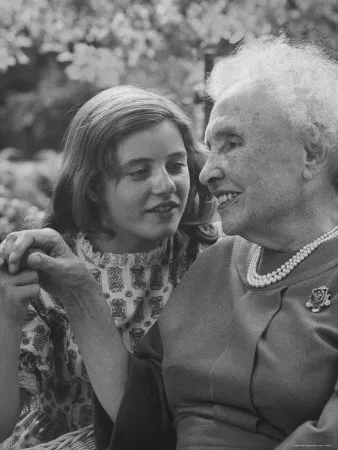
Helen Keller with Patty Duke, who portrayed Keller in both the play and film The Miracle Worker (1962). In a 1979 remake, Patty Duke played Anne Sullivan.
Helen Keller
Helen Keller was an American author, disability rights advocate, political activist, and lecturer.
Vibrations and Tabletop Acoustics
Before formal instruction began, Keller developed over 60 home signs and learned to identify individuals purely by the vibration of their footsteps. She later expanded her sensory engagement with the world through tactile communication methods. Shortly before World War I, with the assistance of the Zoellner Quartet, she discovered that resting her fingertips on a resonant tabletop allowed her to experience nearby music.
From Wikipedia · CC BY-SA 4.0
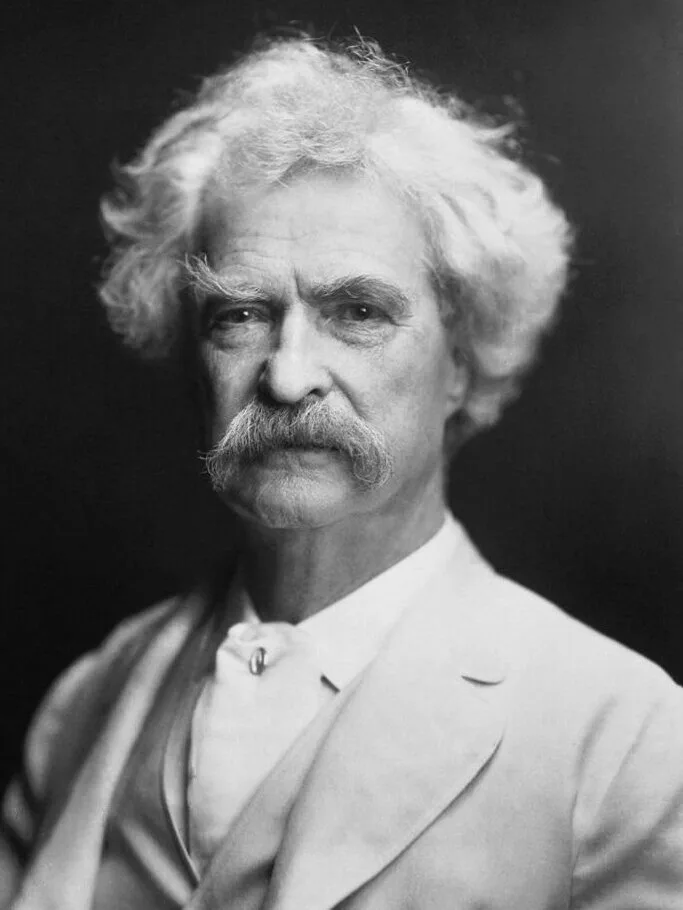
Twain in 1907
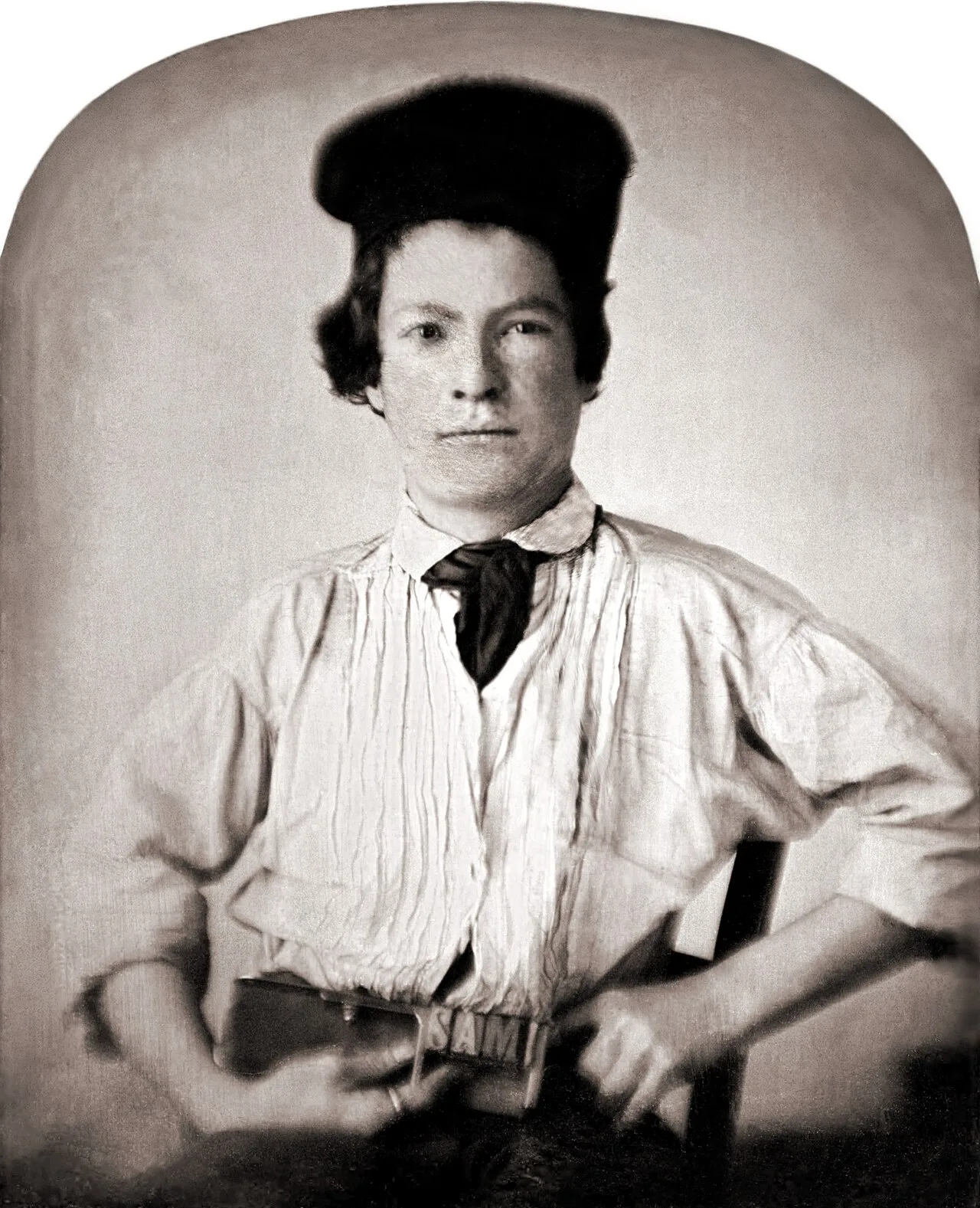
Samuel Clemens, age 15 holding metal type in a composing stick that spells out his first name. As a daguerreotype, whose creation involved no intermediate negative, the image is laterally reversed. Hence the type, which, in actuality, was backward, is readable, though Twain himself is flipped.
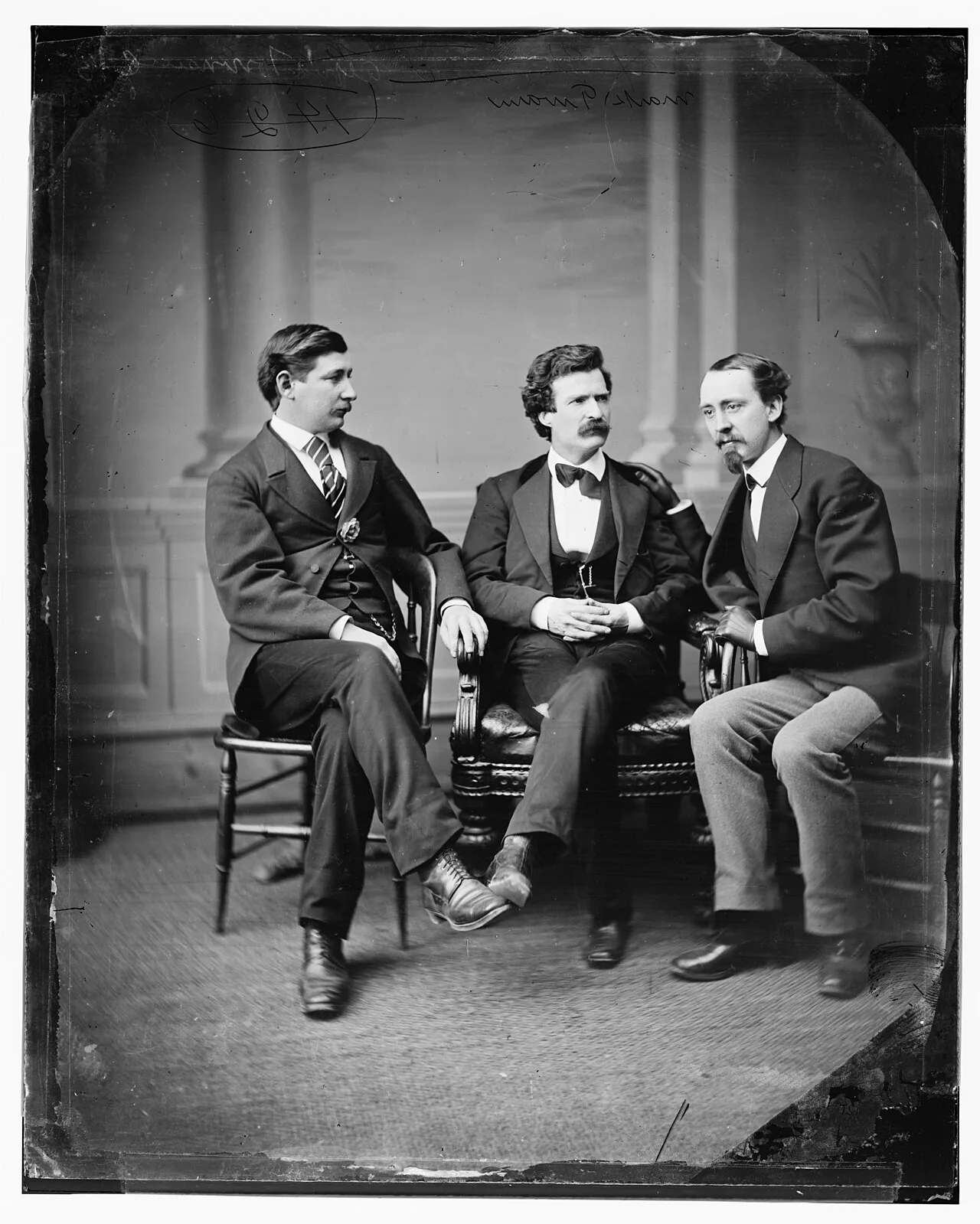
(From l. to r.) American Civil War correspondent and author George Alfred Townsend, Mark Twain and David Gray, editor of the rival Buffalo Courier[50]
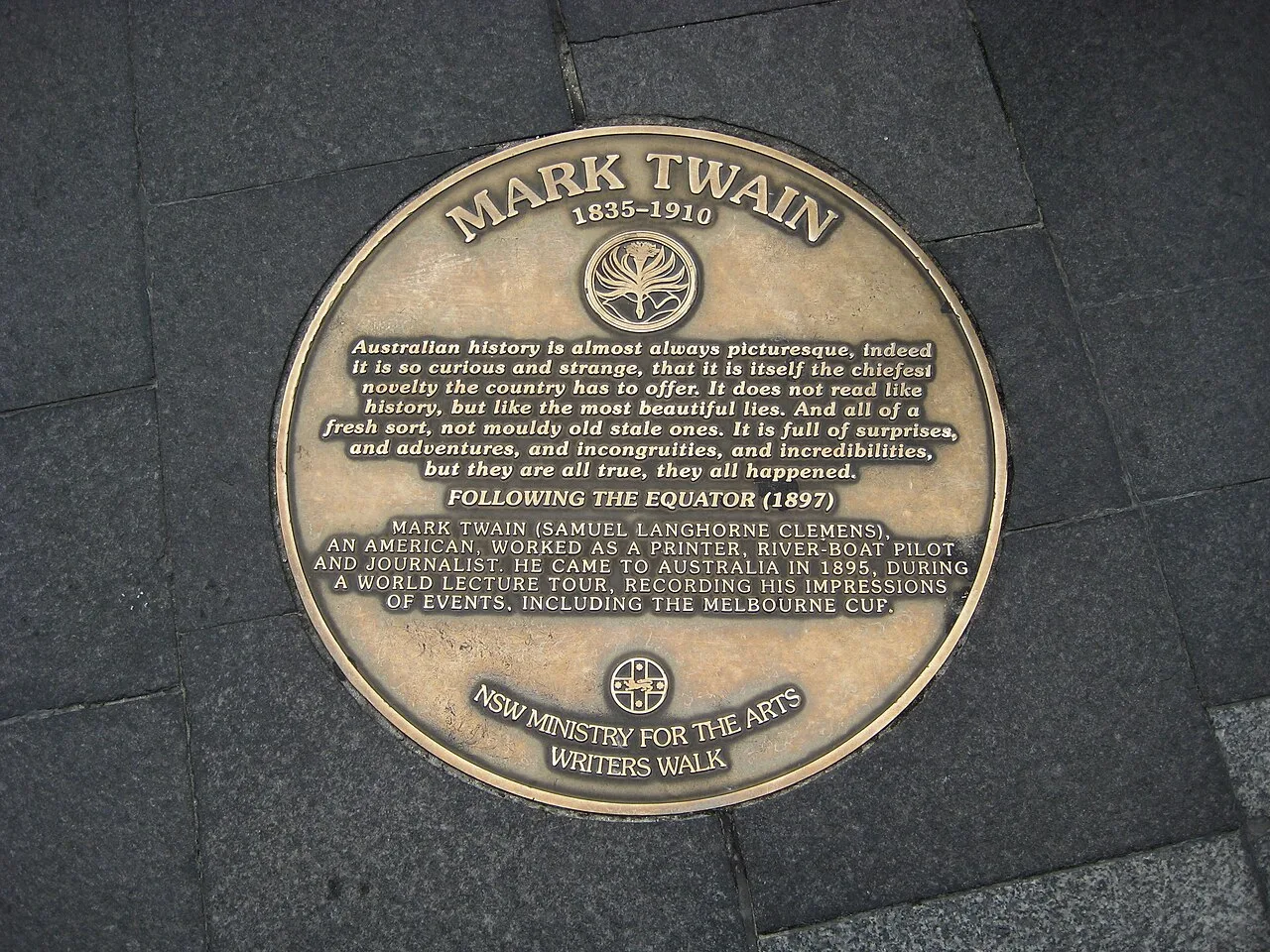
Plaque on Sydney Writers Walk commemorating the visit of Twain in 1895
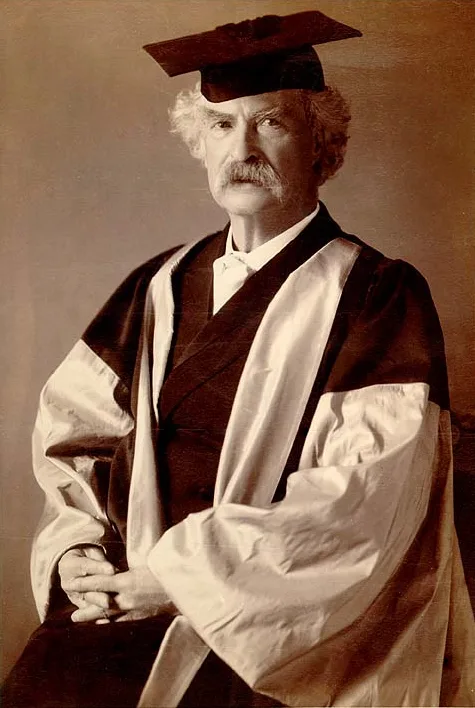
Twain in academic regalia for acceptance of the D.Litt. degree awarded to him by Oxford University in 1907

In 1901, Twain wrote a satirical essay titled To the Person Sitting in Darkness, in which he expressed his strong anti-imperialist views against ongoing conflicts such as the Boxer Rebellion, the Second Boer War and the Philippine–American War. At one point in the essay, Twain made a sardonic suggestion for a flag of the Philippines under American control; "And as for a flag for the Philippine Province, it is easily managed. We can have a special one—our States do it: we can have just our usual flag, with the white stripes painted black and the stars replaced by the skull and cross-bones."[156]
Mark Twain
Samuel Langhorne Clemens, known by the pen name Mark Twain, was an American writer, humorist, and essayist.
A Fatal Riverboat Premonition and Parapsychology
While training as a riverboat pilot, Samuel Clemens secured a job for his younger brother Henry on the steamboat Pennsylvania. On June 13, 1858, the vessel's boiler exploded, leading to Henry's death eight days later. Clemens claimed to have foreseen this fatal incident in a dream a month beforehand. The grief and guilt from the disaster spurred his lifelong interest in the paranormal, leading him to join the Society for Psychical Research.
From Wikipedia · CC BY-SA 4.0
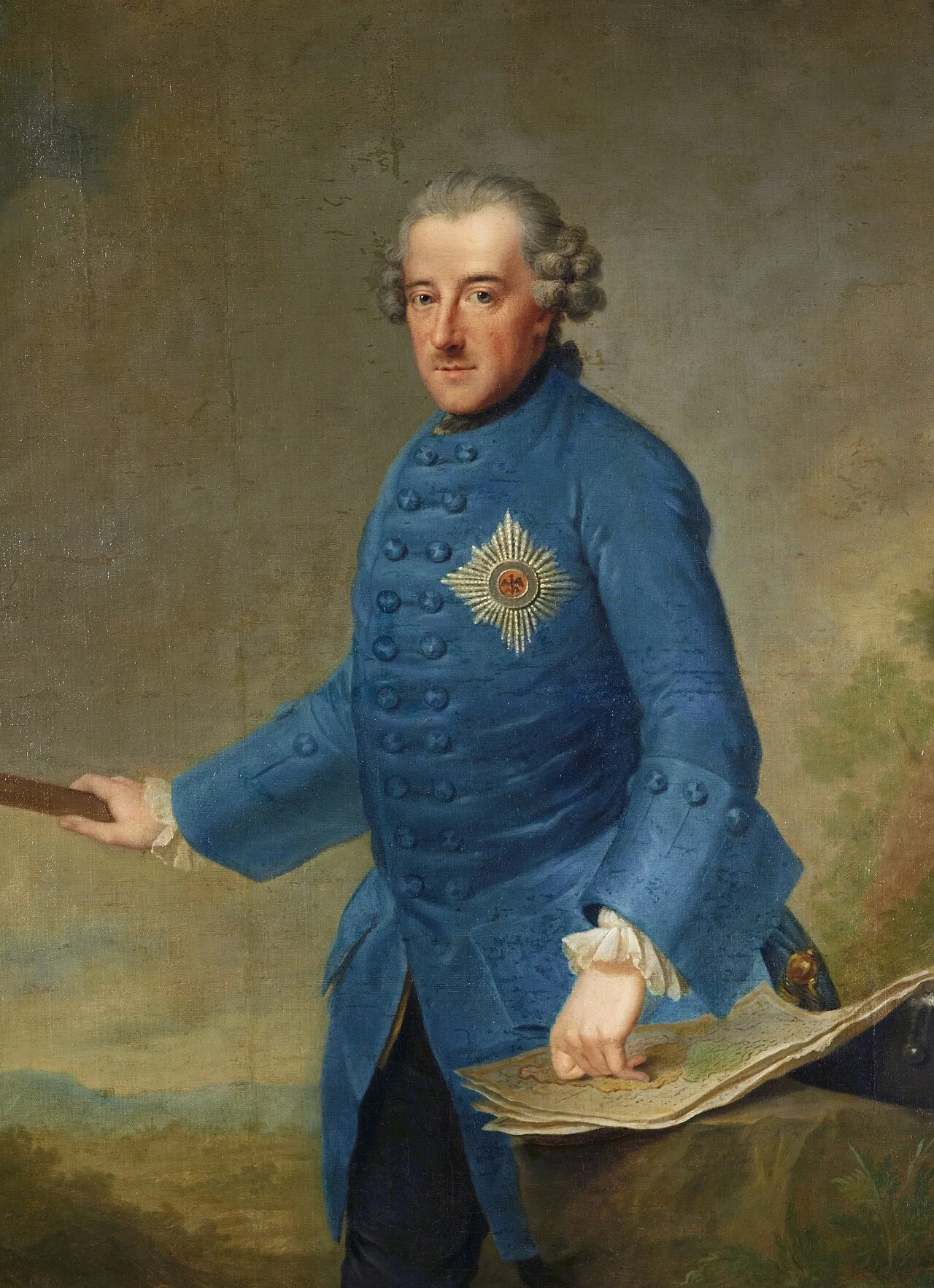
Friedrich der Große - Johann Georg Ziesenis - Google Cultural Institute (cropped 2)

Frederick the Great's signature
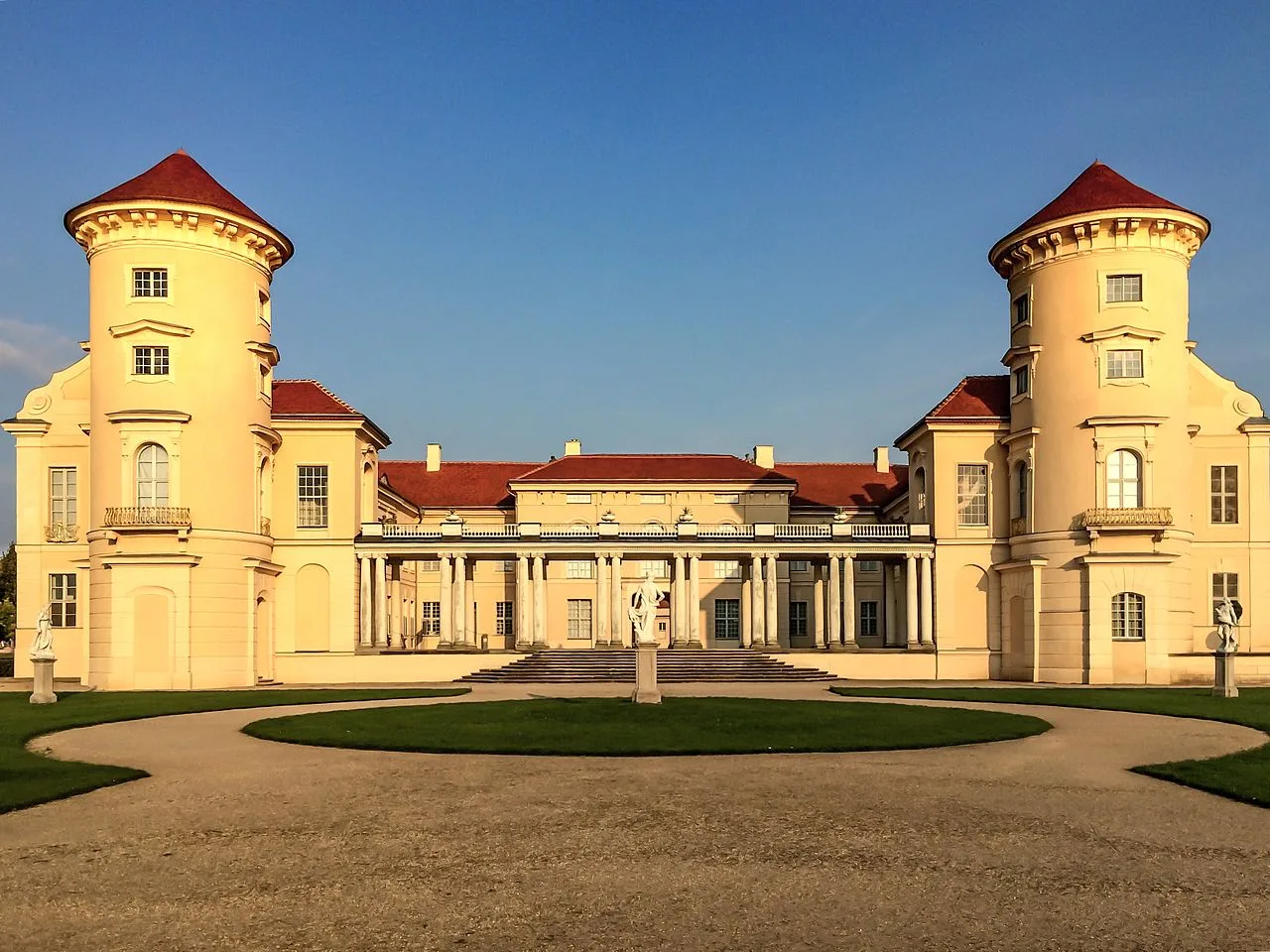
Rheinsberg Palace, Frederick's residence from 1736 to 1740

Frederick the Great at the Battle of Zorndorf by Carl Röchling (1904)
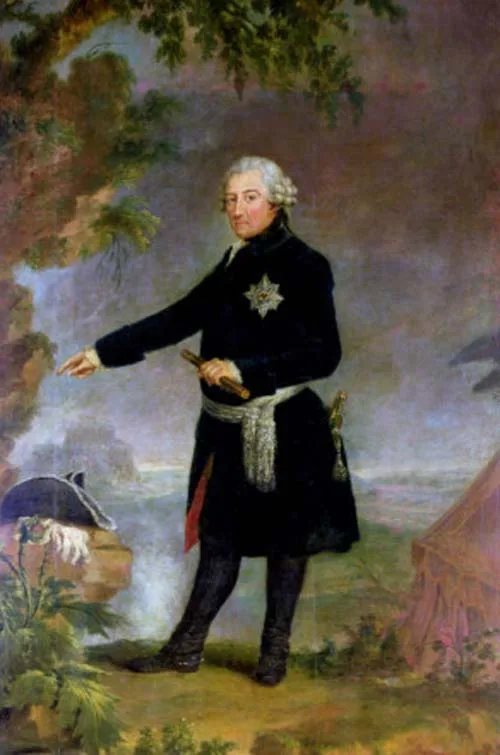
Portrait of Frederick by Anna Dorothea Therbusch (1772, Palace of Versailles, France)
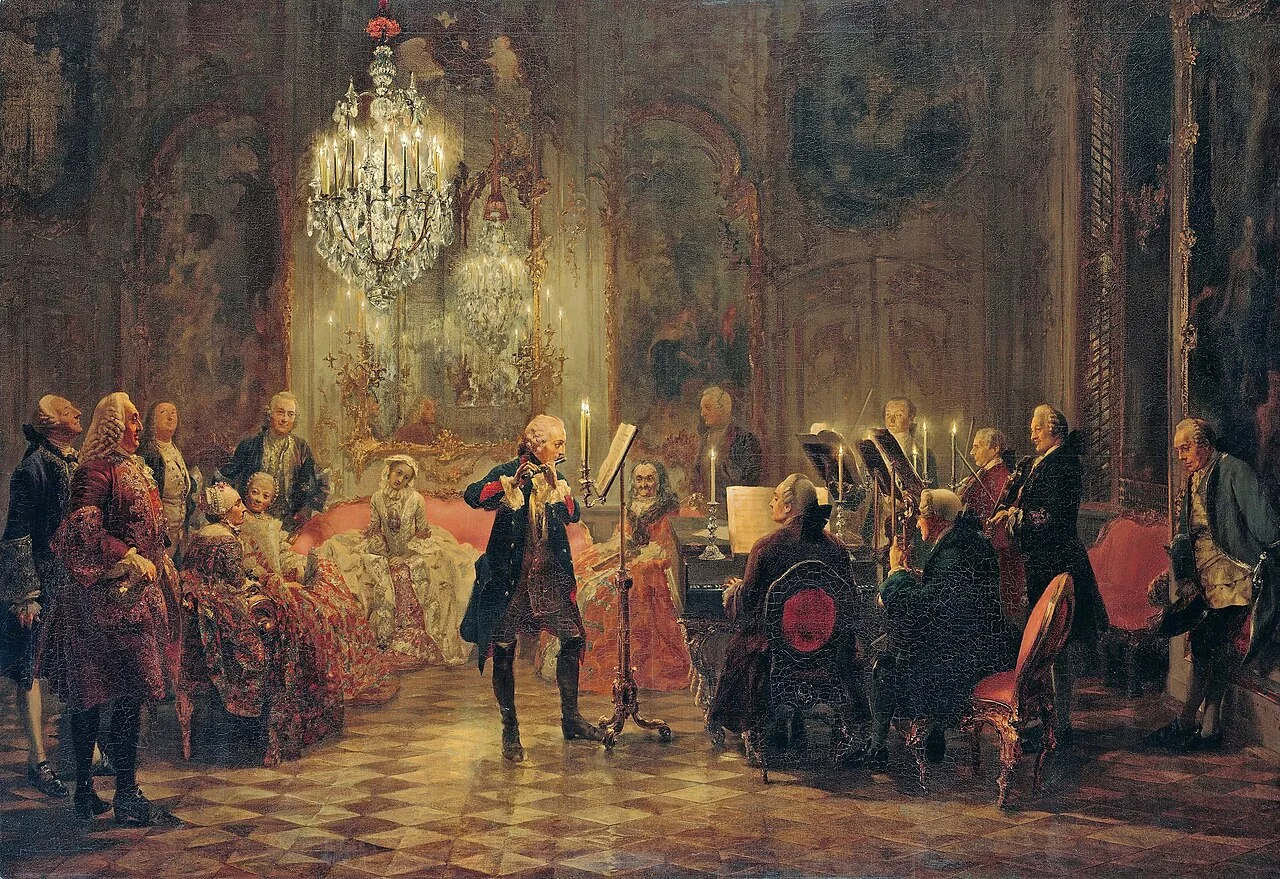
The Flute Concert of Sanssouci by Adolph Menzel (1852, Alte Nationalgalerie, Berlin). Frederick is depicted playing the flute in his music room at Sanssouci as C. P. E. Bach accompanies him on a fortepiano by Gottfried Silbermann.
Frederick the Great
Frederick II, known as Frederick the Great, was the monarch of Prussia from 1740 until his death in 1786.
A Traumatic Lesson at Küstrin
Before becoming a celebrated commander, the young Prussian heir suffered brutal psychological punishment from his own father. When an attempt to flee abroad unraveled, the king forced Frederick to watch the beheading of his close companion Katte at Küstrin on 6 November. The crown prince fainted from shock moments before the strike landed. He remained imprisoned until receiving a royal pardon on 18 November 1730 without his military rank.
From Wikipedia · CC BY-SA 4.0
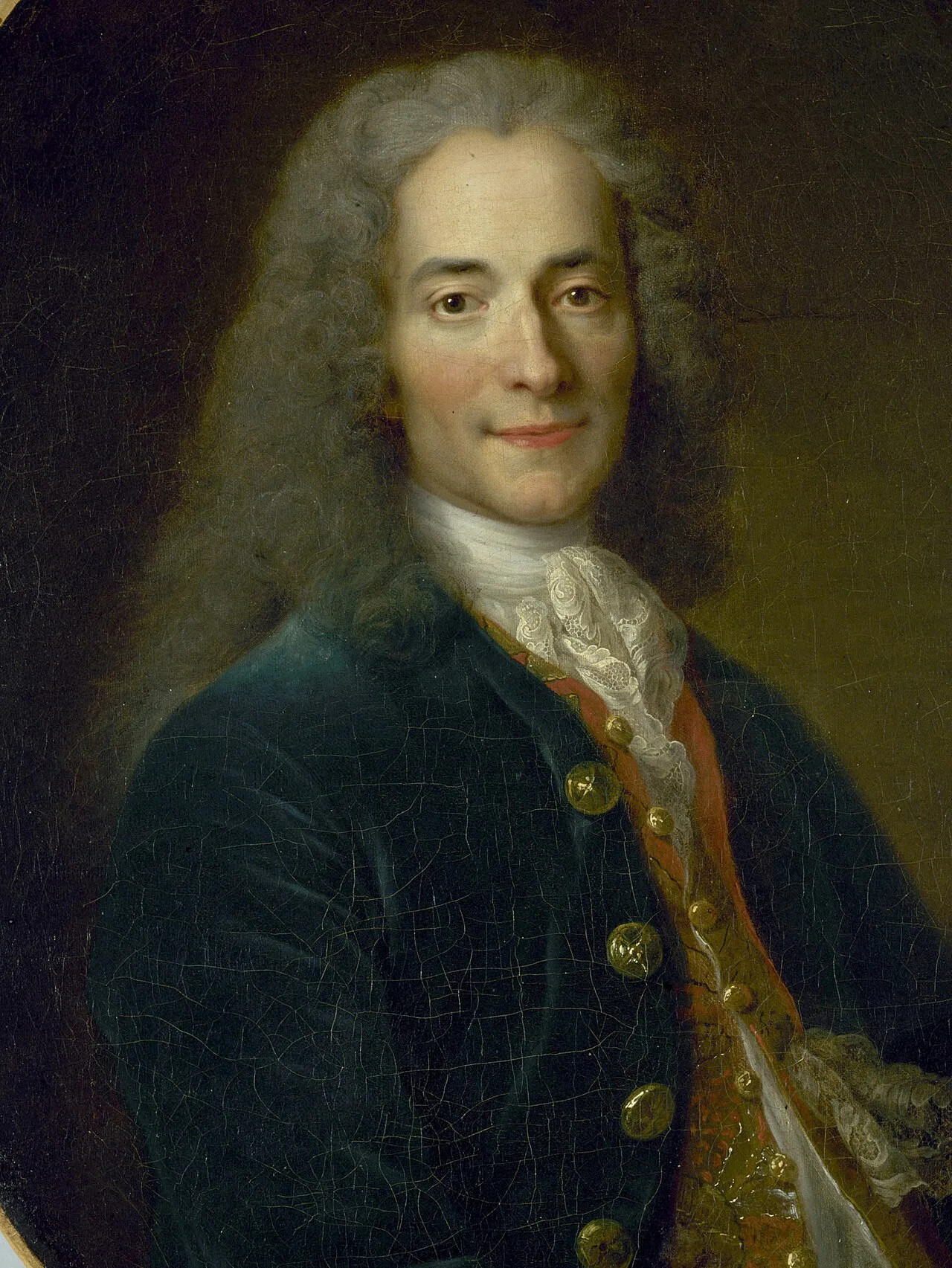
Portrait by Nicolas de Largillière, c. 1720s
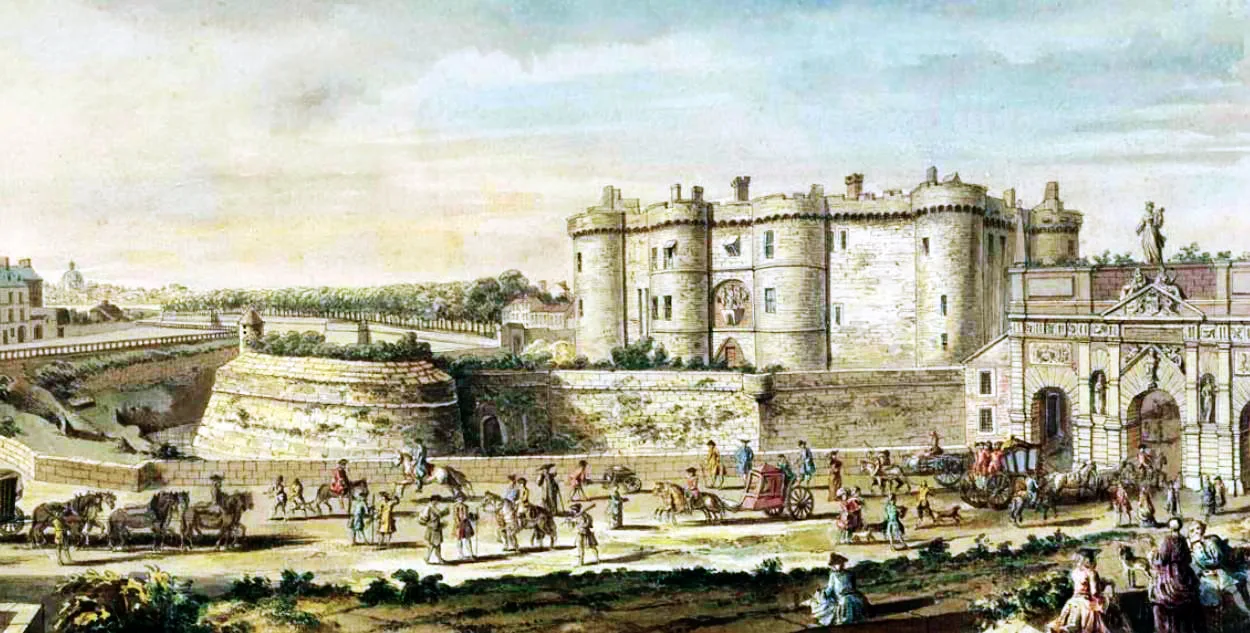
Voltaire was imprisoned in the Bastille from 16 May 1717 to 15 April 1718 in a windowless cell with ten-foot-thick walls.[19]
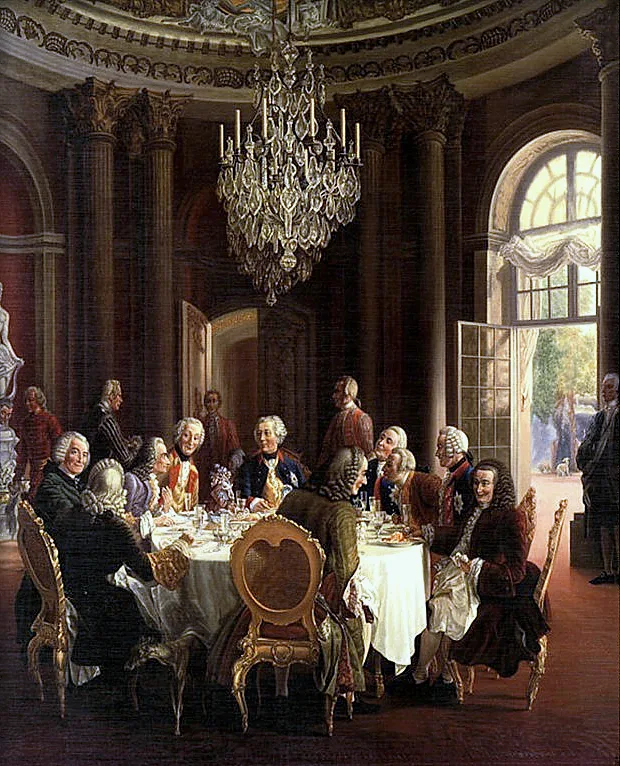
Die Tafelrunde by Adolph von Menzel: guests of Frederick the Great at Sanssouci, including members of the Prussian Academy of Sciences and Voltaire, third from left
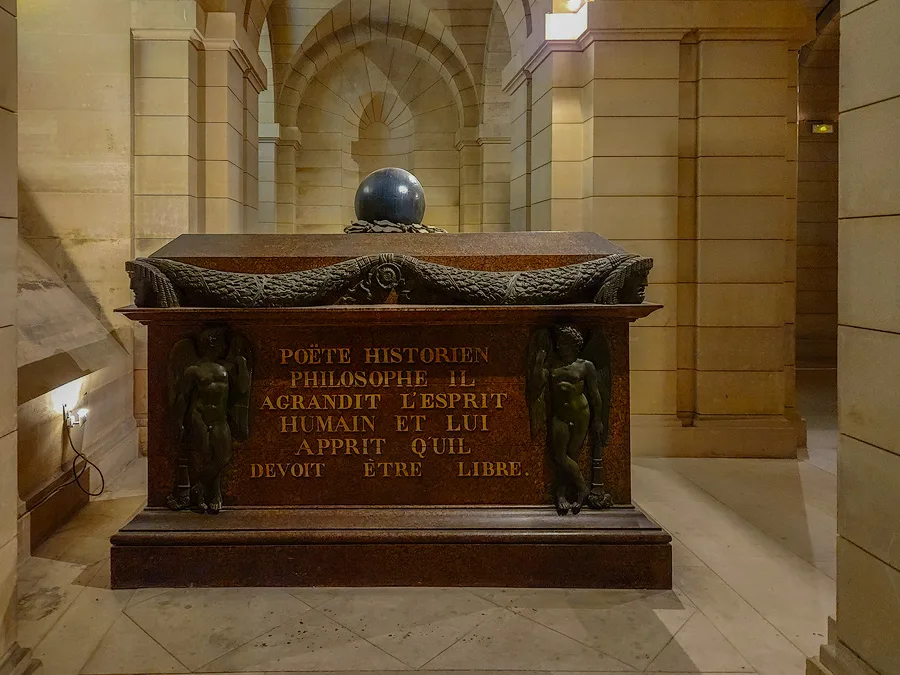
Tomb of Voltaire in the Pantheon in Paris
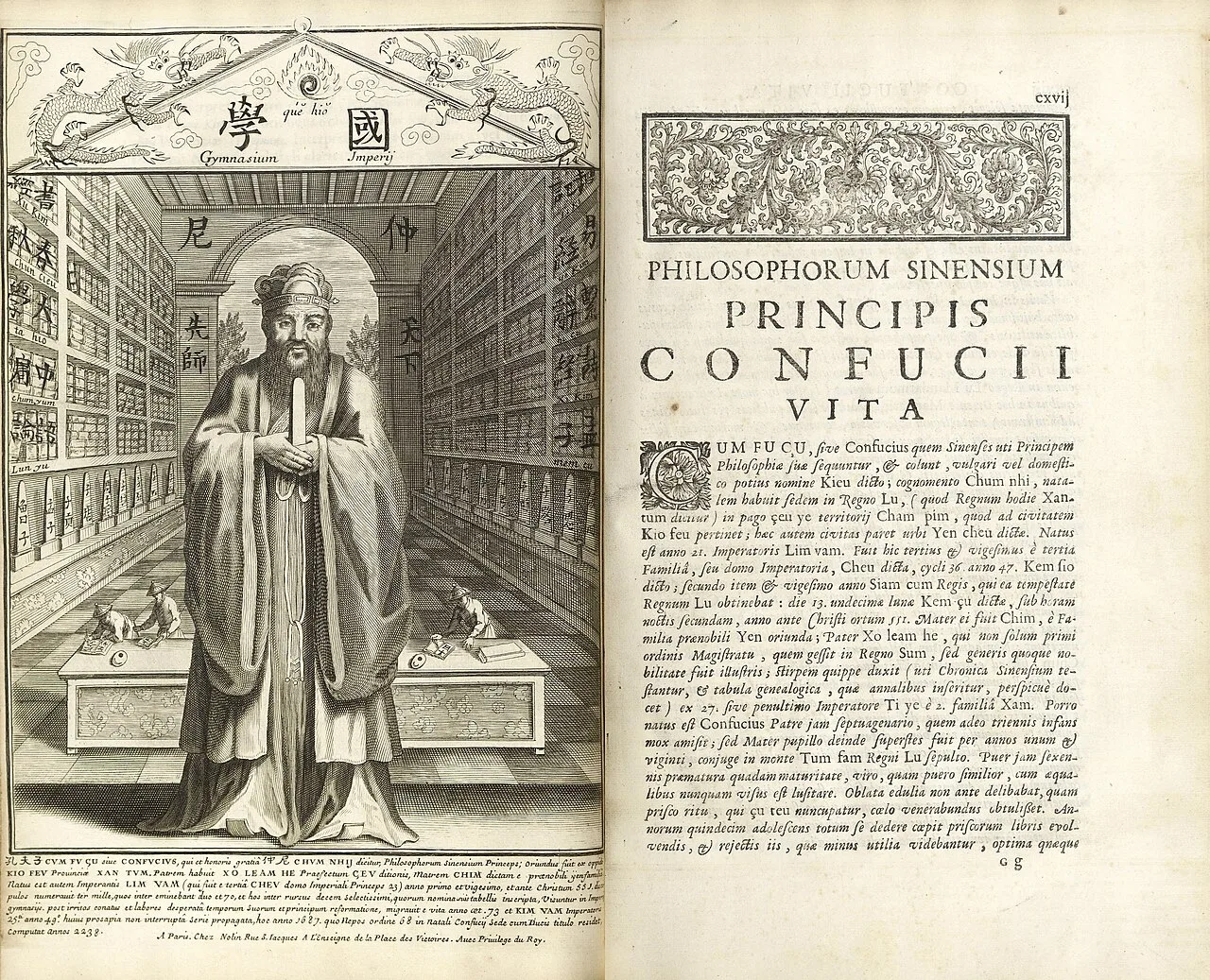
Life and Works of Confucius, by Prospero Intorcetta, 1687
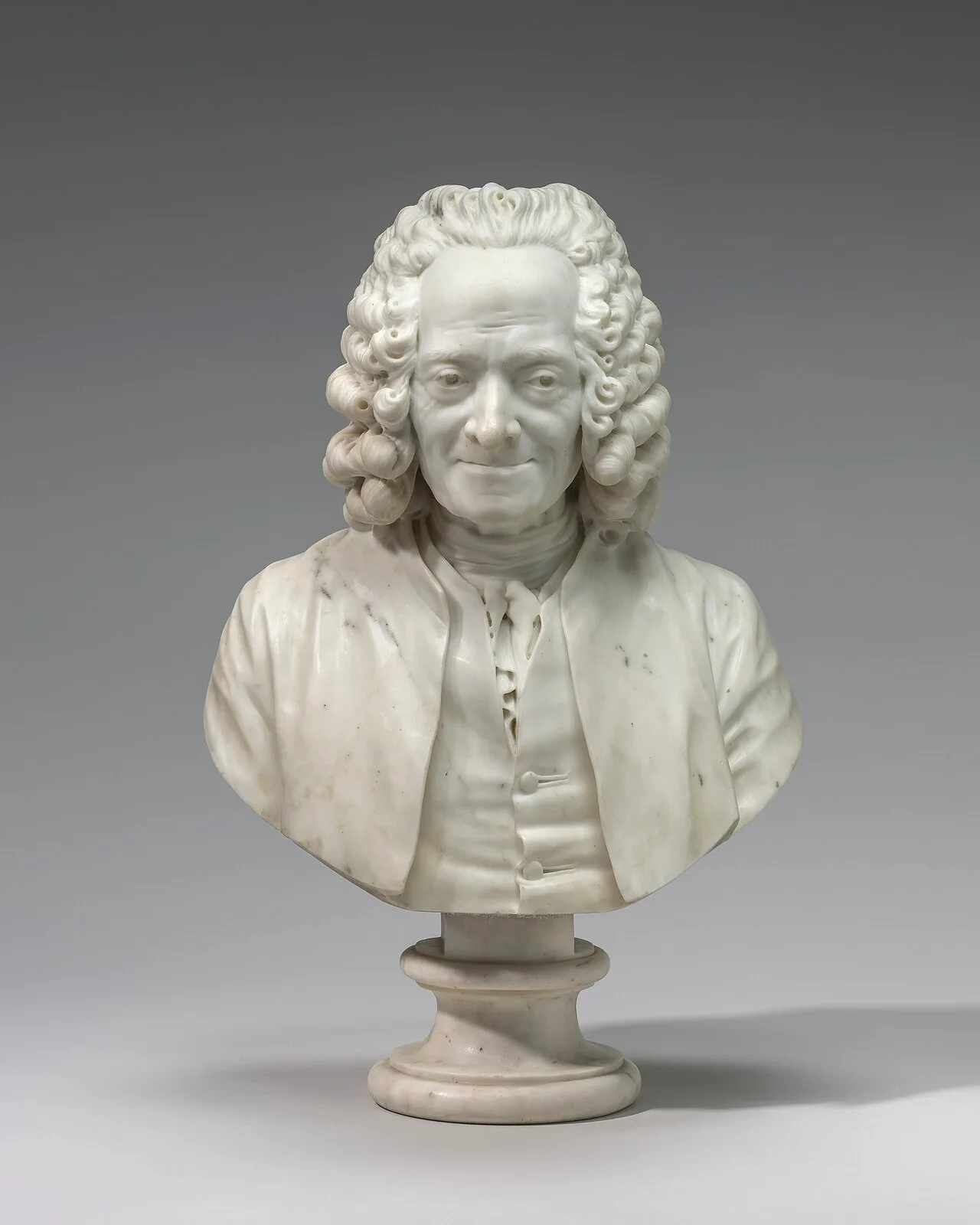
Jean-Antoine Houdon, Voltaire, 1778, National Gallery of Art
Voltaire
Voltaire, the pen name of François-Marie Arouet, was a French Enlightenment writer, philosopher, satirist, and historian.
Exploiting a Flaw in the Royal Treasury
Voltaire achieved lifelong financial independence not solely through his pen, but by gaming state finances. After mathematician Charles Marie de La Condamine realized a government debt lottery could be purchased wholesale, Voltaire joined the consortium and secured an estimated million livres. By managing these windfall profits astutely, he convinced the Court of Finances of his fiscal responsibility and gained full control of his paternal inheritance.
From Wikipedia · CC BY-SA 4.0