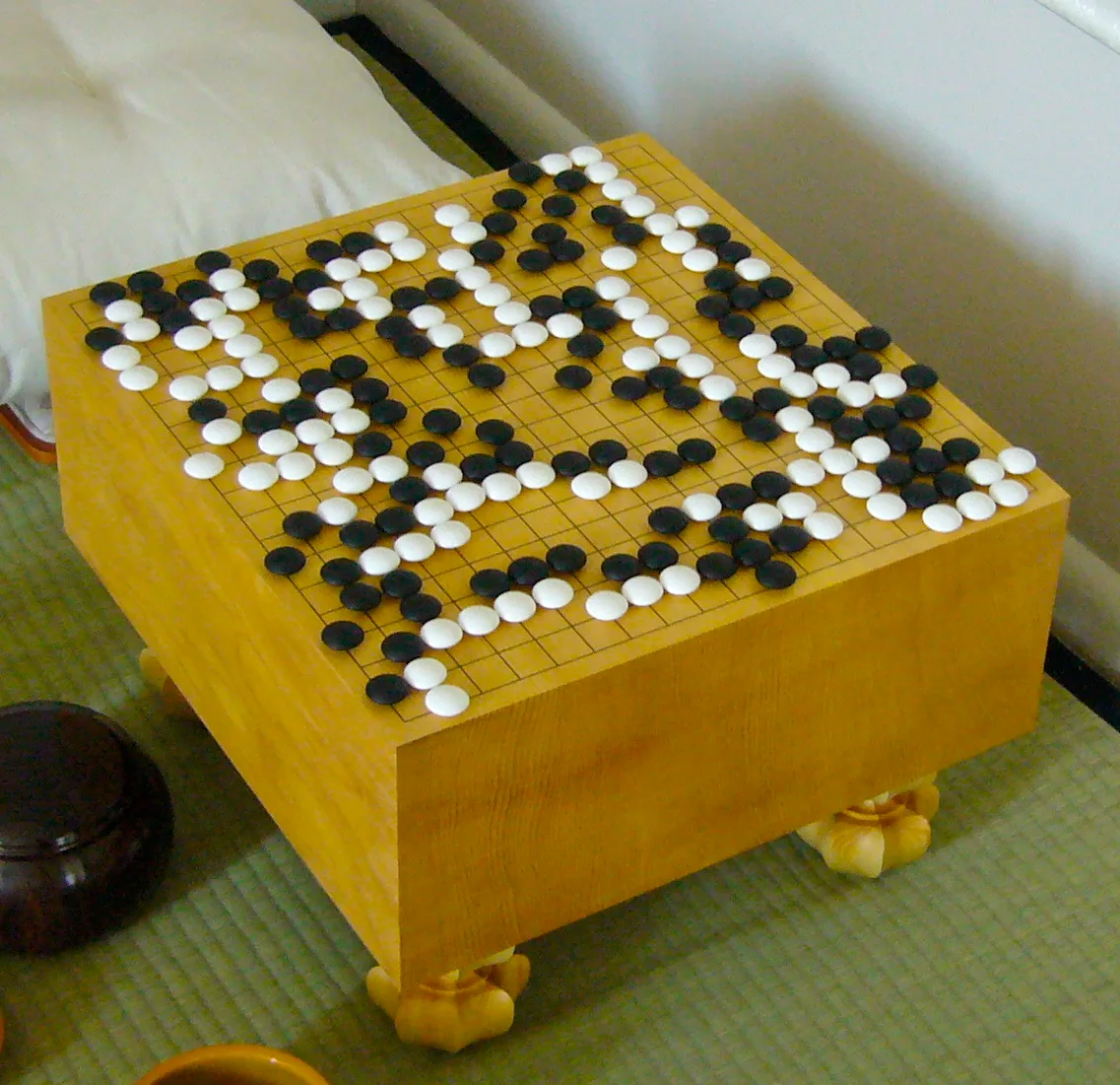
FloorGoban
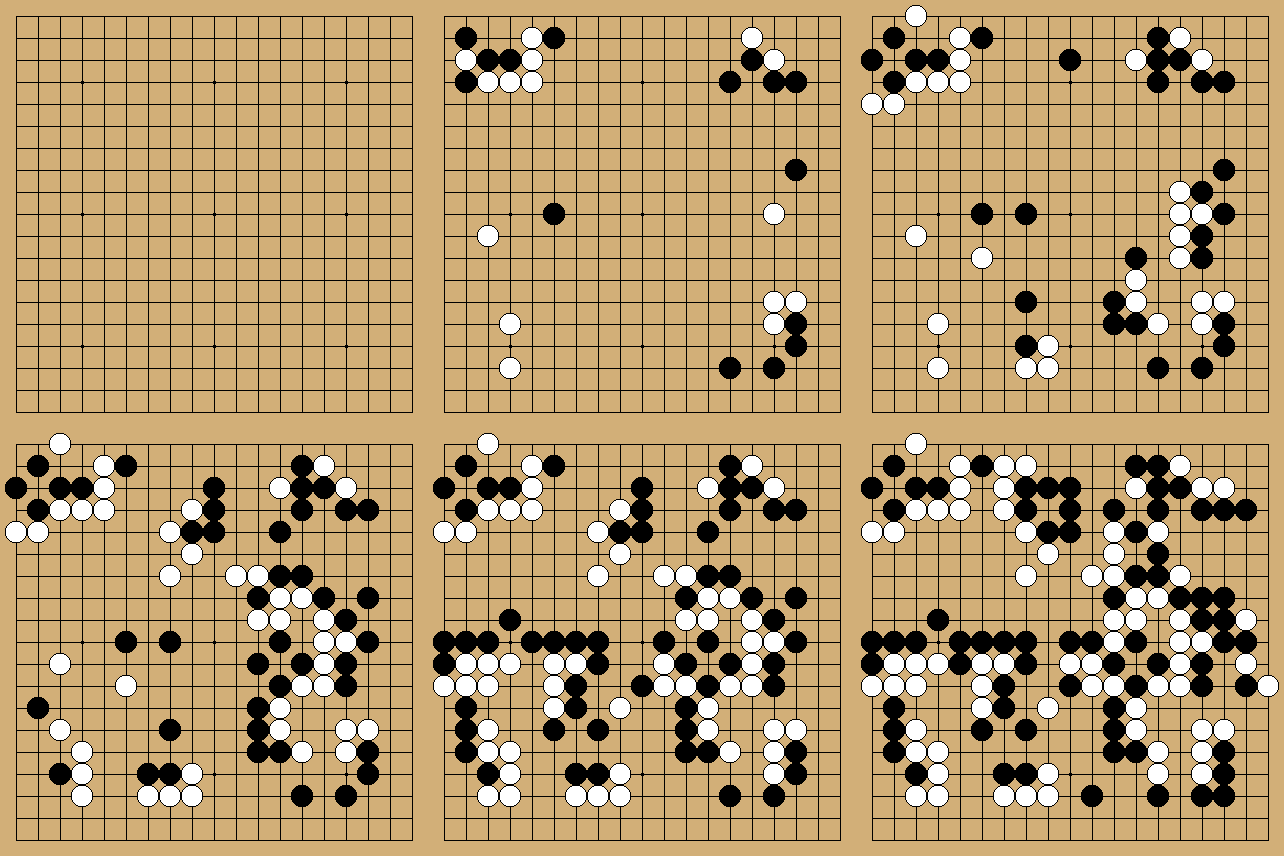
The first 150 moves of a Go game animated.
![Under normal rules, White cannot play at A because that point has no liberties. Under the Ing[64] and New Zealand rules,](https://nwjvzop1xgplmzvt.public.blob.vercel-storage.com/wikifeed/go-game/2-242201d9a1.webp)
Under normal rules, White cannot play at A because that point has no liberties. Under the Ing[64] and New Zealand rules,[65] White may play A, a suicide stone that kills itself and the two neighboring white stones, leaving an empty three-space eye. Black naturally answers by playing at A, creating two eyes to live.
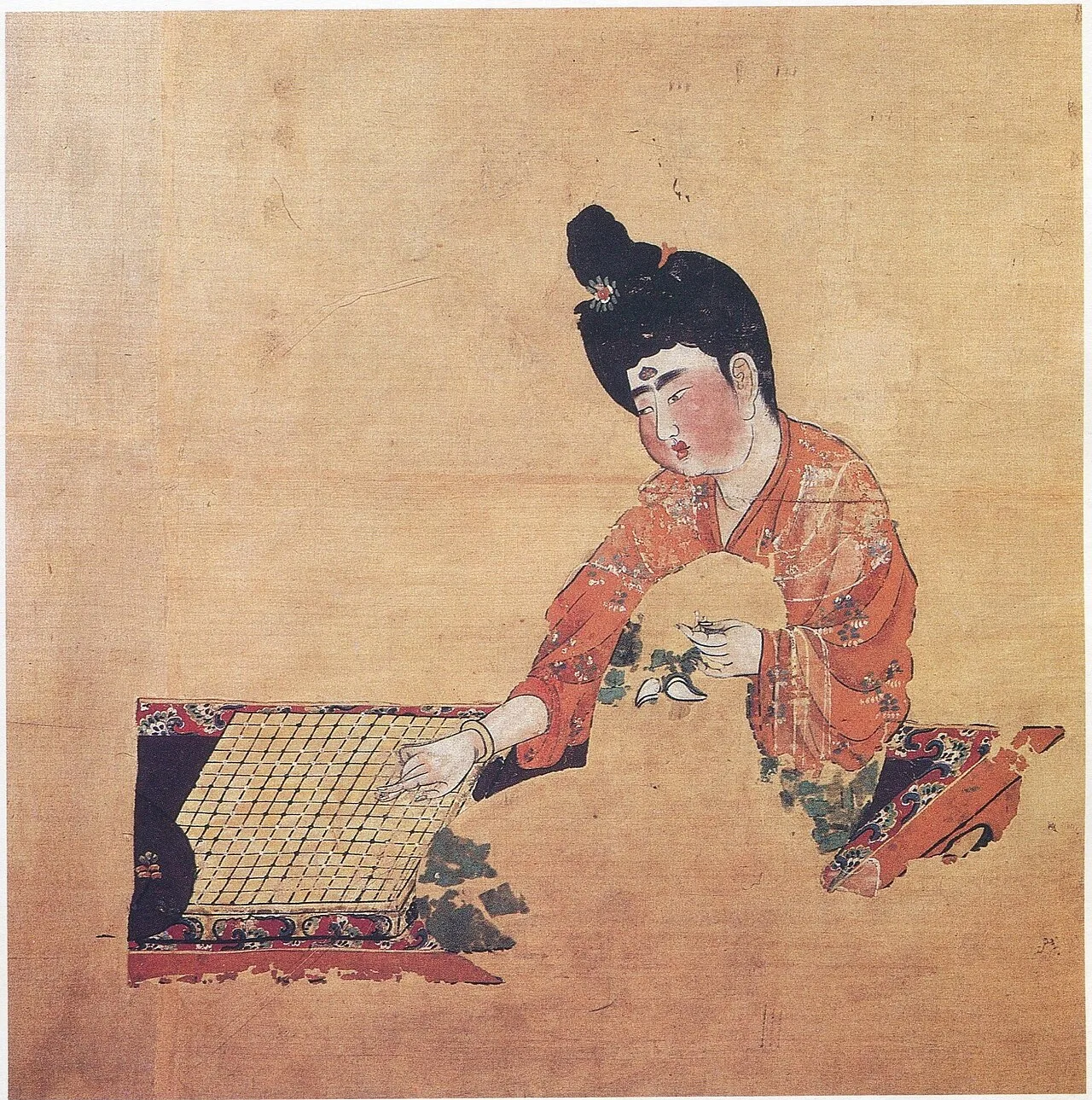
Painting of a woman playing Go, from the Astana Graves. Tang dynasty, c. 744 CE.
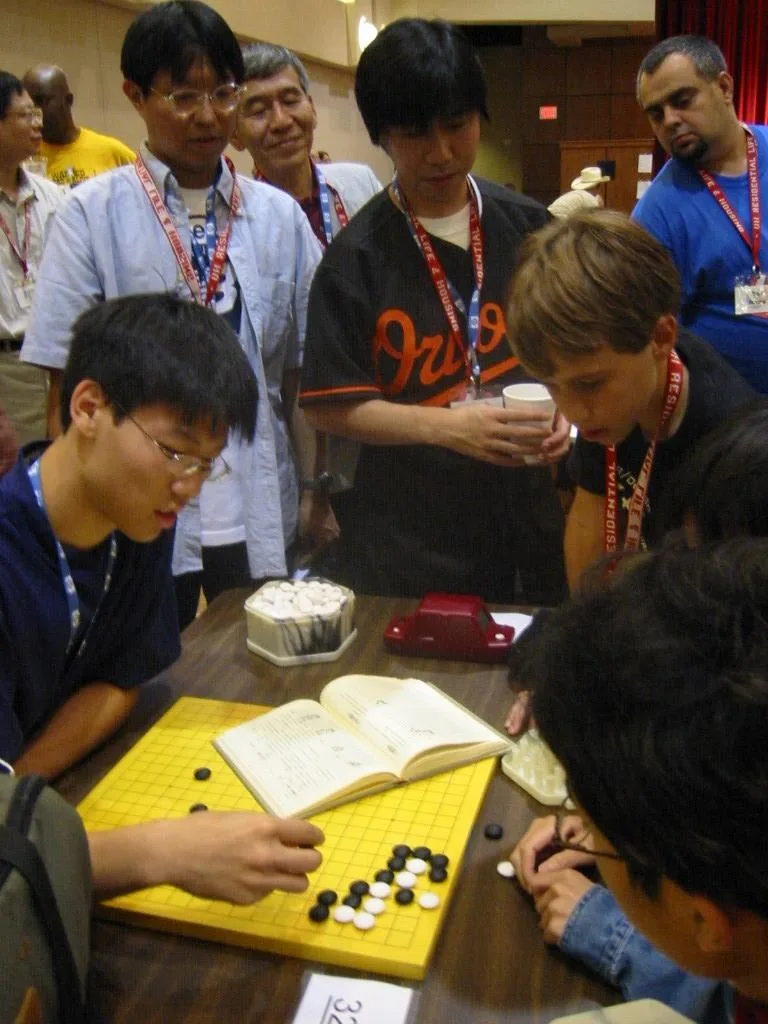
Three Japanese professional Go players observe some younger amateurs as they dissect a life and death problem in the corner of the board, at the US Go Congress in Houston, Texas, 2003.
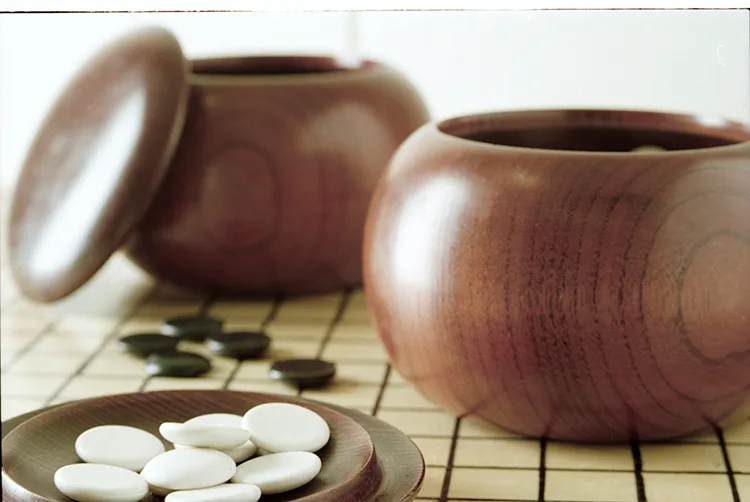
An example of single-convex stones and Go Seigen bowls. These particular stones are made of Yunzi material, and the bowls of jujube wood.
Go (game)
Go is an abstract strategy board game for two players invented in China over 2,500 years ago, in which the aim is to fence off more territory than the opponent.
Optical Illusions and the Non-Square Grid
Go boards and stones are engineered to deceive human vision. Goban boards maintain a 15:14 length-to-width ratio rather than a square grid to offset visual foreshortening from a seated player's perspective. Similarly, traditional black stones are carved slightly larger in diameter than white stones. This subtle physical variation counteracts the natural contrast illusion that makes equal-sized white stones appear bigger on the board.
From Wikipedia · CC BY-SA 4.0
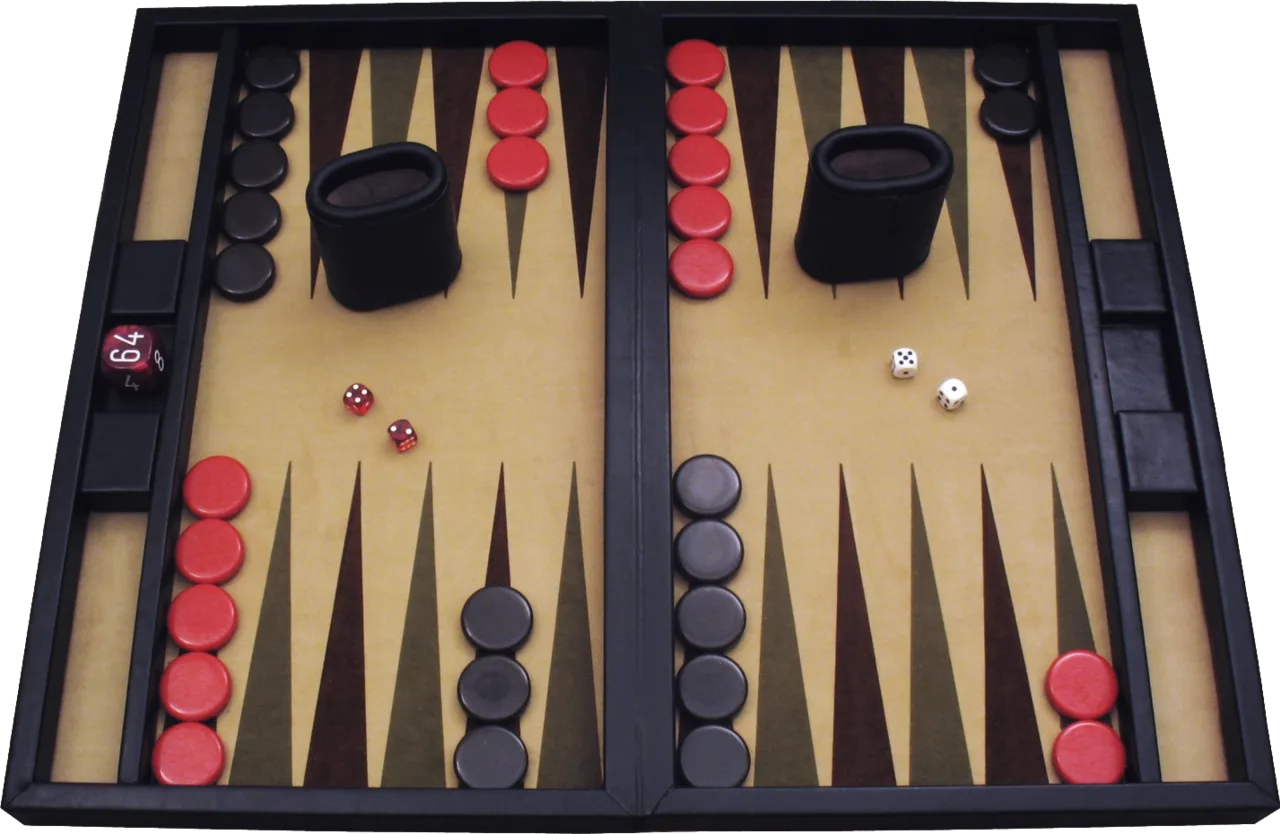
Backgammon lg
![One of the gameboards found by Sir Leonard Woolley in the Royal Cemetery at Ur (British Museum)[5]](https://nwjvzop1xgplmzvt.public.blob.vercel-storage.com/wikifeed/backgammon/1-bdc70a5ecb.webp)
One of the gameboards found by Sir Leonard Woolley in the Royal Cemetery at Ur (British Museum)[5]

A Georgian noblewoman Darnica Gurieli with backgammon in the foreground, circa 1635

Paths of movement for red and black, with pieces in the starting position; viewed from the black side, with home or inner board at lower right

A Greek Tavli board. The sound of the dice hitting the wooden board is a typical characteristic of Tavli and the coffee-house culture surrounding it.

Damascene-style marquetry backgammon board, Khan el-Khalili, Cairo
Backgammon
Backgammon is a two-player board game played with counters and dice on tables boards, with roots tracing back at least 1,600 years.
Carving Twenty-Four Points from Roman Three-Row Boards
The classic layout of modern tables boards originated by physically subtracting space from an older Roman predecessor. During the fifth century under Byzantine Emperor Zeno, the game tabula was played on a board created by removing the middle row of points from the Roman ludus duodecim scriptorum. This structural reduction left only the two outer rows of twelve points each, establishing the continuous twenty-four-point horseshoe track still used today.
From Wikipedia · CC BY-SA 4.0

Bao players in Mozambique

A 10th century ivory board from Muslim Spain
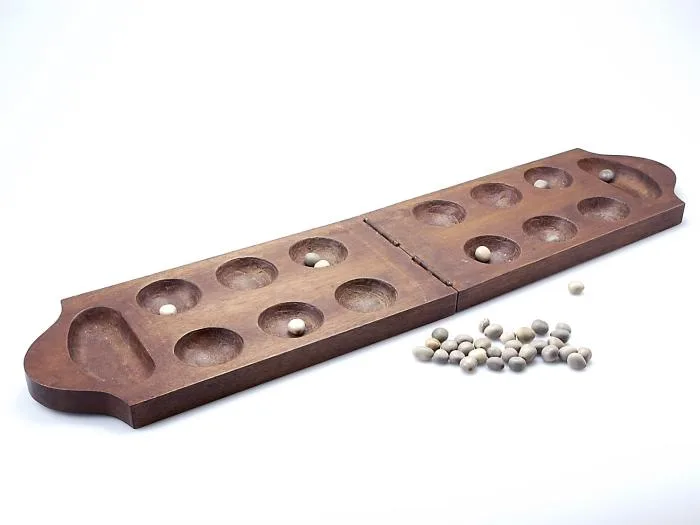
Mancala board and clay playing pieces

Sowing on a kalah board. The player picks up all four seeds from hole A, and places one of them in B, one in C, one in D and the fourth in E.

Game of Ô ăn quan on New Year's Day (Tết) at Vinhomes Times City, Ha Noi
Mancala
Mancala is a family of two-player turn-based strategy board games played with small stones, beans, or seeds moved across rows of holes.
Roman Baths and Neolithic Pits
Mancala's material history presents deep archaeological puzzles across the ancient Mediterranean and Near East. While controversial floor carvings in 'Ain Ghazal, Jordan suggest origins dating back to ~5,870 BCE, firm material evidence comes from the city of Gedera. There, excavators unearthed pottery boards and rock cuts in a Roman bathhouse dating to between the 2nd and 3rd century AD.
From Wikipedia · CC BY-SA 4.0

Varsity Polo 2013

A Persian miniature from the poem Guy-o Chawgân ("the Ball and the Polo-mallet") during the Safavid dynasty of Persia, showing courtiers on horseback playing polo, 1546 CE

Old polo field in Imphal, Manipur

Director Walter Scanlon, Bethpage, Long Island

Polo player, with referee

Polo mallets and ball
Polo
Polo is a traditional horseback field sport and stick-and-ball game that originated over 2,000 years ago in ancient Persia.
Card Suit Origins in Royal Mamluk Mallets
Polo served as cavalry training across medieval Islamic courts, where Ayyubid and Mamluk rulers embraced the game above all other sports. Mallets featured prominently in court culture, even appearing as a suit on Mamluk playing cards. When these card decks reached Europe, where the equestrian sport remained unfamiliar, the polo stick suit was transformed into the modern card suit of clubs.
From Wikipedia · CC BY-SA 4.0
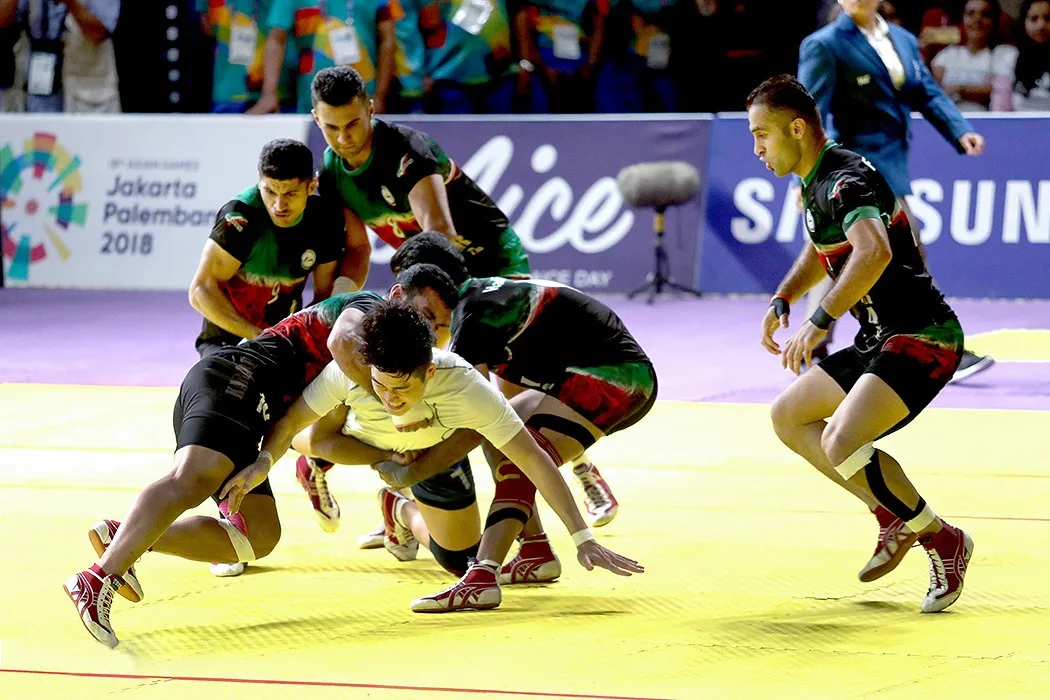
Iran men's national kabaddi team 13970602000432636707284535394012 98208
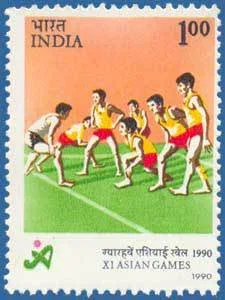
A commemorative stamp depicting kabaddi's first appearance in the Asian Games in 1990

The Iranian women's team won the 2018 Asian Games kabaddi final against India, showcasing the rise of the sport outside of South Asia.[20]
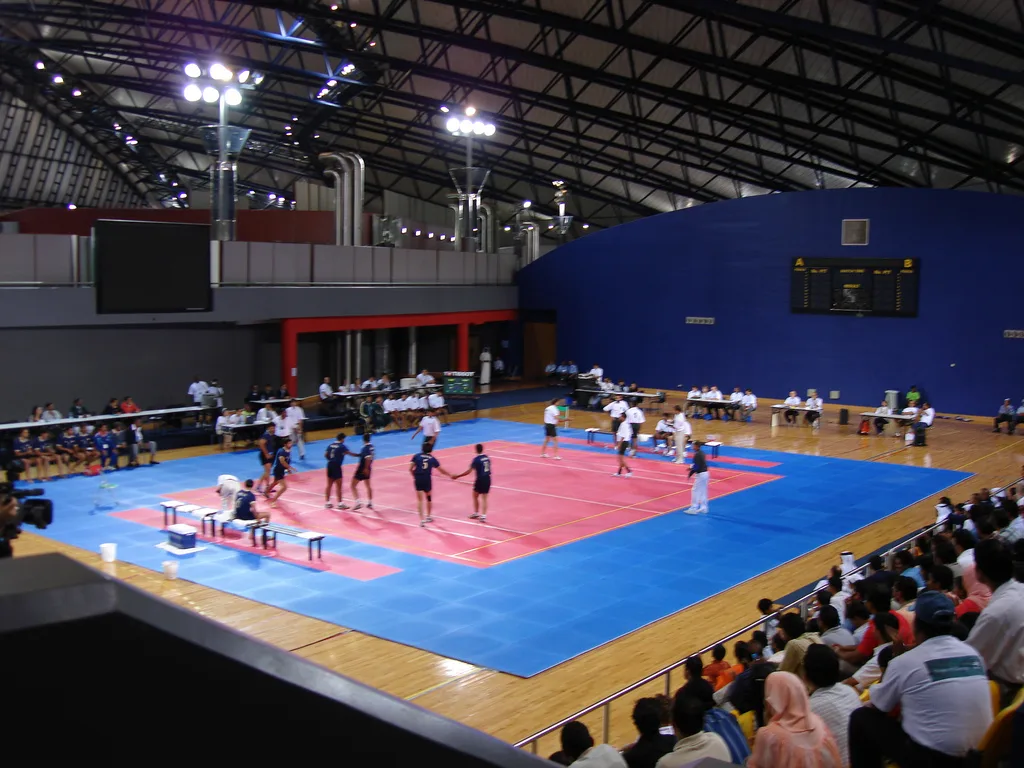
A kabaddi court at the 2006 Asian Games

A circle kabaddi match being played in Bhimber

The PKL logo
Kabaddi
Kabaddi is a traditional South Asian contact team sport played between two teams of seven players.
Bull-Taming Roots and Ancient Legends
Ancient lore links kabaddi directly to the bull-taming tradition of Jallikattu, framing the lone raider's confrontation against defenders as taming a beast. Historical traditions also describe both Siddhartha Gautama and Lord Krishna participating in early forms of the discipline. These legendary connections illustrate how the game served as an ancient martial test of physical agility.
From Wikipedia · CC BY-SA 4.0

David Collins and Eoin Kelly (Tipperary)

A club hurling match in play

Positions on field

Goalposts and scoring system used in hurling

Hurling scoring in All-Ireland championships 1910 to 2025

An early hurling team in Argentina, formed by Irish immigrants, c. 1900
Hurling
Hurling is an ancient Gaelic Irish outdoor team game, known as camogie when played by women.
The Narrow Authority of Boundary Officials
Many followers of the game assume that match officials on the sidelines can flag any visible rule breach to the referee. In reality, linesmen and umpires are strictly prohibited from reporting technical fouls, such as an illegal pick up or catching the ball three times in succession. Their reporting powers are legally restricted solely to instances of unwitnessed violent conduct.
From Wikipedia · CC BY-SA 4.0
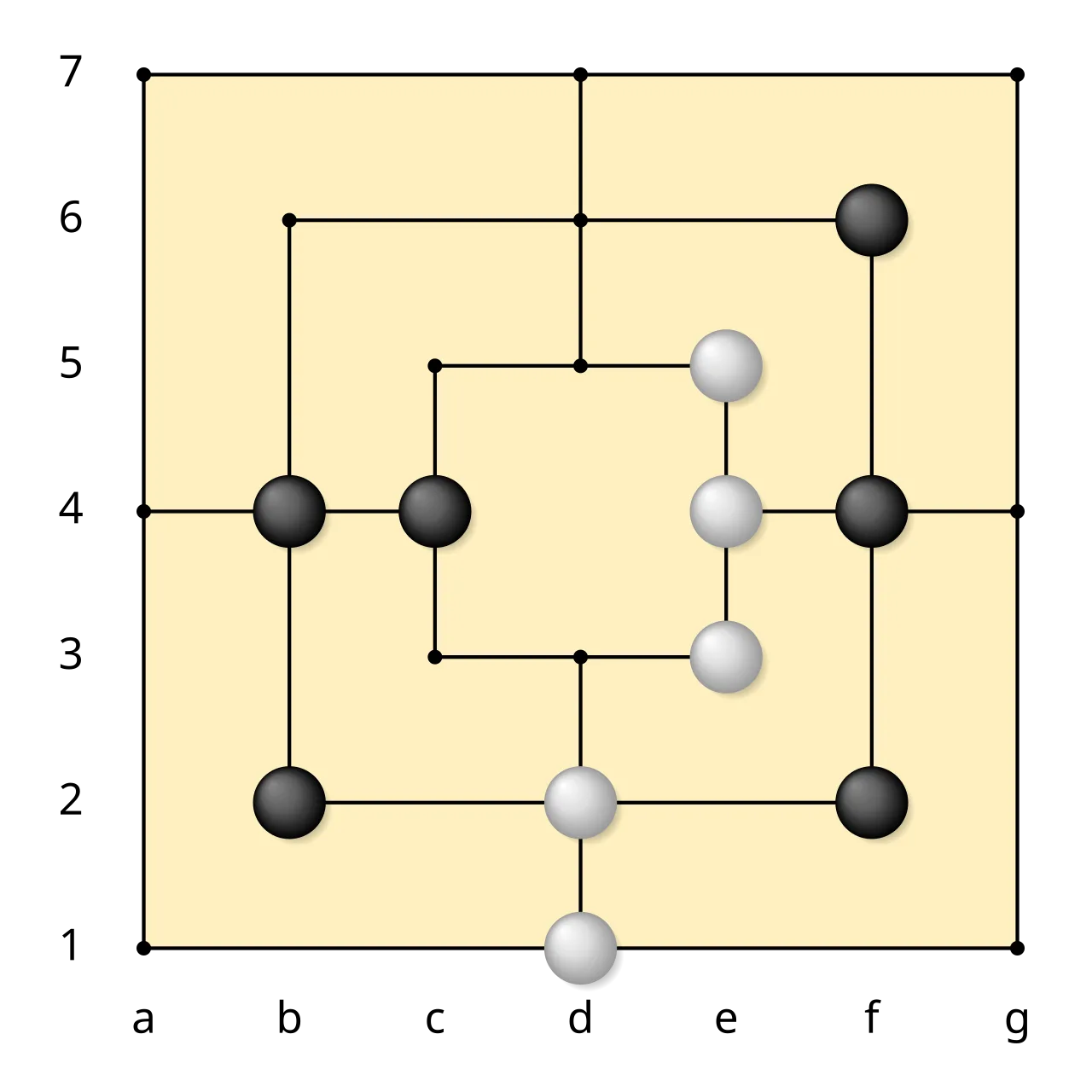
Nine Men's Morris board with coordinates
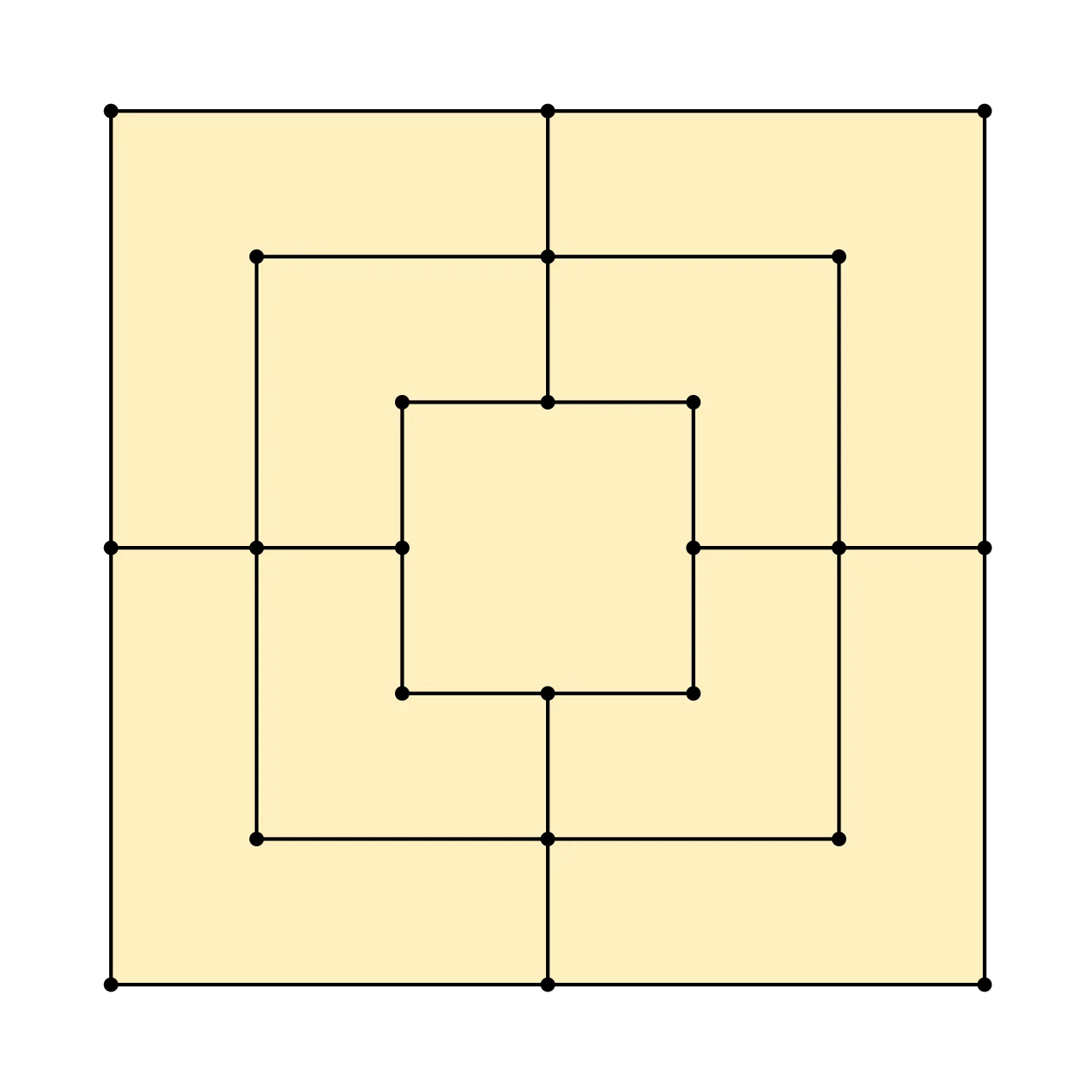
Nine men's morris starts on an empty board.
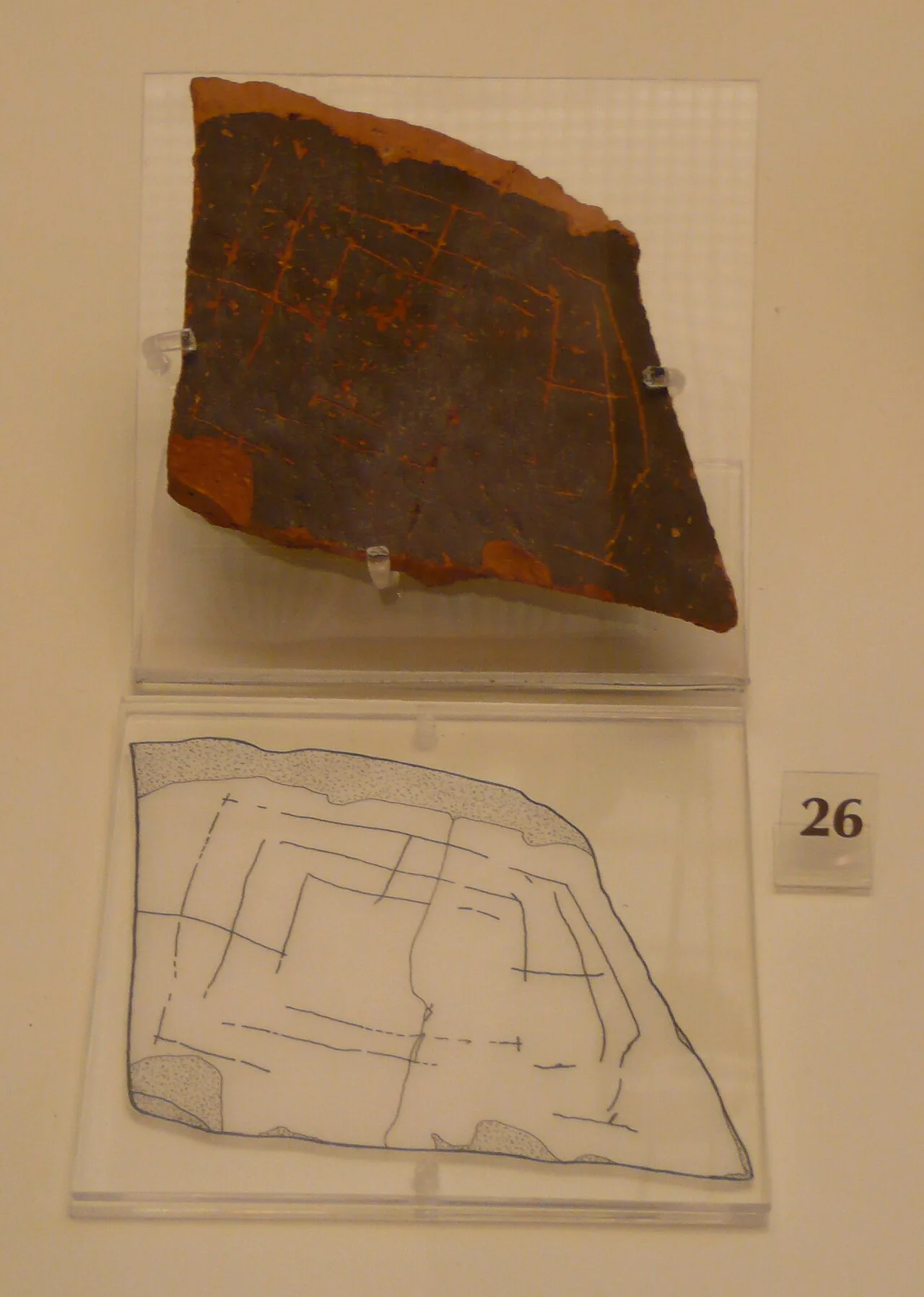
Clay tile fragment from the archeological museum at Mycenae showing what appears to be a Nine Men's Morris board
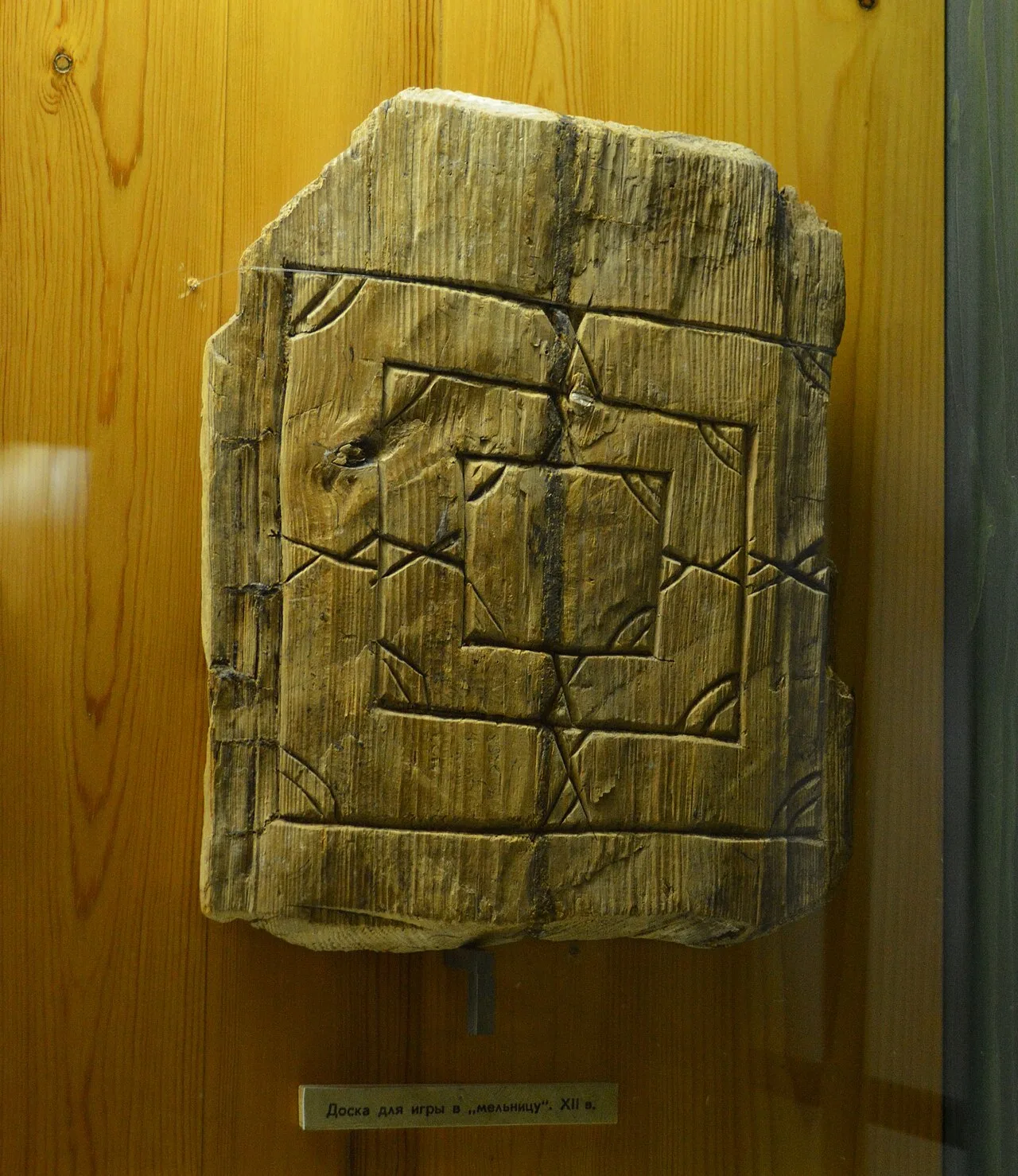
Medieval Nine Men's Morris board, Novgorod, 12th century
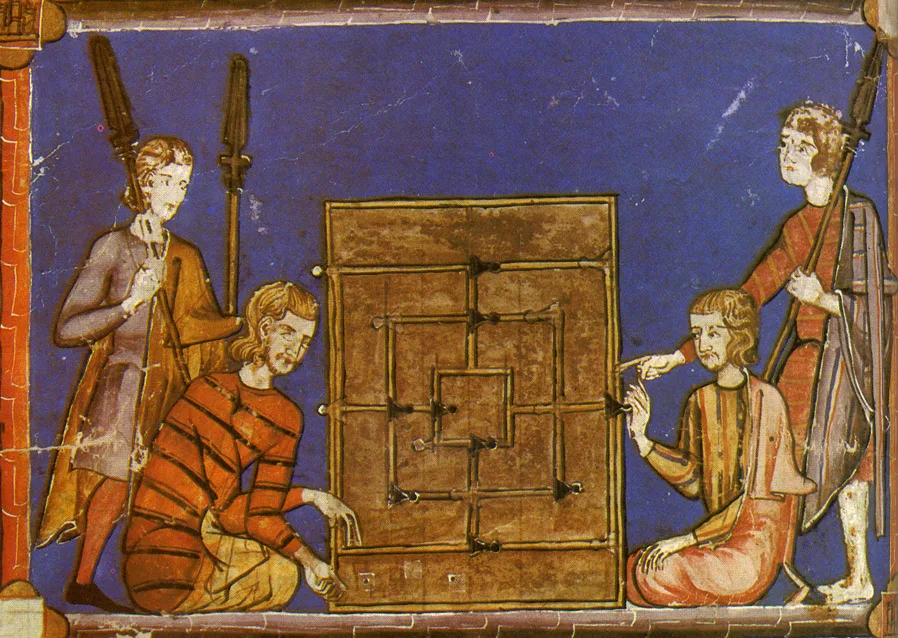
A 13th-century illustration in Libro de los juegos of the game being played with dice

An early gaming table (Germany, 1735) featuring chess/draughts (right) and nine men's morris (left), Cleveland Museum of Art
Nine men's morris
Nine men's morris is a two-player strategy board game dating back to at least the Roman Empire.
Courtship Lessons in Ovid's Rome
Around c. 8 CE, the Roman poet Ovid presented the game not merely as an intellectual exercise, but as an instrument of seduction. In Book III of Ars Amatoria, Ovid warned that it is a bad thing for a woman to ignore the game, noting that love often comes into being during play. Aligning three pieces across the table served as a social catalyst for Roman courtship.
From Wikipedia · CC BY-SA 4.0

Xiangqi Board

The generals

The elephants
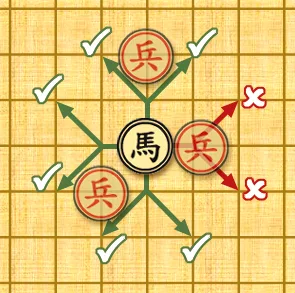
Green moves are legal; red ones are illegal because another piece is obstructing the movement of the horse.
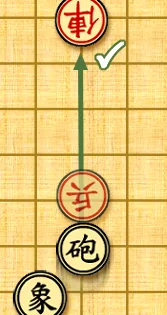
The long-range threat of the cannon

Xiangqi is a popular weekend activity in Beijing.
Xiangqi
Xiangqi, commonly known as Chinese chess, is a two-player strategy board game and the most popular board game in China.
Imperial Taboos and the Flying General Rule
Political sensitivities in ancient China altered the nature of the board's primary piece. China's imperial rulers objected to their sovereign titles being assigned to game pieces, transforming what was originally a king into a general confined to a palace. This commander also possesses a lethal gaze across open space. If opposing generals ever face each other along an unobstructed file, the active general can execute a flying capture across the entire board.
From Wikipedia · CC BY-SA 4.0
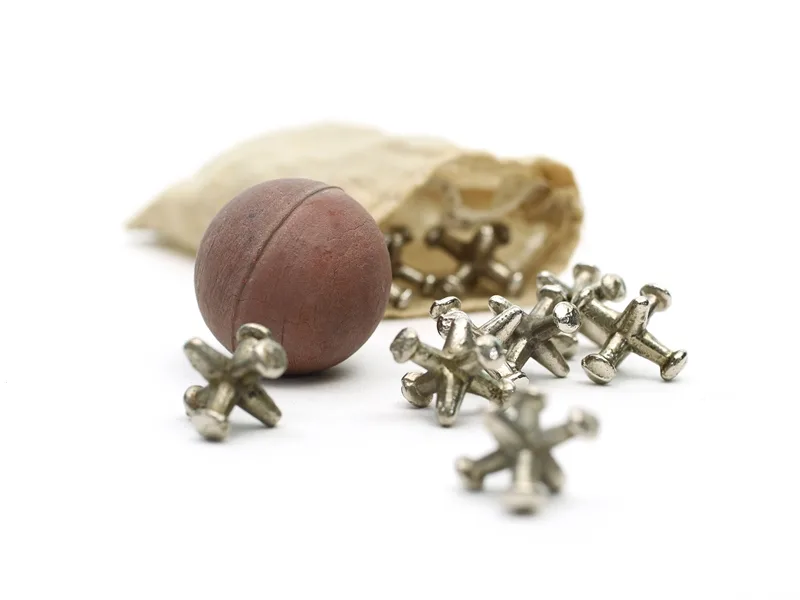
The Childrens Museum of Indianapolis - Jacks
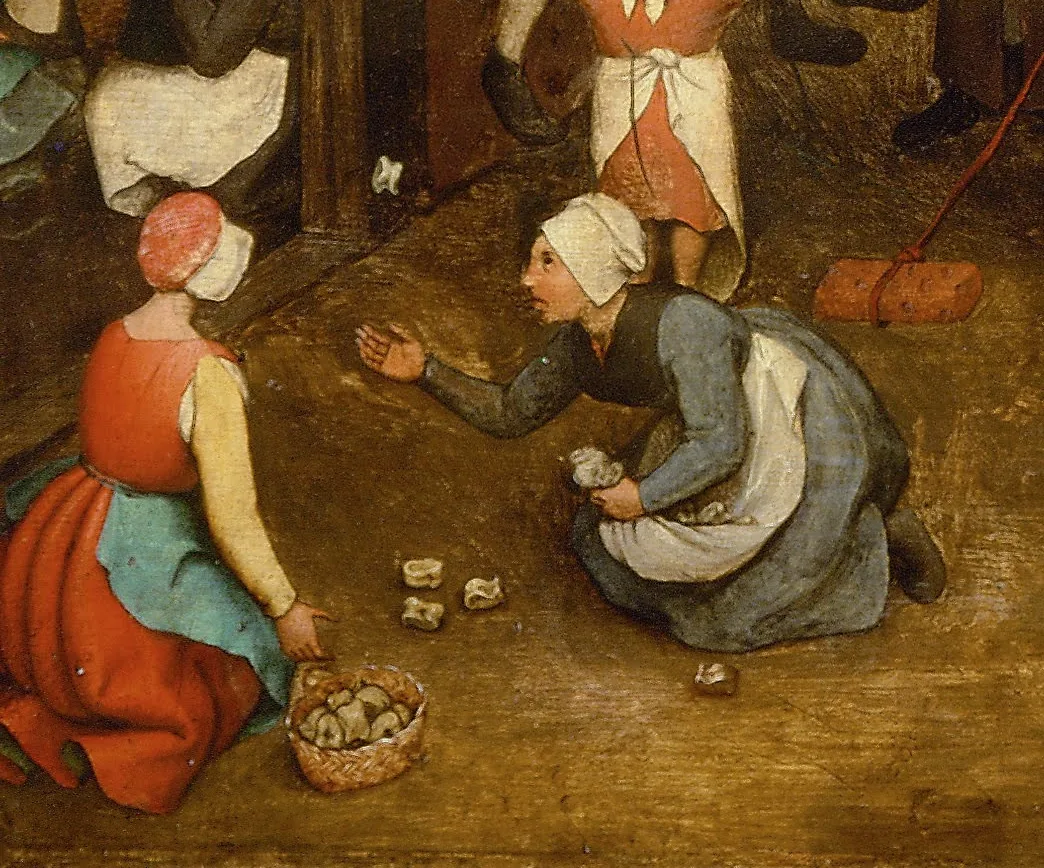
Pieter Bruegel the Elder – Children's Games (detail) – Knucklebones
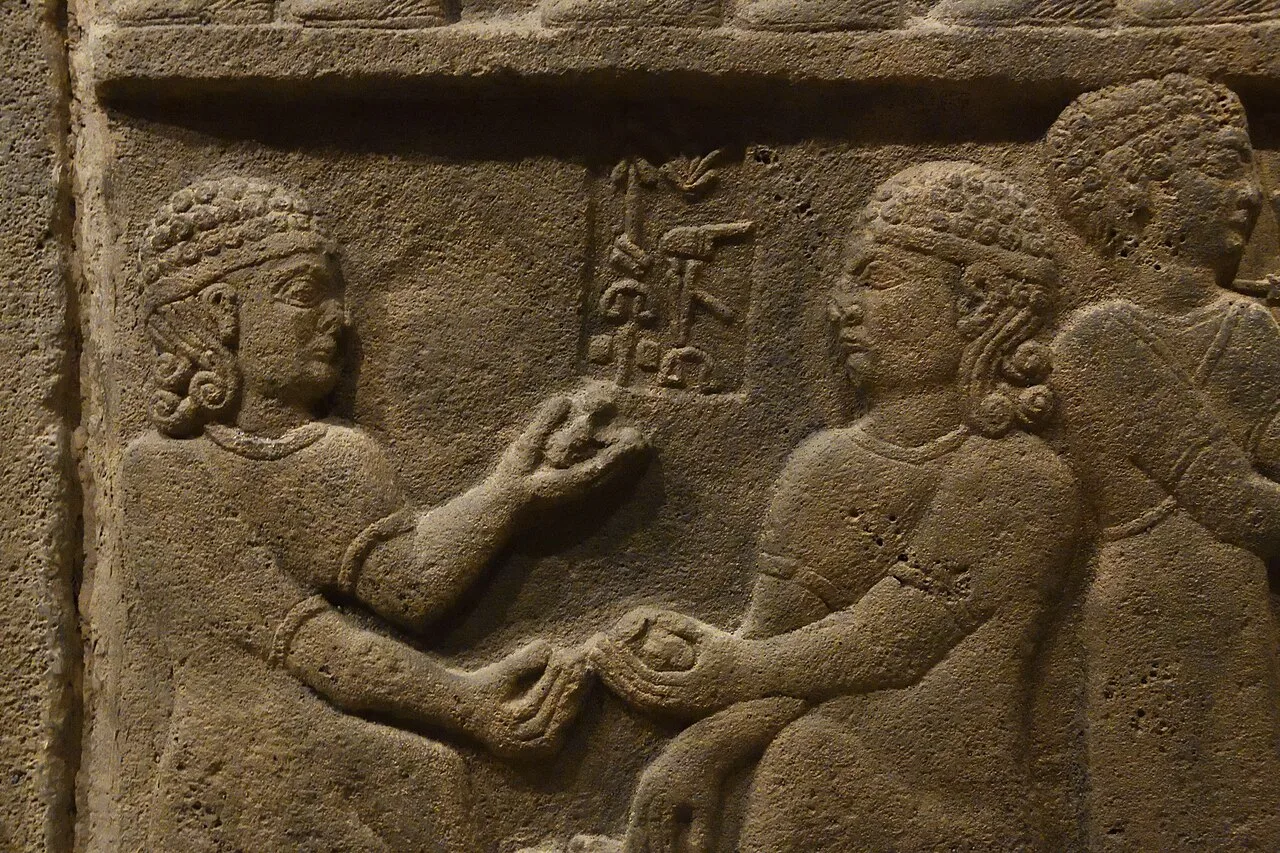
An orthostat depicting people playing knucklebones from Carchemish (c. 8th century BCE)
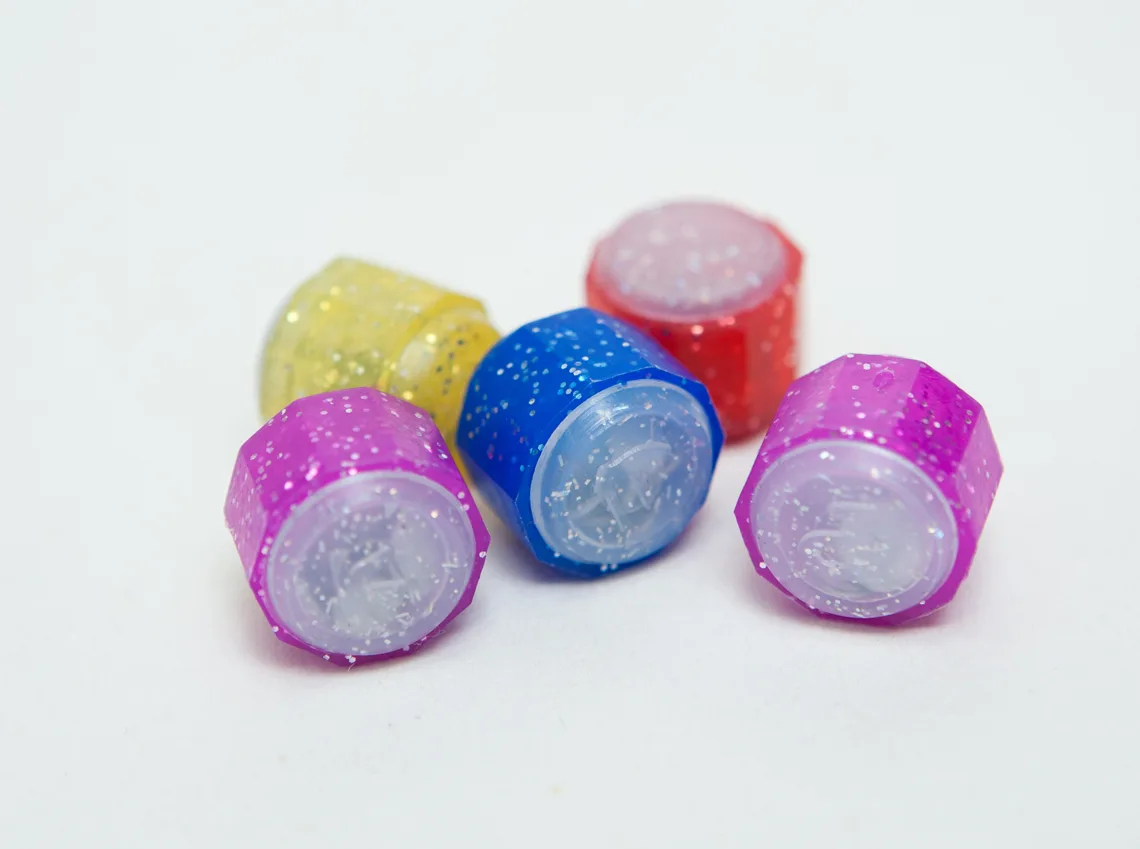
Plastic modern gonggi pebbles from South Korea
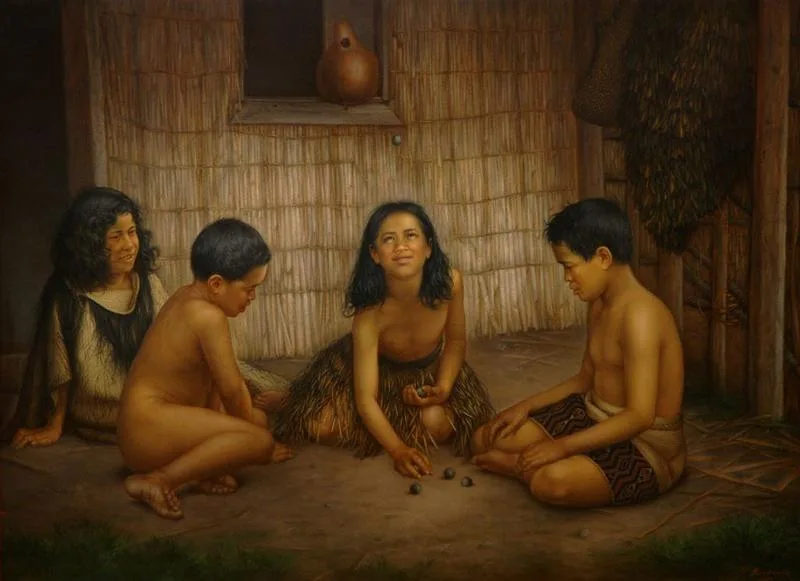
Māori children playing kōruru (Gottfried Lindauer, 1907)
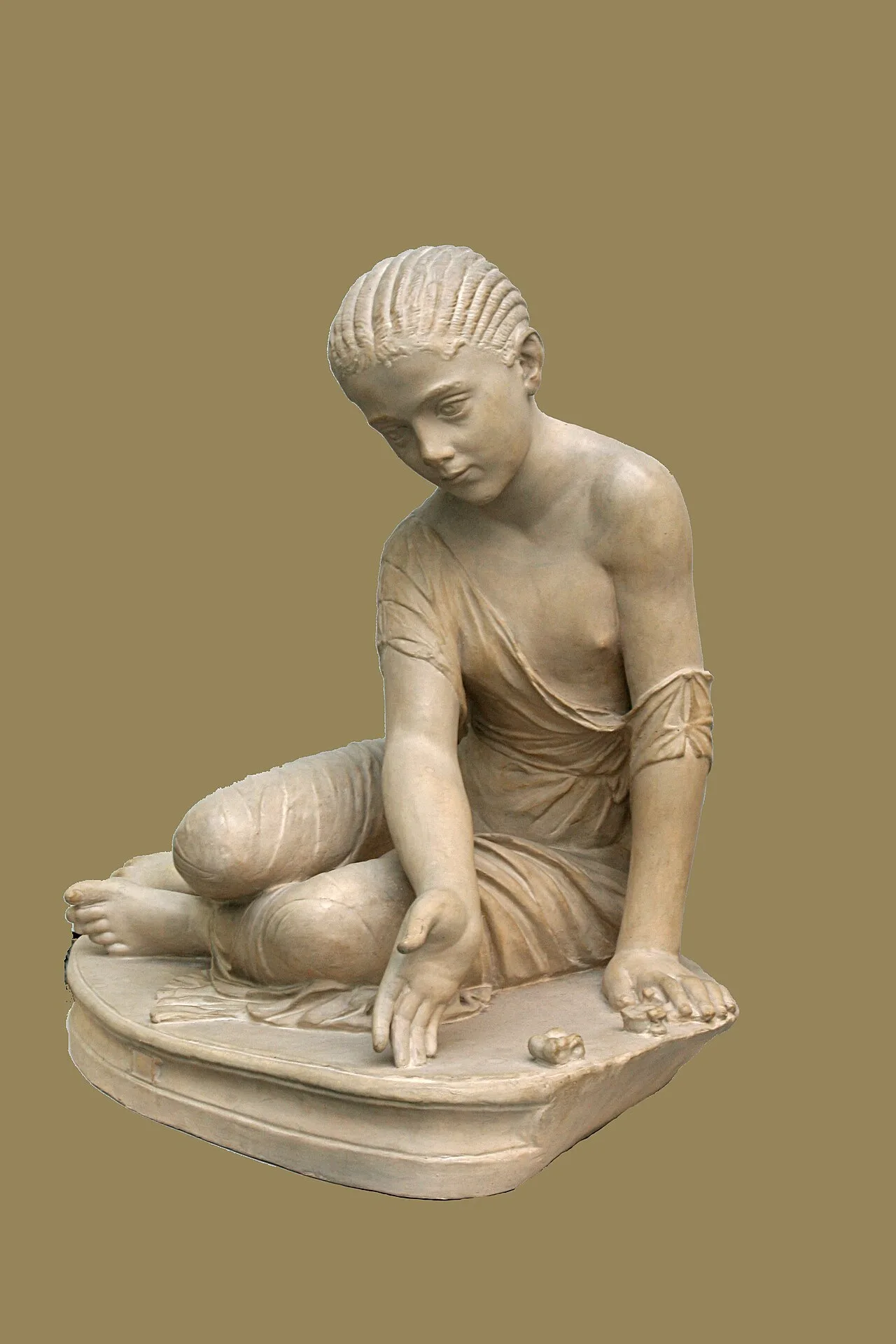
Girl plays with knucklebonesRoman copy (2nd century) after a Greek original from Hellenistic period, Staatliche Museen zu Berlin
Knucklebones
Knucklebones is an ancient game of dexterity played worldwide using small objects that are thrown, caught, and manipulated in various ways.
An Asymmetrical Ancestor to Modern Dice
Long before perfectly balanced cubes, ancient gamers relied on the uneven anatomy of hooved animal talus bones dating back to 5000 BCE. Unlike cubic dice with uniform chances, an astragalus naturally landed on its broad side roughly ~0.38 of the time, while the narrower faces landed only about ~0.12 of the time. These organic contours turned everyday anatomical scraps into humanity's earliest tools for both chance and divination.
From Wikipedia · CC BY-SA 4.0

Tug of war video from Kerala, India
![A tug of war between asuras and devas[6] (Angkor Wat, Cambodia)](https://upload.wikimedia.org/wikipedia/commons/thumb/8/84/Awatoceanofmilk01.JPG/1280px-Awatoceanofmilk01.JPG?utm_source=en.wikipedia.org&utm_campaign=imageinfo&utm_content=thumbnail)
A tug of war between asuras and devas[6] (Angkor Wat, Cambodia)
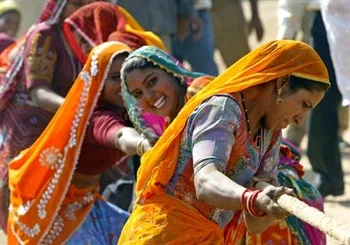
Women in a tug of war, at the annual Pushkar Fair, Rajasthan, India

Harvard Tug of War team, 1888

Naha's annual Otsunahiki (giant tug of war) has its roots in a centuries-old local custom. It is the biggest among Ryukyu Islands' traditional tugs of war.

The Dutch team at the 2006 World Championships
Tug of war
Tug of war is a sport where two teams pull on opposite ends of a rope to pull it a set distance against the opposing team's resistance.
Emperor Xuanzong's 500-Man Drum-Driven Pulls
In Tang dynasty China, tug of war evolved beyond simple athletic competition into massive, orchestrated military exercises. Emperor Xuanzong promoted contests featuring main ropes spanning up to 167 metres with attached subsidiary lines. More than 500 participants pulled on each end while dedicated drumming teams maintained their rhythm and morale. These vast spectacles developed from State of Chu warrior training drills known as hook pulling.
From Wikipedia · CC BY-SA 4.0
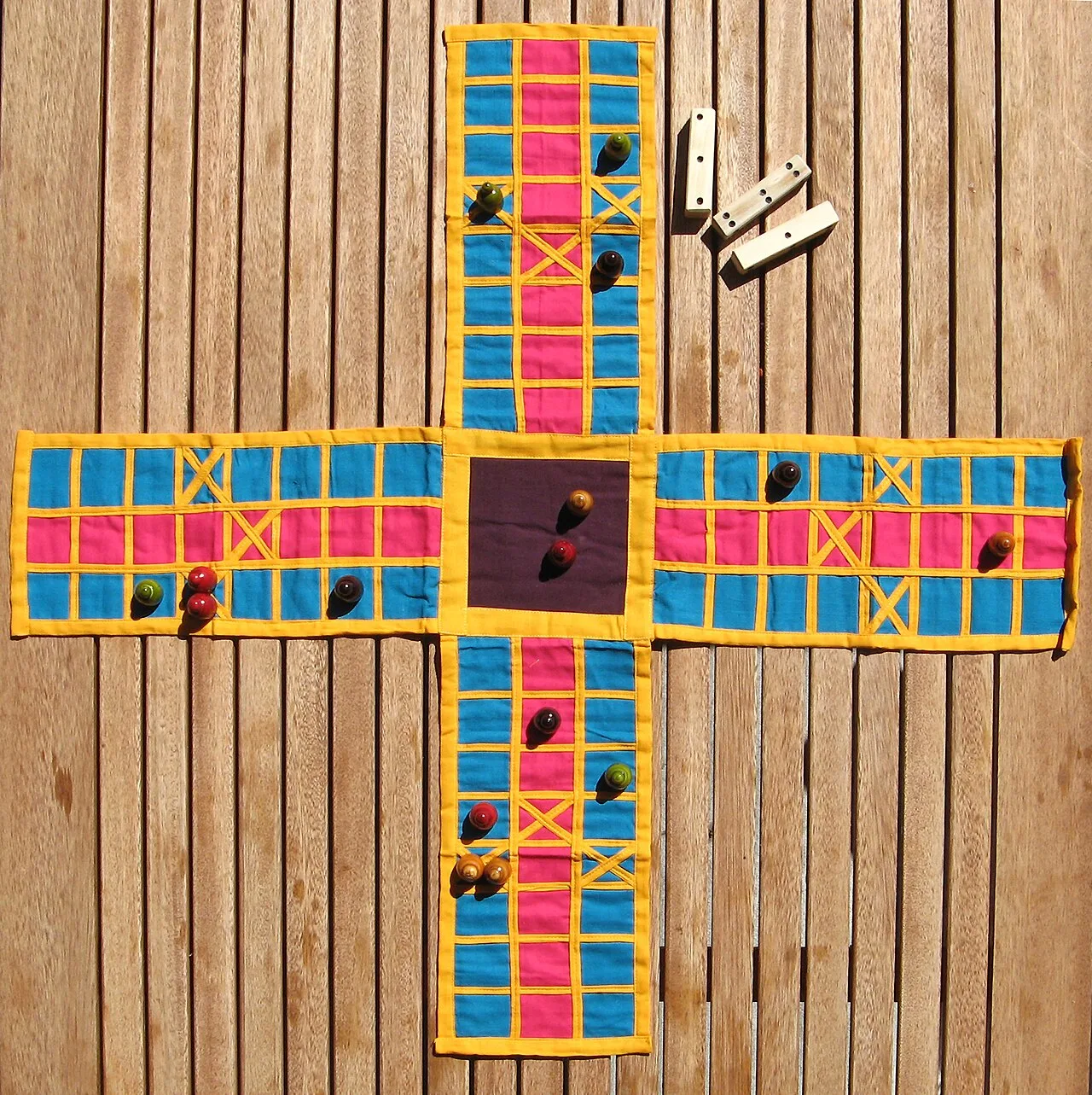
Pachisi-real
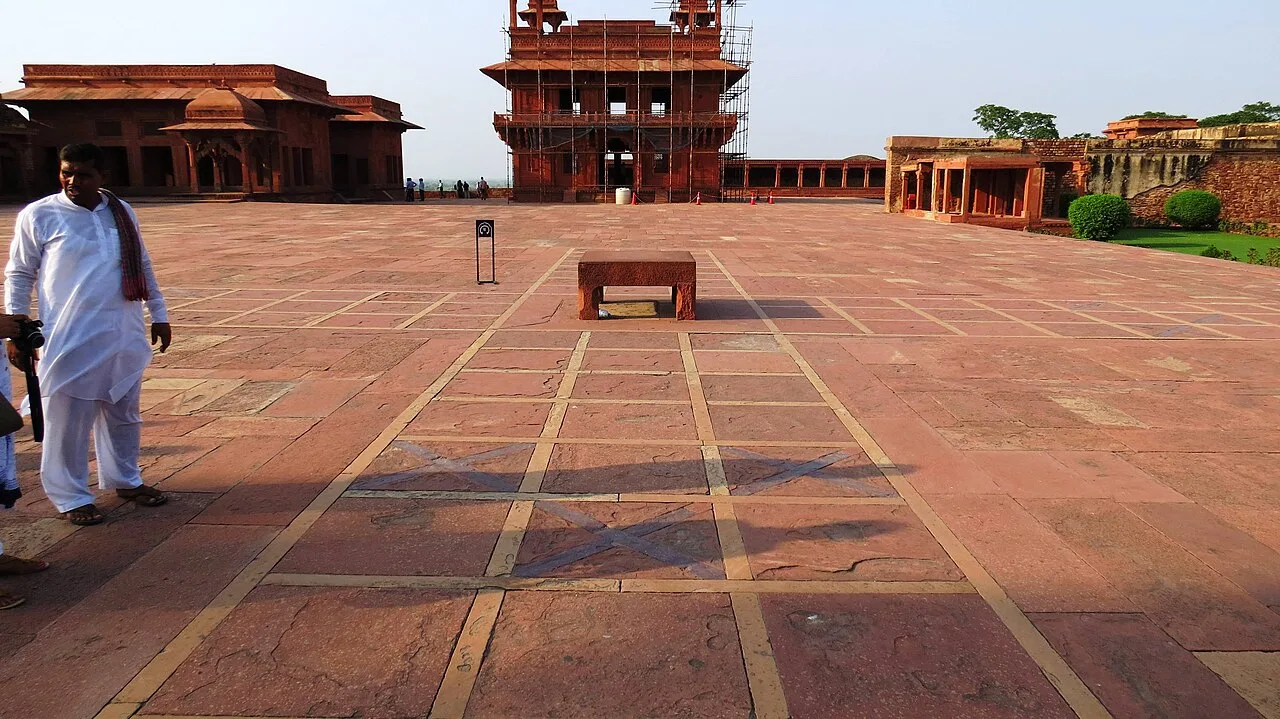
Large ancient garden version – Fatehpur Sikri – India; marked squares can just be made out under the shadows of the onlookers.
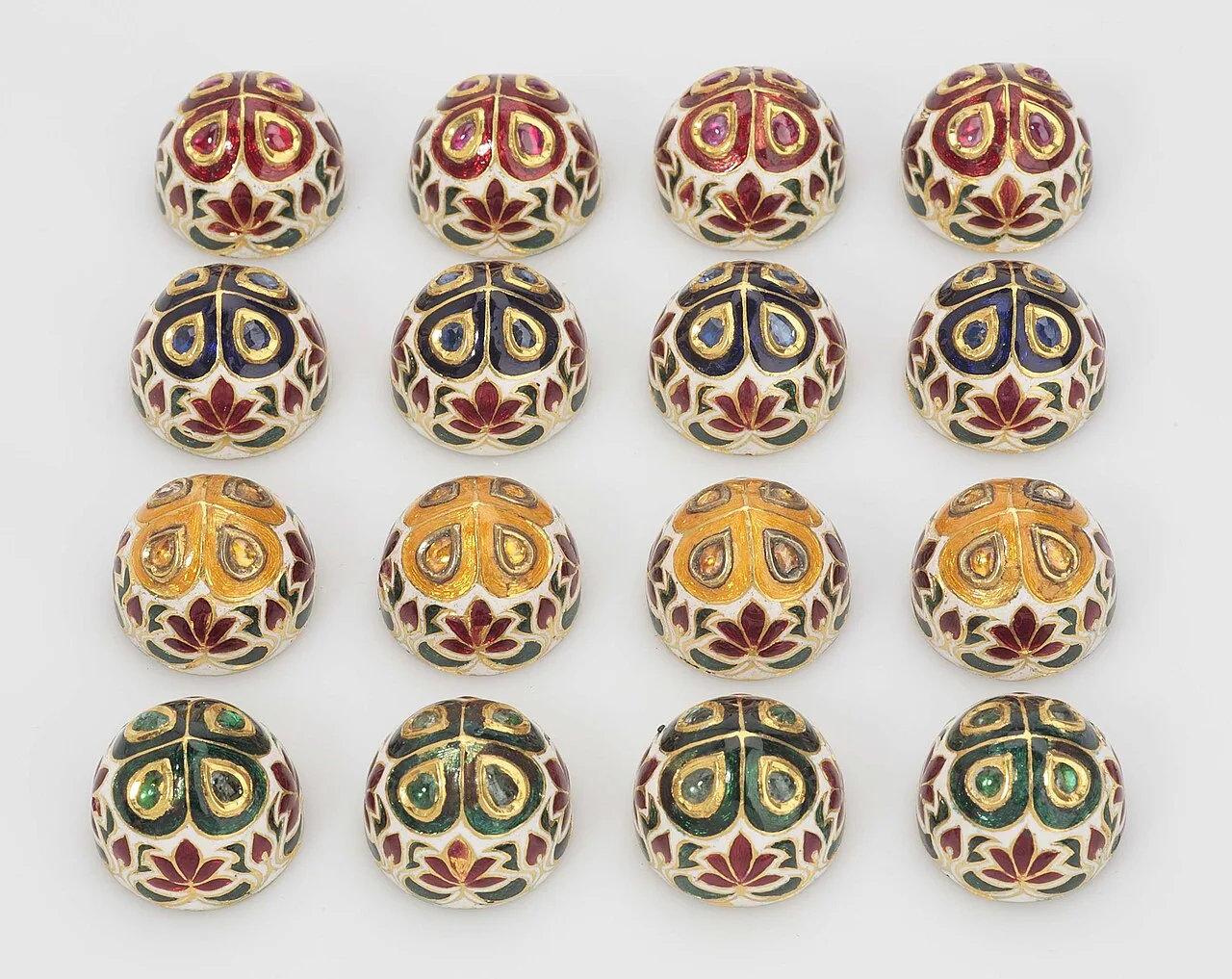
Pachisi pieces in enamelled gold with precious stones, 18th century Mughal India, Khalili Collection of Islamic Art
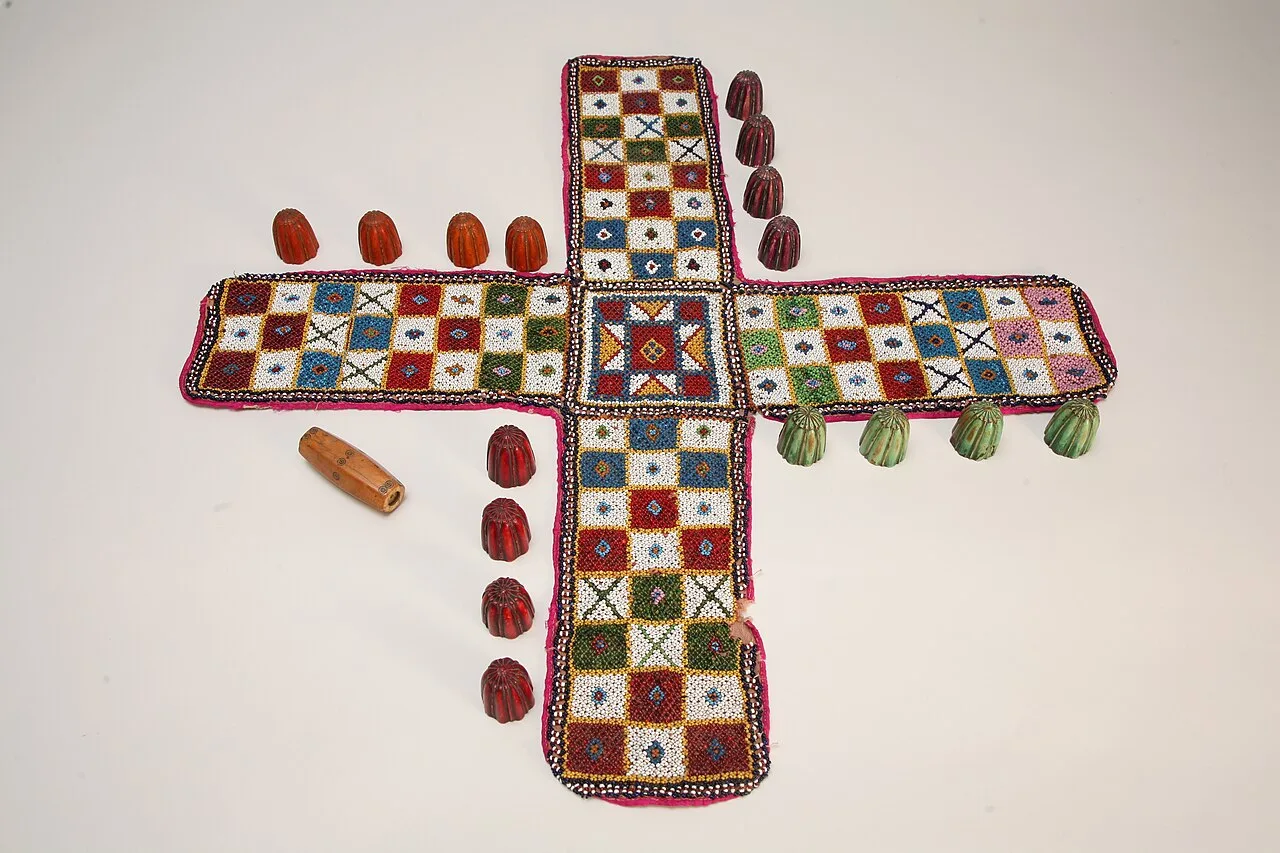
A beaded Pachisi game, The Children's Museum of Indianapolis
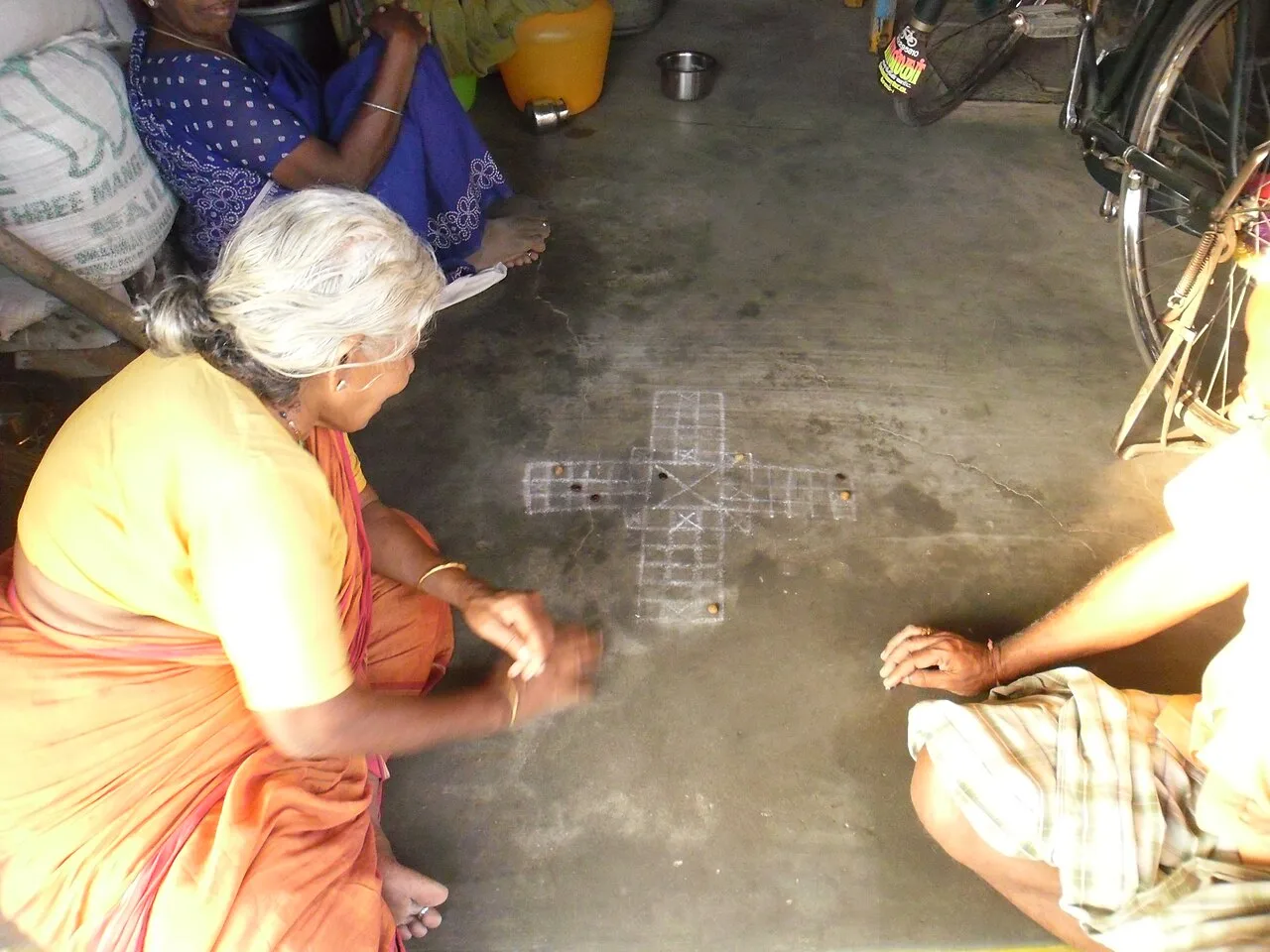
Pachisi being played in Tamil Nadu with tamarind seeds and stones
Pachisi
Pachisi is a cross and circle board game that originated in Ancient India, played on a symmetrical cross-shaped board using cowrie shells as lots.
Iron Age Dice at Mathura and Noh
Archaeological findings trace predecessors of the game back thousands of years. Artifacts similar to chaupar featuring dice and distinct colour schemes date back to the Iron Age Painted Grey Ware period between 1100 and 800 BC in Mathura and Noh. In addition, cruciform board depictions appear on Chandraketugarh art reliefs dating to the 2nd–1st century BC. These artifacts establish a rich prehistoric lineage across ancient Indian settlements.
From Wikipedia · CC BY-SA 4.0