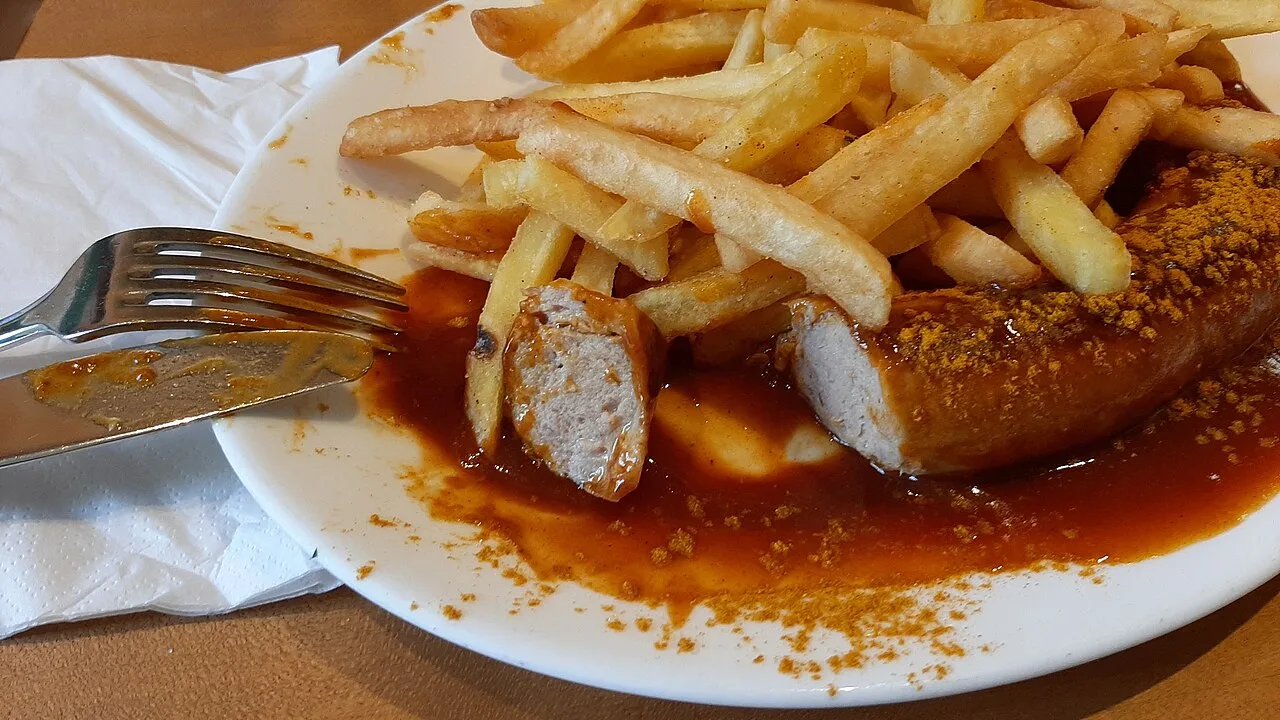
20220430 currywurst
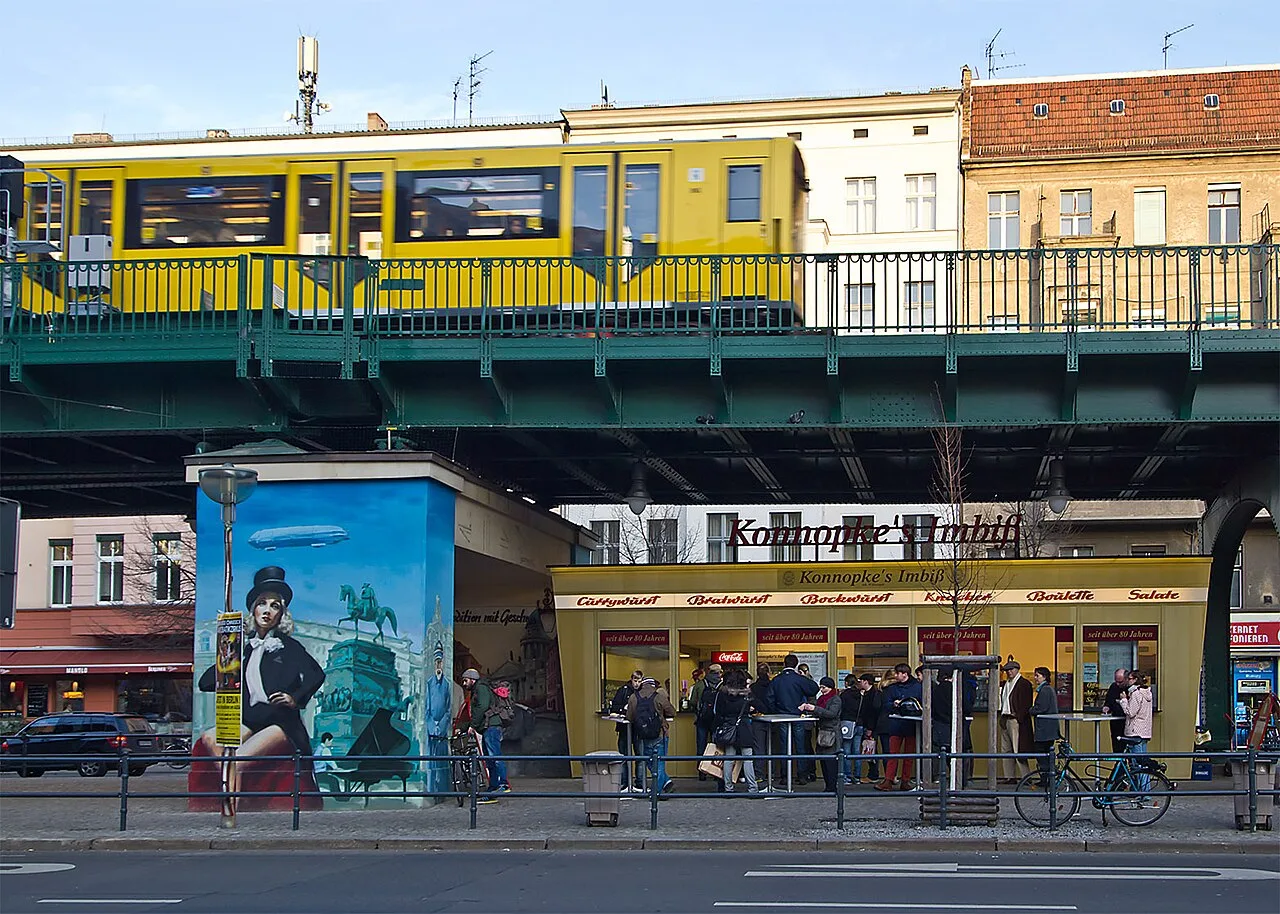
Konnopke's Imbiss (Fast Food Stand) in Berlin. It was the first Imbiss to sell currywurst in East-Berlin in 1960.
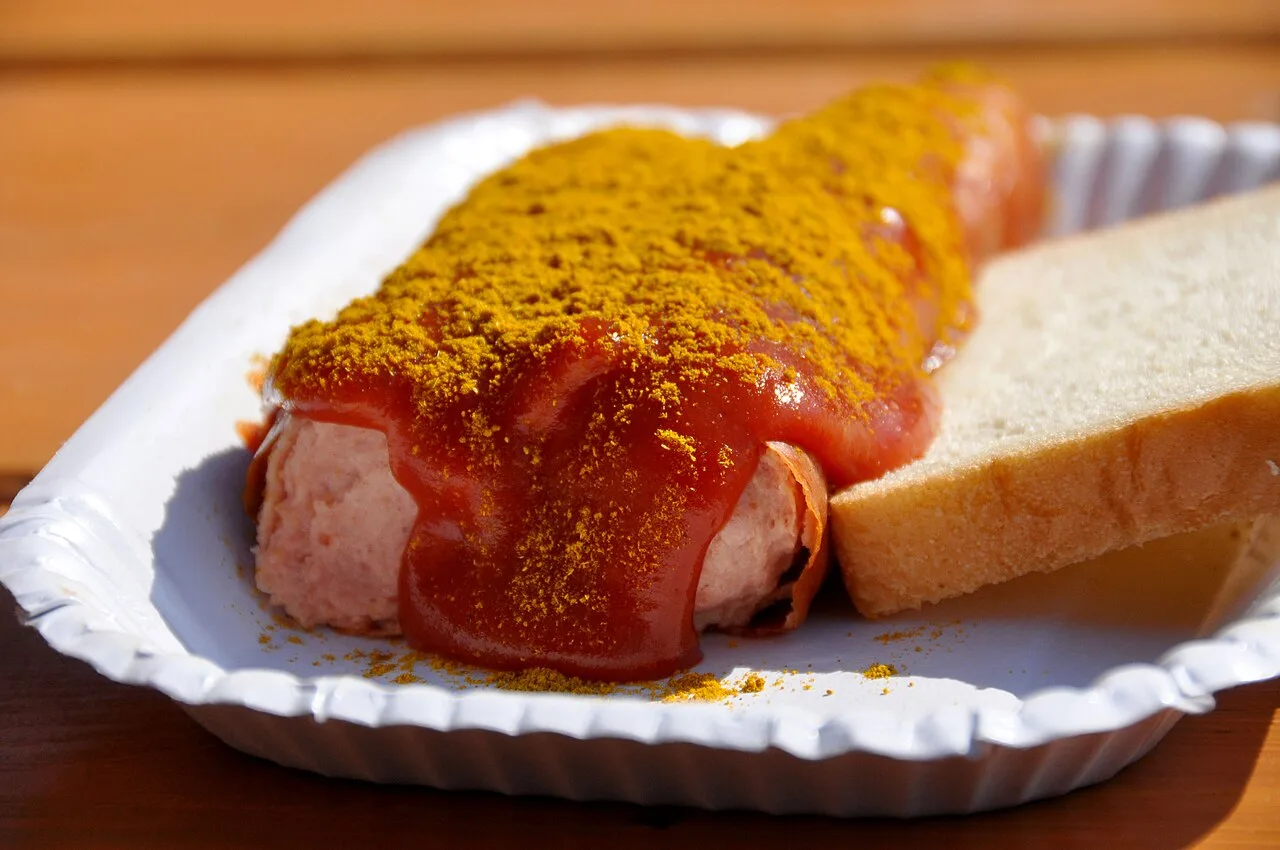
Served with bread
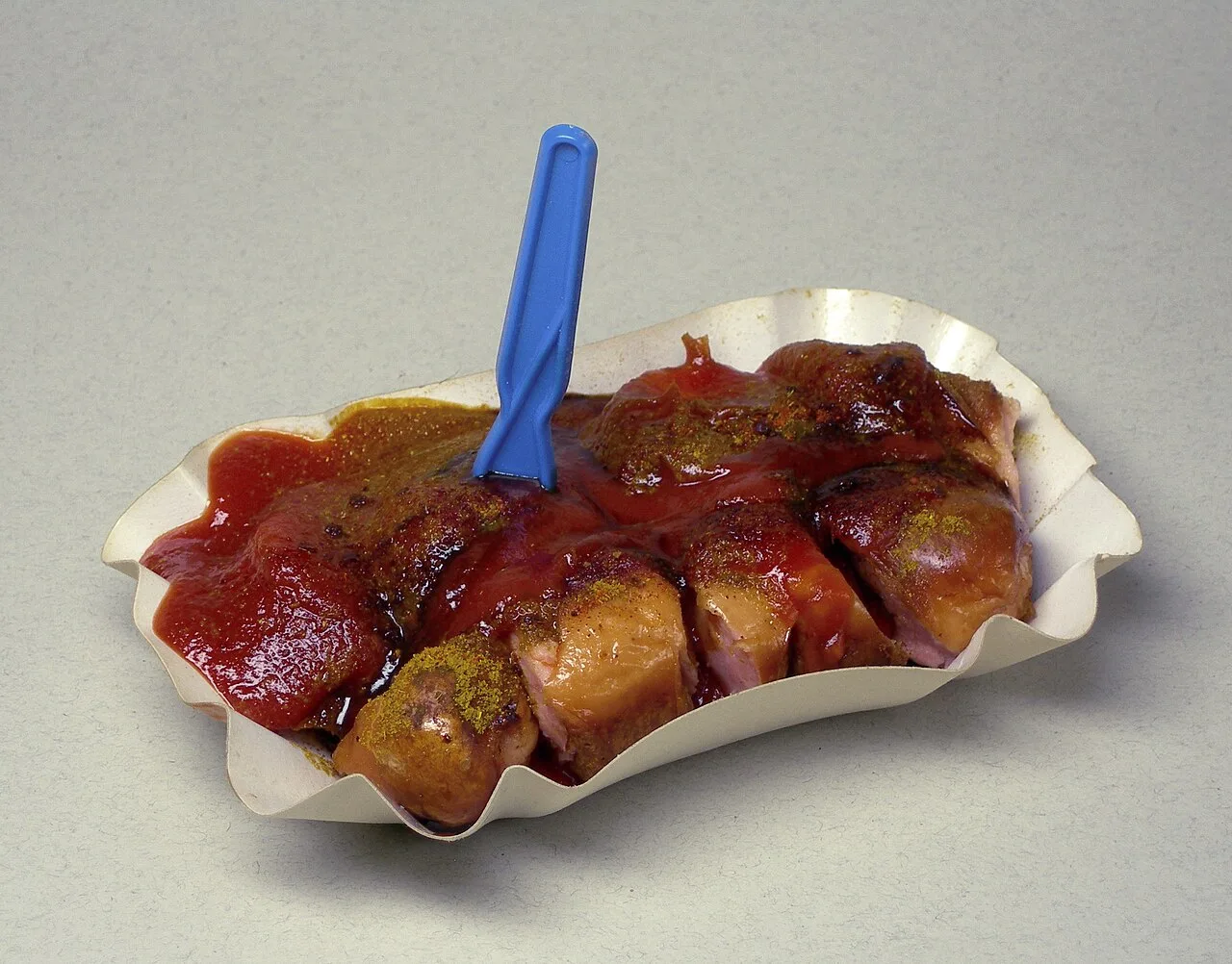
Currywurst - served sliced
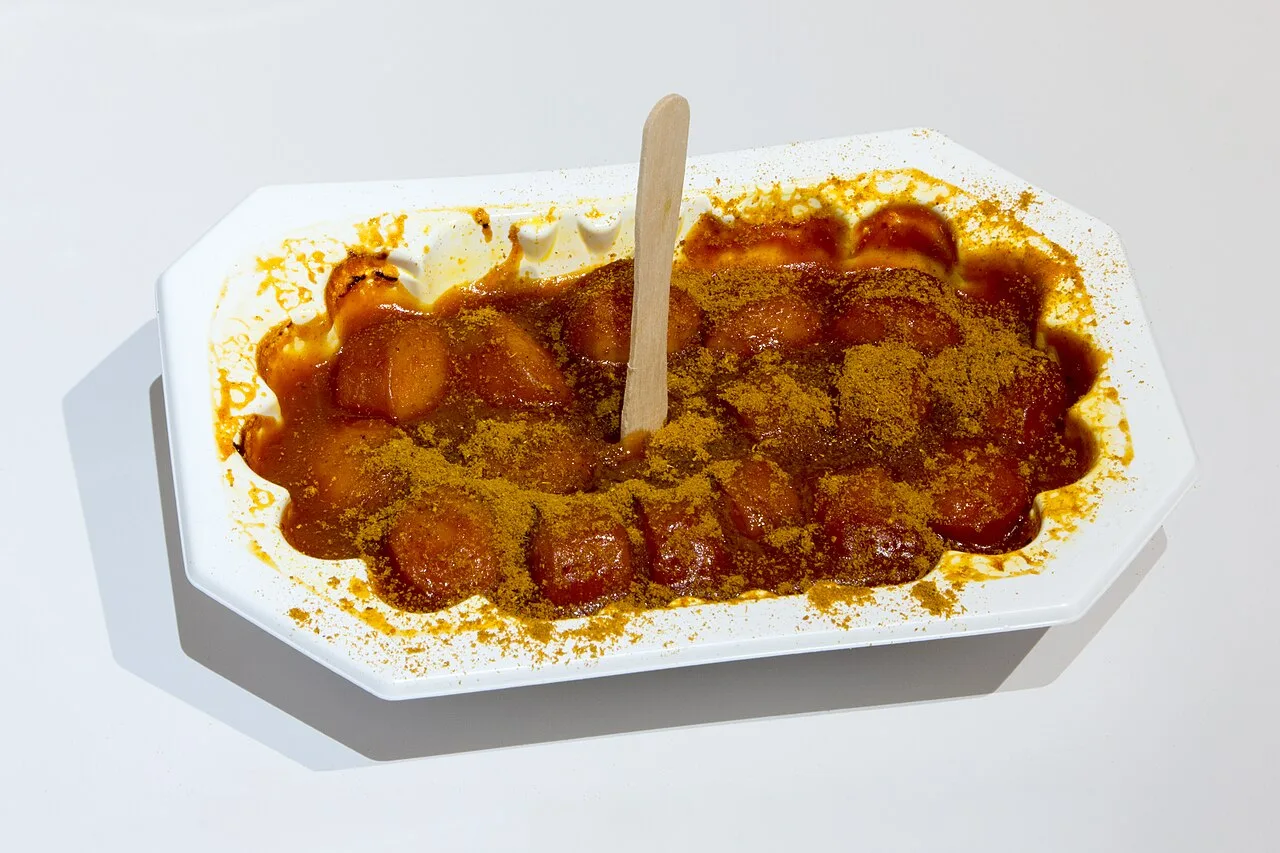
Currywurst as a supermarket-shelf product to prepare at home
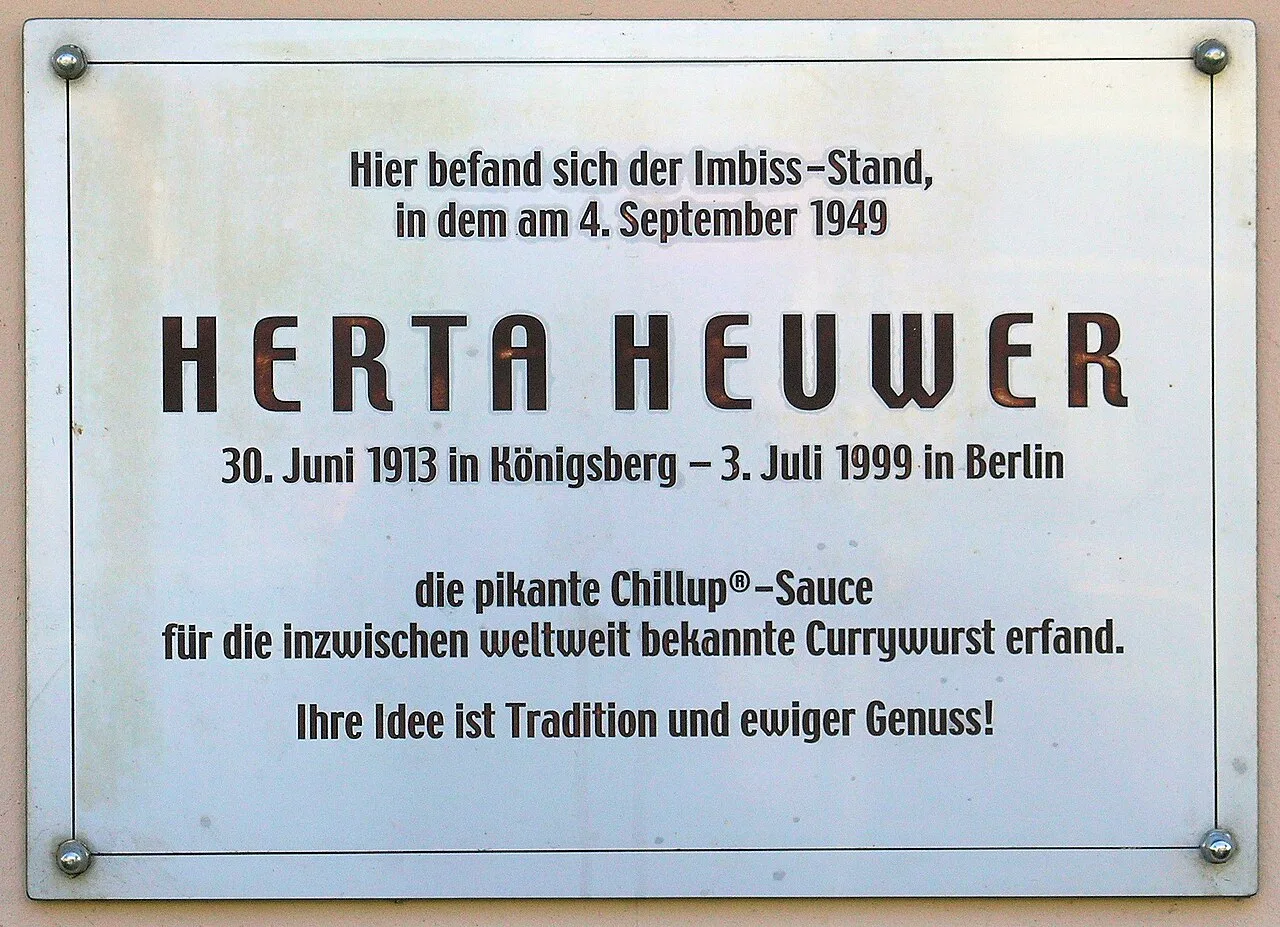
Plaque in Charlottenburg, Berlin, where Herta Heuwer is said to have invented the currywurst
Currywurst
Currywurst is a German fast food dish consisting of sausage with curry ketchup, invented in West Berlin in 1949 by Herta Heuwer.
Postwar Rations and Charlottenburg Construction
In 1949, Herta Heuwer created a new street food in Berlin after obtaining curry powder and ketchup from British soldiers. She poured the spiced mixture over grilled pork sausage at a food stand in Charlottenburg. The dish fueled construction workers rebuilding the ruined city, leading Heuwer to patent her sauce under the name Chillup in 1951. At its height, her stand sold 10,000 servings per week.
From Wikipedia · CC BY-SA 4.0
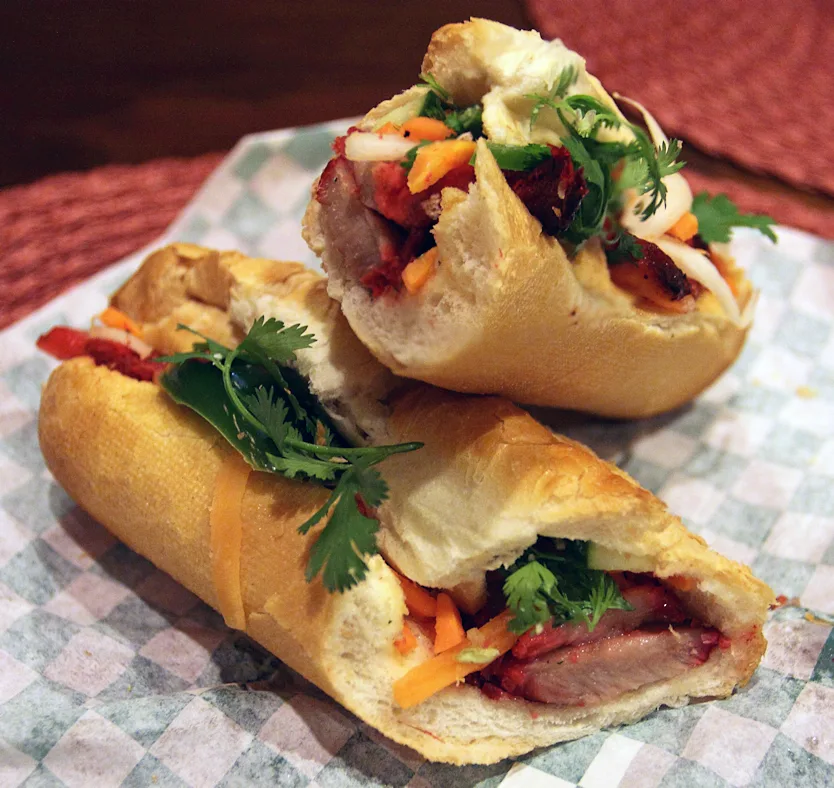
Bánh mì thịt nướng
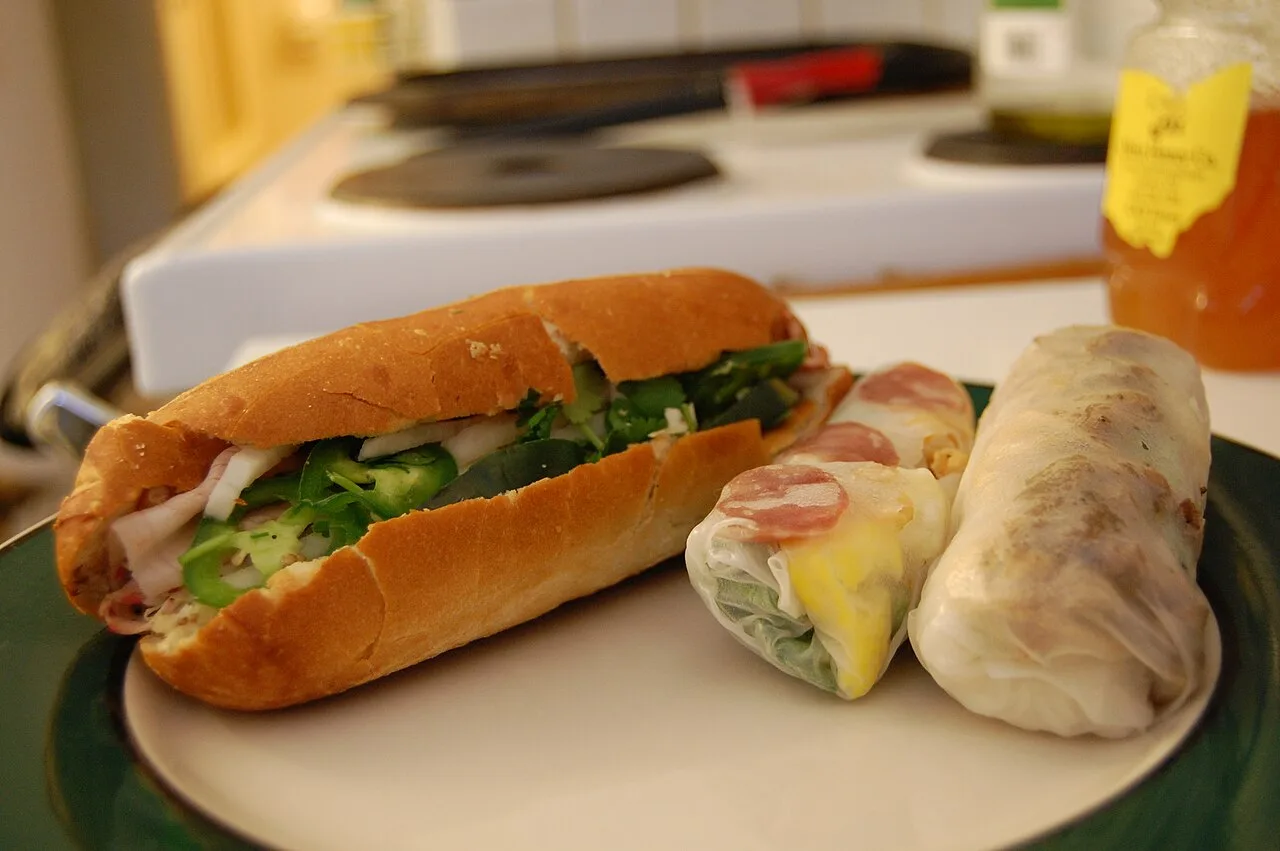
Bánh mì and bì cuốn
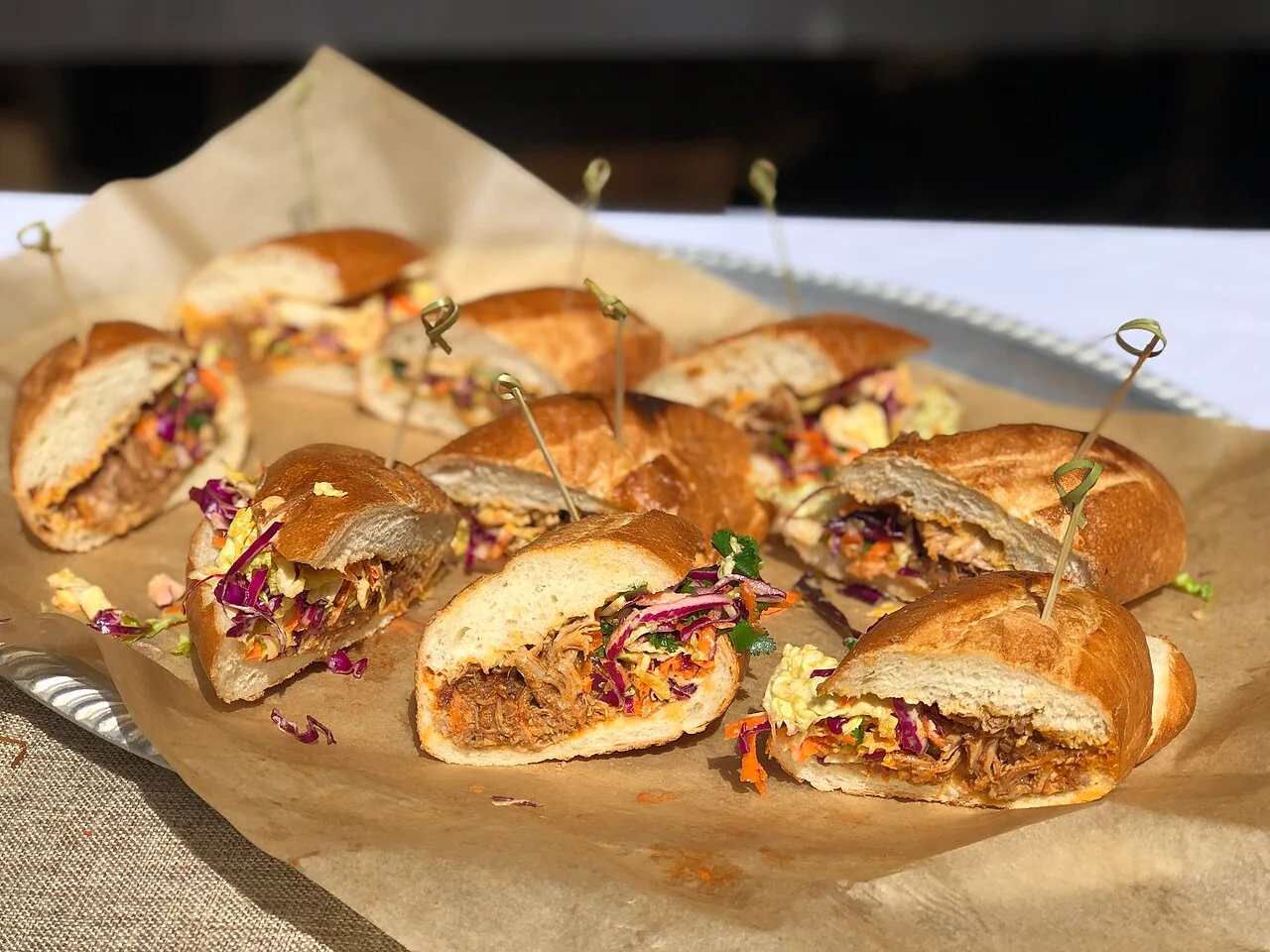
Bánh mì in California
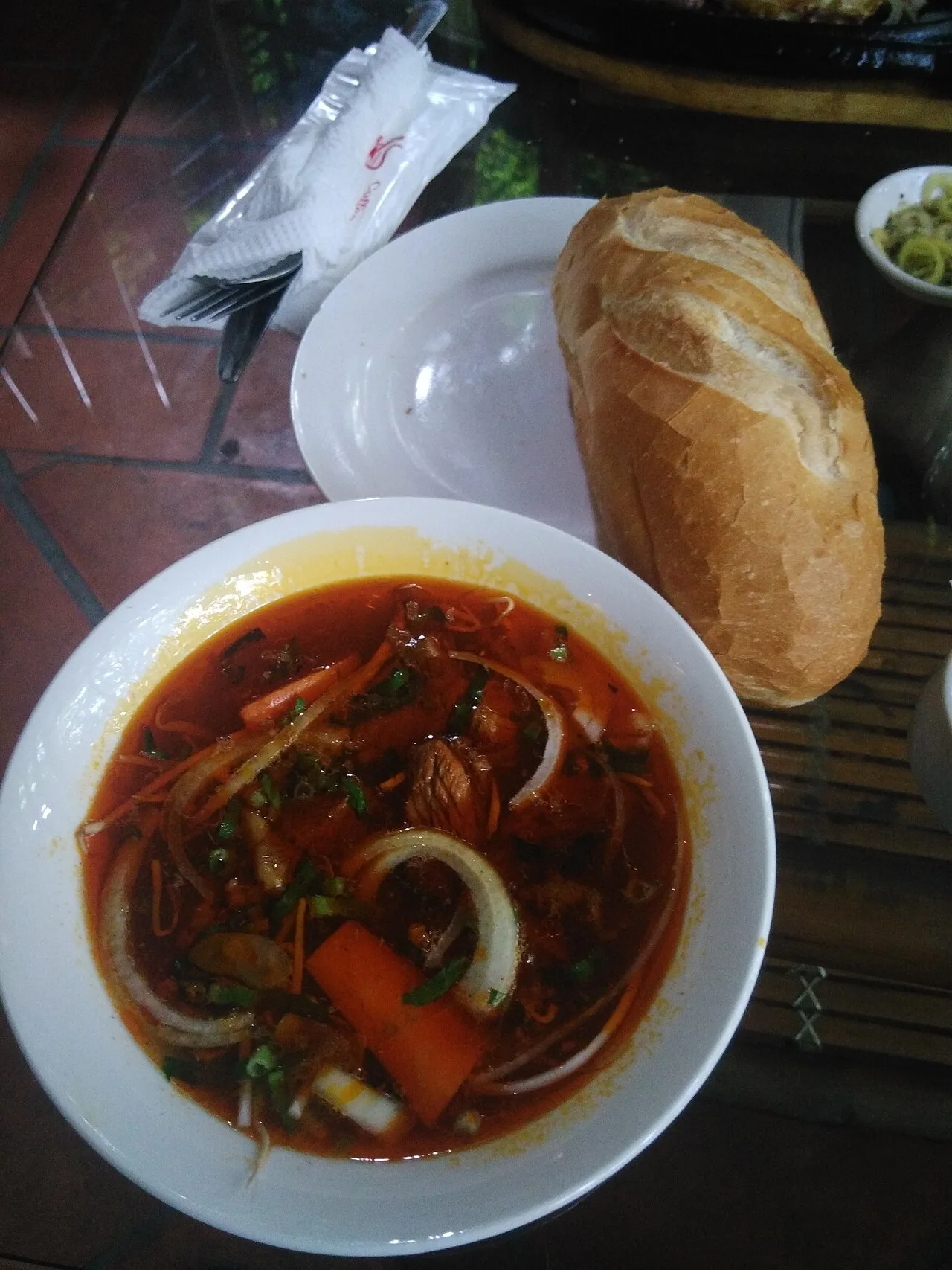
Bánh mì to eat with bò kho
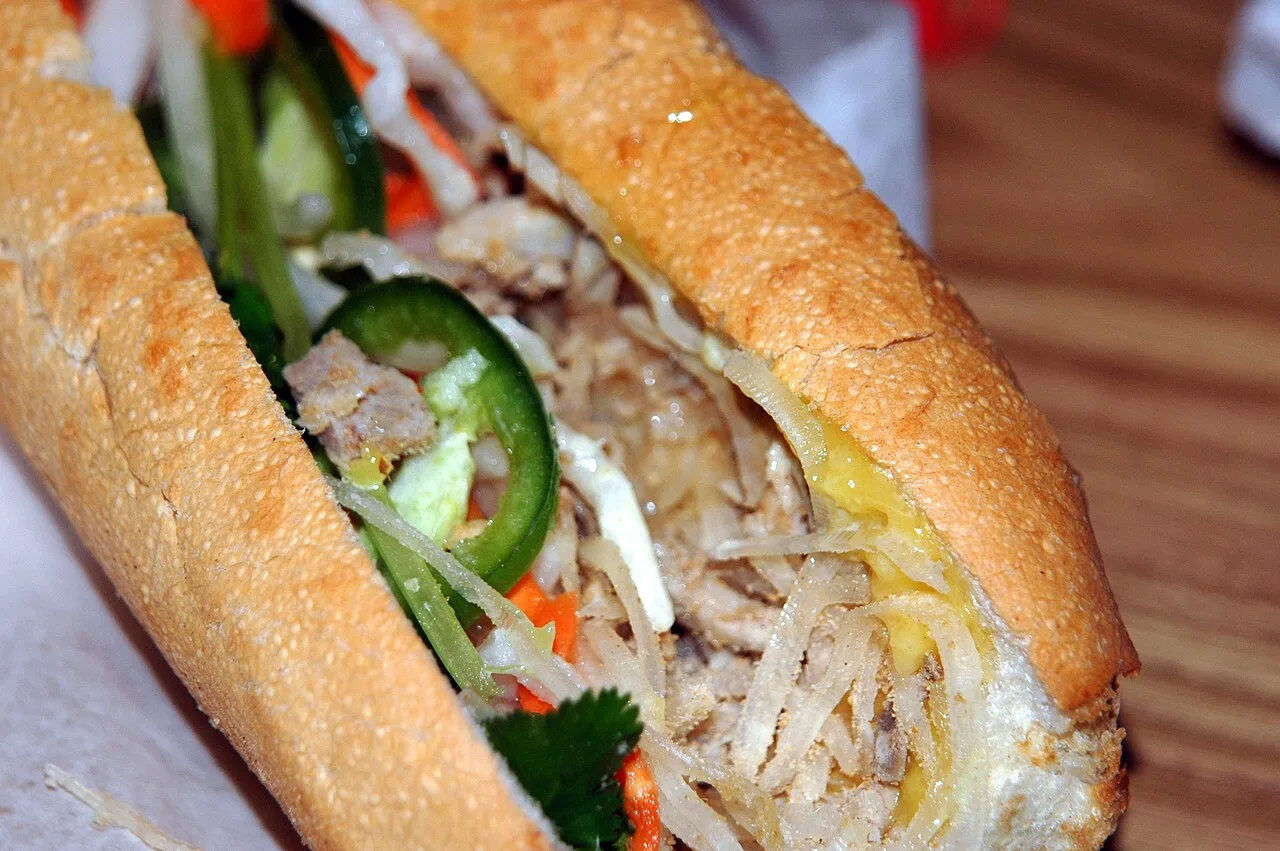
Bánh mì bì (shredded pork sandwich) at Eden Center
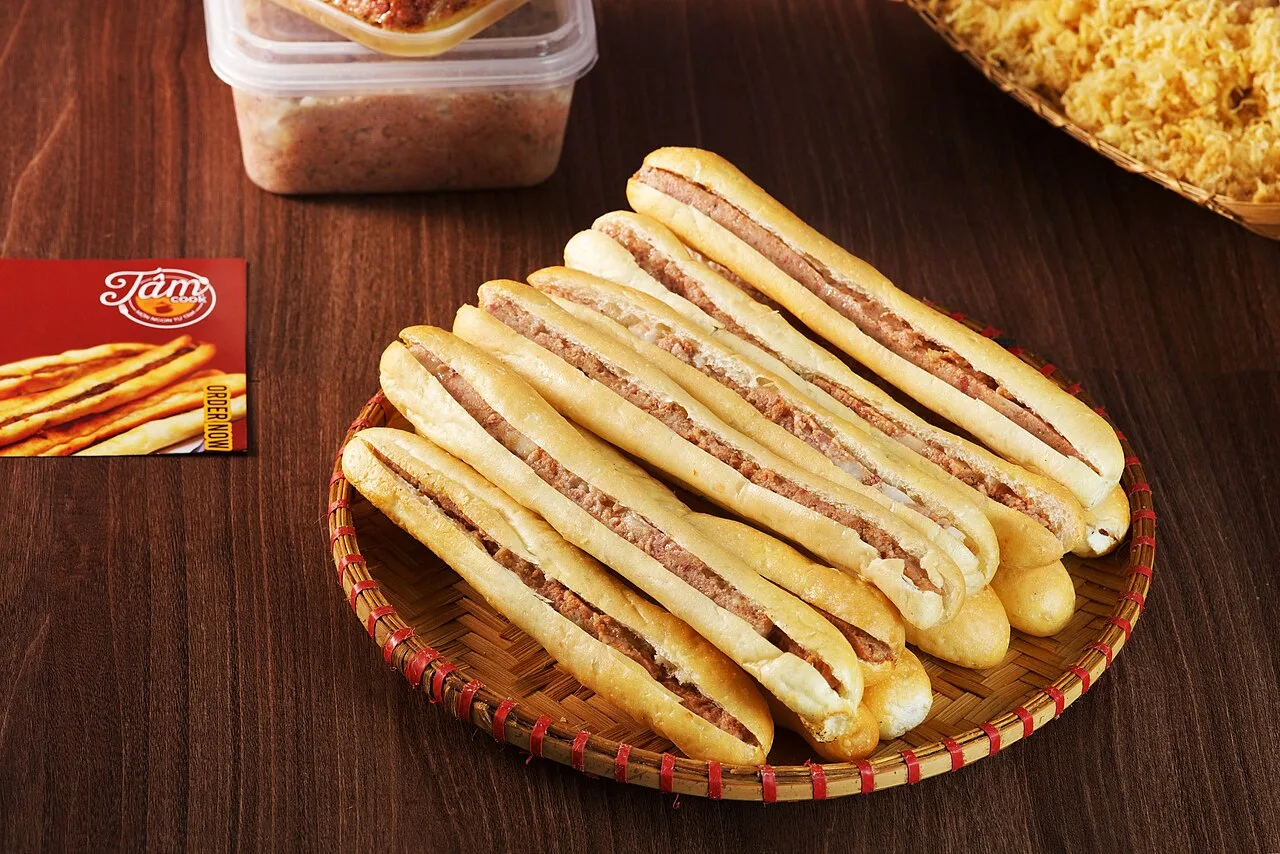
Bánh mỳ que
Bánh mì
In Vietnamese cuisine, banh mi is a short baguette with a thin, crisp crust and soft texture, often filled with meat and savory ingredients as a sandwich.
Pre-Colonial Roots of the Name Bánh Mì
Popular belief often assumes the term bánh mì was borrowed directly from the French phrase pain de mie. Historical evidence reveals that bánh had already designated Vietnamese rice cakes and pastries since the 13th century. The name actually pairs this ancient native term with mì, meaning wheat, rather than corrupting European colonial terminology.
From Wikipedia · CC BY-SA 4.0
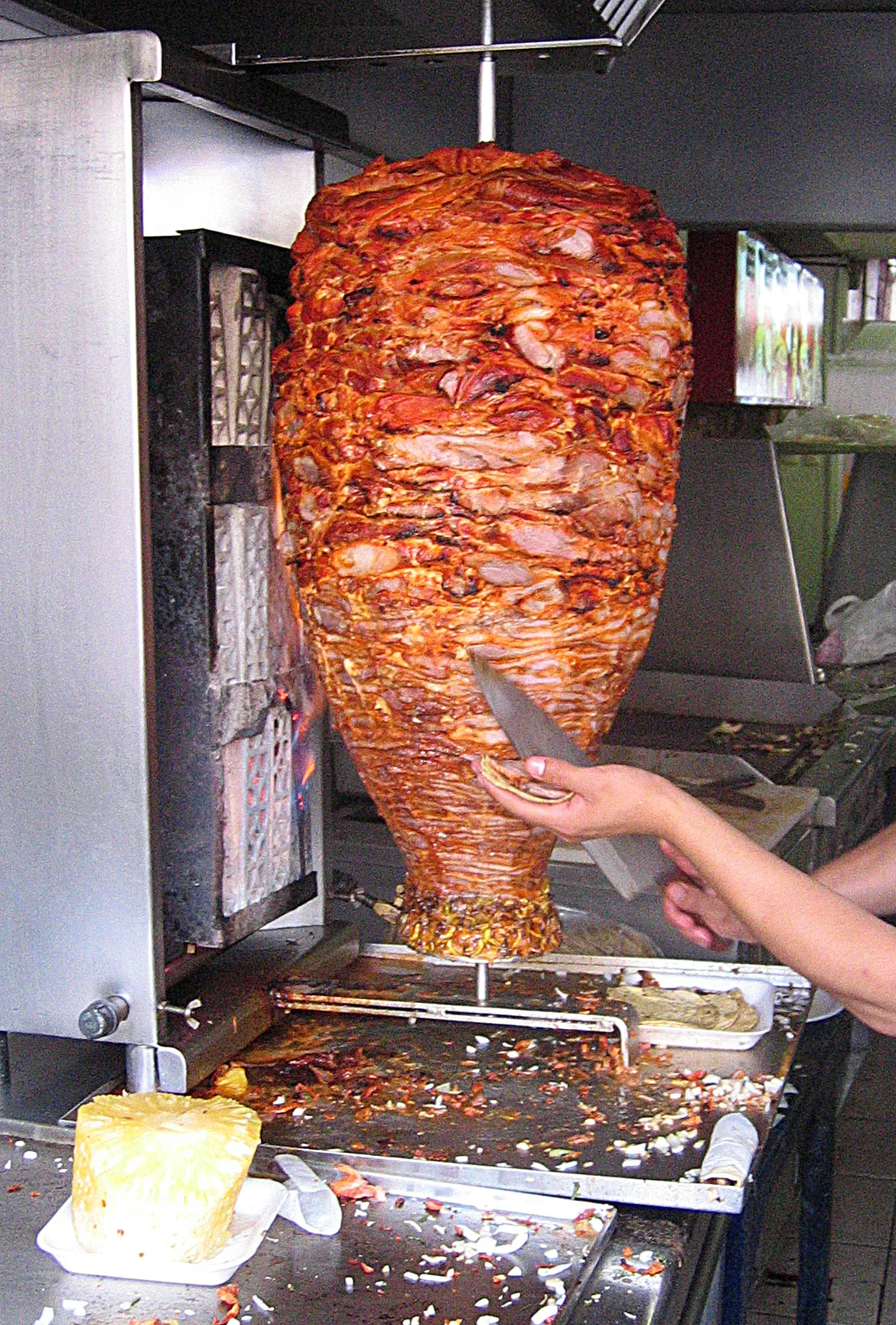
Tacos-al-Pastor
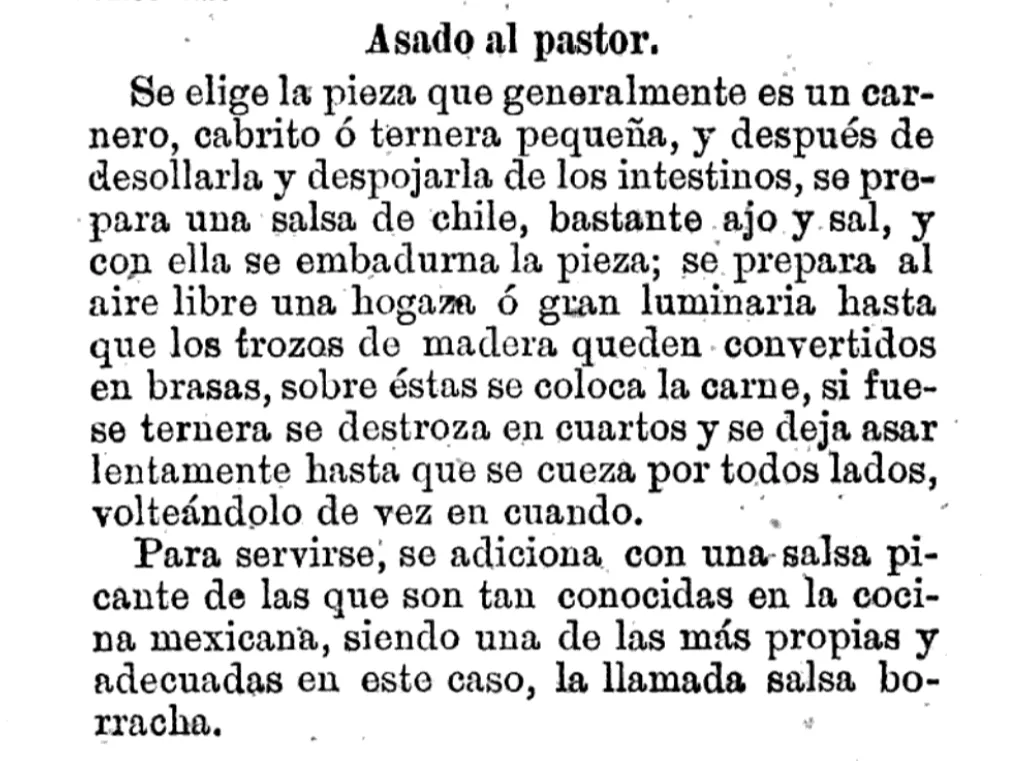
An asado al pastor recipe from 1888.
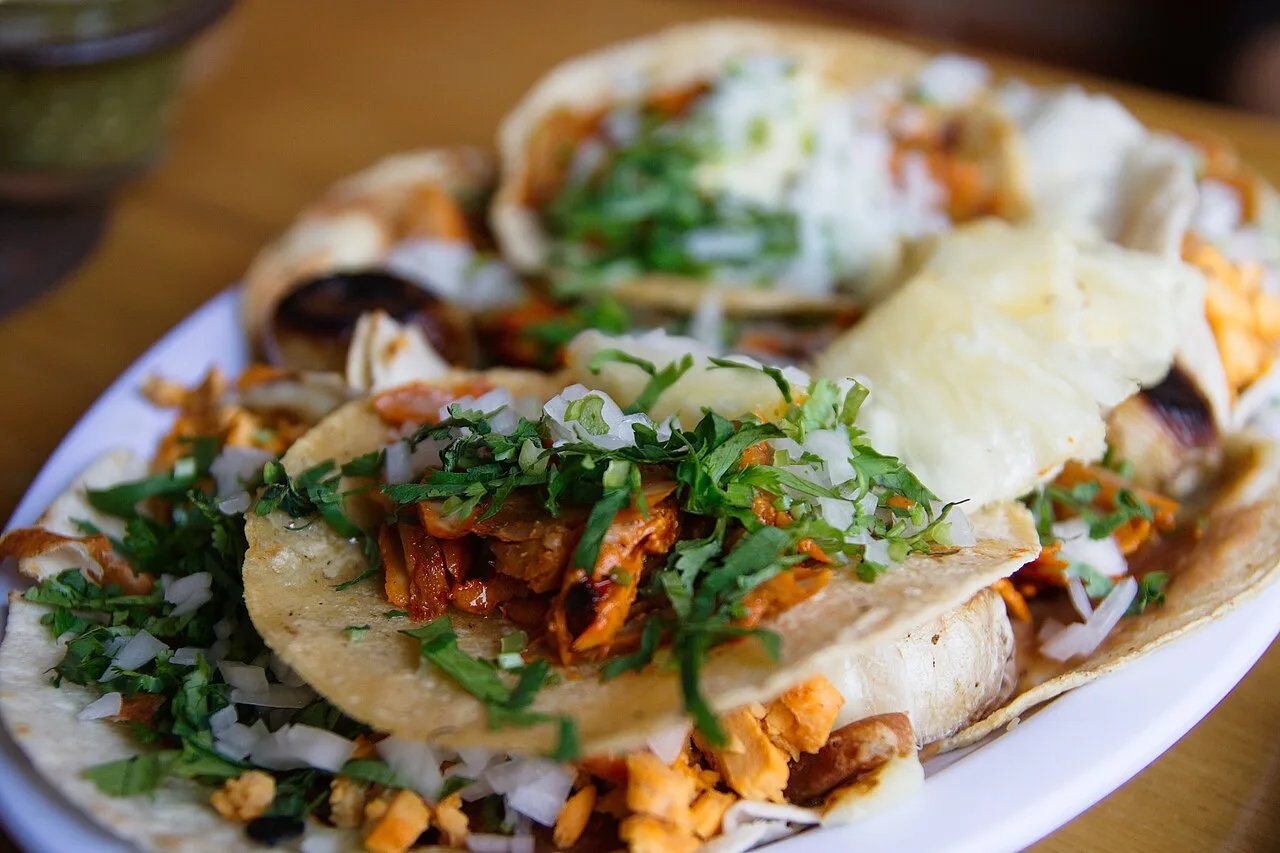
Plate of tacos al pastor
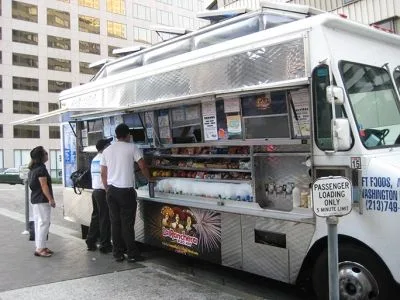
A food truck
Al pastor
Al pastor, also known as tacos al pastor, is a Mexican preparation of sliced, spit-grilled meat marinated in traditional adobada.
A Republican Feast and Assassination Rumors in 1856
During Mexican Independence celebrations on September 16th, 1856, a massive public feast took over the Alameda Central in Mexico City. A whole bull was roasted al pastor style for the public to share with President Ignacio Comonfort. Common tradesmen like shoemakers and tinsmiths fraternized directly with the head of state, brushing aside ongoing rumors of an impending assassination attempt.
From Wikipedia · CC BY-SA 4.0
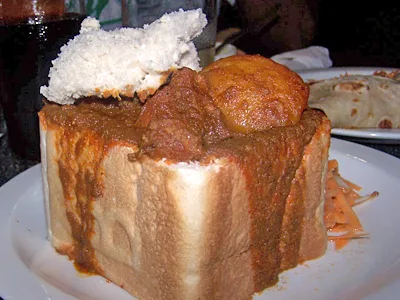
Quarter Mutton Bunny Chow
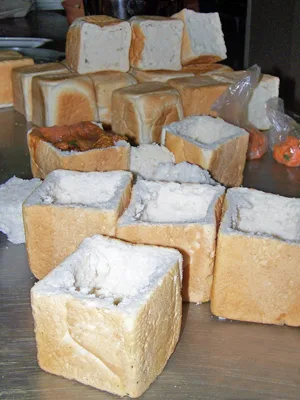
A table of hollowed "quarter loaves" to be filled for bunny chow.

Quarter mutton bunny chow in Durban, South Africa
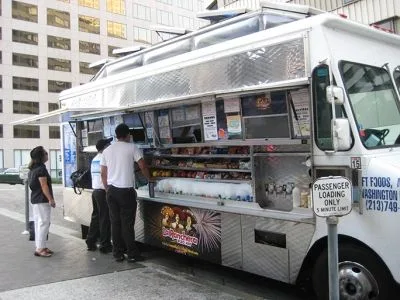
A food truck
Bunny chow
Bunny chow is an Indian South African fast food dish consisting of a hollowed-out loaf of white bread filled with curry.
Portable Sustenance on the Sugar Cane Plantations
Migrant Indian laborers on KwaZulu-Natal sugar plantations required a quick meal solution due to brief work breaks. Spreading lunch on large leaves initially proved too slow and allowed meals to cool. Carving out a loaf of white bread created a heat-retaining bowl for carrying curries directly into the fields.
From Wikipedia · CC BY-SA 4.0

ソースとポン酢のたこ焼き

Aizuya Main Branch in Osaka
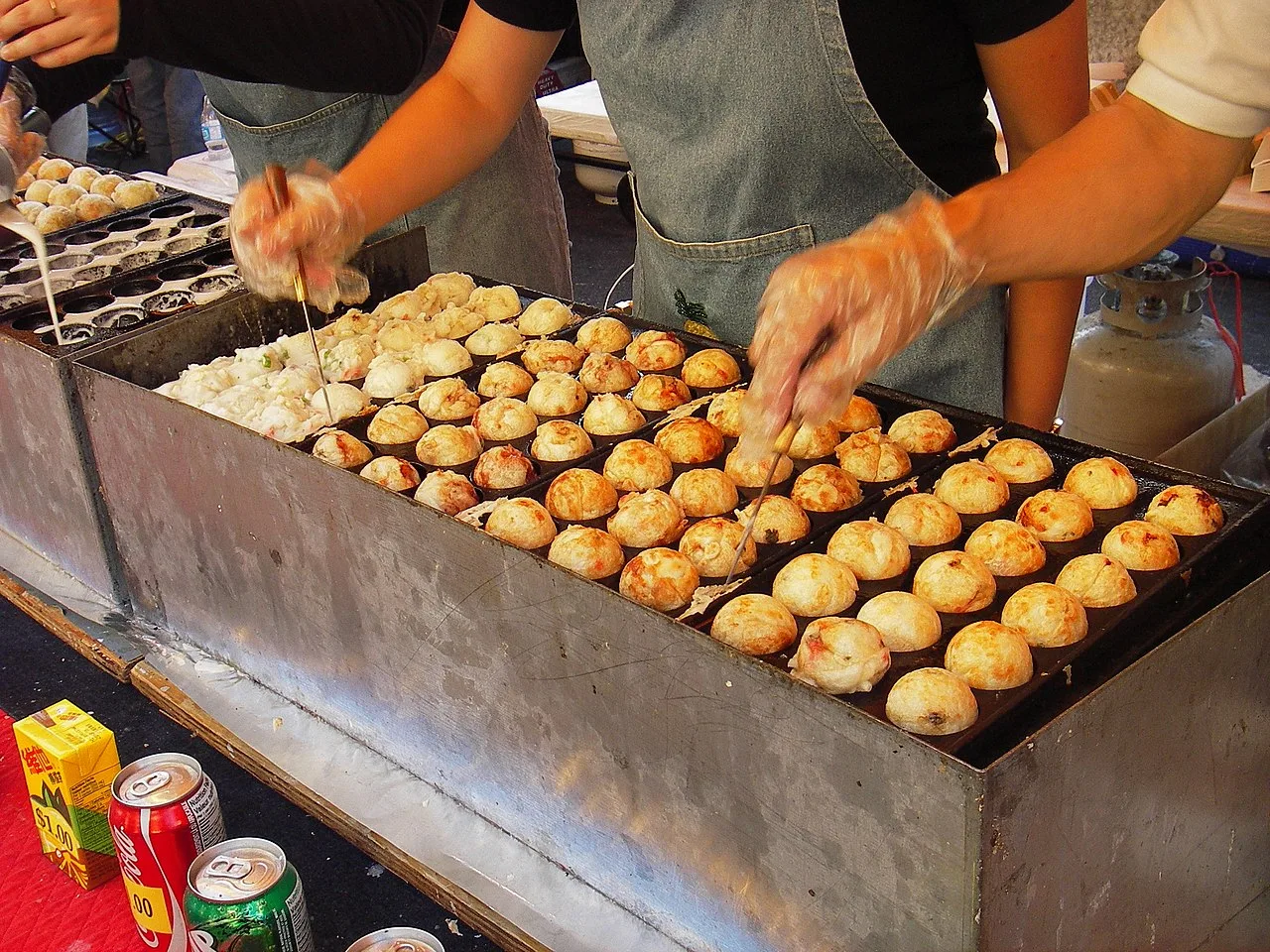
Cooking takoyaki

A takoyaki yatai in Yoyogi Park, Tokyo

Square takoyaki pan with 16 molds

Open kitchen store
Takoyaki
Takoyaki is a ball-shaped Japanese snack made of a wheat flour–based batter and typically filled with minced or diced octopus.
The Beef and Konjac Ancestry of an Osaka Street Snack
Octopus dumplings originated from a blend of earlier Japanese comfort foods rather than an entirely original recipe. In 1935, an Osaka street vendor named Tomekichi Endo drew inspiration from older local snacks known as choboyaki and radioyaki, which were originally stuffed with beef and konjac. By reinventing these savory predecessors, Endo established a distinct culinary identity for takoyaki. The resulting snack quickly captured local palates across Osaka.
From Wikipedia · CC BY-SA 4.0
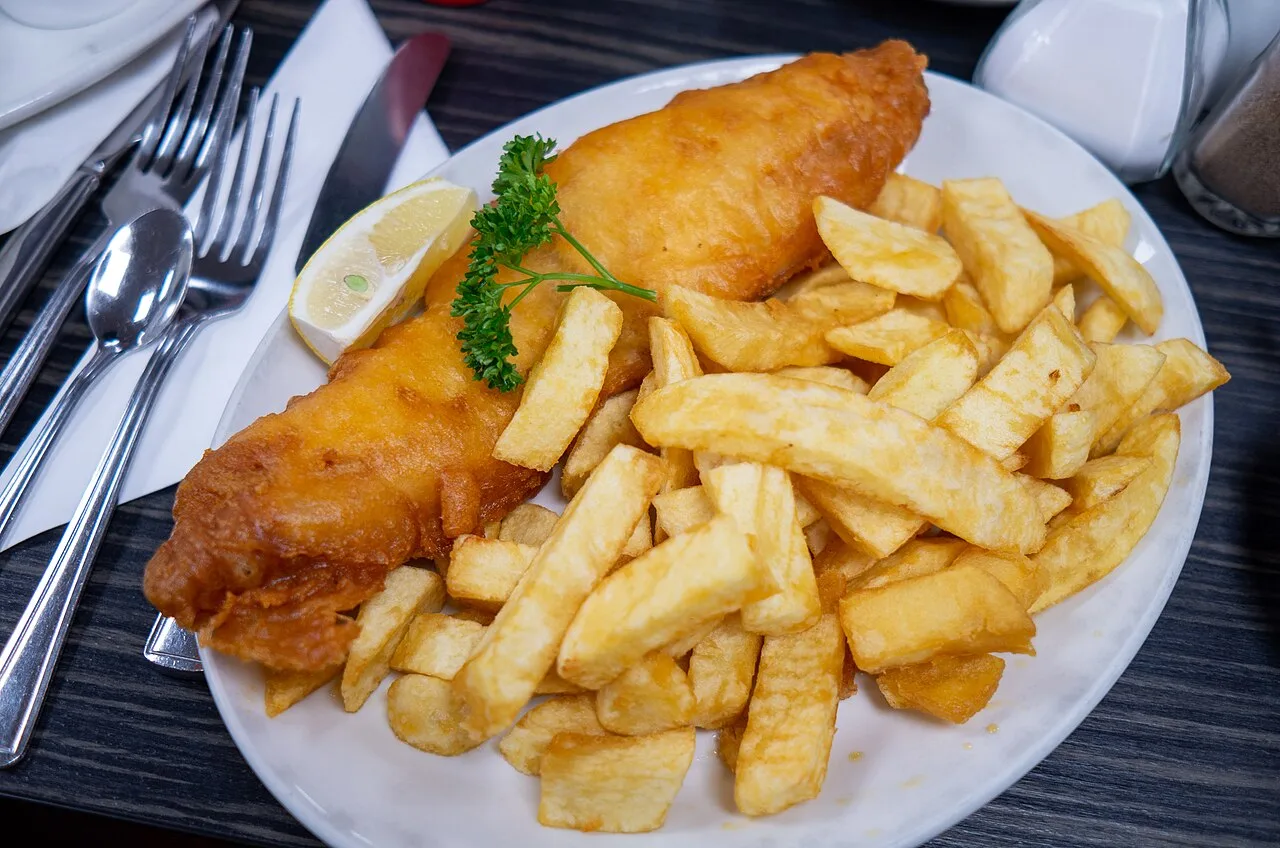
Fish and chips blackpool
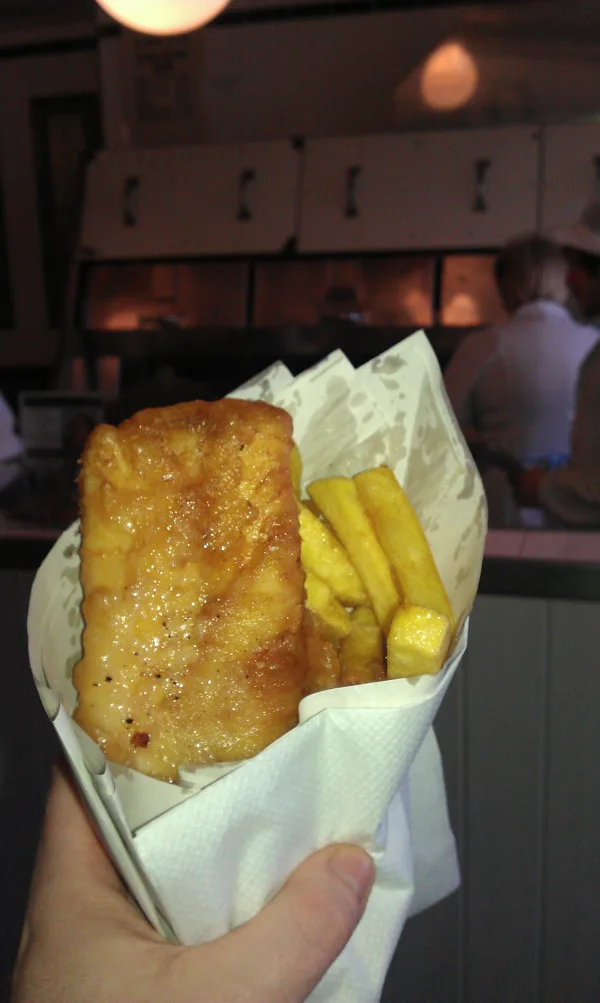
Fish and chips, served in a paper wrapper (greaseproof paper inner and ordinary paper outer), as a takeaway
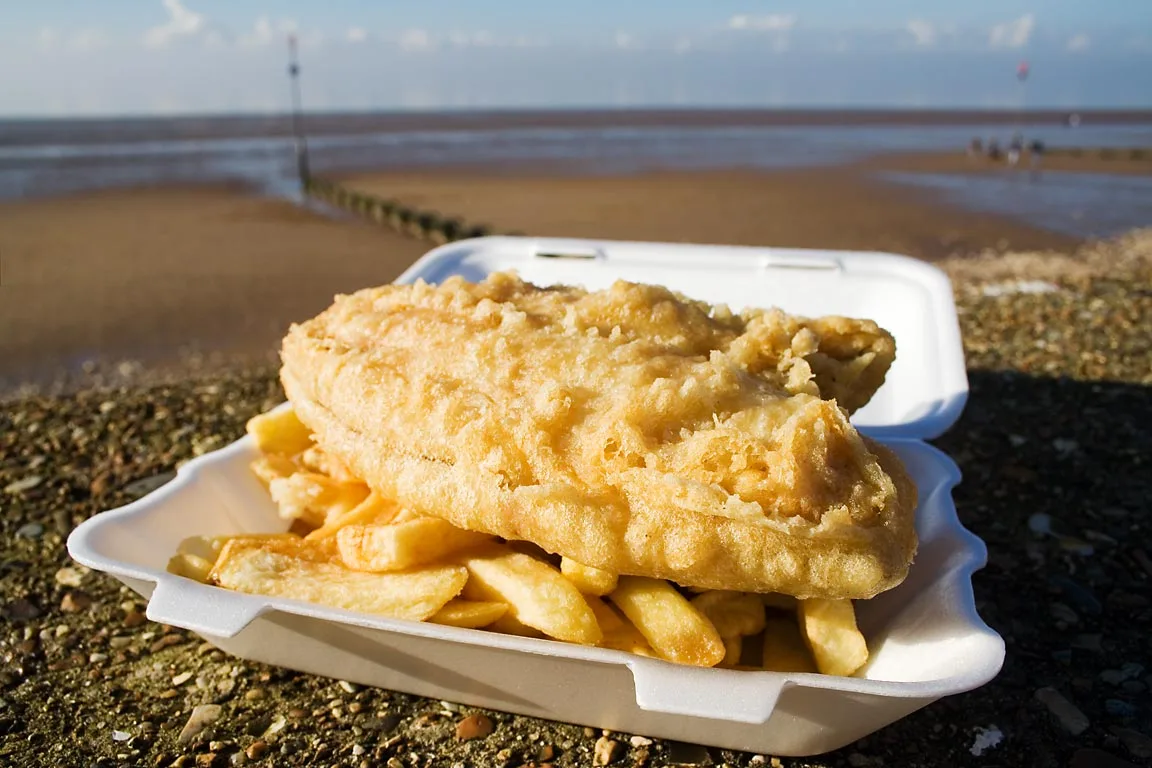
Fish and chips on the seafront at Hunstanton, Norfolk. In the UK, fish and chips are particularly associated with seaside resorts.[4]
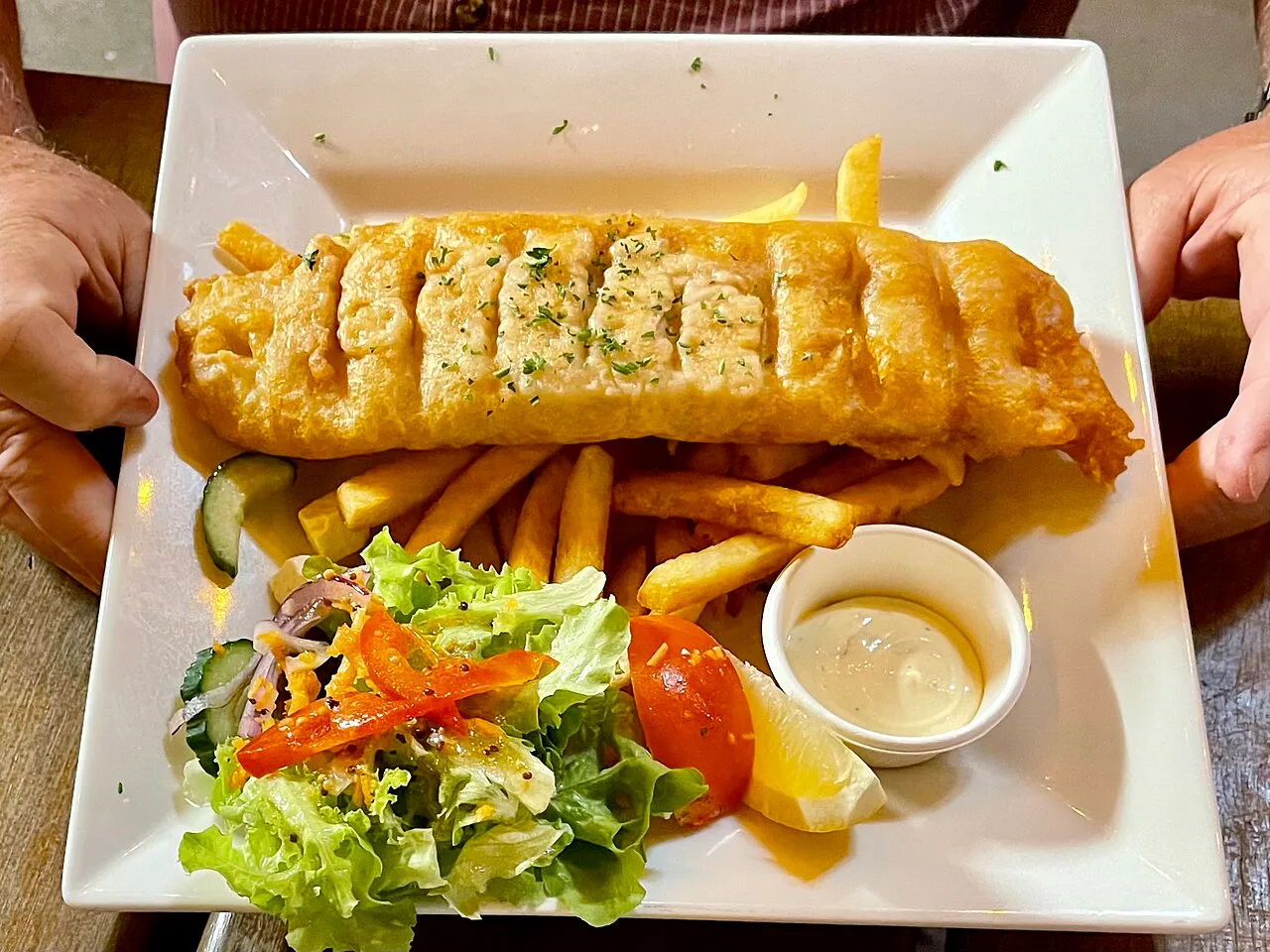
Fish and chips at the Australian Hotel, St George, Queensland
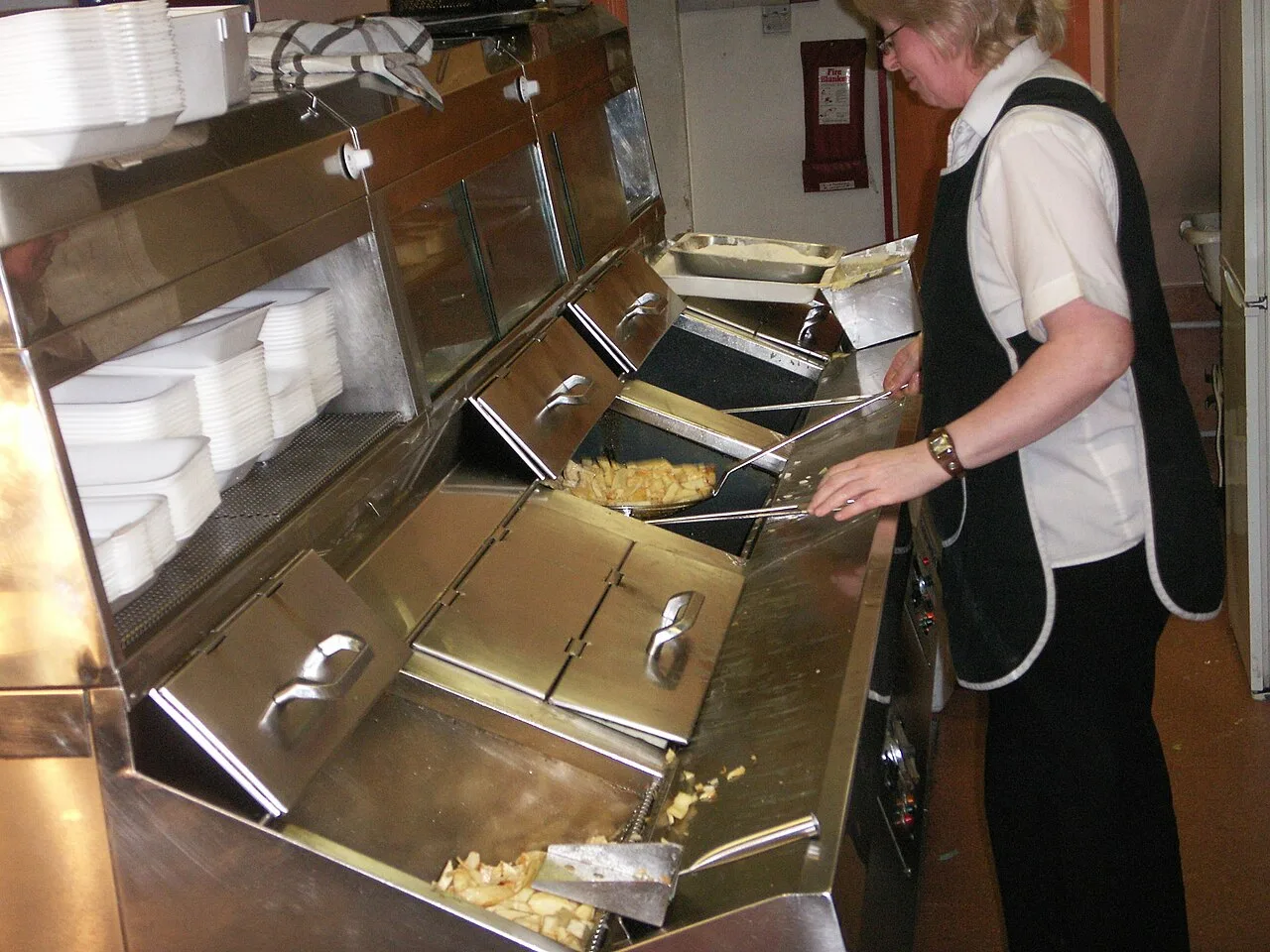
Frying range at a Portland Street establishment in Manchester in 2007

A mobile fish and chip vendor
Fish and chips
Fish and chips is a hot dish of battered and fried fish served with chips, originating in 19th-century England.
Cold Shabbat Dinners and the Sephardic Immigrant Route
Although long regarded as quintessentially British, the custom of battering and frying fish in oil was introduced by Spanish and Portuguese Jews. These immigrants prepared fish on Friday evenings for Shabbat so that it remained palatable when eaten cold during shalosh seudot the next afternoon. Frying in olive oil rather than animal fat allowed the food to be kept and consumed in accordance with dietary traditions.
From Wikipedia · CC BY-SA 4.0

FOOD Doubles 2
Doubles (food)
Doubles is a street food of Indo-Trinidadian origin from Trinidad and Tobago, consisting of curried chickpeas served on two fried flatbreads.
A Customer Request in Princes Town
The iconic snack owes its identity to a specific culinary pivot in Princes Town during 1936. Street vendor Emamool "Mamoodeen" Deen and his wife Raheeman Rasulan Deen originally sold curried chickpeas served over a single fried flatbread with chutneys. The name "doubles" emerged purely because hungry patrons repeatedly requested a second flatbread to accompany their portions. This customer preference transformed an everyday street offering into a nationally recognized culinary staple.
From Wikipedia · CC BY-SA 4.0

Kolkata Rolls

Kati roll served in Mumbai, India
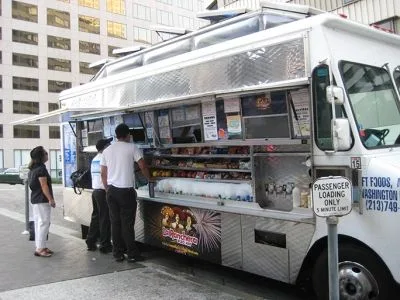
A food truck
Kati roll
A kati roll is a street-food dish originating from Kolkata, India, originally consisting of a skewer-roasted kebab wrapped in paratha bread.
Colonial Commuters and the 1932 Mughlai Invention
Nizam Restaurant, established in Kolkata in 1932 by Raza Hassan Saheb, first popularized the practice of wrapping kababs in flatbread. Urban legend attributes the innovation to British babus who were too fastidious to eat messy kababs with their bare hands, or office commuters in need of portable food. Regardless of which origin tale holds true, Nizam maintained a virtual monopoly over the format for decades.
From Wikipedia · CC BY-SA 4.0
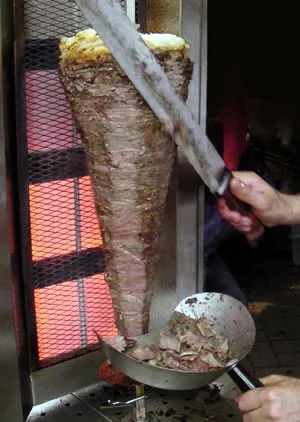
Döner kebab slicing

The earliest known photo of döner, by James Robertson, 1855, Ottoman Empire

İskender or "Bursa kebabı"

A kebab stand in Vienna, Austria

A King of Donair outlet in Halifax at Pizza Corner

A doner location in Ueno, Tokyo
Doner kebab
Doner kebab is a Turkish dish of seasoned meat stacked in an inverted cone shape, cooked on a vertical rotisserie, and sliced into thin shavings.
A Global Vocabulary Built on the Word for "Turn"
Regional spin-offs across the Mediterranean share more than just rotisserie techniques; their names reflect identical linguistic roots. In Greek, the dish was initially called döner before being renamed gyros, a direct calque translating to 'turn'. Similarly, the Arabic name shawarma is derived from çevirme, a Turkish word that also signifies 'turning'.
From Wikipedia · CC BY-SA 4.0