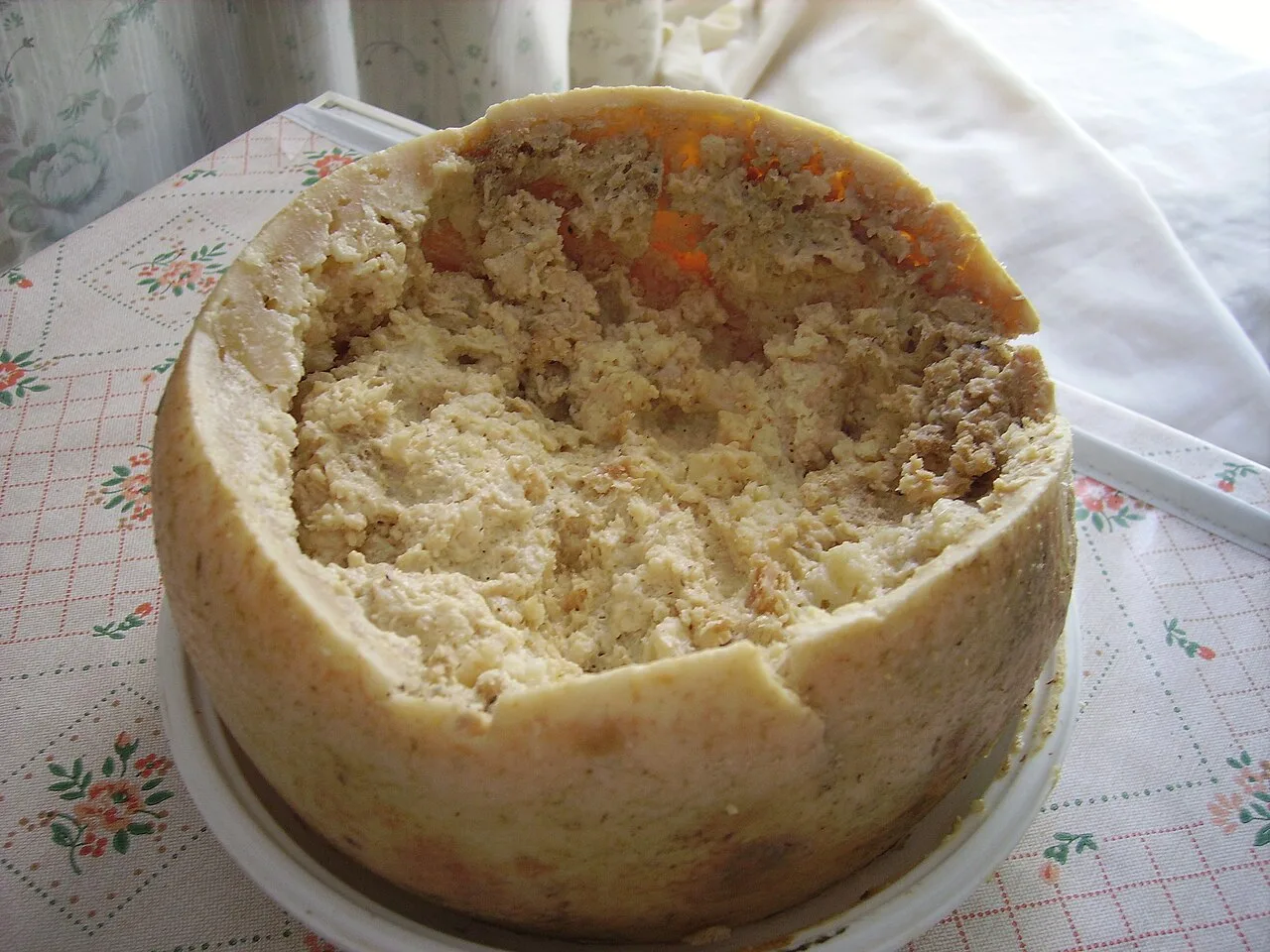
Casu Marzu cheese
Casu martzu
Casu martzu is a Sardinian sheep milk cheese that contains live fly maggots.
Enzymatic Breakdown and Weeping Curd
Maggot infestation serves as an intentional culinary technique rather than a sign of dairy spoilage. When cheese fly larvae hatch, their digestive acid breaks down pecorino fats over three months. This biological action softens the texture until a liquid called làgrima seeps out of the paste. By the time it is ready for consumption, a single finished block of casu martzu will contain thousands of maggots.
From Wikipedia · CC BY-SA 4.0
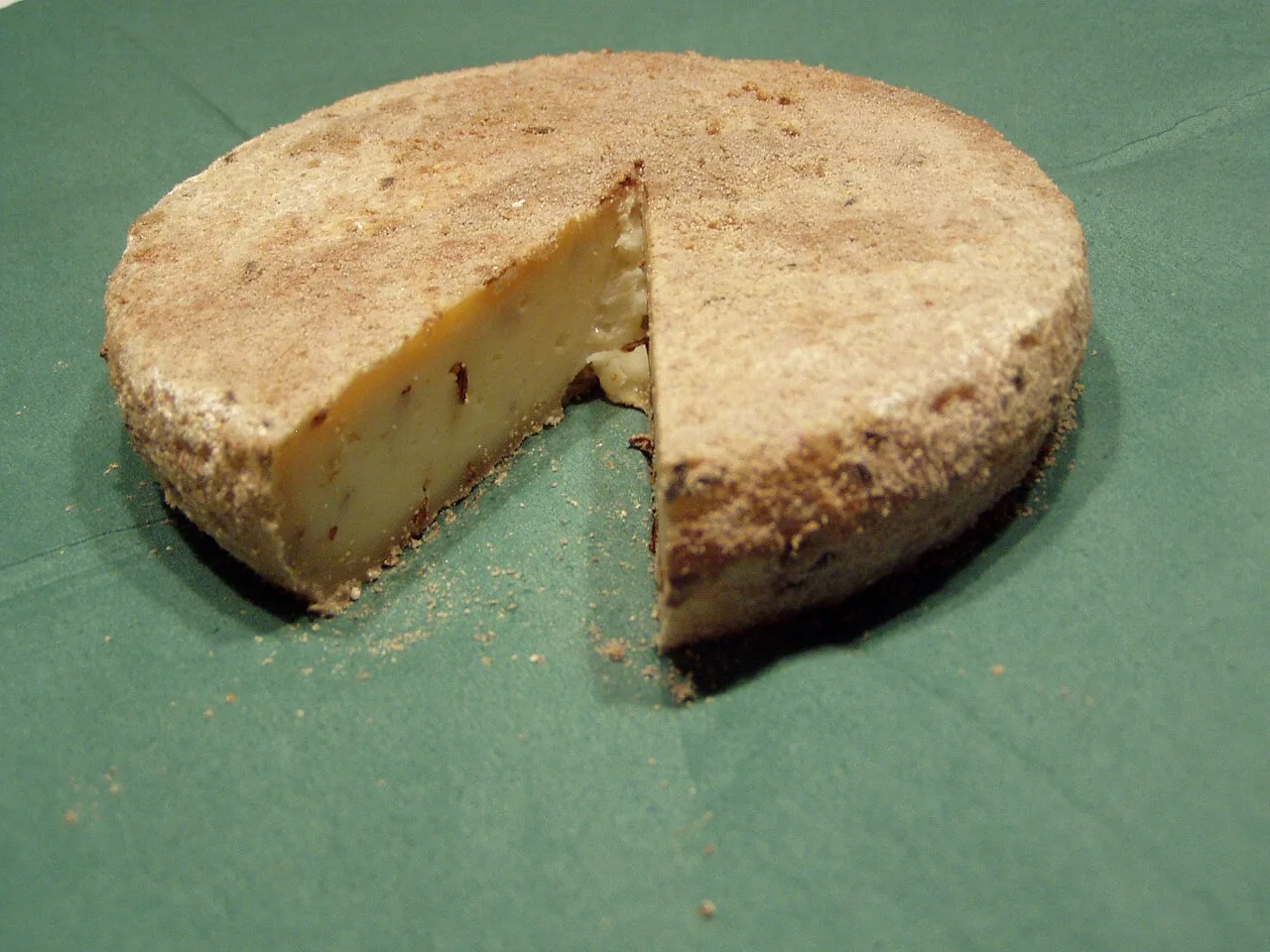
Milbekéis

Cheese mite sculpture in Würchwitz

Aged Milbenkäse
Milbenkäse
Milbenkäse is a German specialty cheese ripened over several months by the digestive enzymes excreted by cheese mites.
Living Microscopic Diners on the Rind
Digestion replaces standard starter cultures in this rare regional delicacy. Excreted enzymes from active mites ferment the dried curd, imparting a flavor similar to Harzer cheese with an increasingly bitter edge and zesty aftertaste. When ready to serve, the tiny creatures clinging to the rind are not wiped away or killed. Instead, the living mites are consumed along with the cheese.
From Wikipedia · CC BY-SA 4.0
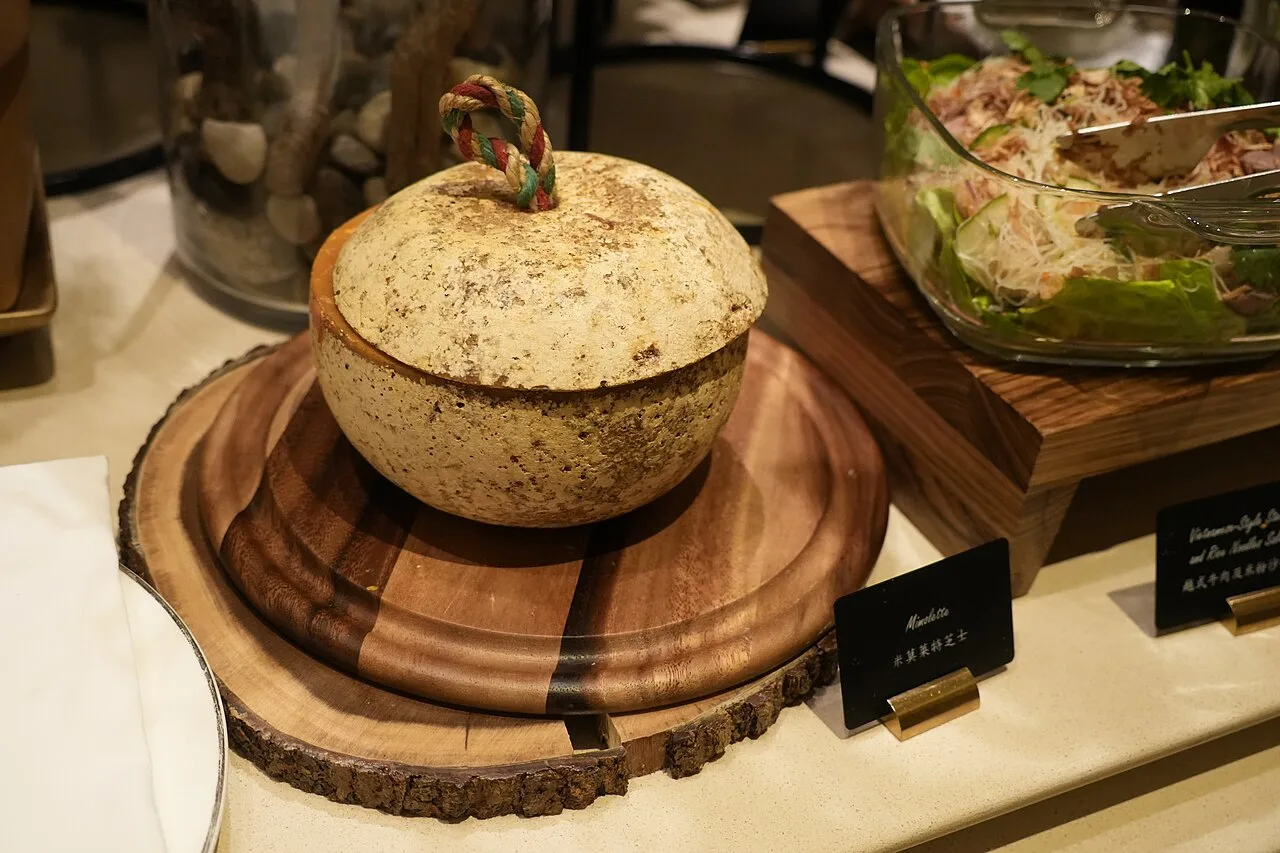
A Mimolette on the desk
Mimolette
Mimolette is a cheese traditionally produced around the city of Lille, France.
A Royal Substitution for Dutch Imports
French monarch Louis XIV commissioned this specialty cheese to curb reliance on foreign goods. Under the mercantilist policies of Jean-Baptiste Colbert, France sought an authentic domestic replacement for Edam. Makers initially tinted the cheese with carrot juice before adopting annatto to give the product a distinct orange color.
From Wikipedia · CC BY-SA 4.0

A slice of Stinking Bishop cheese

A slice showing typical maturation at room temperature
Stinking Bishop (cheese)
Stinking Bishop is an English washed-rind cheese produced from the milk of Old Gloucester cattle.
Rescuing an Endangered Breed Through Dairy
Charles Martell did not originally set out to create a famous delicacy for its own sake. In 1972, only 68 heifers of the Old Gloucester cattle breed survived anywhere in the world. Martell purchased many of the surviving cows and produced cheese specifically to revive agricultural interest in the rare livestock.
From Wikipedia · CC BY-SA 4.0

Chhurpi Nep

Hard Chhurpi
Chhurpi
Chhurpi, also known as durkha or chogo/chugo, is a traditional cheese consumed in Nepal, Bhutan, and parts of Northeastern India.
Trans-Himalayan Dairy Identity
Across the high-altitude landscapes of Nepal, Bhutan, Tibet, and Northeastern India, chhurpi serves as an enduring culinary staple under several regional names such as durkha and chugo/chugo. While Western cheeses are often categorized purely as table foods, this traditional cheese functions across an entire ecological borderland. It spans two distinct formats ranging from a delicate soft side dish to one of the world's hardest dairy products.
From Wikipedia · CC BY-SA 4.0
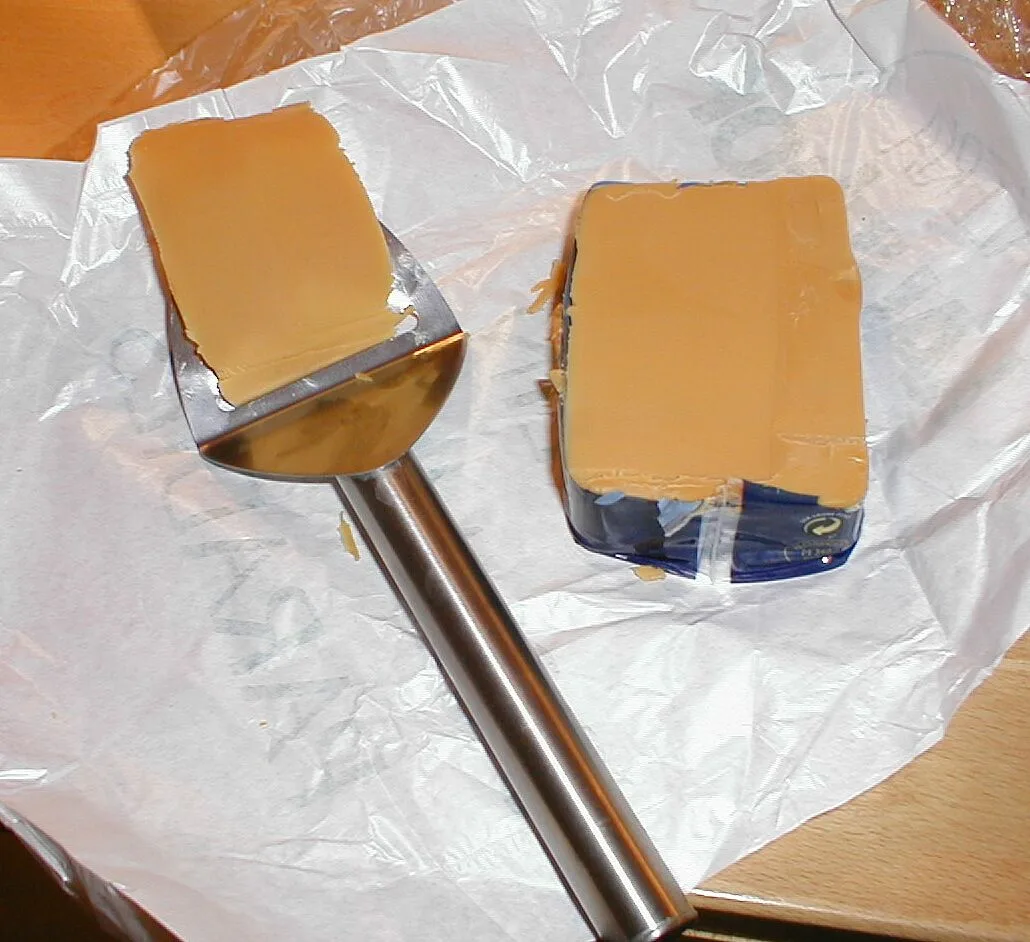
Brunost
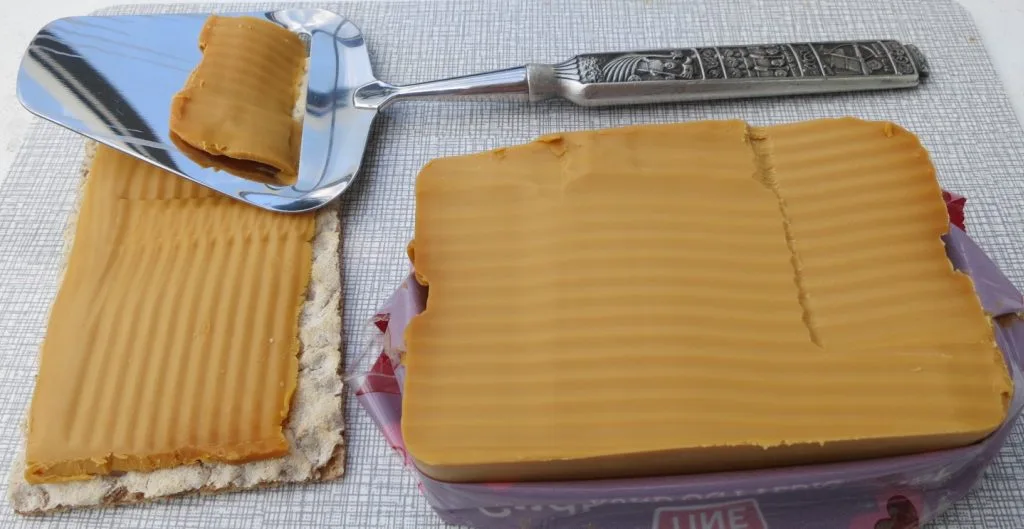
Brunost with crispbread and cheese slicer
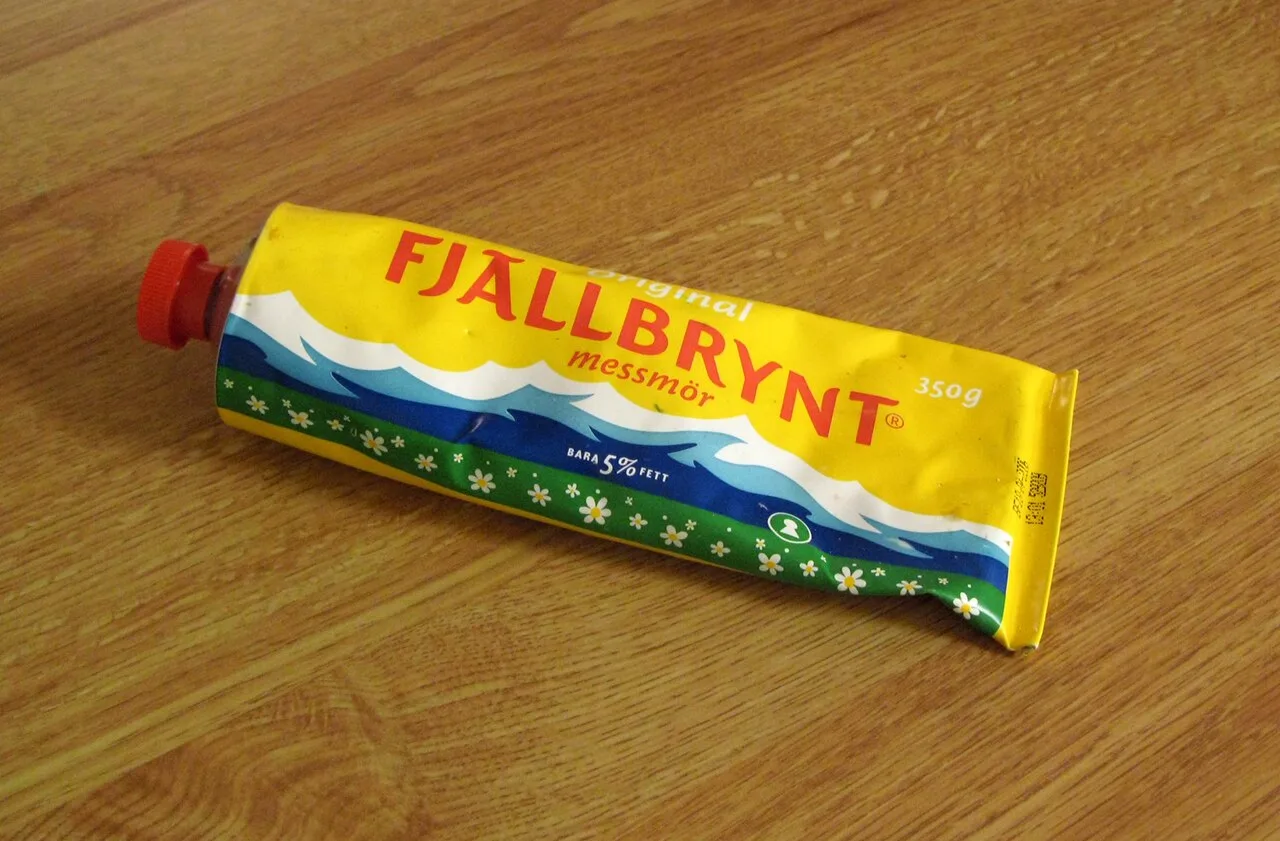
Messmör
Brunost
A family of Norwegian cheese-related foods made with whey, milk, and cream, characterized by a brown color and sweet taste from caramelized milk sugars.
Caramelized Whey Masquerading as Cheese
Brunost is widely treated and sold as a traditional cheese, but it is technically a distinct dairy byproduct. Cheesemakers produce it from whey, the residual liquid left behind after cheese curds are separated from milk. By slowly boiling whey, cream, and milk, producers caramelize natural milk sugars rather than fermenting proteins, yielding a firm, sweet, caramel-colored loaf.
From Wikipedia · CC BY-SA 4.0

Cabrales

One of the caves where the cheese ages
Cabrales cheese
Cabrales is an artisan blue cheese produced by rural dairy farmers in Asturias, Spain, made from cow's milk or blended with goat or sheep milk.
A Strict High-Mountain Milkshed
Artisanal Cabrales relies entirely on milk sourced from a designated mountainous zone within Asturias. While unpasteurized cow's milk serves as the base, rural farmers frequently blend in goat or sheep milk to create a sharper, spicier profile. This strict geographic requirement in the Picos de Europa mountain range closely binds the cheese's production to local herds.
From Wikipedia · CC BY-SA 4.0
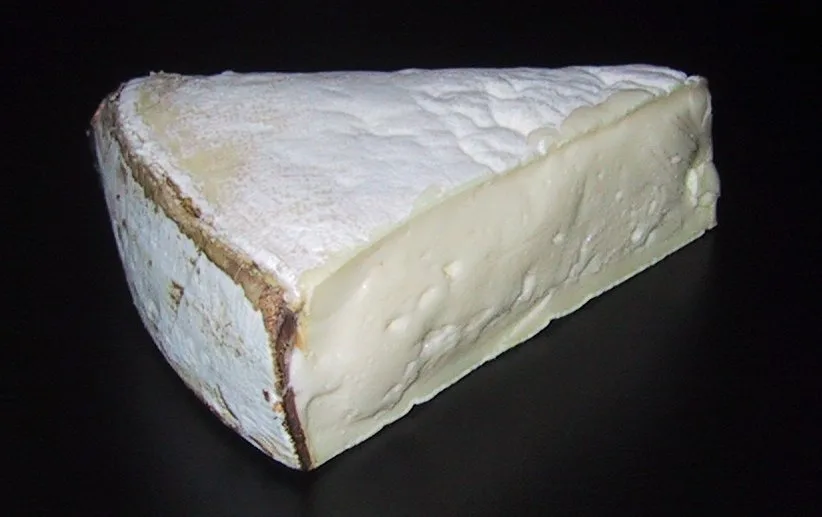
Vacherin du haut Doubs
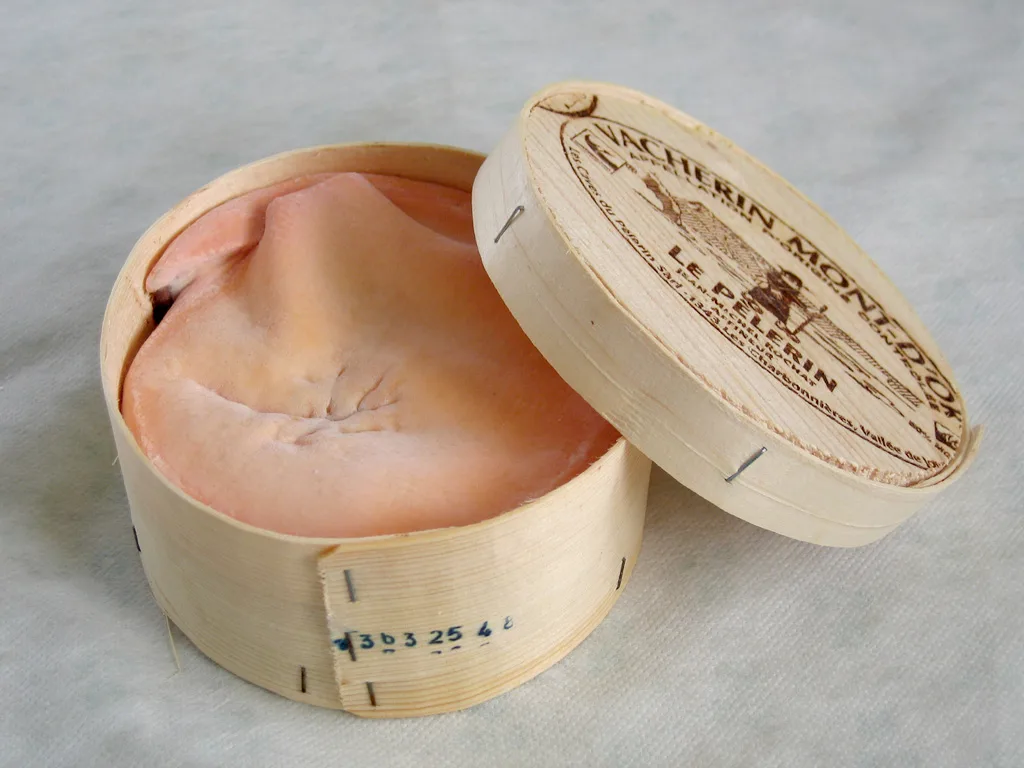
Swiss Vacherin Mont d'Or
Vacherin Mont-d'Or
Vacherin Mont d'Or is a soft, rich, seasonal cow's milk cheese made in Switzerland and France, typically in the Jura region.
Winter Descent and the Comté Shortage
Vacherin Mont d'Or emerged as a practical adaptation to the changing seasons in alpine pasturelands. When herds descend from high Alpage pastures during the winter months, their daily milk supply declines sharply. Without sufficient milk volume to produce giant wheels of Comté cheese, mountain cheesemakers turn instead to crafting these smaller, rich rounds.
From Wikipedia · CC BY-SA 4.0
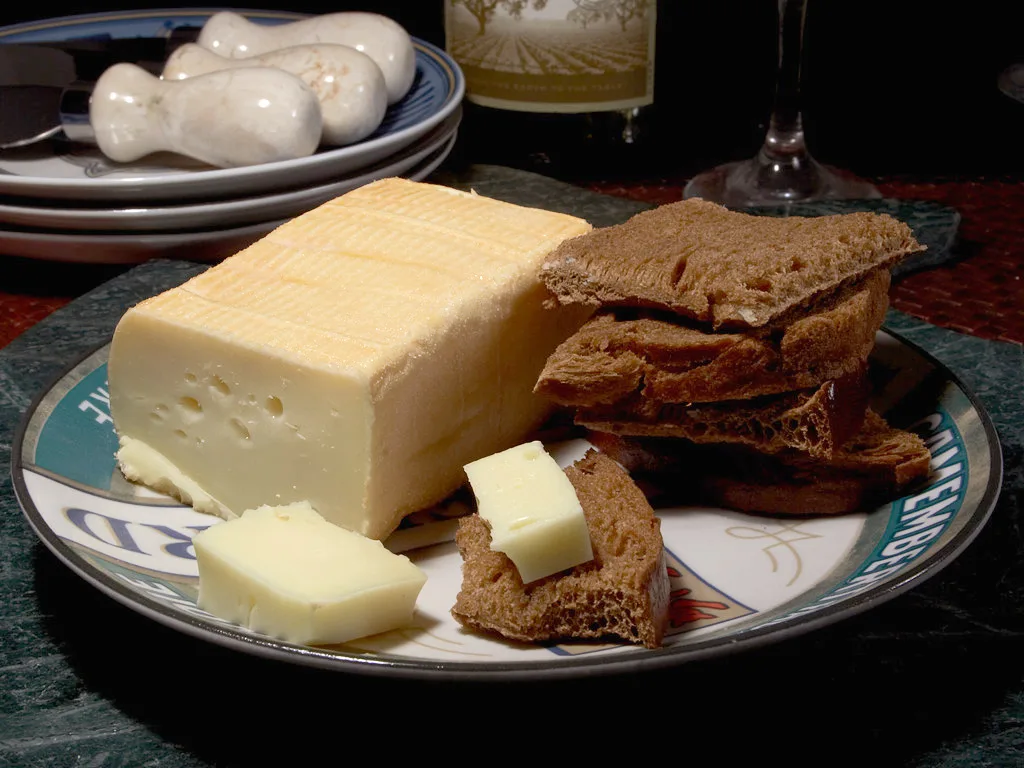
Limburger cheese
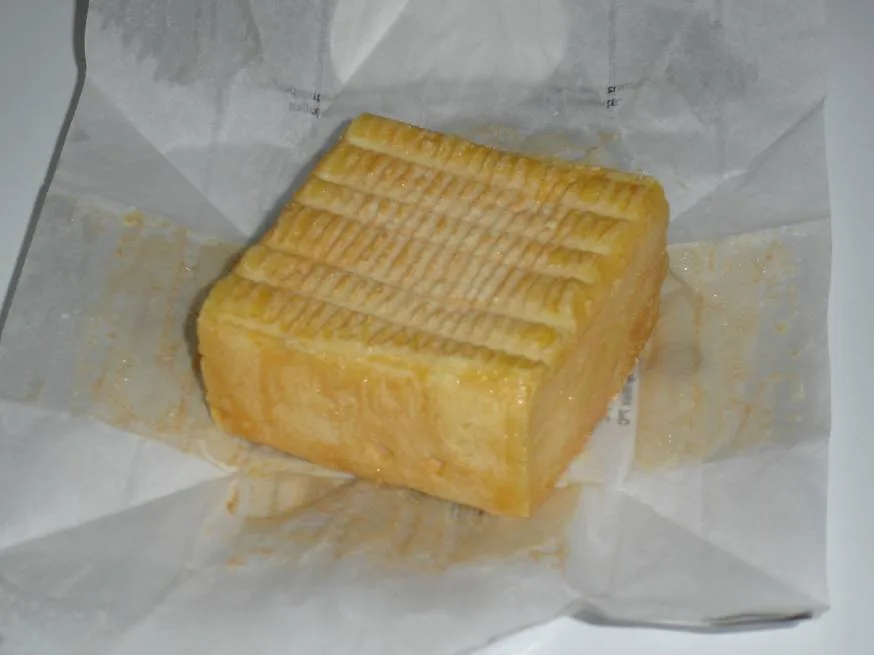
Remoudou (cheese)
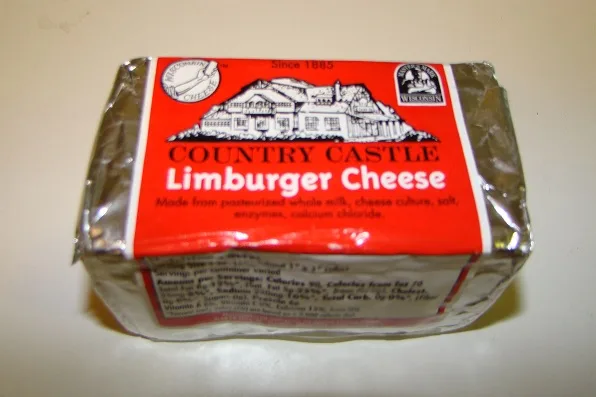
A half-pound (226-gram) package of Limburger
Limburger
Limburger is a cheese originating from the historical Duchy of Limburg, known especially for its strong smell caused by Brevibacterium linens.
Ancient Duchy Borders and European Protected Status
Herve cheese has been crafted since the 15th century in the territory of the old Duchy of Limburg in Belgium. Today, Herve serves as the modern European protected name for the authentic cheese made in this historical region. When the identical cheese style is produced in other areas, it is instead marketed under the Limburger name.
From Wikipedia · CC BY-SA 4.0