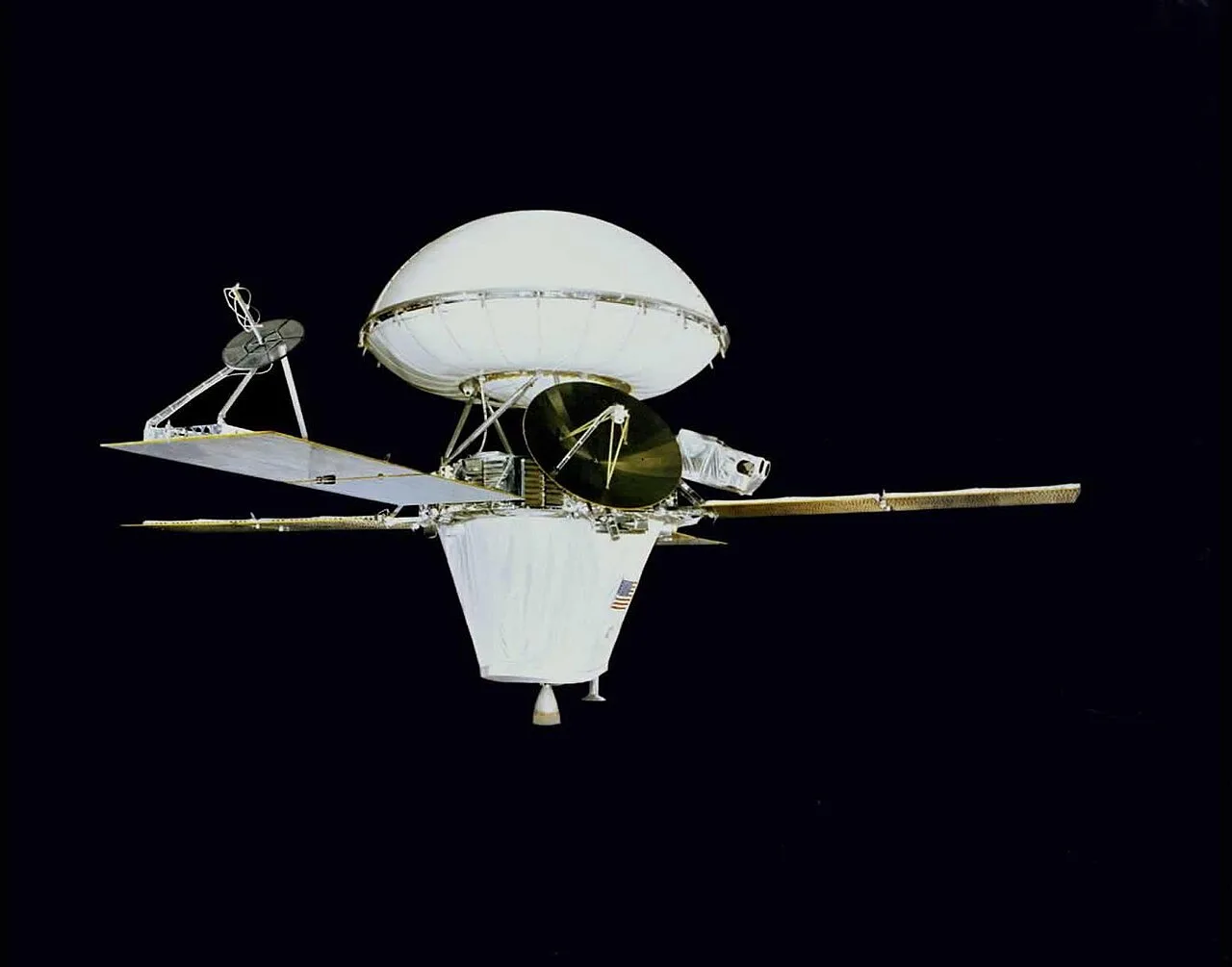
Viking spacecraft
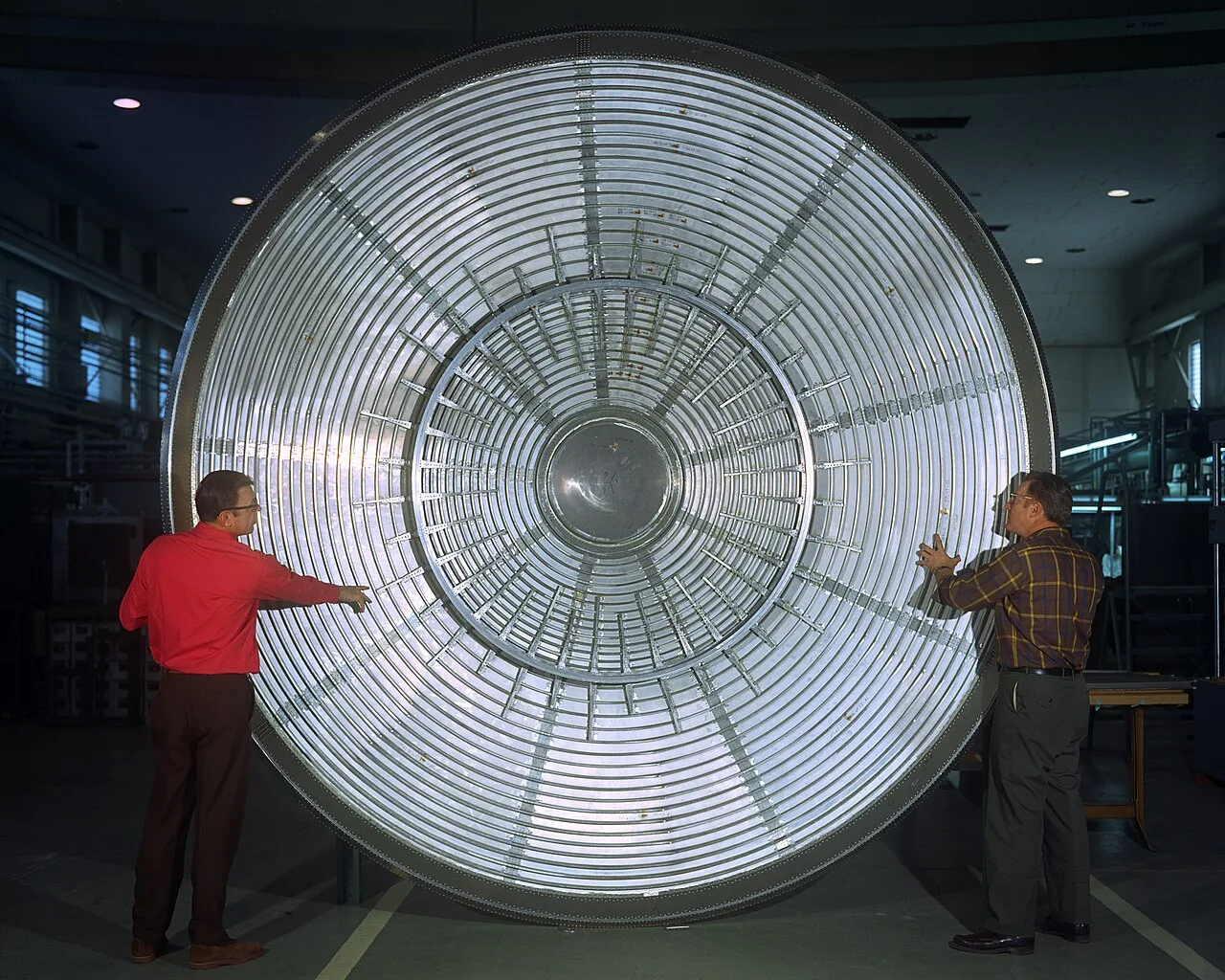
Viking aeroshell
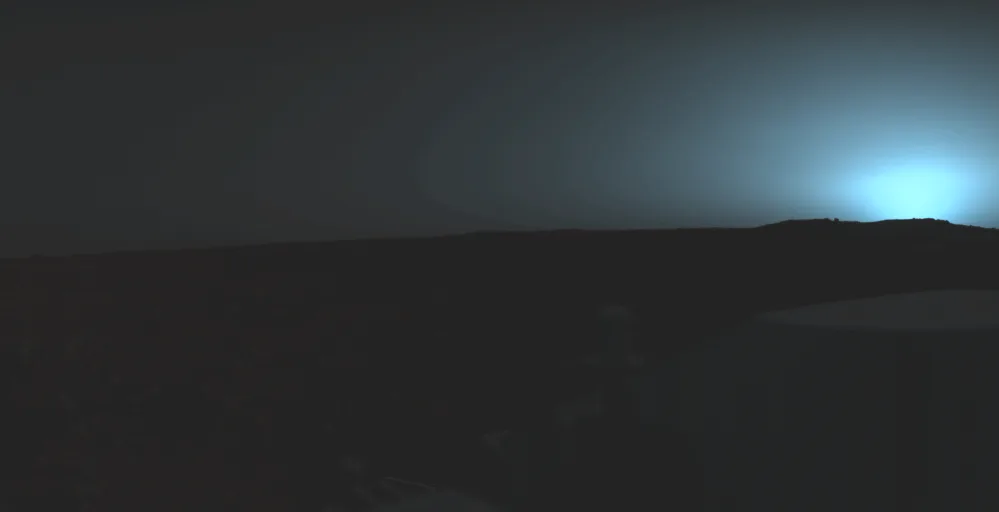
Viking 1 lander image of a Martian sunset over Chryse Planitia

Dunes and large boulder. Pole in the center is an instrument boom.
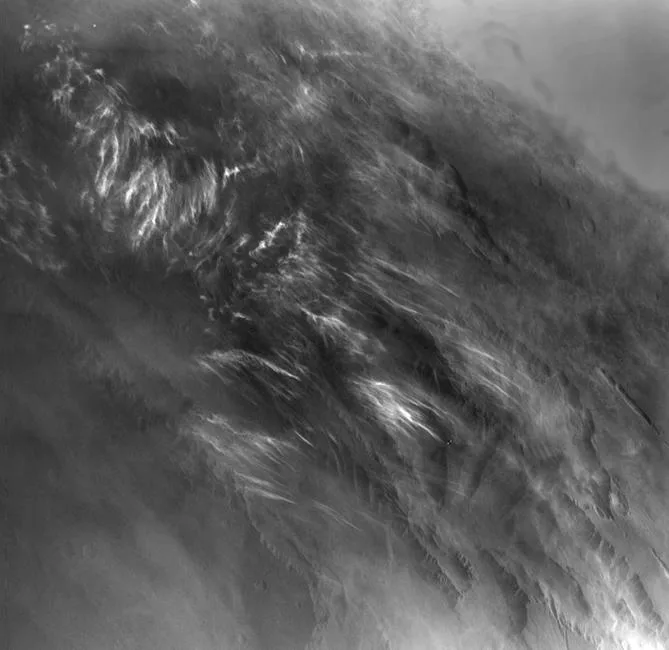
Morning Clouds on Mars (taken in 1976)
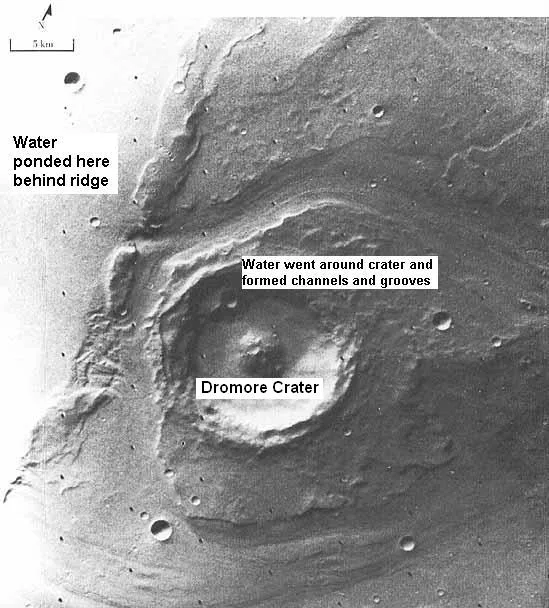
Lunae Palus quadrangle was eroded by large amounts of liquid water.
Viking 1
Viking 1 was a NASA spacecraft sent to Mars whose lander touched down on July 20, 1976, becoming the first successful Mars lander in history.
Choosing Safety Over Bicentennial Celebrations
NASA originally planned for Viking 1 to land on Mars on July 4, 1976, to celebrate the United States Bicentennial. However, orbiter photos showed the primary landing site was dangerously rough for touchdown. Mission planners delayed the landing until a safer location was found. Viking 1 finally landed on July 20, coinciding with the seventh anniversary of the Apollo 11 Moon landing.
From Wikipedia · CC BY-SA 4.0
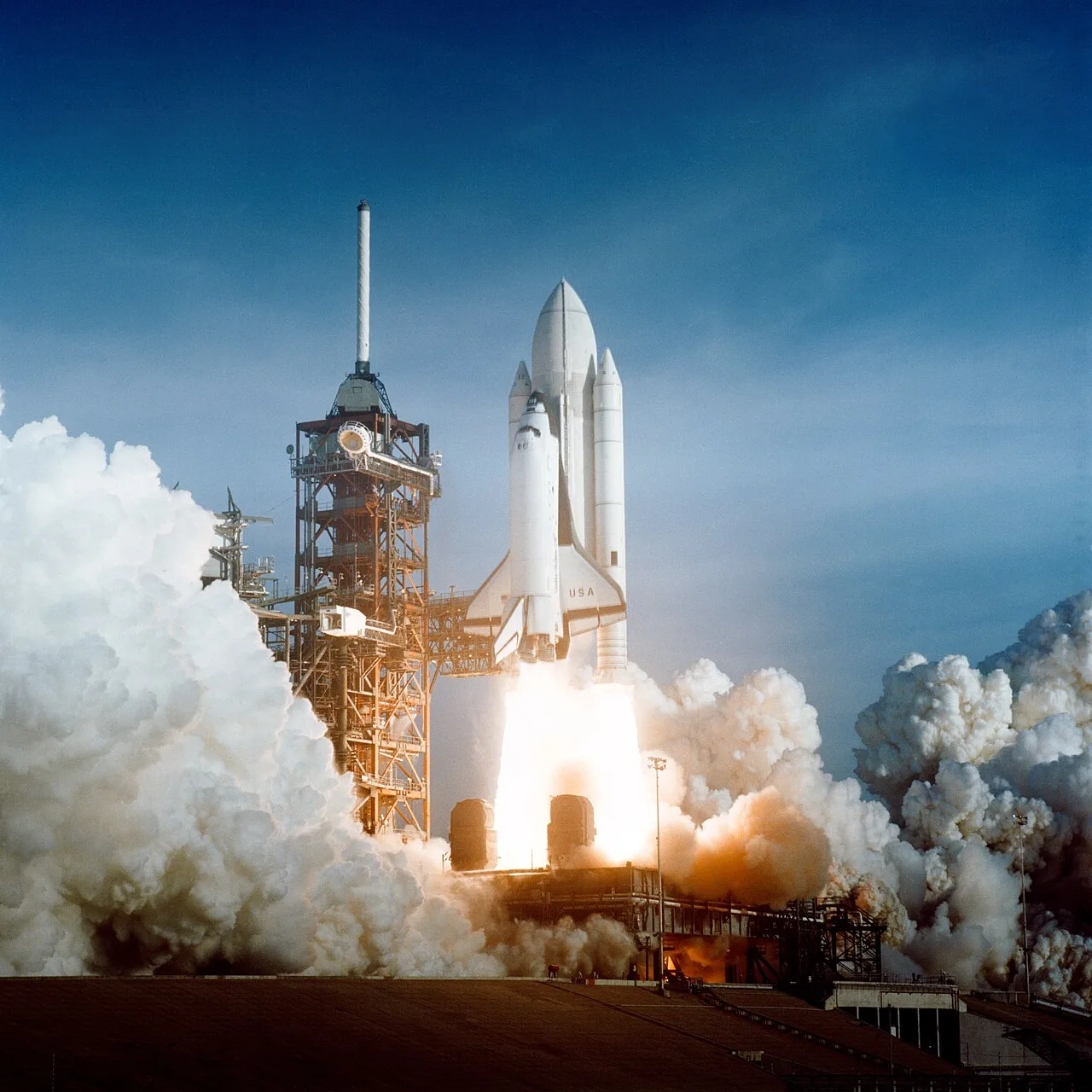
Space Shuttle Columbia launching
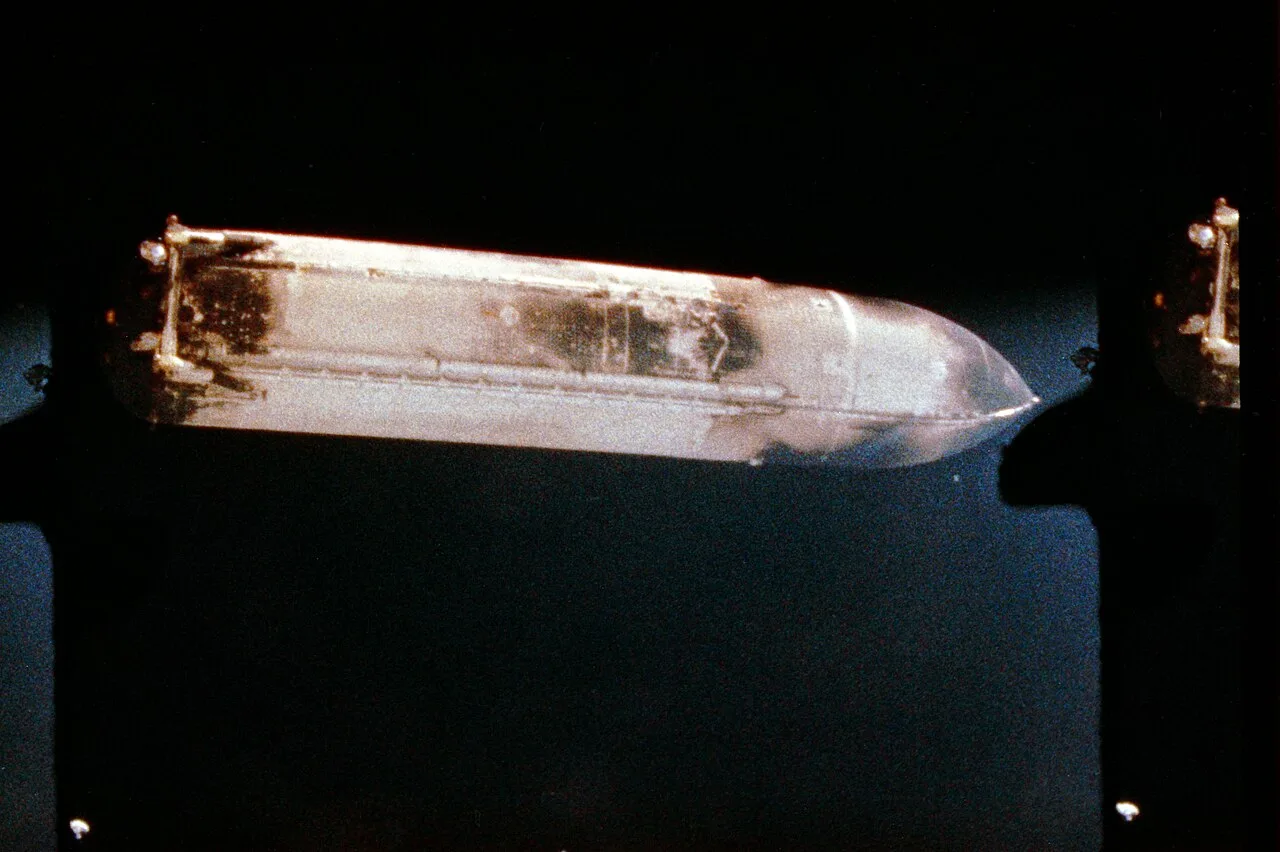
The external tank is released from the Space Shuttle orbiter.
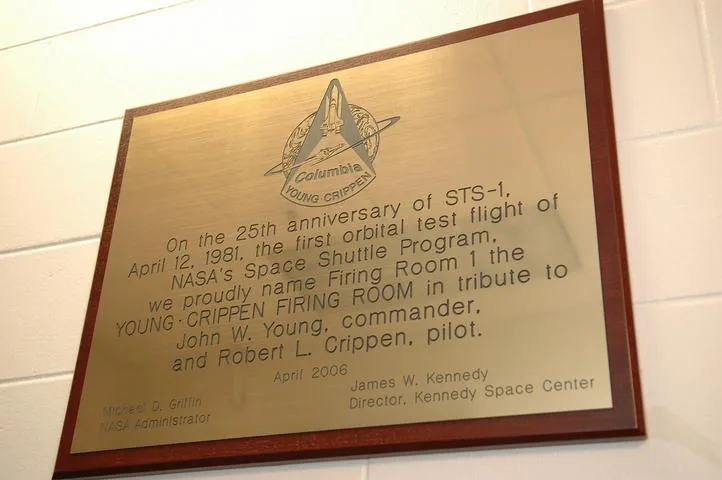
The plaque of the Young-Crippen Firing Room in the Launch Control Center at Kennedy Space Center.
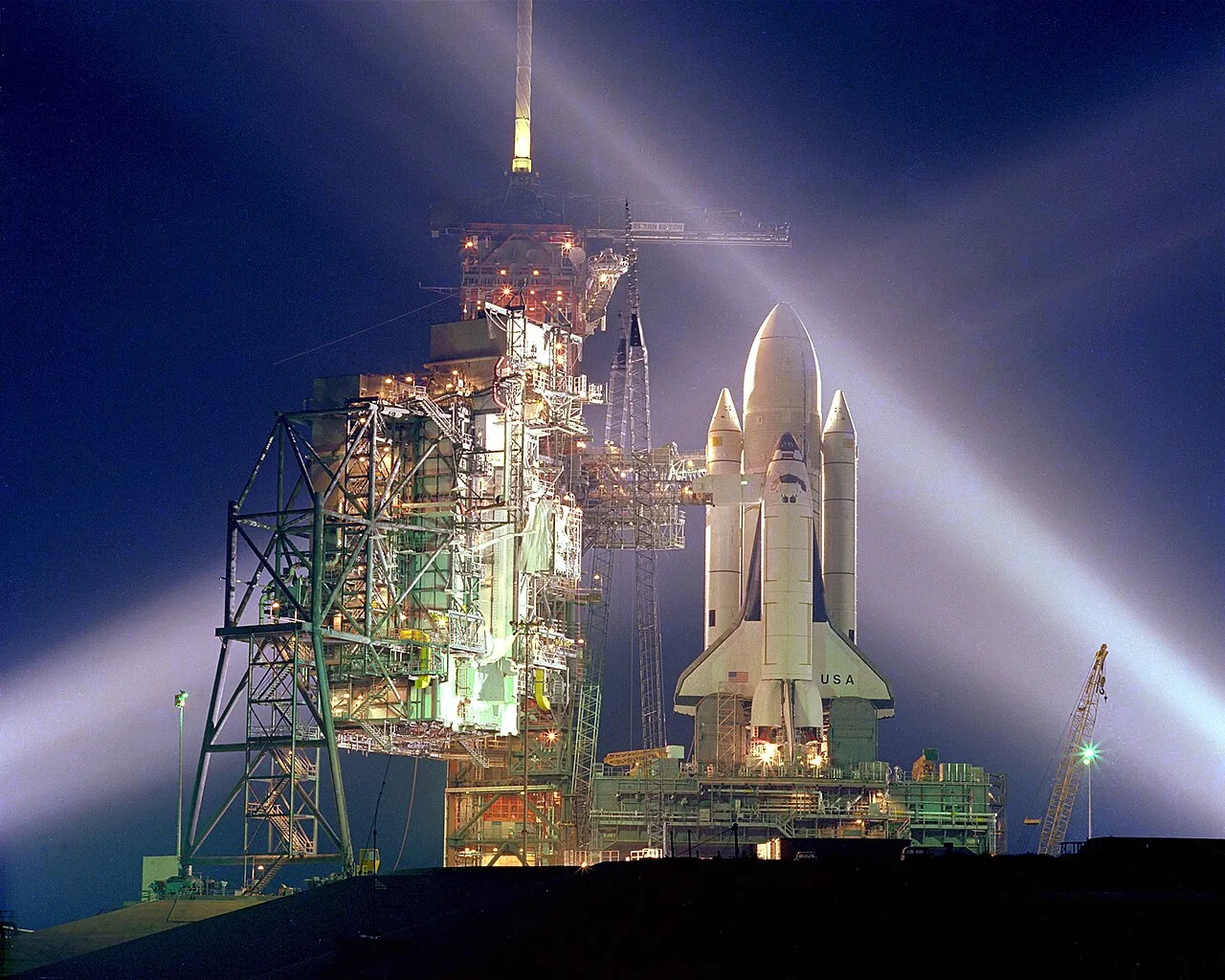
Columbia at Launch Complex 39A, on 12 April 1981.
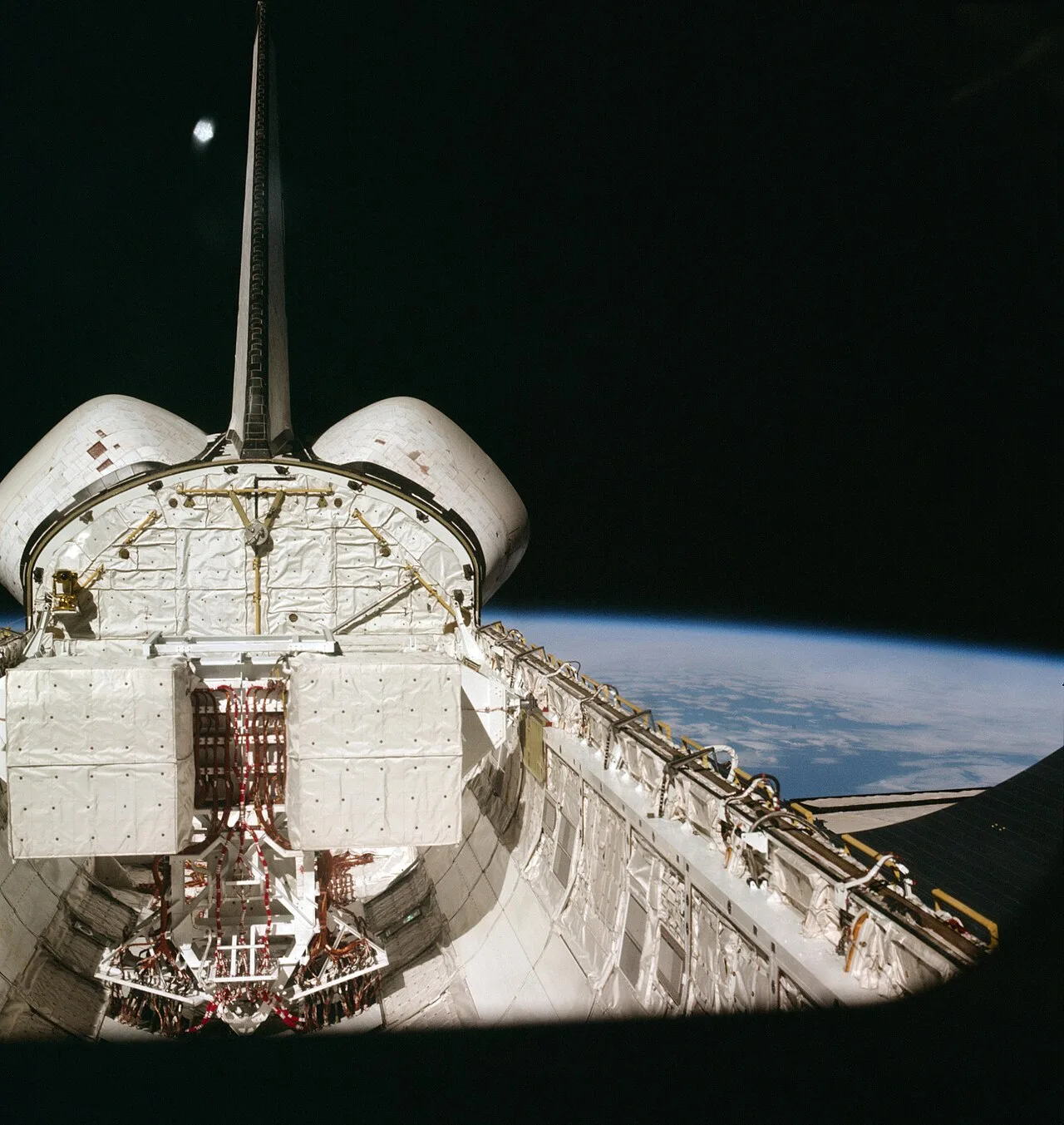
Columbia's cargo bay and aft section, on 12 April 1981.
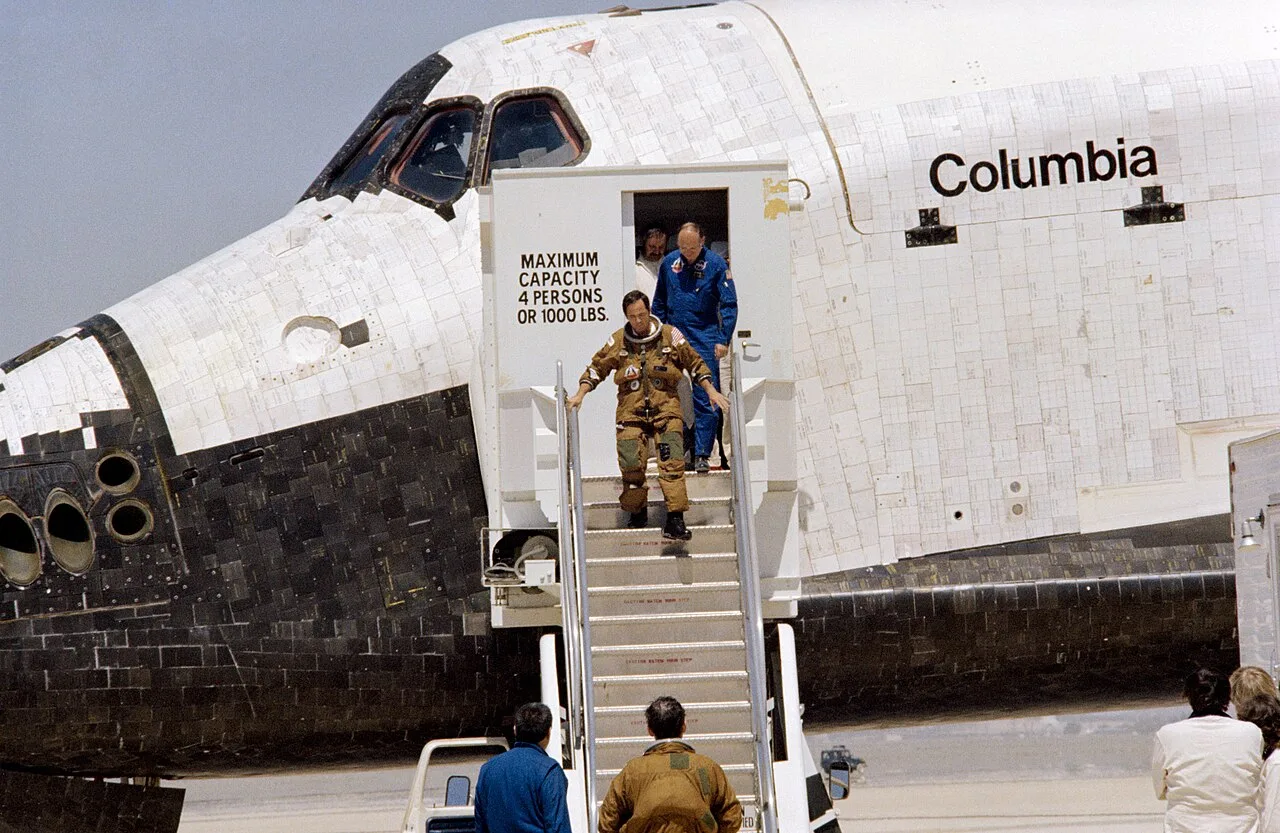
Columbia after its successful landing.
STS-1
STS-1 was the first orbital spaceflight of NASA's Space Shuttle program, launched on April 12, 1981, using the orbiter Columbia.
Refusing to Play Russian Roulette over Dakar
Before reaching orbit, NASA management considered testing initial shuttle systems via a suborbital flight. Vice President Walter F. Mondale suggested landing at an emergency site in Dakar, Senegal, while NASA proposed a launch abort scenario. Astronaut John Young overruled both proposals, ensuring STS-1 proceeded as an orbital flight. His veto reshaped the inaugural shuttle strategy, avoiding an abort test seen as extremely dangerous.
From Wikipedia · CC BY-SA 4.0
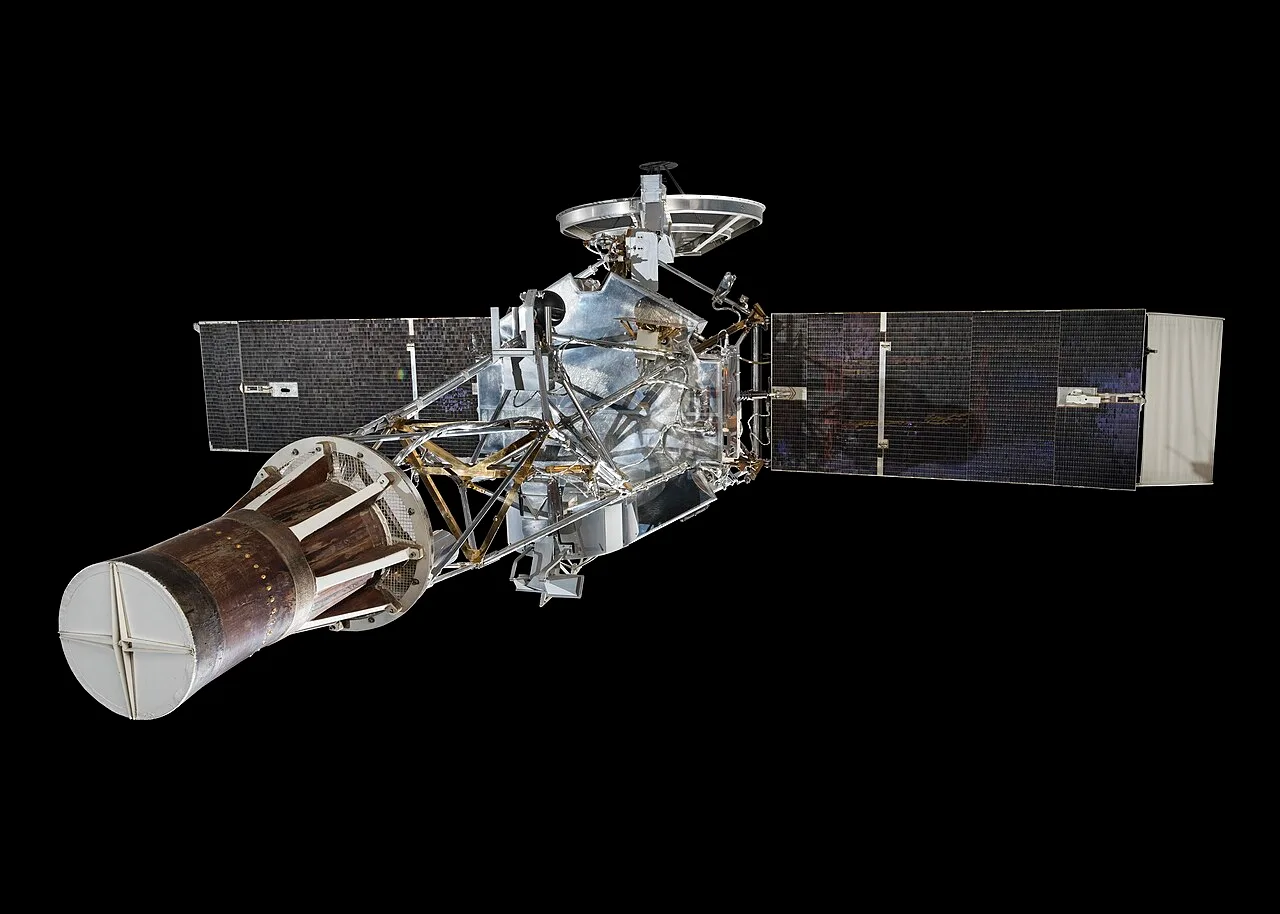
Mariner 2 Engineering Model
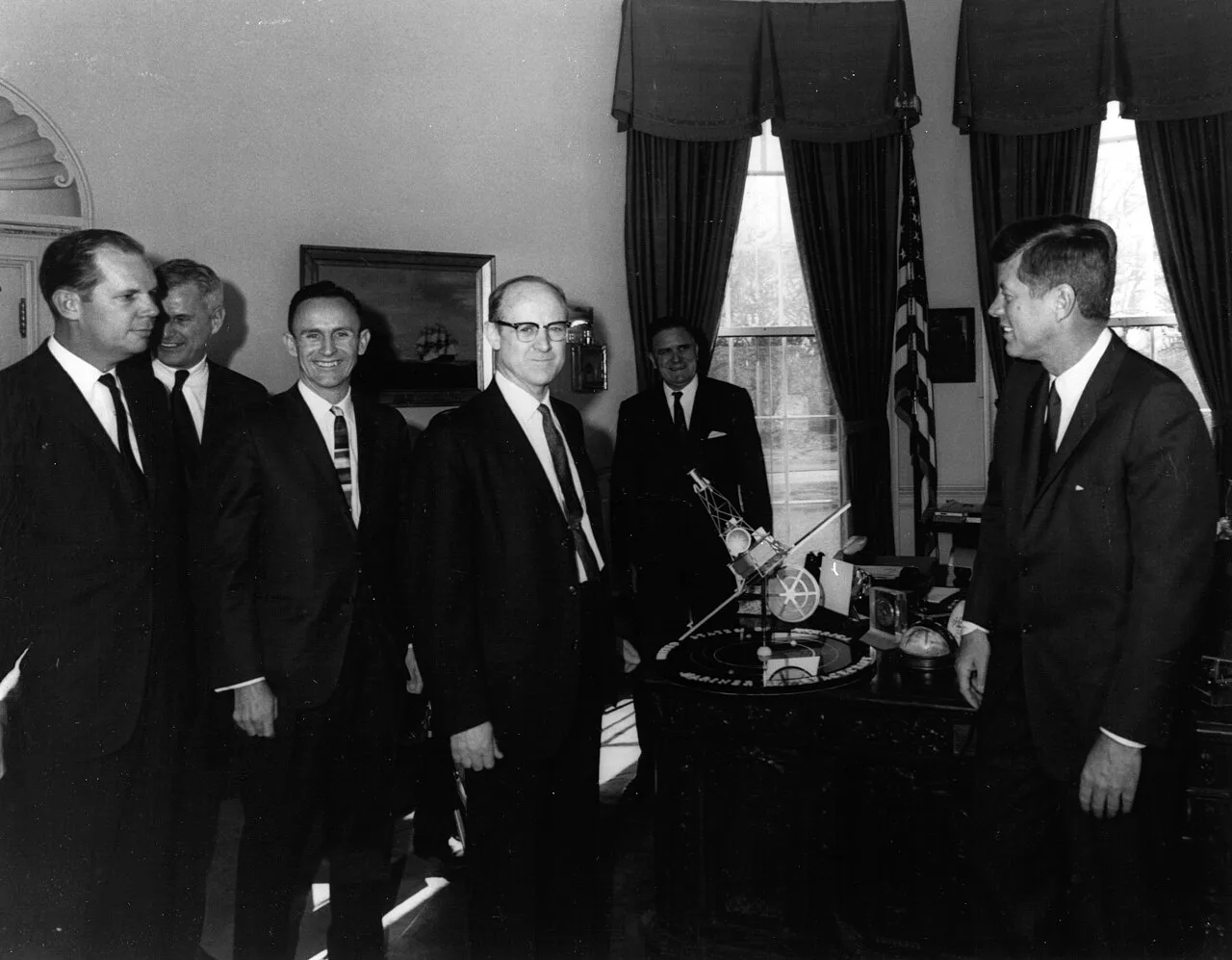
President Kennedy is shown a model of Mariner 2 during a meeting with NASA officials after the successful completion of the mission, 1963
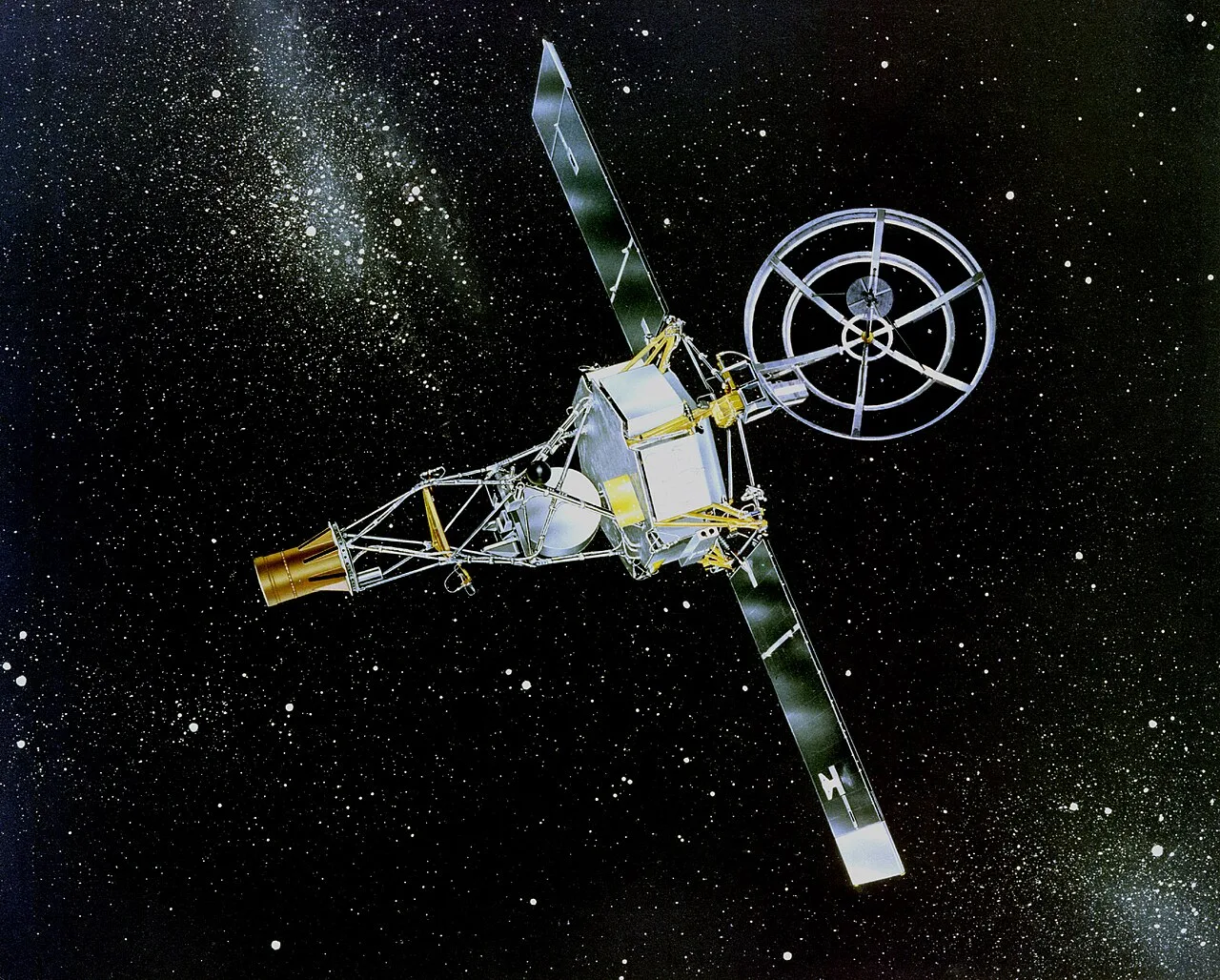
Depiction of Mariner 2 in space
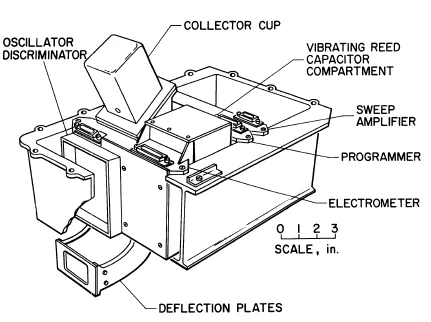
Instrument for studying plasma
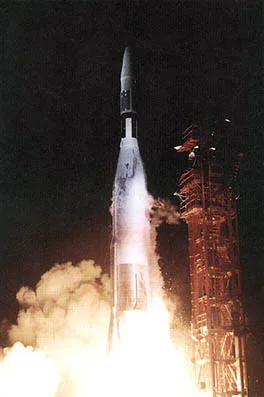
The launch of Mariner 2, on August 27, 1962.
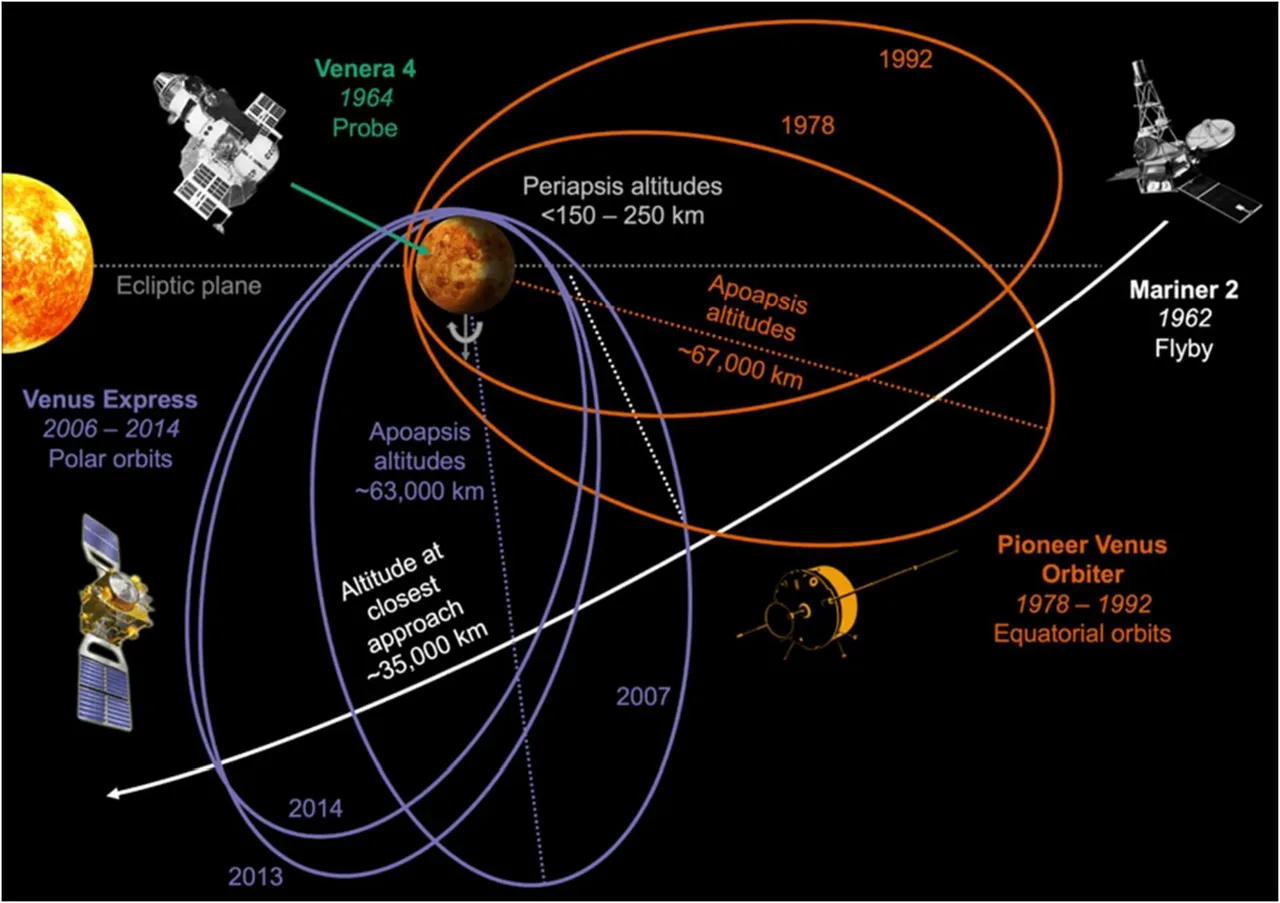
Mariner 2's flyby in spatial relation to later probes
Mariner 2
Mariner 2 was an American space probe to Venus and the first robotic space probe to report successfully from a planetary encounter.
A Fatal Software Bug That Never Triggered
The software bug that destroyed Mariner 1 remained unidentified and uncorrected prior to the liftoff of Mariner 2. Luckily, the programming flaw was situated in a section of code that only executed if the ground data-feed suffered an interruption. Because the transmission remained unbroken throughout the flight, the lingering glitch never activated to jeopardize the craft.
From Wikipedia · CC BY-SA 4.0
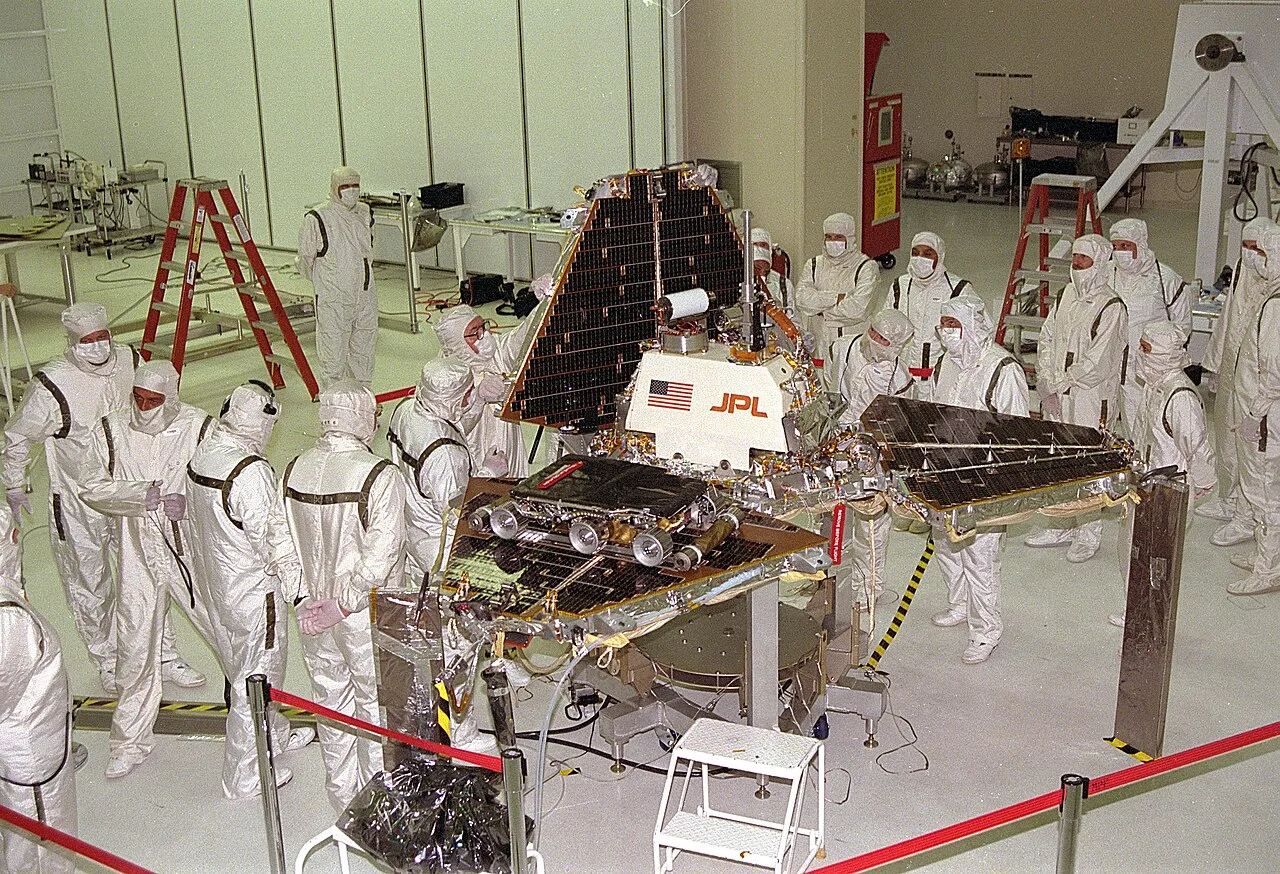
A group of scientists, all wearing white protective clothing, gather around a spacecraft as it is being folded into its launch position; a triangular pyramid shape.
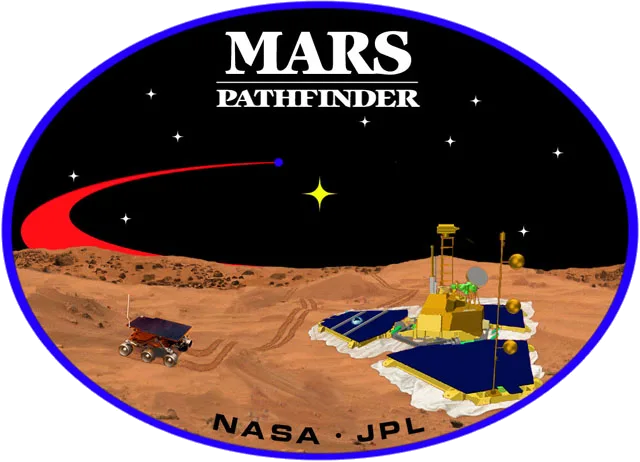
An image inside an oval, depicting two spacecraft, one a lander, and one a rover, on the surface of Mars. The words "Mars Pathfinder" are written on the top and the words "NASA · JPL" are written on the bottom.
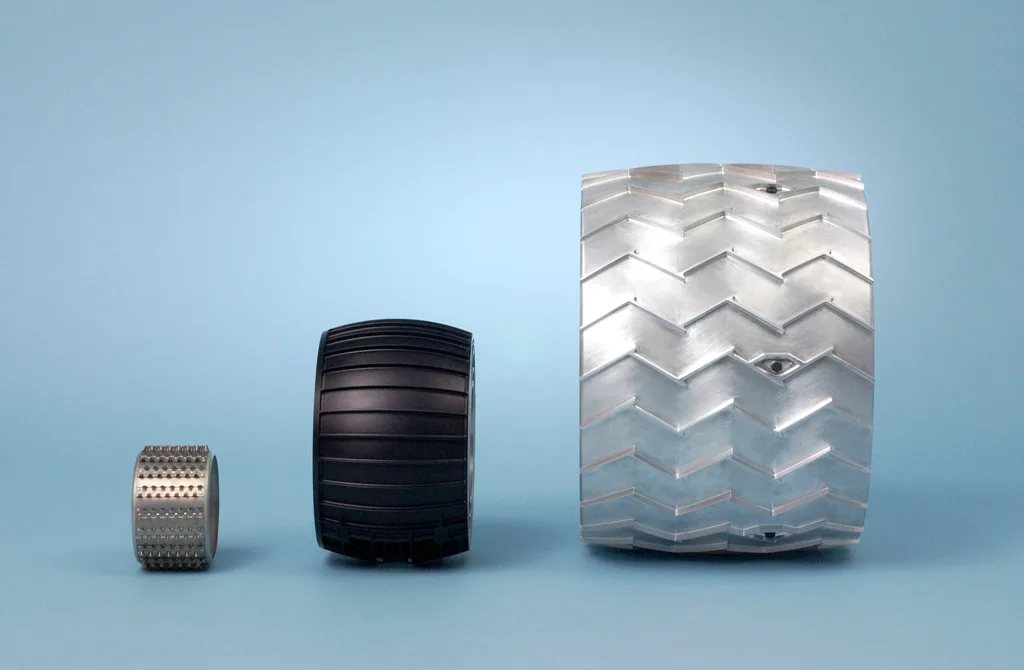
Wheel size comparison: Sojourner, Mars Exploration Rover, Mars Science Laboratory
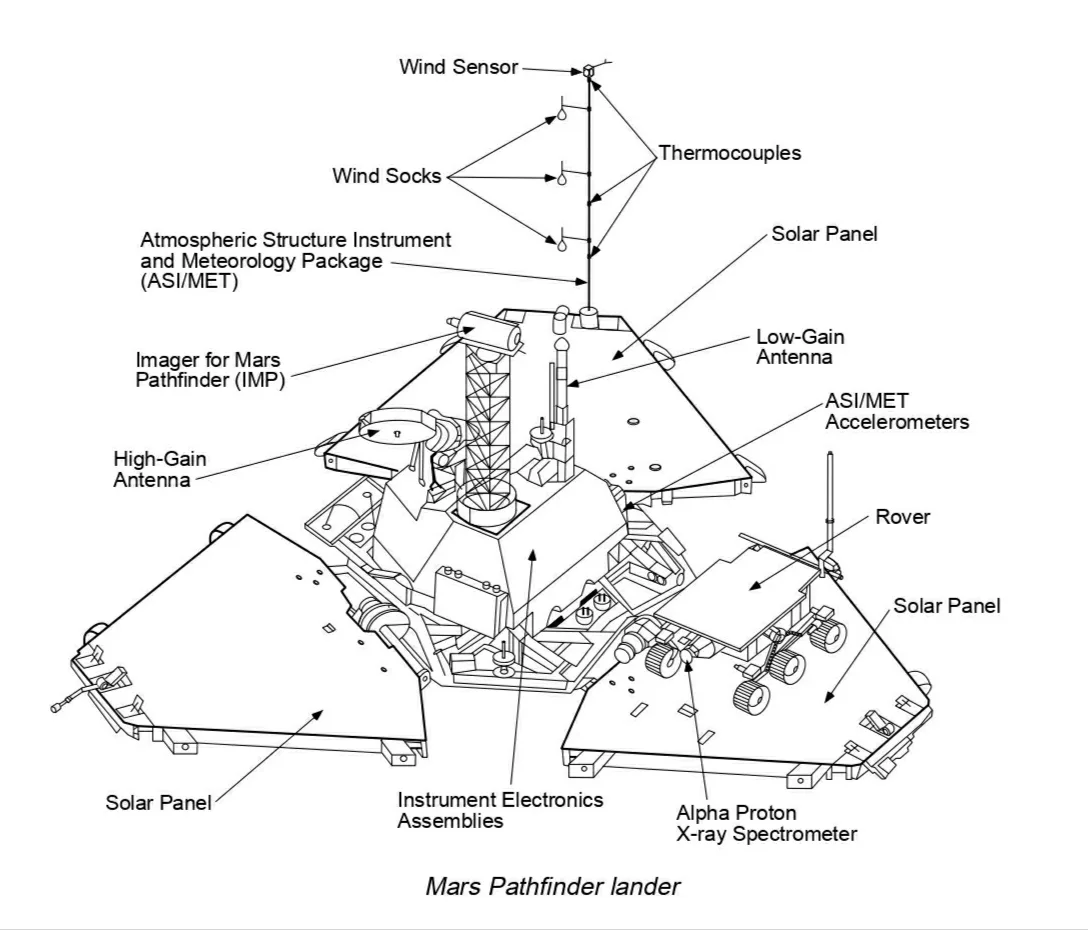
Mars Pathfinder lander scheme. ASI/MET pole is visible extending towards the top.
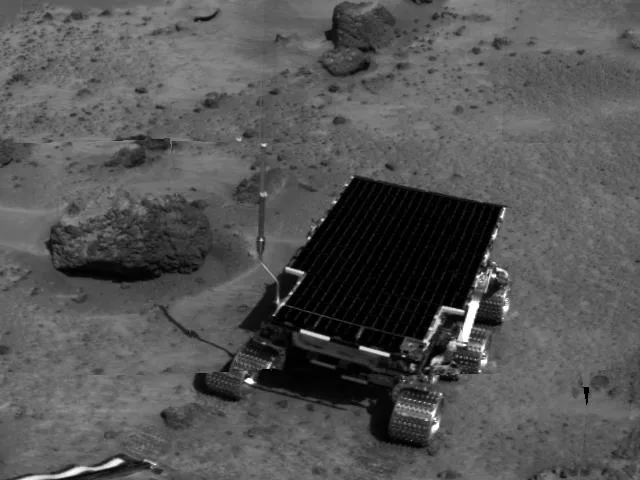
Sojourner next to the rock Barnacle Bill
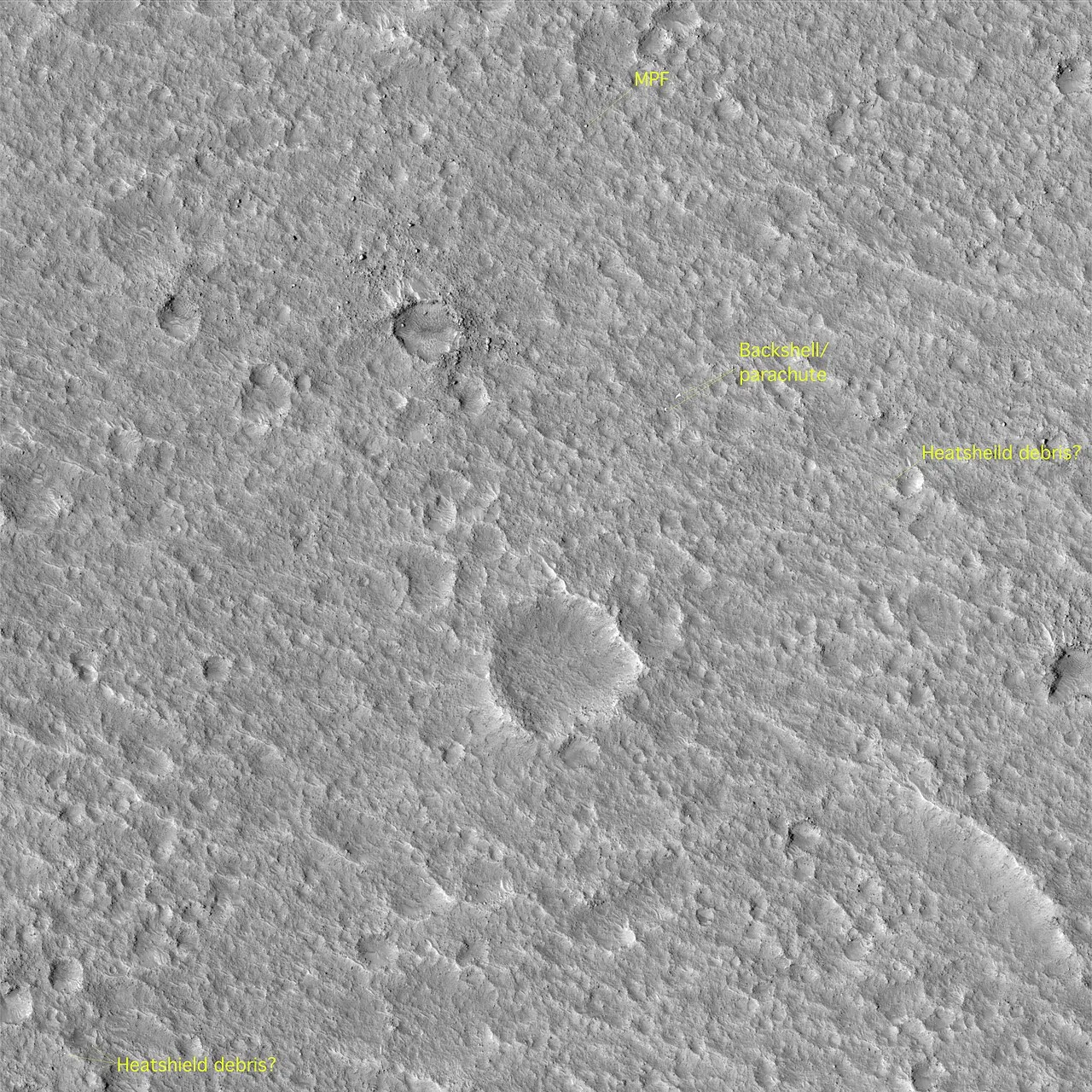
Mars Pathfinder seen from space by the MRO HiRISE
Mars Pathfinder
Mars Pathfinder was an American robotic spacecraft that landed a base station and the rover Sojourner on Mars in 1997.
Slashing Interplanetary Budgets to One-Fifteenth of Viking
Mars Pathfinder proved that robotic space exploration could abandon multi-billion-dollar price tags. Promoted under a 'cheaper, faster, and better' motto, NASA completed the entire mission with a total expenditure of $280 million. This allowed the agency to deliver scientific instruments to another planet at one-fifteenth the cost of a Viking mission, which had required $935 million in 1974 or $3.5 billion in 1997 dollars.
From Wikipedia · CC BY-SA 4.0
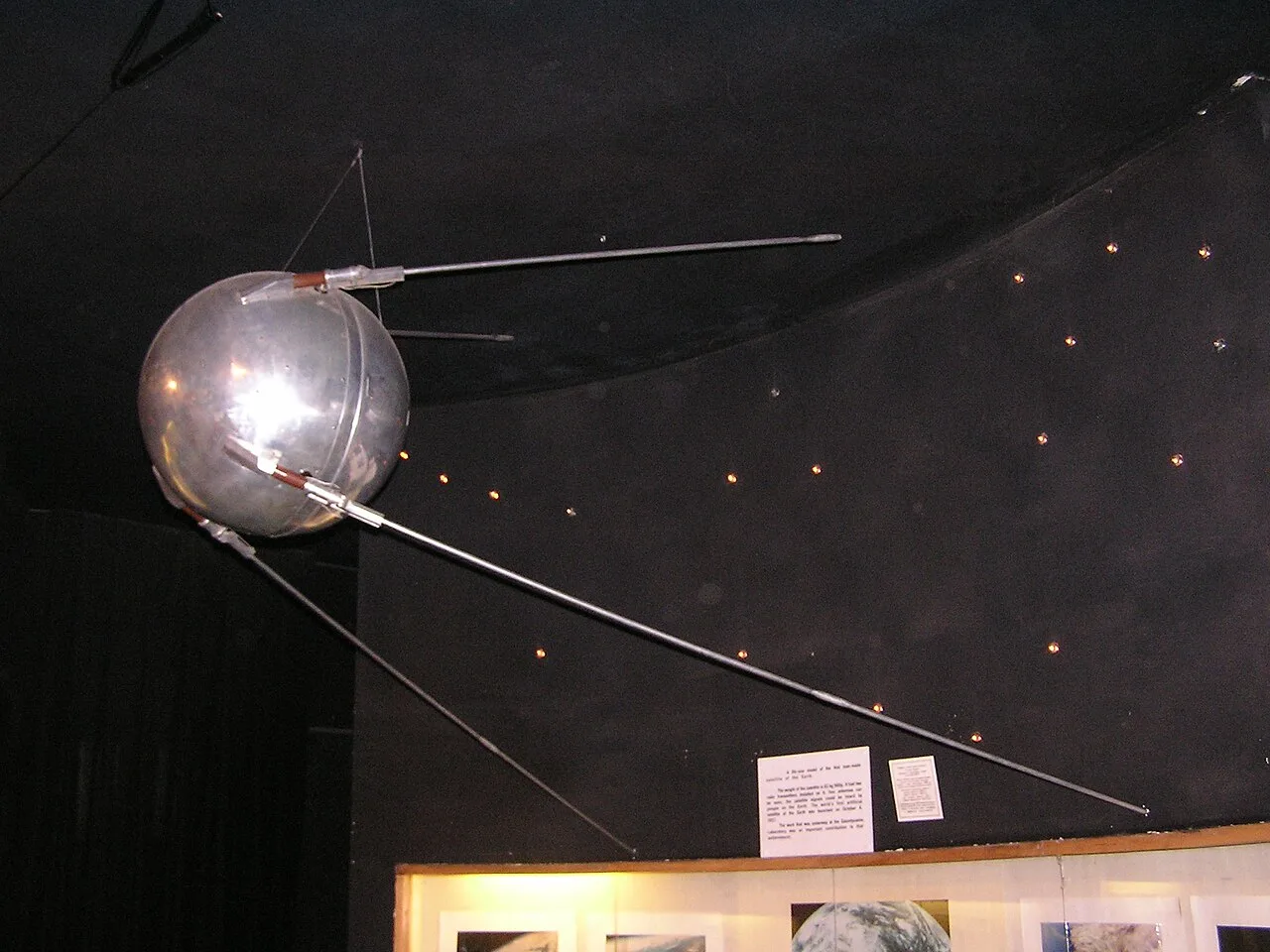
Первый в мире искусственный спутник Земли
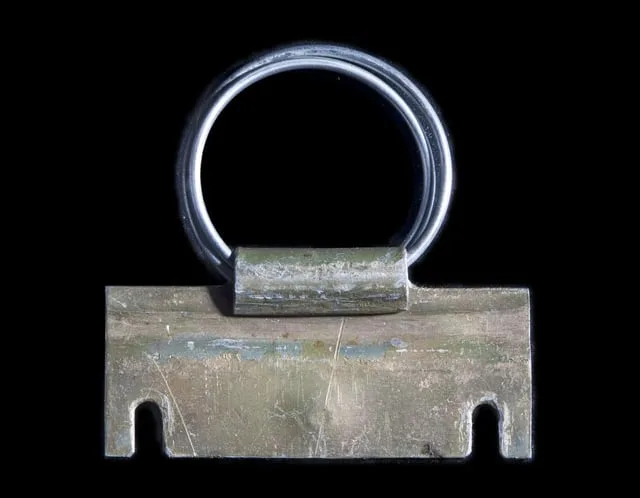
Last remaining piece of Sputnik 1: metal arming key which prevented contact between batteries and transmitter prior to launch; on display at the Smithsonian National Air and Space Museum[19]
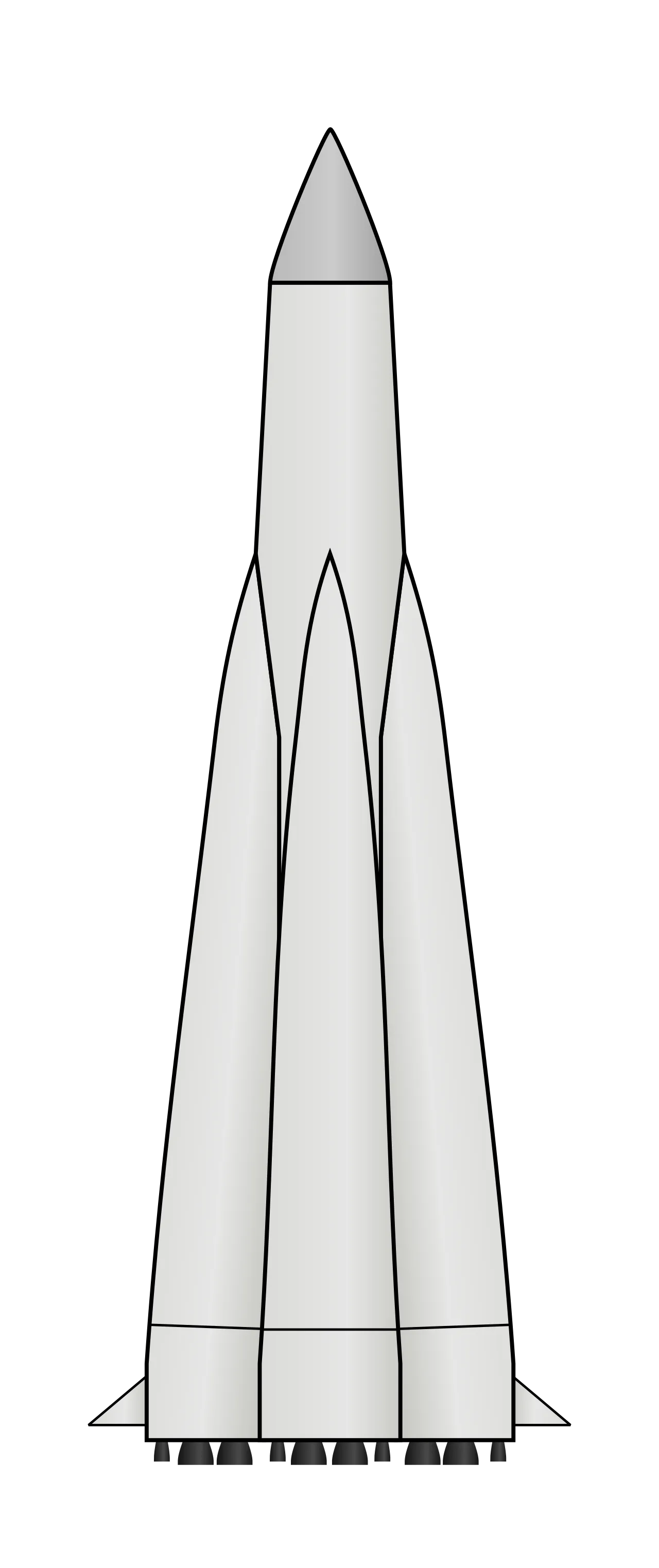
Sputnik 8K71PS
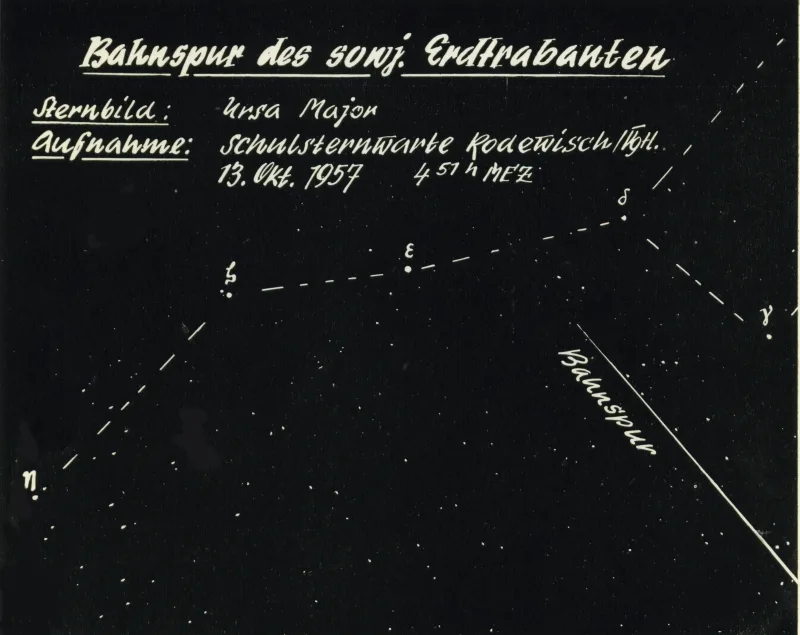
First ground track of Sputnik 1 on 13 October 1957 4:51 from Rodewisch

A Bob's Big Boy advertisement spoofs Sputnik, 1958
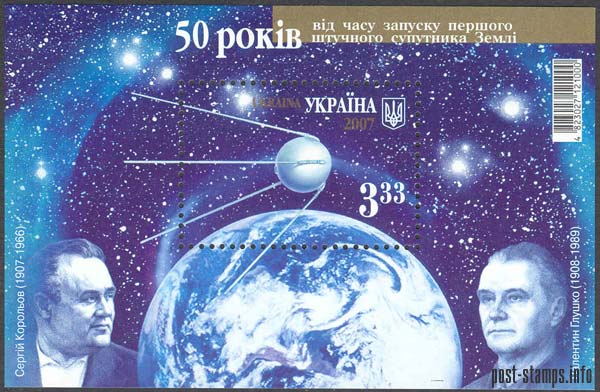
Sputnik 1, Sergei Korolev and Valentin Glushko on a 2007 Ukrainian stamp
Sputnik 1
Sputnik 1 was the first artificial Earth satellite, launched into low Earth orbit by the Soviet Union on 4 October 1957.
A Linguistic Companion with Ideological Baggage
The Russian word for satellite, sputnik, was coined in the 18th century by combining the prefix s- ('fellow') and putnik ('traveler'), thereby meaning 'fellow-traveler', a meaning corresponding to the Latin root satelles. In the West, dating from the 1930s, the term fellow traveler was already used as a pejorative to describe people who were philosophically sympathetic to communism. This linguistic origin tied the spacecraft to political tensions long before its launch.
From Wikipedia · CC BY-SA 4.0
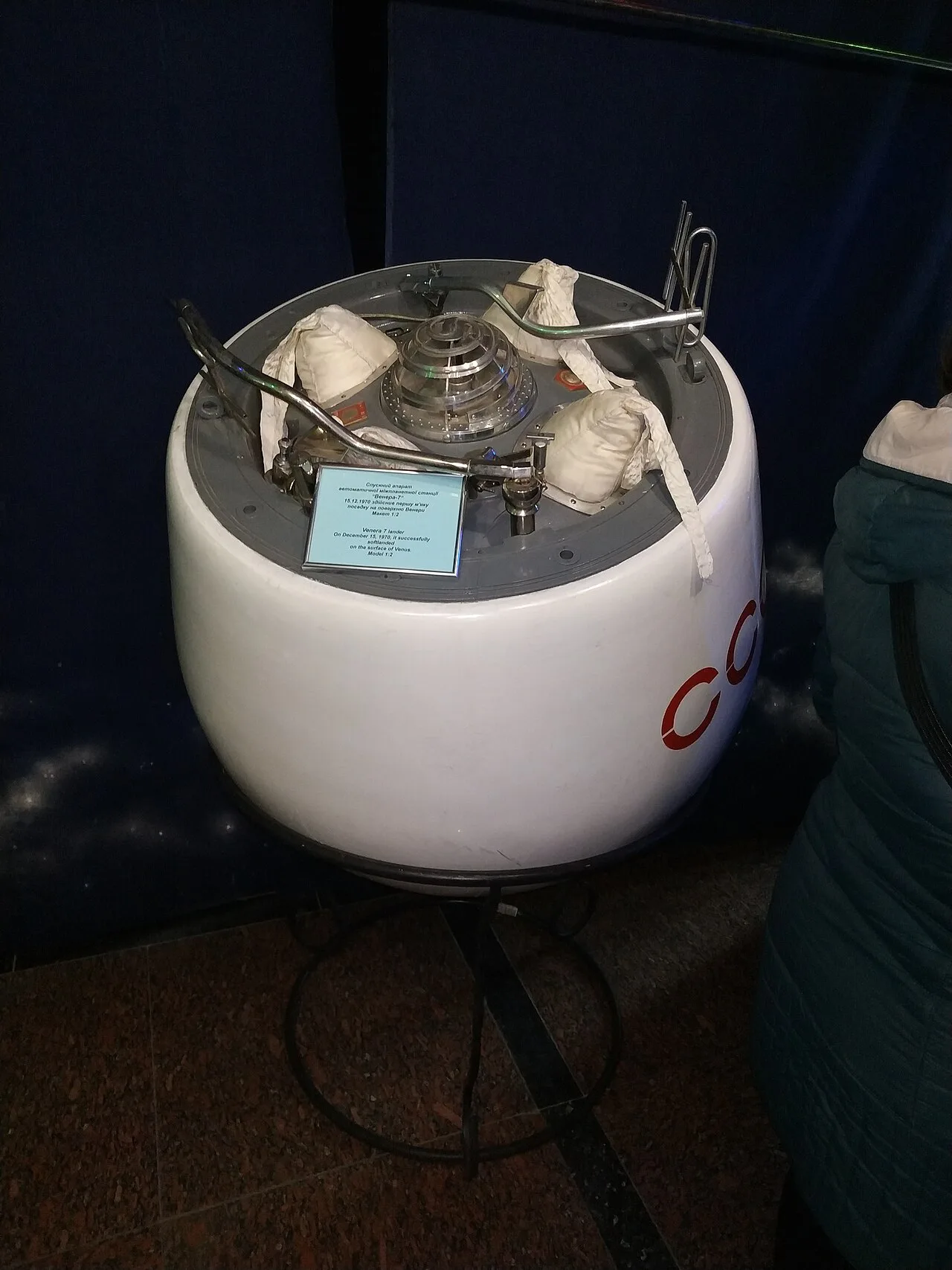
Venera-7 spuskaemiy apparat
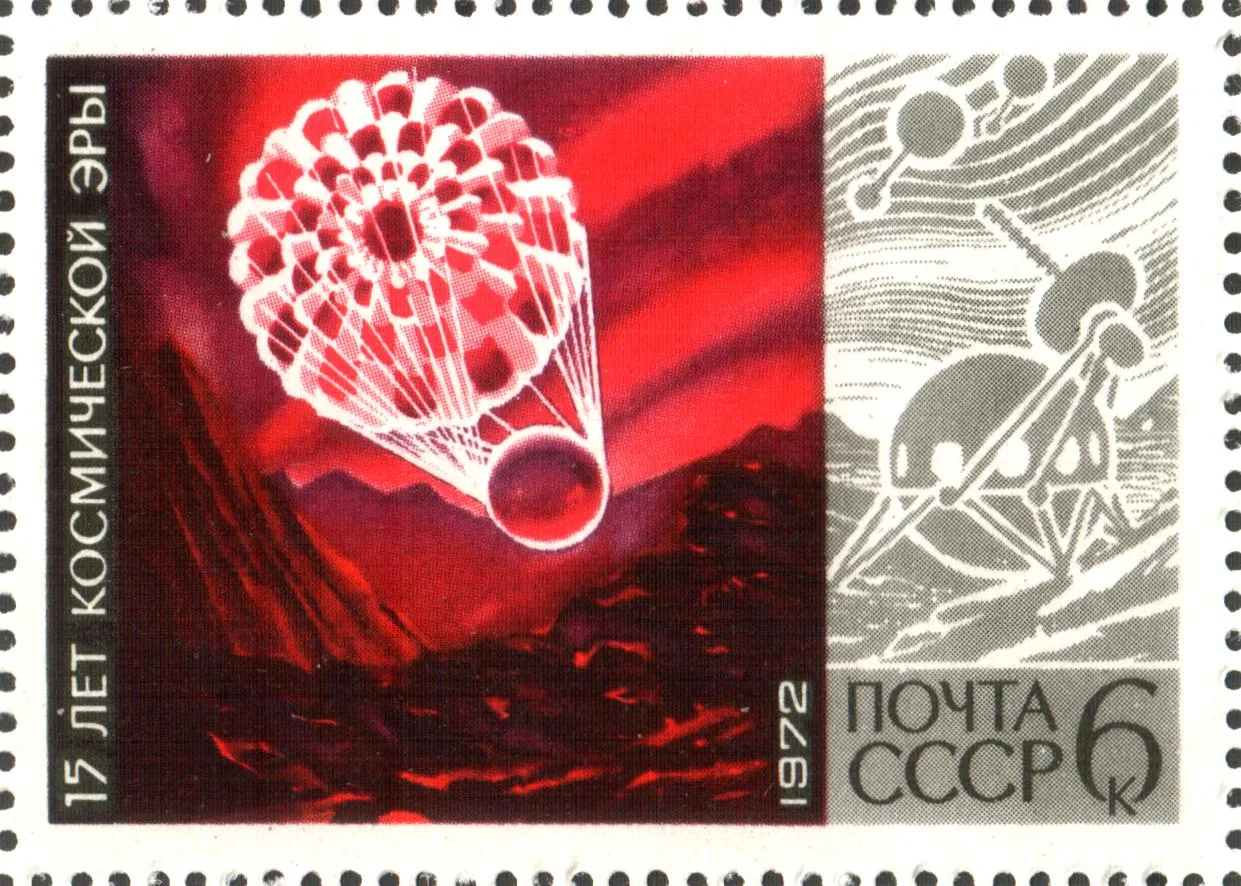
1972 CPA 4166
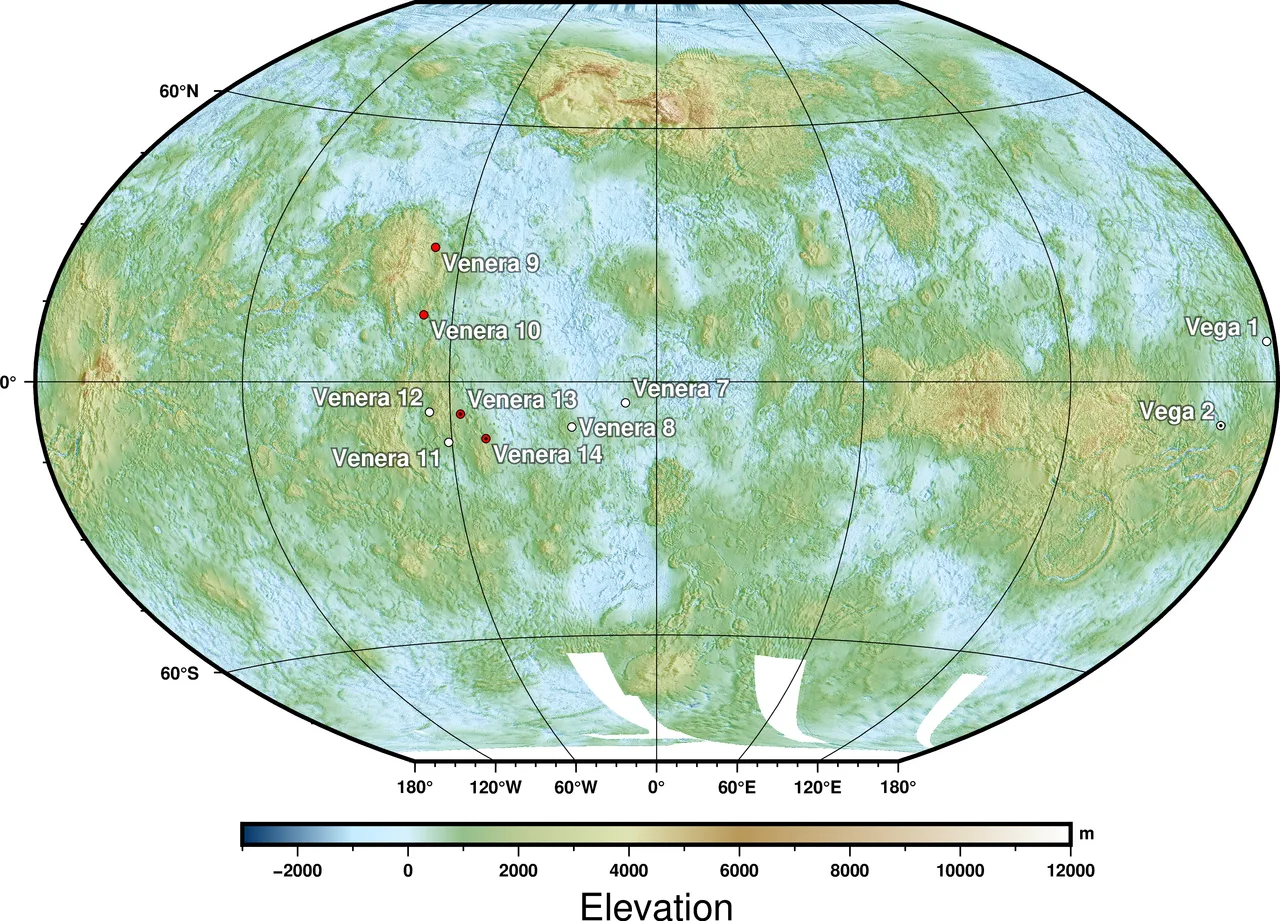
Position of Venera landing sites. Red points denote sites returning images from the surface, black central dots sites of surface sample analysis. Map based on mapping from Pioneer Venus Orbiter and Magellan.
Venera 7
Venera 7 was a Soviet spacecraft that became the first to execute a soft landing on another planet and transmit data back to Earth when it landed on Venus in 1970.
Overengineering for Unknown Pressures Sacrificed Payload Mass
Soviet engineers built the lander to survive pressure of up to 18 megapascals and temperatures of 580 °C due to immense atmospheric uncertainties. Designers opted for this large margin of error to guarantee survival under extreme conditions. However, this degree of hardening limited the amount of mass available for scientific instruments both on the probe itself and the interplanetary bus. Consequently, the mission was forced to sacrifice instrument payload in favor of structural survival.
From Wikipedia · CC BY-SA 4.0
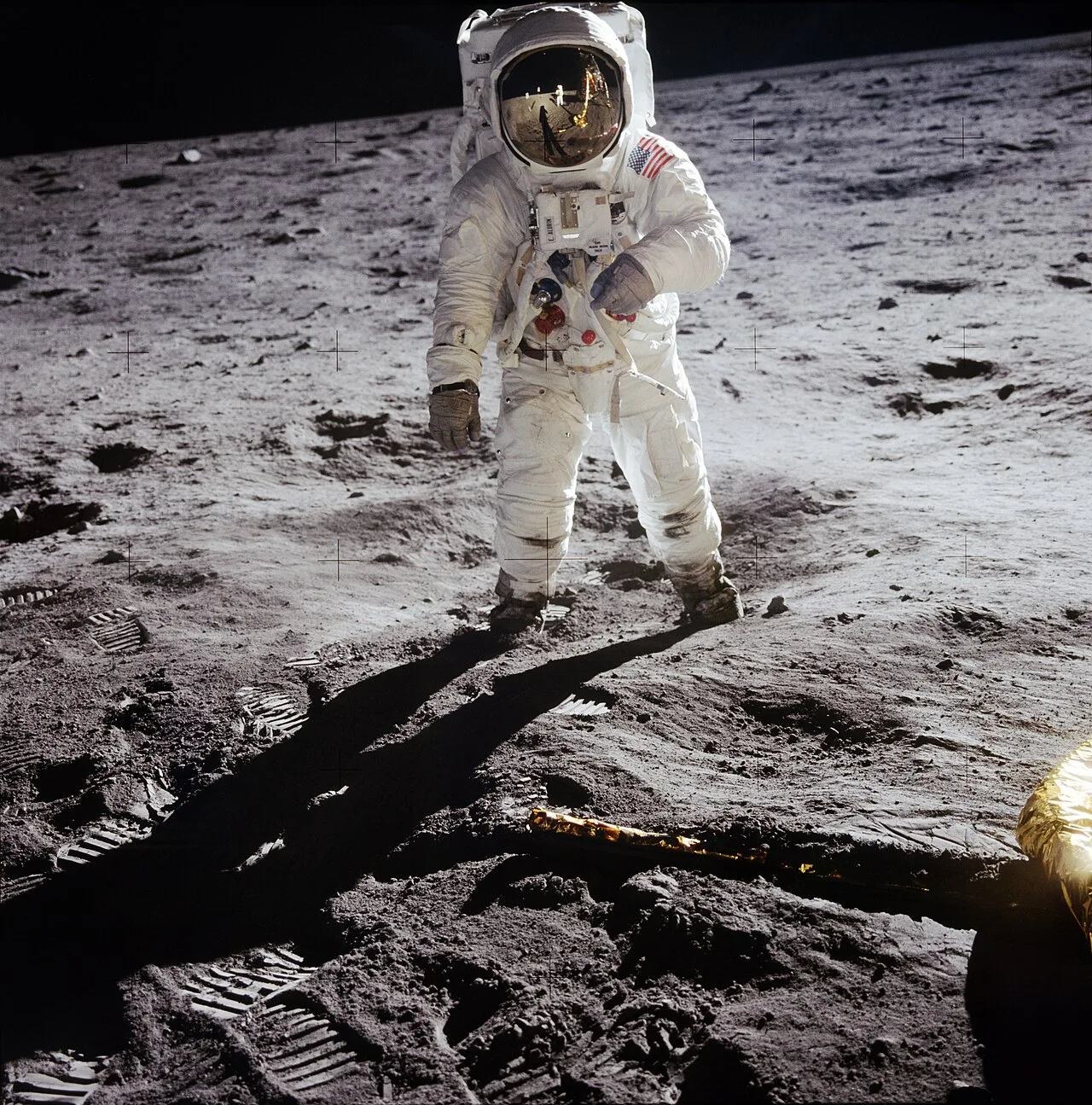
A Man on the Moon, AS11-40-5903 (cropped)
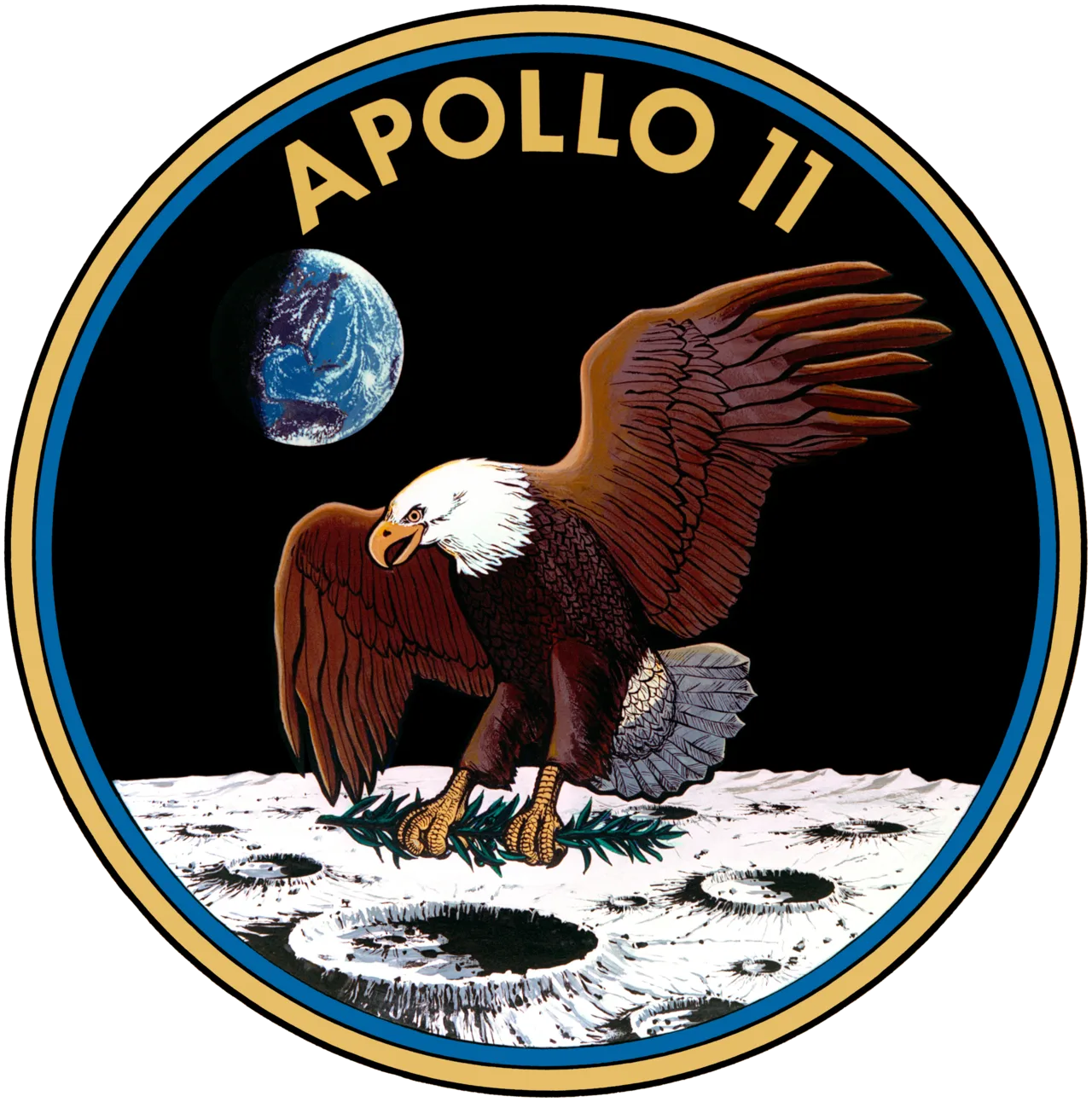
Circular insignia: eagle with wings outstretched holds olive branch on Moon with Earth in background, in blue and gold border.
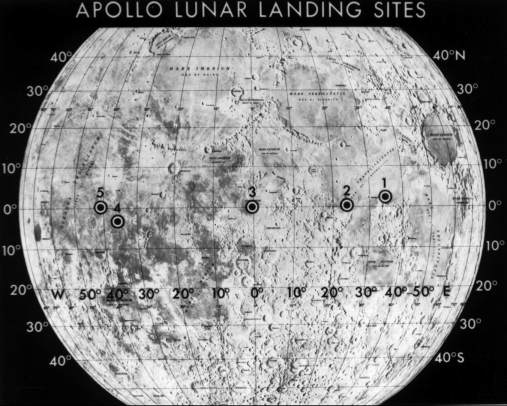
A map of the Moon showing prospective landing sites for Apollo 11. Site 2 in the Sea of Tranquility was chosen.
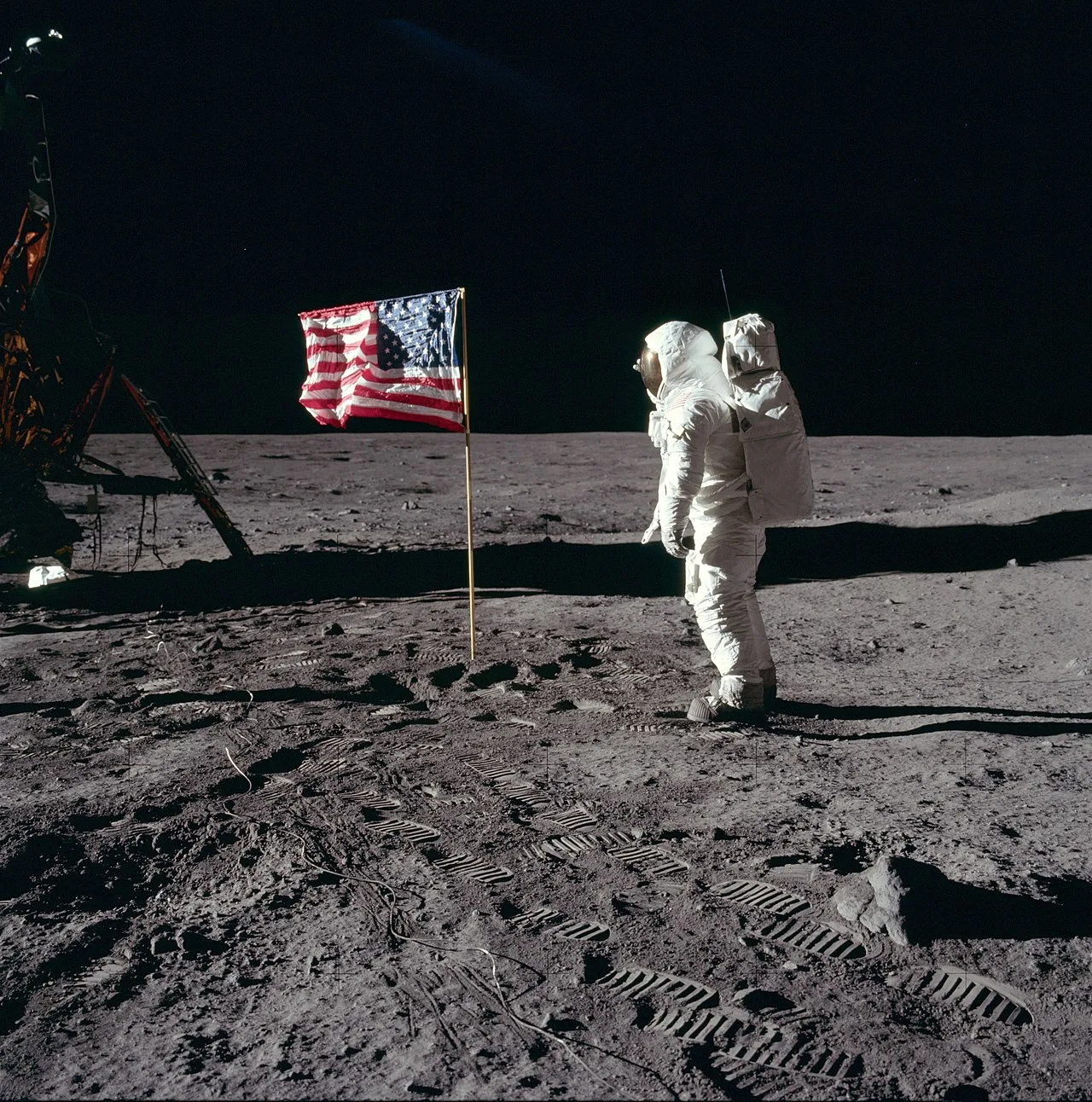
Aldrin salutes the deployed United States flag on the lunar surface.
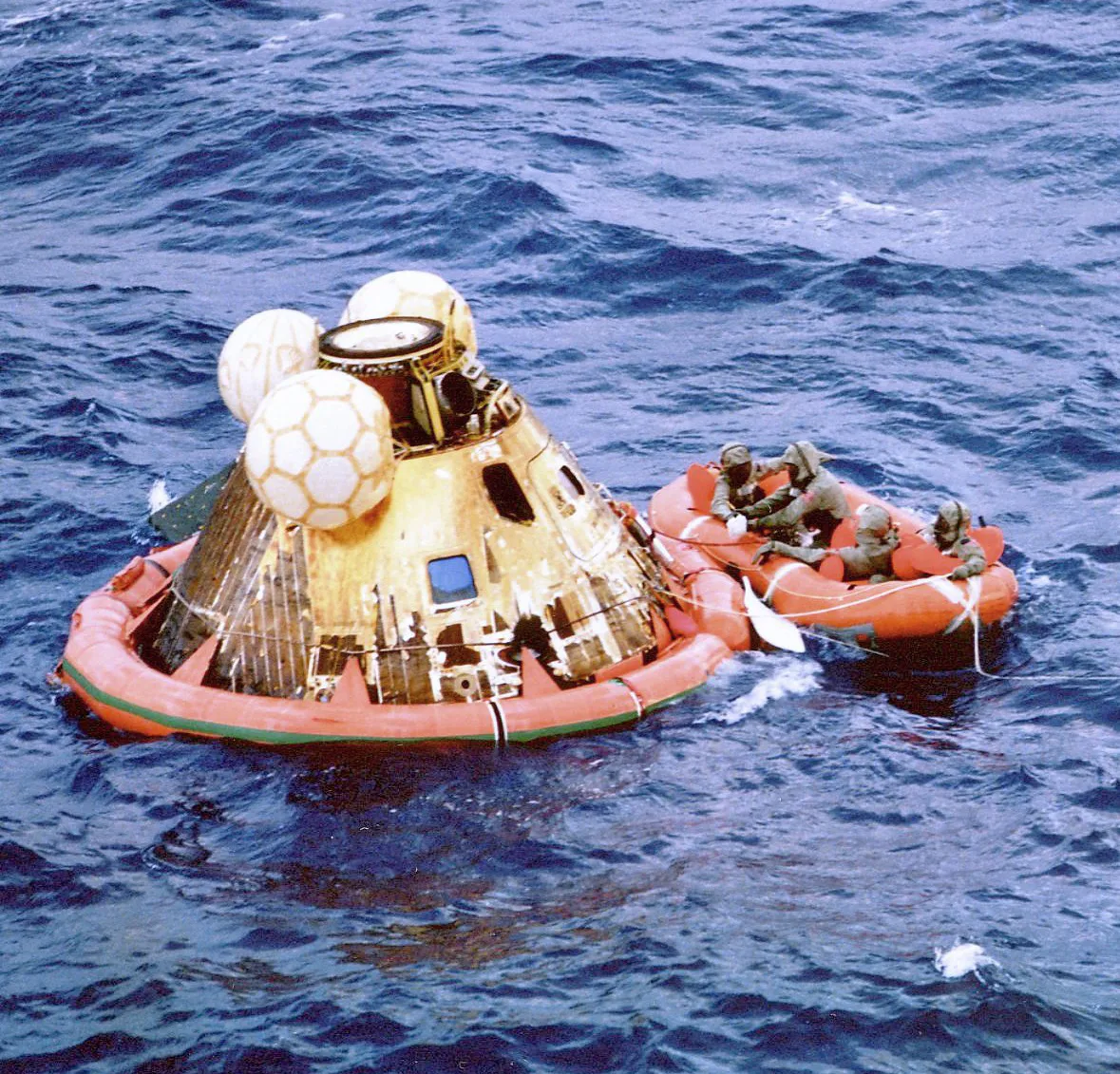
Columbia floats on the ocean as Navy divers assist in retrieving the astronauts.

A girl holding The Washington Post newspaper stating "'The Eagle Has Landed' – Two Men Walk on the Moon"
Apollo 11
Apollo 11 was an American spaceflight that became the first to land humans on the Moon in July 1969.
Designing the First Step Around Character and Cabin Geometry
NASA officials deliberately altered the flight plan so the commander would step out onto the lunar surface first. Chris Kraft revealed in his 2001 autobiography that top agency leaders held a meeting specifically to ensure Aldrin would not be the first man on the Moon. They argued that the first human walking on another world needed to possess a calm and quiet demeanor like Charles Lindbergh. This decision reversed earlier Gemini practices where commanders remained inside while pilots conducted spacewalks.
From Wikipedia · CC BY-SA 4.0
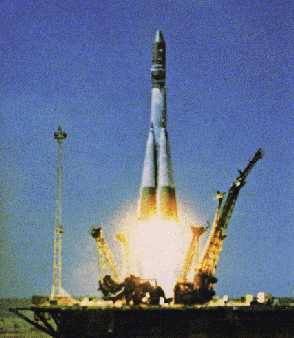
Vostok1 big
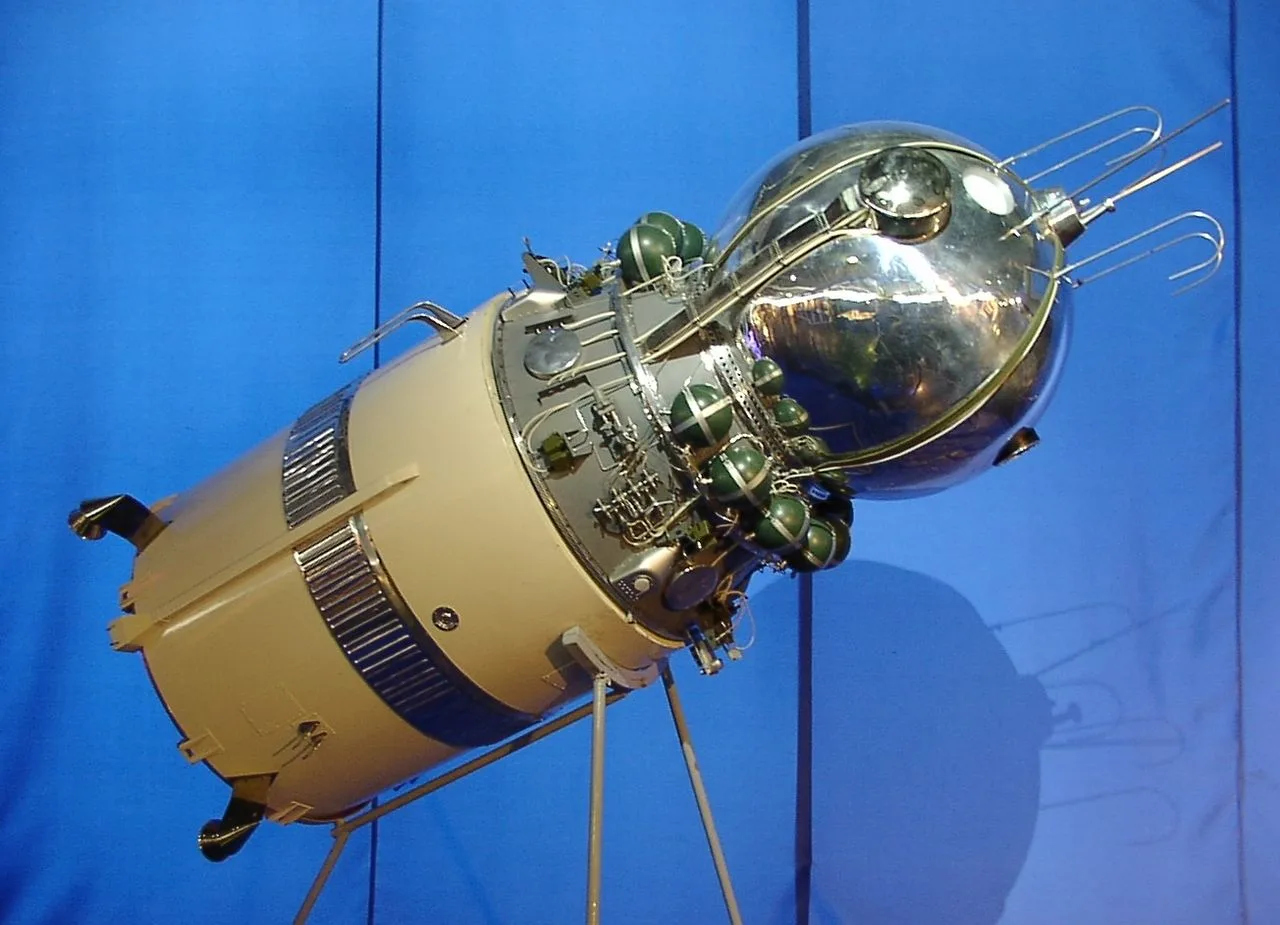
Model of the Vostok spacecraft with its upper stage, on display in Frankfurt Airport's "Russia in Space" exhibition
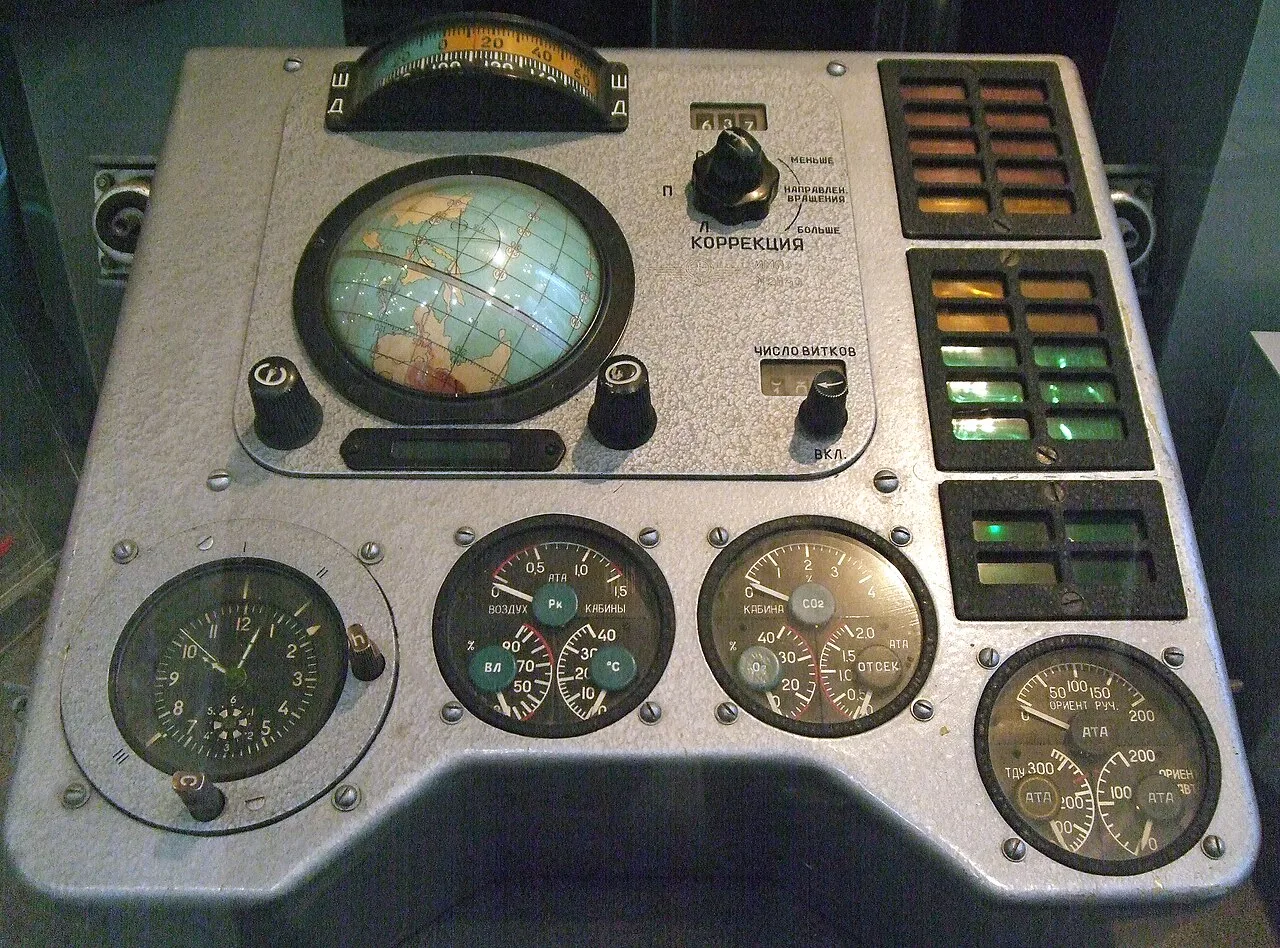
Part of the Vostok 1 instrument panel prominently displaying the "Globus" navigation instrument
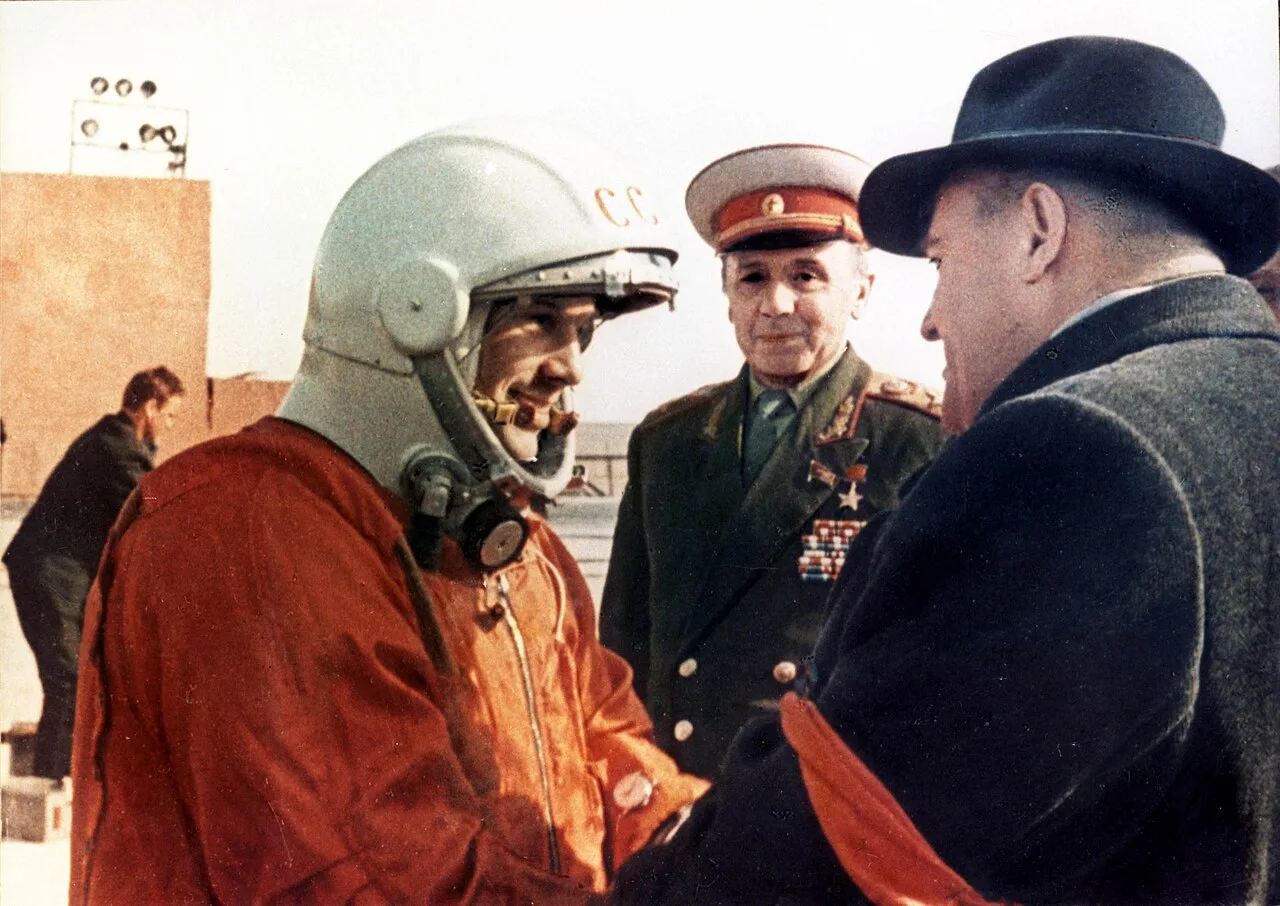
Gagarin with Korolev (right) before the flight
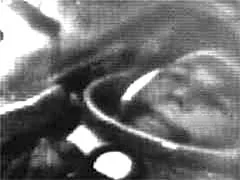
Yuri Gagarin aboard Vostok 1, as televised to ground control
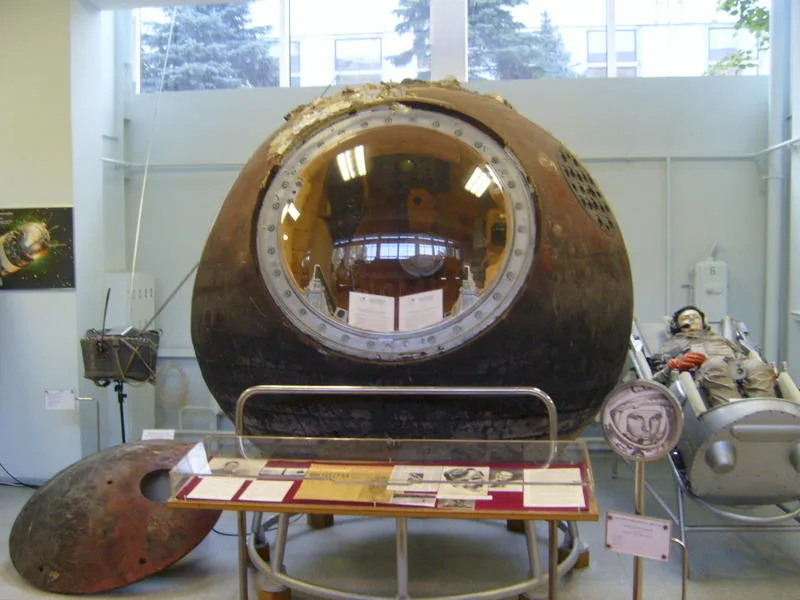
The Vostok 1 capsule at the RKK Energiya museum. The main capsule, seen in the center of this picture, earlier was displayed at the Space Pavilion at the VDNKh.
Vostok 1
Vostok 1 was the first human orbital spaceflight in history, carrying Soviet cosmonaut Yuri Gagarin into orbit on 12 April 1961.
Staged Television Reenactments and Deep Mission Secrecy
On 10 April, an official selection meeting was reenacted in front of television cameras to generate official media footage for the public. Behind this carefully produced display lay intense operational secrecy regarding the true identity of the chosen pilot. Candidate Alexei Leonov later recalled that he did not even know who was chosen for the mission until after the spaceflight had begun. This extreme secrecy kept even close peers completely in the dark until launch.
From Wikipedia · CC BY-SA 4.0
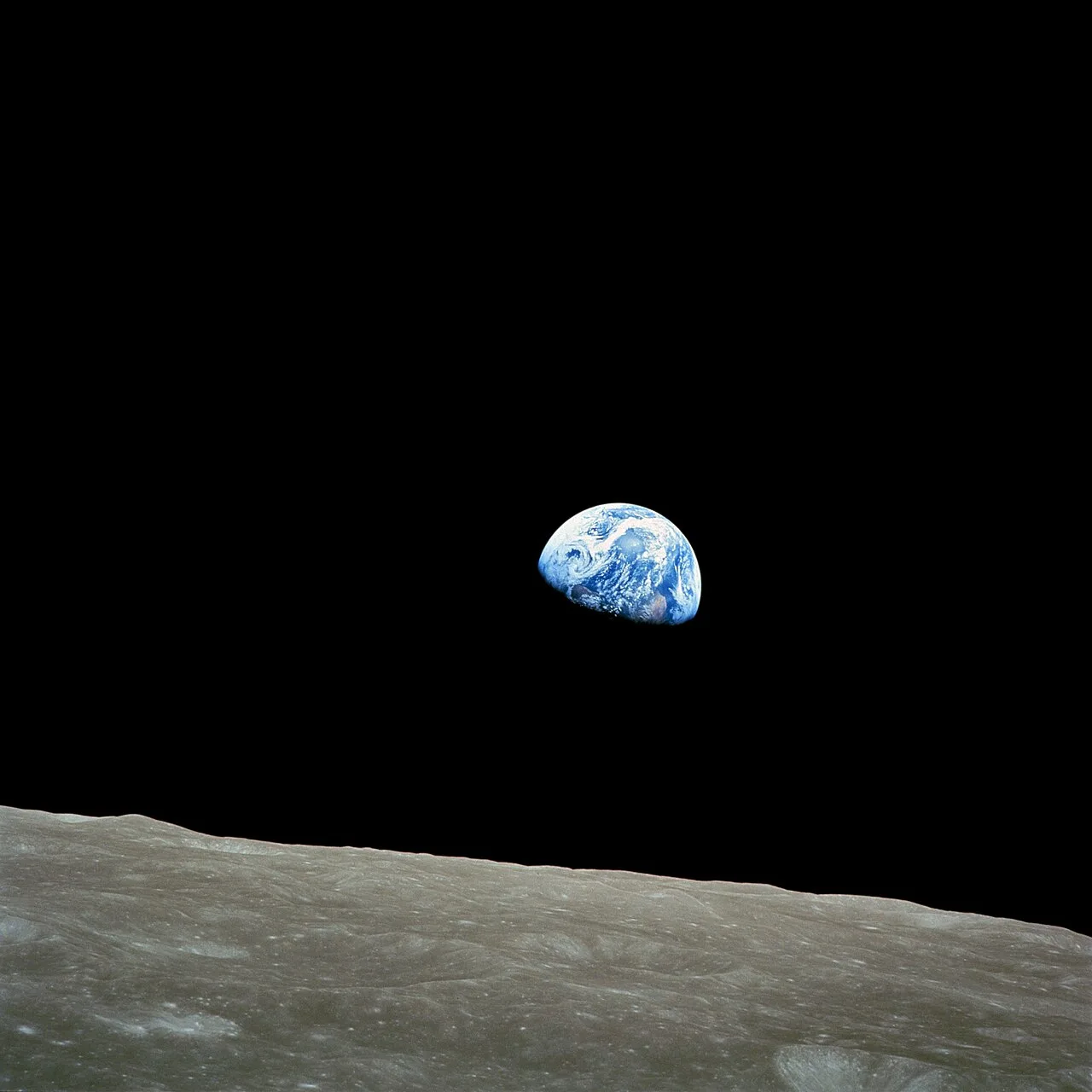
A black sky with a grey, cratered lunar horizon. A small blue Earth with scattered white clouds is just above the horizon, with about two-thirds of the Earth lit by the Sun and the remainder in darkness.
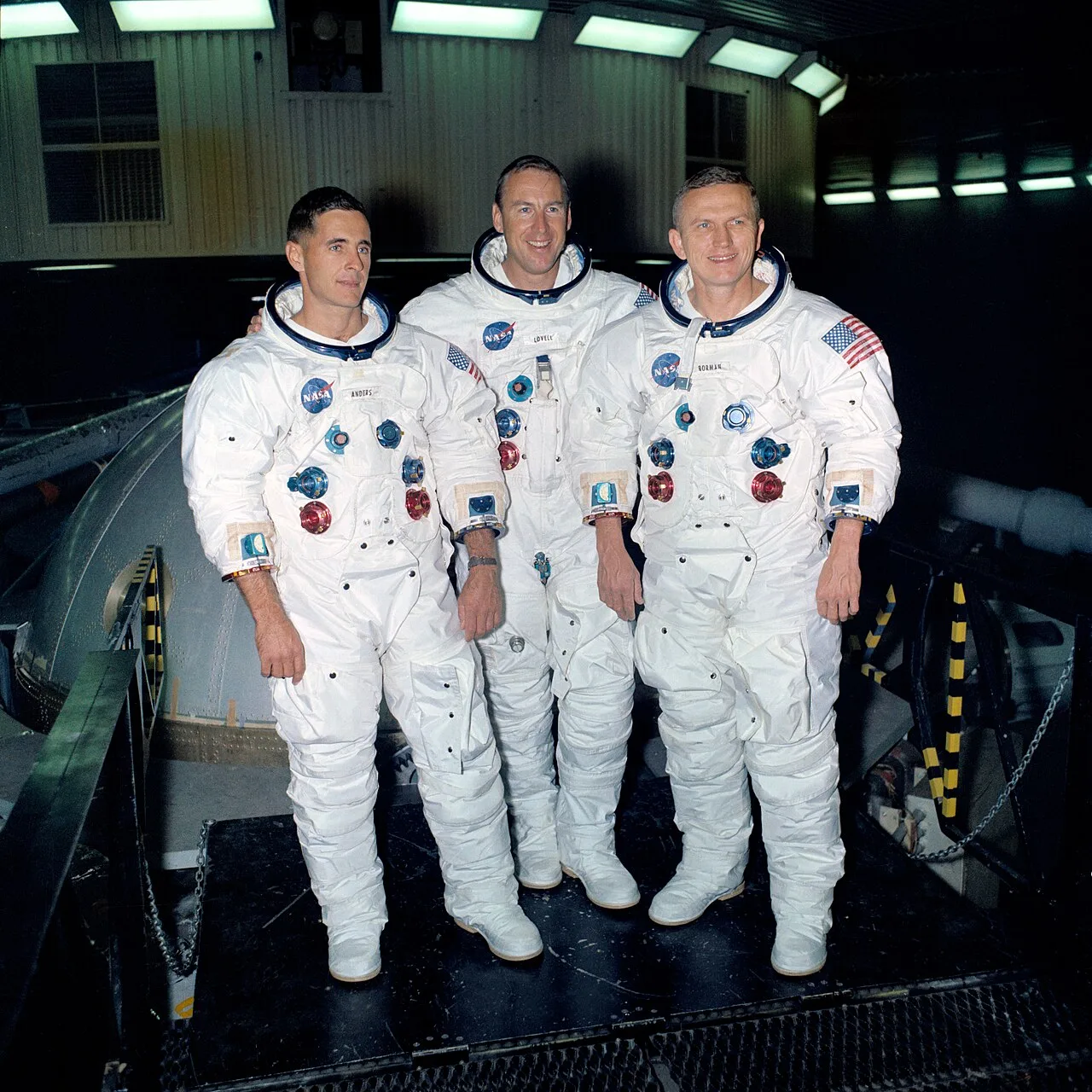
Apollo 8 Manned Space Flight Report (1968) Official NASA information film reel.
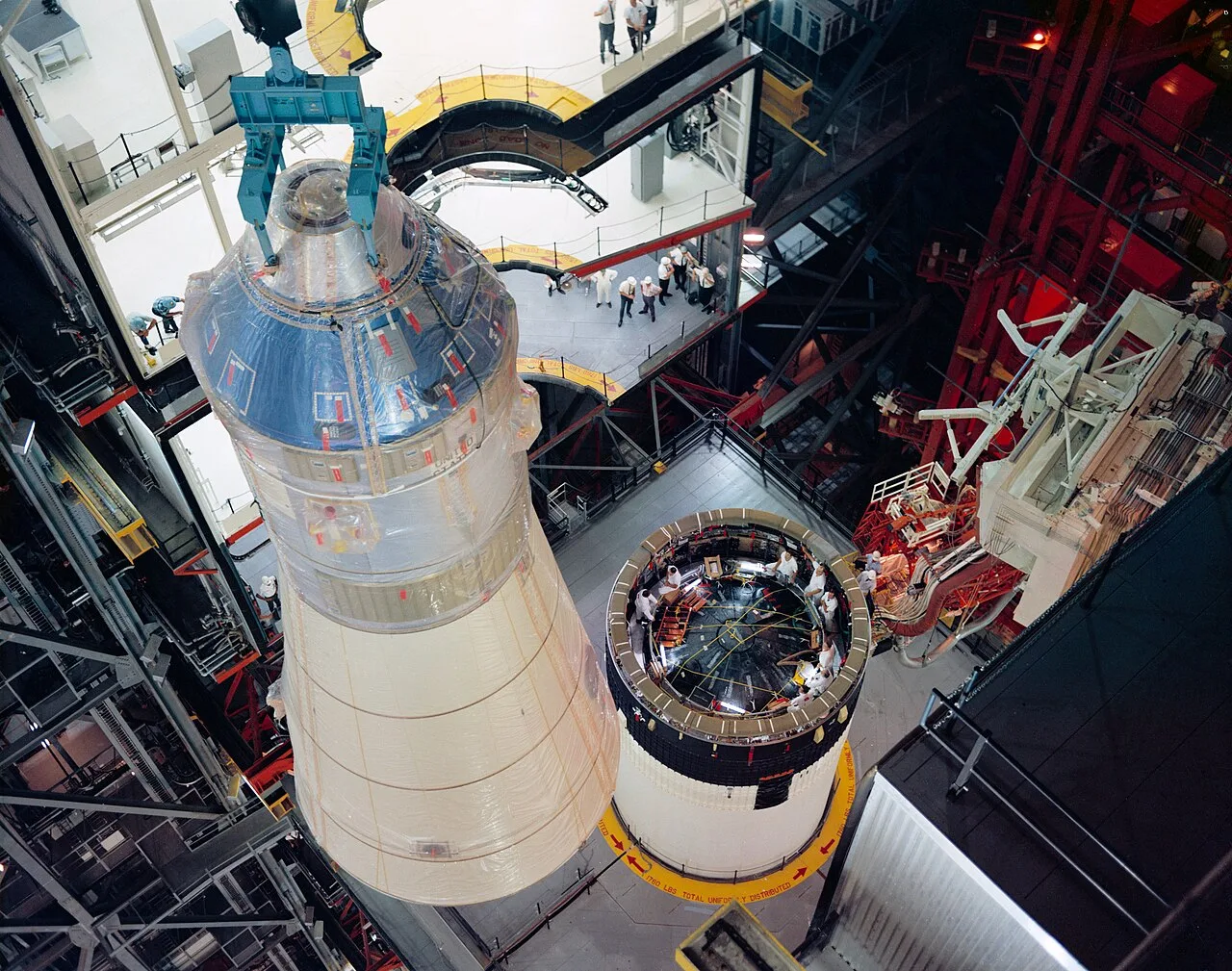
Erection and mating of spacecraft 103 to Launch Vehicle AS-503 in the VAB for the Apollo 8 mission
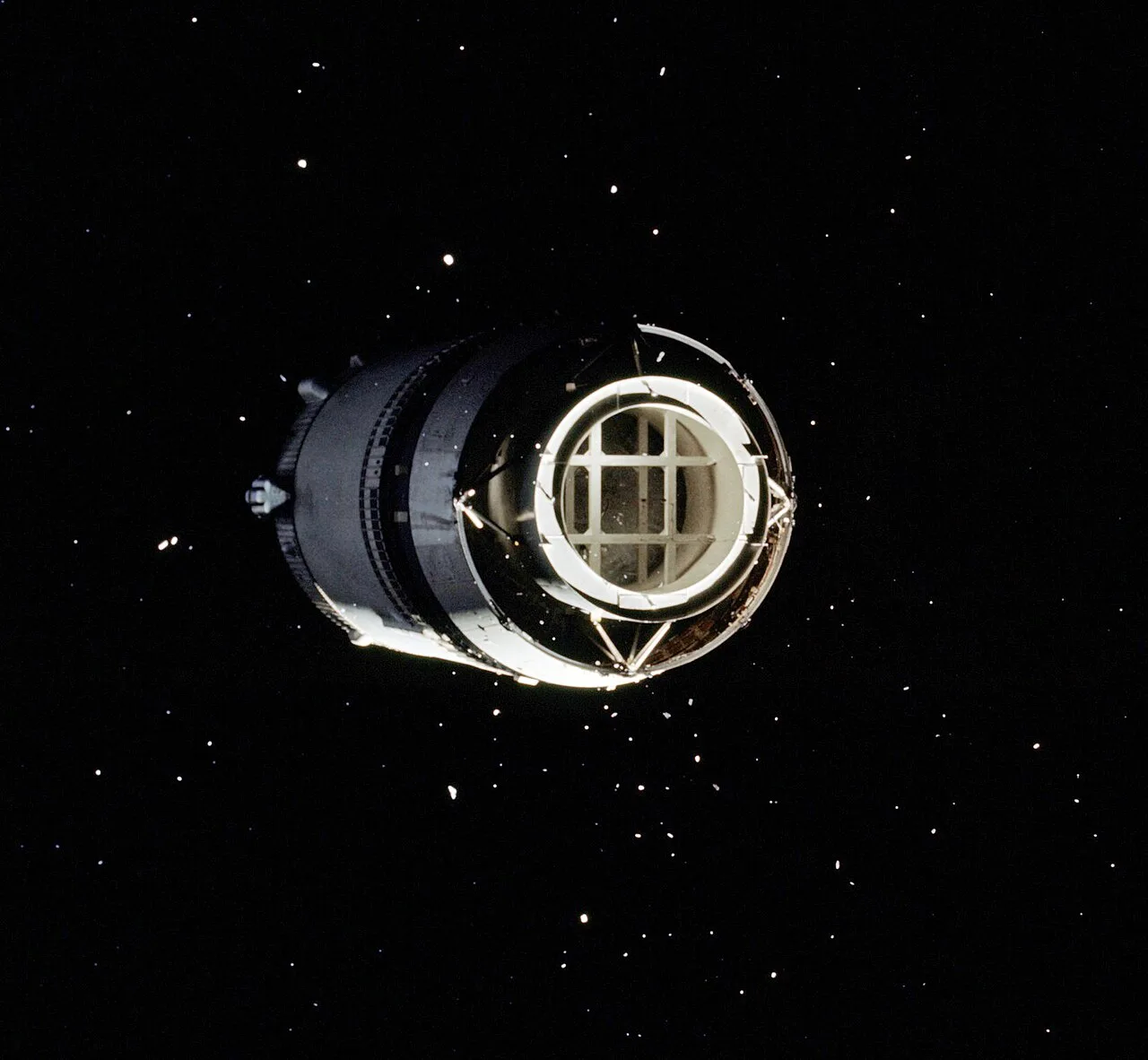
Apollo 8 S-IVB rocket stage shortly after separation. The LM test article, a circular boilerplate model of the LM, is visible with four triangular legs connecting it to the stage.
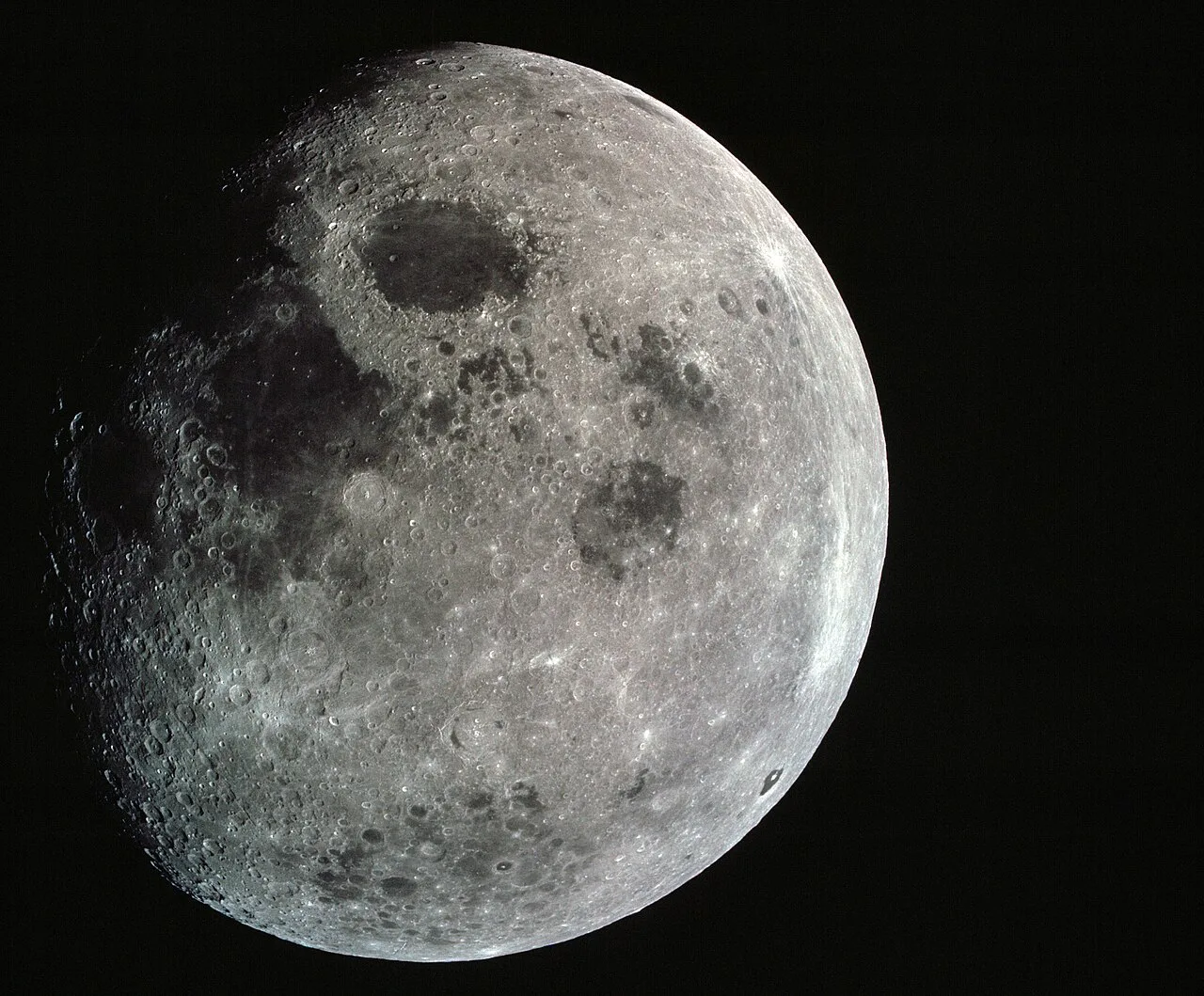
This photograph of the Moon was taken from Apollo 8 at a point above 70 degrees east longitude.
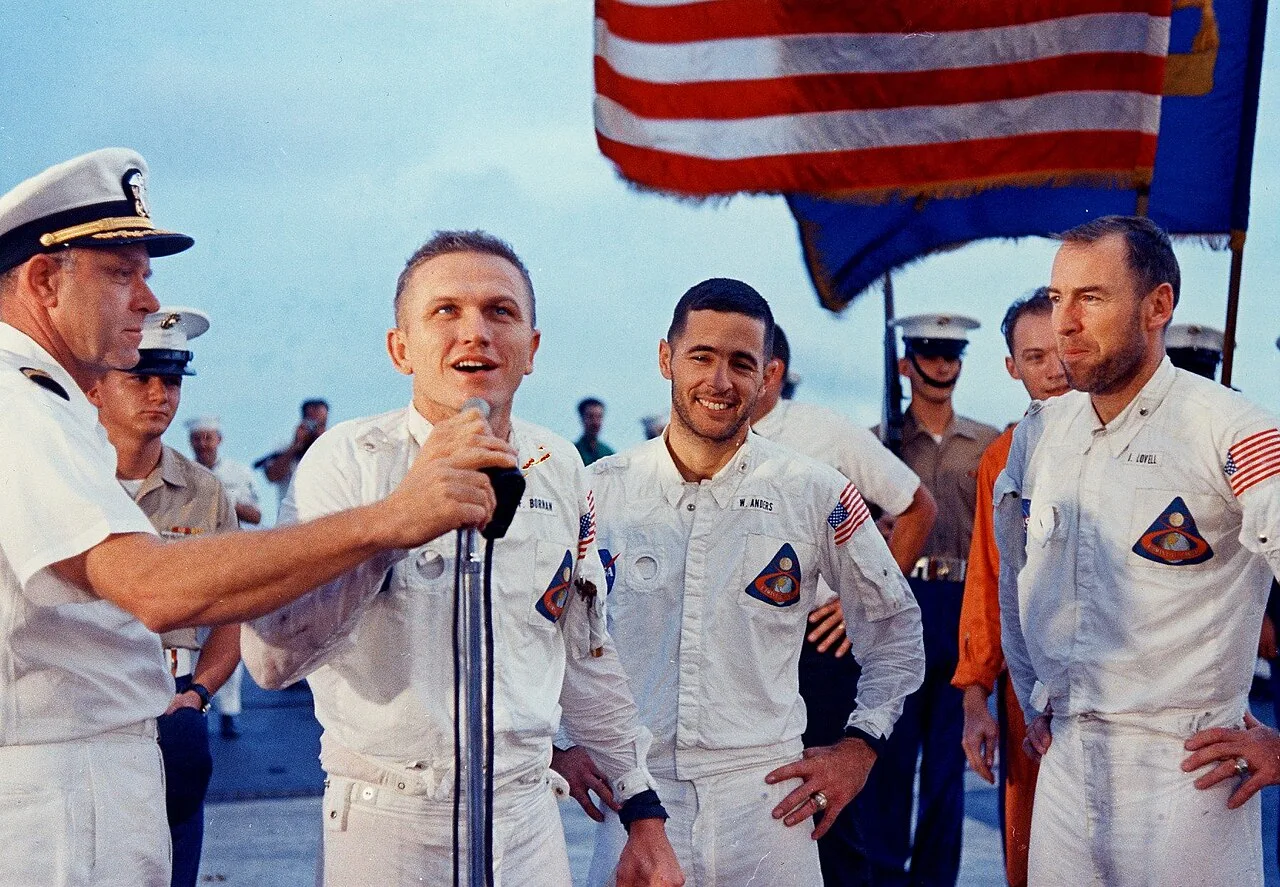
Crew of Apollo 8 addressing the crew of USS Yorktown after successful splashdown and recovery
Apollo 8
Apollo 8 was the first crewed spacecraft to leave Earth's gravitational sphere of influence and the first human spaceflight to reach and orbit the Moon.
Replacing a Defective Lander with a Weight Dummy
Production fell significantly behind schedule when the lunar module LM-3 arrived at the Kennedy Space Center in June 1968 with more than a hundred defects. Rather than delay the overall Moon landing goal, program officials altered the mission profile to send the command module alone into lunar orbit. This shift left Borman's crew with two to three months less training and preparation time than originally planned, swapping lander practice for translunar navigation training.
From Wikipedia · CC BY-SA 4.0
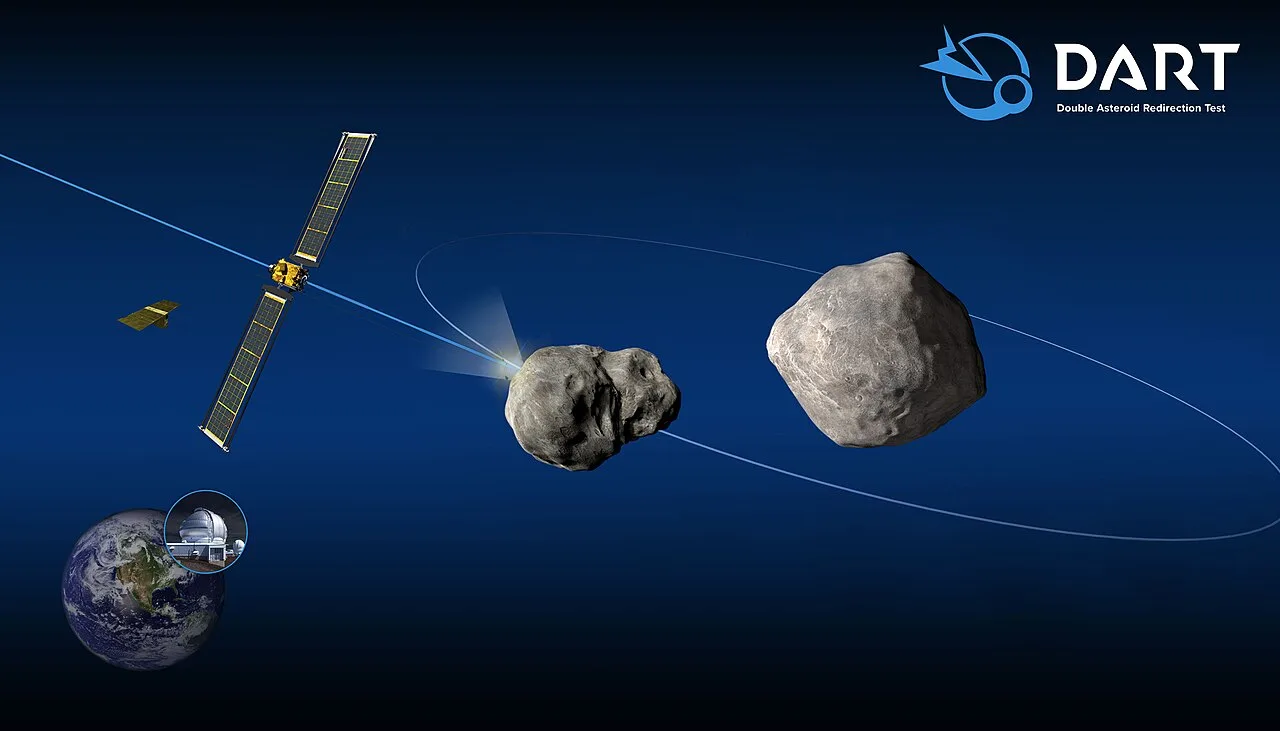
Dart-poster3
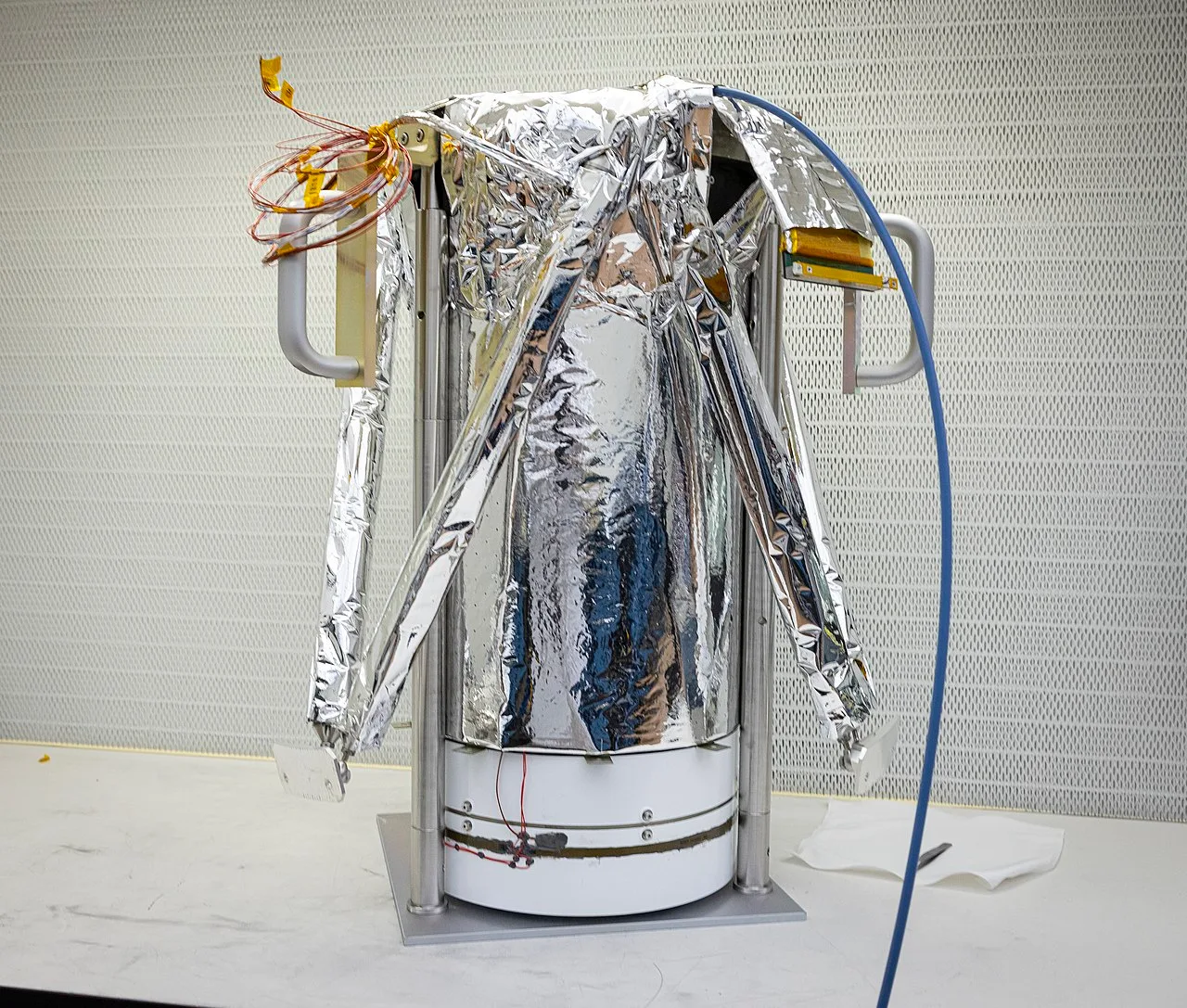
DRACO camera
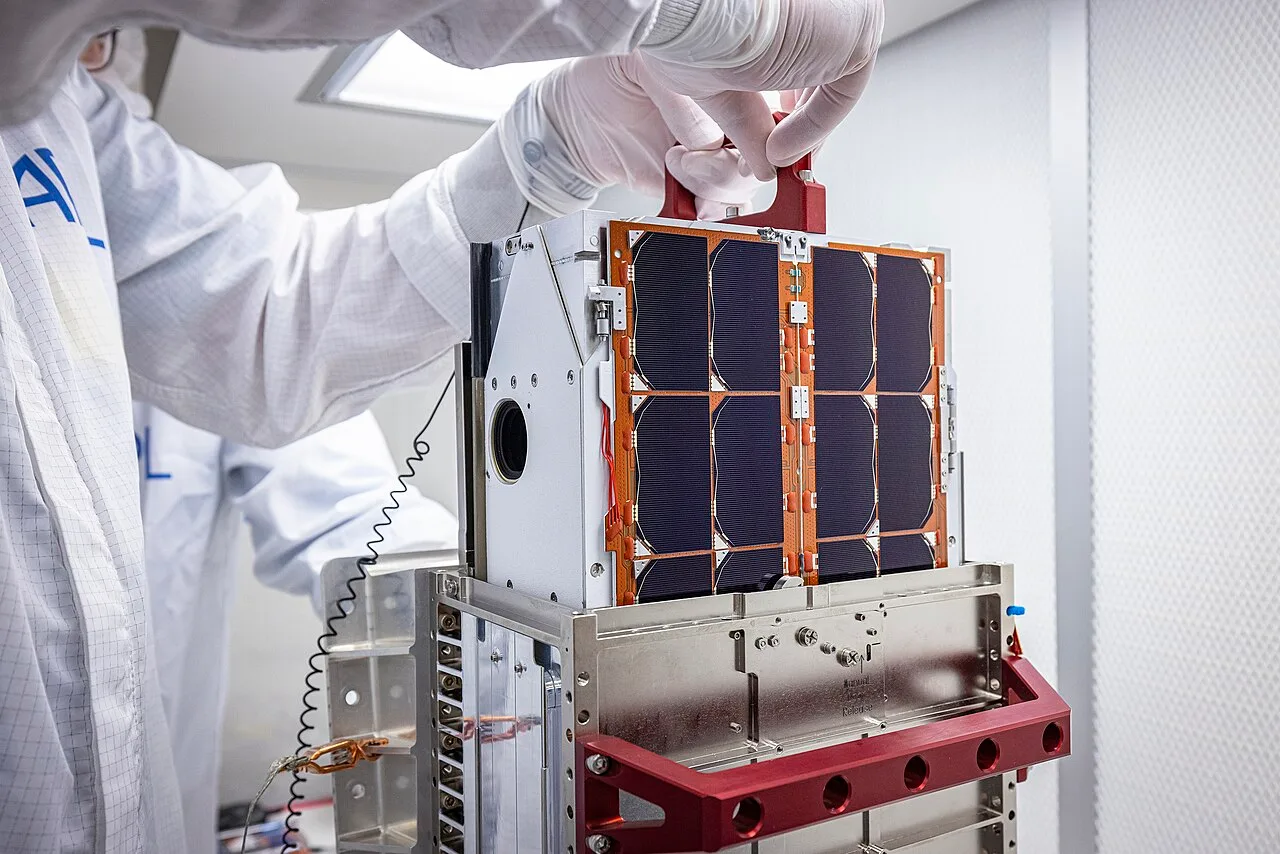
LICIACube CubeSat, a companion satellite of the DART spacecraft
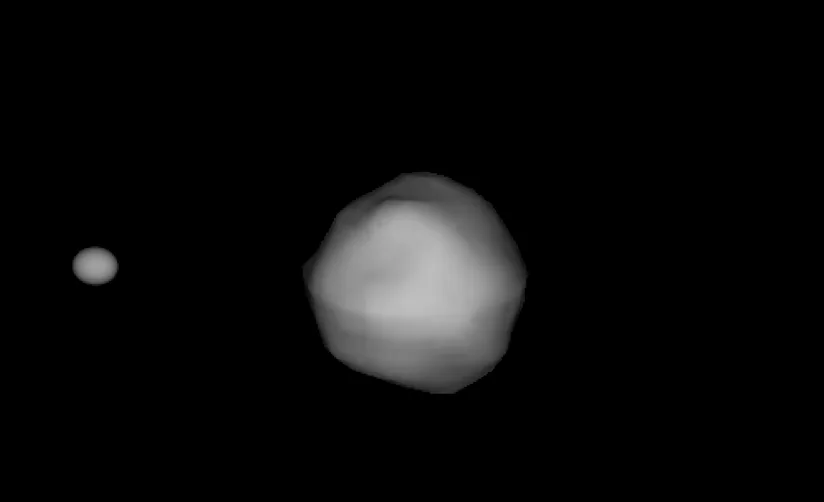
Pre-impact shape model of Didymos and its satellite Dimorphos, based on photometric light curve and radar data
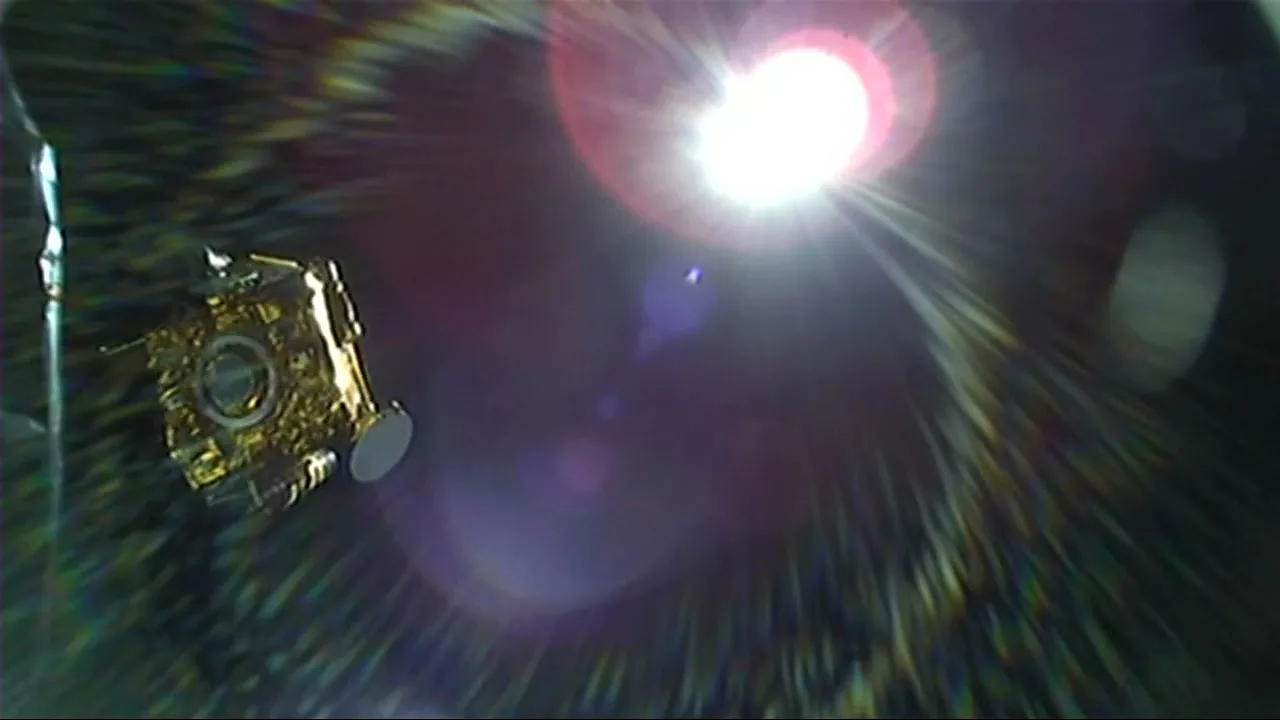
DART separation from second stage
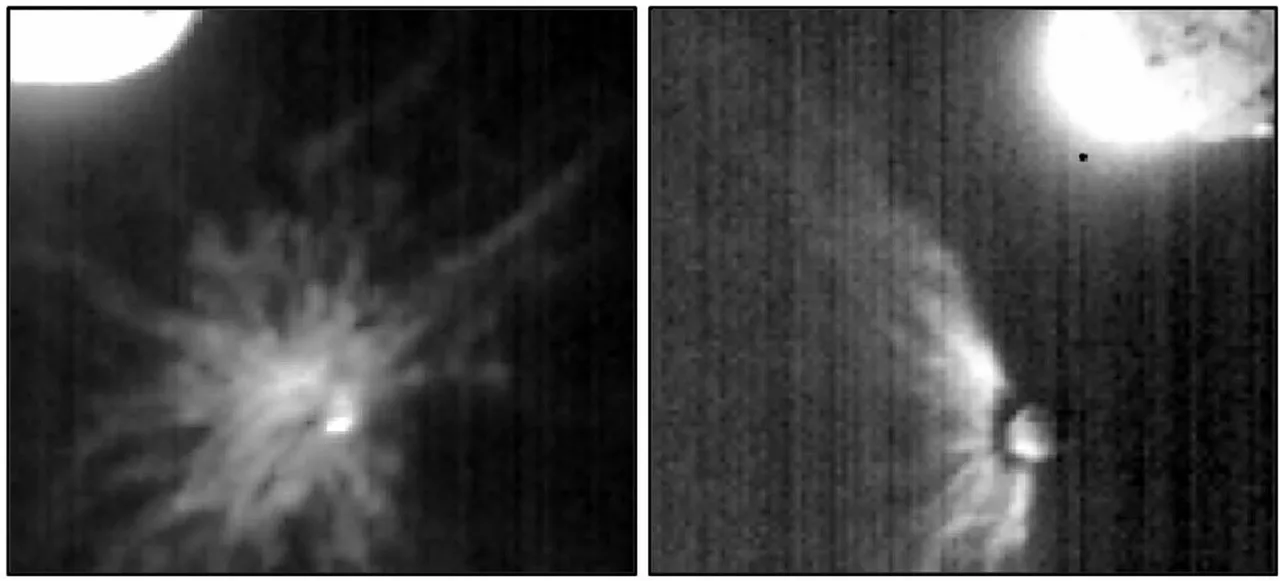
Dart Impact seen by LICIACube
Double Asteroid Redirection Test
The Double Asteroid Redirection Test (DART) was a NASA space mission designed to test a method of planetary defense by deflecting an asteroid with a spacecraft impact.
The Recoil Outpowered the Collision
When the probe slammed into its target, the spacecraft itself was not the primary driver of the physical shift. Instead, the material blasted outward created a rocket-like kickback that moved the body far more than the initial impact. Deflection resulted from the ejection of debris which caused a recoil that was substantially larger than the impact itself. This dynamic demonstrates that ejected surface material plays a far greater role in kinetic deflection than the vehicle's incoming mass.
From Wikipedia · CC BY-SA 4.0
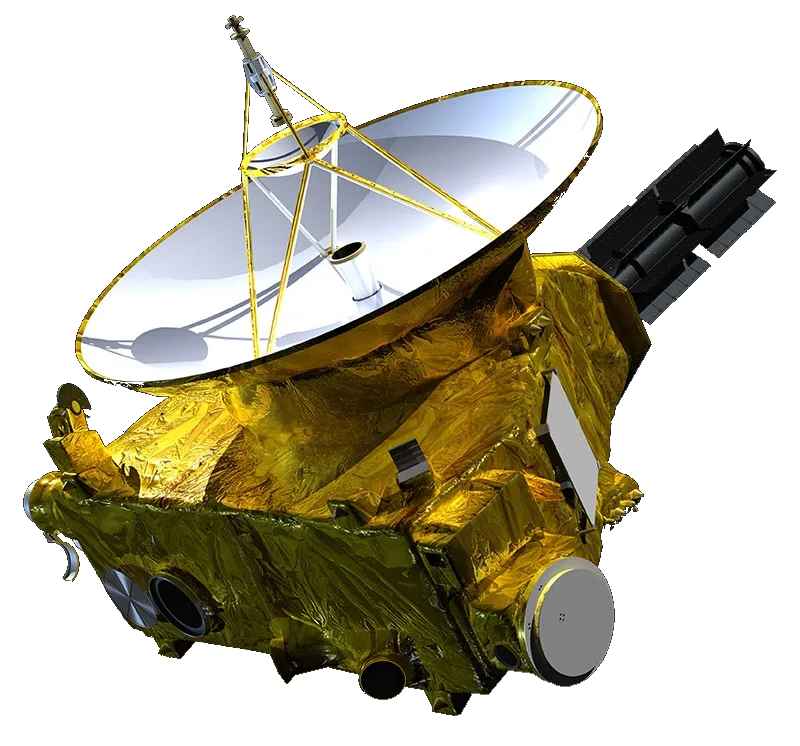
New Horizons spacecraft model 1
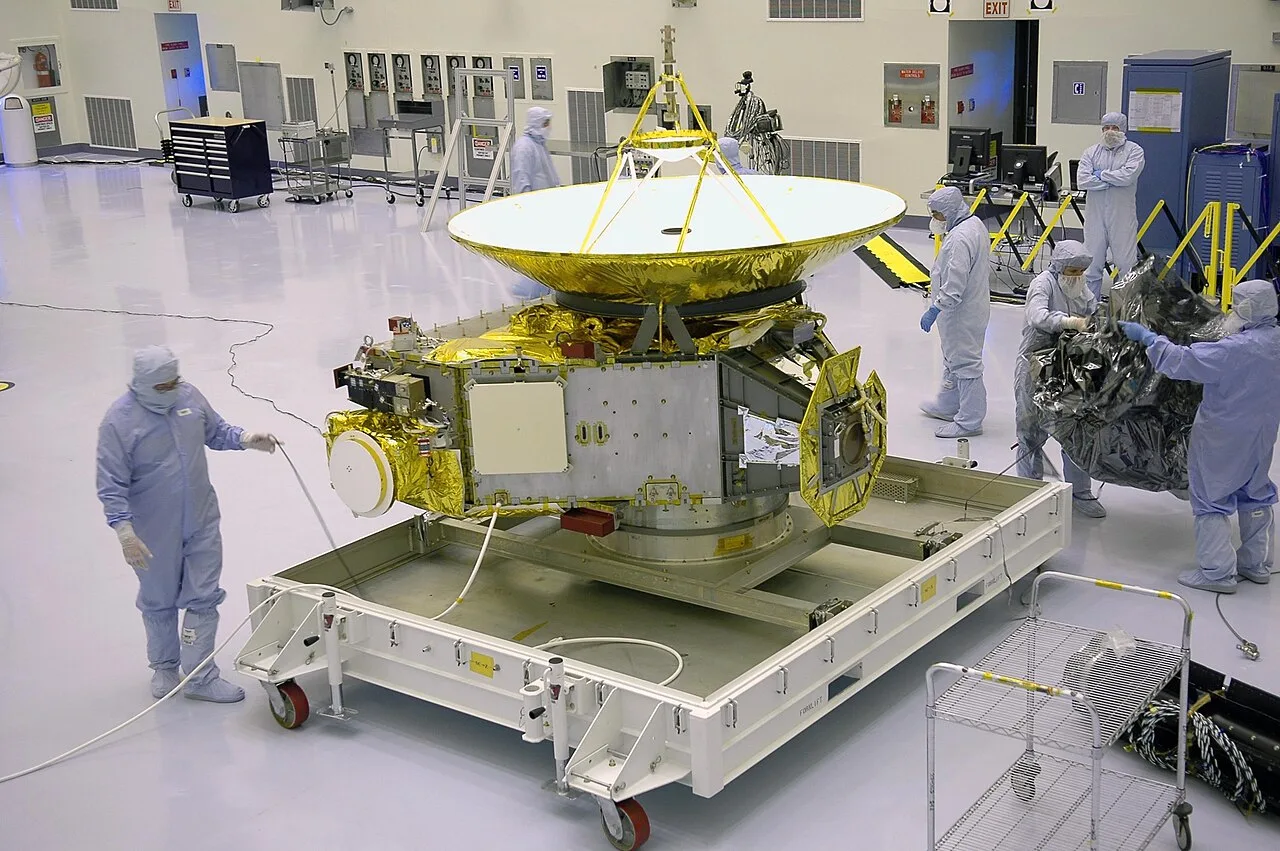
New Horizons before launch
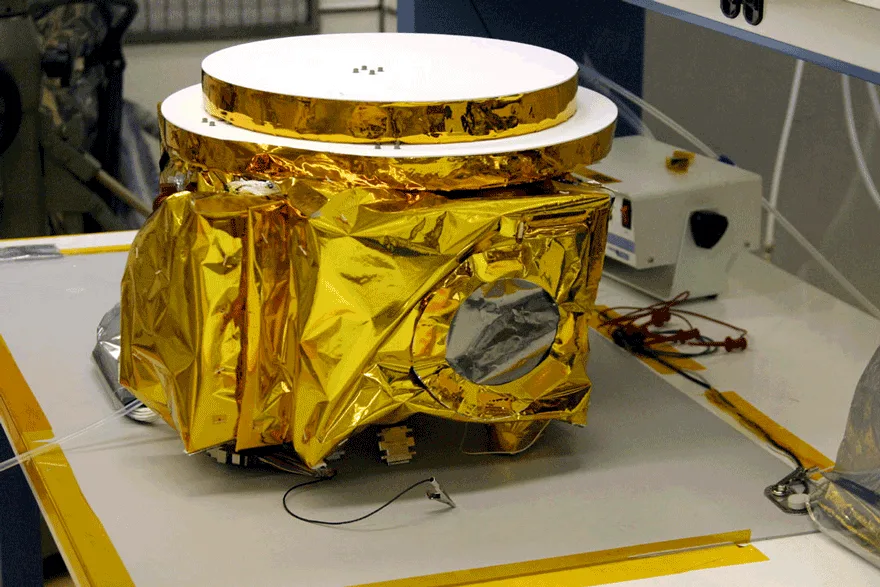
Ralph—telescope and color camera
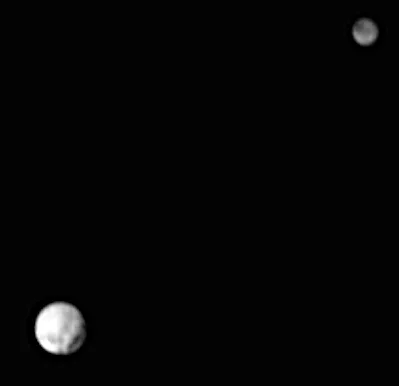
Pluto and Charon photographed on April 9, 2015, (left) by Ralph and on June 29, 2015, (right) by LORRI.
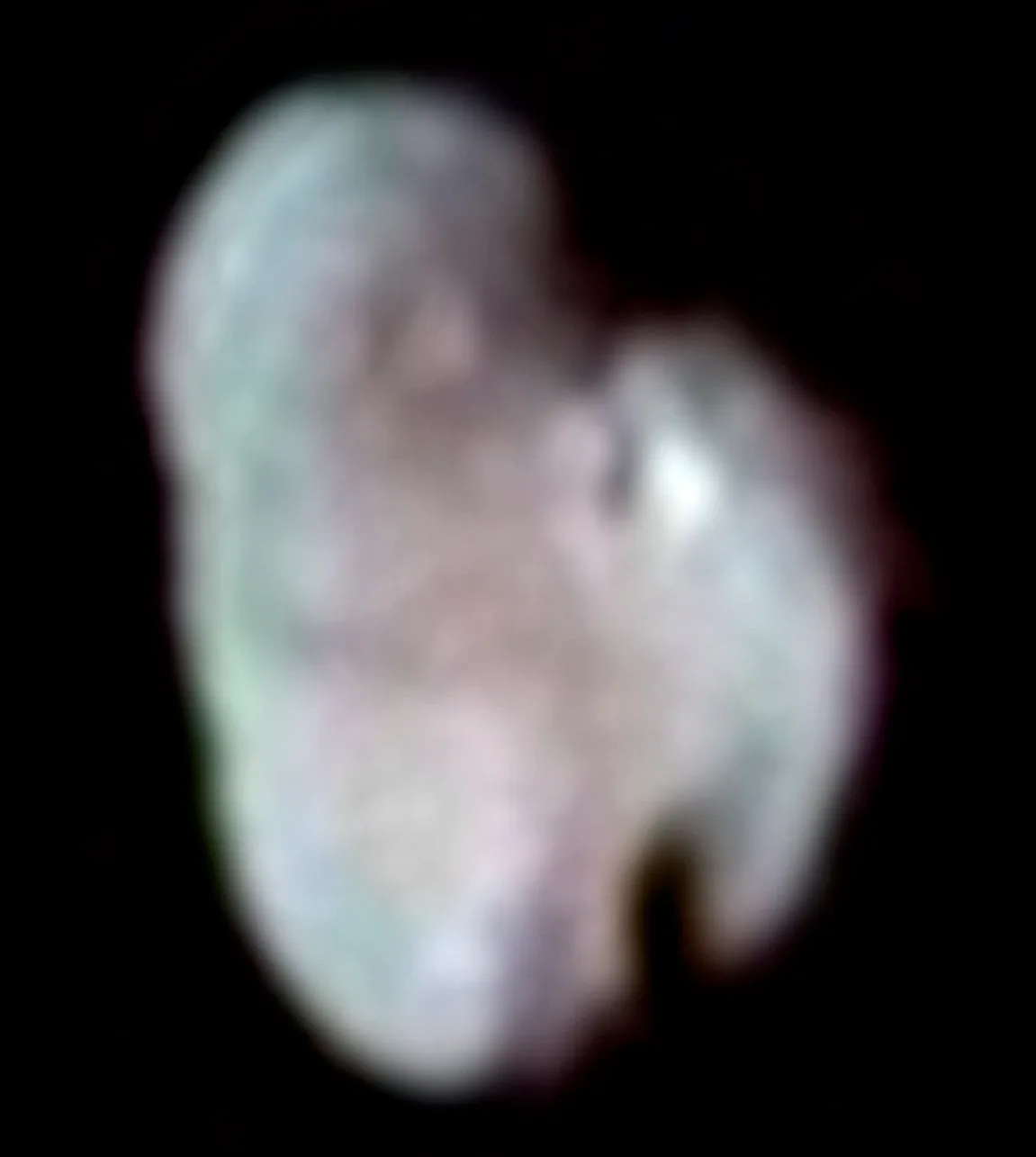
Hydra
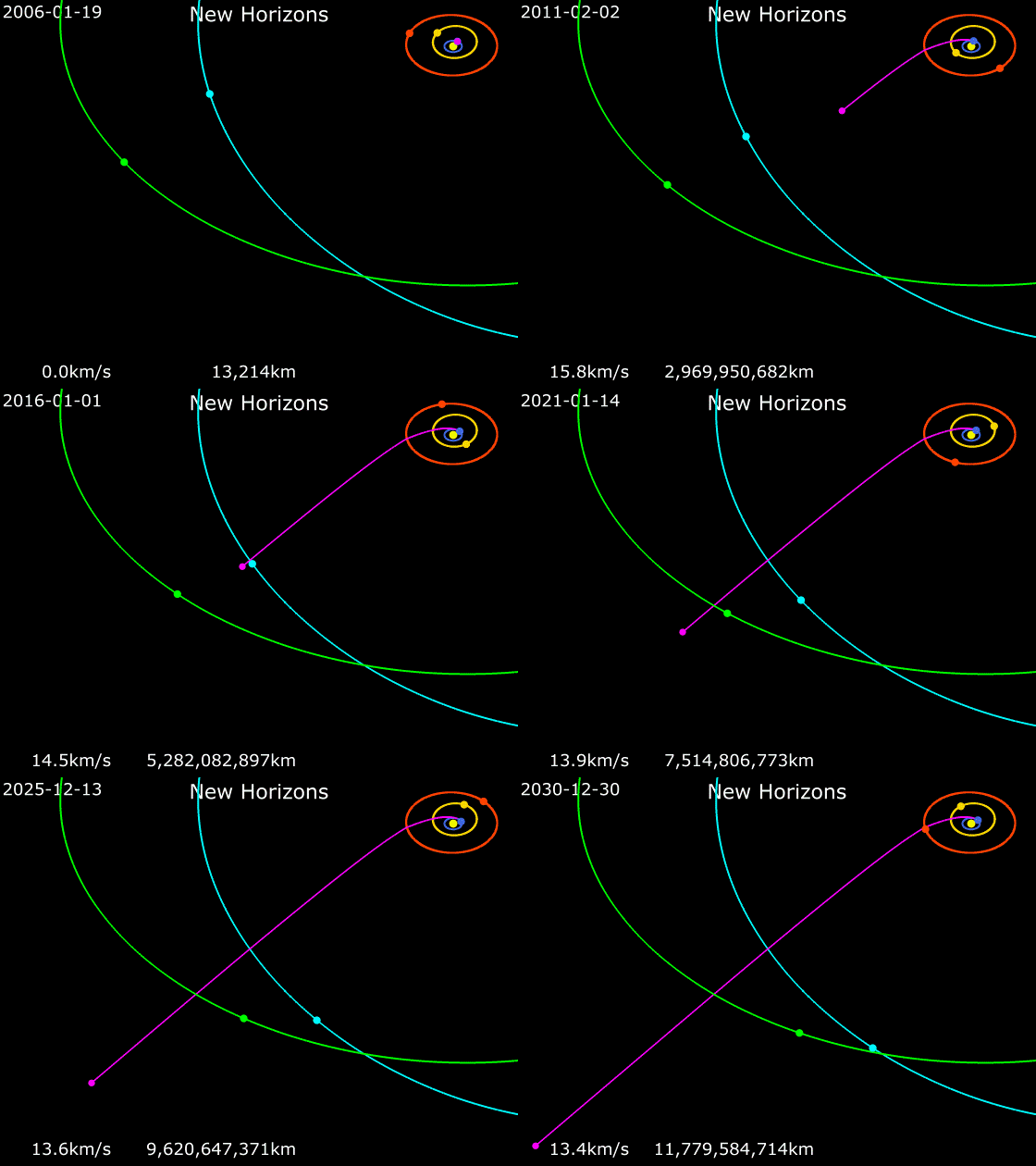
Animation of New Horizons's trajectory from January 19, 2006, to December 30, 2030 .mw-parser-output .legend{page-break-inside:avoid;break-inside:avoid-column}.mw-parser-output .legend-color{display:inline-block;min-width:1.25em;height:1.25em;line-height:1.25;margin:1px 0;text-align:center;border:1px solid black;background-color:transparent;color:black}.mw-parser-output .legend-text{} New Horizons · 486958 Arrokoth · Earth · 132524 APL · Jupiter · Pluto
New Horizons
New Horizons is a NASA space probe that, in 2015, became the first spacecraft to perform a flyby study of the Pluto system.
Fastest Departure, But Not the Ultimate Speed Record
On January 19, 2006, New Horizons was launched into space at a speed of about 16.26 km/s relative to the sun. This trajectory made it the fastest human-made object ever launched from Earth with respect to average speed. Although it bolted away from Earth rapidly, it is not the fastest recorded spacecraft overall.
From Wikipedia · CC BY-SA 4.0