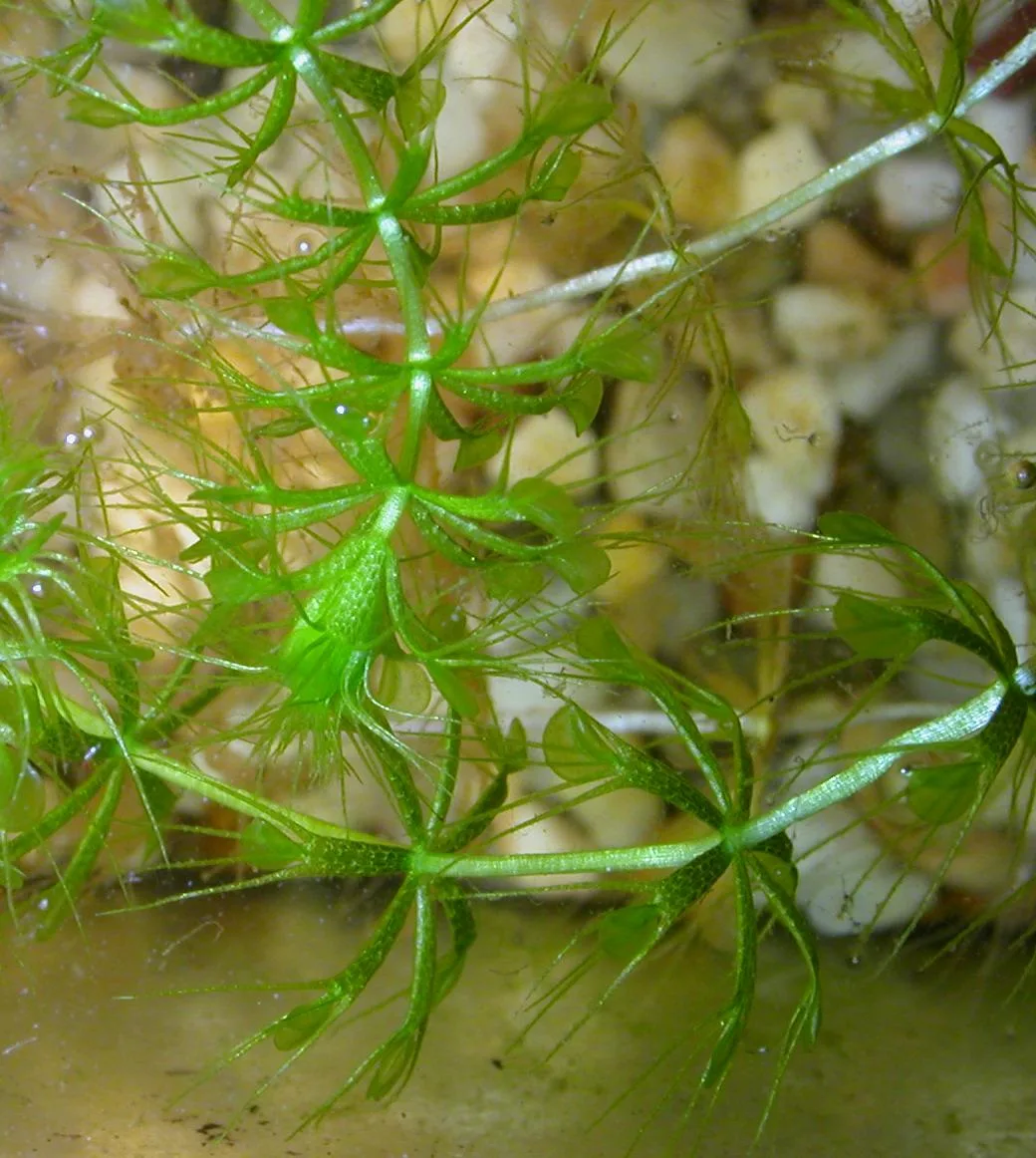
AldrovandaVesiculosaHabit
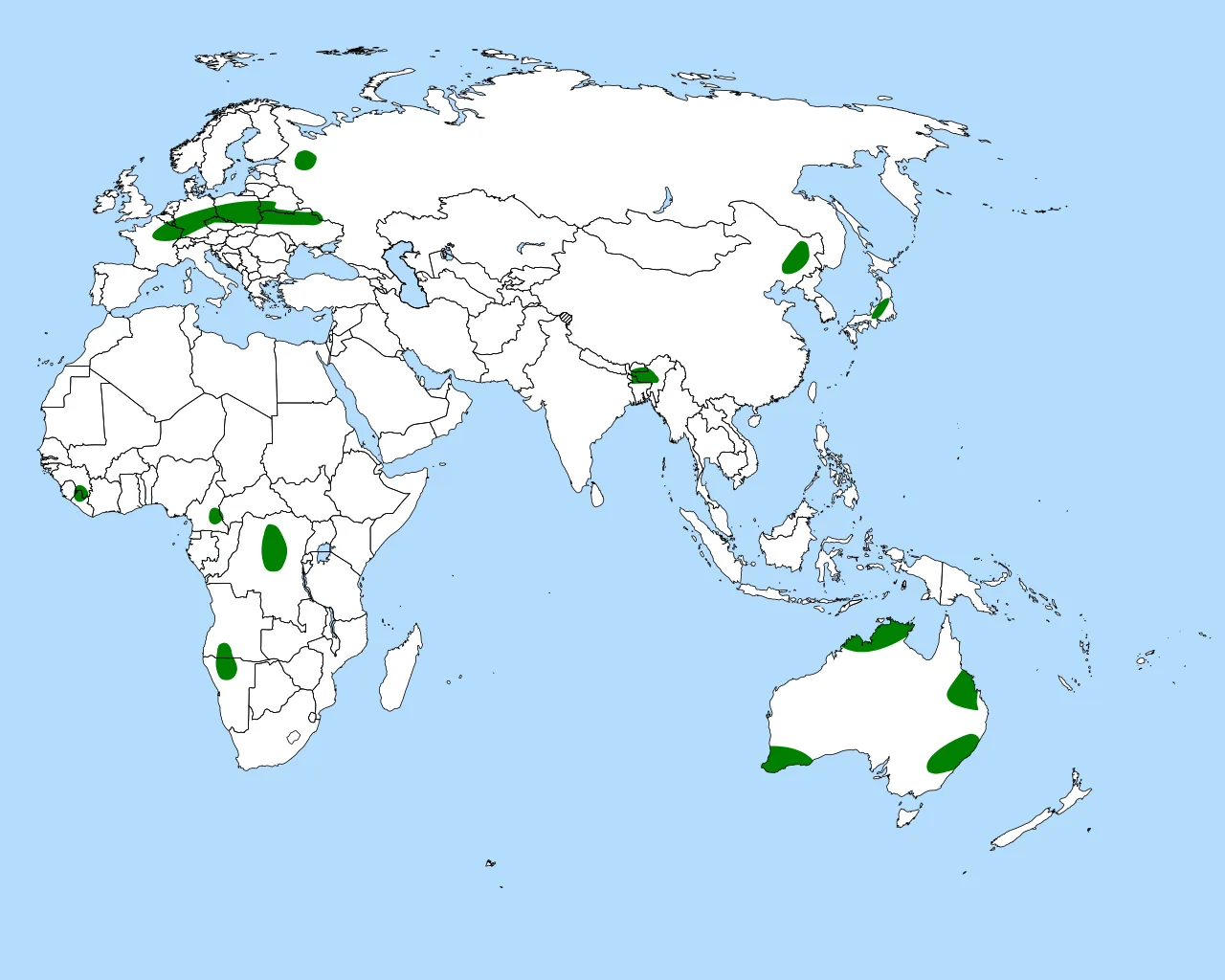
Aldrovanda distribution
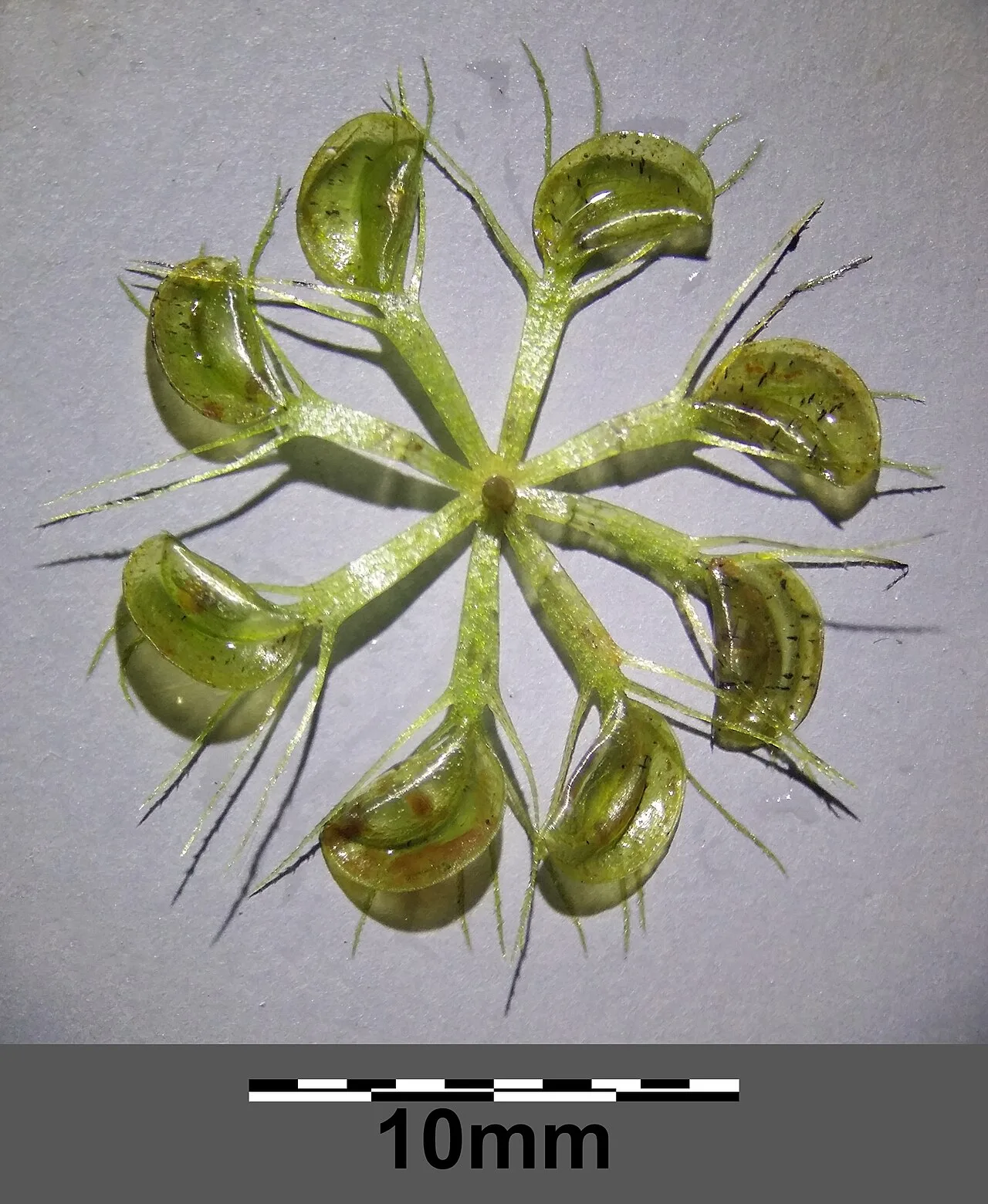
Traps of the water wheel plant
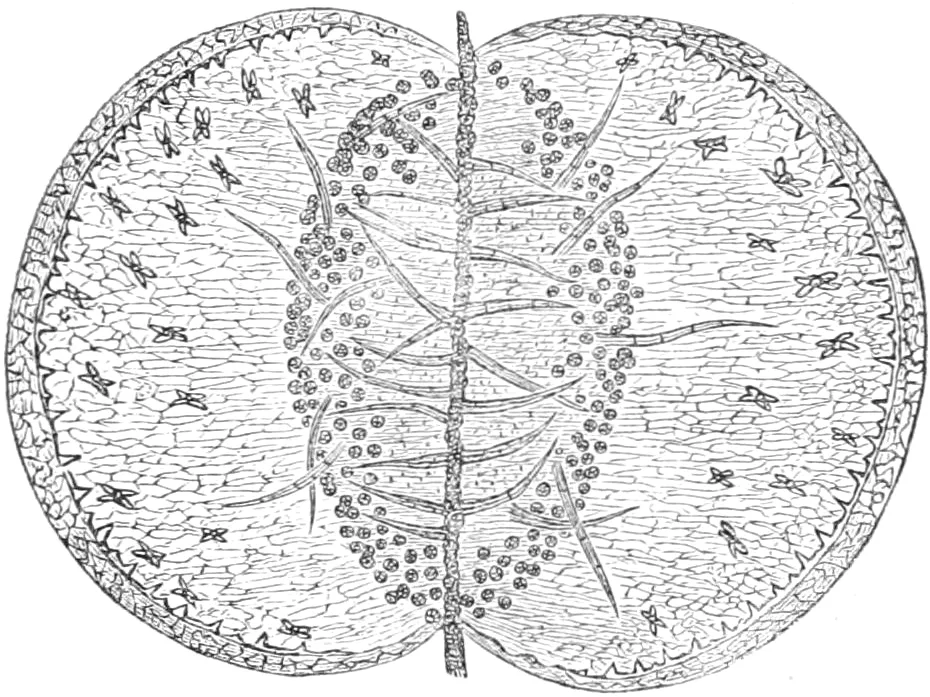
Aldrovanda vesiculosa leaf pressed flat open and greatly enlarged (Darwin 1896, fig 13 lower, p 323)
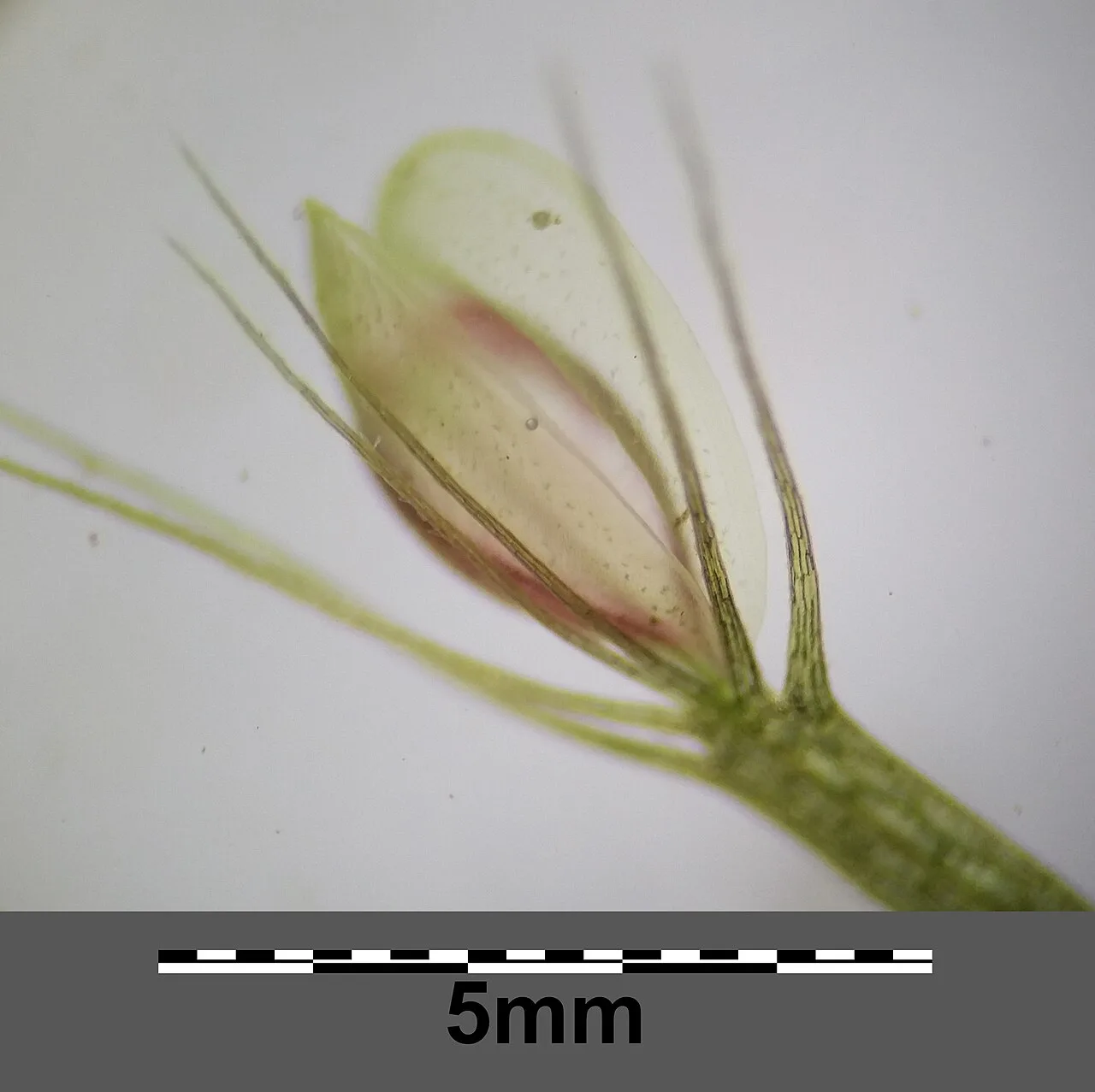
Aldrovanda vesiculosa sl37
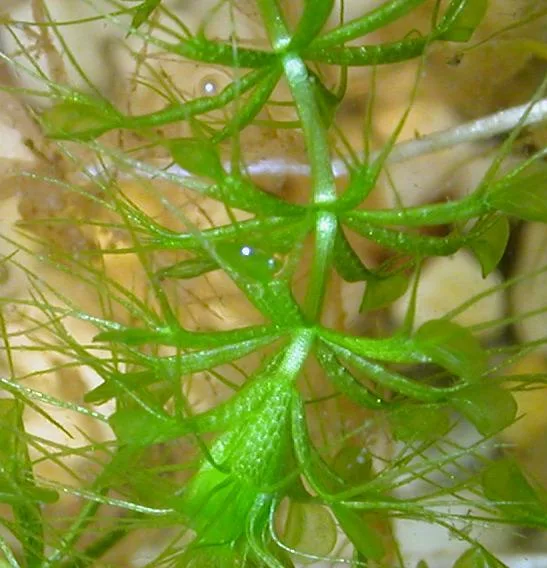
AldrovandaVesiculosaHabit (cropped)
Aldrovanda vesiculosa
Aldrovanda vesiculosa, known as the waterwheel plant, is a carnivorous flowering plant species capable of rapid movement to capture small aquatic invertebrates.
Closing in 10–20 Milliseconds
Aldrovanda vesiculosa's underwater traps snap shut in just 10–20 milliseconds, making it one of the fastest plant movements known. Each trap is lined with trigger hairs and guarded by four to six bristles that keep debris from setting it off. But this lightning-fast reflex only works in warm water—at least 20°C. The traps, twisted so their openings face outward, are smaller than a Venus flytrap's and sit entirely submerged.
From Wikipedia · CC BY-SA 4.0
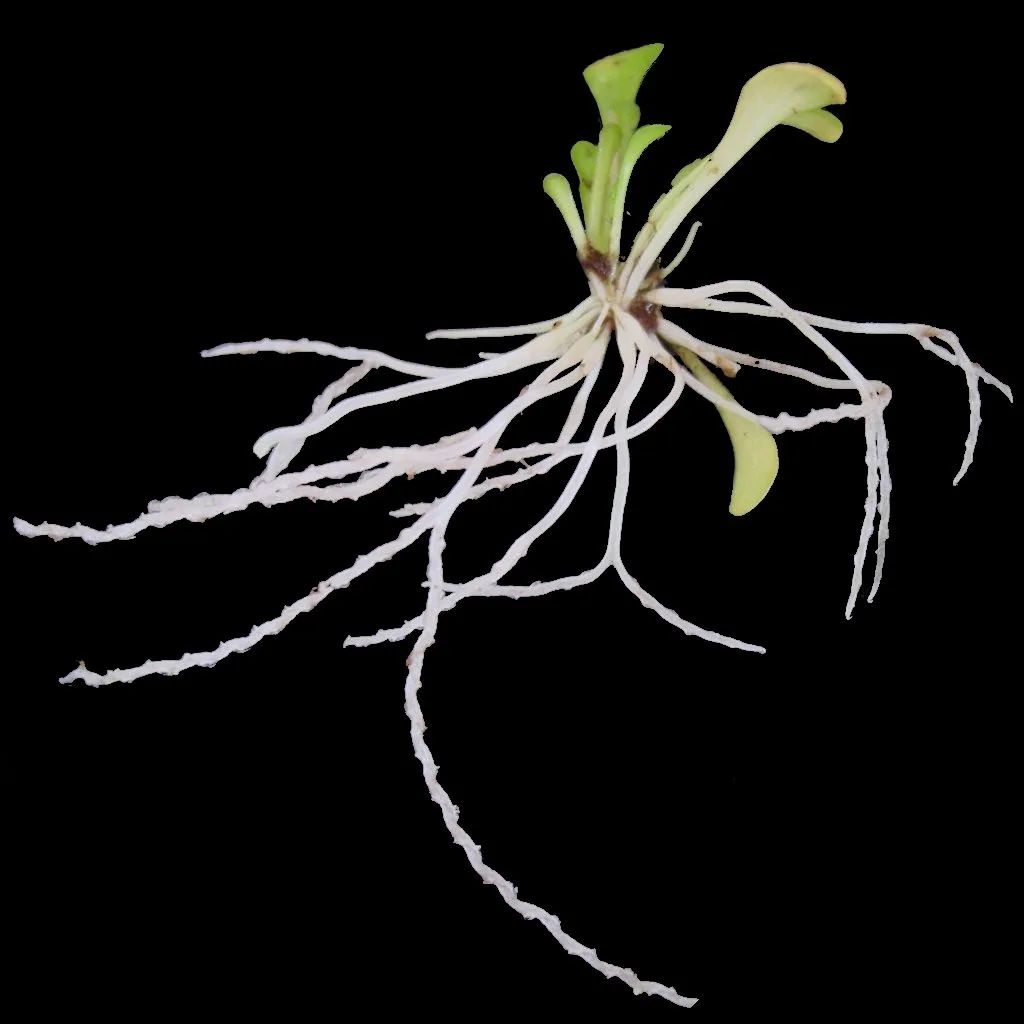
Genlisea violacea giant
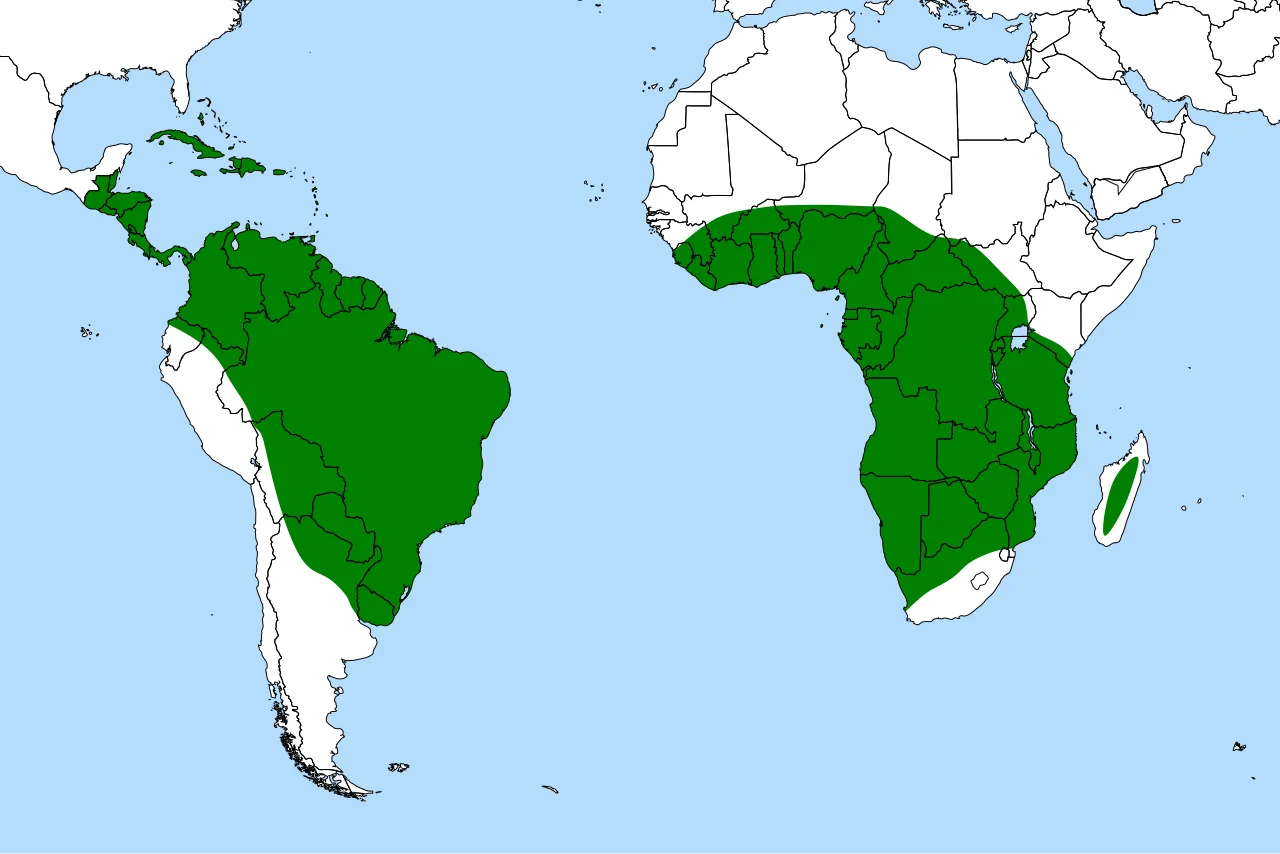
Genlisea distribution
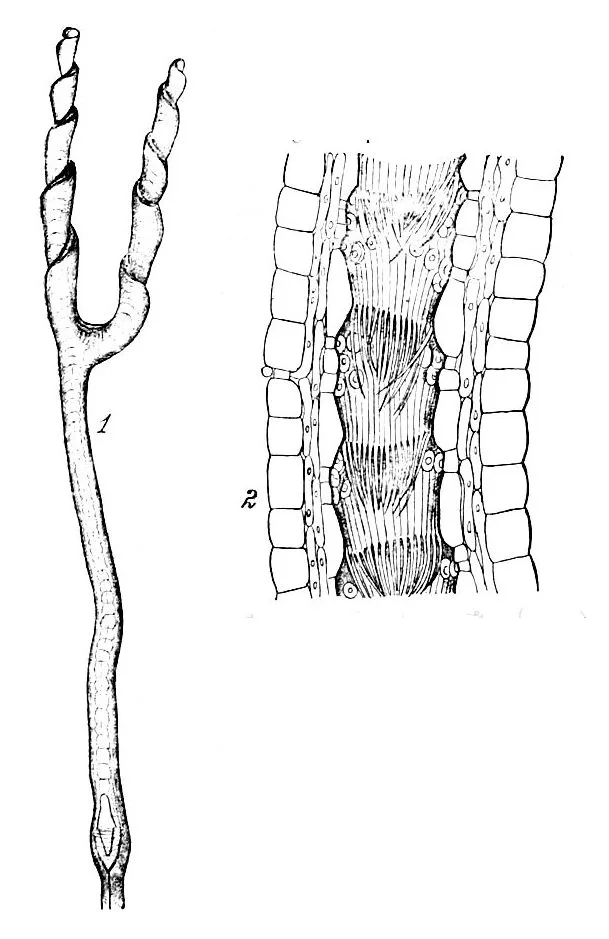
Plate from "Handbuch der Systematischen Botanik", 1. Spirally coiled tube-leaf of Genlisea aurea 2. Longitudinal section of tube, showing retrorse hairs
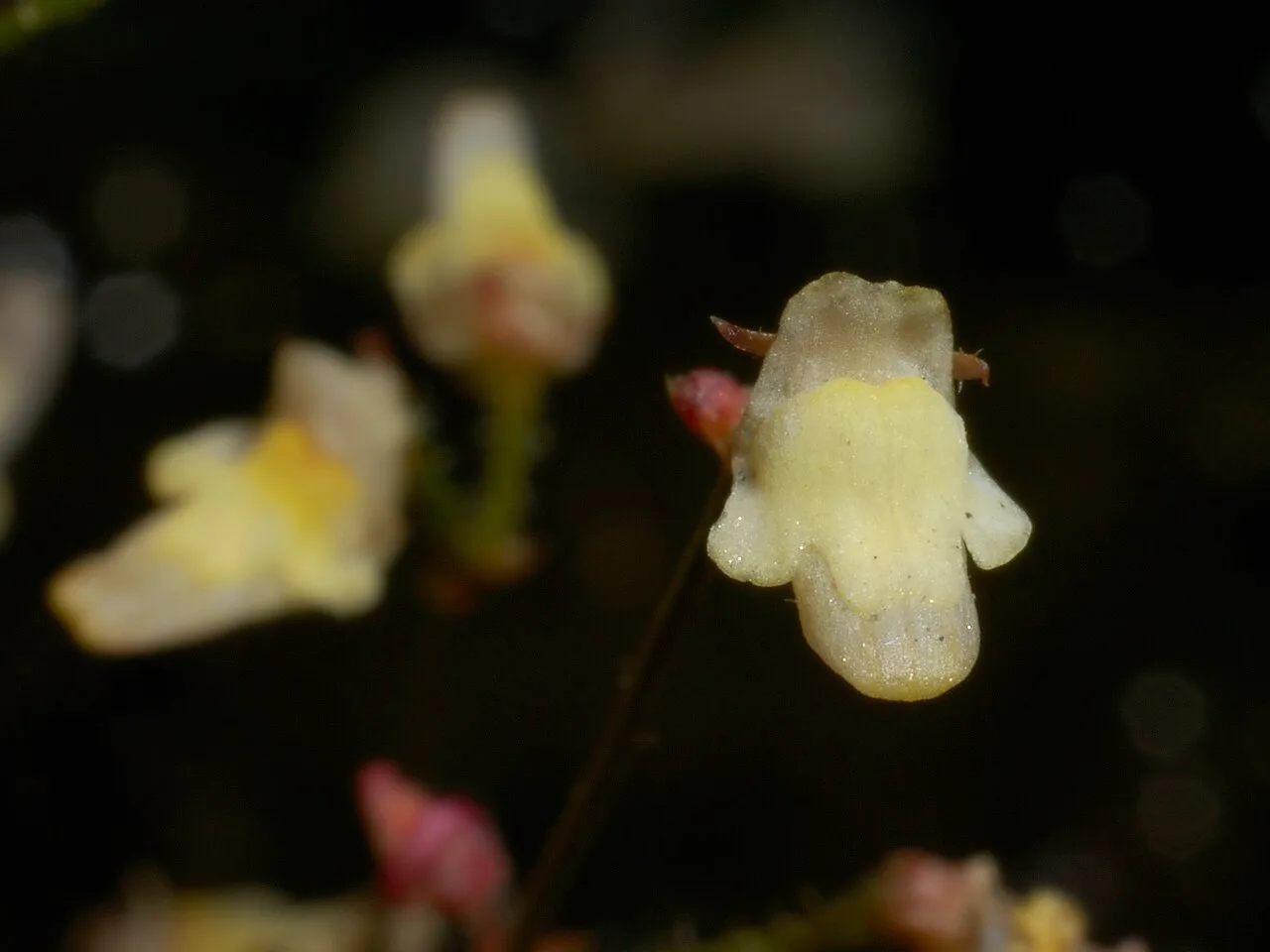
Genlisea filiformis flower 2 Darwiniana
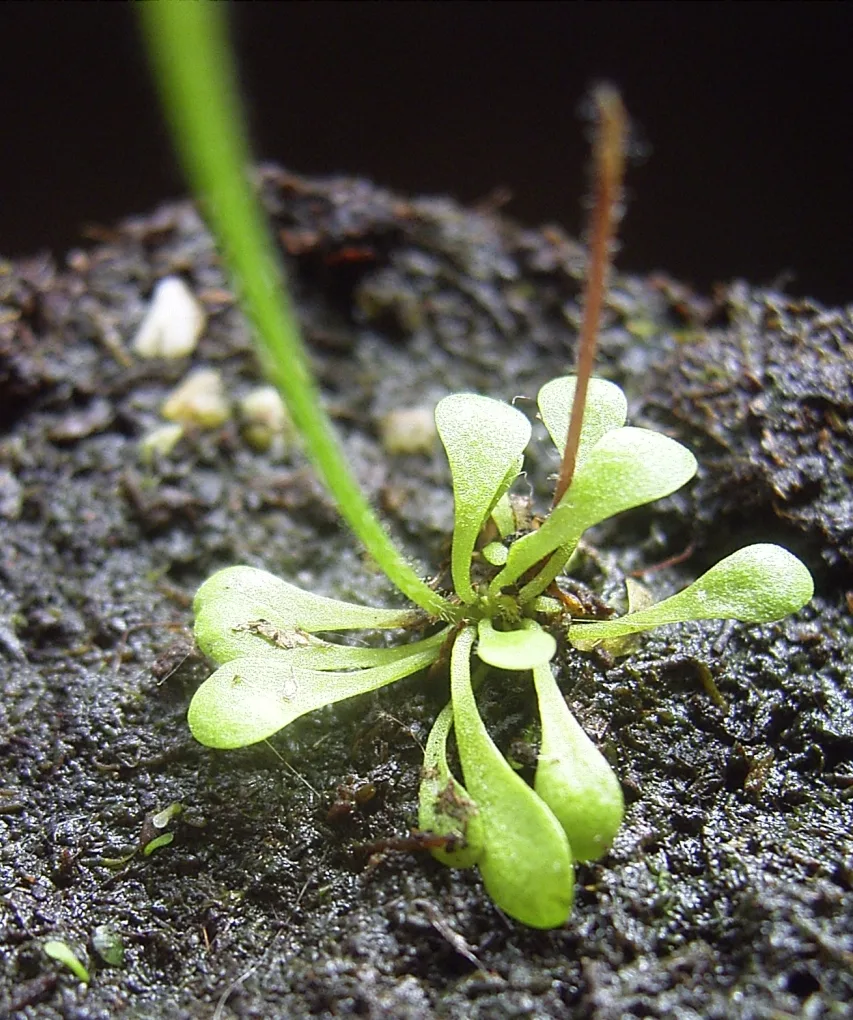
GenliseaLobata
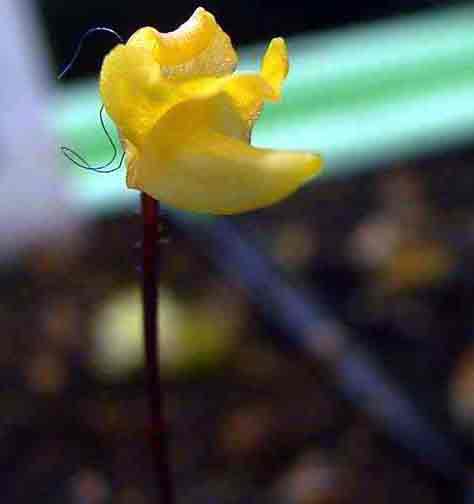
Genlisearepens1web
Genlisea
Genlisea, commonly known as corkscrew plants, is a genus of carnivorous plants that use modified underground leaves to trap minute microfauna.
Darwin's Century-Old Prediction
Darwin suspected these plants were carnivorous, but proof took a century. The underground traps are so unobtrusive that even after Darwin's suggestion, it wasn't until 1998 that carnivory was confirmed. This challenges the assumption that carnivorous plants are obvious—here, the action happens entirely below ground, targeting protozoans rather than insects.
From Wikipedia · CC BY-SA 4.0
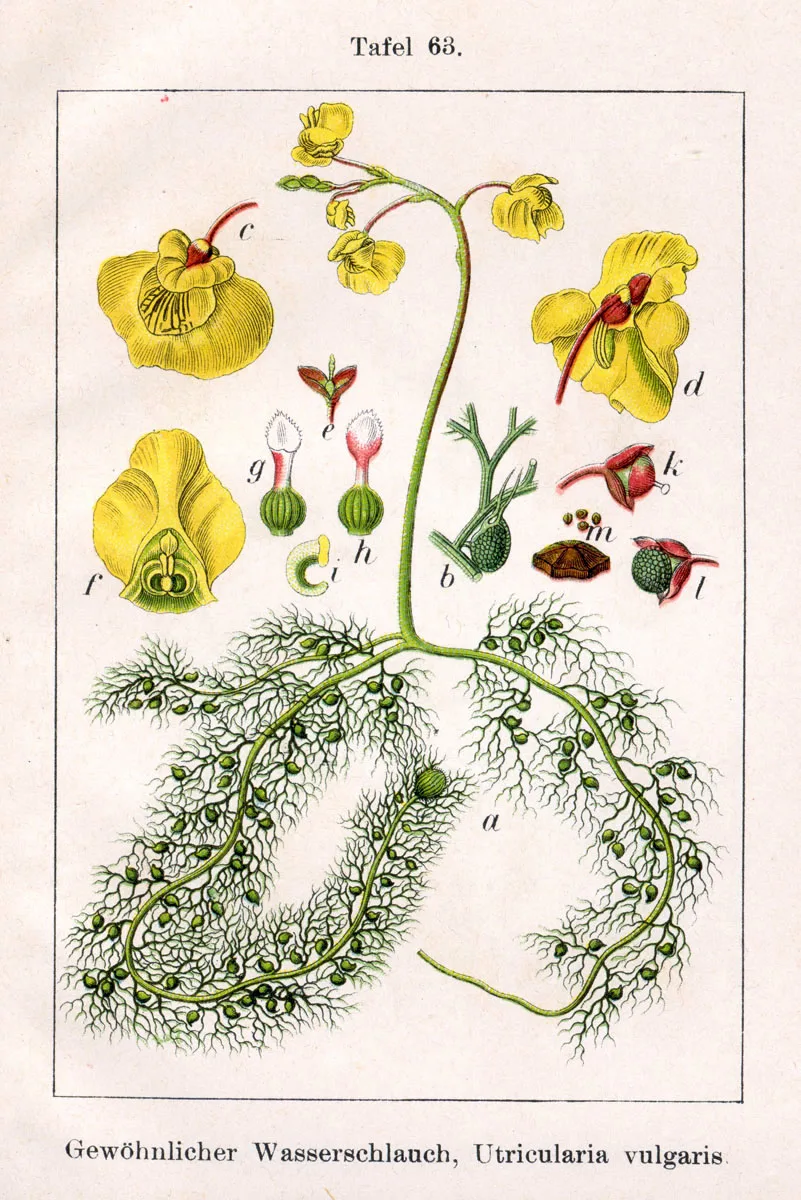
Utricularia vulgaris Sturm63
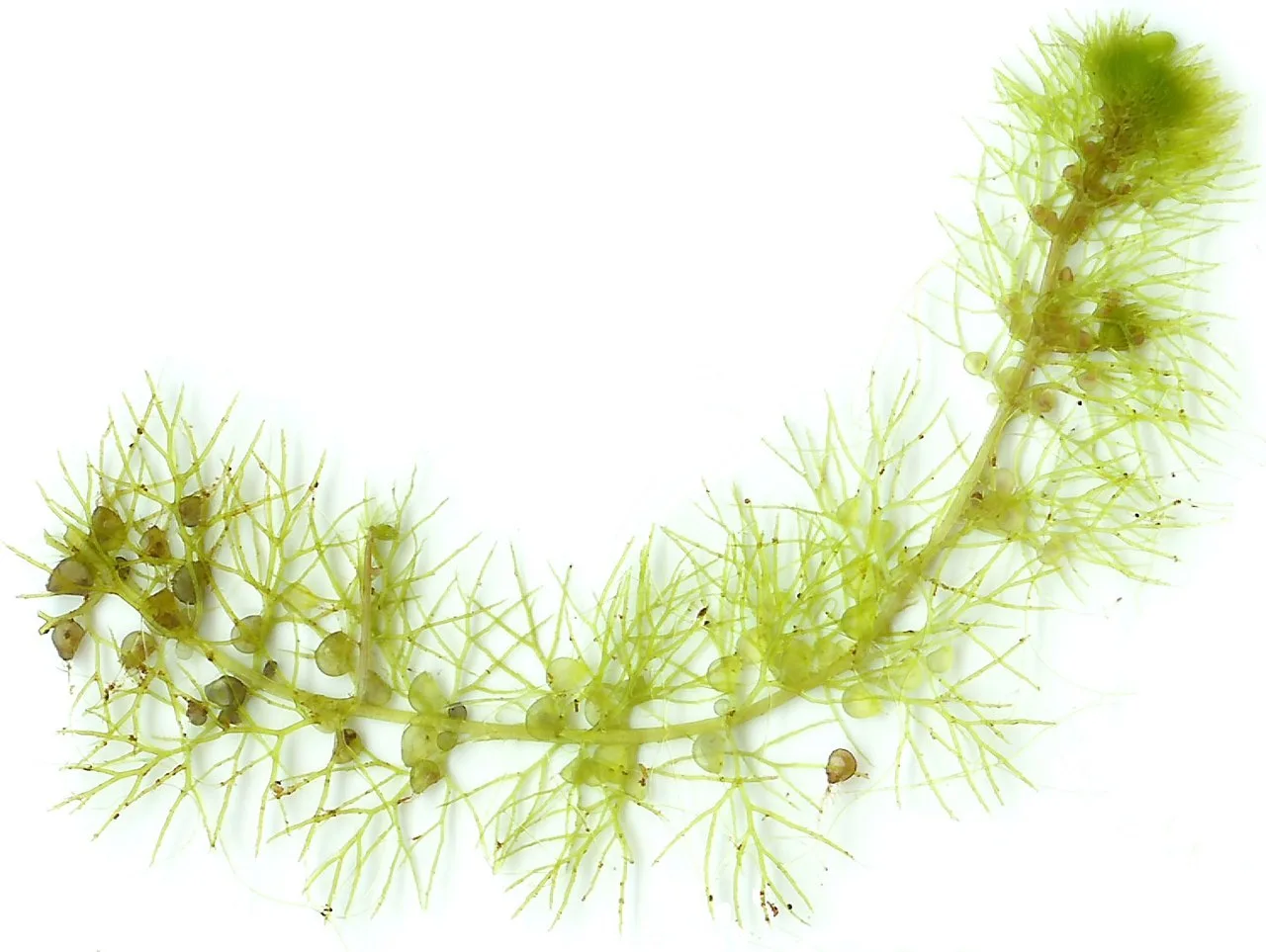
The tip of one stolon from a U.K. instance of U. vulgaris, showing stolon, branching leaf-shoots and transparent bladder traps
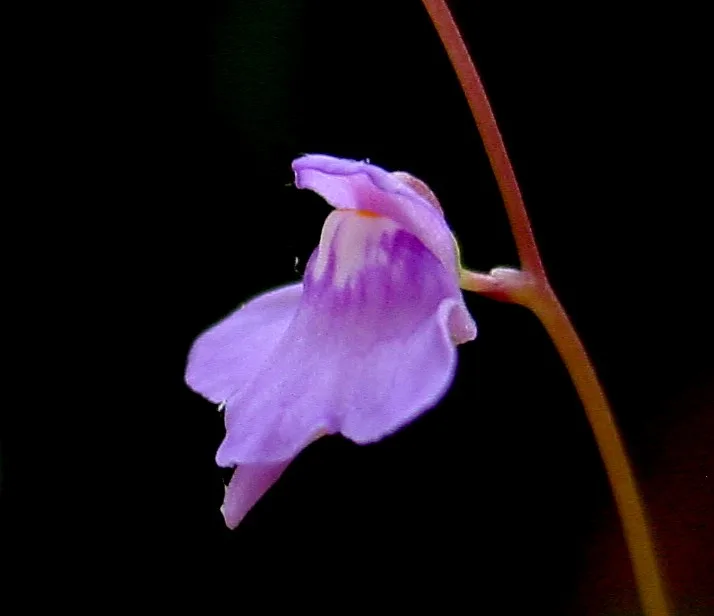
Utricularia amethystina flower
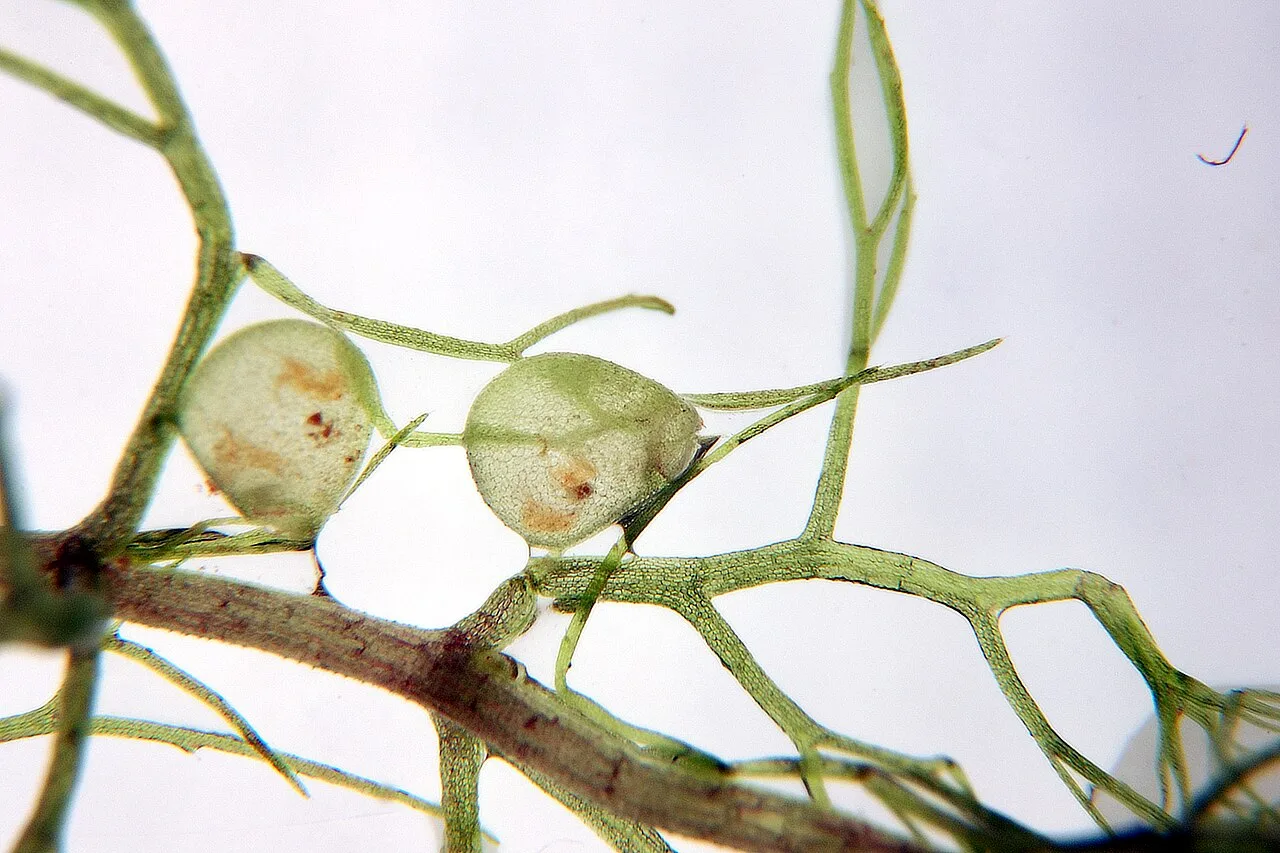
Traps of Utricularia aurea
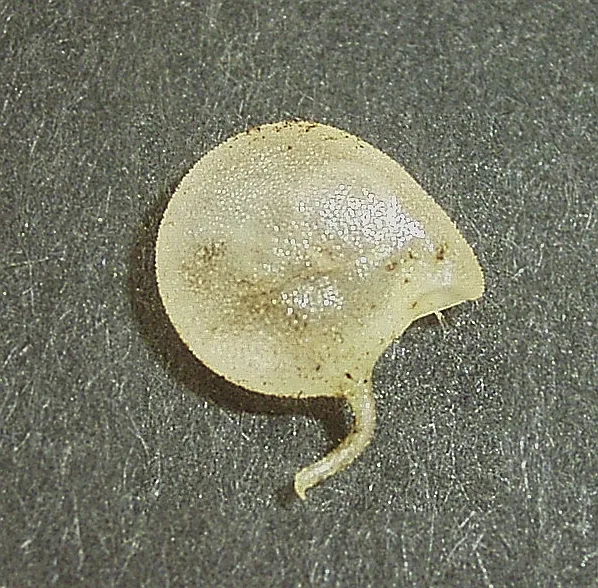
Trap of Utricularia hamiltonii
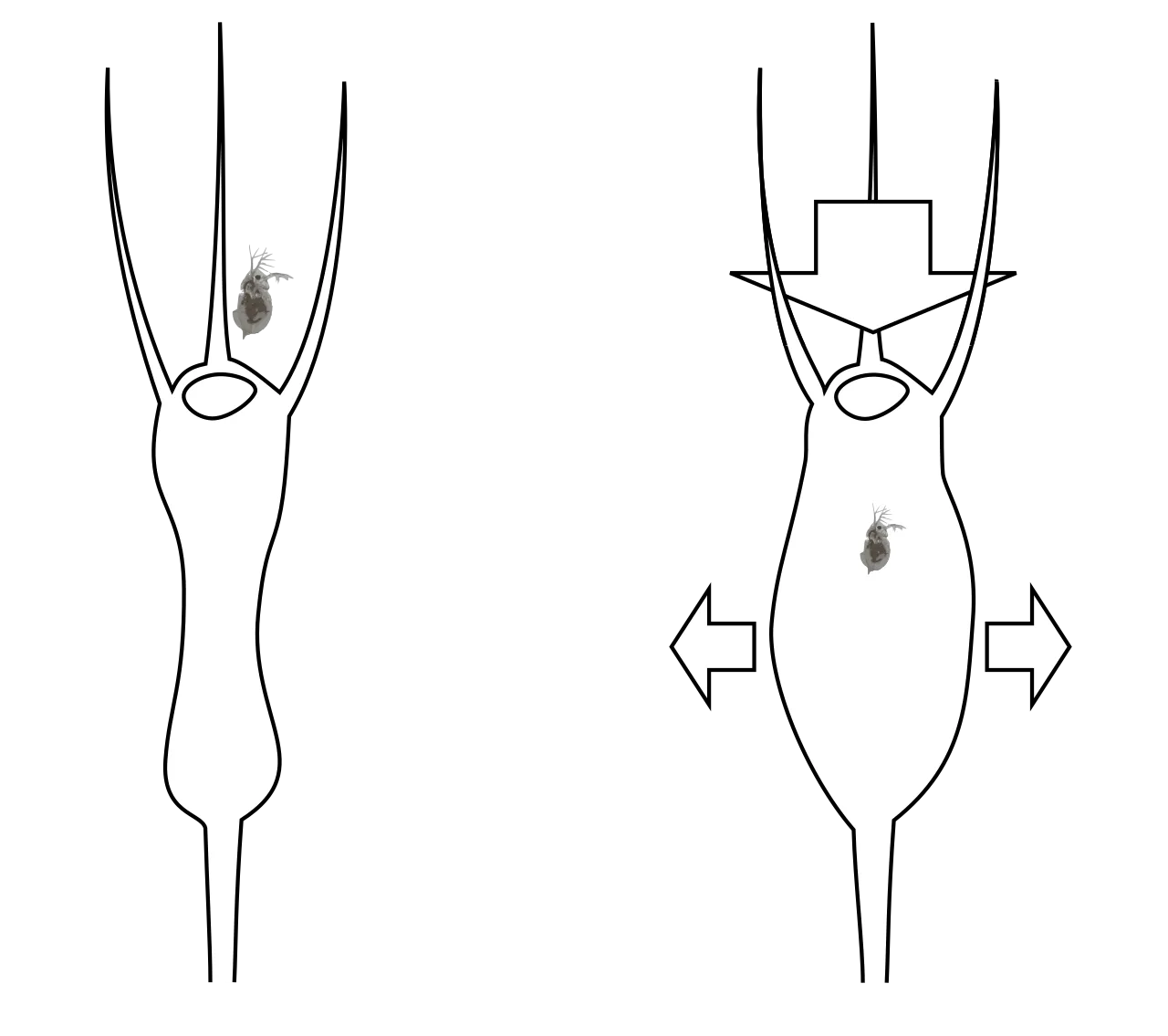
Bladderwort trap mechanism: seen from below, a bladder squeezed by water excretion suddenly swells as its trapdoor is released by an errant Daphnia. The bladder sucks in the nearby water, including the unfortunate animal which triggered the trap.
Utricularia
Utricularia, commonly called bladderworts, is a widespread genus of carnivorous plants found in freshwater and wet soil across every continent except Antarctica.
The 15-Millisecond Vacuum Snare
A bladder trap is a tiny vacuum bomb: set under negative pressure, it springs open when prey touches a lever hair, sucking in water and victim in ten to fifteen milliseconds. The mechanism is purely mechanical—no reaction from the plant is required, unlike the triggered hairs of Venus flytraps. The plant continuously pumps water out to store potential energy, and the slightest touch breaks the seal. The whole operation completes in as little as one-hundredth of a second.
From Wikipedia · CC BY-SA 4.0
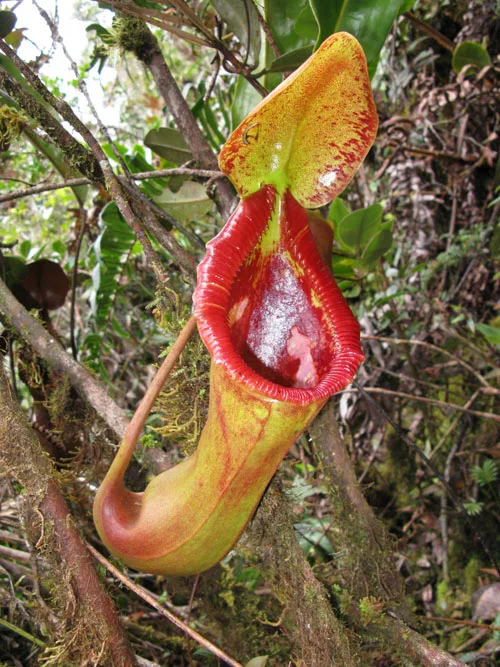
N.macrophylla x lowii
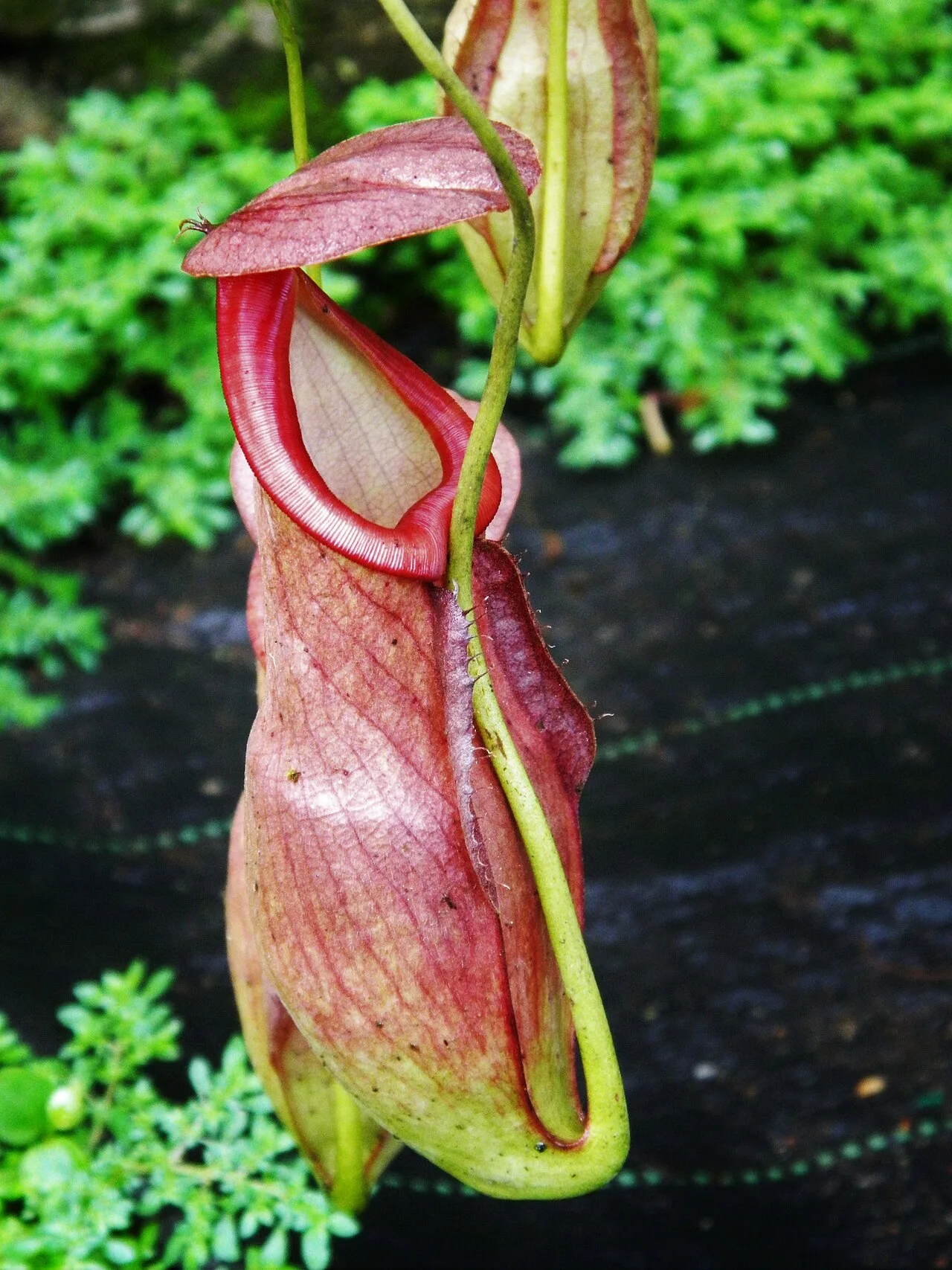
Nepenthes mirabilis at the Periyar Tiger Reserve, in Southern Western Ghats of India

Nepenthes from Carolus Linnaeus's Species Plantarum of 1753
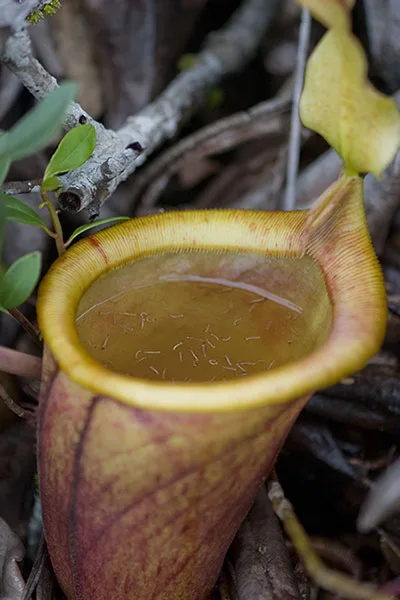
A lower pitcher of N. attenboroughii supporting a large population of mosquito larvae. The upright lid of this species exposes its pitchers to the elements such that they are often completely filled with fluid.[34]
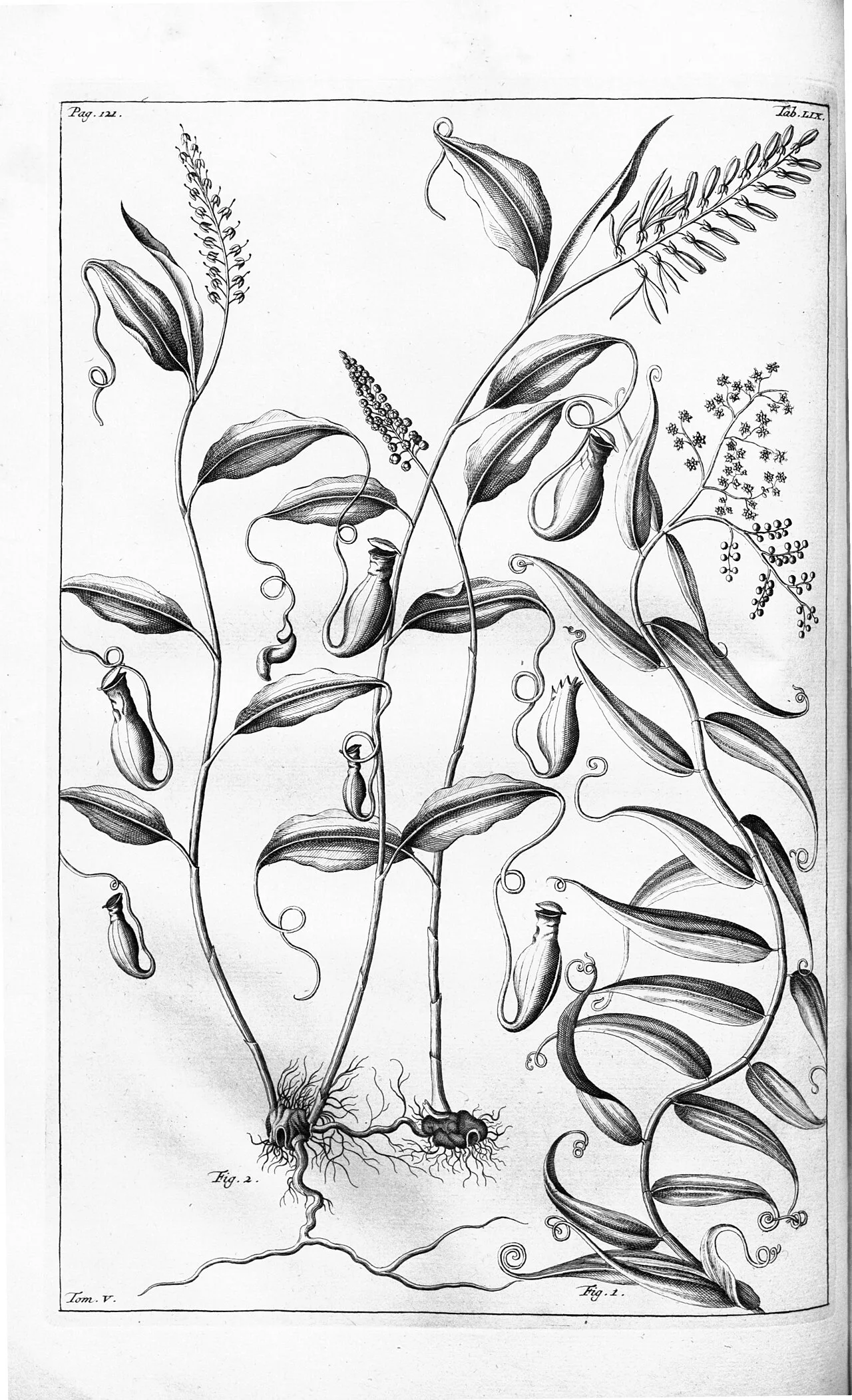
Cantharifera as illustrated in Rumphius's Herbarium Amboinensis, Volume 5, published in 1747, although probably drawn in the late 17th century. The vine on the right is not a Nepenthes, but a species of Flagellaria.
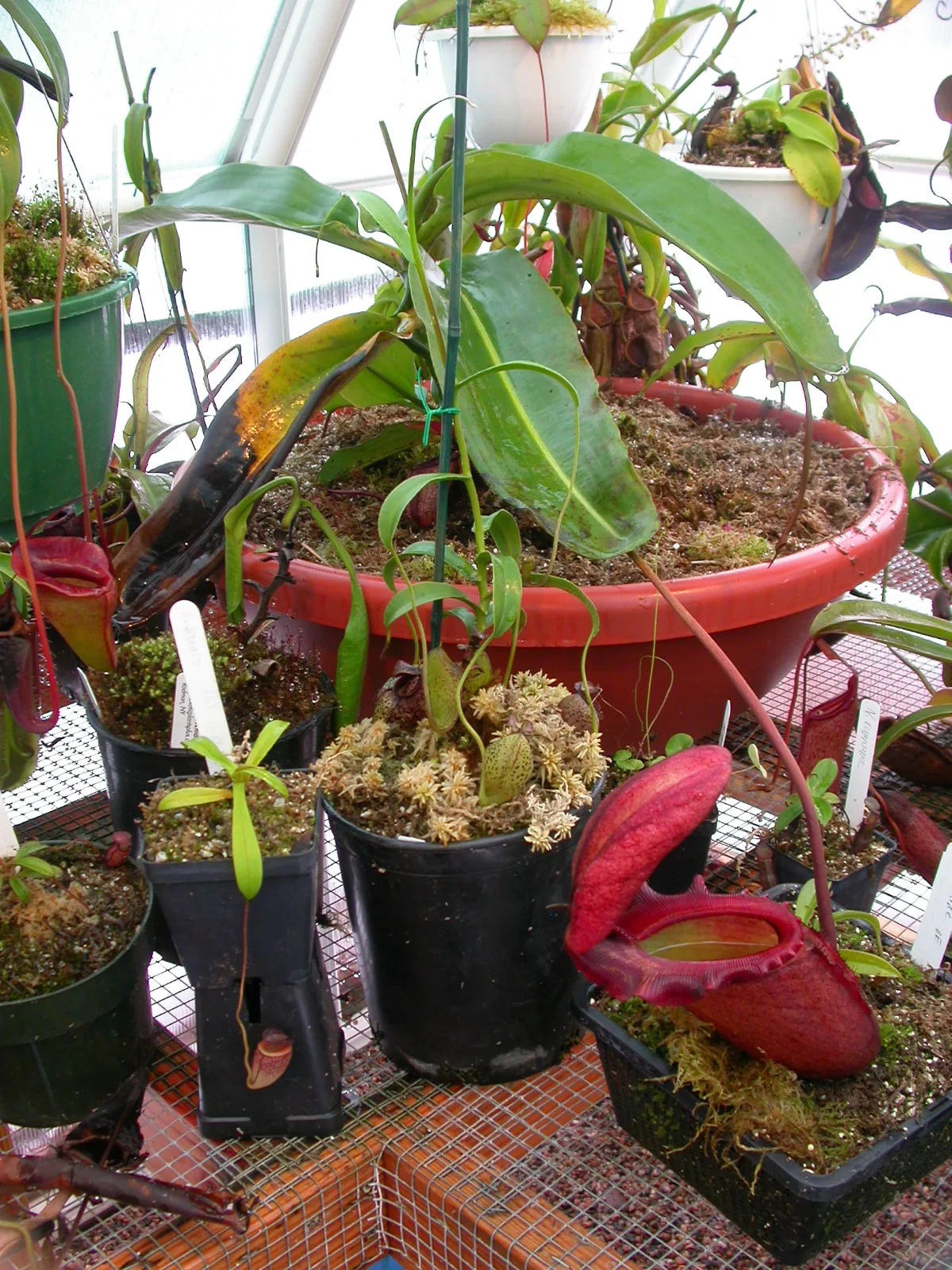
Cultivated Nepenthes rajah, Nepenthes aristolochioides and other species
Nepenthes
Nepenthes, also known as tropical pitcher plants or monkey cups, is a genus of carnivorous plants native mostly to the Old World tropics.
The Griefless Drug That Became a Plant
Linnaeus named the genus Nepenthes—'without grief'—after a mythical drug that erased sorrow. He described the type species N. distillatoria, known locally as bāndurā, from Sri Lanka. The name thus yoked an ancient potion to a real plant, a botanical gesture toward forgetfulness. The plant's carnivorous nature was secondary to this poetic association.
From Wikipedia · CC BY-SA 4.0
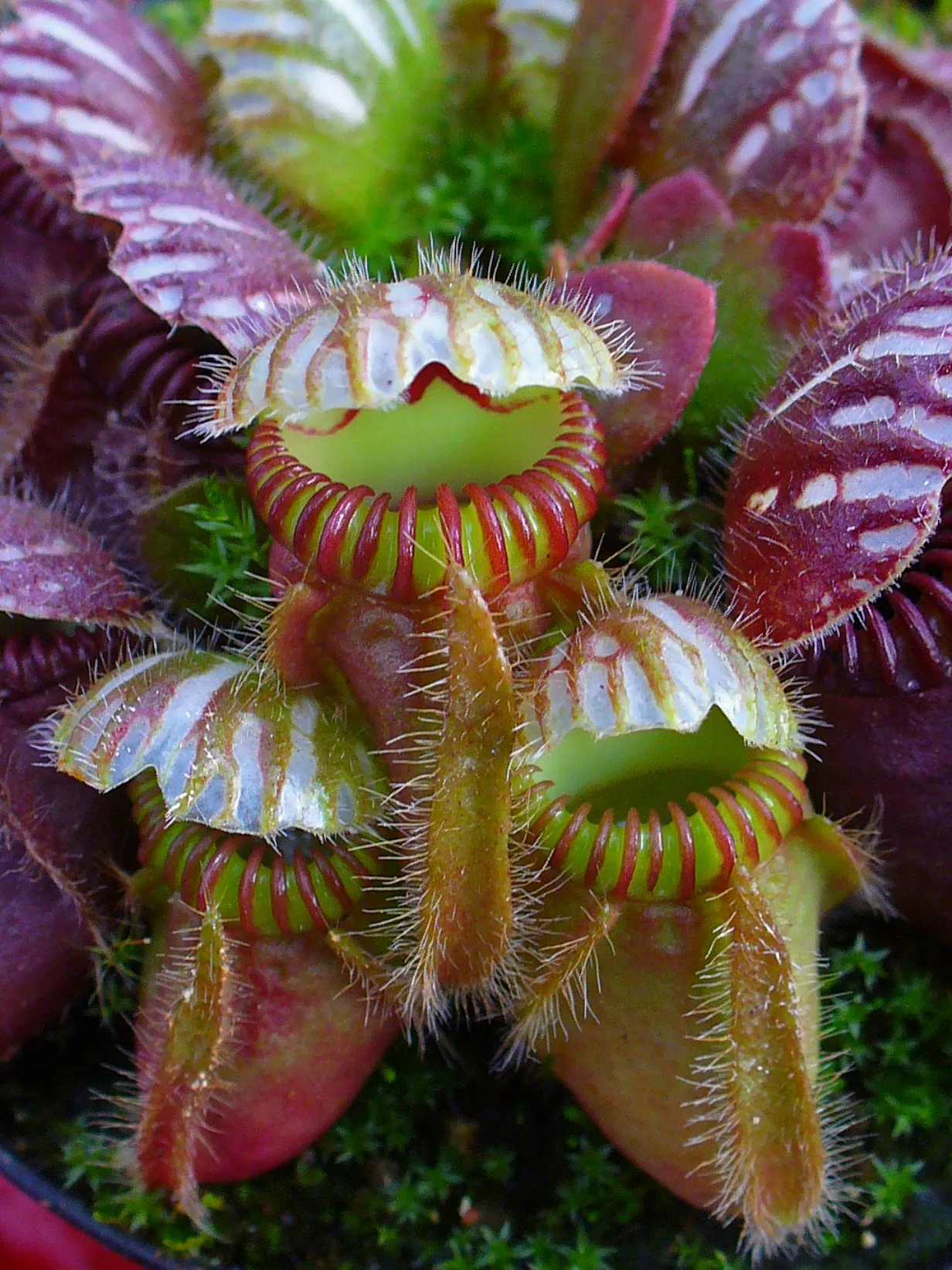
Cephalotus follicularis 0001
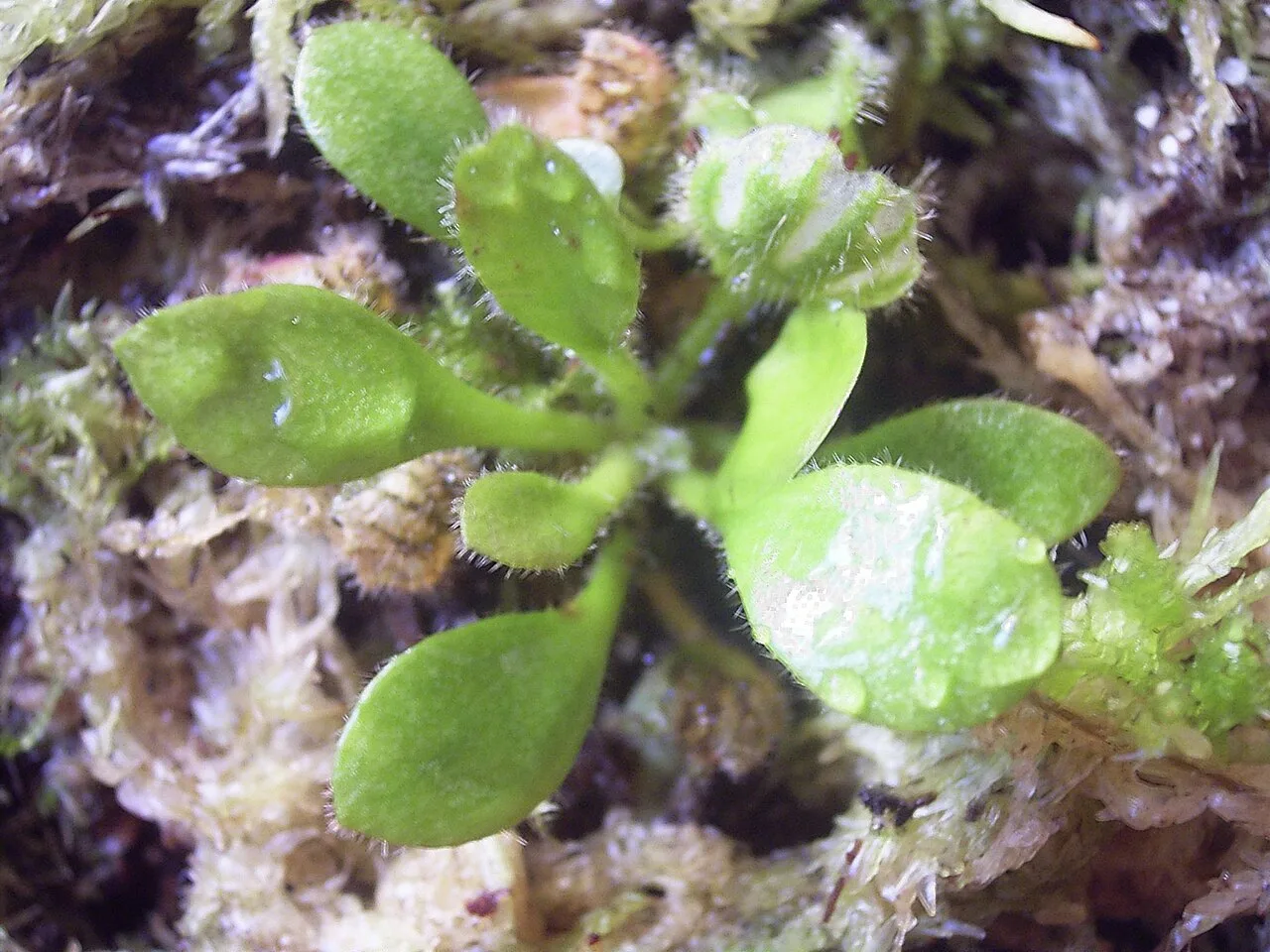
Simple leaves
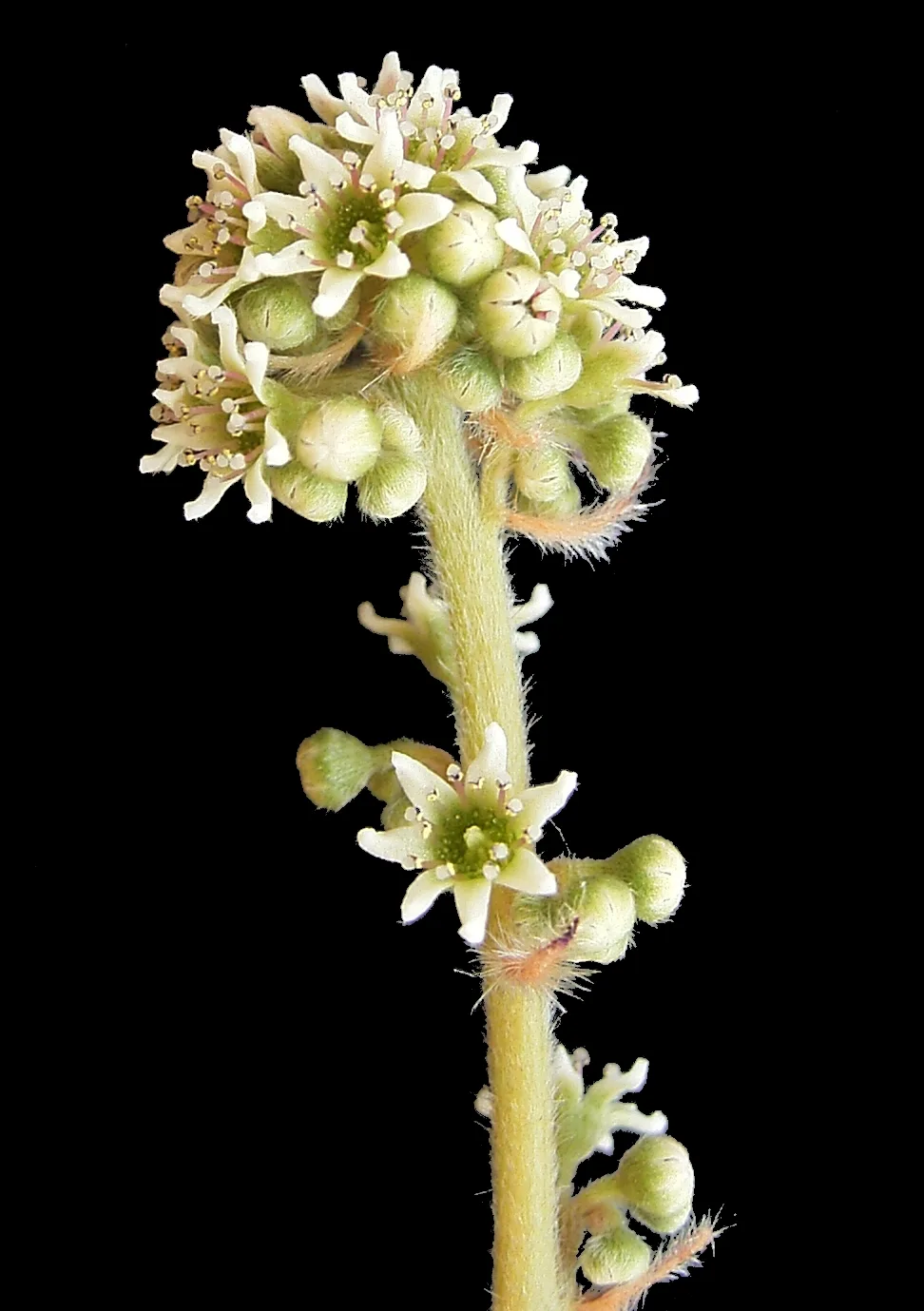
Inflorescence of an Australian pitcher plant
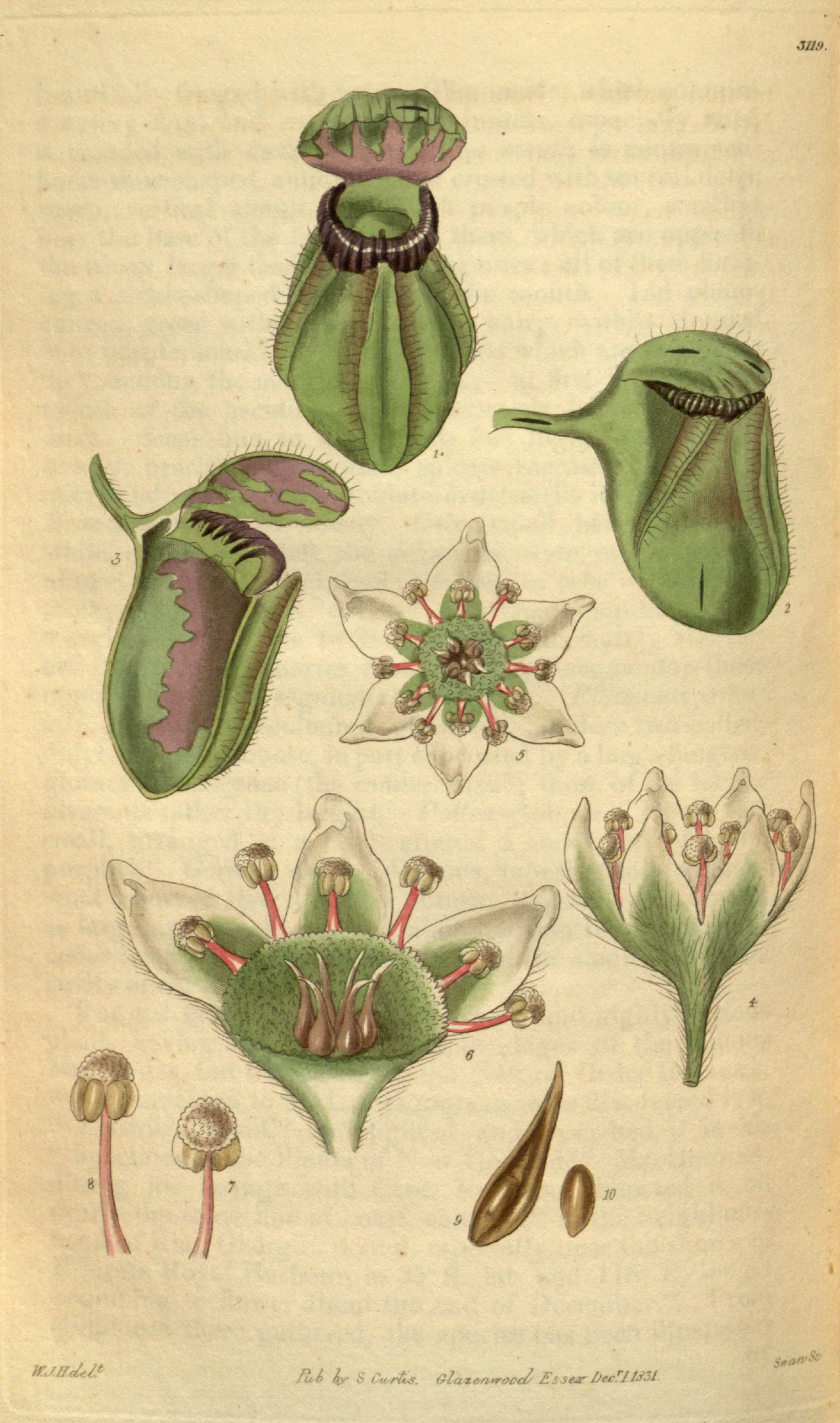
Plate 3119, Curtis's Botanical Magazine, details by Ferdinand Bauer
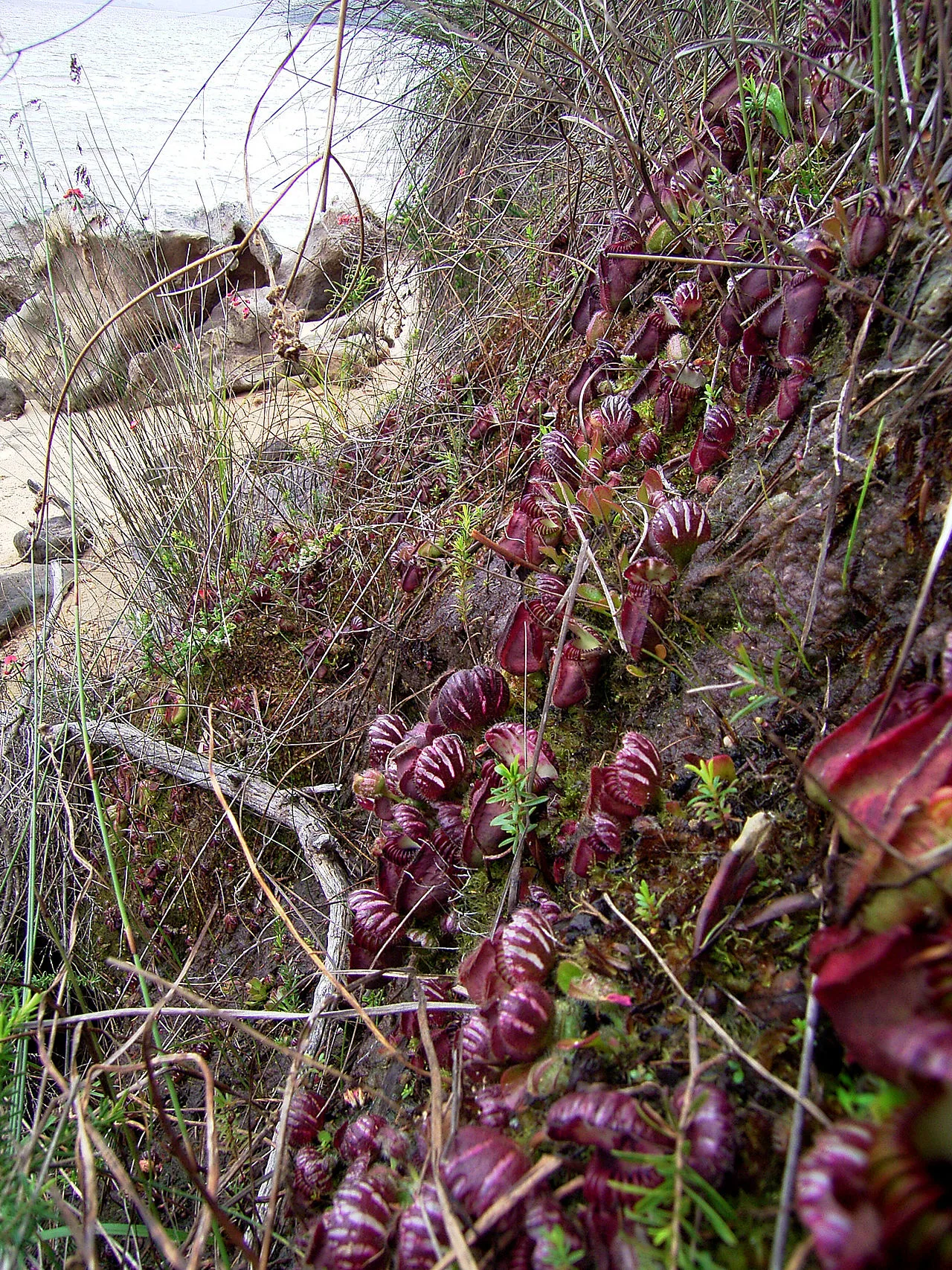
Australian pitcher plant in situ
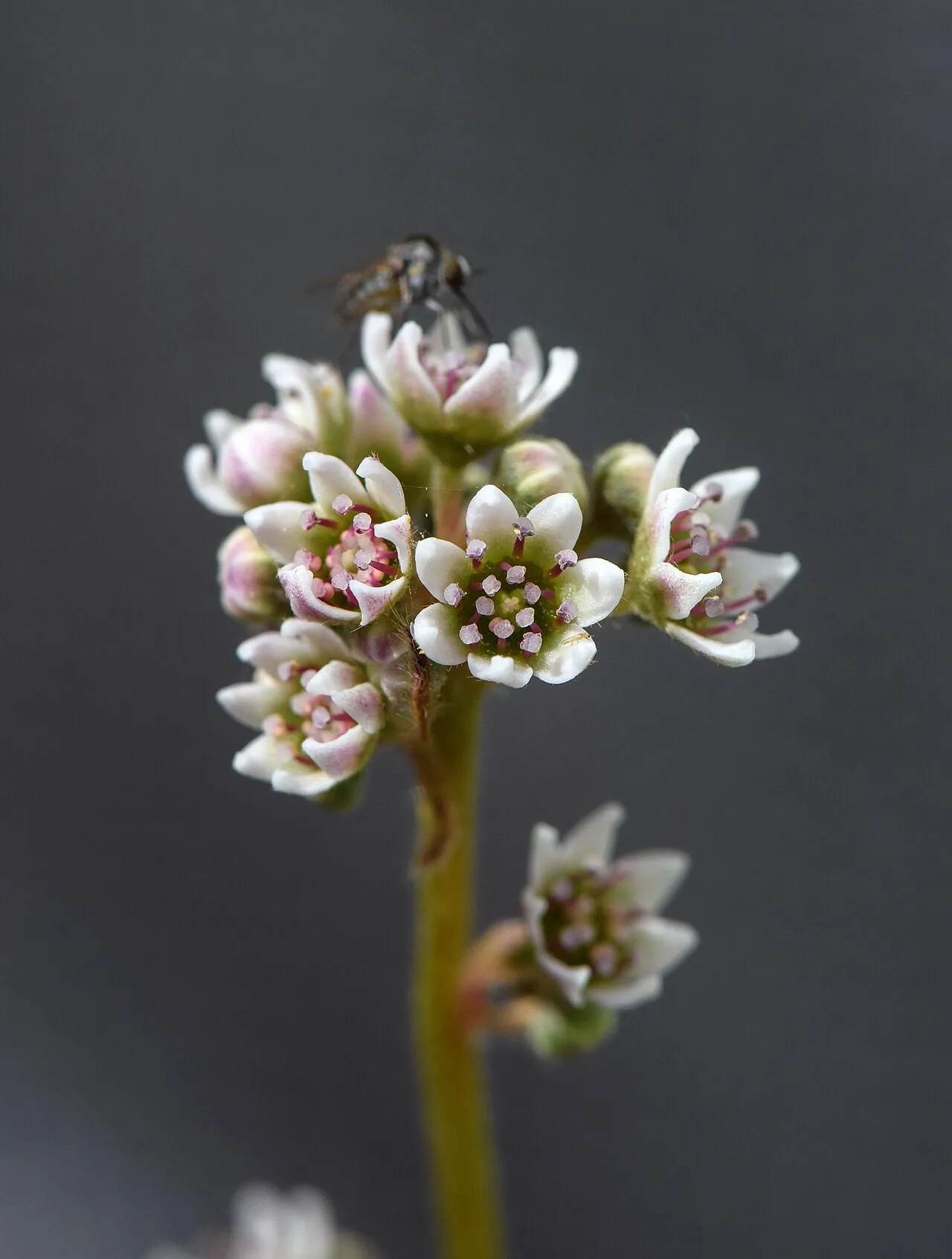
Inflorescence of Cephalotus follicularis in cultivation.
Cephalotus follicularis
Cephalotus is a genus containing a single species of small carnivorous pitcher plant, Cephalotus follicularis, endemic to southwestern Western Australia.
An apple that eats flies
Despite its common name, the Albany pitcher plant is not closely related to other pitcher plants. It is an advanced rosid, making it a closer cousin to apple trees and oaks than to Nepenthes or Sarracenia. This stark evolutionary distance means its carnivorous habit is an independent invention, not something inherited from a shared pitcher-plant ancestor.
From Wikipedia · CC BY-SA 4.0
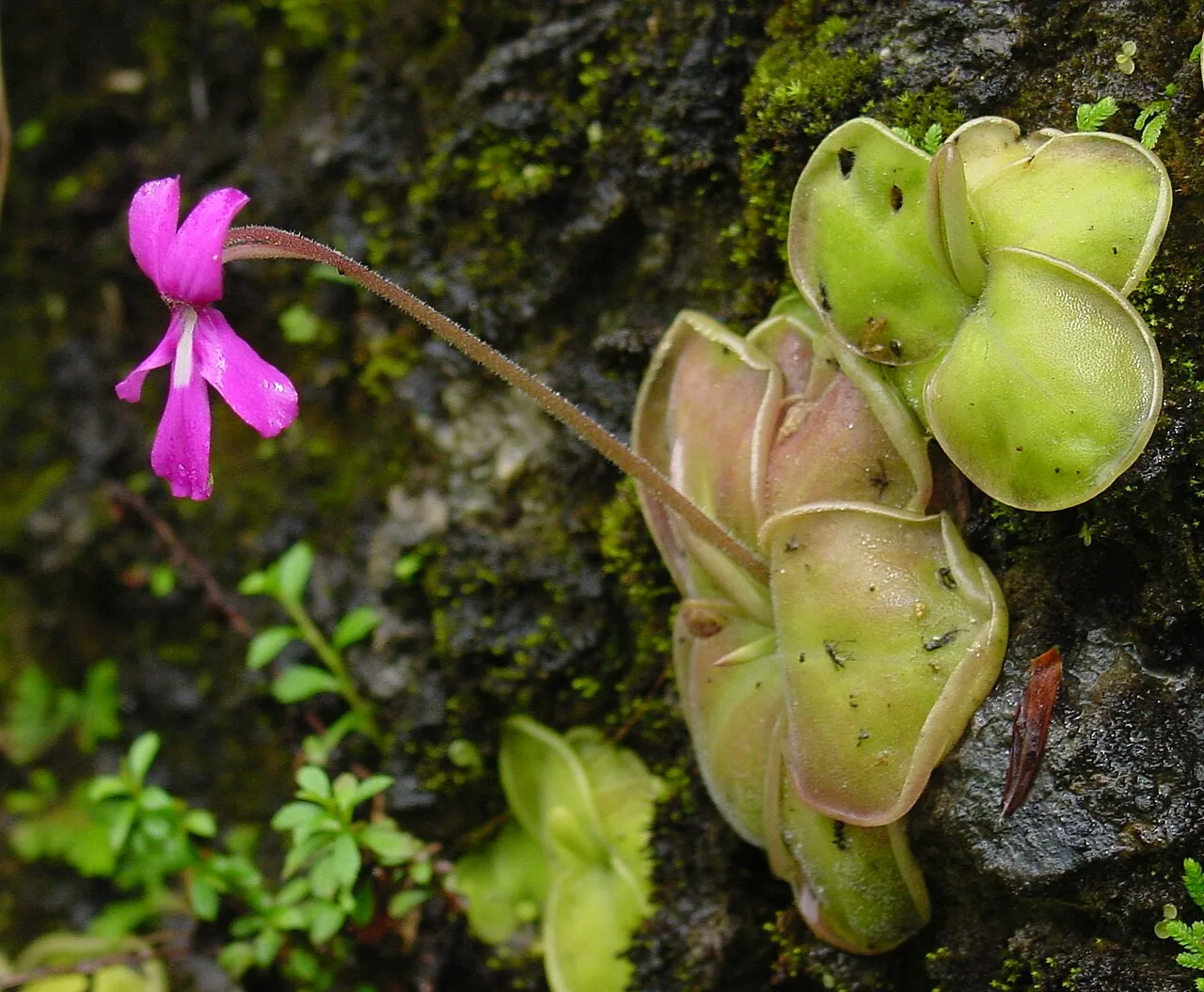
Pinguicula moranensis
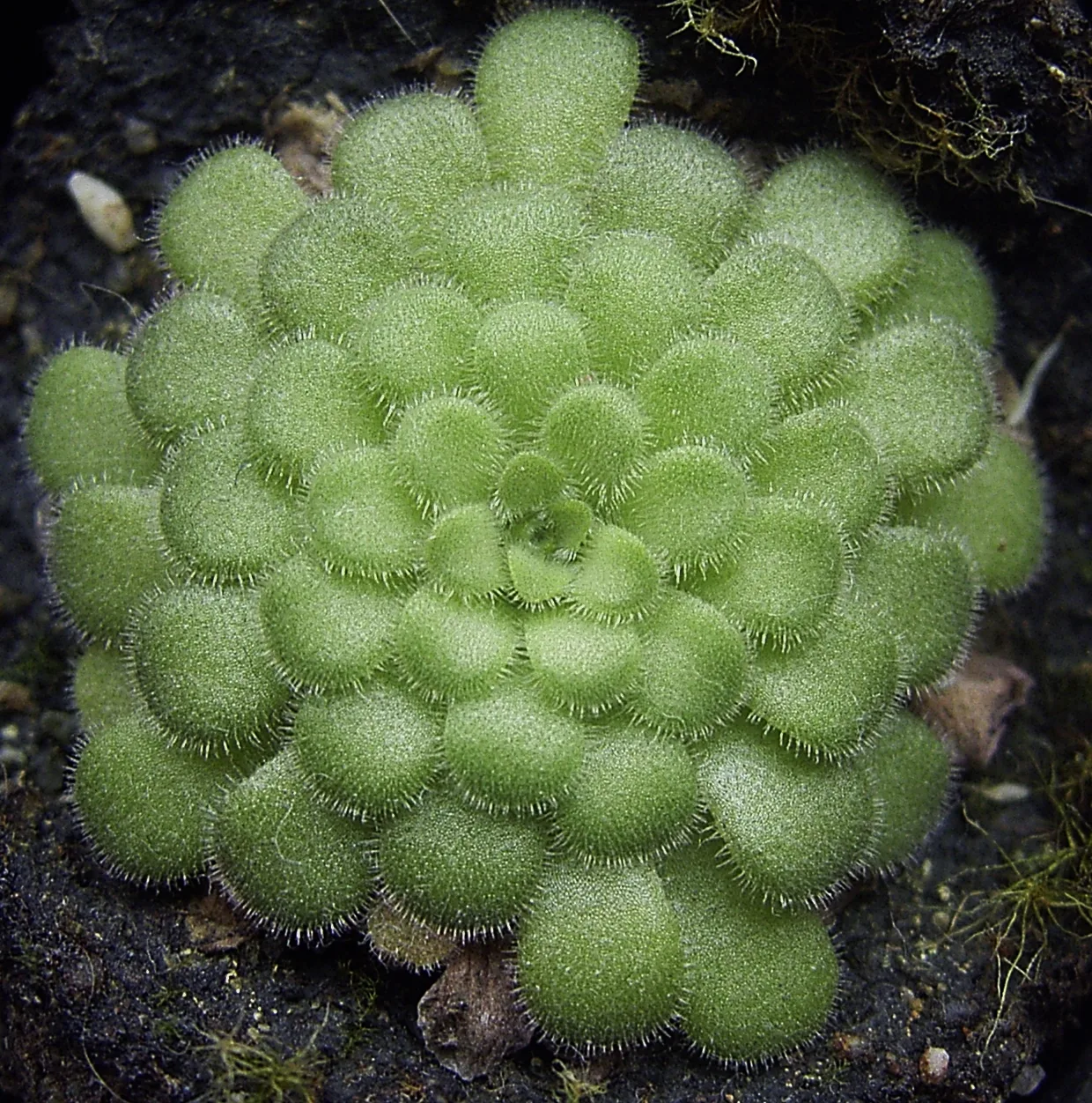
Winter rosette of Pinguicula cyclosecta (non-carnivorous phase)
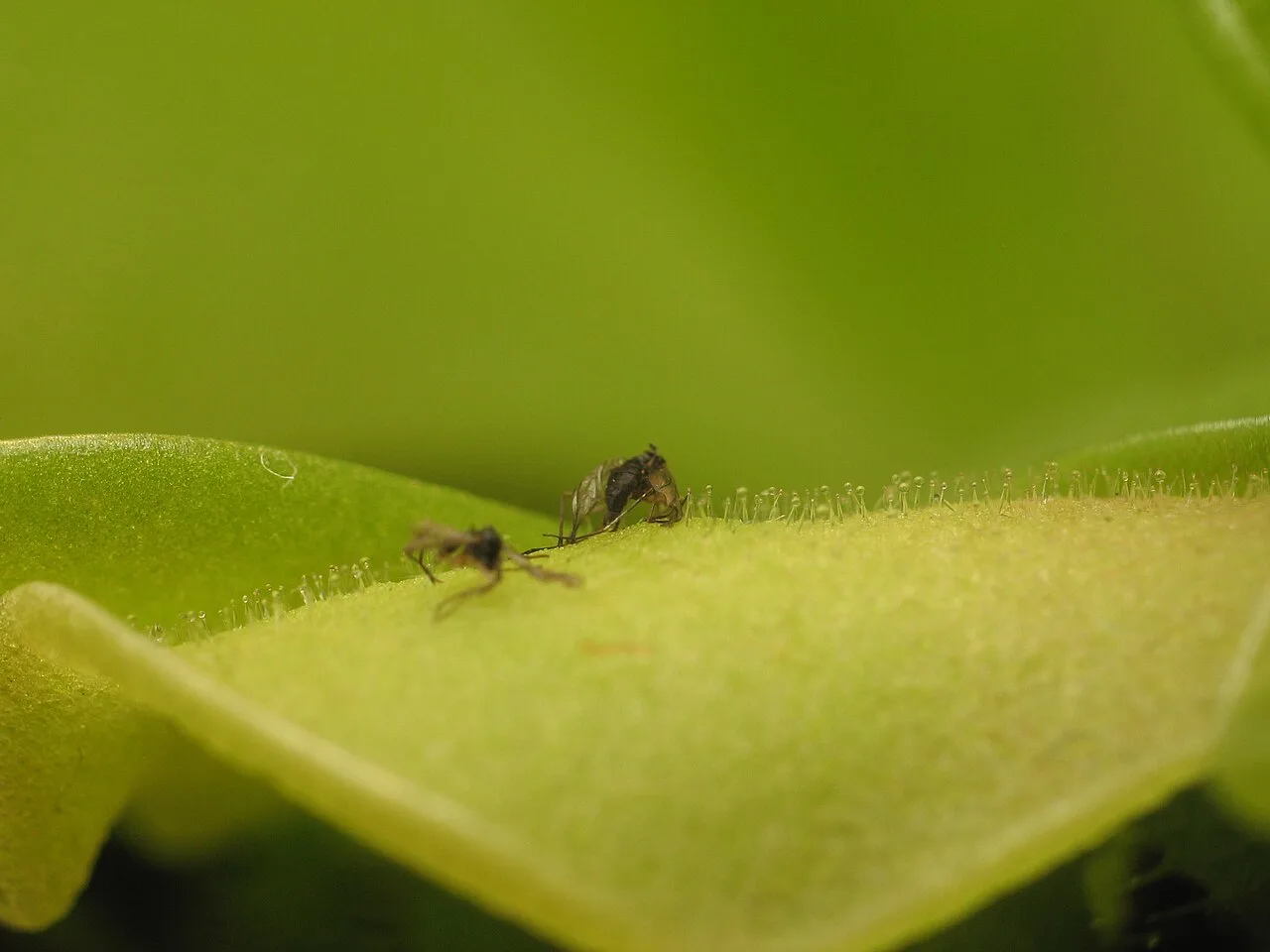
A fly trapped on a butterwort leaf. Glandular hairs are visible.
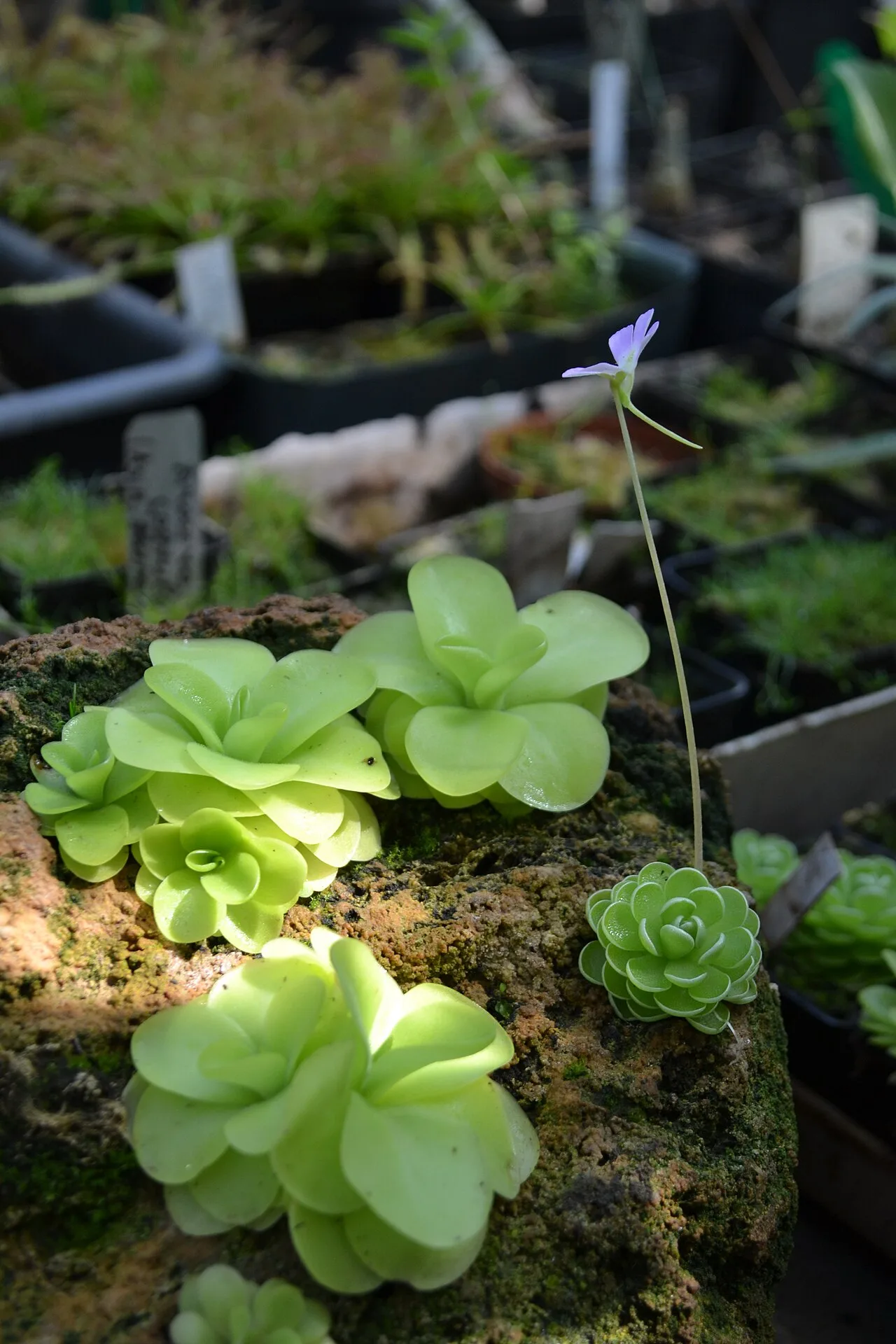
Pinguicula esseriana in the greenhouse of the Kharkiv Botanical Garden
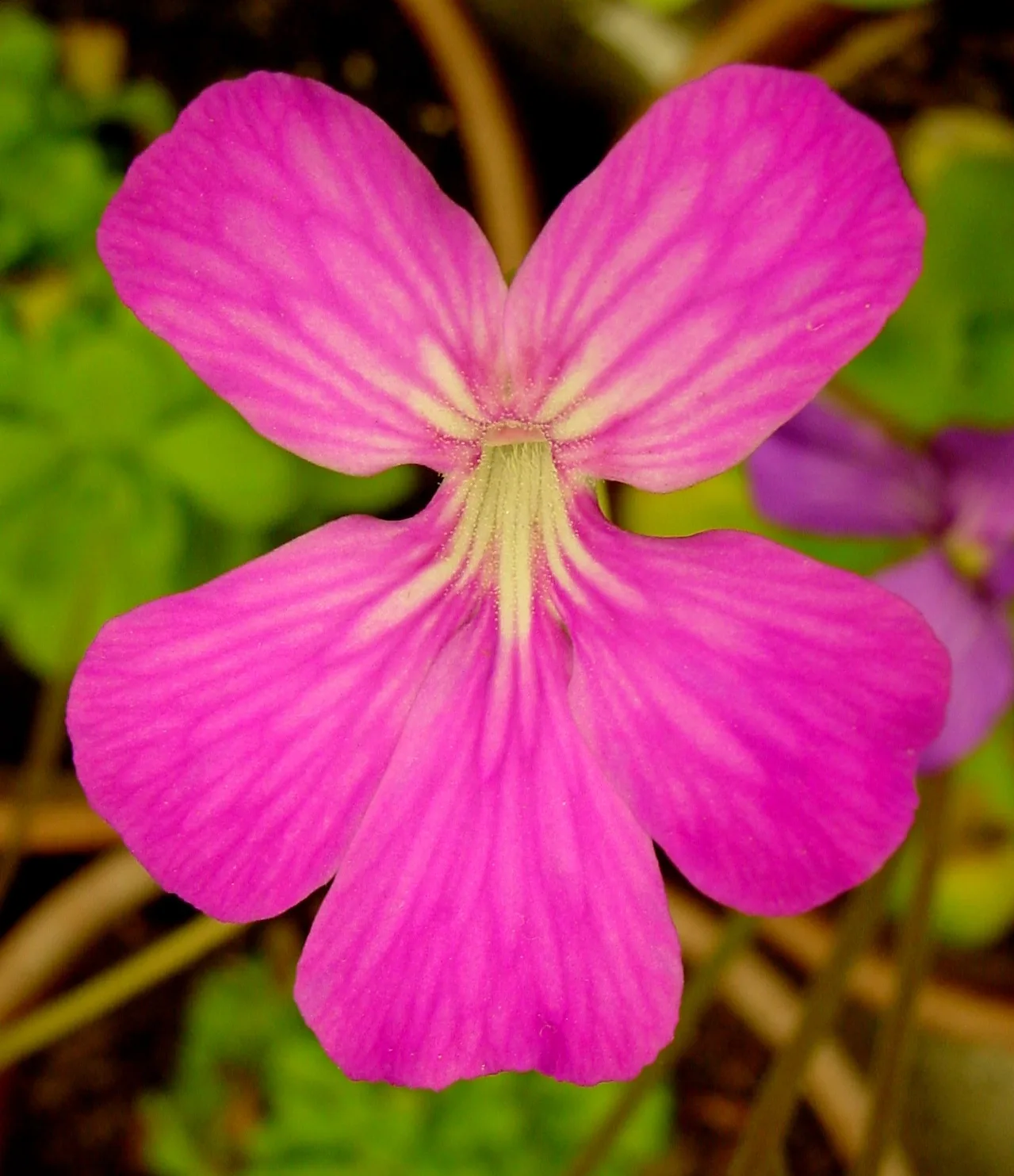
The flower of a hybrid butterwort
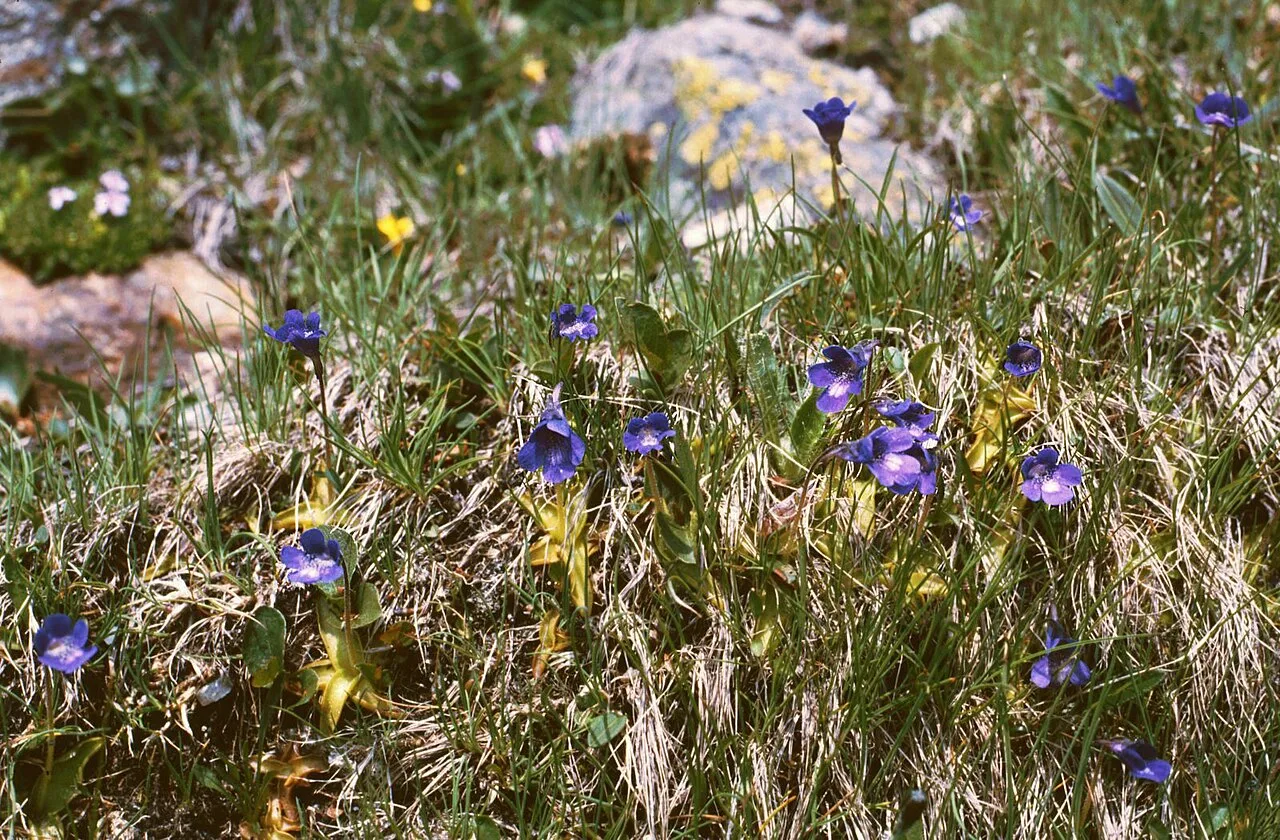
P. leptoceras in alpine grassland in Südtirol, Italy
Pinguicula
Pinguicula, commonly known as butterworts, is a genus of carnivorous flowering plants that use sticky leaves to trap and digest insects.
A 'Lard Herb' by Any Other Name
The first recorded mention of butterworts in botanical literature is Vitus Auslasser's 1479 herbal, which called the plant "Zitroch chrawt oder schmalz chrawt" — literally "lard herb." The name persists to this day as "Zittrochkraut" in Tirol, Austria. Five centuries of naming have kept the plant's greasy leaves front and center. It's a reminder that folk observation anticipated botanical Latin by generations.
From Wikipedia · CC BY-SA 4.0
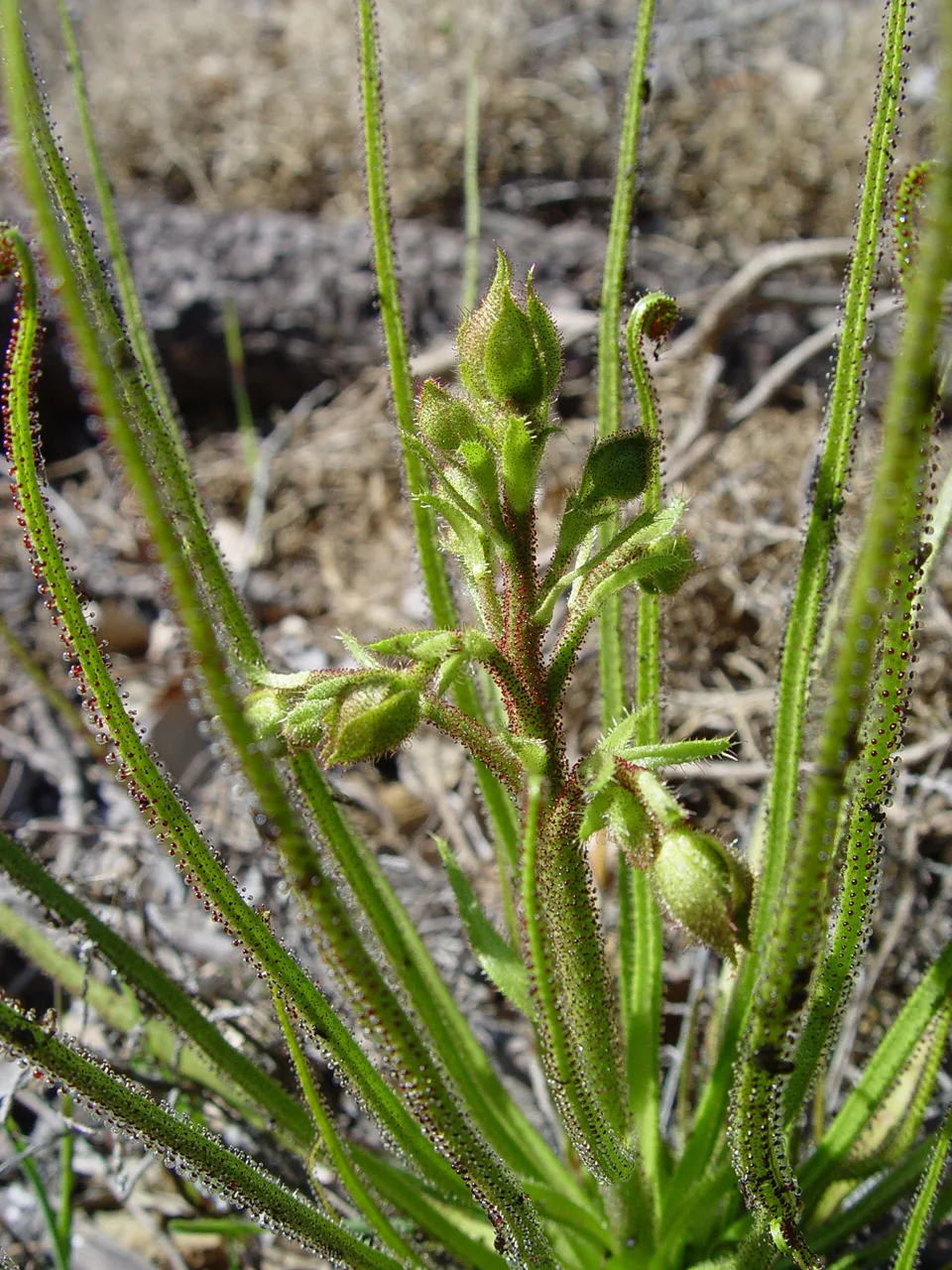
Drosophyllum lusitanicum a
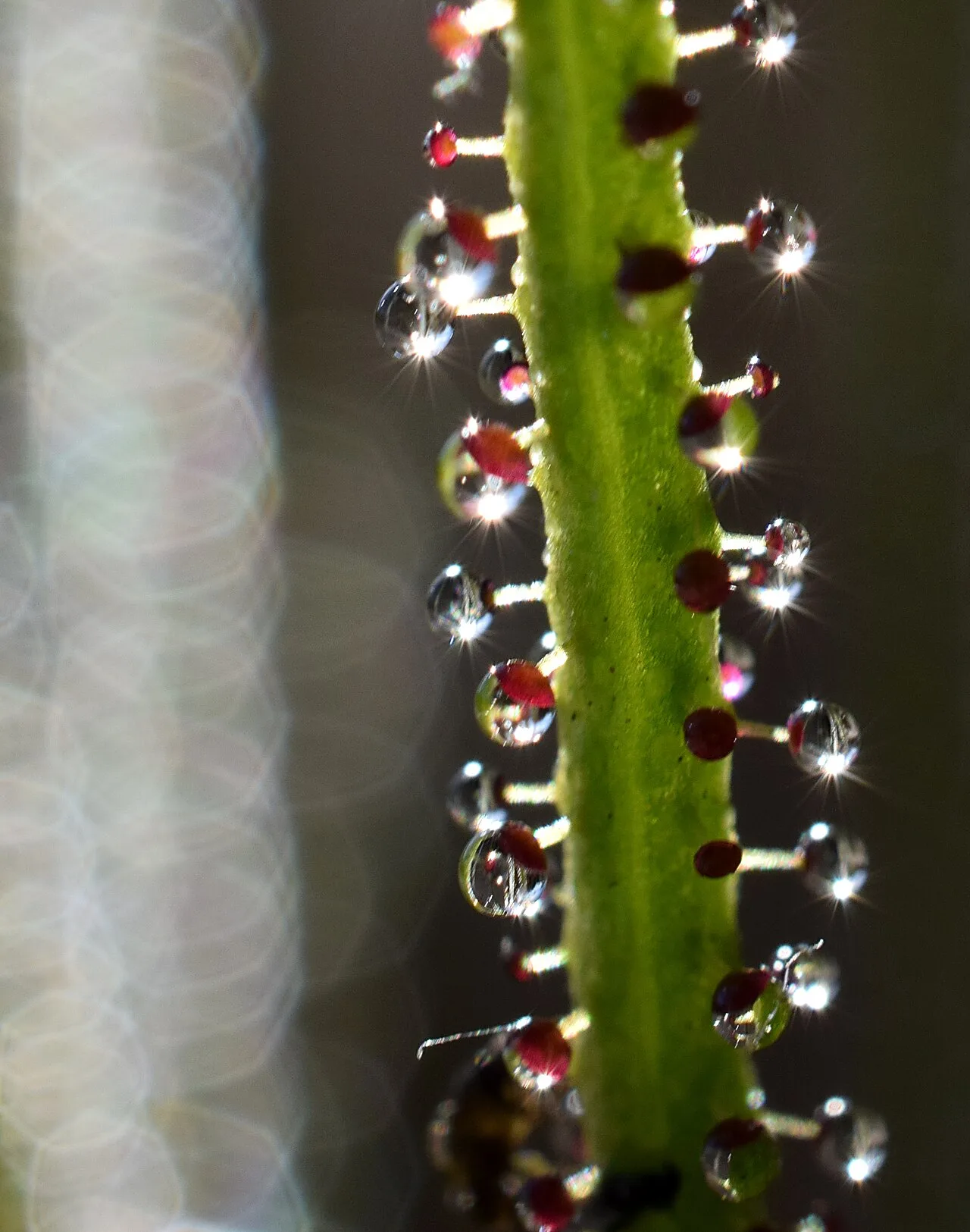
The mucilaginous glands of the plant
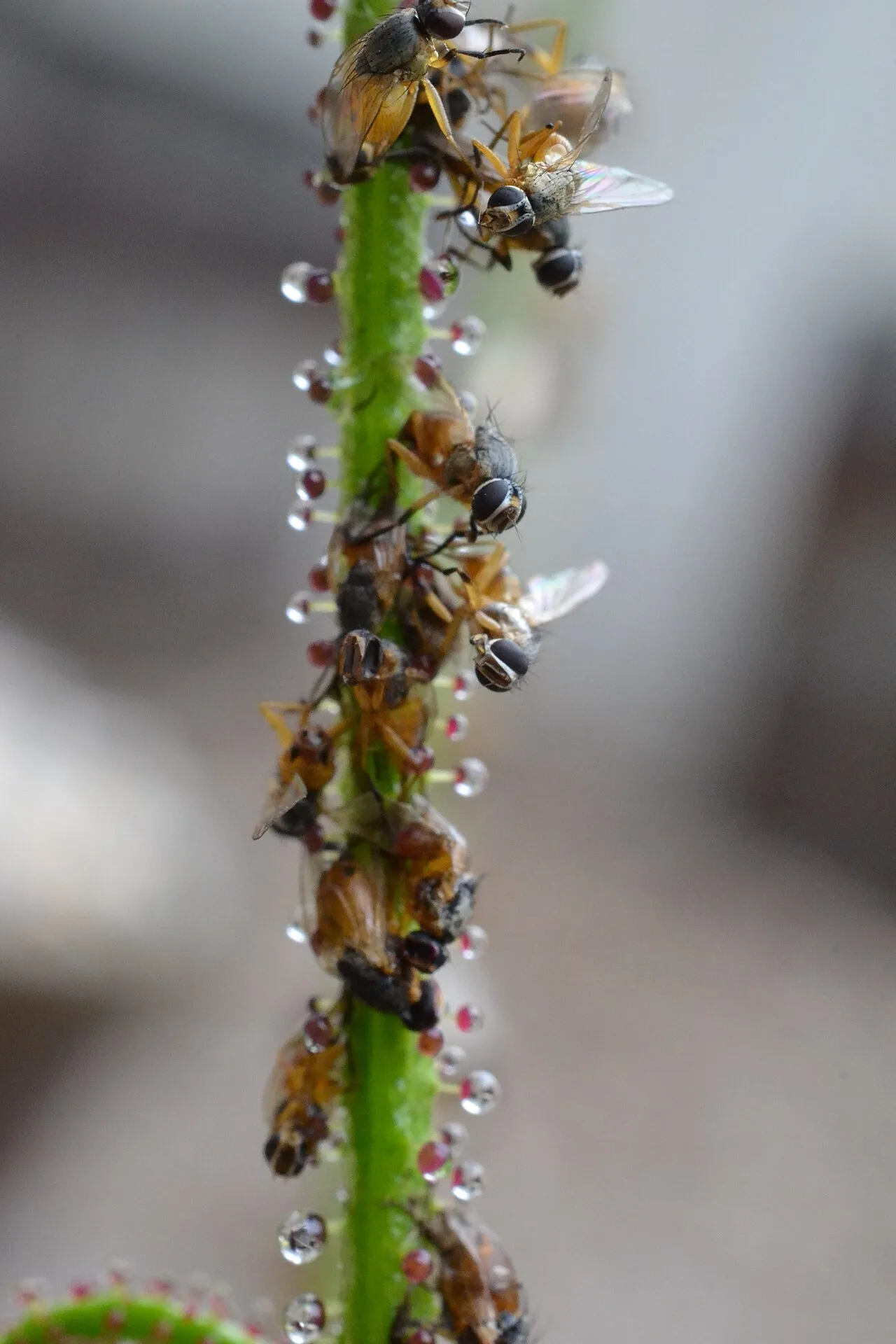
Insect prey stuck on the mucilaginous glands
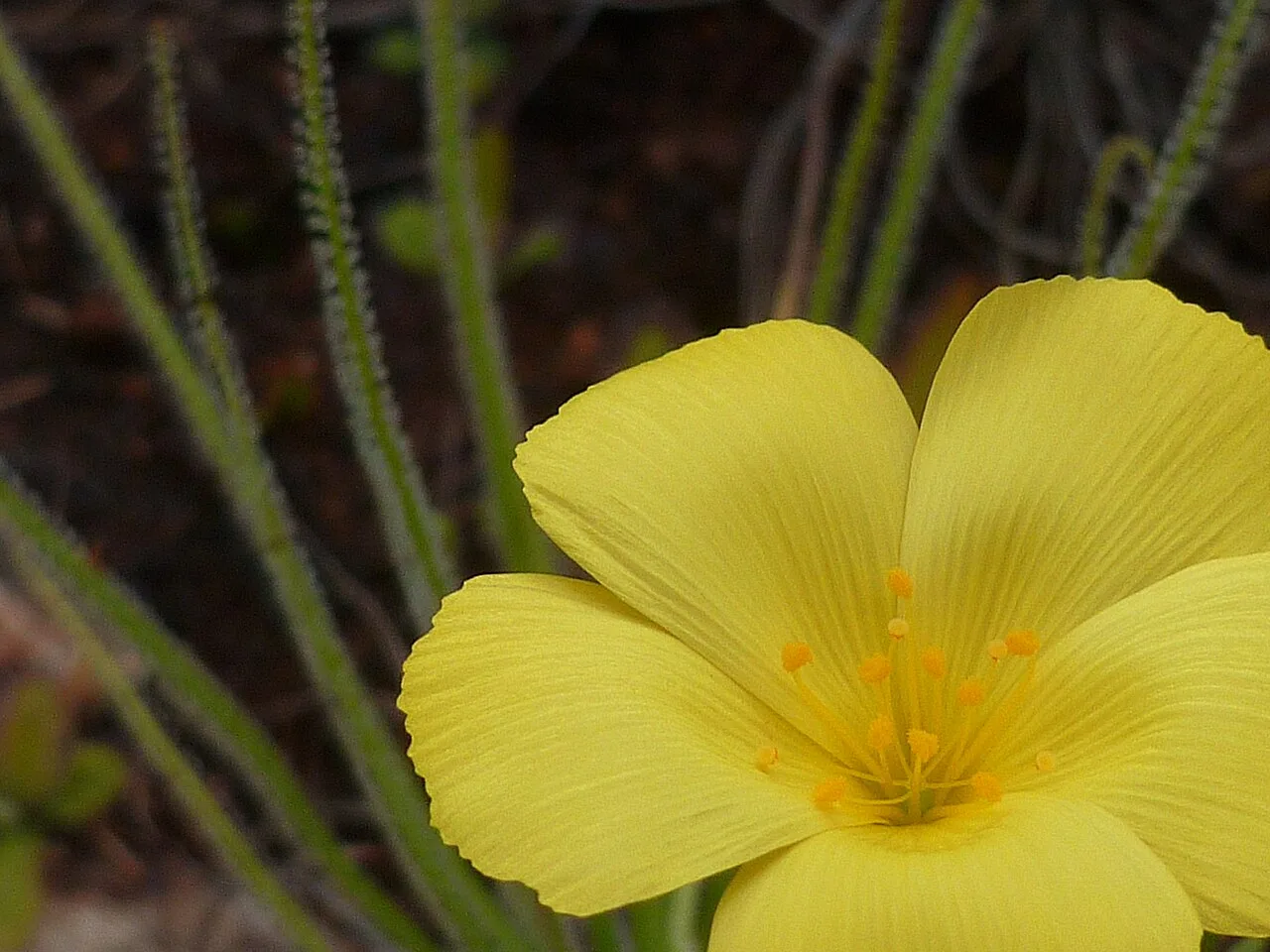
Drosophyllum lusitanicum flower
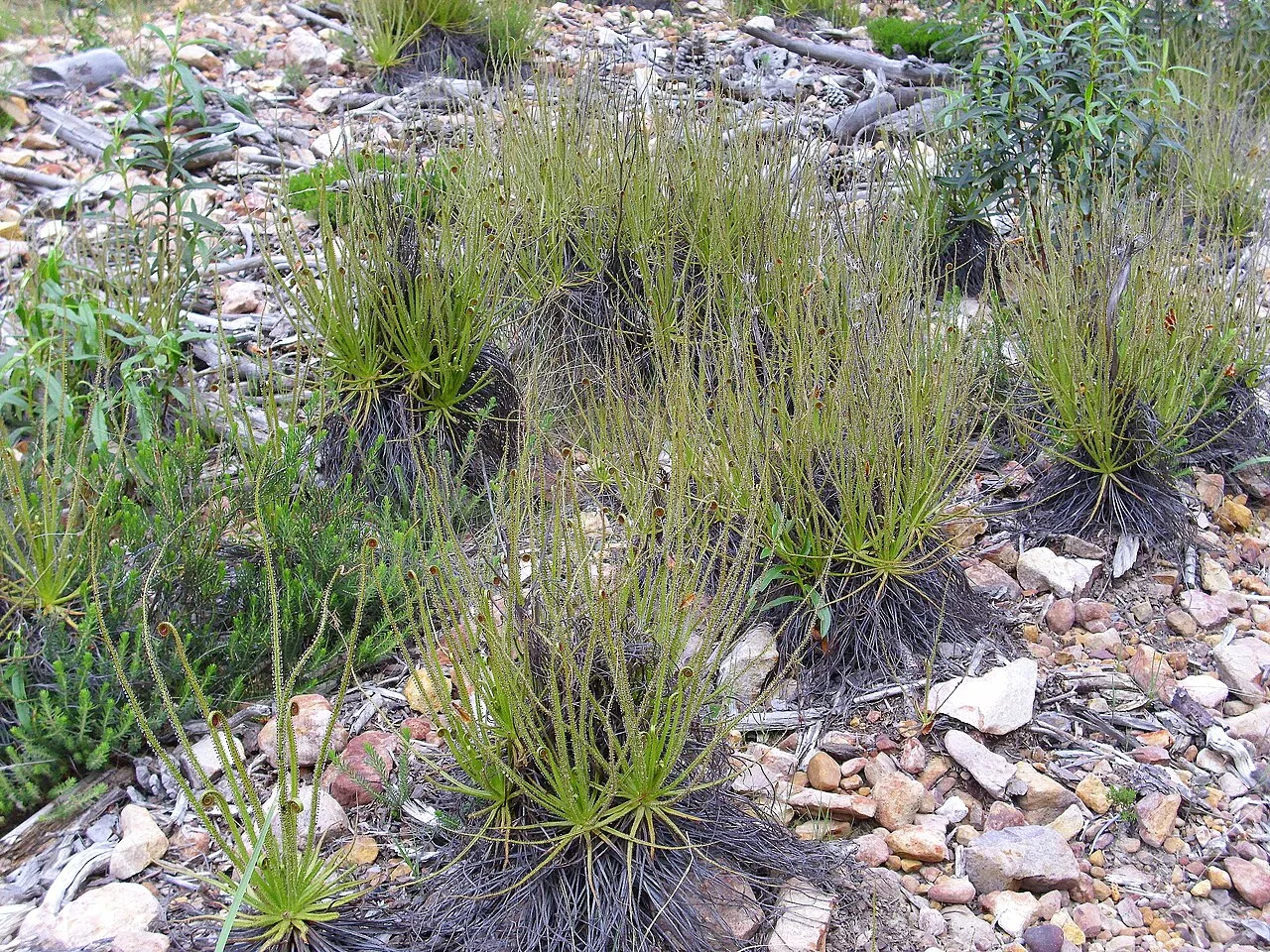
Drosophyllum lusitanicum in its native habitat in gravel soil
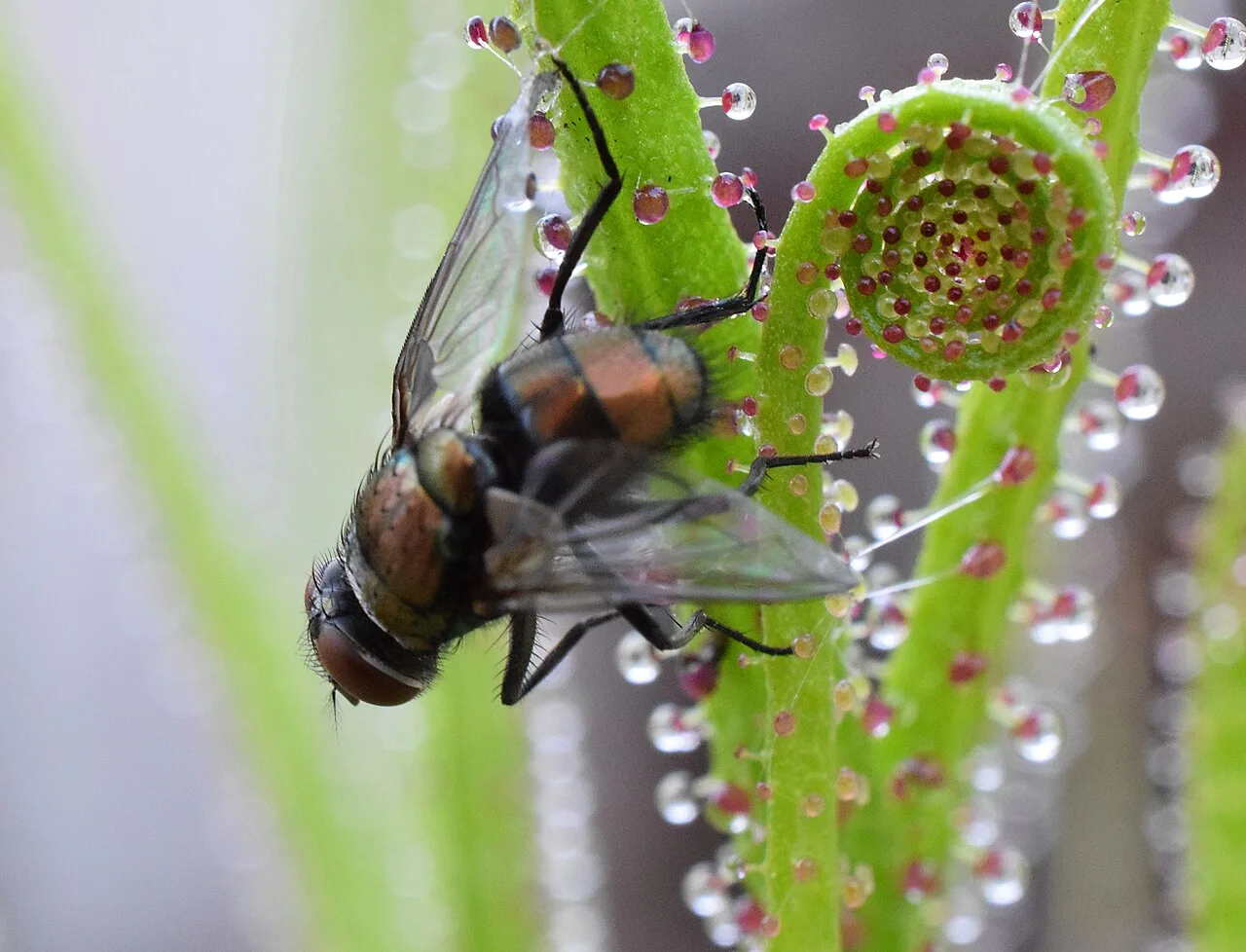
Detail of the coiling process and mucilaginous glands viscosity
Drosophyllum
Drosophyllum is a genus of carnivorous plants containing the single species Drosophyllum lusitanicum, commonly known as Portuguese sundew or dewy pine.
Curling Outward, Not Inward
Most sundews can curl their leaves to trap insects, but Drosophyllum lusitanicum lacks that power entirely. Instead, its 10–20 cm leaves uncoil outward when immature, a rare reversal called outward circinate vernation. This stationary approach means the plant must rely on stickiness alone, without any motion to help ensnare prey. The outward coiling is an unusual trait that distinguishes it from its more active relatives.
From Wikipedia · CC BY-SA 4.0