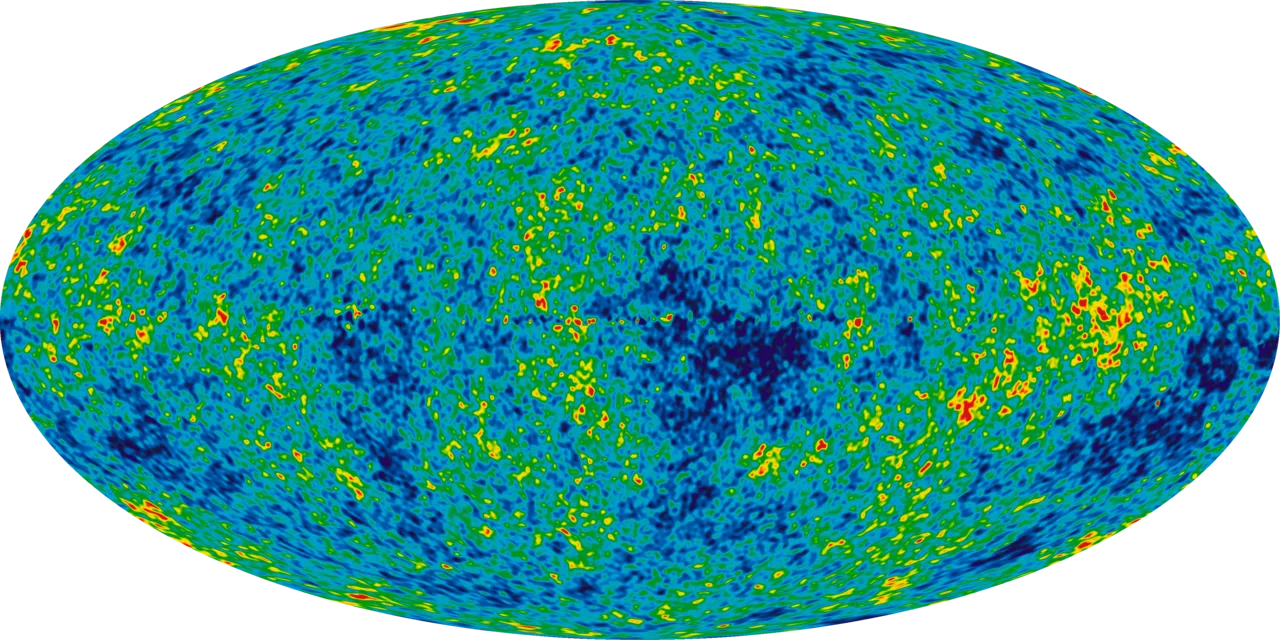
Full-sky image derived from nine years' WMAP data
![Hubble close-up on the Coma Cluster[33]](https://nwjvzop1xgplmzvt.public.blob.vercel-storage.com/wikifeed/dark-matter/1-d07f903fbc.webp)
Hubble close-up on the Coma Cluster[33]
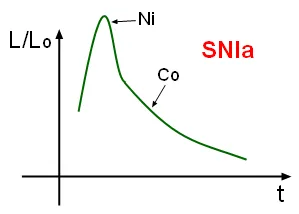
Type Ia supernova luminosity relative to the Sun (L0) versus time shows the characteristic light curve for a Type Ia supernova. The peak is primarily due to the decay of nickel (Ni), while the later stage is powered by cobalt (Co).
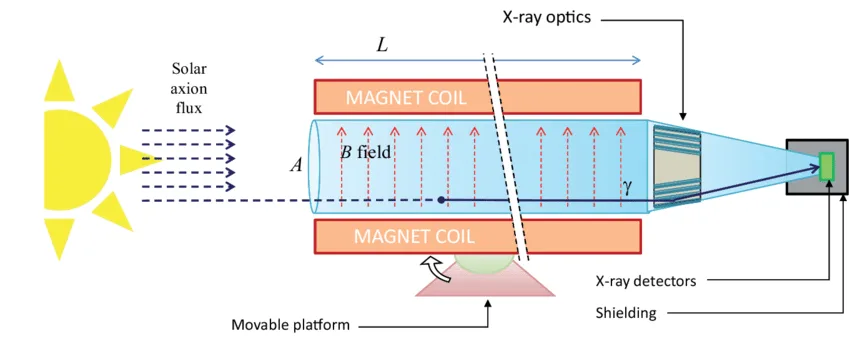
Principle of operation of the IAXO/BabyIAXO helioscope experiment for detecting axions
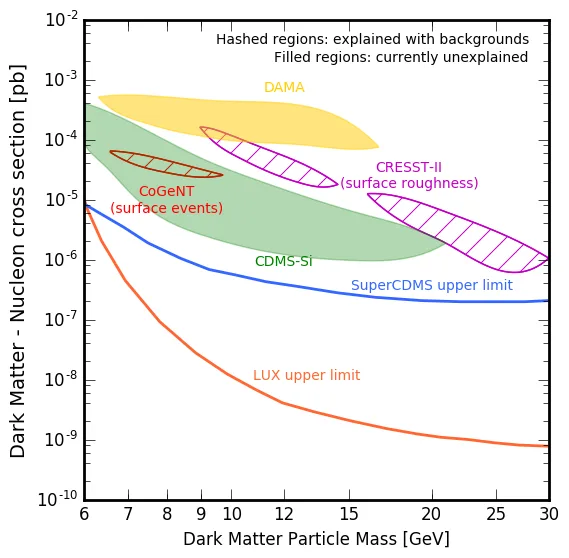
Plot showing the parameter space of dark matter particle mass and interaction cross section with nucleons. The LUX and SuperCDMS limits exclude the parameter space above the labelled curves. The CoGeNT and CRESST-II regions indicate regions which were previously thought to correspond to dark matter signals, but which were later explained with mundane sources. The DAMA and CDMS-Si data remain unexplained, and these regions indicate the preferred parameter space if these anomalies are due to dark matter.
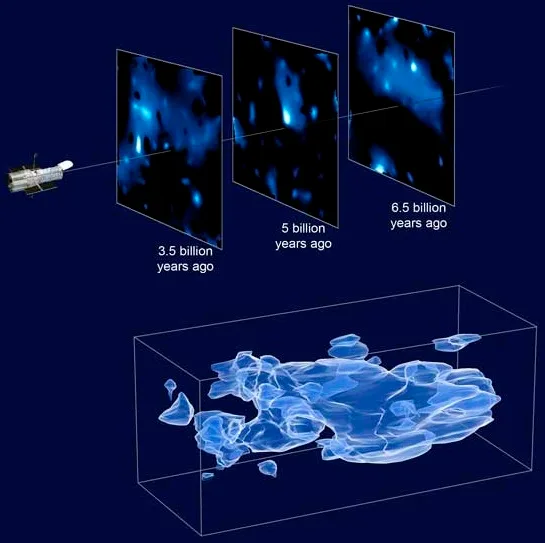
DM map by the Cosmic Evolution Survey (COSMOS) using the Hubble Space Telescope (2007)
Dark matter
Dark matter is an invisible, hypothetical form of matter that does not interact with light or other electromagnetic radiation.
Ghostly Drag Across Invisible Hydrogen Disks
Visible starlight diminishes toward galactic fringes, yet spiral galaxies do not exhibit the expected Keplerian velocity drop-offs seen in planetary systems. Radio astronomy mapping of atomic hydrogen demonstrated that cold gas extends far beyond visible starlight. In 1975, Roberts & Whitehurst traced the rotational velocity of Andromeda to 30 kpc, revealing flat rotation curves that signaled massive unseen halos.
From Wikipedia · CC BY-SA 4.0
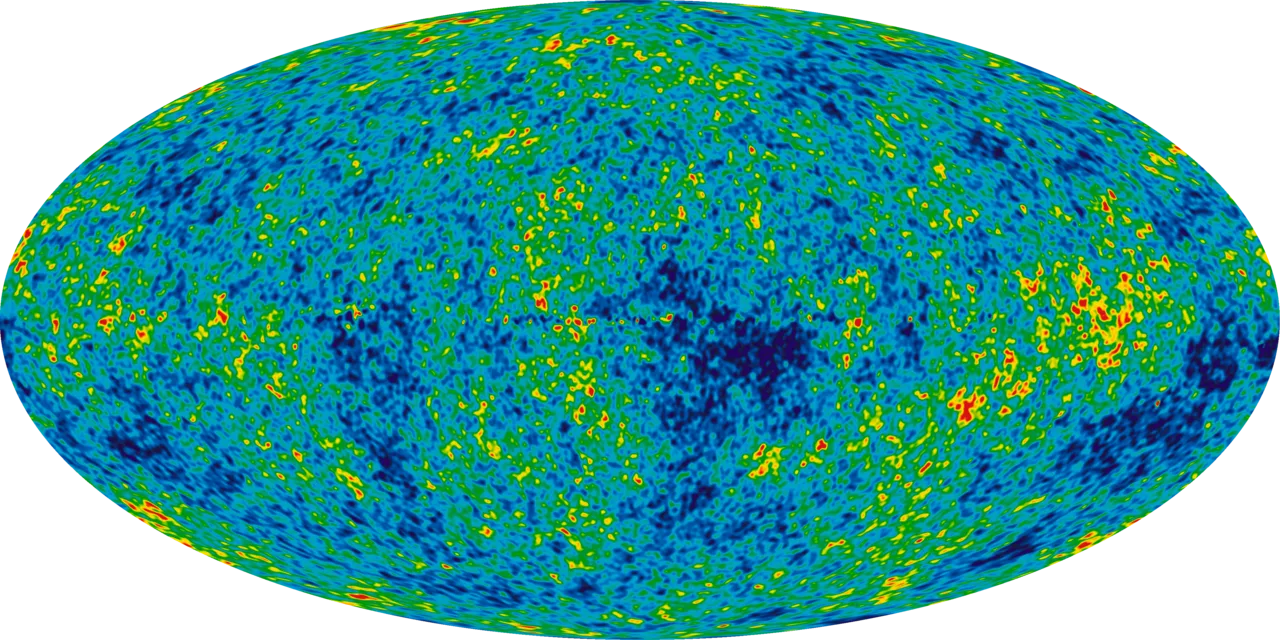
Full-sky image derived from nine years' WMAP data
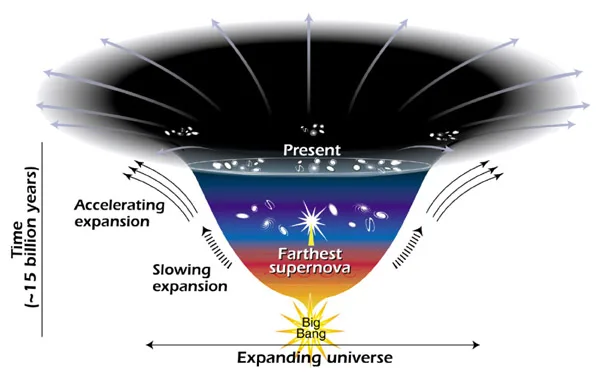
Diagram representing a proposed model for the accelerated expansion of the universe due to dark energy
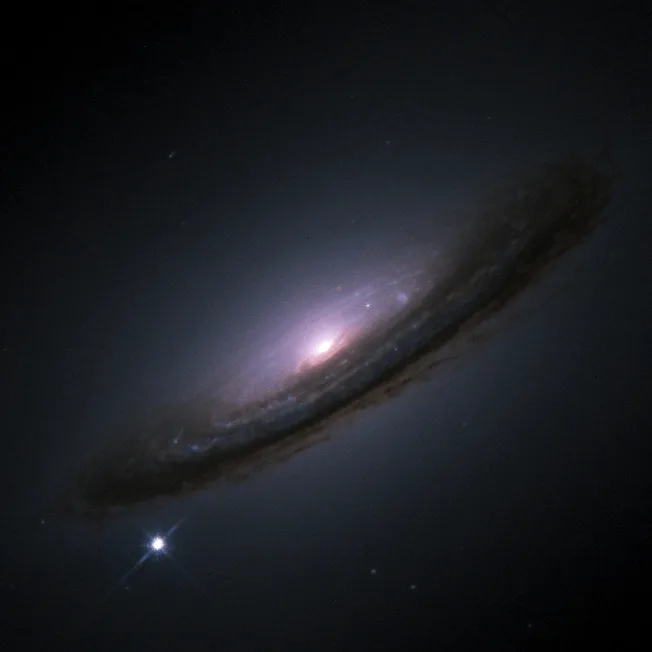
A Type Ia supernova (bright spot on the bottom-left) near NGC 4526
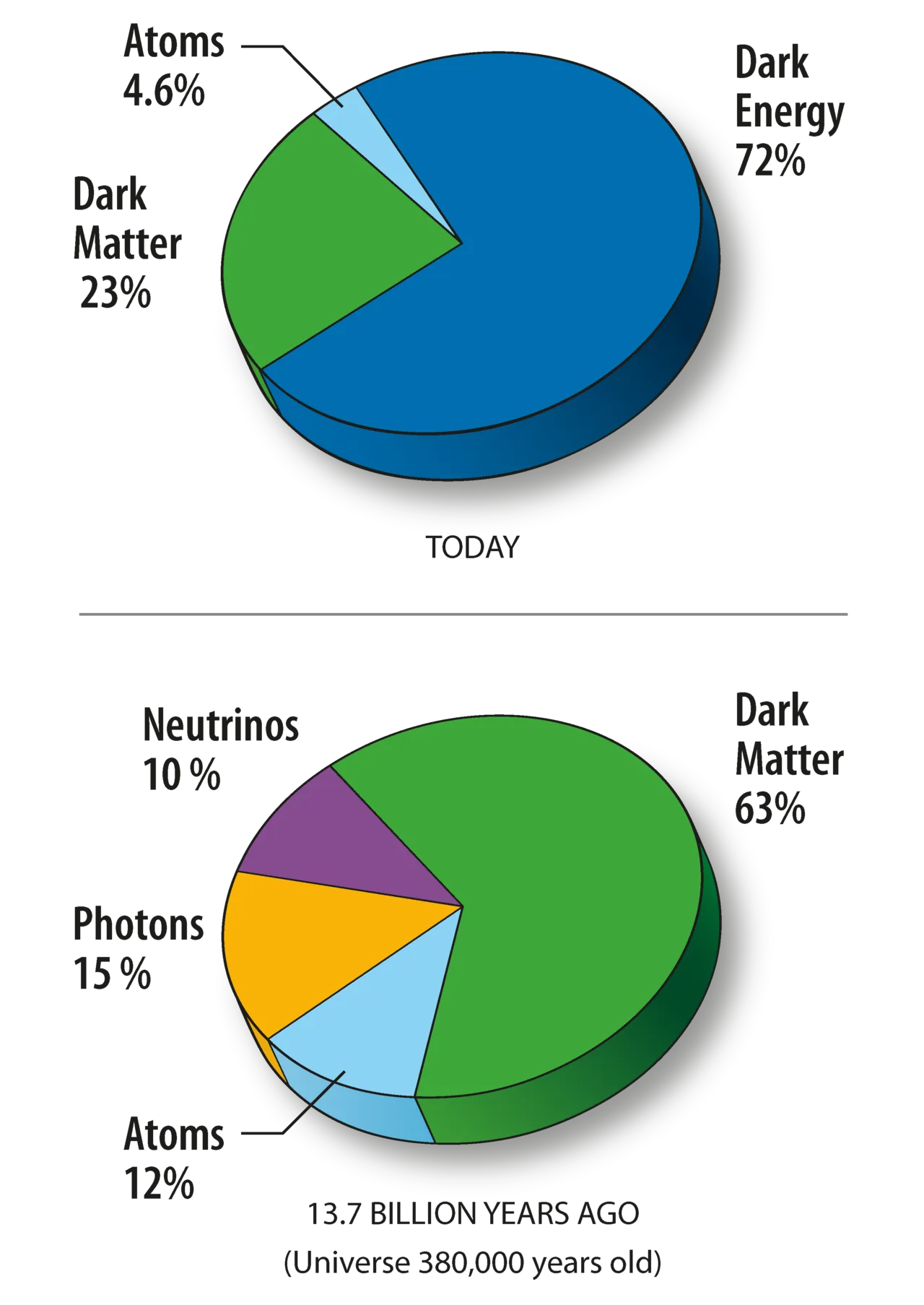
Estimated division of total energy in the universe into matter, dark matter and dark energy based on five years of WMAP data[38]
![The equation of state of Dark Energy for 4 common models by Redshift.[48] A: CPL Model, B: Jassal Model, C: Barboza &](https://nwjvzop1xgplmzvt.public.blob.vercel-storage.com/wikifeed/dark-energy/4-46710d7e1d.webp)
The equation of state of Dark Energy for 4 common models by Redshift.[48] A: CPL Model, B: Jassal Model, C: Barboza & Alcaniz Model, D: Wetterich Model
![Estimated distribution of matter and energy in the universe[49]](https://nwjvzop1xgplmzvt.public.blob.vercel-storage.com/wikifeed/dark-energy/5-e0dc079370.webp)
Estimated distribution of matter and energy in the universe[49]
Dark energy
Dark energy is a proposed form of energy that affects the universe on the largest scales, driving its accelerating expansion.
The 120-Order Quantum Discrepancy
General relativity treats vacuum energy as a cosmological constant that exerts a subtle gravitational push. In contrast, standard quantum field theories calculate the zero-point energy of empty space to be roughly 120 orders of magnitude larger than what astronomers actually observe. Resolving this enormous tension remains one of modern physics' greatest unresolved challenges, requiring theoretical cancellations that border on extreme fine-tuning.
From Wikipedia · CC BY-SA 4.0
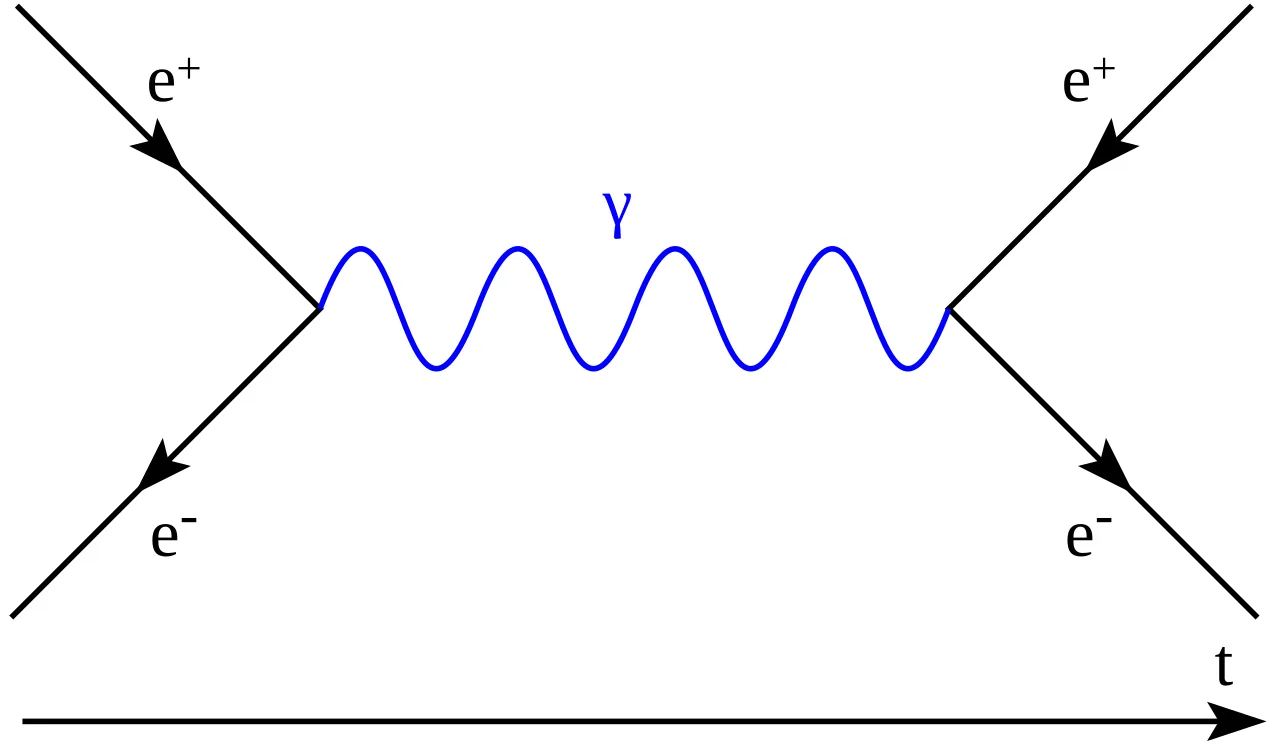
A Feynman diagram showing the annihilation of an electron and a positron (antielectron), creating a photon that later decays into an new electron–positron pair.
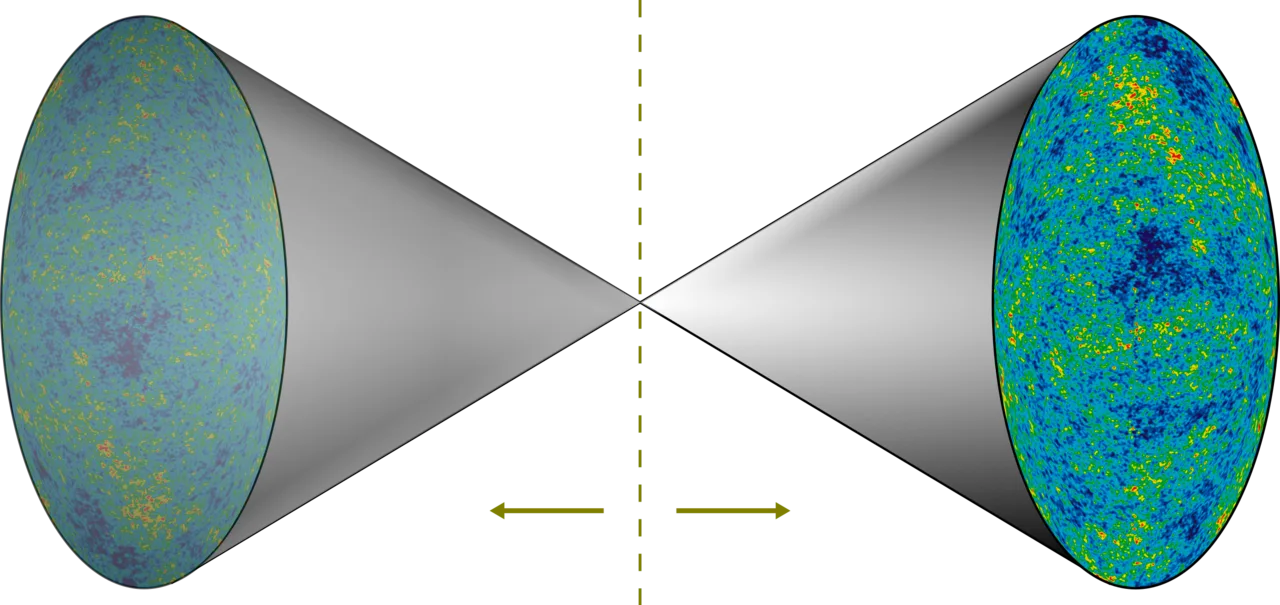
In the mirror anti-universe theory, the Big Bang generated a universe–antiuniverse pair. This universe flows forward in time, while the mirror counterpart flows backward.
Baryon asymmetry
The baryon asymmetry problem is the observed, unexplained imbalance between baryonic matter and antibaryonic matter in the universe.
The Sakharov Triad and Neutral Kaons
In 1967, Andrei Sakharov formulated the foundational criteria required for baryogenesis to favor matter over antimatter. His framework was inspired by recent observations of the cosmic microwave background and CP violation in the neutral kaon system. Sakharov demonstrated that physical laws must incorporate baryon number violation, C- and CP-symmetry violations, and thermal non-equilibrium. Without all three conditions operating simultaneously, the universe would have produced balanced amounts of matter and antimatter.
From Wikipedia · CC BY-SA 4.0
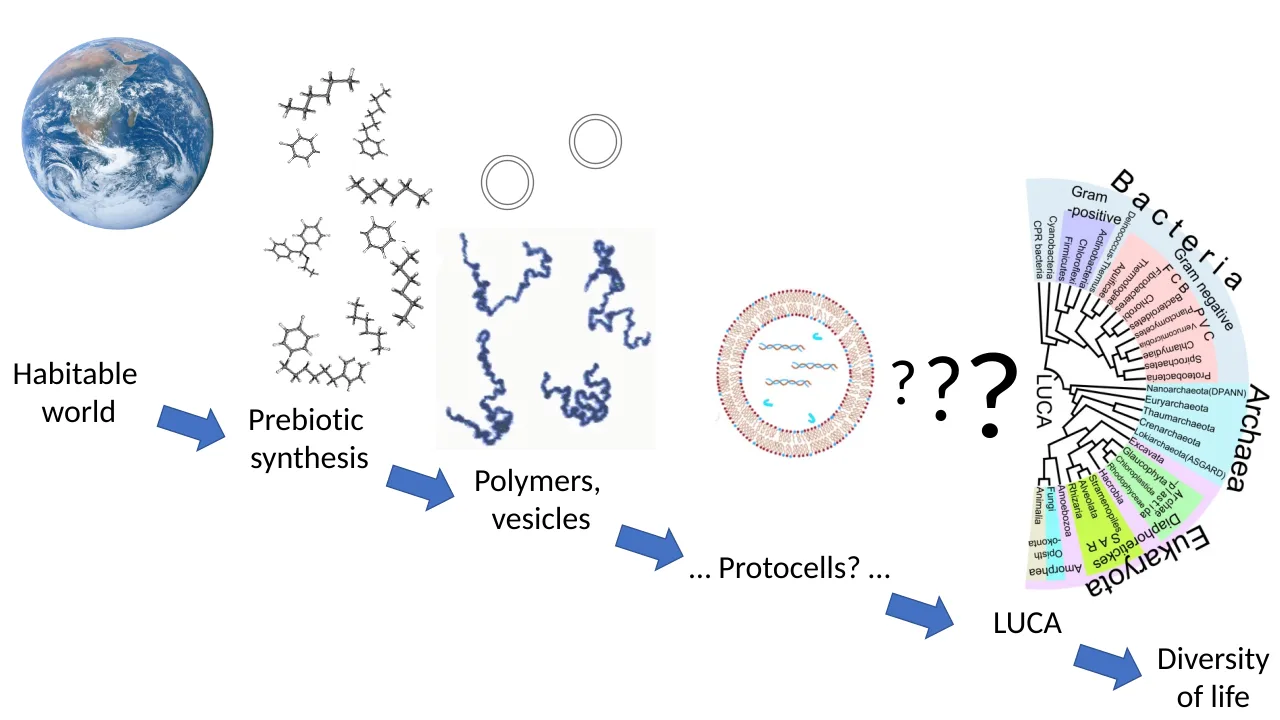
Stages in the origin of life process range from the well understood, such as the habitable Earth and the abiotic synthesis of simple molecules, to the largely unknown, like the derivation of the last universal common ancestor (LUCA) with its complex molecular functionalities.[1]
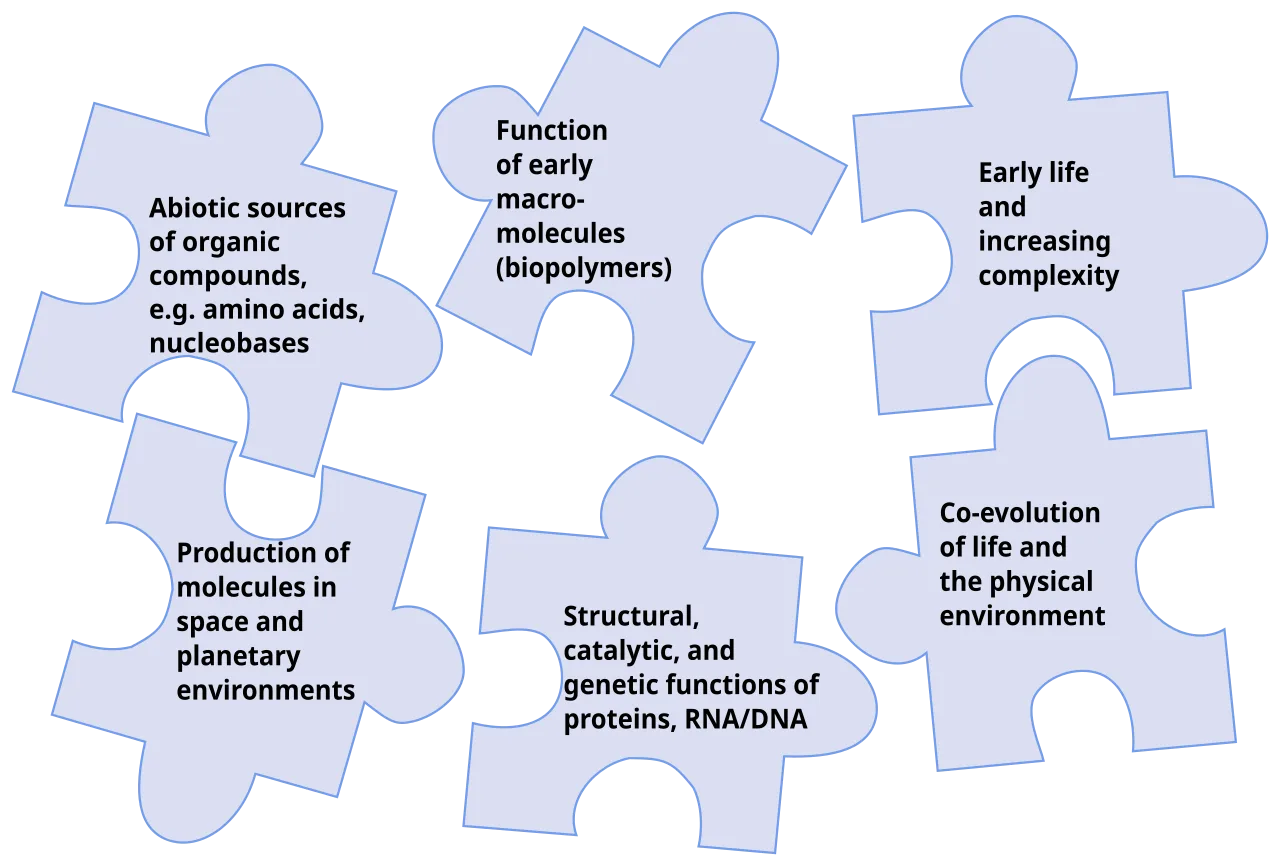
NASA's 2015 strategy for astrobiology aimed to solve the puzzle of the origin of life – how a fully functioning living system could emerge from non-living components – through research on the prebiotic origin of life's chemicals, both in space and on planets, as well as the functioning of early biomolecules to catalyse reactions and support inheritance.[2]

Modern stromatolites in Shark Bay, created by photosynthetic cyanobacteria
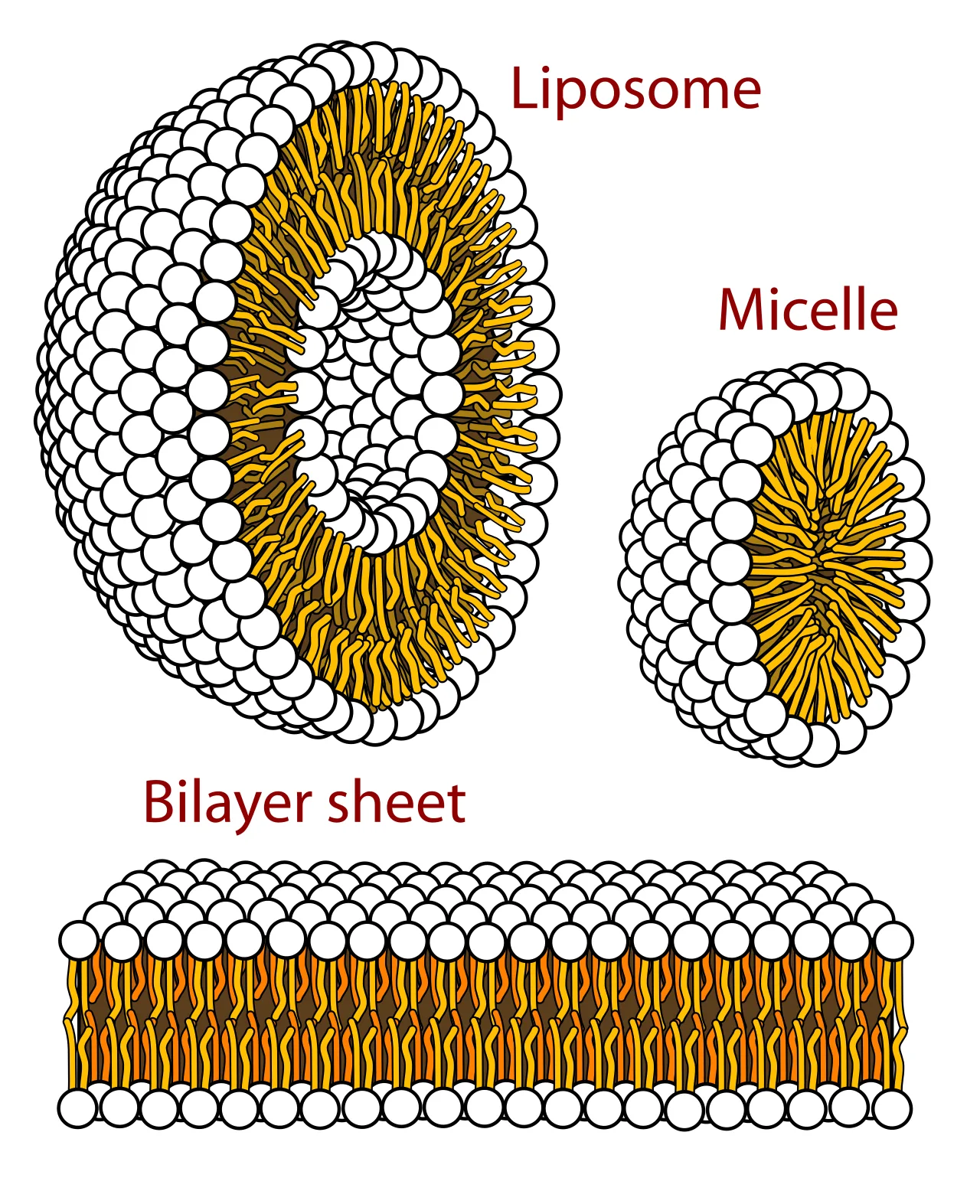
The three main structures composed of phospholipids form spontaneously by self-assembly in solution: the liposome (a closed bilayer), the micelle and the bilayer.

The RNA world hypothesis proposes that undirected polymerisation led to the emergence of ribozymes, and in turn to an RNA replicase.
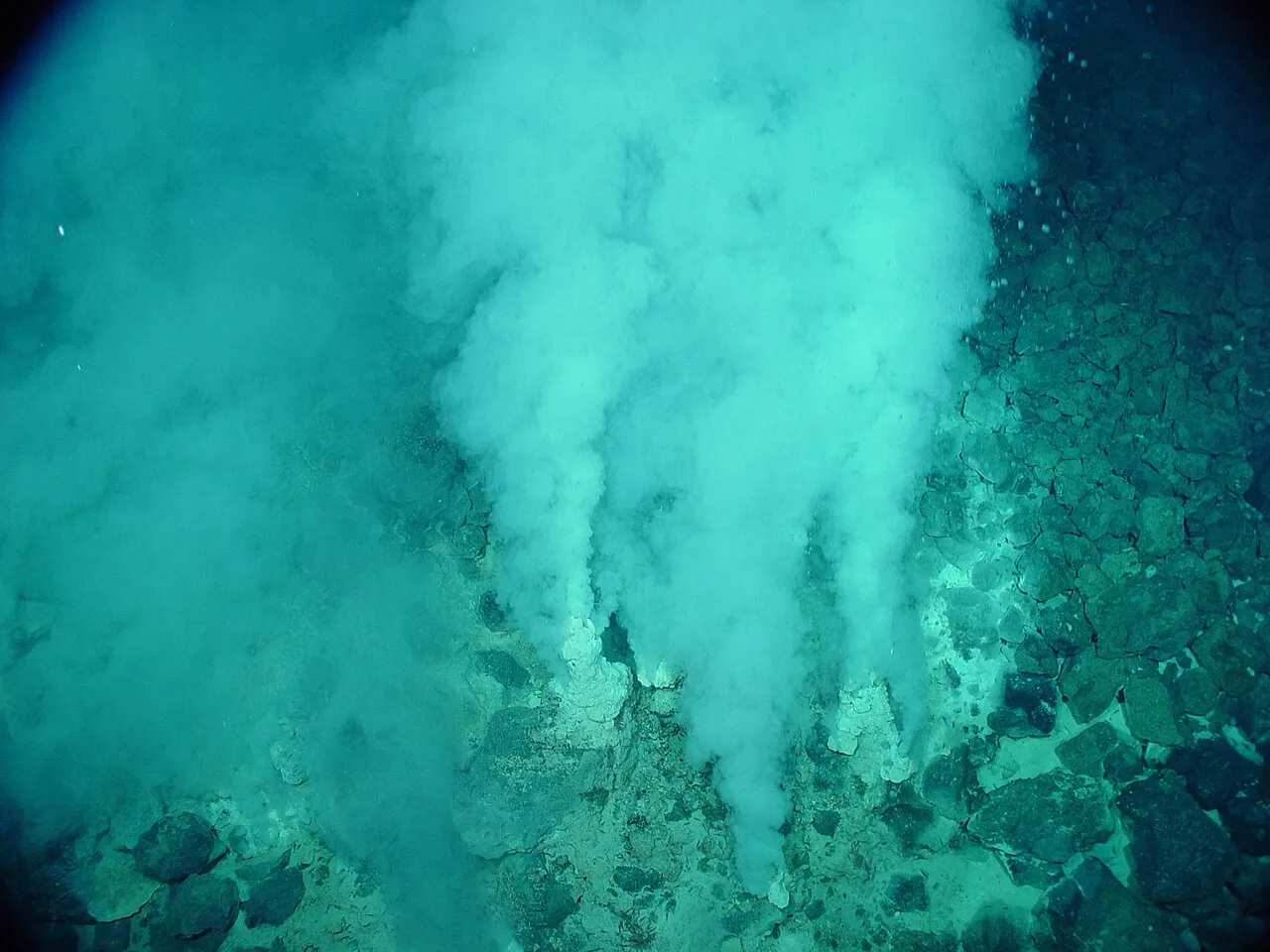
The earliest known life forms may be putative fossilized microorganisms, found in white smoker hydrothermal vent precipitates. They may have lived as early as 4.28 Gya (billion years ago), relatively soon after the formation of the oceans 4.41 Gya, not long after the formation of the Earth 4.54 Gya.[78]
Abiogenesis
Abiogenesis, or the origin of life, is the natural process by which life arises from non-living matter, such as simple organic compounds.
Prebiotic Cargo from Extraterrestrial Bombardment
Primordial building blocks did not need to originate entirely from Earth's own chemical synthesis. During the Late Heavy Bombardment, meteorites may have delivered up to five million tons of organic prebiotic elements to the planet each year. NASA studies of meteorites reveal that all four DNA nucleobases formed in outer space. Consequently, cosmic dust and projectile impacts seeded early terrestrial environments with essential raw materials for nucleotides.
From Wikipedia · CC BY-SA 4.0
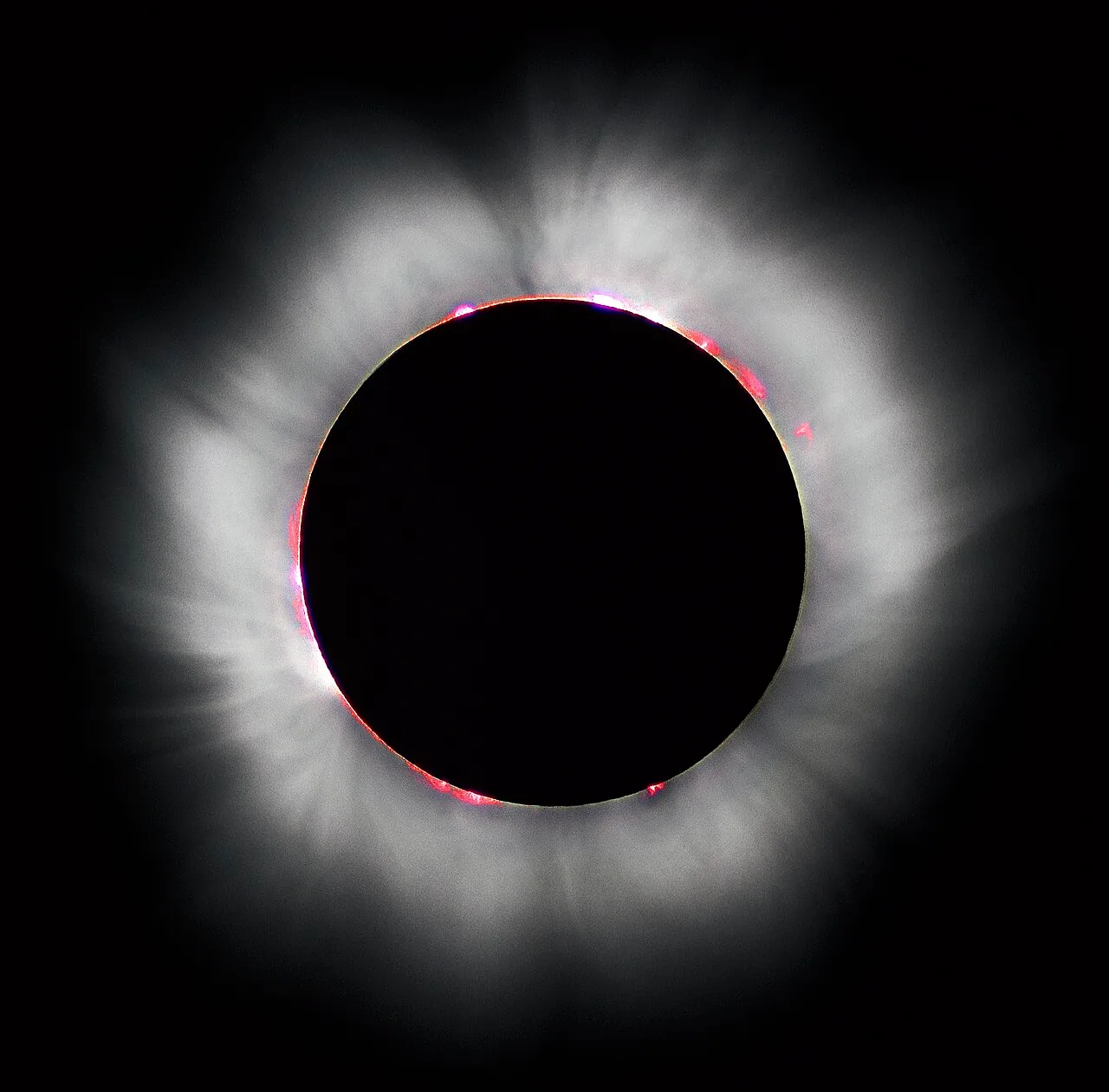
During a total solar eclipse, the Sun's corona and prominences are visible to the naked eye.
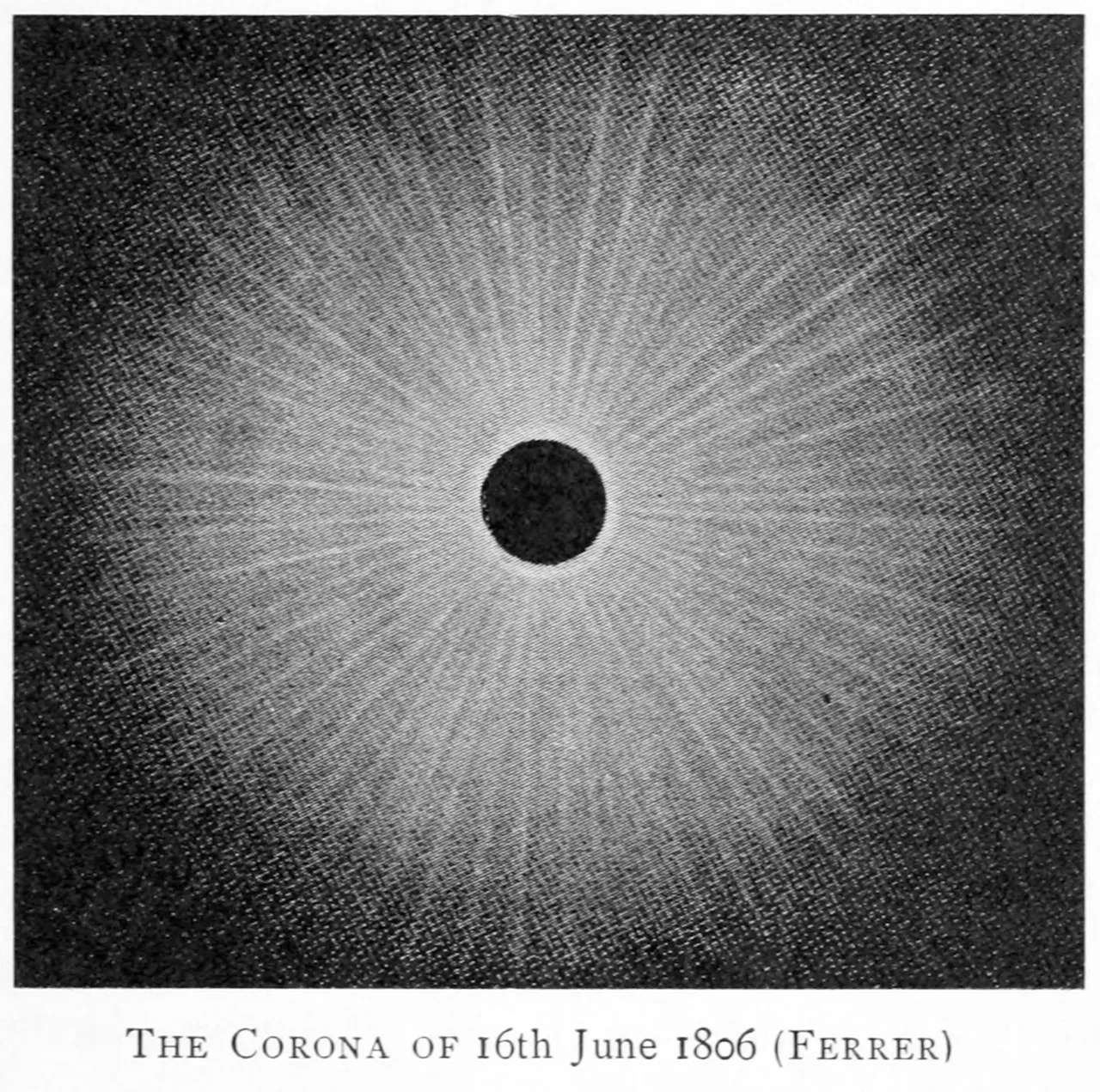
Corona sketched by José Joaquín de Ferrer during the solar eclipse of June 16, 1806 in Kinderhook, New York.
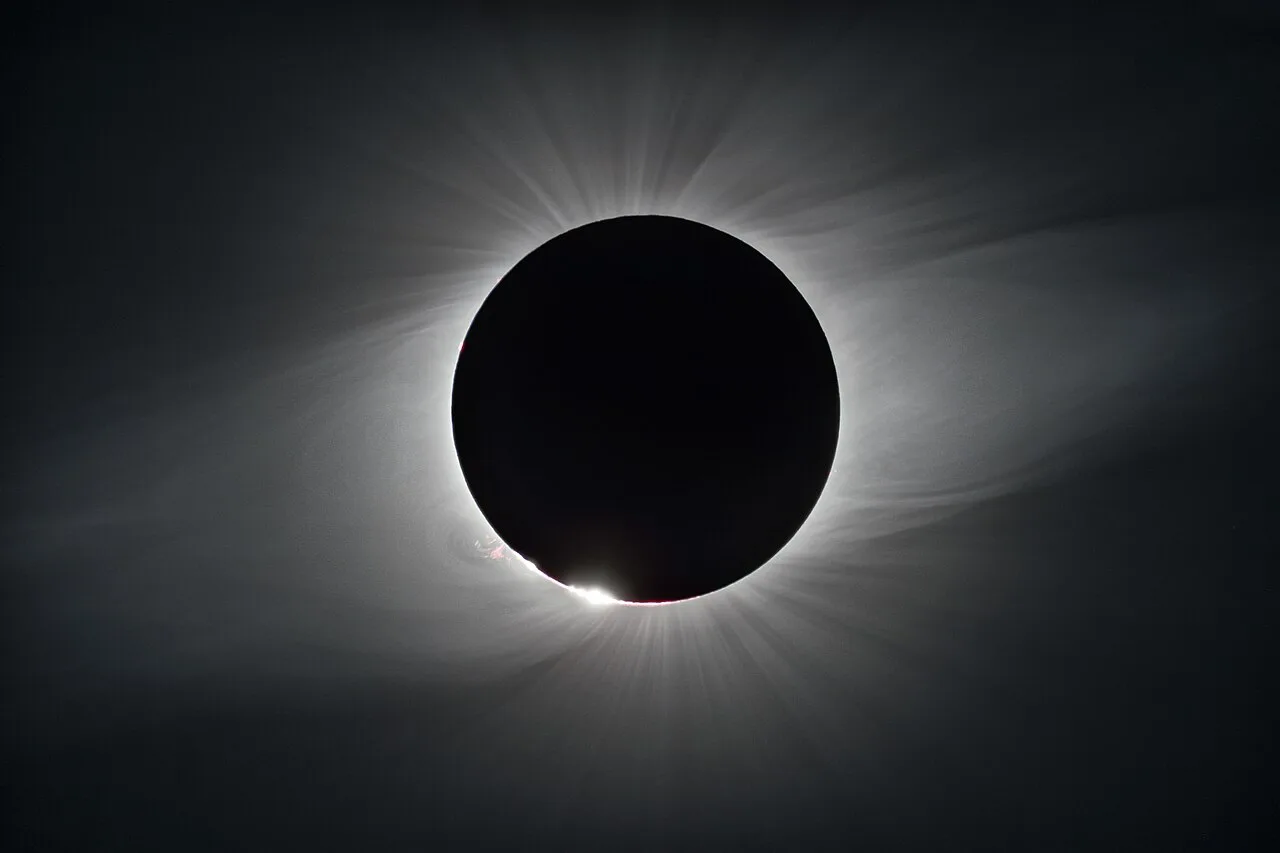
The light visible close to the Sun during a total solar eclipse originates primarily from the K-corona.
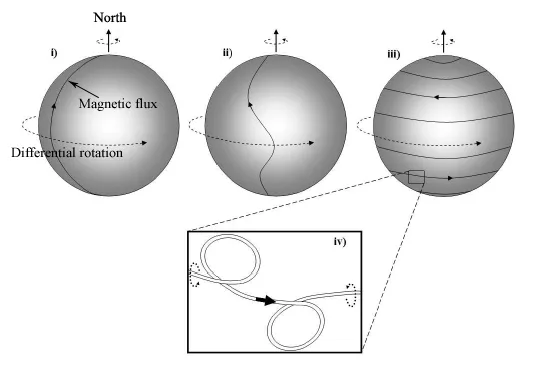
Configuration of solar magnetic flux during the solar cycle
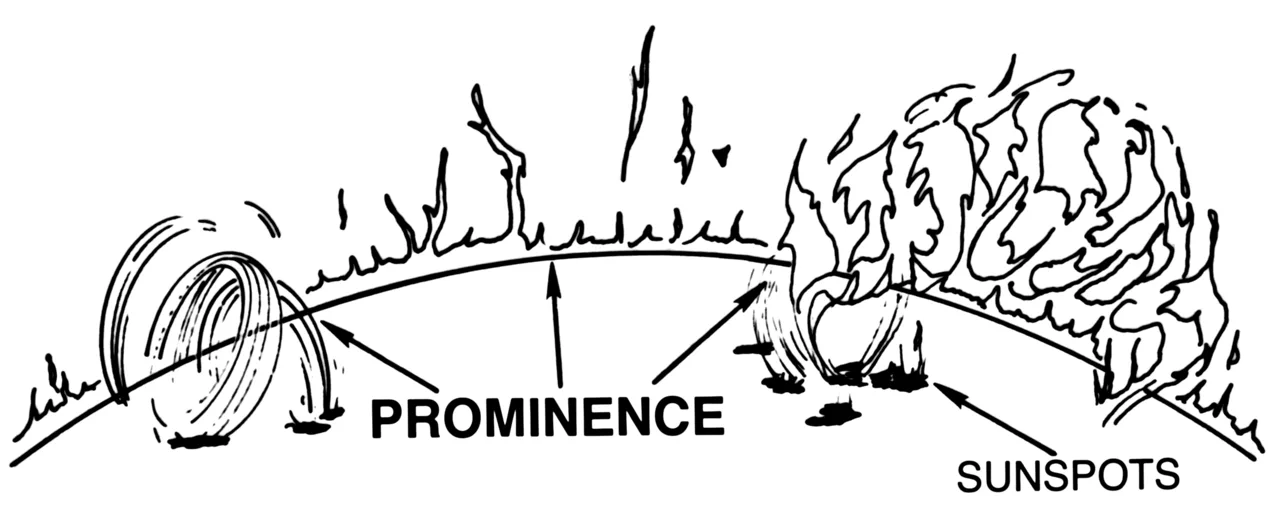
Solar prominences and sunspots
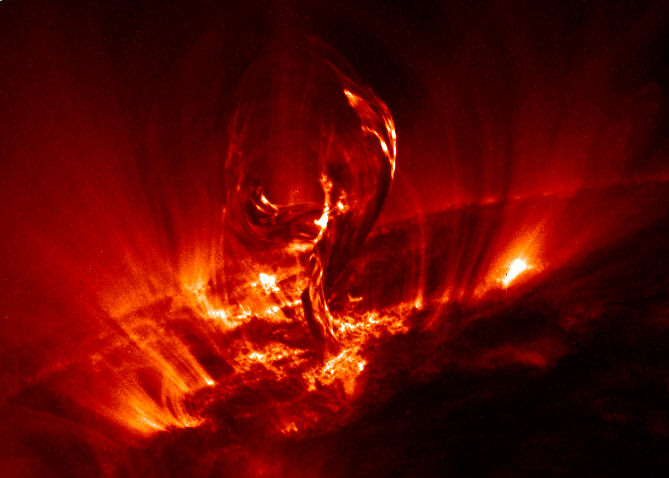
Filament erupting during a solar flare, seen at EUV wavelengths (TRACE)
Coronal heating problem
The solar corona is the outermost layer of the Sun's atmosphere, consisting of hot, tenuous plasma structured by the solar magnetic field.
A Temperature Paradox Defying Simple Heat Flow
Temperatures within the solar interior decline steadily with distance, reaching a minimum of 4400 K at the top of the photosphere. Across the transition region, this cooling pattern abruptly reverses as temperatures spike toward the corona. Moving heat from a cooler surface into a hotter atmosphere cannot occur via ordinary thermal transfer, creating the long-standing coronal heating problem.
From Wikipedia · CC BY-SA 4.0
![Lorimer Burst – Observation of the first detected fast radio burst as described by Lorimer in 2006.[1]](https://nwjvzop1xgplmzvt.public.blob.vercel-storage.com/wikifeed/fast-radio-burst/0-61bb631dff.png)
Lorimer Burst – Observation of the first detected fast radio burst as described by Lorimer in 2006.[1]
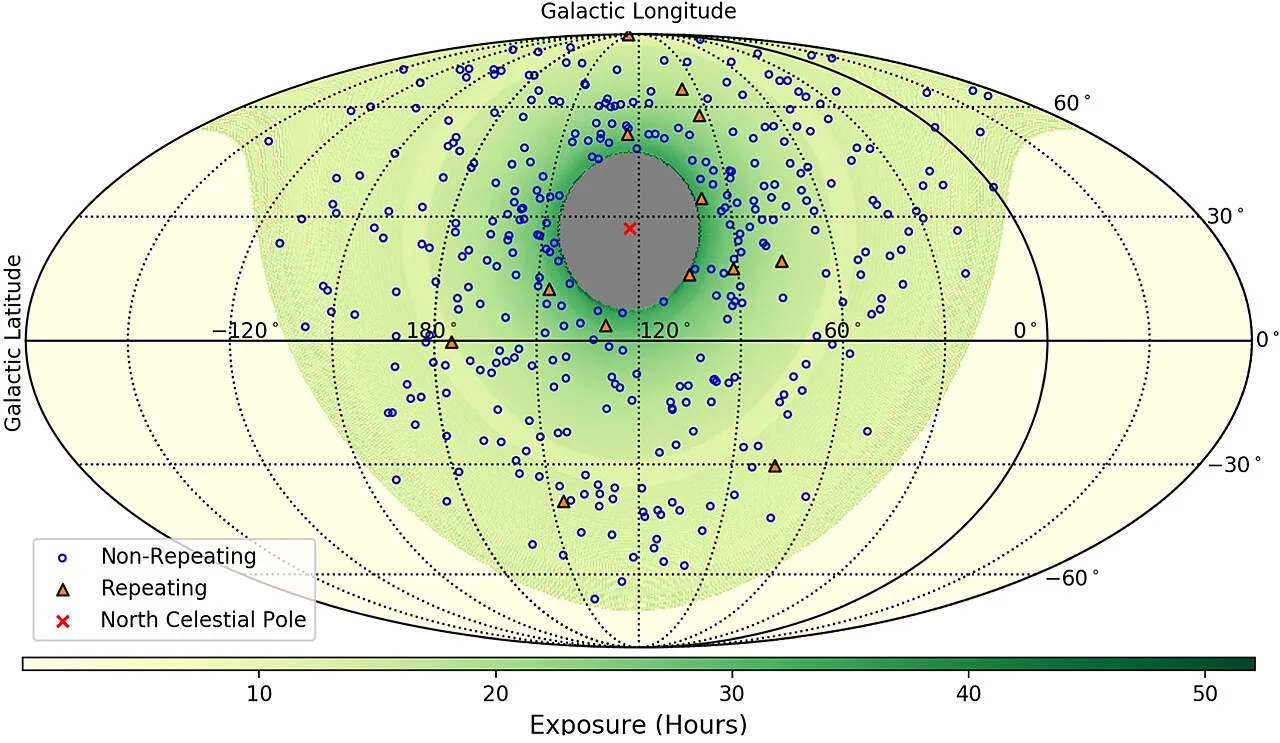
FRBs observed by CHIME in Galactic coordinates with locations of 474 nonrepeating and 18 repeating (62 bursts) sources from 28 August 2018 to 1 July 2019[43]
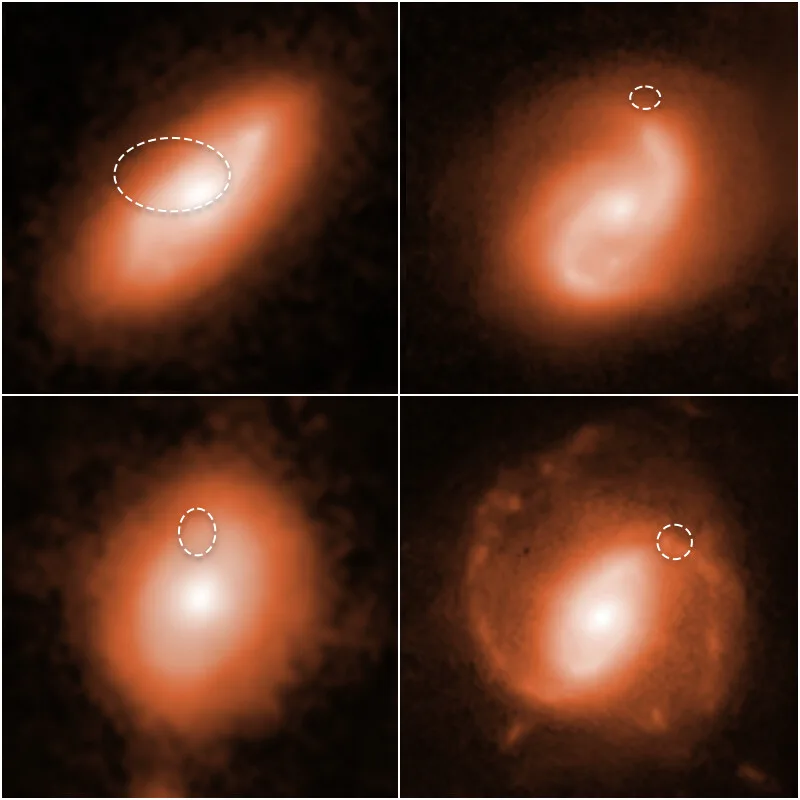
The bursts are catalogued as FRB 190714, at top left; FRB 191001, at top right; FRB 180924, at bottom left; and FRB 190608, at bottom right.[48]
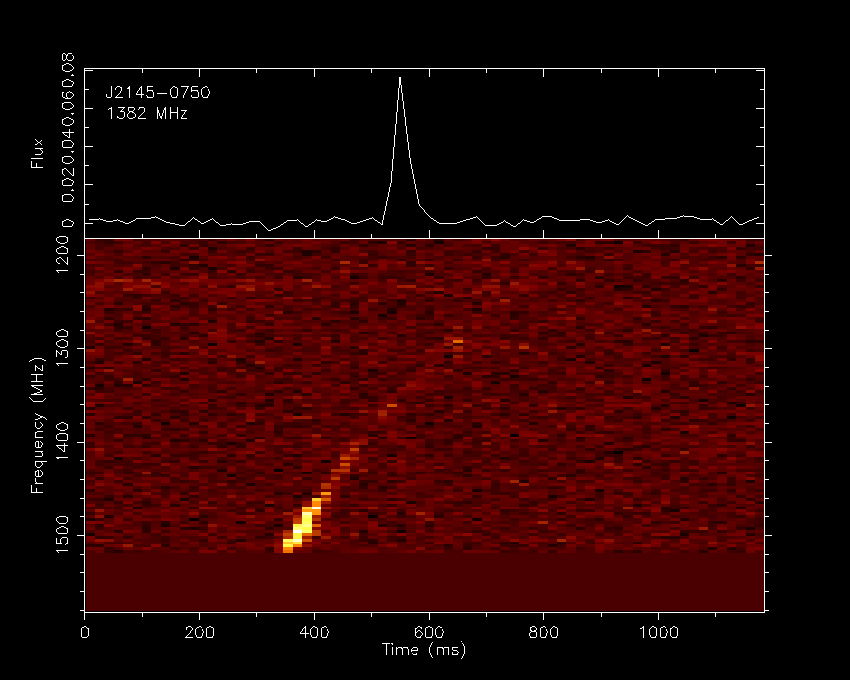
A peryton event detected at the Parkes Observatory. Peryton events are now known to be caused by the emission from a microwave oven.
![Artist's impression of a fast radio burst FRB 181112 traveling through space and reaching Earth.[132]](https://nwjvzop1xgplmzvt.public.blob.vercel-storage.com/wikifeed/fast-radio-burst/4-e5d8926bb8.webp)
Artist's impression of a fast radio burst FRB 181112 traveling through space and reaching Earth.[132]
Fast radio burst
In radio astronomy, a fast radio burst is a transient radio wave lasting from a fraction of a millisecond to 3 seconds, caused by an unexplained high-energy astrophysical process.
Solar Output in a Millisecond
Fast radio bursts discharge an astounding amount of energy in an imperceptible fraction of time. Astronomers calculate that a single typical burst releases the equivalent of three days of solar output in just one millisecond. By the time these cosmic waves traverse intergalactic space to reach terrestrial sensors, their intensity drops dramatically to roughly a thousandth of the signal cast by a mobile phone on the Moon.
From Wikipedia · CC BY-SA 4.0

Enrico Fermi (Los Alamos 1945)

Los Alamos identity badge photo for Emil Konopinski
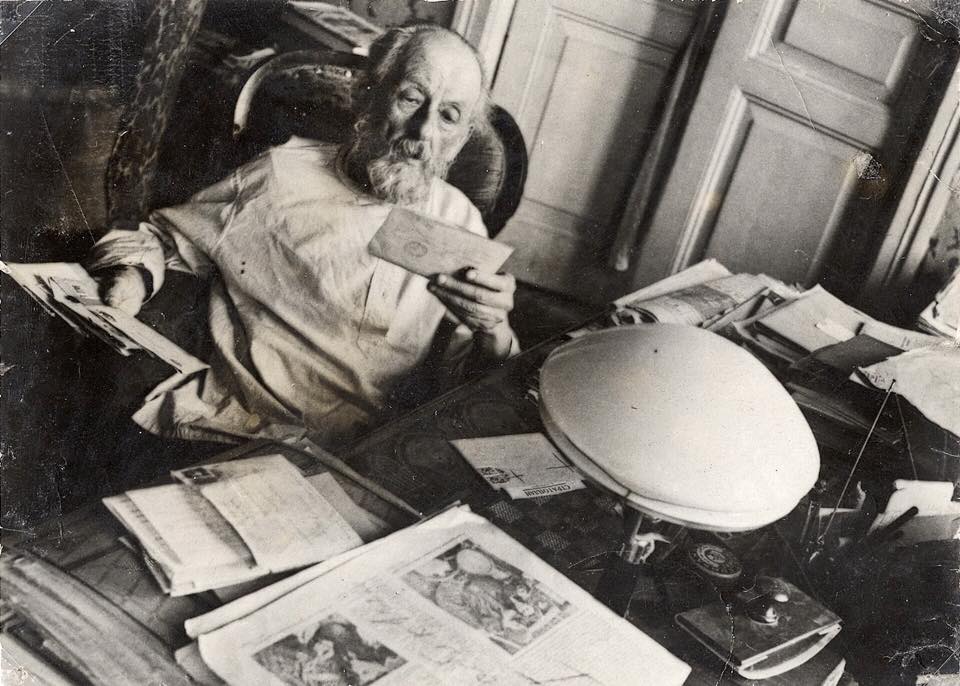
Russian rocket scientist Konstantin Tsiolkovsky
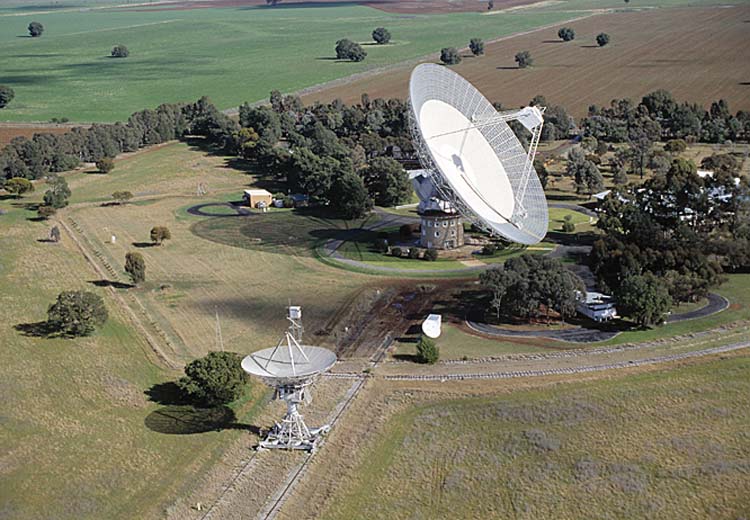
Radio telescopes are often used by SETI projects.
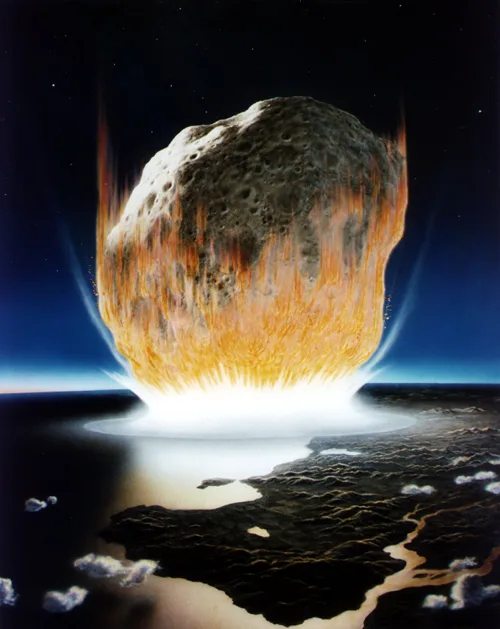
An asteroid impact may trigger an extinction event.
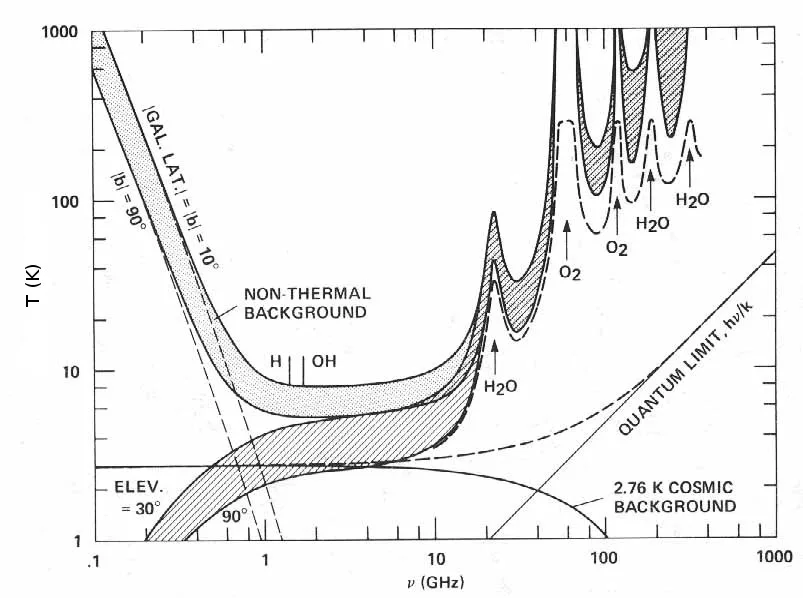
Microwave window as seen by a ground-based system. From NASA report SP-419: SETI – the Search for Extraterrestrial Intelligence
Fermi paradox
The Fermi paradox is the discrepancy between the lack of conclusive evidence of advanced extraterrestrial life and the apparently high likelihood of its existence.
Seventeenth-Century Lunar Objections
The core dilemma behind the Fermi paradox was anticipated centuries before the atomic age. In his 1686 book Conversations on the Plurality of Worlds, Bernard Le Bovier de Fontenelle explored whether intelligent beings inhabit the Moon. A skeptical character in his dialogue counters that if such beings actually existed, lunar inhabitants would have visited humanity already.
From Wikipedia · CC BY-SA 4.0
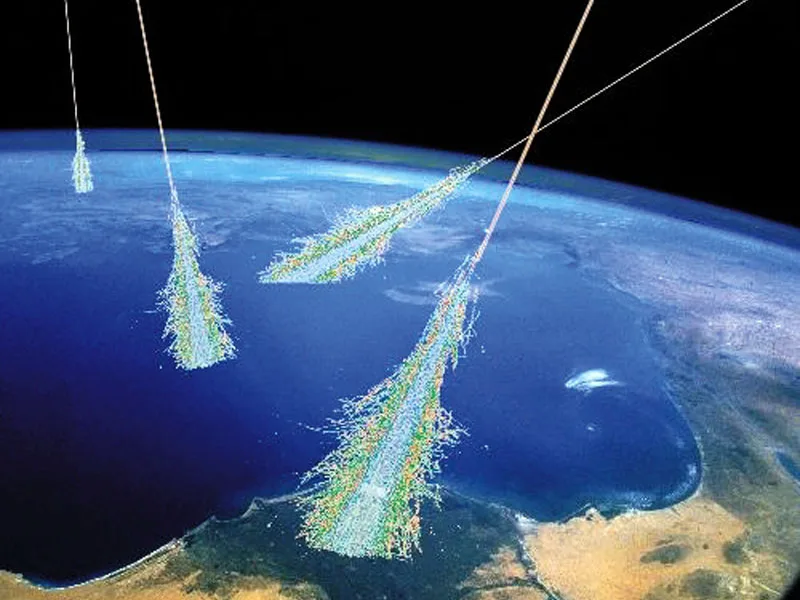
Crshower2 nasa
Ultra-high-energy cosmic ray
In astroparticle physics, an ultra-high-energy cosmic ray is a cosmic ray with an energy greater than 1 EeV, far beyond the rest mass and energies typical of other cosmic rays.
A Fastball-Paced Subatomic Nucleus
On 15 October 1991, researchers in Utah recorded a single atomic nucleus possessing an astonishing 3.2×10²⁰ eV, or roughly 50 J of energy. This microscopic entity carried the kinetic energy of a 5 ounces baseball traveling at 100 kilometers per hour. Its detection shocked astrophysicists because a single subatomic particle matched the momentum of a thrown sports projectile.
From Wikipedia · CC BY-SA 4.0
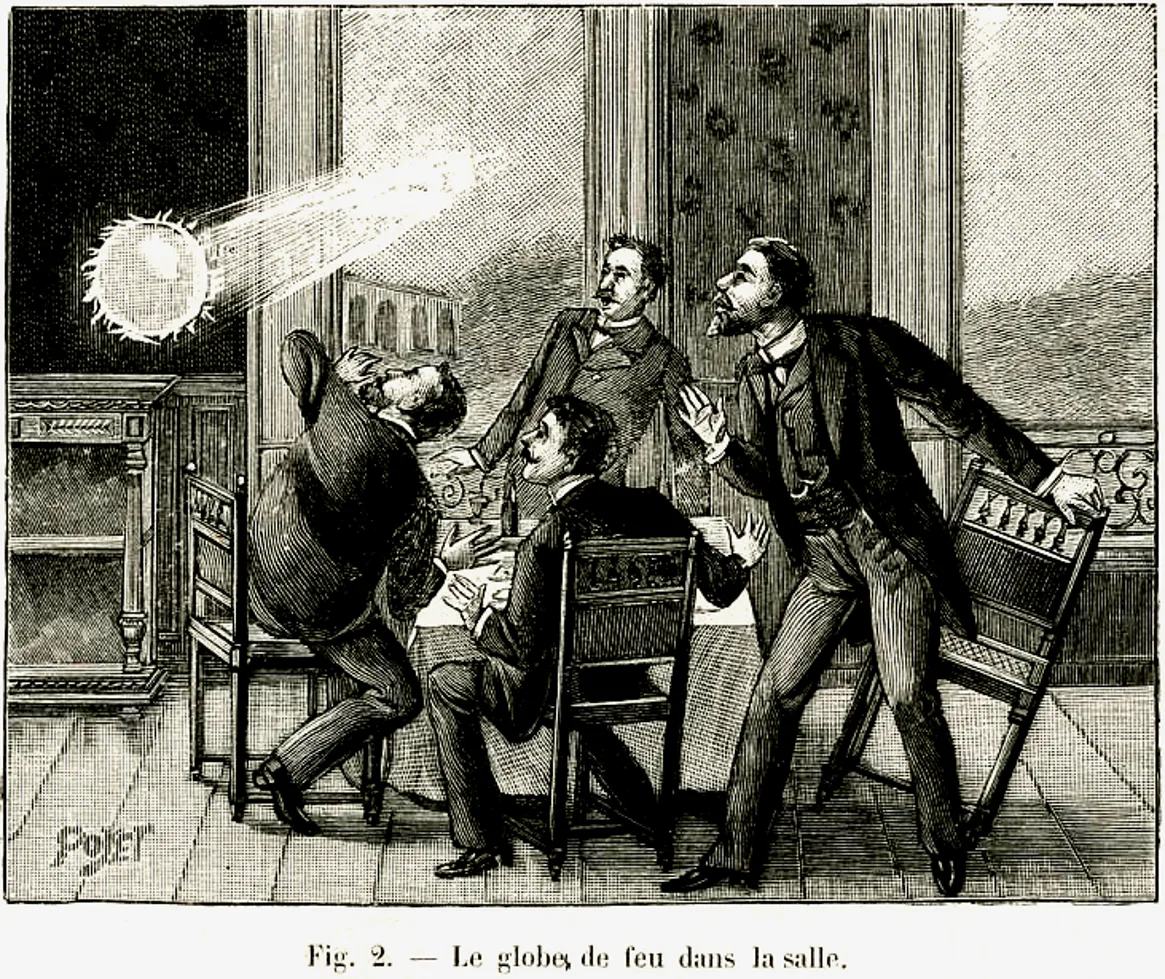
A 1901 depiction of ball lightning
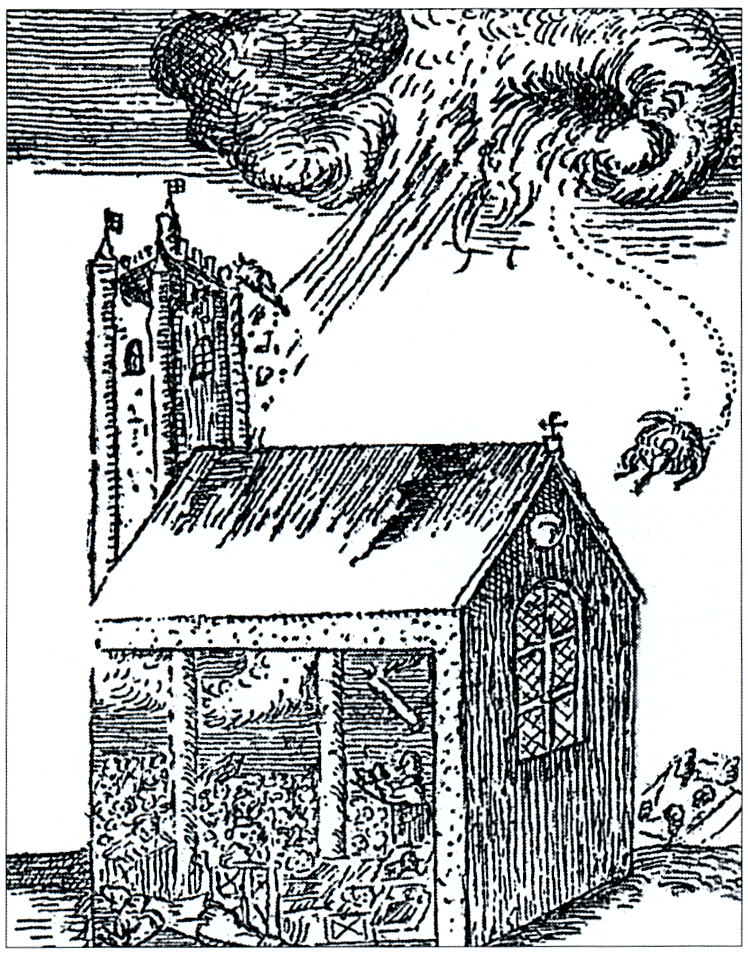
Contemporary woodcut of the Widecombe-in-the-Moor storm
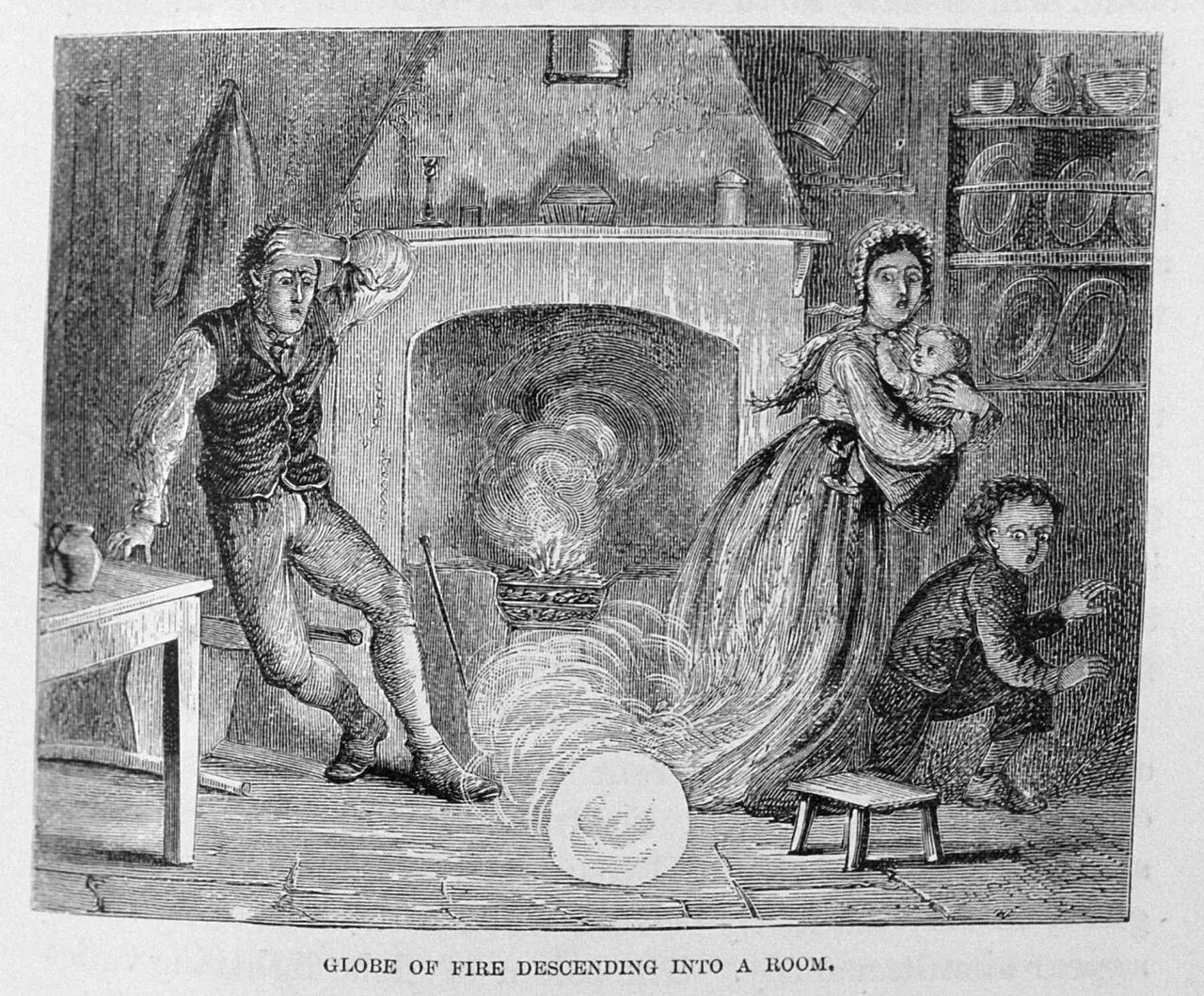
Ball lightning entering via the chimney (1886)
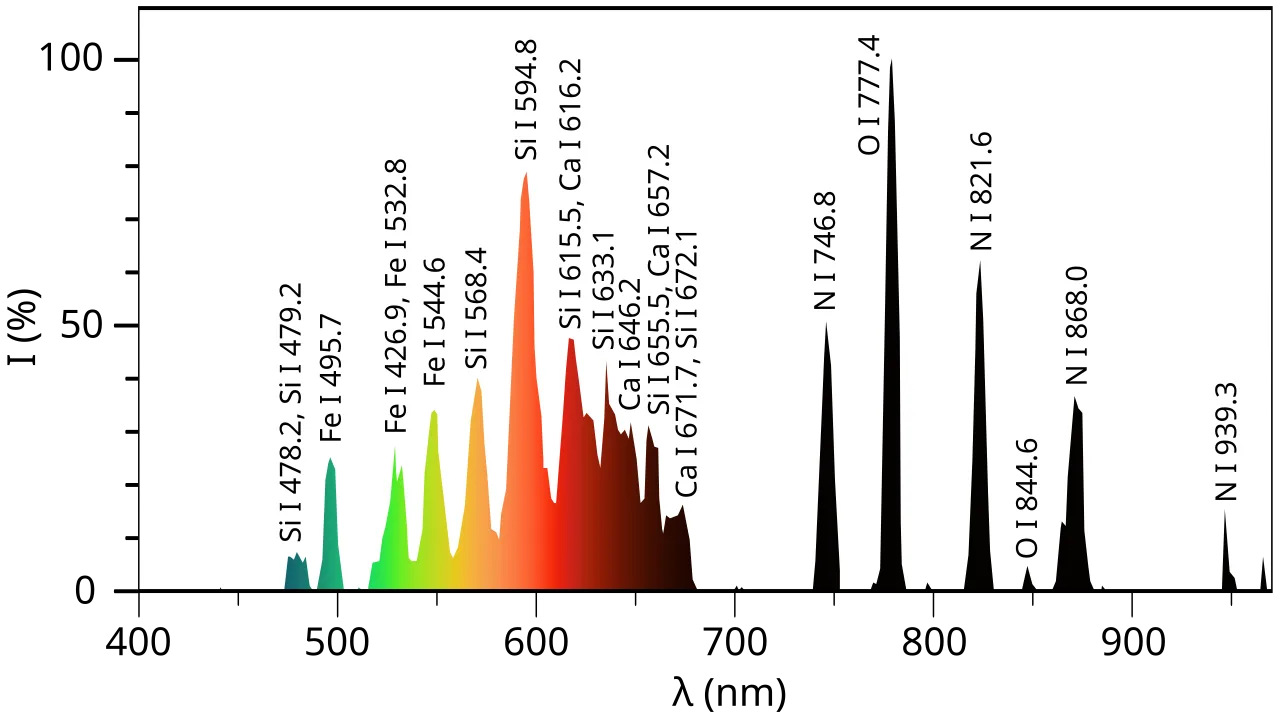
The emission spectrum (intensity vs. wavelength) of a natural ball lightning
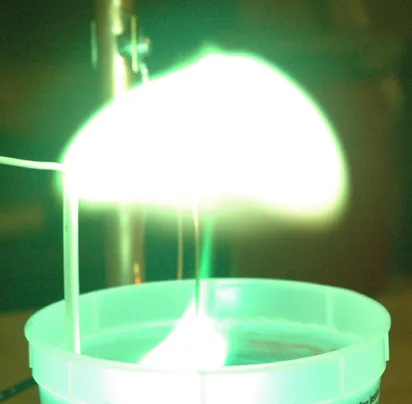
A demonstration of the water discharge experiment
Ball lightning
Ball lightning is a rare, unexplained phenomenon described as luminescent spherical objects ranging from pea-sized to several meters in diameter, typically associated with thunderstorms.
A Fiery Globe Falling Near Medieval London
In what is possibly the earliest known reference to ball lightning, the English monk Gervase of Canterbury recorded an encounter dated 7 June 1195. He chronicled a dark cloud emitting a white substance that condensed into a fiery globe descending near London. Modern physicists and historians confirmed that this medieval account closely matches contemporary descriptions of the phenomenon.
From Wikipedia · CC BY-SA 4.0