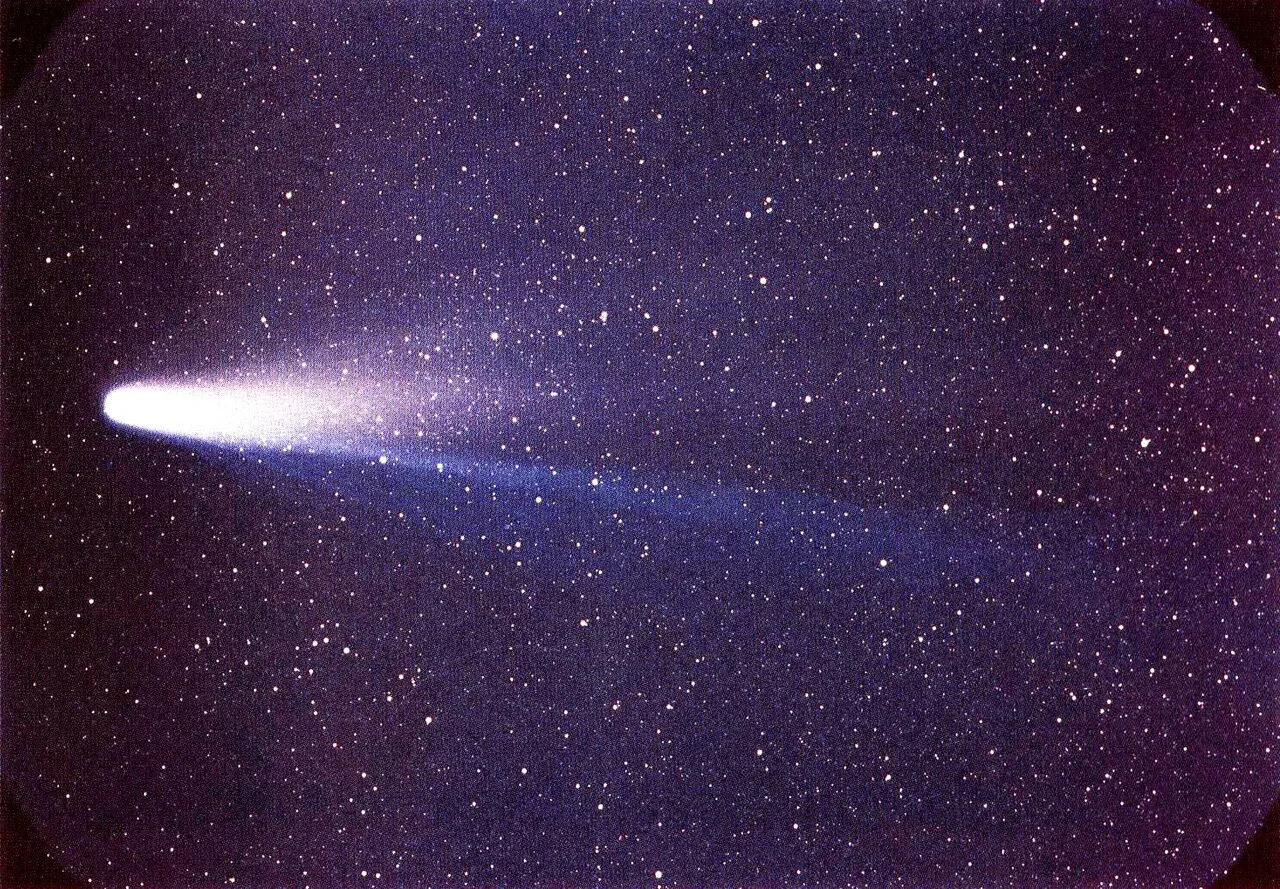
Lspn comet halley
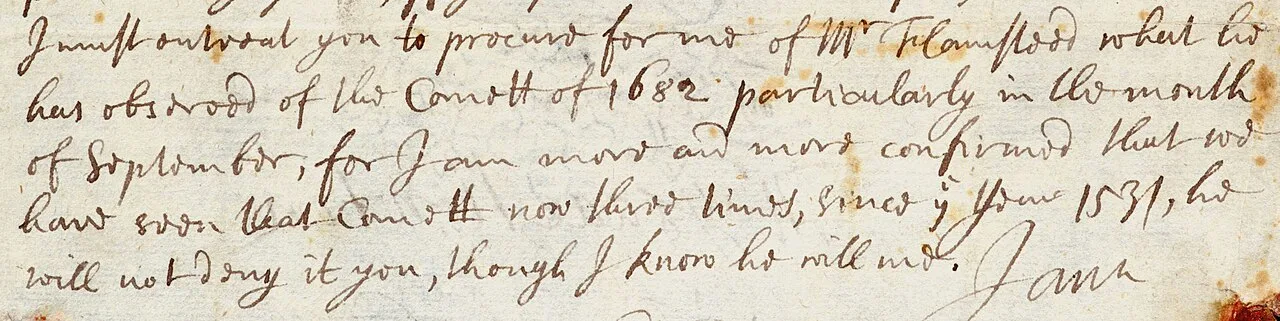
"I must entreat you to procure for me of Mr Flamsteed what he has observed of the Comett of 1682 particularly in the month of September, for I am more and more confirmed that we have seen that Comett now three times, since yͤ Yeare 1531, he will not deny it you, though I know he will me." —Excerpt of Halley's letter to Newton about comet's orbits (September 28, 1695)
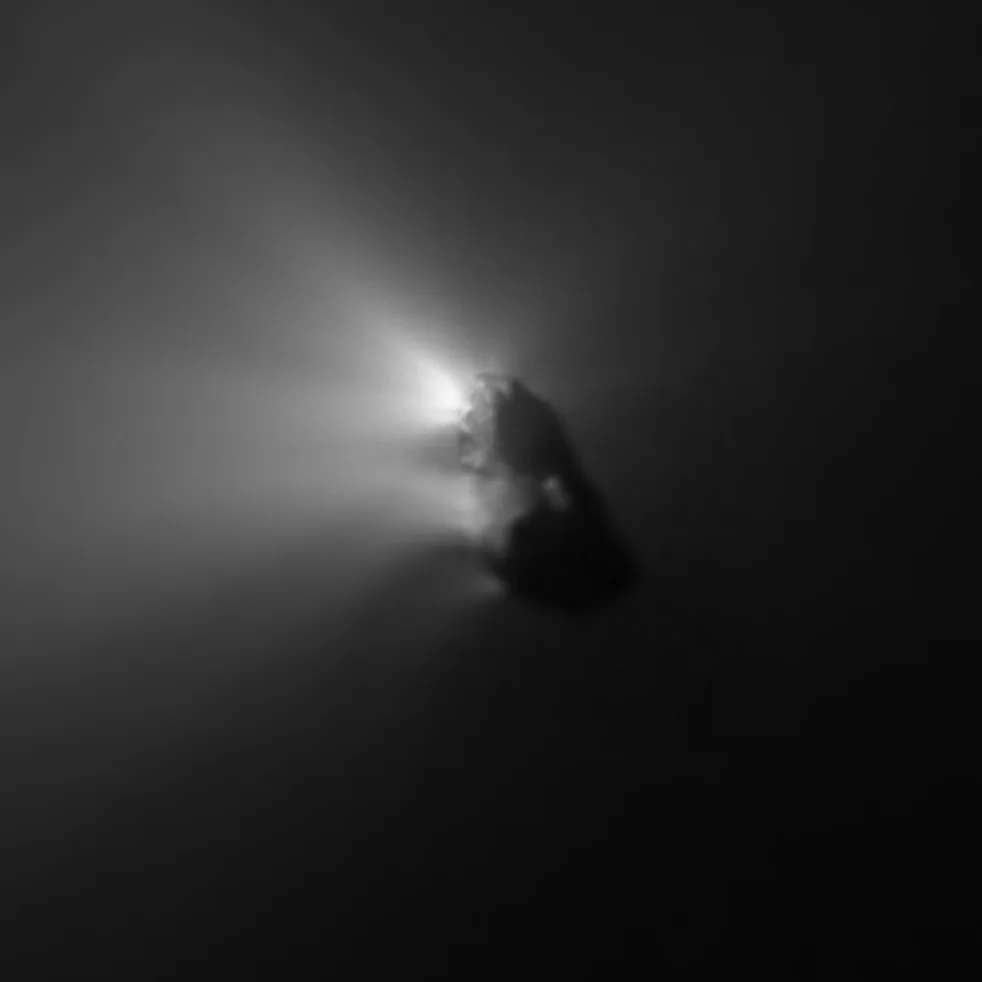
The nucleus of Halley's Comet, imaged by the Giotto probe on 14 March 1986. The dark colouration of the nucleus can be observed, as well as the jets of dust and gas erupting from its surface.
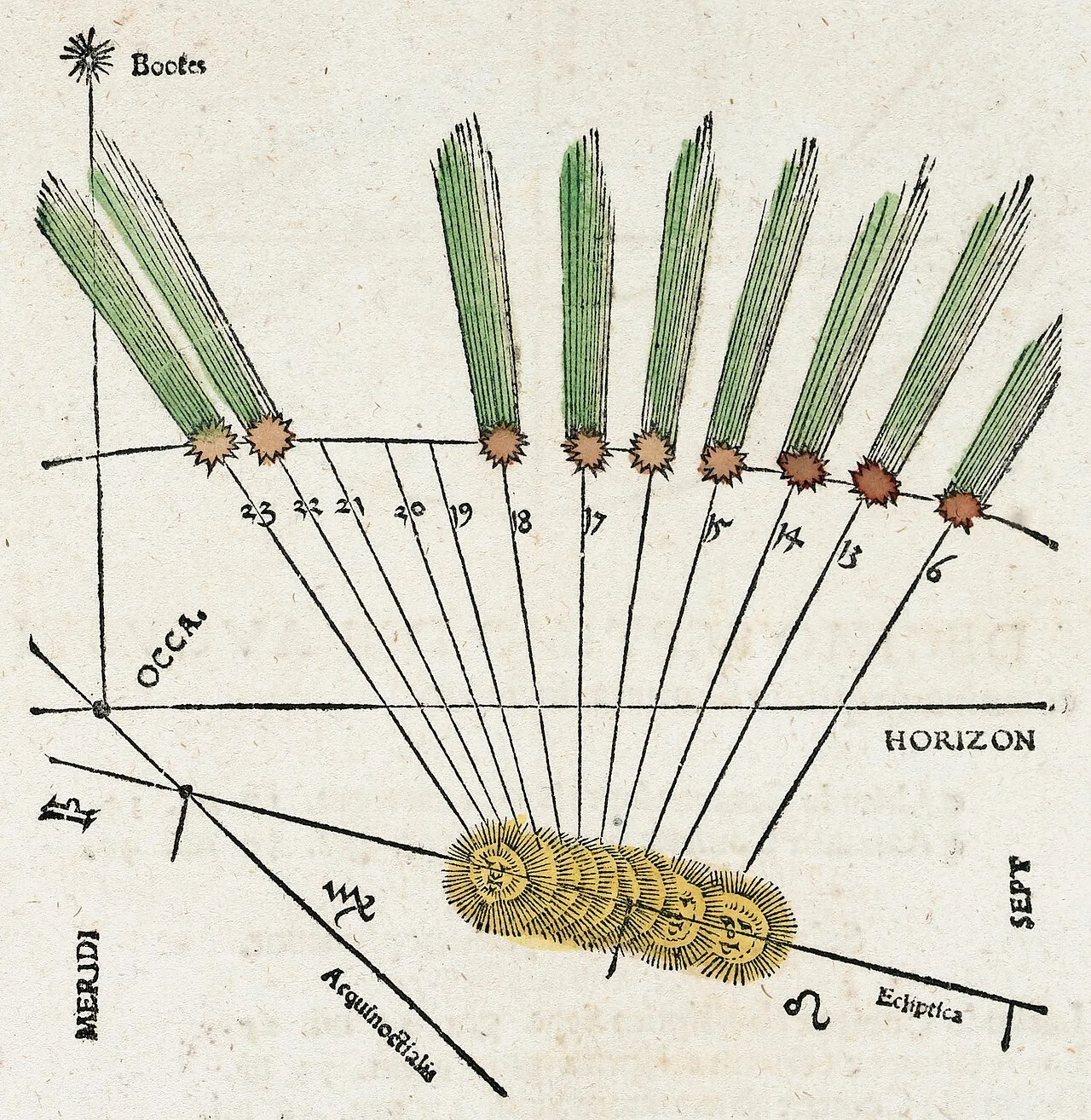
Illustration of the 1531 appearance in Petrus Apianus' Astronomicum Caesareum, noting that a comet's tail always points away from the sun
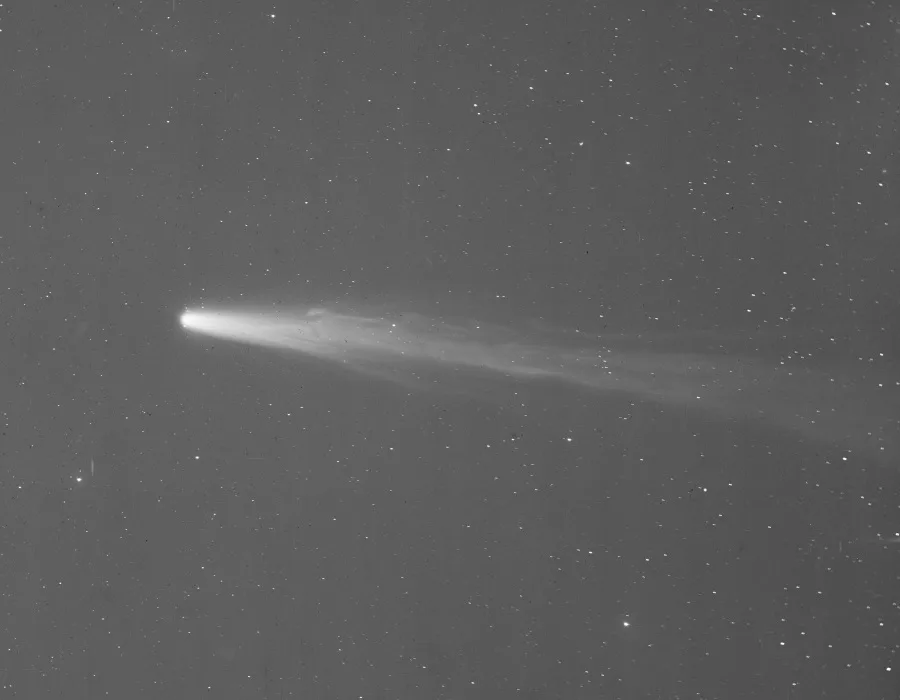
Halley's Comet in April 1910, photographed from Arequipa, Peru
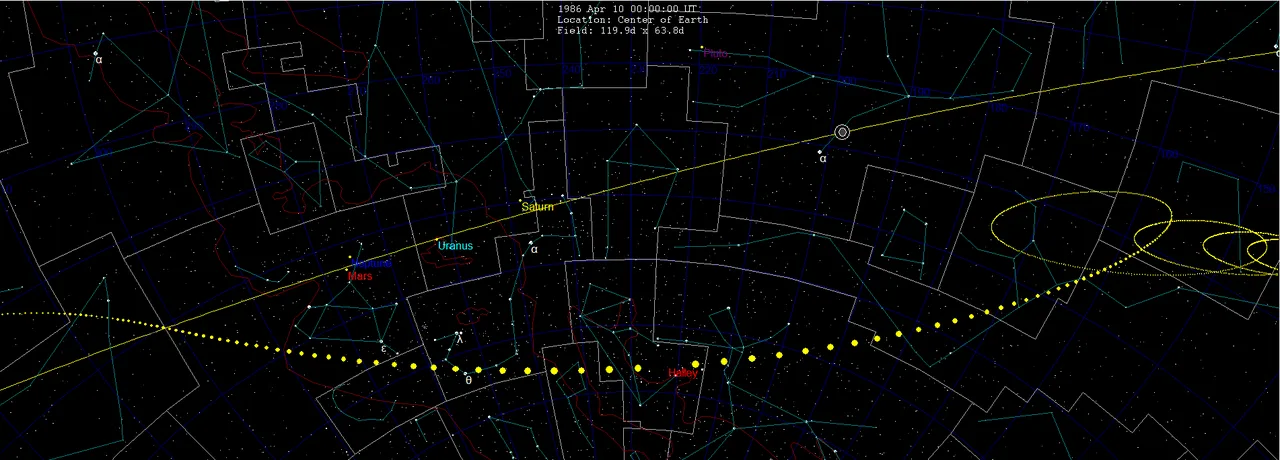
Daily motion across sky during the 1986 passage of Halley's Comet. The section of the ecliptic from Capricornus on the left to Leo on the right is shown.
Halley's Comet
Halley's Comet is a short-period comet consistently visible to the naked eye from Earth every 72 to 80 years.
Gravitational Drag and the 618-Day Delay
When the comet returned in 1759, the gravitational attraction of Jupiter and Saturn caused a delay of 618 days, postponing perihelion until 13 March 1759. Calculating this planetary interference resolved orbital variations and demonstrated the predictive power of gravitational physics. The confirmation of the comet's return marked the first time anything other than planets had been shown to orbit the Sun.
From Wikipedia · CC BY-SA 4.0
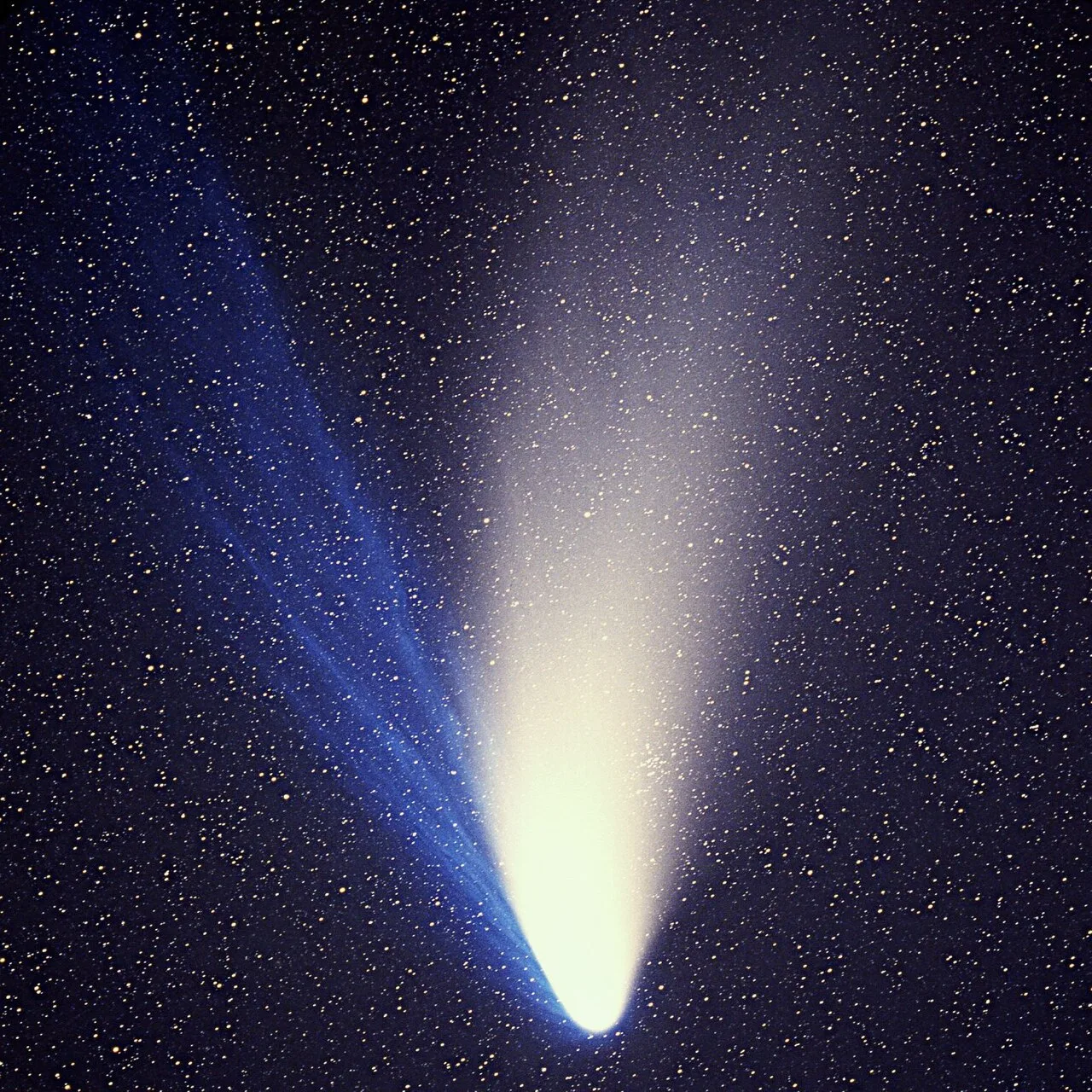
Comet Hale-Bopp 1995O1
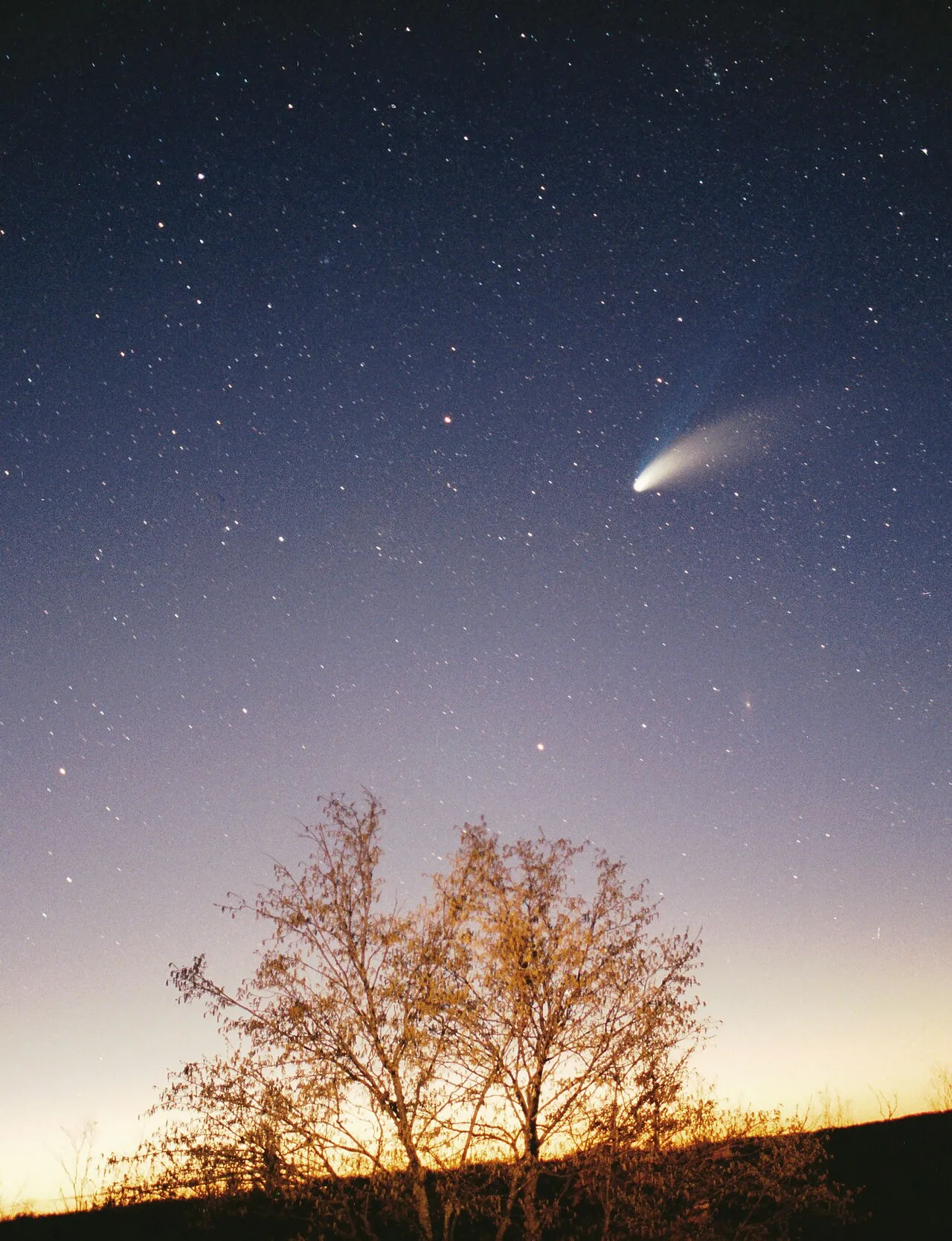
The comet became a spectacular sight in early 1997.
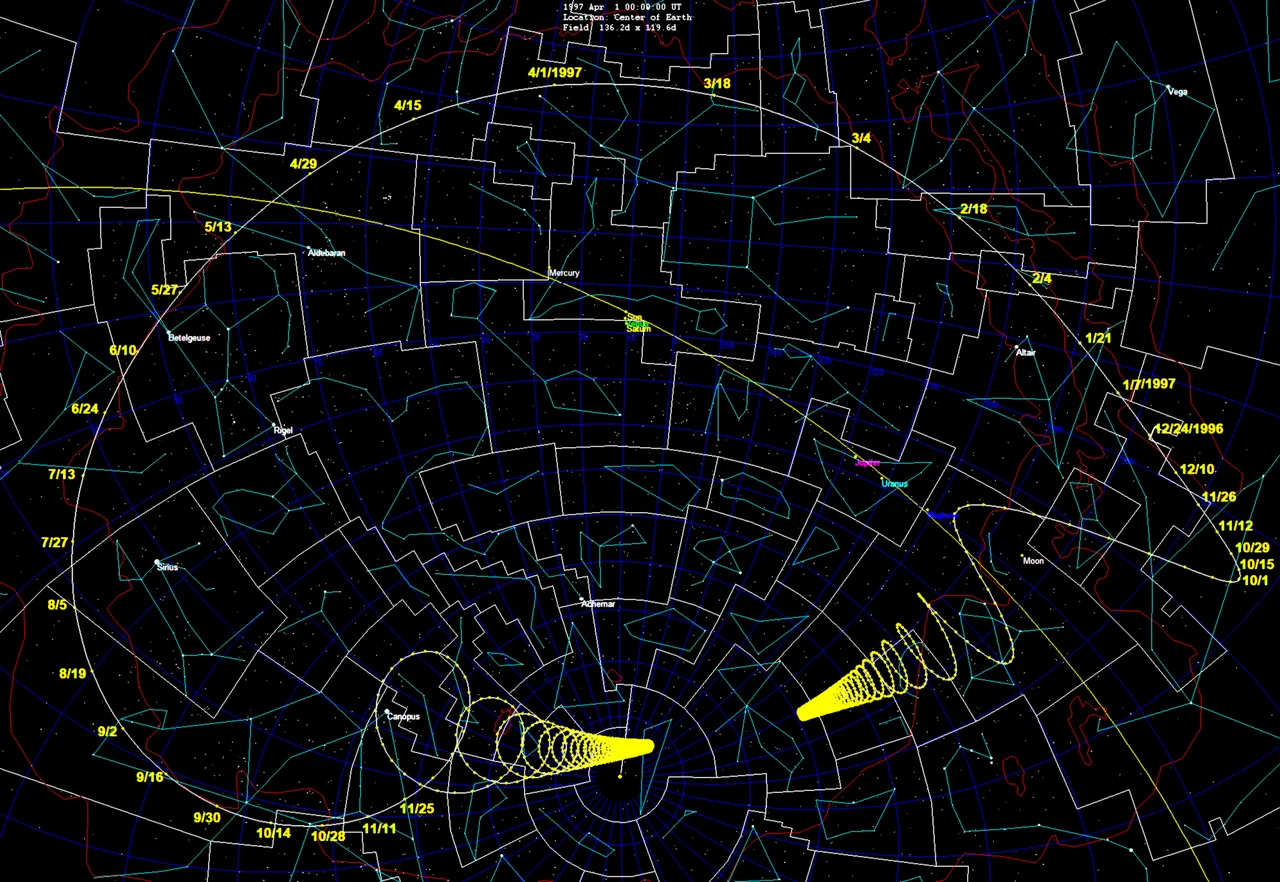
Star map of path with 14-day motion marked
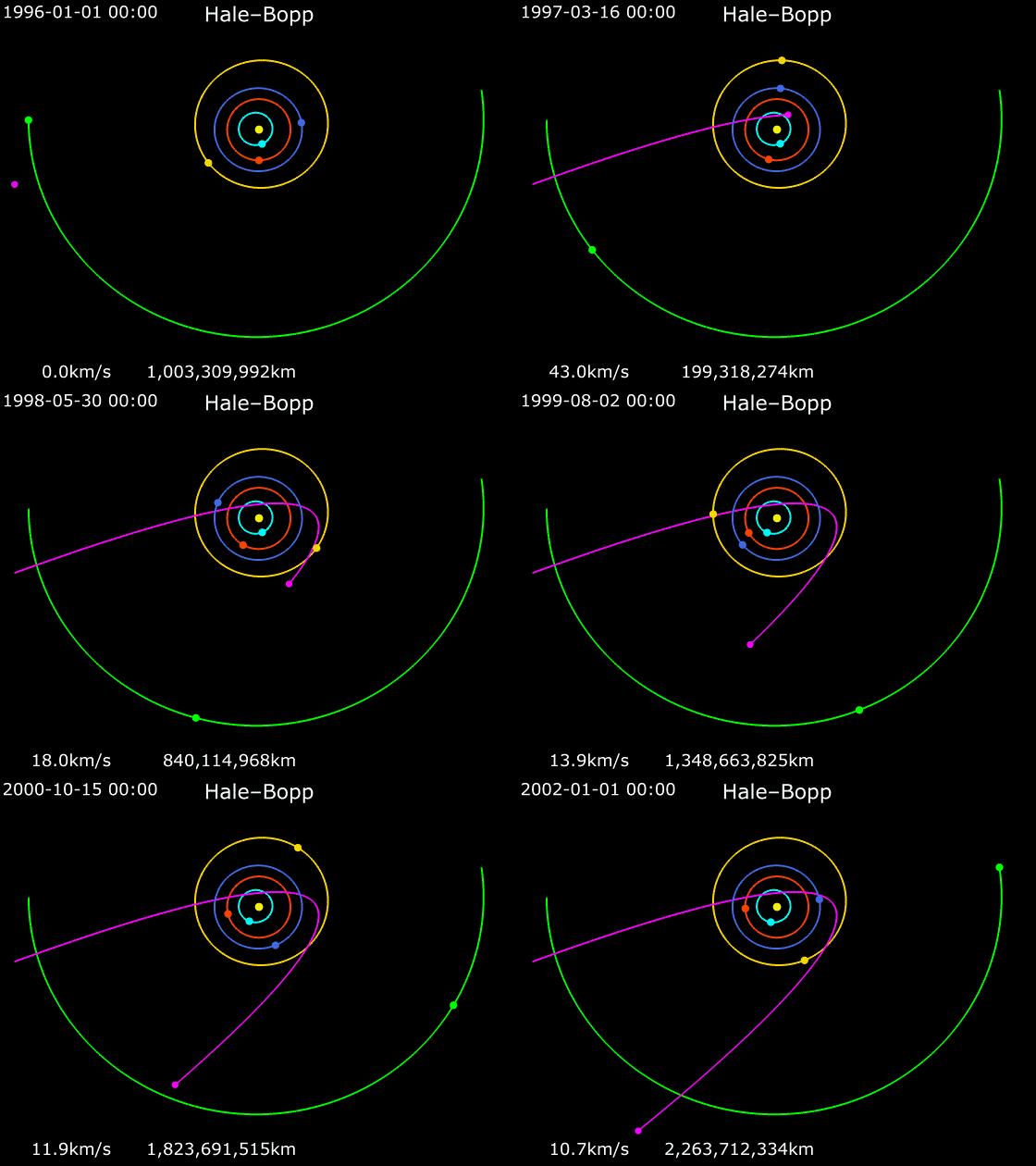
Polar view
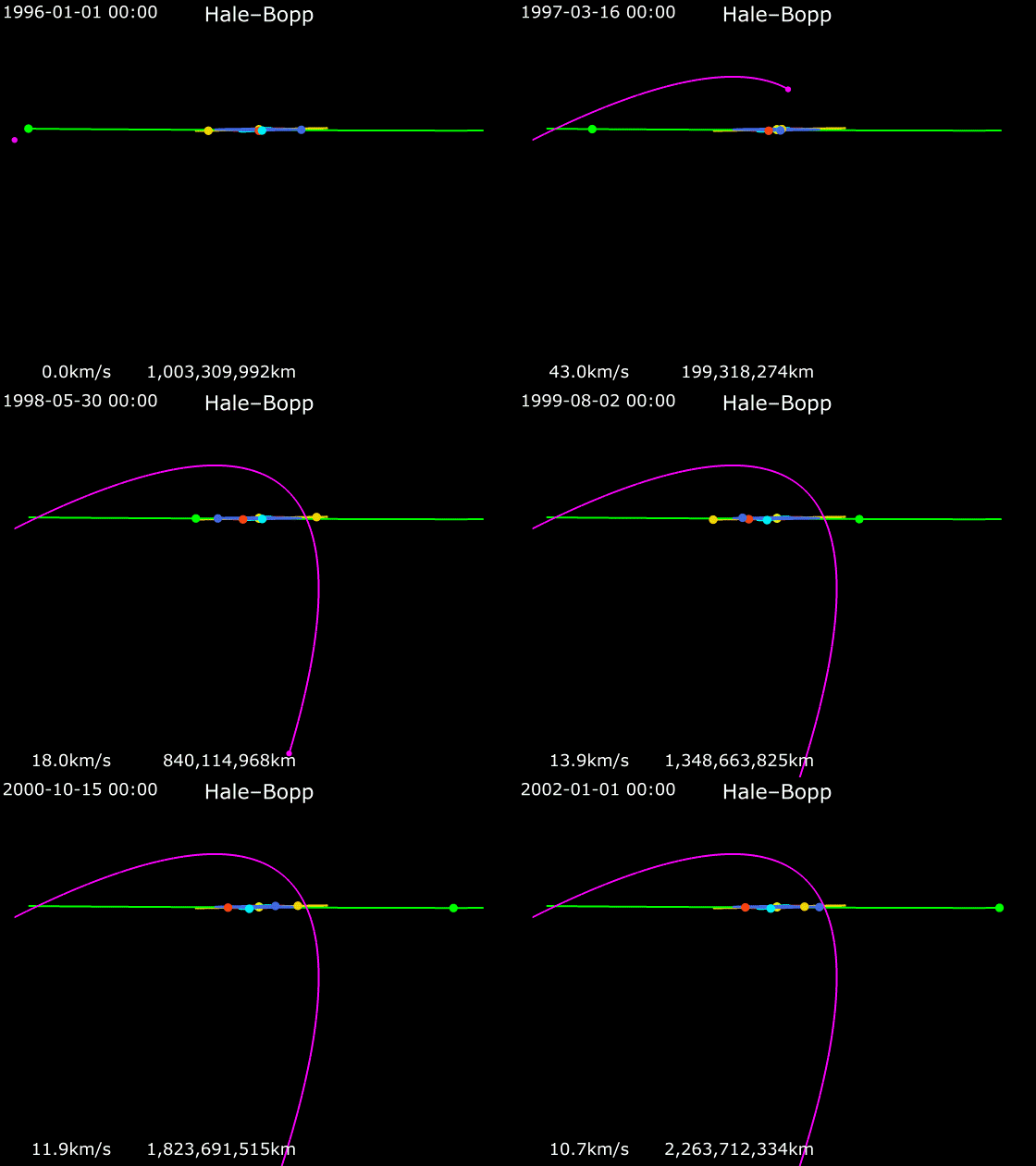
Equatorial view
![Comet Hale–Bopp in 2001, at a distance of nearly 2.0 billion km (1.2 billion mi) from the Sun.[73]](https://nwjvzop1xgplmzvt.public.blob.vercel-storage.com/wikifeed/comet-hale-bopp/5-4967e4aaa5.webp)
Comet Hale–Bopp in 2001, at a distance of nearly 2.0 billion km (1.2 billion mi) from the Sun.[73]
Comet Hale–Bopp
Comet Hale–Bopp is a long-period comet that was one of the brightest and most widely observed comets of the 20th century.
Midnight Email Versus Western Union Telegram
The reporting of the discovery highlighted a rapid generational shift in astronomical communication technologies. When the new object was identified, one observer alerted the Central Bureau for Astronomical Telegrams about two hours after Alan Hale using a Western Union telegram. Brian G. Marsden, who had run the bureau since 1968, noted that Hale had already sent three emails with updated coordinates before the telegram arrived.
From Wikipedia · CC BY-SA 4.0
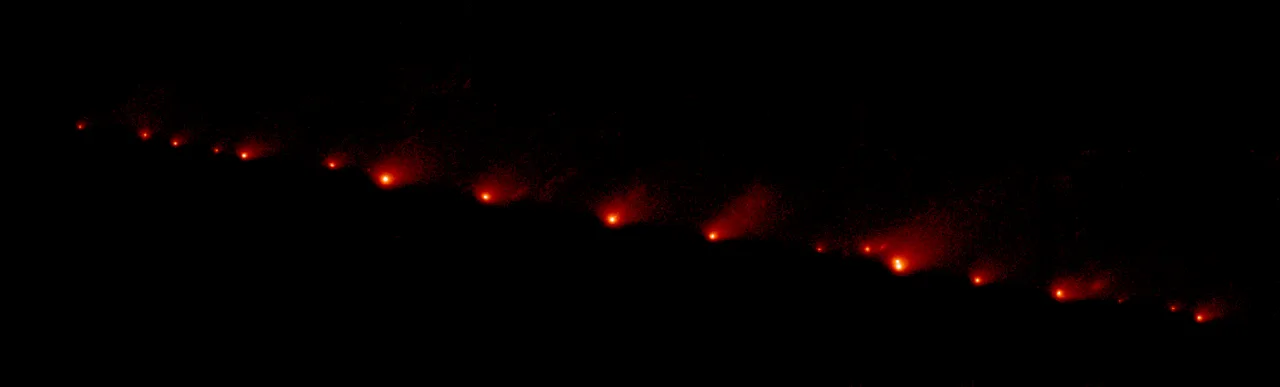
Shoemaker-Levy 9 on 1994-05-17
![Jupiter in ultraviolet (about 2.5 hours after R's impact). The black dot near the top is Io transiting Jupiter.[18]](https://nwjvzop1xgplmzvt.public.blob.vercel-storage.com/wikifeed/comet-shoemaker-levy-9/1-468e4ab4b0.webp)
Jupiter in ultraviolet (about 2.5 hours after R's impact). The black dot near the top is Io transiting Jupiter.[18]
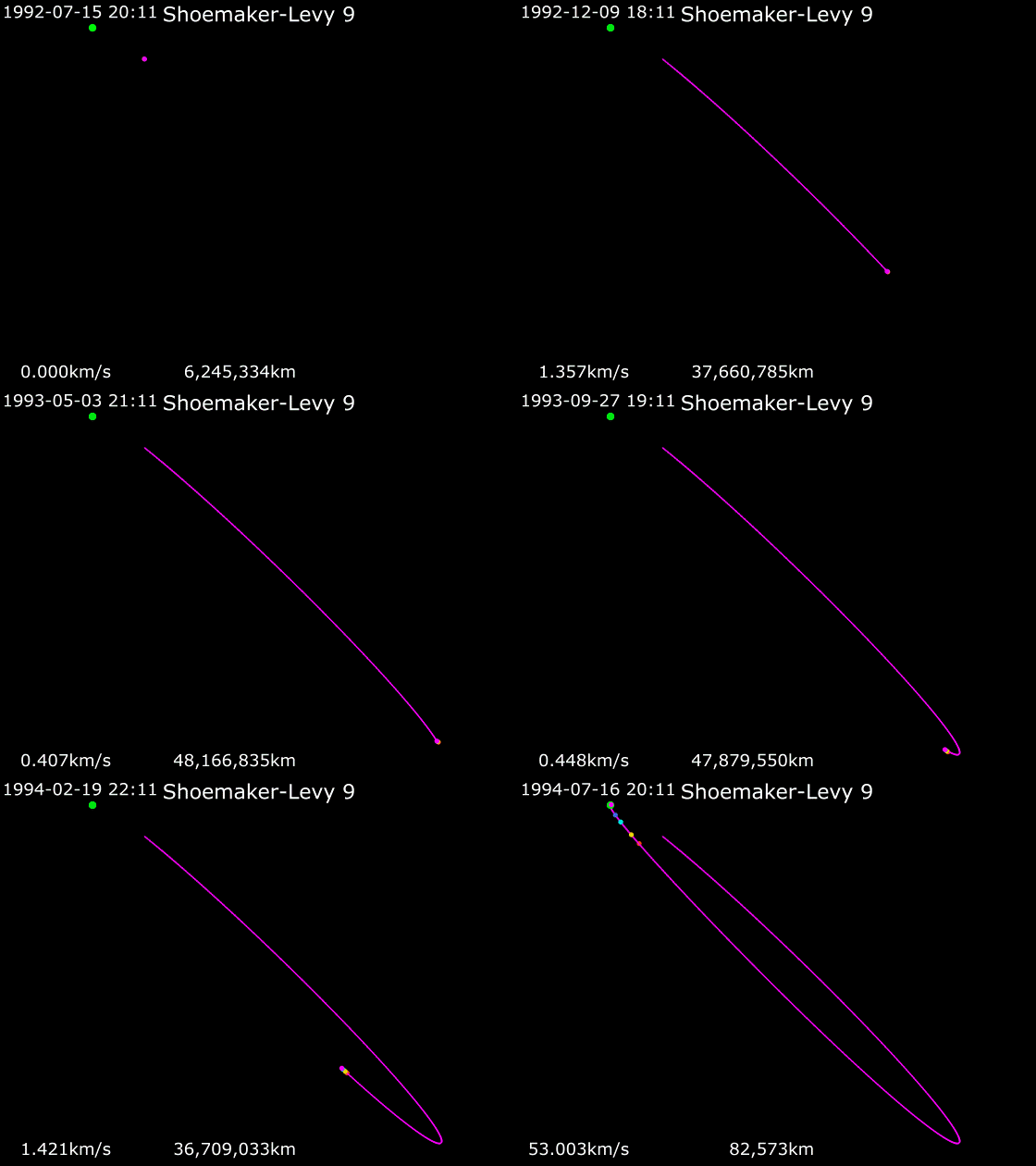
Animation of Shoemaker–Levy 9's orbit around Jupiter.mw-parser-output .legend{page-break-inside:avoid;break-inside:avoid-column}.mw-parser-output .legend-color{display:inline-block;min-width:1.25em;height:1.25em;line-height:1.25;margin:1px 0;text-align:center;border:1px solid black;background-color:transparent;color:black}.mw-parser-output .legend-text{} Jupiter · Fragment A · Fragment D · Fragment G · Fragment N · Fragment W
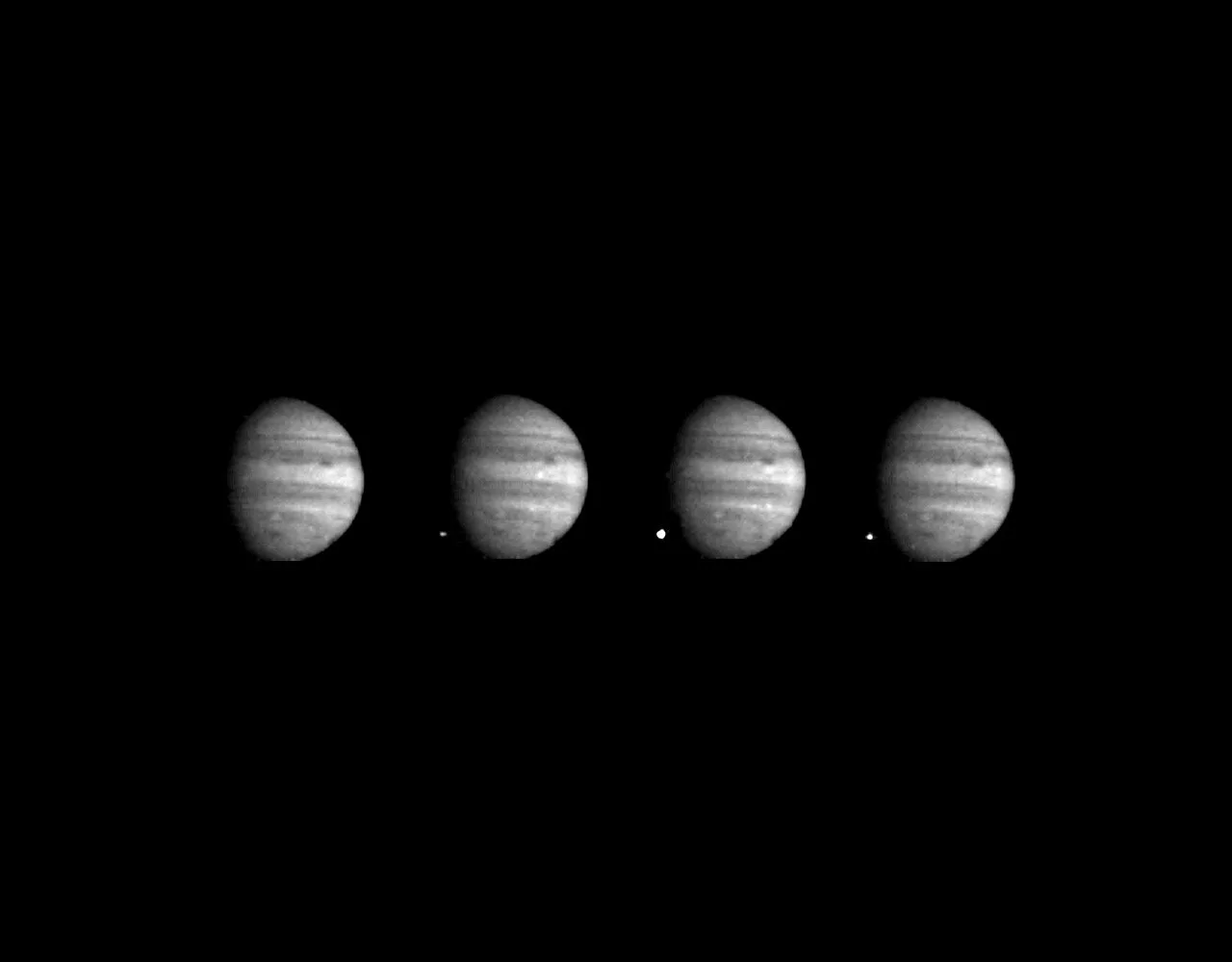
A sequence of Galileo images, taken several seconds apart, showing the appearance of the fireball of fragment W on the dark side of Jupiter
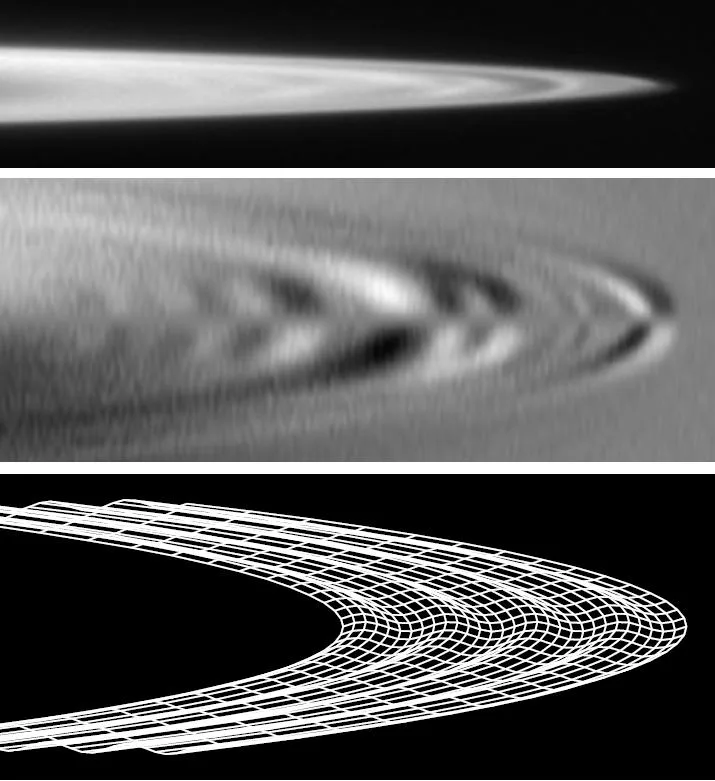
Ripples in the rings of Jupiter seen by Galileo spacecraft, caused by Shoemaker–Levy 9
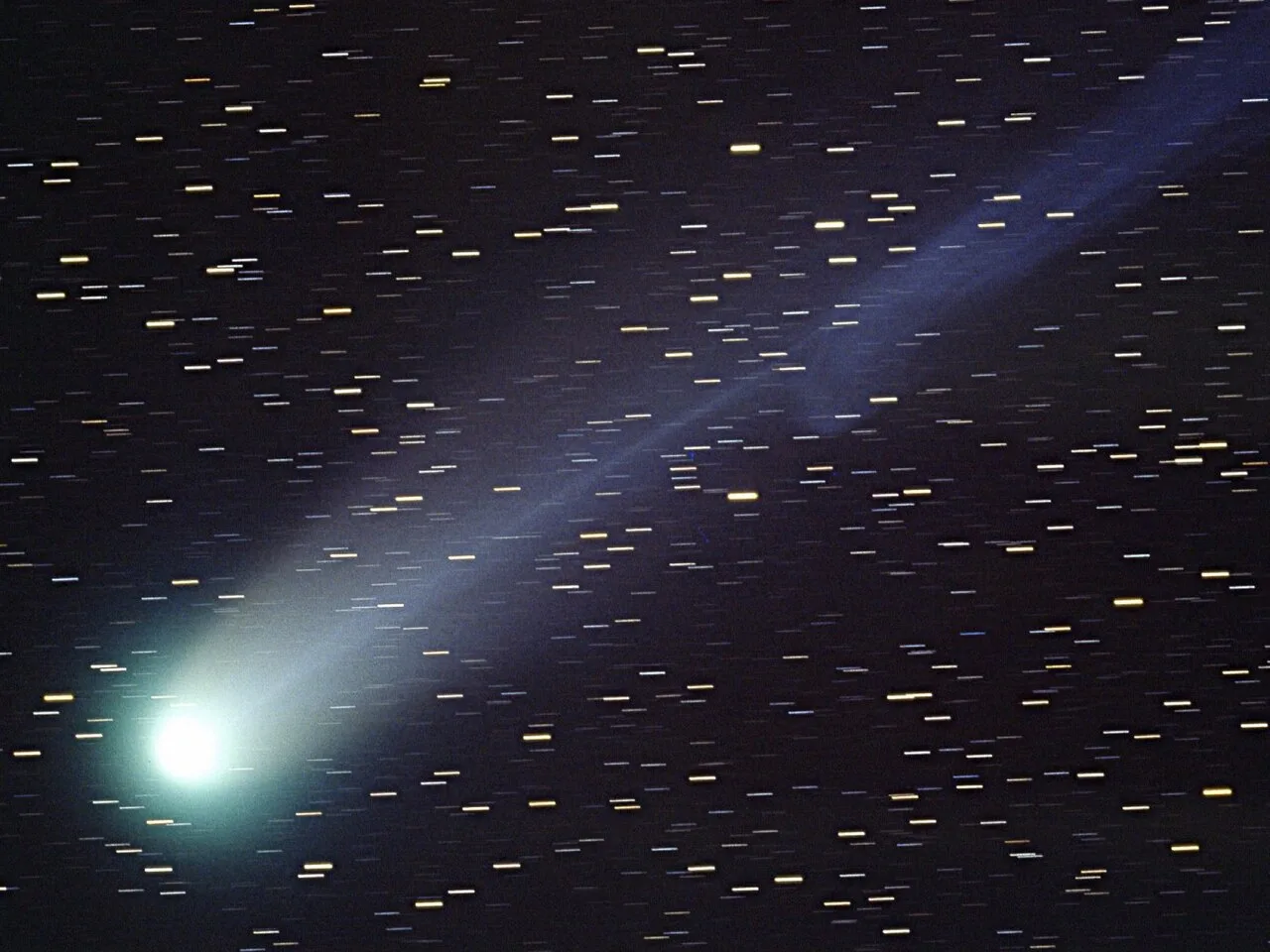
Comet C/1996 B2 (Hyakutake)
Comet Shoemaker–Levy 9
Comet Shoemaker–Levy 9 was a comet that broke apart in 1992 and collided with Jupiter in July 1994, providing the first direct observation of an extraterrestrial collision of Solar System objects.
A Sun-Free Orbit Within Jupiter's Gravity
Unlike typical comets bound to the Sun, Shoemaker–Levy 9 was captured into a Jovian orbit around the early 1970s or mid-1960s. Its path around Jupiter was exceptionally elongated, exhibiting an orbital eccentricity of e = 0.9986. At its farthest point, or apoapsis, the comet traveled 0.33 astronomical units away from the planet. This unstable, flattened trajectory positioned the comet for its eventual destruction.
From Wikipedia · CC BY-SA 4.0
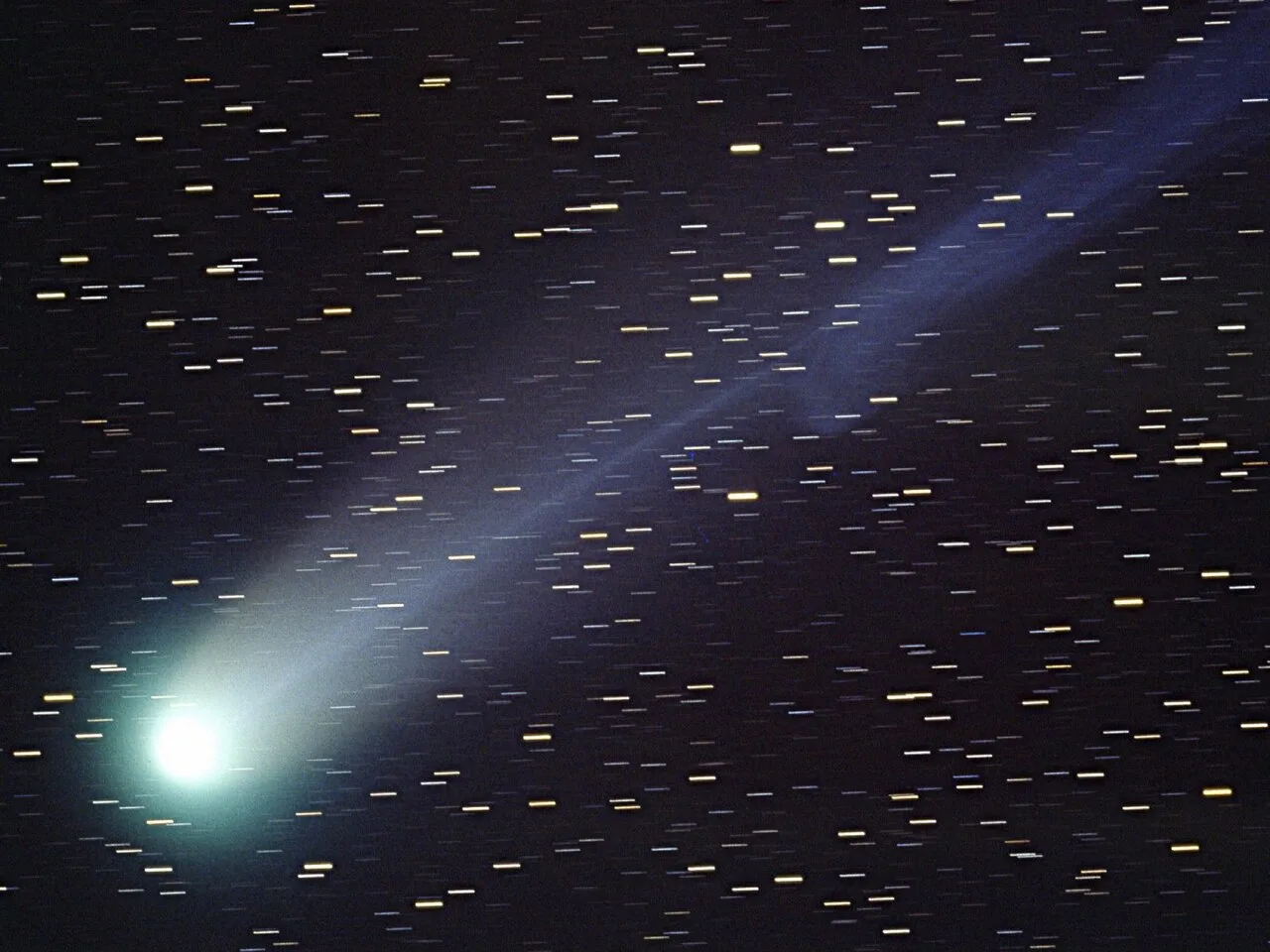
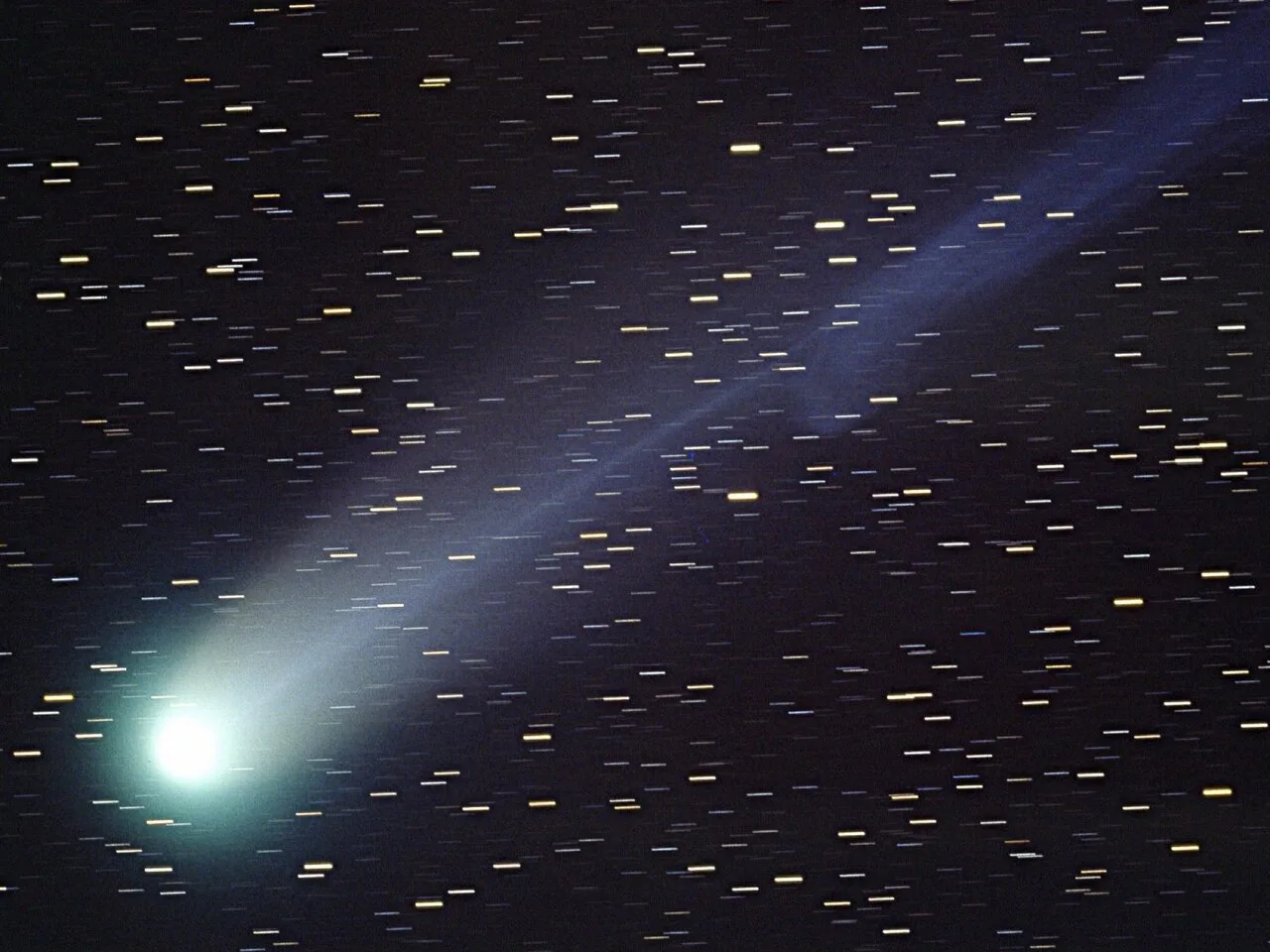
Hyakutake Color
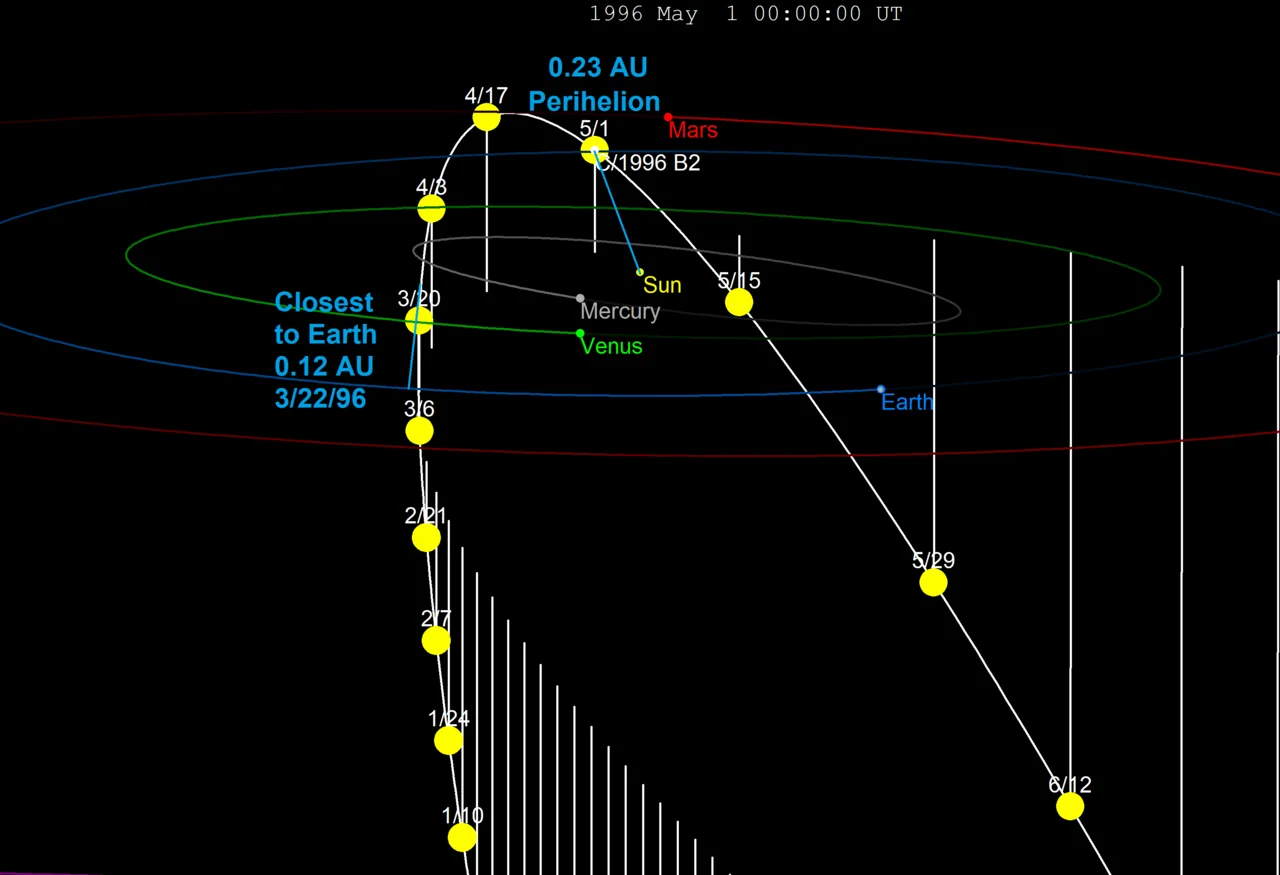
Comet Hyakutake's trajectory through the inner solar system, with a high inclination, passed closest to the Earth in late March 1996, passing over Earth's north pole. It was at perihelion on 1 May.
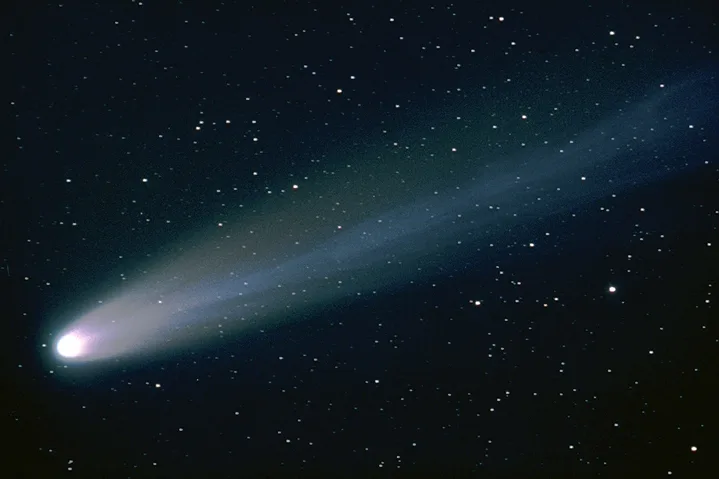
Comet Hyakutake photographed by Franz Haar in March 1996
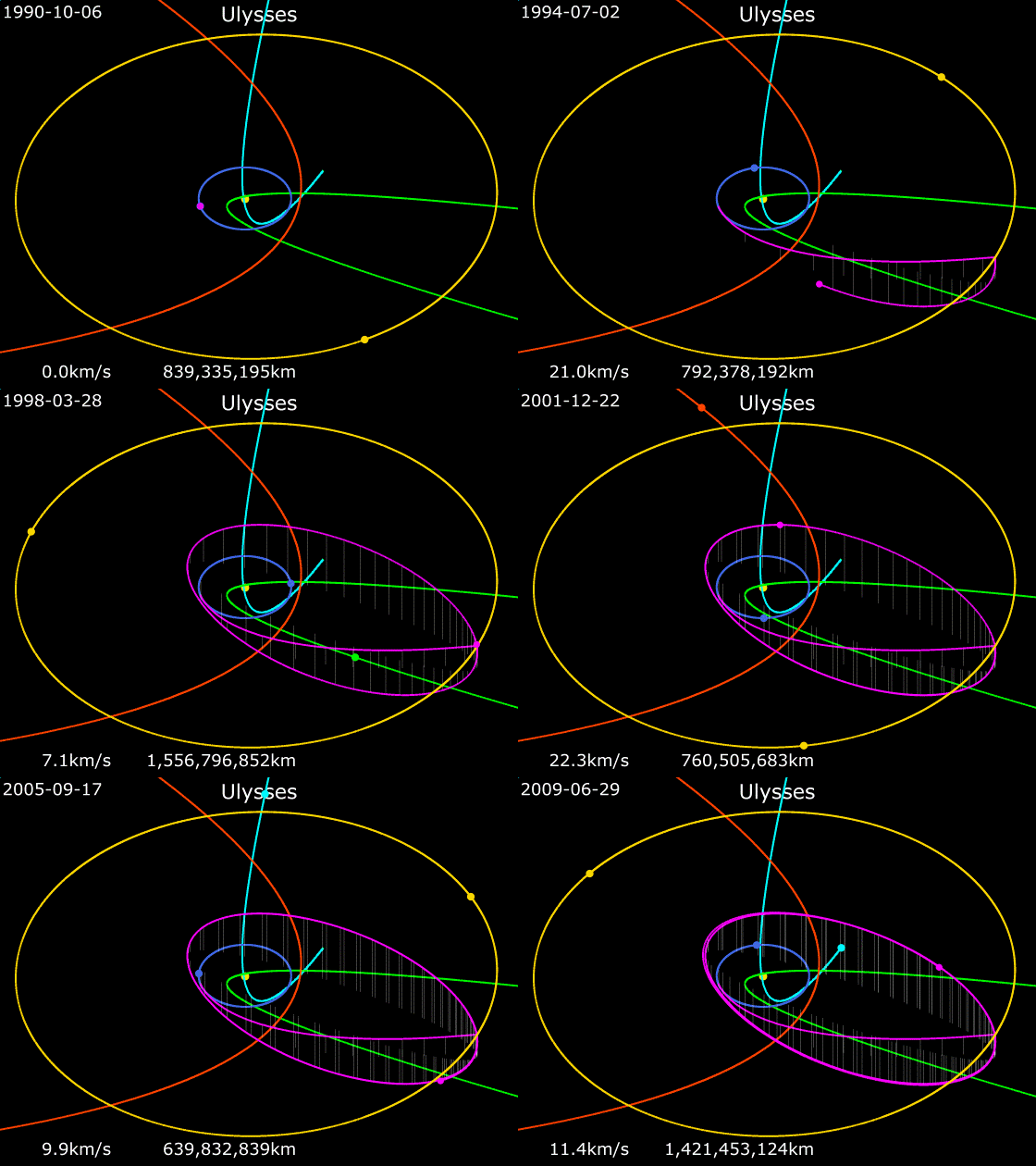
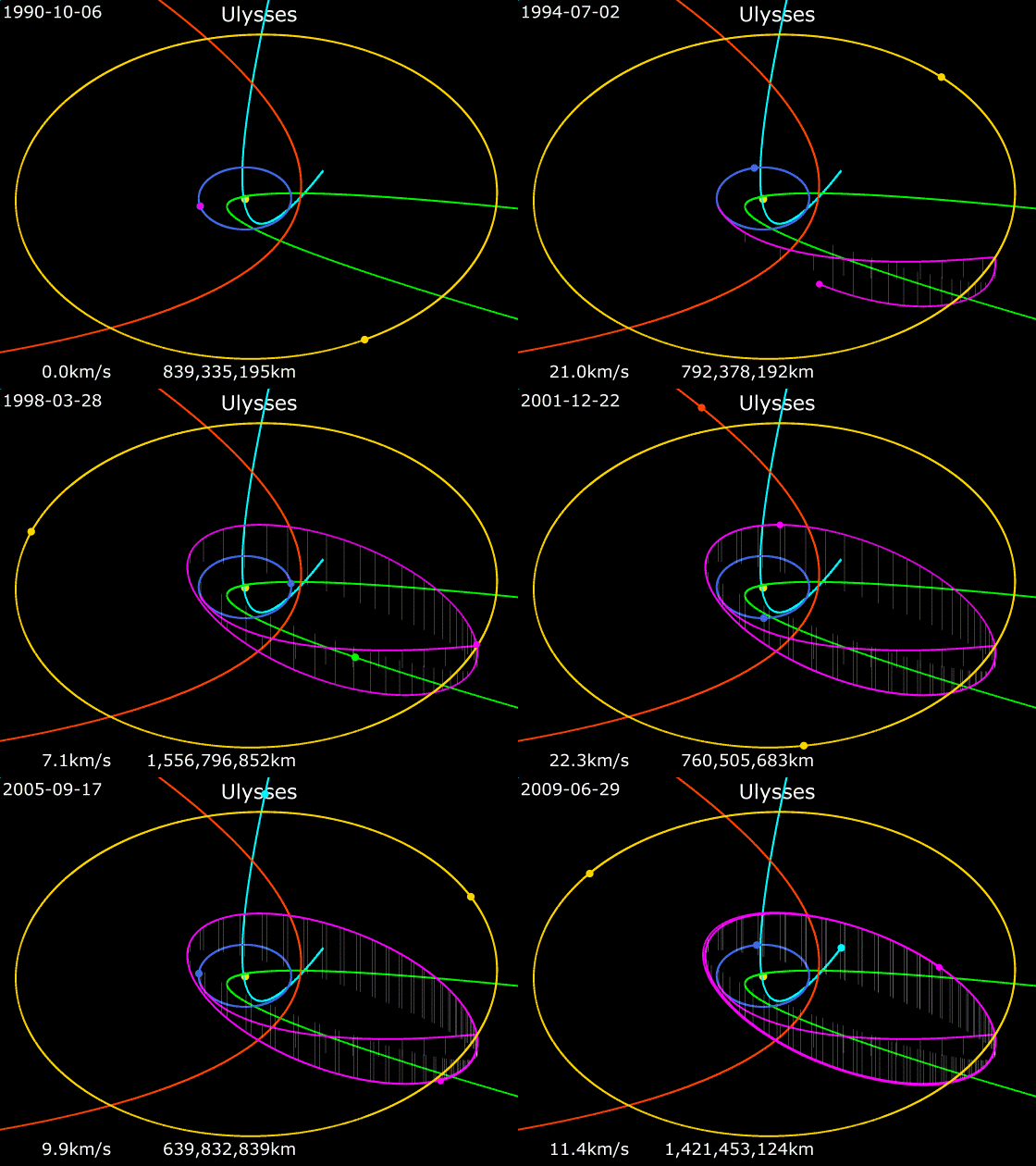
Animation of Ulysses' trajectory from 6 October 1990 to 29 June 2009.mw-parser-output .legend{page-break-inside:avoid;break-inside:avoid-column}.mw-parser-output .legend-color{display:inline-block;min-width:1.25em;height:1.25em;line-height:1.25;margin:1px 0;text-align:center;border:1px solid black;background-color:transparent;color:black}.mw-parser-output .legend-text{} Ulysses · Earth · Jupiter · C/2006 P1 · C/1996 B2 · C/1999 T1
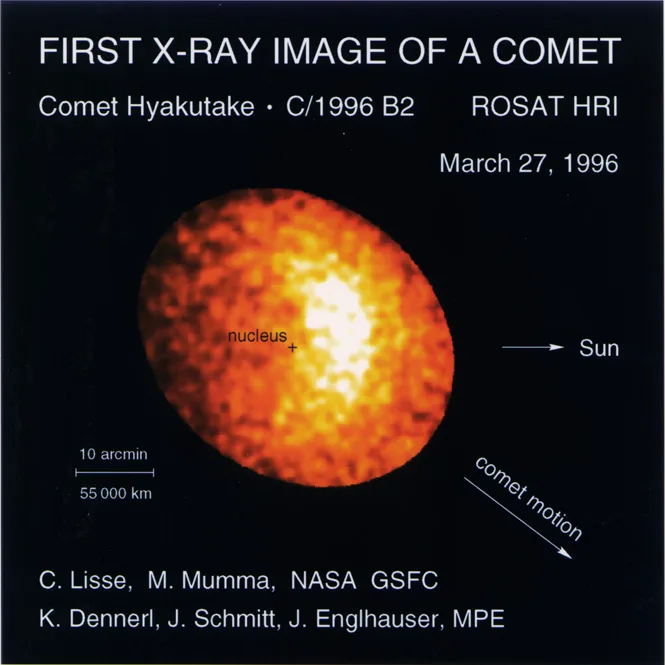
X-ray emission from Hyakutake, as seen by the ROSAT satellite
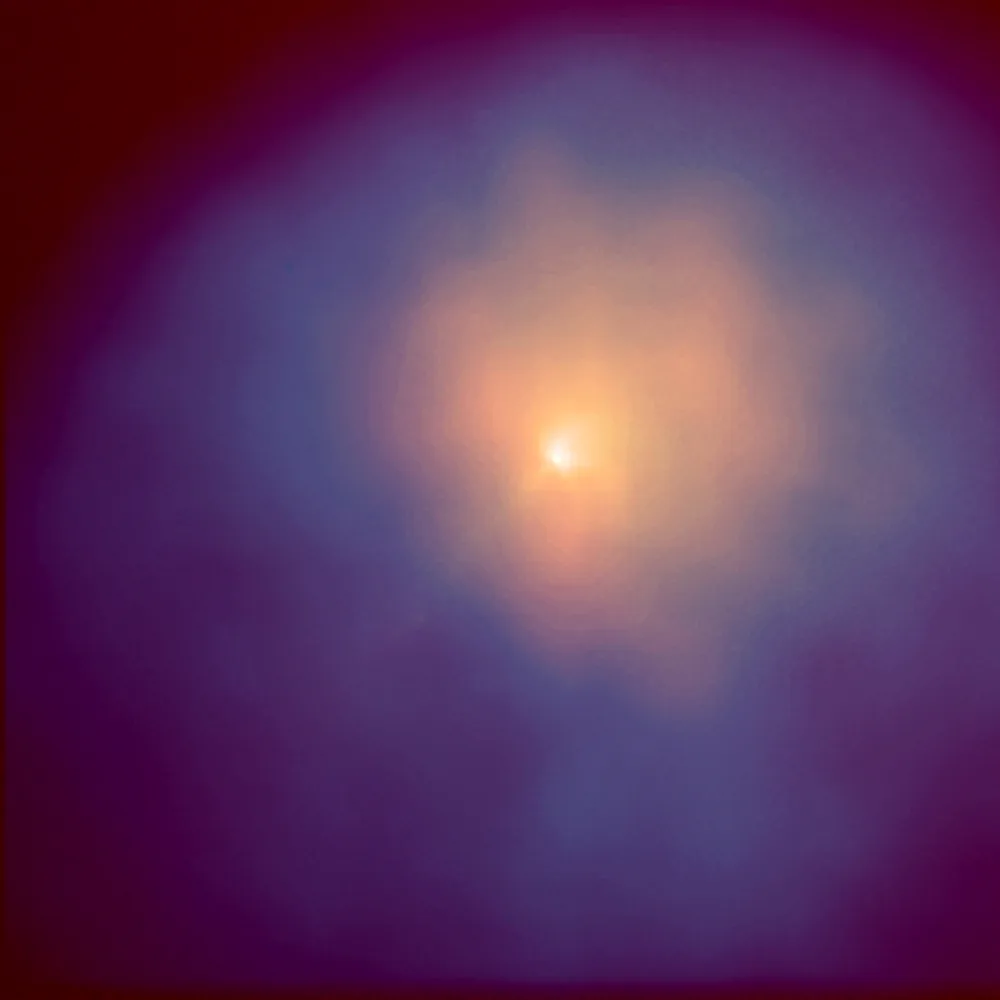
Comet Hyakutake captured by the Hubble Space Telescope on 4 April 1996, with an infrared filter
Comet Hyakutake
Comet Hyakutake, dubbed the Great Comet of 1996, is a bright comet discovered on 31 January 1996 that made one of the closest cometary approaches to Earth of the previous 200 years.
Twin Sighting That Overshadowed a Predecessor
Amateur astronomer Yuji Hyakutake had discovered comet C/1995 Y1 several weeks before spotting a second comet in nearly the same position. While re-observing the first comet, which never became visible to the naked eye, he found this second object unexpectedly. The new visitor quickly developed into a spectacular celestial event that far eclipsed his initial discovery.
From Wikipedia · CC BY-SA 4.0
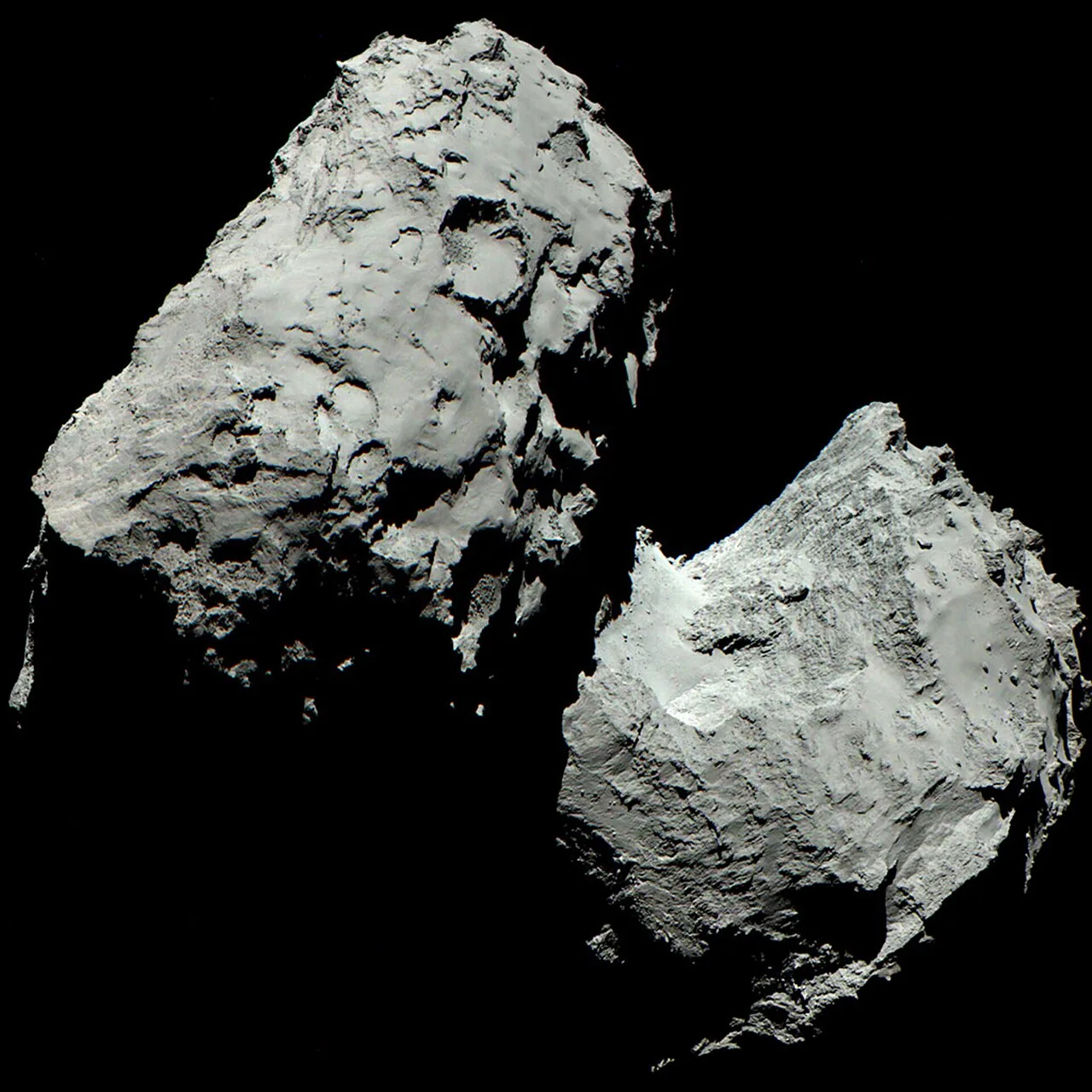
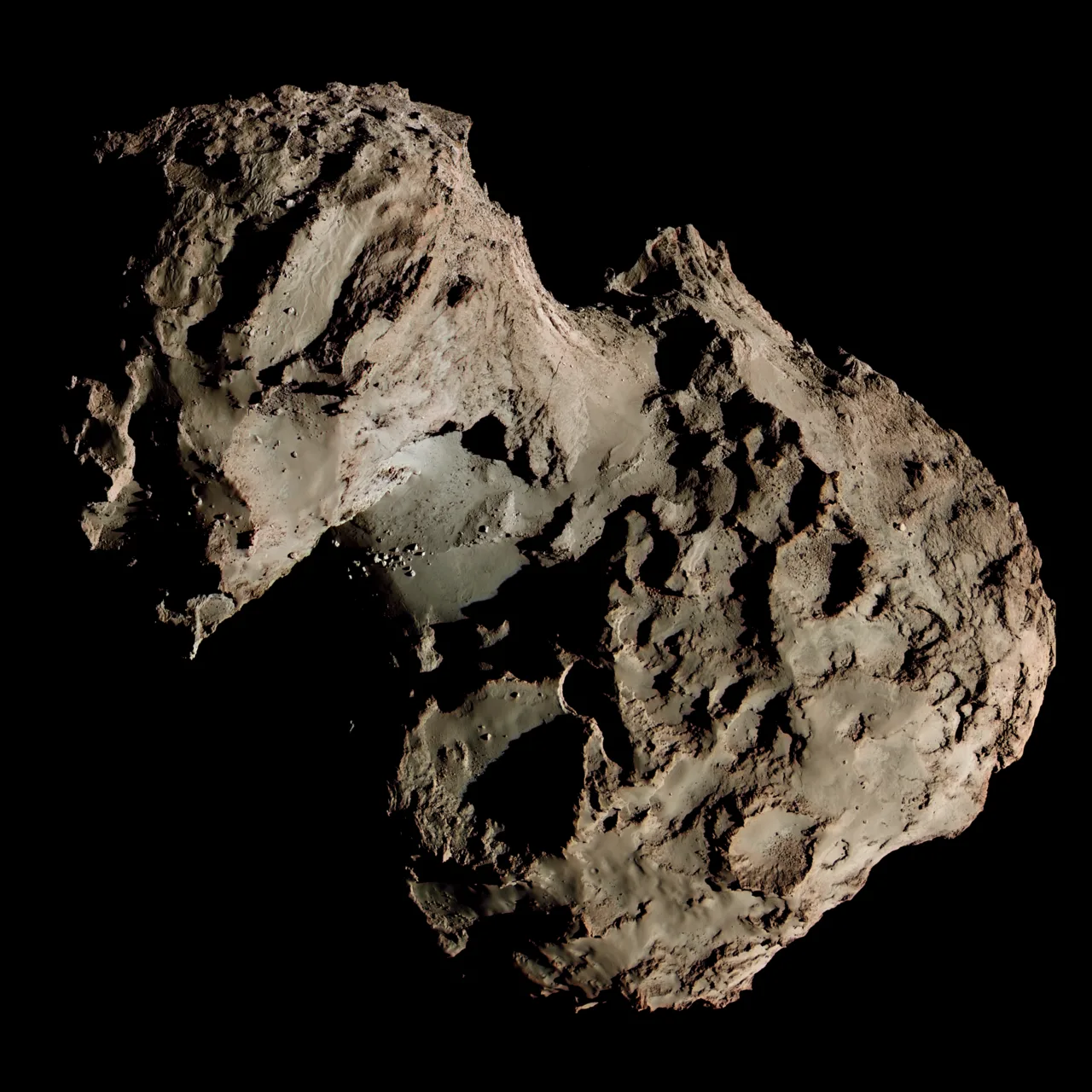
Comet 67P True color
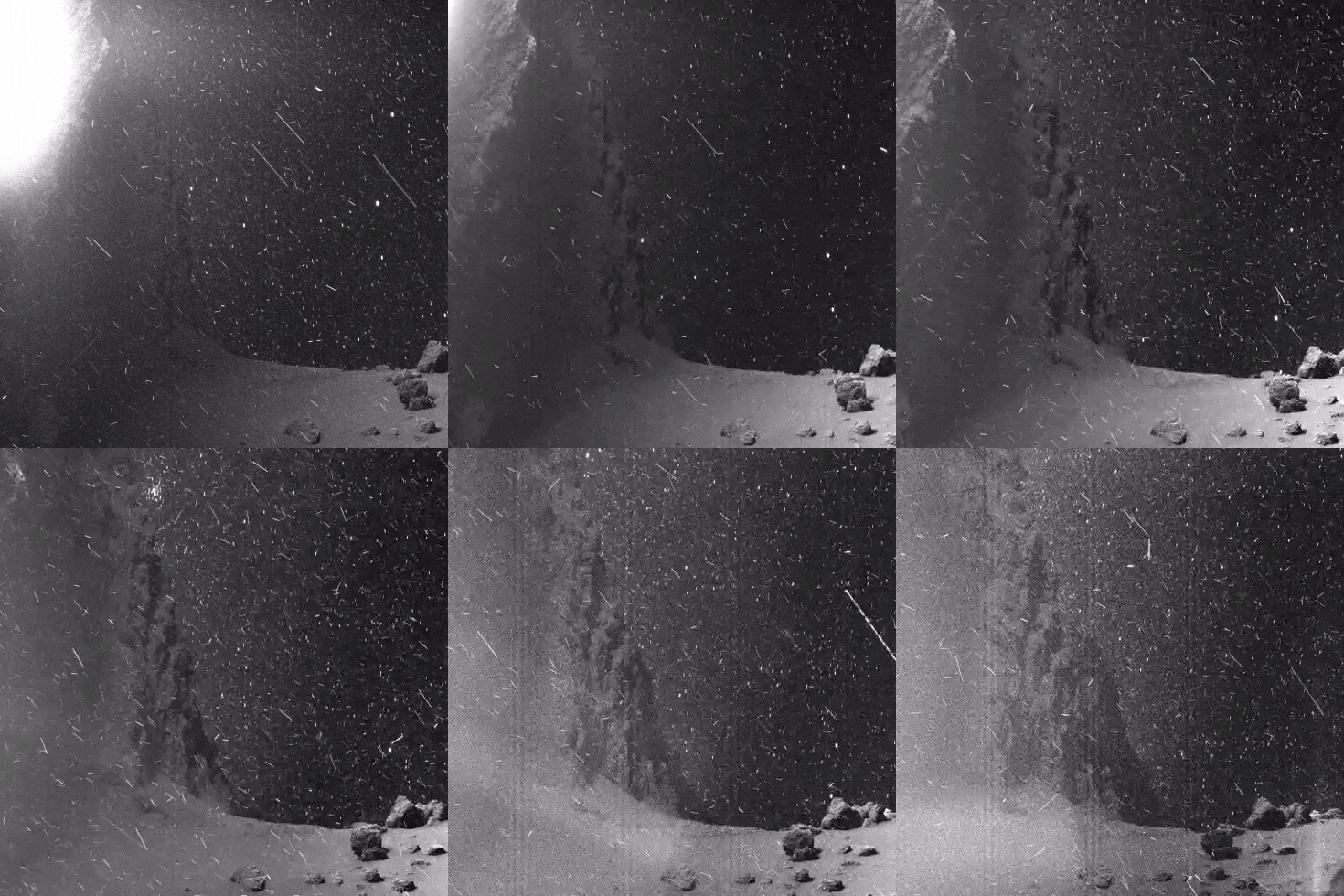
Dust and cosmic rays on the surface of the comet in 2016, with stars moving in the background. Filmed by Rosetta's OSIRIS instrument
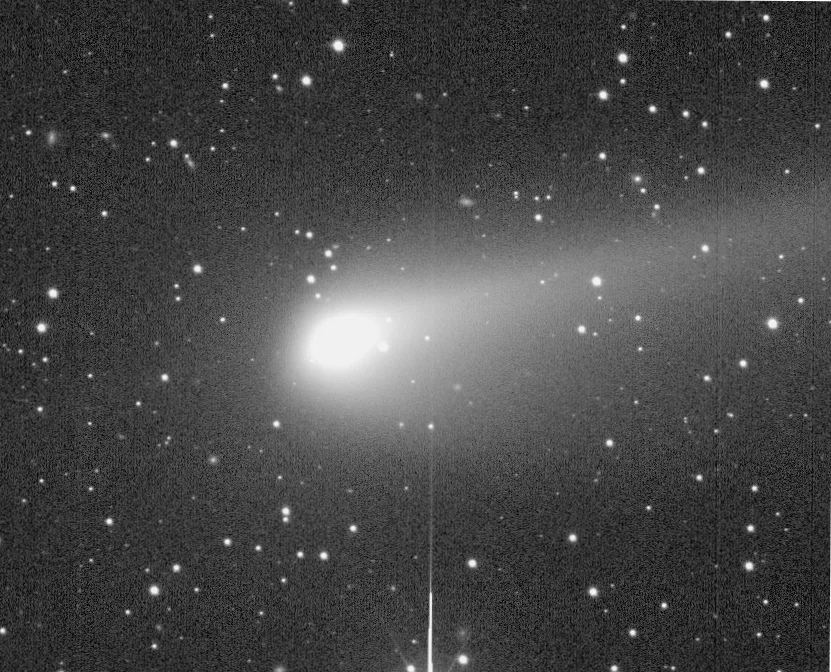
The comet on 11 November 2021 by ZTF
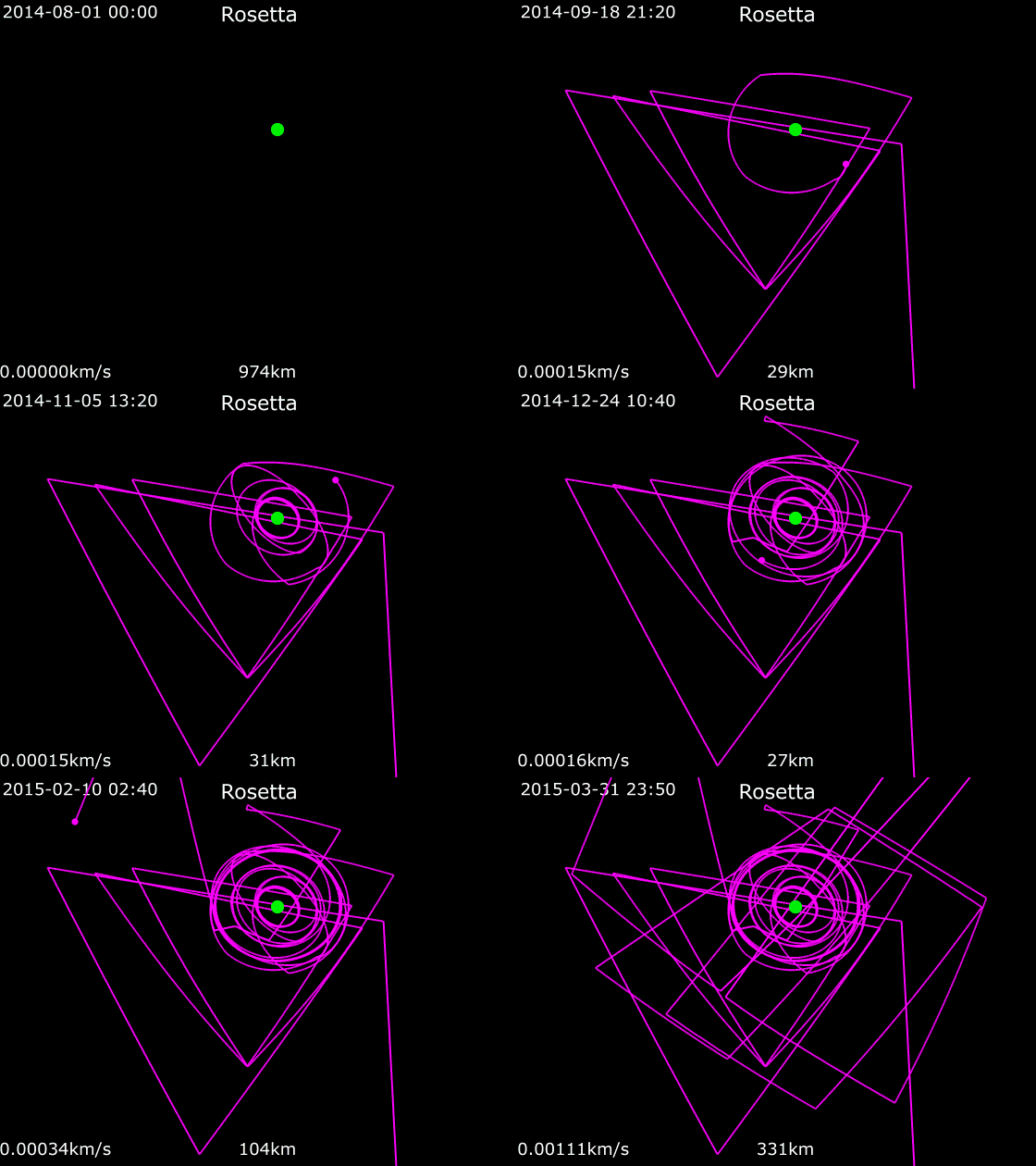
Animation of Rosetta's orbit around 67P from 1 August 2014 to 31 March 2015 Rosetta · 67P
![As seen by the Very Large Telescope on 11 August 2014[108]](https://nwjvzop1xgplmzvt.public.blob.vercel-storage.com/wikifeed/67p-churyumov-gerasimenko/4-5b79310cba.webp)
As seen by the Very Large Telescope on 11 August 2014[108]
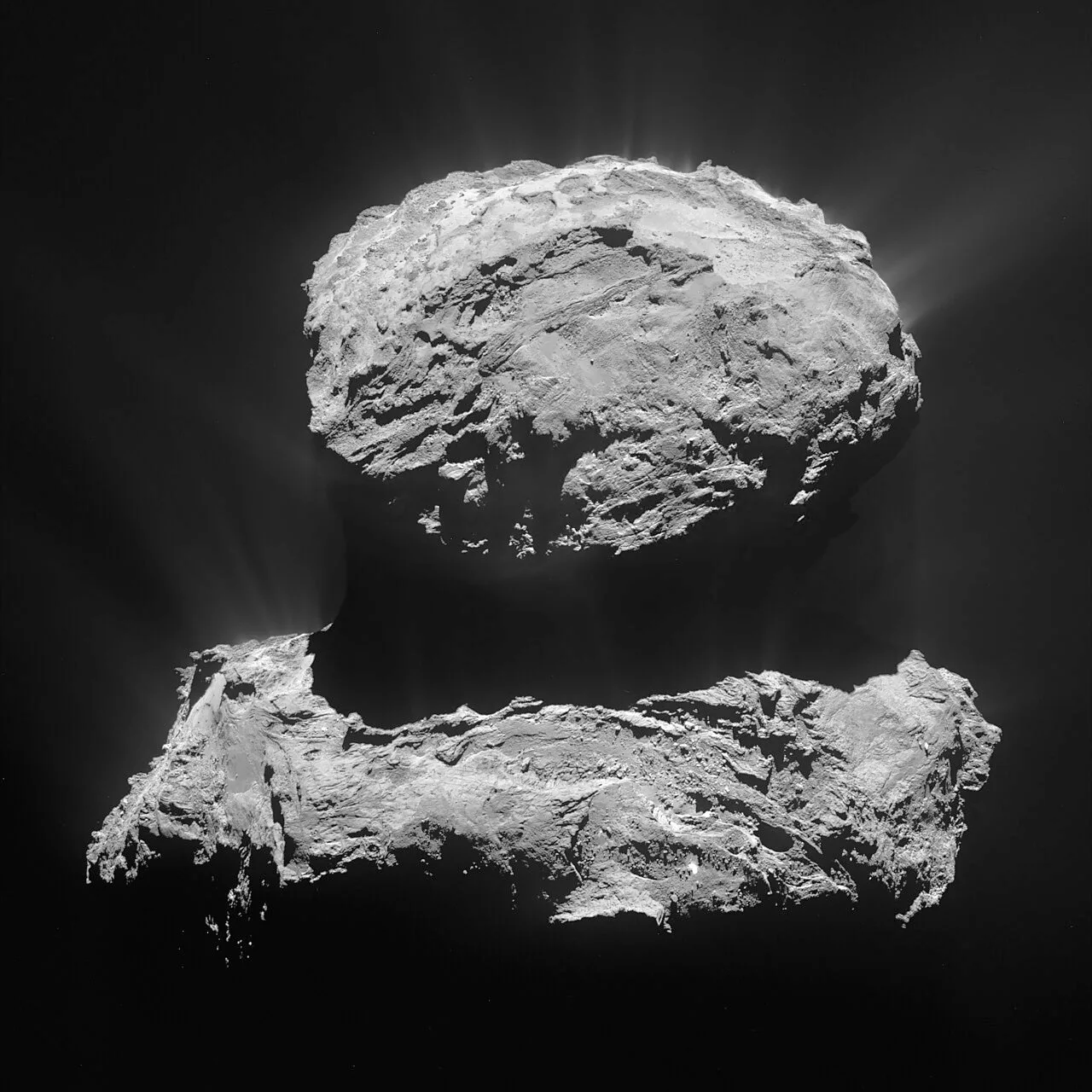
As seen by Rosetta on 2 May 2015
67P/Churyumov–Gerasimenko
67P/Churyumov–Gerasimenko is a Jupiter-family comet originally from the Kuiper belt with an orbital period of about 6.45 years, first observed in 1969 by Soviet astronomers.
Discovery Hidden in a Tracking Error
Astronomer Klim Ivanovich Churyumov initially assumed an exposed photographic plate showed the known comet Comas Solà. Upon returning to Kyiv, closer inspection revealed that the celestial body was located 1.8 degrees off the expected position. A faint image of Comas Solà was subsequently detected elsewhere on the plate, proving that this misplaced target was an entirely new object.
From Wikipedia · CC BY-SA 4.0
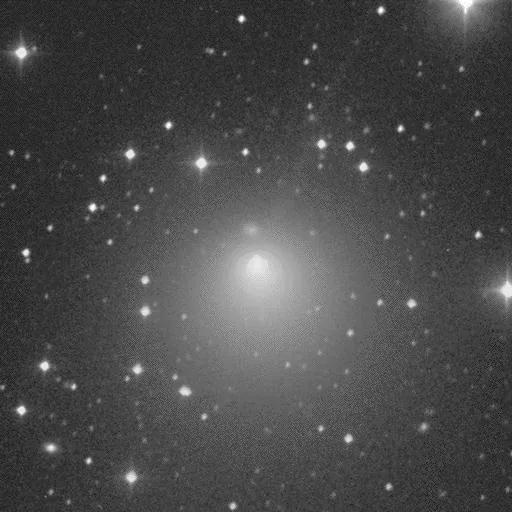
Encke's Comet loses its tail
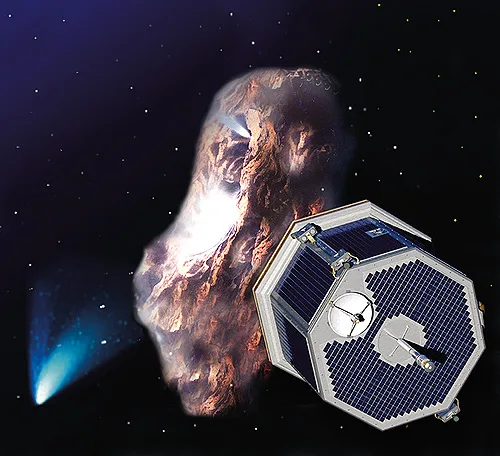
Artist's impression of the CONTOUR spacecraft making a flyby of a comet.
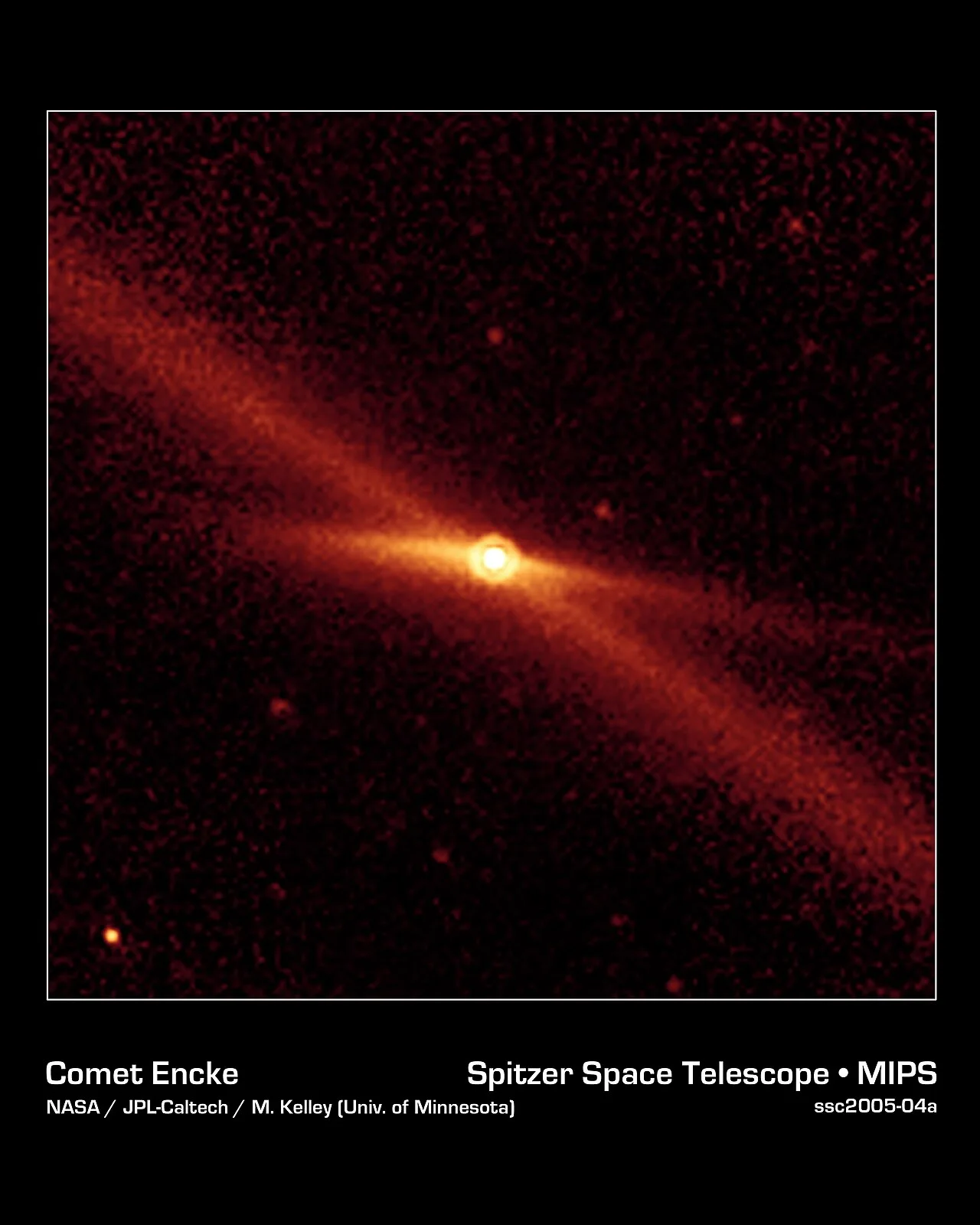
A Spitzer image of Encke and its debris trail in infrared light
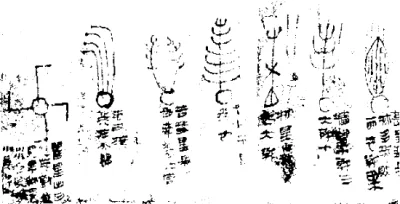
A Han Dynasty silk comet atlas, featuring drawings of comets believed by Victor Clube and Bill Napier to be related to the breakup of Encke's Comet in the past
![A MESSENGER image of Comet Encke at its closest approach to Mercury, 17/11/2013[39] (NASA/JHUAPL/Carnegie Institution of Washington)](https://nwjvzop1xgplmzvt.public.blob.vercel-storage.com/wikifeed/comet-encke/4-b7296102c4.webp)
A MESSENGER image of Comet Encke at its closest approach to Mercury, 17/11/2013[39] (NASA/JHUAPL/Carnegie Institution of Washington)
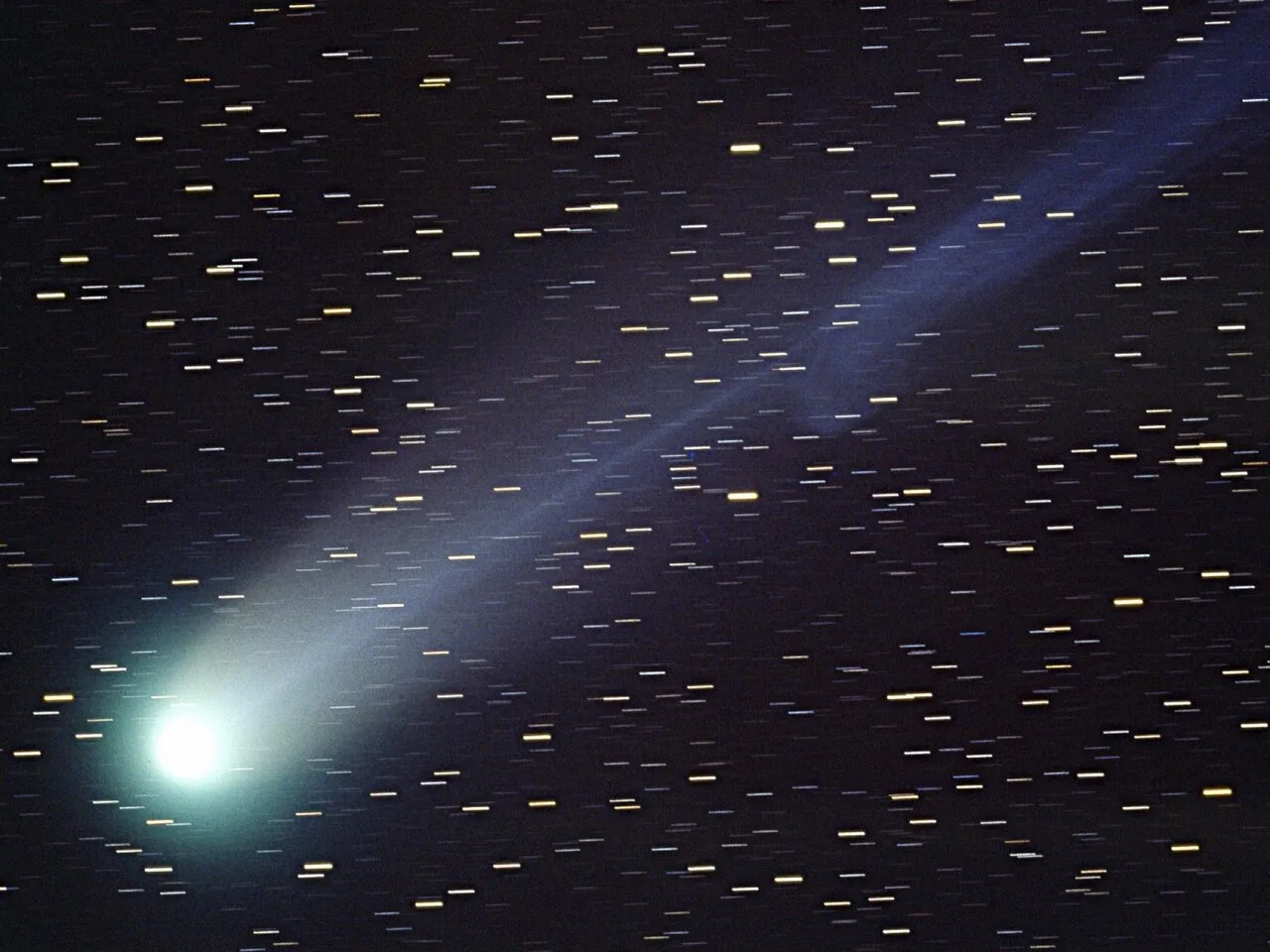
Comet C/1996 B2 (Hyakutake)
Comet Encke
Comet Encke is a periodic comet with an orbital period of 3.3 years, the shortest known period for a reasonably bright comet.
The Calculator Who Refused the Honor
Most periodic comets carry the names of the observers who first spotted them in the night sky. Johann Franz Encke broke this pattern by mathematically demonstrating that distinct sightings recorded in 1786, 1795, 1805, and 1818 belonged to a single recurring object. Despite this monumental calculation, Encke insisted that the celestial body should be named Pons's Comet instead.
From Wikipedia · CC BY-SA 4.0
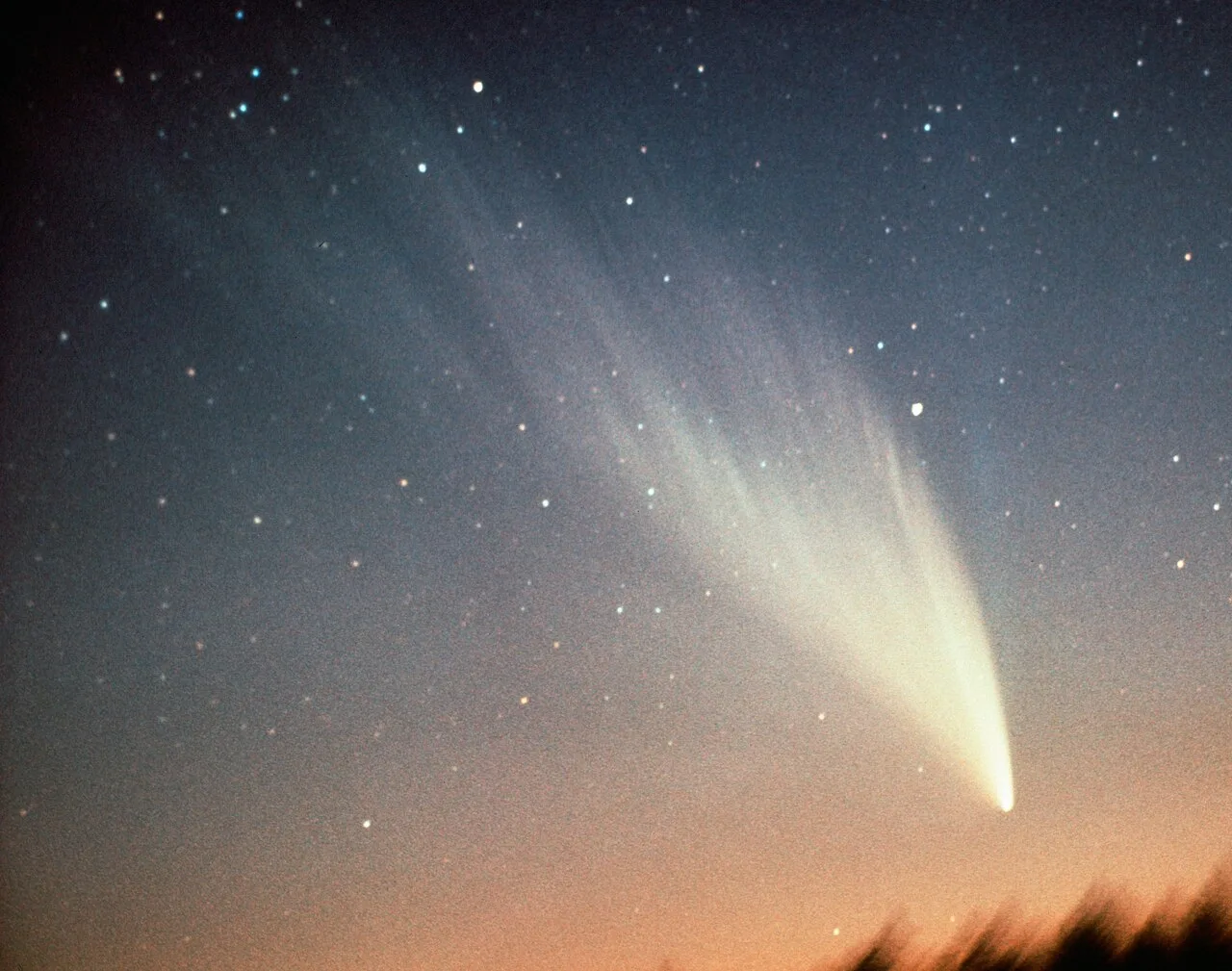
C-west-1976-ps
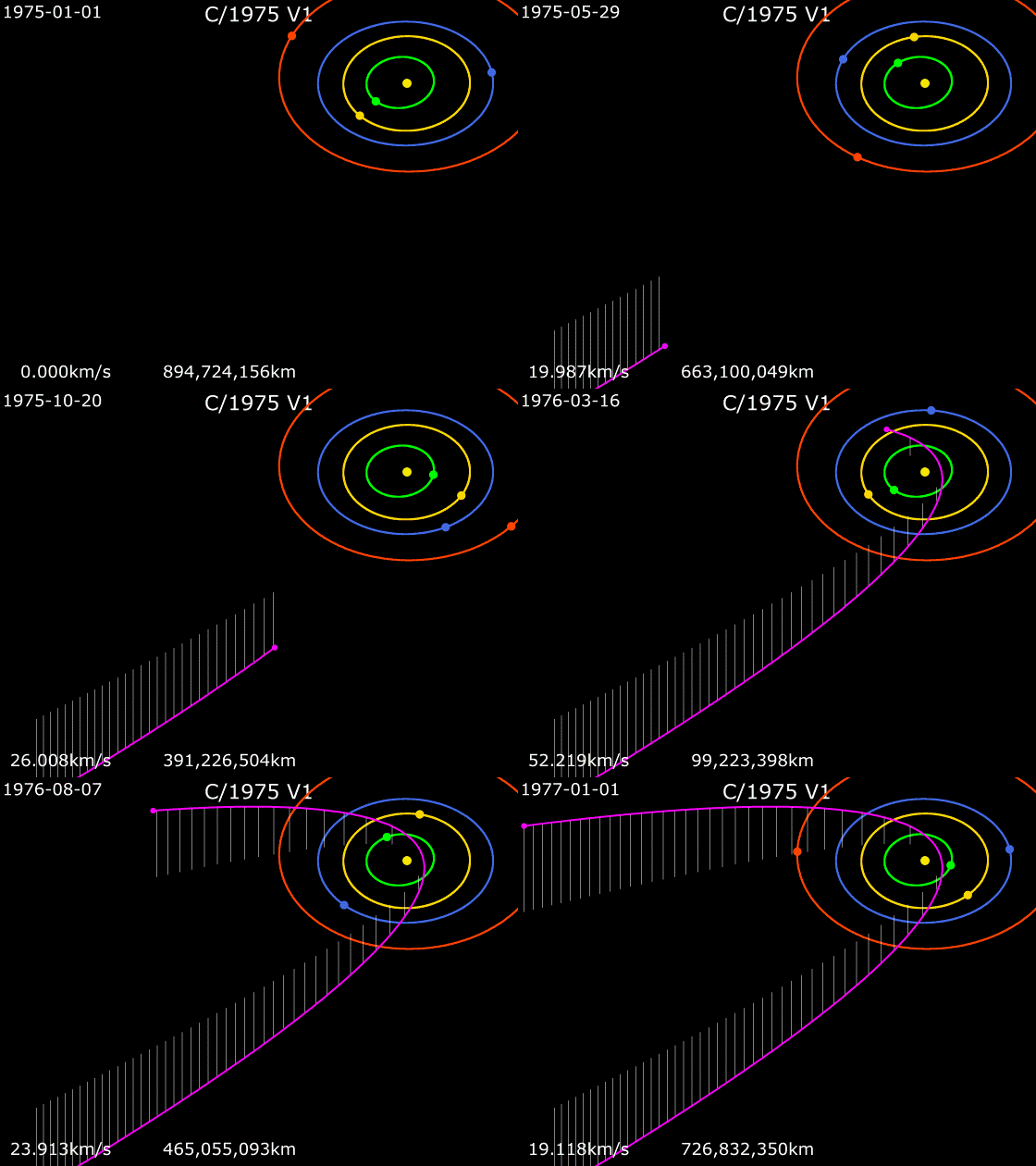
Animation of C/1975 V1 orbit around Sun.mw-parser-output .legend{page-break-inside:avoid;break-inside:avoid-column}.mw-parser-output .legend-color{display:inline-block;min-width:1.25em;height:1.25em;line-height:1.25;margin:1px 0;text-align:center;border:1px solid black;background-color:transparent;color:black}.mw-parser-output .legend-text{} C/1975 V1 · Sun · Mercury · Venus · Earth · Mars
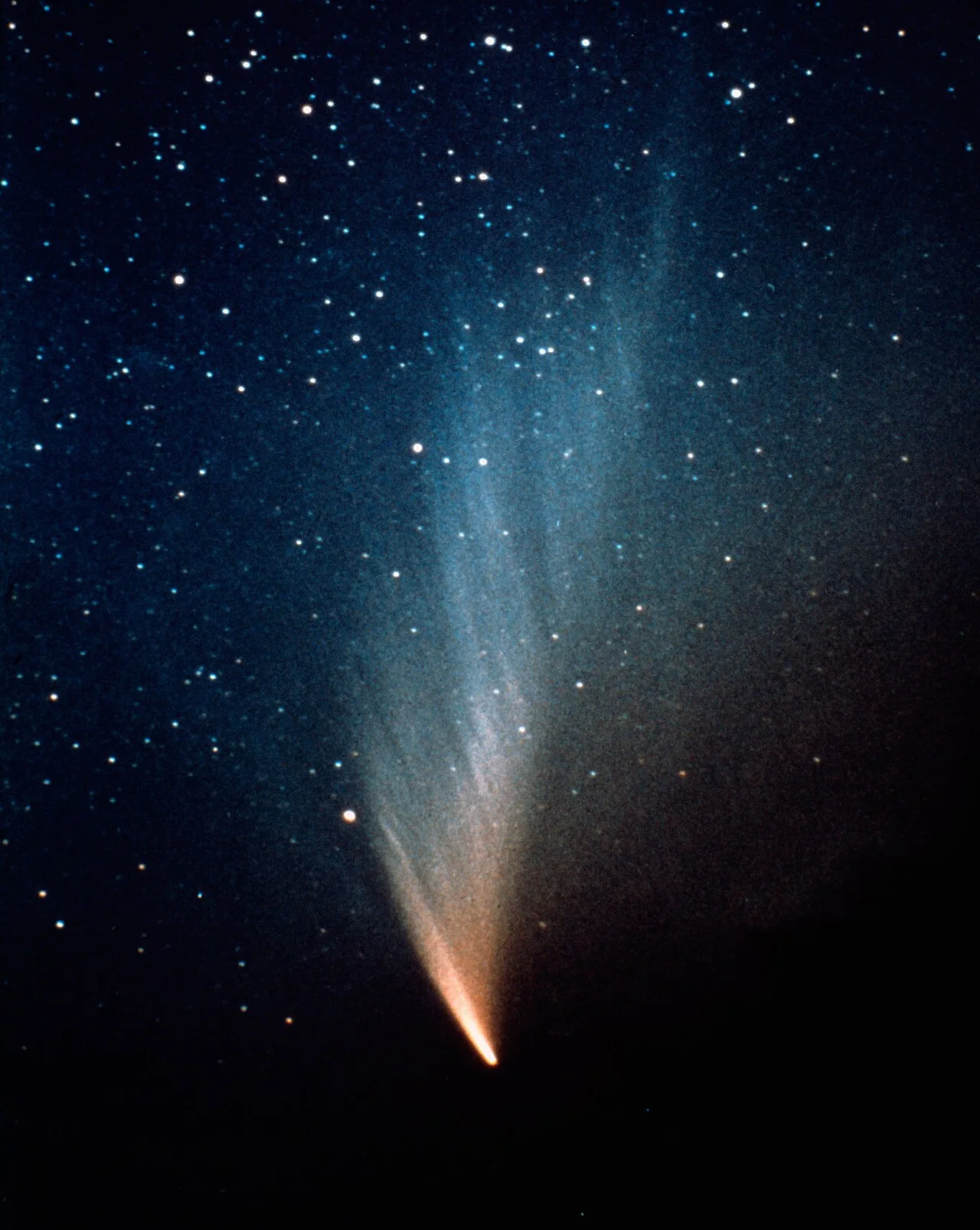
Comet West in March 1976, around peak brightness
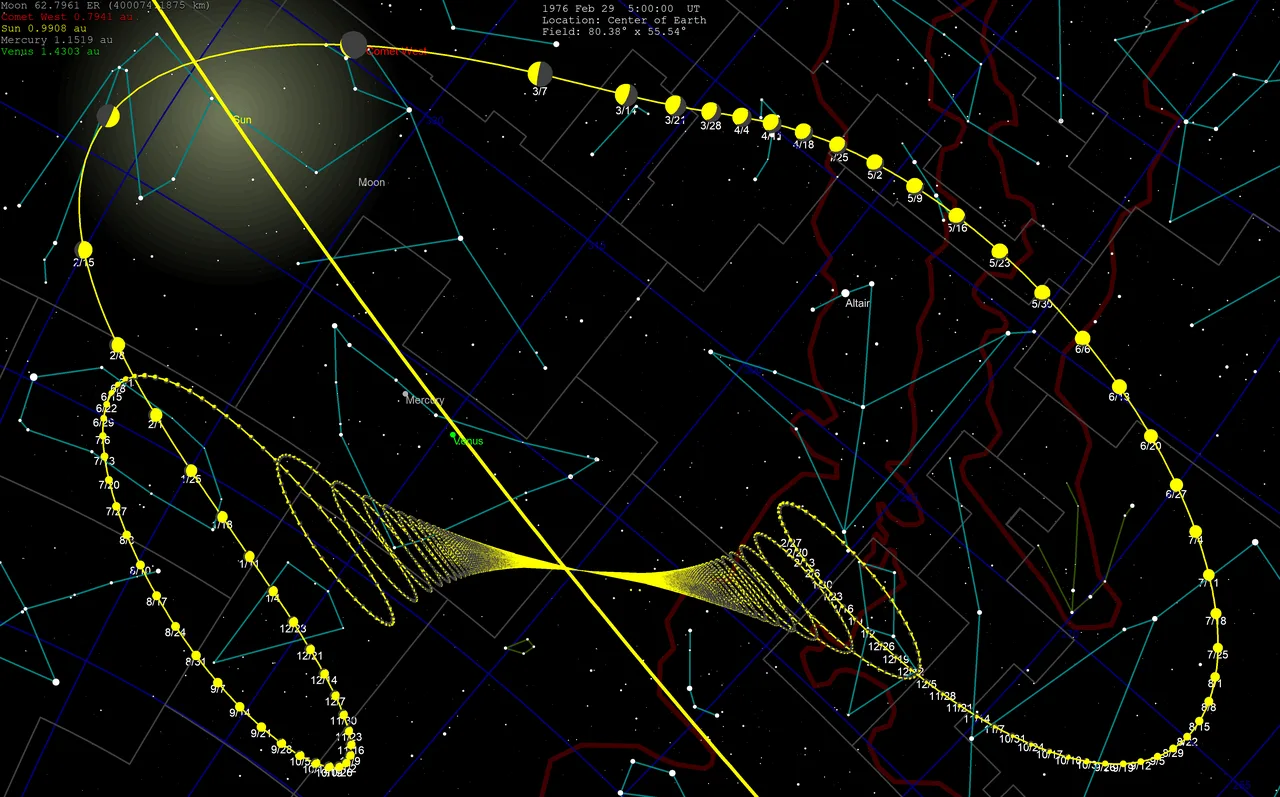
Sky path for Comet West, with 7-day motion. The retrograde loops are caused by parallax from Earth's annual motion around the Sun. The most movement occurs when the comet is closest to Earth.
Comet C/1996 B2 (Hyakutake)
67P Churyumov-Gerasimenko - Rosetta (32755885495)
Comet West
Comet West was a comet described as one of the brightest objects to pass through the inner Solar System in 1976.
Sunlight-Defying Visibility at Magnitude −3
Comet West reached extraordinary brilliance during its perihelion passage in late February. Thanks to forward scattering at a minimum solar elongation of 6.4°, the object attained a peak apparent magnitude of −3. Between 25 and 27 February, the comet grew luminous enough that observers could easily study it in full daylight.
From Wikipedia · CC BY-SA 4.0
Comet P1 McNaught02 - 23-01-07
Animation of Ulysses' trajectory from 6 October 1990 to 29 June 2009.mw-parser-output .legend{page-break-inside:avoid;break-inside:avoid-column}.mw-parser-output .legend-color{display:inline-block;min-width:1.25em;height:1.25em;line-height:1.25;margin:1px 0;text-align:center;border:1px solid black;background-color:transparent;color:black}.mw-parser-output .legend-text{} Ulysses · Earth · Jupiter · C/2006 P1 · C/1996 B2 · C/1999 T1
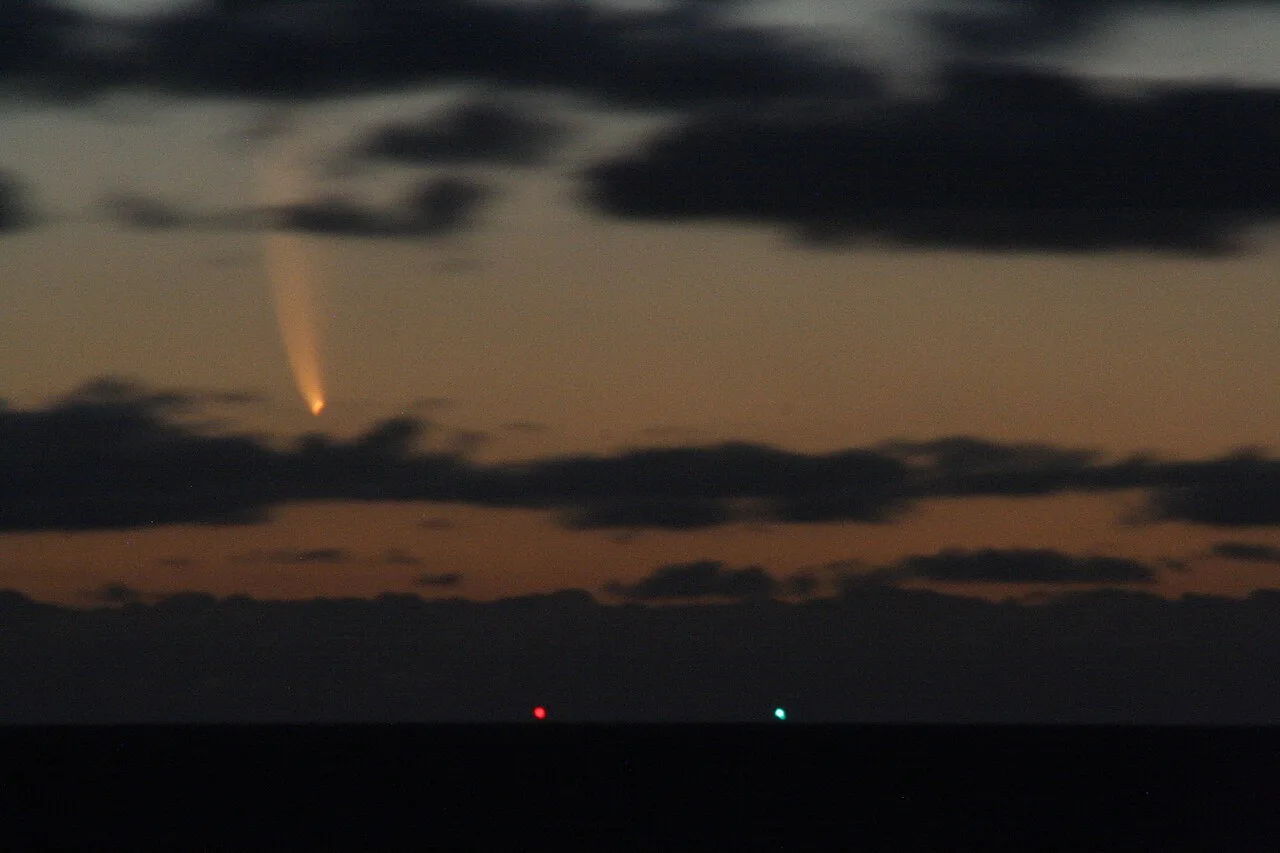
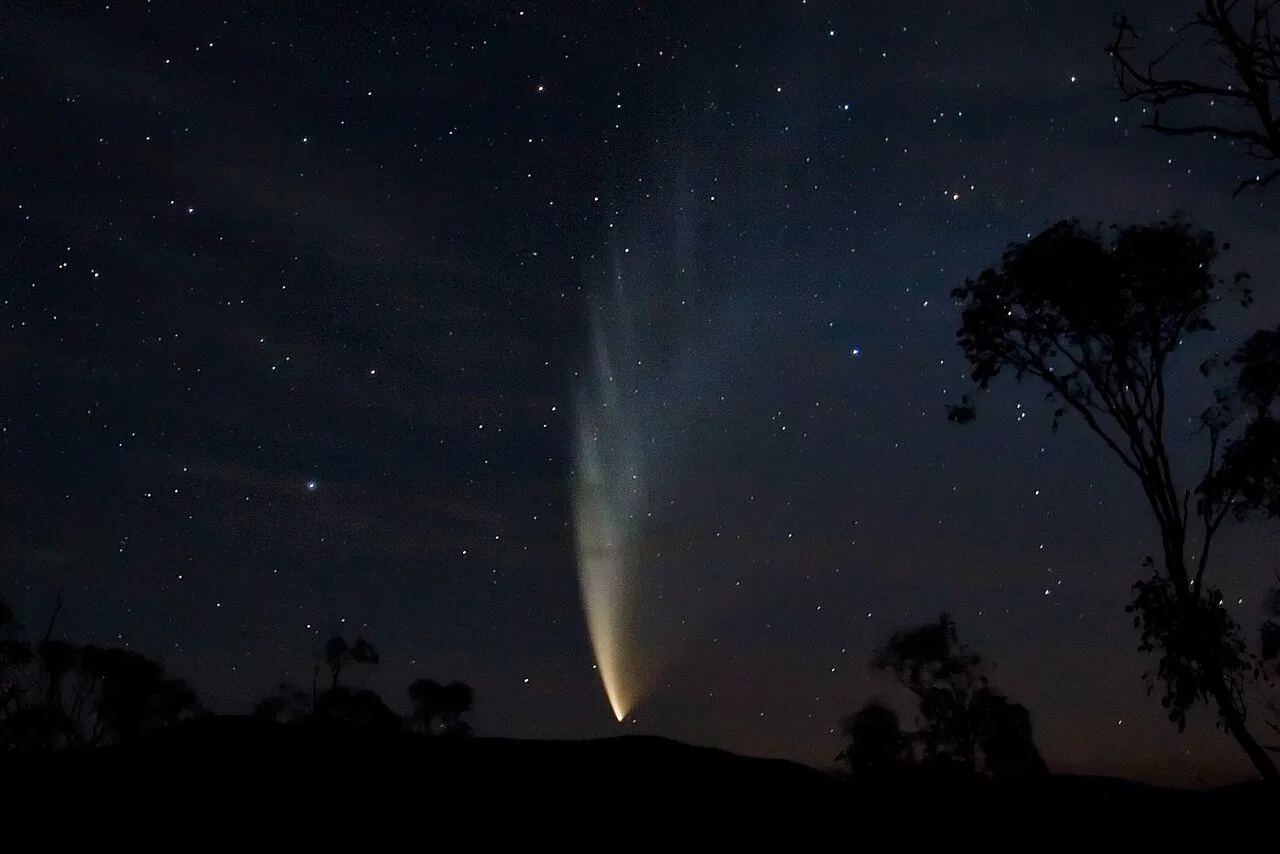
Seen from South Beach, Fremantle, Western Australia on 17 January. The lights at the bottom are navigation lights in Gage Roads.
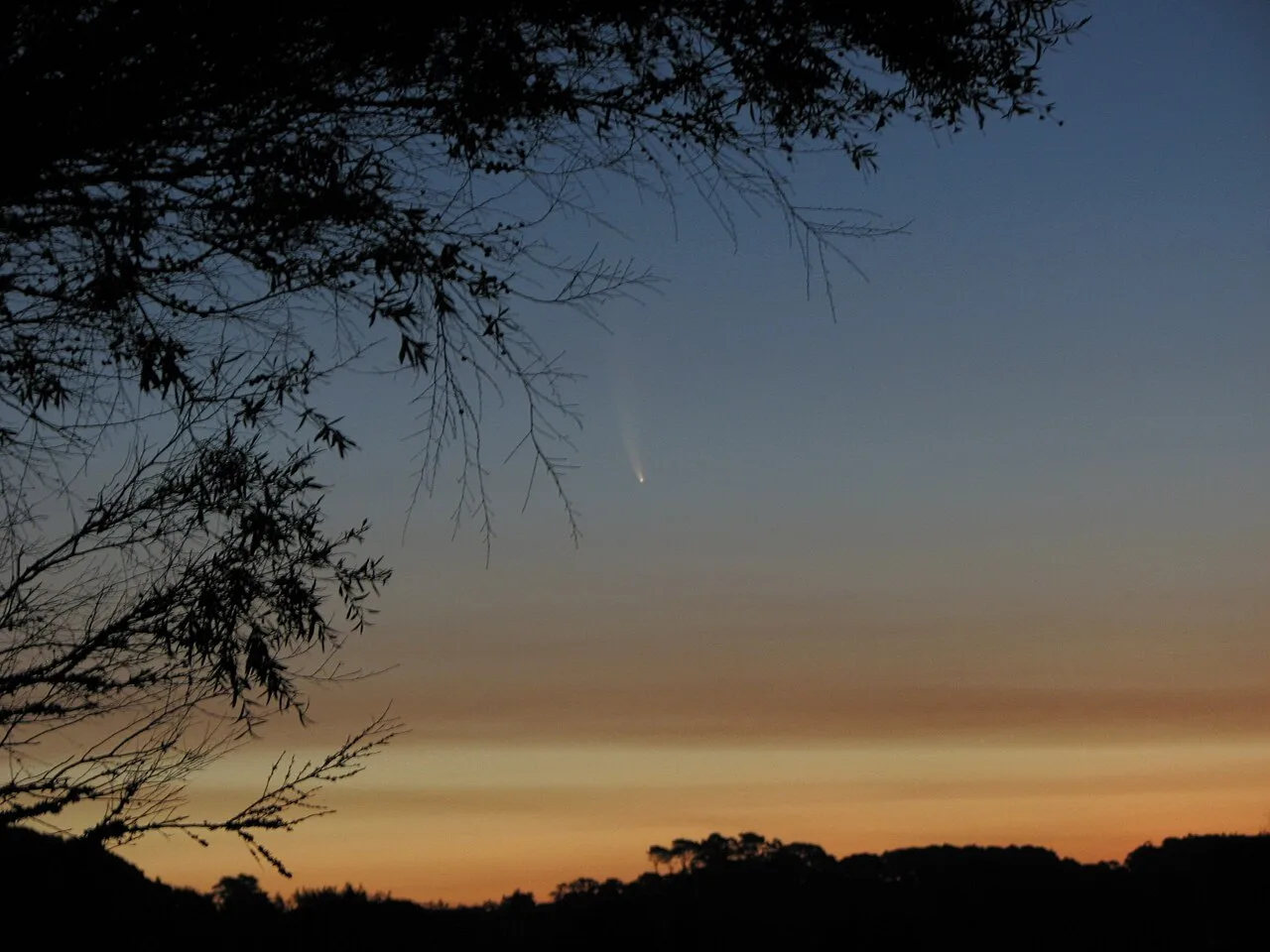
18 January from Pukekohe, New Zealand
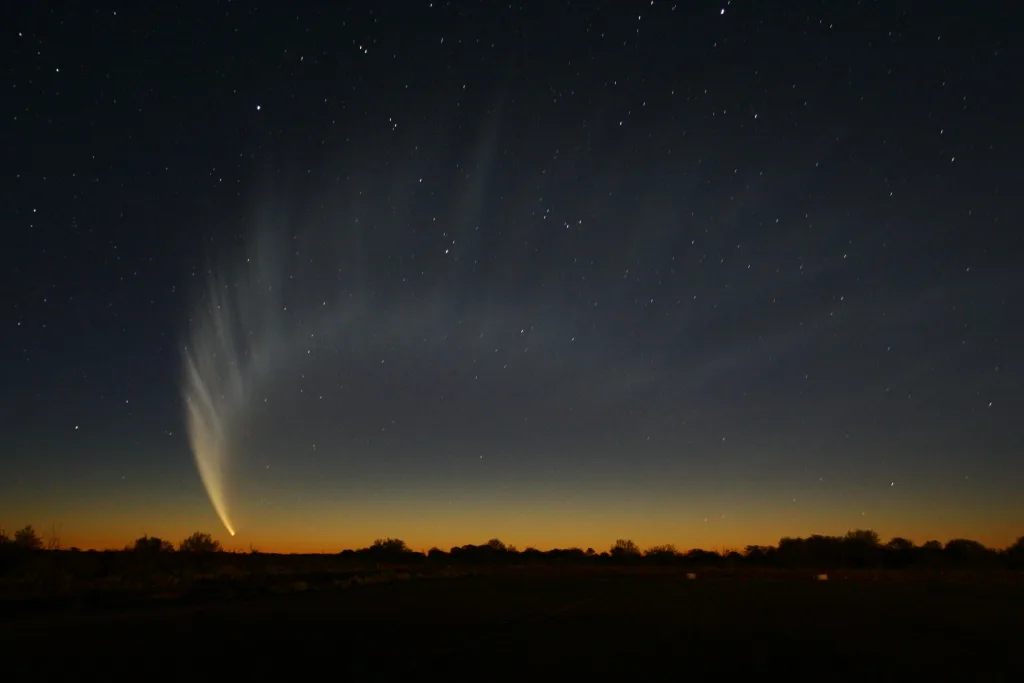
20 January from Lawlers, Western Australia
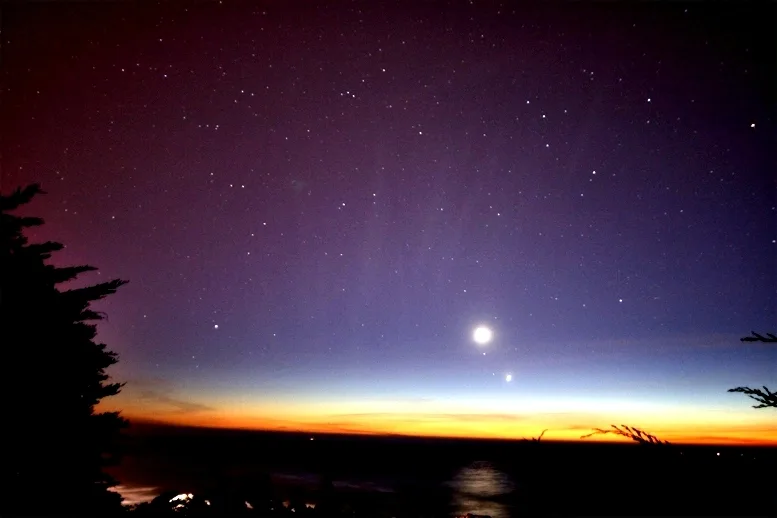
The tail of the comet Comet McNaught was still seen in the Northern Hemisphere after the comet itself was long gone. The picture also shows the Moon and Venus.
Comet McNaught
Comet McNaught, also known as the Great Comet of 2007, is a non-periodic comet discovered in August 2006 that became the brightest comet in over 40 years.
Hunting Planetary Threats Uncovers a Record Comet
The discovery of the century's brightest comet began as a routine planetary defense scan. McNaught discovered the comet on 7 August 2006 while conducting observations for the Siding Spring Survey. This program searched for Near-Earth Objects that might represent a collision threat to Earth rather than searching intentionally for historic display comets.
From Wikipedia · CC BY-SA 4.0
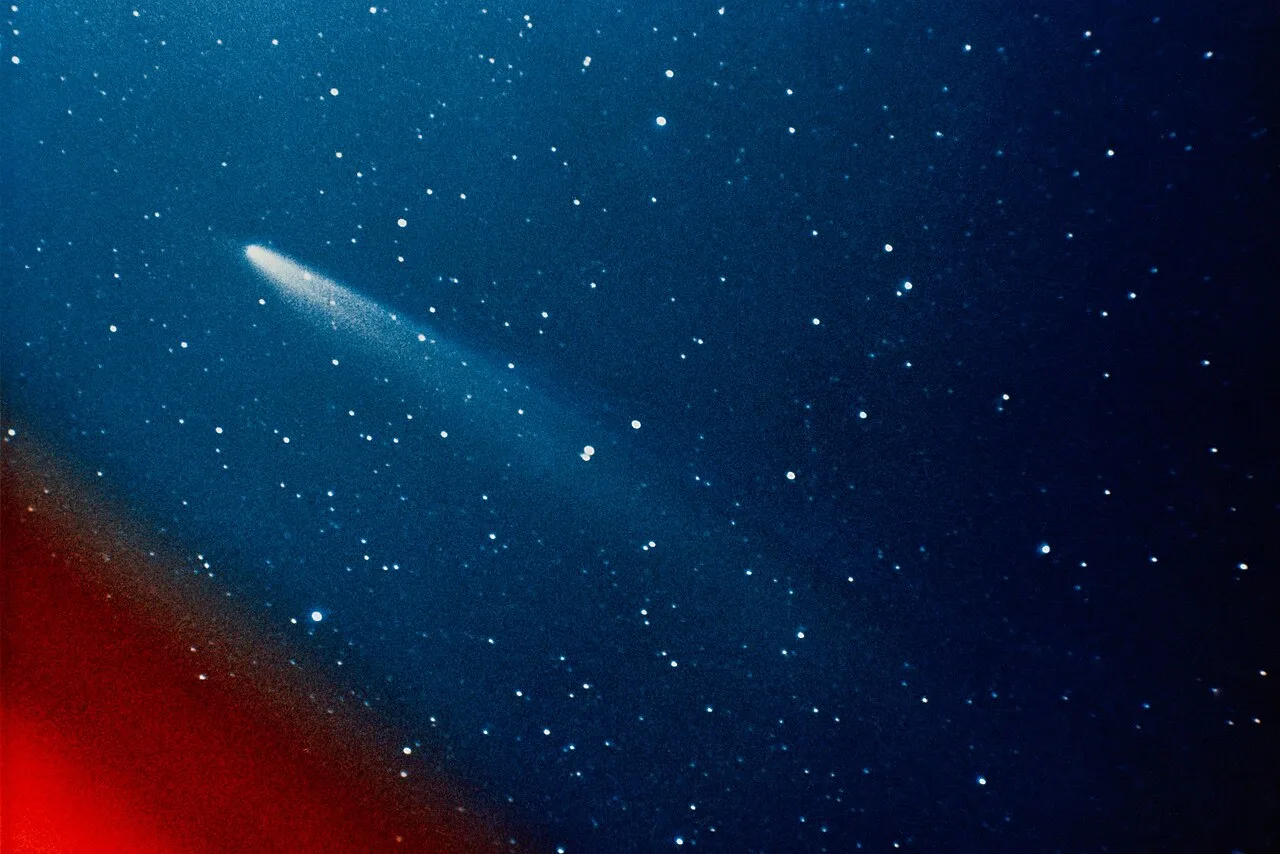
Comet Kohoutek (S74-17688)
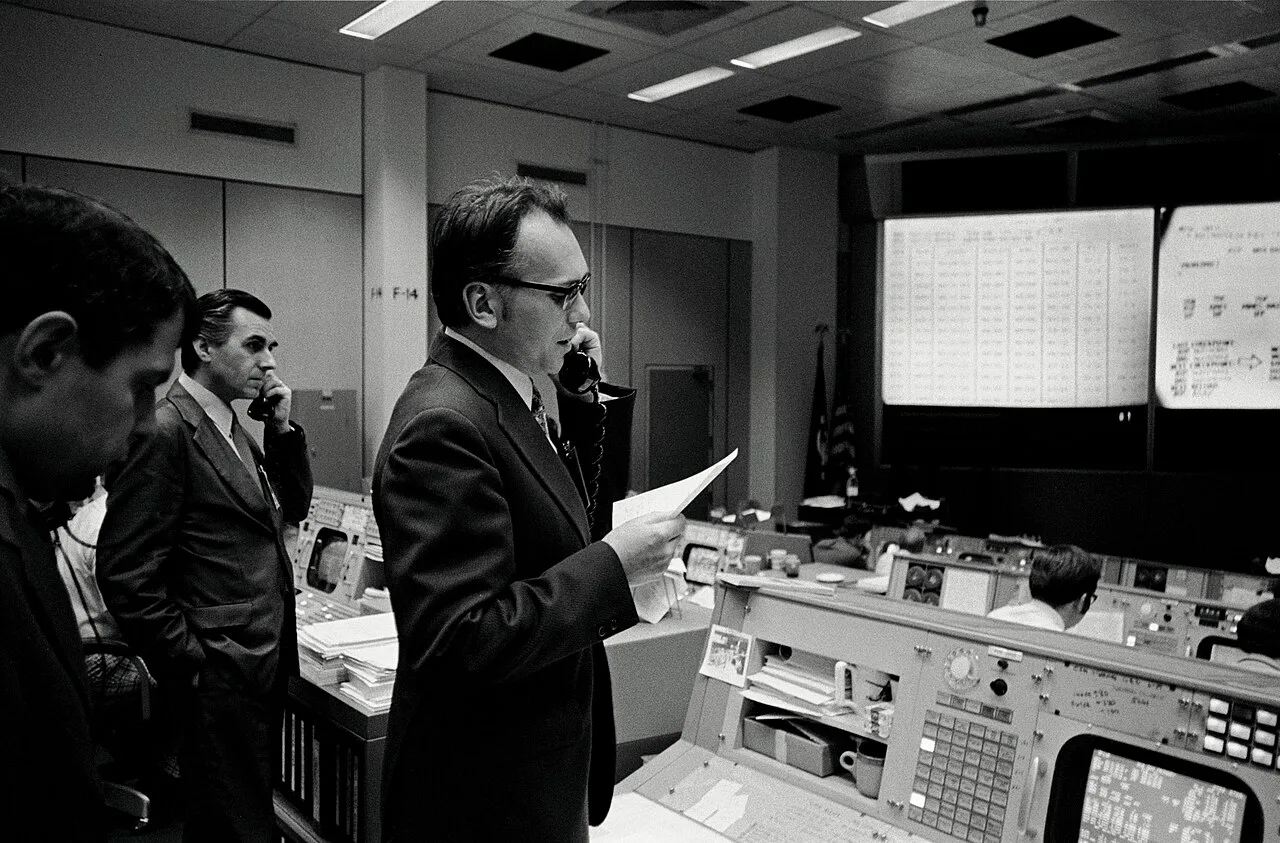
Luboš Kohoutek, eponymous discoverer of Comet Kohoutek, at the mission control center at Johnson Space Center speaking with the astronauts of Skylab 4 during the passage of the comet in January 1974
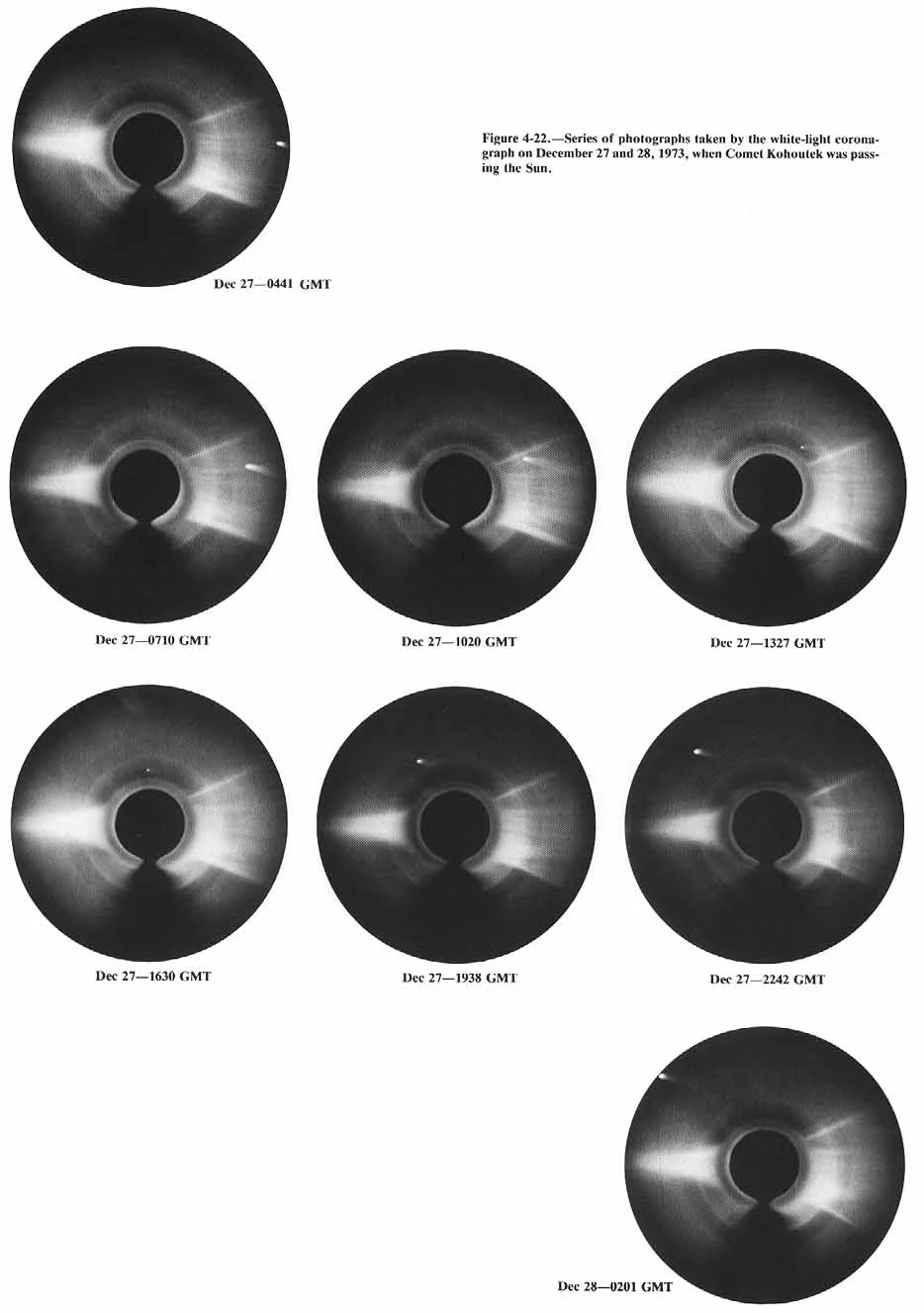
Sequence of images of Kohoutek at perihelion taken via coronagraph
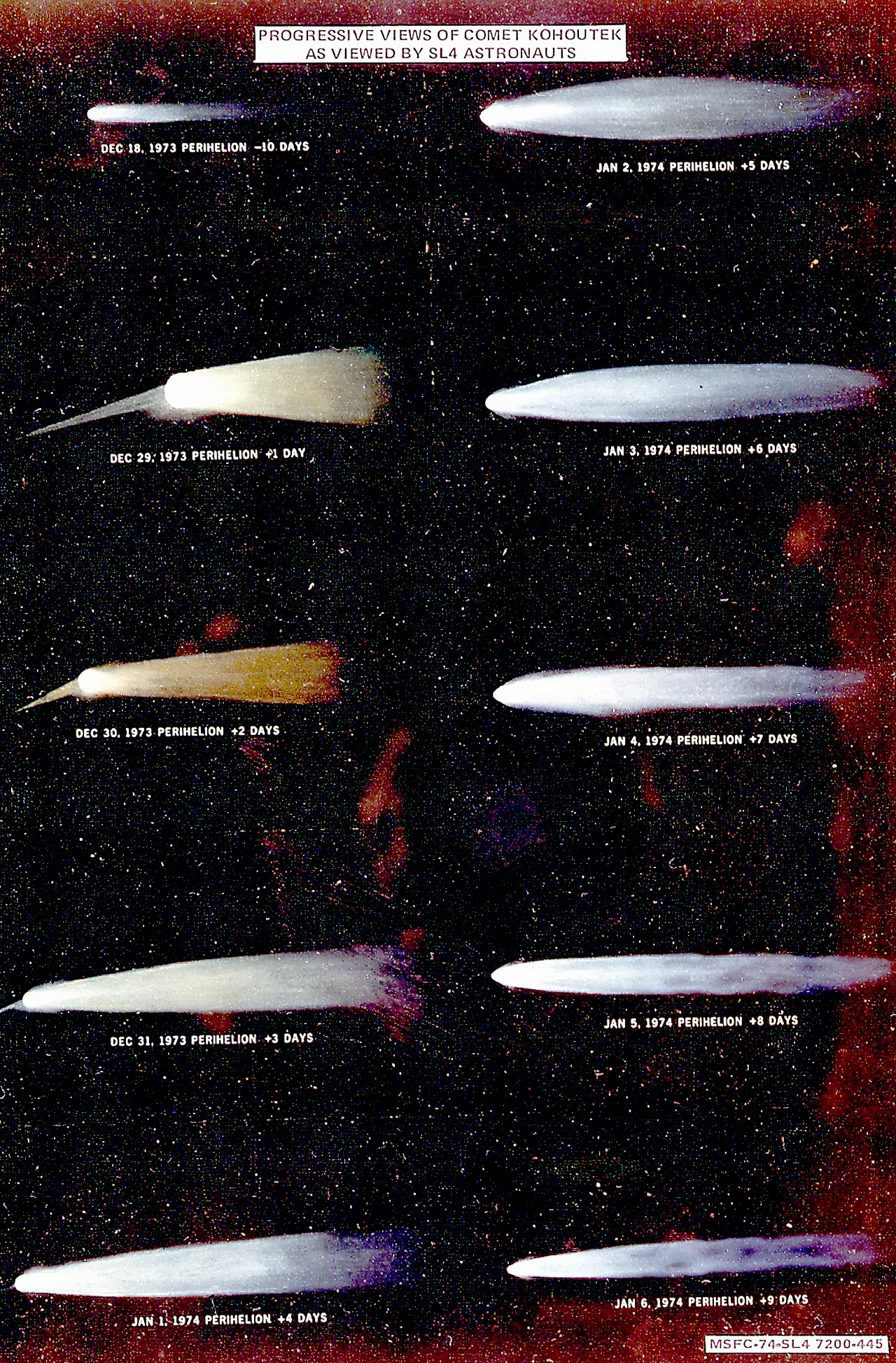
Progressive views of Comet Kohoutek as viewed by SL4 astronauts
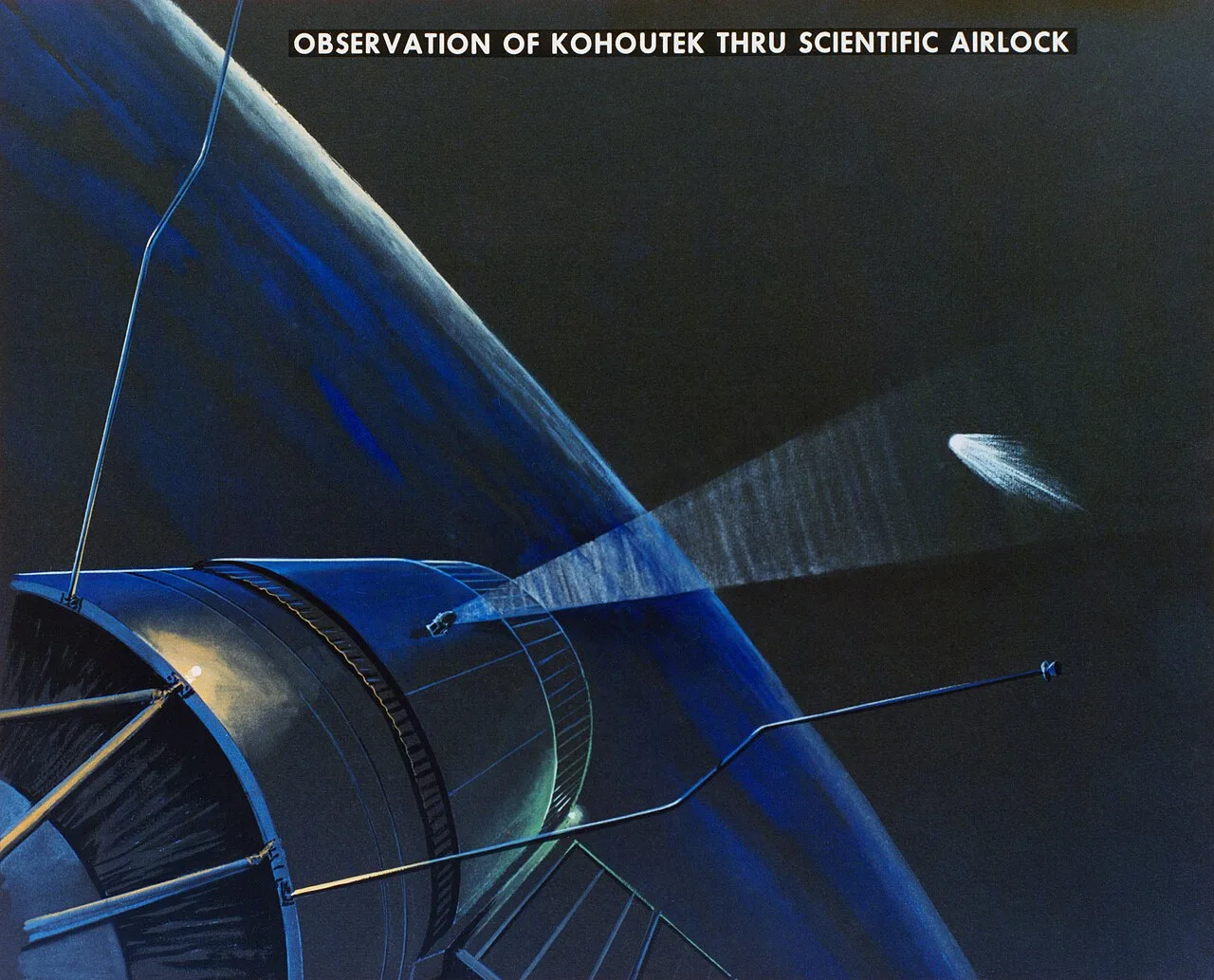
Artist's concept of Skylab 4 astronauts observing Comet Kohoutek via the space station's airlock
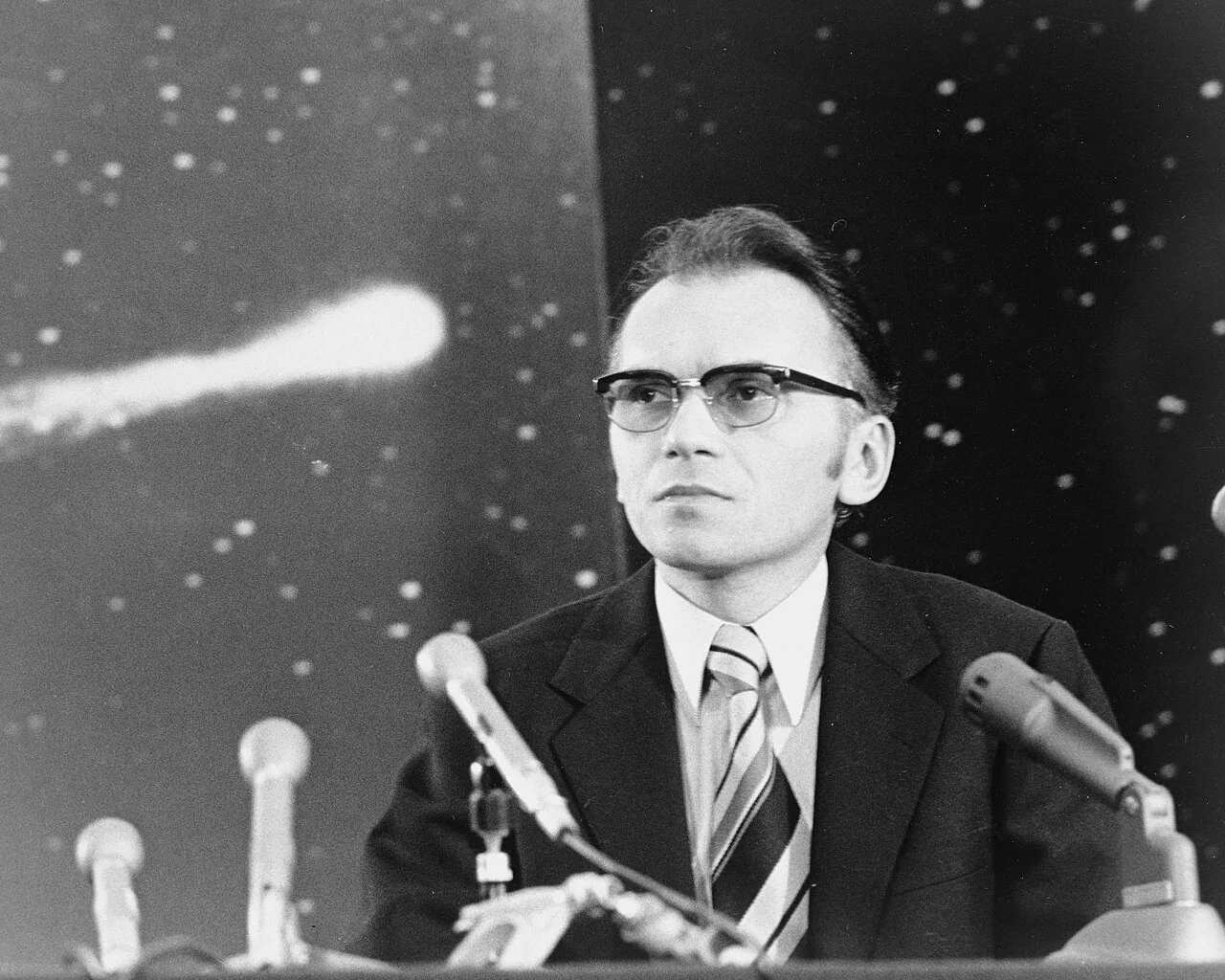
Luboš Kohoutek briefing the press on expectations for the comet on 5 January 1974
Comet Kohoutek
Comet Kohoutek is a comet that passed close to the Sun in late 1973, which gained widespread public attention after early predictions suggested it could become the Comet of the Century.
Serendipitous Discovery on an Asteroid Plate
Astronomer Luboš Kohoutek discovered his eponymous comet on 18 March 1973 while searching for Biela's Comet. A photographic plate intended to feature the asteroid (8606) 1971 UG instead captured Kohoutek at an unprecedented distance from the Sun. This serendipitous detection gave astronomers early notice to organize observation campaigns well ahead of the comet's close approach.
From Wikipedia · CC BY-SA 4.0
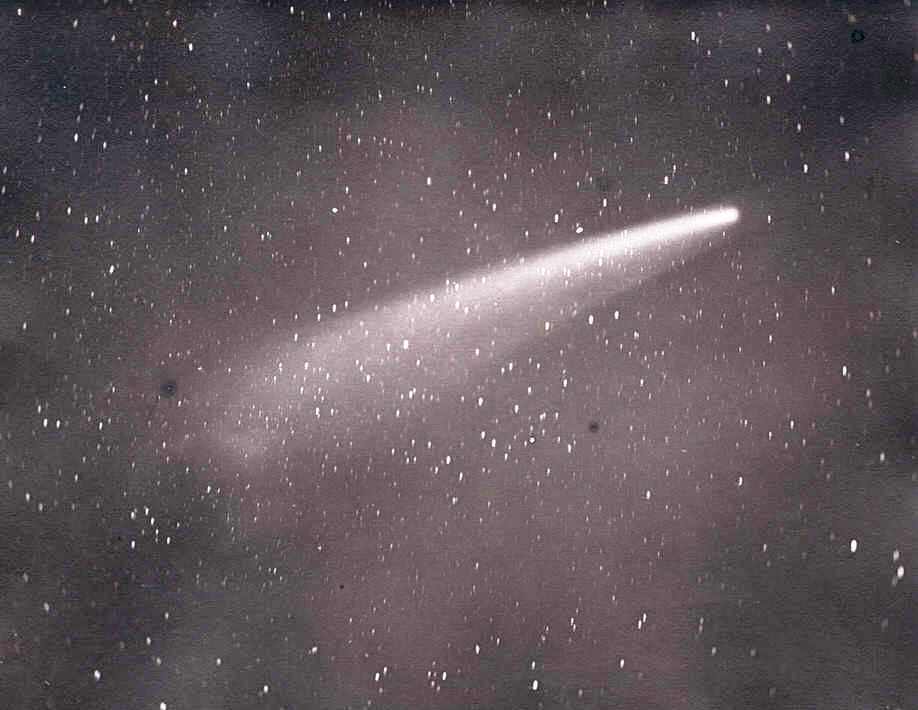
Great Comet of 1882
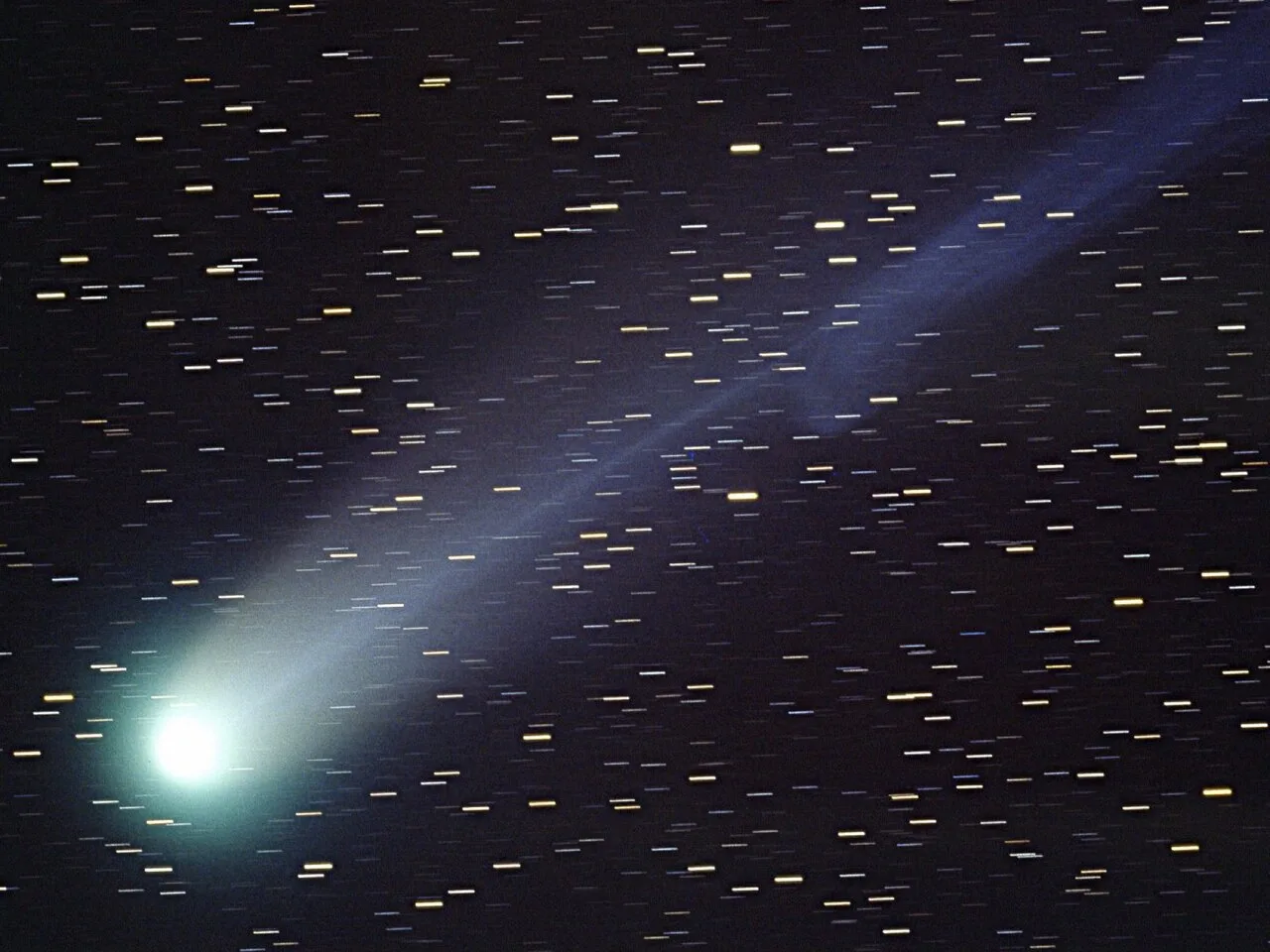
Comet C/1996 B2 (Hyakutake)
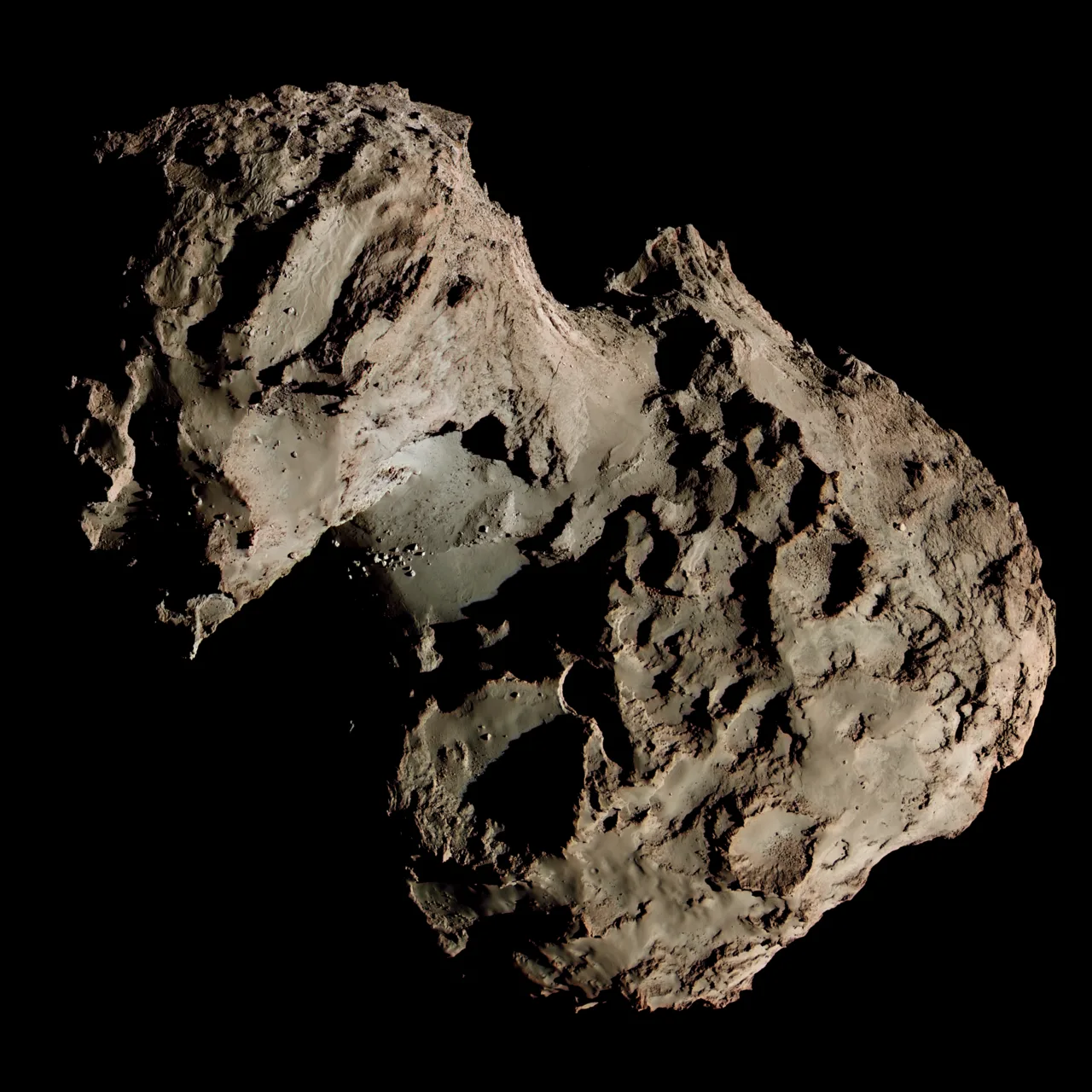
67P Churyumov-Gerasimenko - Rosetta (32755885495)
Great Comet of 1882
The Great Comet of 1882 was a Kreutz sungrazer comet that became exceptionally bright in September 1882.
Shining at Peak Magnitude Next to the Daytime Sun
While comets are typically observed against dark night skies, C/1882 R1 attained such immense luminosity that it remained visible next to the Sun in broad daylight during perihelion. It reached a peak magnitude of –17, outshining virtually all other recorded cometary visitors. This astonishing brilliance has led several historical sources to classify it as the brightest comet ever documented in human history.
From Wikipedia · CC BY-SA 4.0
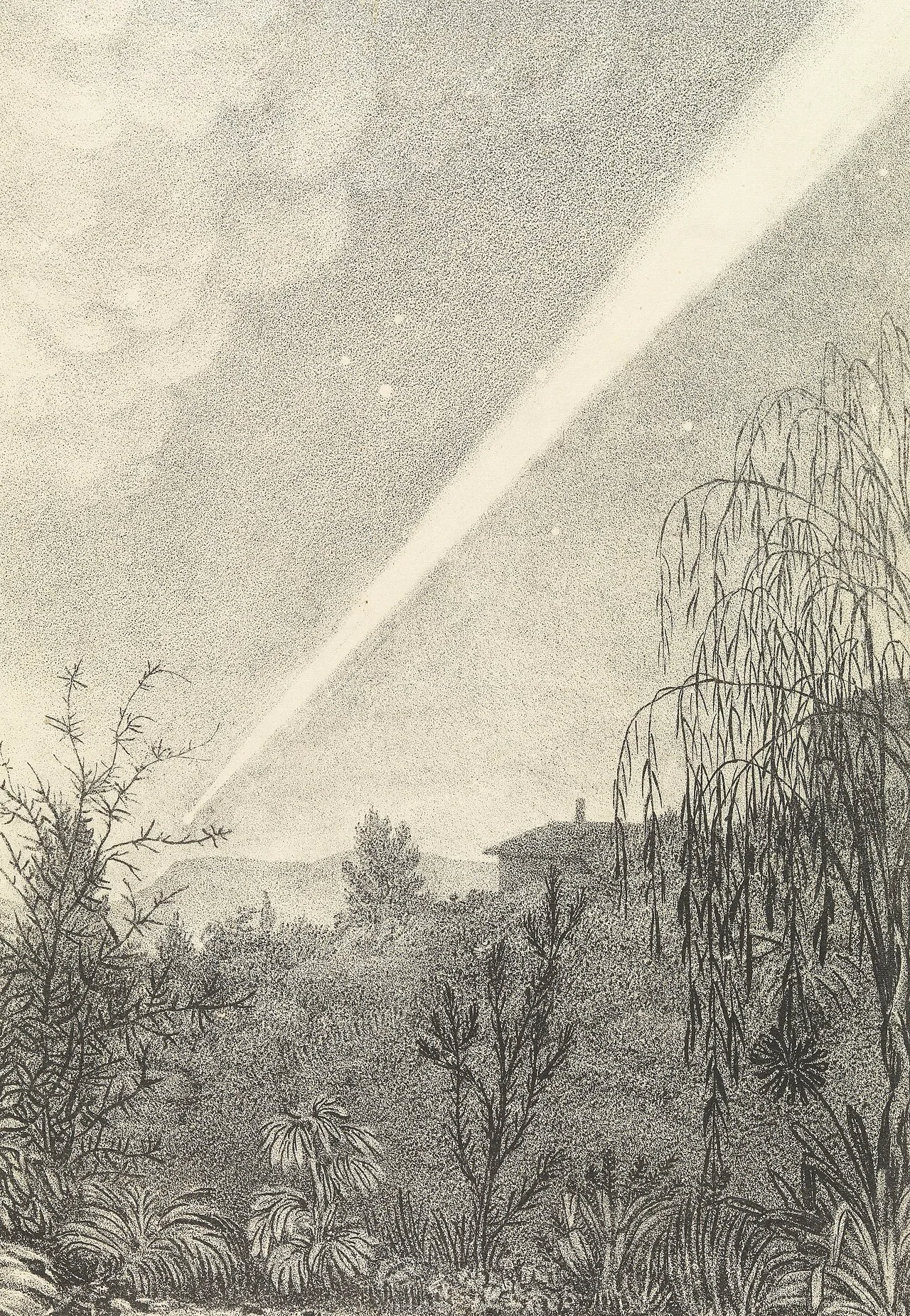
Great Comet of 1843 (cropped)
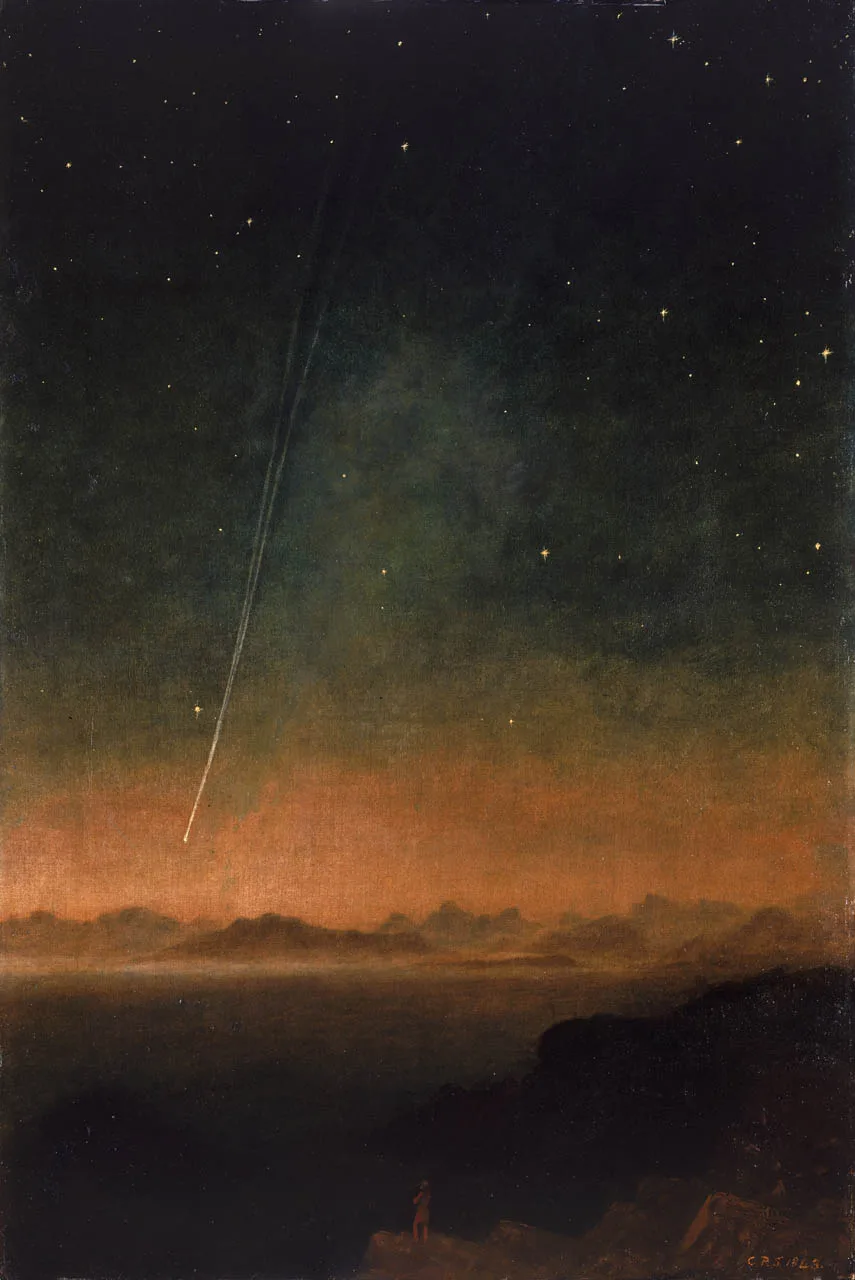
Charles Piazzi Smyth: The Great Comet of 1843
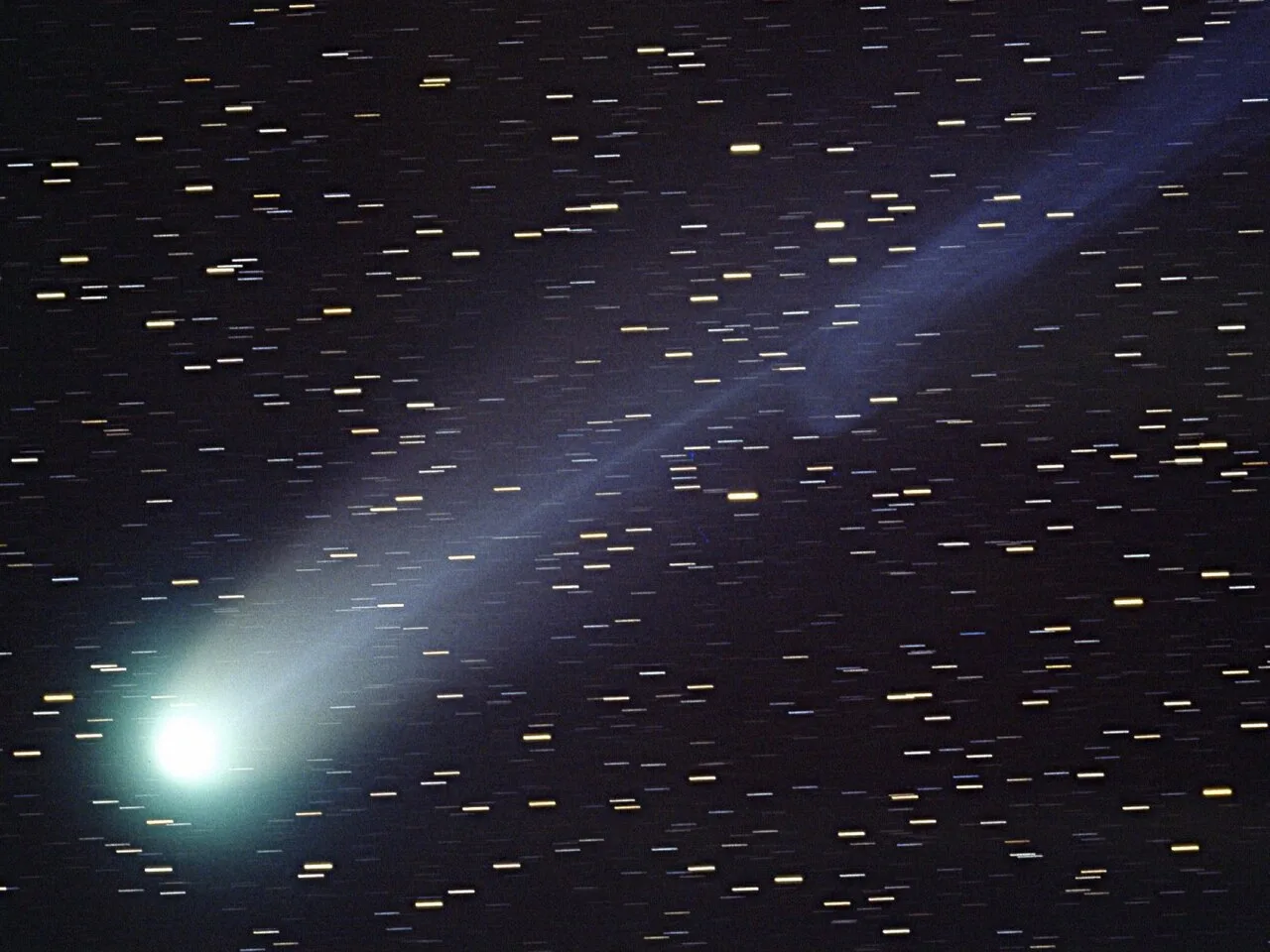
Comet C/1996 B2 (Hyakutake)
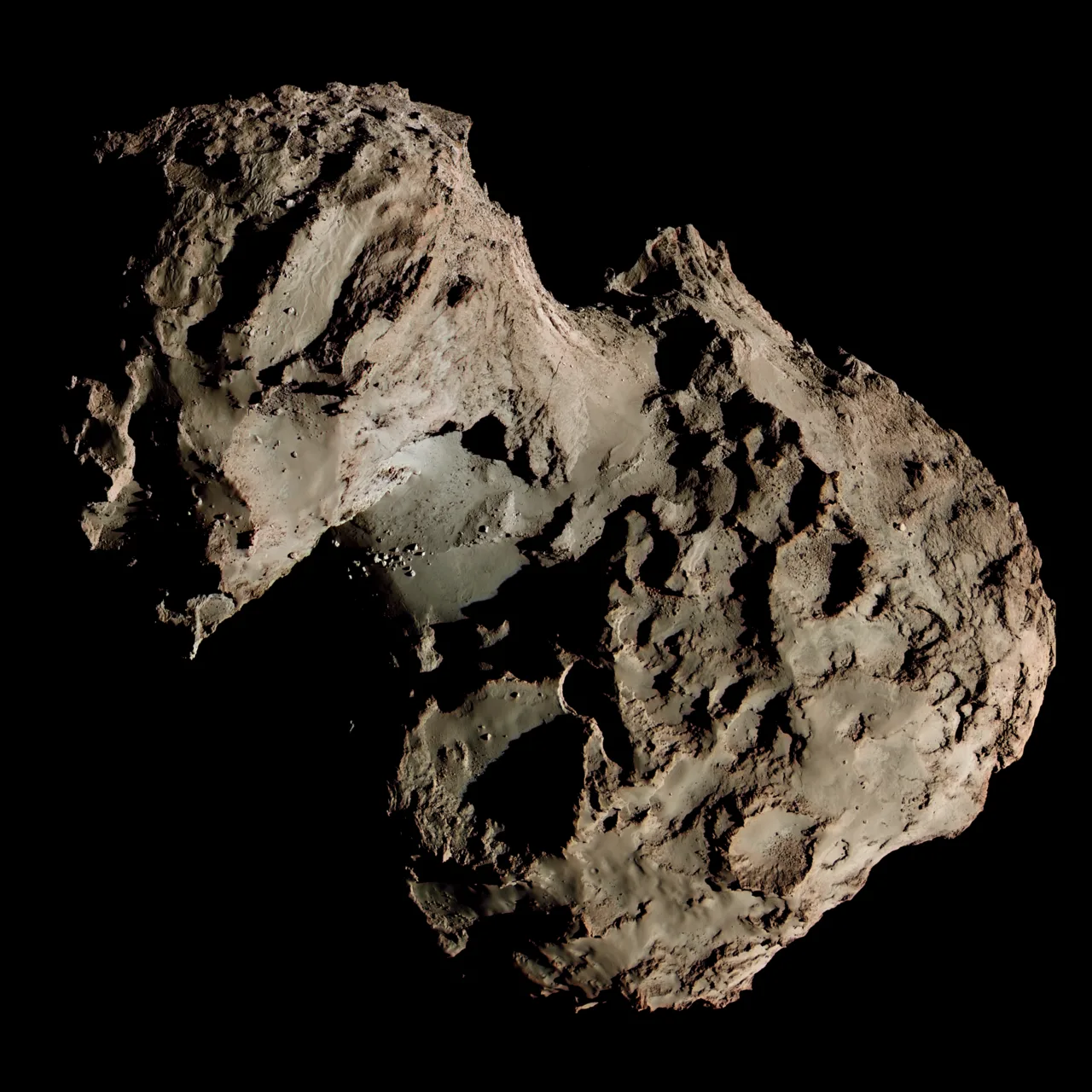
67P Churyumov-Gerasimenko - Rosetta (32755885495)
Great Comet of 1843
The Great Comet of 1843 was a long-period Kreutz sungrazer comet that rapidly brightened to become exceptionally visible in March 1843.
Ancient Lineage Traced to Antiquity
The Great Comet was not an isolated traveler but belonged to the Kreutz sungrazers Population I subgroup. Studies indicate that it originated from the breakup of a large parent comet in February 1106. Recent research in 2022 and 2025 further solidified its lineage back to an ancient celestial object witnessed by Ammianus Marcellinus in 363 AD.
From Wikipedia · CC BY-SA 4.0
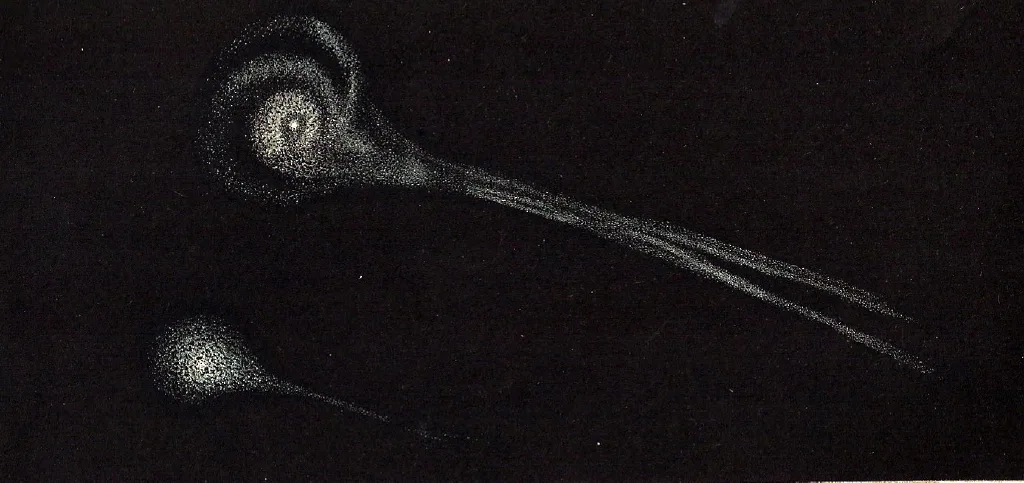
CometBiela
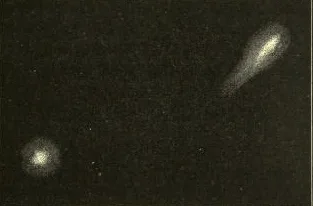
The two components of Biela in 1852, as drawn by Secchi.
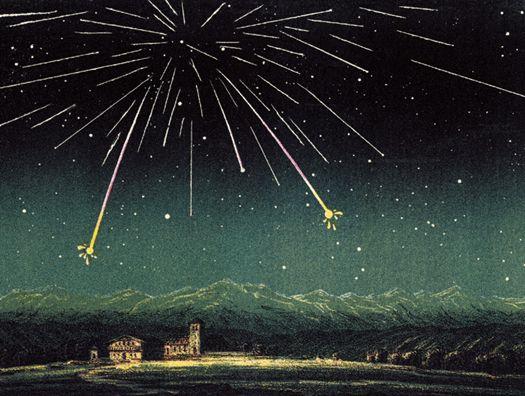
The Andromedid or Bielid meteors as seen on the night of 27 November 1872.
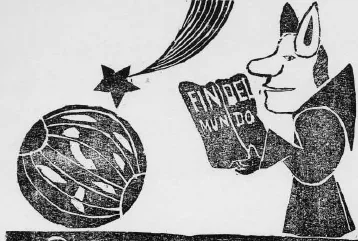
Biela's Comet was the subject of several panics over close approaches to Earth. An 1877 newspaper illustration from Chile, captioned "inevitable impact of the Earth with Comet Biela"
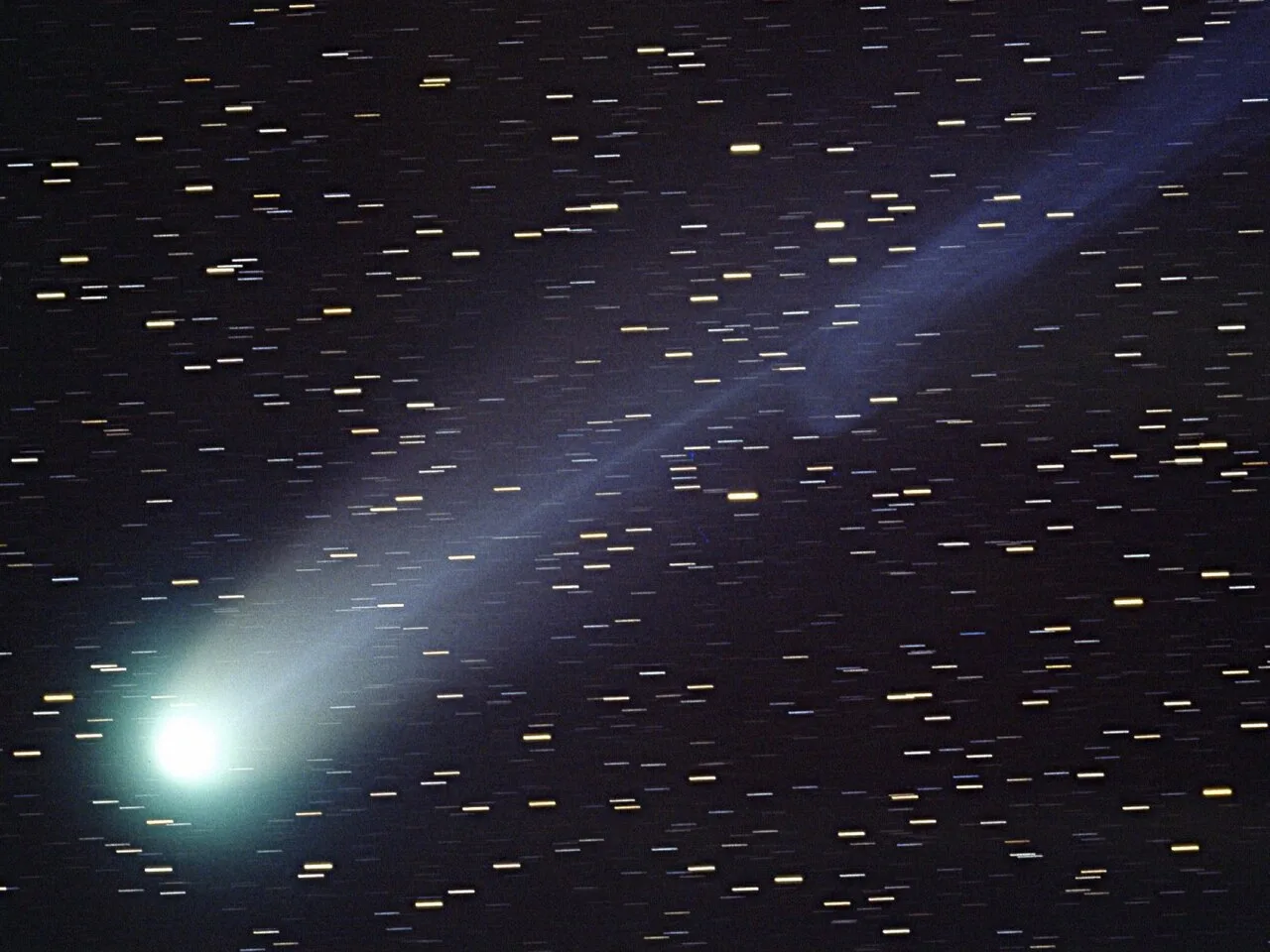
Comet C/1996 B2 (Hyakutake)
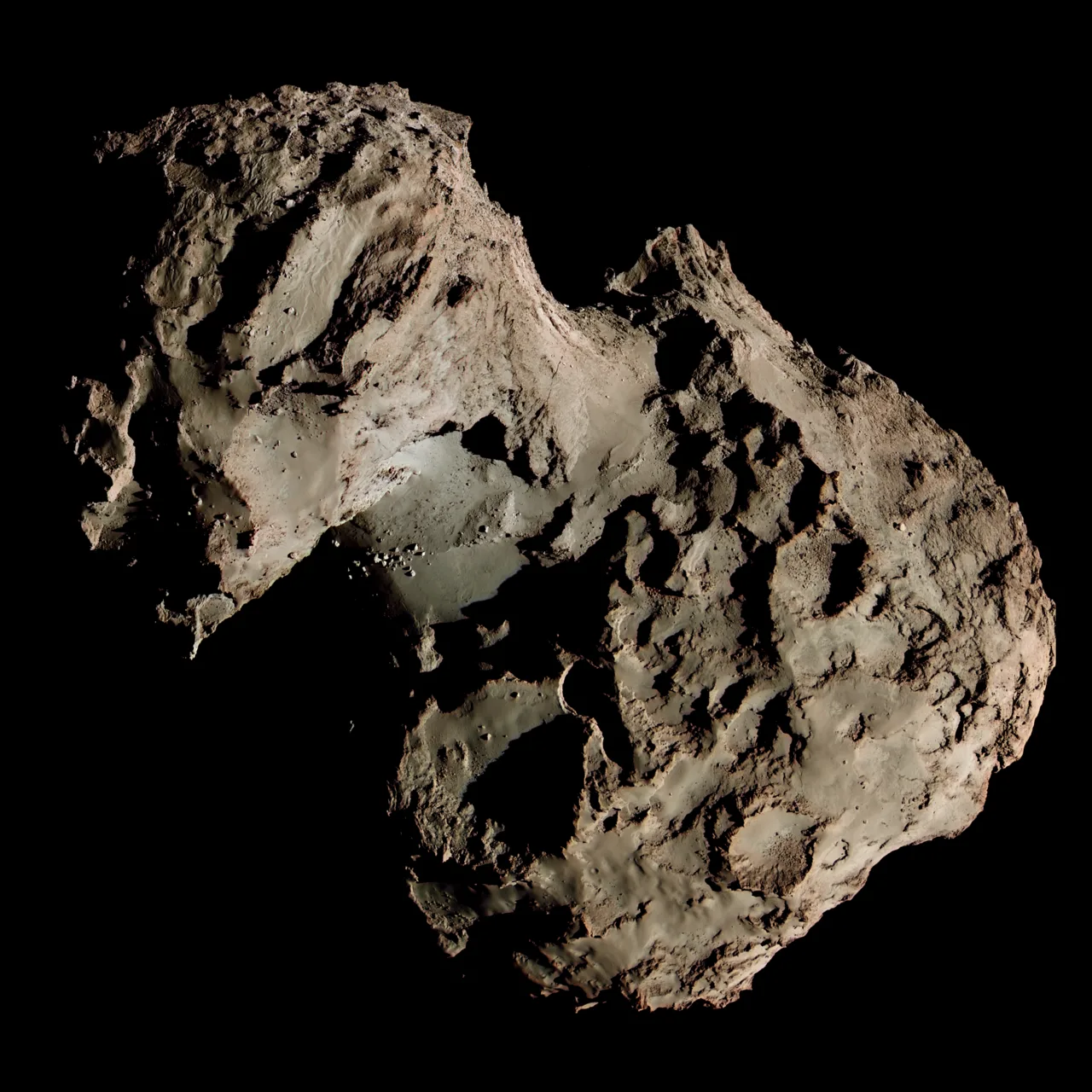
67P Churyumov-Gerasimenko - Rosetta (32755885495)
Comet Biela
Biela's Comet was a Jupiter-family comet first recorded in 1772. It was observed to split in two and has not been seen since 1852, and is currently considered destroyed.
A Fortress Officer and the Third Periodic Comet
Wilhelm von Biela, an army officer stationed at the fortress town of Josefstadt, calculated the orbit of the comet during its 1826 perihelion approach on February 27. His calculations revealed an orbital period of 6.6 years. This discovery established the object as only the third periodic comet recognized by astronomers, joining comets 1P/Halley and 2P/Encke.
From Wikipedia · CC BY-SA 4.0