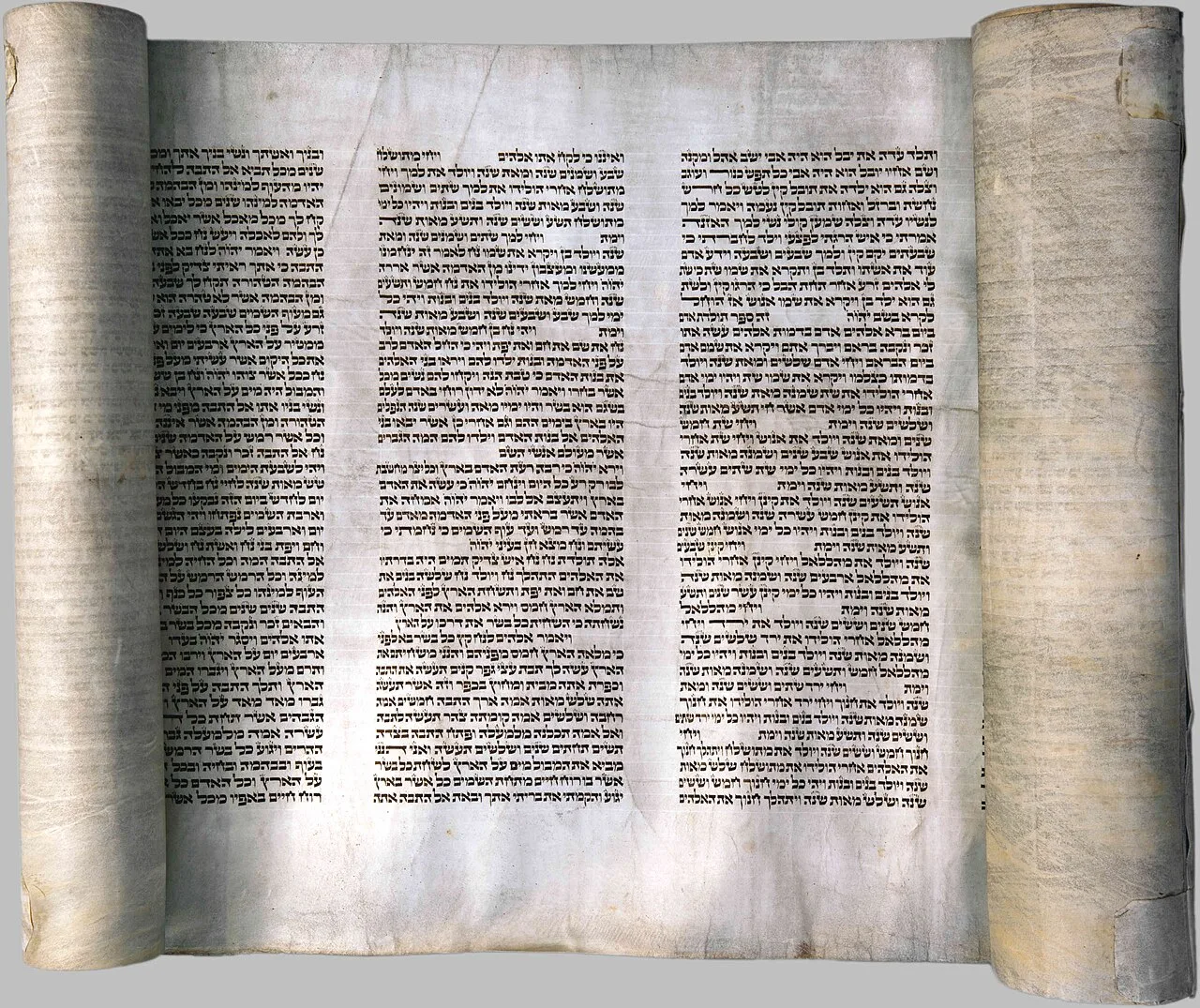
An opened Torah scroll (Book of Genesis part).
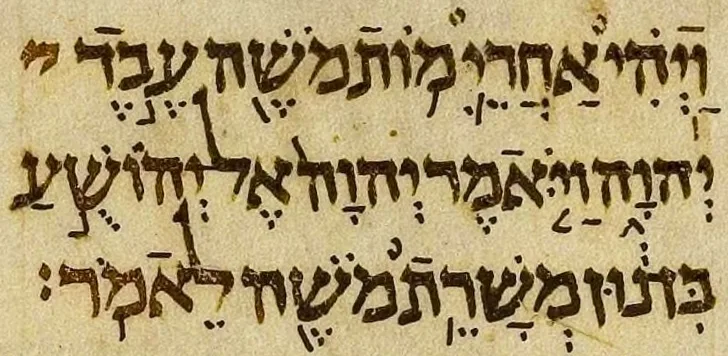
Joshua 1:1 as recorded in the Aleppo Codex
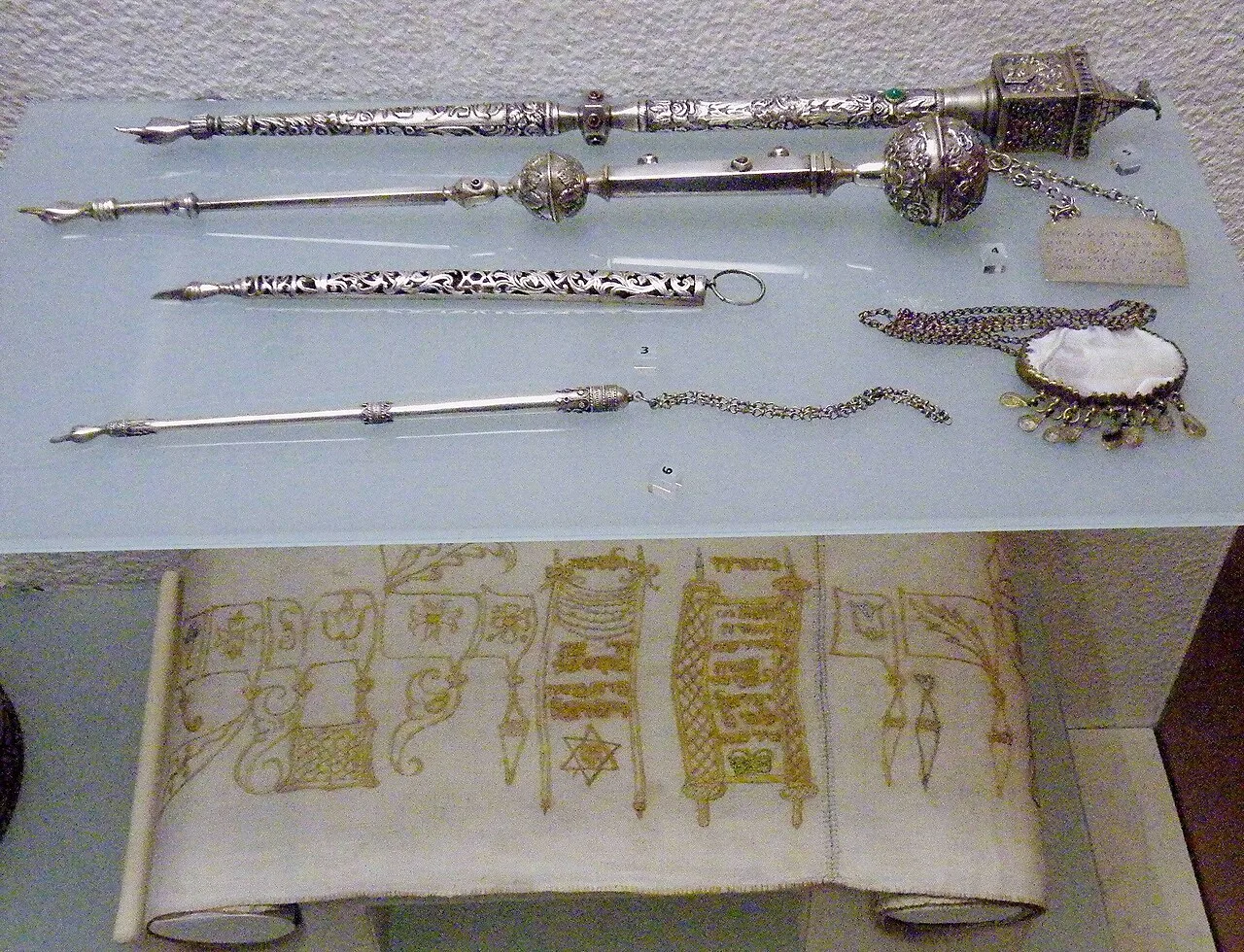
Reading pointers, or yad, to ensure more ordinal reading of the Torah.
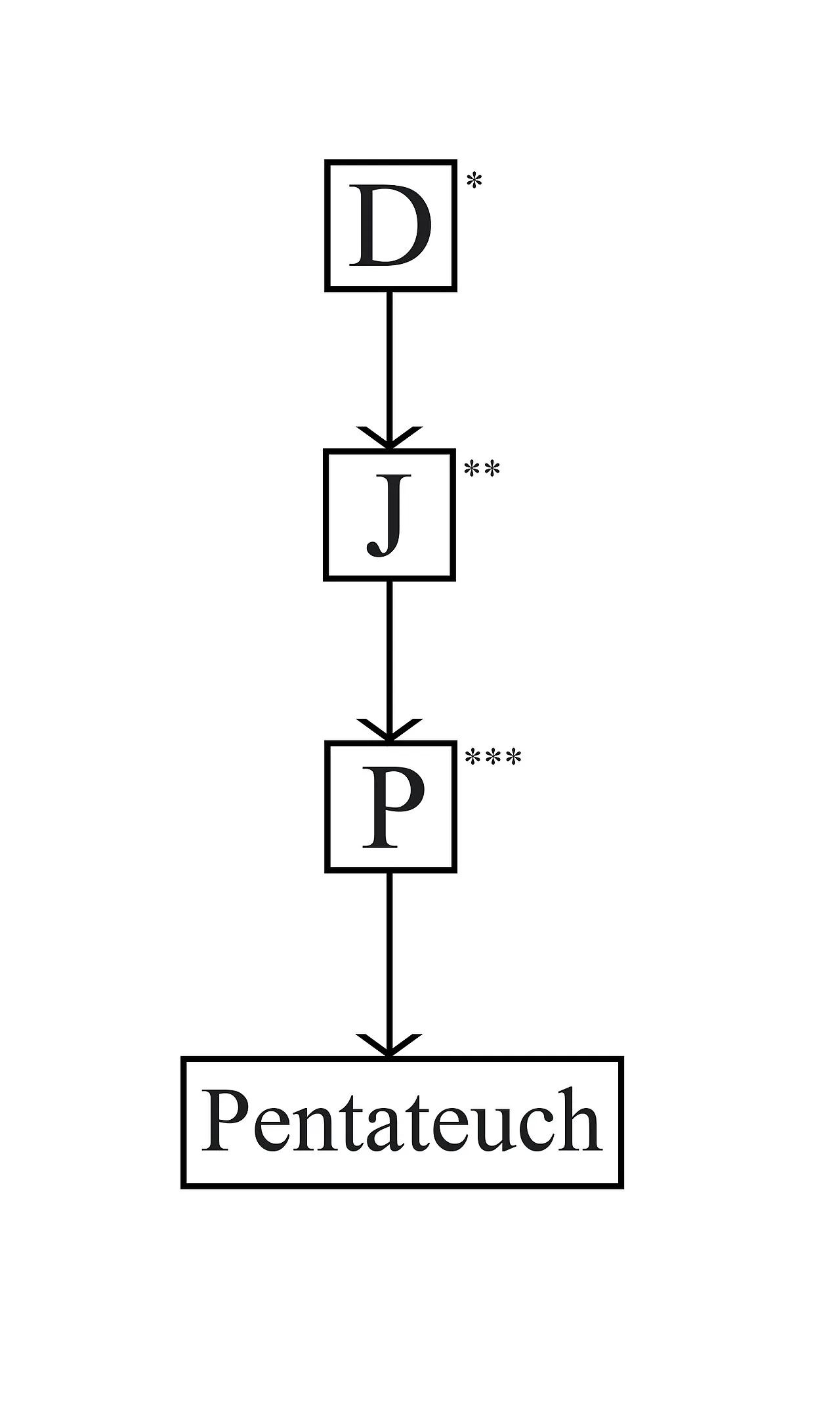
The supplementary hypothesis, one potential successor to the documentary hypothesis.
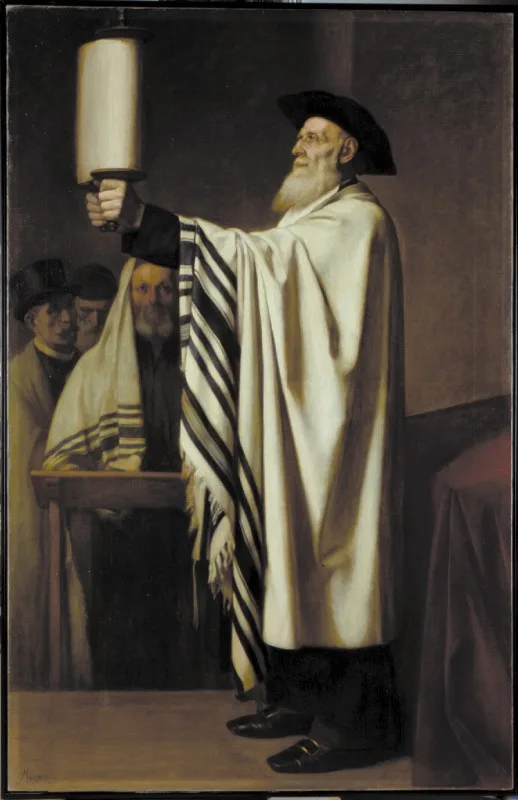
Presentation of The Torah, by Édouard Moyse, 1860, Museum of Jewish Art and History.
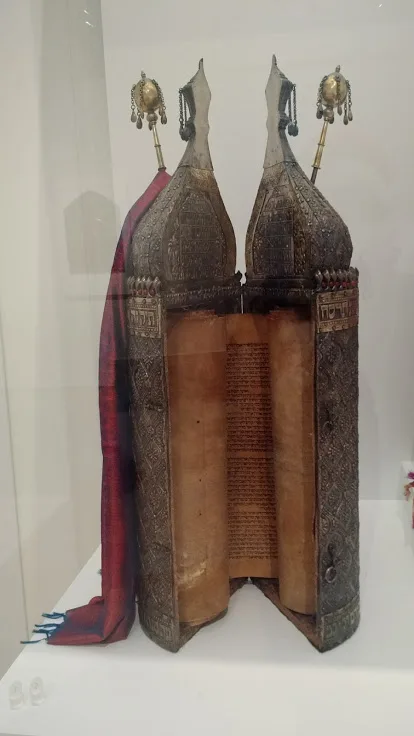
An old open Torah case with scroll.
Torah
The Torah is the compilation of the first five books of the Hebrew Bible: Genesis, Exodus, Leviticus, Numbers, and Deuteronomy.
The Greek Shift from Guidance to Law
Calling the Torah "The Law" creates a persistent misunderstanding of its core Hebrew meaning. The Hebrew term derives from a root meaning 'to guide' or 'to teach', properly signifying doctrine or instruction rather than rigid legislation. Alexandrian Jewish translators chose the Greek word nomos for the Septuagint, leading Greek and Latin Bibles to establish "The Law" as the standard name. This translational shift can obscure the concept behind talmud torah.
From Wikipedia · CC BY-SA 4.0
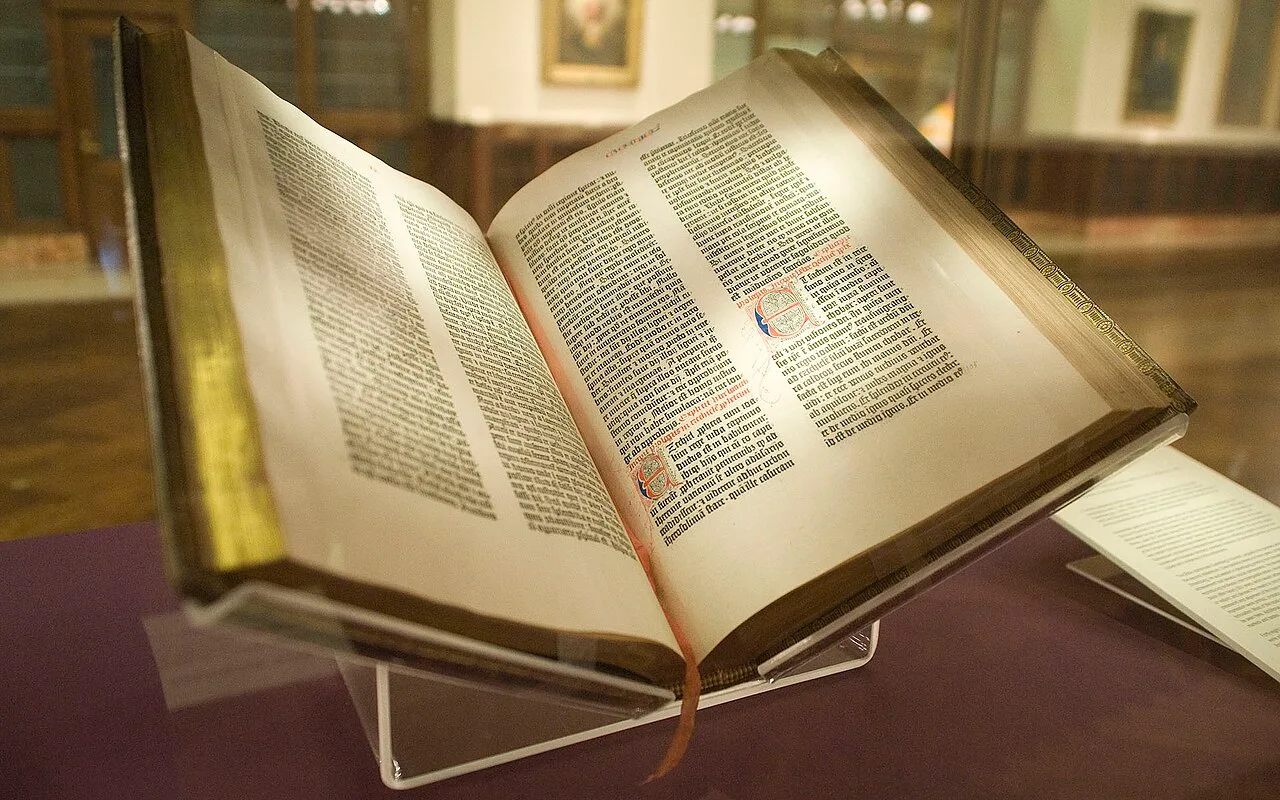
Gutenberg Bible, Lenox Copy, New York Public Library, 2009. Pic 01
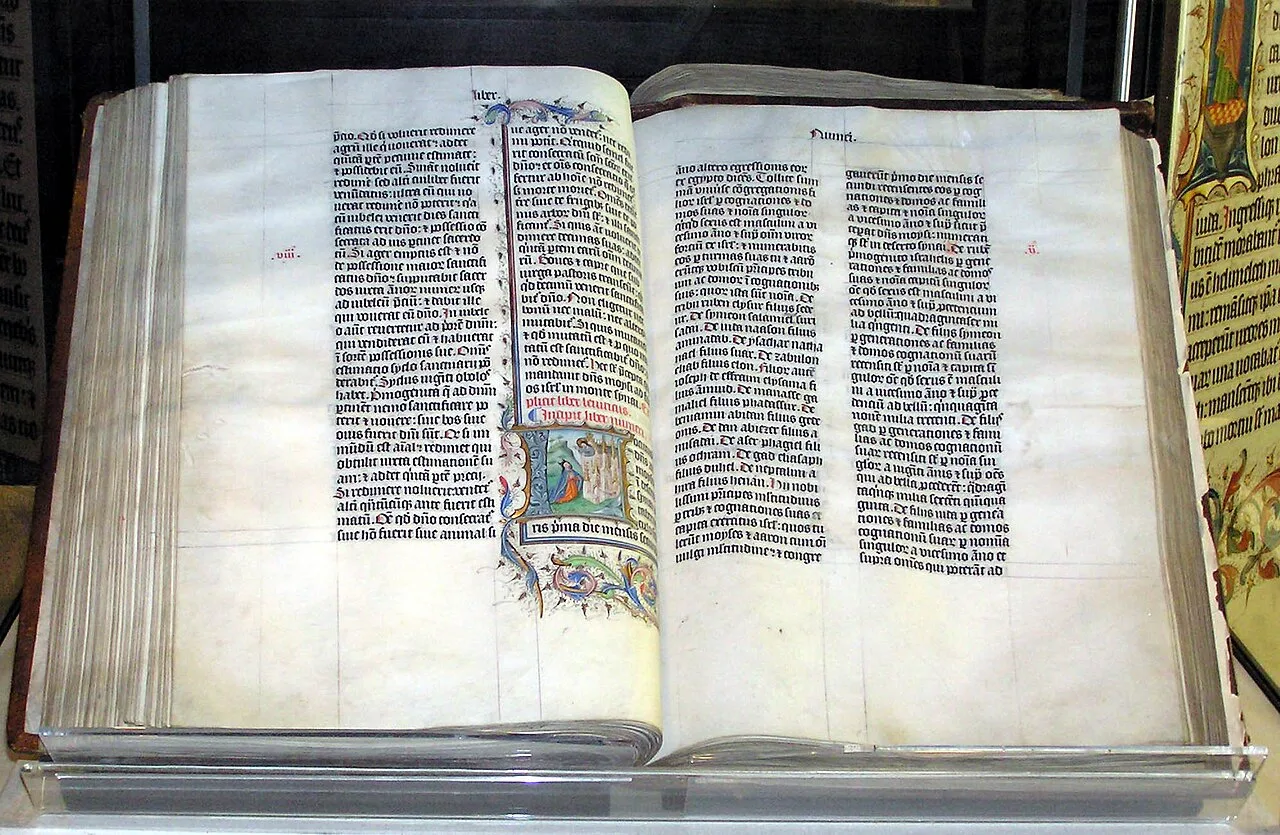
The Malmesbury Bible
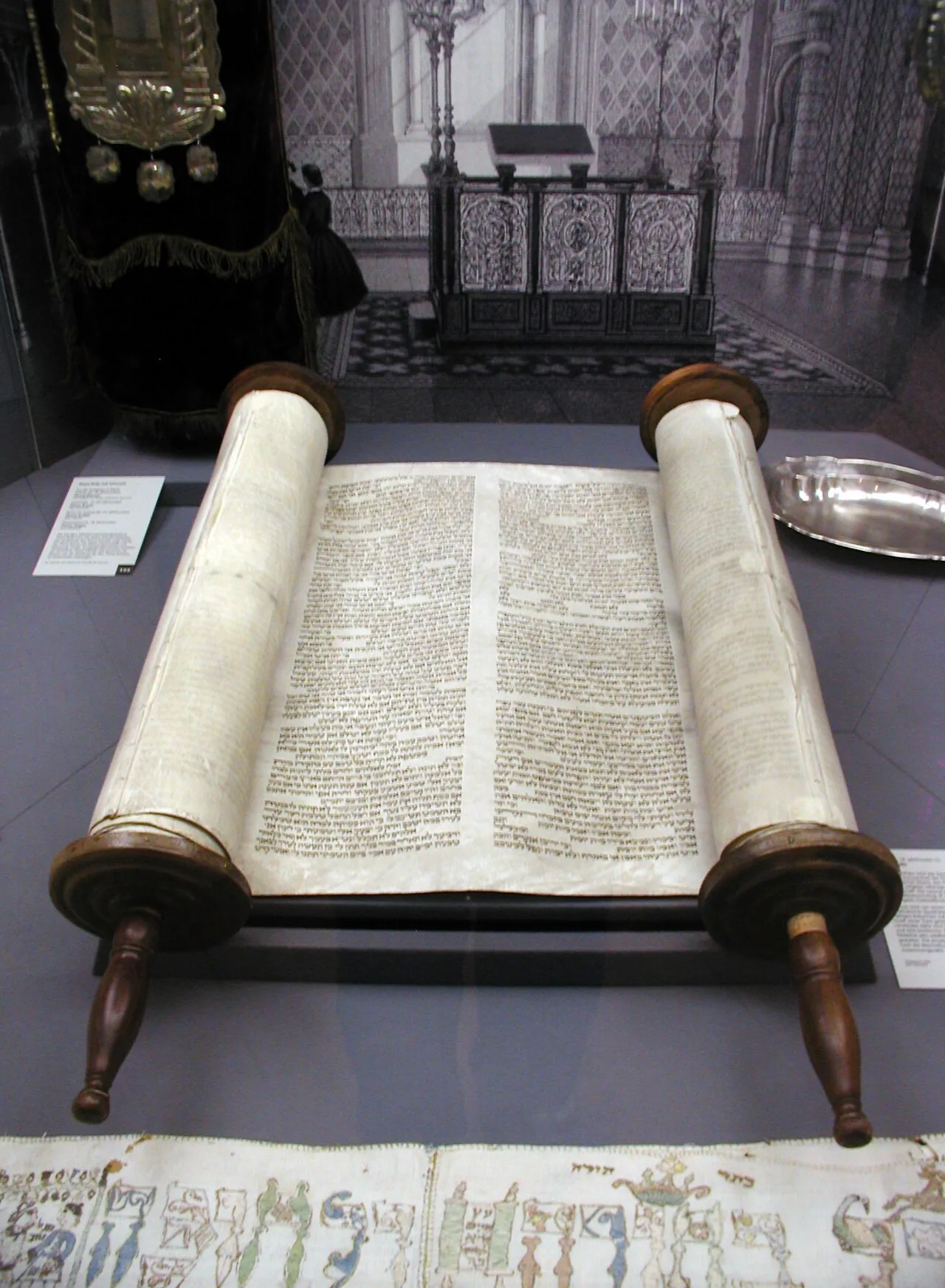
A Torah scroll recovered from Glockengasse Synagogue in Cologne
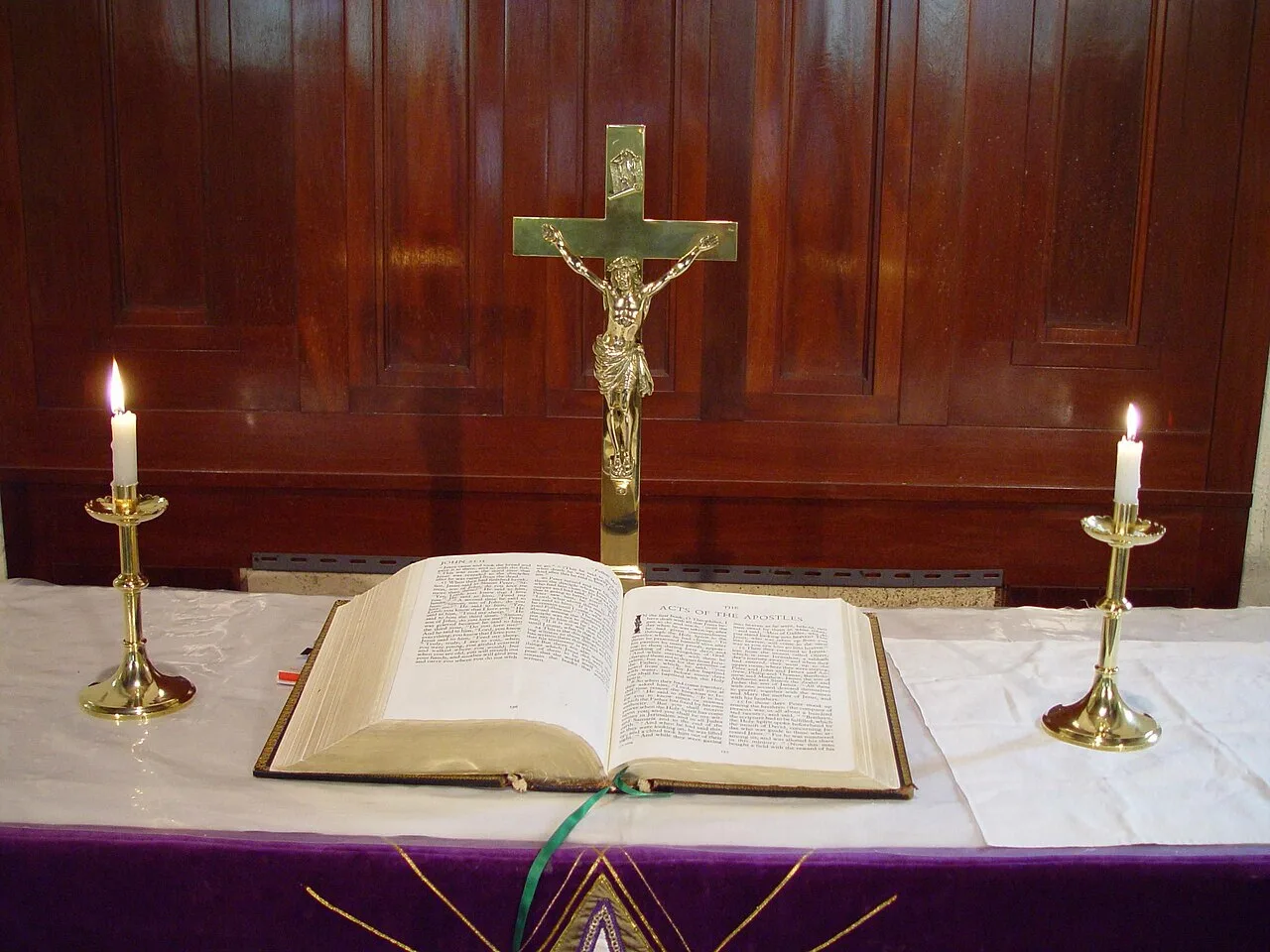
A Bible is placed centrally on a Lutheran altar, highlighting its importance
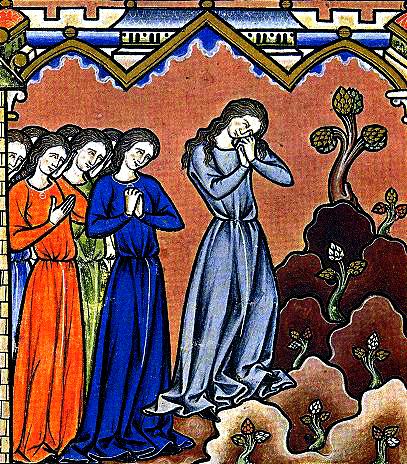
Jephthah's daughter laments – Maciejowski Bible (France, c. 1250)
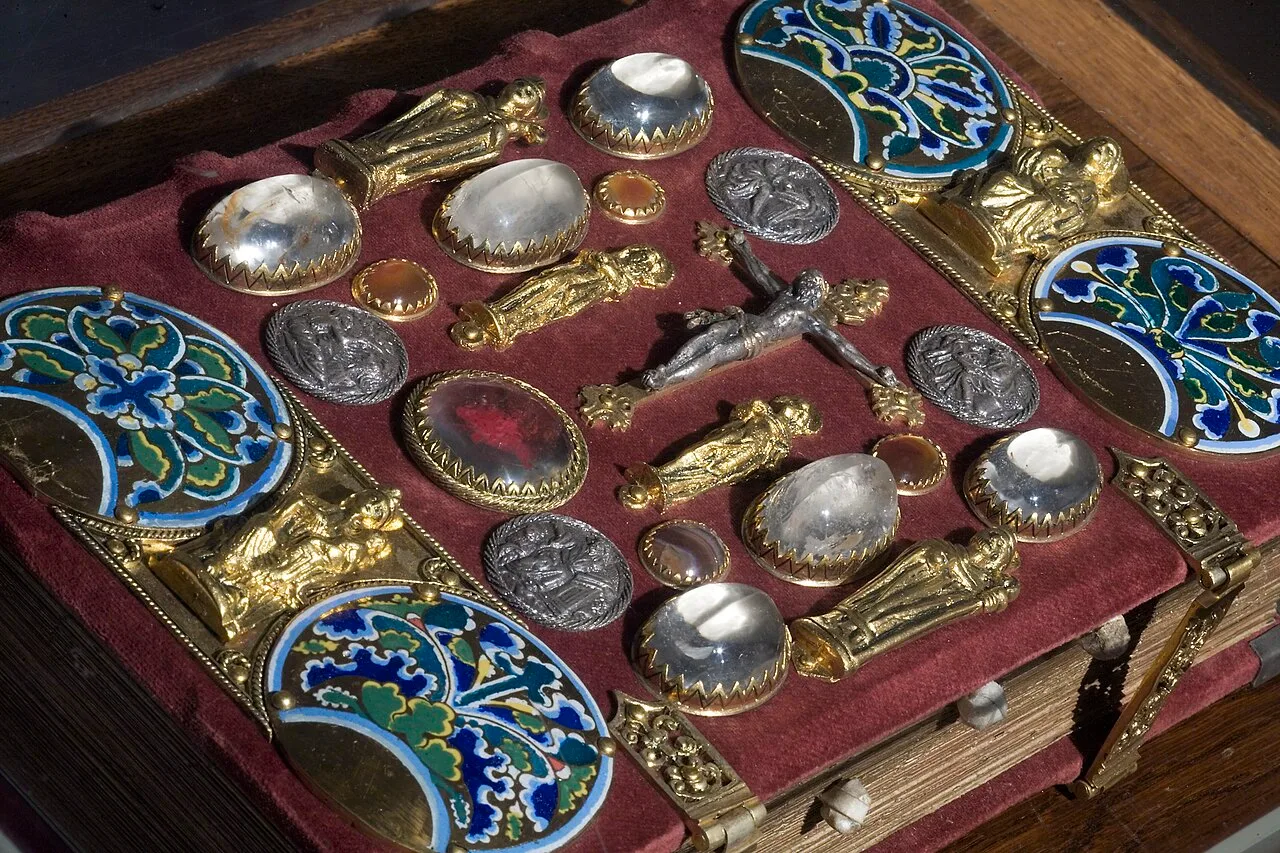
A Baroque Bible
Bible
The Bible is a collection of religious texts central to Christianity and Judaism, originally written in Hebrew, Aramaic, and Koine Greek.
From Phoenician Papyrus Ports to a Singular Latin Noun
The English designation 'Bible' originated from a diminutive Greek word for papyrus scrolls traded through the Phoenician seaport of Byblos. John Chrysostom was the first known writer to use 'ta biblia' around 386 to 388 CE to describe both testaments simultaneously. Although initially a plural phrase denoting 'the books,' medieval Latin transformed the word into a singular feminine noun, giving modern European languages their unified title.
From Wikipedia · CC BY-SA 4.0
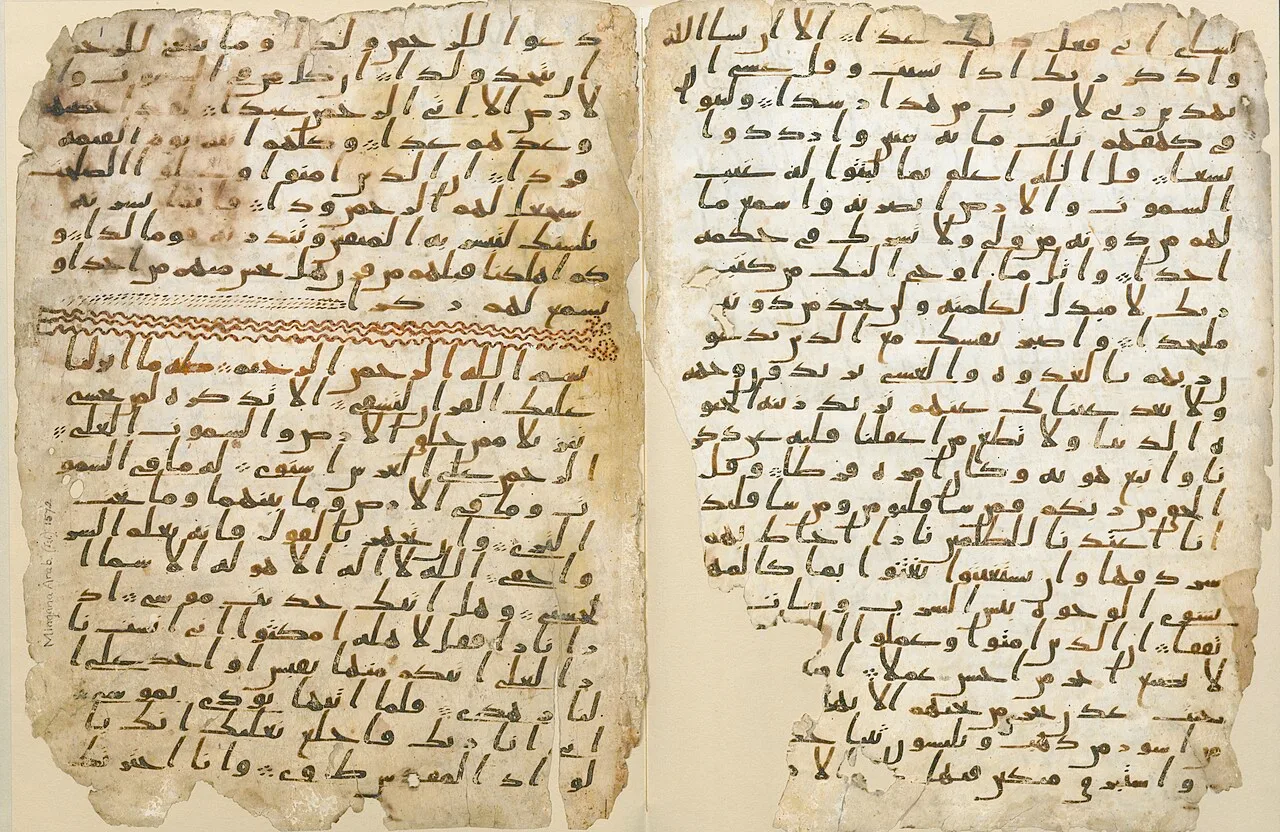
Quran opened, resting on a stand
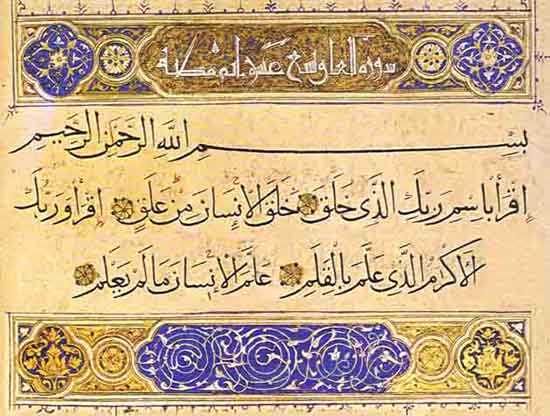
Traditionally believed to be Muhammad's first revelation, Sura Al-Alaq, later placed 96th in the Quranic regulations, in current writing style
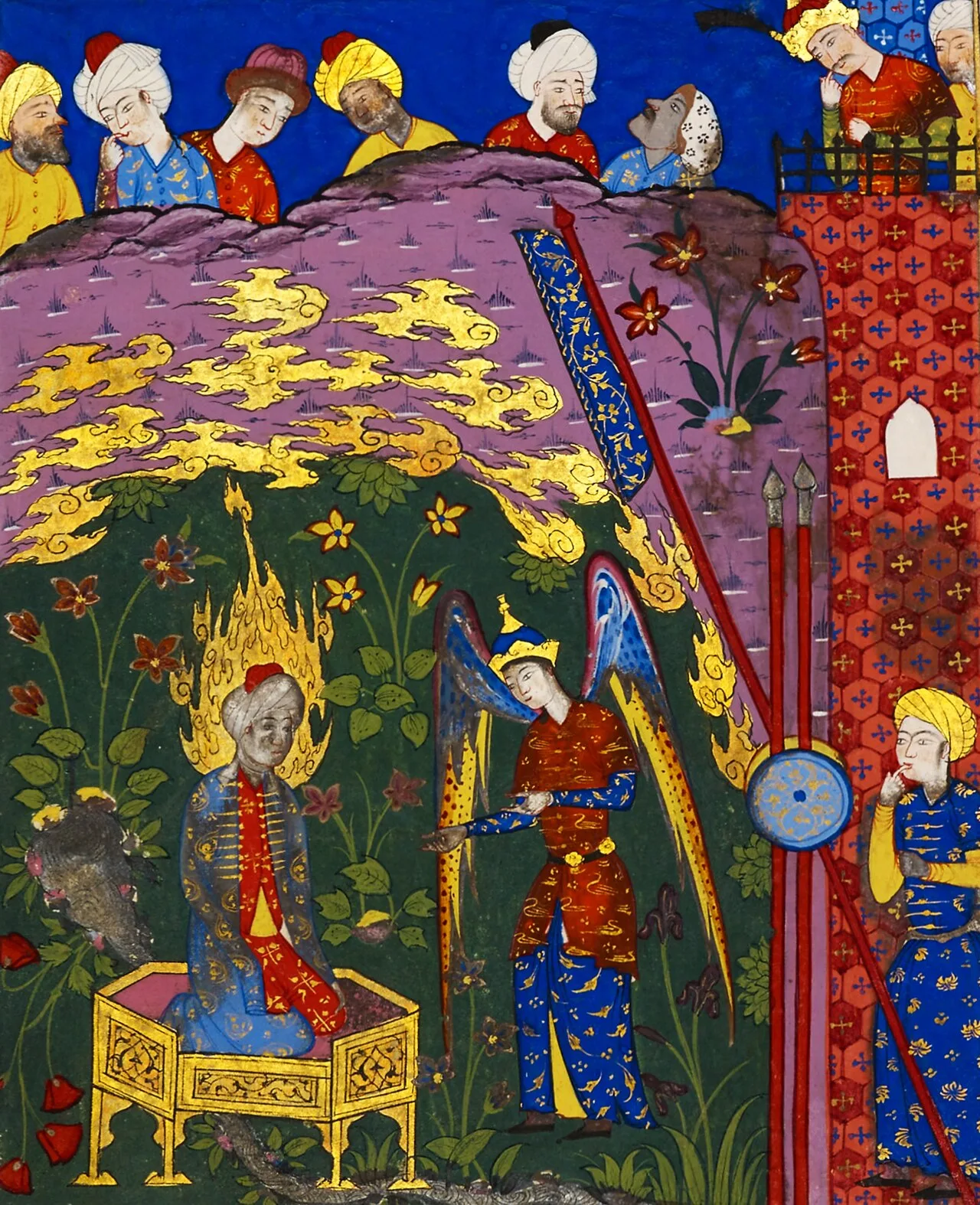
Islamic Persian miniature of Jibril protecting Ibrahim from Nimrod's fire.
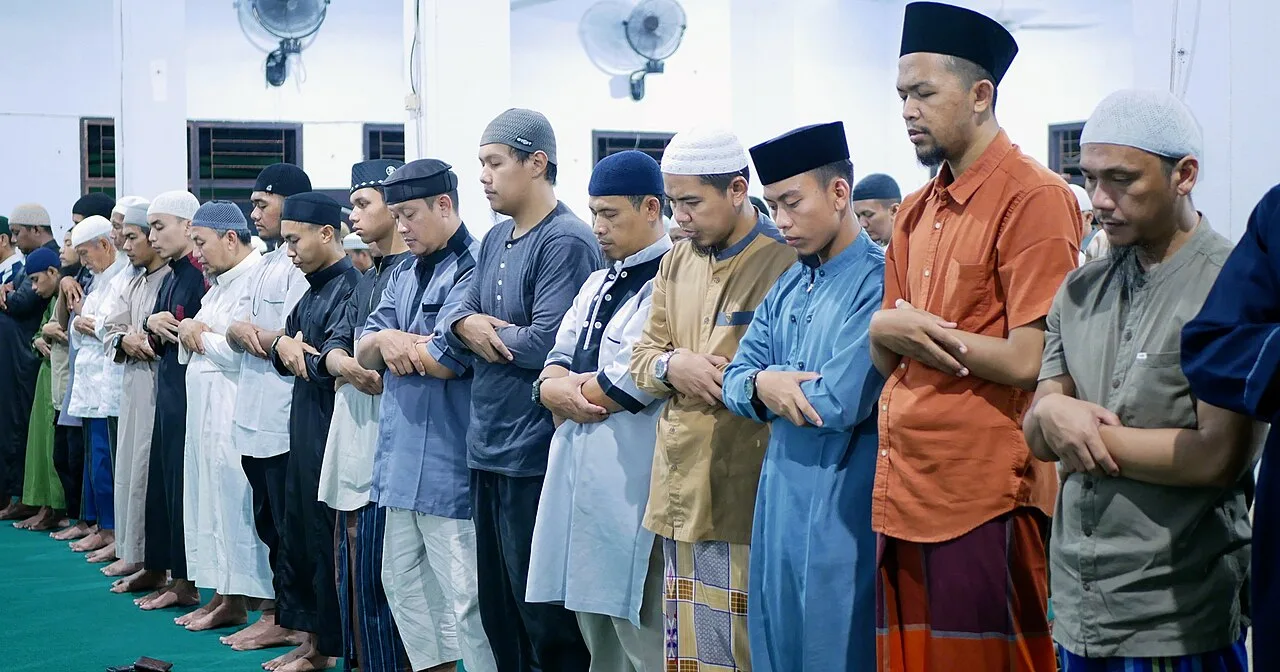
While standing in prayers, worshipers recite the first chapter of the Quran, al-Fatiha, followed by any other section
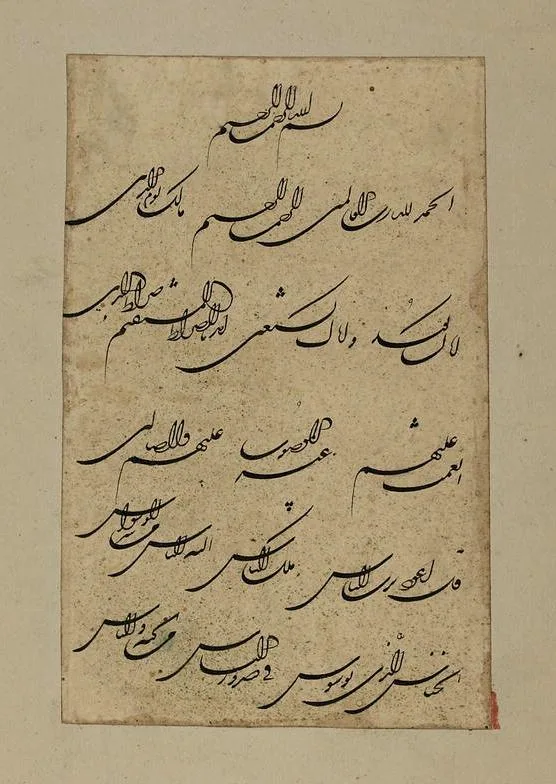
Shikasta nastaliq script, 18th–19th centuries
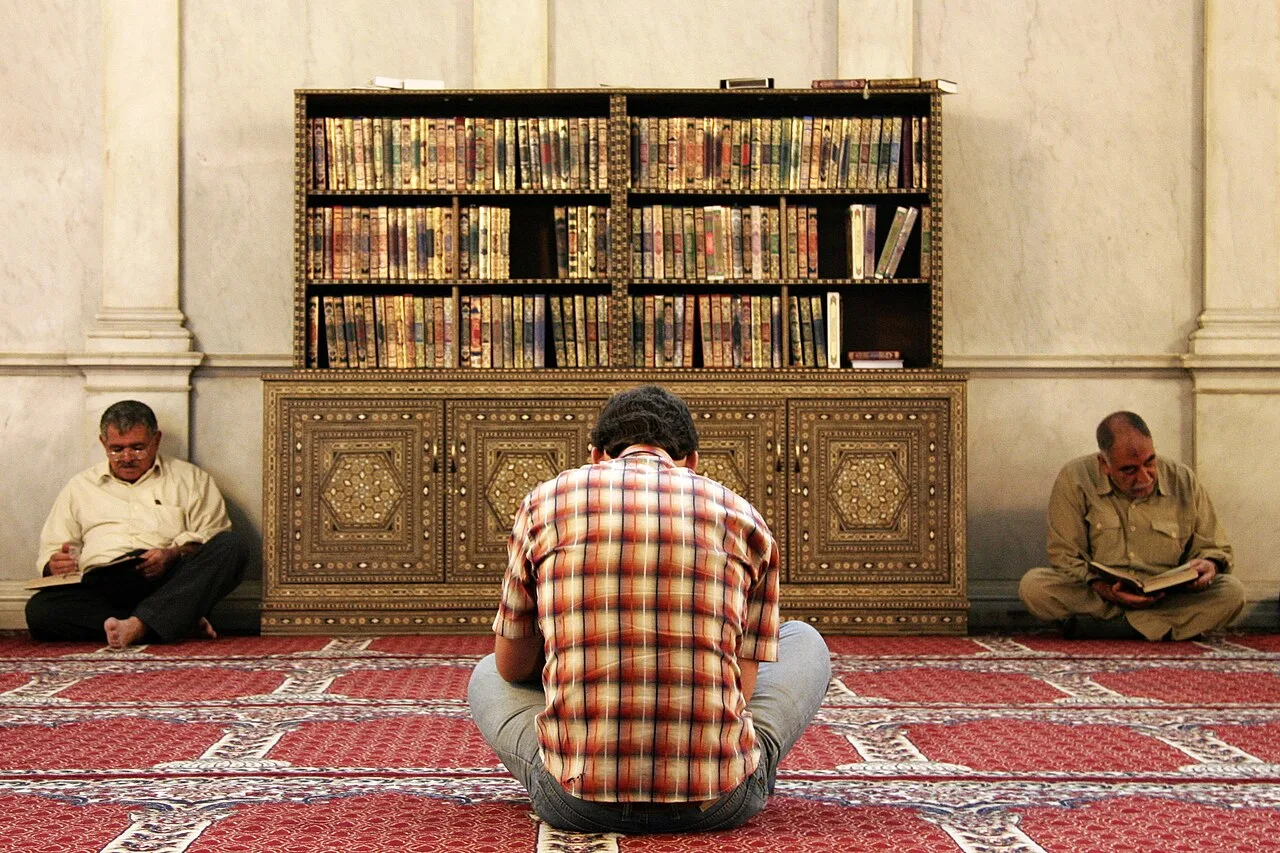
Men reading the Quran at the Umayyad Mosque, Damascus, Syria
Quran
The Quran is the central religious text of Islam, organized into 114 chapters and believed by Muslims to be a direct revelation from God.
Literacy Exchanges and Palm-Leaf Fragments
The compilation of the scripture began under remarkably humble and improvisational conditions. Following the Battle of Badr, early Muslims gained literacy when literate Quraysh captives were granted freedom in exchange for teaching the simple script of the era. The revelations were subsequently recorded on scattered physical remnants such as animal bones, flat stones, and the broad ends of palm leaves before ever being assembled into a single volume.
From Wikipedia · CC BY-SA 4.0
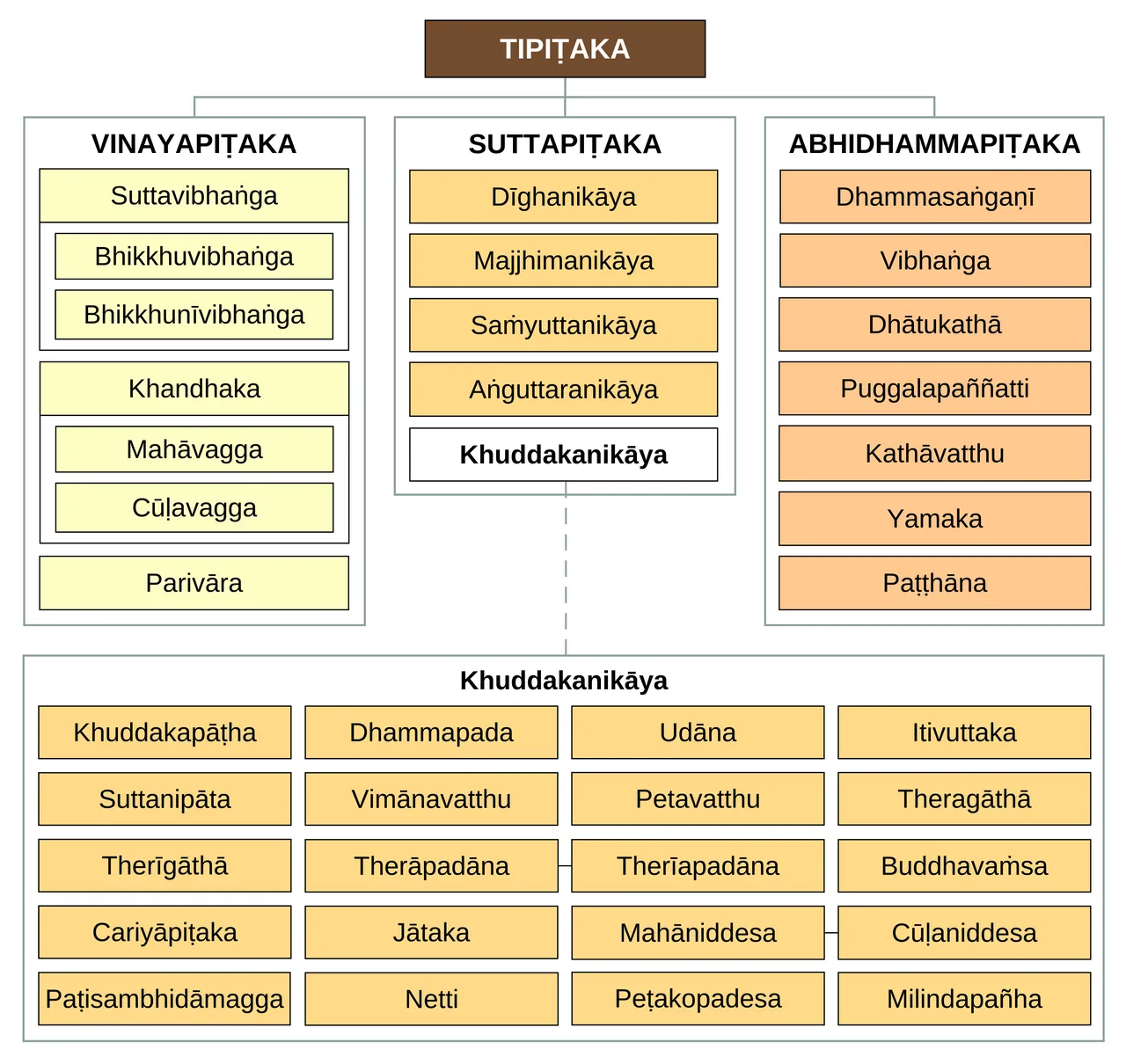
The structure of the books considered canonical within the Pali Tipitaka. The Theravāda school generally only recognizes the Pali Tipitaka and rejects the authenticity of other Tipitaka versions.
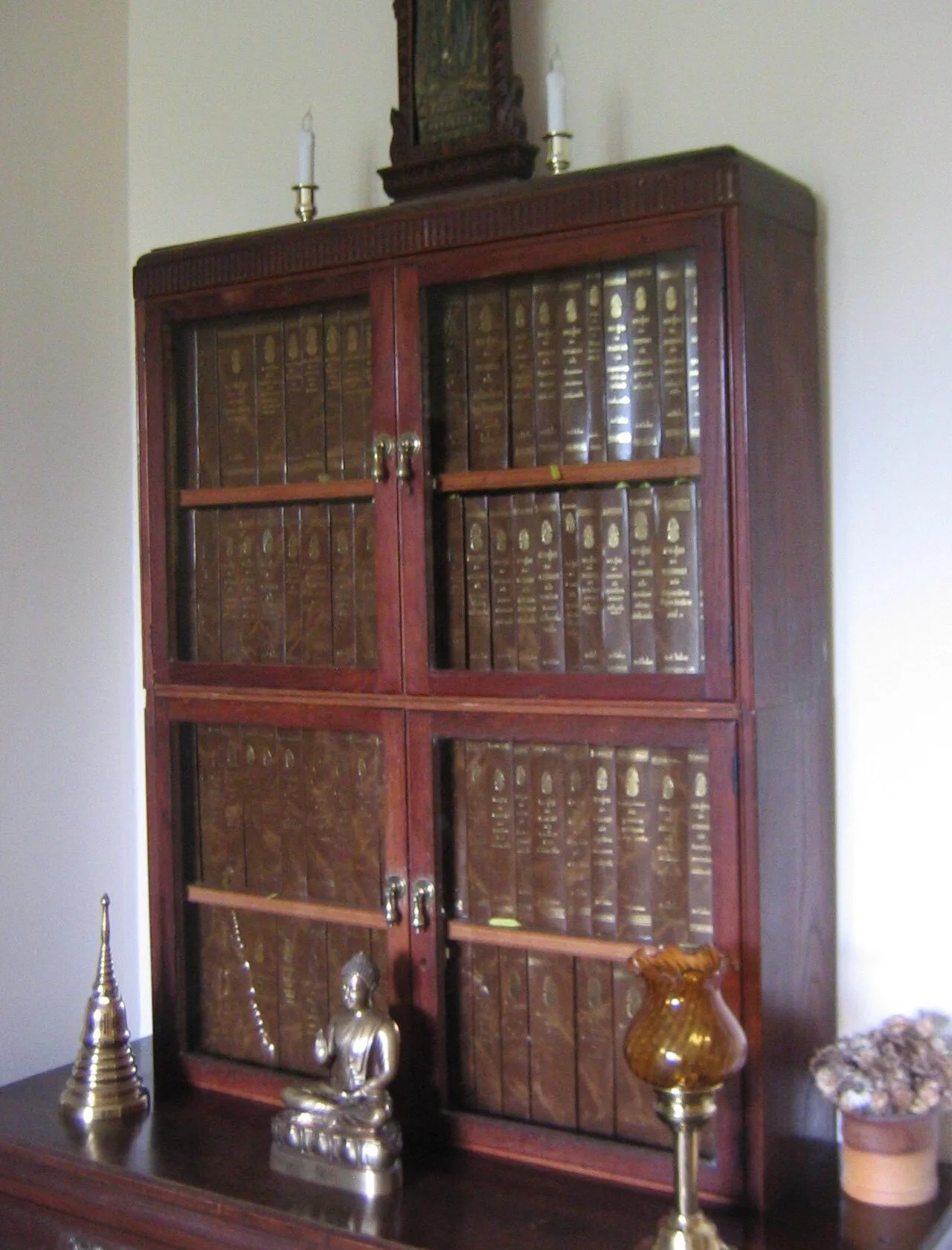
Standard edition of the Thai Pali Canon
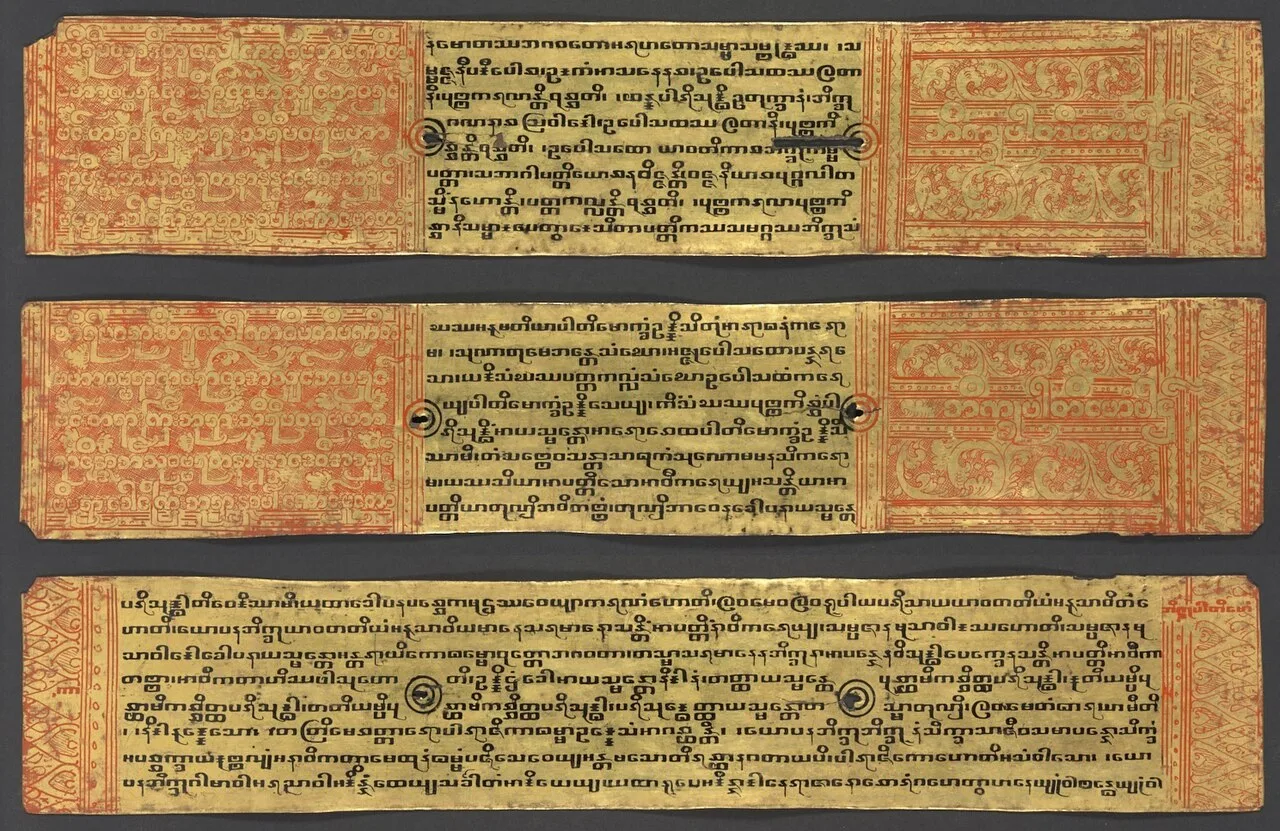
Folios of the Bhikkhuni-patimokkha (BL IO Man.Pali 21)
Dharmachakra
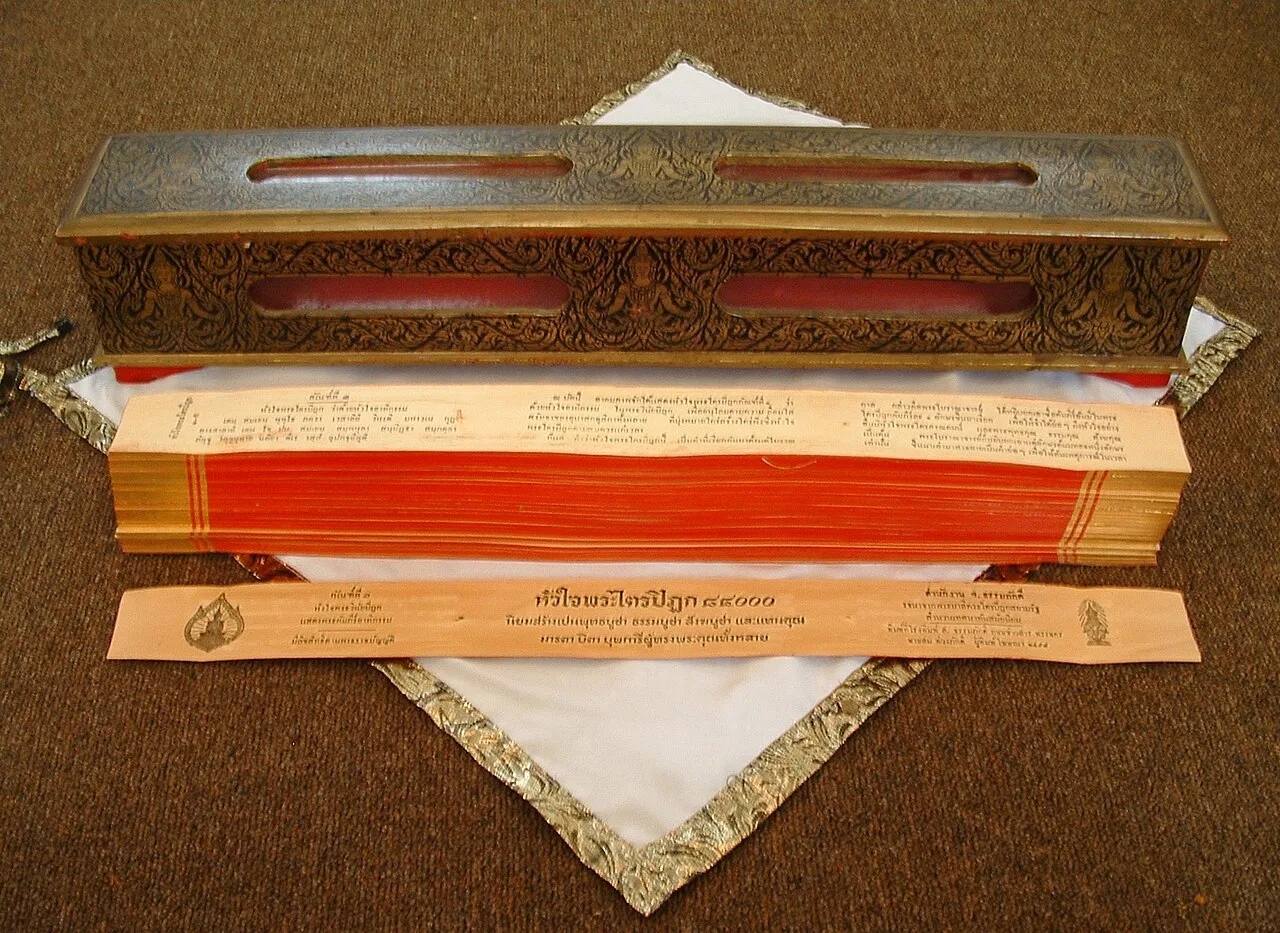
In pre-modern times the Pali Canon was disseminated through oral tradition and palm-leaf manuscripts. The leaves are kept together by thin sticks, and the scripture is covered in cloth and kept in a box.
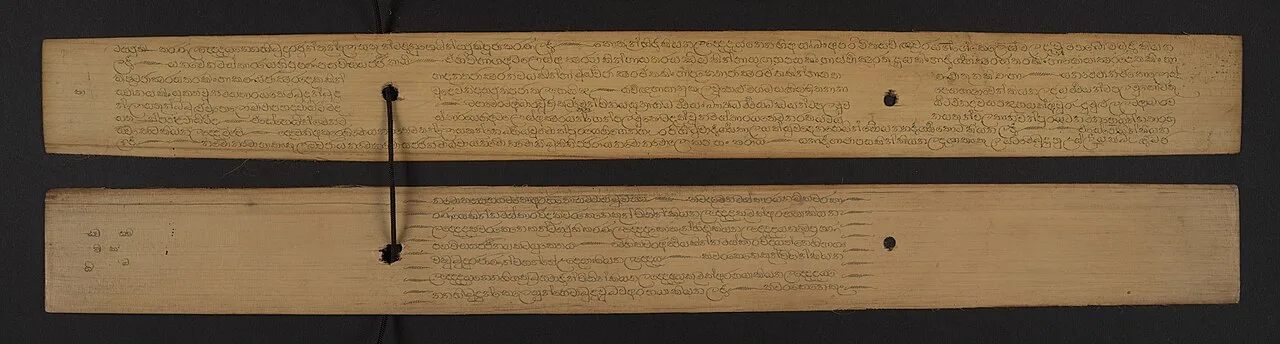
Palm-leaf manuscript of Atthakatha
Pali Canon
The Pāḷi Canon is the standard scripture collection of Theravada Buddhism and the most complete surviving early Buddhist canon.
Resistance to the Palm-Leaf Innovation
The inscription of the scriptures onto palm leaves during the Fourth Buddhist Council in 29 BC did not immediately end recitation practices. This technological shift created an innovation that was preserved alongside older methods. Oral transmission maintained by the Bhāṇaka tradition continued to exist side by side with written scriptures for centuries across the Buddhist community.
From Wikipedia · CC BY-SA 4.0
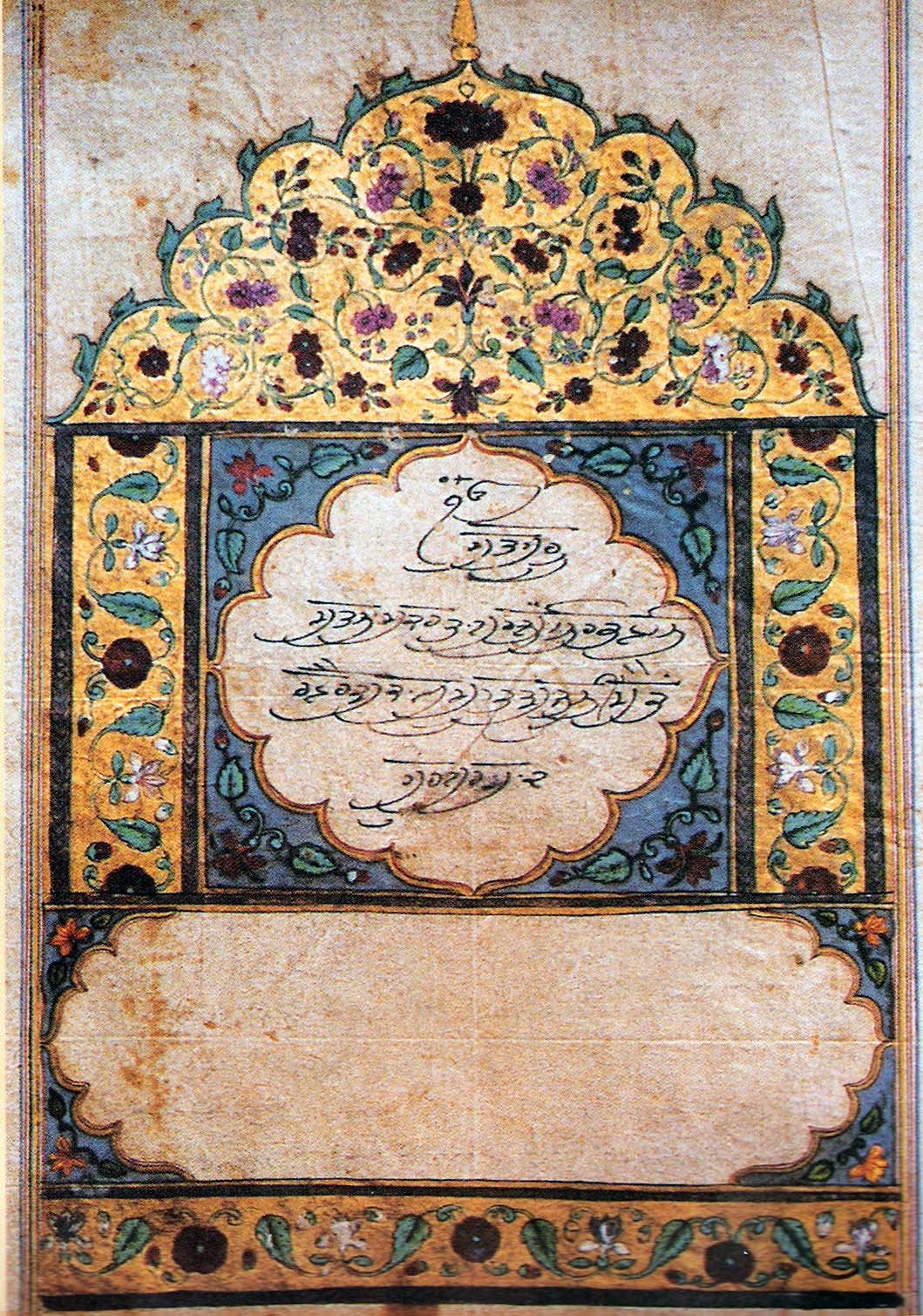
Sri Guru Granth Sahib Nishan
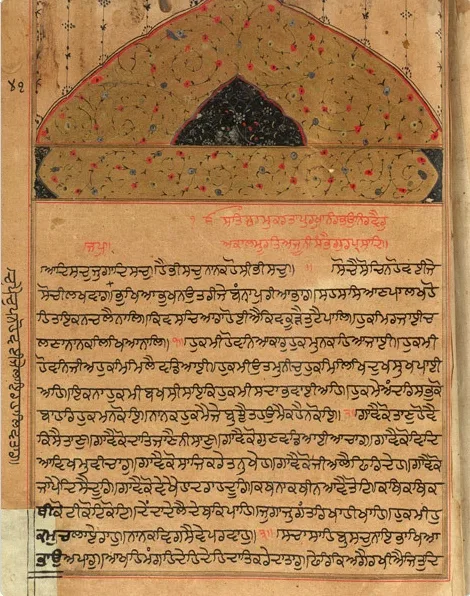
From a 17th-century copy of the Guru Granth Sahib
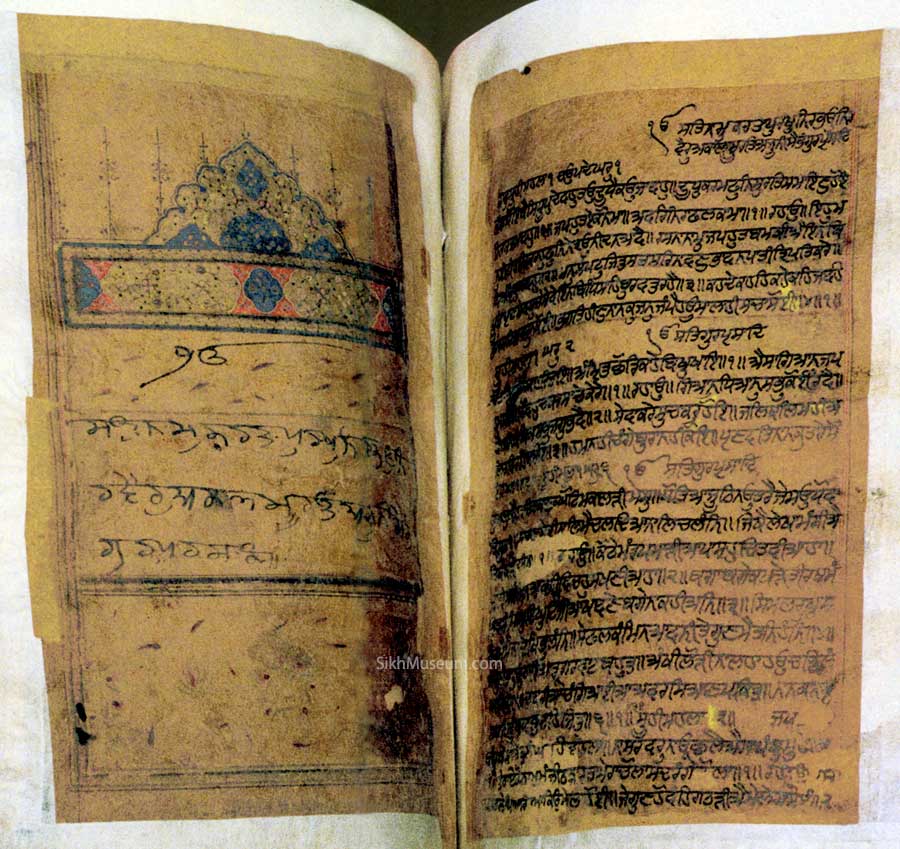
Photograph of the Kartarpur Bir kept at Kartarpur. This is the manuscript that was said to have been completed by Guru Arjan and his scribe, Bhai Gurdas, in 1604 and installed in the Golden Temple
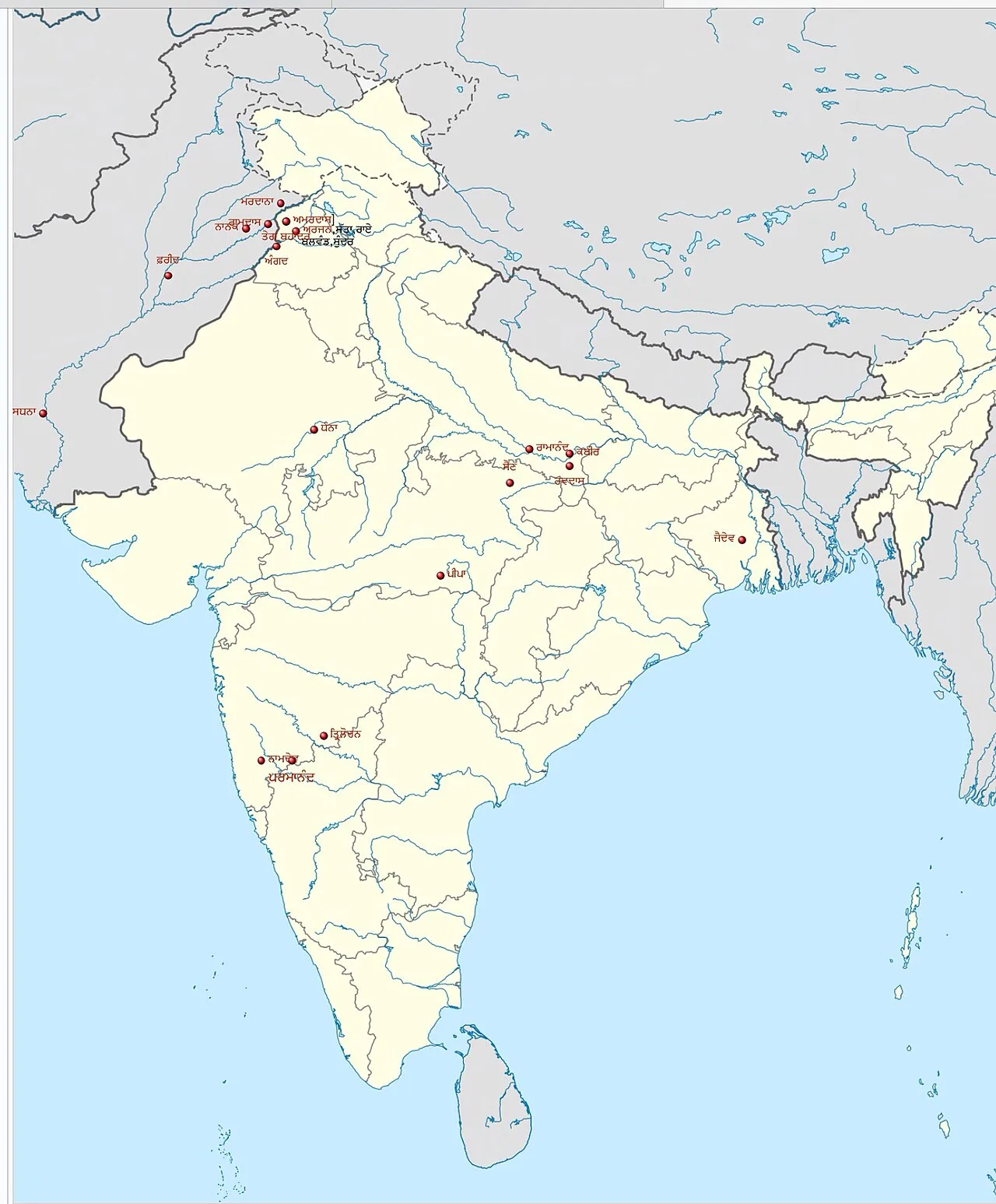
Map showing birthplace of various contributors of Guru Granth Sahib
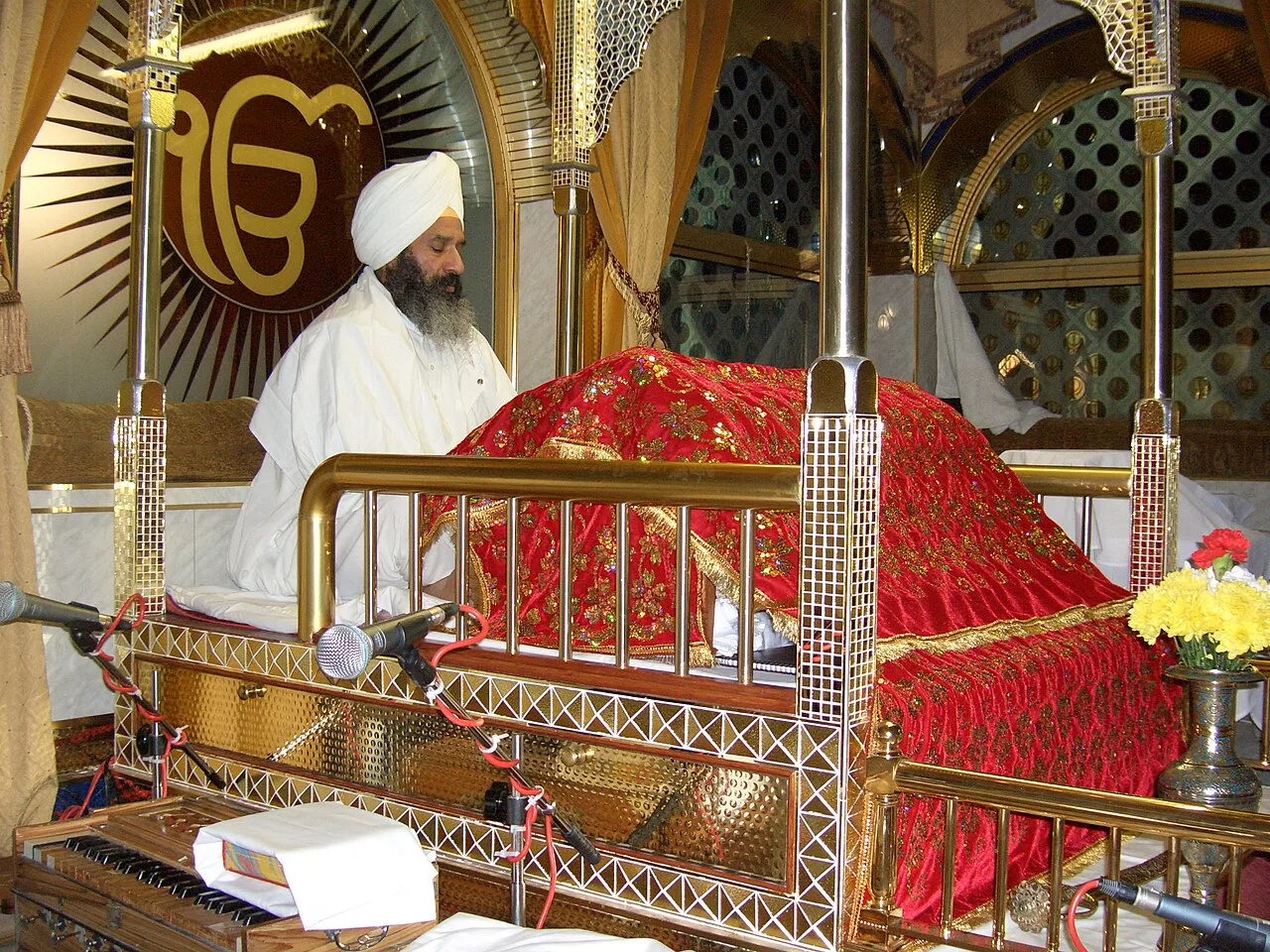
A Granthi reciting from the Guru Granth Sahib
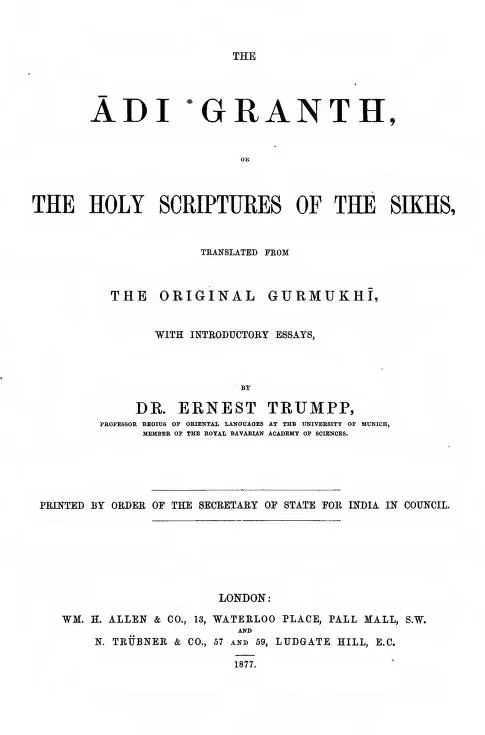
Title-page of The Ādi Granth: Or, the Holy Scriptures of the Sikhs by Ernest Trumpp, 1877
Guru Granth Sahib
The Guru Granth Sahib is the central scripture of Sikhism, revered by Sikhs as the final, sovereign, and eternal Guru following the religion's ten human gurus.
Disinheritance Over a Single Word
Guru Har Rai established an uncompromising standard regarding the textual integrity of the Sikh scriptures when dealing with the Mughal court. When Emperor Aurangzeb objected to a line in Asa ki Var concerning a Musalman's grave, Har Rai's eldest son, Ram Rai, substituted the word with "Beiman" to please the ruler. This single modification permanently cost Ram Rai his succession, prompting the Guru to appoint his younger son instead.
From Wikipedia · CC BY-SA 4.0
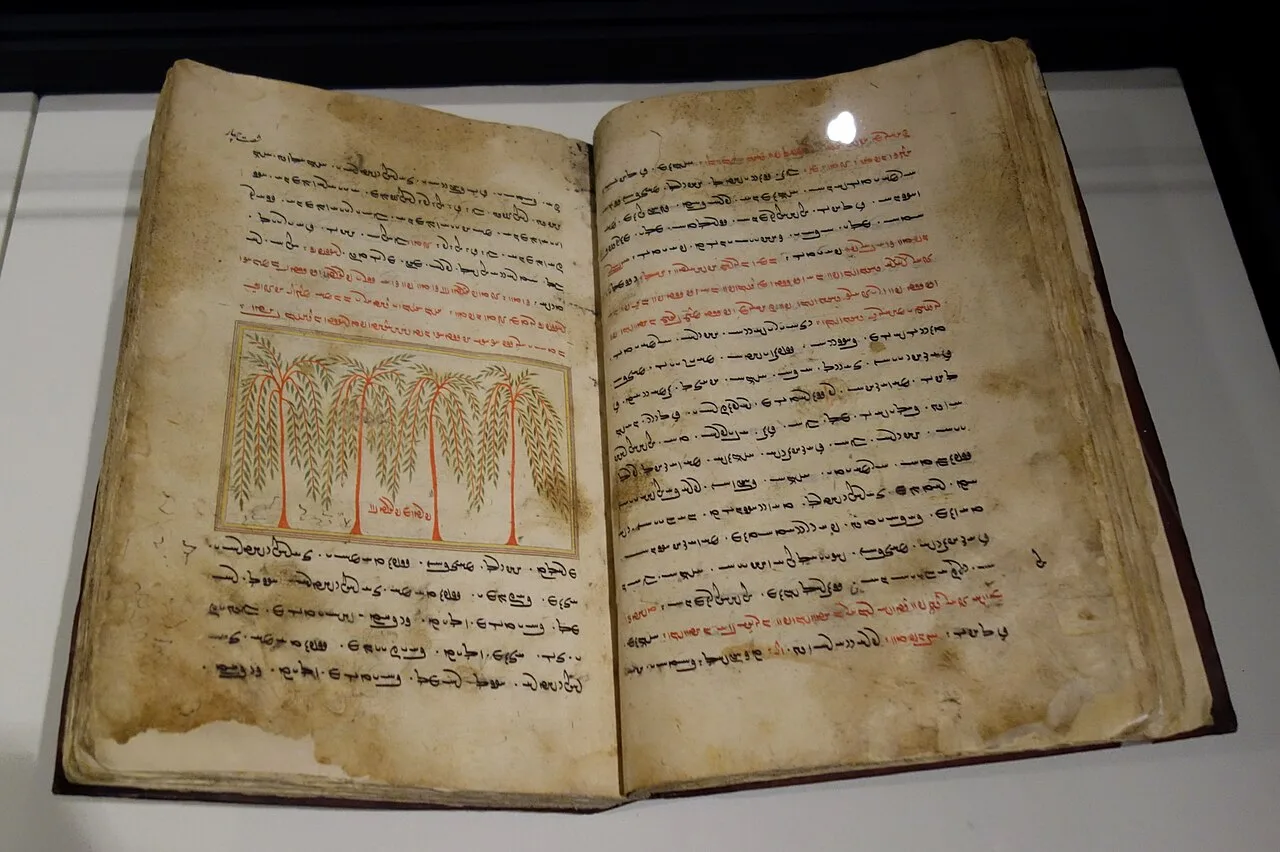
Videvdad Sadah (Zoroastrian religious code), opened to first chapter, unknown copyist, Yazd, Iran, 1647 AD - British Library, London - DSC00550
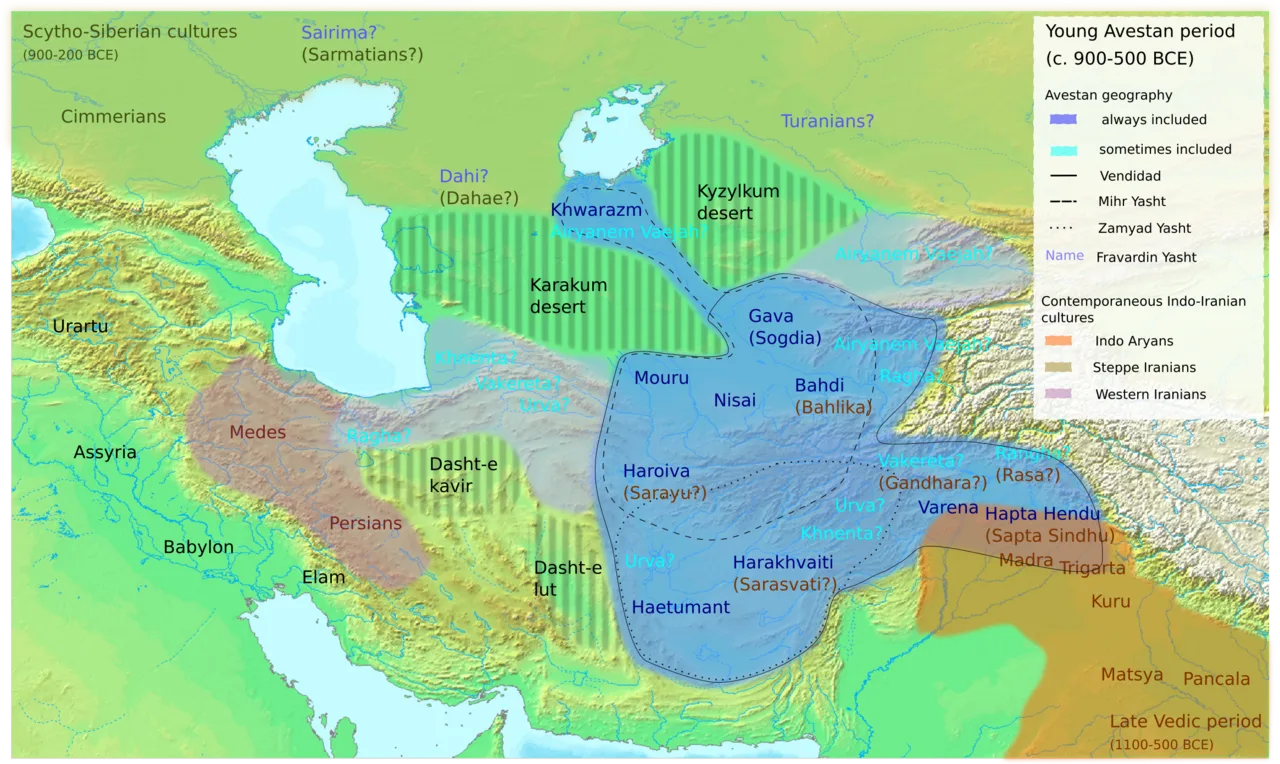
Geographical horizon of the toponyms found in the Young Avestan texts
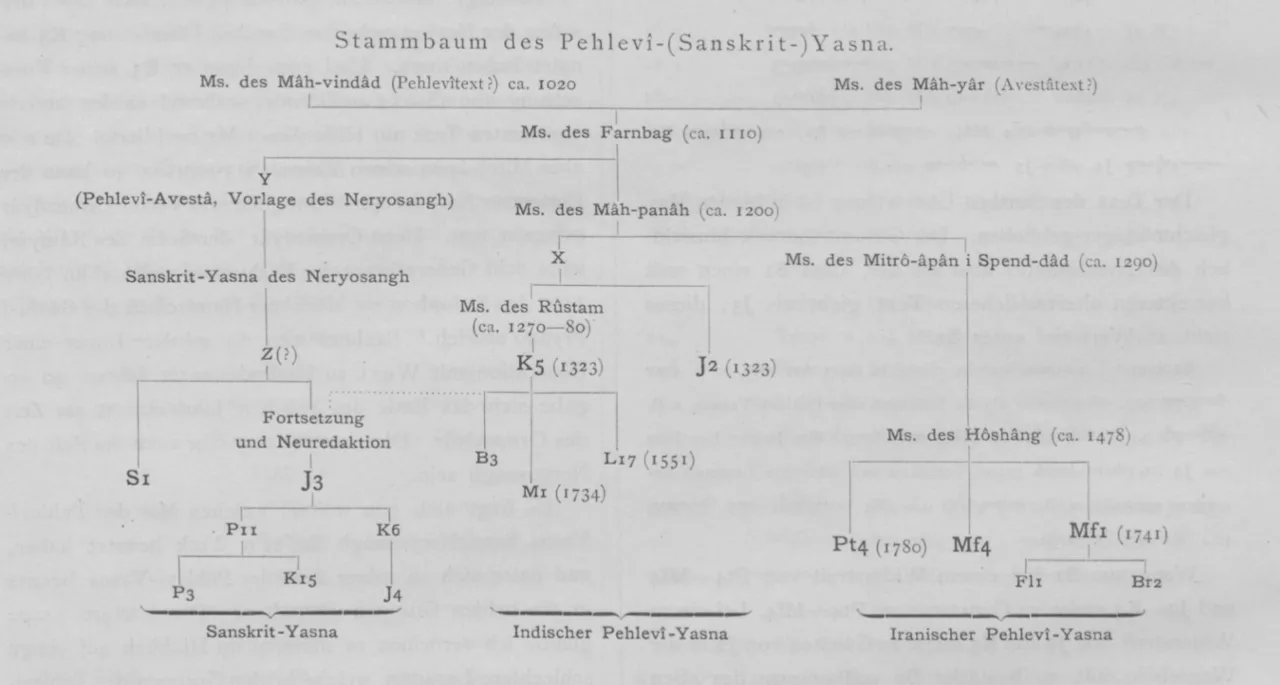
Stemmatics of the Pahlavi and Sanskrit Yasna manuscripts used by Geldner
![First page of Geldner's edition of the Avesta, widely considered to be the most important edition[64]](https://nwjvzop1xgplmzvt.public.blob.vercel-storage.com/wikifeed/avesta/3-7bef270978.webp)
First page of Geldner's edition of the Avesta, widely considered to be the most important edition[64]
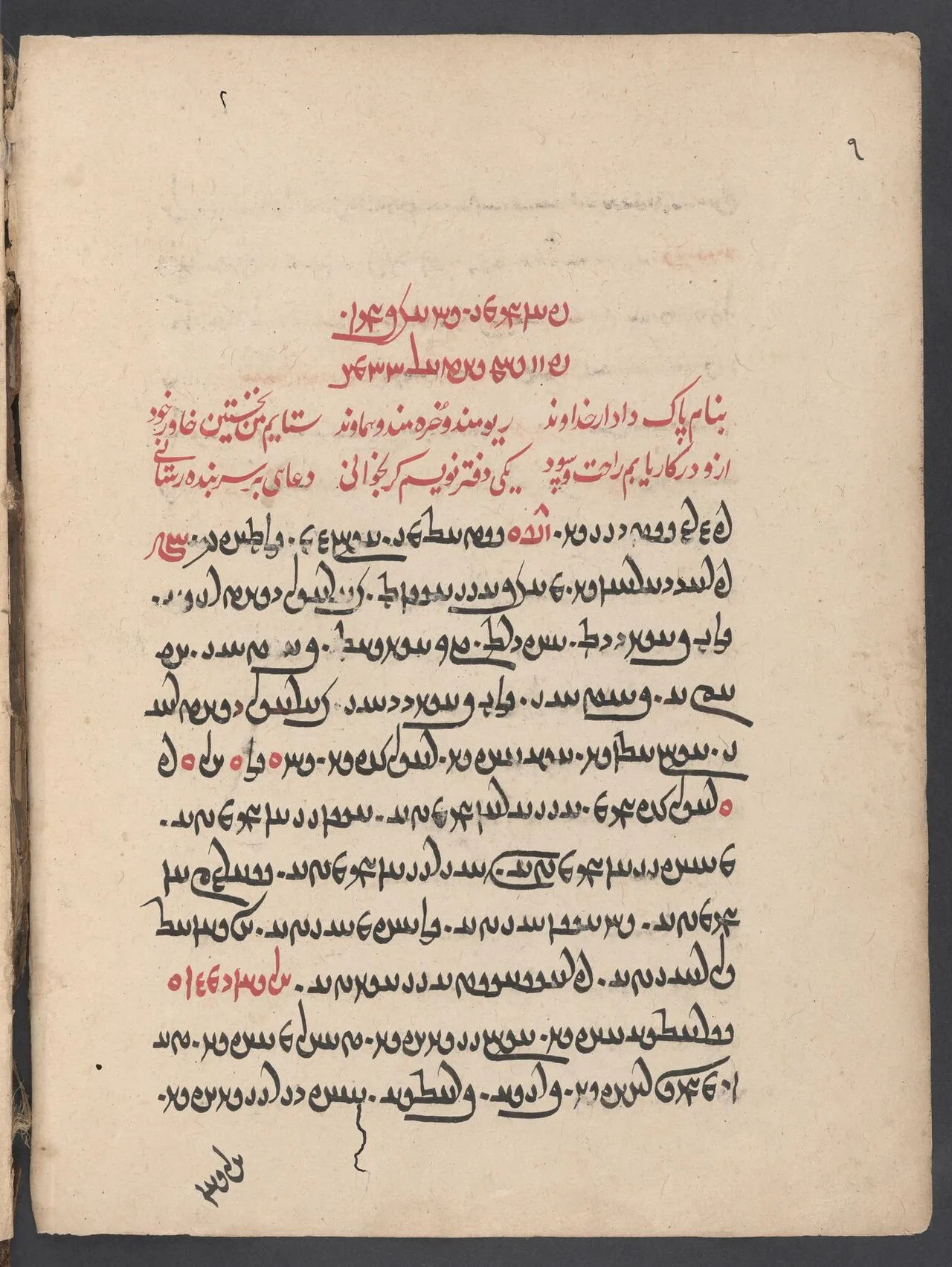
First page of an Iranian Sade manuscript of the Vendidad, the only volume of the Sasanian Avesta (called Juddēwdād therein) which has remained intact until today
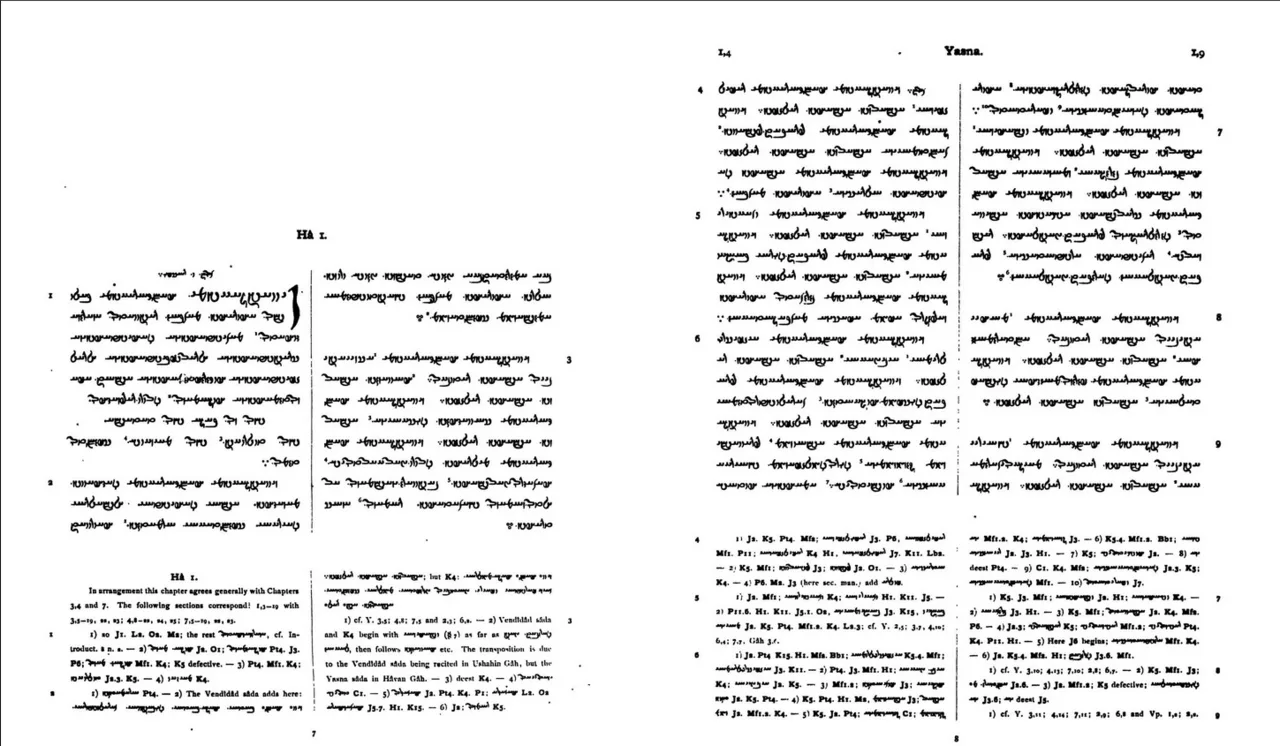
First two pages of the first chapter of the Yasna in Geldner's edition of the Avesta
Avesta
The Avesta is the primary religious text corpus of Zoroastrianism, representing the largest body of Old Iranian literature and the oldest texts in any Iranian language.
Assembled by Non-Speakers
Certain works in the Avestan corpus, such as the Vendidad and the Vishtasp Sast, exhibit pronounced grammatical deficiencies. These texts were pieced together from earlier, now lost sources after Avestan had already ceased to be a living spoken language. Redactors who no longer possessed an active command of the language mechanically assembled proper phrases. This left distinct grammatical flaws embedded within the sacred corpus.
From Wikipedia · CC BY-SA 4.0
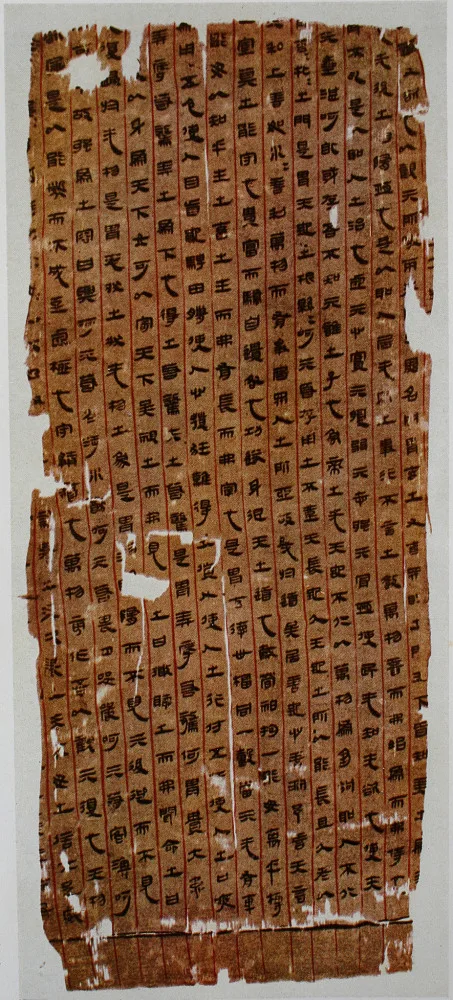
Mawangdui LaoTsu Ms2
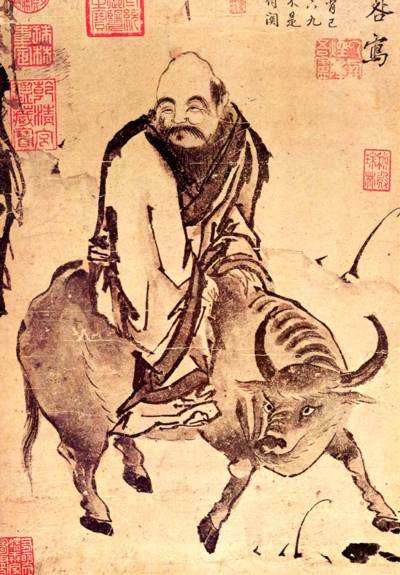
Laozi riding a water buffalo
Tao Te Ching
The Tao Te Ching is an ancient Chinese classic text and foundational work of Taoism, traditionally attributed to the sage Laozi.
Centenarian Reincarnations and Historical Skepticism
Traditional legends elevate Laozi beyond ordinary human history by claiming he was born old and lived for 996 years across 13 distinct incarnations. These mythic narratives assert his appearances spanned across eras beginning from the Three Sovereigns. Doubts regarding his true historicity stem partly from these extraordinary longevity tales and the elusive identity behind his name.
From Wikipedia · CC BY-SA 4.0
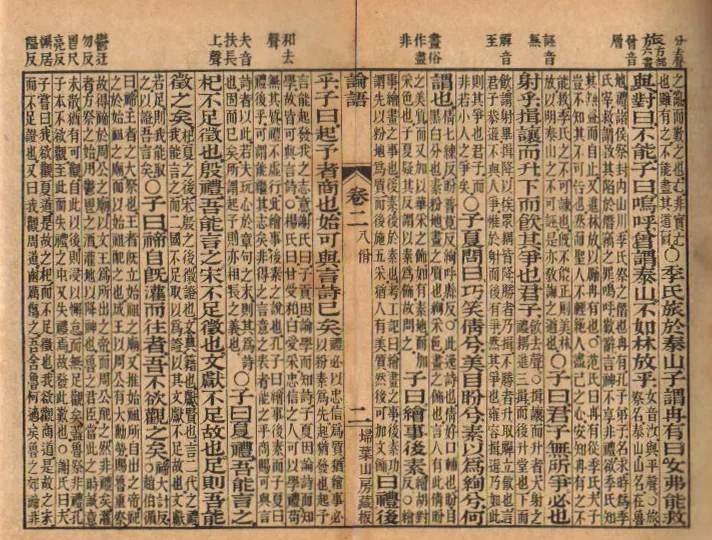
Rongo Analects 02

Analects (Chinese characters)

木鐸 --- Confucian wooden-clapper bell
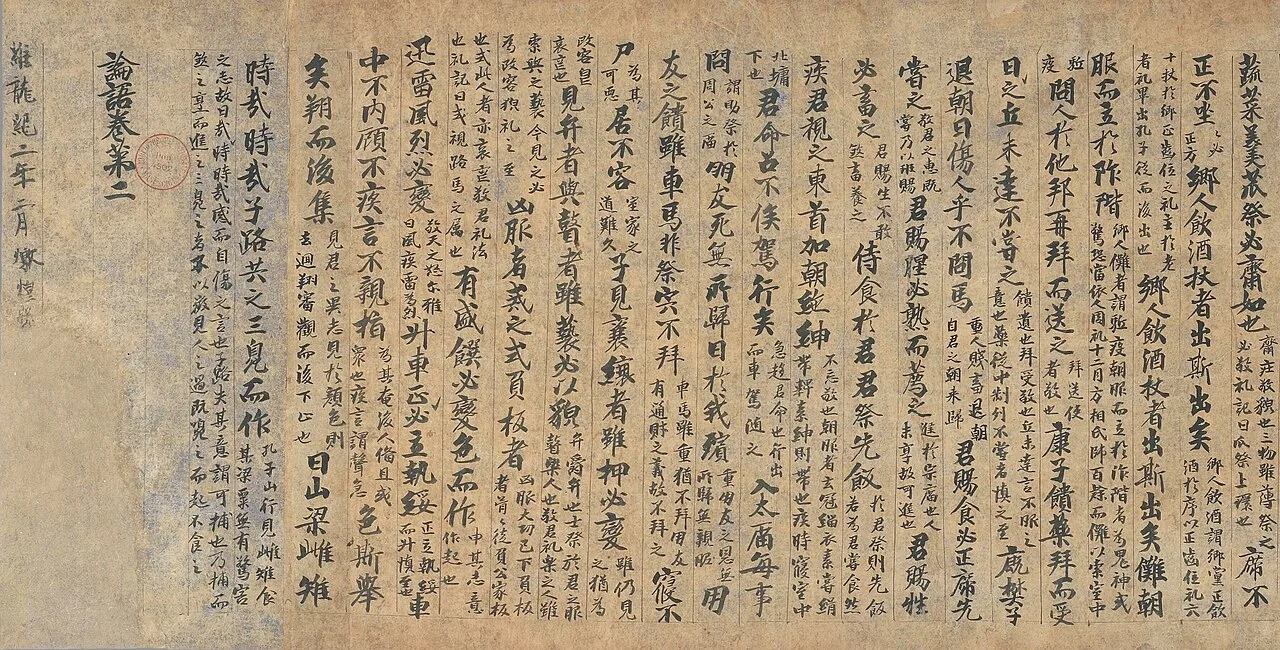
Fragment from the manuscript of Analects, text by Kong Anguo with commentary by Zheng Xuan. This fragmentary manuscript has been found at Mogao Caves. It is dated era Longji, 2nd year (i.e. 890 AD), but it could be copied in the middle of the 8th century. Bibliothèque nationale de France
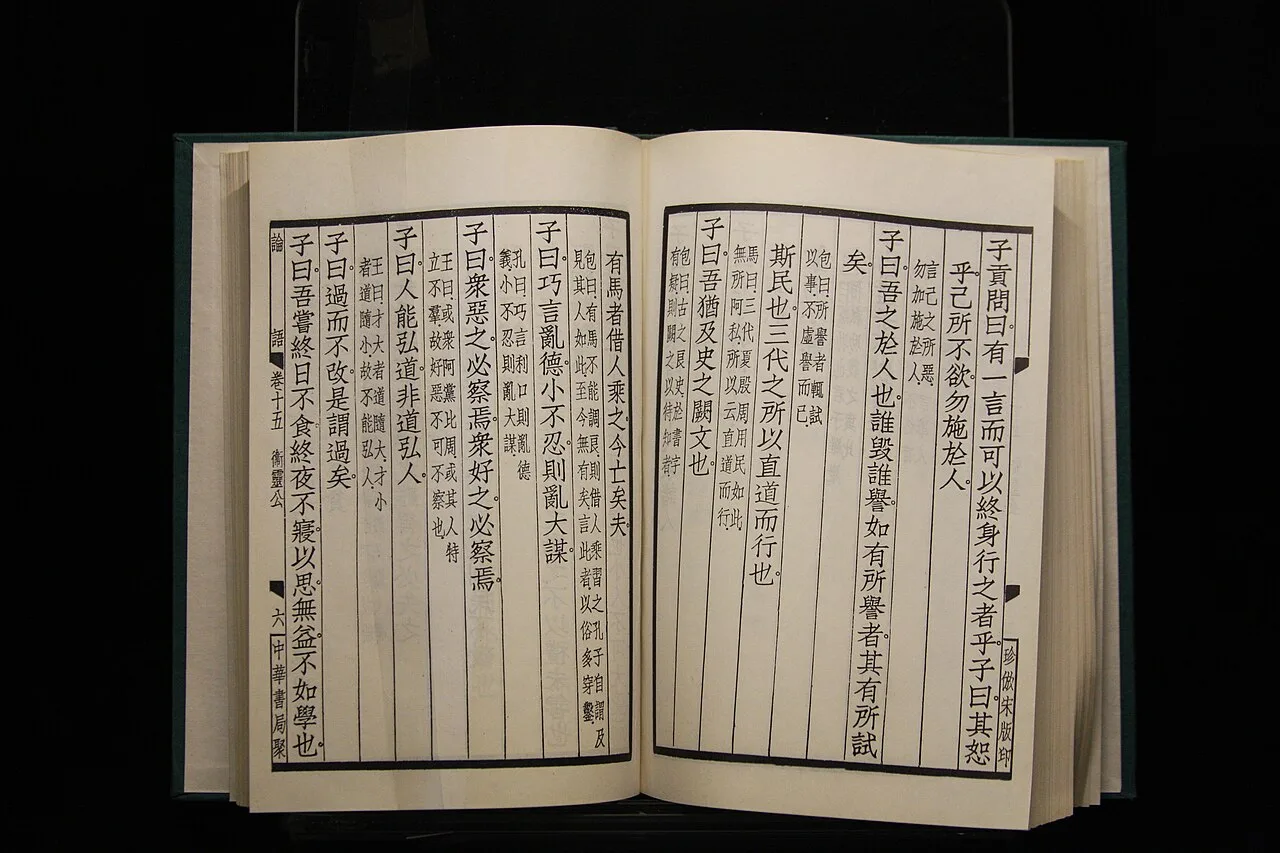
The Analects, from Östasiatiska Museet in Stockholm
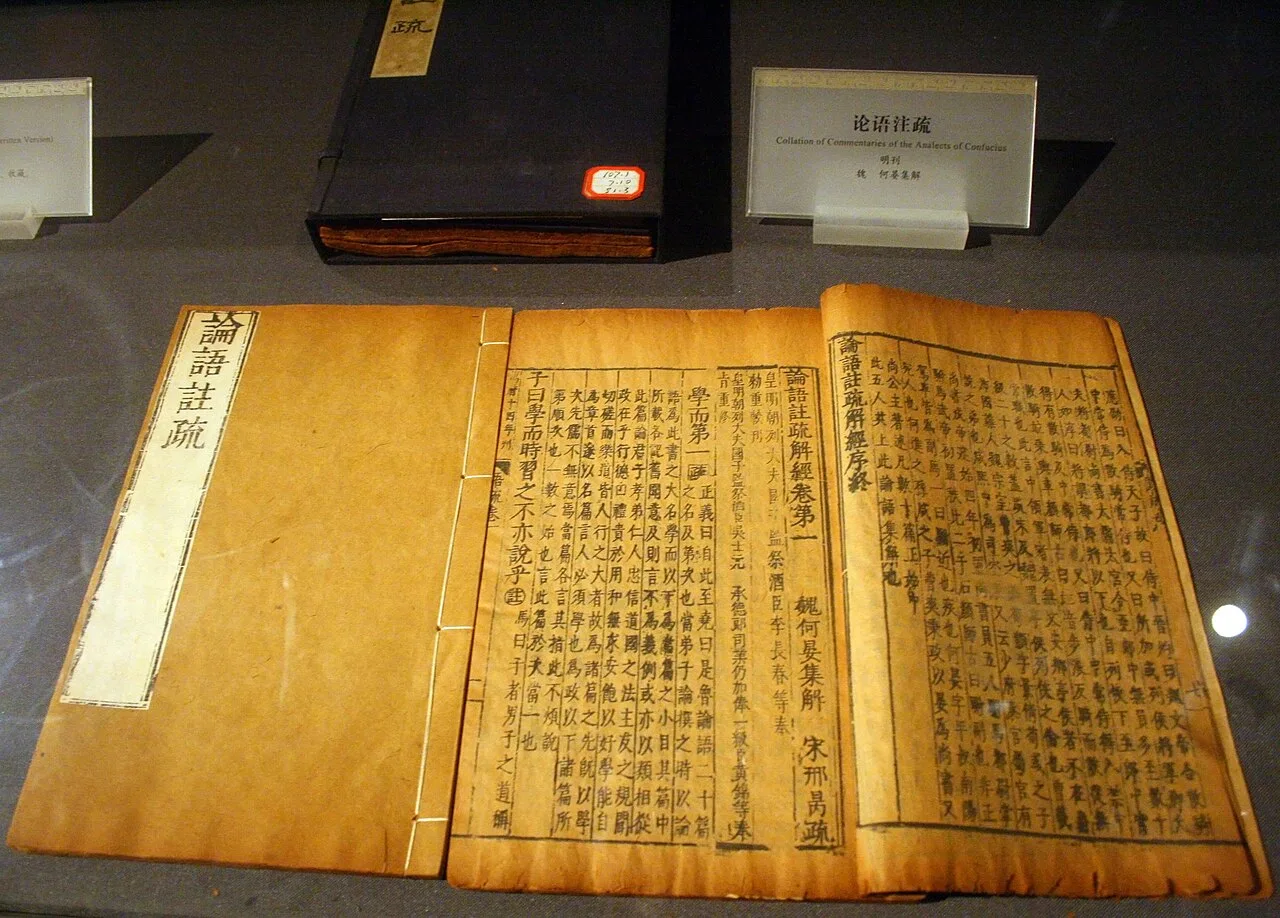
A copy of He Yan's commentary on the Analects, with a sub-commentary by Xing Bing, printed during the Ming dynasty
Analects
The Analects is an ancient Chinese philosophical text collecting sayings and ideas attributed to Confucius and his contemporaries.
Vanishing Words in Mencius's Citations
Readers often assume the received text preserves the vast majority of Confucius's spoken teachings. However, historical evidence indicates that a significantly larger corpus of sayings once circulated during the Warring States period. In fact, 75% of Confucius's sayings cited by his second-generation student Mencius do not appear anywhere in the transmitted Analects.
From Wikipedia · CC BY-SA 4.0
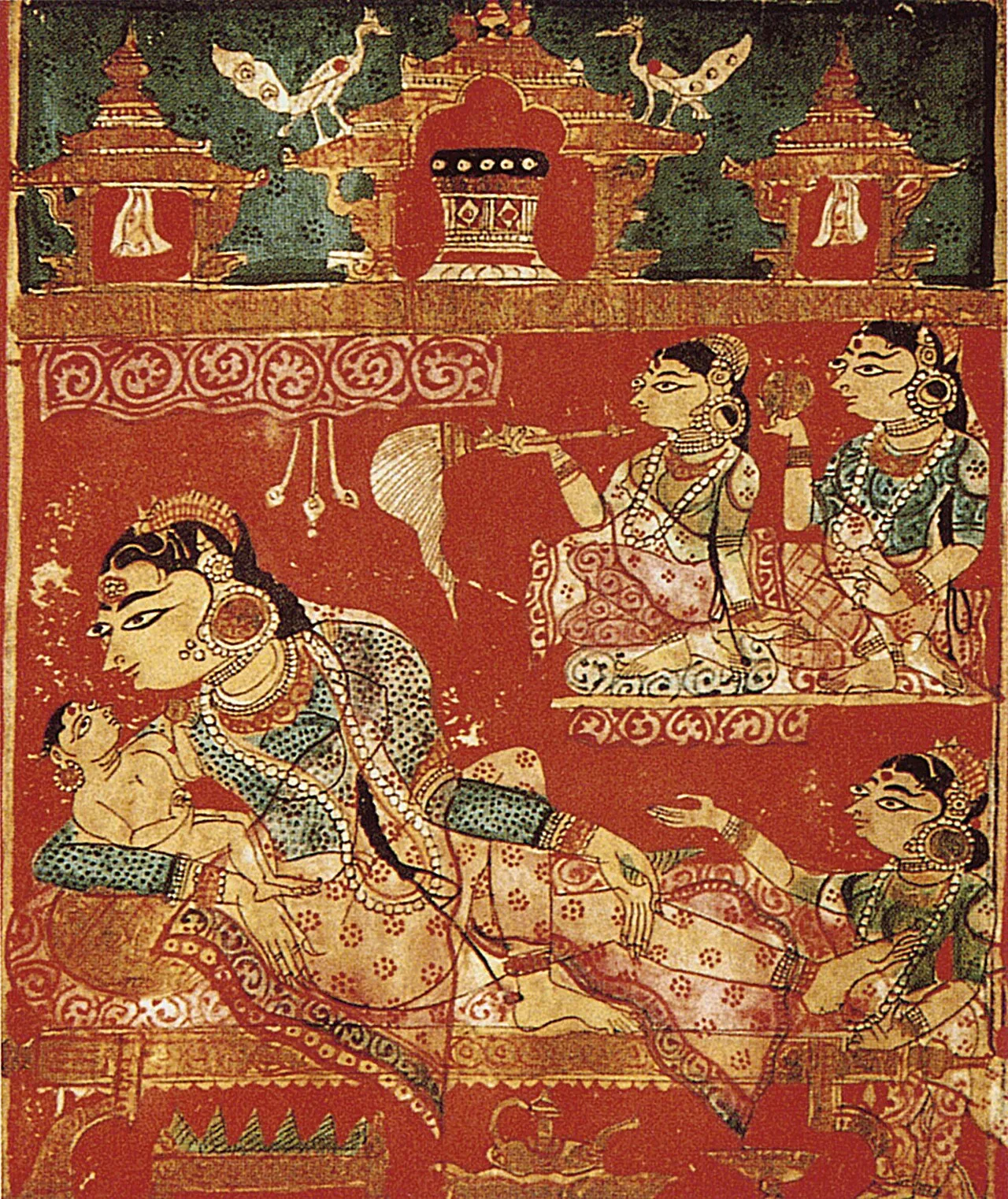
Kalpa Sutra

Jaini Prateek Chihna Colored
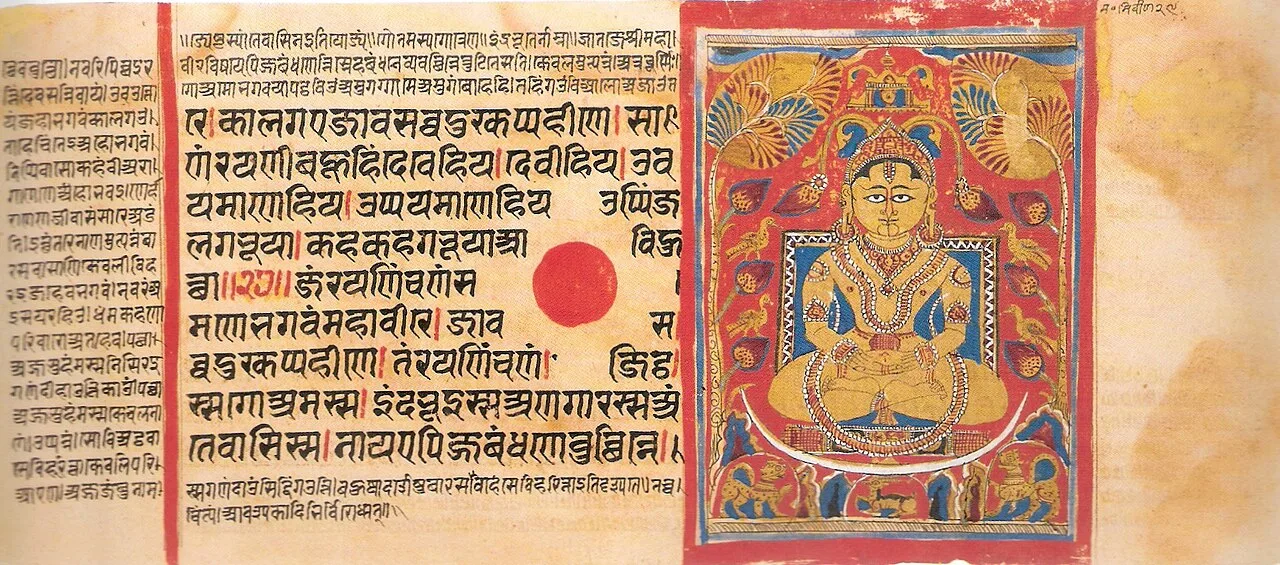
Kalpasutra folio on Mahavira Nirvana. Note the crescent-shaped Siddhashila, a place where all siddhas reside after Nirvana.
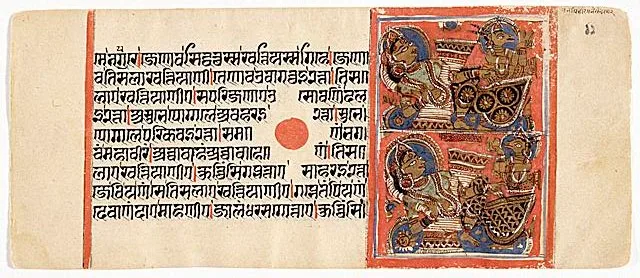
Kalpa Sutra
Kalpa Sūtra
The Kalpa Sūtra is an important Jain scripture ascribed to Acharya Bhadrabahu that contains the biographies of the Tirthankaras, including Mahavira.
A Century-Spanning Gap from Speech to Parchment
Traditional accounts ascribe the Kalpa Sutra's composition to Acharya Bhadrabahu roughly 150 years after Mahavira's passing. However, historical compilation records note that the scripture was written down 980 or 993 years after Mahavira's liberation during the reign of Dhruvasena. This massive gap highlights centuries of oral transmission before the text assumed fixed written form.
From Wikipedia · CC BY-SA 4.0
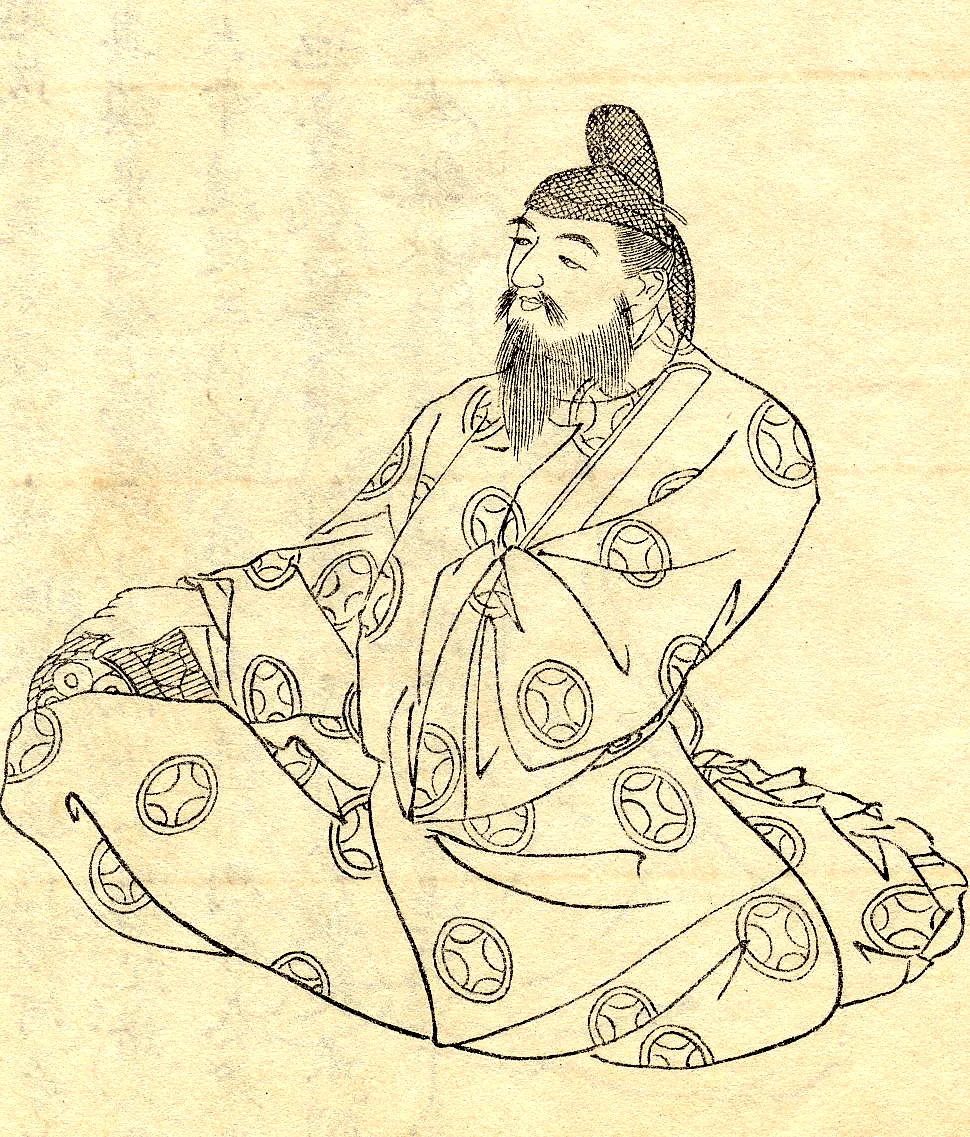
Portrait of Ō no Yasumaro by Kikuchi Yōsai (19th century)
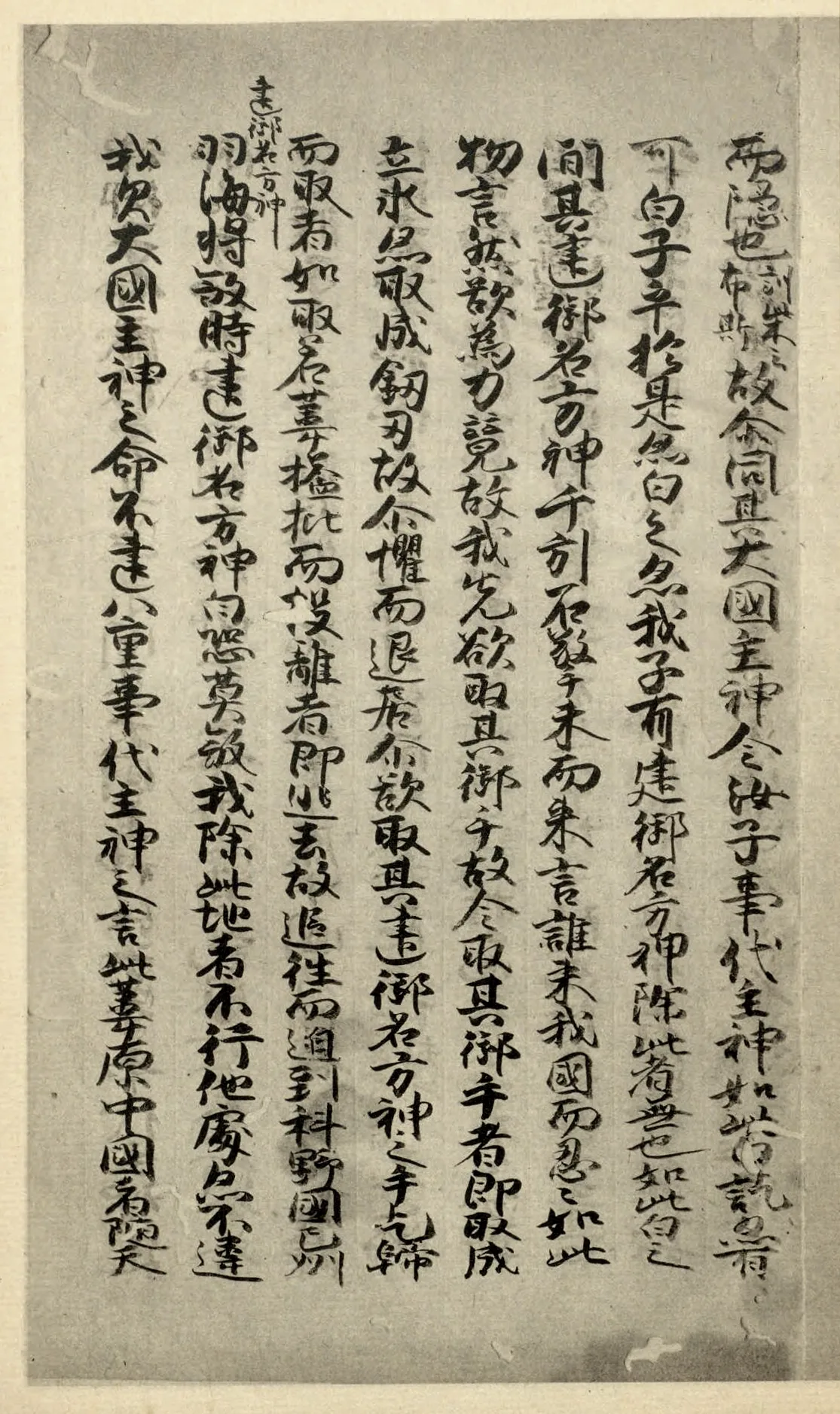
A page from the Shinpukuji manuscript of the Kojiki, dating from 1371–72
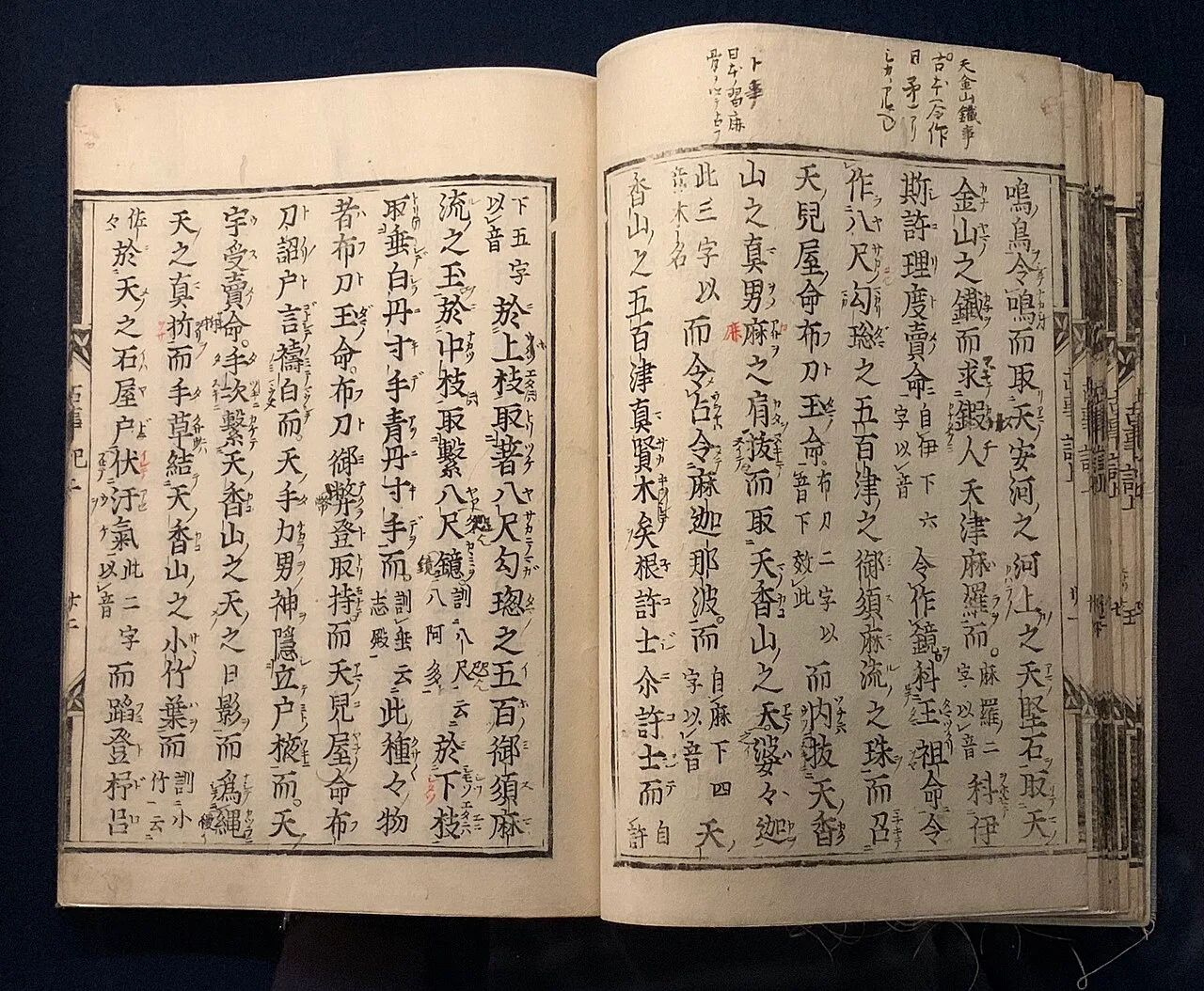
Kan'ei Kojiki, 1644 (Kokugakuin University)
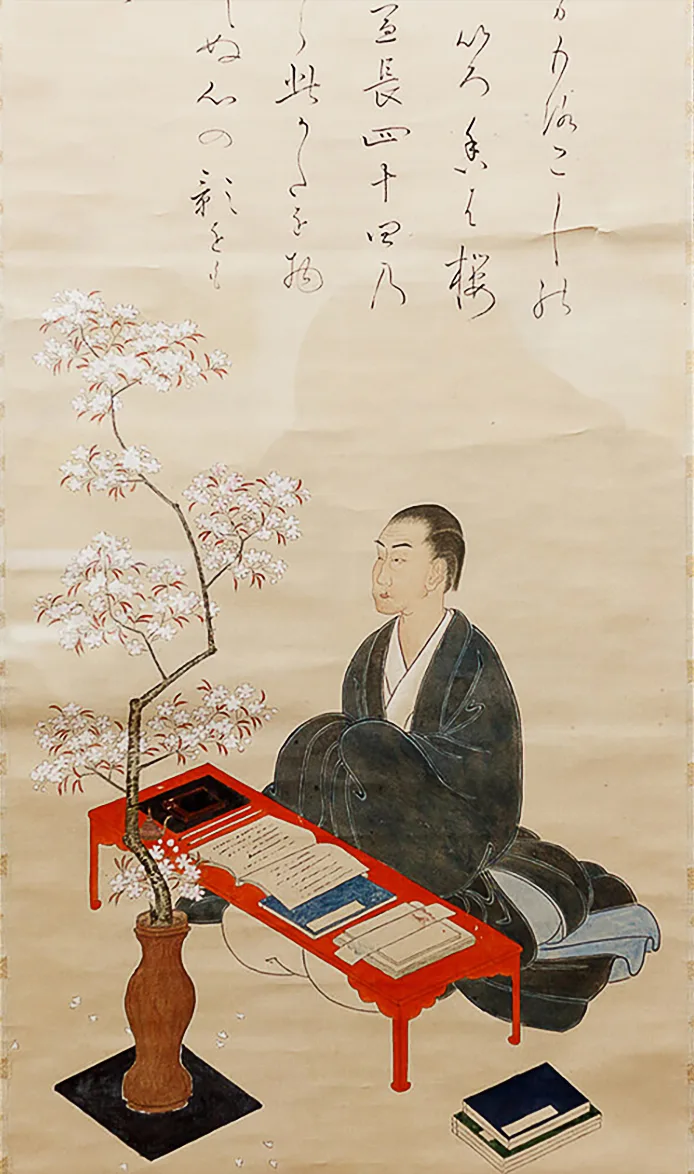
Motoori Norinaga
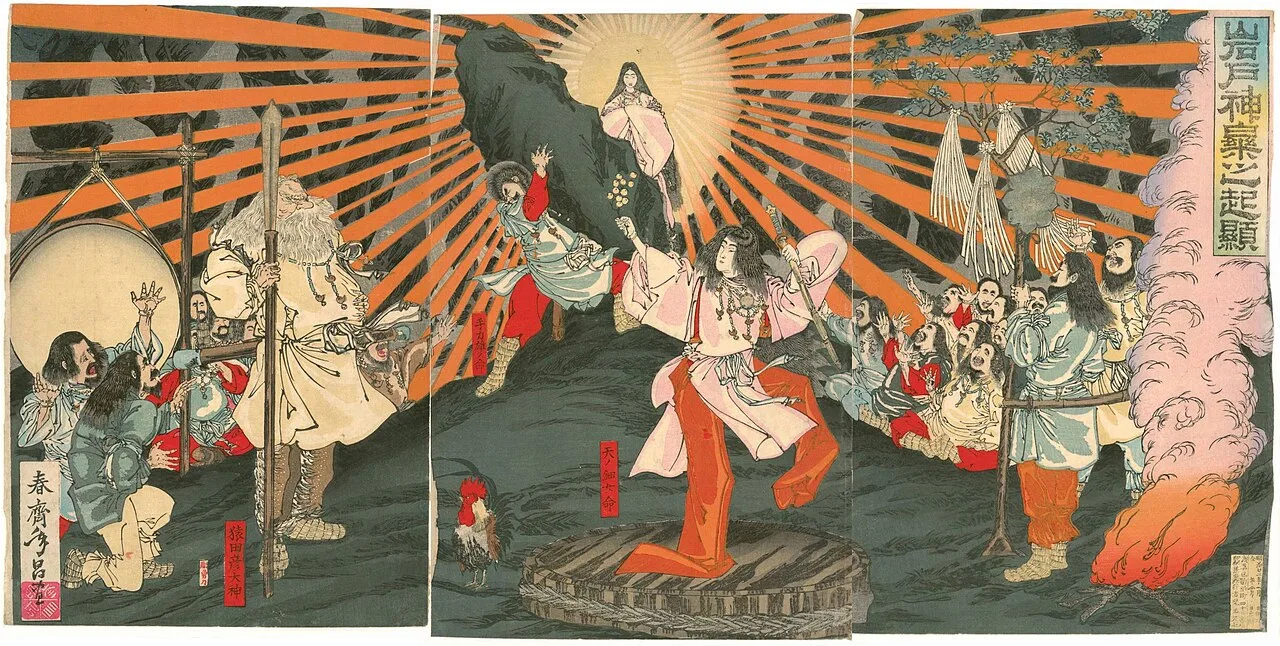
Amaterasu emerges out of the Heavenly Rock Cave (Shunsai Toshimasa, 1889)
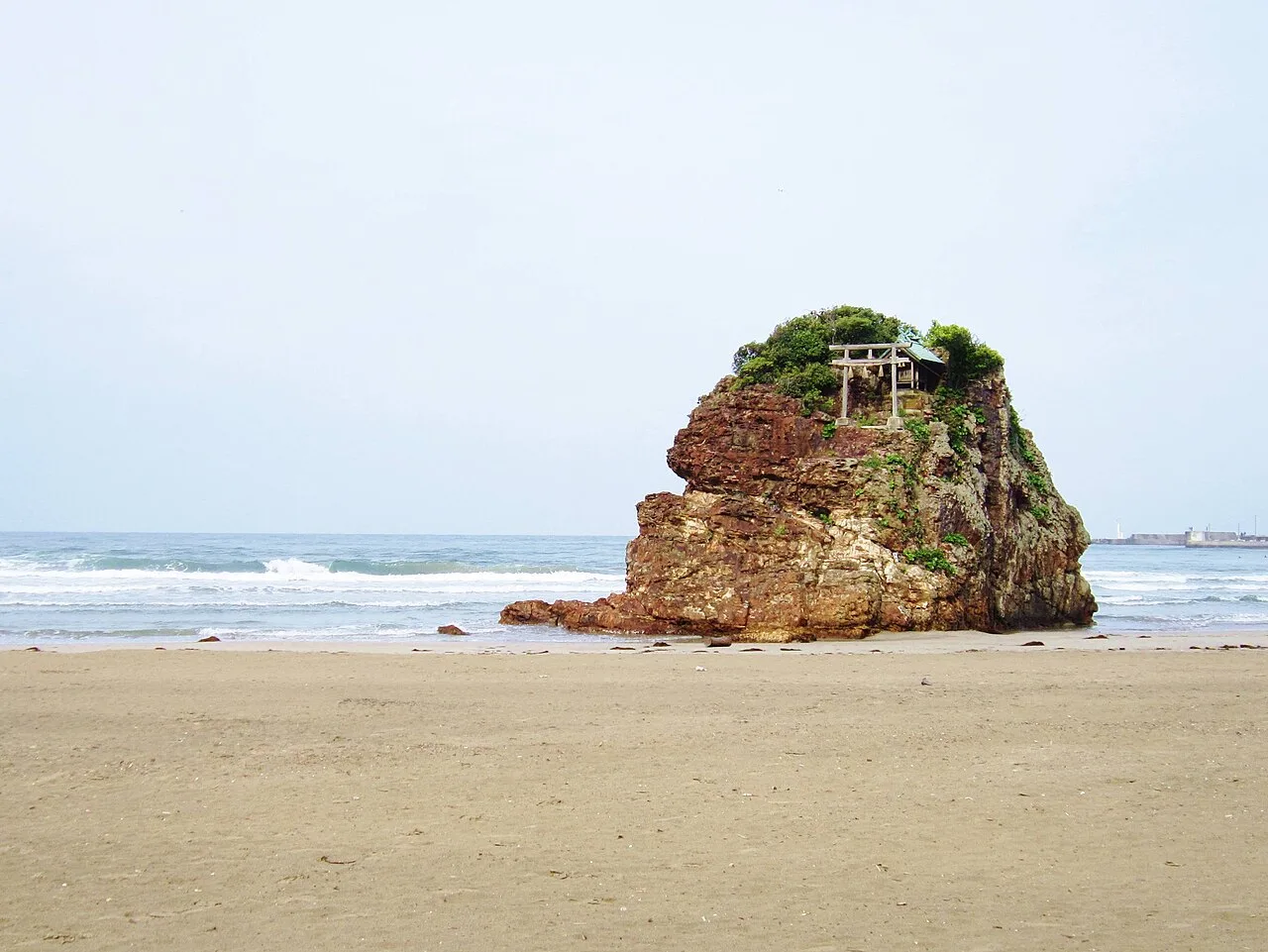
Inasa Beach, Shimane Prefecture
Kojiki
An early 8th-century Japanese chronicle of myths, legends, and genealogies, widely considered to be the oldest surviving literary work in Japan.
Entrusting State Genealogies to a Single Memory
A single court attendant's memory served as the primary repository for Japan's earliest extant mythology before it was ever committed to writing. Emperor Tenmu commissioned Hieda no Are to memorize records and oral traditions concerning the imperial lineage. Decades later, Empress Genmei ordered the courtier Ō no Yasumaro to record what had been learned by Hieda no Are.
From Wikipedia · CC BY-SA 4.0
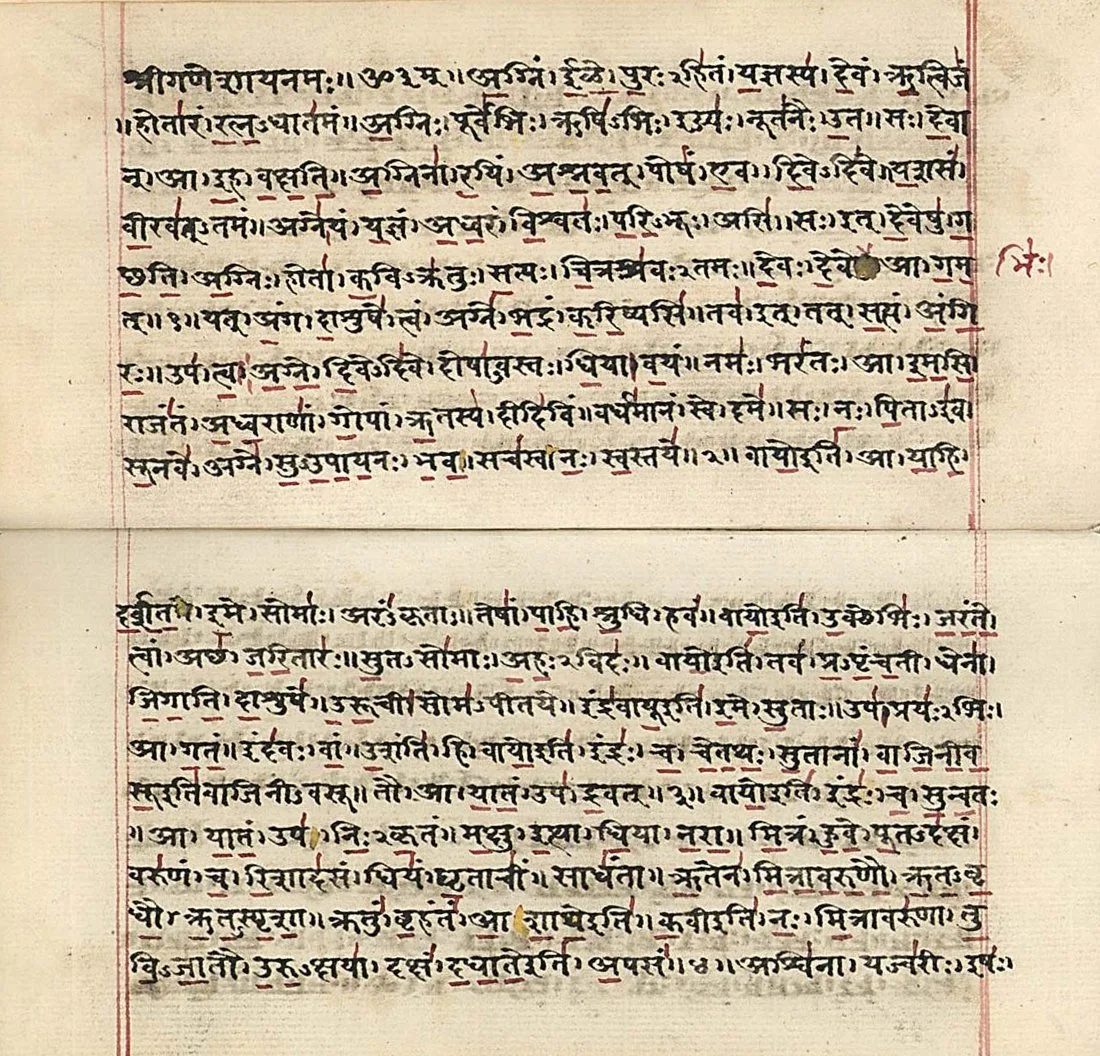
Rigveda MS2097
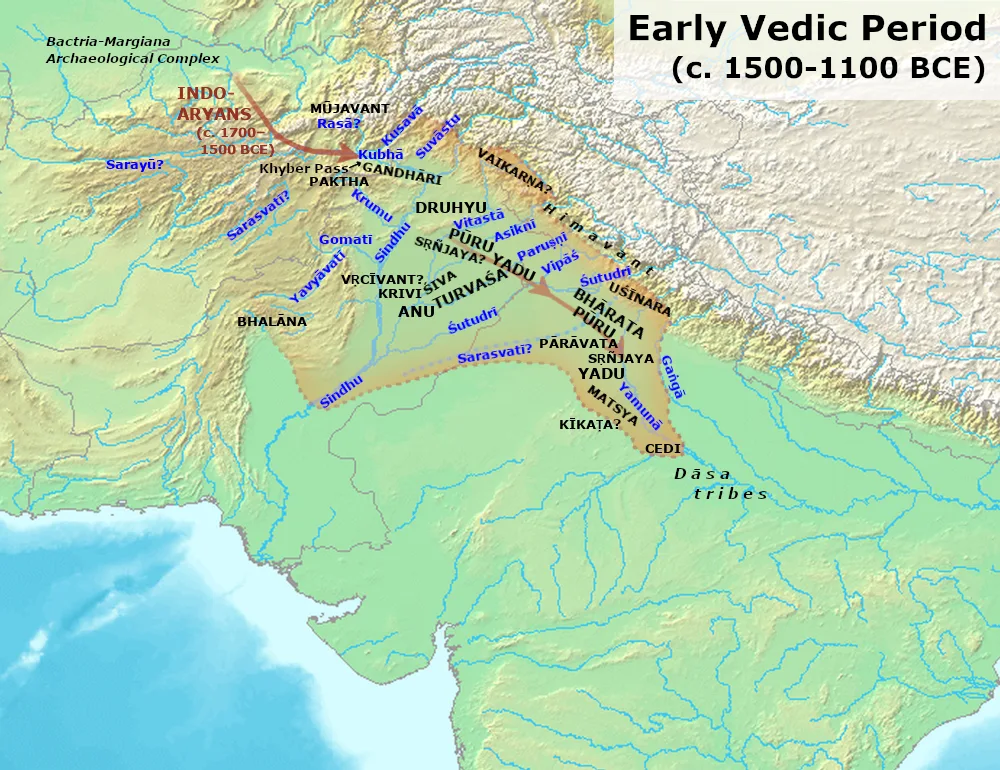
A map of tribes and rivers mentioned in the Rigveda.
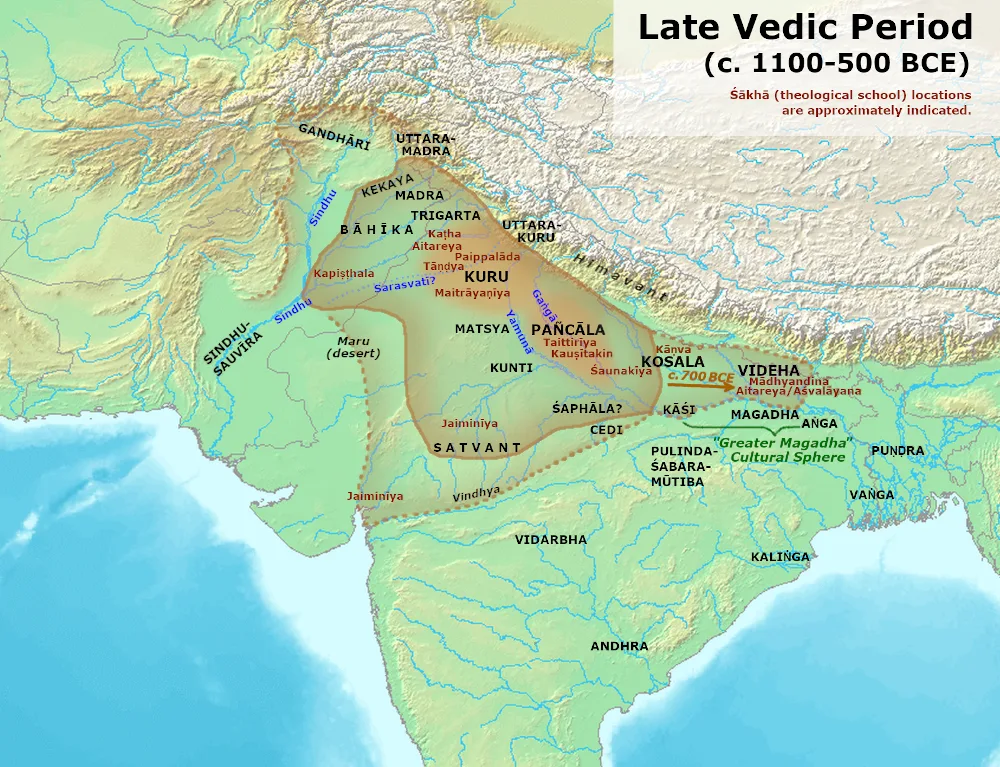
Geographical distribution of the Late Vedic Period. Each major region had its own recension of Rig Veda (Śākhās), and the versions varied.[3]
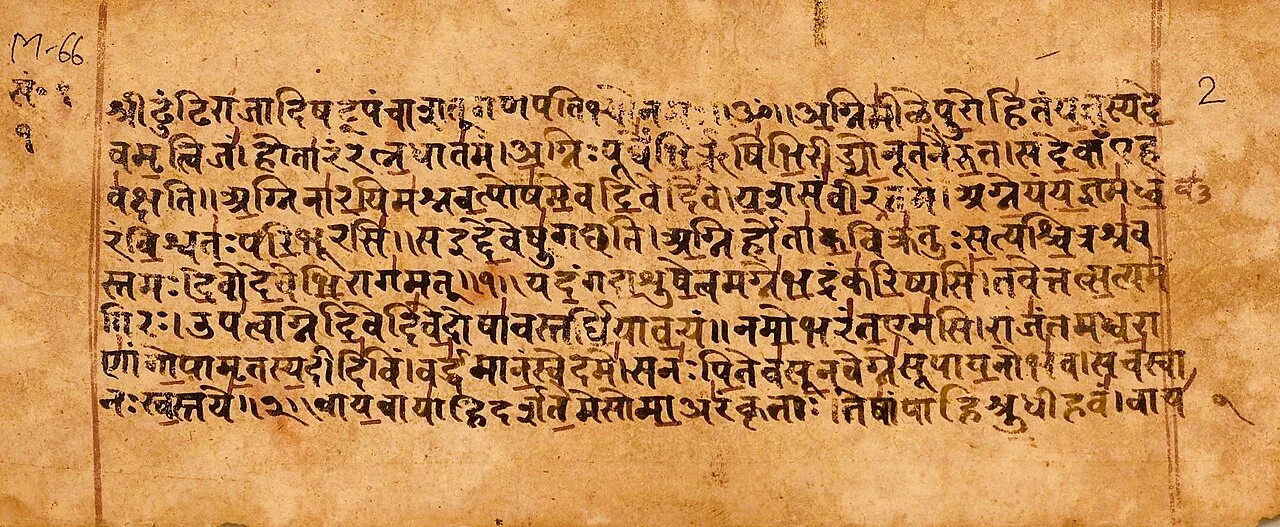
Rigveda manuscript page, Mandala 1, Hymn 1 (Sukta 1), lines 1.1.1 to 1.1.9 (Sanskrit, Devanagari script)
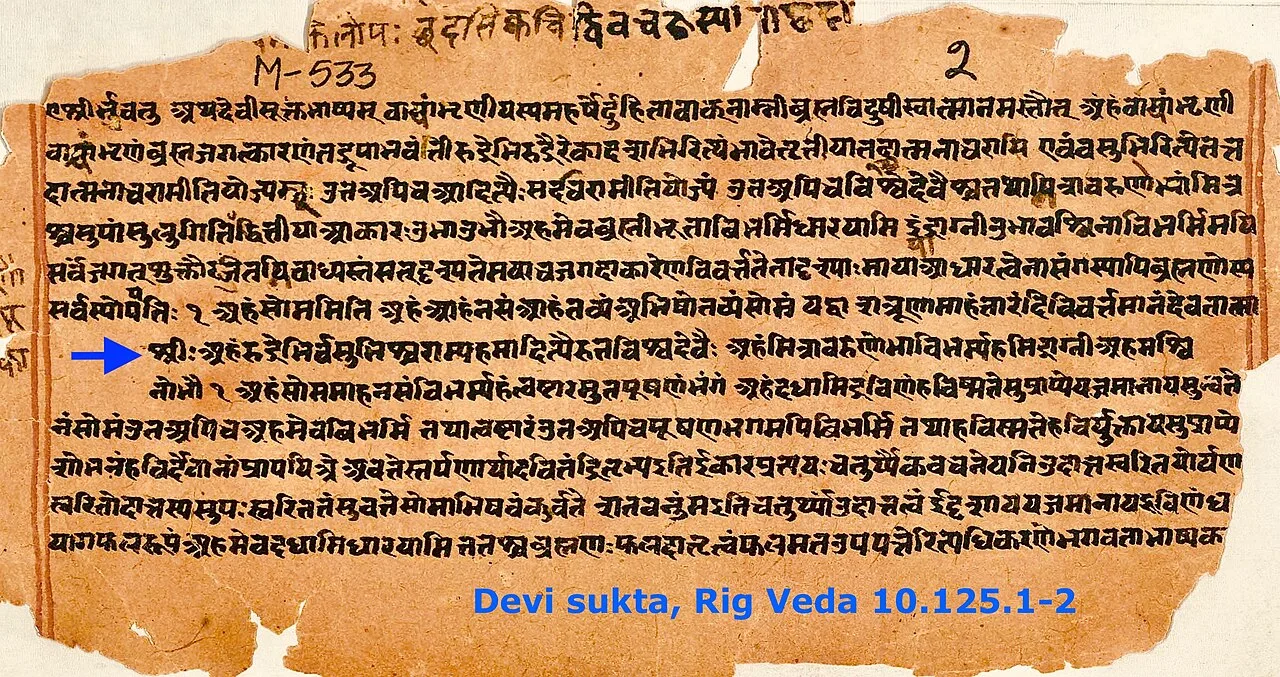
Devi sukta, which highlights the goddess tradition of Hinduism is found in Rigveda hymns 10.125. It is cited in Devi Mahatmya and is recited every year during the Durga Puja festival.
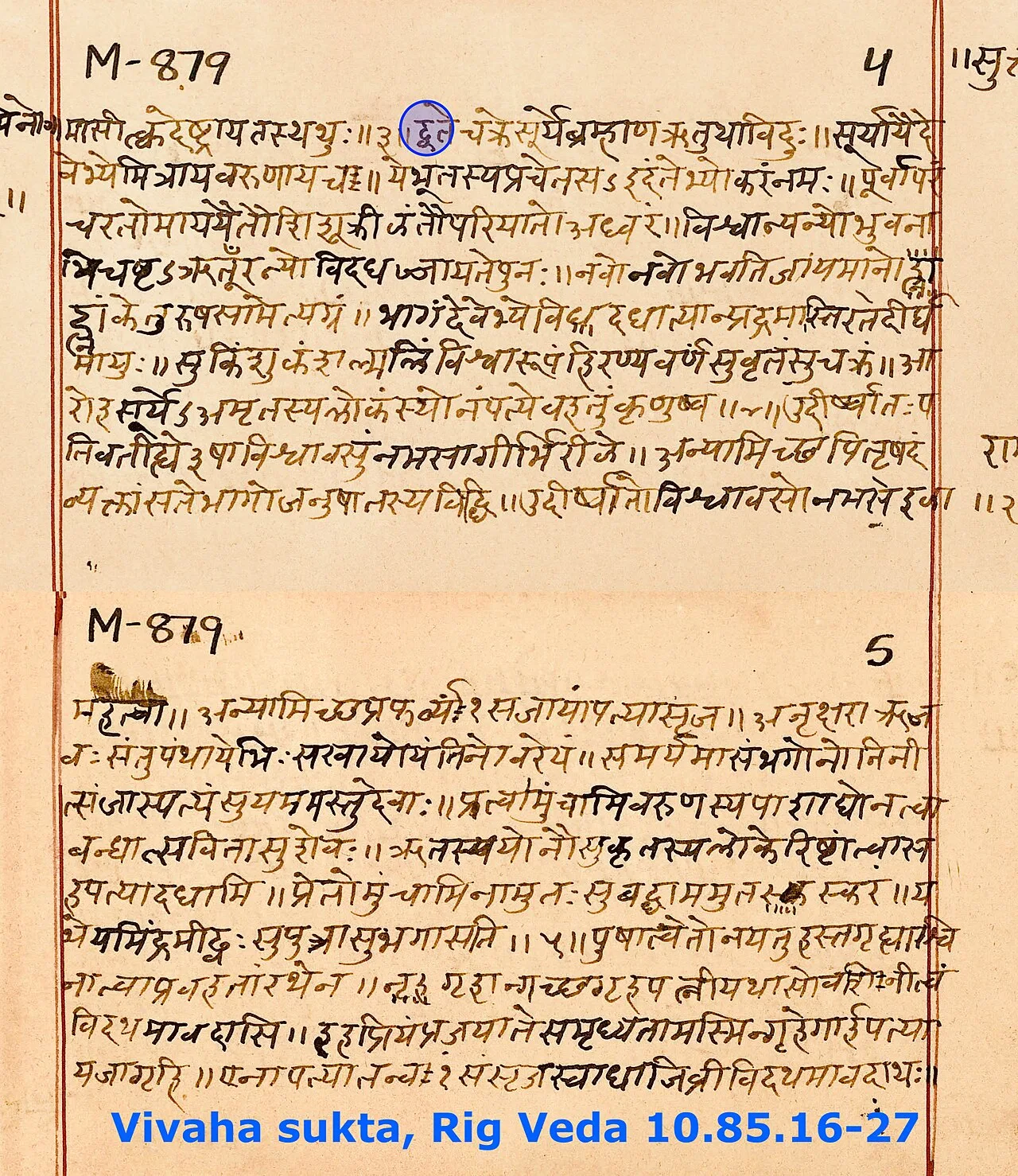
The hymn 10.85 of the Rigveda includes the Vivaha-sukta (above). Its recitation continues to be a part of Hindu wedding rituals.[150][151]
Rigveda
The Rigveda is an ancient Indian collection of Vedic Sanskrit hymns and one of the four sacred canonical Hindu texts known as the Vedas.
Non-Indo-European Loanwords in Early Sanskrit
Though the Rigveda is celebrated as an archaic Indo-European text, roughly 300 of its words originate outside the Indo-Aryan family. Scholar Frits Staal identifies terms like kapardin, kumara, and kikata as borrowings from Austroasiatic Munda languages. Other loanwords derive from Dravidian, Tibeto-Burman, or extinct Central Asian tongues, demonstrating that early Vedic Sanskrit speakers actively interacted with diverse indigenous populations.
From Wikipedia · CC BY-SA 4.0
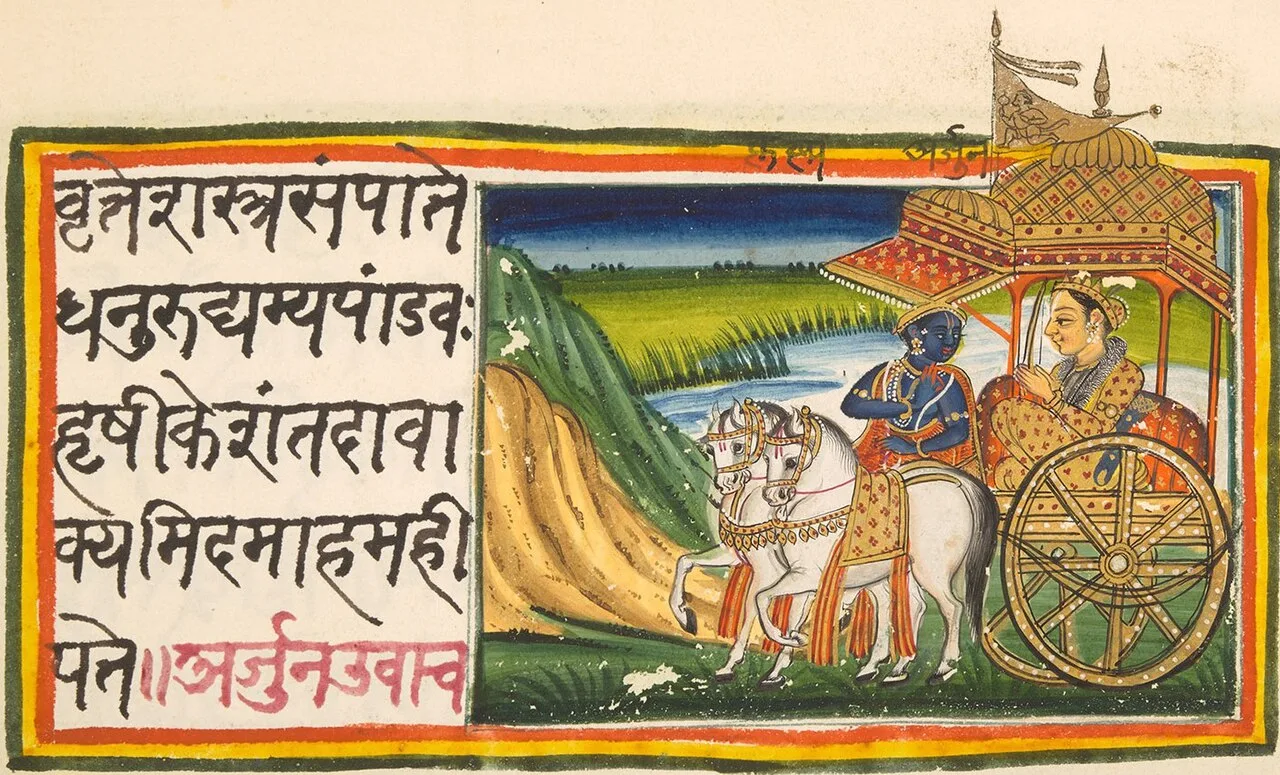
BhagavadGita-19th-century-Illustrated-Sanskrit-Chapter 1.20.21
![Vāsudeva-Krishna, on a coin of Agathocles of Bactria c. 180 BCE.[27][28] This is "the earliest unambiguous image" of the](https://nwjvzop1xgplmzvt.public.blob.vercel-storage.com/wikifeed/bhagavad-gita/1-a102436fbd.webp)
Vāsudeva-Krishna, on a coin of Agathocles of Bactria c. 180 BCE.[27][28] This is "the earliest unambiguous image" of the deity.[29]
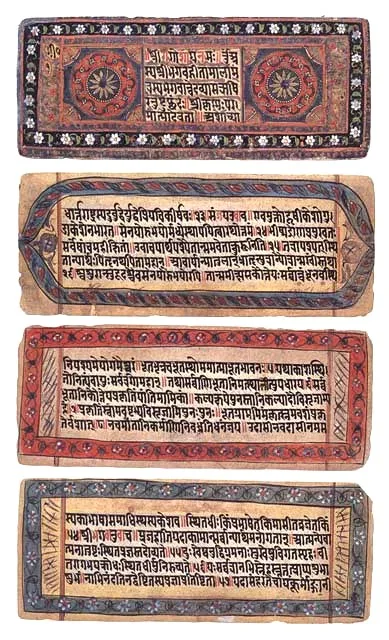
A Sanskrit manuscript of the Bhagavad Gita in the Devanagari script. c. 1800 – c. 1900 CE
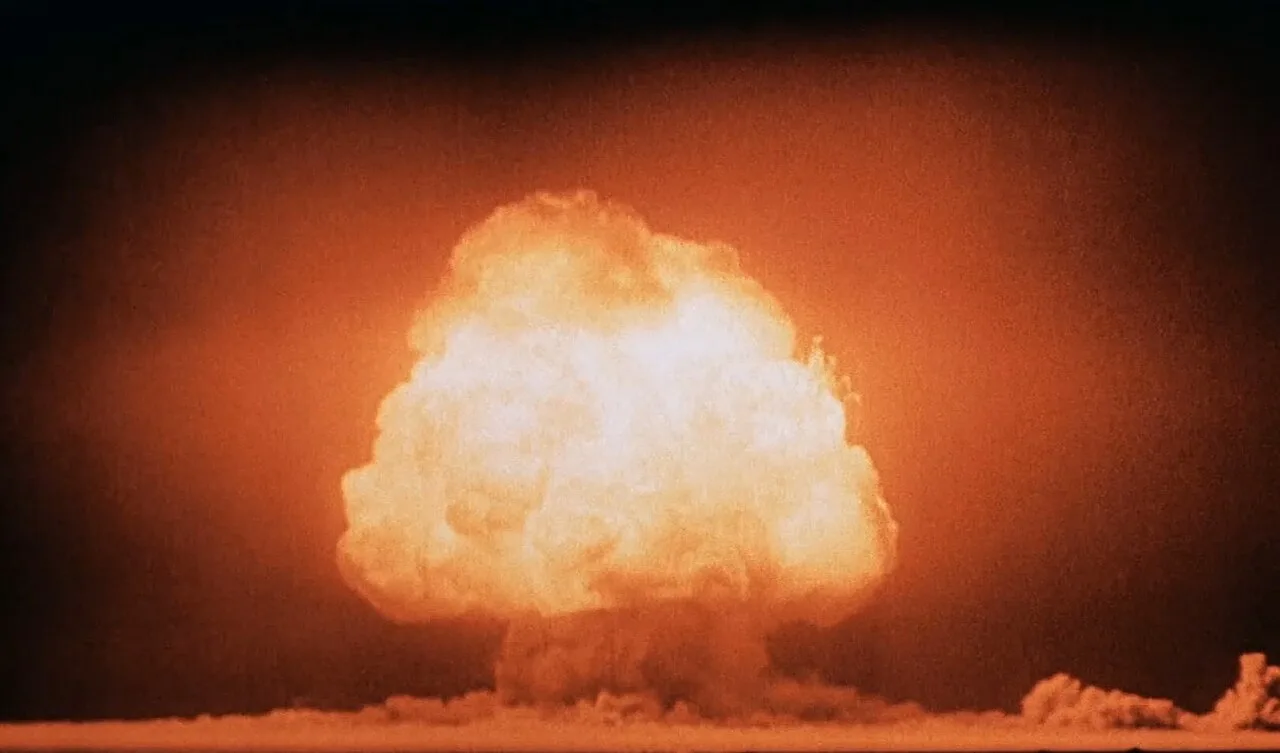
The first detonation of a nuclear weapon led Oppenheimer to think "I am become Death, the destroyer of worlds," a statement derived from verse 11.32 of the Bhagavad Gita.[106][j]
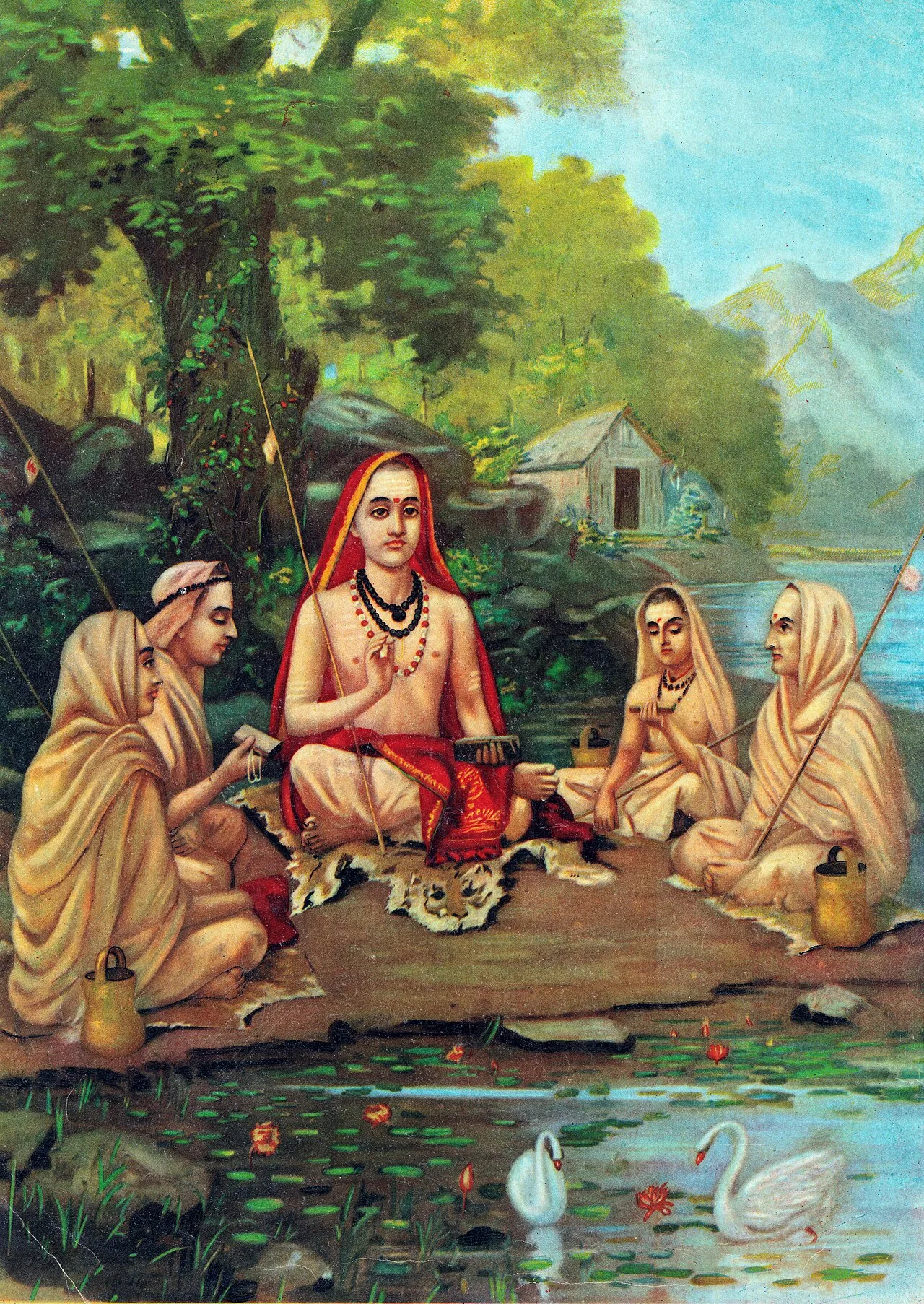
Adi Shankara with Disciples, by Raja Ravi Varma (c. 1904 CE). Shankara published 700 verses of the Gita (c. 800 CE), now the standard version.[citation needed]
![Chapter 11 of the Gita refers to Krishna as Vishvarupa (above). This is an idea found in the Rigveda.[257] The Vishvarup](https://nwjvzop1xgplmzvt.public.blob.vercel-storage.com/wikifeed/bhagavad-gita/5-f02b80eacb.webp)
Chapter 11 of the Gita refers to Krishna as Vishvarupa (above). This is an idea found in the Rigveda.[257] The Vishvarupa omniform has been interpreted as symbolism for Absolute Reality, God or Self that is in all creatures, everywhere, eternally.[258][259]
Bhagavad Gita
The Bhagavad Gita is a Hindu scripture forming part of the epic Mahabharata, synthesizing Indian religious thought including dharma, yoga, jnana, and bhakti.
Feminine Grammar for an Epic Dialogue
Though embedded inside the colossal epic poem Mahabharata, the title Gītā carries a feminine grammatical gender. This distinction arises because the work is traditionally categorized as an Upanishad, which is a feminine noun in Sanskrit. Each chapter formulaically confirms this connection to the Upanishadic tradition. Furthermore, several verses in the scripture directly mirror ancient Upanishadic passages with only minor alterations.
From Wikipedia · CC BY-SA 4.0