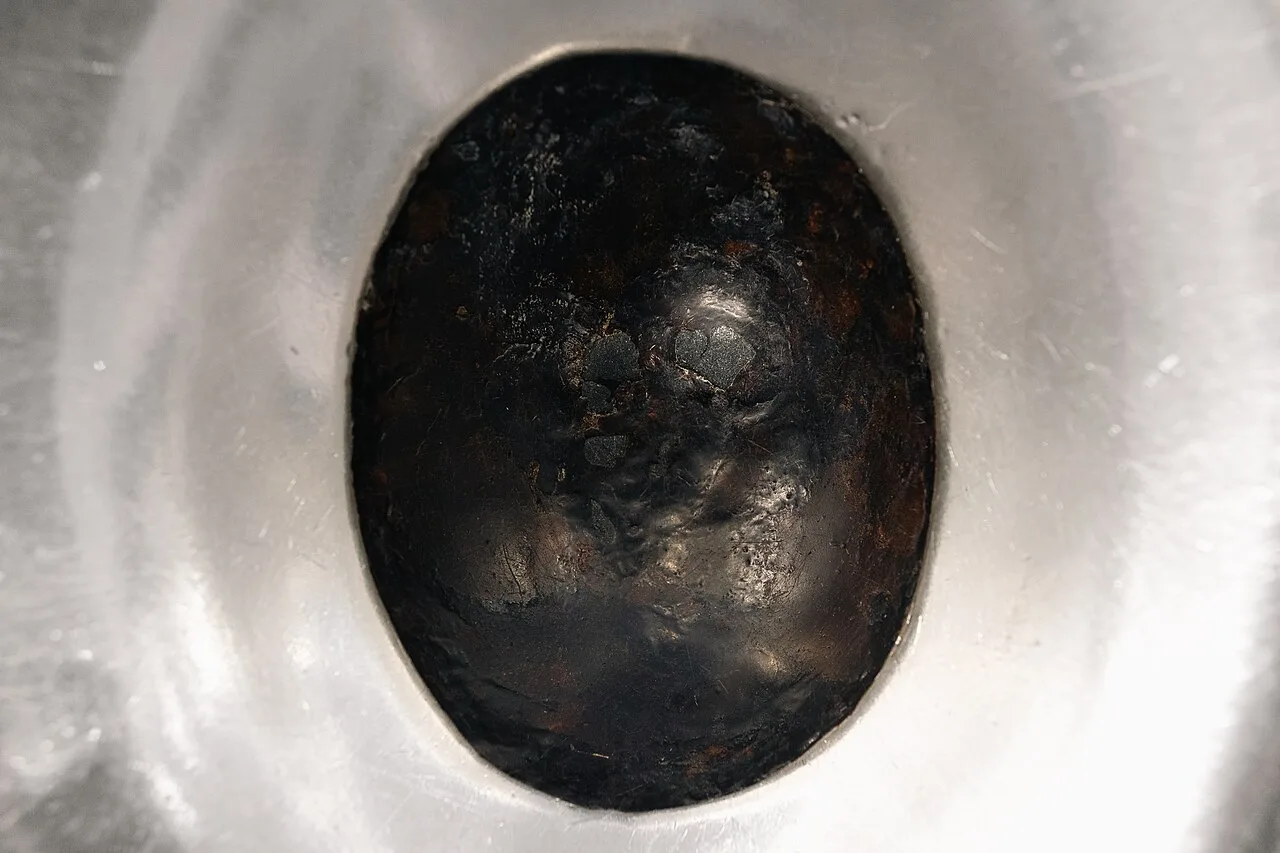
Black Stone set in the eastern corner of the Kaaba
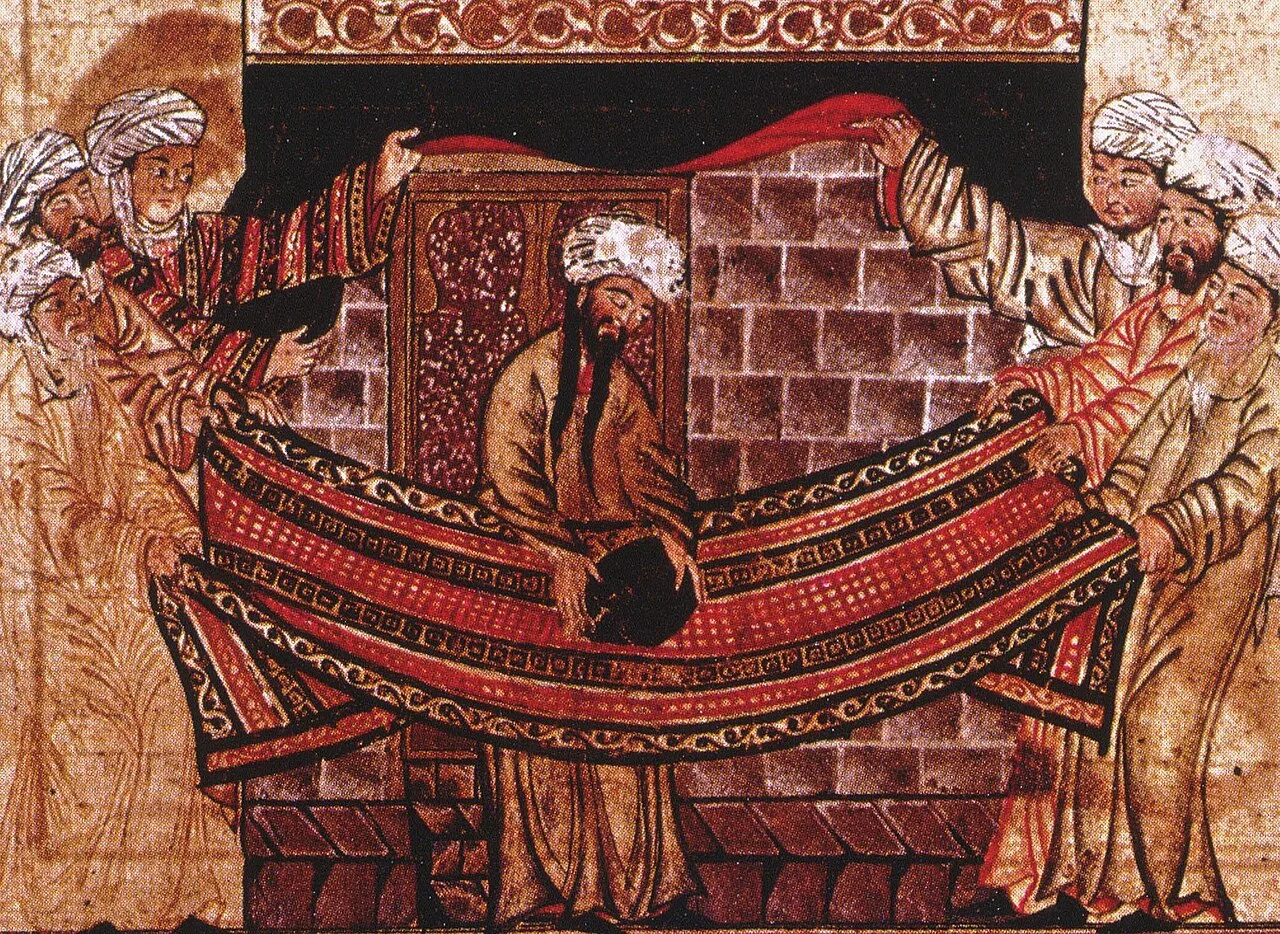
A 1315 illustration from the Jami' al-tawarikh inspired by the sīrah story of Muhammad and the Meccan clan elders lifting the Black Stone into place.[6]
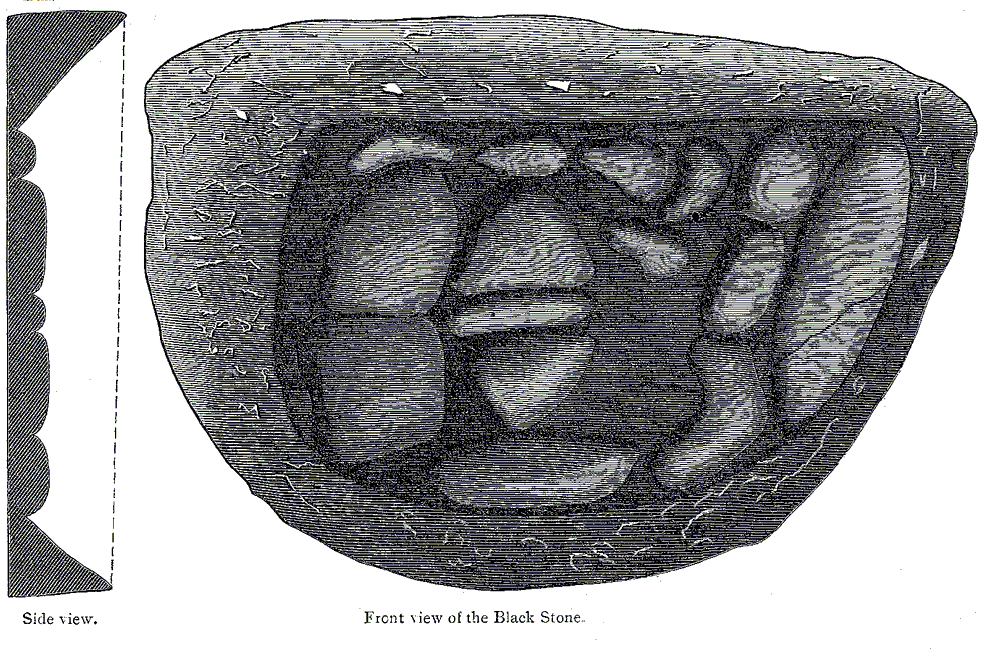
The fragmented Black Stone as it appeared in the 1850s, front and side illustrations

Muhammad Ali kissing the Black Stone in 1972

Pilgrims jostle for a chance to kiss the Black Stone; if they are unable to kiss it, they can point towards it on each circuit with their right hand
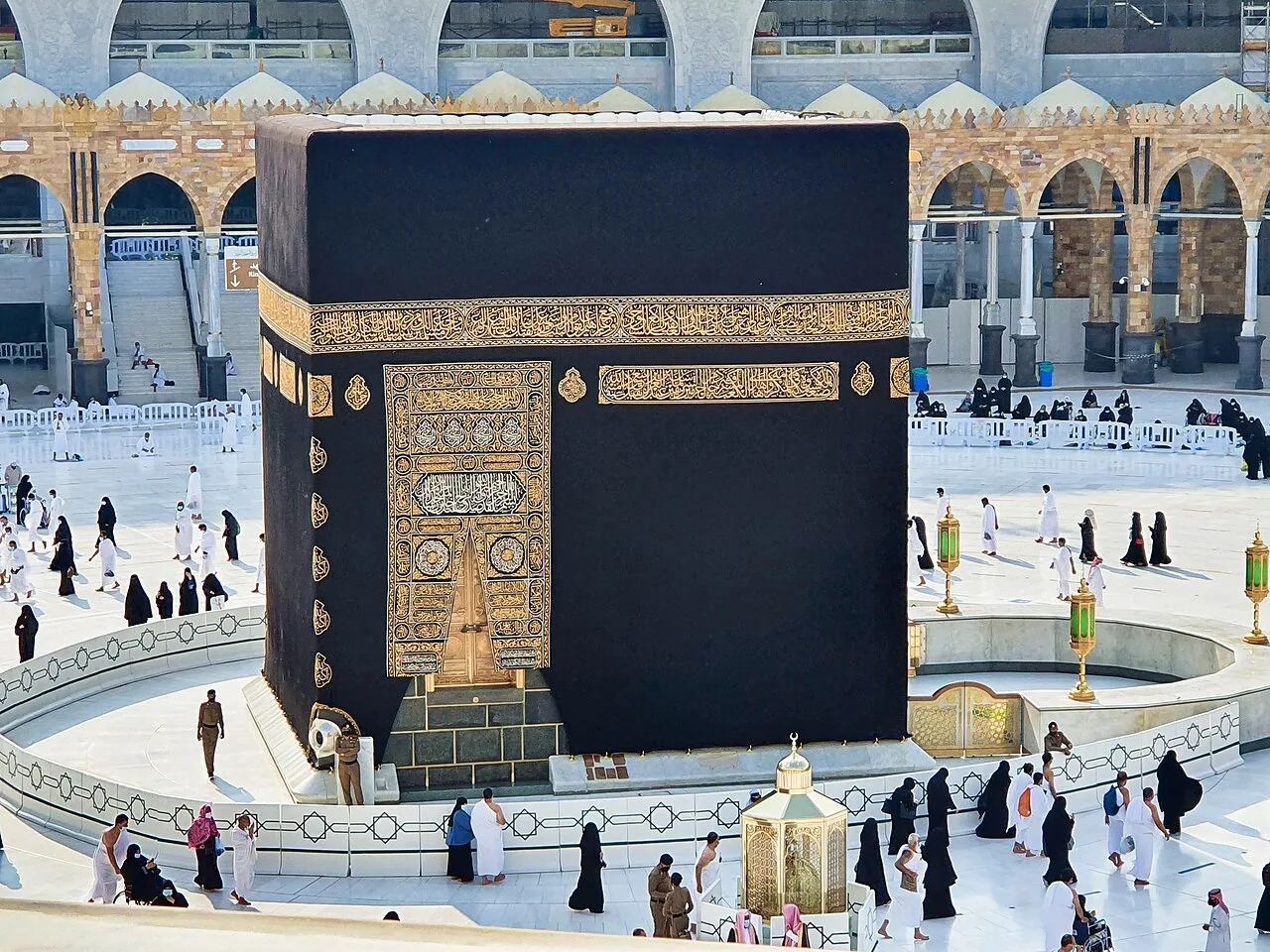
The Kaaba in Mecca. The Black Stone is set into the eastern corner of the building (bottom left).
Black Stone
The Black Stone is an Islamic relic set into the eastern corner of the Kaaba in Mecca, Saudi Arabia, traditionally dated to the time of Adam and Eve.
Beyond Mecca's Black Baetyl to White and Red Counterparts
Pre-Islamic Arabia possessed a broader geography of sacred rocks beyond Mecca's famous corner relic. While stones were venerated widely across the ancient region, different sanctuaries featured stones of contrasting colors. A red stone was revered in the South Arabian city of Ghaiman, while another Kaaba in al-Abalat near Tabala housed an aniconic white stone.
From Wikipedia · CC BY-SA 4.0
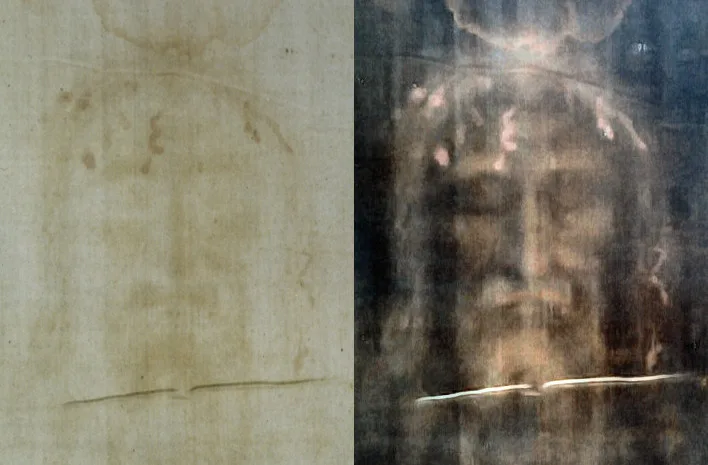
Turin shroud positive and negative displaying original color information 708 x 465 pixels 94 KB
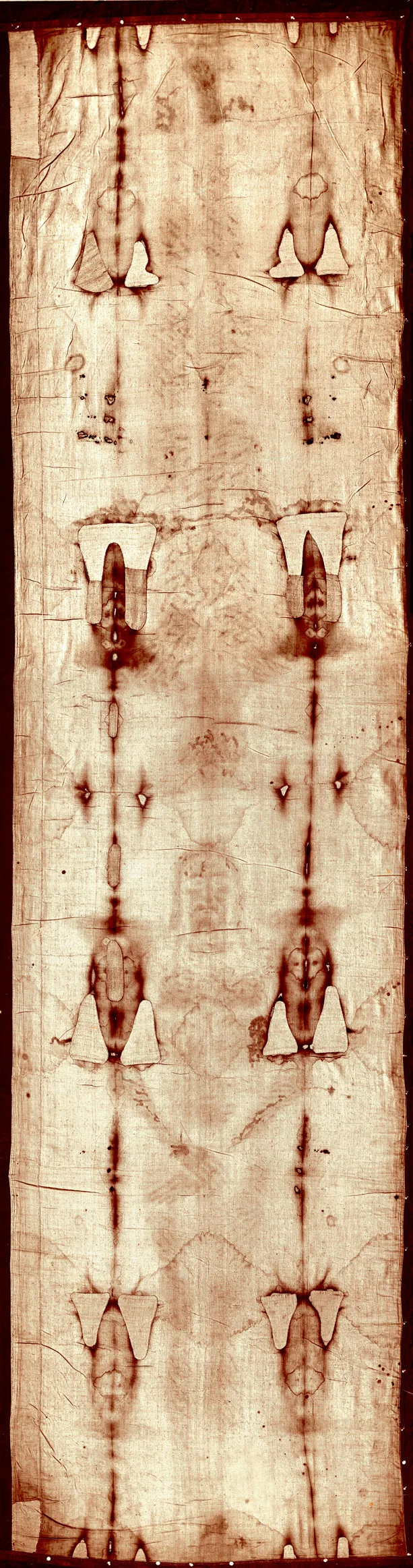
Full-length image of the Turin Shroud before the 2002 restoration
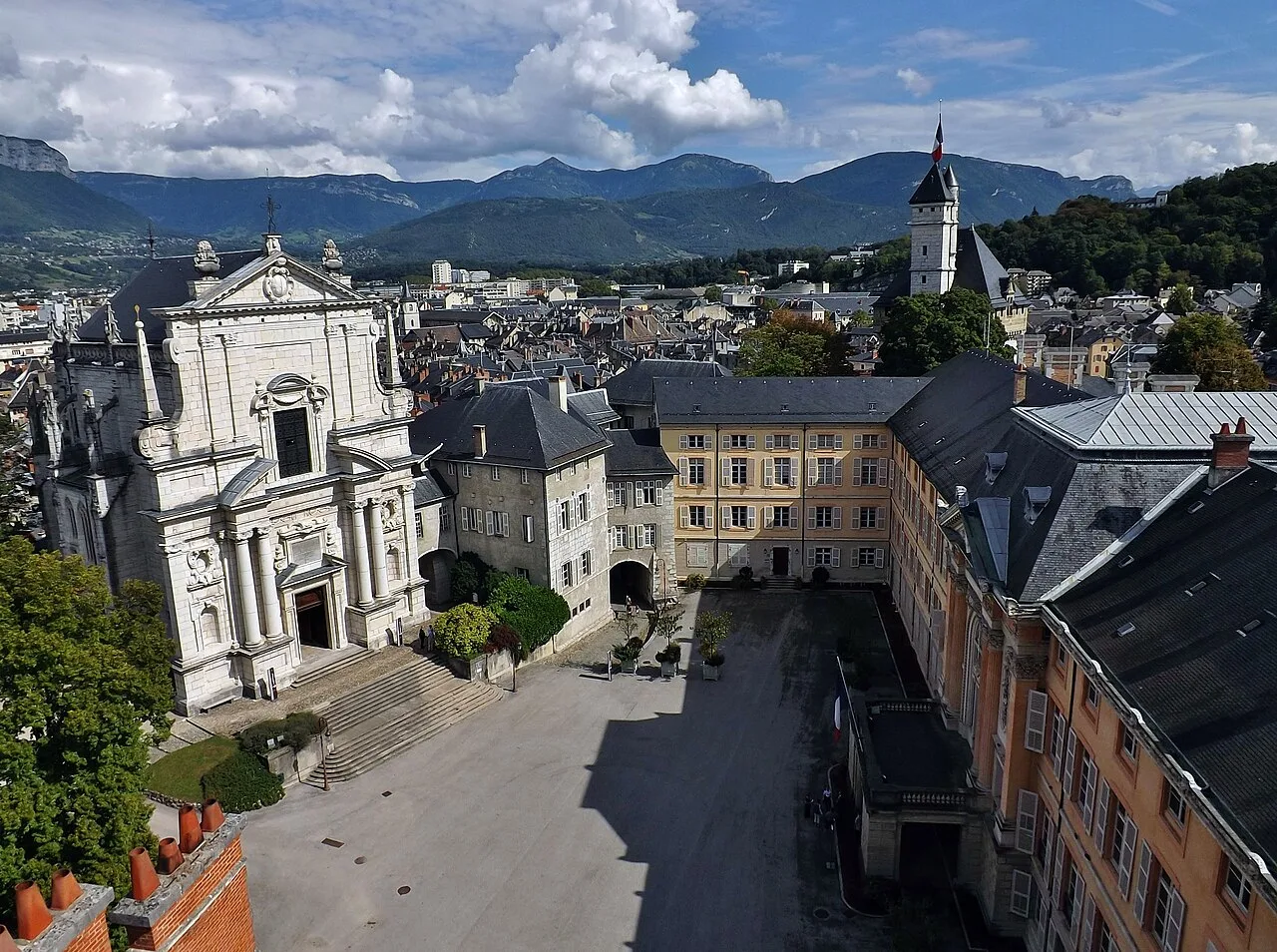
Inner courtyard of the palace of the Dukes of Savoy in Chambéry. On the left is the façade of the Sainte-Chapelle where the Shroud was kept until 1578.
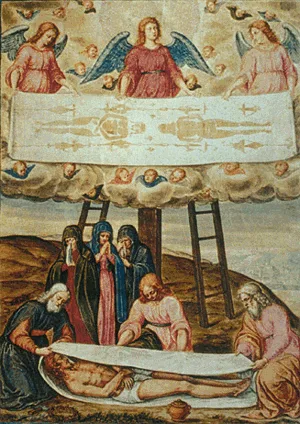
Artistic depiction of the Shroud of Turin, incorporated into a scene of the Descent from the Cross, by painter Giulio Clovio, c. 1540. Clovio shows Jesus's right hand crossed over the left, which is not consistent with the image on the Shroud.[51]
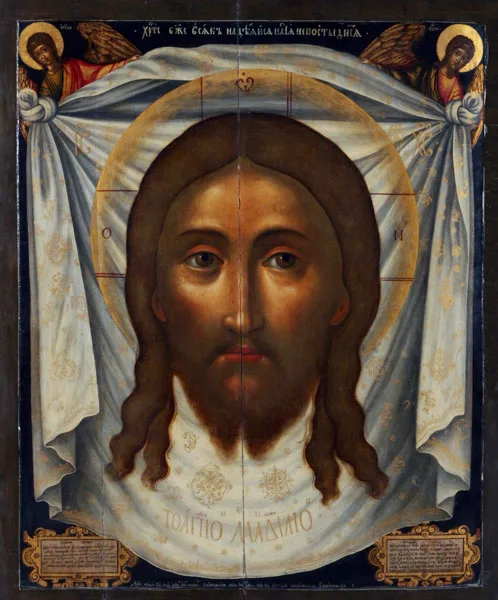
17th-century Russian icon of the Mandylion by Simon Ushakov
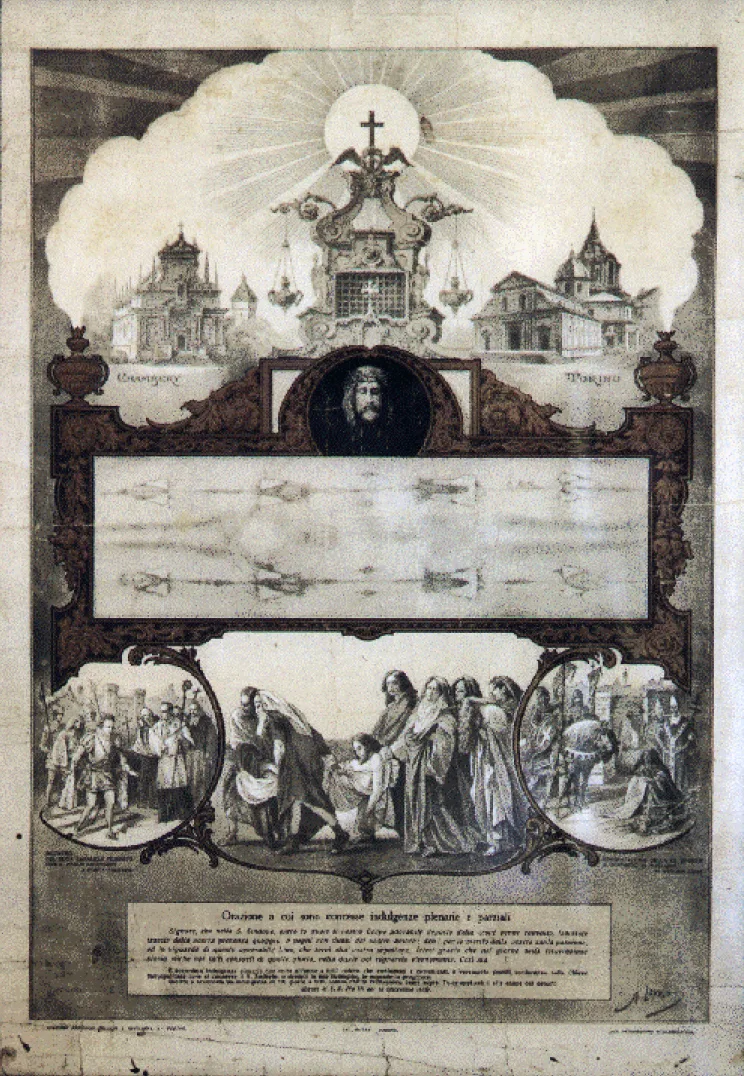
A poster advertising the 1898 exhibition of the Shroud in Turin. Secondo Pia's photograph was taken a few weeks too late to be included in the poster. The image on the poster includes a painted face, not obtained from Pia's photograph.
Shroud of Turin
The Shroud of Turin is a linen cloth bearing the faint image of a man, venerated for centuries as the miraculous burial shroud of Jesus of Nazareth.
Loom Mechanics and Medieval Weaving Constraints
The technical structure of the cloth provides decisive evidence regarding when and where it was fabricated. The linen features a three-to-one chevron herringbone twill, a pattern that necessitates a four-shaft treadle loom. Because four-shaft treadle floor looms were only introduced to Europe in the 13th century, the weave itself refutes theories of ancient manufacture.
From Wikipedia · CC BY-SA 4.0
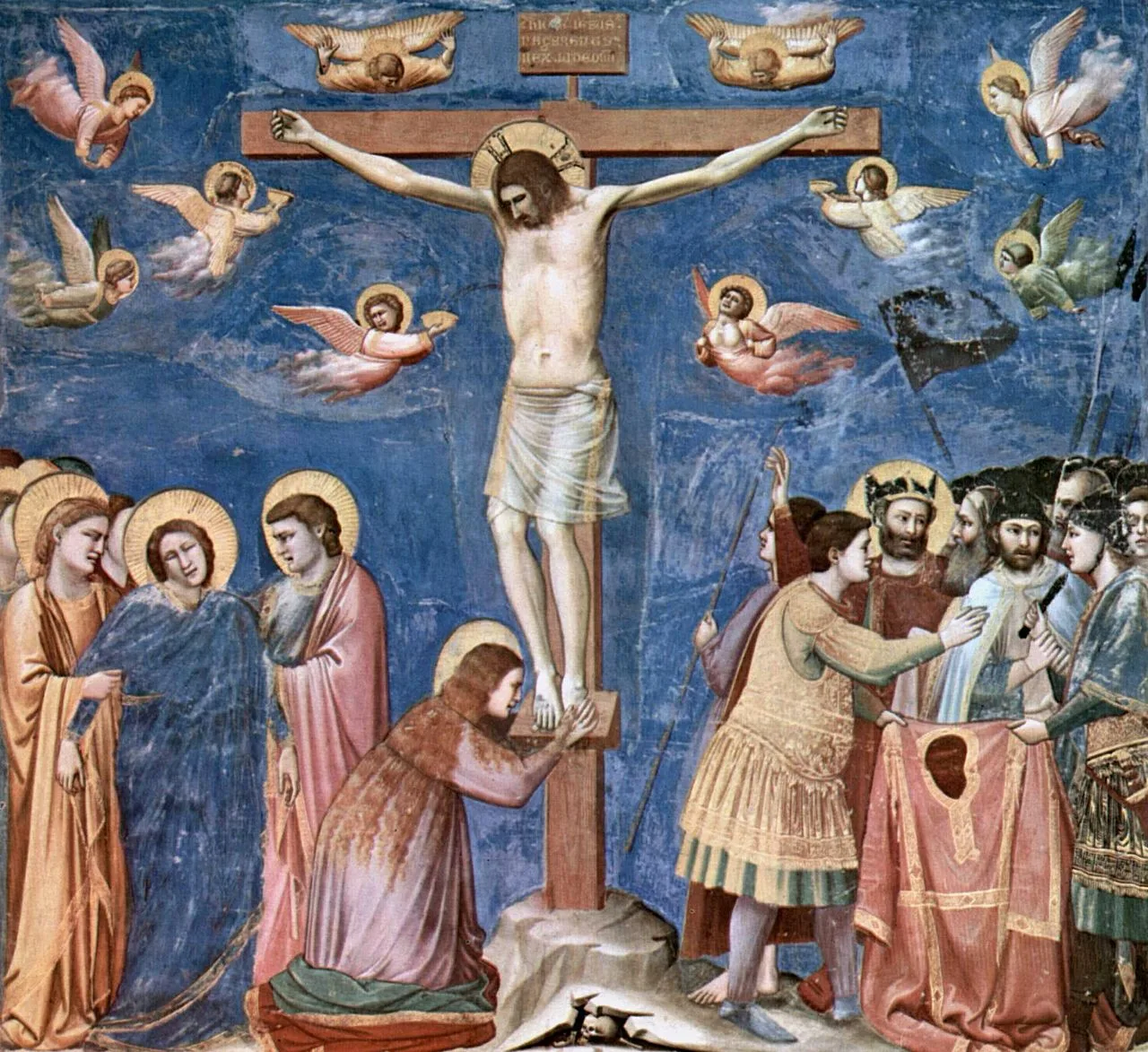
Christ Crucified by Giotto, c. 1310
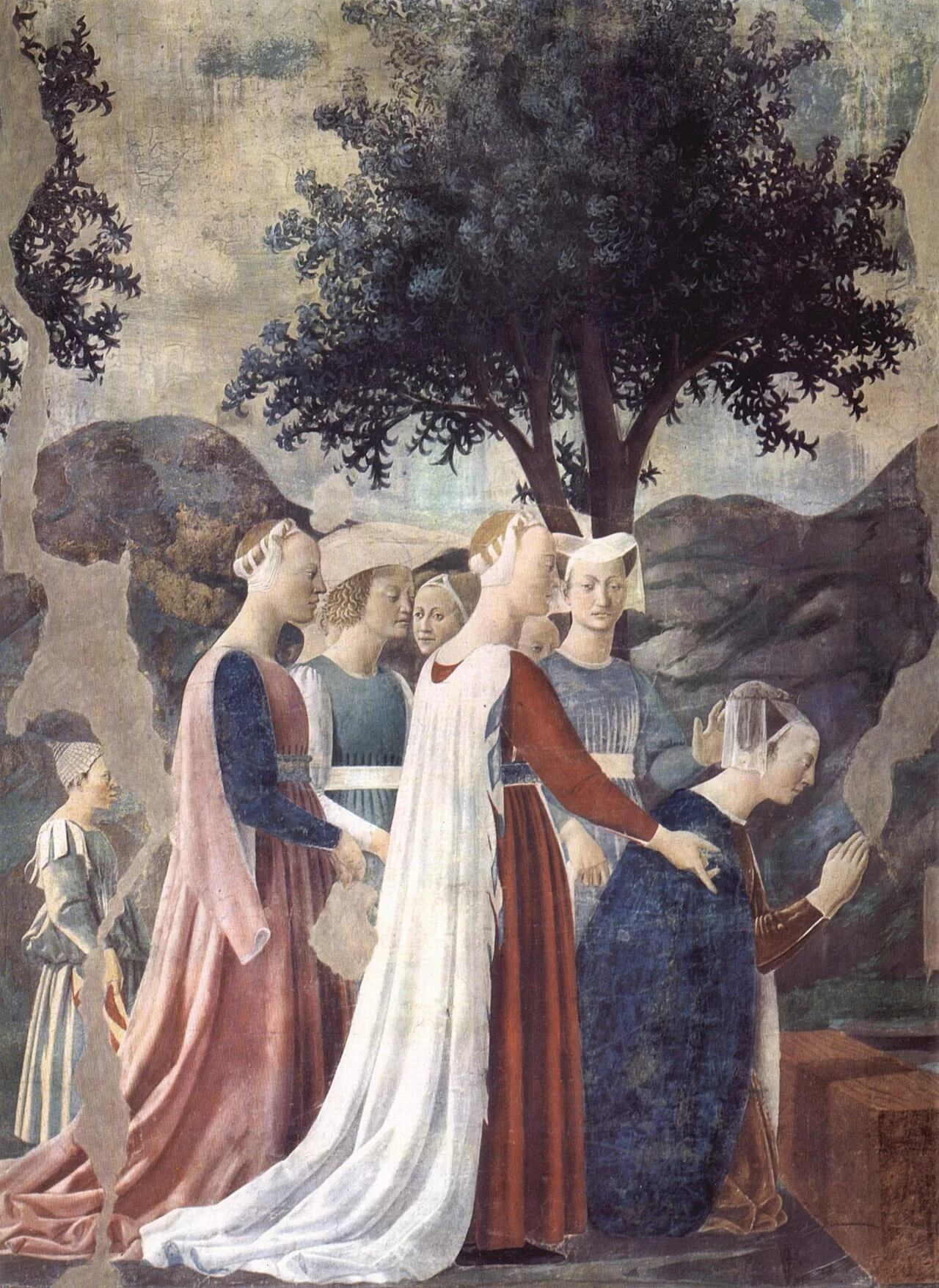
The Queen of Sheba venerates the wood from which the Cross will be made (mid 15th-century fresco by Piero della Francesca in San Francesco, Arezzo).
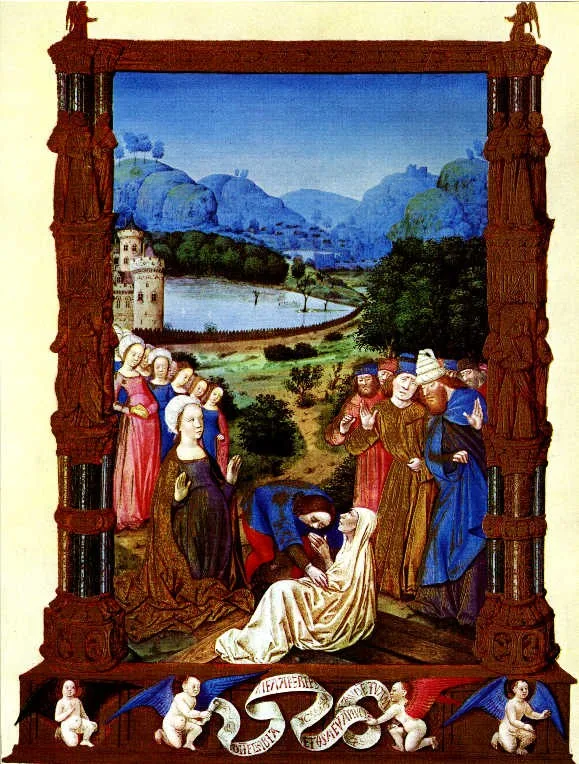
The proving of the True Cross, Jean Colombe in the Très Riches Heures

An enamelled silver reliquary of the True Cross from Constantinople, c. 800

Fragments of True Cross in the Serbian Orthodox Monastery of Visoki Dečani

Base of the reliquary with one of the Holy Nails
True Cross
In Christian tradition, the True Cross is the original wooden cross on which Jesus of Nazareth was crucified.
Seeds from Adam's Mouth
Medieval legends traced the relic's physical lineage directly to biblical origins. According to Voragine, the wood originated from three seeds taken from the "Tree of Mercy" and placed into the mouth of Adam's corpse by Seth. The resulting trees eventually provided the sacred timber for Christ's crucifixion centuries later. This genealogy reframed an instrument of Roman execution into an inevitable bridge connecting humanity's fall directly to its ultimate redemption.
From Wikipedia · CC BY-SA 4.0
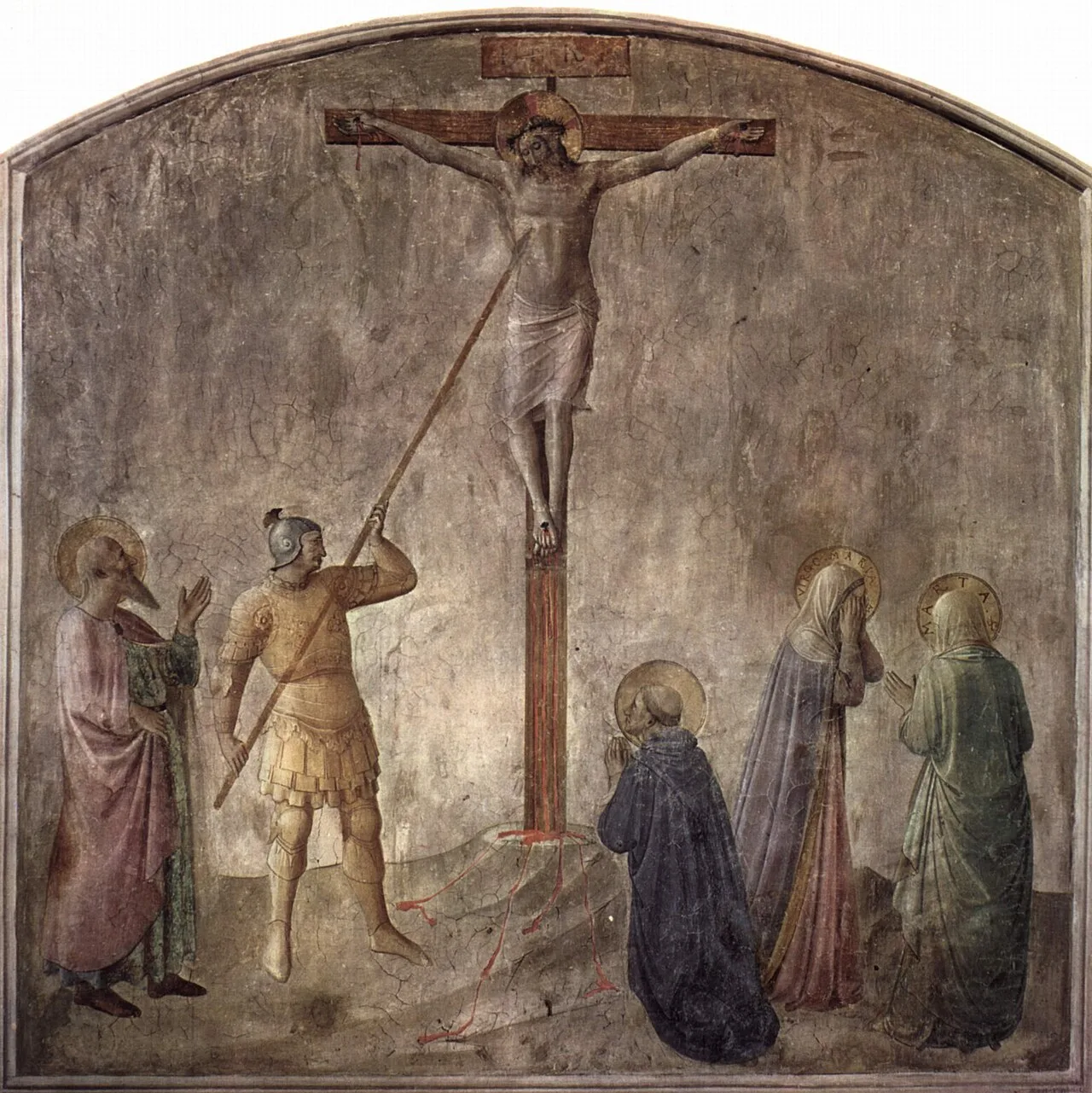
Fresco by Fra Angelico, Dominican monastery at San Marco, Florence, showing the lance piercing the side of Jesus on the cross (c. 1440)

Miniature of the Crucifixion from the Rabula Gospels. "Loginos" is depicted piercing the right side of Jesus with a spear.

Tomb of Pope Innocent VIII, with a bronze effigy of the pope holding the spear blade he received by Sultan Bayezid II: 321

1790 drawing of the relics at Sainte-Chapell; the lance tip is in the reliquary at the right hand side.

The inscription on the Holy Lance

A mitred Adhémar de Monteil carrying the Holy Lance during the First Crusade
Holy Lance
The Holy Lance is alleged to be the lance that pierced the side of Jesus during his crucifixion.
A Piercing in Place of Crurifragium
The Gospel of John notes that Roman soldiers planned to break Jesus' legs to accelerate death before the Sabbath. Finding him already dead, a soldier avoided crurifragium and pierced his side with a lance instead. The Gospel of John does not give the name of the soldier, leaving the attribution to Longinus to develop centuries later in apocryphal traditions.
From Wikipedia · CC BY-SA 4.0
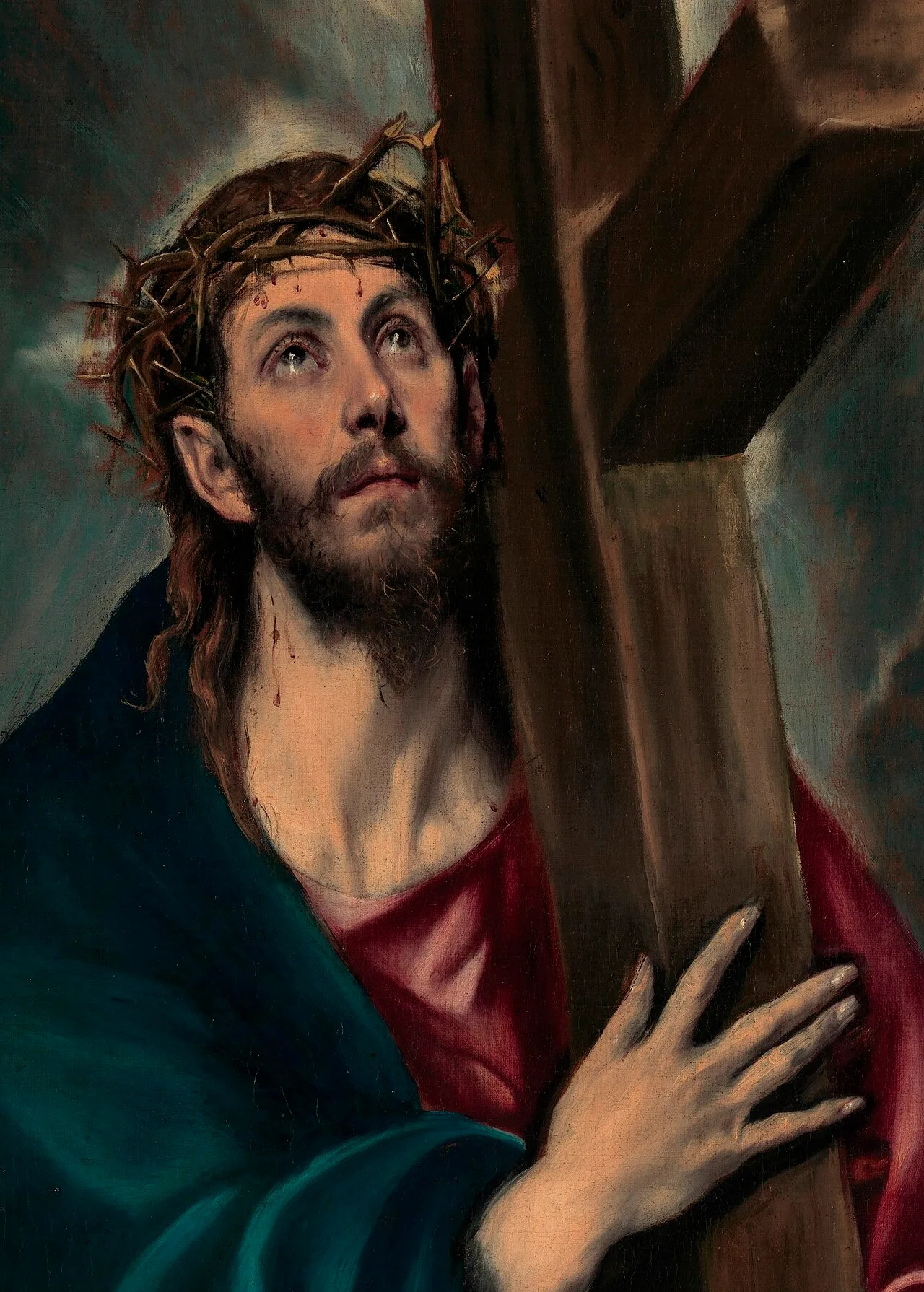
Christ carrying the cross with the crown of thorns, as painted by El Greco, c. 1580s
![A purported relic of the Crown of Thorns, received by the French King Louis IX from Emperor Baldwin II.[5]](https://nwjvzop1xgplmzvt.public.blob.vercel-storage.com/wikifeed/crown-of-thorns/1-031f43bc29.webp)
A purported relic of the Crown of Thorns, received by the French King Louis IX from Emperor Baldwin II.[5]

from the Karlsruhe Passion, c. 1450-55
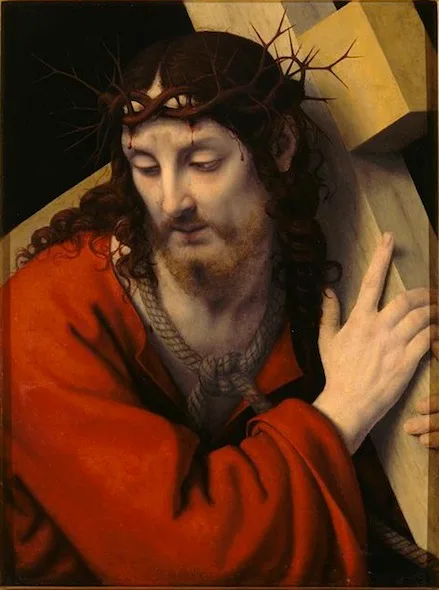
Christ Carrying the Cross by Andrea Solario, 1513, portrays the crown of thorns

The Sainte-Chapelle, built to house the Passion Relics.
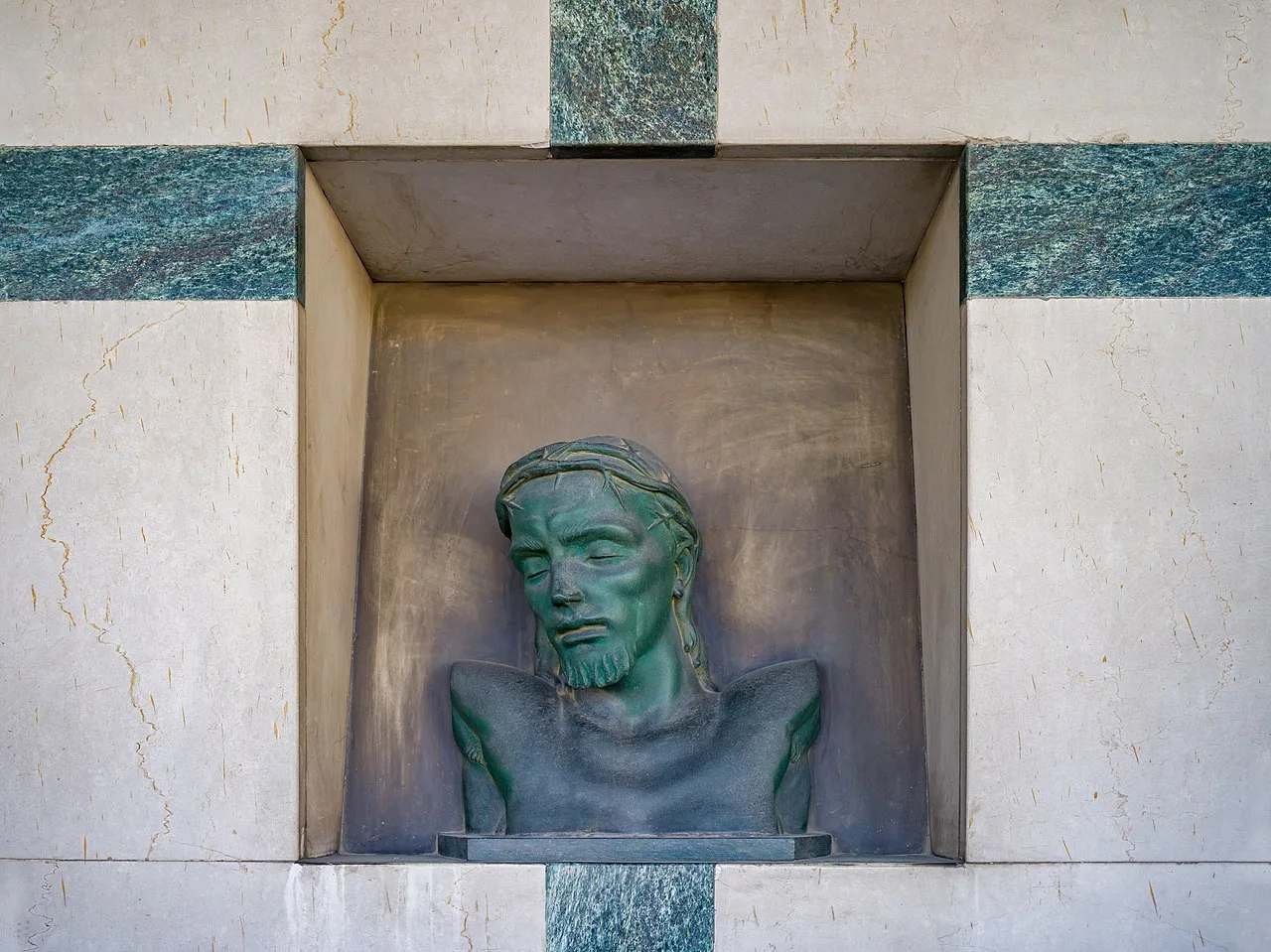
Bronze bust of Jesus with in the Monumental cemetery of Brescia.
Crown of Thorns
According to the New Testament, the crown of thorns was placed on the head of Jesus by his captors during the events leading up to his crucifixion.
Eden's Curse Reframed on the Cross
Roman soldiers intended the thorny headpiece as a cruel instrument of mockery and pain during the crucifixion. Yet early Christian writers interpreted the garment as a profound cosmic reversal of the Fall. Theologians Jerome and Origen argued that Christ deliberately bore the physical thorns introduced in Genesis to absorb human sin.
From Wikipedia · CC BY-SA 4.0

An artist's impression of the Three Sacred Treasures. The actual regalia remains unseen.
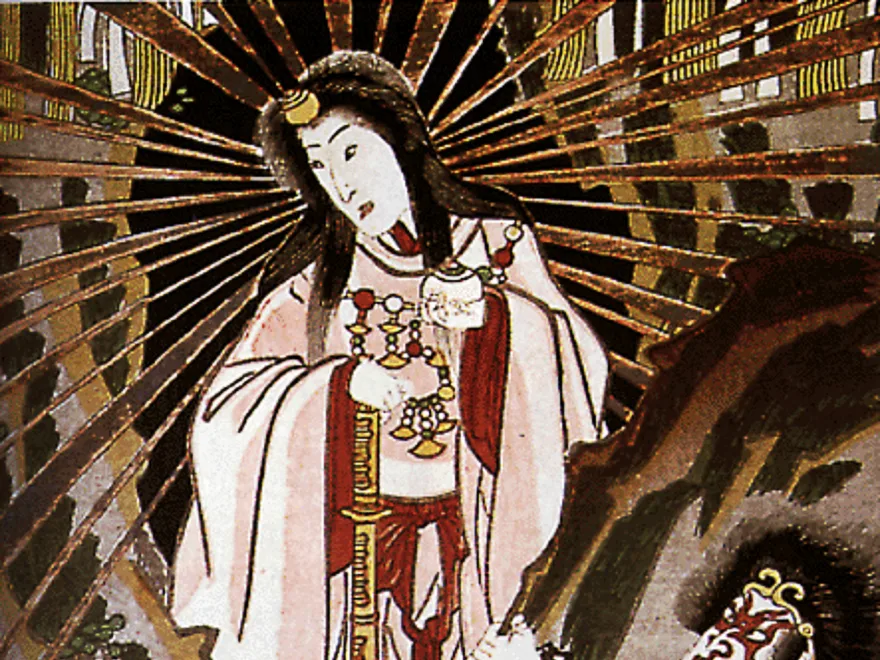
Amaterasu cave wide

Presentation of the sword Kusanagi no Tsurugi and the Yasakani no Magatama at the accession of Emperor Akihito, 7 January 1989
Imperial Regalia of Japan
The imperial regalia of Japan consist of a sword, a mirror, and a jewel, representing the virtues of valour, wisdom, and benevolence.
Monstrous Origins and Heavenly Deception
Shinto mythology traces the regalia to dramatic cosmic conflicts rather than peaceful divine inheritances. Susanoo-no-Mikoto retrieved the sword Kusanagi from the body of Yamata no Orochi, an eight-headed serpent, and offered it to Amaterasu as an apology. The sun goddess herself had previously been lured out of a dark cave by Ame-no-Uzume-no-Mikoto using the sacred mirror and jewels. These foundational myths established the items as instruments of cosmic reconciliation and authority.
From Wikipedia · CC BY-SA 4.0
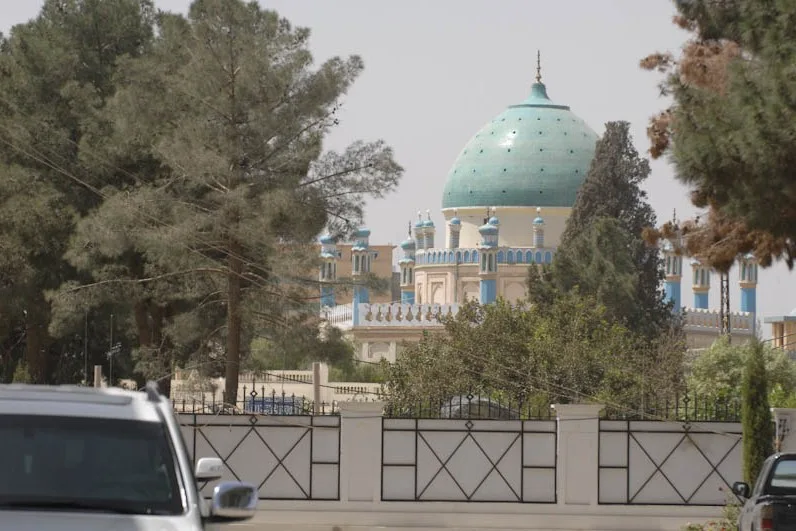
Mausoleum of Ahmad Shah Durrani
Cloak of Muhammad
The Cloak of Muhammad is a relic in Kandahar, Afghanistan, believed to have been worn by the Islamic prophet Muhammad during the Night Journey in 621 AD.
A 250-Year Dynastic Vigil
Believed to have been worn by Muhammad during the Night Journey in 621 AD, the sacred khirqa is kept under extraordinary domestic security. Rather than being managed by revolving state officials or clerical councils, the relic has been guarded by the same family for over 250 years. This uninterrupted dynastic stewardship keeps the artifact locked inside the complex and shielded from ordinary public view.
From Wikipedia · CC BY-SA 4.0

Pilgrims view one of the claimed Seamless Robes (Trier, April 2012)

The collarless neck of one of the claimed Seamless Robes

Sections of taffeta and silk on the right sleeve of the robe, Trier

A Holy Tunic stamp, Germany, 1959

The Argentuil Tunic, on display in the Basilica of Saint-Denis d'Argentuil in 2016

The coat of arms of the Bagrationi dynasty depicting the Holy Tunic, 1711
Seamless robe of Jesus
The Seamless Robe of Jesus is the robe said to have been worn by Jesus during or shortly before his crucifixion.
Divided Overgarments and the Intact Chiton
Biblical accounts distinguish between two separate categories of clothing distributed at the crucifixion. Roman soldiers divided the outer garments, the himatia, into four parts to share among themselves. Because the chiton was seamless and woven whole from the top down, the soldiers chose to cast lots rather than tear the cloth into pieces.
From Wikipedia · CC BY-SA 4.0

The Sudarium of Oviedo

The ark that contains the Sudarium of Oviedo
Turin plasch
Sudarium of Oviedo
The Sudarium of Oviedo, or Shroud of Oviedo, is a bloodstained piece of cloth kept in the Cámara Santa of the Cathedral of San Salvador in Oviedo, Spain.
Symmetrical Flecks in Place of an Image
Unlike the Shroud of Turin with its distinct bodily impression, the Sudarium of Oviedo exhibits only symmetrical dark flecks across its surface. The textile displays signs of advanced deterioration and lacks any recognizable portrait. Tradition connects this cloth directly to the face cloth described in John 20:6–7.
From Wikipedia · CC BY-SA 4.0