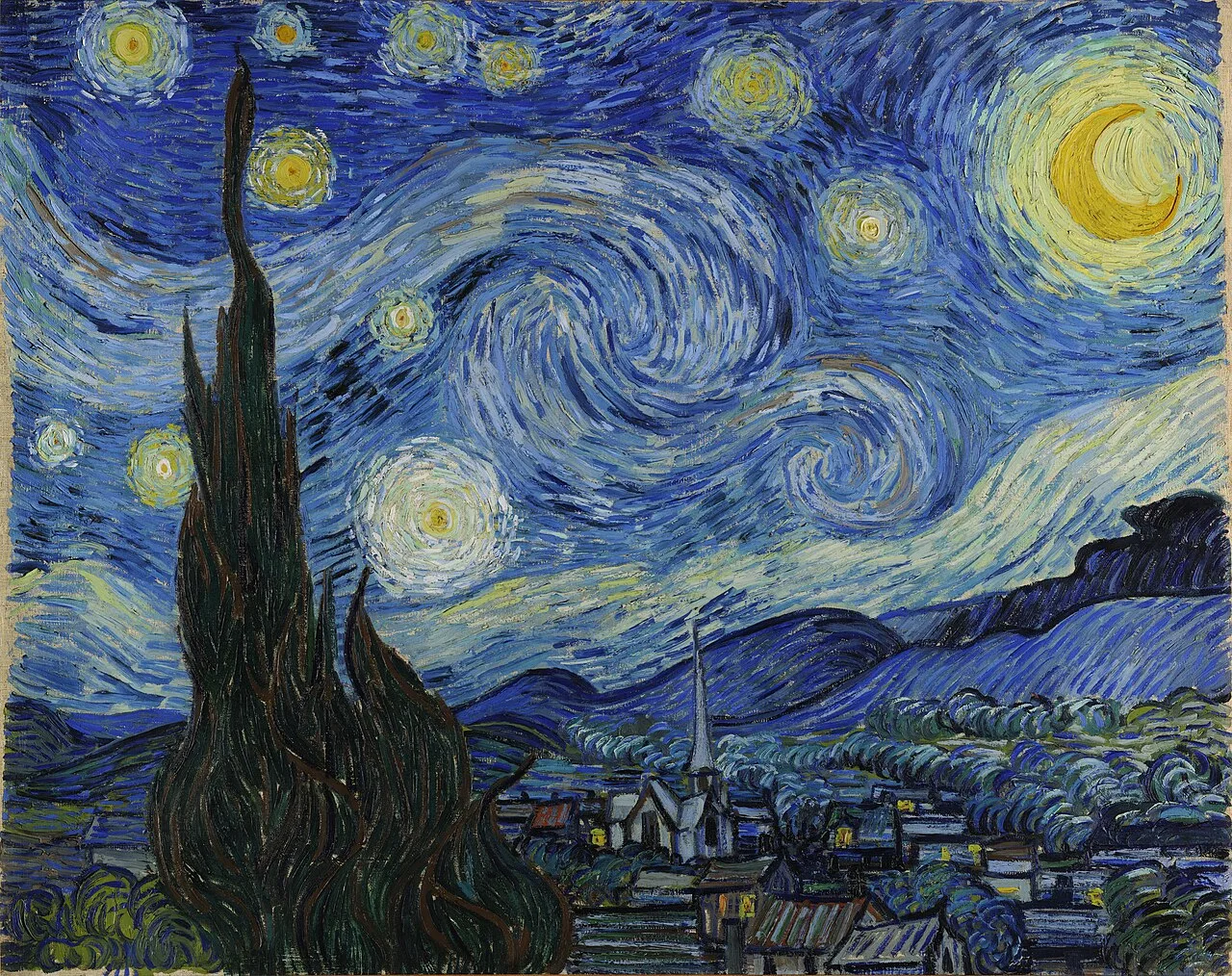
A painting of a scene at night with 10 stars with swirls, Venus, and a bright yellow crescent Moon. In the background are hills, and in the foreground a cypress tree and houses.

The Monastery of Saint-Paul de Mausole

F719 Green Wheat Field with Cypress, National Gallery Prague

F1541v Bird's-Eye View of the Village, Van Gogh Museum
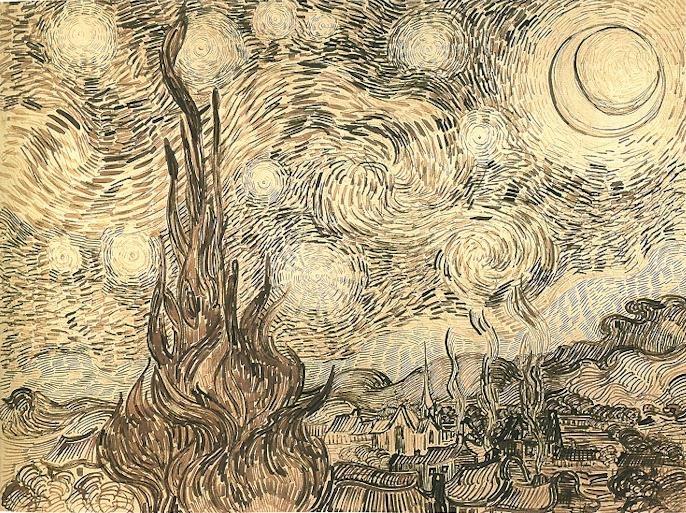
The drawing Cypresses in Starry Night, a reed pen copy executed by Van Gogh after the painting in 1889. Originally held at Kunsthalle Bremen, today part of the disputed Baldin Collection.[58][59]

Venus
The Starry Night
The Starry Night is an oil-on-canvas painting by Dutch Post-Impressionist painter Vincent van Gogh, painted in June 1889, depicting the view from his asylum room at Saint-Rémy-de-Provence.
Luxury Asylum Accommodations for a Prolific Output
In the aftermath of his breakdown on 23 December 1888, Van Gogh entered the Saint-Paul-de-Mausole asylum on 8 May 1889. The facility catered to the wealthy and was less than half full, granting him both a second-story bedroom and a ground-floor room for a painting studio. These accommodations provided the space needed to maintain an exceptionally prolific artistic output.
From Wikipedia · CC BY-SA 4.0
The Kiss - Gustav Klimt - Google Cultural Institute

Fulfilment, a sketch for the 1905–09 Brussels Stoclets

Cupola of the choir: An Angel Offers a Model of The Church to Bishop Ecclesius, Basilica of San Vitale in Ravenna, Italy
The Kiss (Klimt)
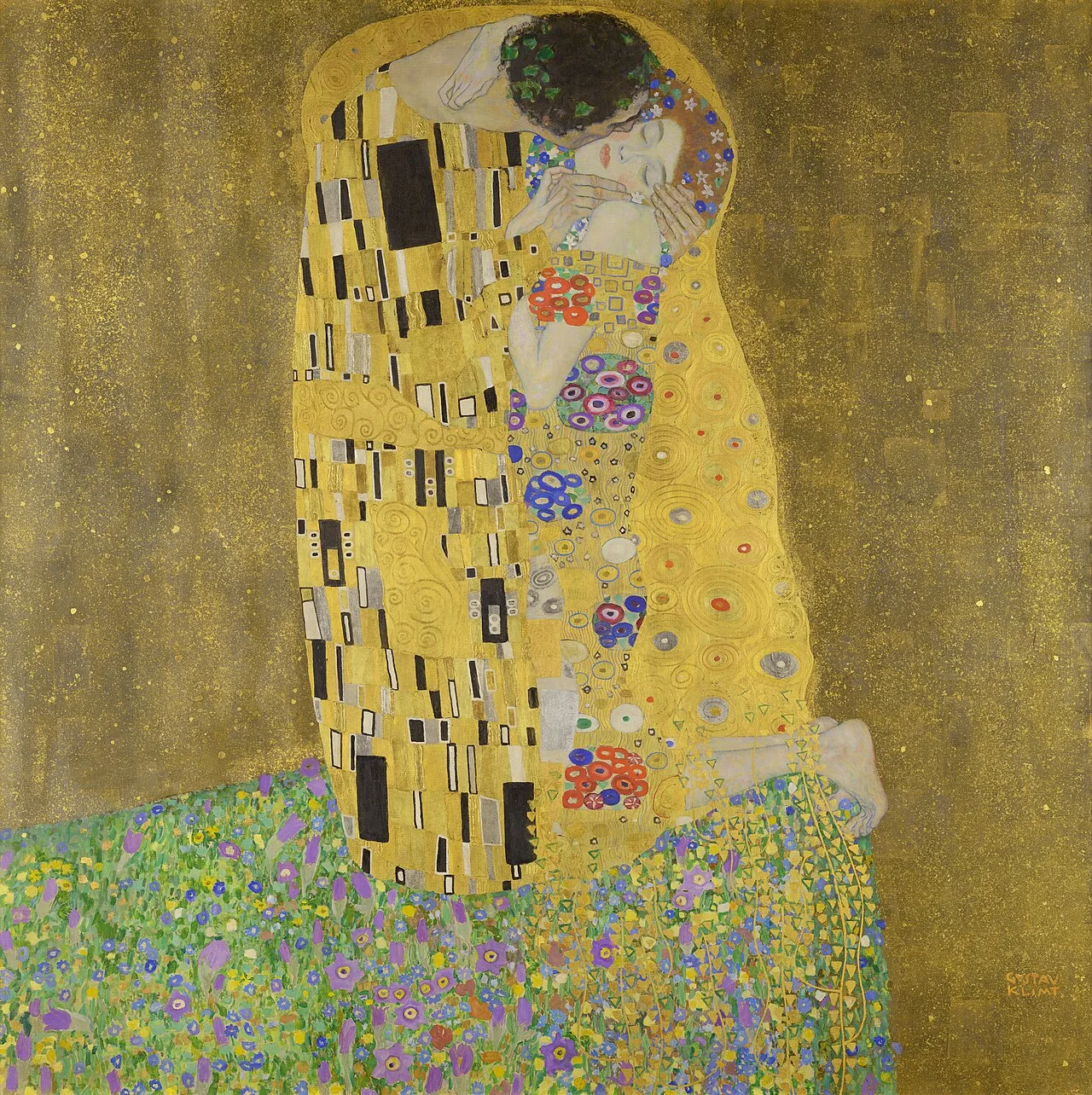
The Kiss is an oil-on-canvas painting with added gold leaf, silver and platinum by Austrian Symbolist painter Gustav Klimt, created in 1907 and 1908 during the height of his Golden Period.
Japanese Cropping at the Floral Precipice
The embracing lovers stand at the edge of a flowery meadow that ends abruptly beneath the woman's exposed feet. Departing from standard Western conventions, Gustav Klimt placed the man's head unusually close to the upper border of the canvas. This tight composition reflects the direct influence of Japanese prints alongside decorative patterns evoking Bronze Age art.
From Wikipedia · CC BY-SA 4.0
Vincent Willem van Gogh 127
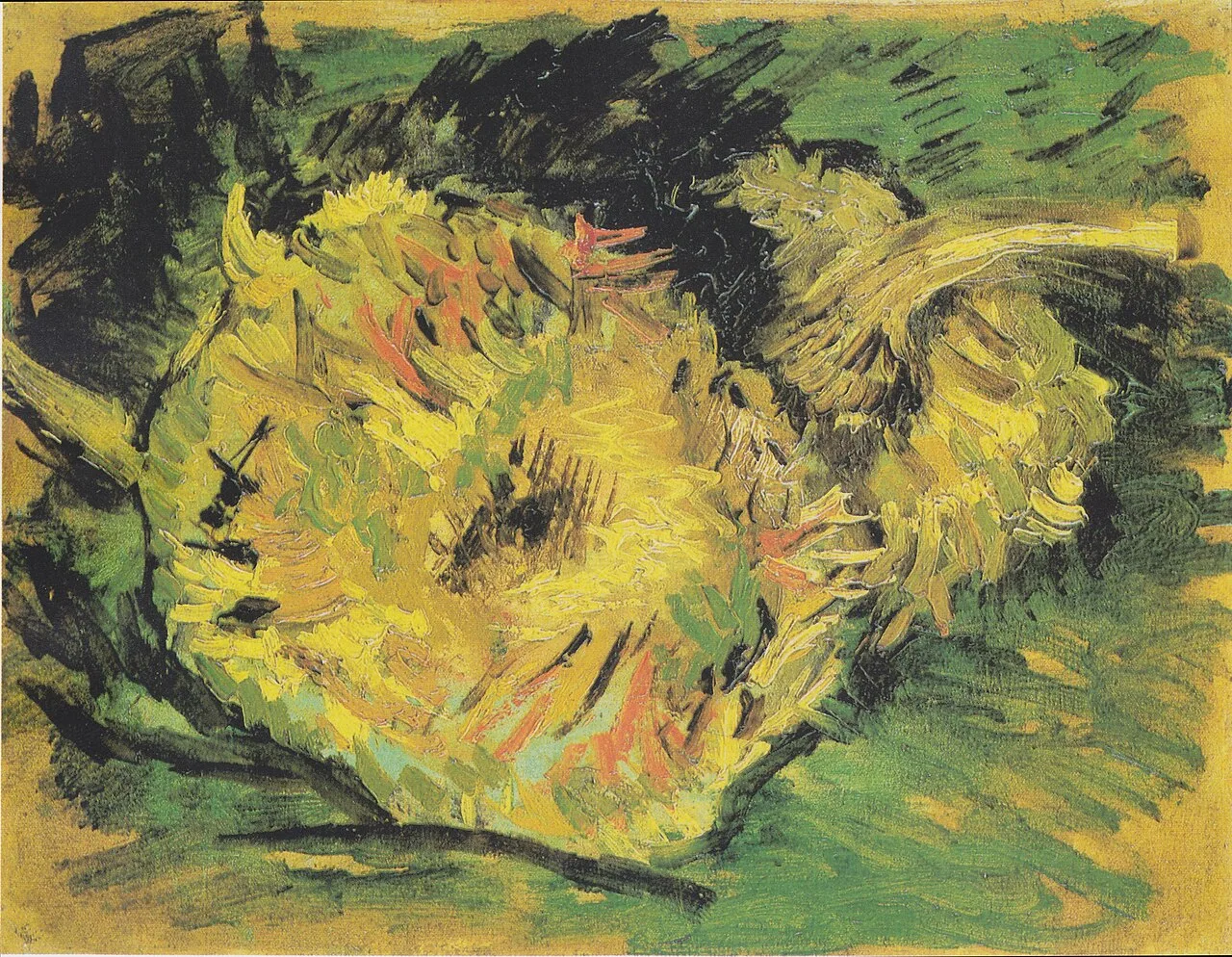
Two Cut Sunflowers, study (F377), Oil on canvas, 21 x 27 cm, Van Gogh Museum, Amsterdam

Two Cut Sunflowers (F376), Oil on canvas, 50 x 60.7 cm, Museum of Fine Arts Bern

Roses and Sunflowers, F250, 1886, Oil on canvas, 50 × 61 cm, Kunsthalle Mannheim

Sunflowers (Munich version)

Paul Gauguin: The Painter of Sunflowers, 1888
Sunflowers (Van Gogh series)
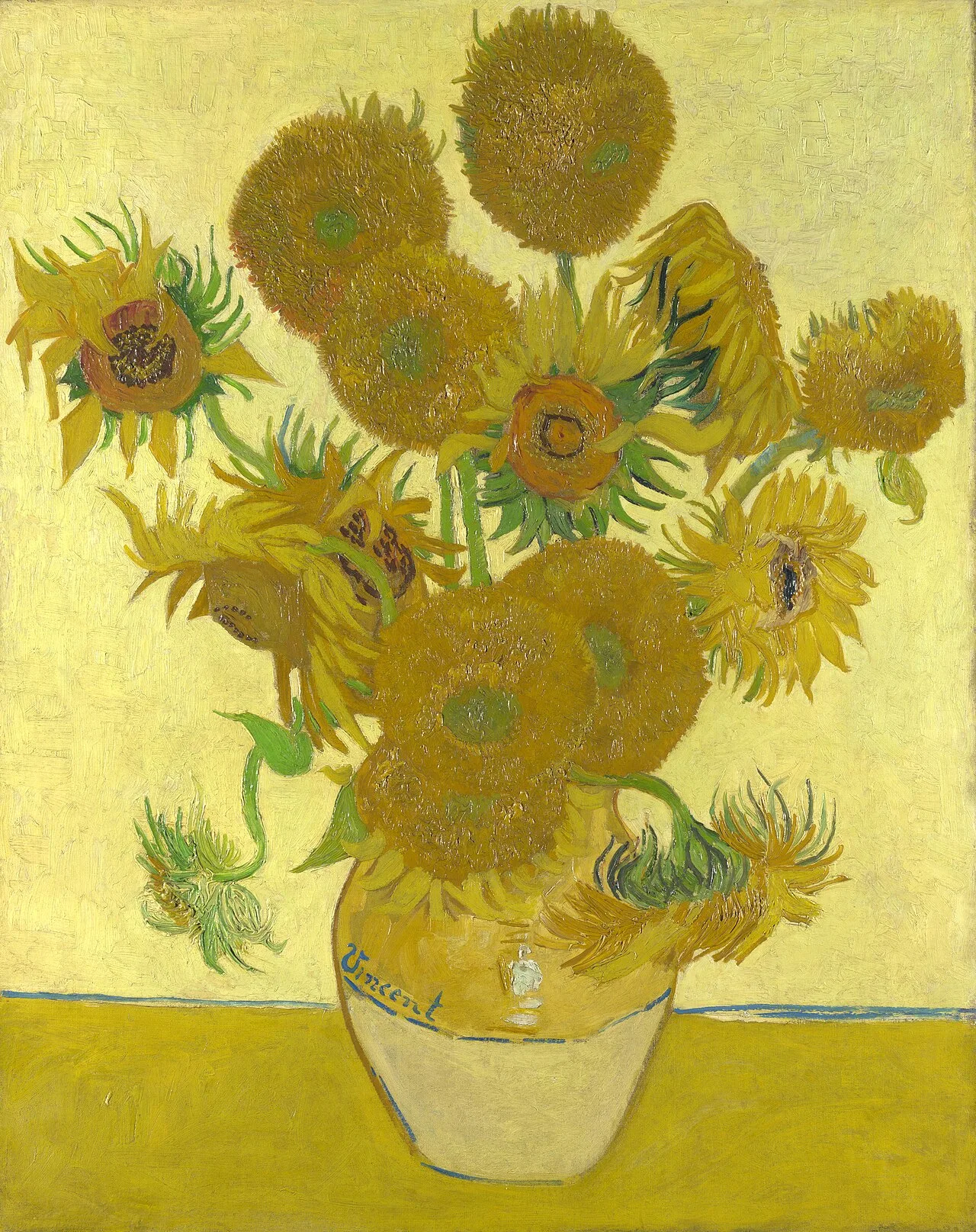
Sunflowers is the title of two series of still life paintings by the Dutch painter Vincent van Gogh, executed in Paris in 1887 and in Arles in 1888.
Lying Prone on Parisian Ground
Popular memory associates Van Gogh's sunflowers with upright vases, yet his original Paris series from 1887 captures the blooms cut and lying prone on the ground. Both this first collection and the later Arles versions were bound to his friendship with Paul Gauguin, who acquired two Paris canvases. Van Gogh initially conceived the floral works as a welcoming decorative gesture for his companion's arrival at the Yellow House.
From Wikipedia · CC BY-SA 4.0
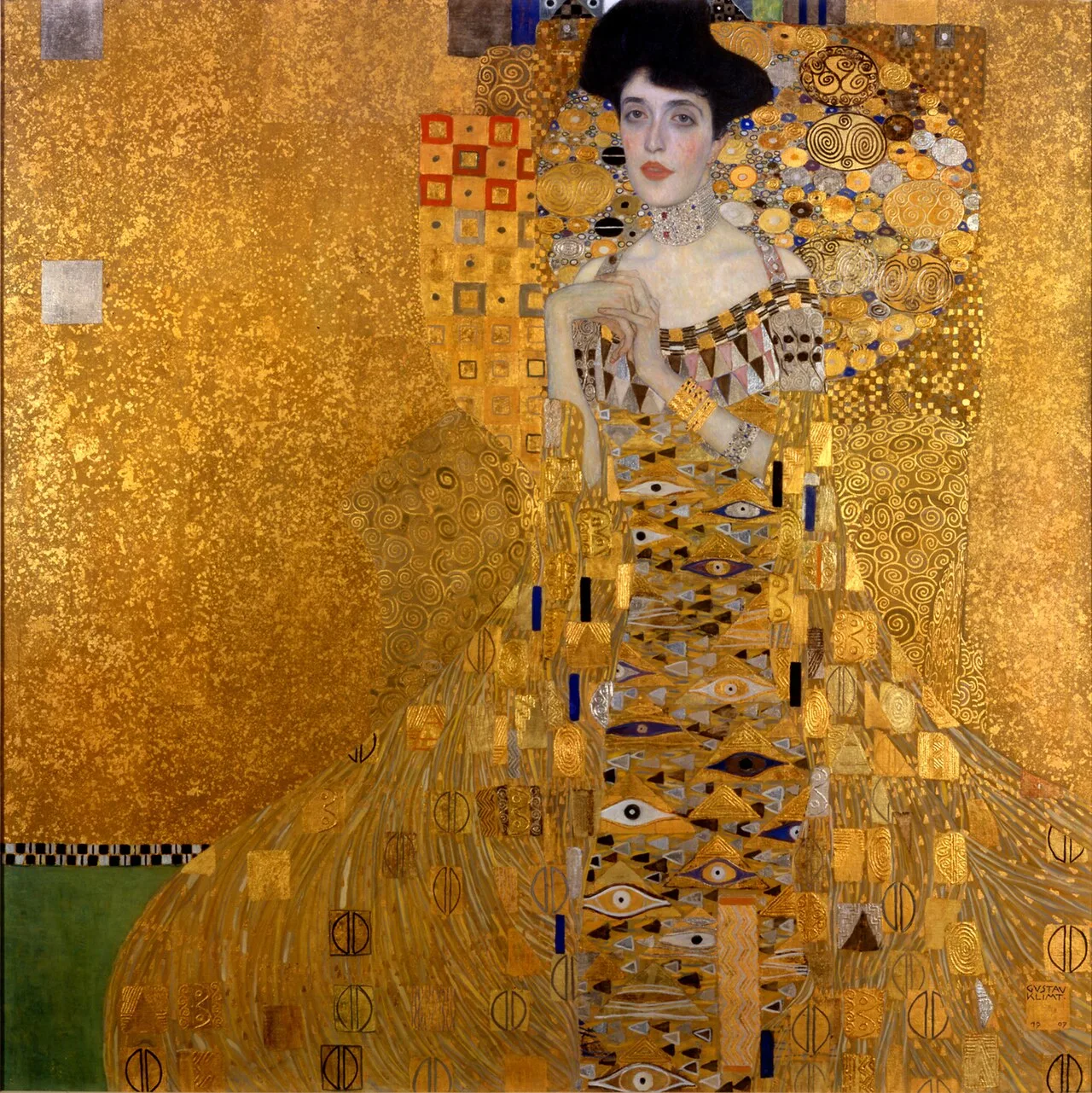
Gustav Klimt 046
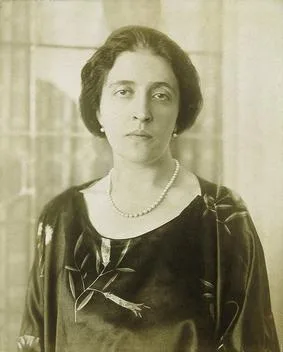
Adele Bloch-Bauer, c. 1910
![Preparatory sketch for the portrait, c.1903[33]](https://upload.wikimedia.org/wikipedia/commons/b/b4/Klimt_Adele_Skizze_1.png?utm_source=en.wikipedia.org&utm_campaign=imageinfo&utm_content=thumbnail_unscaled)
Preparatory sketch for the portrait, c.1903[33]
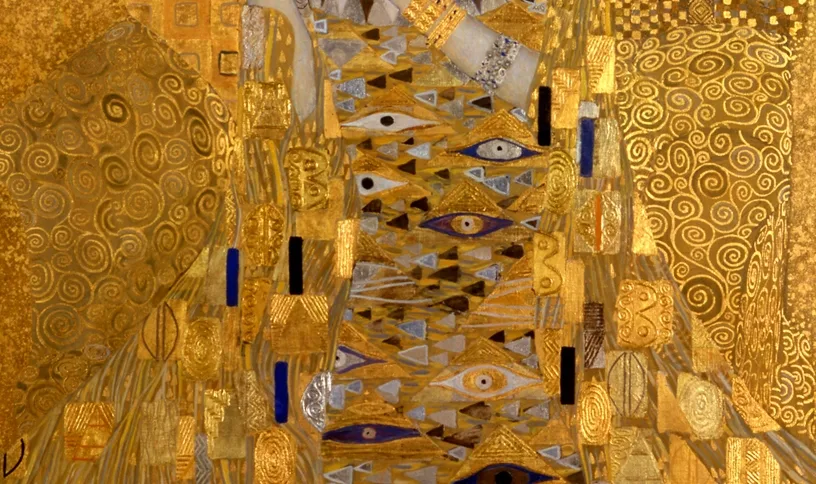
The decorative motifs: symbols suggestive of erotica

Portrait of Adele Bloch-Bauer II, the 1912 painting by Klimt

Klimt's Schloss Kammer am Attersee III (1910), which was swapped for the Portrait of Adele Bloch-Bauer I
Portrait of Adele Bloch-Bauer I
Portrait of Adele Bloch-Bauer I is an oil painting on canvas, with gold leaf, by Gustav Klimt, completed between 1903 and 1907.
Byzantine Imperial Mosaics as Modern Inspiration
In December 1903, Klimt visited the Basilica of San Vitale in Ravenna alongside Maximilian Lenz to study early-Christian Byzantine gold ground mosaics of Justinian I and Empress Theodora. Lenz recorded that these shimmering Byzantine works made an immense decisive impression on the painter. This encounter fundamentally shaped his artistic direction, directly inspiring the resplendence and stiff decoration that became the hallmark of his golden style.
From Wikipedia · CC BY-SA 4.0
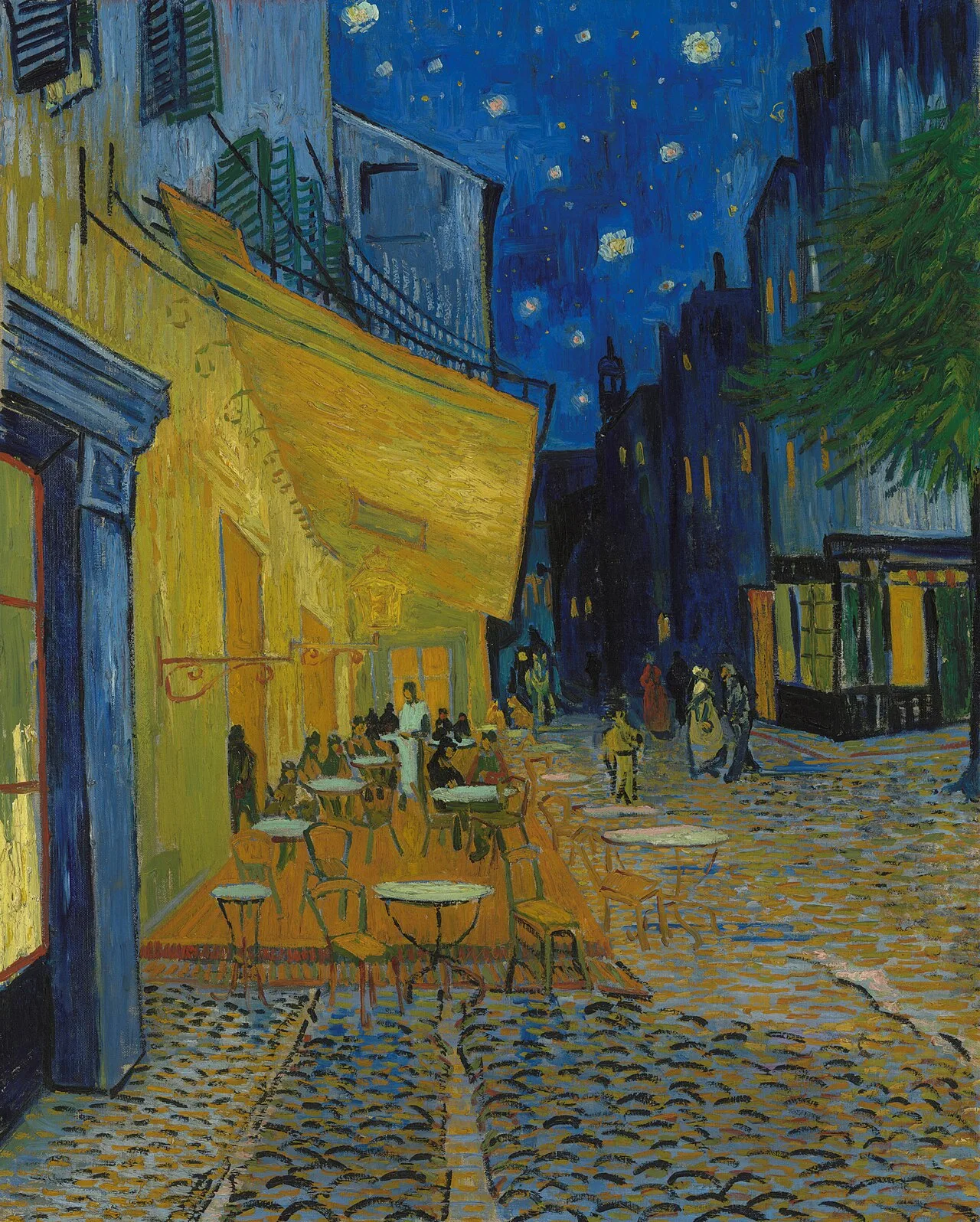
Van Gogh - Terrace of a Café at Night (Place du Forum) 1888

Preparatory study for the painting, September 1888.(F1519) Dallas Museum of Art, The Wendy and Emery Reves Collection.

The café terrace, now 'Le Café La Nuit', at Place du Forum, Arles, July 2016
Café Terrace at Night
Café Terrace at Night is an 1888 oil painting by the Dutch artist Vincent van Gogh, painted in Arles, France, in mid-September 1888.
Banishing Black from the Midnight Palette
Traditional practice required artists to draw scenes outdoors and apply dark pigments later in the daytime studio. Van Gogh broke from this method by executing his nocturnal work immediately on the spot. Rather than using conventional black paint, he constructed the night exclusively from rich blues, violets, and greens offset by sulphur and lemon tones.
From Wikipedia · CC BY-SA 4.0

Irises-Vincent van Gogh
Irises (painting)
Irises is an 1889 oil painting by Dutch artist Vincent van Gogh, created at the Saint Paul-de-Mausole asylum in France.
Pine Cones Trapped in Fresh Paint
When Vincent van Gogh painted Irises at the Saint-Paul-de-Mausole asylum in May 1889, the surrounding garden left a physical relic on the canvas. A pollen cone from the umbrella pines fell into the wet paint and became permanently trapped. This embedded biological trace confirms his direct, immersive process of working outdoors on hospital grounds.
From Wikipedia · CC BY-SA 4.0
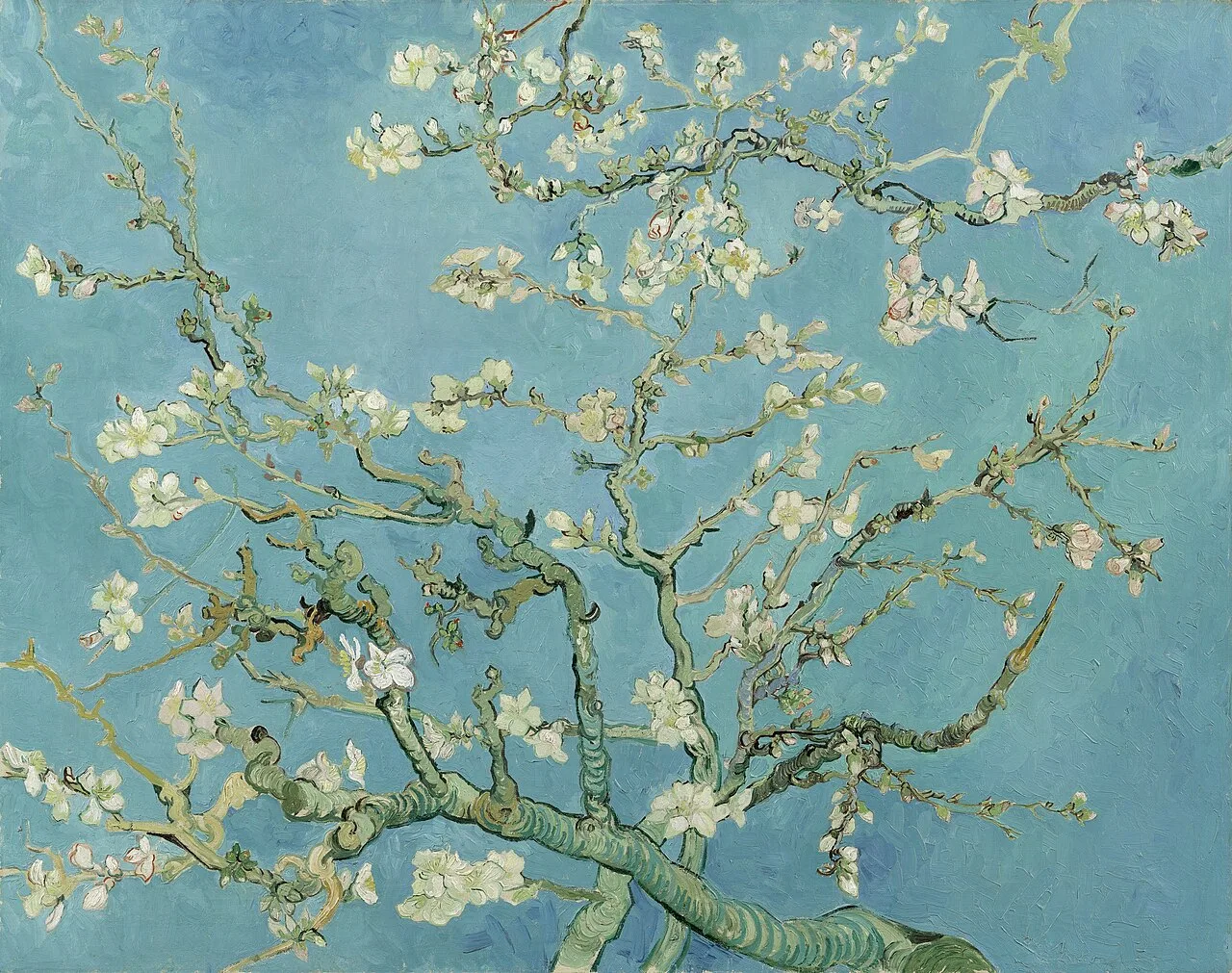
Vincent van Gogh - Almond blossom - Google Art Project
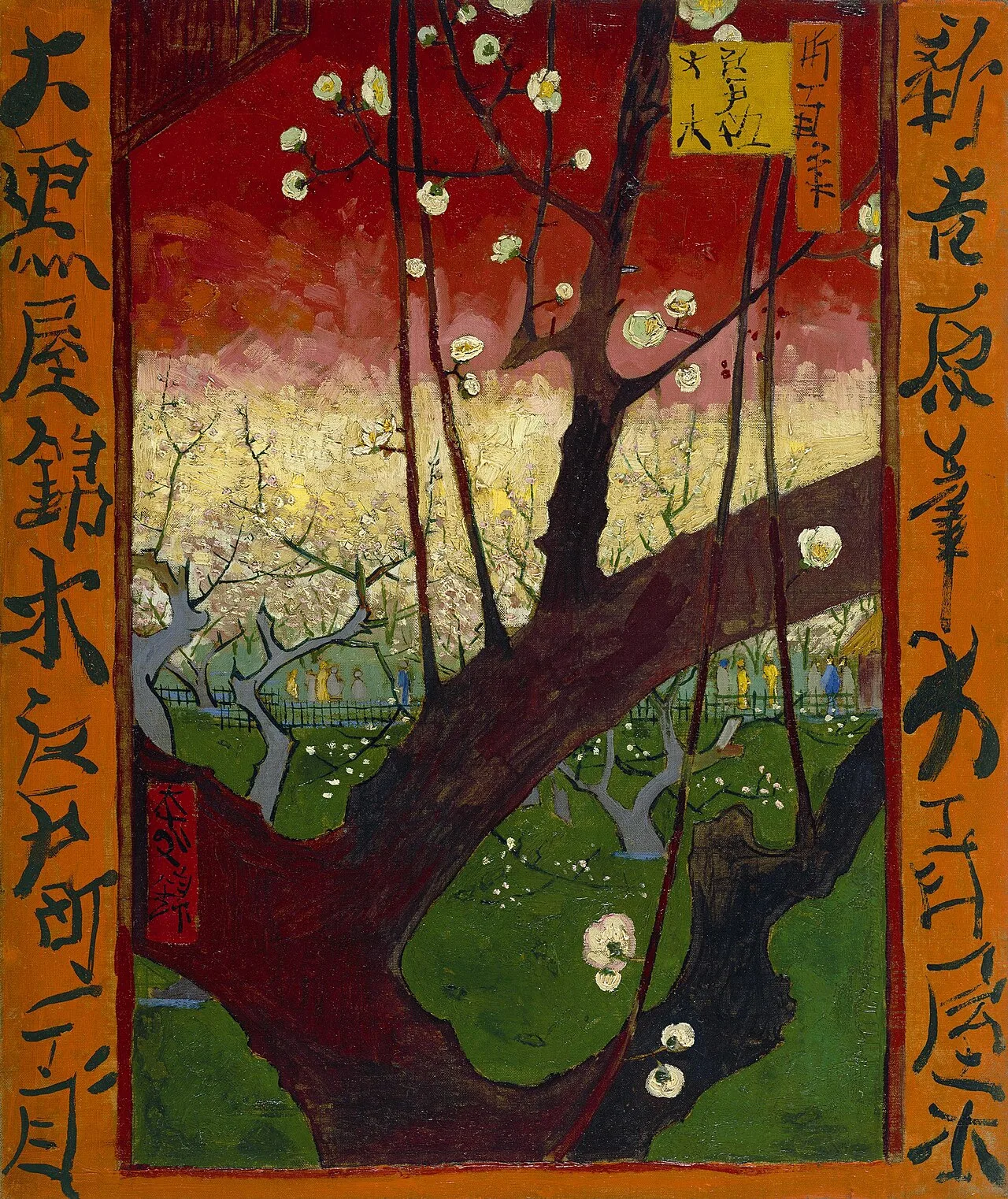
Japonaiserie Flowering Plum Tree (after Hiroshige)by Vincent van Gogh, 1887 Van Gogh Museum, Amsterdam (F371)
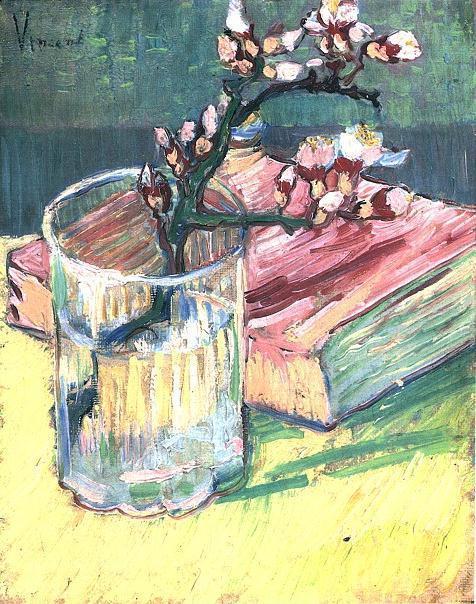
Blossoming Almond Branch in a Glass with a Book 1888 Private Collection (F393)
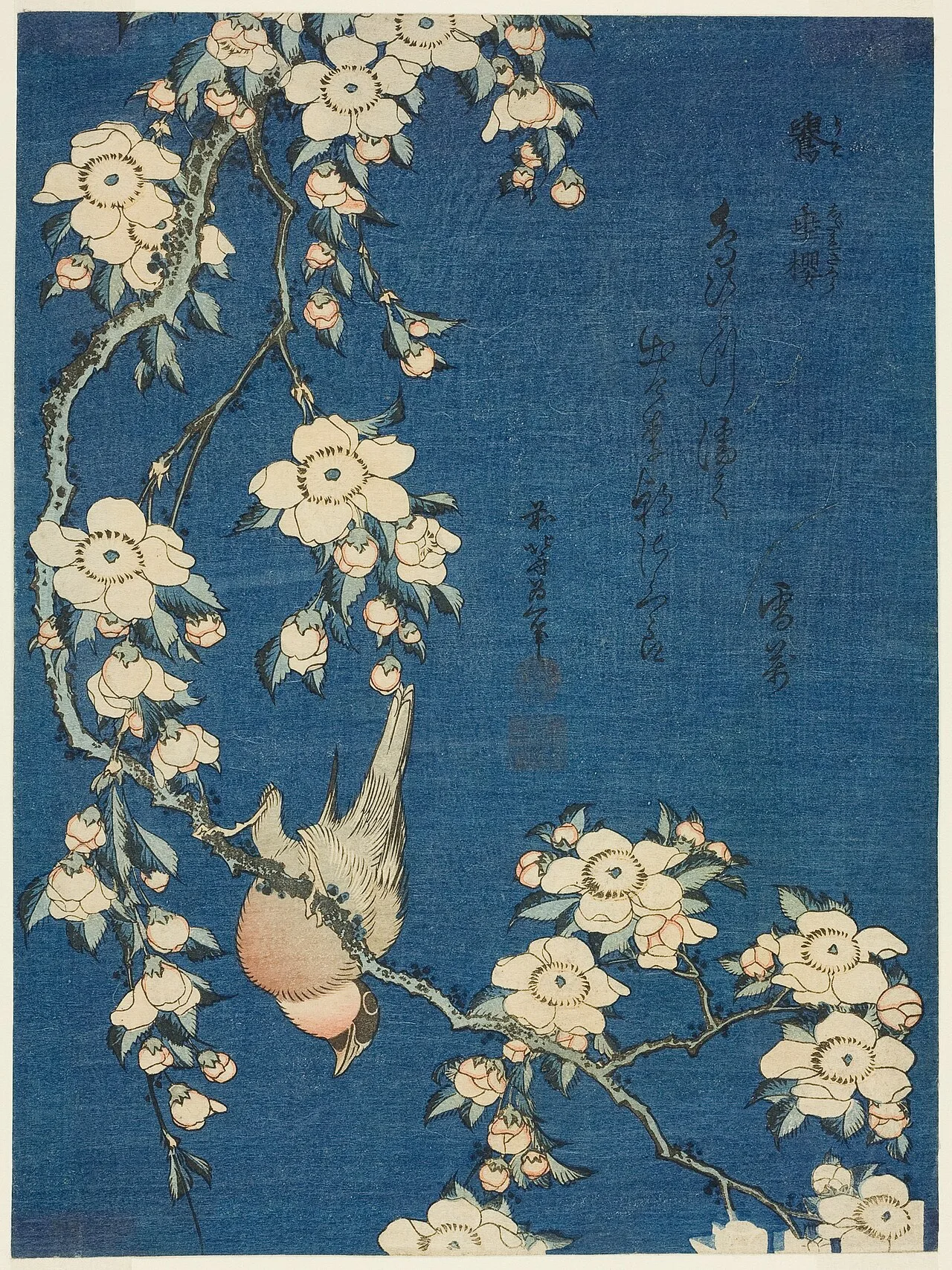
Bullfinch and Weeping Cherry by Hokusai
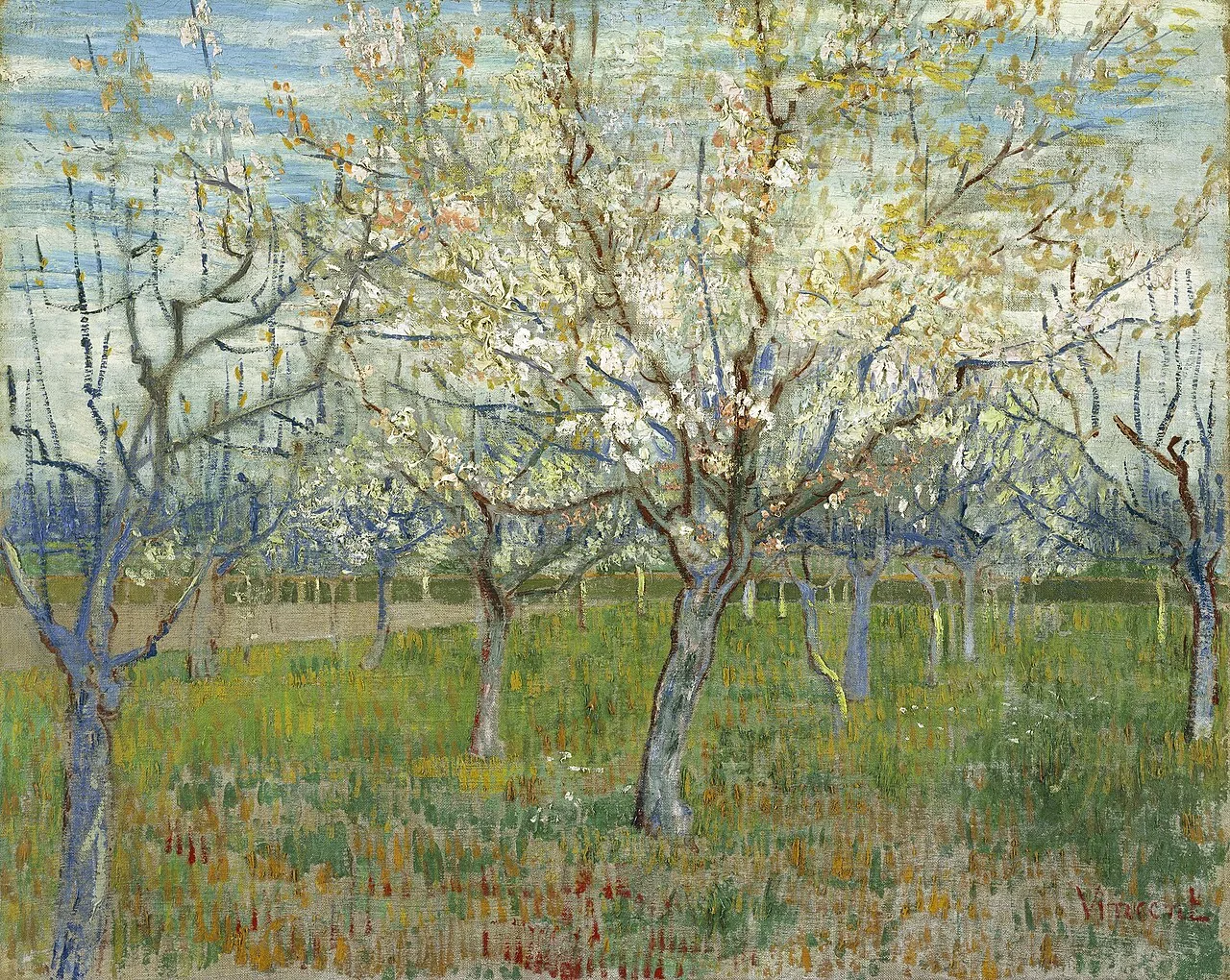
The Pink Orchard also Orchard with Blossoming Apricot Trees, March 1888 Van Gogh Museum, (F555)
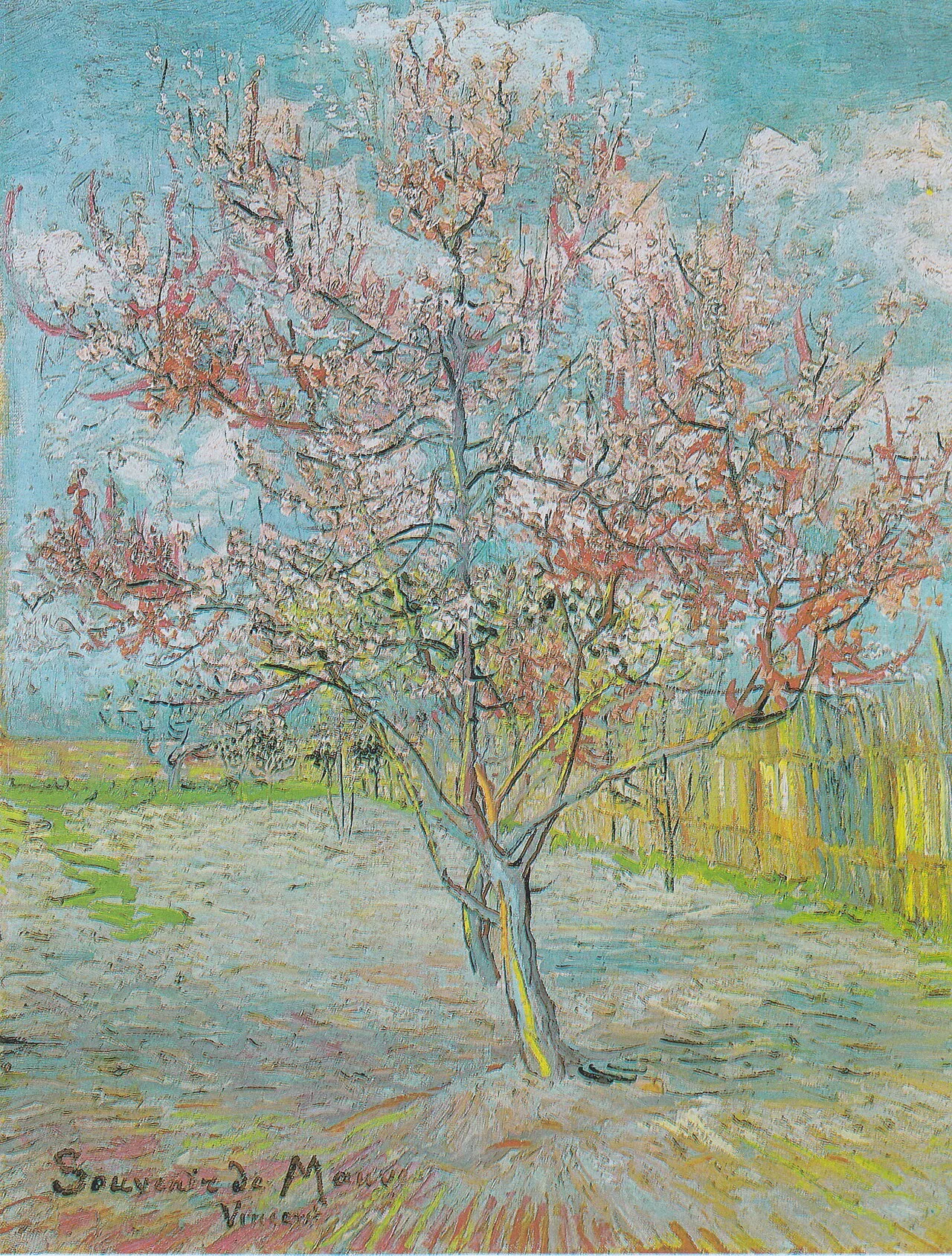
Flowering peach trees also Souvenir de Mauve, 1888 Kröller-Müller Museum
Almond Blossoms
Almond Blossoms is a group of several paintings of blossoming almond trees made in 1888 and 1890 by Vincent van Gogh in Arles and Saint-Rémy, southern France.
Provence Reimagined as the Japan of the South
Van Gogh interpreted the brilliant Provençal light not as traditional French scenery, but as an echo of Japanese visual aesthetics. He famously dubbed Arles 'the Japan of the South,' believing the intense southern sun would bleach away subtle details and flatten forms into bold outlines. This solar brilliance allowed him to replace delicate tonal gradations with striking pairs of complementary colors that vibrated against each other.
From Wikipedia · CC BY-SA 4.0
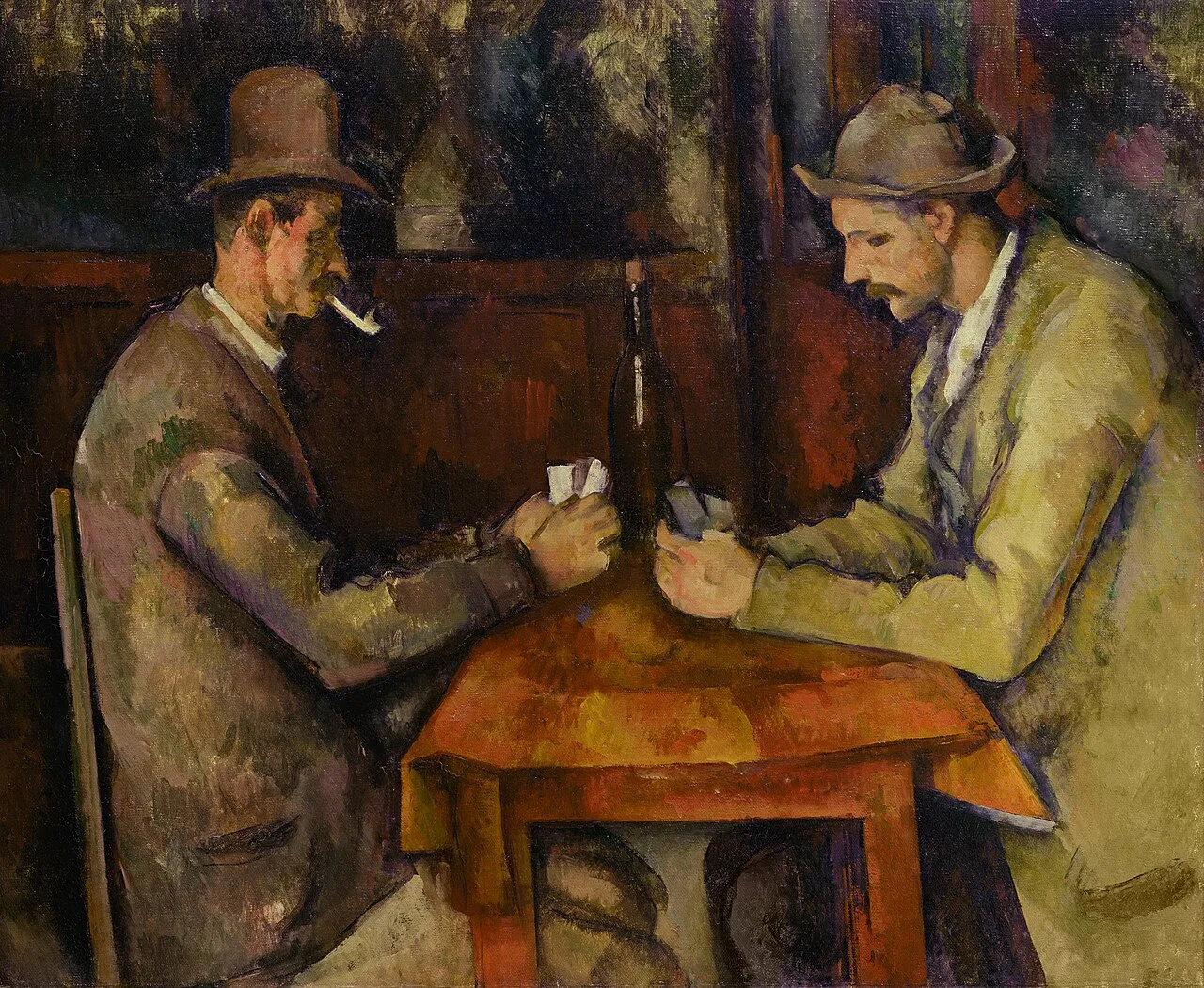
Les Joueurs de cartes, par Paul Cézanne
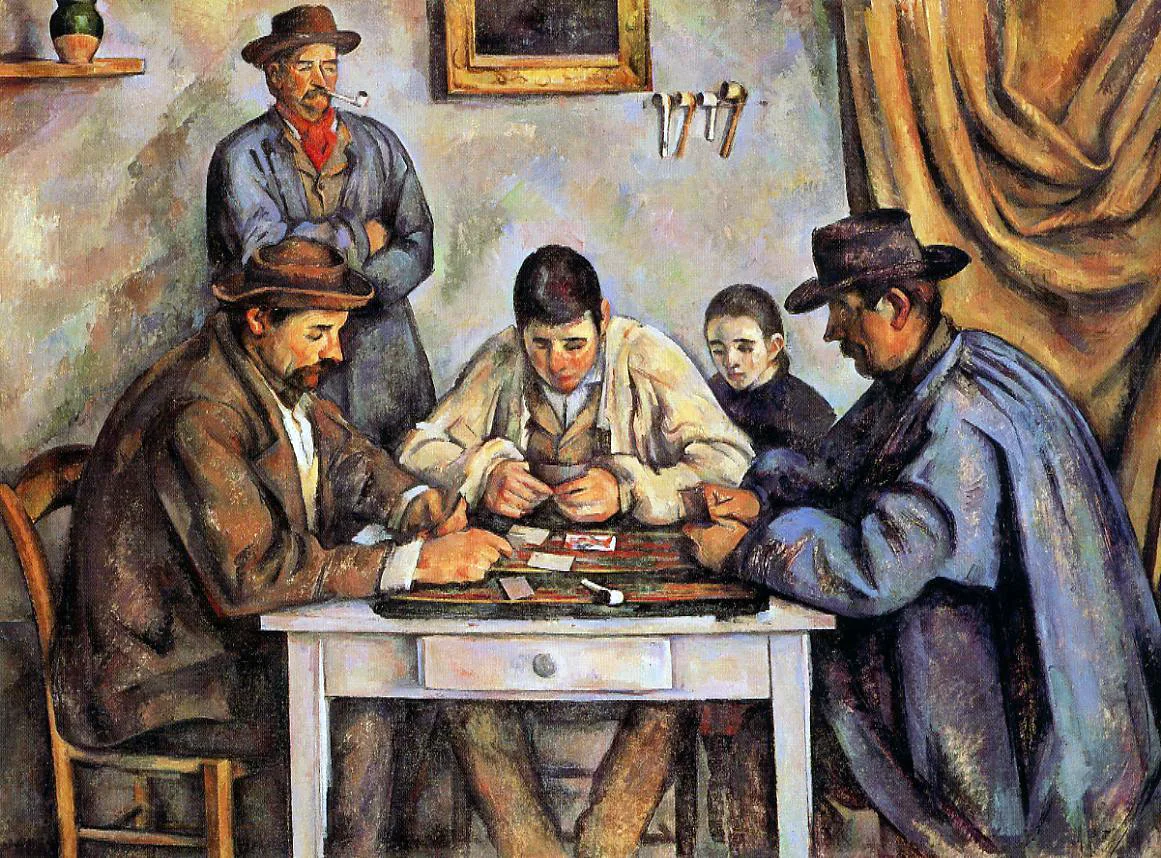
The Card Players, 1890–1892, Barnes Foundation, Philadelphia, Pennsylvania
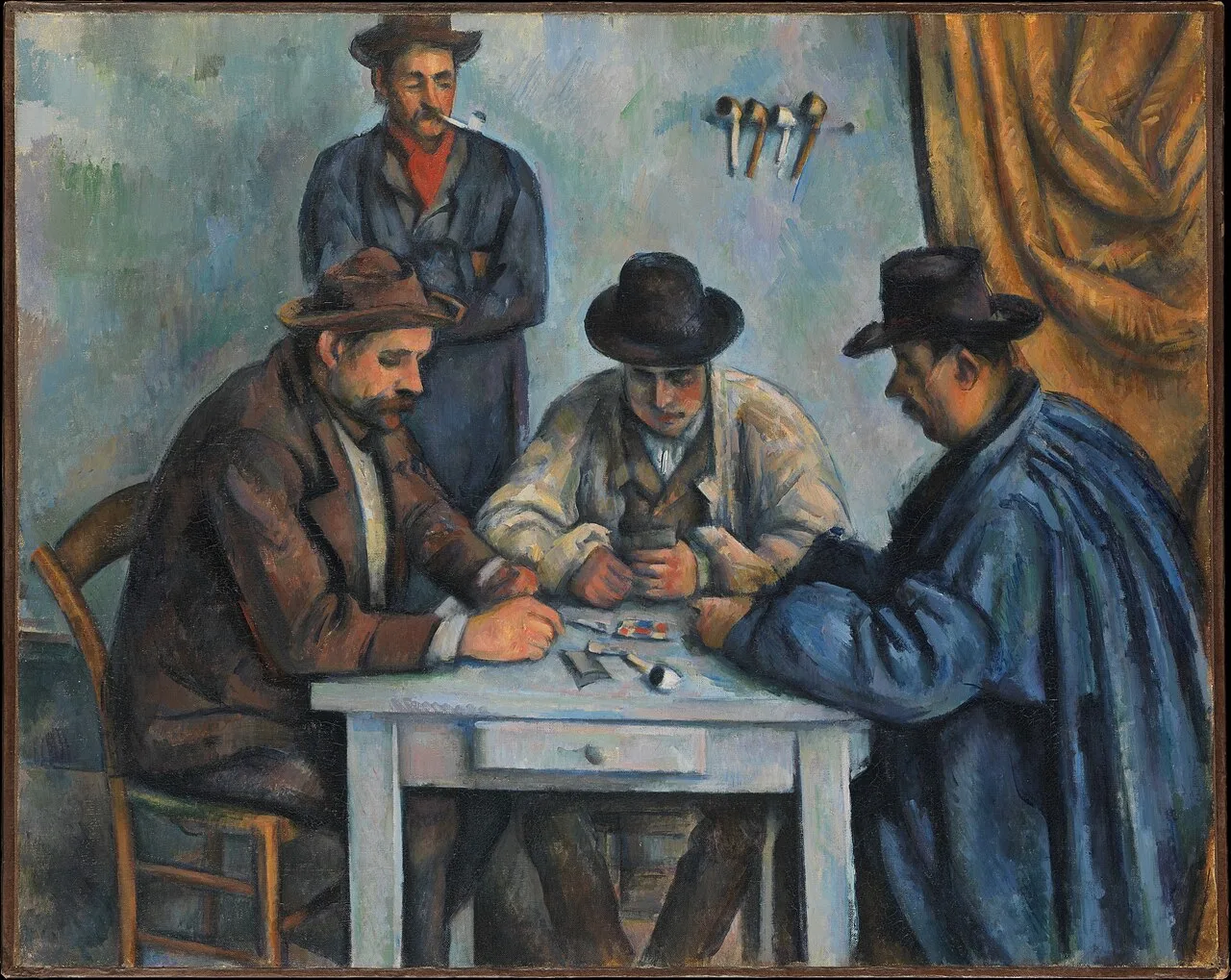
The Card Players, 1890–1892, Metropolitan Museum of Art, New York
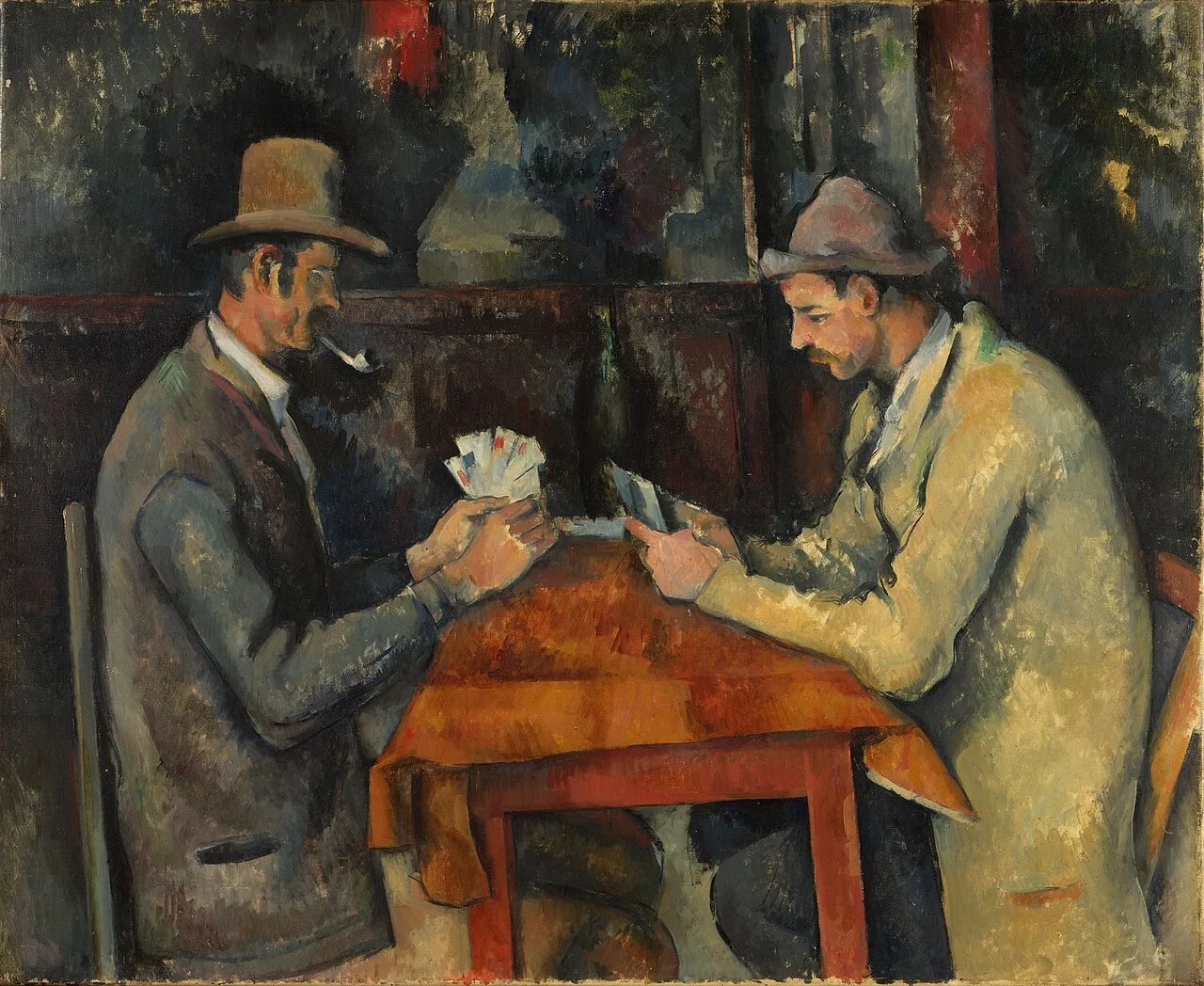
The Card Players 1892–1895, Oil on canvas, 60 x 73 cm, Courtauld Institute of Art, London
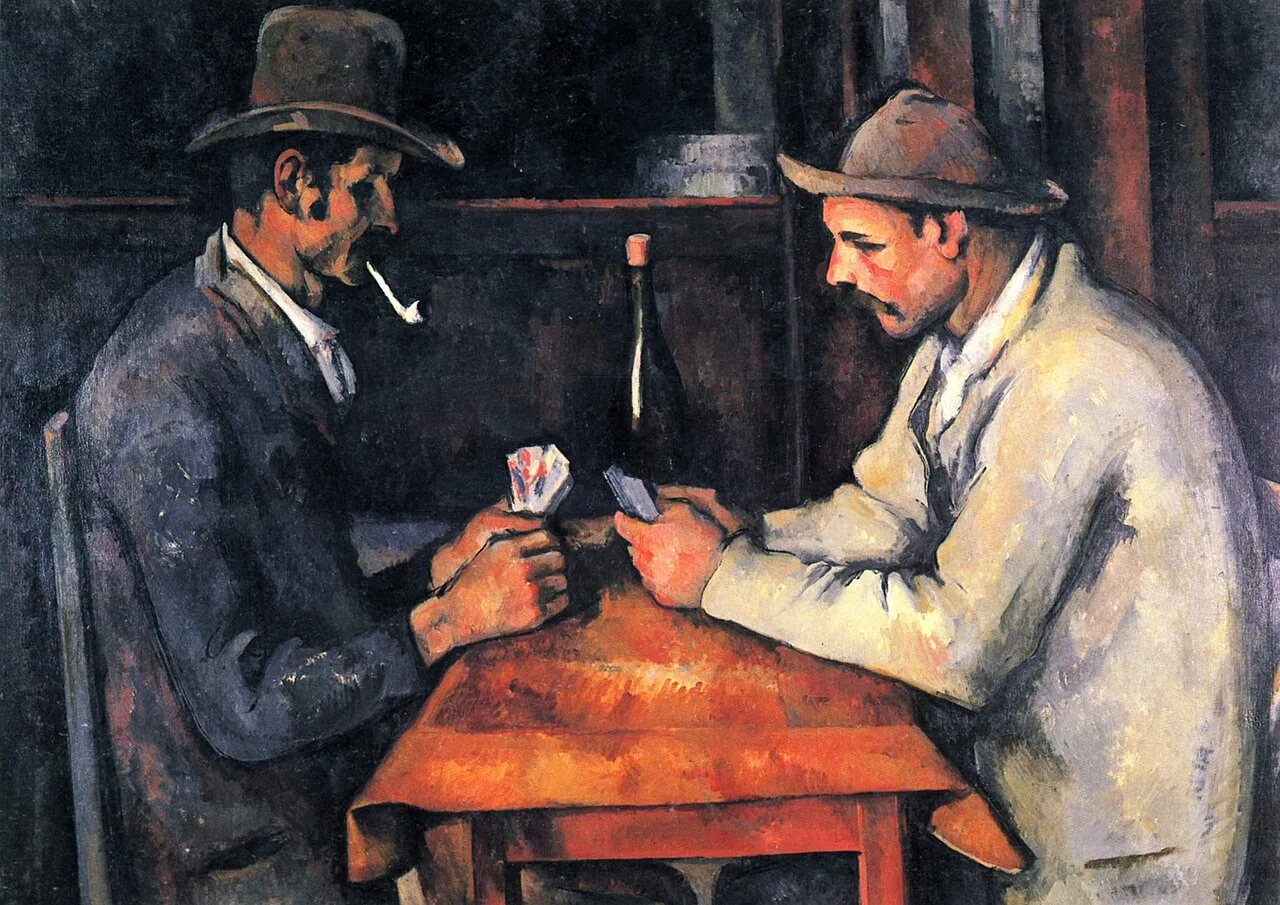
The Card Players 1892–93, Oil on canvas, 97 × 130 cm, Private collection

Man with a Pipe c. 1892, Oil on canvas, 73 x 60 cm, Courtauld Institute of Art, London
The Card Players
The Card Players is a series of five oil paintings by the French Post-Impressionist artist Paul Cézanne, painted during his final period in the early 1890s.
Draining Tavern Drama into Human Still Life
Cézanne radically transformed the traditional 17th-century genre painting motif of card games. Instead of depicting tavern brawls, alcohol, and high-stakes gambling, he portrayed stone-faced farmhands engaged in quiet, absorbed concentration. One art critic characterized these restrained scenes as "human still life," where cards served as the workers' primary form of social communication outside their daily labor.
From Wikipedia · CC BY-SA 4.0
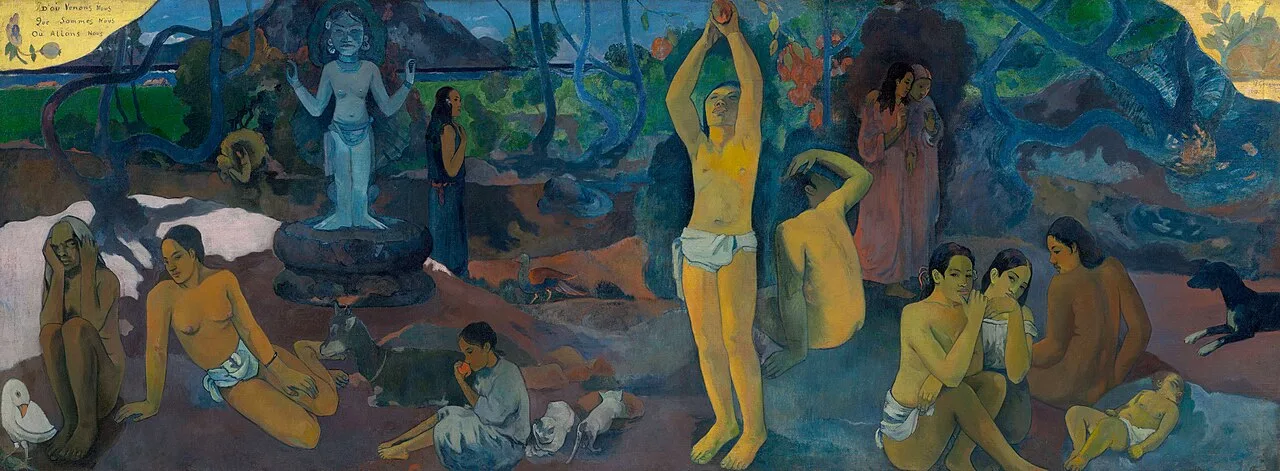
Gauguin - Where Do We Come From? What Are We? Where Are We Going? (1897-98)
![[6] Eve-like figure picking a fruit](https://upload.wikimedia.org/wikipedia/commons/b/ba/Gauguin_-_Apple_Picking.jpeg?utm_source=en.wikipedia.org&utm_campaign=imageinfo&utm_content=thumbnail_unscaled)
[6] Eve-like figure picking a fruit

Pierre Puvis de Chavannes's Inter artes et naturam
Where Do We Come From? What Are We? Where Are We Going?
Where Do We Come From? What Are We? Where Are We Going? (French: D'où venons-nous ?).
Echoes of an Orléans Catechism
Gauguin developed the painting's central questions from his childhood Catholic education in Orléans. Between eleven and sixteen, he studied liturgy under Bishop Félix-Antoine-Philibert Dupanloup at the Petit Séminaire de La Chapelle-Saint-Mesmin. Dupanloup's catechism asked where humanity comes from, where it is going, and how it proceeds. Although Gauguin grew into a vociferous anticlerical adult, these foundational questions remained lodged in his mind.
From Wikipedia · CC BY-SA 4.0
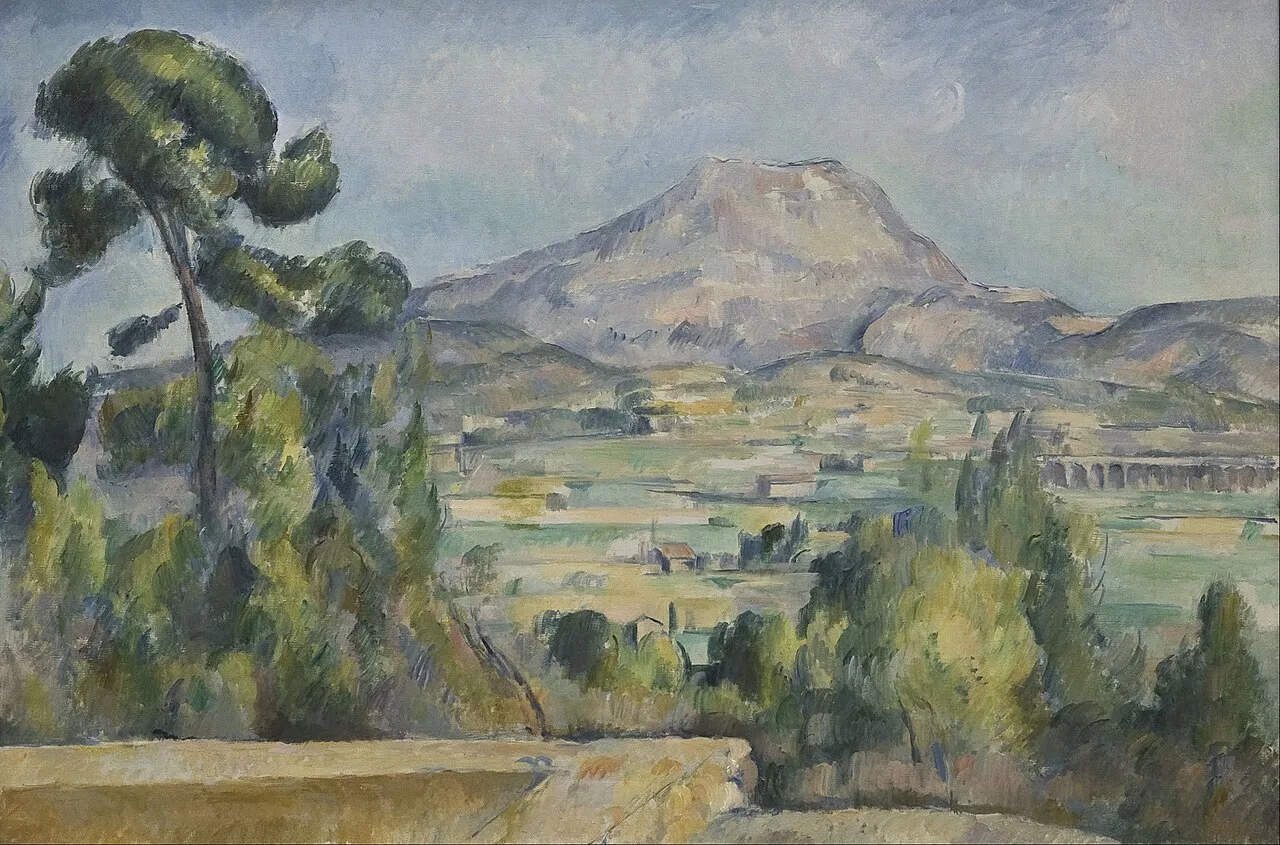
Paul Cézanne - Montagne Saint-victoire - Google Art Project
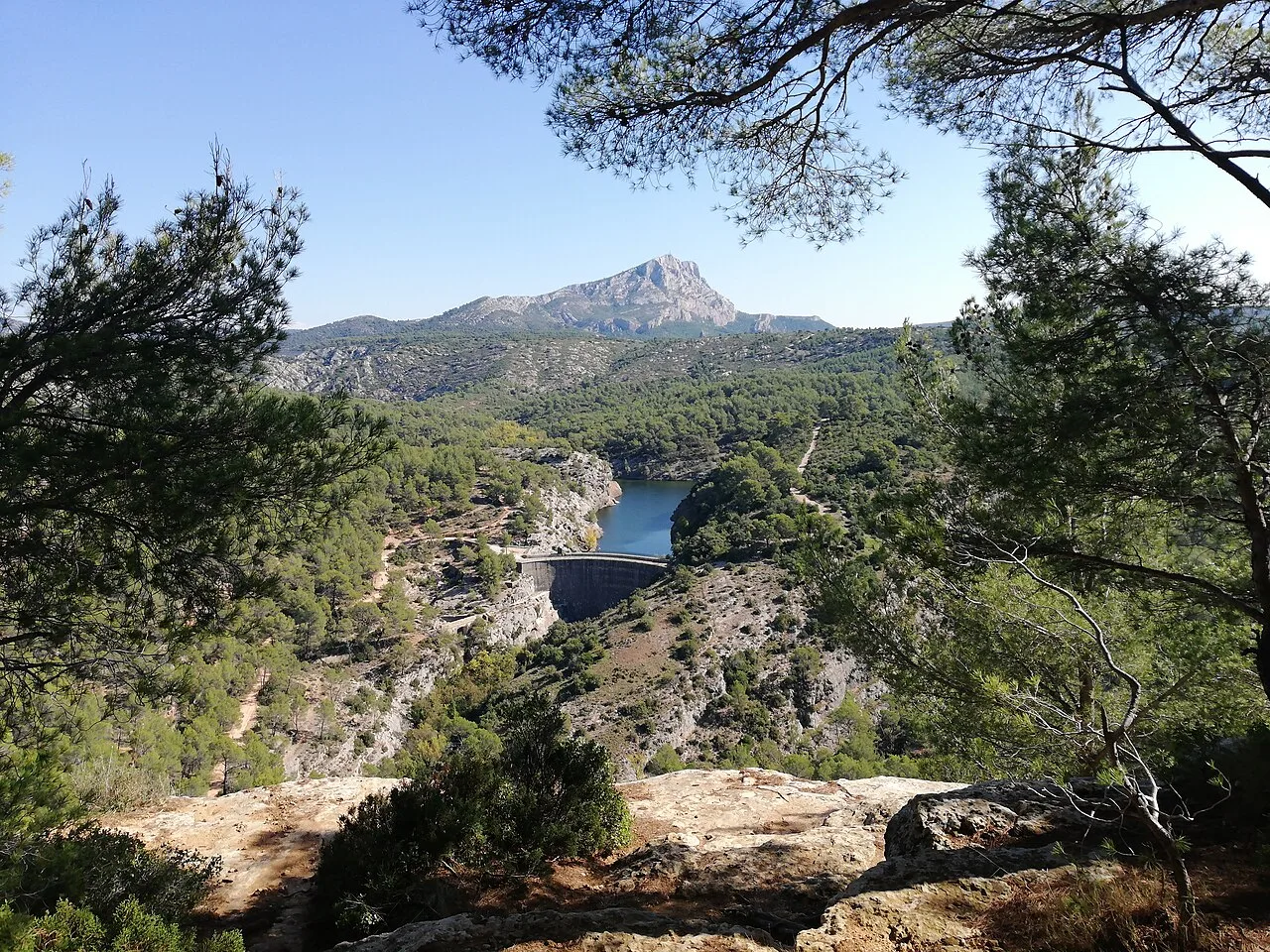
A picture of Montagne Sainte-Victoire
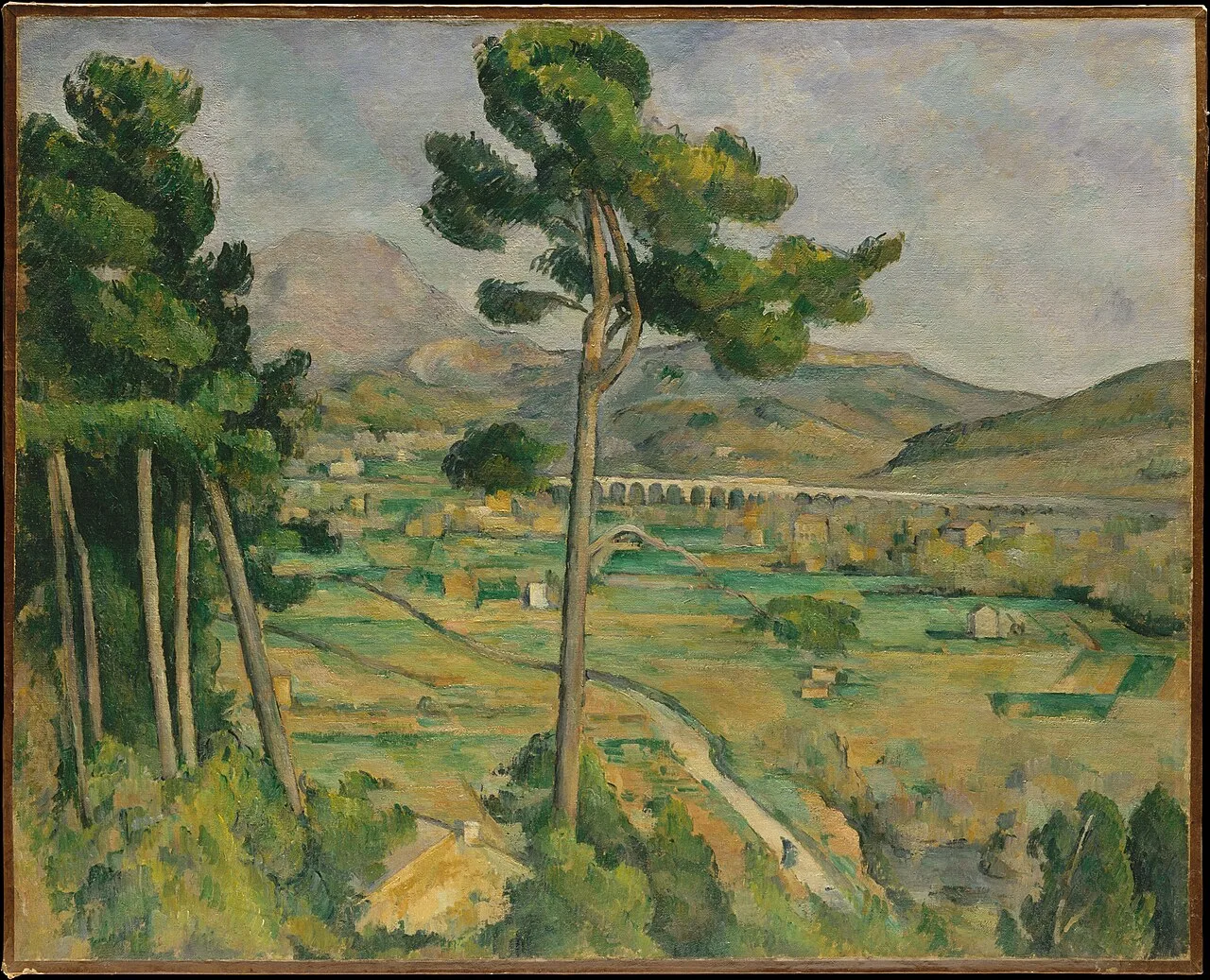
Mont Sainte-Victoire and the Viaduct of the Arc River Valley (1882–1885), Metropolitan Museum of Art
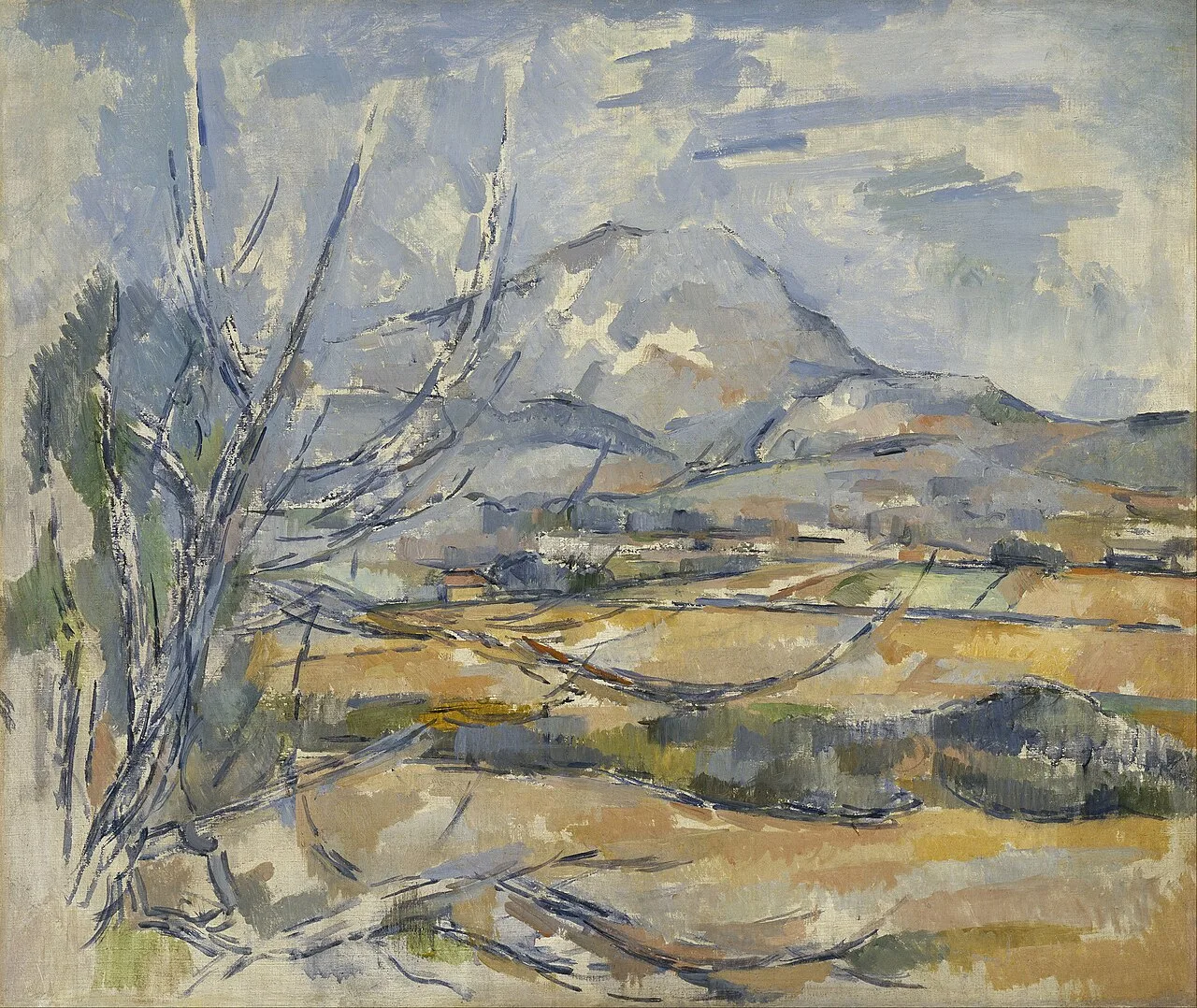
Montagne Sainte-Victoire, 1890, Scottish National Gallery

Mont Sainte-Victoire, 1904-1906, Princeton University Art Museum

Mont Sainte-Victoire, 1904-1906, Philadelphia Museum of Art
Mont Sainte-Victoire (Cézanne)
Mont Sainte-Victoire is a series of oil paintings by French artist Paul Cézanne, depicting the French mountain Montagne Sainte-Victoire in Provence.
A Modern Railway's Window View
A rapid transit innovation sparked one of post-impressionism's most dedicated landscape studies. Only half a year after the Aix–Marseille railway line opened on October 15, 1877, Cézanne wrote to his friend Émile Zola on April 14, 1878, praising the mountain seen from the train as a "beau motif." At the age of thirty-nine, he began the series, frequently featuring the railway bridge crossing the Arc River Valley in his compositions.
From Wikipedia · CC BY-SA 4.0
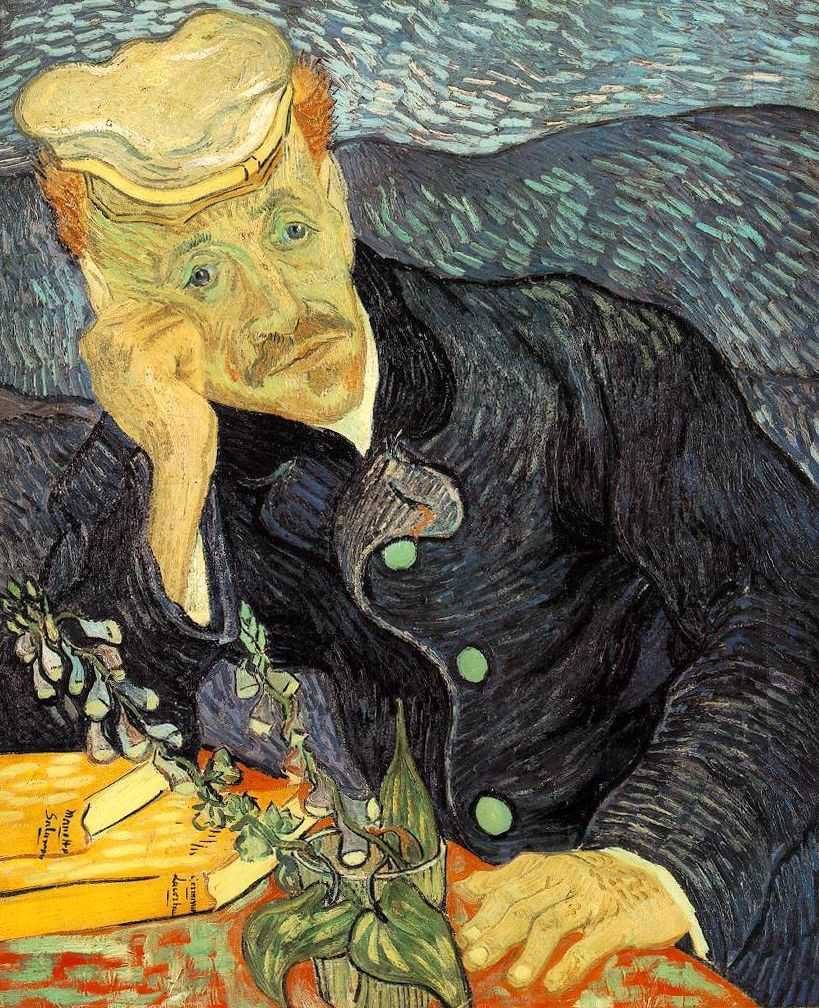
Portrait of Dr. Gachet
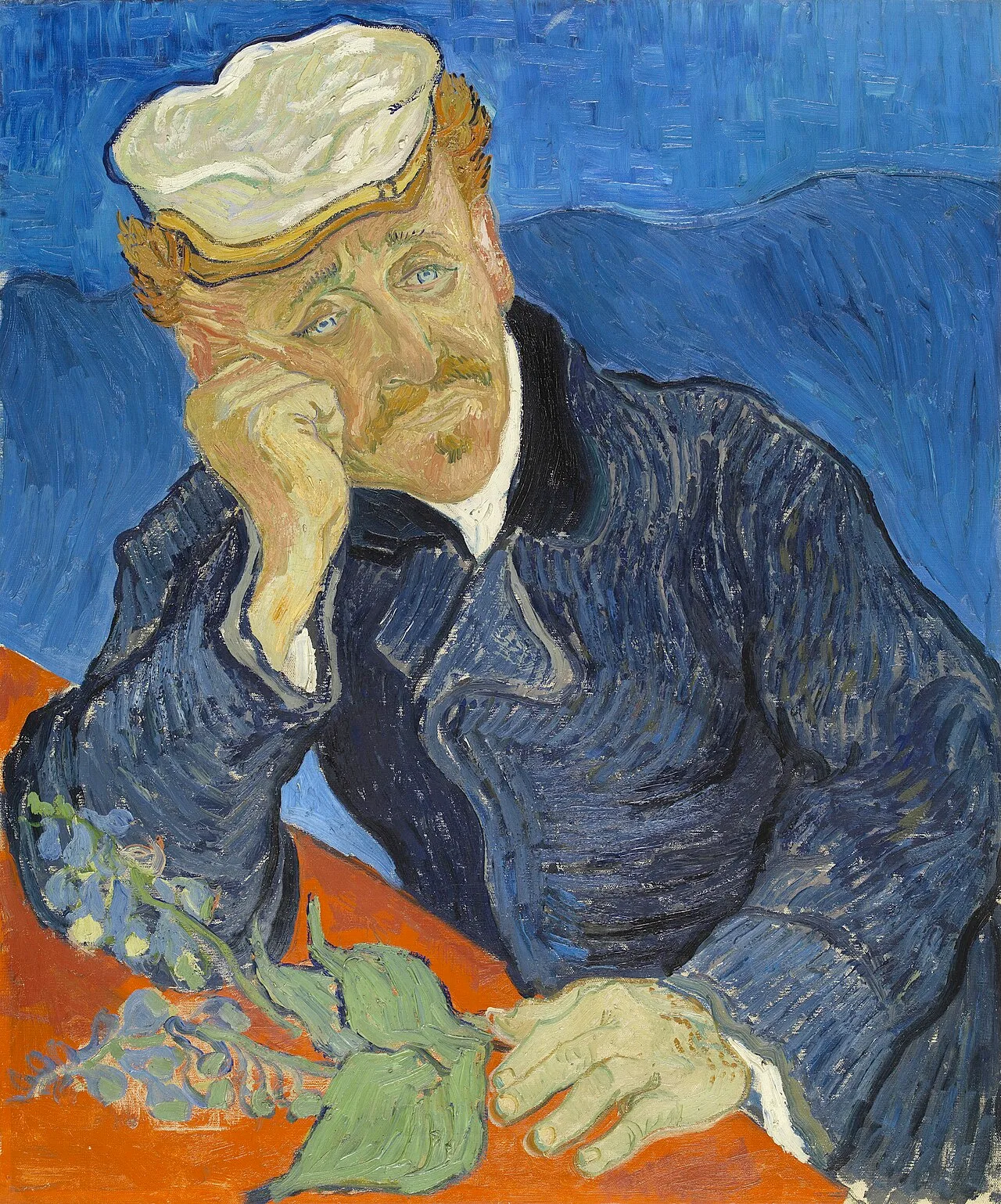
Vincent van Gogh - Dr Paul Gachet - Google Art Project
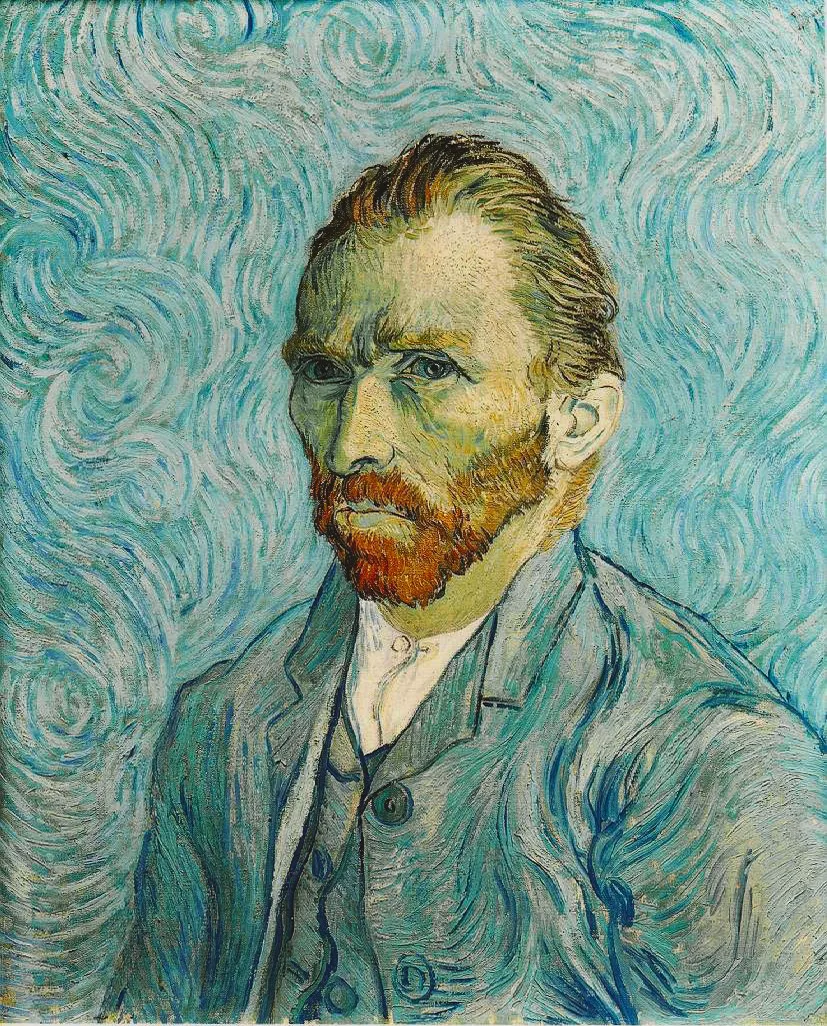
Van Gogh Self-portrait
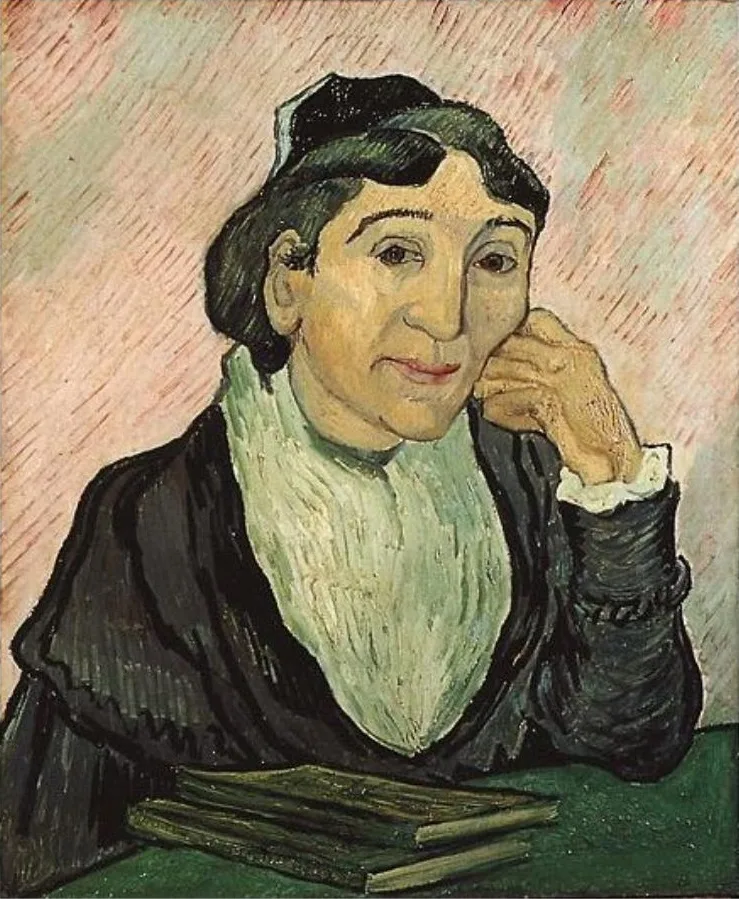
L'Arlesienne (Madame Ginoux)

Portrait of Dr Gachet with Pipe, May 1890 etching, 18 cm × 15 cm (Van Gogh's only etching)
Portrait of Dr. Gachet
The Portrait of Doctor Gachet is one of the most revered paintings by the Dutch artist Vincent van Gogh, depicting Dr. Paul Gachet, a homeopathic doctor and artist with whom van Gogh resided.
Hostility to Brotherhood in Forty-Eight Hours
Vincent van Gogh initially doubted Dr. Paul Gachet's ability to help him. Writing to Theo, he warned that the doctor was just as sick as himself, likening their interaction to blind men falling into a ditch. Two days later, this skepticism dissolved when he wrote to their sister Wilhelmina. Van Gogh declared that he had found a true friend who resembled him both physically and mentally.
From Wikipedia · CC BY-SA 4.0