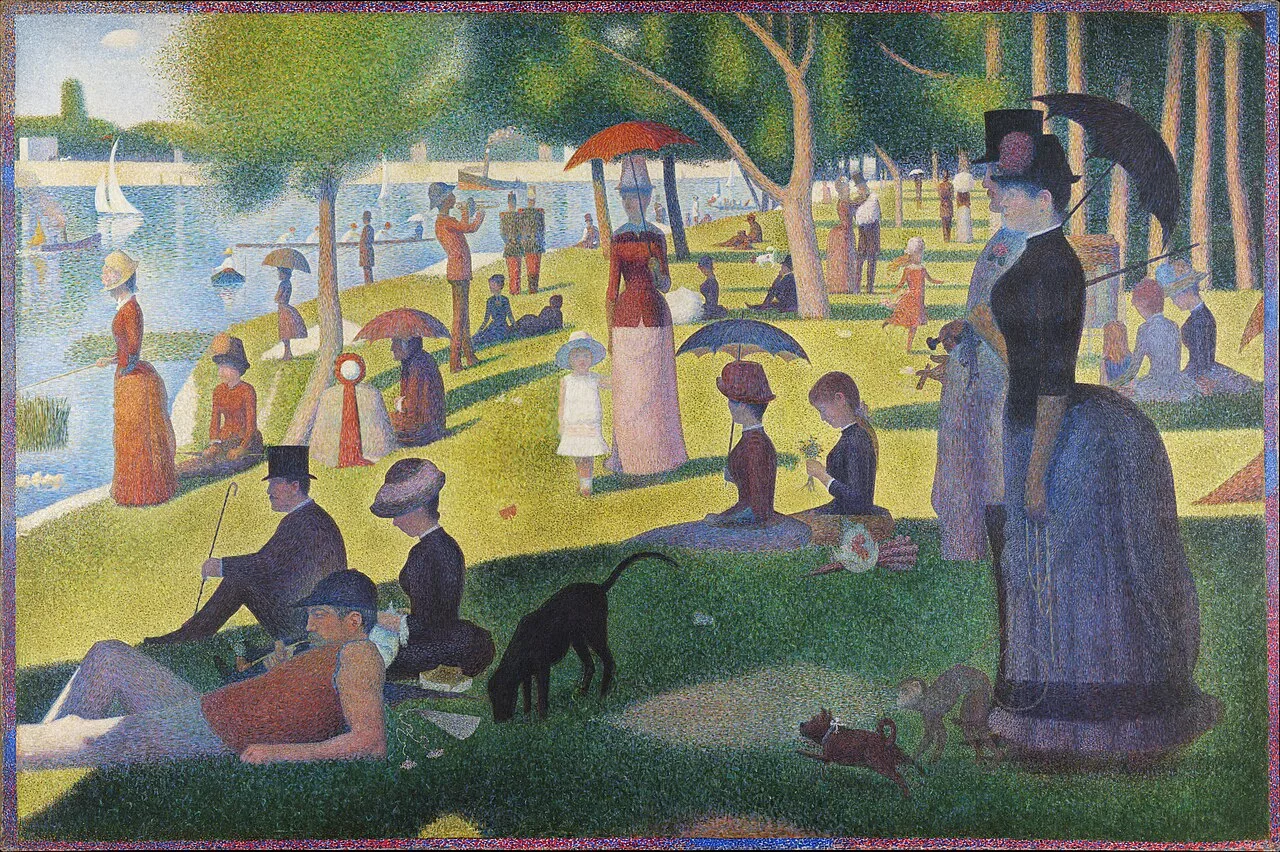
A Sunday on La Grande Jatte, Georges Seurat, 1884
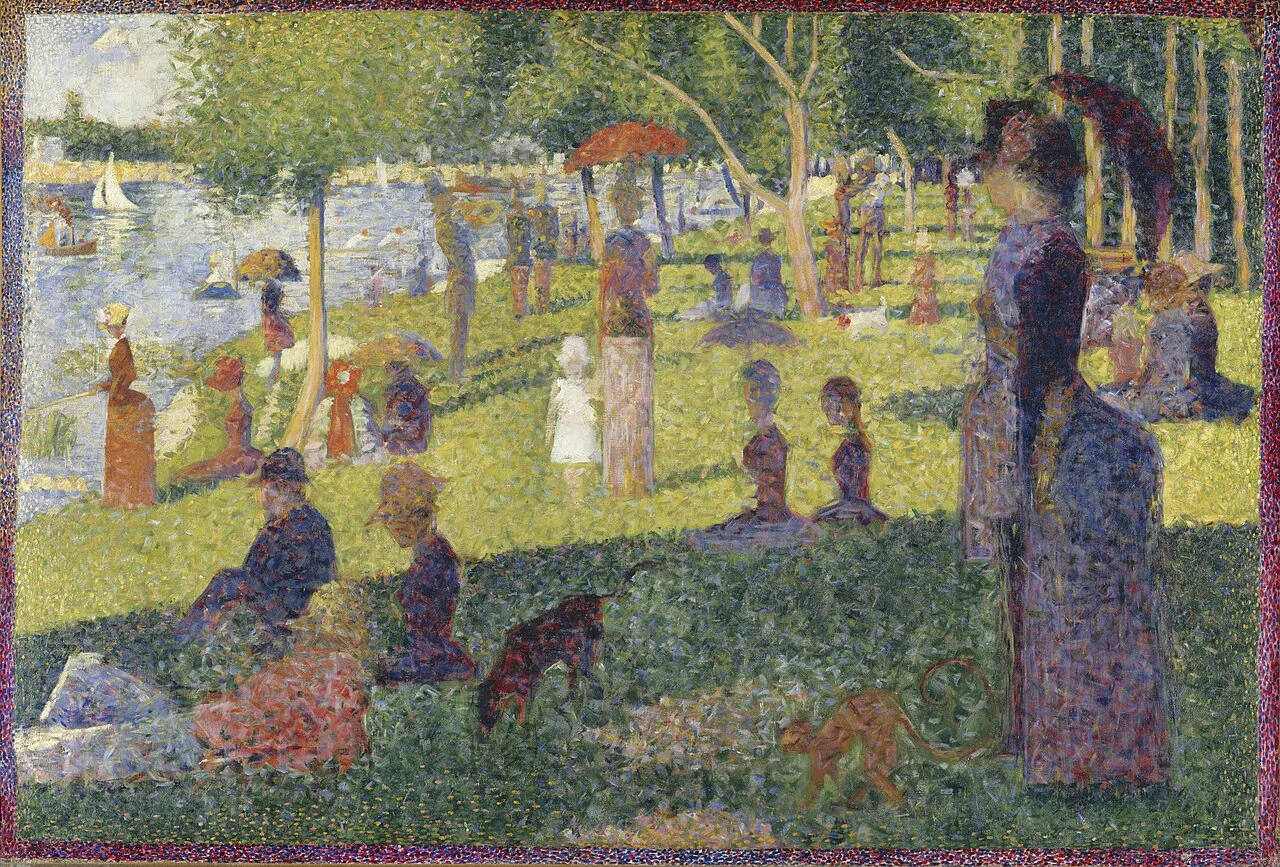
Georges Seurat, Study for "A Sunday Afternoon on La Grande Jatte", 1884, oil on canvas, 70.5 x 104.1 cm, Metropolitan Museum of Art, New York
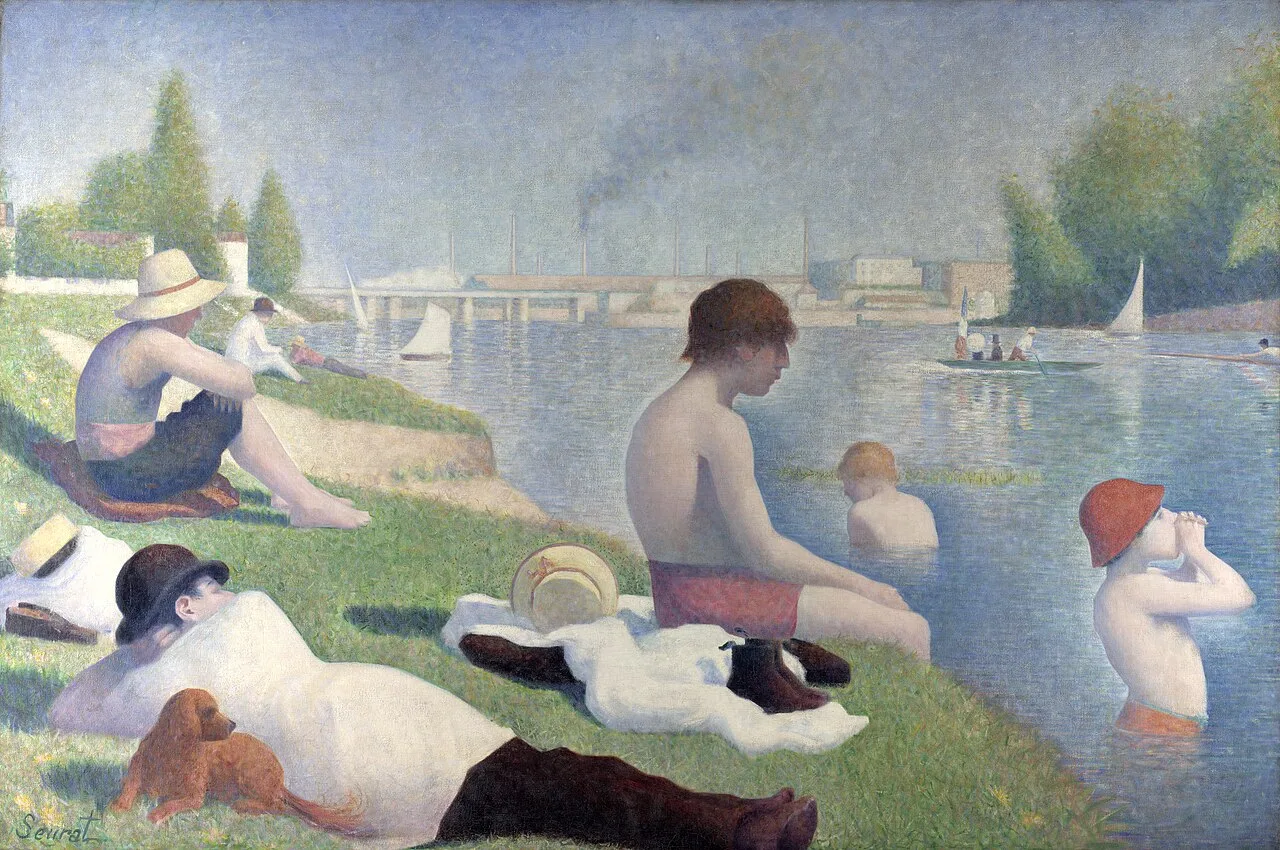
The left bank of working class Bathers at Asnières (1884) also by Seurat, mirrors the right bank of the bourgeoisie on La Grande Jatte.
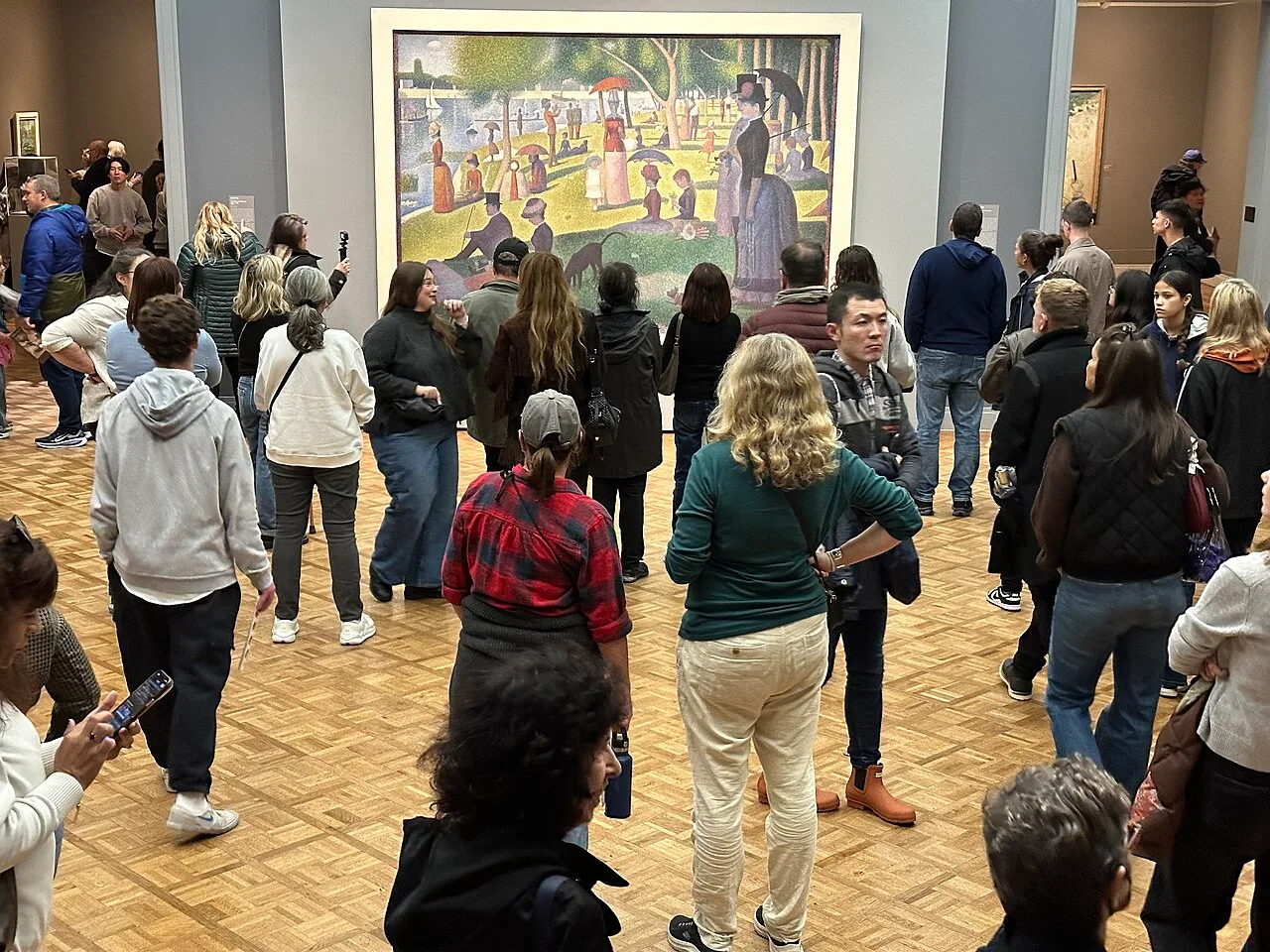
One of the most popular works at the Art Institute of Chicago, here with a semicircle of viewers in 2025

Die Insel La Grande Jatte mit Ausflüglern, 1884

Groupe de personnages, 1884–85
A Sunday Afternoon on the Island of La Grande Jatte
A Sunday Afternoon on the Island of La Grande Jatte is Georges Seurat's most famous work, recognized as a leading example of pointillist technique and a founding work of the neo-impressionist movement.
Optical Blending and Retinal Illusion
Seurat applied contemporary scientific color theory by adapting the research of Michel Eugène Chevreul and Ogden Rood. Rather than physically mixing paints on a palette, he applied miniature dots of pure pigment across the canvas. When unified optically in the human eye, these contrasting dots are perceived as a single hue. He believed this technique would produce colors far more brilliant than traditional brushwork.
From Wikipedia · CC BY-SA 4.0
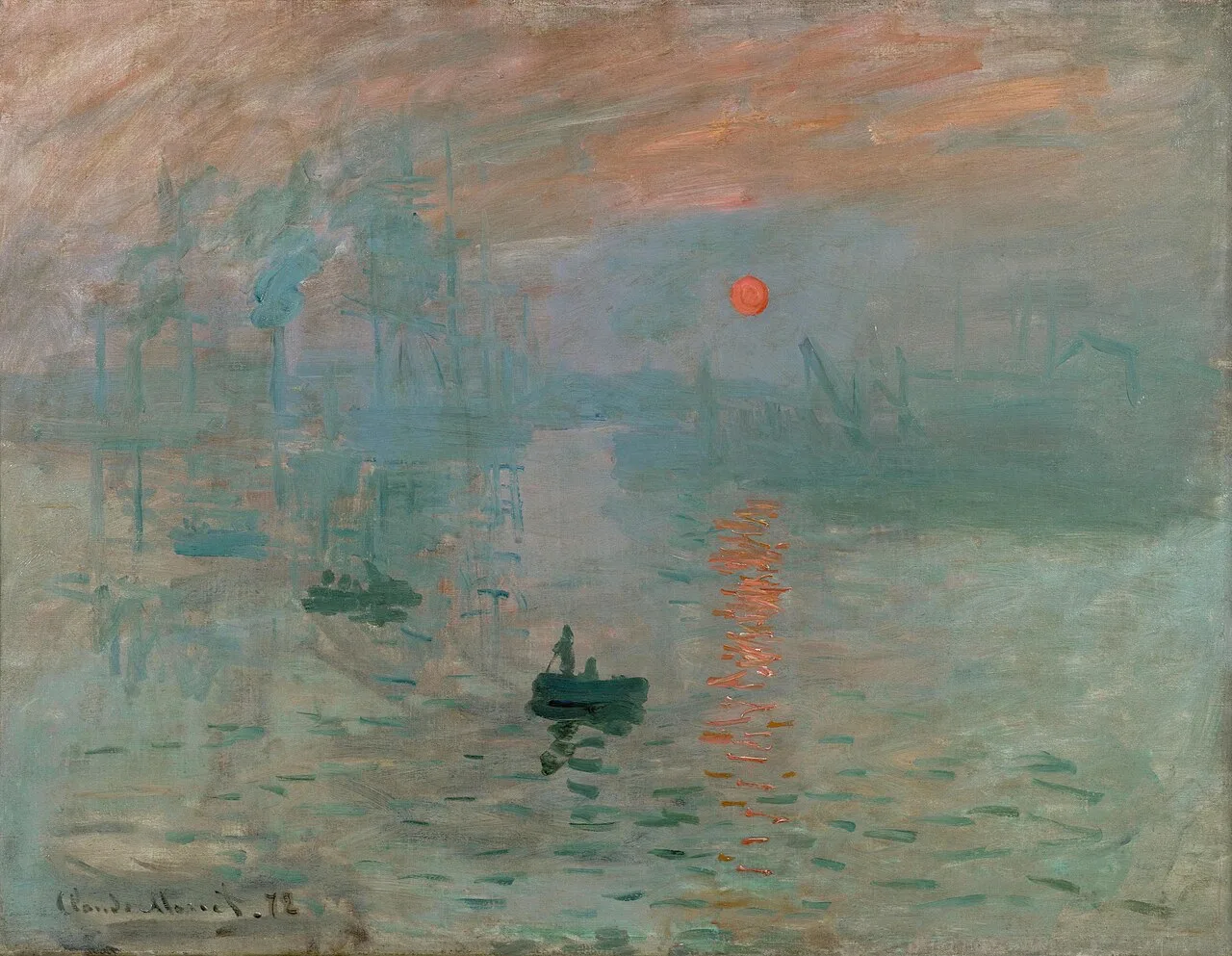
Monet - Impression, Sunrise
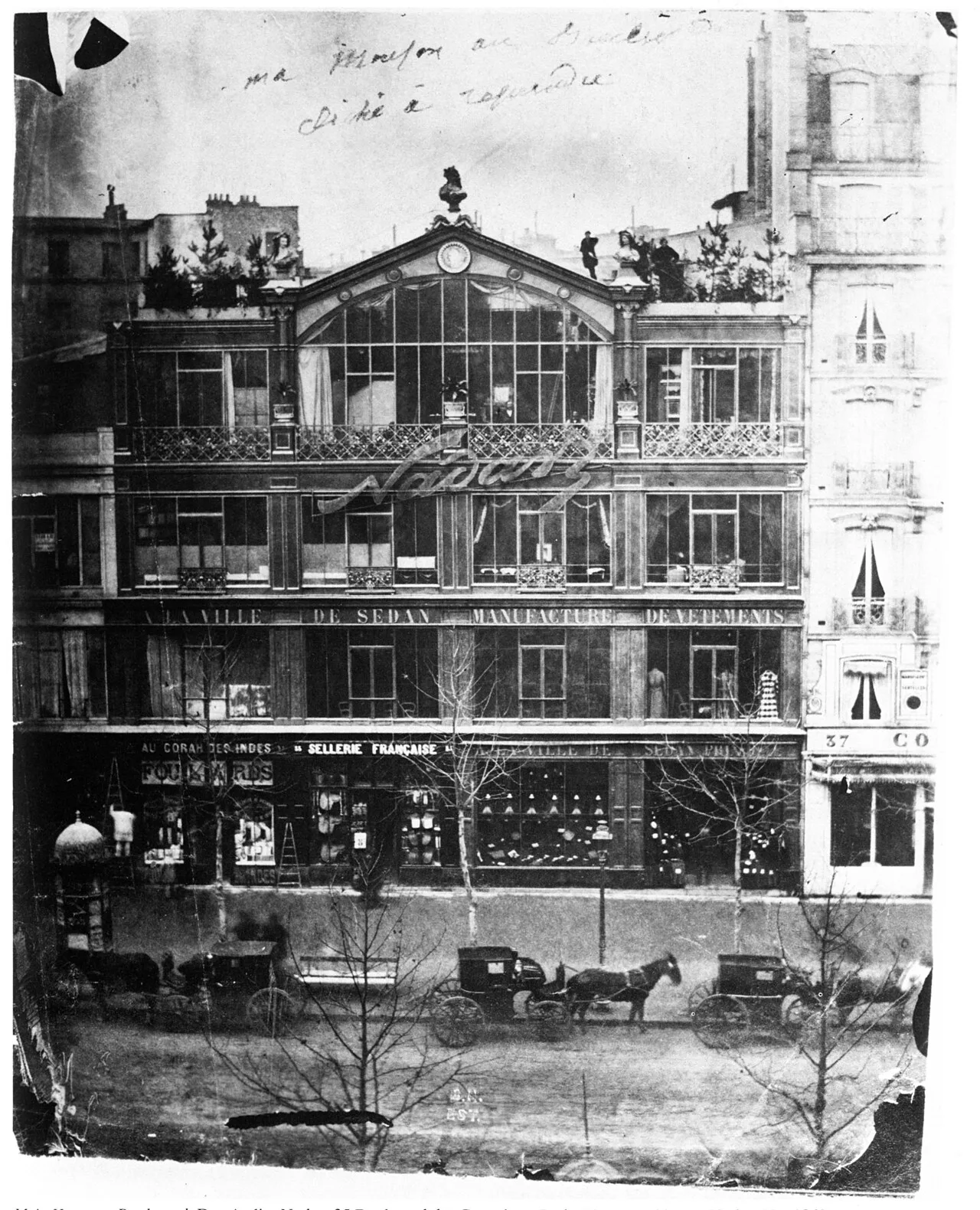
The home of photographer Nadar, where the 1874 exhibition took place
![Desaturated version of the painting: the Sun is virtually invisible.[12]](https://nwjvzop1xgplmzvt.public.blob.vercel-storage.com/wikifeed/impression-sunrise/2-ac938cfd21.webp)
Desaturated version of the painting: the Sun is virtually invisible.[12]
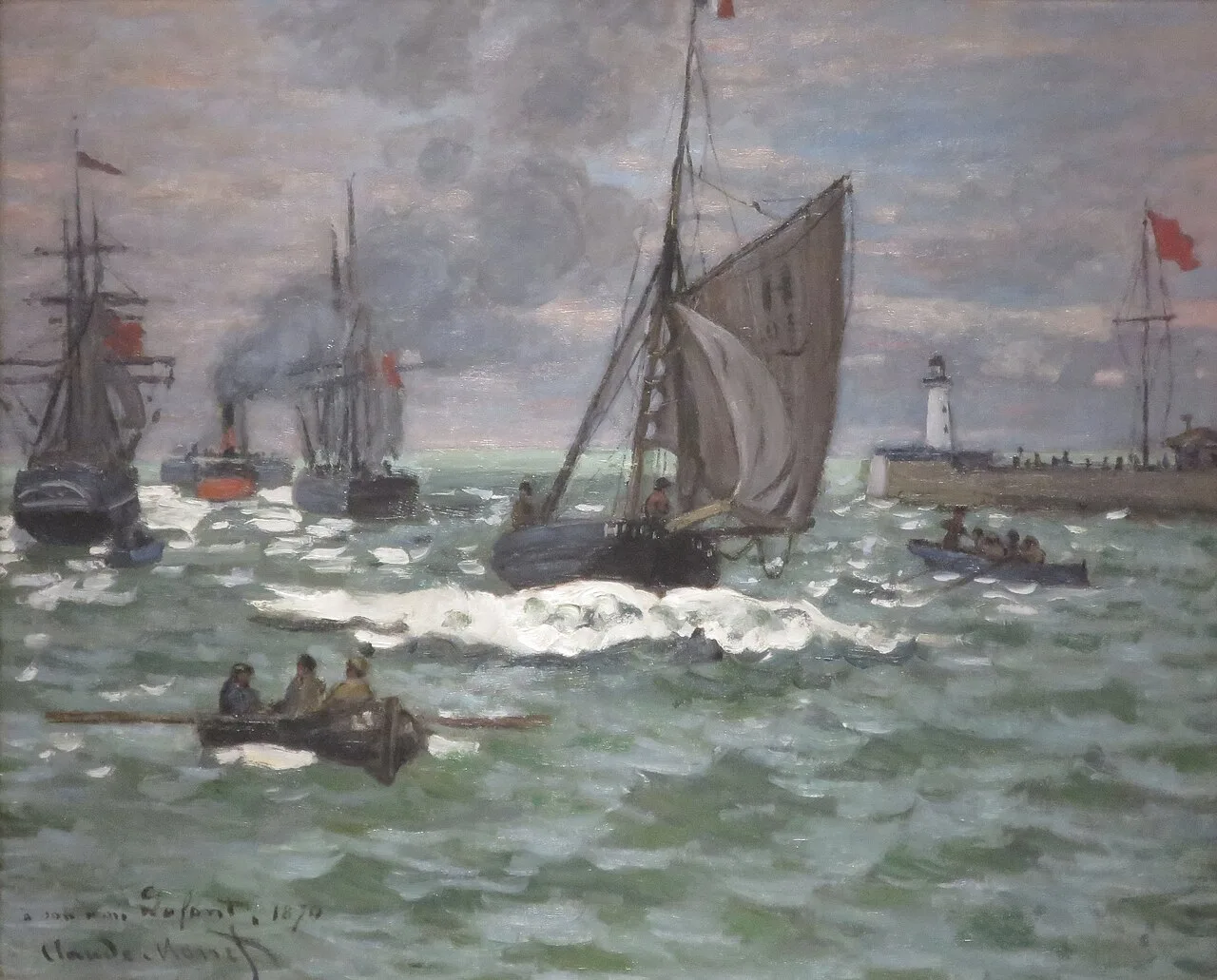
The Entrance to the Port of Le Havre 1870
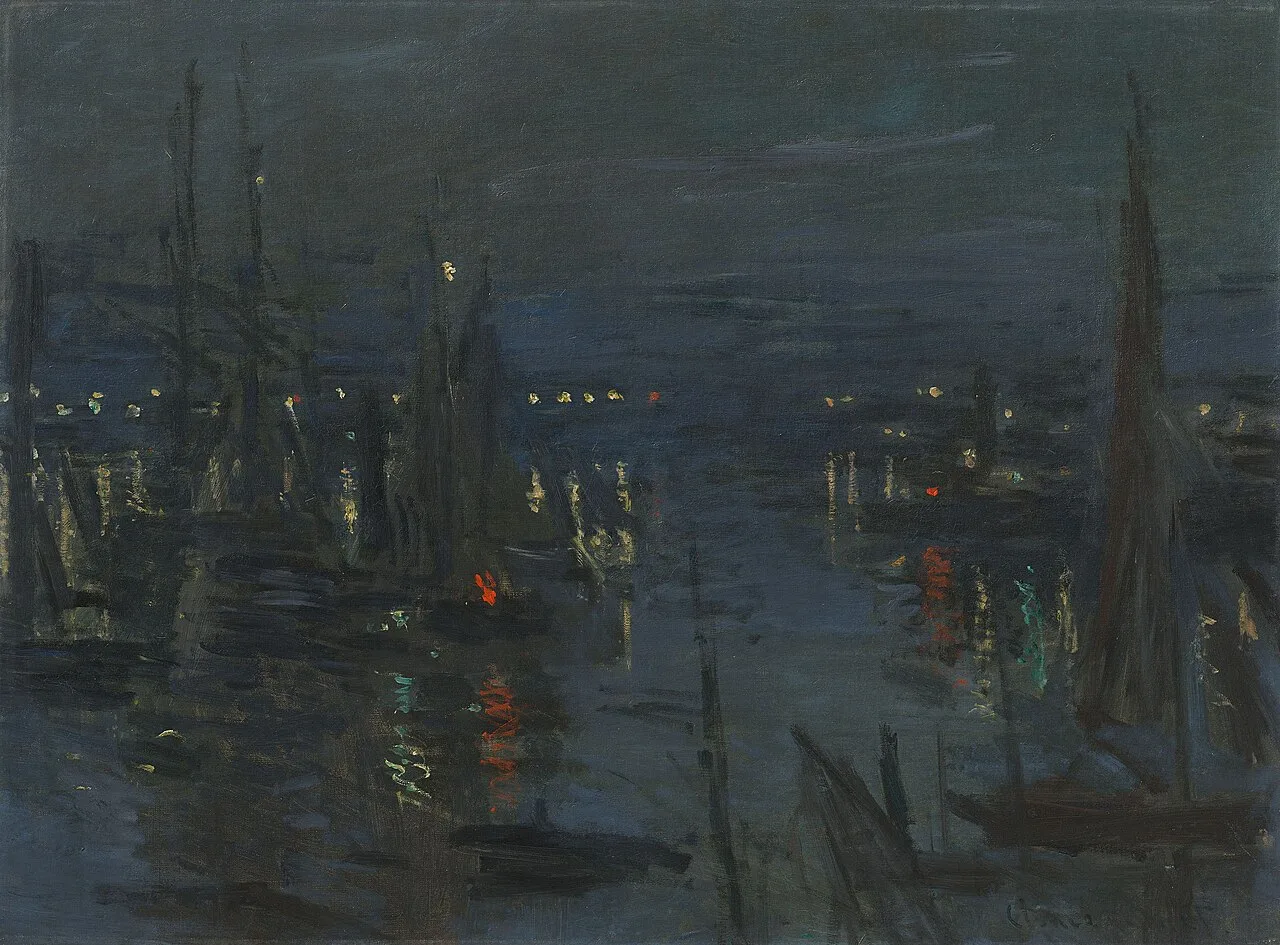
The Port of Le Havre, Night Effect 1873

Le Havre, Bâteaux de Peche Sortant du Port 1874
Impression, Sunrise
Impression, Sunrise is an 1872 painting by Claude Monet depicting the port of Le Havre, credited with inspiring the name of the Impressionist movement.
An Improvised Title to Deflect Criticism
Monet explained that he named the piece Impression because its hazy style could not pass as a true view of Le Havre. Art historian Paul Smith argues that Monet chose this designation to excuse the painting from anticipated accusations of being unfinished or lacking descriptive detail. Although Monet received criticism regardless of the name, the improvised label quickly came to encapsulate the entire artistic movement.
From Wikipedia · CC BY-SA 4.0
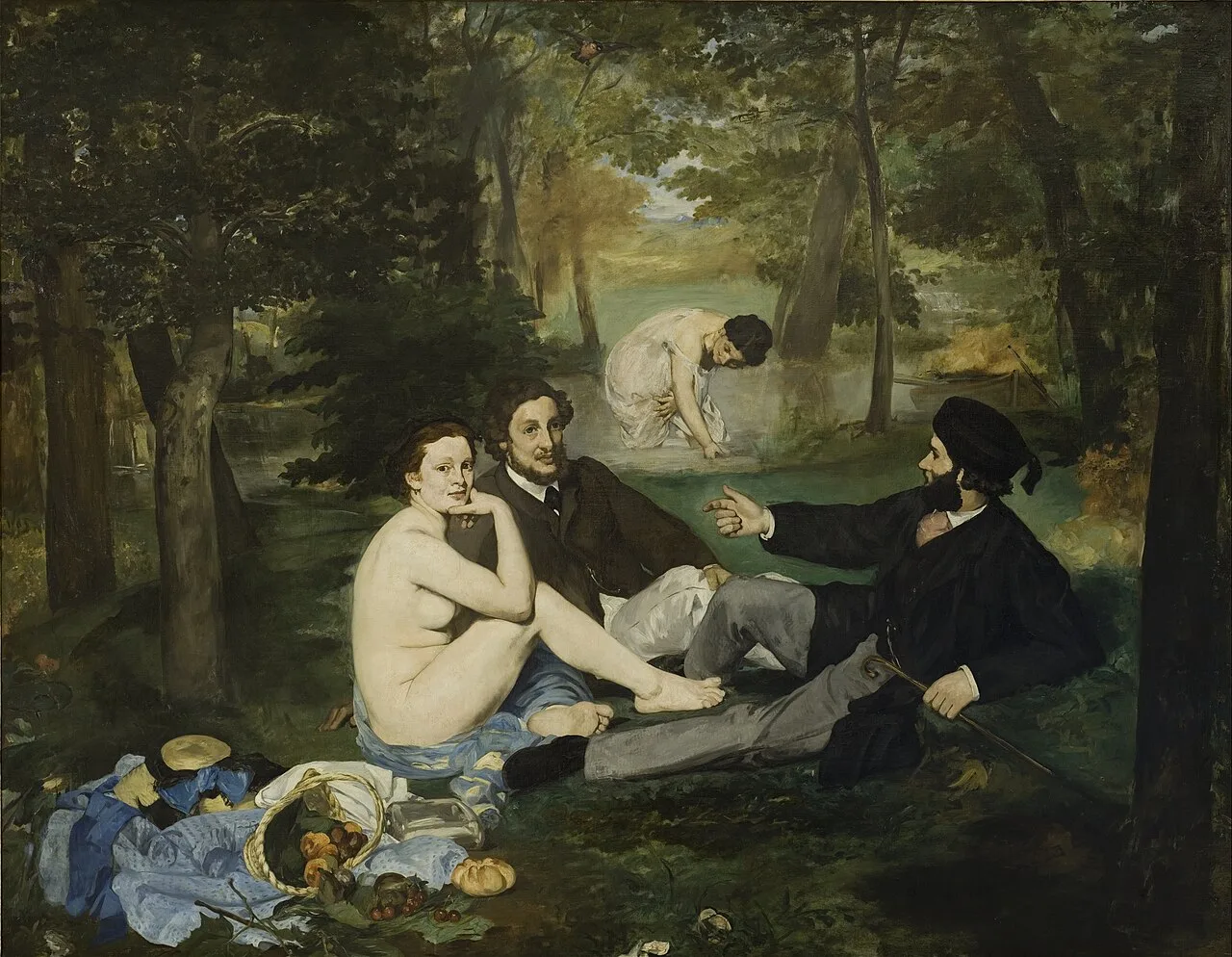
Edouard Manet - Luncheon on the Grass - Google Art Project
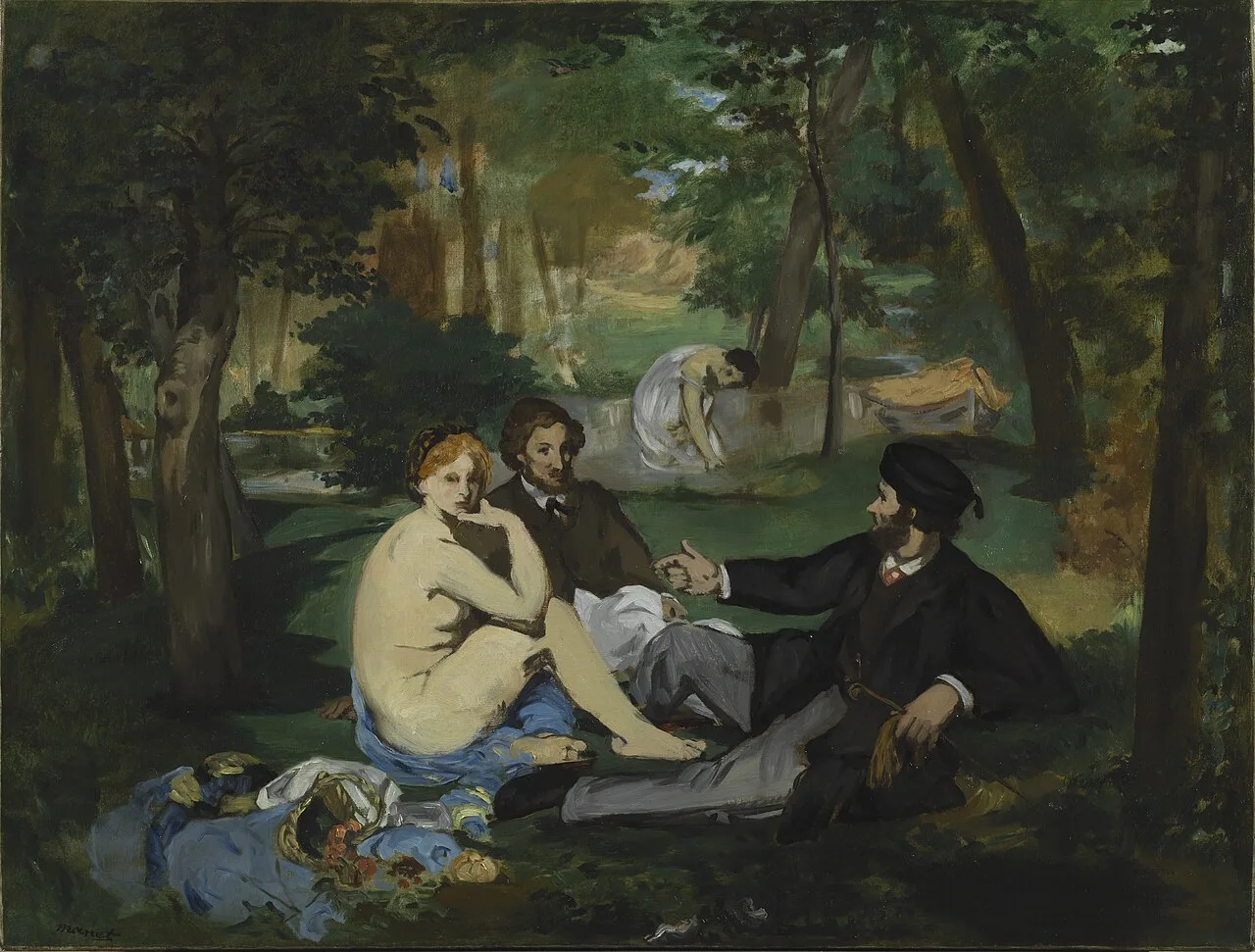
Édouard Manet – Déjeuner sur l'herbe (earlier version at the Courtauld)
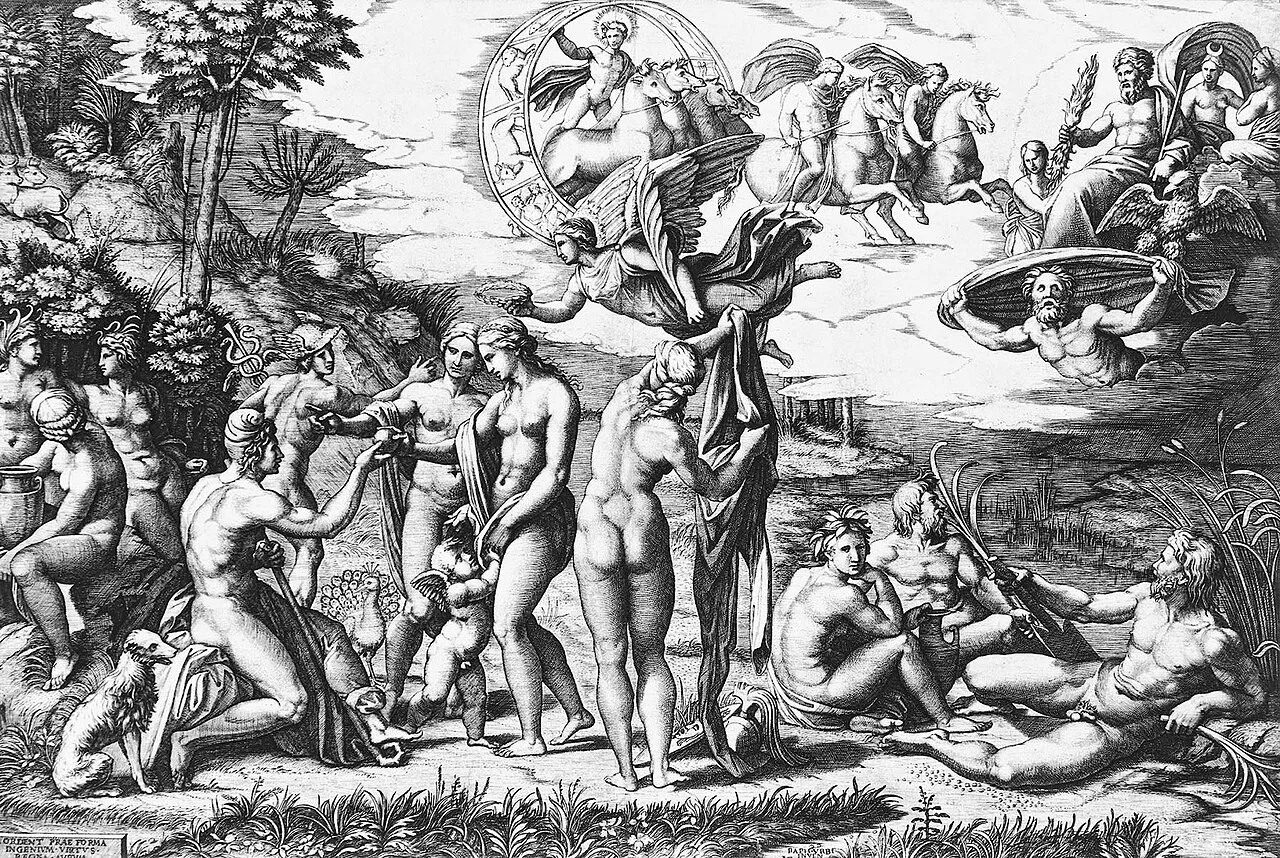
Judgement of Paris Engraving (c. 1515) by Marcantonio Raimondi to a design by Raphael
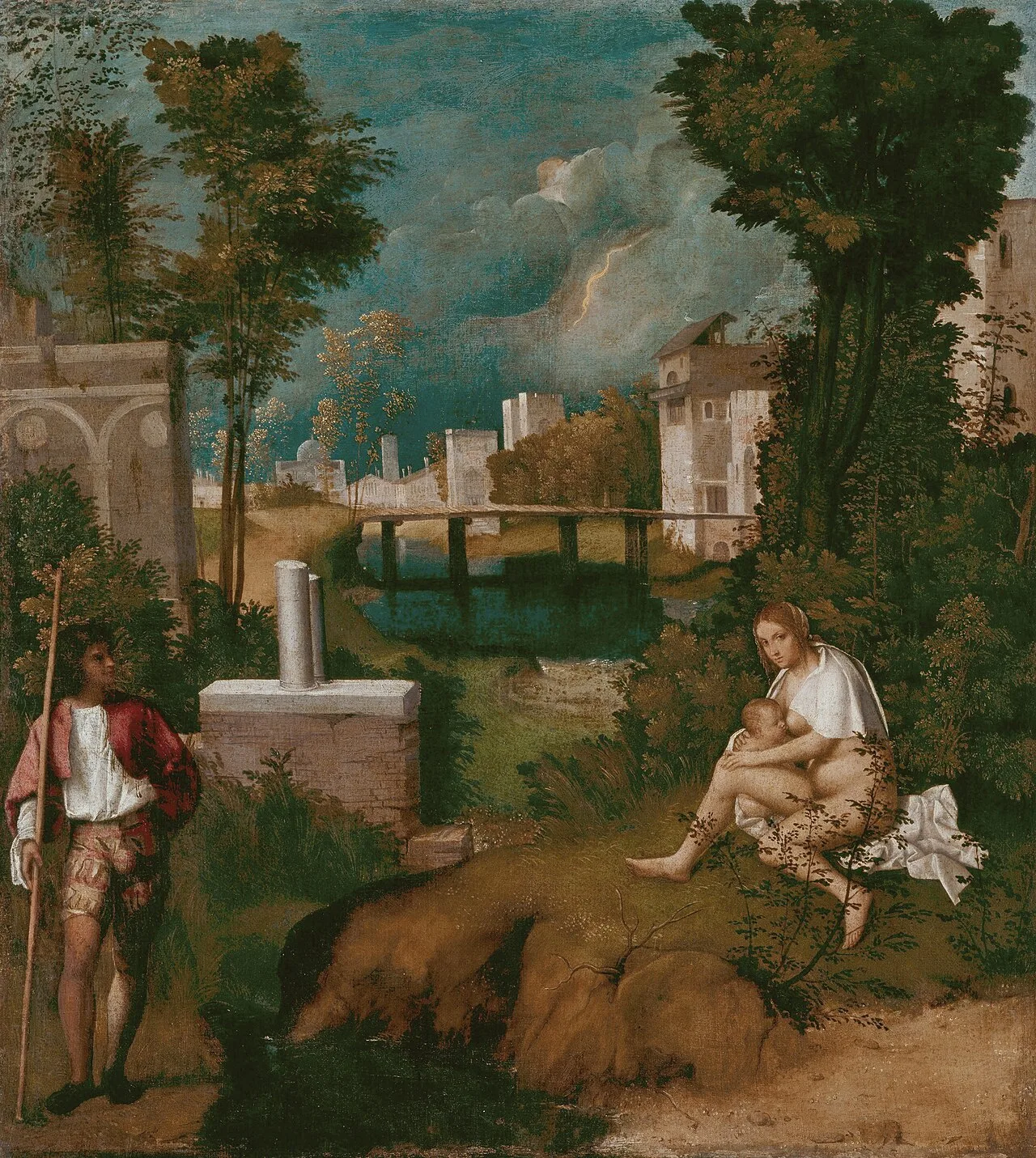
Giorgione, The Tempest (c. 1508), Gallerie dell'Accademia, Venice, Italy

James Tissot, La Partie Carrée, 1870

Paul Cézanne, Le Déjeuner sur l'herbe, 1876–1877, Musée de l'Orangerie
Le Déjeuner sur l'herbe
Le Déjeuner sur l'herbe is a large oil on canvas painting by Édouard Manet created in 1862 and 1863, depicting a picnic with two dressed men, a nude woman, and a bather in a rural setting.
Ancient Sarcophagi Behind Modern Scandal
While Manet's work scandalized Parisian society as a shocking rupture, its core figurative arrangement was inherited directly from classical antiquity. Art historian Gustav Pauli in 1908 demonstrated how the poses mirror Raphael's lost Judgement of Paris engraving by Marcantonio Raimondi. This Renaissance design itself traces back to second-century Roman sarcophagi preserved at Villa Medici and Villa Doria Pamphilj. Rather than creating from scratch, Manet operated as a steward of classical tradition.
From Wikipedia · CC BY-SA 4.0
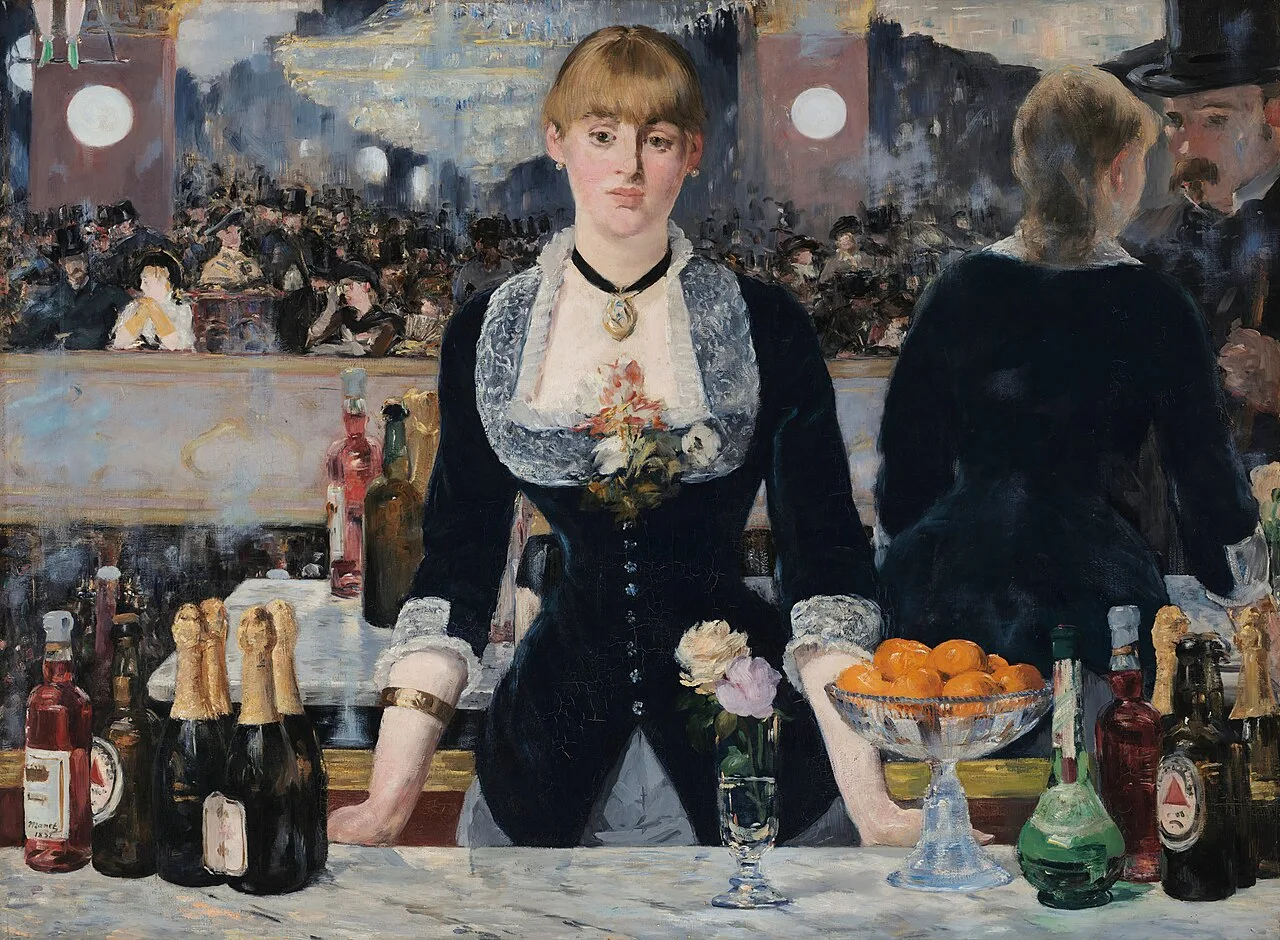
"Un Bar aux Folies-Bergère" by Édouard Manet (1882)

Study for A Bar at the Folies-Bergère (1881)
A Bar at the Folies-Bergère
A Bar at the Folies-Bergère is an 1882 painting by Édouard Manet, considered his last major work, depicting a scene in the Folies Bergère nightclub in Paris.
Over the Composer's Piano
Édouard Manet completed what is considered his last major work, A Bar at the Folies-Bergère, in 1882 for the Paris Salon. Rather than hanging immediately in a public museum, the canvas originally belonged to composer Emmanuel Chabrier, who displayed it over his piano. Today, this masterwork is housed in London at the Courtauld Gallery.
From Wikipedia · CC BY-SA 4.0

Claude Monet - Stacks of Wheat (End of Summer) - 1985.1103 - Art Institute of Chicago
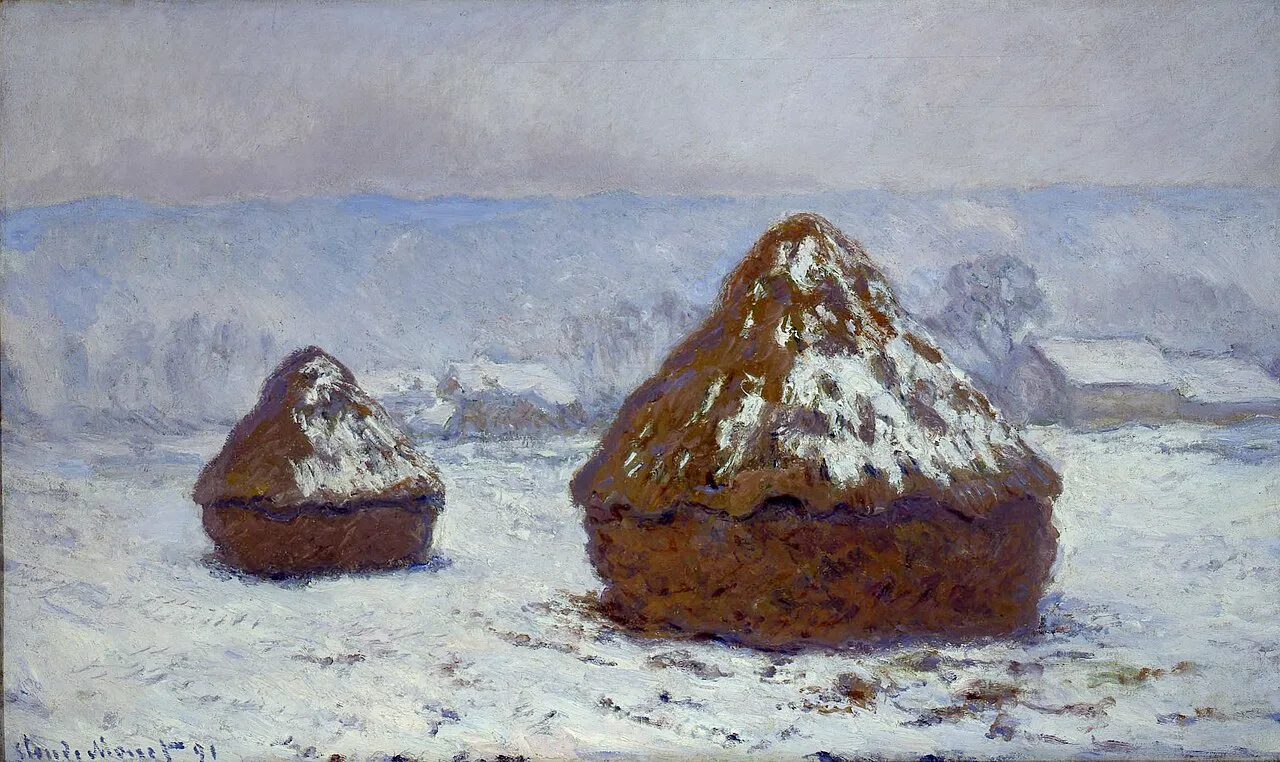
Grainstacks, Snow Effect, 1891, Shelburne Museum, Vermont, USA.
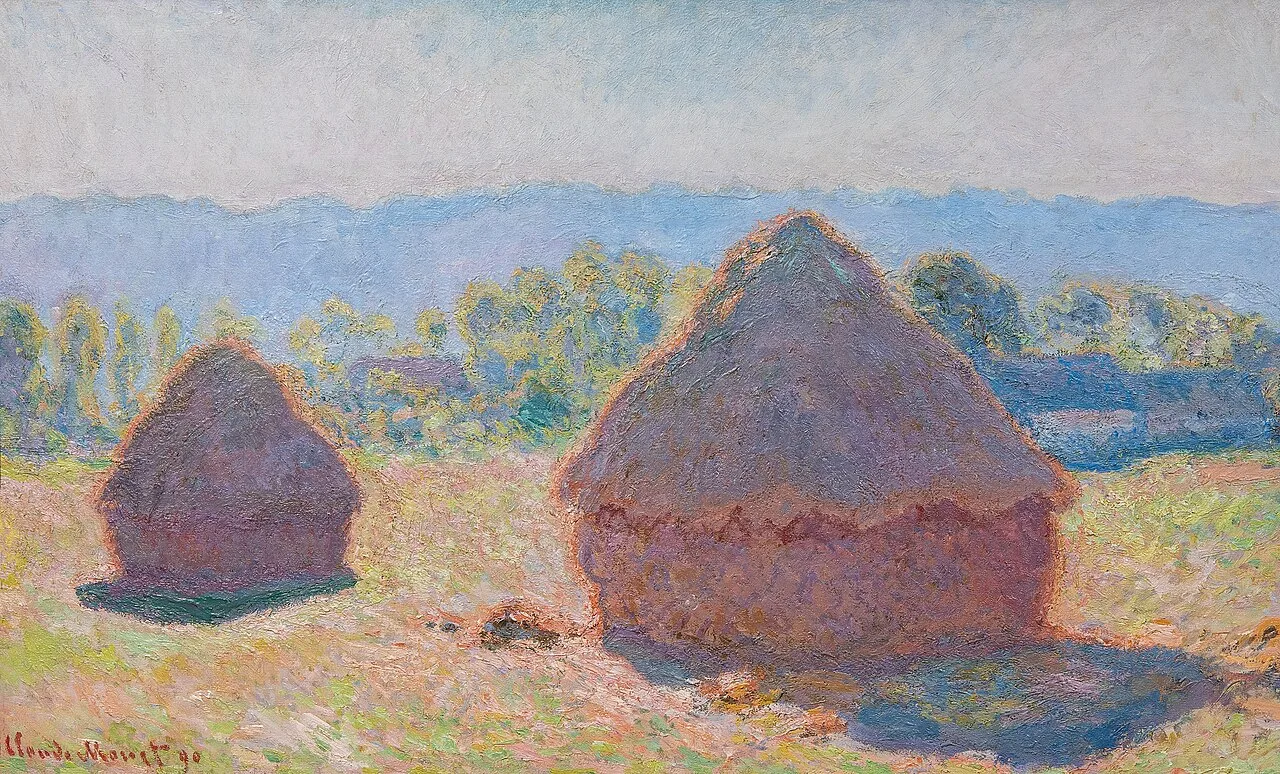
Grainstacks, in Bright Sunlight, 1890, Hill-Stead Museum, Farmington, CT, W1267

Monet – Wildenstein 1996, 1275.

Haystack, Morning Snow Effect (Meule, Effet de Neige, le Matin), 1891. Oil on canvas. Museum of Fine Arts, Boston.W1280

Wheatstack (Sun in the Mist), 1891. Oil on canvas. Minneapolis Institute of Arts. W1286
Haystacks (Monet series)
Haystacks is the common English title for a series of impressionist paintings by Claude Monet. The principal subject of each painting in the series is stacks of harvested wheat.
Bread Grain Shielded Under Thatched Straw
Despite the famous English title, the massive structures Monet observed outside his door held food for humans rather than feed for animals. These structures stored sheaves of grain intended primarily for making bread, such as wheat, barley, or oats. Farmers built them with thatched straw roofs to protect the unthreshed crop from Norman weather until communal threshing machines arrived months later.
From Wikipedia · CC BY-SA 4.0
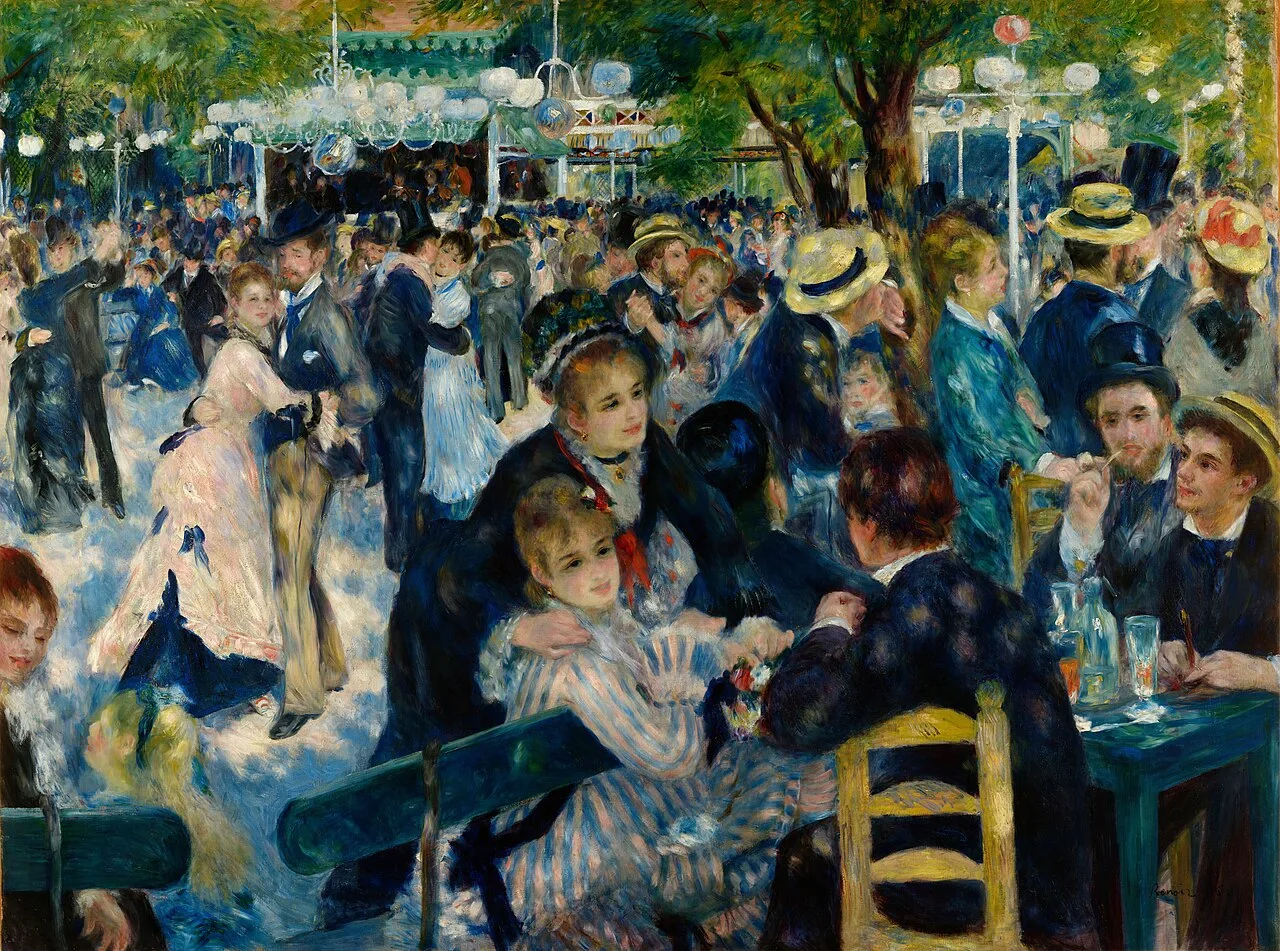
Renoir, Pierre-Auguste - Dance at Le Moulin de la Galette, 1876
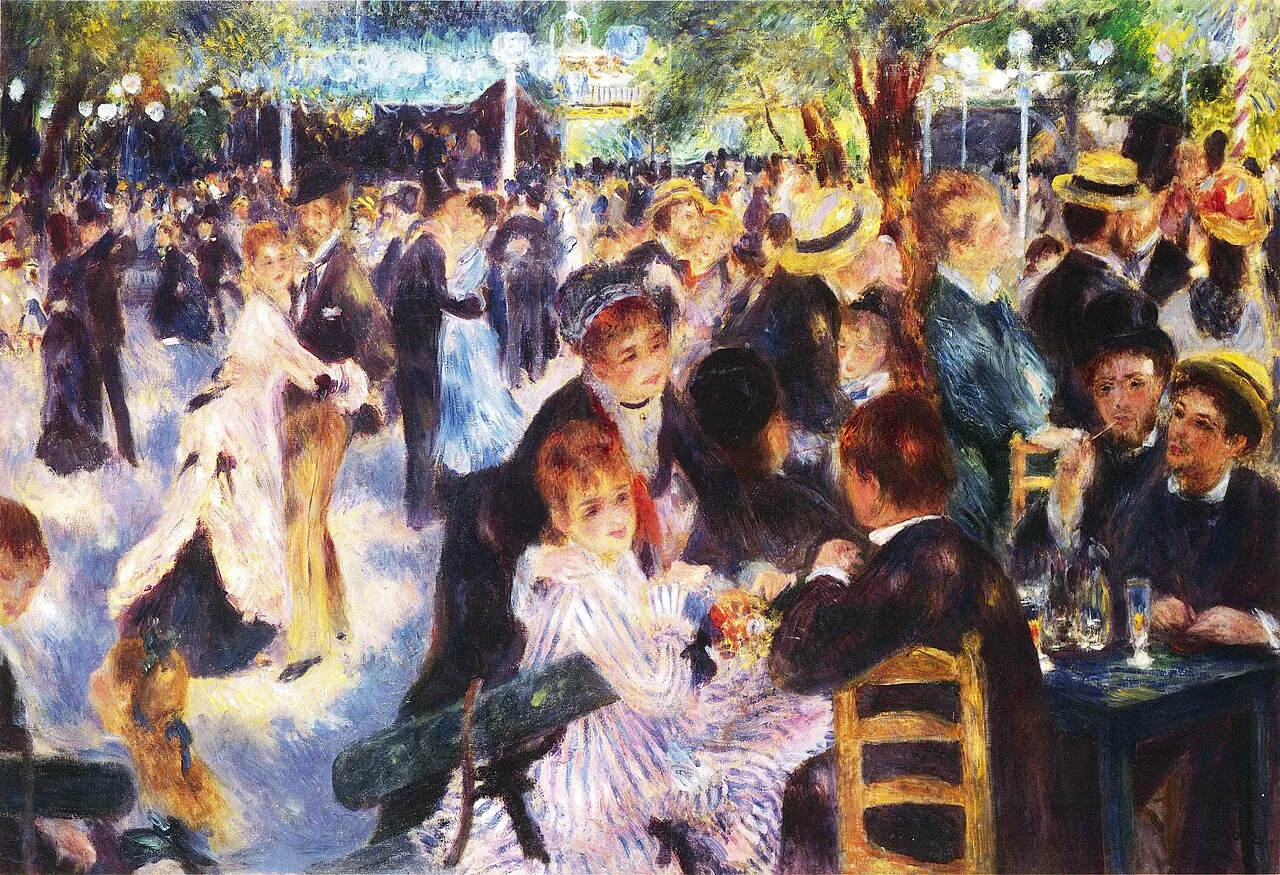
Smaller version

Renoir's La balançoire (The Swing), 1876
Bal du moulin de la Galette
Bal du moulin de la Galette is an 1876 painting by French artist Pierre-Auguste Renoir, housed at the Musée d'Orsay in Paris and considered one of Impressionism's most celebrated masterpieces.
Working-Class Sundays as Impressionist Snapshots
Working-class Parisians transformed Montmartre into a vibrant open-air gathering spot where they danced, drank, and ate galettes into the evening. Renoir captured this energy directly as an Impressionist snapshot of real life rather than a staged studio allegory. The resulting composition features a distinctive fluidity of brush stroke alongside flickering, sun-dappled light.
From Wikipedia · CC BY-SA 4.0
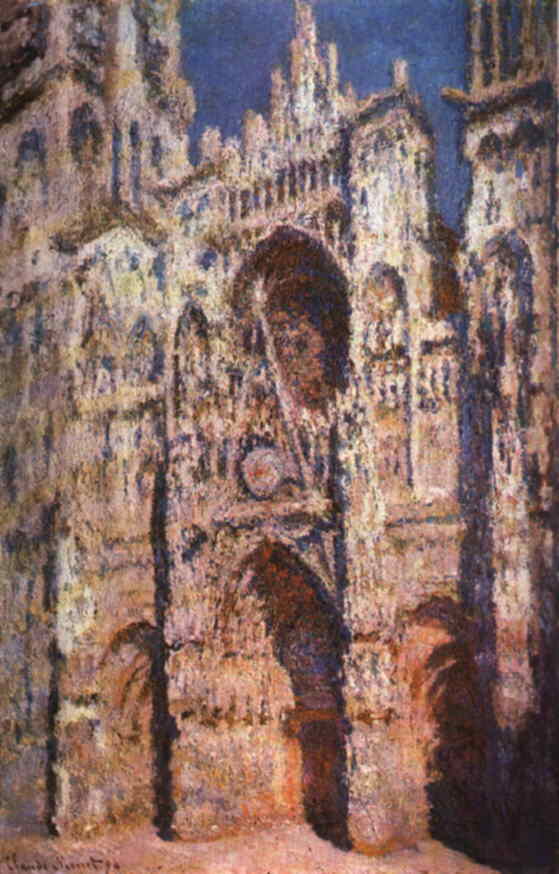
RouenCathedral Monet 1894
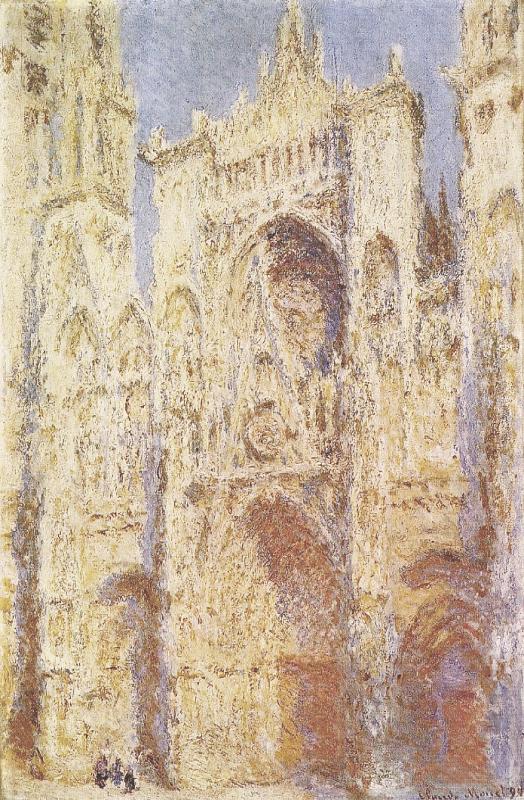
Rouen Cathedral, West Façade, Sunlight 1894 National Gallery of Art Washington, D.C., USA

La Cathédrale de Rouen. Le portail, soleil matinal; harmonie bleue 1892–1893 Musée d'Orsay Paris, France

The portal and the tower of the saint-romain at morning sun, Harmony in Blue 1893 Musée d'Orsay Paris, France

Rouen Cathedral, West Facade, 1894, National Gallery of Art

Rouen Cathedral, Facade and the Tour d'Albane. Grey Weather, 1894, Musée des Beaux-Arts de Rouen
Rouen Cathedral (Monet series)
Painted in the 1890s by French impressionist Claude Monet, the Rouen Cathedral series captures the façade of Rouen Cathedral at different times of the day and year under different lighting conditions.
Reworking Thirty Canvases in Paris
Monet produced over thirty paintings between 1892 and 1893 while working in temporary studio quarters in Rouen. He subsequently spent 1894 reworking the canvases inside his personal studio before unveiling them to the public. By 1895, he curated twenty standout pieces for his Paris dealer's gallery, successfully selling eight works before the exhibition concluded.
From Wikipedia · CC BY-SA 4.0

Baigneurs a Asnieres

A possible site of the sandy gully is left of the page-fold. The bridges of Asnières are at the right.
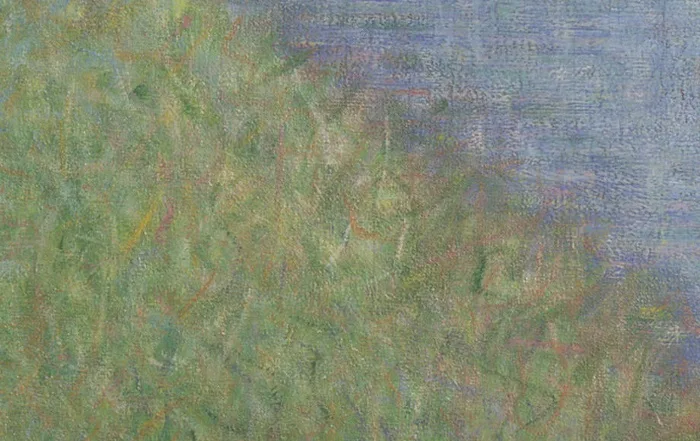
Balayé and fine horizontal strokes
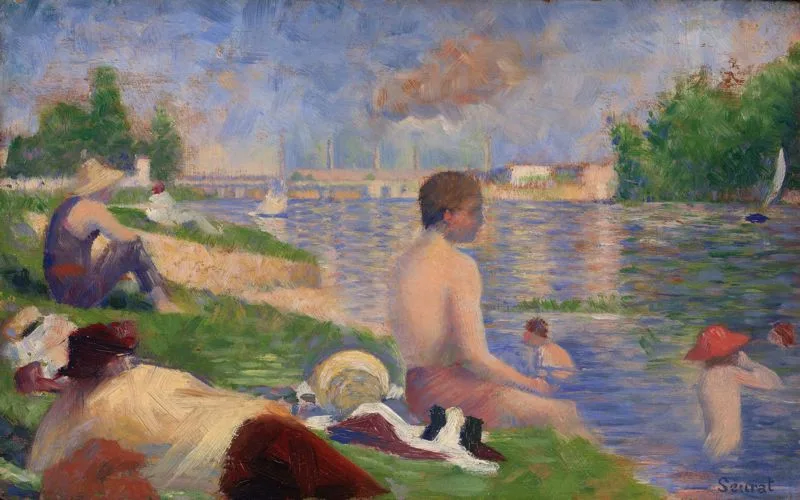
Final study, 1883, now in the Art Institute of Chicago
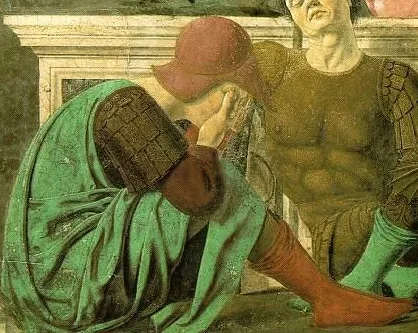
Piero della Francesca, Resurrection, c.1460
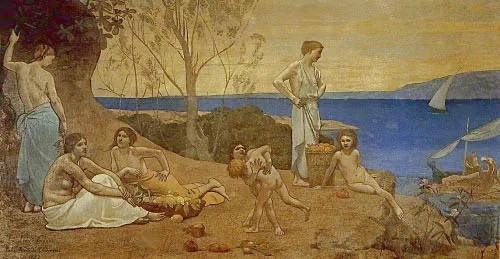
Puvis de Chavannes, Doux Pays, 1882
Bathers at Asnières
Bathers at Asnières is an 1884 oil on canvas painting by the French artist Georges Pierre Seurat, the first of his two masterpieces on the monumental scale.
Geographic Misdirection Along the Seine
Despite the painting's title, the riverbank subjects are not actually in Asnières, but in the neighboring commune of Courbevoie. Seurat situated them along the slope known as the Côte des Ajoux on the north bank of the River Seine. In the background, the industrial buildings of Clichy and the railway bridge stand just short of four miles from central Paris.
From Wikipedia · CC BY-SA 4.0
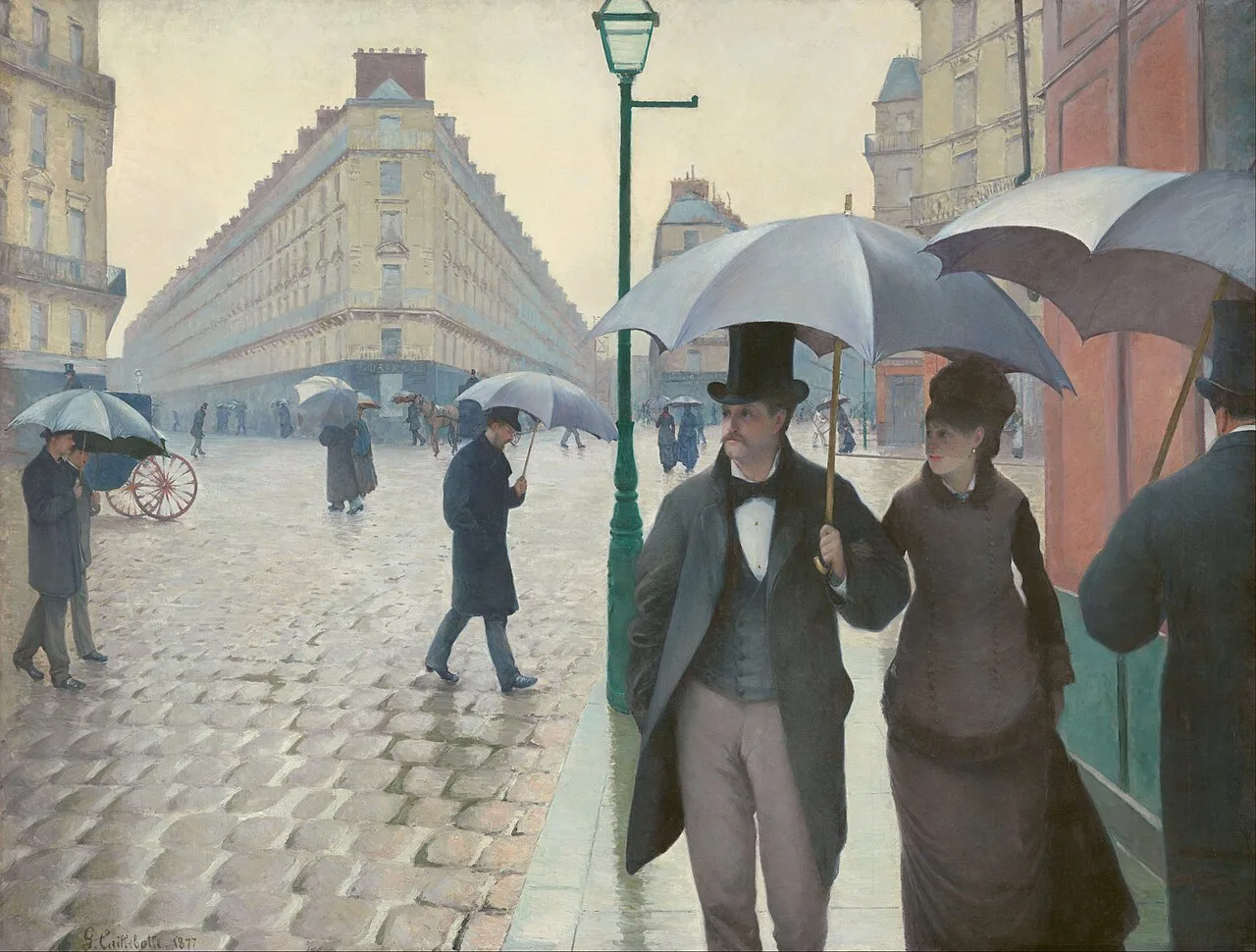
Gustave Caillebotte - Paris Street; Rainy Day - Google Art Project
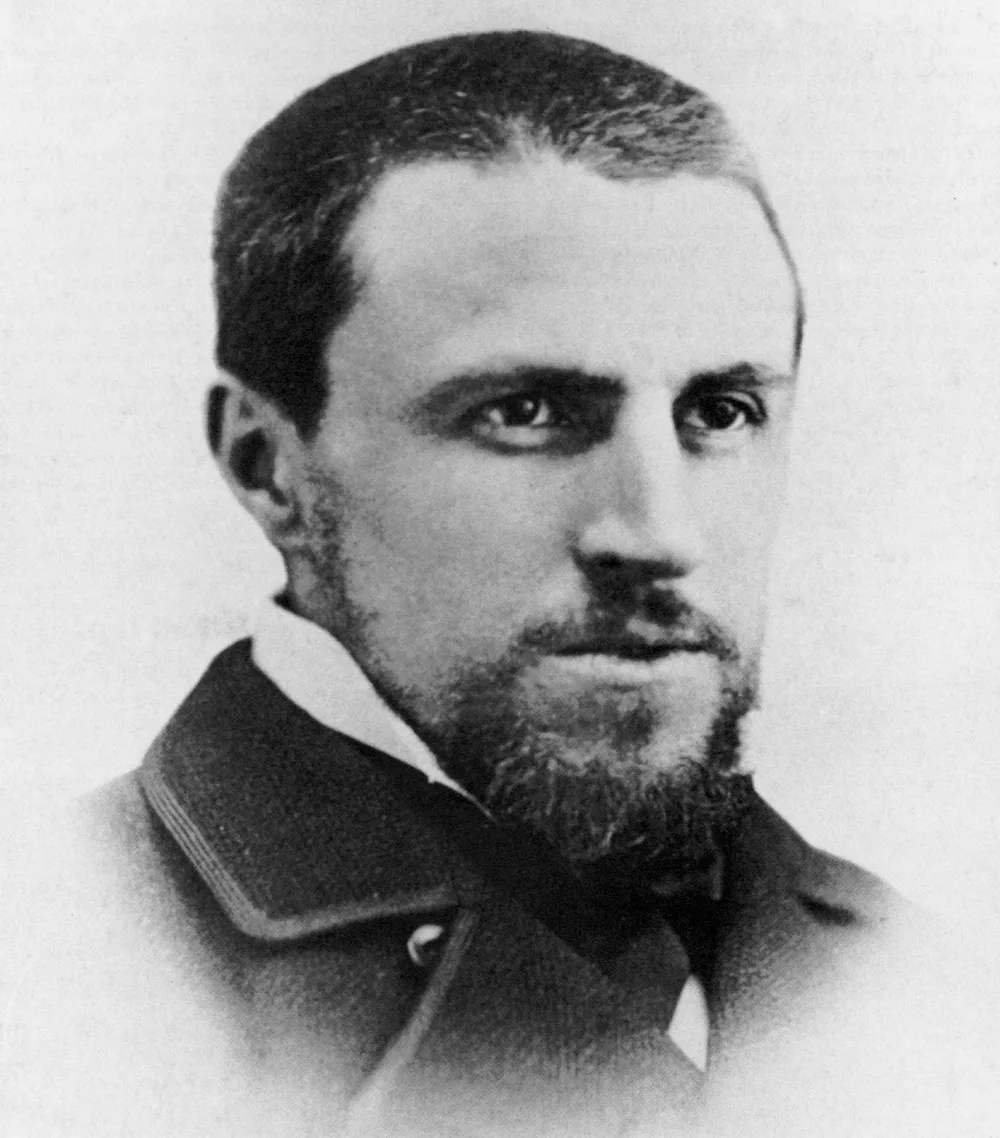
Gustave Caillebotte in 1878
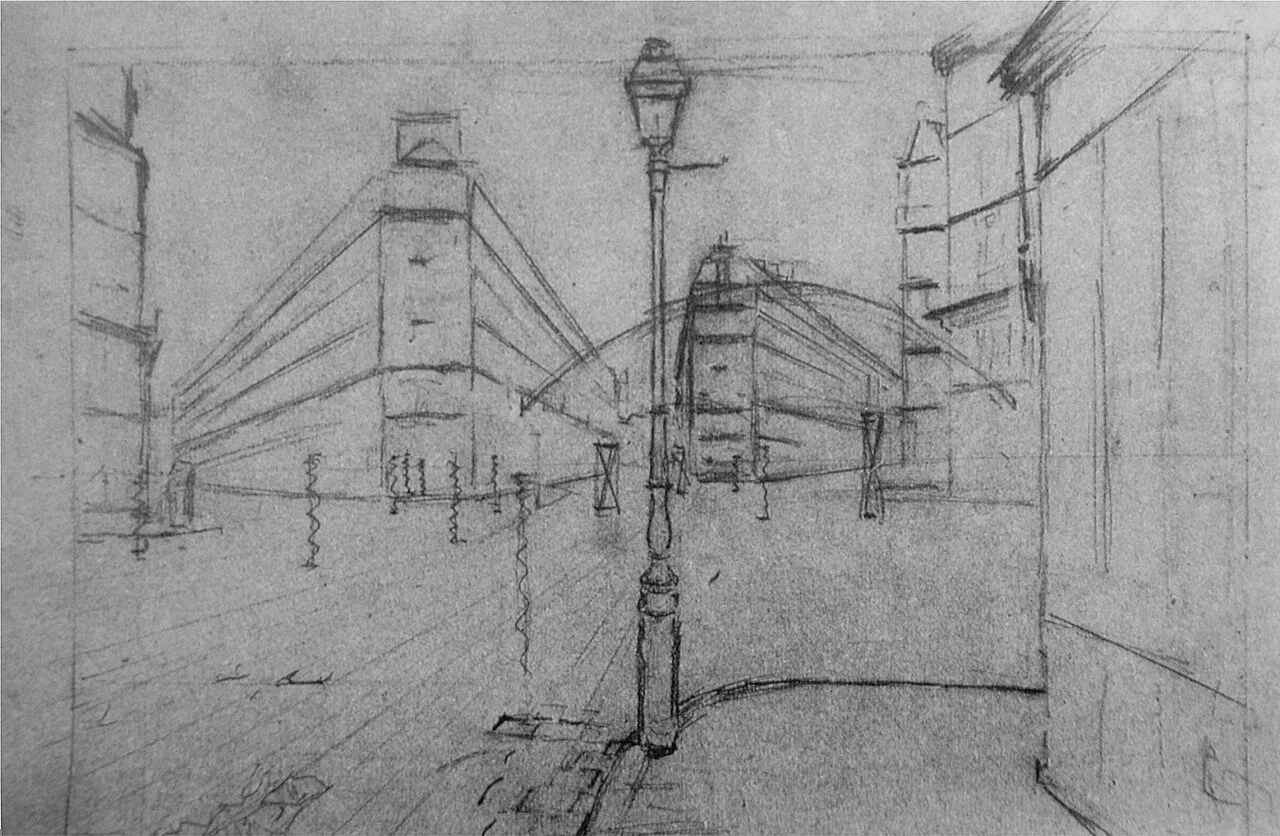
Study for Paris Street; Rainy Day, c. 1877
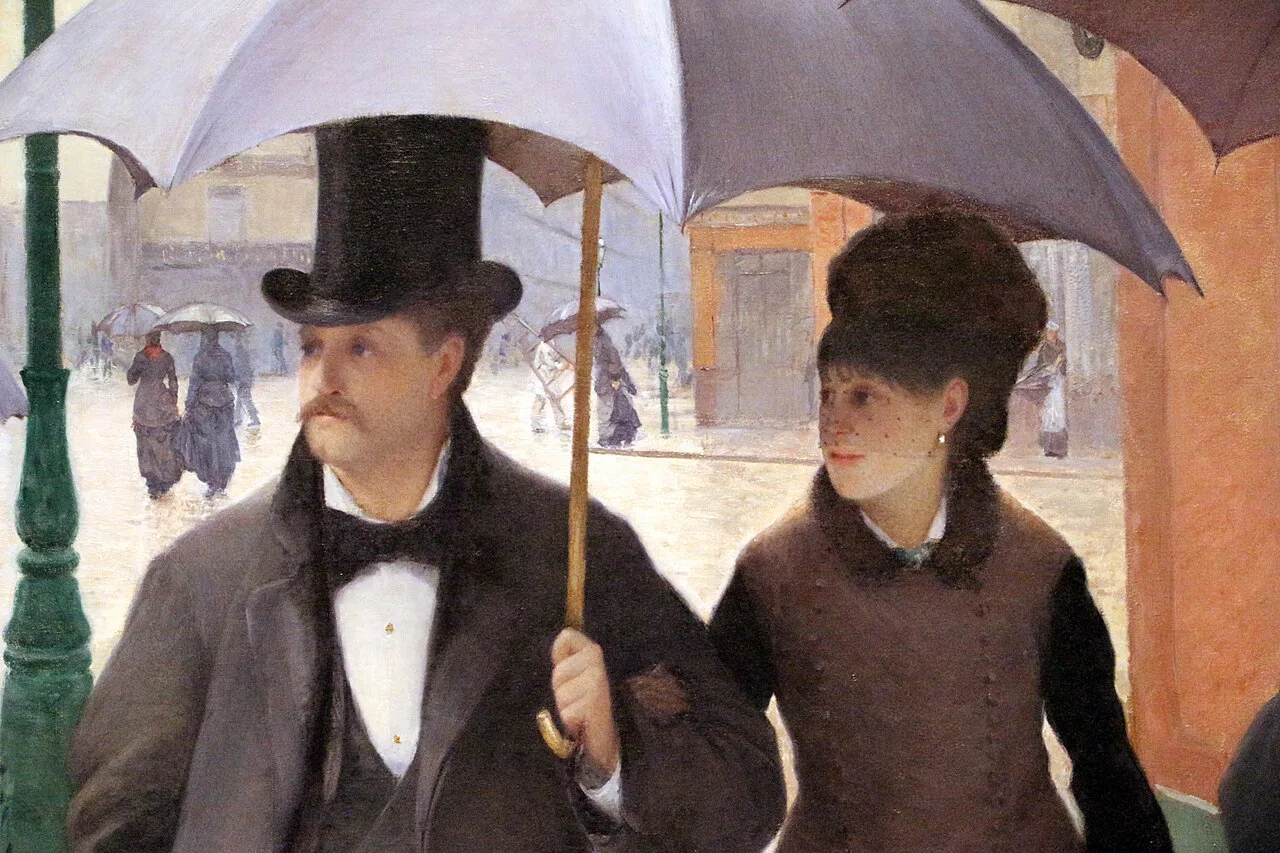
Detail of the foreground couple
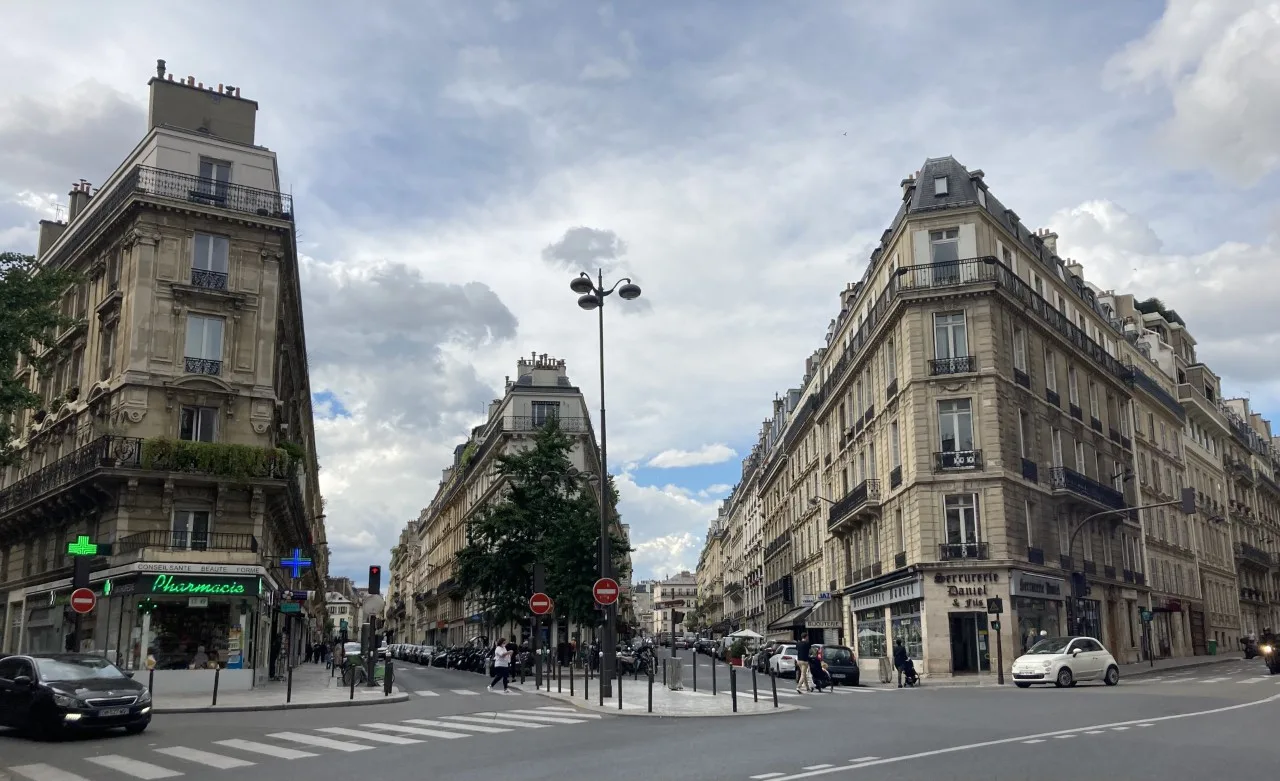
2021 photograph of the Place de Dublin.
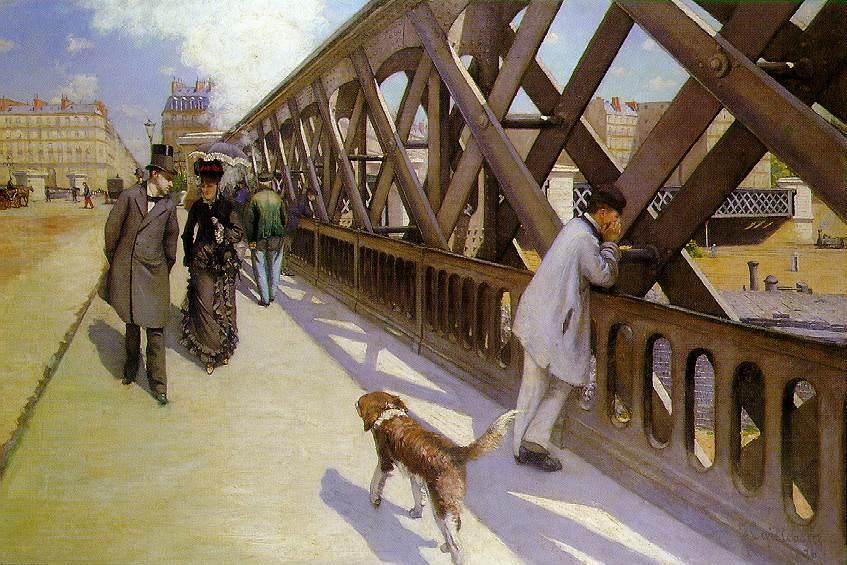
Le Pont de l'Europe c. 1876. Musée du Petit Palais, Geneva
Paris Street; Rainy Day
Paris Street; Rainy Day is an 1877 Impressionist oil painting by French artist Gustave Caillebotte depicting pedestrians in rainy weather crossing a boulevard intersection in Paris.
Displacement and Development in Haussmann's Modernized Capital
Haussmann's dramatic reconstruction of the French capital came at a profound social cost for working-class Parisians. The sweeping urban modernization displaced thousands of residents to slums on the outskirts of Paris, including 75 percent of Île de la Cité. Conversely, the artist's family directly capitalized on this infrastructural upheaval. The household relocated into a four-story mansion after Martial purchased land in the eighth arrondissement on January 15, 1866.
From Wikipedia · CC BY-SA 4.0

See adjacent text.
The Umbrellas (Renoir)
The Umbrellas is an oil-on-canvas painting by Pierre-Auguste Renoir, painted in two phases in the 1880s.
A Split-Decade Hybrid of Impressionism and Classical Linearity
Renoir began working on the canvas around 1880–81 using the dark and bright tones typical of Impressionism. By about 1885, he had lost his attachment to the movement after drawing inspiration from classical art in Italy as well as the works of Ingres and Cézanne. He subsequently reworked major elements, including the principal female figure on the left, in a linear style with more muted colours and added the umbrellas.
From Wikipedia · CC BY-SA 4.0
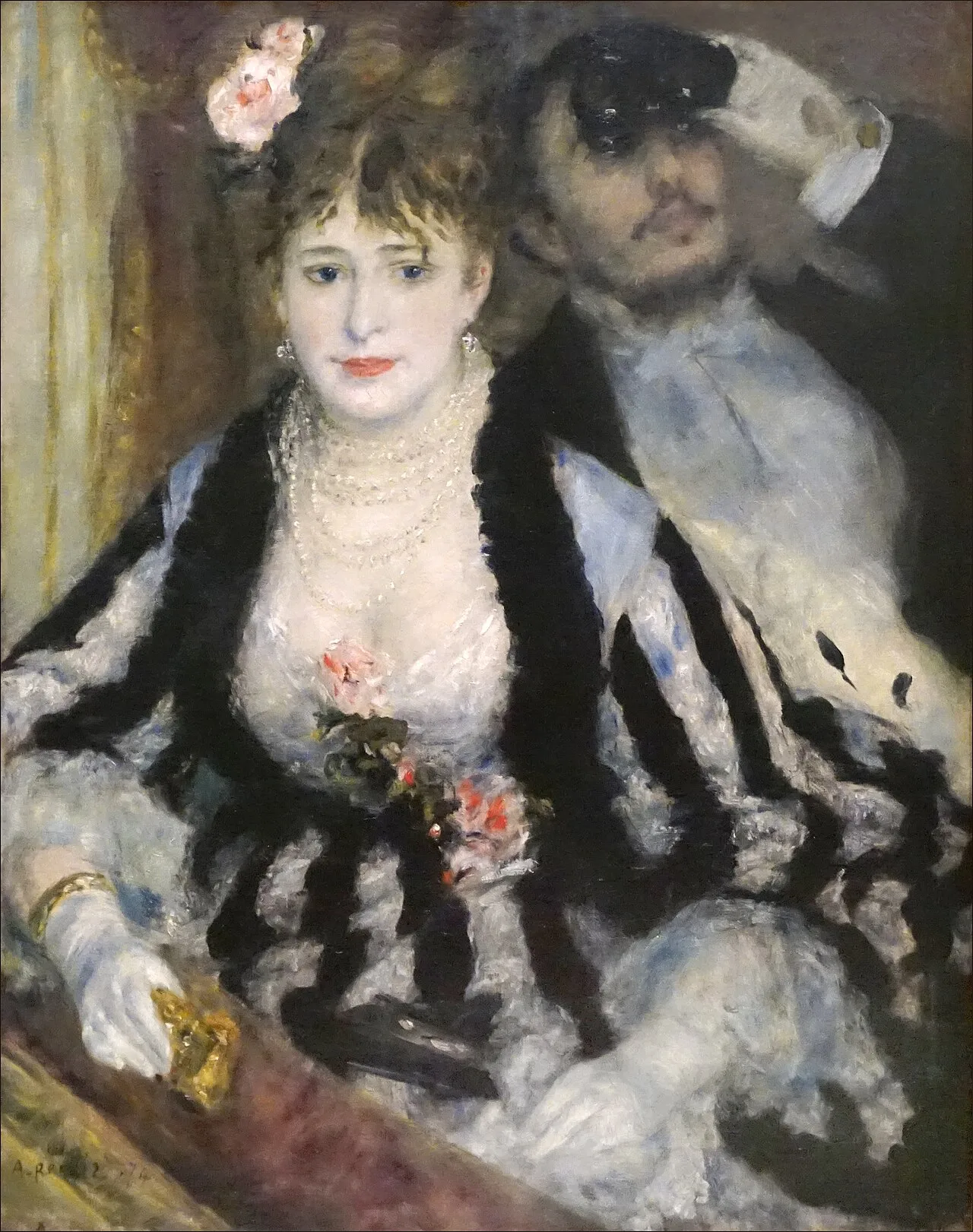
La Loge de P.-A. Renoir (Fondation Vuitton, Paris) (46499625955)
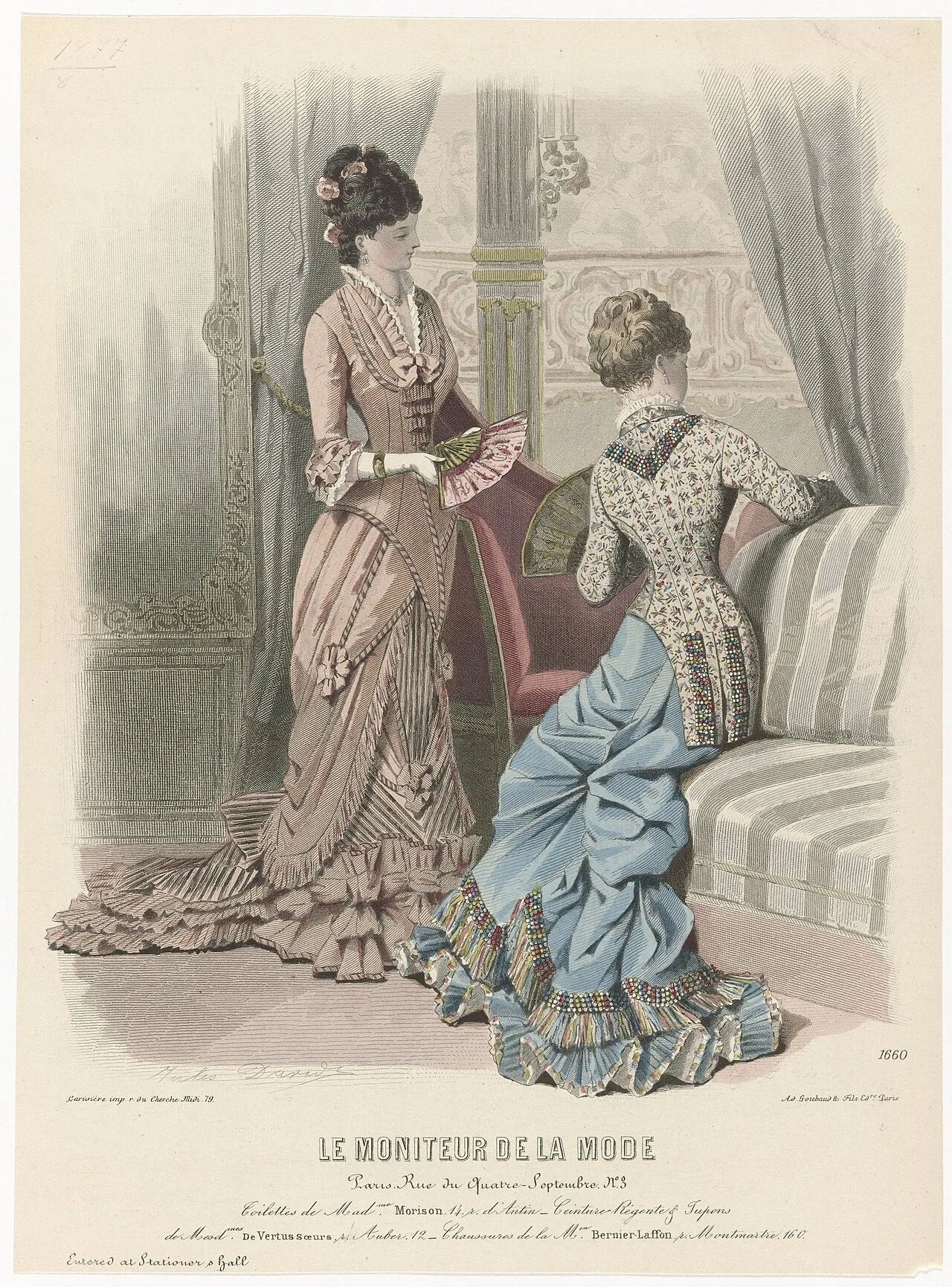
Fashion-plate illustration depicting the loge
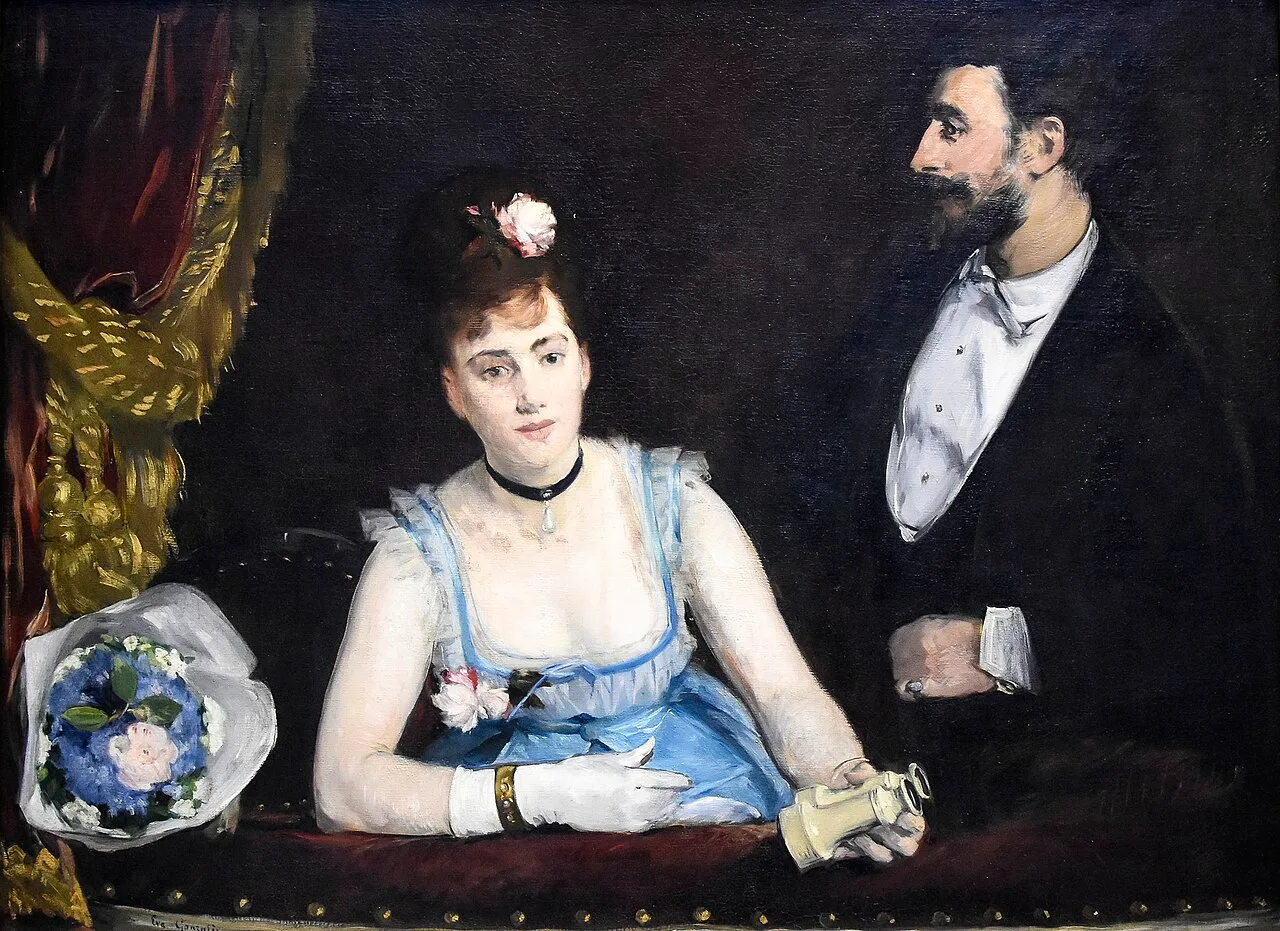
Eva Gonzalès, Une loge aux Italiens, 1874
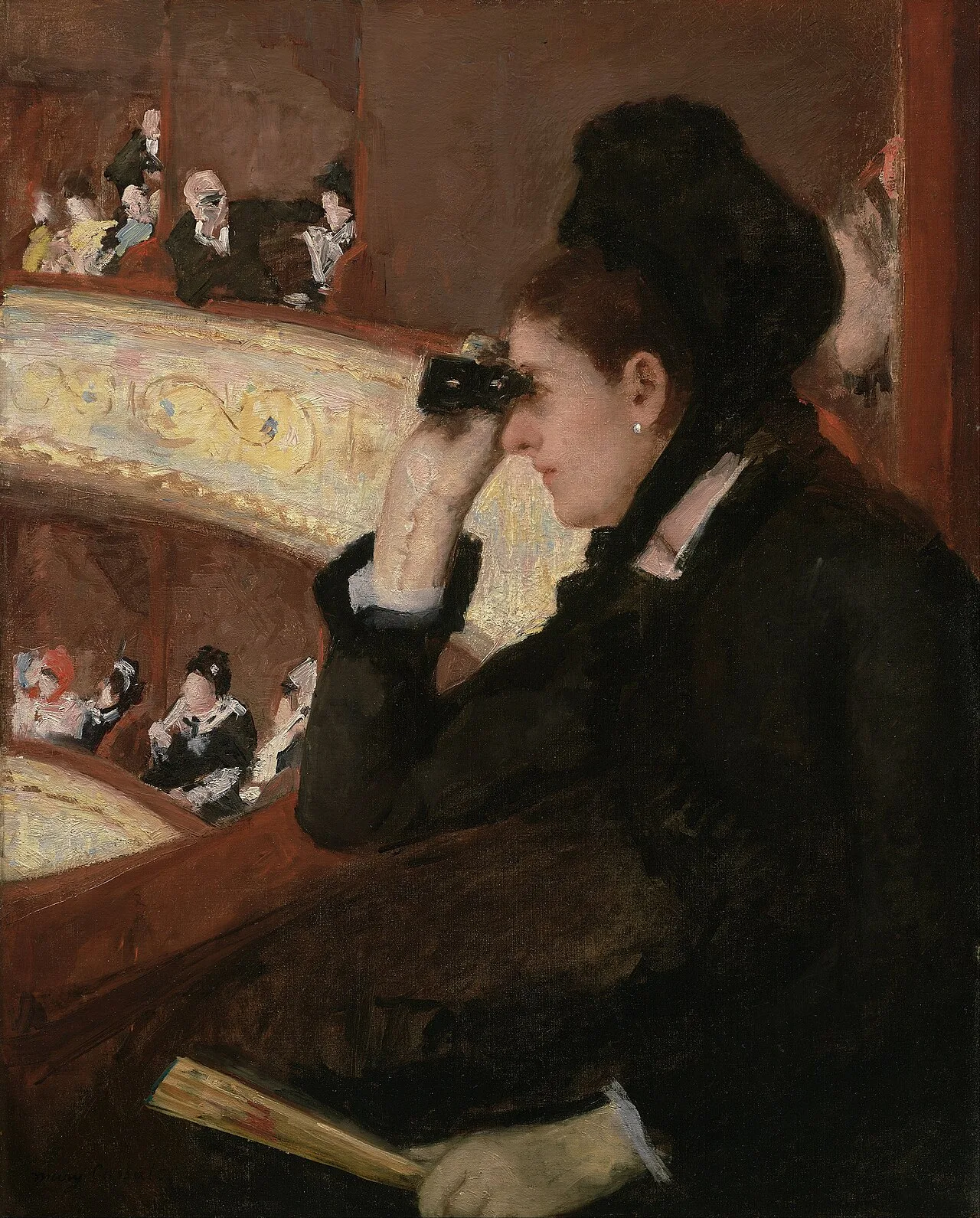
Mary Cassatt, At the Opera, 1878
La Loge
La Loge (The Theatre Box) is an 1874 oil painting by Pierre-Auguste Renoir depicting a young couple in a box at the Paris theatre.
Spectatorship as a Social Performance
Going out to the theatre in nineteenth-century France was fundamentally about social visibility rather than stage entertainment. Renoir captures this reality by showing a woman displaying herself to the room while her male companion scans the audience through his opera-glasses. The composition underscores how theatregoers were simultaneously the observers and the primary spectacle.
From Wikipedia · CC BY-SA 4.0