
Artemisia Gentileschi - Judith Beheading Holofernes - WGA8563

Donatello, Judith and Holofernes, c. 1457–1464. Bronze; 236cm Palazzo Vecchio, Florence

Johann Liss. Judith in the Tent of Holofernes, c. 1622. Oil on canvas; 128.5 x 99 cm. The National Gallery, London
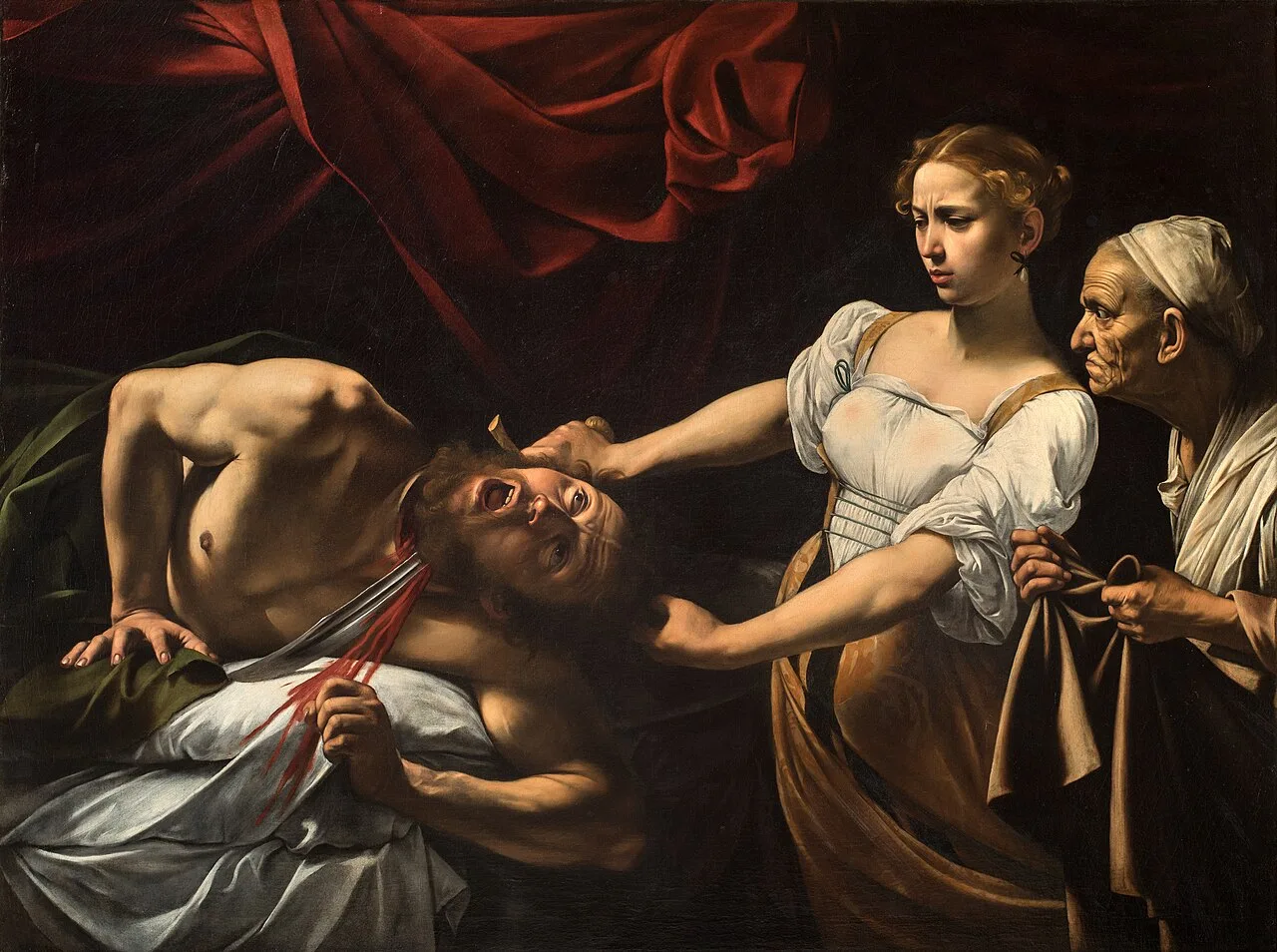
Michelangelo Merisi da Caravaggio, Judith Beheading Holofernes, c.1599. Oil on canvas; 145x195 cm, Galleria Nazionale d'Arte Antica di Palazzo Barberini, Rome
Judith Slaying Holofernes (Artemisia Gentileschi, Naples)
Judith Slaying Holofernes is a painting by the Italian early Baroque artist Artemisia Gentileschi, completed in 1612–13 and now at the Museo Capodimonte, Naples, Italy.
Hidden Revisions by a Twenty-Year-Old Artist
Gentileschi completed Judith Slaying Holofernes when she was around twenty years of age. Modern X-rays revealed that she made several physical alterations to the composition, notably adjusting the position of both Judith's arms and the drapery. Unlike earlier static depictions, her rendering emphasizes anatomical realism and direct exertion, capturing the raw physical labor required for the decapitation.
From Wikipedia · CC BY-SA 4.0
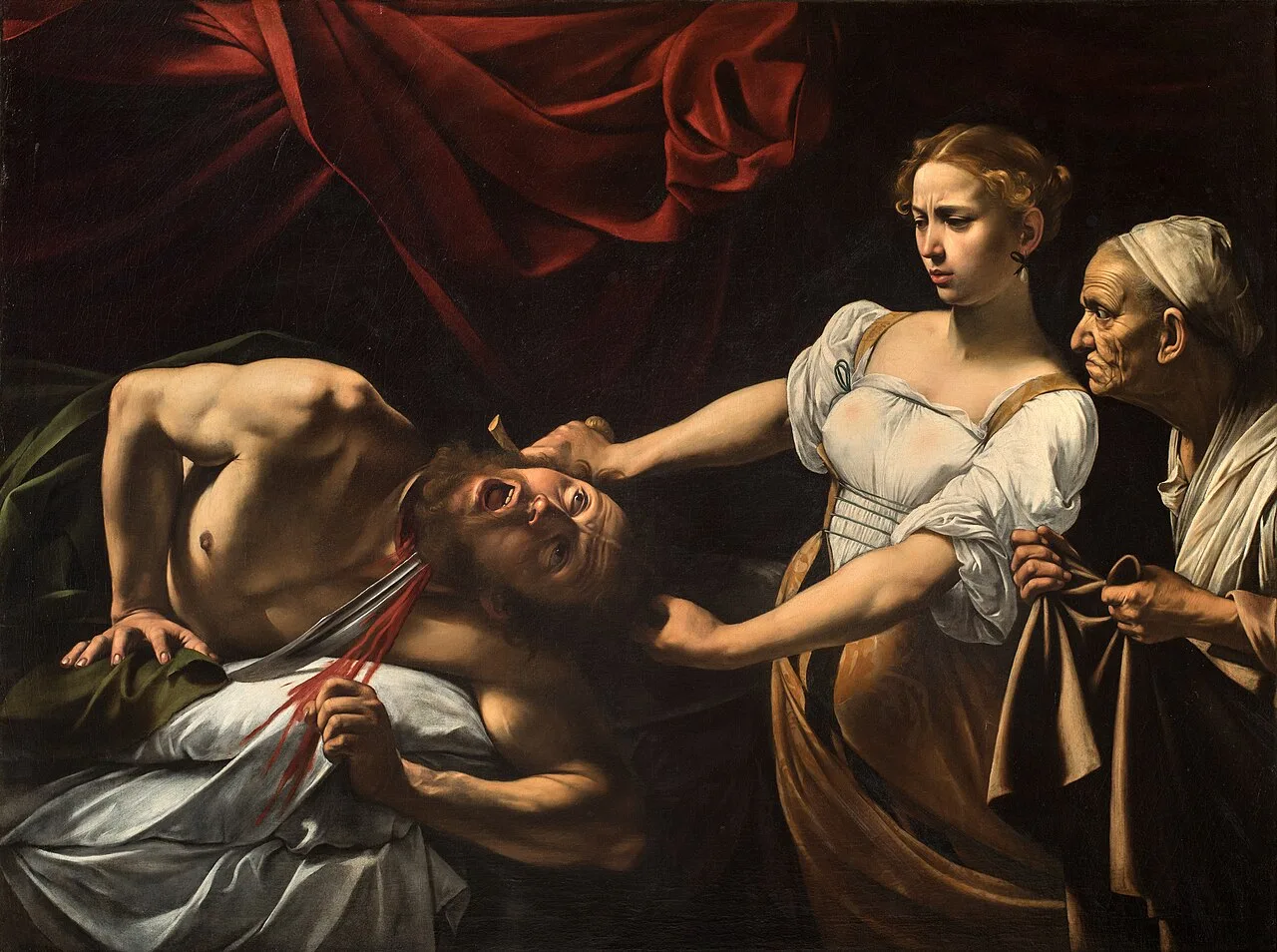
Caravaggio - Giuditta e Oloferne (ca. 1599)

Caravaggio - Judith and Holophernes Toulouse - High Definition
Judith Beheading Holofernes (Caravaggio)
Judith Beheading Holofernes is a painting of the biblical episode by Italian Baroque artist Caravaggio, painted in c. 1599–1600 or 1602.
Blood Spatter from a Public Execution
The visceral violence in the painting was grounded in contemporary Roman reality rather than pure biblical imagination. Caravaggio modeled Judith after the Roman courtesan Fillide Melandroni, who sat for several of his compositions around this period. Furthermore, the graphic depiction of blood spurting from severed flesh likely stems from the painter witnessing the public execution of Beatrice Cenci in 1599.
From Wikipedia · CC BY-SA 4.0
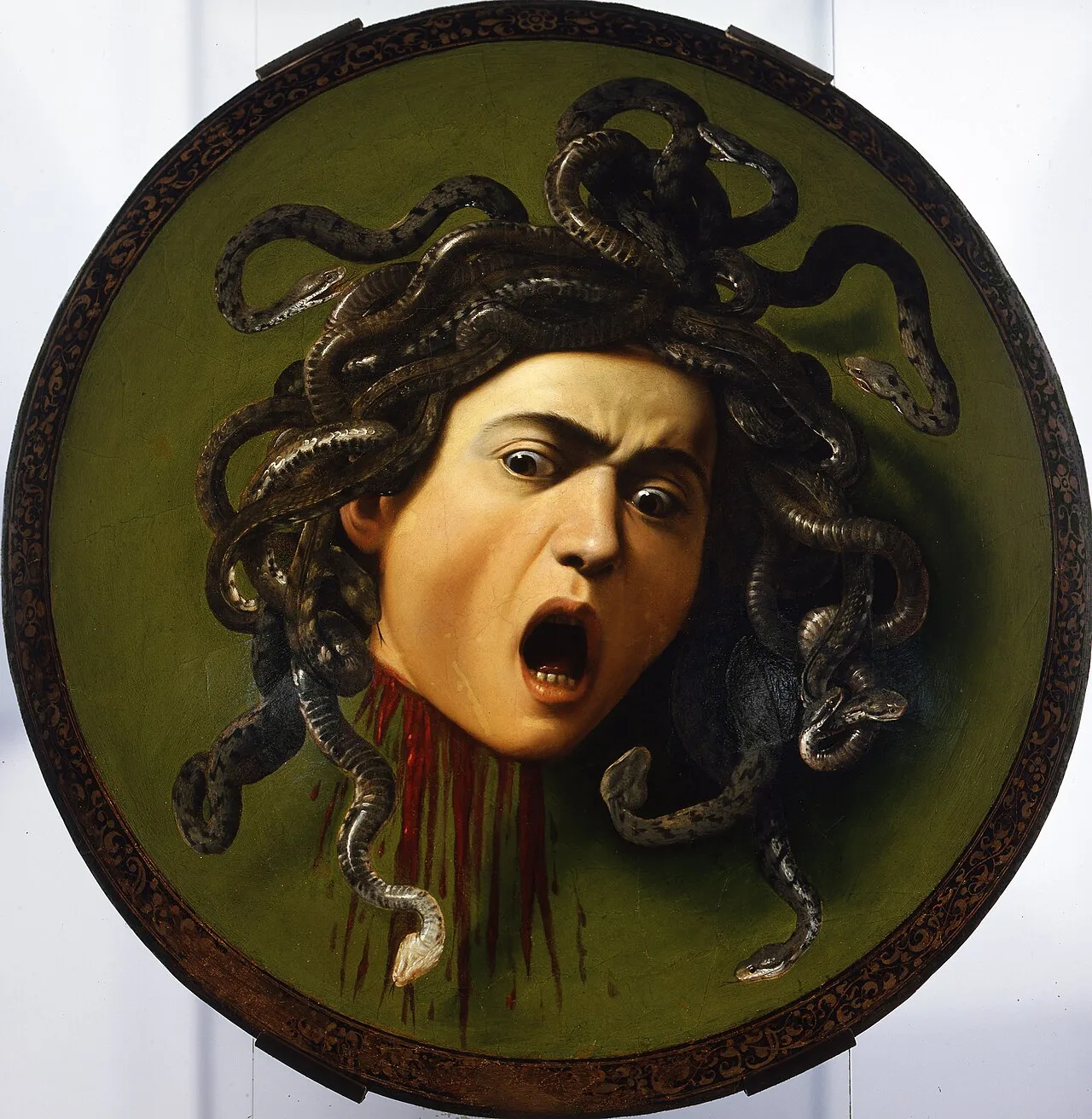
Caravaggio - Medusa - Google Art Project
Medusa (Caravaggio)
Two versions of Medusa were created by the Italian Baroque painter Caravaggio in 1596 and ca. 1597, depicting the moment from Greek mythology in which Perseus kills the Gorgon Medusa.
A Dying Monster Bearing the Painter's Face
Rather than presenting Medusa merely as an ancient mythological monster, Caravaggio substituted his own features onto the severed head. This artistic choice allowed the painter to depict himself as uniquely immune to her fatal gaze while capturing the Gorgon's final conscious moments. The resulting face registers shock and dying agony as blood cascades from the severed neck.
From Wikipedia · CC BY-SA 4.0

Retrato del Papa Inocencio X. Roma, by Diego Velázquez

A copy made by Velázquez's circle, currently hanging at the National Gallery of Art, Washington
Portrait of Innocent X
Portrait of Innocent X is a c. 1650 oil on canvas painting by Spanish artist Diego Velázquez depicting Pope Innocent X, housed in the Galleria Doria Pamphilj in Rome.
A Servant's Portrait as Papal Audition
Diego Velázquez secured the papal commission only after overcoming the pontiff's initial skepticism. According to one account, Pope Innocent X demanded tangible proof of skill before agreeing to sit for the Spanish master. Velázquez answered by painting a portrait of his servant Juan de Pareja, which successfully convinced the pope to sit for him.
From Wikipedia · CC BY-SA 4.0
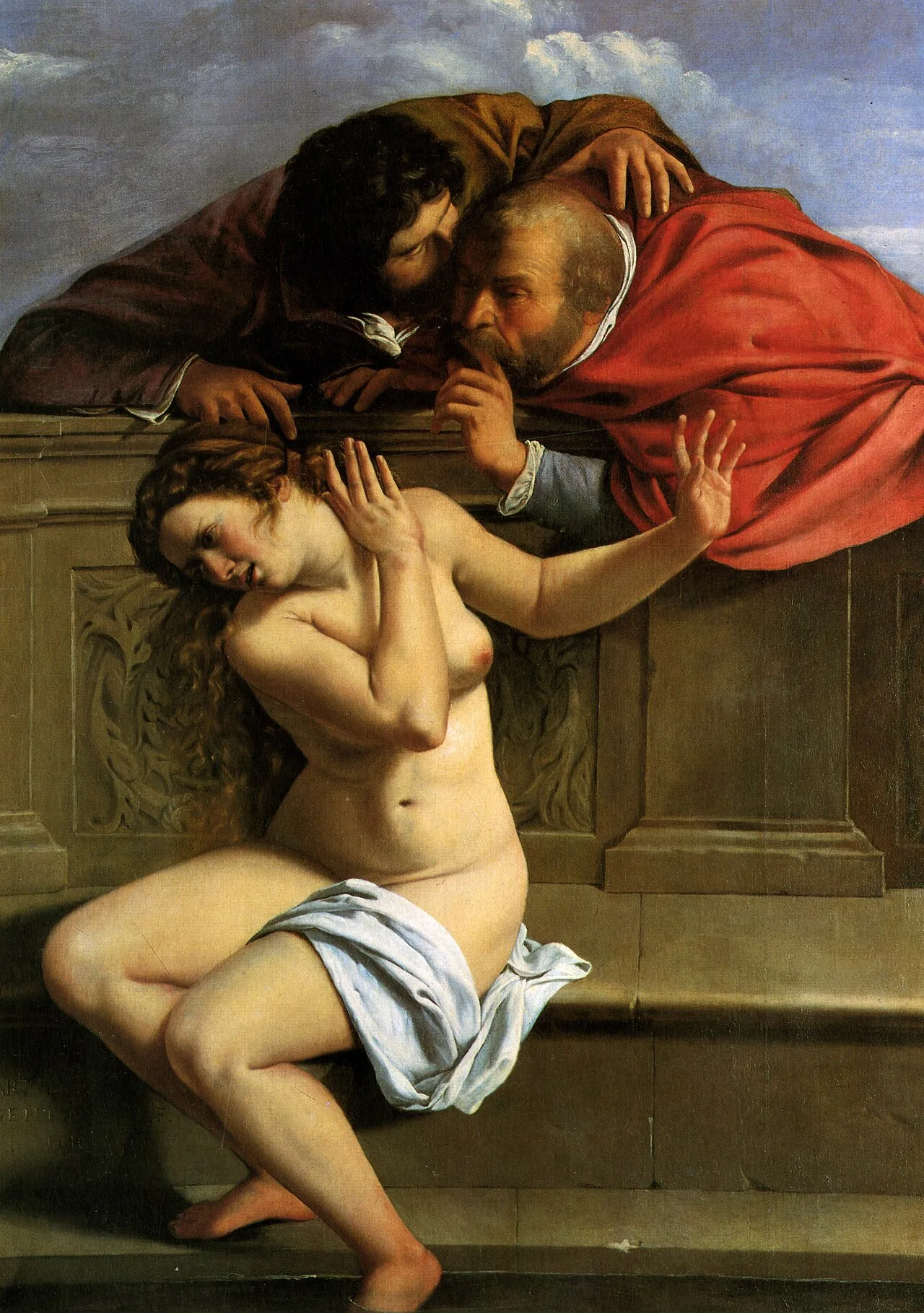
Susanna and the Elders (1610), Artemisia Gentileschi
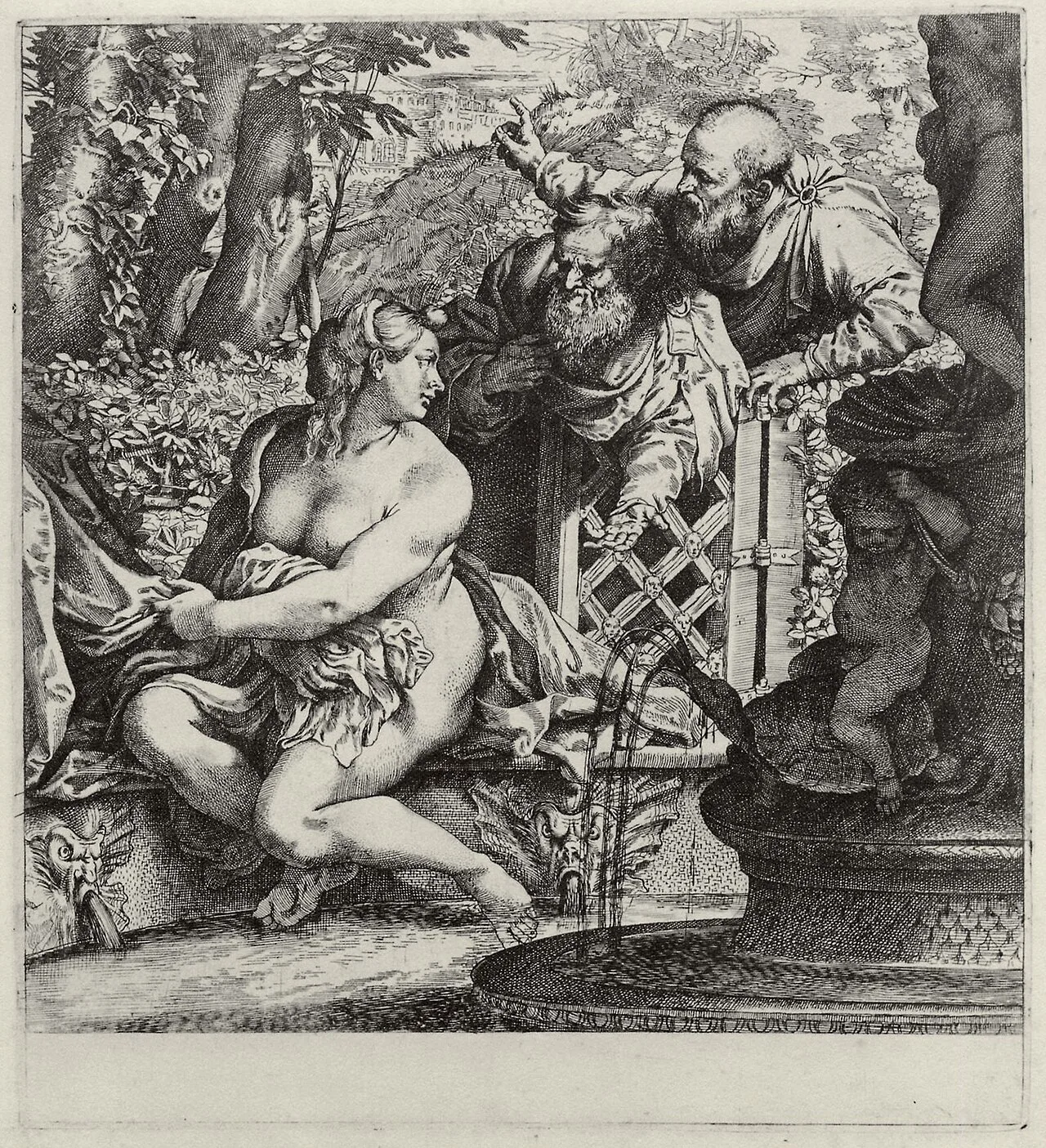
Annibale Carracci, Susanna and the Elders
Susanna and the Elders (Artemisia Gentileschi, Pommersfelden)
Susanna and the Elders is a 1610 painting by the Italian Baroque artist Artemisia Gentileschi and is her earliest-known signed and dated work.
Vulnerability Subverting the Male Gaze
Male artists frequently depicted this biblical narrative to showcase the female nude for the pleasure of their patrons, often showing Susanna in receptive poses. Gentileschi dramatically broke with this tradition by focusing on genuine vulnerability rather than erotic display. Her Susanna twists away in acute physical discomfort, rejecting the intrusive gaze of the elders above her. This composition introduced an unprecedented psychological depth to a story traditionally treated as visual gratification.
From Wikipedia · CC BY-SA 4.0
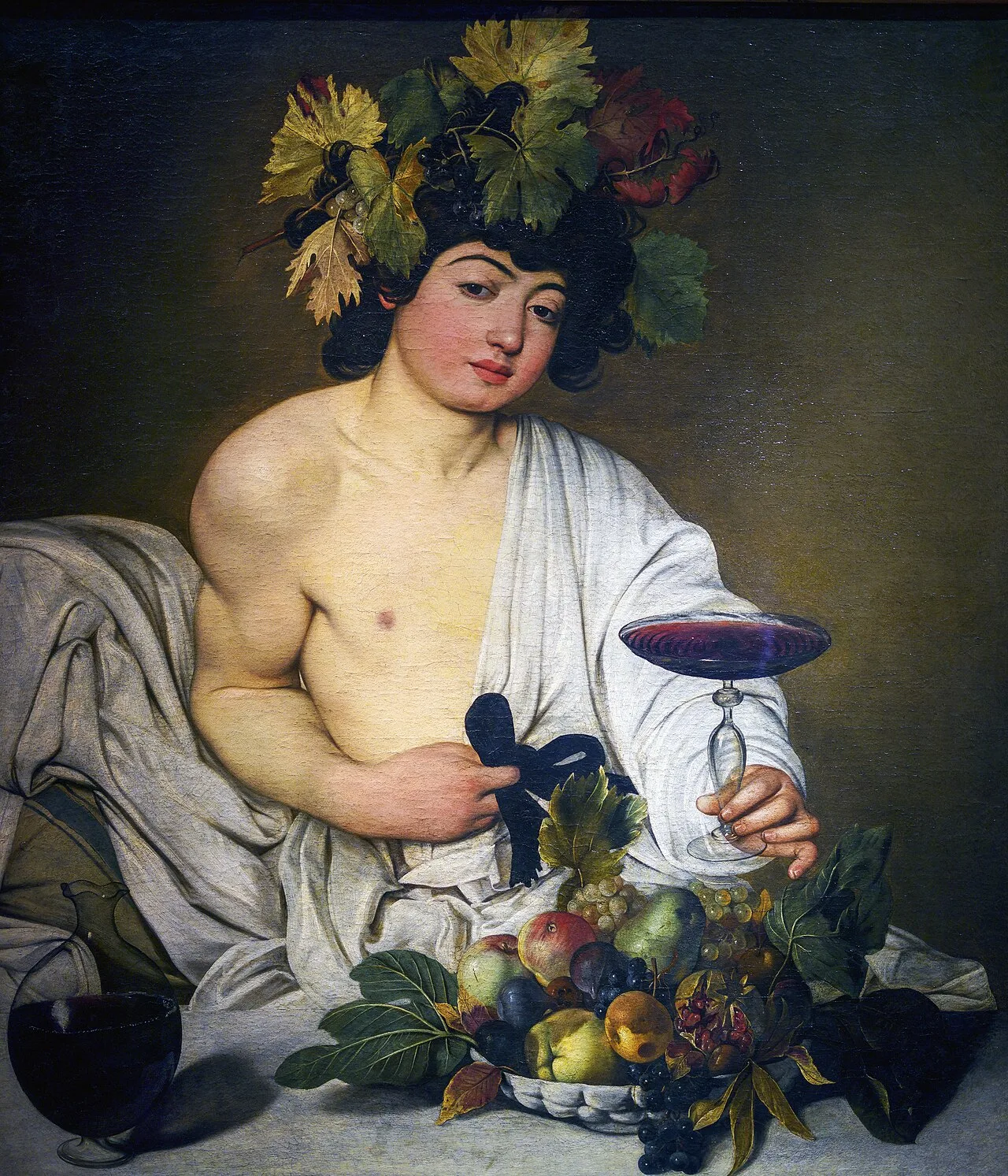
Bacchus by Caravaggio 1
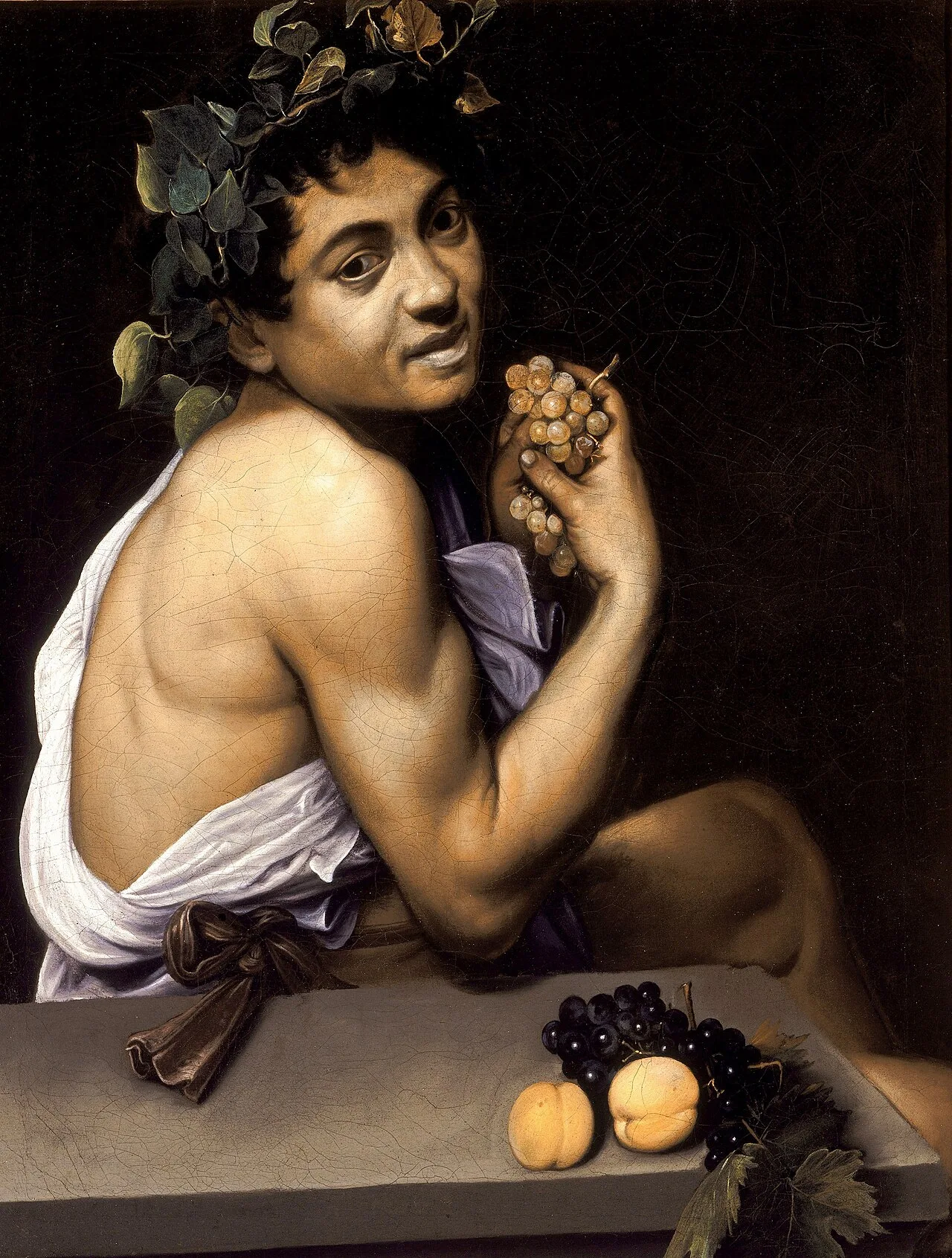
Caravaggio's Young Sick Bacchus
Bacchus (Caravaggio)
Bacchus (c. 1596) is an oil painting by Italian Baroque master Caravaggio, commissioned by Cardinal Francesco Maria del Monte, depicting a youthful Bacchus reclining in classical fashion.
A Mortal Masquerade and Rotting Fruit
Caravaggio strips away divine distance by portraying a mortal boy merely costumed as Bacchus. Alongside ripe offerings, the composition embeds a bursting pomegranate and a visibly rotting apple on the table. These decaying elements transform a celebration of pleasure into a Vanitas meditation, warning viewers that youthful beauty and earthly indulgence rapidly surrender to death.
From Wikipedia · CC BY-SA 4.0
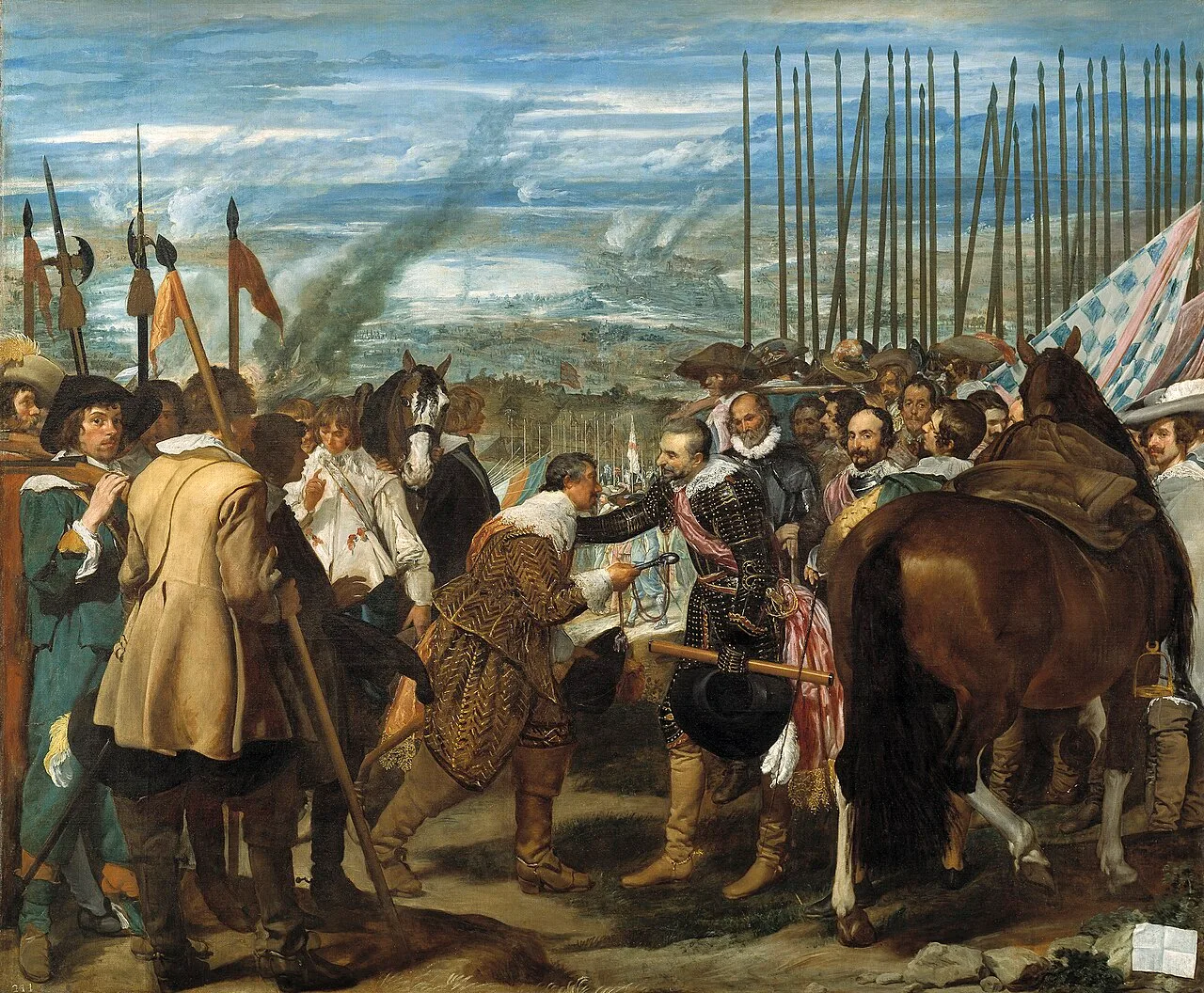
Velazquez-The Surrender of Breda

Exchange of the key to Spain

Detail from the painting

One of Spinola's flags in the painting
The Surrender of Breda
The Surrender of Breda is a painting by Spanish Golden Age painter Diego Velázquez, completed around 1634–1635, depicting the exchange of the key of Breda from the Dutch to the Spanish.
Imperial Image-Making Amid Economic Decline
Between 1630 and 1635, Philip IV commissioned the canvas for the Buen Retiro palace to elevate the Spanish crown despite ongoing economic hardship. The decorative program in the Hall of Realms was curated by the Count-Duke of Olivares, Gaspar de Guzmán. Velázquez crafted the piece as a crowning centerpiece among twenty historical displays.
From Wikipedia · CC BY-SA 4.0
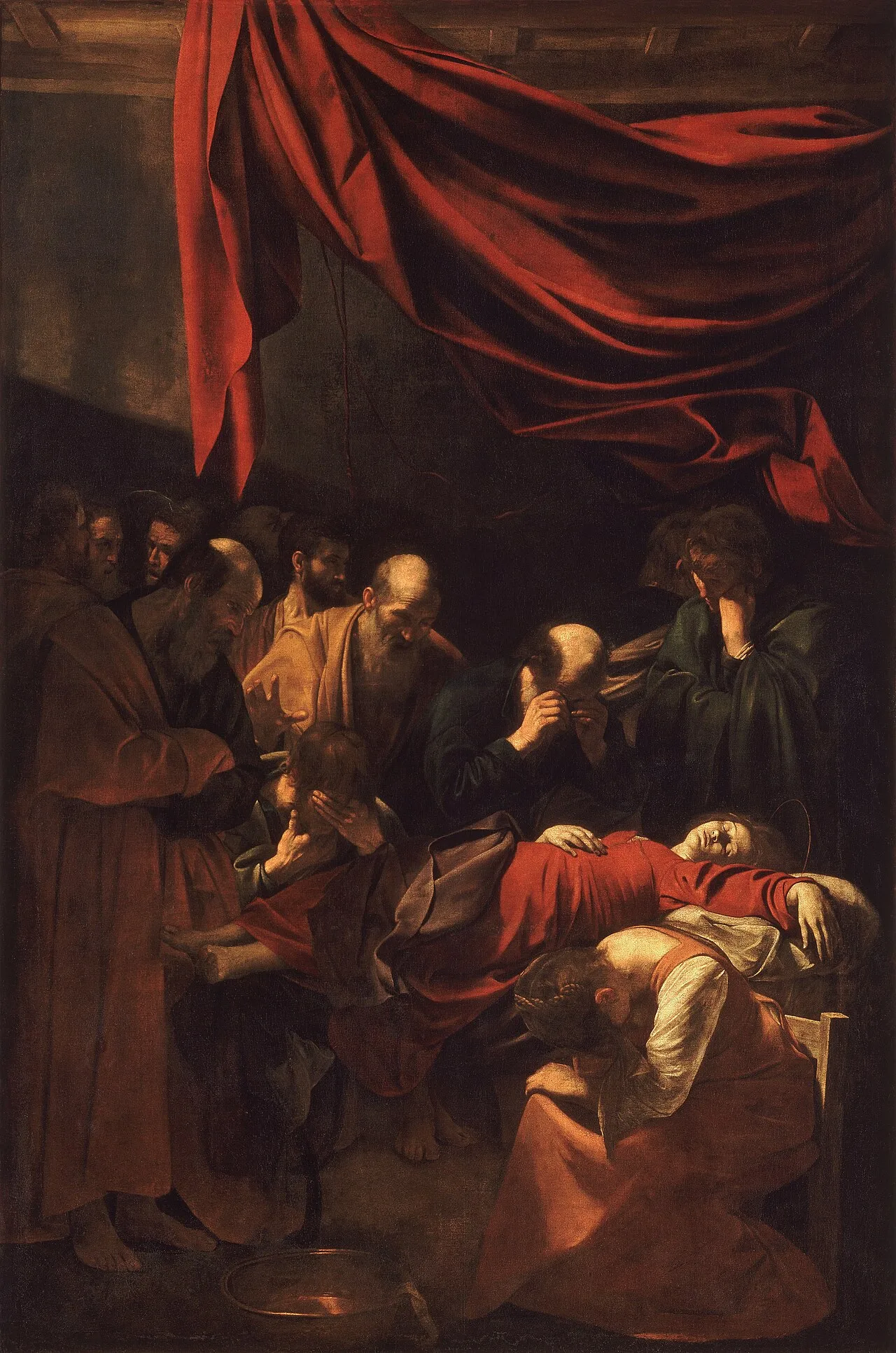
Death of the Virgin-Caravaggio (1606)
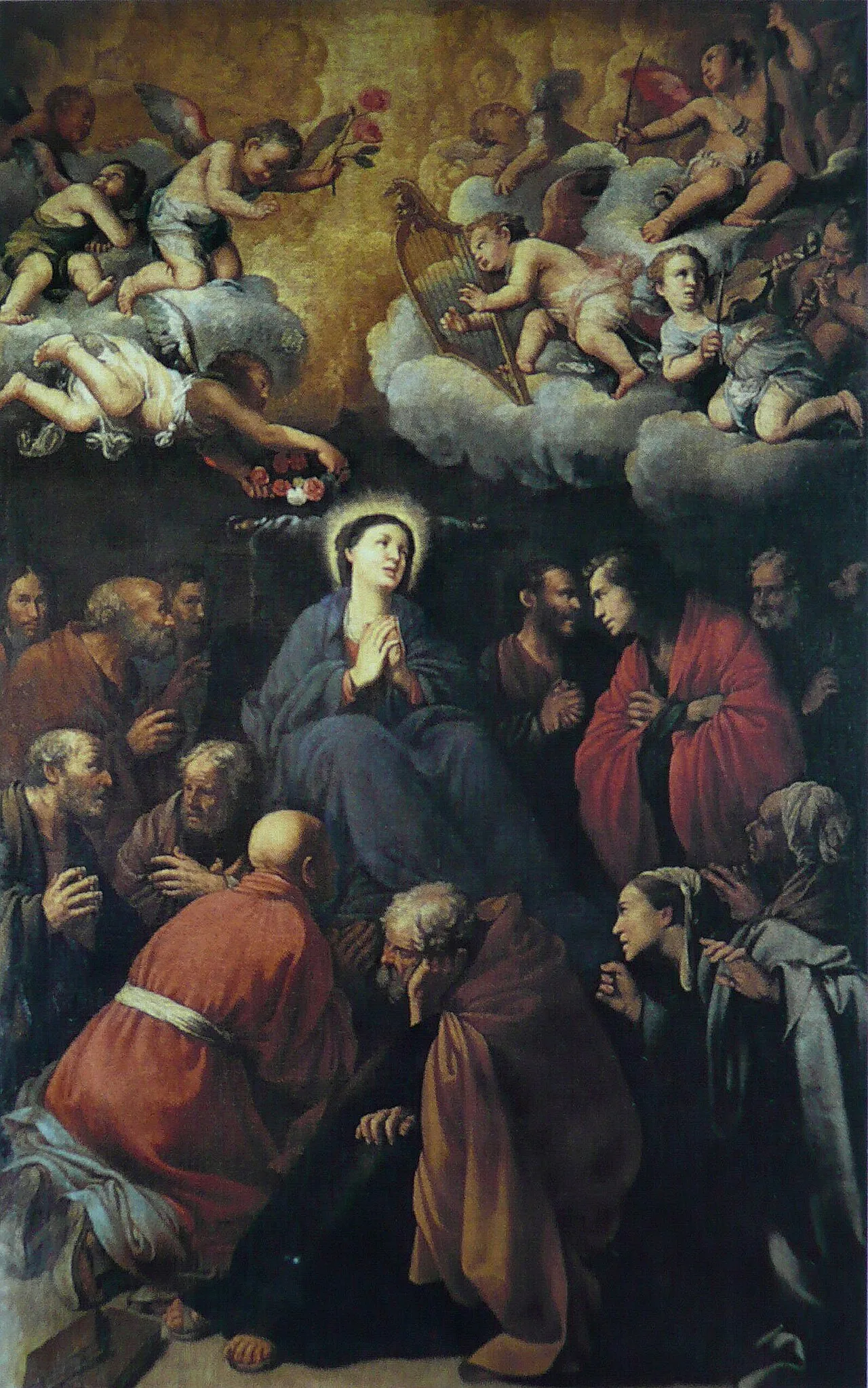
Carlo Saraceni, Death of the Virgin, 459 × 273 cm, Santa Maria della Scala, Rome
Death of the Virgin (Caravaggio)
Death of the Virgin is a c. 1604-1606 oil on canvas painting by the Italian Baroque master Caravaggio. Depicting the death of the Virgin Mary, it is housed in the Musée du Louvre in Paris.
A Rejected Altar and an Alleged Mistress
The parish of Santa Maria della Scala rejected the altarpiece due to an intolerable breach of decorum. Giulio Mancini recorded contemporary suspicions that Caravaggio chose a prostitute, possibly his mistress, as his visual model for the Virgin. The scandalized Carmelite fathers removed the canvas from the chapel and commissioned a substitute work by Carlo Saraceni instead.
From Wikipedia · CC BY-SA 4.0
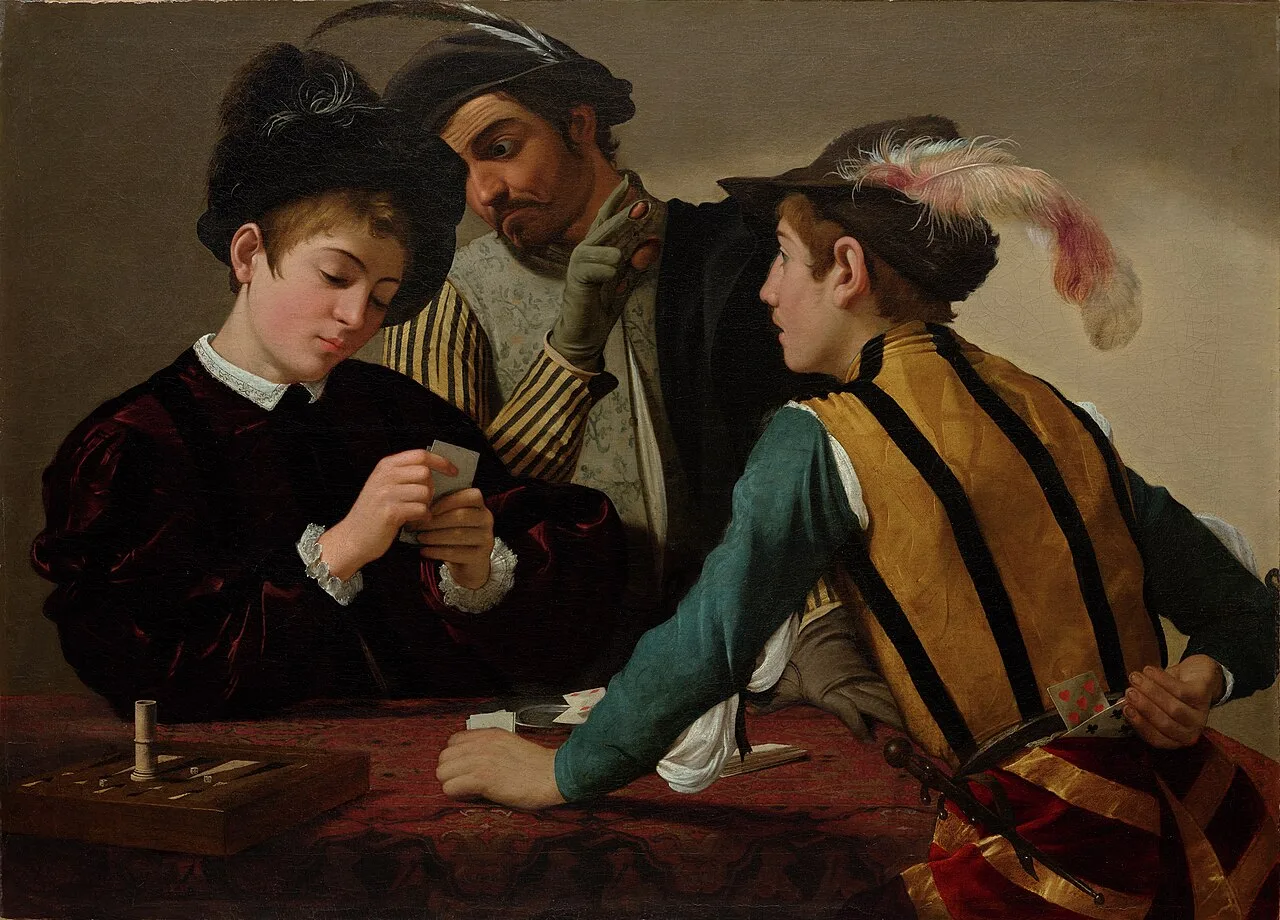
Caravaggio - The Cardsharps (1596-97) Kimbell Art Museum

The Cardsharp with the Ace of Diamonds by Georges de La Tour, c. 1620–1640.
The Cardsharps
The Cardsharps is a c. 1596–1597 painting by the Italian Baroque artist Caravaggio.
Escaping the Mass-Production Workshop
Before establishing his reputation, Caravaggio spent his early career painting decorative foliage for an established workshop. In January 1594, he left Arpino's workshop to begin selling paintings independently through the dealer Costantino. With the assistance of Prospero Orsi, an established painter of Mannerist grotesques, he quickly gained entry into influential artistic networks.
From Wikipedia · CC BY-SA 4.0
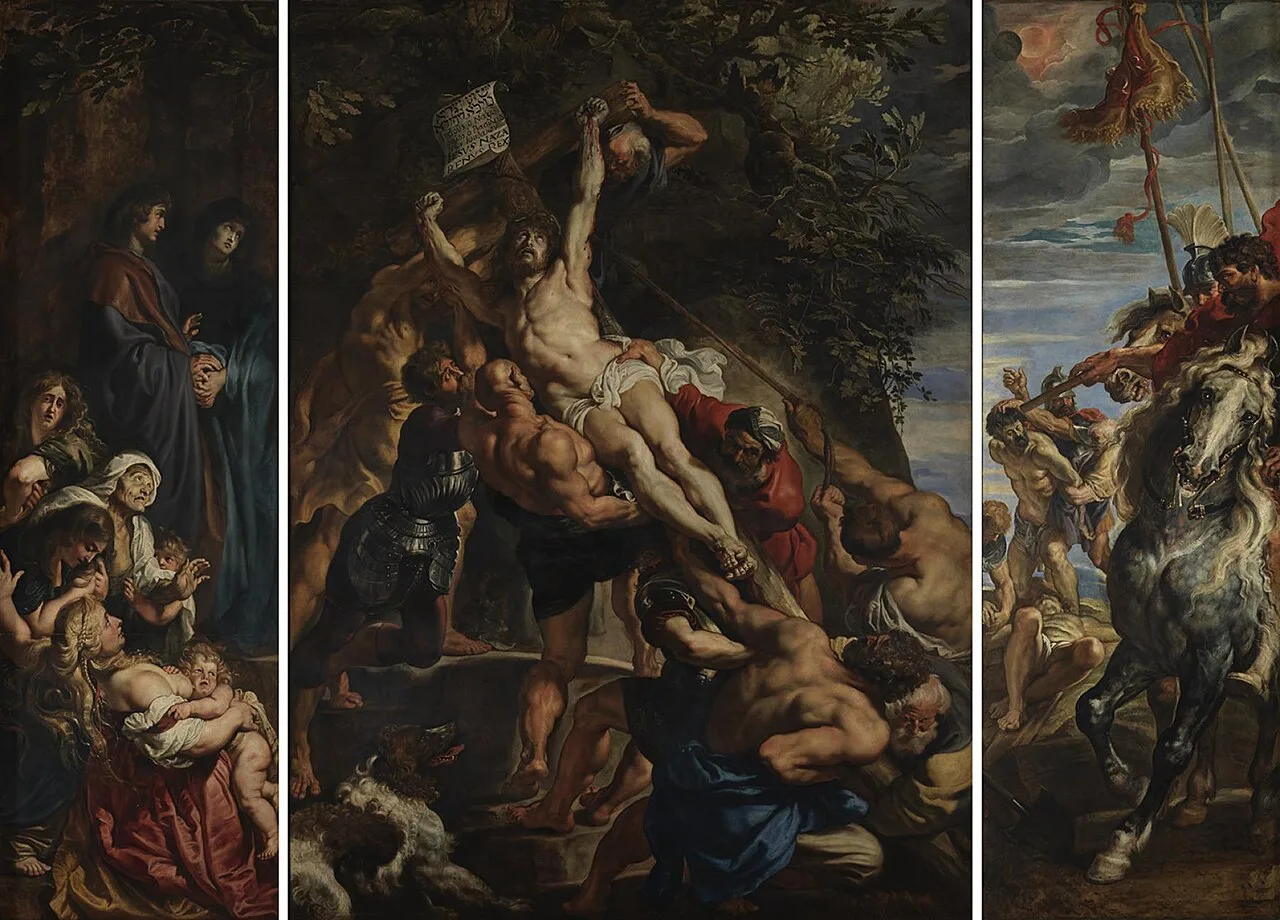
Peter Paul Rubens - Raising of the Cross (Antwerp Cathedral)
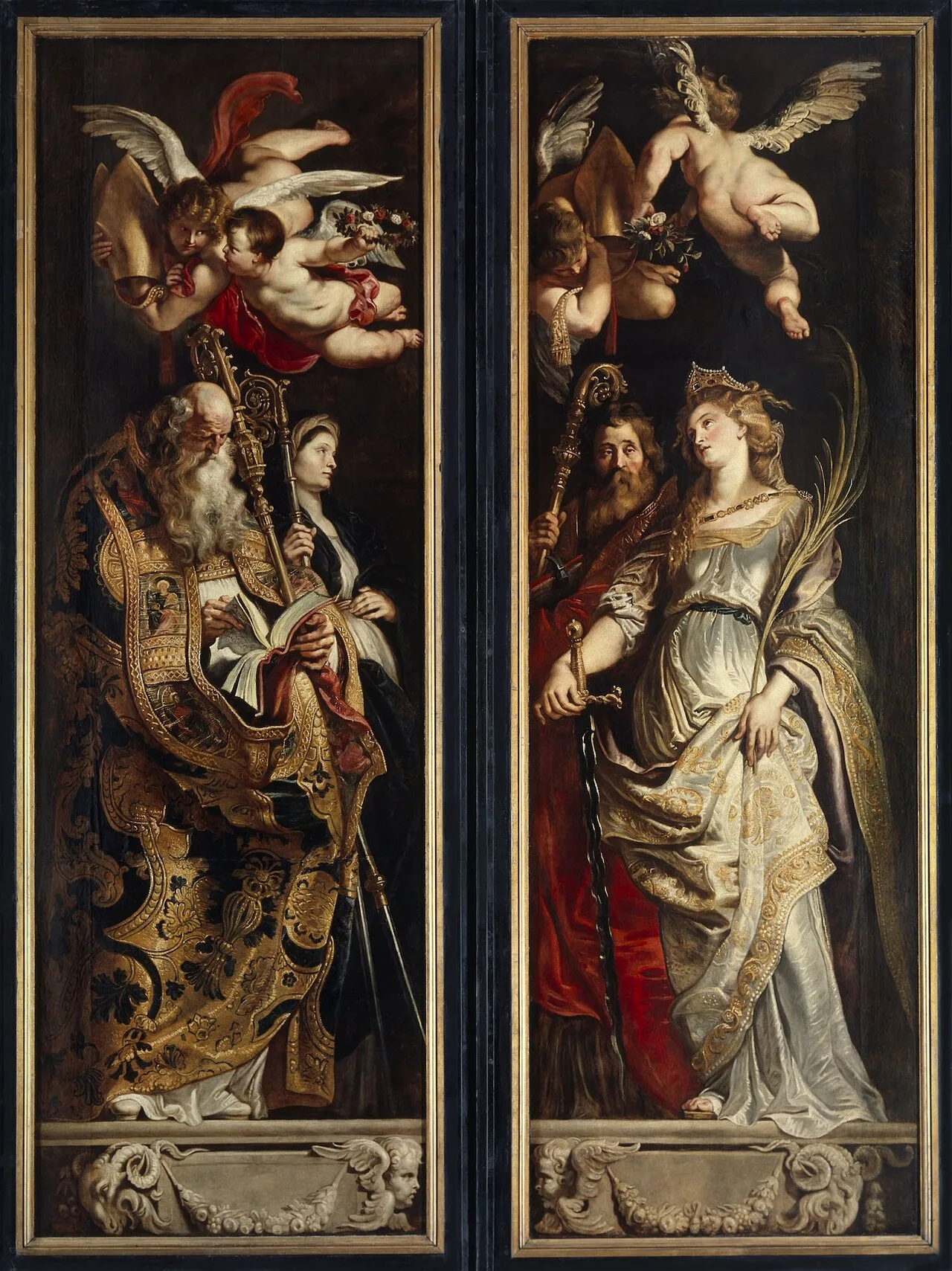
Closed view showing Saints Amand and Walburga (left) and Saints Eligius and Catherine of Alexandria (right)

High Altar of the St. Walburga Church showing the Raising of the Cross in its original setting (drawn by Piet Verhaert after an old painting)[2]

Jacopo Tintoretto, Crucifixion

Preparatory drawing, Louvre

The Raising of the Cross (1638), Art Gallery of Ontario
The Elevation of the Cross (Rubens)
The Elevation of the Cross is a large oil-on-panel triptych painted by Flemish artist Peter Paul Rubens in Antwerp between 1610 and 1611. It hangs in the Cathedral of Our Lady in Antwerp.
Staging a Spatial Pilgrimage to Golgotha
The high altar of the St. Walburga Church was elevated at unusual heights above an ancient Holy Sepulchre chapel restored in 1613. By placing the triptych directly over this chapel, the arrangement constituted a theatrical reenactment of the journey from the Jerusalem Church of the Holy Sepulchre to the Golgotha Chapel. This towering spatial dynamic unified the architectural zones, establishing a pioneering Baroque environment.
From Wikipedia · CC BY-SA 4.0

Caravaggio - I Musici

Cupid sharpening his arrows, painting by Robert Lefèvre exhibited at the Salon of 1798 (n°260)

The Lute Player, 1596, oil on canvas, Caravaggio

1596 Caravaggio, The Lute Player
The Musicians (Caravaggio)
The Musicians or Concert of Youths (c. 1595) is a painting by the Italian Baroque master Michelangelo Merisi da Caravaggio, commissioned by Cardinal Francesco Maria del Monte.
A Cardinal's Household Debut
Michelangelo Merisi da Caravaggio entered the household of Cardinal Francesco Maria del Monte sometime in 1595. The Musicians is considered the painter's first work created expressly for this patron, who possessed an avid interest in music. Access to del Monte's collection of expensive musical instruments provided Caravaggio with direct models. This immersion allowed the artist to authentically capture the moods and emotions of the emerging Baroque music scene.
From Wikipedia · CC BY-SA 4.0