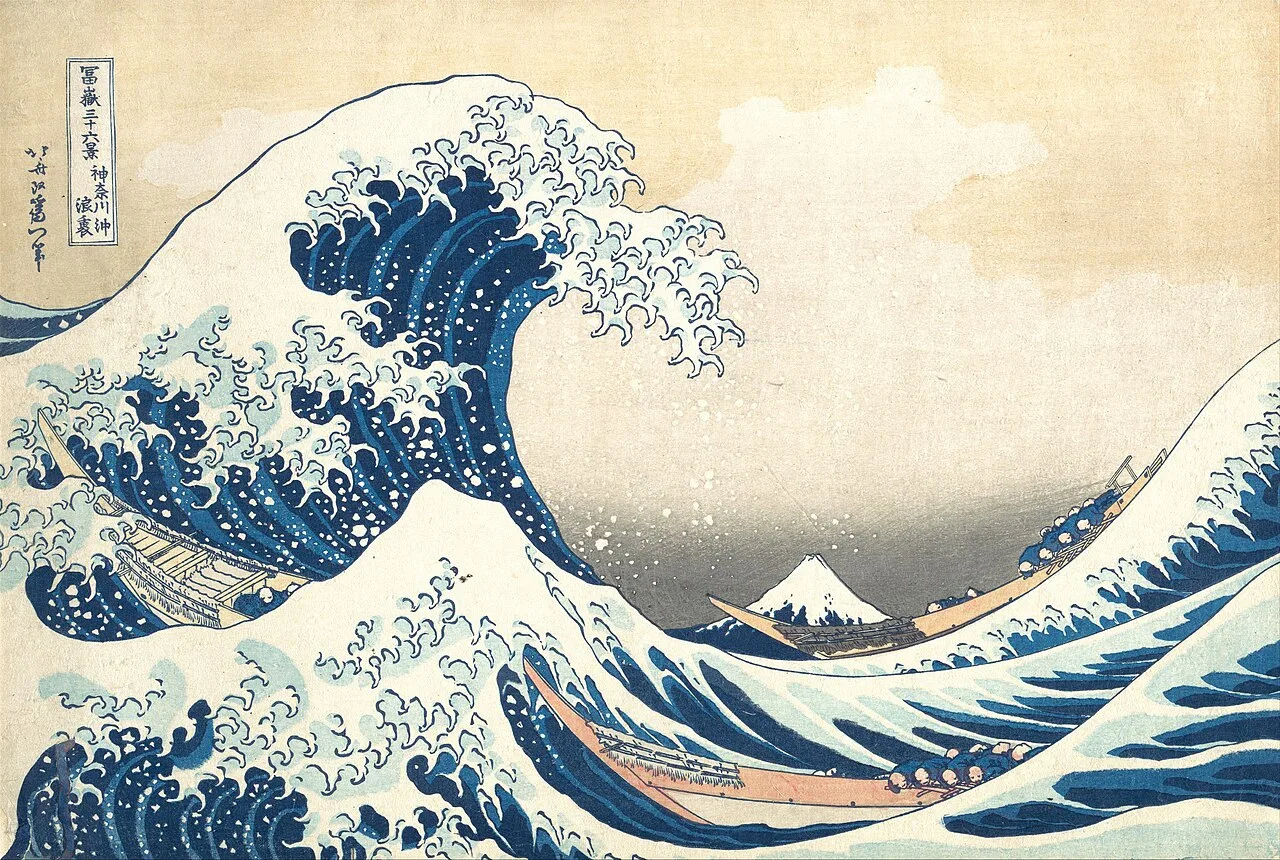
Tsunami by hokusai 19th century
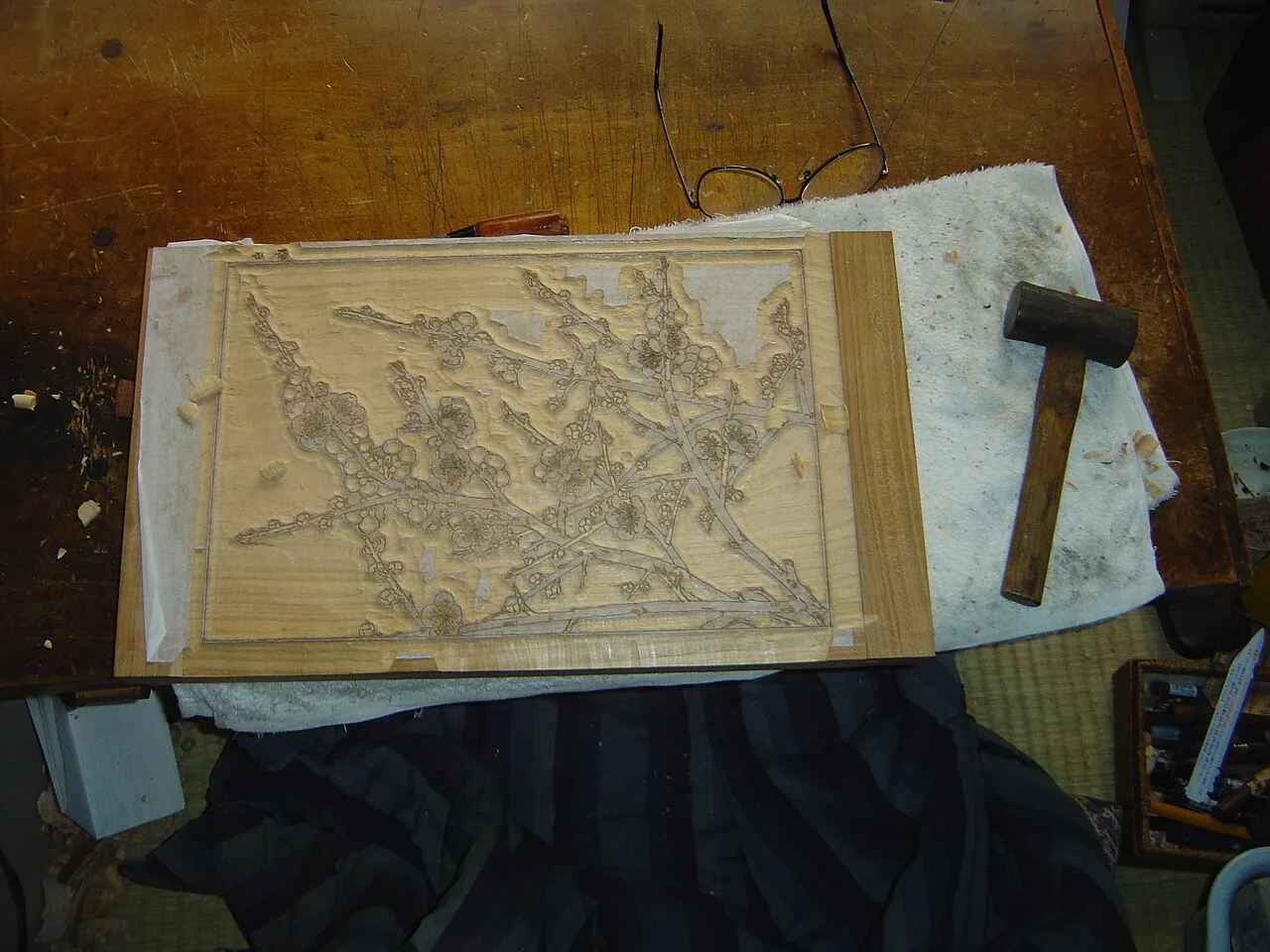
Plate used to print ukiyo-e
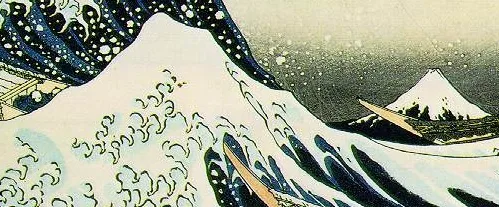
Detail of the small wave, which has a shape similar to the silhouette of Mount Fuji itself

Oshiokuri Hato Tsusen no Zu, created around 1805

Print at The British Museum

The Selsey Wave by the sculptor William Pye, at the entrance to Selsey, England, is a three-dimensional homage to The Great Wave off Kanagawa.
The Great Wave off Kanagawa
The Great Wave off Kanagawa is a woodblock print by the Japanese ukiyo-e artist Hokusai, created in late 1831. It is his best-known work and the first in his series Thirty-six Views of Mount Fuji.
Synthetic Pigment from Holland
The deep blue tones defining the masterpiece owe their existence to European trade rather than traditional Japanese dyes. Known locally as Berlin ai or bero ai, synthetic Prussian blue was imported from Holland beginning in 1820 and arrived in large quantities in 1829. Unlike delicate, quickly fading pigments, this resilient foreign color allowed Hokusai to revolutionize Japanese prints.
From Wikipedia · CC BY-SA 4.0
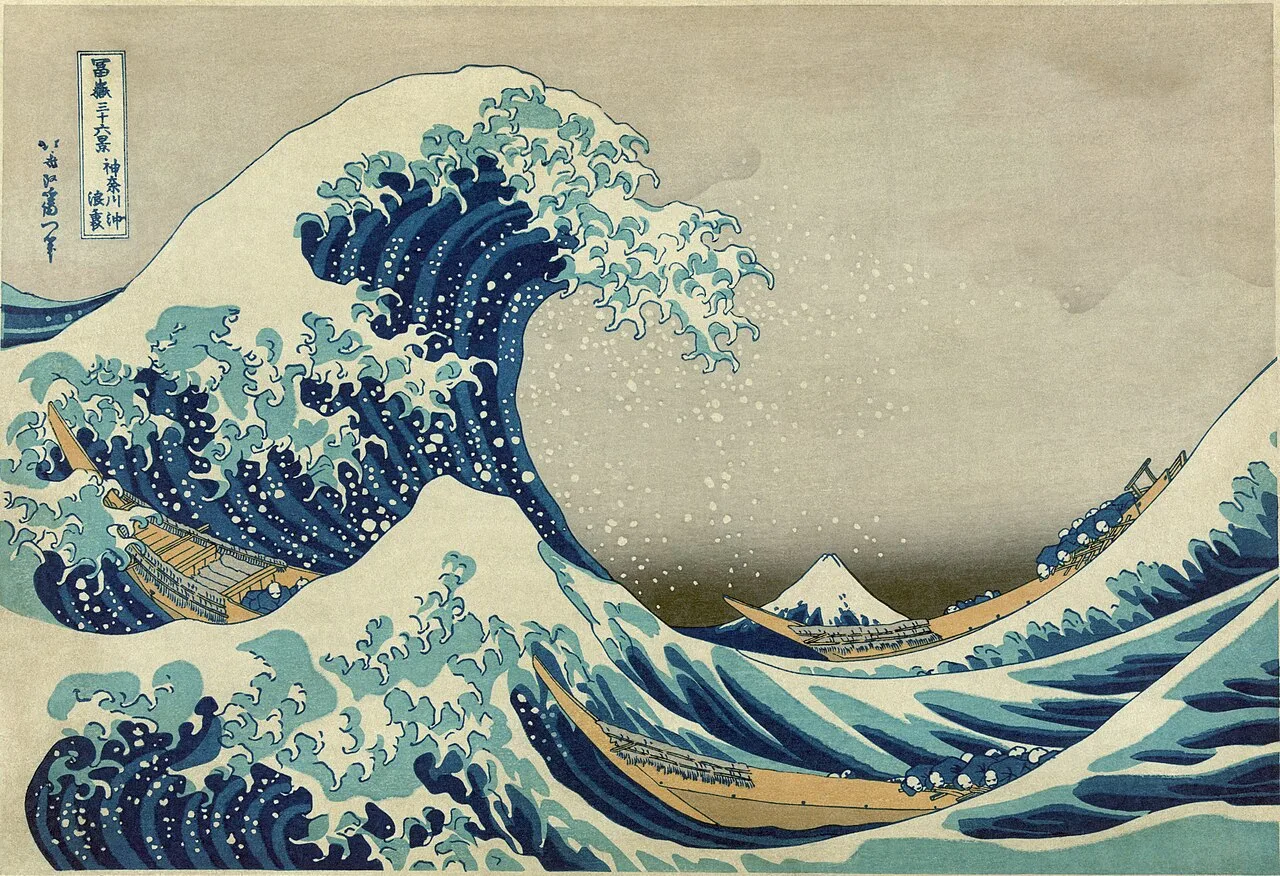
The Great Wave off Kanagawa, the best known print in the series (20th century reprint). Mount Fuji is in the center distance.
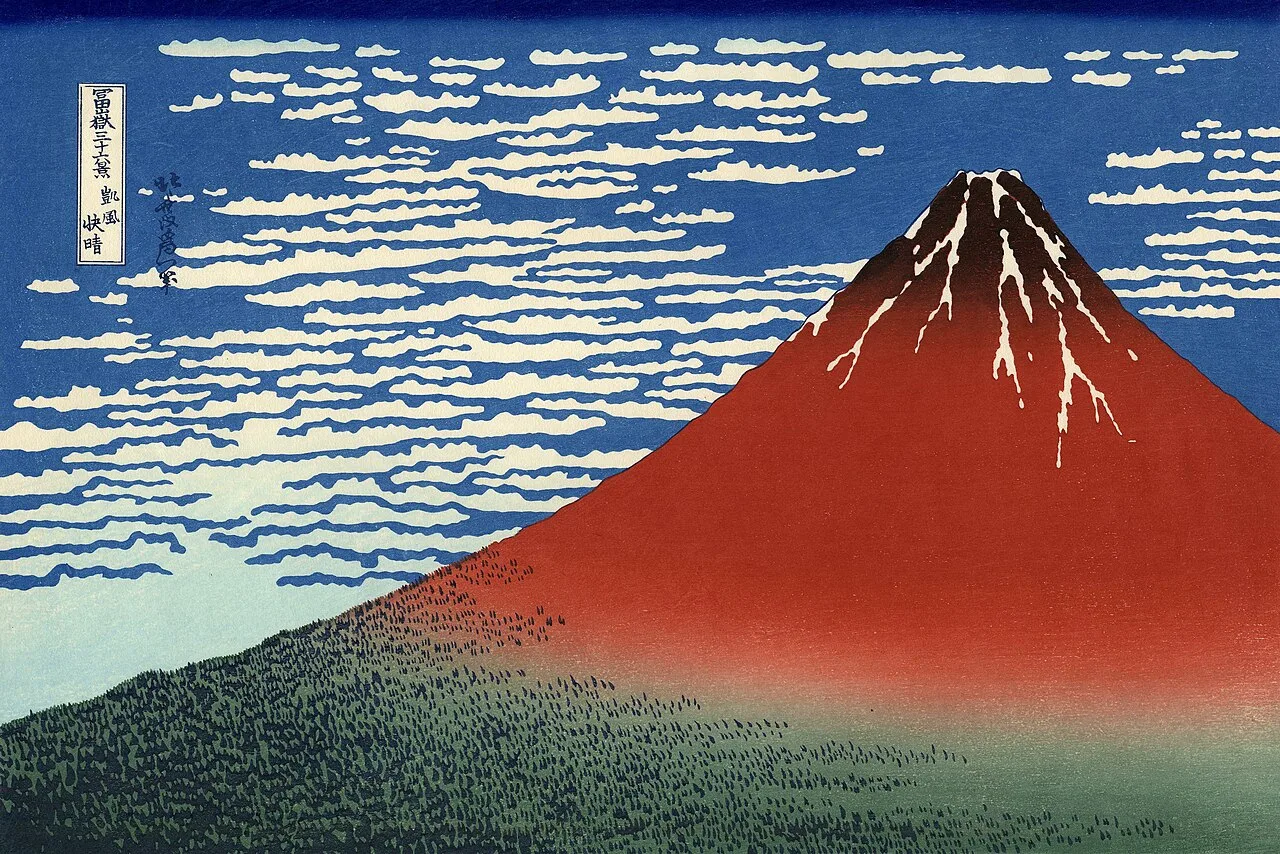
Red Fuji southern wind clear morning

Asakusa Honganji temple in th Eastern capital

冨嶽三十六景 常州牛掘-Ushibori in Hitachi Province (Jōshū Ushibori), from the series Thirty-six Views of Mount Fuji (Fugaku sanjūrokkei) MET DP141044

冨嶽三十六景 東海道吉田-Yoshida on the Tōkaidō (Tōkaidō Yoshida), from the series Thirty-six Views of Mount Fuji (Fugaku sanjūrokkei) MET DP141007

Nakahara in the Sagami province
Thirty-six Views of Mount Fuji
Thirty-six Views of Mount Fuji is a series of landscape prints by the Japanese ukiyo-e artist Hokusai, depicting Mount Fuji from different locations and in various seasons and weather conditions.
The Elixir on the Peak
Mount Fuji held a sacred allure in Japanese culture rooted in ancient folklore. In The Tale of the Bamboo Cutter, a goddess deposits the elixir of life directly on the peak. This legend established the mountain as a symbol of immortality, fueling Hokusai's personal artistic obsession when creating the landscape series.
From Wikipedia · CC BY-SA 4.0
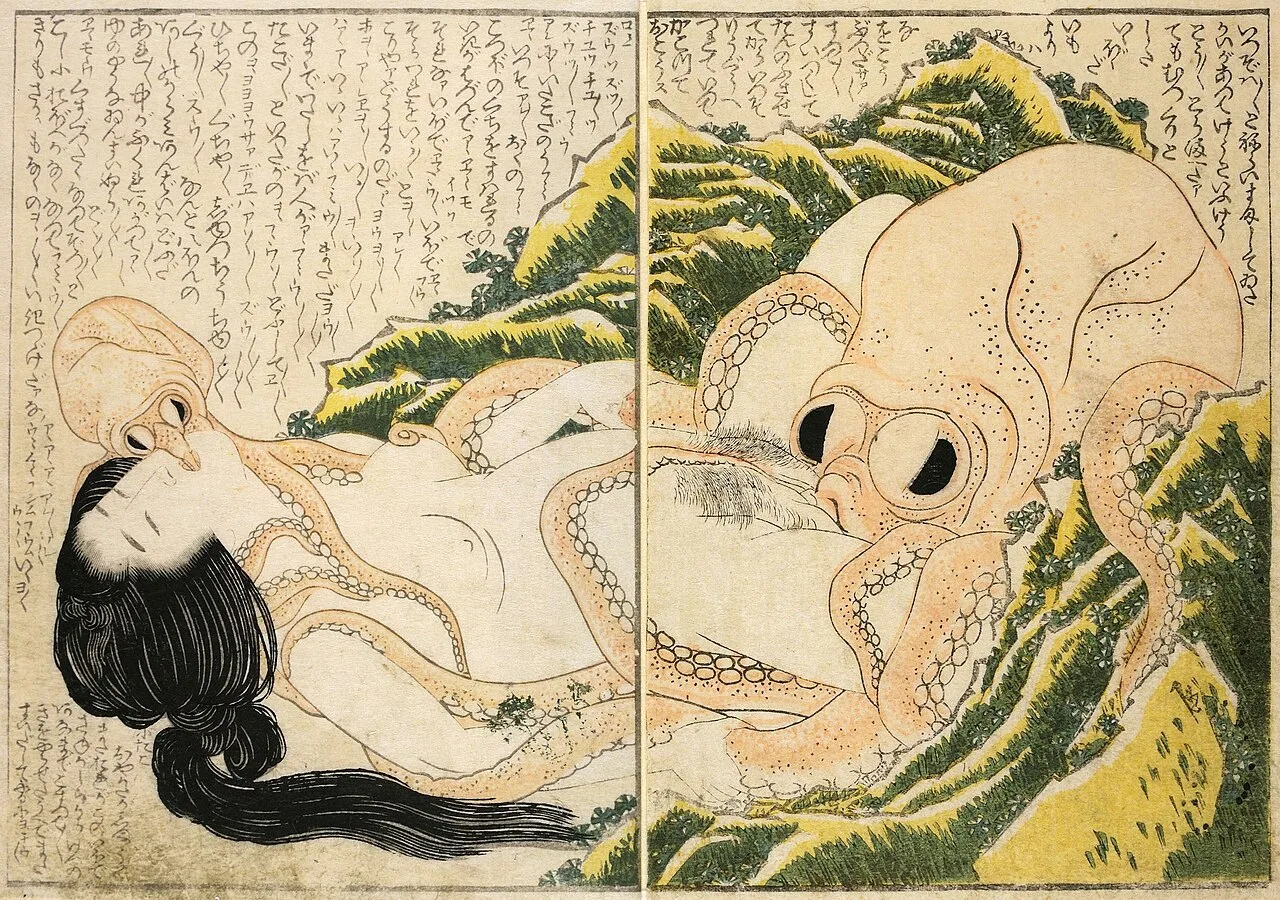
Girl Diver and Octopi; Diver and Two Octopi
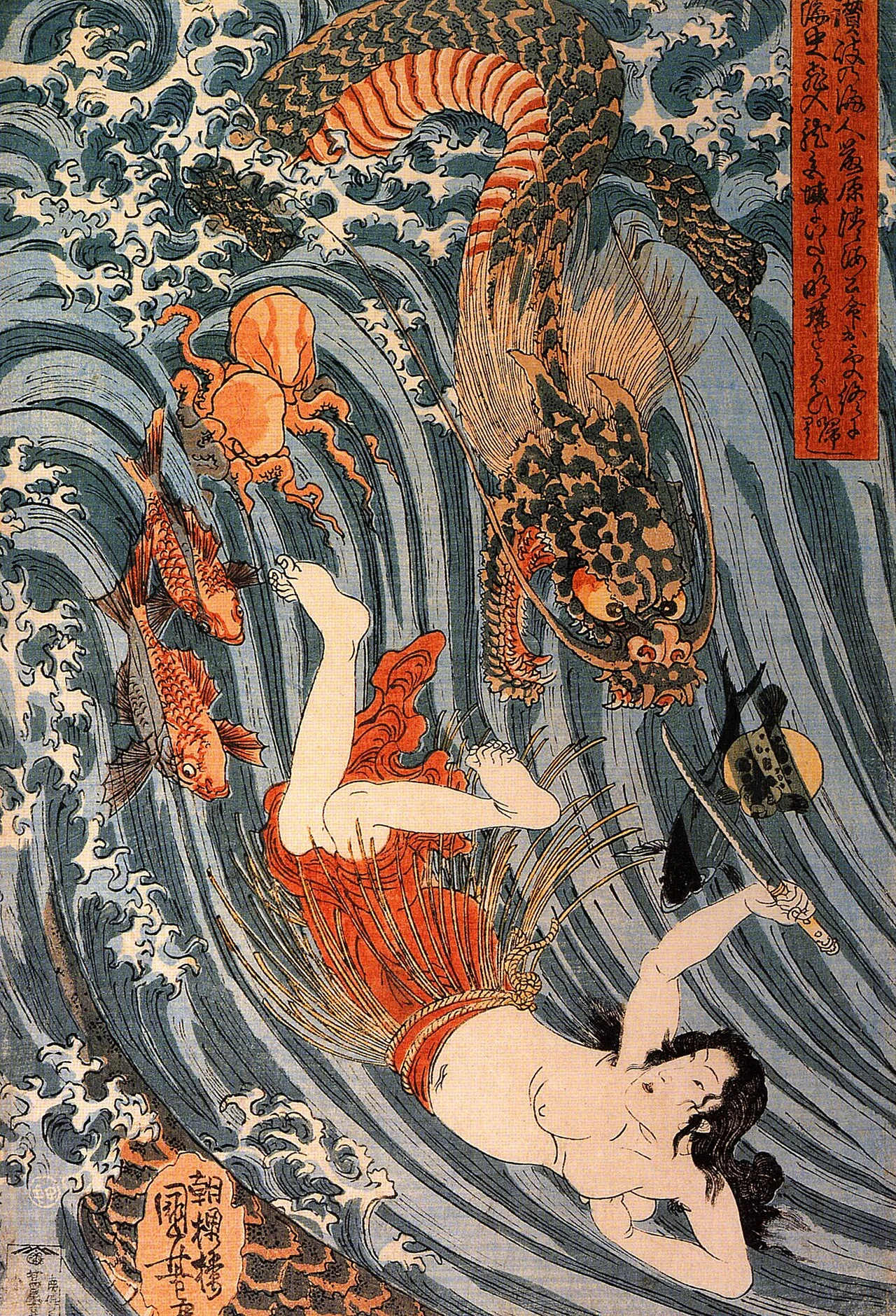
Woodblock print by Utagawa Kuniyoshi depicting Tamatori's escape from Ryūjin and his sea creatures
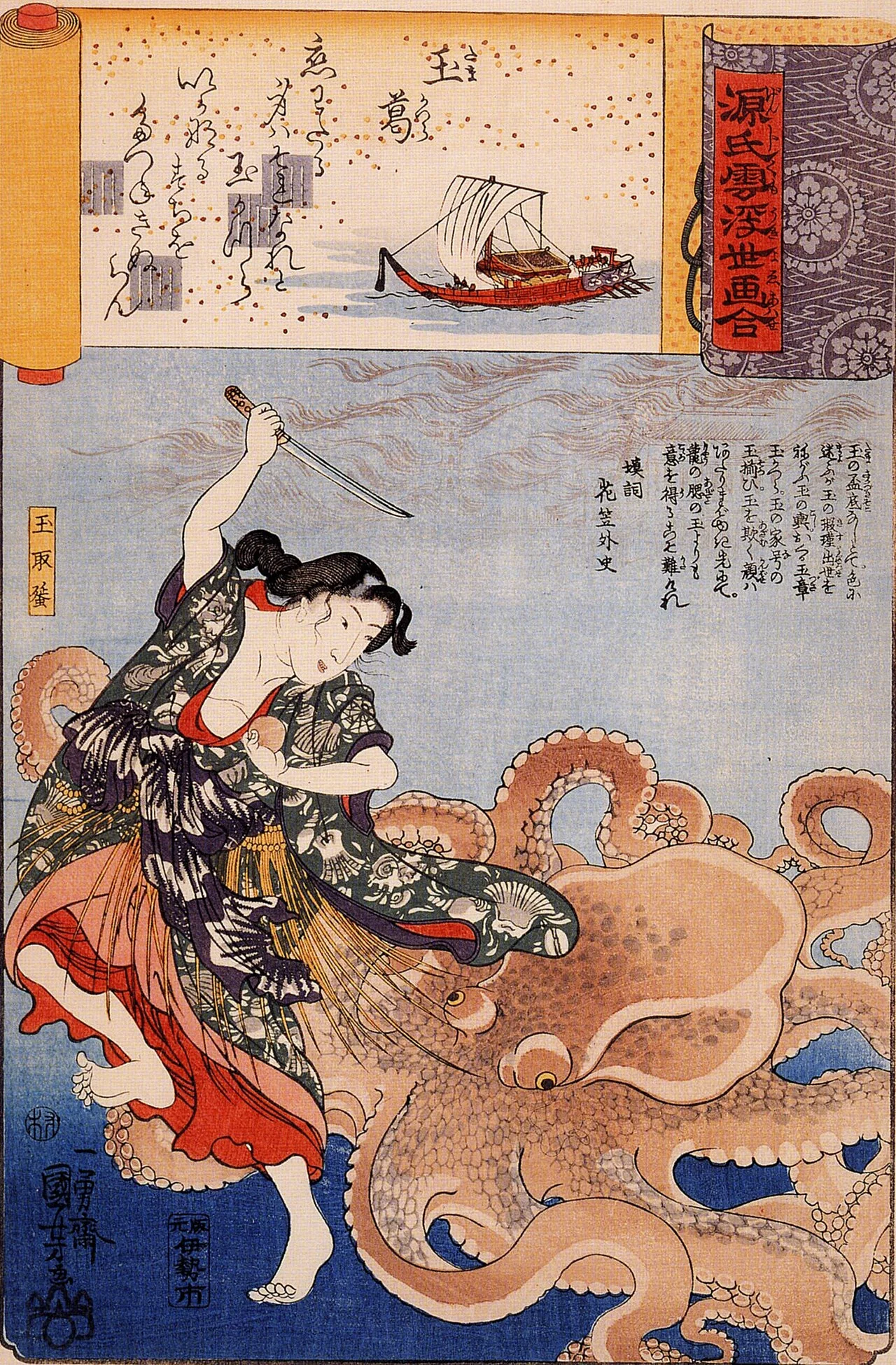
Woodblock print by Kuniyoshi depicting Tamatori fighting an octopus
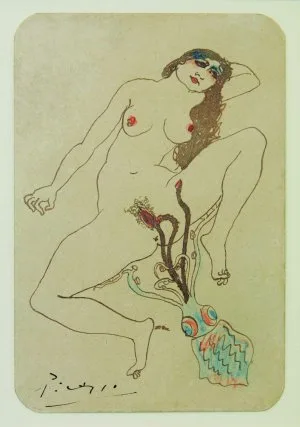
Dona i Pop ("Woman and Octopus") (1903, Catalan title), private drawing by Pablo Picasso
The Dream of the Fisherman's Wife
The Dream of the Fisherman's Wife is an 1814 woodblock-printed shunga design by the Japanese artist Hokusai, depicting a young ama diver entwined sexually with a pair of octopuses.
A Miniature Erotic Encounter from 1814
Published in the three-volume 1814 book Kinoe no Komatsu, Hokusai's famous design appeared within a remarkably compact format measuring just 16.51 cm × 22.23 cm. The print shows an ama pearl diver enveloped by two cephalopods—a larger octopus and its offspring assisting together. Originally published untitled, the scene has since circulated under various English translations, including Diver and Two Octopuses.
From Wikipedia · CC BY-SA 4.0

Illustration of Okabe from "Compilation of Views of Famous Sights along the Tōkaidō" (東海道名所図会, Tōkaidō meisho zue) station Ishibe (1797), which influenced Hiroshige

Hiroshige01 nihonbashi

Hiroshige-53-Stations-Hoeido-11-Hakone-MFA-01

Hiroshige22 okabe

Hiroshige-53-Stations-Hoeido-34-Futagawa-MFA-02

Hiroshige45 ishiyakushi
The Fifty-three Stations of the Tōkaidō
The Fifty-Three Stations of the Tōkaidō is a series of ukiyo-e woodcut prints created by Utagawa Hiroshige after his first travel along the Tōkaidō in 1832.
Shogunate Mission Behind the Scenery
In 1832, Hiroshige embarked on the journey that inspired his landmark series under official government circumstances. He traveled the road from Edo to Kyoto as part of a delegation escorting horses designated for the imperial court. The animals were an annual symbolic gift sent by the shōgun to recognize the emperor's divine status. This official transit directly inspired the artist's initial sketches.
From Wikipedia · CC BY-SA 4.0
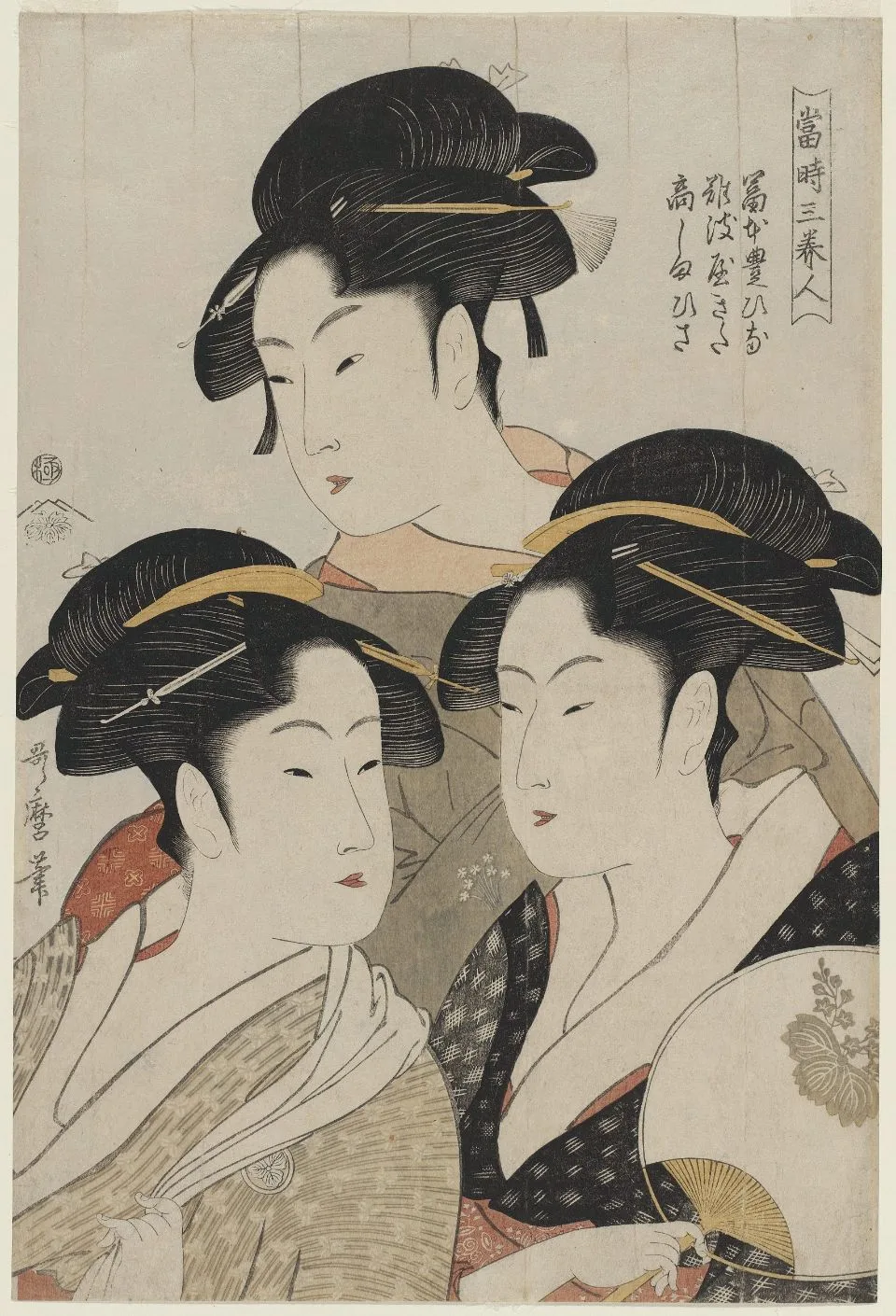
Colour print of three young Japanese women dressed in fine kimonos
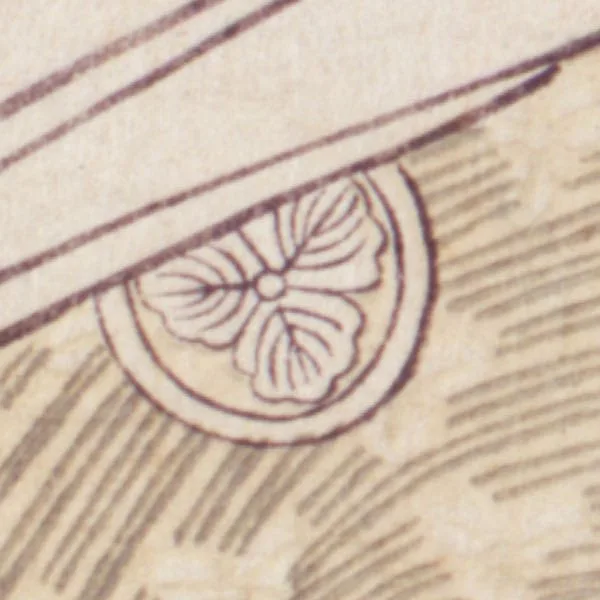
Close-up of a three-leaved crest in a circle
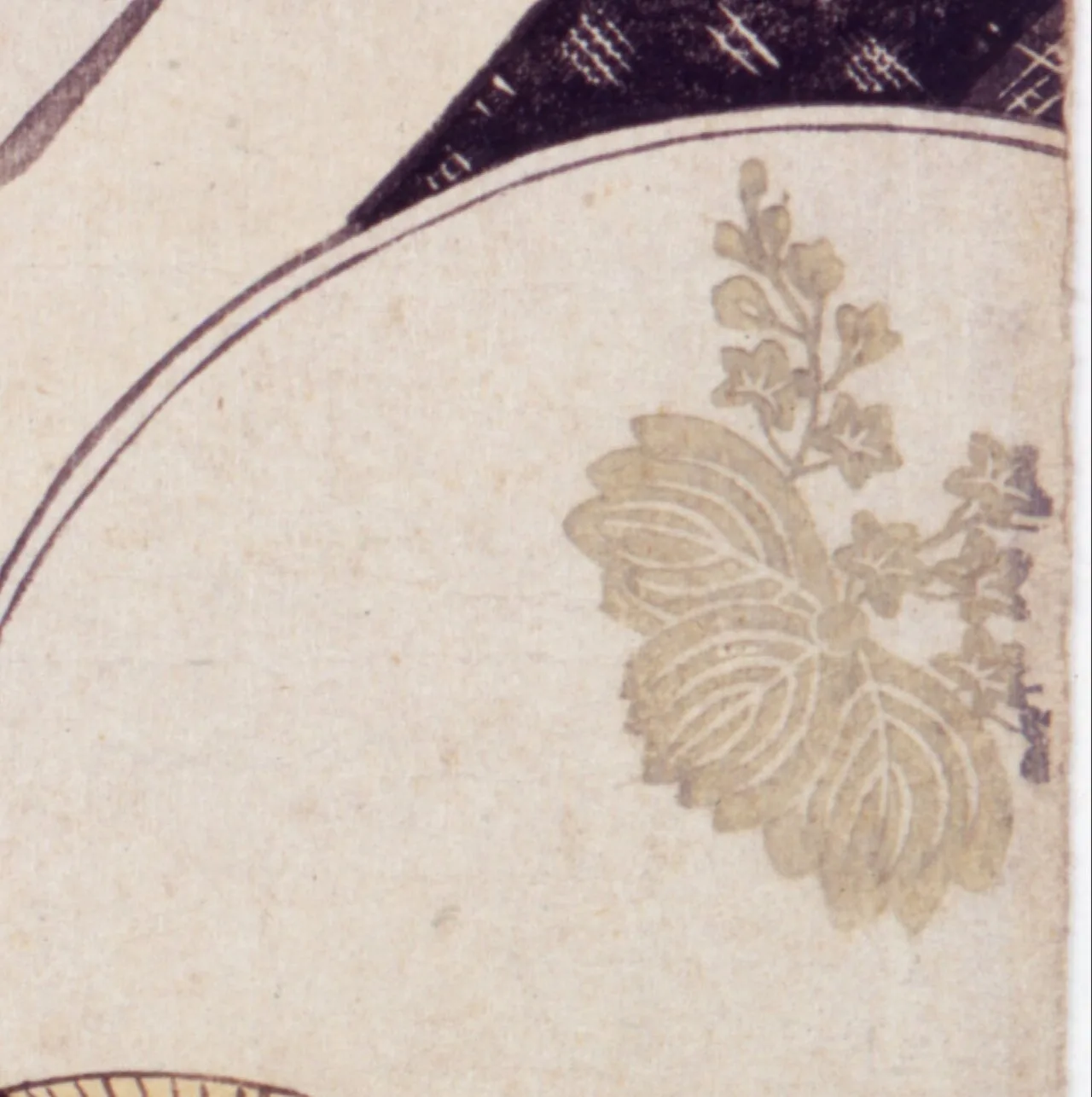
Close-up of a leafy crest on a hand fan
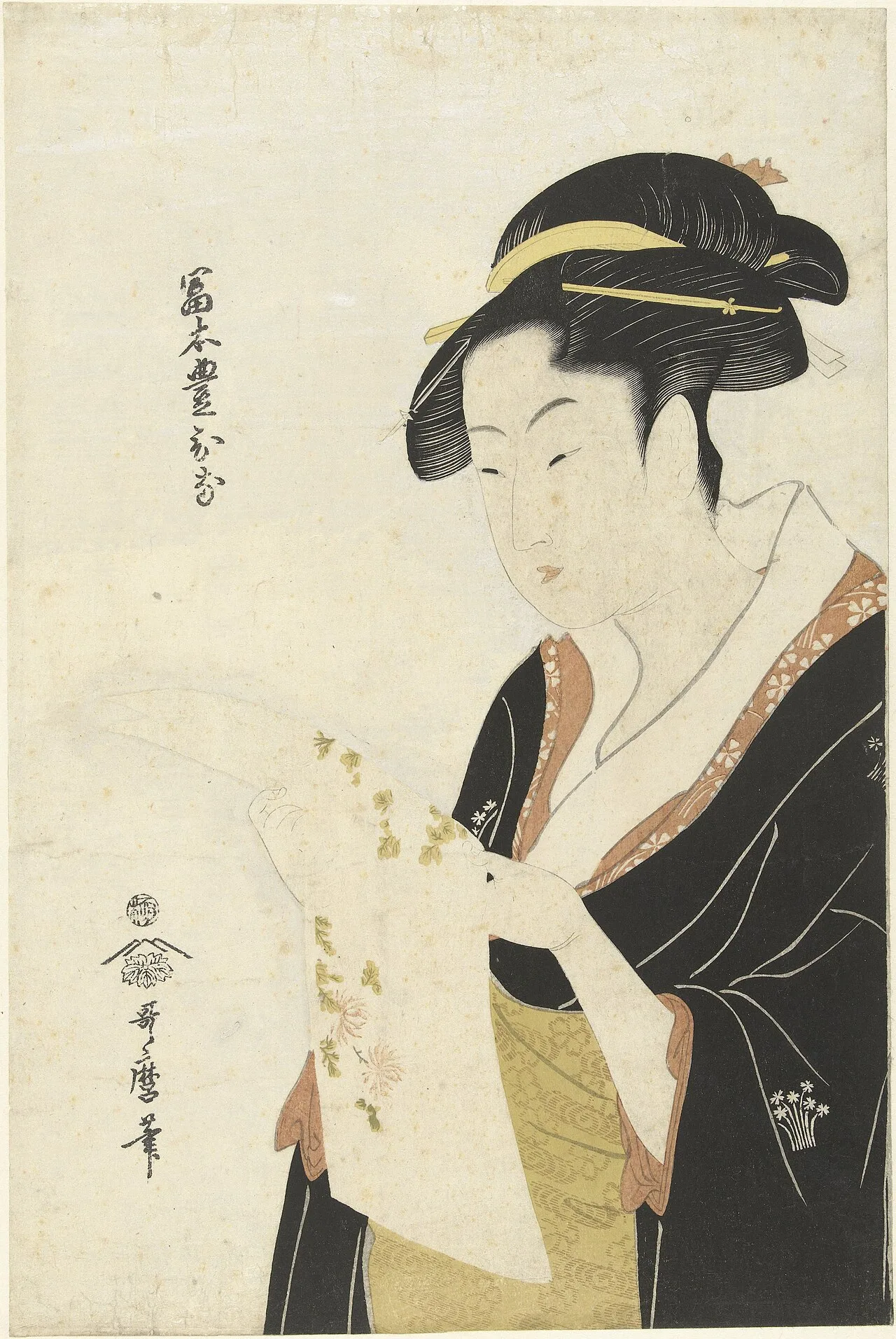
Illustration of a young Japanese woman in a kimono reading a letter
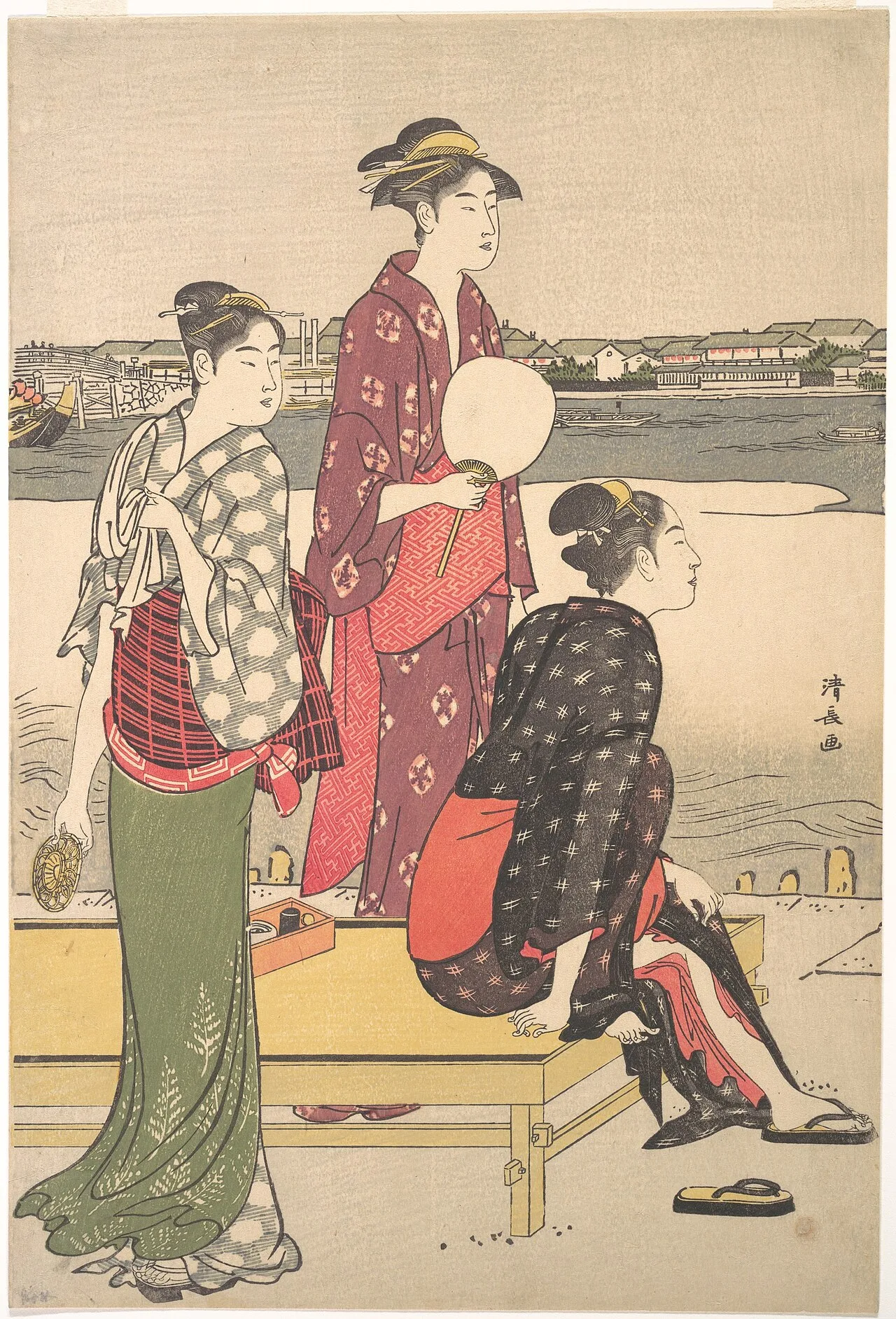
The tall, graceful beauties of Kiyonaga's prints influenced Utamaro.Evening on the Banks of the Sumida River (right half of a diptych), late 18th century
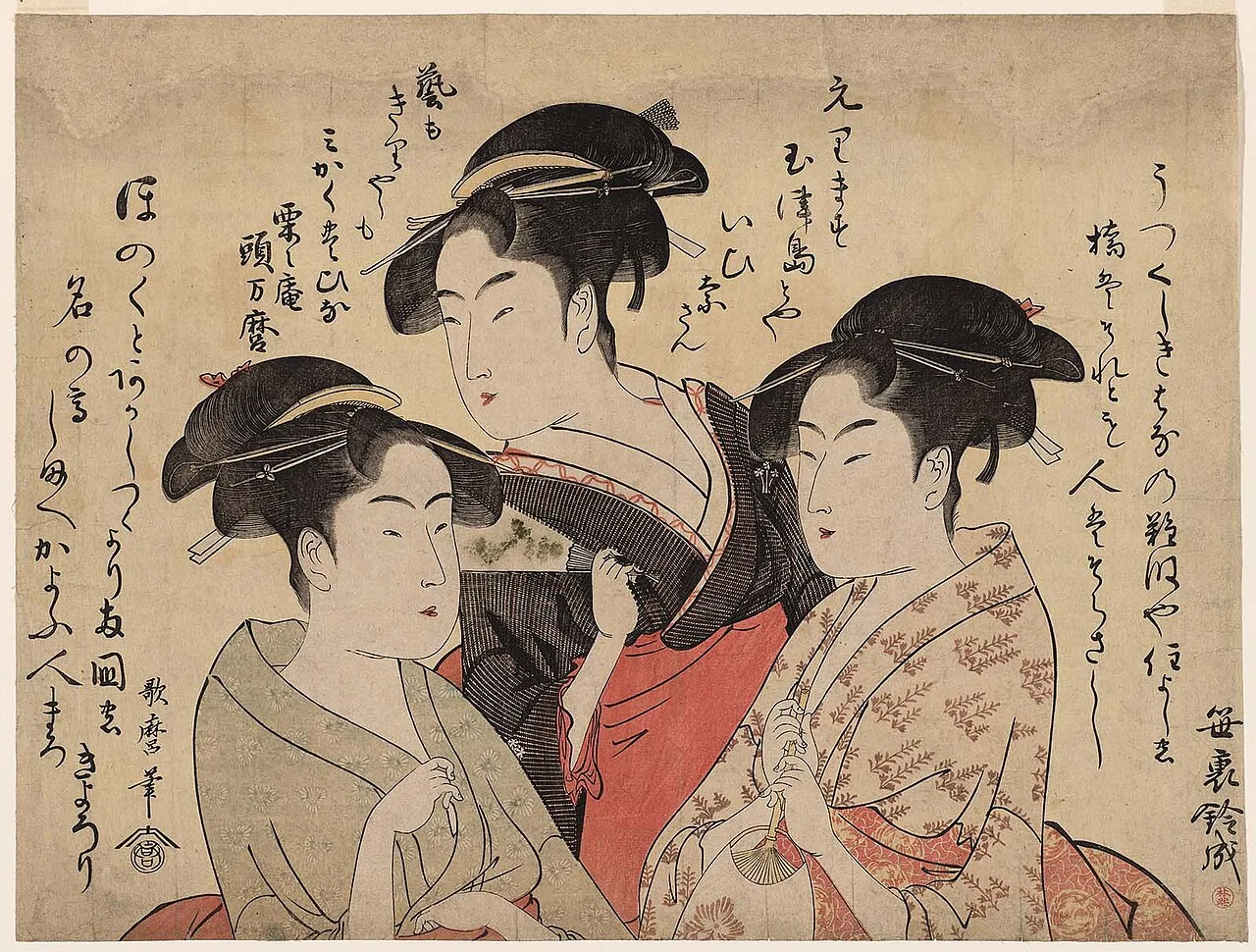
Colour print of three young Japanese women dressed in fine kimonos. Much Japanese writing surrounds the composition.
Three Beauties of the Present Day
Three Beauties of the Present Day is a c. 1792–93 colour woodblock print by Japanese ukiyo-e artist Kitagawa Utamaro depicting three celebrity beauties of the time.
Elevating Everyday Waitresses Above Courtesans
Ukiyo-e prints traditionally showcased courtesans from pleasure districts, but Utamaro departed from convention by featuring young women known around Edo for their beauty. The triangular composition portrays geisha Tomimoto Toyohina alongside teahouse waitresses Naniwaya Kita and Takashima Hisa. This portrait celebrated accessible working women rather than remote pleasure district entertainers.
From Wikipedia · CC BY-SA 4.0
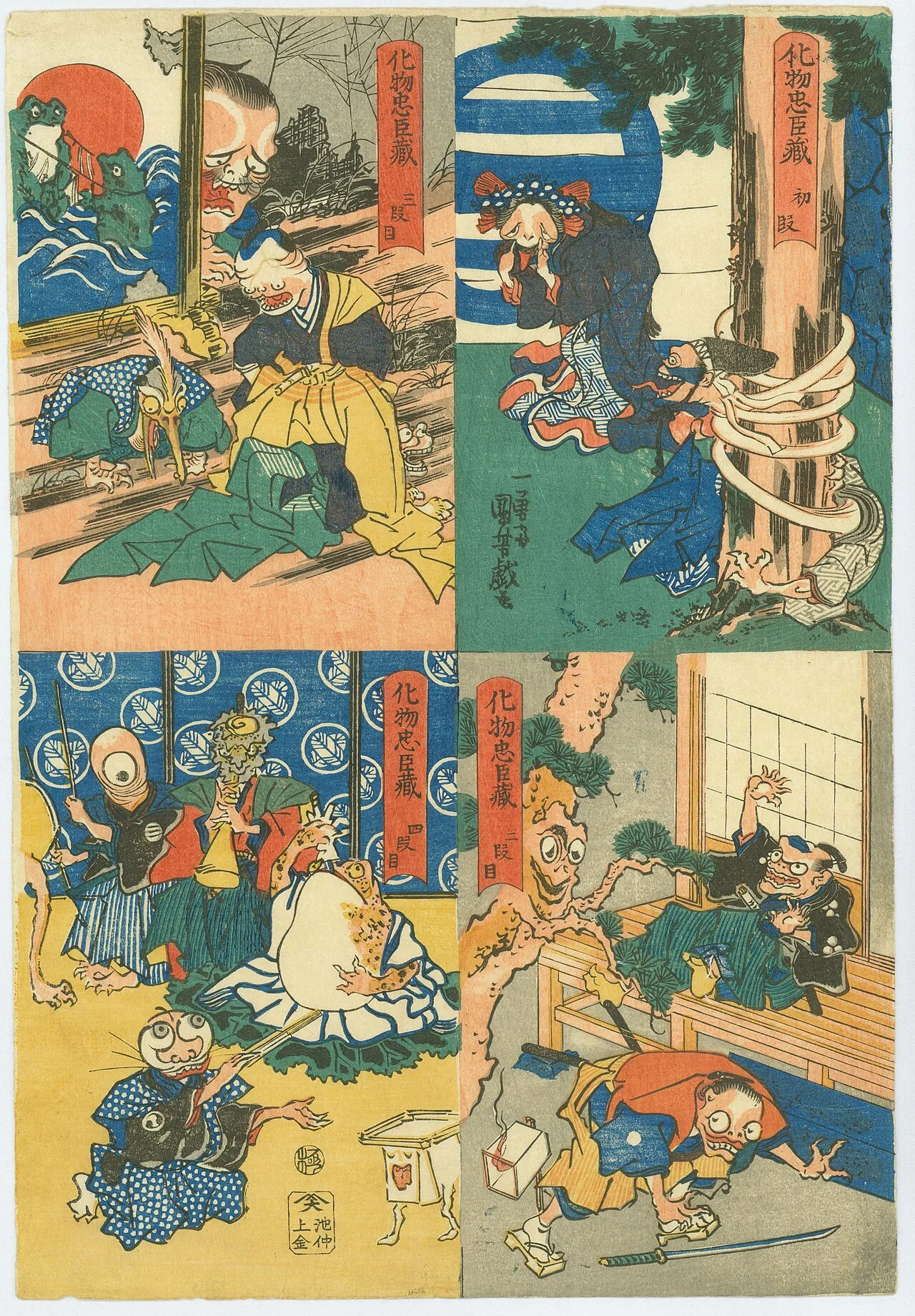
Utagawa Kuniyoshi, The Monster's Chūshingura (Bakemono Chūshingura), ca. 1836, Princeton University Art Museum, Acts 1–4 of the Kanadehon Chūshingura with act one at top right, act two at bottom right, act three at top left, act four at bottom left
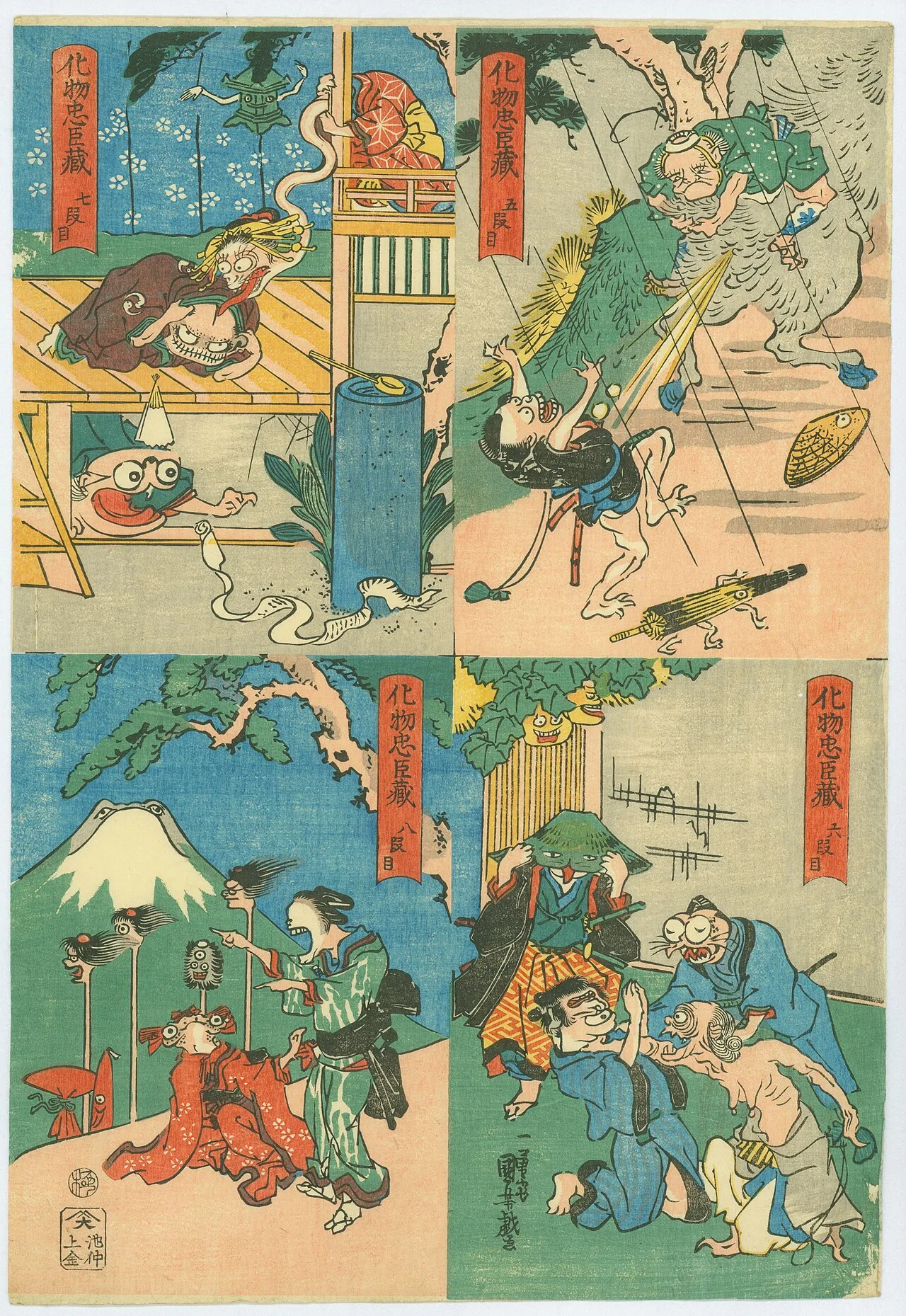
Utagawa Kuniyoshi, The Monster's Chūshingura (Bakemono Chūshingura), ca. 1836, Princeton University Art Museum, Acts 5–8 of the Kanadehon Chūshingura with act five at top right, act six at bottom right, act seven at top left, act eight at bottom left
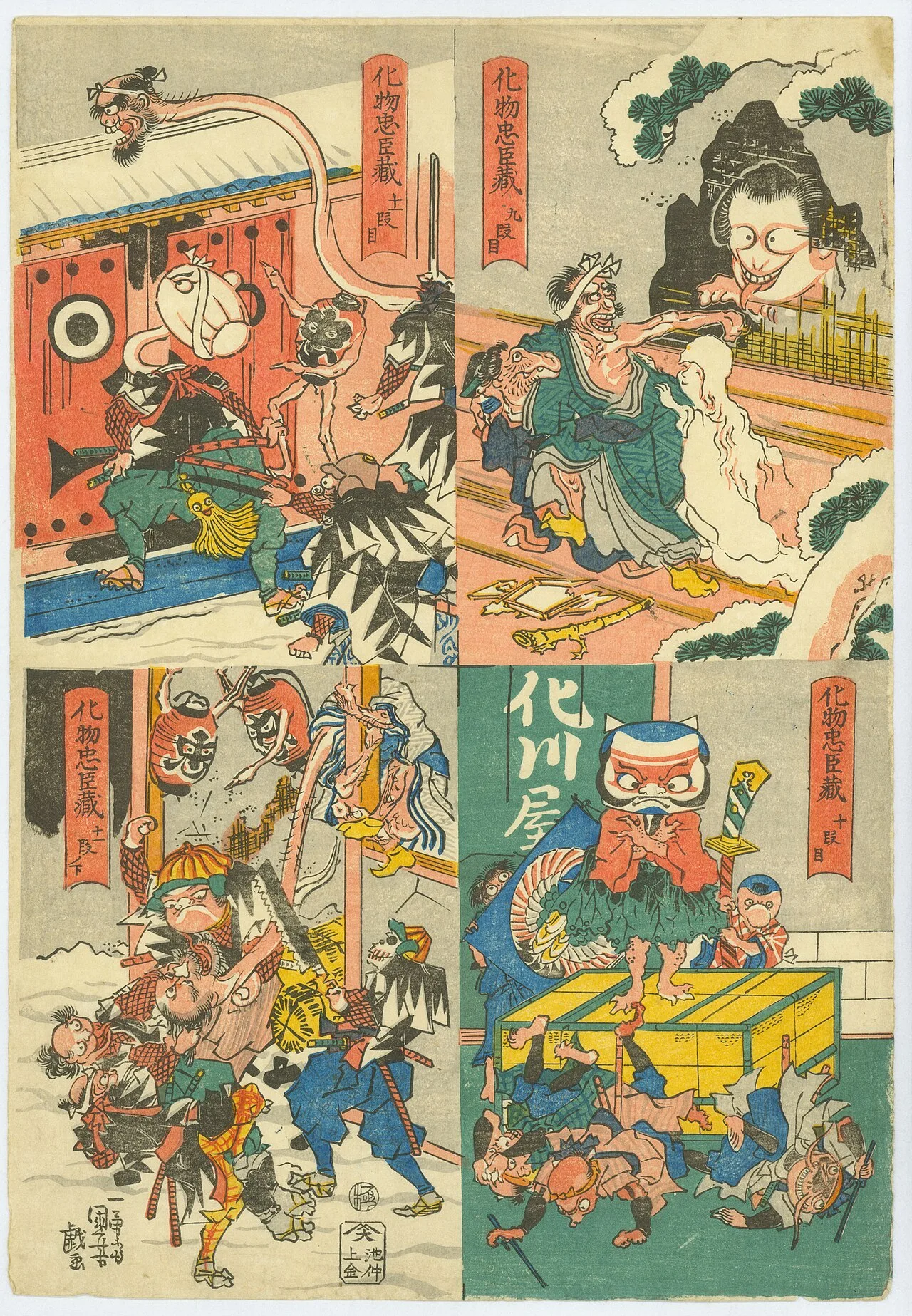
Utagawa Kuniyoshi, The Monster's Chūshingura (Bakemono Chūshingura), ca. 1836, Princeton University Art Museum, Acts 9–11 of the Kanadehon Chūshingura with act nine at top right, act ten at bottom right, act eleven, scene 1, at top left, act eleven, scene 2 at bottom left
Kanadehon Chūshingura
Kanadehon Chūshingura, or The Treasury of Loyal Retainers, is an 11-act bunraku puppet play composed in 1748 and one of the most popular Japanese plays.
Circumventing Censorship Through 14th-Century Ciphers
Playwrights circumvented political censorship by disguising contemporary scandals as medieval history. In 1706, Chikamatsu wrote a puppet play setting recent events in the 14th century. The historical figure Kō no Moronao was deployed as a direct cipher for Kira Yoshinaka, who had been attacked by Asano Naganori. This naming device successfully bypassed authorities and established the character framework for later adaptations.
From Wikipedia · CC BY-SA 4.0
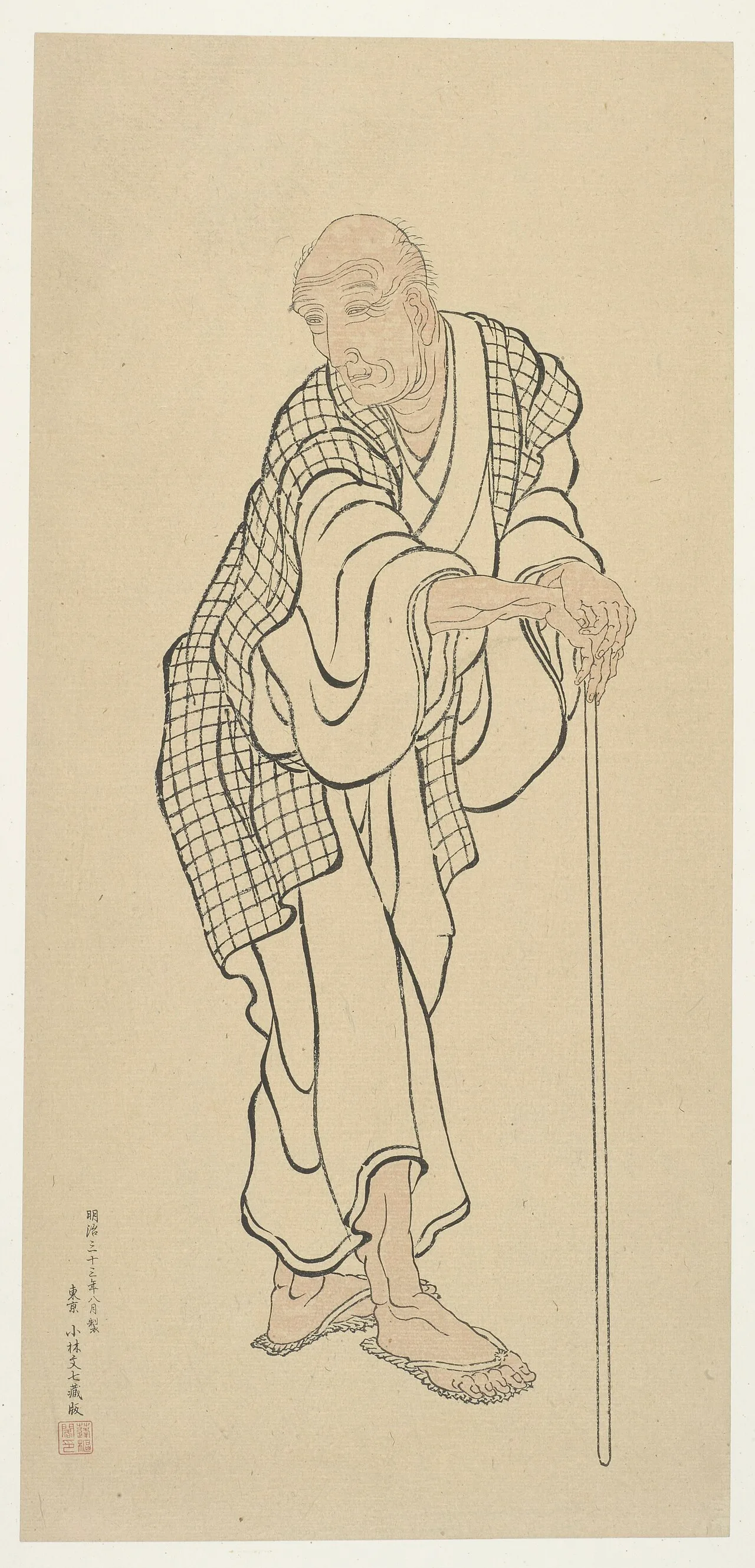
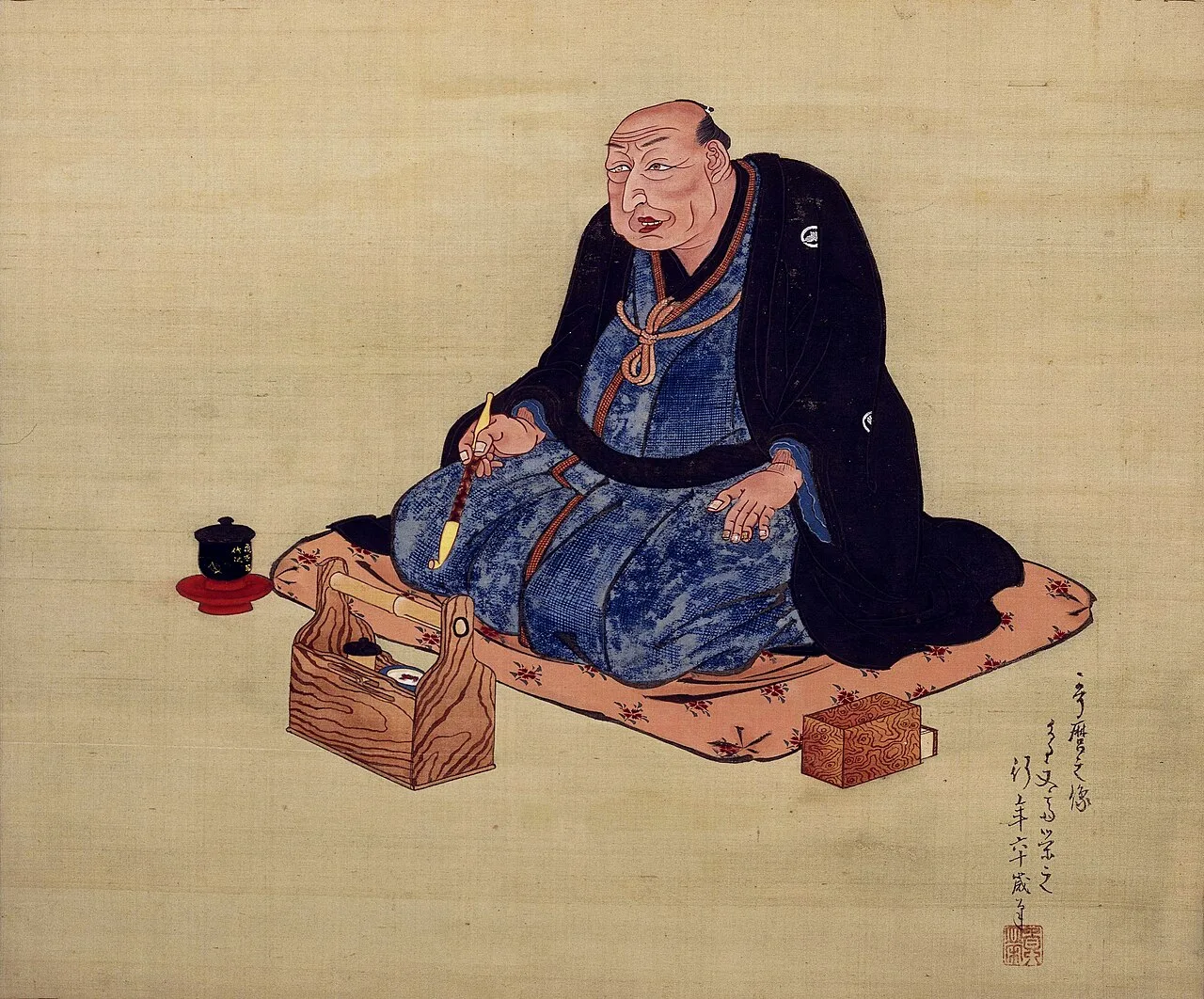
Hokusai as an old man
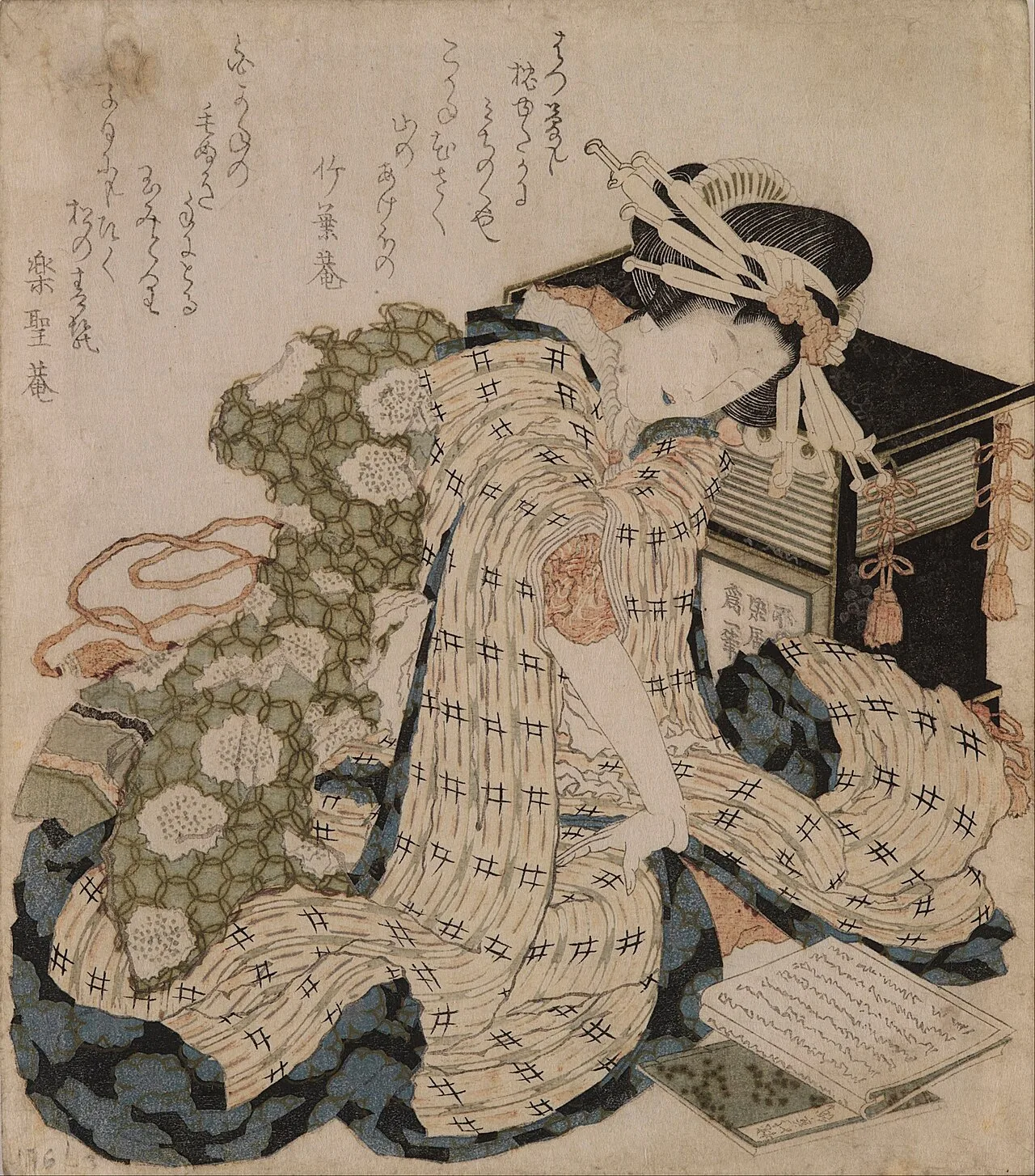
Courtesan Asleep, a bijin-ga surimono print, c. late 18th to early 19th century
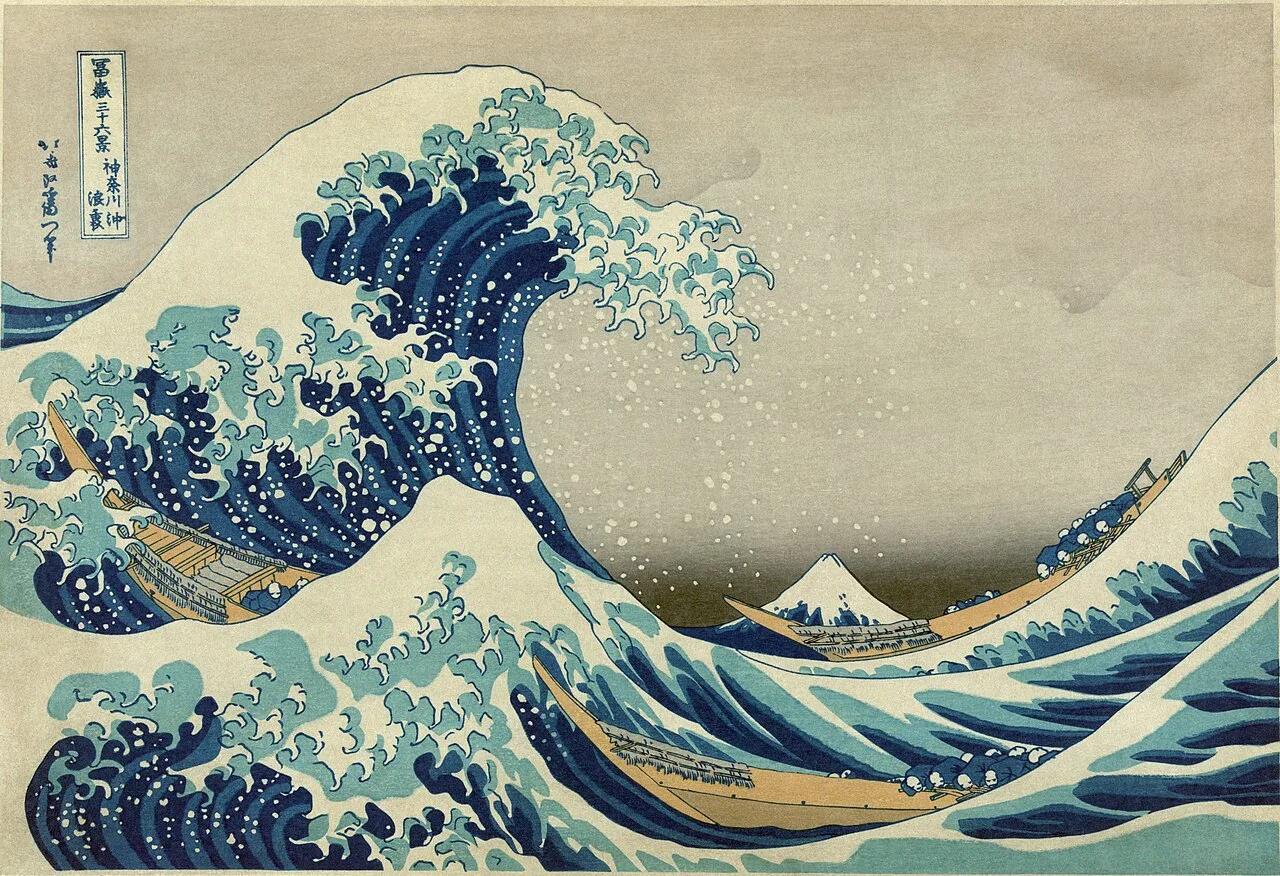
The Great Wave off Kanagawa, Hokusai's most famous print, the first in the series Thirty-six Views of Mount Fuji, c. 1829–1832
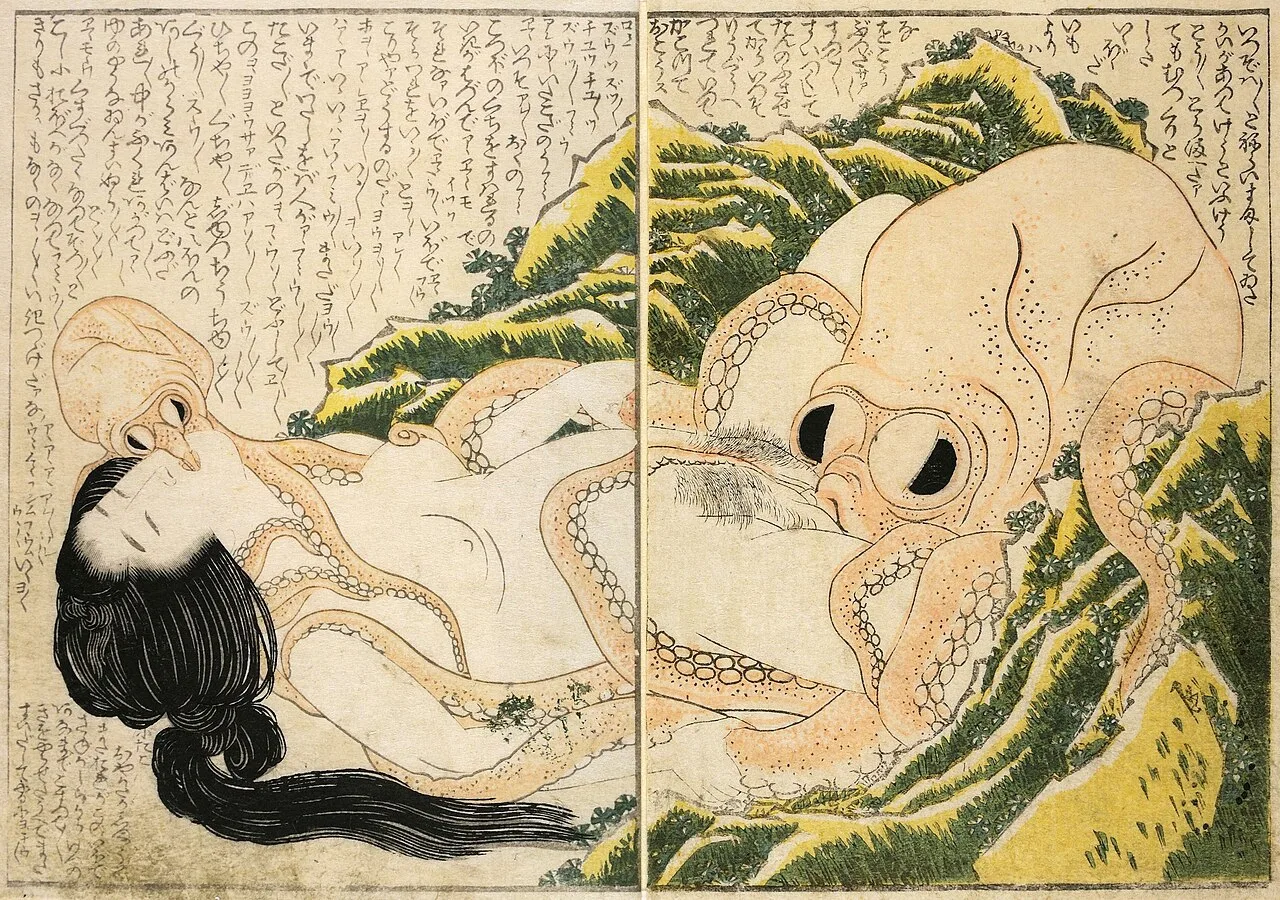
The Dream of the Fisherman's Wife (1814), included in Kinoe no Komatsu, a three-volume book of shunga erotica
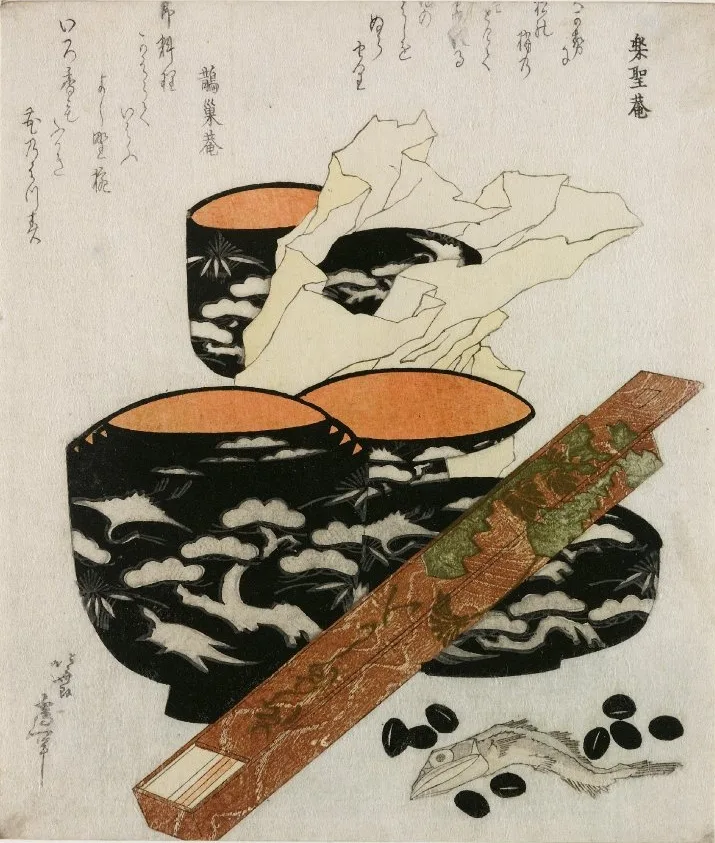
Still Life, surimono print

Amida Falls, from A Tour of Japanese Waterfalls
Hokusai
Katsushika Hokusai was a Japanese ukiyo-e painter and printmaker of the Edo period whose series Thirty-Six Views of Mount Fuji includes the iconic print The Great Wave off Kanagawa.
Humiliation as a Catalyst for Artistic Reinvention
Following the death of master Katsukawa Shunshō in 1793, Hokusai began exploring European and rival Japanese painting traditions. His unorthodox studies provoked Shunkō, the chief disciple of Shunshō, to expel him from the Katsukawa school. Rather than ending his career, this severe professional embarrassment compelled Hokusai to reinvent his craft and develop an entirely new personal style.
From Wikipedia · CC BY-SA 4.0

Memorial Portrait of Utagawa Hiroshige (5765350019)

Wind Blown Grass Across the Moon, by Hiroshige, probably around 1832

Thirty-six Views, print 3: Sukiyagashi in the Eastern Capital

Keisai Eisen was influenced by and worked with Hiroshige.Oiwake, from The Sixty-nine Stations of the Kiso Kaidō, 1830s.

Moon over Ships Moored at Tsukuda Island from Eitai Bridge

View from Massaki of Suijin Shrine, Uchigawa Inlet, and Sekiya, from One Hundred Famous Views of Edo
Hiroshige
Utagawa Hiroshige was a Japanese ukiyo-e artist, considered the last great master of that tradition and best known for his horizontal-format landscape series The Fifty-three Stations of the Tōkaidō.
Castle Fire Prevention as an Artistic Incubator
Hiroshige inherited his family's official post under tragic circumstances following his parents' deaths in 1809. The twelve-year-old son was charged with prevention of fires at Edo Castle. Because this hereditary position left him much leisure time, he was able to spend his formative years learning how to paint. This security inadvertently nurtured one of Japan's most celebrated print masters.
From Wikipedia · CC BY-SA 4.0
Kitagawa Utamaro portrait (cropped)
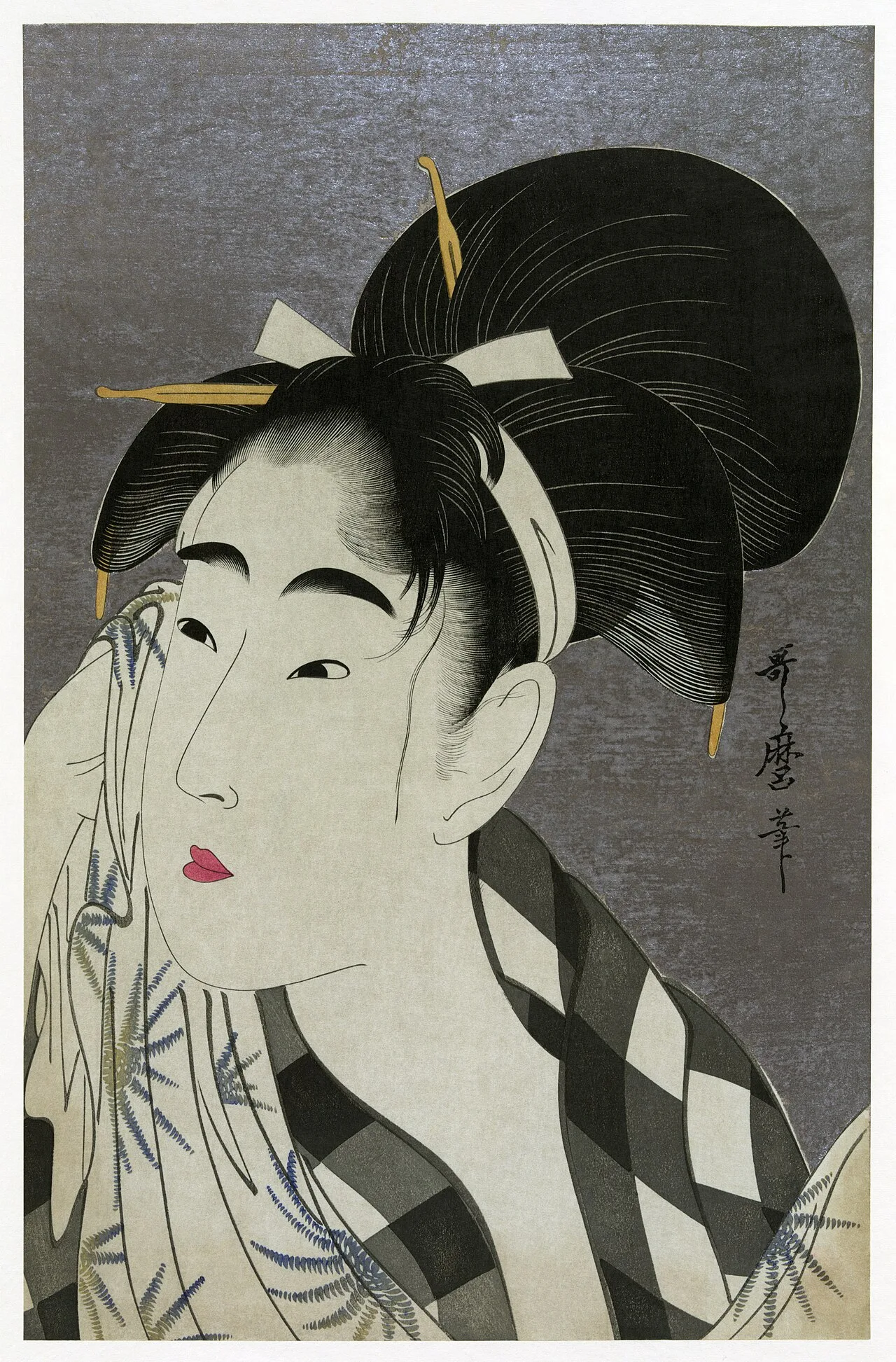
Ase o fuku onna (Woman Wiping Sweat), Ukiyo-e, 1798
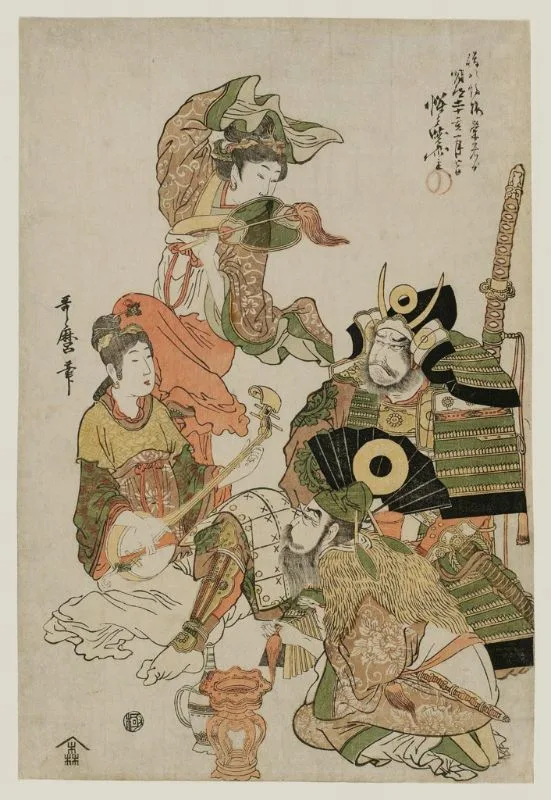
Katō Kiyomasa at a party with Korean dancers
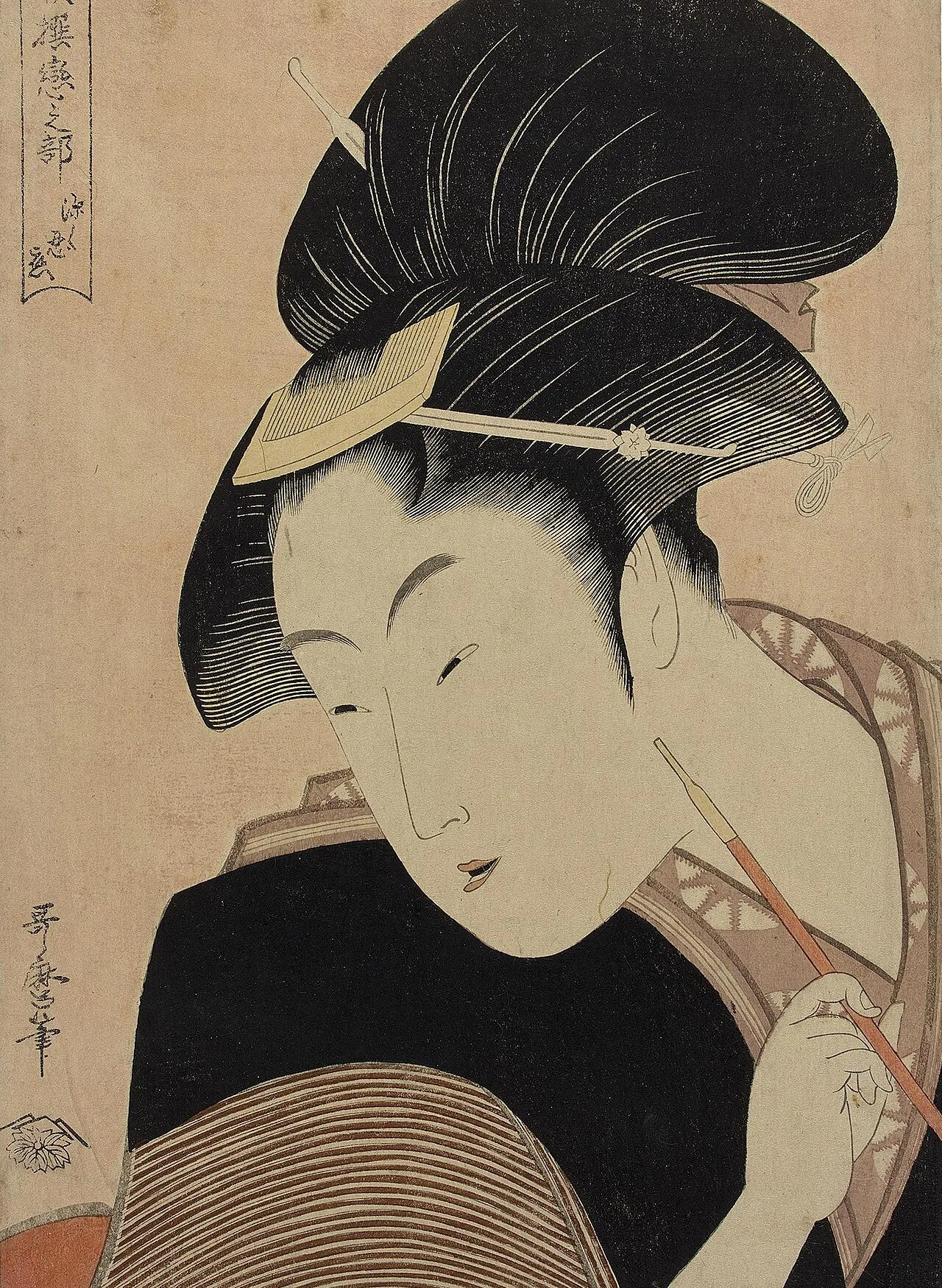
Utamaro's Fukaku Shinobu Koi (c. 1793–94) set an auction record of €745000 in 2016.
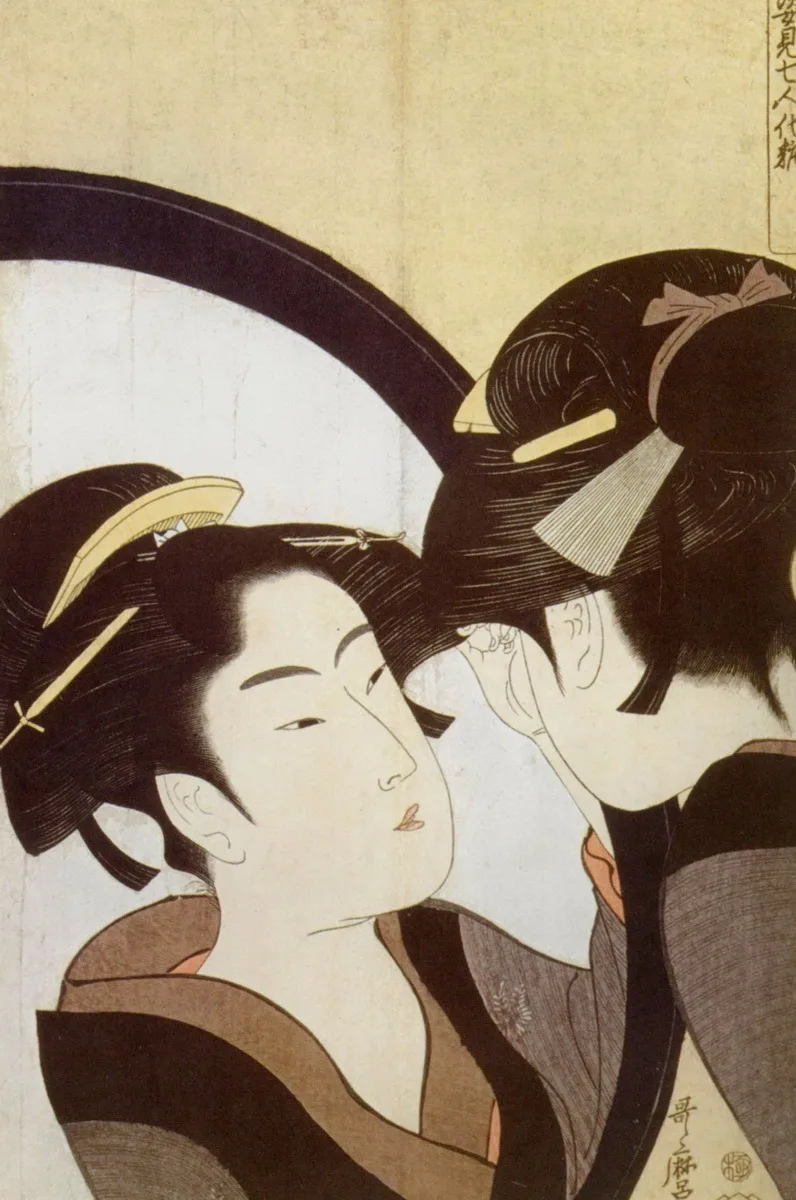
Sugatami Shichinin Keshō
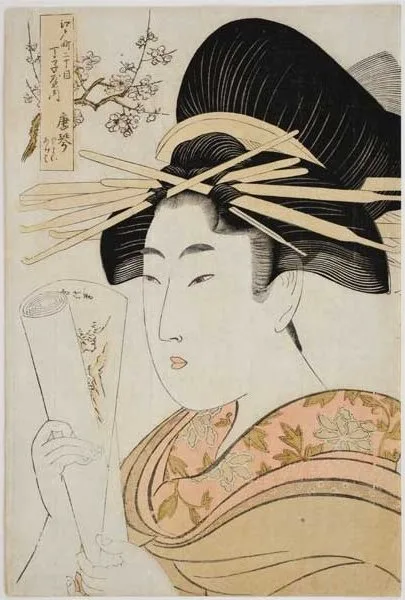
Karagoto of the House of Chojiya in Edo-cho Nichome from the series A Comparison of Courtesan Flowers
Utamaro
Kitagawa Utamaro (c. 1753 – 31 October 1806) was a Japanese artist and a highly regarded designer of ukiyo-e woodblock prints and paintings, best known for his 1790s pictures of beautiful women.
Announcing a New Identity at an Autumn Gathering
In the autumn of 1782, the young publisher Tsutaya Jūzaburō partnered with the artist to host a lavish banquet for prominent creative figures. The distinguished guest list brought together painters such as Kiyonaga, Kitao Shigemasa, and Katsukawa Shunshō alongside celebrated writers like Ōta Nanpo and Hōseidō Kisanji. It was at this celebratory gathering that the painter is believed to have first announced his new art name, Utamaro.
From Wikipedia · CC BY-SA 4.0
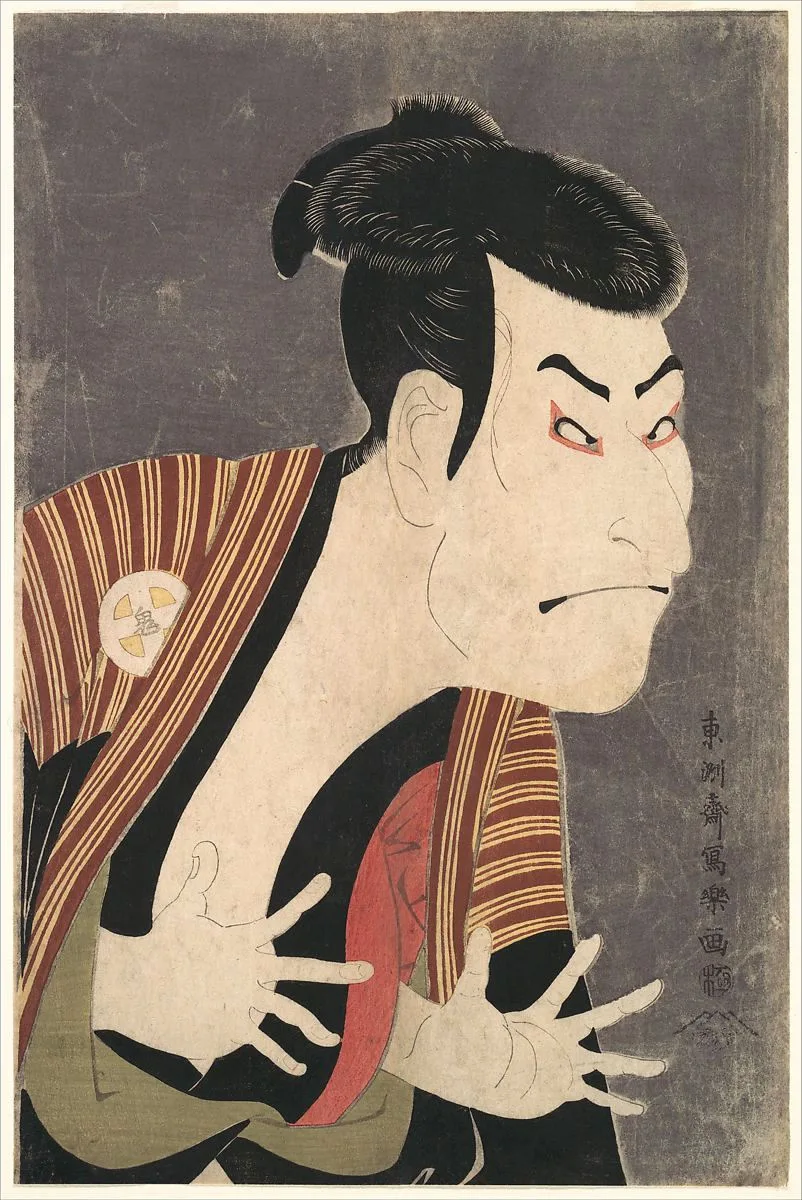
Ōtani Oniji III in the Role of the Servant Edobei, nishiki-e colour print, 1794

Ichikawa Monnosuke II as Soga no Gorō (1789) by Shunkō, a pioneer in ōkubi yakusha-e head portraits of actors

Ichikawa Ebizo IV as Takemura Sadanoshin

Nakayama Tomisaburō as Tsukuba Gozen

Nakamura Noshio II as Konohana, Daughter of Ki no Tsurayuki

Sawamura Sōjūrō III as Satsuma Gengobei
Sharaku
Tōshūsai Sharaku was a Japanese ukiyo-e print designer known for his portraits of kabuki actors. Neither his true name nor the dates of his birth or death are known.
A Ten-Month Explosion of Masterpieces
An enigmatic woodblock artist emerged in Japan without any documented apprenticeship or prior artistic footprint. His active career as a woodblock artist spanned ten months between 1794 and 1795 before abruptly coming to an end. Although his prolific work met disapproval during his lifetime, his creative output has come to be considered some of the greatest in the ukiyo-e genre. His sudden disappearance remains one of art history's most compelling puzzles.
From Wikipedia · CC BY-SA 4.0
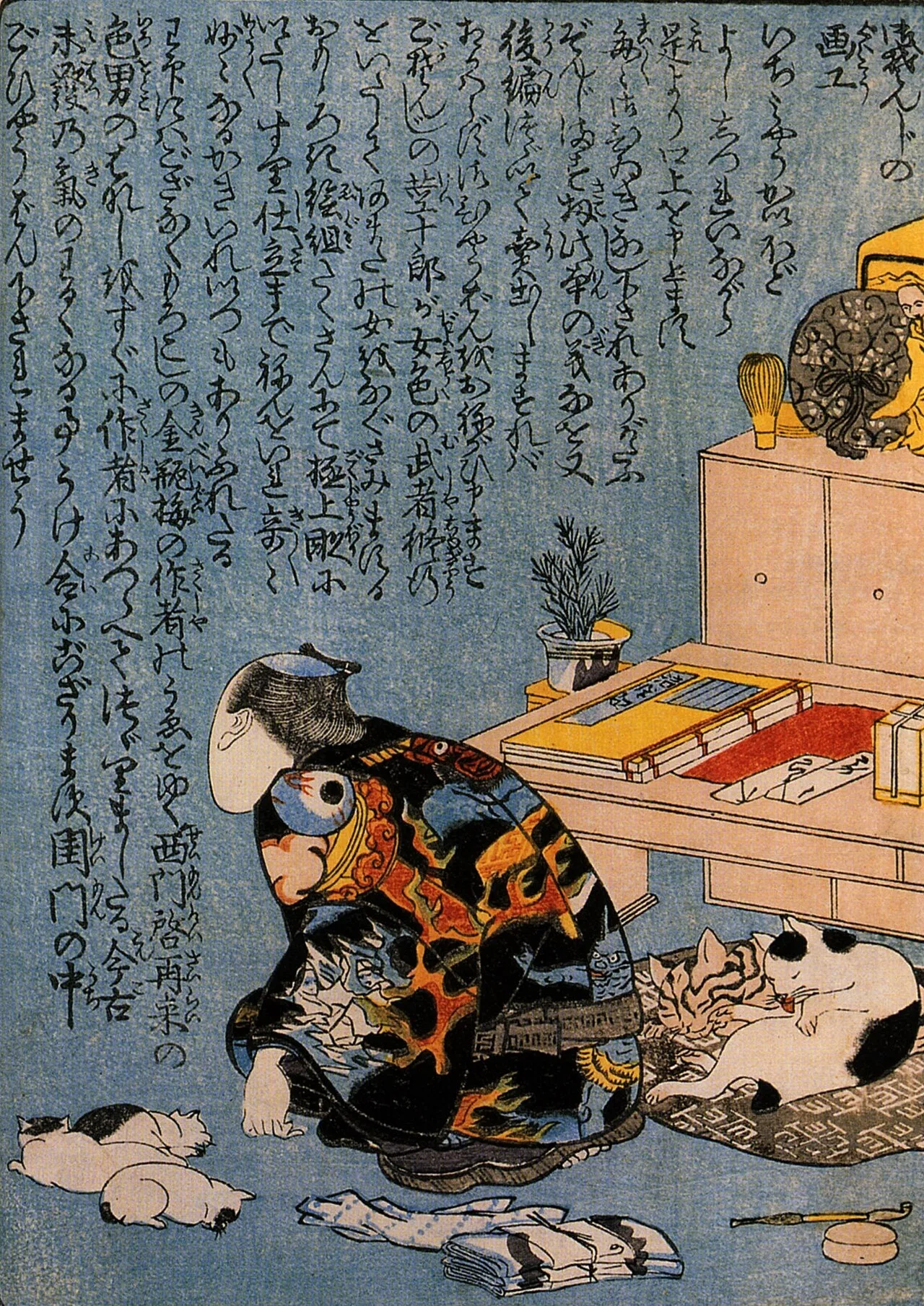
Utagawa-Kuniyoshi, Self-Portrait, Shunga album, 1839

Hawk, woodblock print

Utagawa Kuniyoshi variation on the theme of The Mouse Turned into a Maid

Mt Fuji from the Sumida
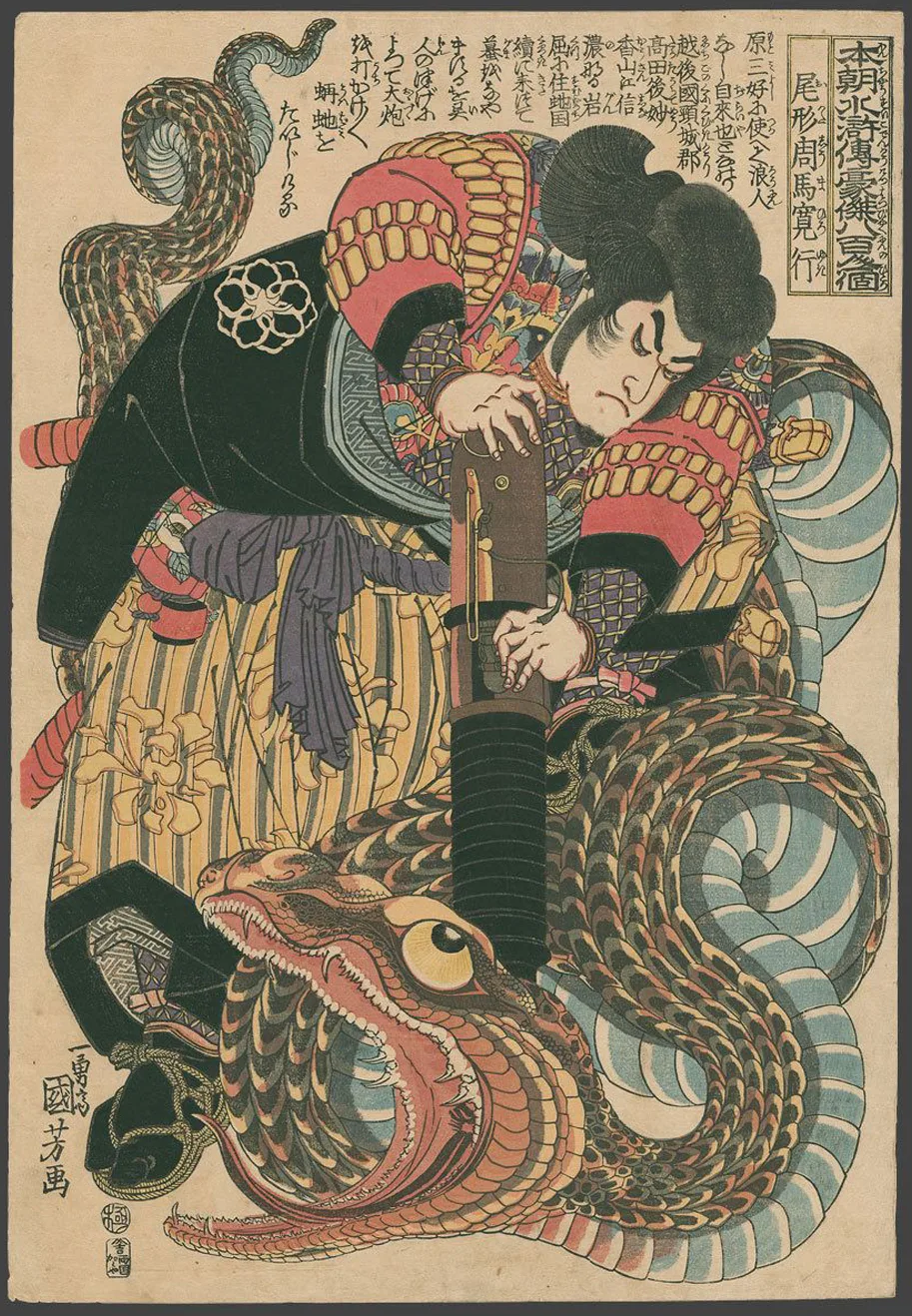
from the series Heroes of Our Country's Suikoden

Ukiyo-e of Oda Nobunaga
Utagawa Kuniyoshi
Utagawa Kuniyoshi (1 January 1798 – 14 April 1861) was one of the last great masters of the Japanese ukiyo-e style of woodblock prints and painting and a member of the Utagawa school.
Desperate Poverty and the Kunisada Catalyst
Severe economic hardship nearly ended Kuniyoshi's career before his reputation was established. At one desperate juncture, the artist was reduced to selling used tatami mats to stay afloat. A chance encounter with his prosperous fellow pupil Kunisada provoked his artistic pride and spurred him to redouble his efforts without causing lasting animosity.
From Wikipedia · CC BY-SA 4.0
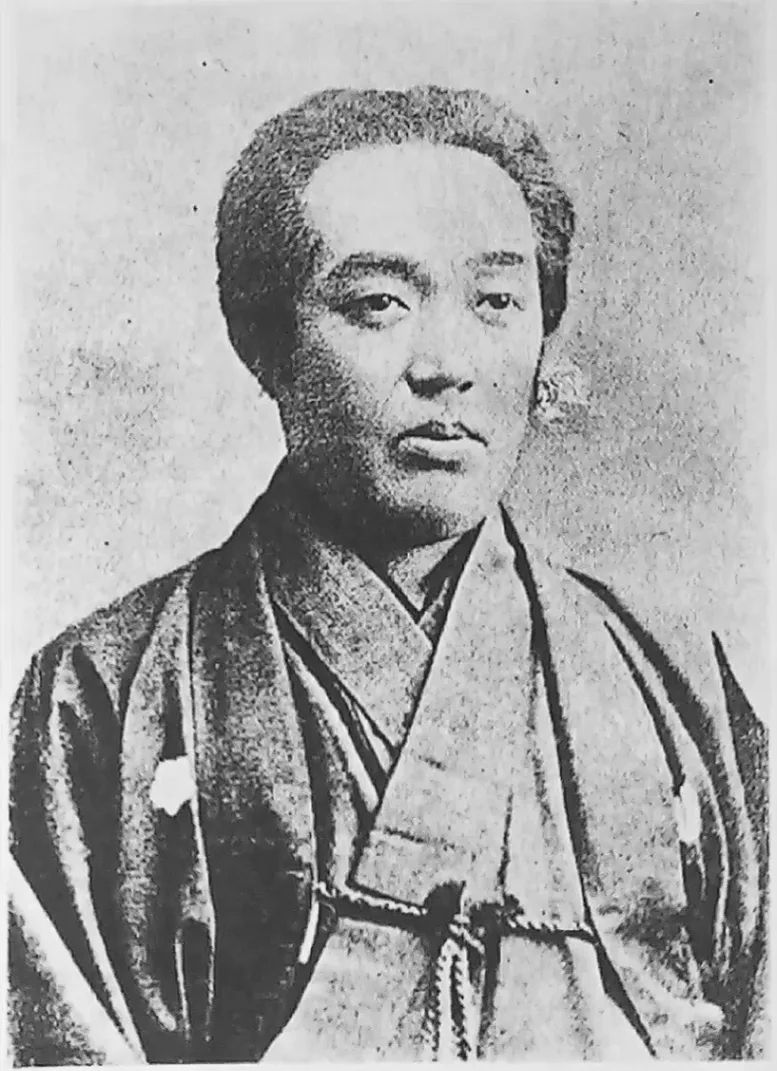
Tsukioka Yoshitoshi Photograph c1882
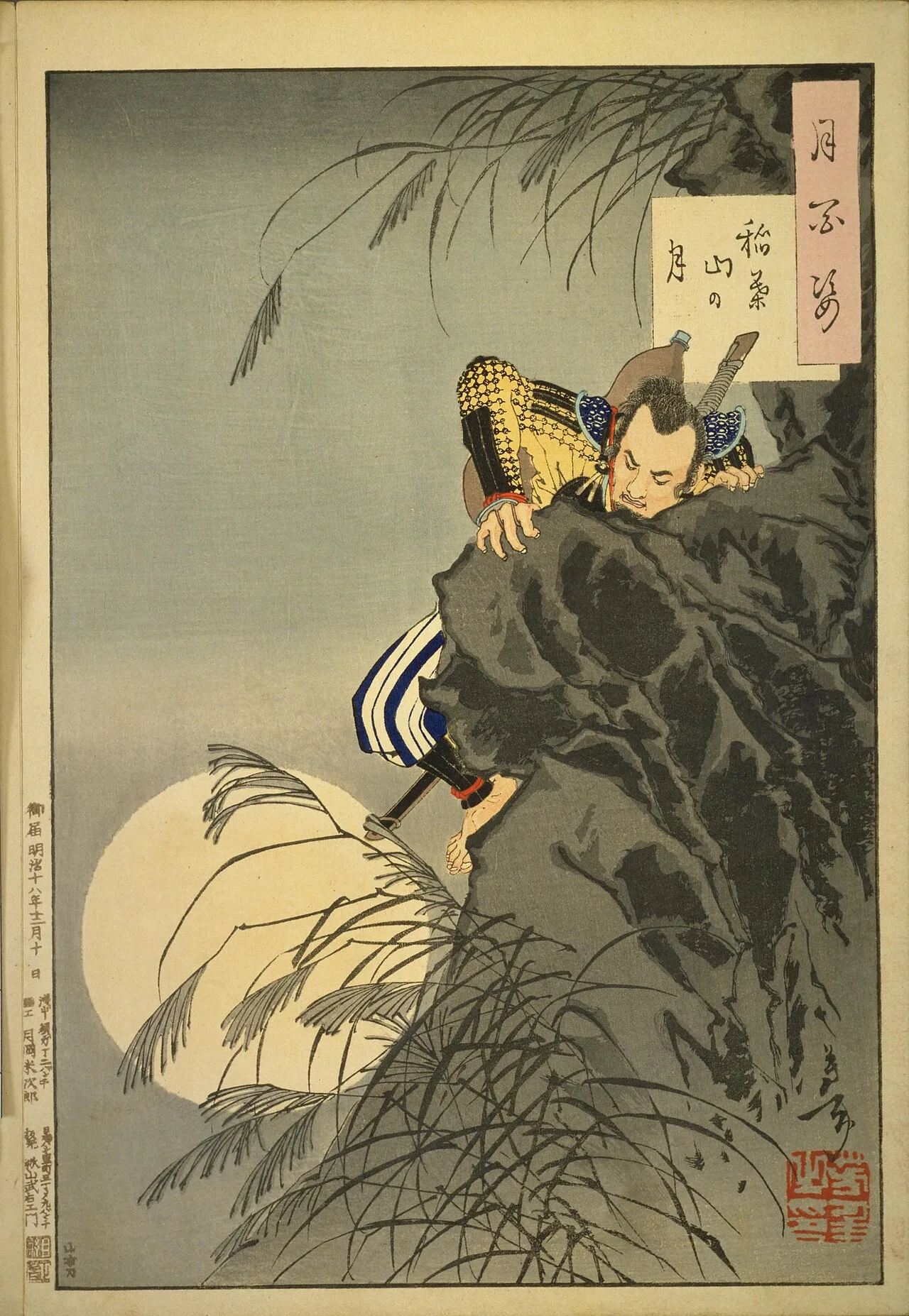
100 Aspects of the Moon No. 7, "Inaba Mountain Moon". The young Toyotomi Hideyoshi leads a small group assaulting the castle on Inaba Mountain (1885).
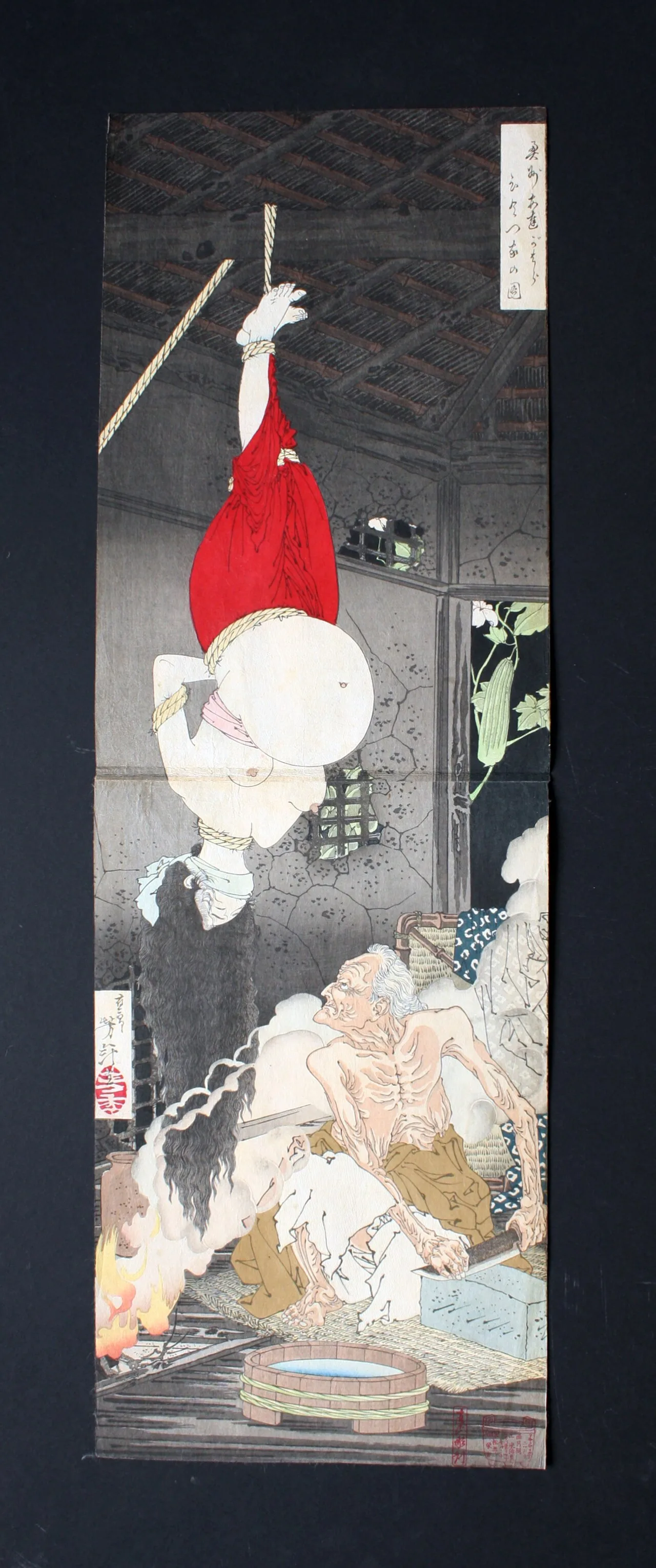
The Lonely House on Adachi Moor (1885)
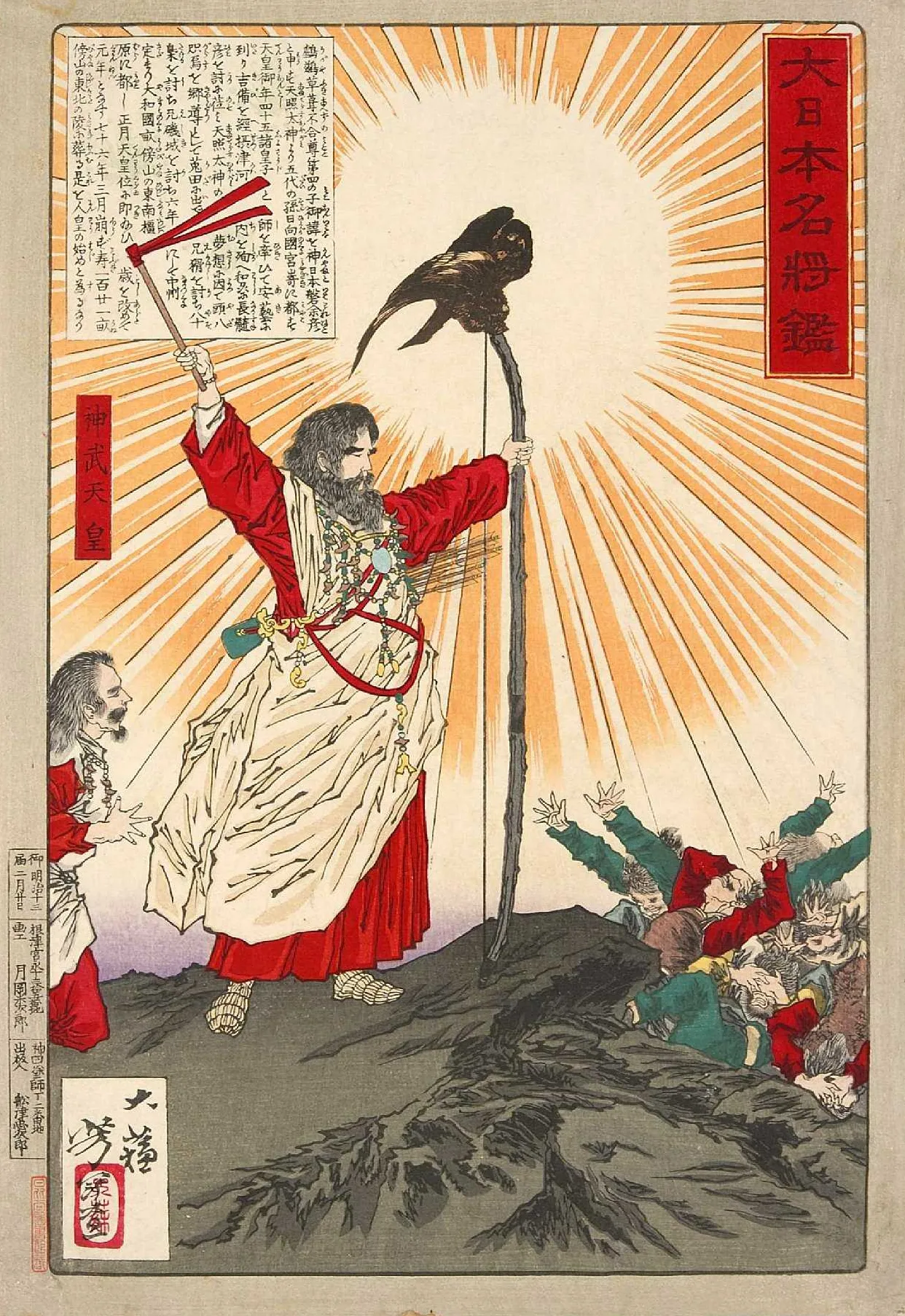
Depiction of a bearded Emperor Jimmu with his emblematic long bow and an accompanying three-legged crow
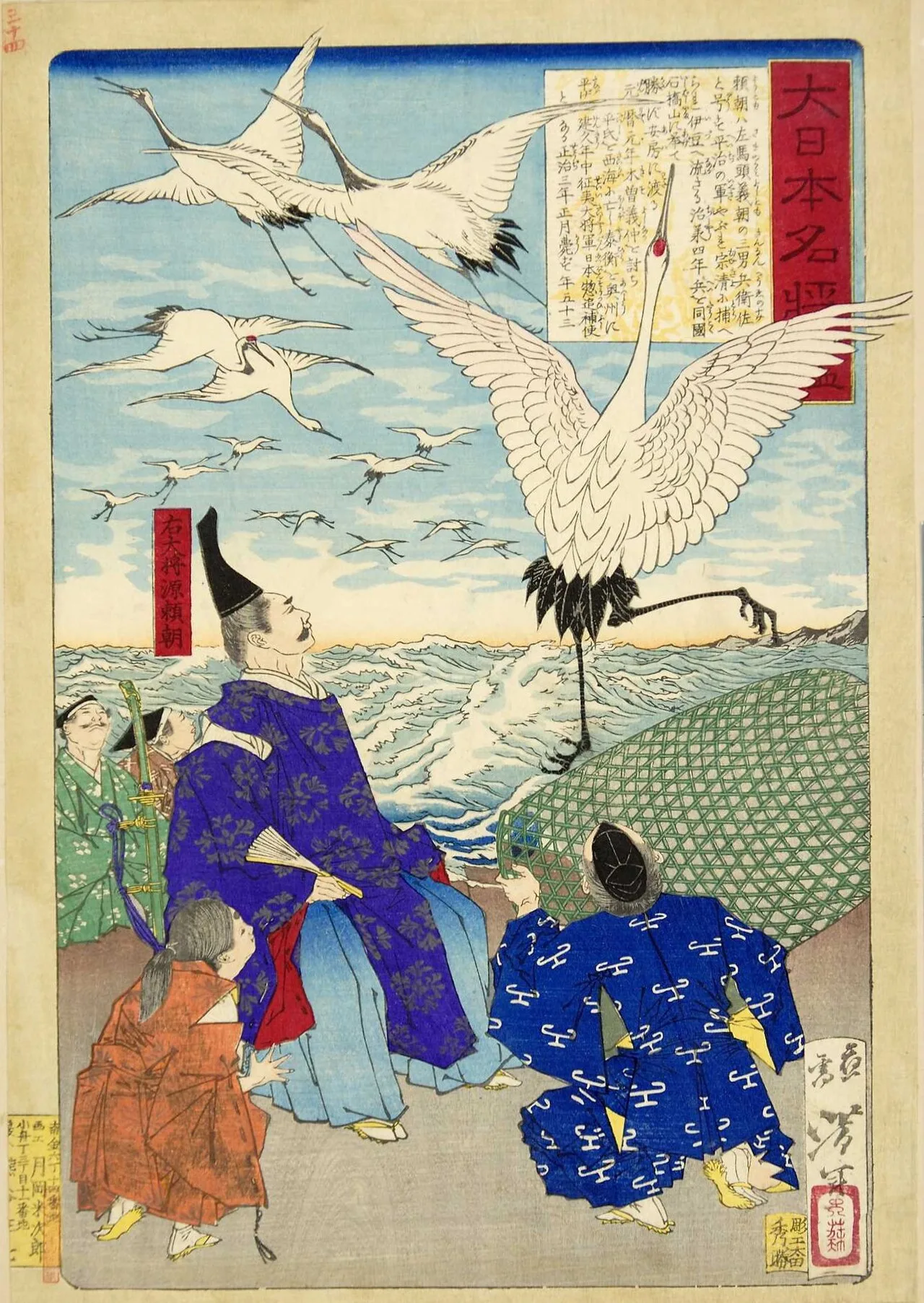
Minamoto no Yoritomo and his retainers releasing cranes to mourn for the war dead in the Mutsu and Dewa Conquest
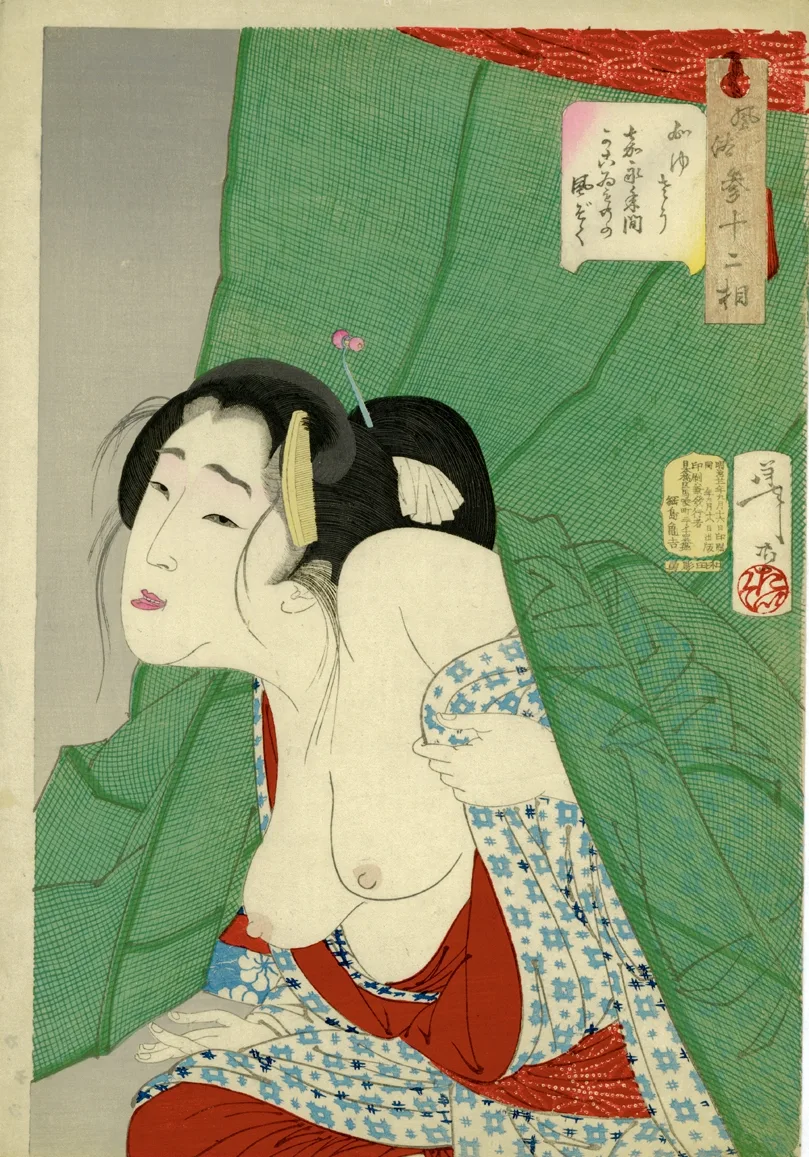
Design from Yoshitoshi's well-known series of beautiful women Fuzoku Sanjuniso (1888)
Tsukioka Yoshitoshi
Tsukioka Yoshitoshi was a Japanese printmaker widely recognized as the last great master and one of the greatest innovators of the ukiyo-e genre of woodblock printing and painting.
Western Perspective Behind Traditional Apprenticeship
Japanese art training traditionally prioritized capturing the inner essence of a subject rather than rendering its literal reality. When Yoshitoshi began training under Kuniyoshi in 1850 at age 11, his education diverged significantly from convention. Alongside sketching from live models, the young apprentice studied his master's private collection of foreign engravings to master Western drawing techniques and perspective.
From Wikipedia · CC BY-SA 4.0