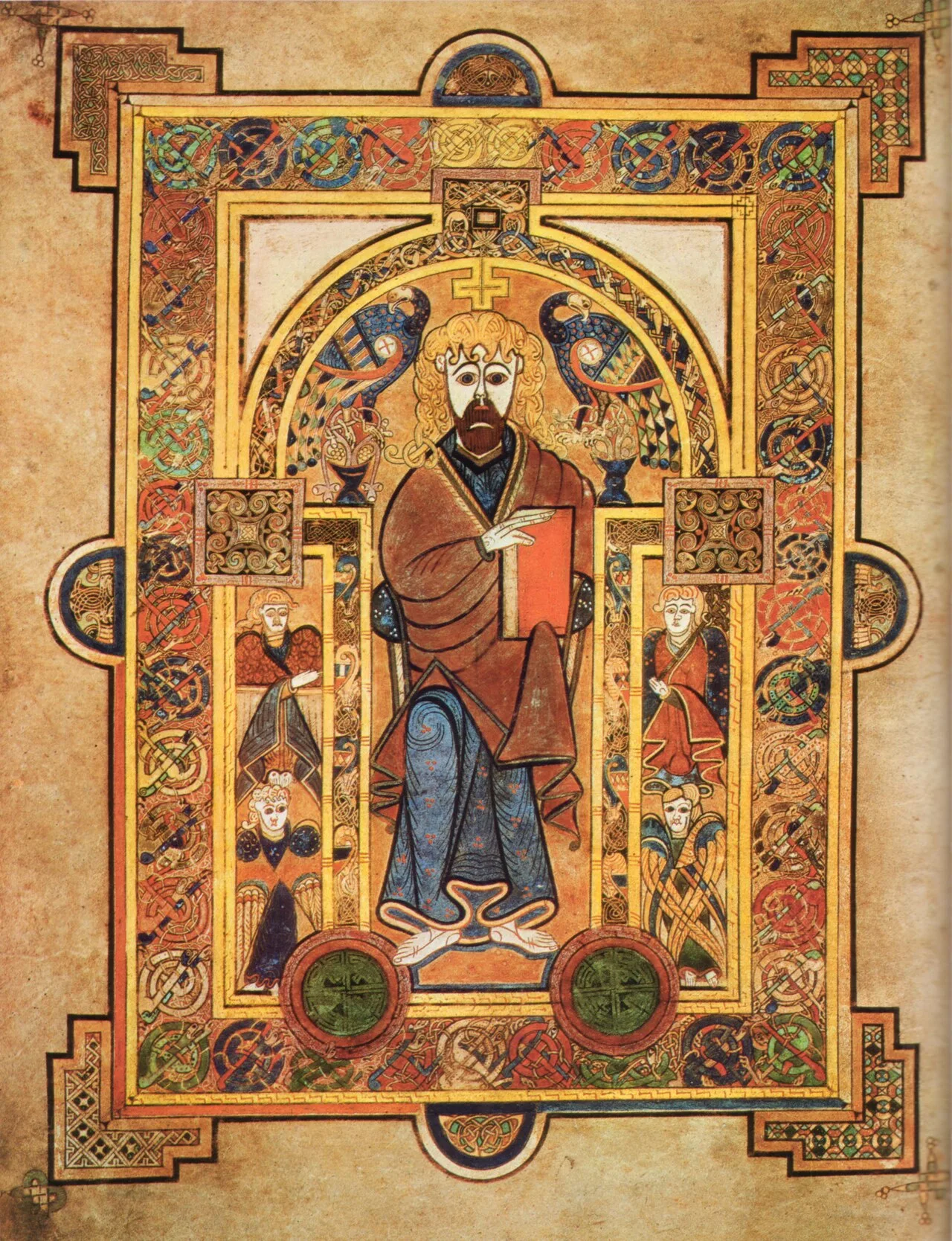
illustrated page of Christ
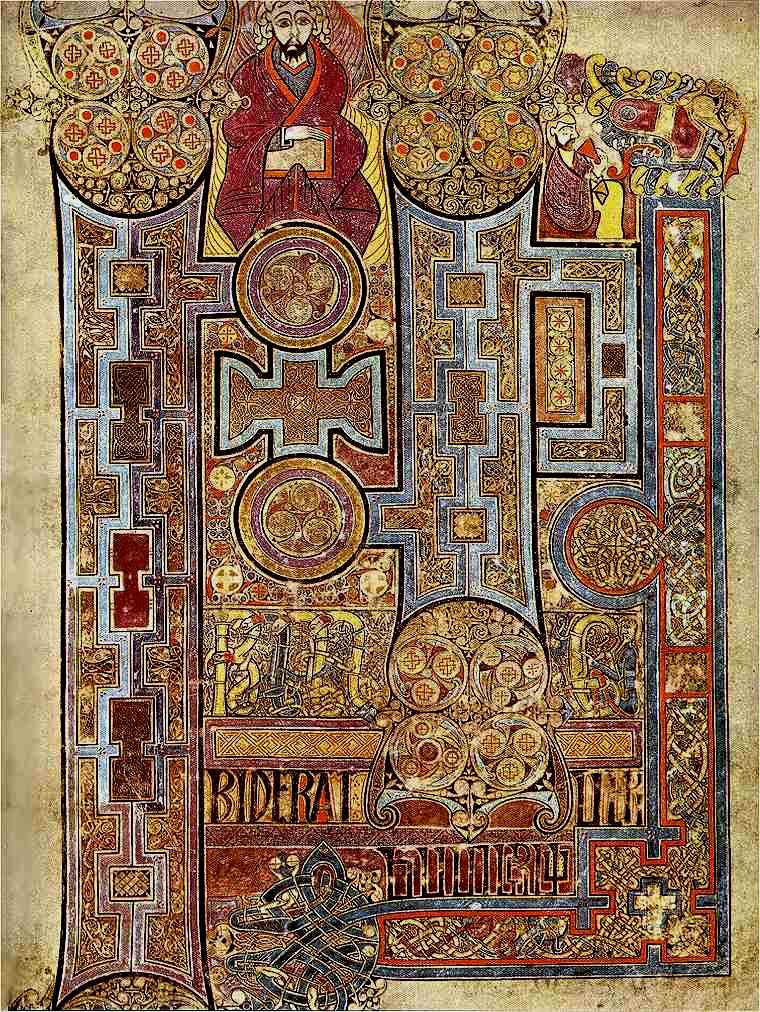
The Book of Kells, (folio 292r), circa 800, showing the lavishly decorated text that opens the Gospel of John
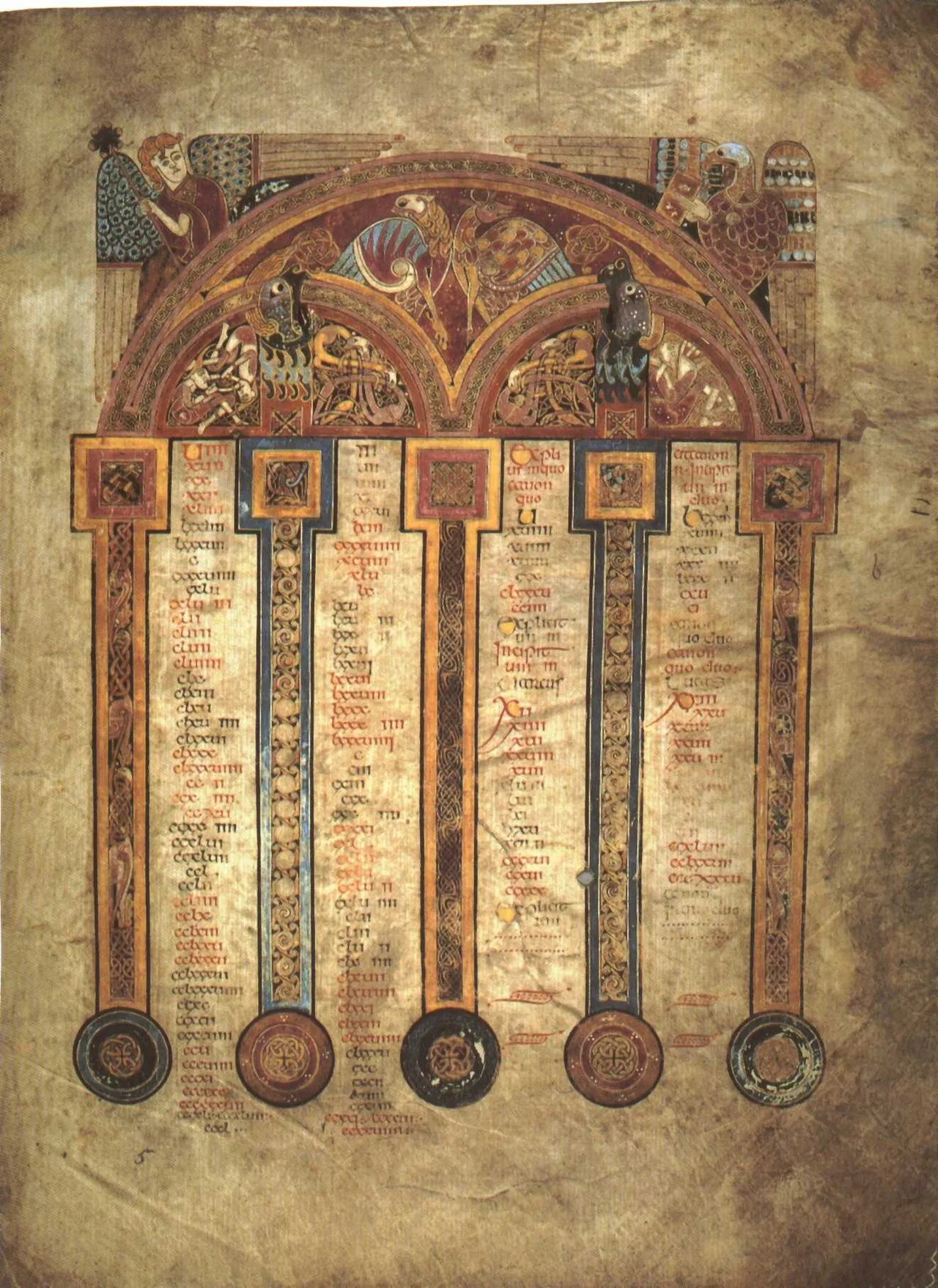
Folio 5r contains a page of the Eusebian Canons.
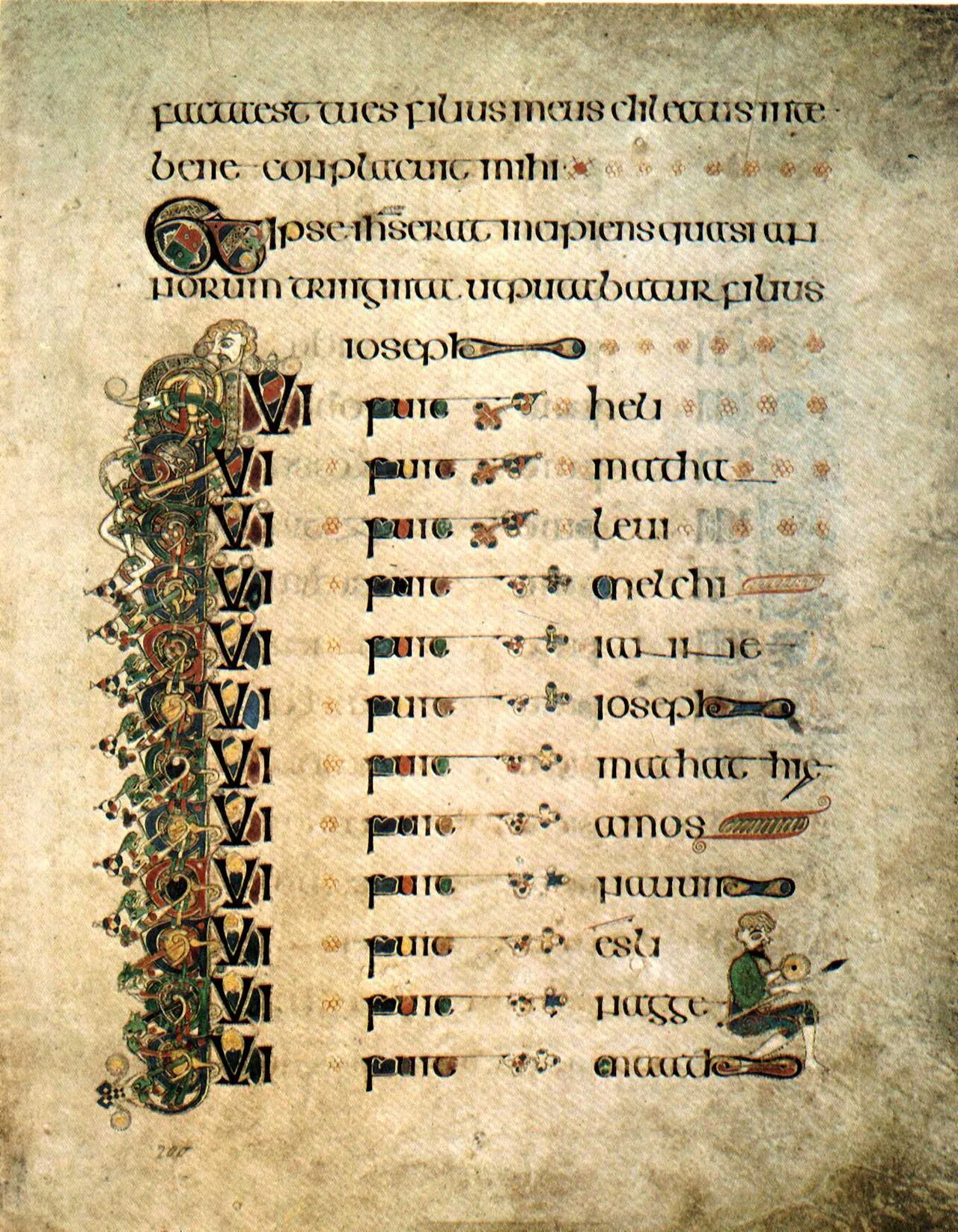
Folio 200r begins Luke's genealogy of Jesus, which runs for five pages.
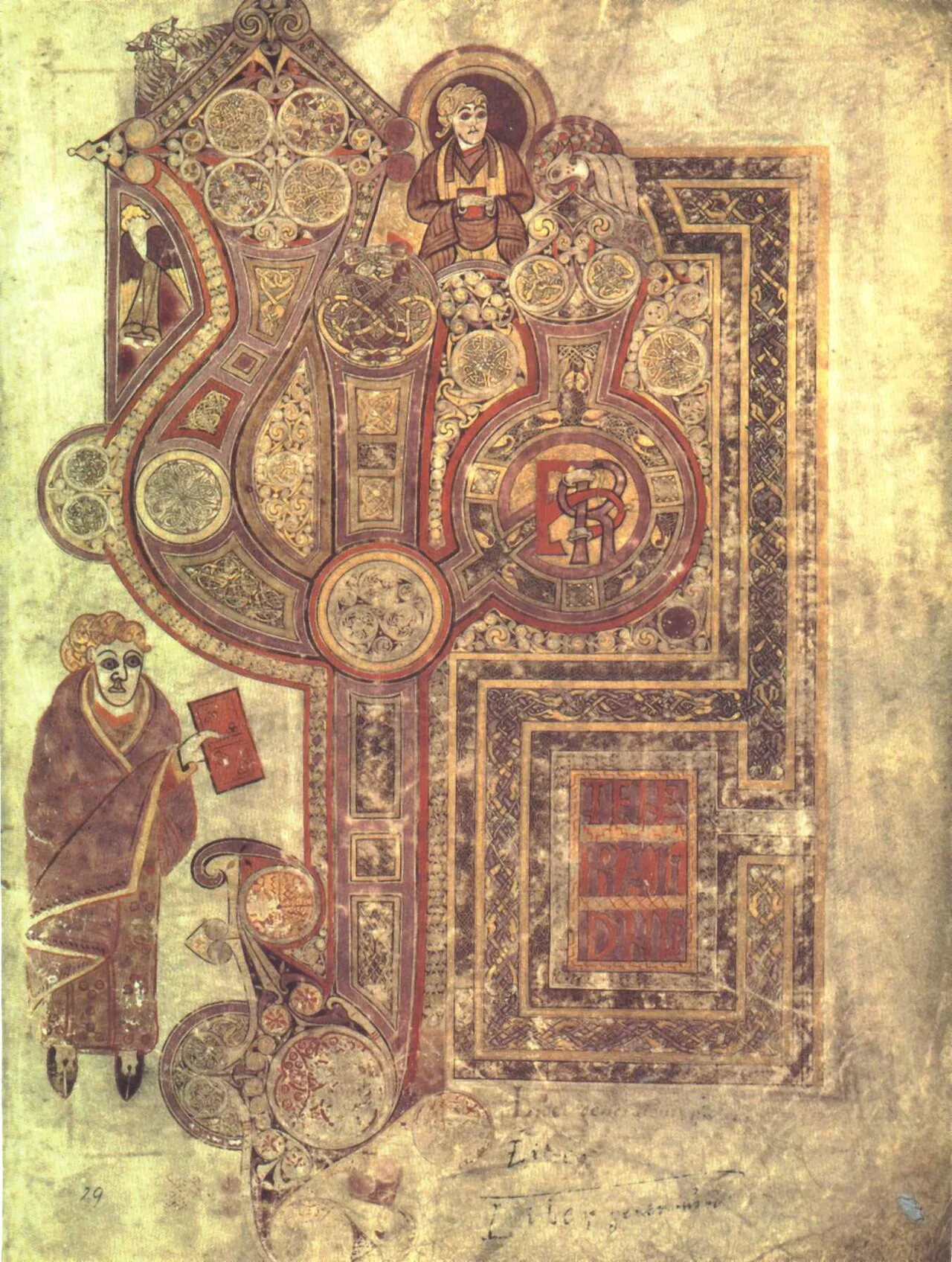
Folio 29r contains the incipit to the Gospel of Matthew.
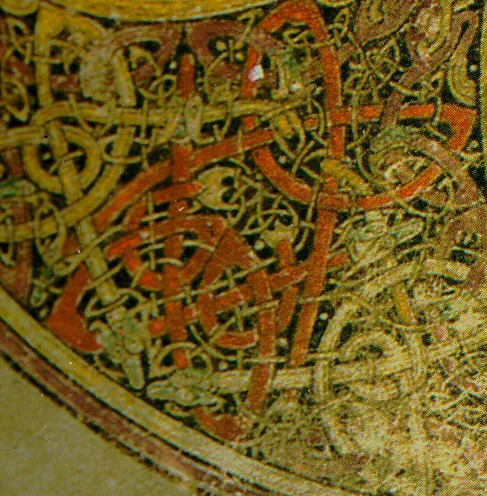
Folio 34r, detail. The decorations of the Book of Kells can be stunningly complex, as seen in this small detail of the Chi Rho monogram page.
Book of Kells
The Book of Kells is an illustrated manuscript and Celtic Gospel book in Latin containing the four Gospels of the New Testament, created in a Columban monastery in Ireland or Scotland.
A Saint's Ghostwriter Disproved by Palaeography
Folk tradition long held that the Book of Kells was penned directly by St. Columba himself. Palaeographical and stylistic analysis thoroughly disproved this notion, establishing that the manuscript dates to around 800 AD. This places its production two centuries after Columba's death in 597, coinciding instead with the era of Viking raids.
From Wikipedia · CC BY-SA 4.0
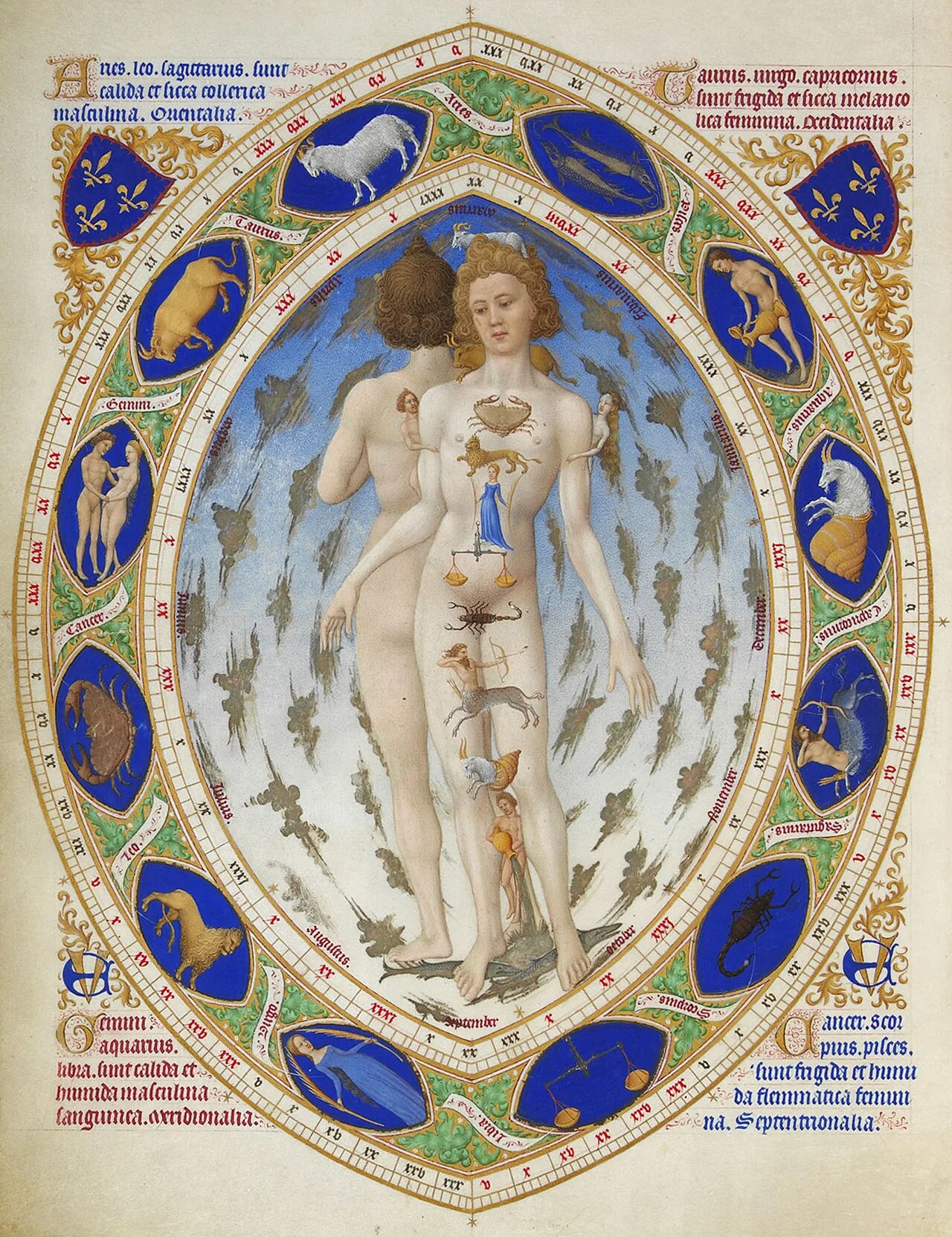
The Anatomical Zodiac Man
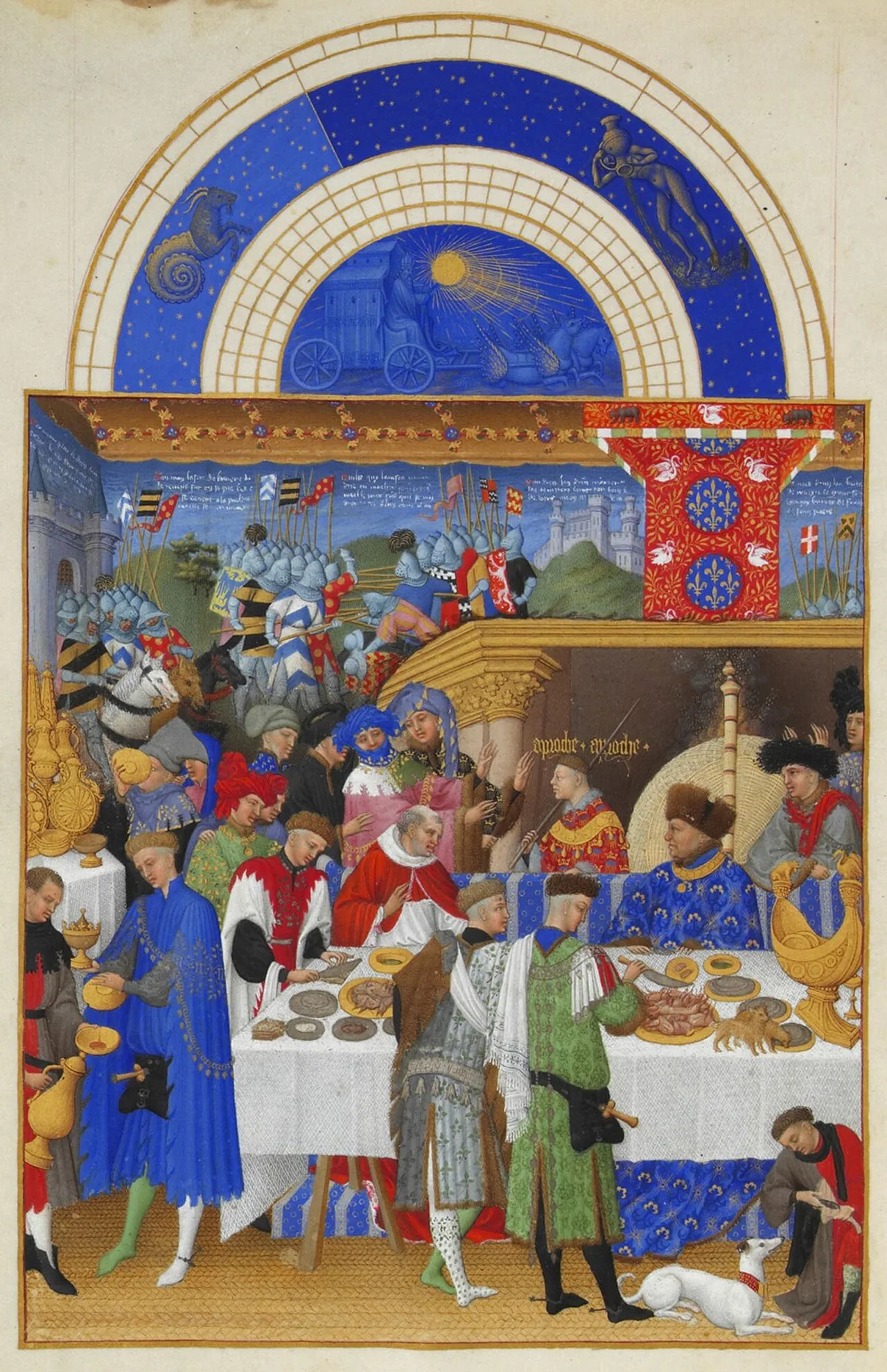
Page from the calendar of the Très Riches Heures showing the household of John, Duke of Berry exchanging New Year gifts. The Duke is seated at the right, in blue.

The Duke of Aumale with a friend in his study at Chantilly
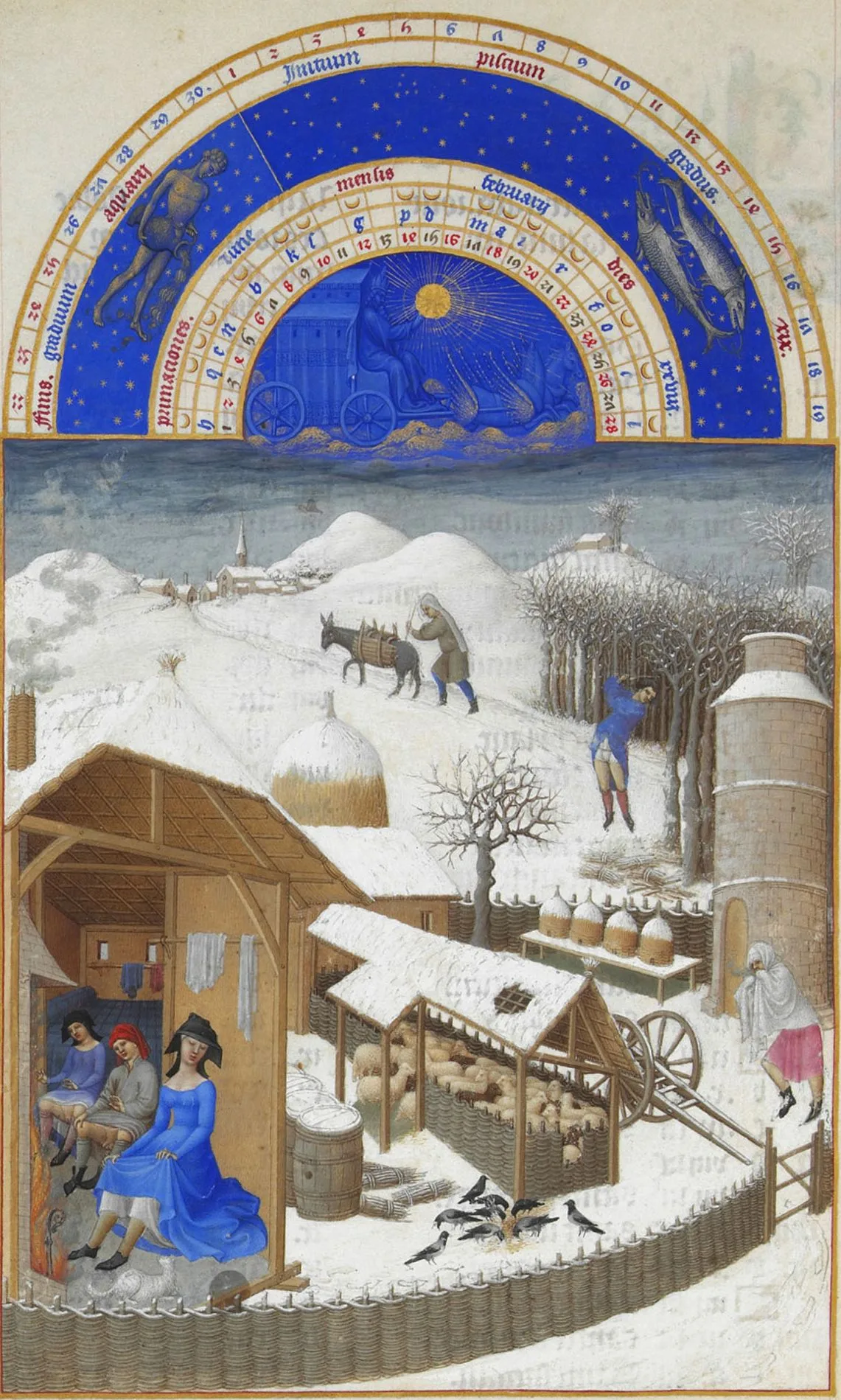
February, attributed to Paul Limbourg, or the "Rustic painter"

July Palace of Poitiers

November
Très Riches Heures du Duc de Berry
The Très Riches Heures du Duc de Berry is an illuminated manuscript and book of hours created between c. 1412 and 1416 for John, Duke of Berry, by the Limbourg brothers.
Seven Decades to Finish an Abruptly Halted Manuscript
The manuscript was left unfinished when the Limbourg brothers and their sponsor died in 1416, likely of plague. Decades later, Duke Charles I of Savoy commissioned Jean Colombe around 1485–1489 to finish the devotional book. This multi-generational gap meant artists separated by nearly a century applied completely different stylistic conventions to the very same volume.
From Wikipedia · CC BY-SA 4.0
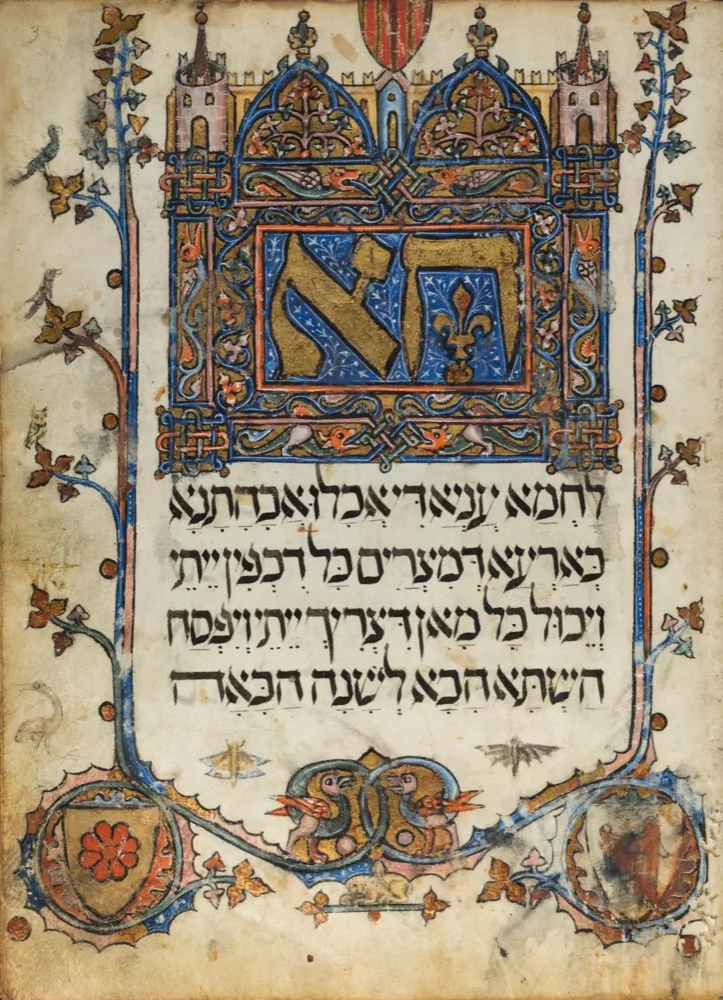
Sarajevska hagada
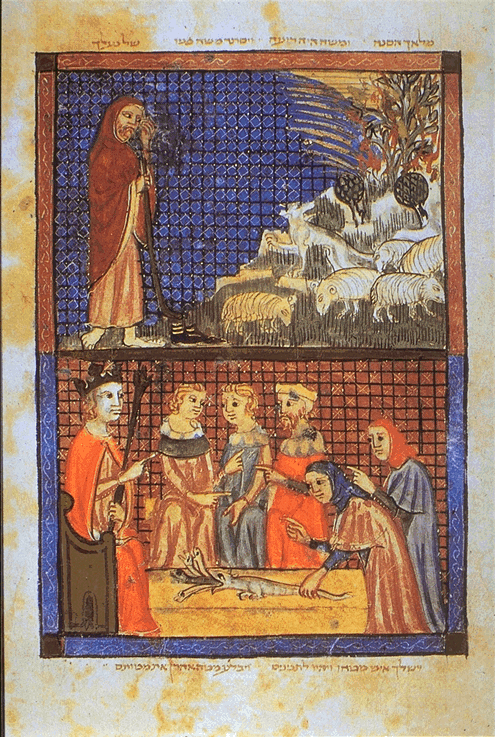
Page from the Sarajevo Haggadah, written in fourteenth-century Catalonia. Top: Moses and the Burning Bush. Bottom: Aaron's staff swallows the other magicians' wands (Exodus 7:10–1)
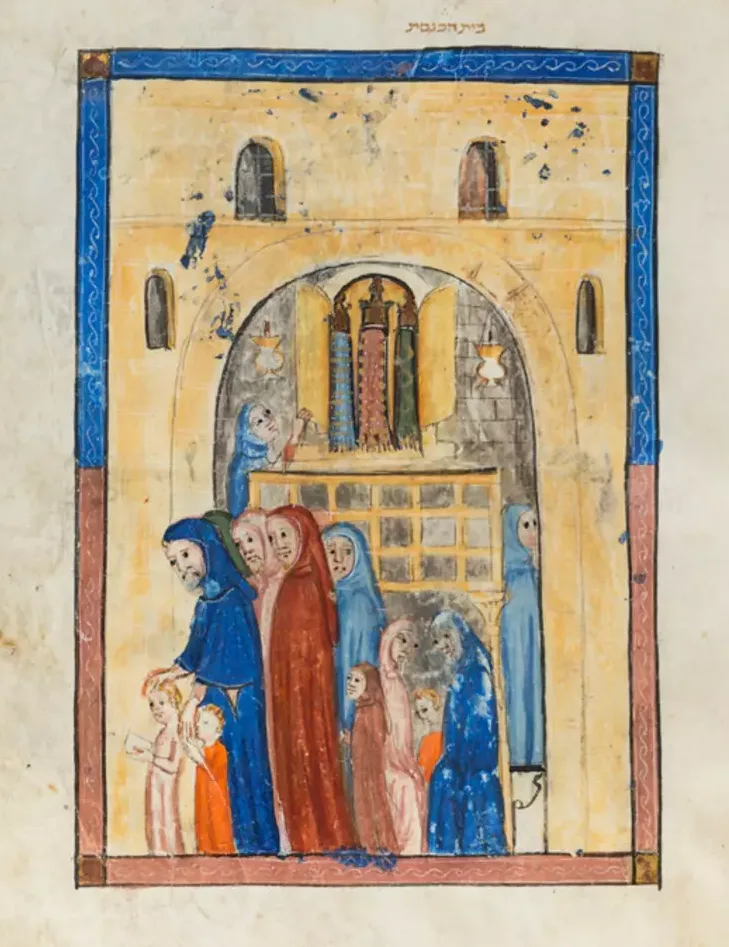
Synagogue scene
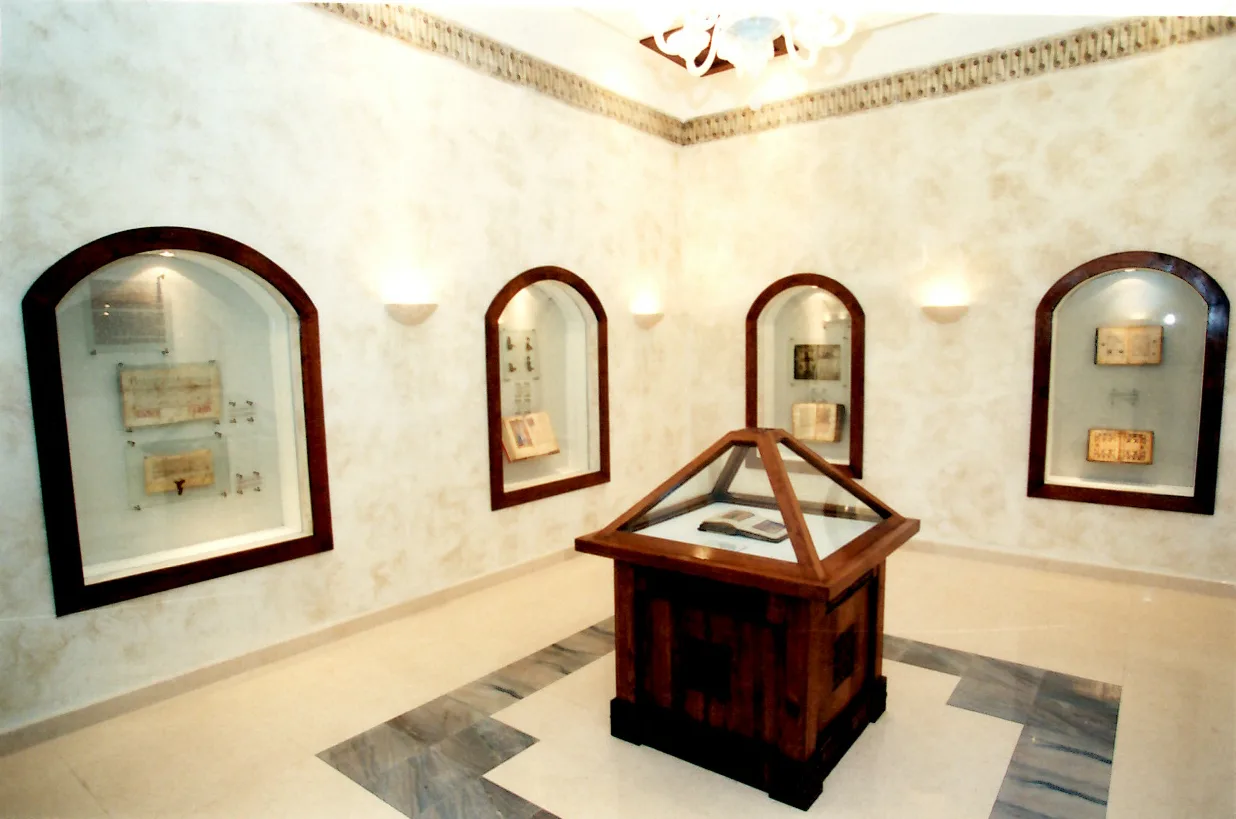
Sarajevo Haggadah vault room, containing the Haggadah as well as Catholic, Orthodox, and Muslim manuscripts
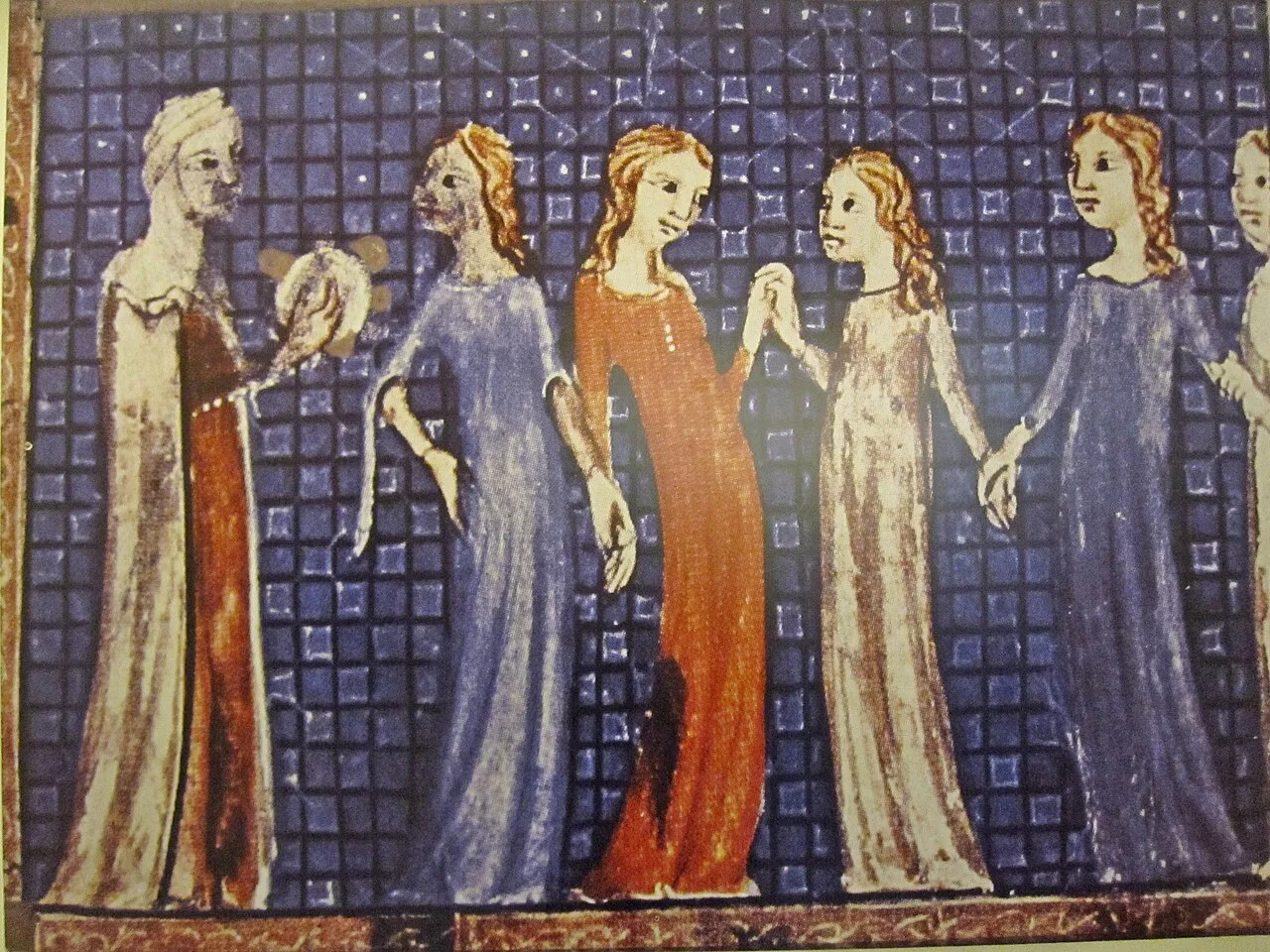
"And Miriam took a timbrel in her hand", Book of Exodus 15:20
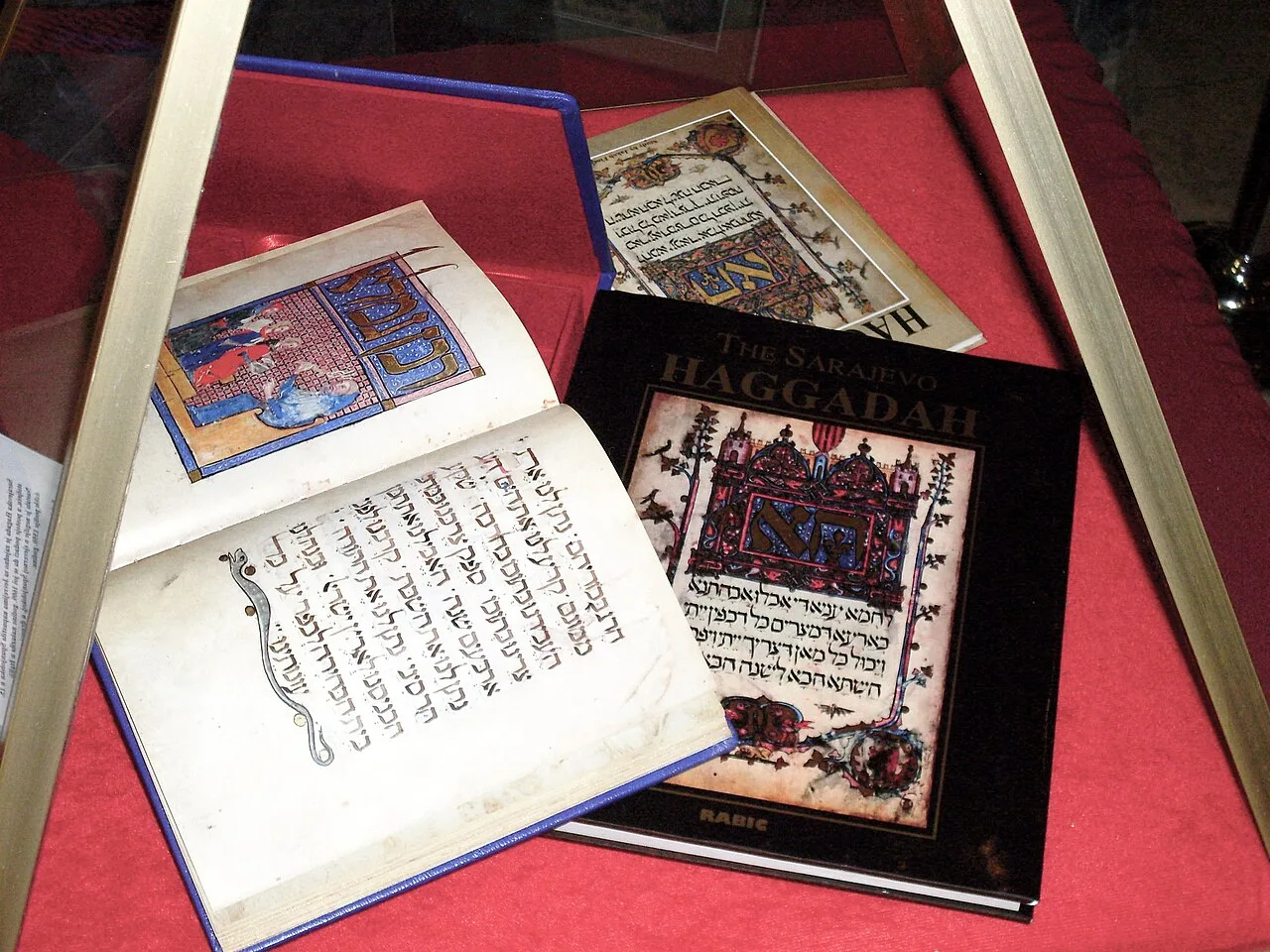
Copies of the Sarajevo Haggadah in the parliament building of Bosnia and Herzegovina
Sarajevo Haggadah
The Sarajevo Haggadah is an illuminated manuscript from around 1350 containing the traditional text of the Passover Haggadah. It is kept in the National Museum of Bosnia and Herzegovina in Sarajevo.
Wine Stains on 14th-Century Calfskin
Originating around 1350 in northern Spain, the manuscript was illuminated on bleached calfskin vellum. Rather than remaining an untouched luxury relic, the volume bears physical wine stains accumulated across years of Passover celebrations. These enduring marks demonstrate that despite its gold illumination, the artifact served as an active, functional liturgical book used during household Seders.
From Wikipedia · CC BY-SA 4.0
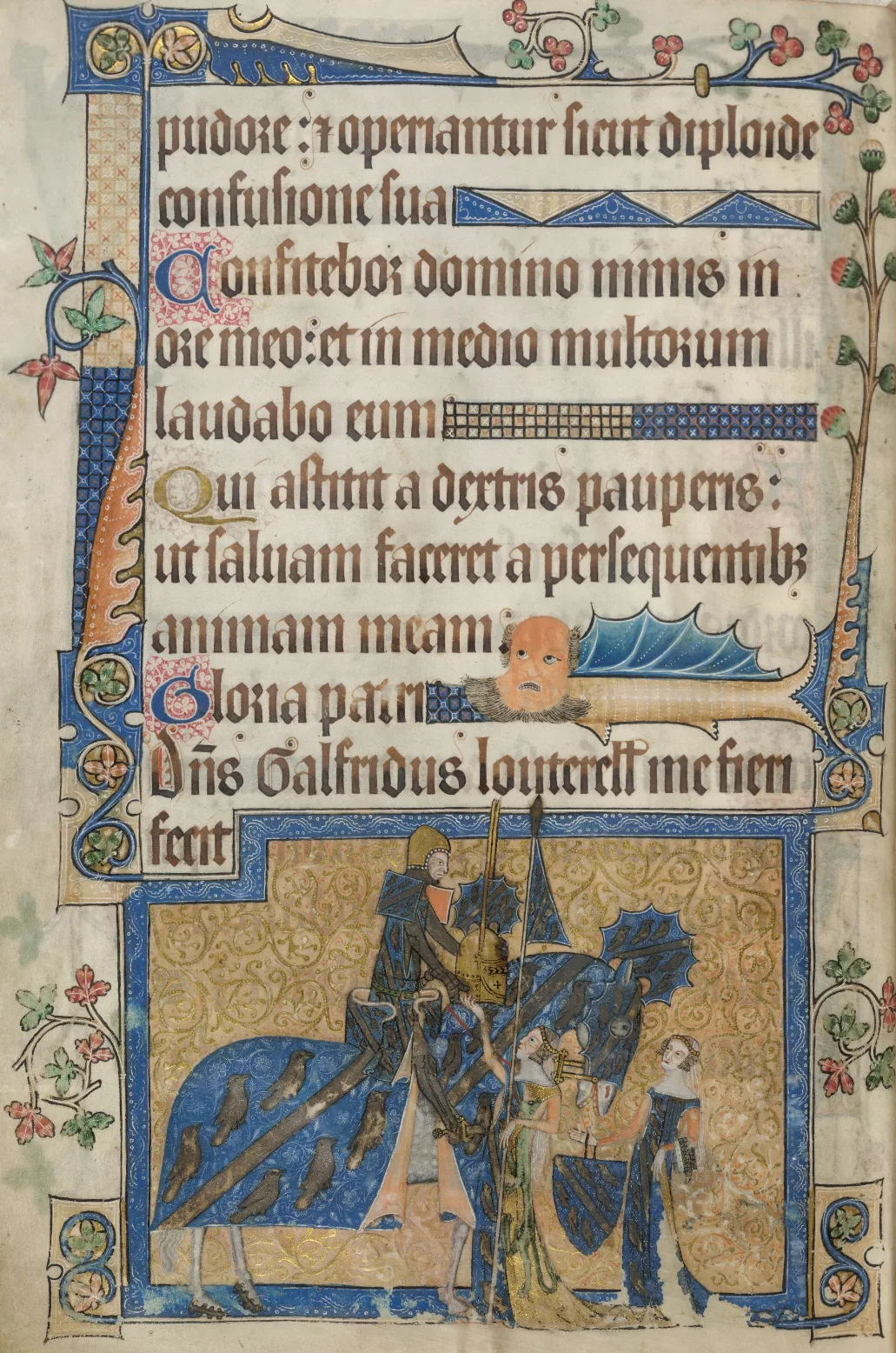
Sir Geoffrey Luttrell, mounted, being assisted by his wife and daughter-in-law. Folio 202v.
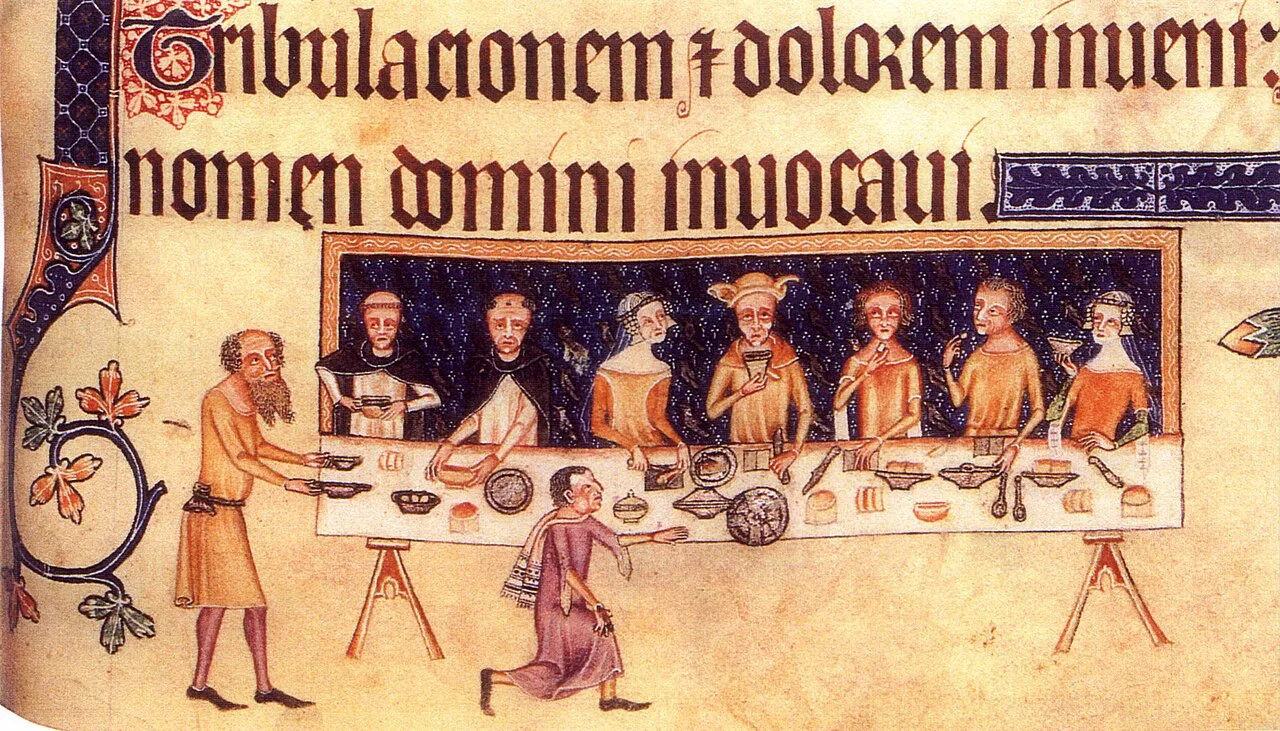
Sir Geoffrey Luttrell at table surrounded by his family and two Dominican friars. Two servants wait on them and others approach the table from the previous page; The tapestry behind has a field azure, semée of martlets argent, elements from the Luttrell coat of arms. Folio 208v.
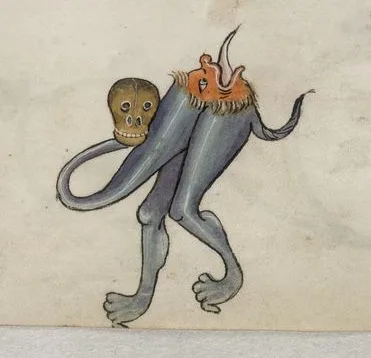
Grotesque creature in the margins. Folio 27r.
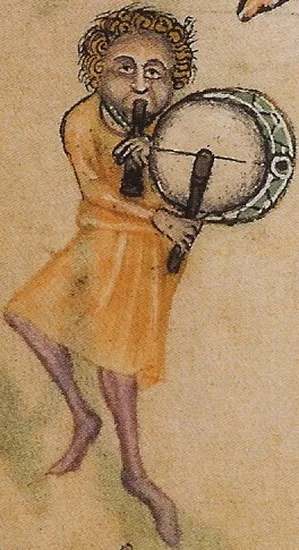
taborer playing the pipe and tabor
Luttrell Psalter
The Luttrell Psalter is an illuminated psalter commissioned by Sir Geoffrey Luttrell and created on parchment circa 1320–1340 in England by anonymous scribes and artists.
Twenty Chaplains to Speed a Soul
Sir Geoffrey Luttrell commissioned the psalter as a calculated spiritual investment while preparing for his impending death. His will mandated that twenty chaplains recite masses for a five-year duration to accelerate his soul's journey through Purgatory. The manuscript was designed to support these testamentary provisions, establishing set monetary remuneration for clerks reciting the Psalms and performing other devotional duties.
From Wikipedia · CC BY-SA 4.0
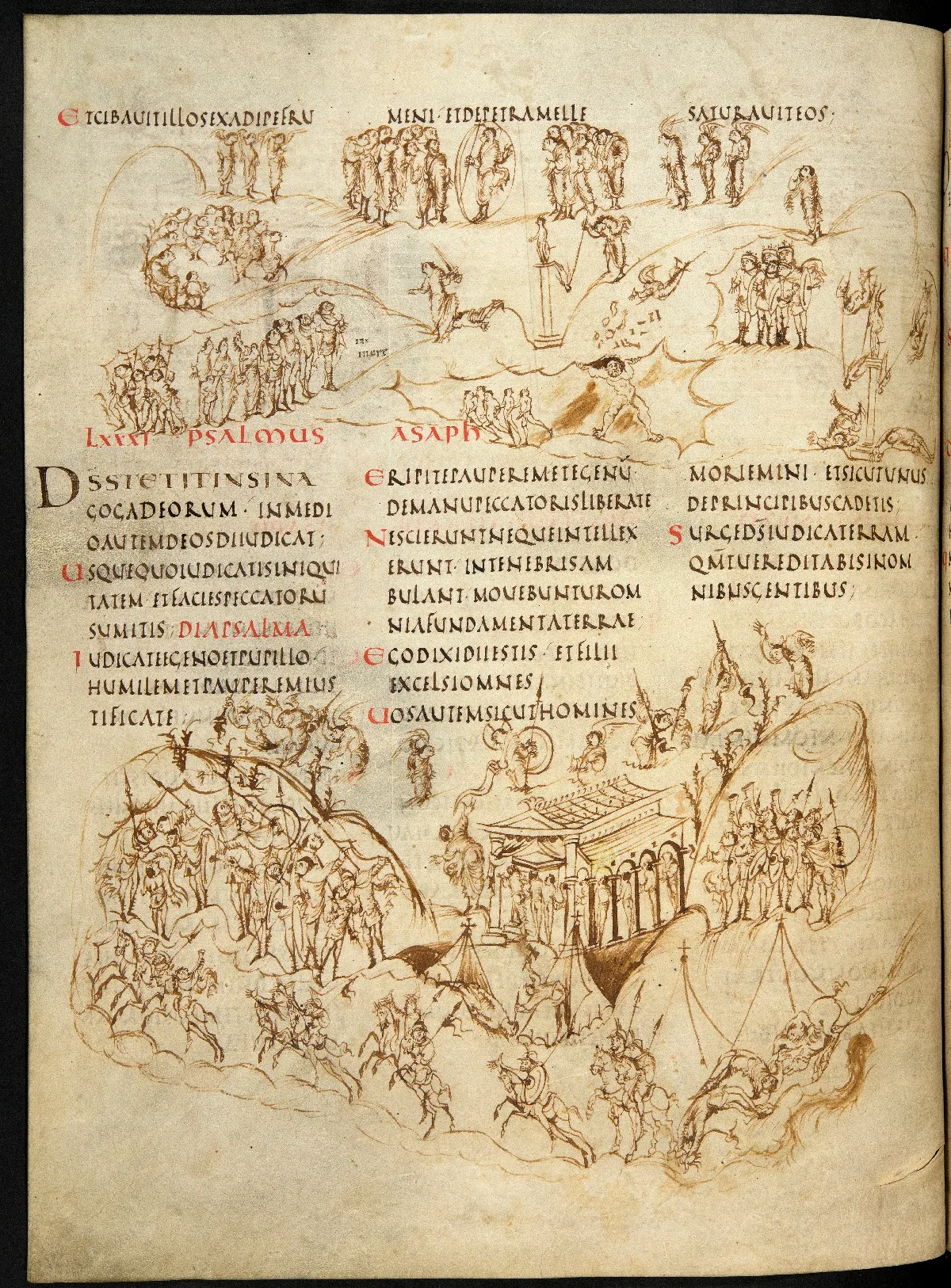
Start of Psalm 81
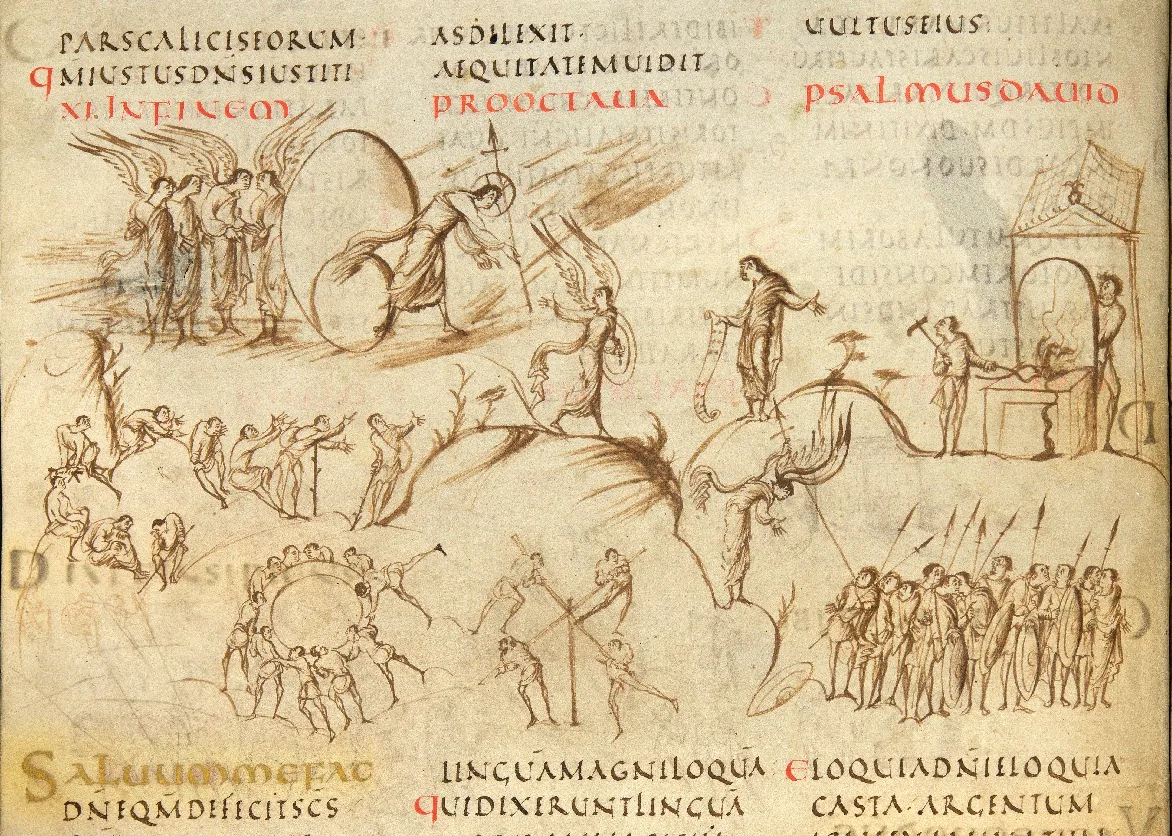
Psalm 11
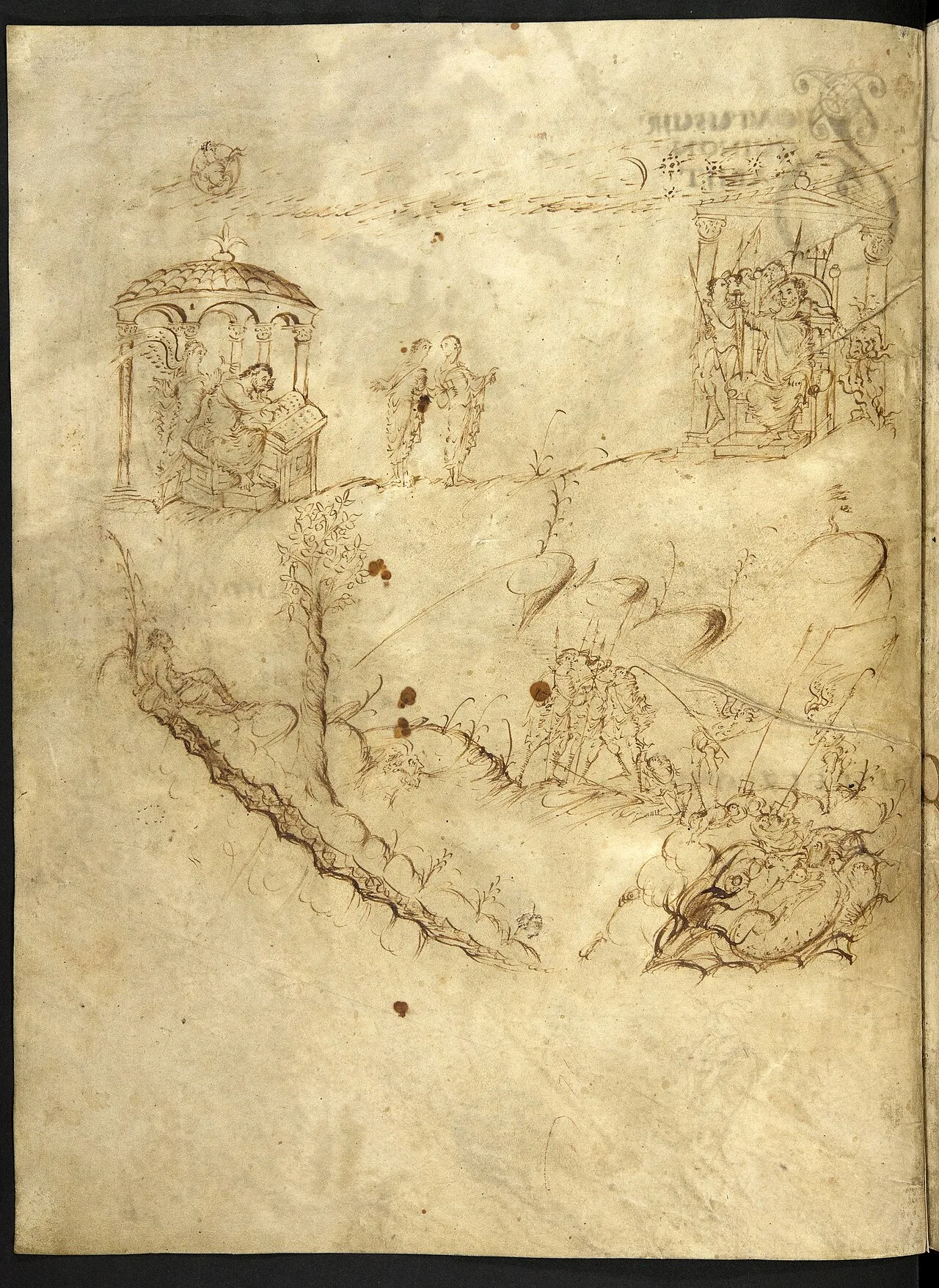
Beginning of the Utrecht Psalter

One of the illustrations in the Utrecht Psalter (left) copied in the Eadwine Psalter (right). Psalm 63 (Vulg.), 64 (AV): "Exaudi, Deus...".[1] Eadwine, folio 108v. The psalm begins (NIV): "Hear me, my God, as I voice my complaint; protect my life from the threat of the enemy. 2 Hide me from the conspiracy of the wicked, from the plots of evildoers. 3 They sharpen their tongues like swords and aim cruel words like deadly arrows." The literal rendering of metaphor is a characteristic of the Utrecht tradition of illustration.

Folio 15b illustrates Psalm 27

Start of Psalm 102
Utrecht Psalter
The Utrecht Psalter is a ninth-century illuminated psalter and key masterpiece of Carolingian art, famous for its 166 lively pen illustrations.
Archaic Script as Ninth-Century Deception
Scholars at one time believed the Utrecht Psalter was a 6th-century work because of archaic conventions in its lettering. However, the rustic capitals used throughout the volume were later recognized as 9th-century imitations of a script that had fallen out of favor. This palaeographical correction firmly established that the manuscript originated no earlier than the Carolingian era.
From Wikipedia · CC BY-SA 4.0
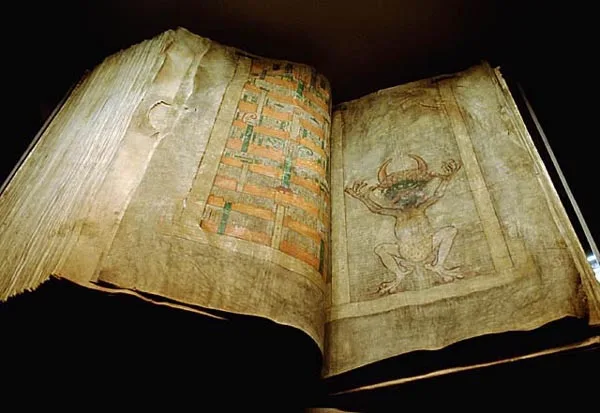
The Codex Gigas opened to the page with the distinctive portrait of the Devil from which the text received its byname, the Devil's Bible.[1]
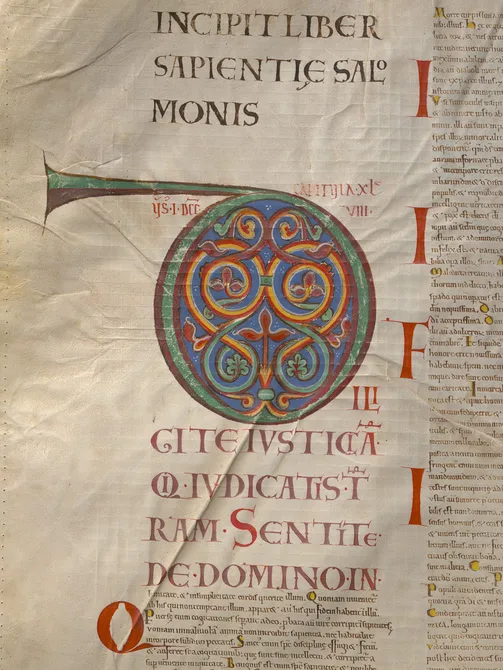
Illuminated initial at the start of the Wisdom of Solomon
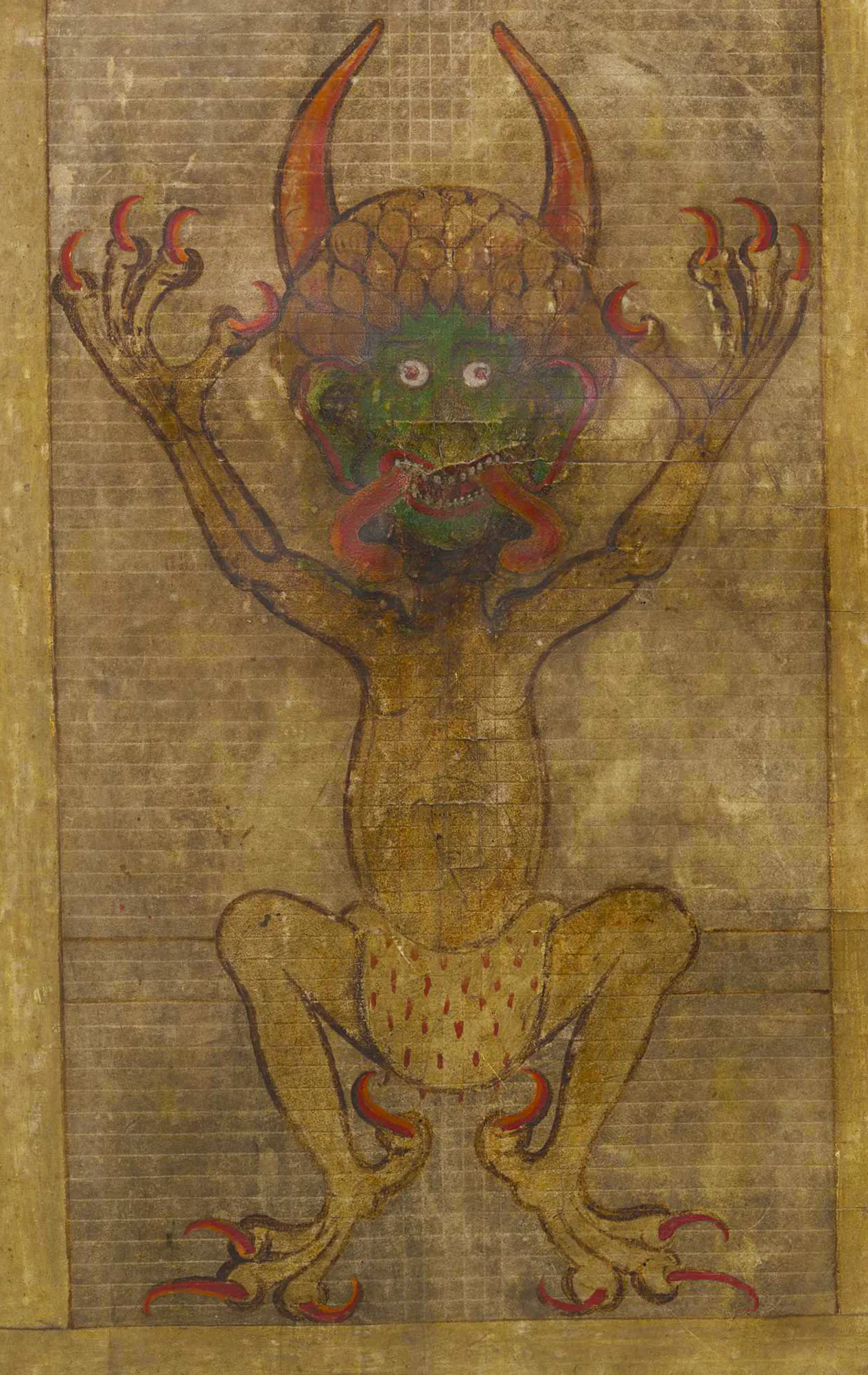
Illustration of the Devil on Codex Gigas, early thirteenth century
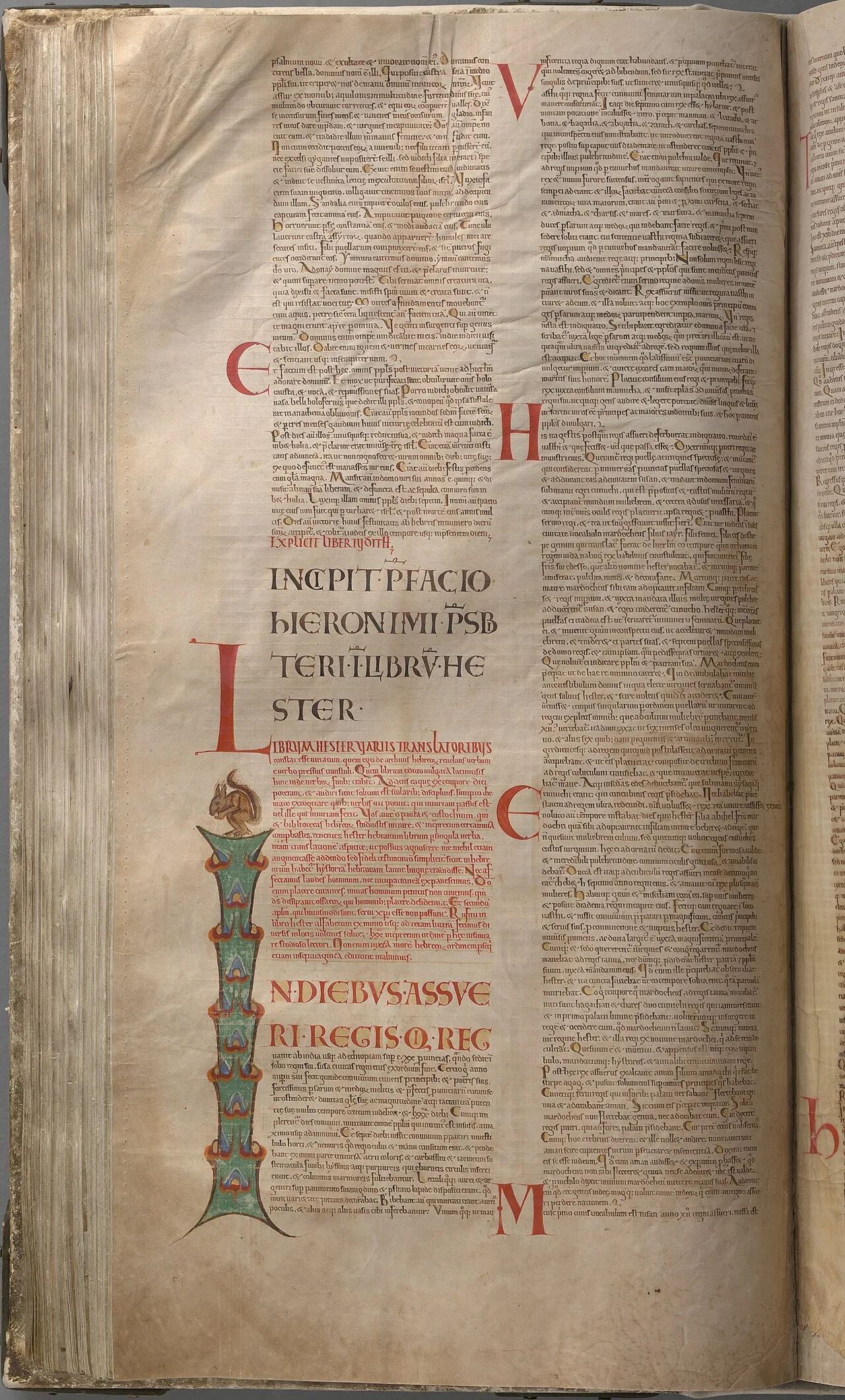
Initial with a squirrel
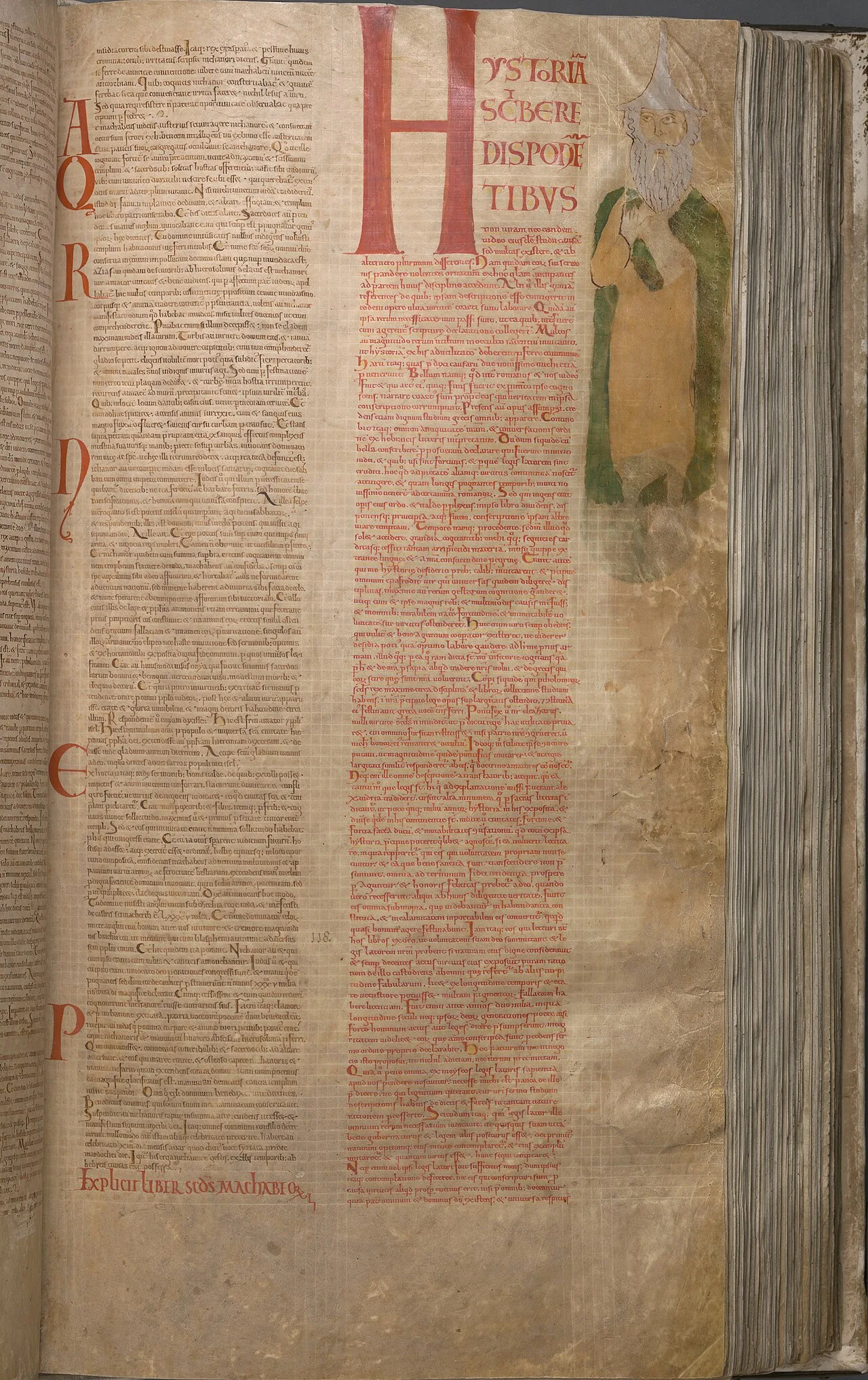
End of Book of Maccabees and start of Josephus, with author portrait
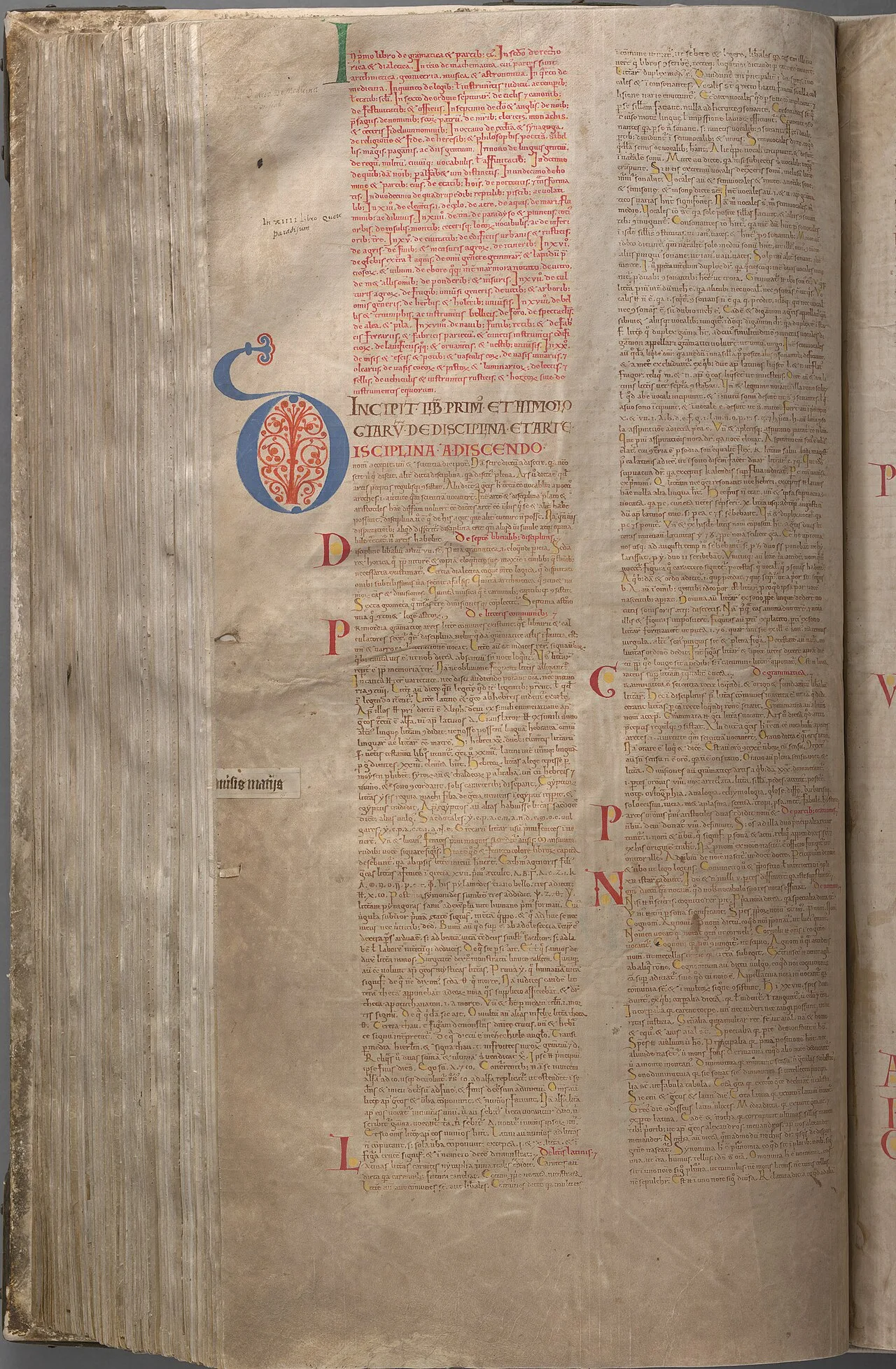
Blue and red capital in Isidore
Codex Gigas
The Codex Gigas is the largest extant medieval illuminated manuscript in the world, at a length of 92 cm (36 in). It is a Romanesque Latin Bible with other texts added in the second half of the book.
One Hundred and Sixty Animal Skins
At 92 cm (36 in) long and weighing 74.8 kg (165 lb), the Codex Gigas is the largest surviving medieval manuscript in existence. Its 310 vellum leaves encompass an astonishing 142.6 m2 (1,535 sq ft) of writing surface, traditionally claimed to have required the skins of 160 donkeys or calfskin. Thick wooden boards bound in leather and reinforced with ornate metal fittings hold the colossal work together.
From Wikipedia · CC BY-SA 4.0

ViennaDioscoridesPlant

A gallery of birds from folio 483v of the Vienna Dioscorides

Portrait of Anicia Juliana, for whom the book was made, flanked by Megalopsychia and Phronesis (detail from folio 6v)

Peacock endpapers

Folio 6v, donation portrait of Anicia Juliana

Folio 475r, birds
Vienna Dioscurides
The Vienna Dioscurides is an early 6th-century Byzantine Greek illuminated manuscript of Pedanius Dioscorides's 1st-century AD work De materia medica and a rare example of a late antique scientific text.
From Imperial Gratitude to Hospital Floor
Created around 515 AD in Constantinople for imperial princess Anicia Juliana, daughter of Anicius Olybrius, the codex began as an aristocratic gift. Rather than remaining locked away as an untouchable luxury object, it became an everyday working textbook in Constantinople's imperial hospital. Its utilitarian medical service across the centuries was so intensive that a Greek nurse named Nathanael had the volume rebound in 1406.
From Wikipedia · CC BY-SA 4.0
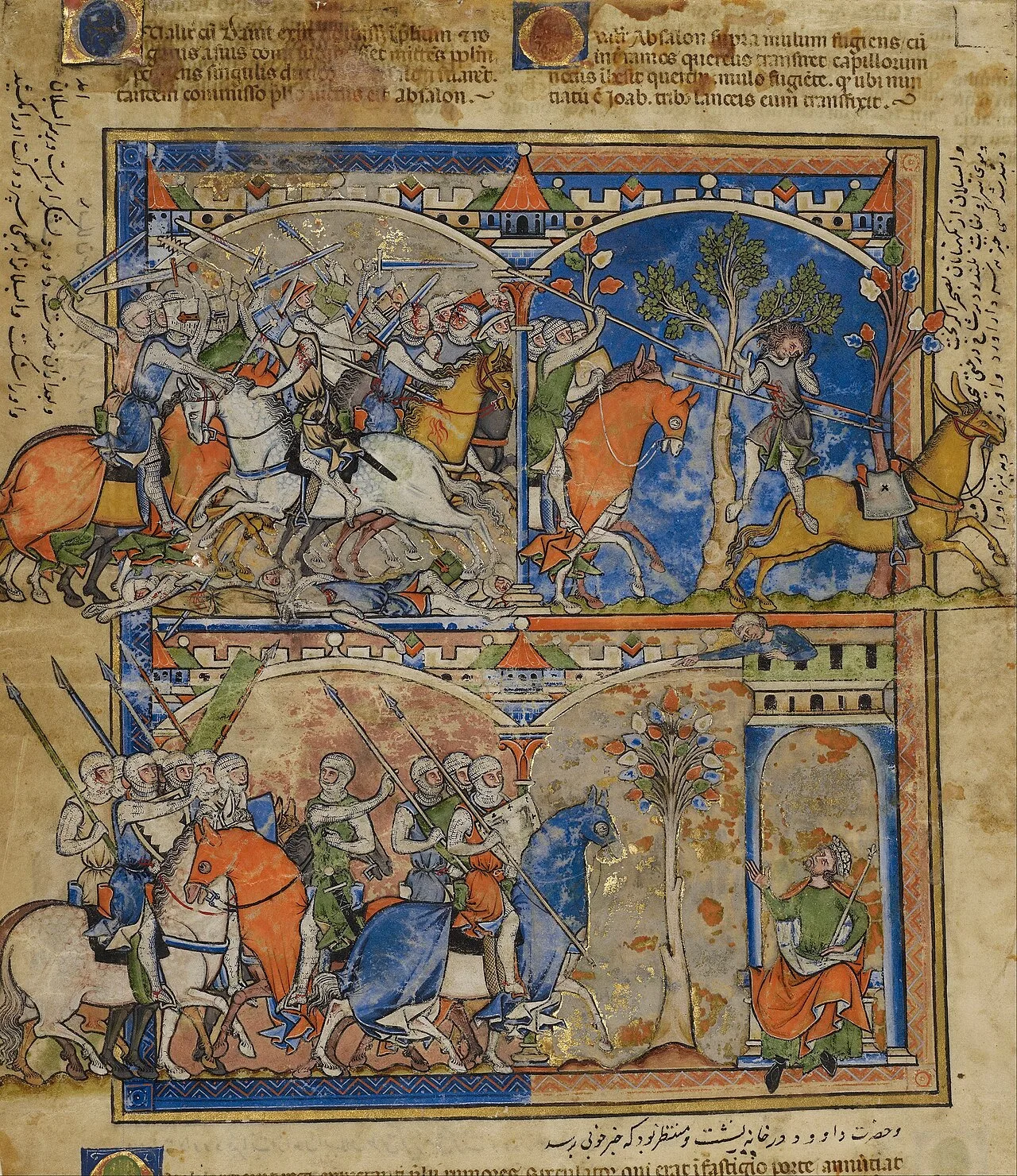
The end of the story of David and Absalom

A Siege, Samuel crowns Saul king, and they sacrifice together.

"The Israelites are repulsed from Ai" (fol. 10r)
Morgan Bible
The Morgan Bible is a unique medieval illuminated manuscript featuring miniature paintings of events from the Hebrew Bible set in the scenery and costumes of thirteenth-century France.
Crusader Politics in Thirteenth-Century French Dress
The manuscript was created around the time Louis IX embarked on his first crusade. French artists clothed ancient biblical figures in modern dress, echoing the stained glass style of the Sainte-Chapelle chapel in Paris. This contemporary visual framing helped Louis IX legitimize his royal authority at home and among fellow crusaders. The artistic choice transformed ancient scripture into an immediate reflection of French crusader ideology.
From Wikipedia · CC BY-SA 4.0

583 x 396 mm.

Incomplete page of the Winchester Bible.

Fol.148. Detail of God addressing Jeremiah

Fol.5, detail. Christ at the Last Judgment
Winchester Bible
The Winchester Bible is a Romanesque illuminated manuscript produced in Winchester between 1150 and 1175. It is the largest surviving 12th-century English Bible.
Hides of 250 Calves for a Monumental Folio
Producing the largest surviving 12th-century English Bible required monumental resources from the natural world. The Winchester Bible spans 936 pages across 468 leaves of calf-skin parchment, which represents the hides of about 250 calves. Measuring 583 by 396 mm. per folio, the enormous physical scale of the manuscript reflects the lavish investment made in its production.
From Wikipedia · CC BY-SA 4.0

The beginning of the Gospel of Mark from the Book of Durrow

Carpet page with interlaced animals

The Ox of Luke (folio 124v)

The eagle, here of John (folio 84v)

Folio 126r

Folio 125v
Book of Durrow
The Book of Durrow is an illuminated manuscript gospel book dated to c. 700, containing the Vulgate Latin text of the four Gospels written in Insular script and richly decorated in Insular art.
Inverted Heraldry of the Evangelists
The artist assigned the evangelists non-traditional symbols, pairing Mark with an eagle and John with a lion. This pre-Vulgate arrangement reverses the standard symbols used for both figures. When all four symbols appear together on folio 2r, they follow the normal order if read clockwise, but match the pre-Vulgate order when read anti-clockwise.
From Wikipedia · CC BY-SA 4.0
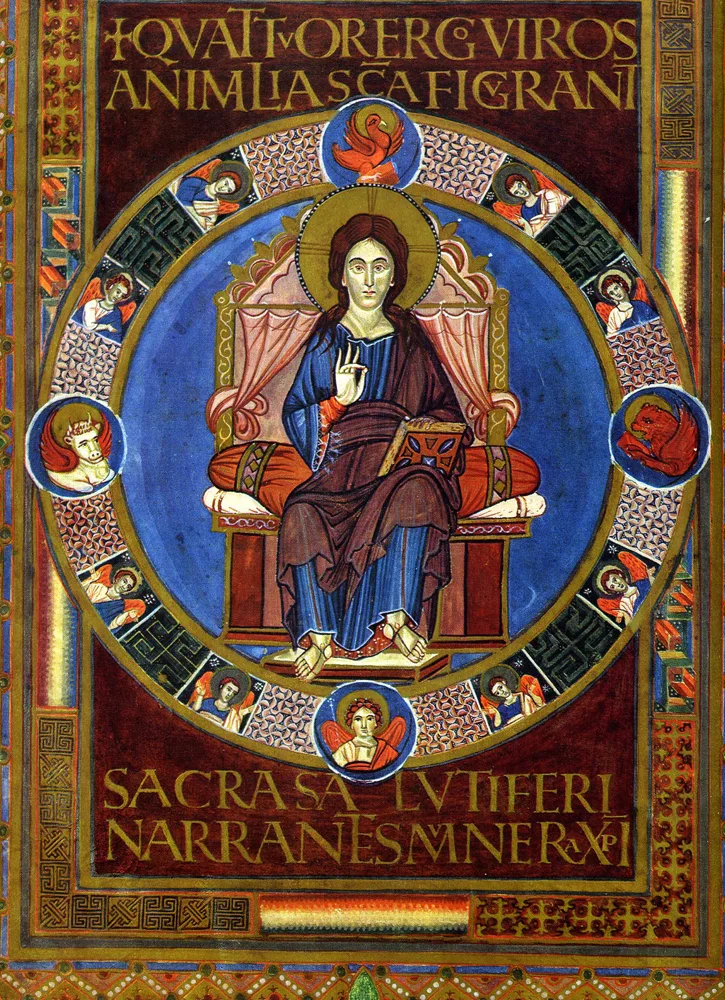
Folio 72 verso of the Codex Aureus of Lorsch contains an illumination of Christ in Majesty

Virgin and Child with John the Baptist and Zachary's. Book cover of the Lorsch Gospels (back cover). Nativity and annunciation to the shepherds below. Ivory, 14 7/8 x 10 3.4in. (37.8 x 27.3 cm), c. 810. Victoria and Albert Museum, London.
Lorsch Gospels
The Codex Aureus of Lorsch, or Lorsch Gospels, is an illuminated Gospel Book written in Latin between 778 and 820, roughly coinciding with the period of Charlemagne's rule over the Frankish Empire.
Wartime Mutilation for Illicit Sale in 1622
Otto Heinrich moved the Lorsch collection to Heidelberg to establish the Bibliotheca Palatina shortly before the abbey's dissolution in 1563. The manuscript's unified existence ended abruptly when it was stolen in 1622 during the Thirty Years' War. The thieves broke the codex into two separate pieces and ripped off its covers to make the precious object easier to sell.
From Wikipedia · CC BY-SA 4.0