
Le Penseur by Rodin (Kunsthalle Bielefeld) 2014-04-10
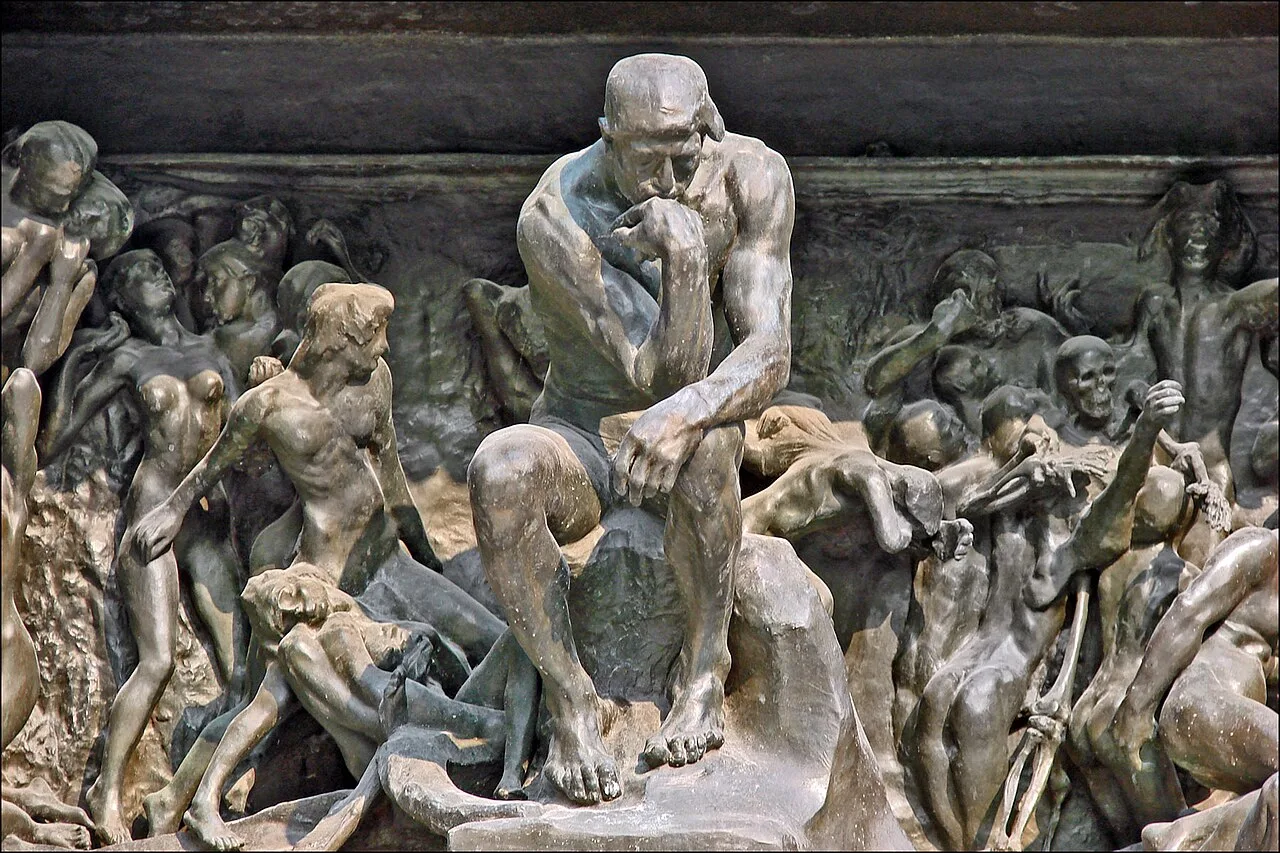
The Thinker in The Gates of Hell at the Musée Rodin

Rodin's model, the boxer Jean Baud
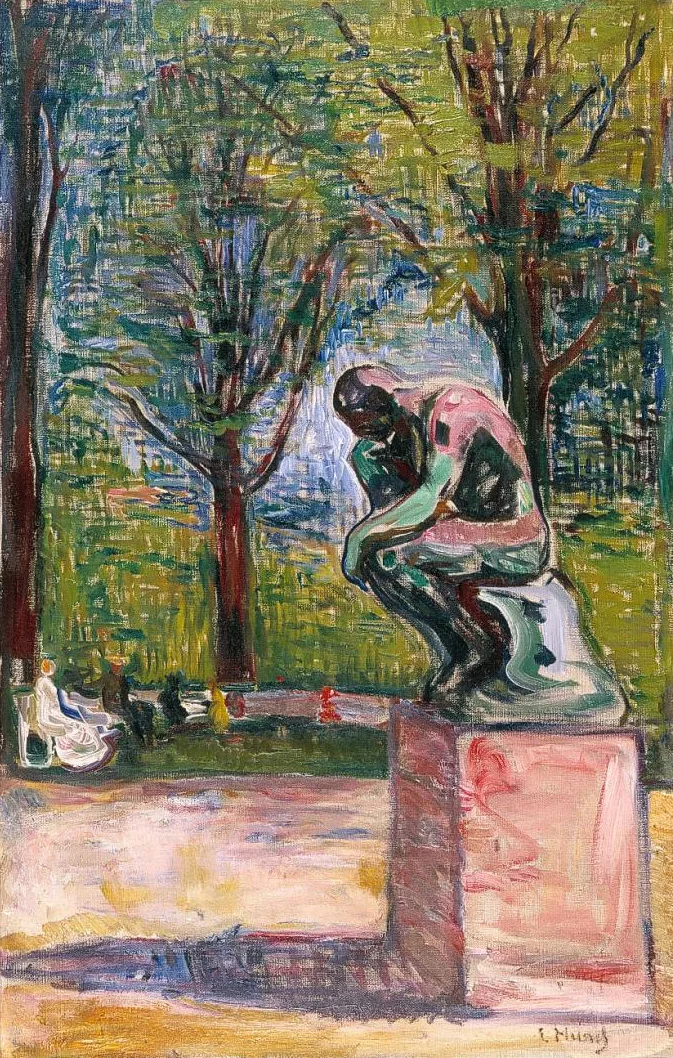
Rodin's The Thinker (in the park of the Lindesche Villa with the family in the background) by Edvard Munch
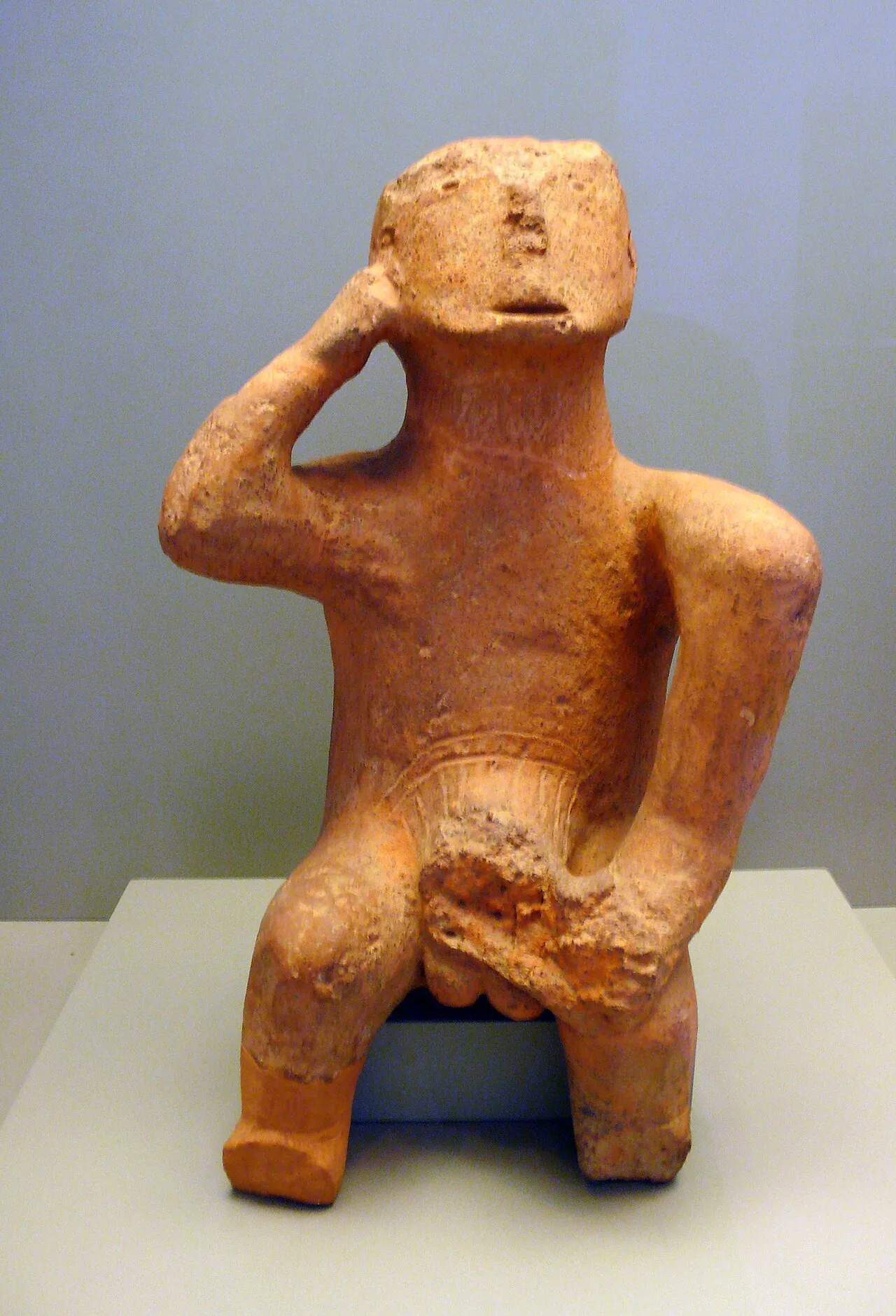
Karditsa Thinker (4500–3300 BCE)
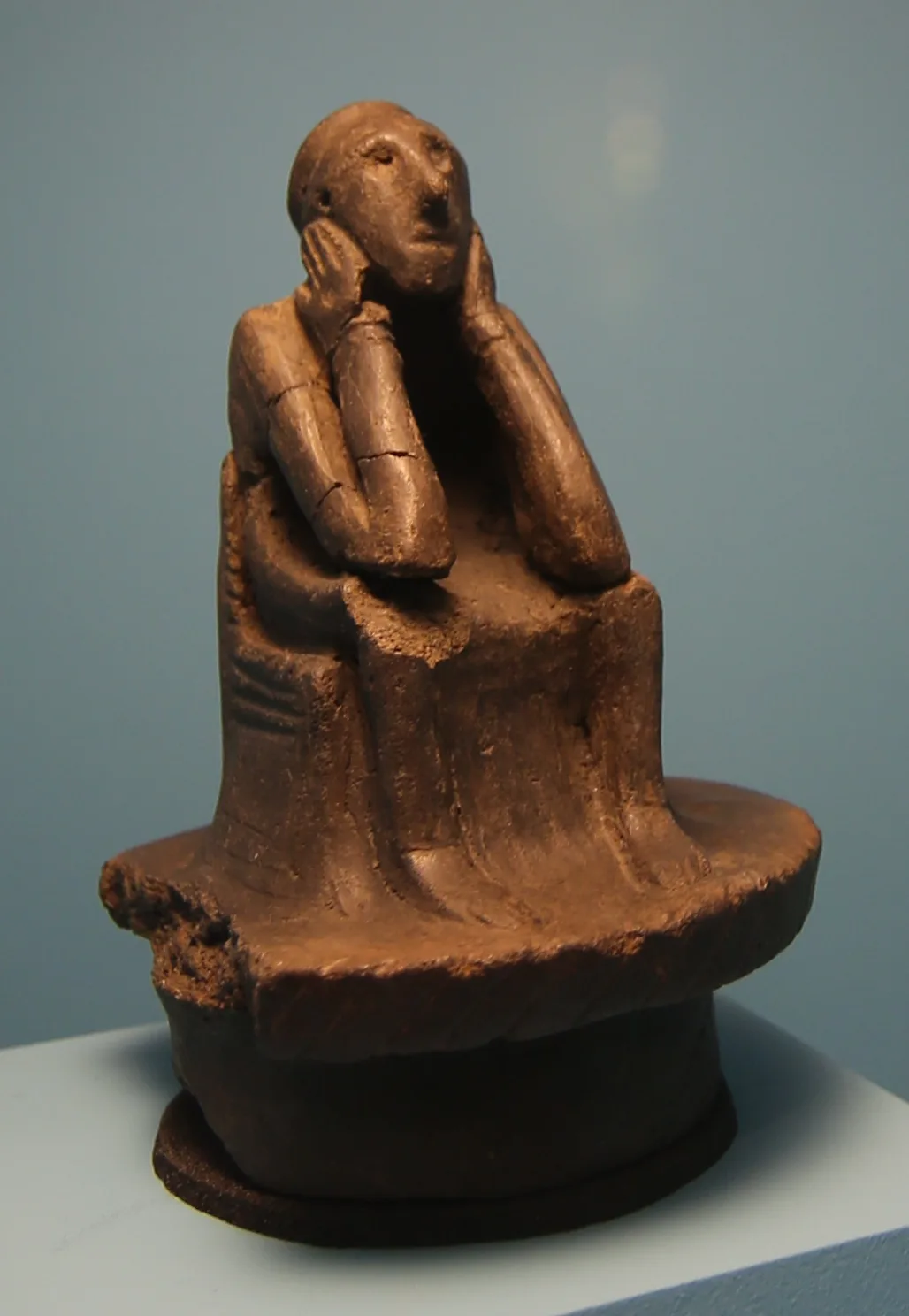
The Spong Man lid at Norwich Castle Museum and Art Gallery
The Thinker
The Thinker is a bronze sculpture by Auguste Rodin depicting a heroic nude male figure seated in deep contemplation, making it one of the most widely known artworks and an iconic symbol of thinking.
A Renamed Dante from The Gates of Hell
Rodin originally conceived the sculpture under the title The Poet as part of his 1880 commission, The Gates of Hell. Positioned at the center of the composition, the figure was intended to depict Dante Alighieri pondering his poem the Divine Comedy. Foundry workers later coined the title The Thinker after noticing the statue's resemblance to Michelangelo's Il Pensieroso.
From Wikipedia · CC BY-SA 4.0
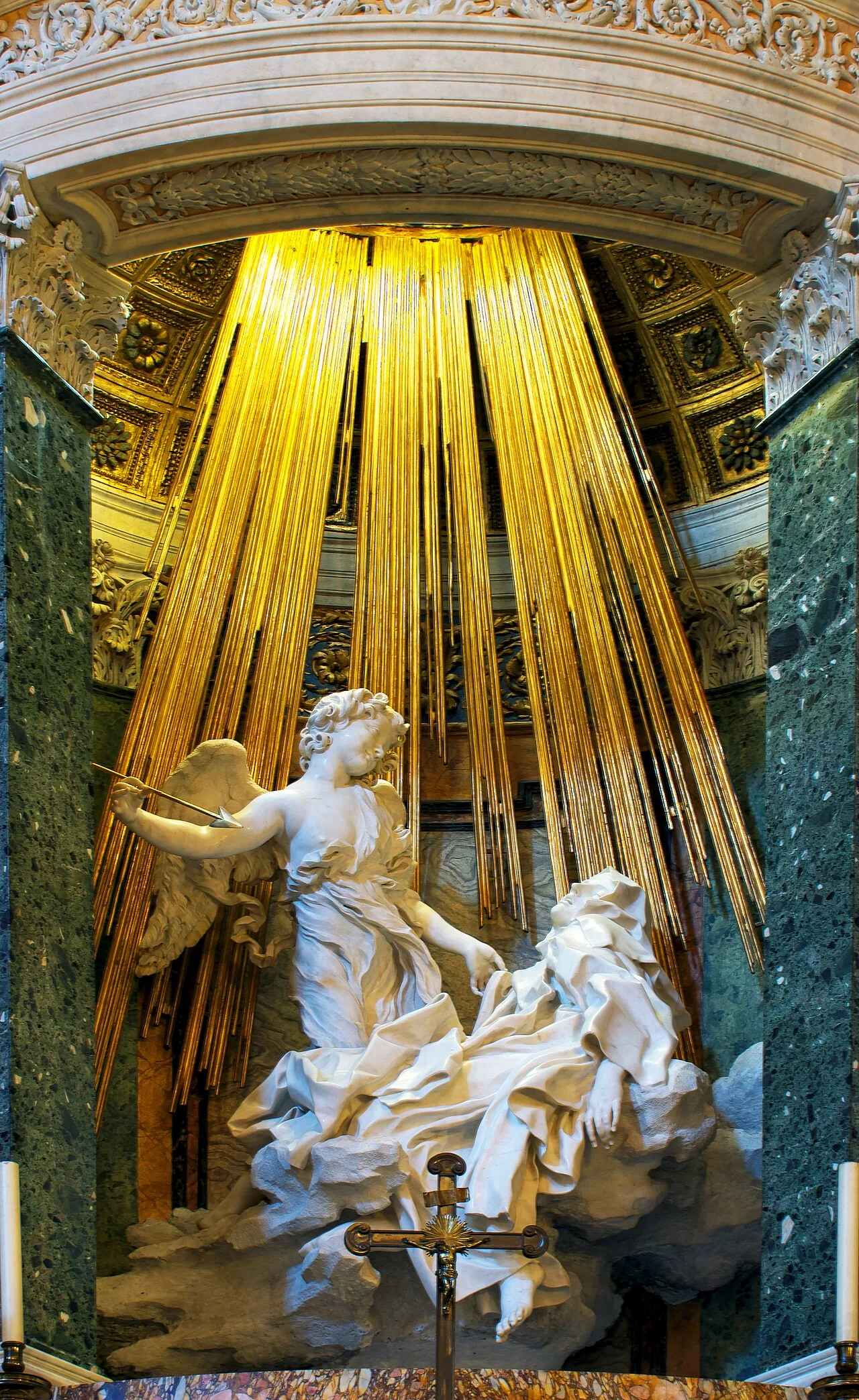
Ecstasy of St. Teresa HDR
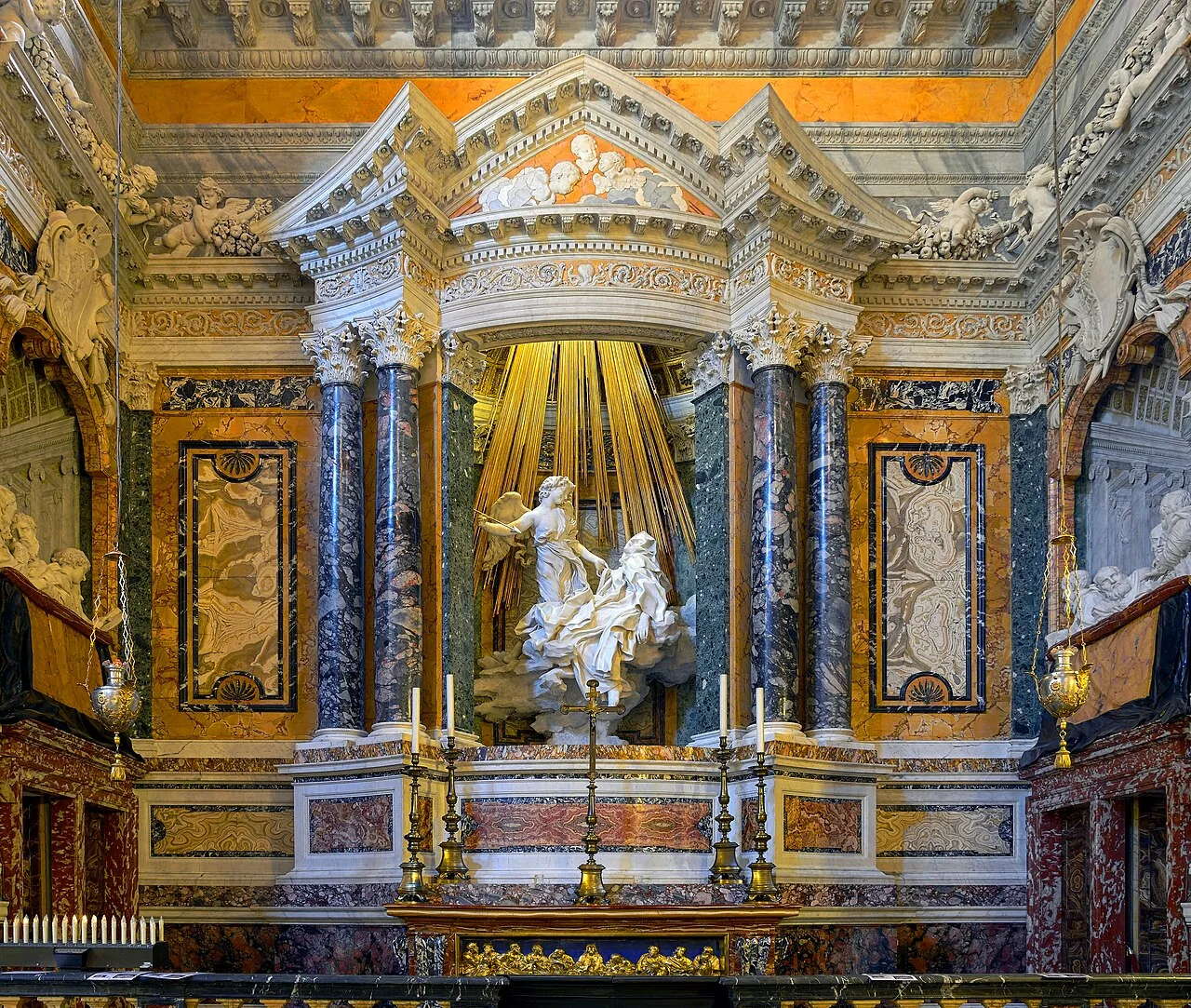
Wider view, including the Cornaro portraits, but omitting the lower parts of the chapel.
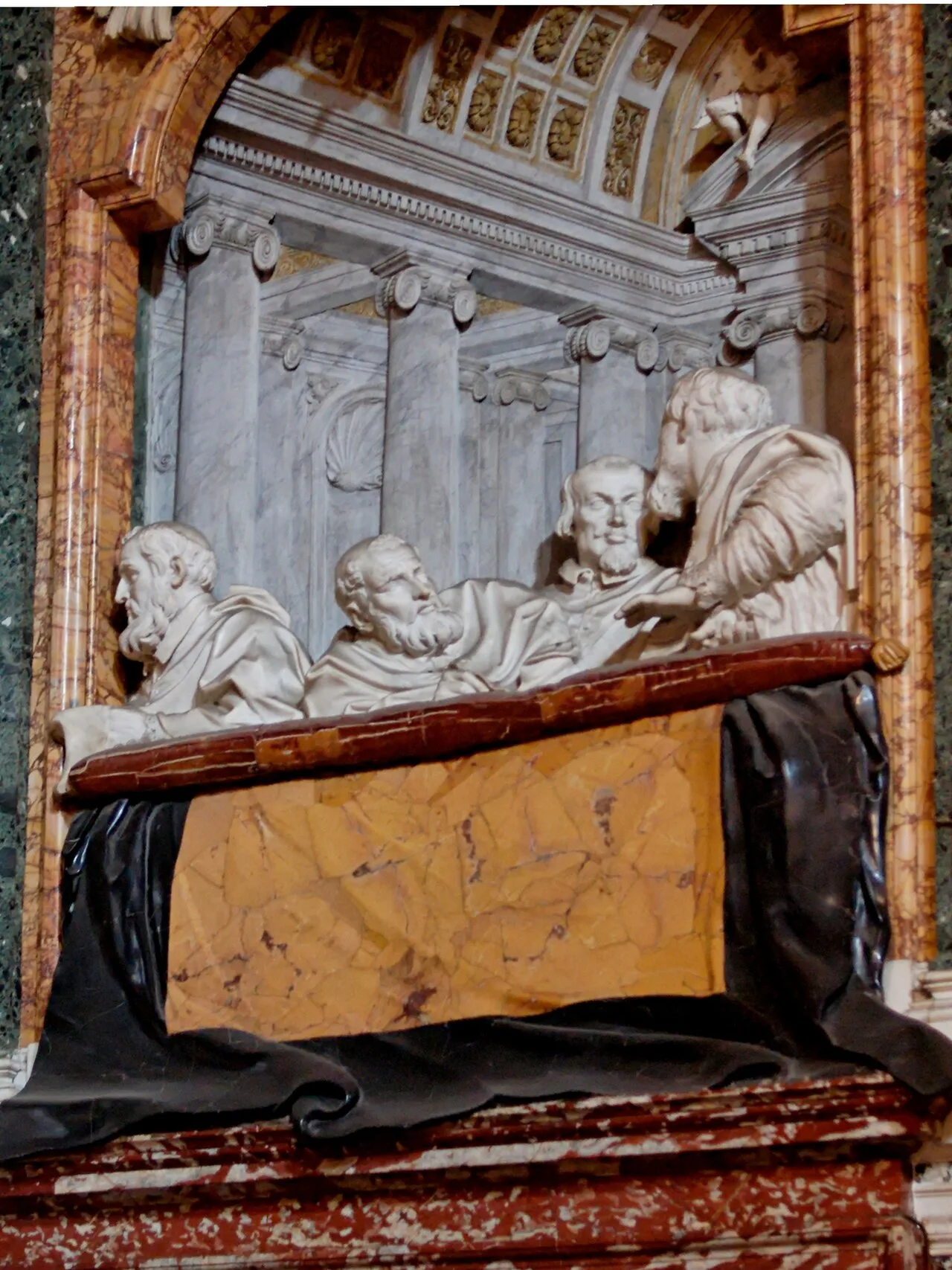
Cornaro SM della Vittoria

Santa teresa di bernini 02
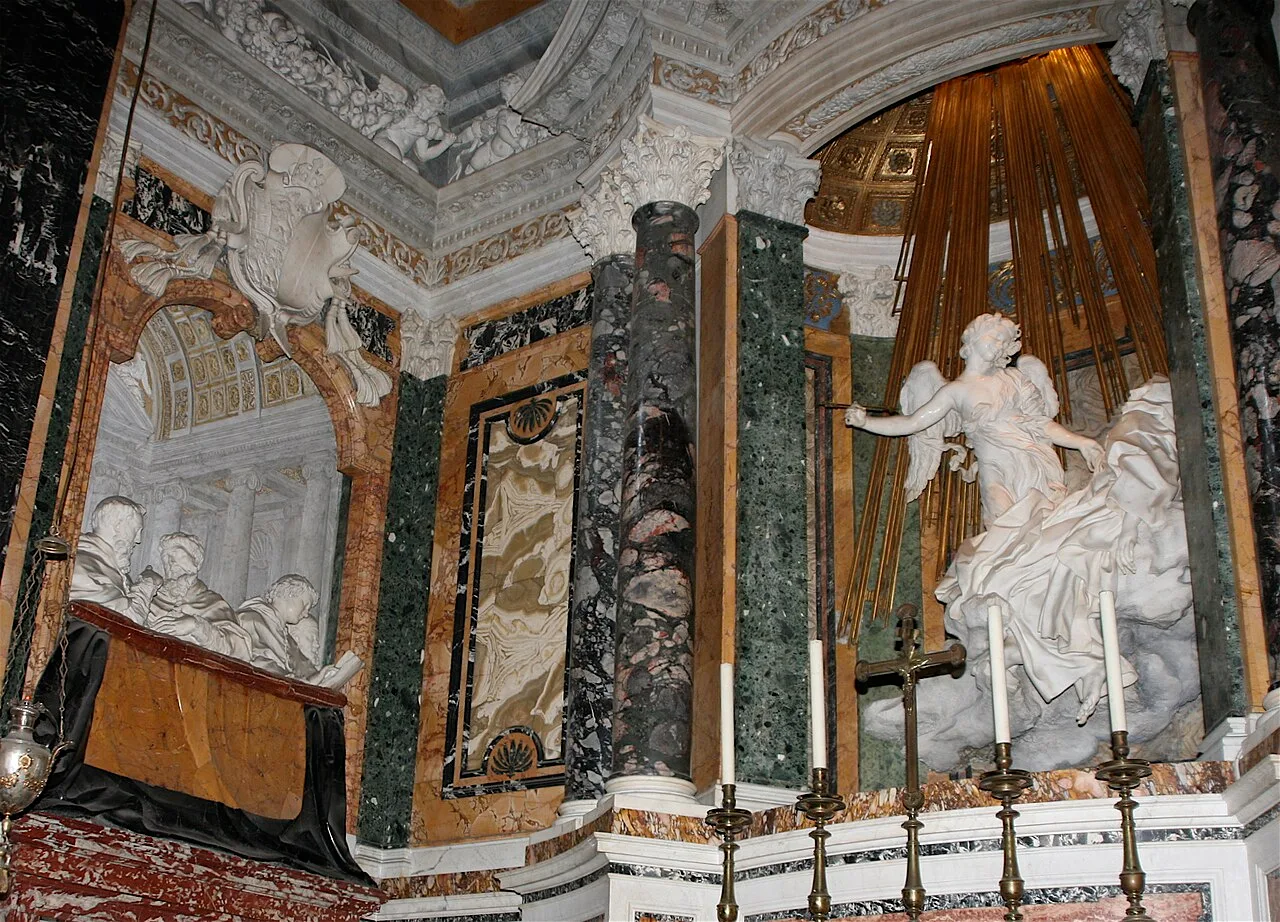
Santa Maria della Vittoria - 2
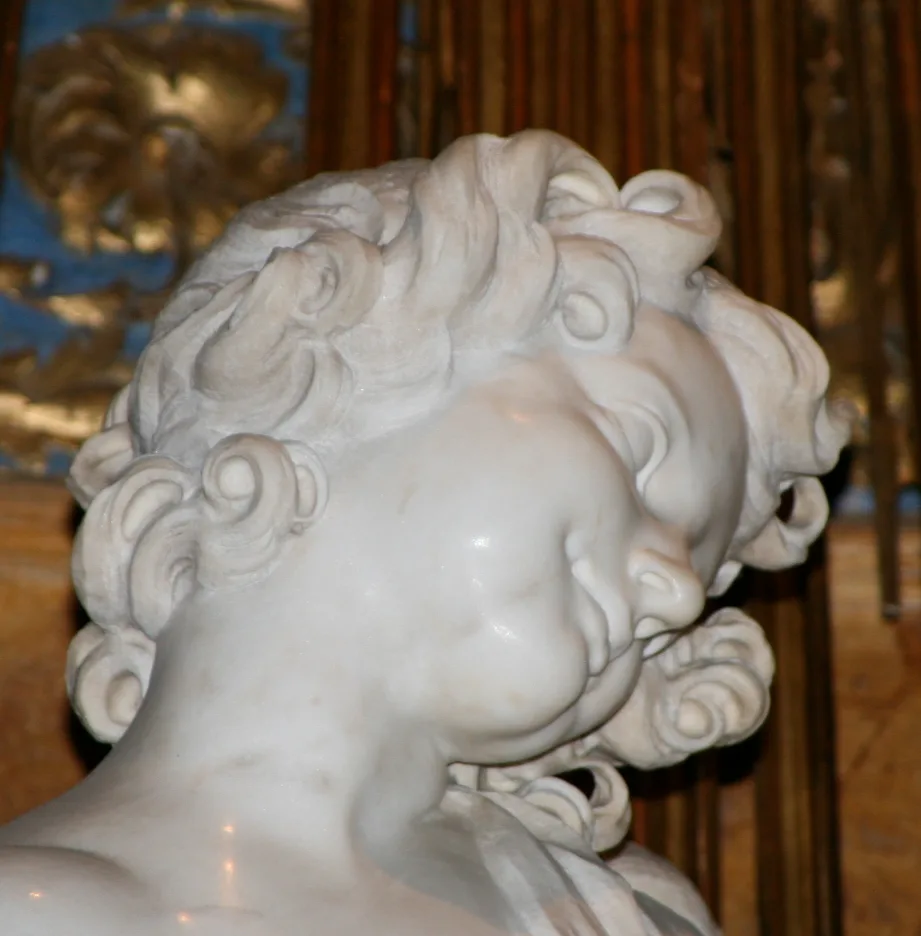
Santa Maria della Vittoria - 7
Ecstasy of Saint Teresa
The Ecstasy of Saint Teresa is a white marble sculptural altarpiece in Rome's Santa Maria della Vittoria, designed and carved by Gian Lorenzo Bernini and completed in 1652.
Bernini's Touch Preserved in Terracotta
Before executing the monumental altarpiece in marble, Bernini constructed a small preliminary terracotta model measuring roughly 47 cm between 1644 and 1647. This early sculptural embodiment captures the initial evolution of the project. Now housed in the Hermitage Museum's collection, the terracotta artifact still visibly preserves the physical impressions of Bernini's fingerprints.
From Wikipedia · CC BY-SA 4.0
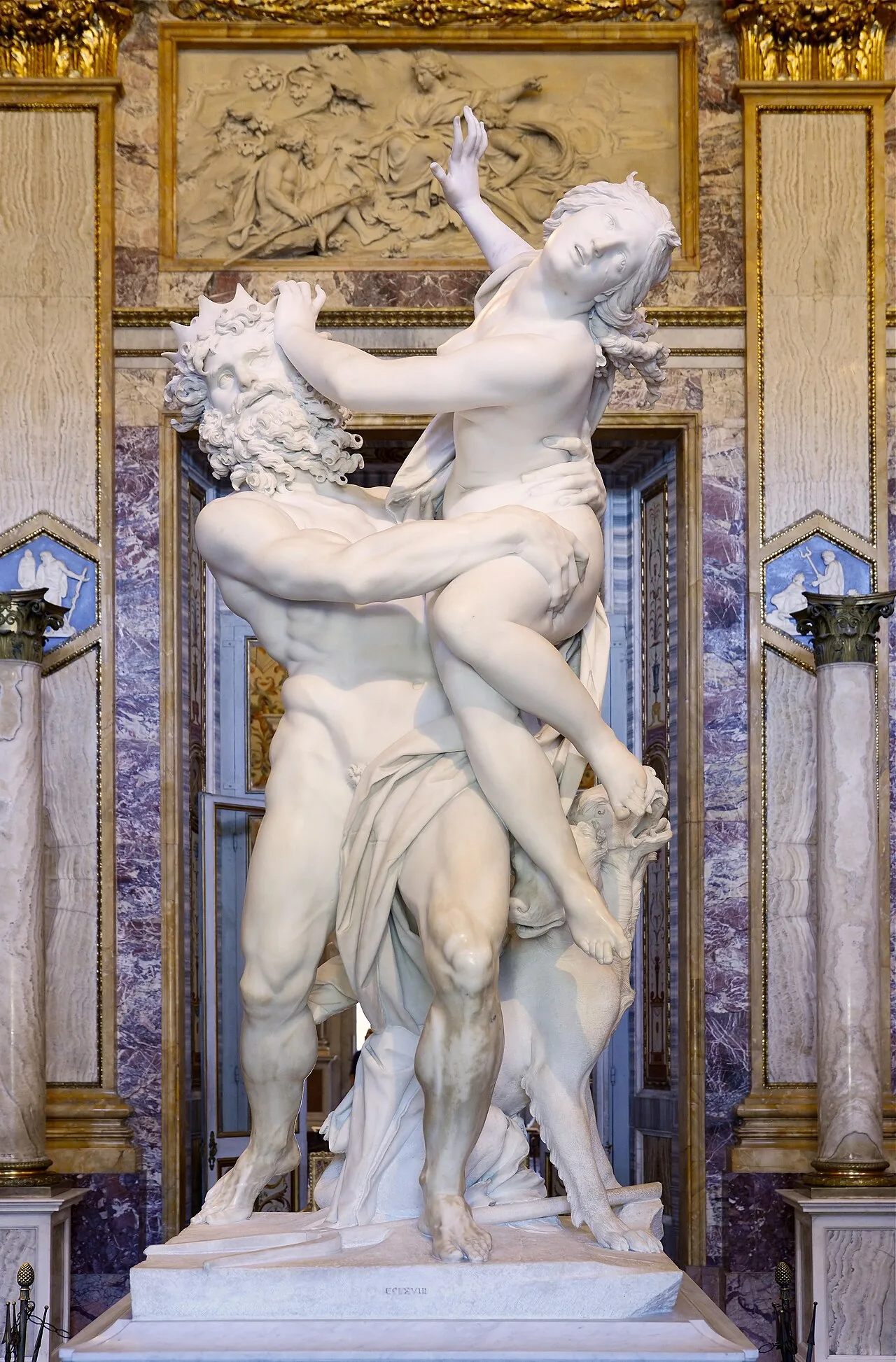
Rape of Prosepina September 2015-3a

Bust of Pope Paul V in the Galleria Borghese

Detail of Proserpina's thigh

Early sketch of the Rape of Proserpina

Head of Proserpina, Cleveland Museum of Art

Detail of Pluto's hair and beard
The Rape of Proserpina
The Rape of Proserpina is a Baroque marble sculpture by Gian Lorenzo Bernini, executed between 1621 and 1622, depicting the abduction of Proserpina by the god Pluto.
Unifying Mannerist Chaos into a Single Perspective
Bernini finished this monumental marble group when he was just 23 years old. While earlier sculptors forced viewers to walk continuously around a piece to understand it, Bernini engineered the entire composition to be absorbed from one angle directly in front of the base. All other viewing positions remain subordinate, presenting the narrative and emotional climax instantaneously.
From Wikipedia · CC BY-SA 4.0
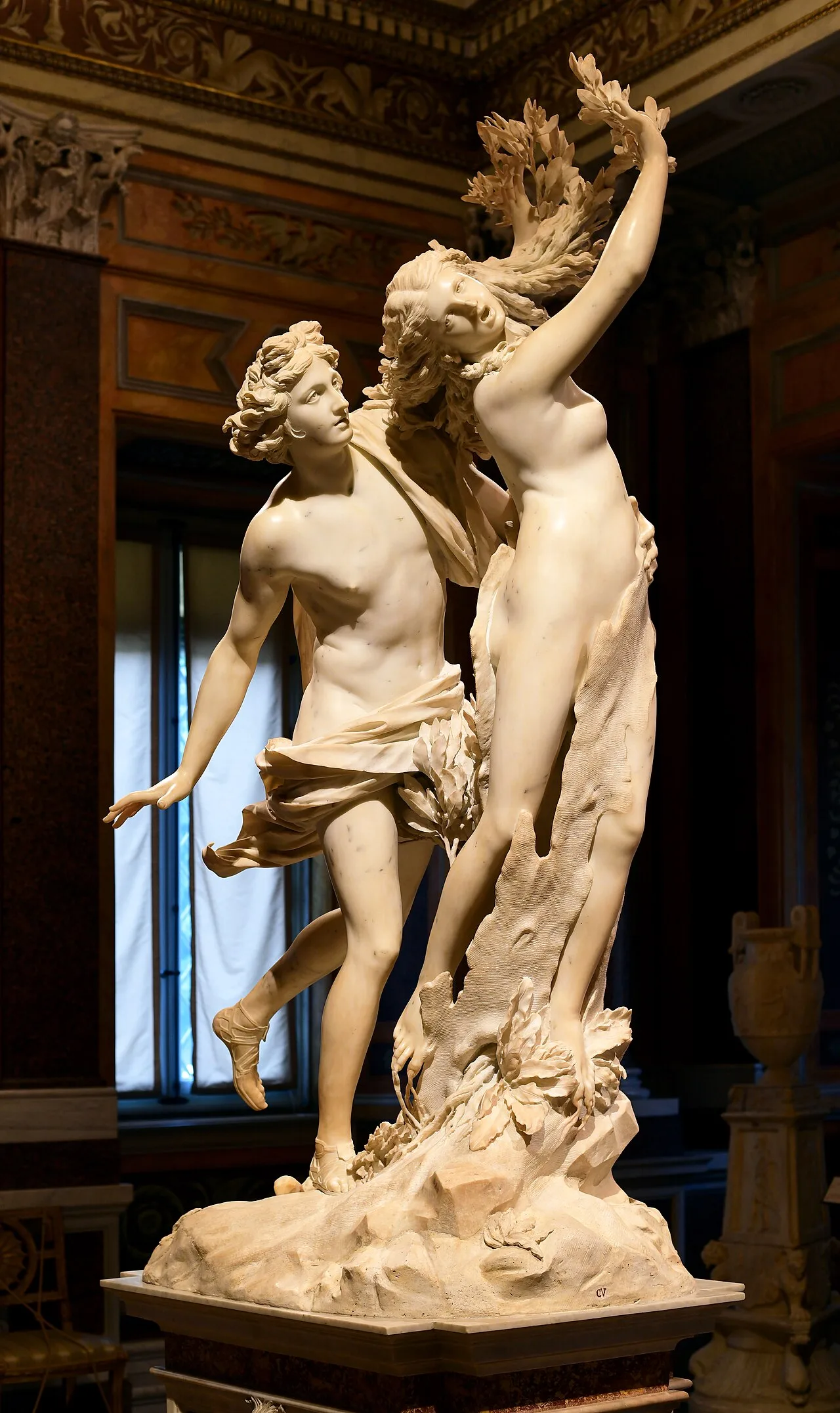
Apollo and Daphne (Bernini) (cropped)
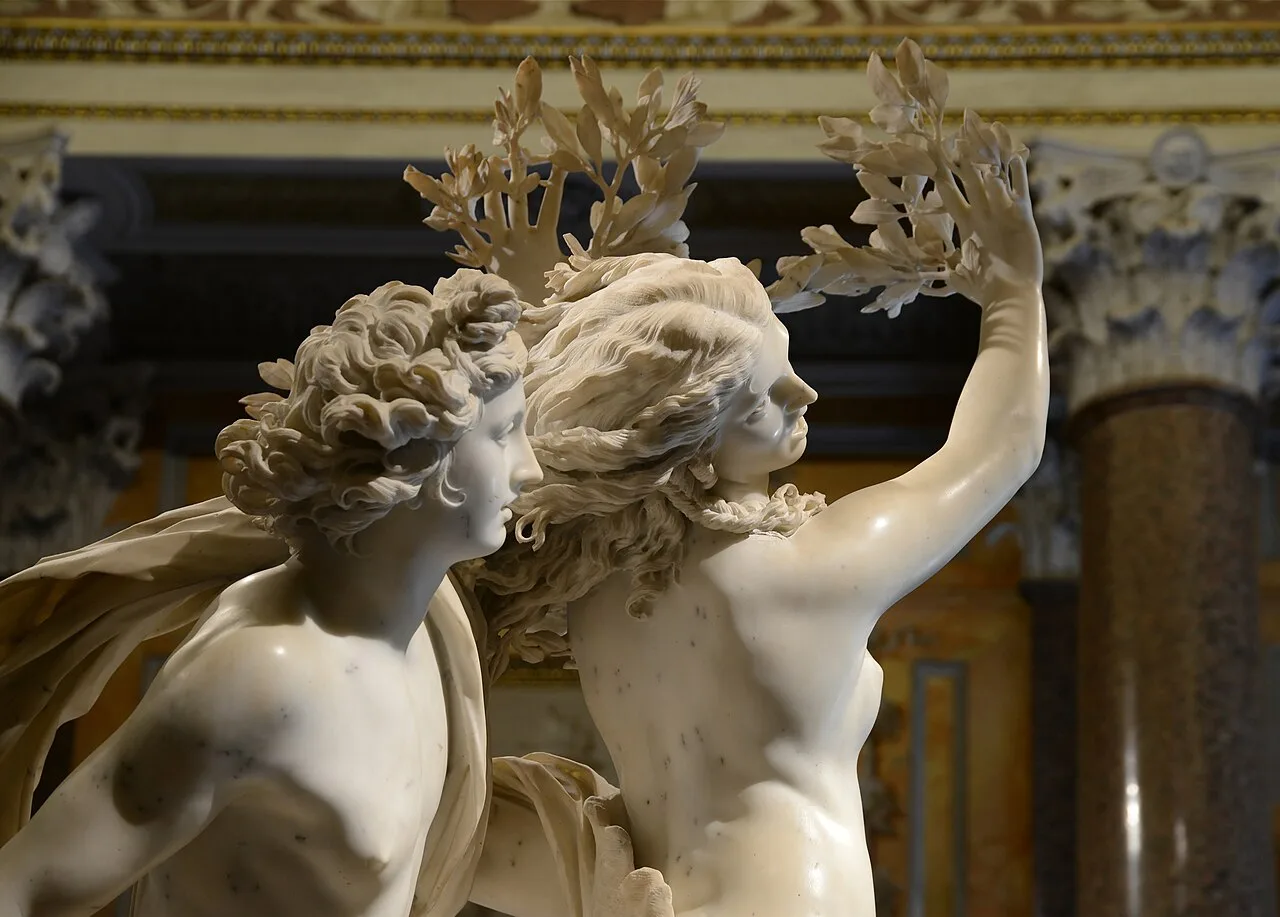
Detail of the sculpture
Apollo and Daphne (Bernini)
Apollo and Daphne is a life-sized marble sculpture by Italian artist Gian Lorenzo Bernini, executed between 1622 and 1625 and housed in the Galleria Borghese in Rome.
Currying Papal Favor with a Replaced Masterpiece
Cardinal Scipione Borghese initiated the commission for Apollo and Daphne only after giving away another major sculpture from his collection, Bernini's The Rape of Proserpina (1621–22). Borghese presented that earlier masterpiece to Cardinal Ludovico Ludovisi as a political calculation. By offering such a generous gift, he sought to ingratiate himself with the favored nephew of the new pontiff, Pope Gregory XV.
From Wikipedia · CC BY-SA 4.0
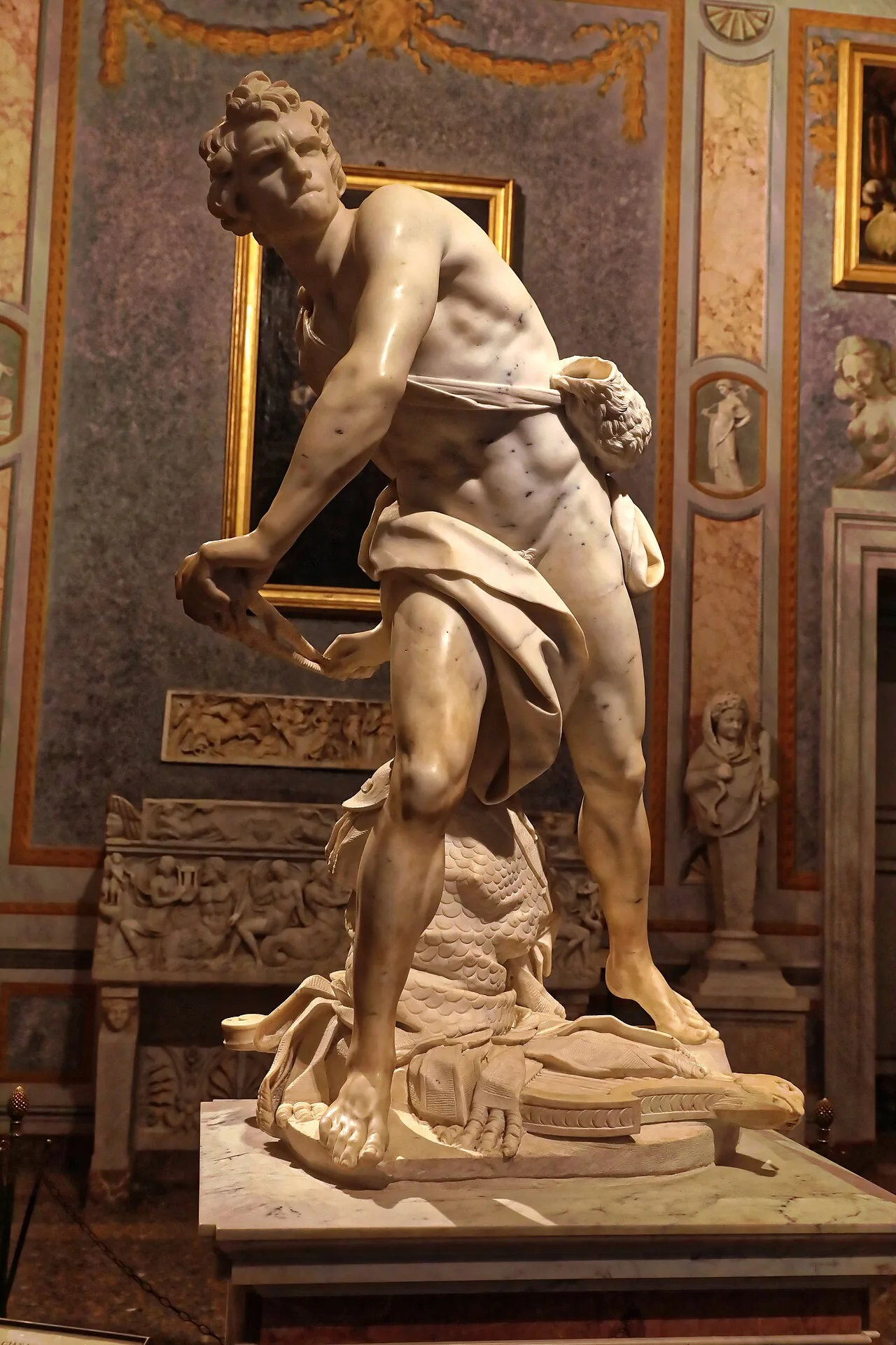
Bernini's David 02
David (Bernini)
David is a life-size marble sculpture by Gian Lorenzo Bernini, completed between 1623 and 1624. It was commissioned to decorate the villa of Cardinal Scipione Borghese.
An Abrupt Pivot at Twenty-Four
In 1623, when Bernini was only 24 years old, he unexpectedly abandoned his work on Apollo and Daphne to sculpt David. Records indicate he began in mid–1623 and worked at an extraordinary pace. According to biographer Filippo Baldinucci, the artist completed the entire project in just seven months.
From Wikipedia · CC BY-SA 4.0

The sculpture in 2013

Perseus with the Head of Medusa, in the Loggia dei Lanzi, Florence

The base of the sculpture, Perseus's feet on the slain Medusa's headless corpse
Perseus with the Head of Medusa
Perseus with the Head of Medusa is a bronze sculpture made by Benvenuto Cellini between 1545 and 1554, located in the Loggia dei Lanzi in Florence, Italy.
Turning Neighboring Statues into Stone
Cellini established an ingenious visual dialogue with the surrounding masterworks in the plaza. In mythological lore, Medusa's gaze turns onlookers into stone, a concept Cellini manifested literally in three dimensions. His bronze hero stands triumphantly holding the severed Gorgon head while surrounded by massive marble statues of Hercules, David, and later Neptune. This juxtaposition cleverly reframed the existing marble figures as victims petrified by Medusa.
From Wikipedia · CC BY-SA 4.0

0 Psyché ranimée par le baiser de l'Amour - Canova - Louvre 1

Antonio Canova in his studio with Henry Tresham and a plaster model for Cupid and Psyche by Hugh Douglas Hamilton, c. 1788–1791[7]

Alternative view from behind showing Cupid's arrows and the flask Psyche brought from the underworld, Louvre

Amor-Psyche-Canova-JBU04

Amor-Psyche-Canova-JBU07

Alternative view from side showing detail on Cupid's wings, Hermitage version
Psyche Revived by Cupid's Kiss
Psyche Revived by Cupid's Kiss is a sculpture by Italian artist Antonio Canova first commissioned in 1787 by Colonel John Campbell. It is regarded as a masterpiece of Neoclassical sculpture.
Awakening from the Stygian Sleep of Curiosity
The sculpture captures a pivotal scene from Lucius Apuleius' Latin novel The Golden Ass, where Psyche collapses after opening a forbidden jar. Canova includes small narrative markers around the lovers, showing the discarded vessel and the arrow Cupid used to revive her. By freezing the exact second of resurrection, the piece bridges Neoclassical precision with the intense emotional awakening central to emerging Romanticism.
From Wikipedia · CC BY-SA 4.0
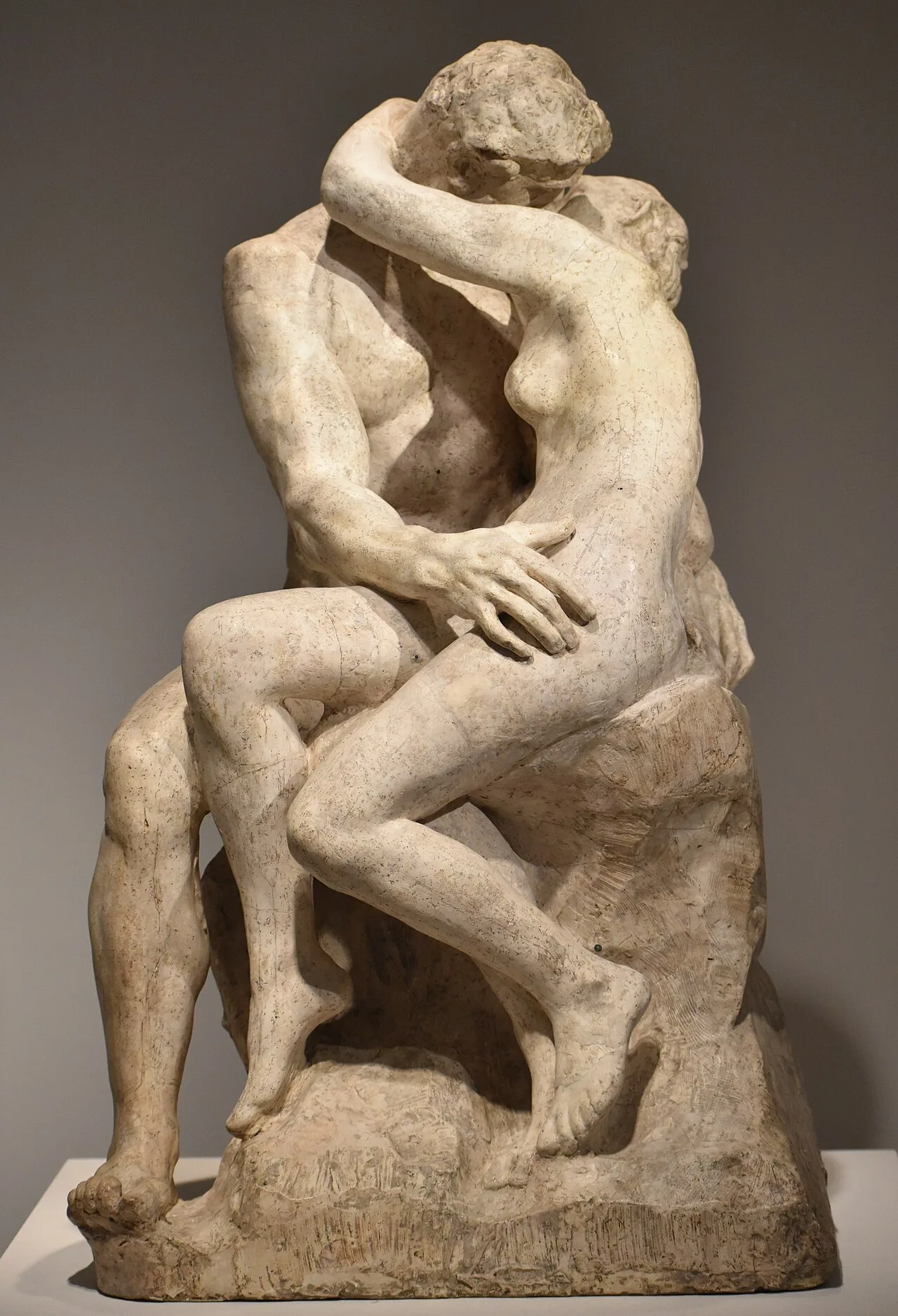
Rodin - Le Baiser 06
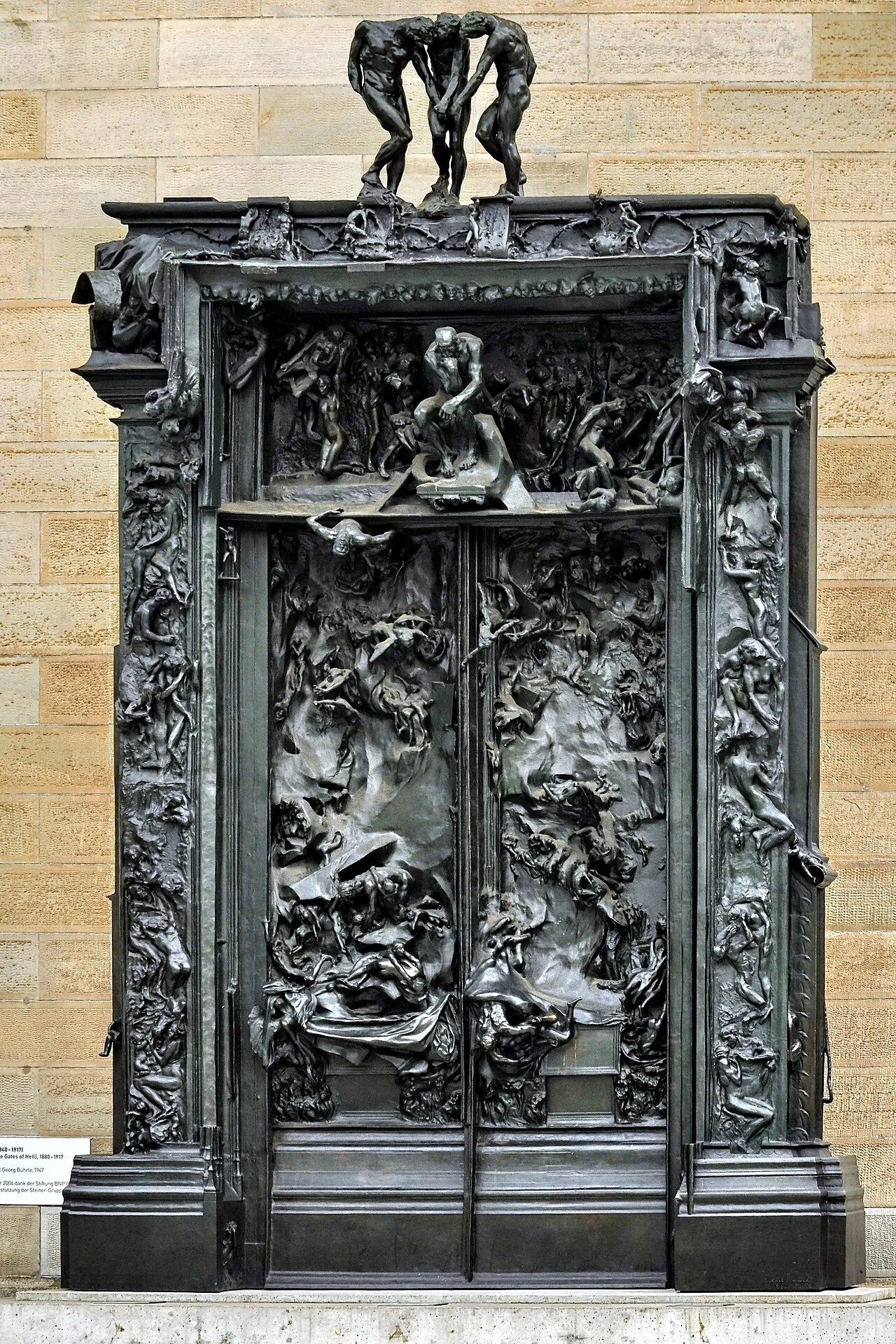
The Gates of Hell, sculpture by Rodin, where the concept for the sculpture originated.

26 December 1915. A Soldiers Dinner in Lewes Town Hall. "The Kiss" is under the cover at the back. Photo by E.Reeves Ltd[2]

The Kiss in marble at the Ny Carlsberg Glyptotek in Copenhagen.

Bronze cast in Museo Soumaya, Mexico City

On the terrace of the Musée de l'Orangerie in the Tuileries Garden, Paris
The Kiss (Rodin sculpture)
The Kiss is an 1882 marble sculpture by French sculptor Auguste Rodin, originally created as part of his monumental bronze portal The Gates of Hell.
Untouched Lips and an Interrupted Romance
The world-famous marble originally carried the title Francesca da Rimini rather than a generic romantic designation. Inspired by Dante's Inferno, the composition captures Francesca and Paolo right before their murder by her husband. Tension defines the composition because the lovers' lips do not touch, preserving an unconsummated suspension just prior to their tragedy.
From Wikipedia · CC BY-SA 4.0

Bird in Space
Bird in Space
Bird in Space is a series of sculptures by Romanian sculptor Constantin Brâncuși, with the original marble work created in 1923.
A Twenty-Year Pursuit of Fourteen Variations
Brancusi returned to this core sculptural concept over a period of 20 years, executing the piece in several mediums. He created the piece over 14 times, developing distinct versions across multiple decades. The market significance of this serial exploration culminated when it was sold in 2005 for $25.8 million, establishing a record price for a sculpture sold in an auction.
From Wikipedia · CC BY-SA 4.0
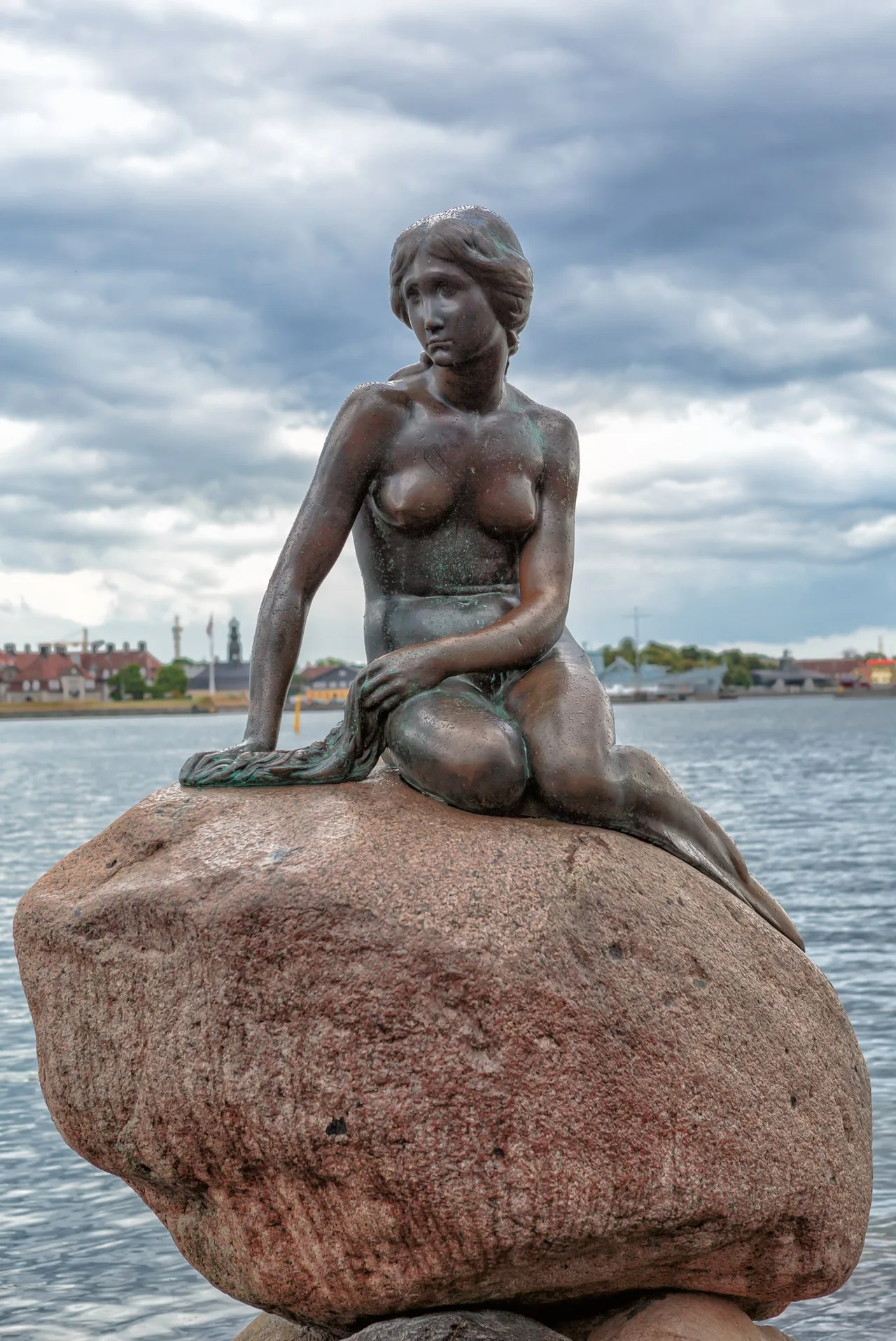
A statue of a mermaid sitting on a rock, surrounded by water.

Ellen Price as the Little Mermaid, Royal Danish Ballet, 1909
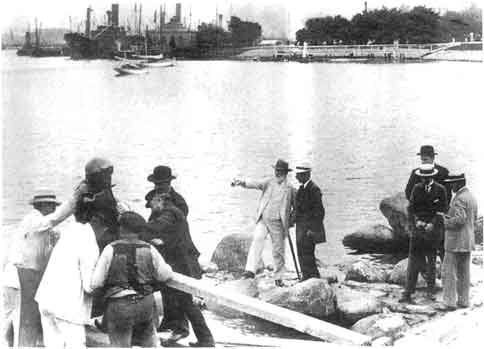
Assembly of the Little Mermaid statue (Copenhagen, Langeline, 1913)

Pania of the Reef.

Girl in a Wetsuit by Elek Imredy (1972), a statue similar to The Little Mermaid, in Vancouver
The Little Mermaid (statue)
The Little Mermaid is a bronze statue by Edvard Eriksen depicting a mermaid becoming human, displayed on a rock by the waterside at the Langelinie promenade in Copenhagen, Denmark.
Behind the Ballerina Model Myth
Public lore frequently claims that celebrated ballerina Ellen Price provided the face for Copenhagen's iconic bronze figure. In reality, Price refused to model in the nude for sculptor Edvard Eriksen. Eriksen instead modeled the entire sculpture after his wife, Eline Eriksen. The enduring popular legend that Price contributed her facial features remains completely false.
From Wikipedia · CC BY-SA 4.0

Front view of Statue of Liberty (cropped)
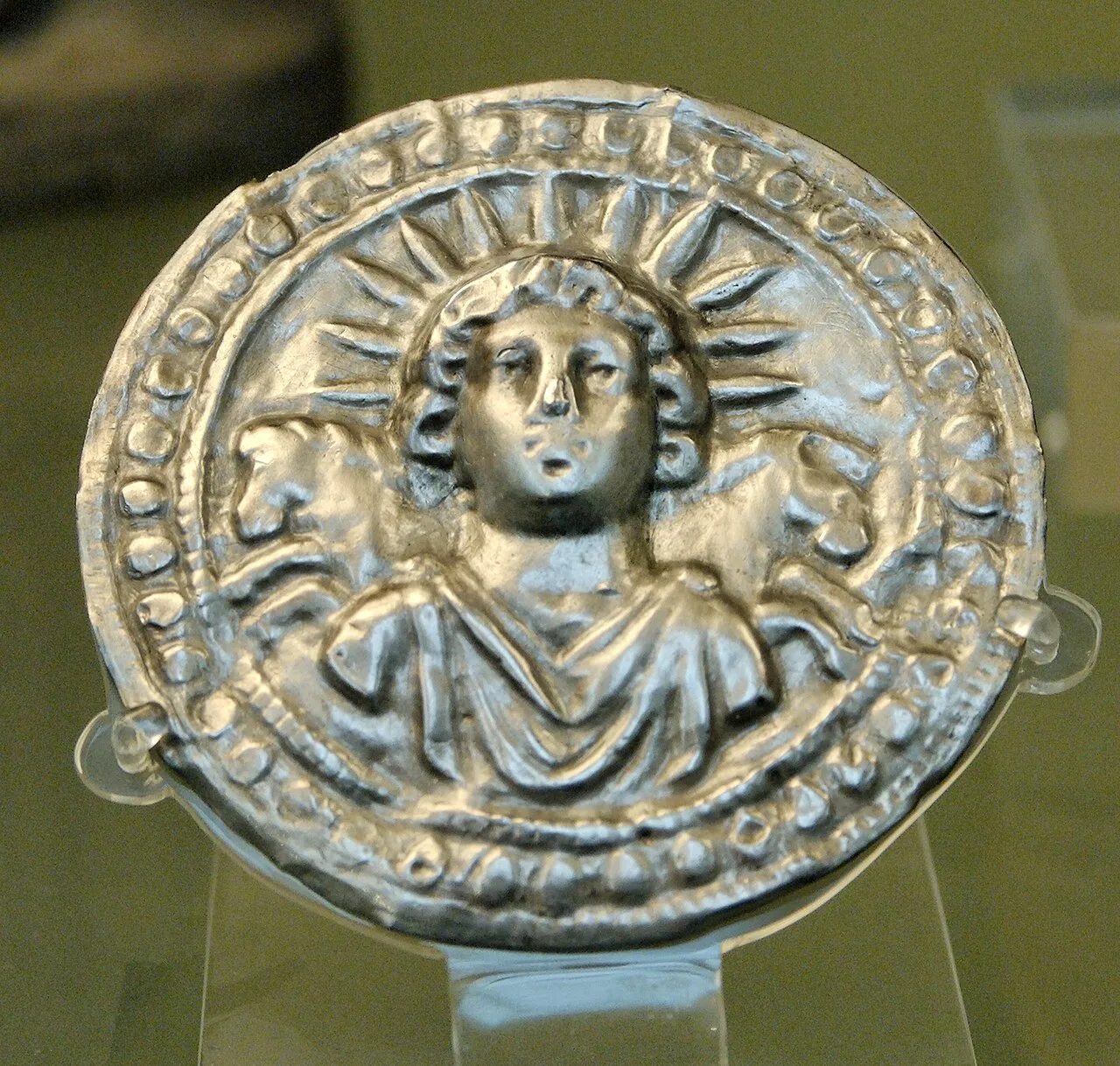
Leaf disc dedicated to Sol Invictus, sun god of the late Roman Empire. Sol Invictus, along with Libertas the Roman goddess and personification of Liberty, influenced the design of Liberty Enlightening the World.
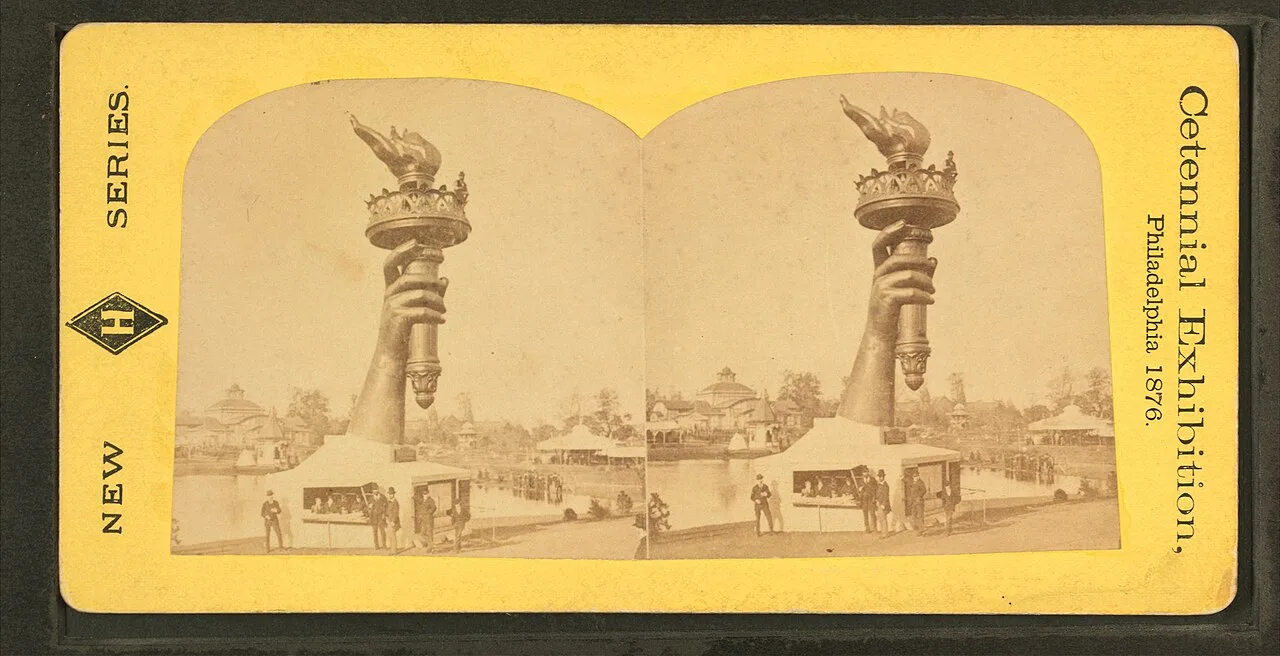
Stereoscopic image of right arm and torch of the Statue of Liberty, 1876 Centennial Exposition

Unveiling of the Statue of Liberty Enlightening the World (1886) by Edward Moran. Oil on canvas. The J. Clarence Davies Collection, Museum of the City of New York.
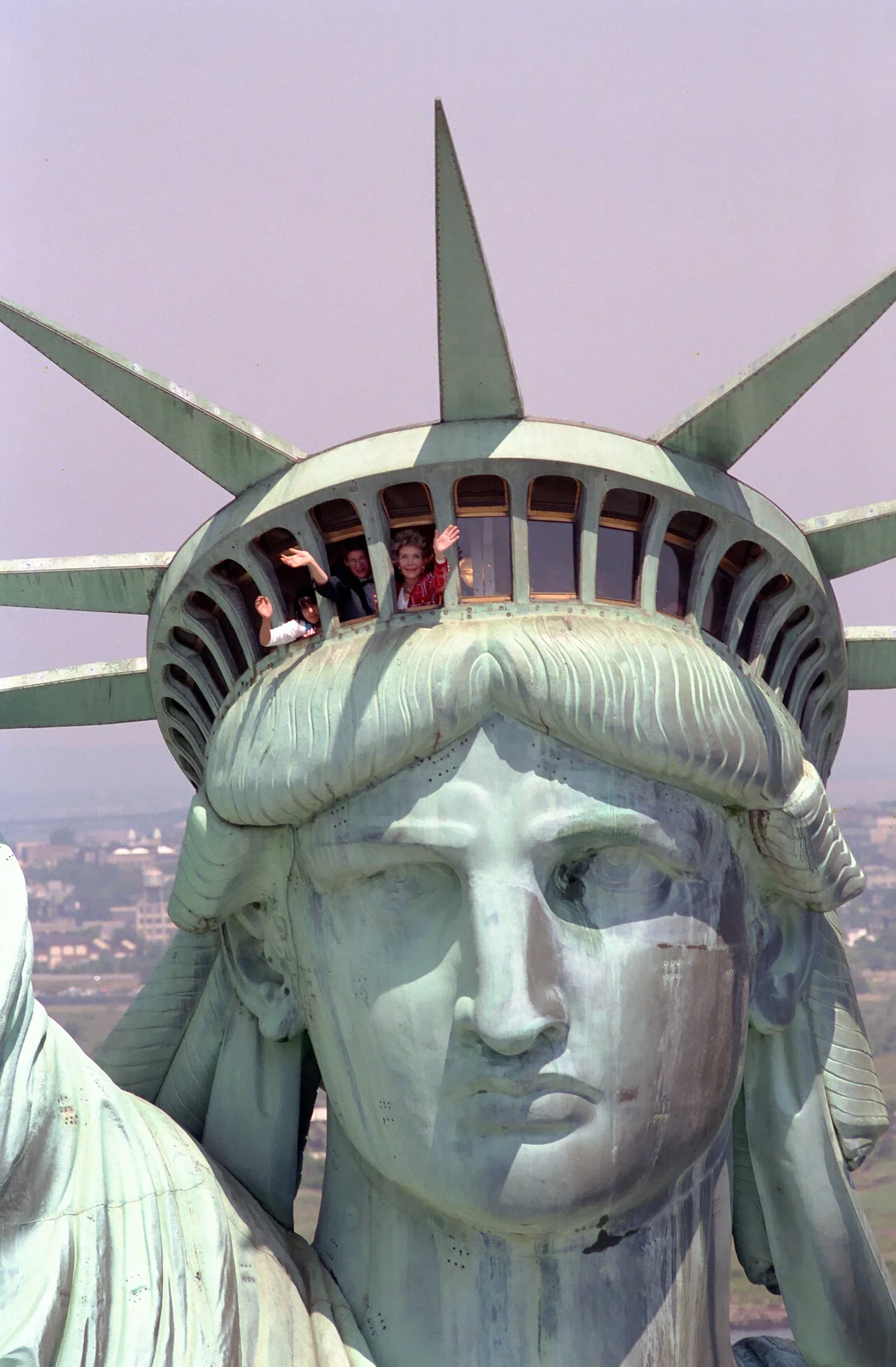
July 4, 1986: First Lady Nancy Reagan (in red) reopens the statue to the public.
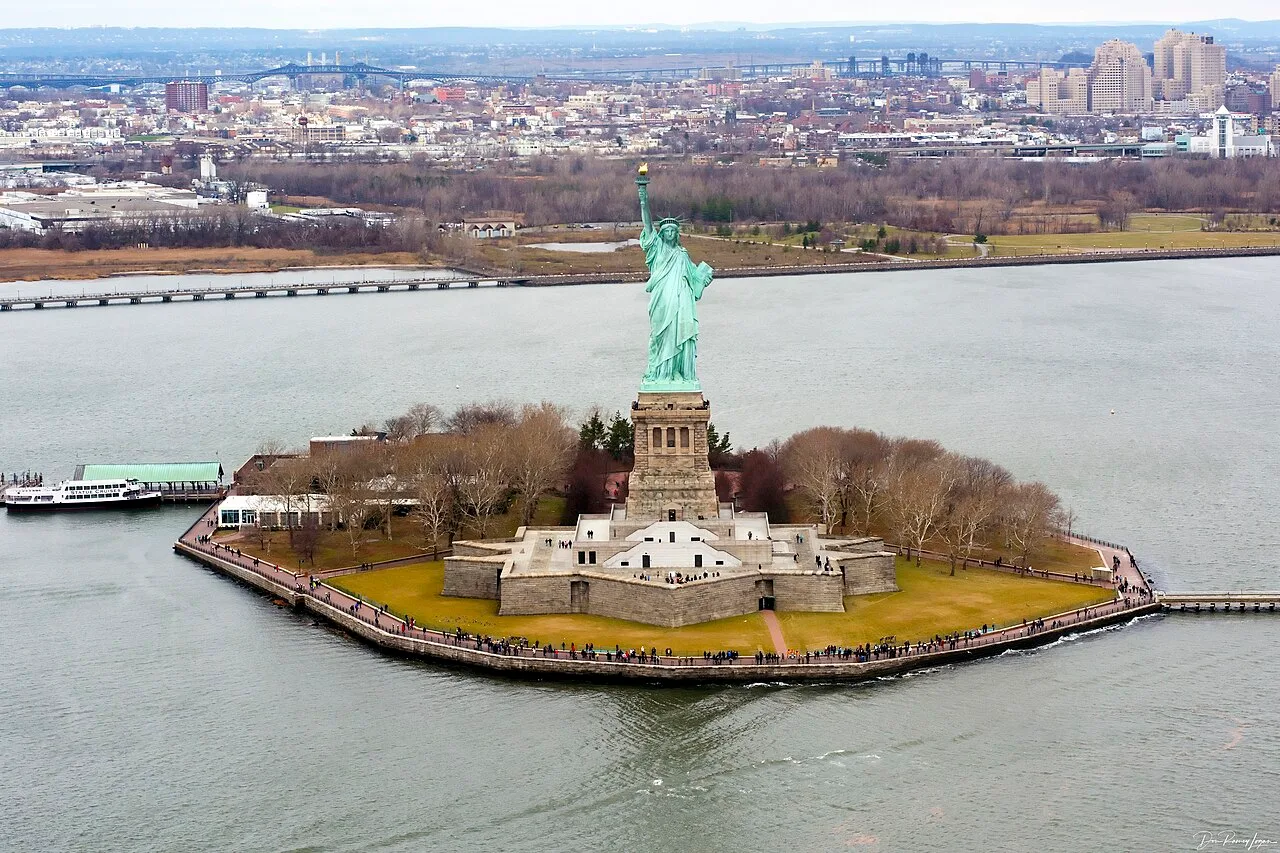
The Statue of Liberty stands on Liberty Island.
Statue of Liberty
The Statue of Liberty is a colossal neoclassical sculpture on Liberty Island in New York Harbor, designed by Frédéric Auguste Bartholdi as a gift to the United States from the people of France.
The Rejected Peasant Lighthouse of Suez
Bartholdi's iconic concept did not originate as an American monument. In the late 1860s, he proposed a giant lighthouse called Progress or Egypt Carrying the Light to Asia for the Suez Canal. Depicting a robed Egyptian peasant holding a torch aloft, the design was rejected by Isma'il Pasha and Ferdinand de Lesseps due to high costs.
From Wikipedia · CC BY-SA 4.0
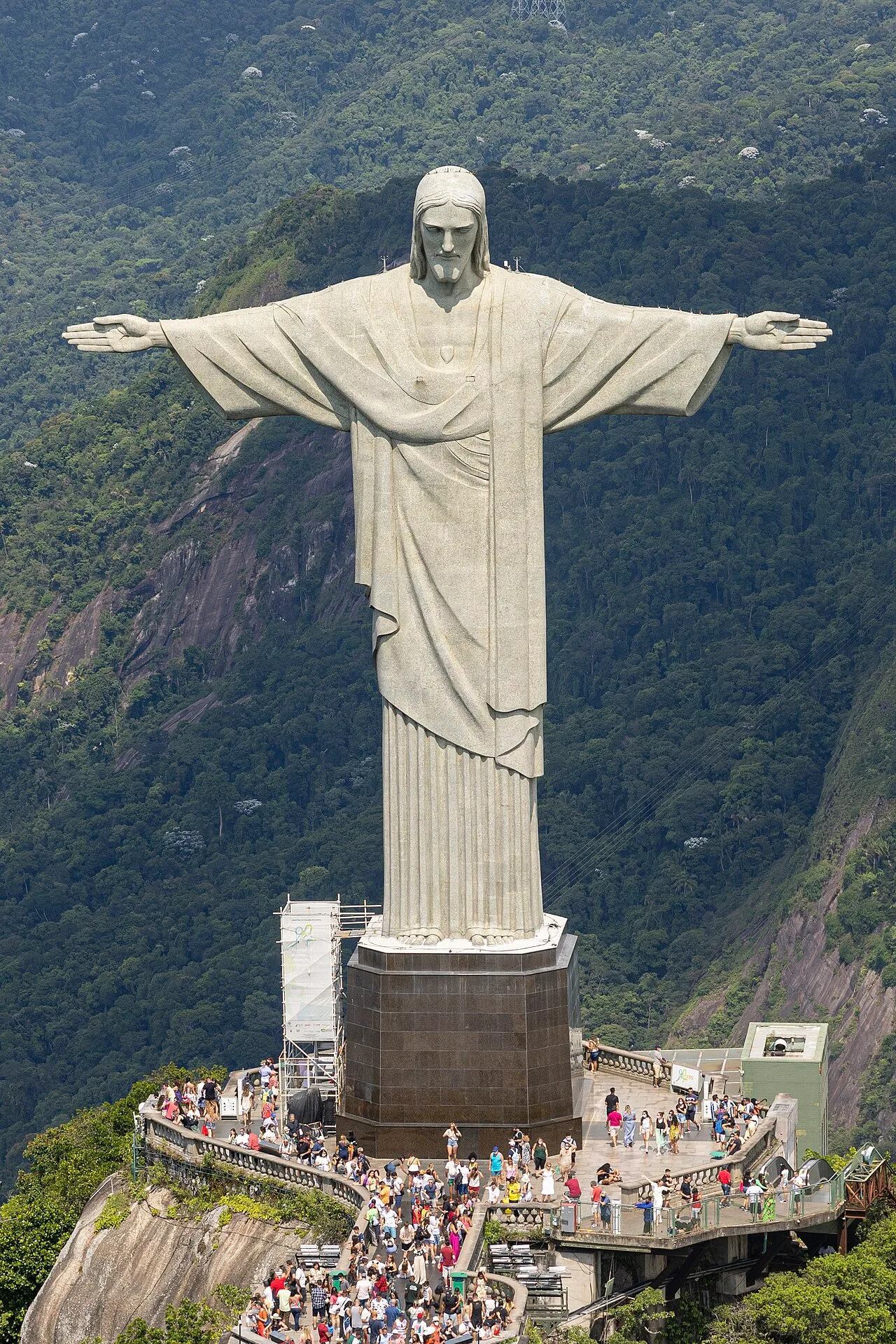
Christ the Redeemer - Cristo Redentor
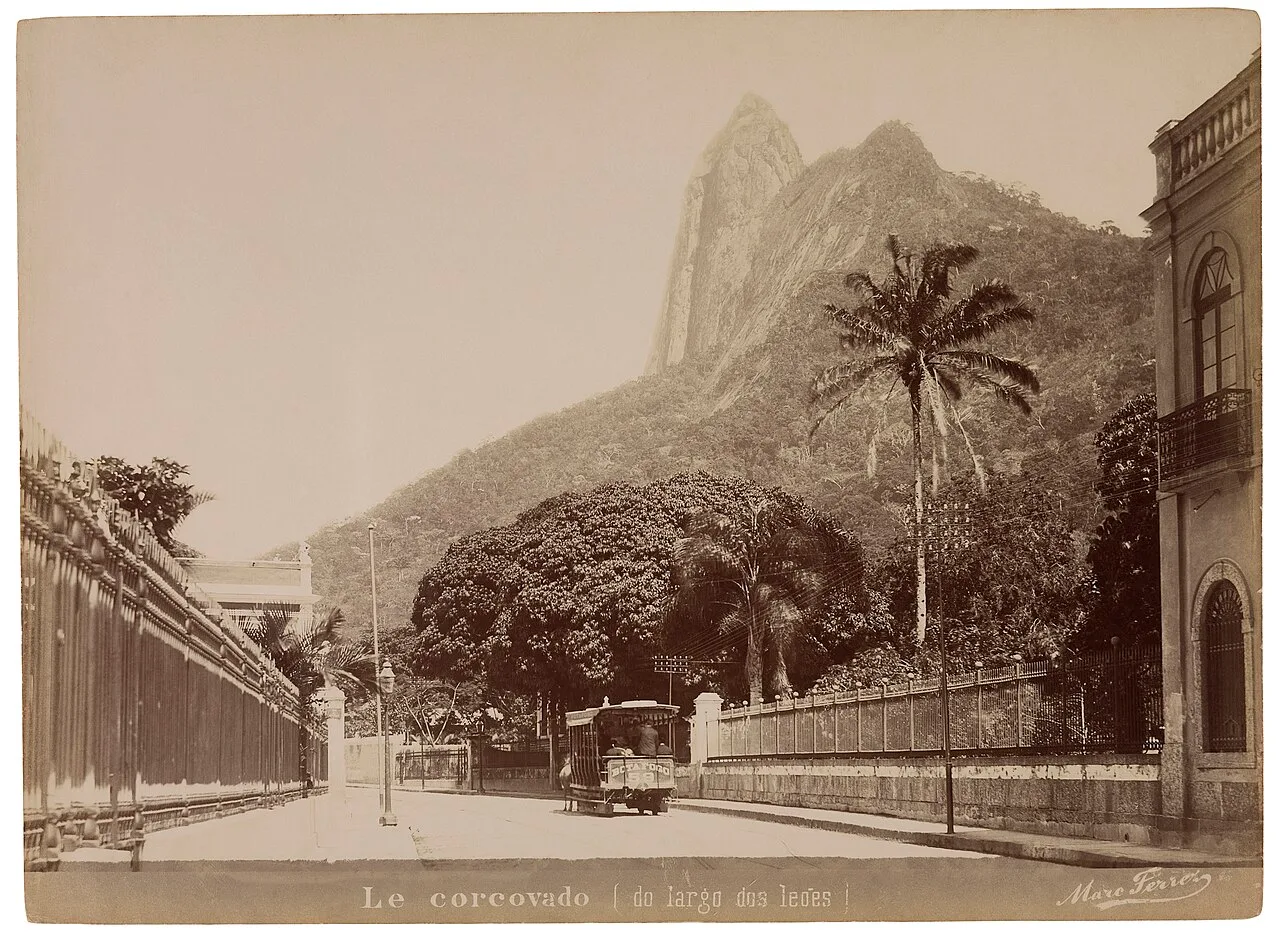
A view of Corcovado before the construction, between 1880 and 1900

The statue lit in the colors of the Flag of Brazil

Christ the Redeemer atop Corcovado with Sugarloaf Mountain in background

Christ the Redeemer after restoration

Corcovado and Christ the Redeemer as seen from Sugarloaf Mountain
Christ the Redeemer (statue)
Christ the Redeemer is an Art Deco statue of Jesus in Rio de Janeiro, Brazil, created by French-Polish sculptor Paul Landowski and built by Brazilian engineer Heitor da Silva Costa.
The Abandoned Monarchy Memorial
The idea for the landmark began not in the twentieth century, but in the mid-1850s when Vincentian priest Pedro Maria Boss sought to honor Princess Isabel. This royal tribute was never realized because Brazil became a republic in 1889, triggering the separation of church and state. Decades passed before Catholic groups managed to revive the effort under a completely transformed political and spiritual mandate.
From Wikipedia · CC BY-SA 4.0