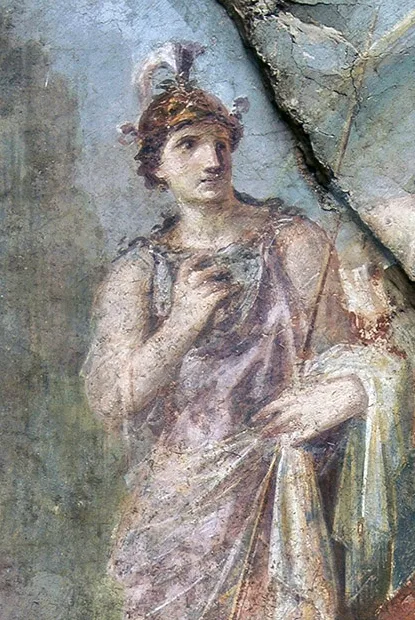
Herculaneum Collegio degli Augustali Ercole sull'Olimpo (cropped)
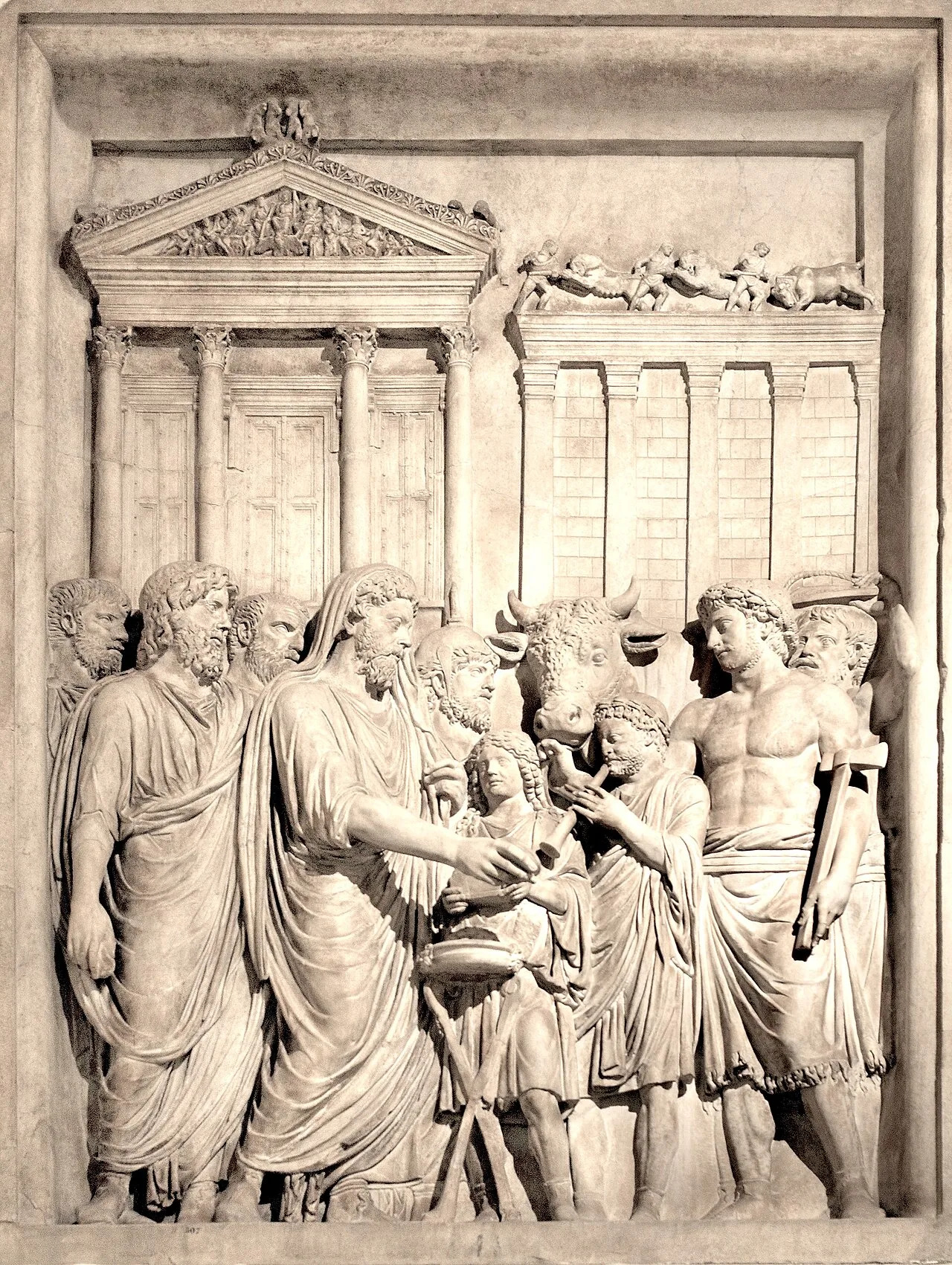
Marcus Aurelius sacrificing
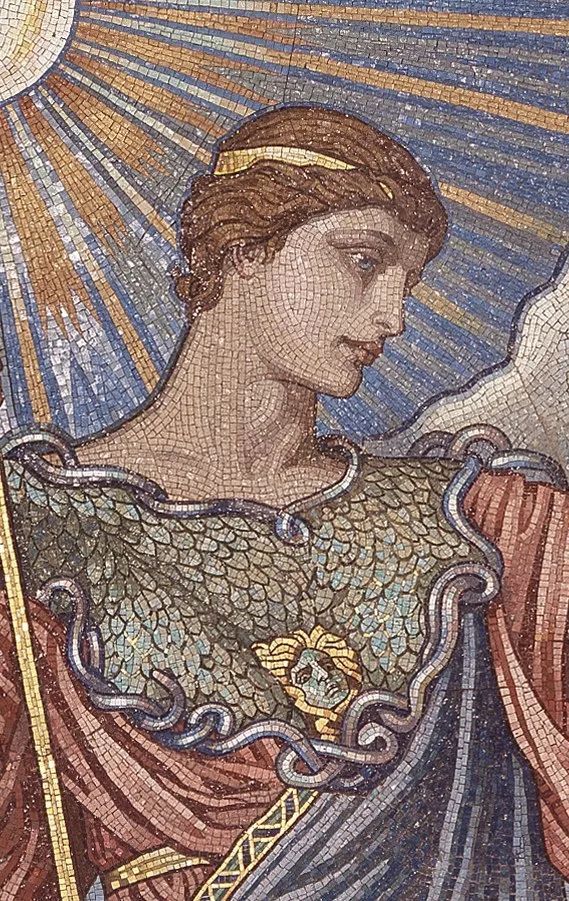
Mosaic of the Minerva of Peace in the Library of Congress
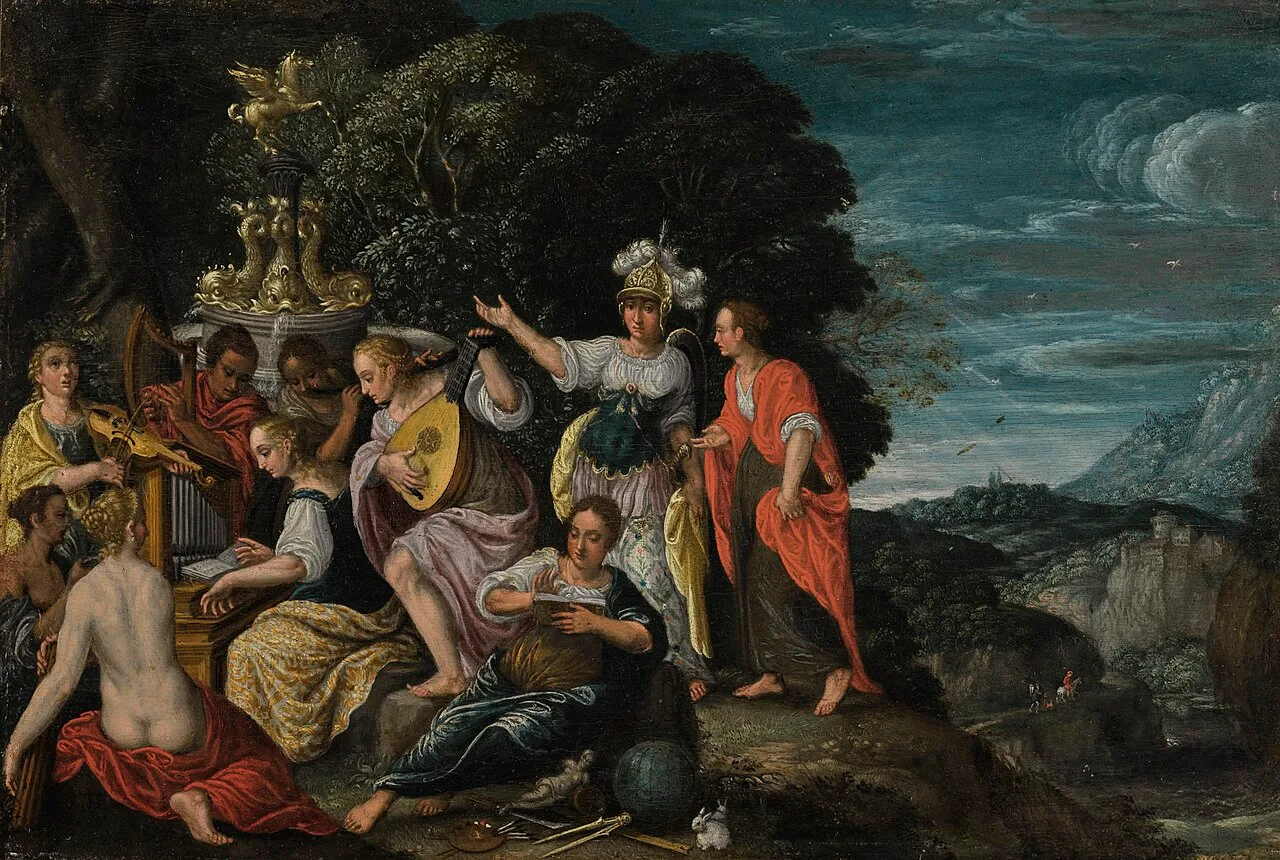
Painting of Minerva visiting the Muses
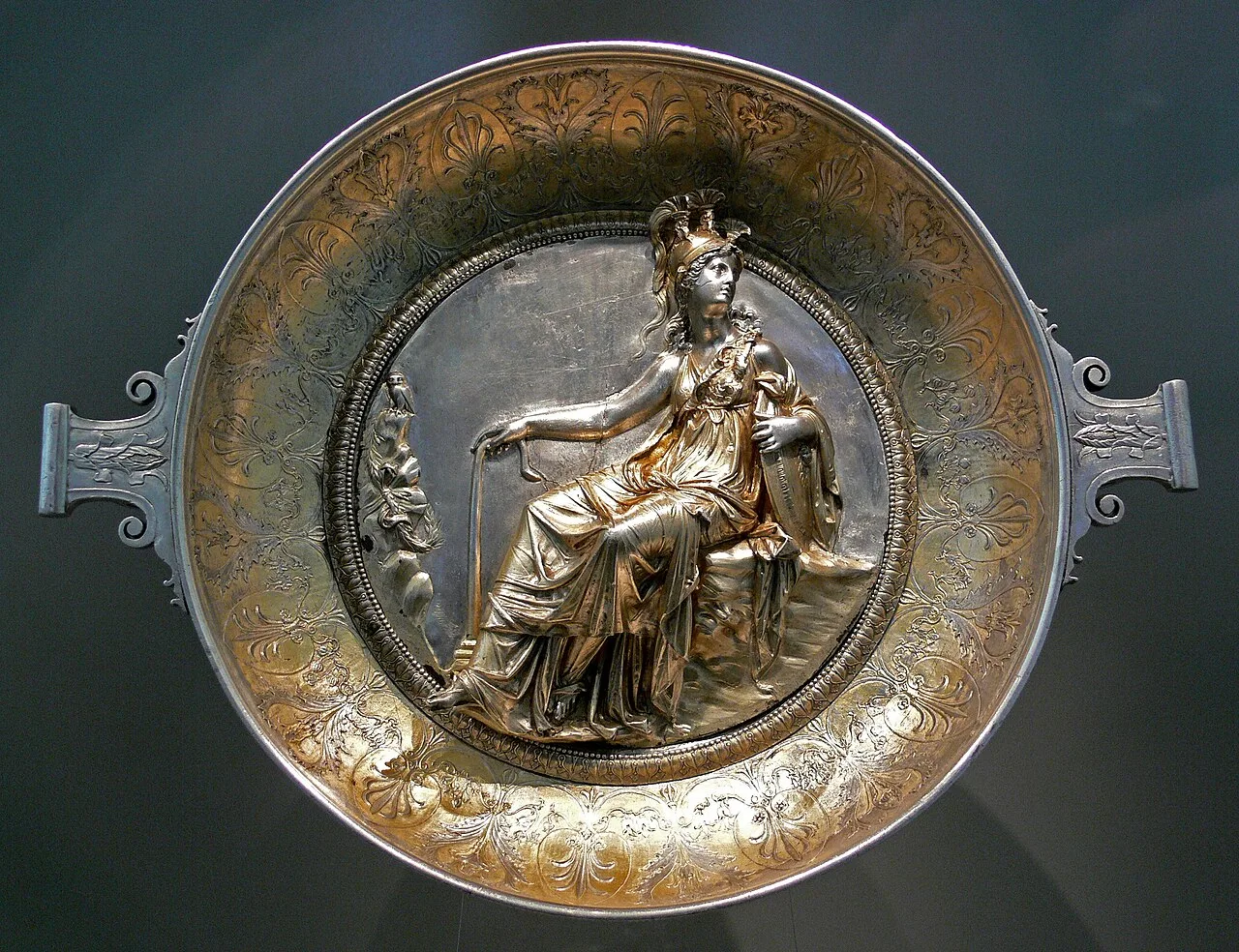
Raised-relief image of Minerva on a Roman gilt silver bowl, first century BC
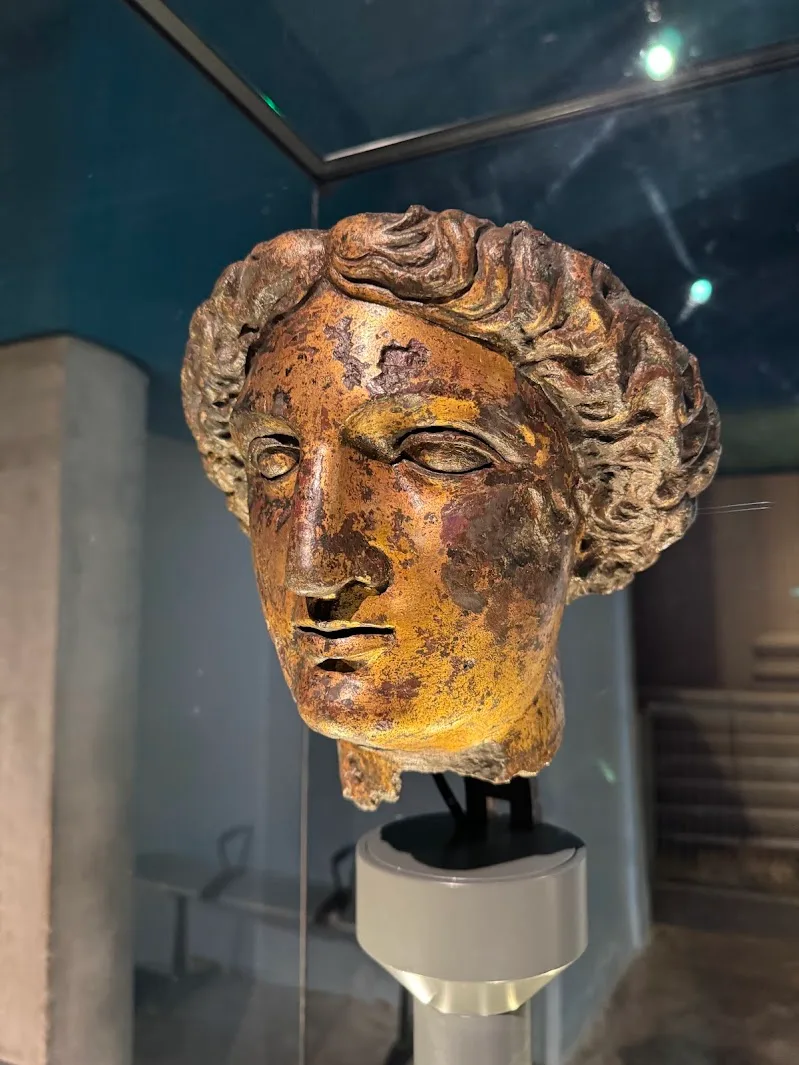
A head of "Sulis-Minerva" found in the ruins of the Roman baths in Bath
Minerva
Minerva is the Roman goddess of wisdom, justice, law, victory, and the sponsor of arts, trade, and strategy.
Commanding Armies from Behind the Lines
Rather than entering the fray as a physical combatant, Minerva embodied calculated strategic leadership. Archaeologist Miriam Dexter observes that Indo-European war goddesses rarely engaged directly as fighters. Dexter argues that Minerva, while retaining clear military functions, served essentially as a general directing strategy. This emphasis separated her tactical wisdom from chaotic battlefield bloodshed.
From Wikipedia · CC BY-SA 4.0
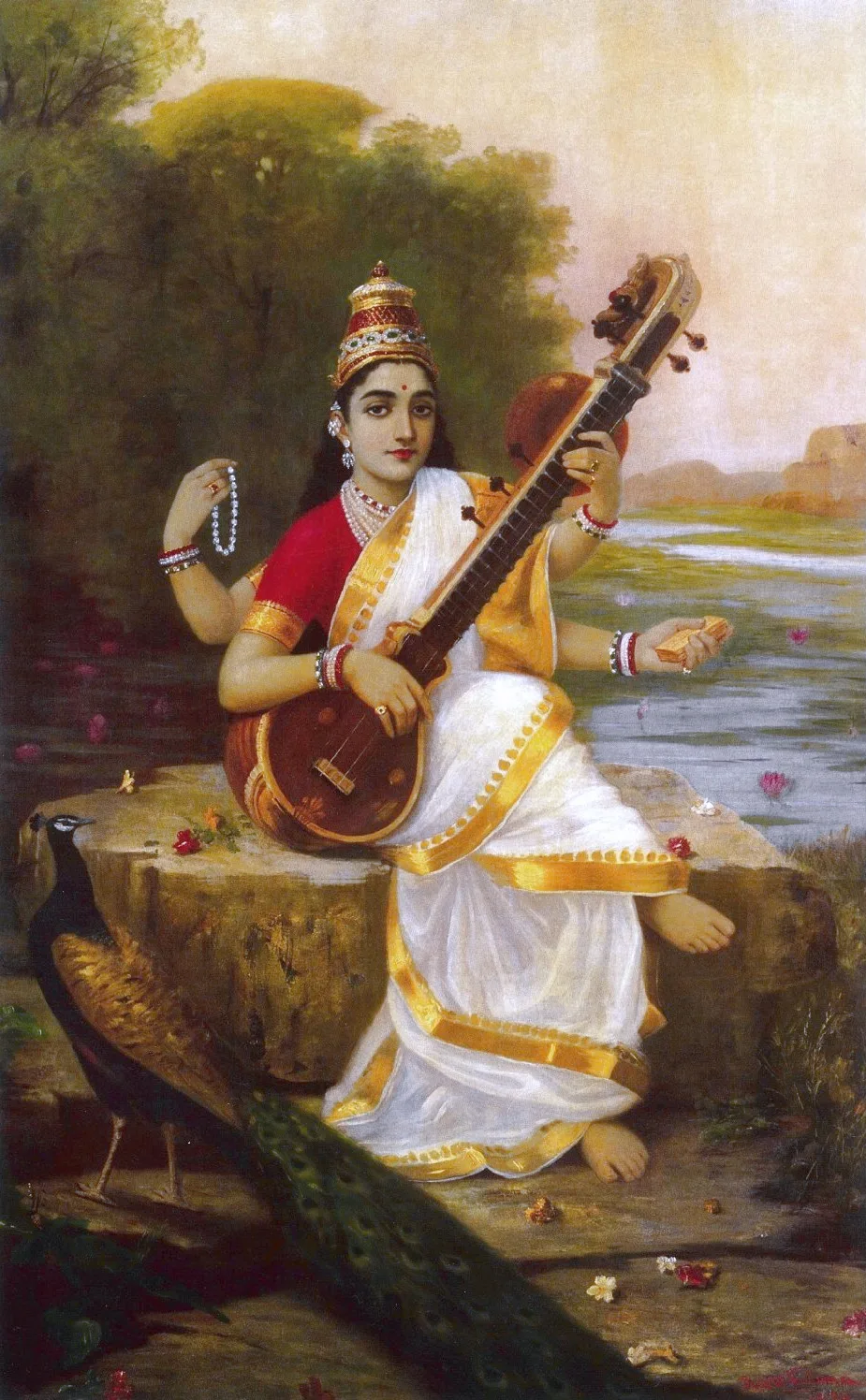
Saraswati
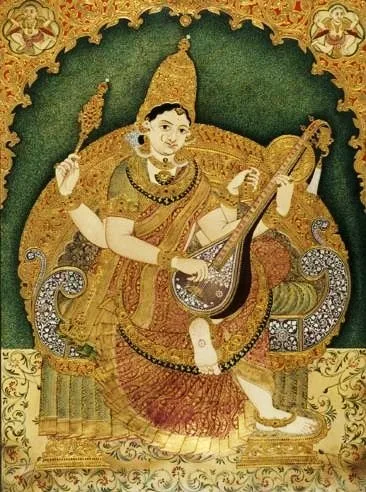
19th Century Mysore Painting of Saraswati.
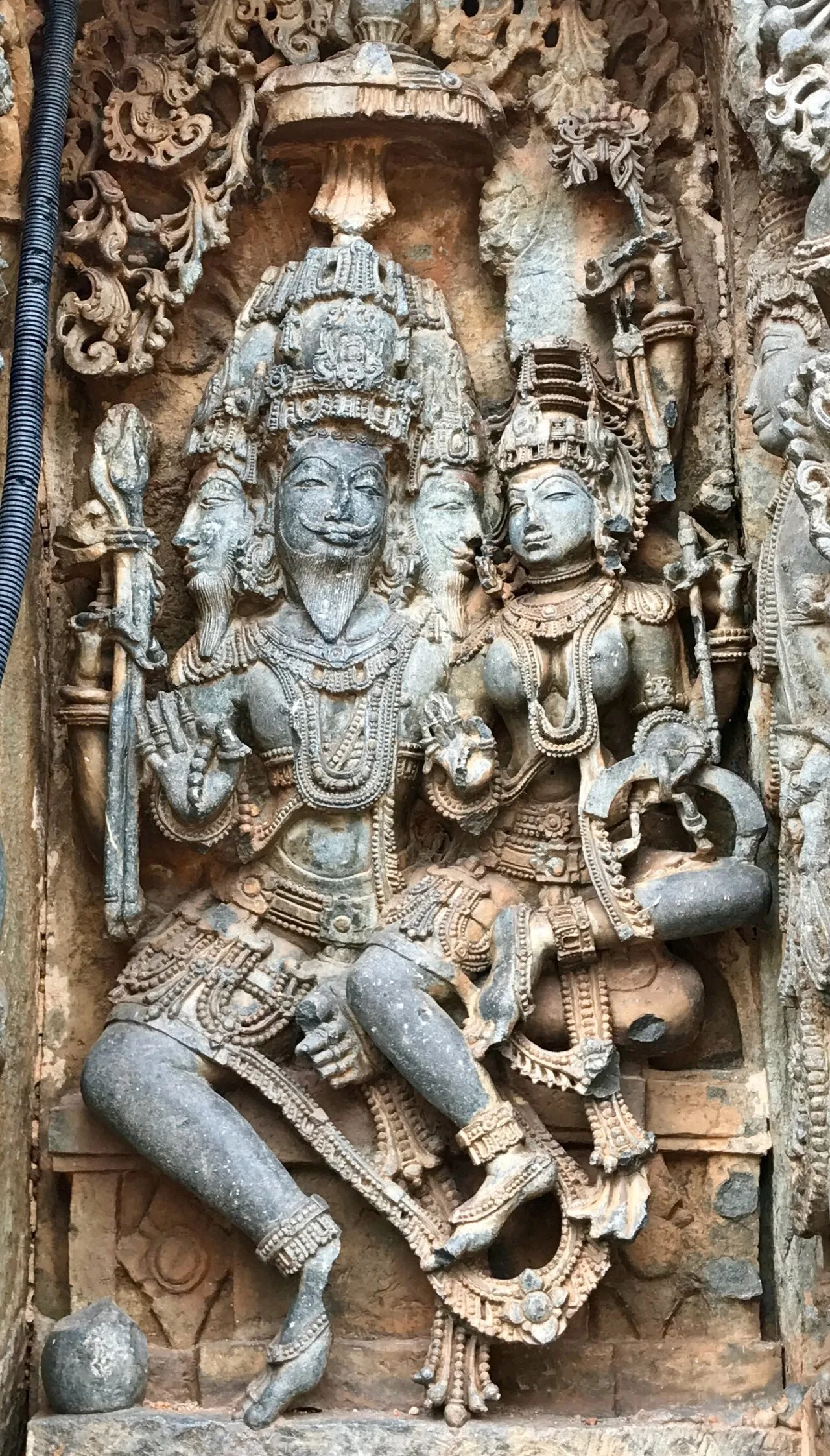
12th-century Brahma and Saraswati as a couple at Hoysaleswara Temple, Halebidu, Karnataka, India.
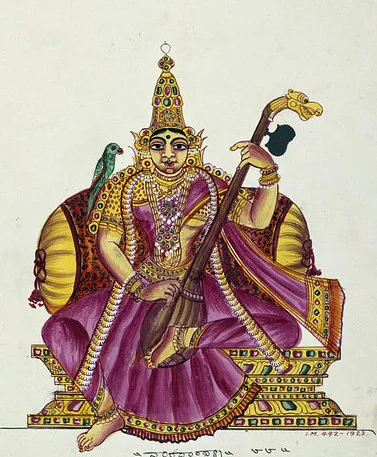
19th century South Indian painting of Raja-Matangi with veena and parrot
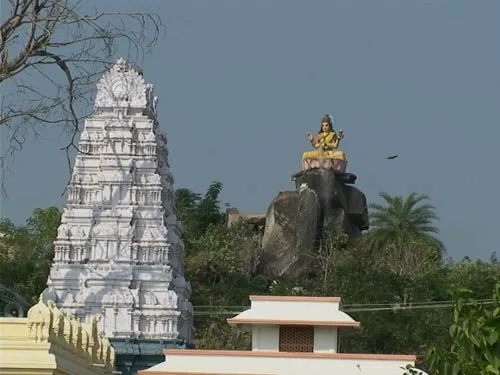
Saraswati temple at Pilani in North Indian style (above), and South Indian style (below). Her temples, like her iconography, often resonate in white themes.
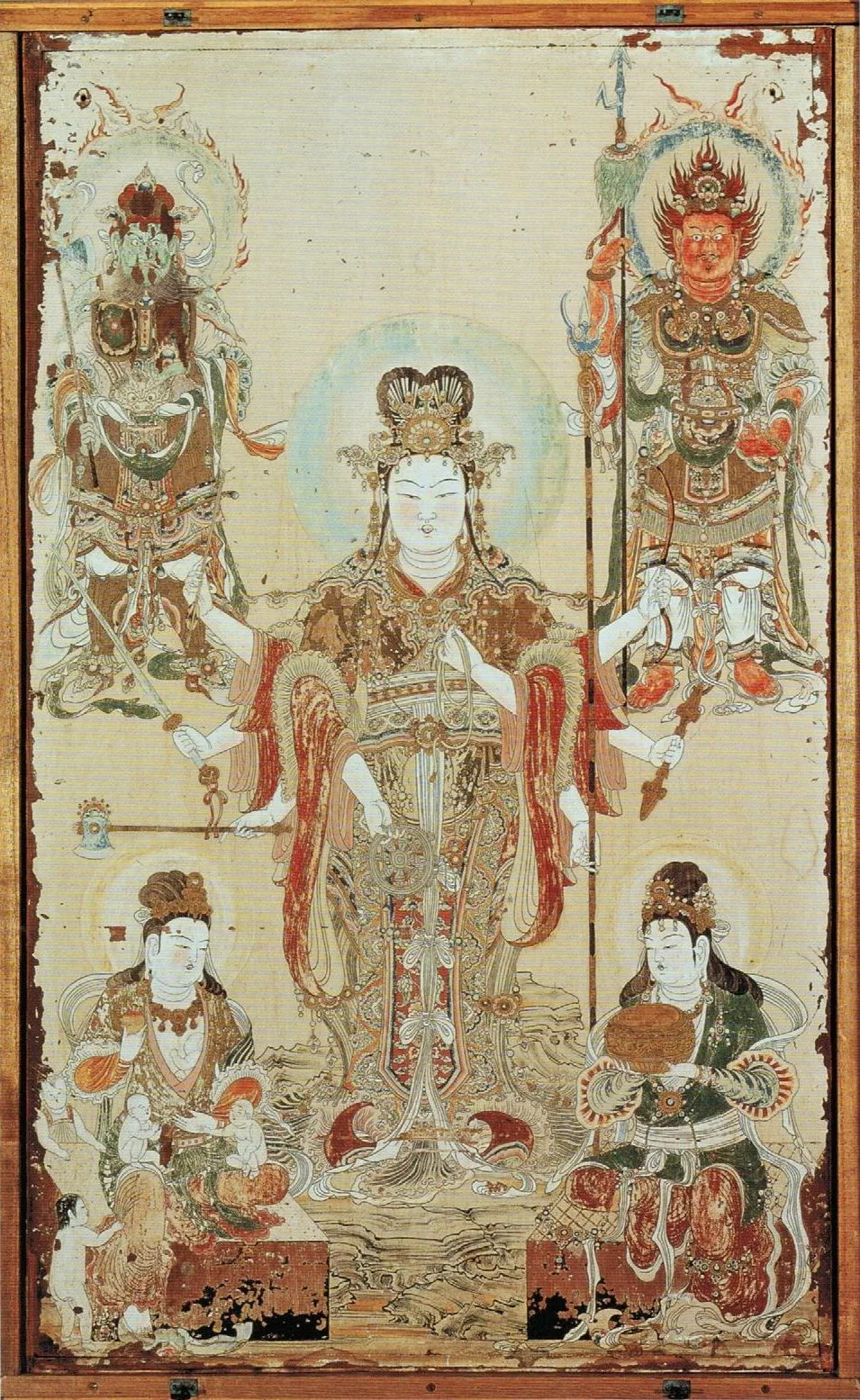
A Japanese depiction of Saraswati as a protector deity with eight arms holding various weapons (c. 1212), University Art Museum, Tokyo University of the Arts
Saraswati
Saraswati is one of the principal goddesses in Hinduism, revered as the goddess of knowledge, arts, and learning, and forms the Tridevi trinity alongside Lakshmi and Parvati.
Roaring Floods and Slaying Demon Foes
Before becoming the serene goddess of learning, Saraswati was described in ancient hymns as a loud, uncontrollable flood that roared like a bull. She was invoked as an unconquerable protector who guarded devotees against danger and destruction. Like Indra, she was also celebrated as a slayer of Vritra, the drought-causing snake demon who blocked river waters.
From Wikipedia · CC BY-SA 4.0
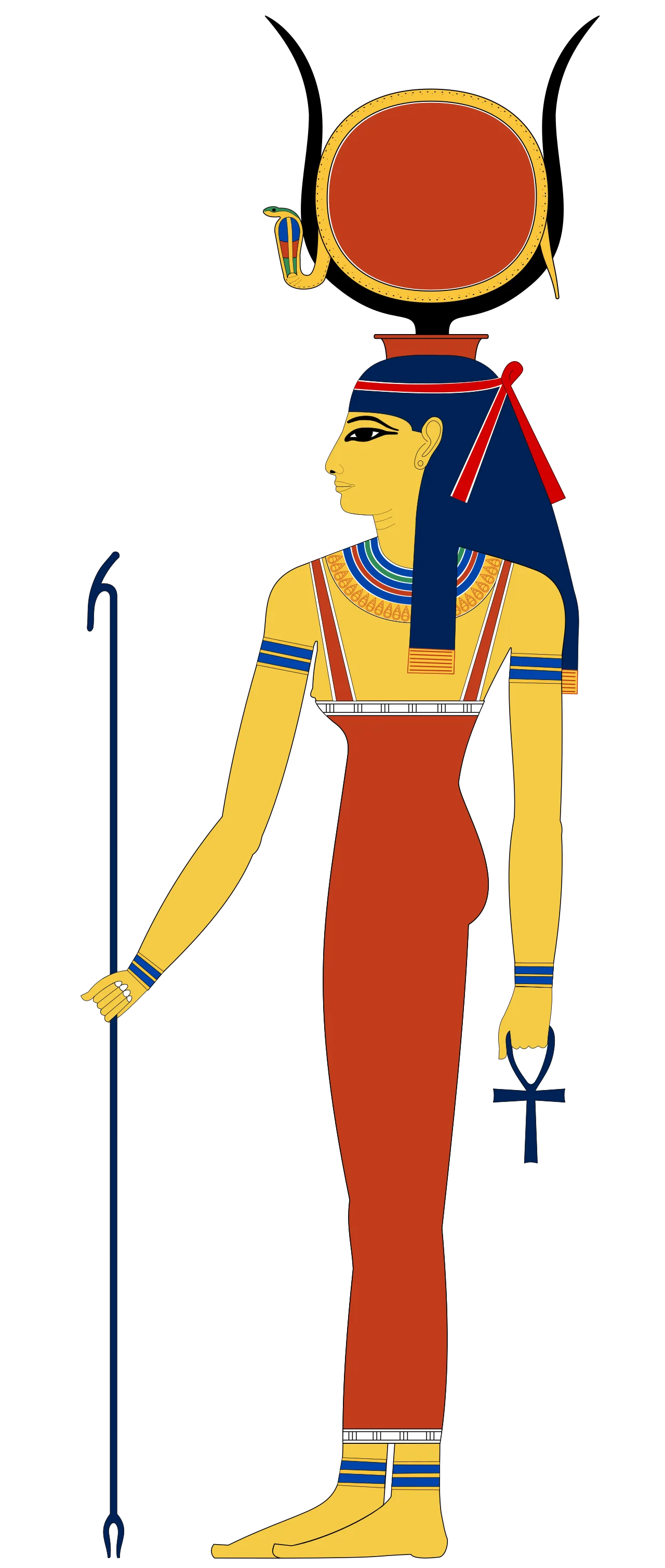
Profile of a woman in ancient Egyptian clothing. She has yellow skin and bears on head a pair of cow horns, between which sits a red disk encircled by a cobra. She holds a forked staff in one hand and an ankh sign in the other.

Hathor as a cow
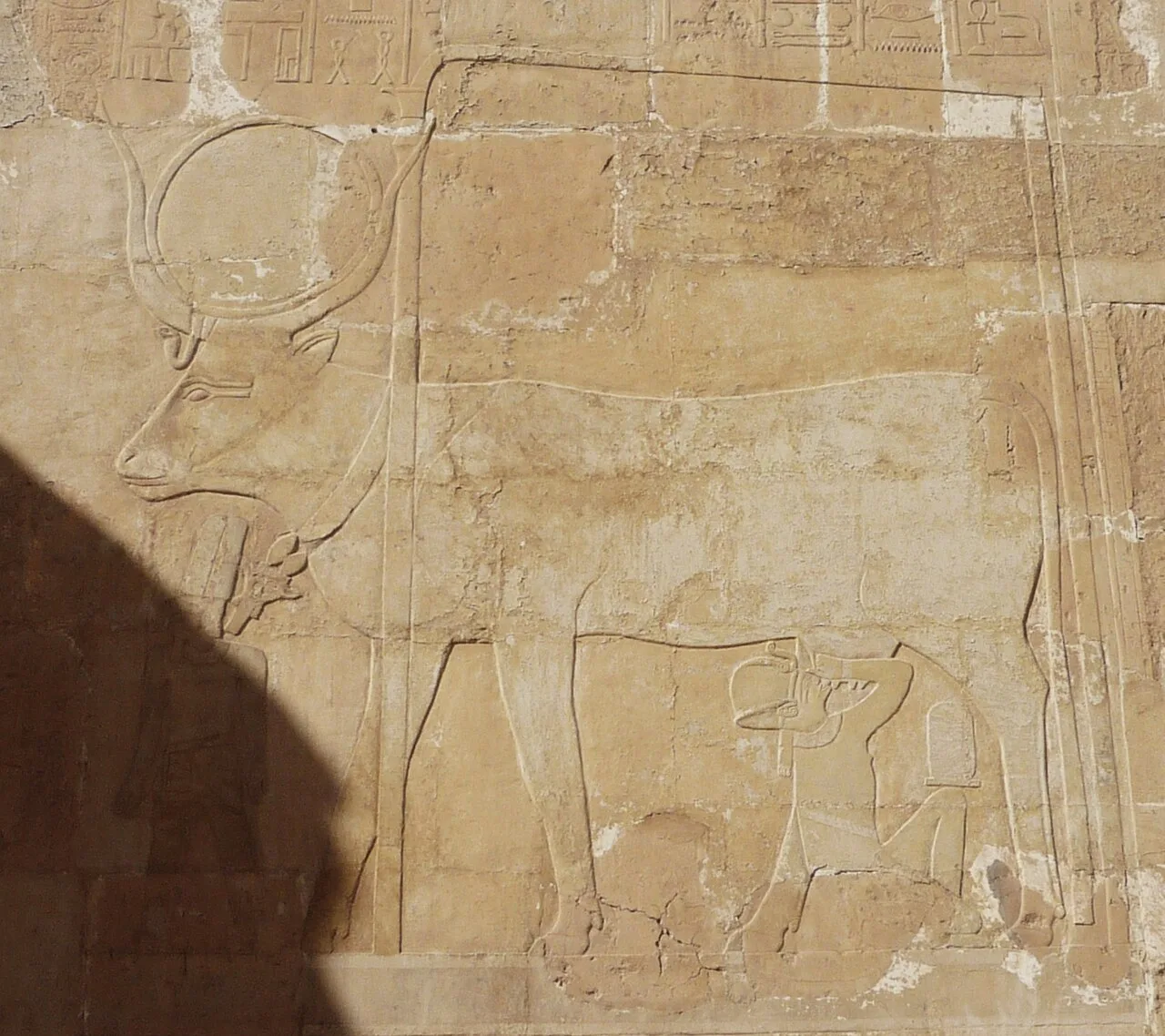
Hathor as a cow suckling Hatshepsut, a female pharaoh, at Hatshepsut's temple at Deir el-Bahari (15th century BC).
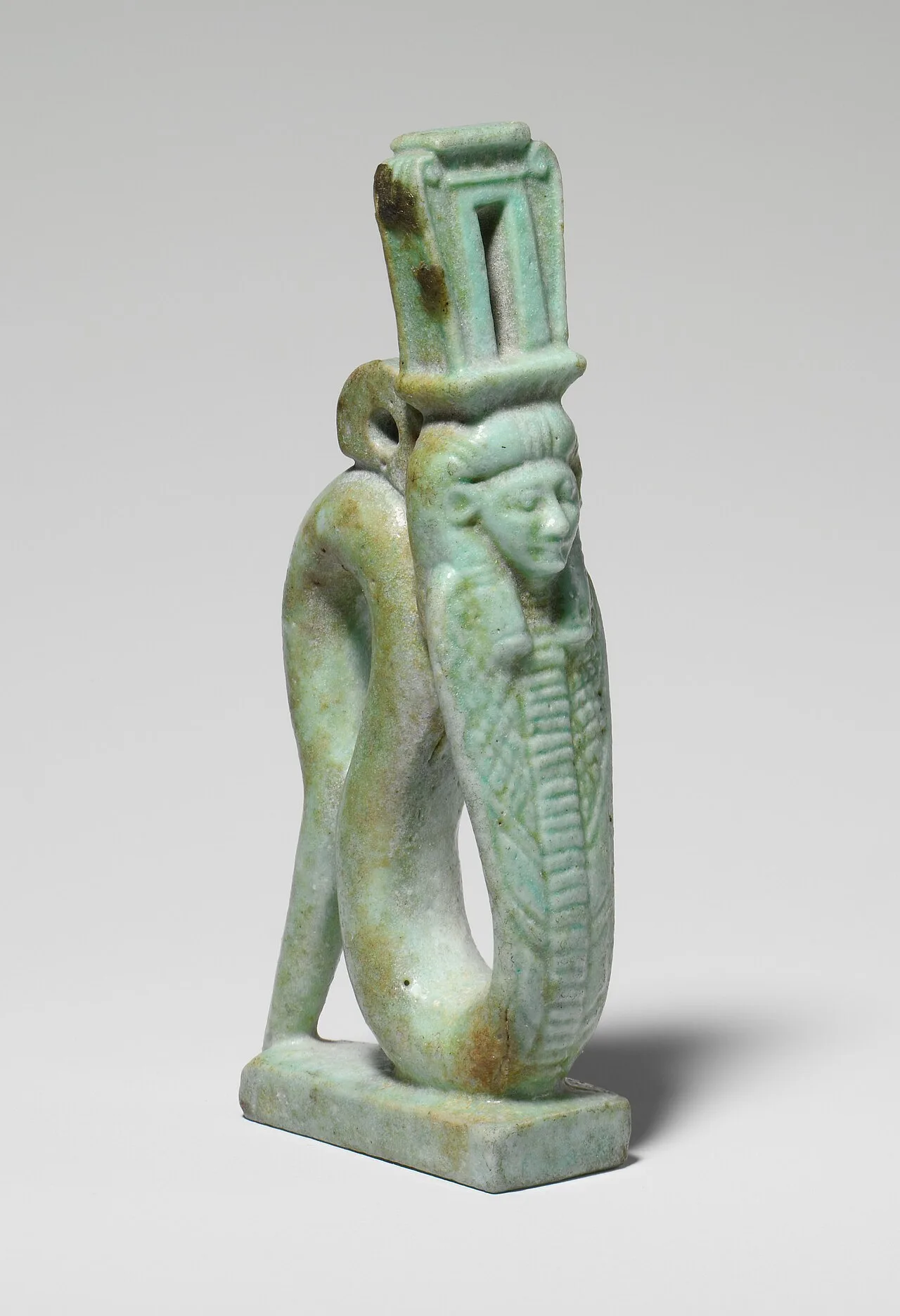
Amulet of Hathor as a uraeus wearing a naos headdress, early to mid-first millennium BC
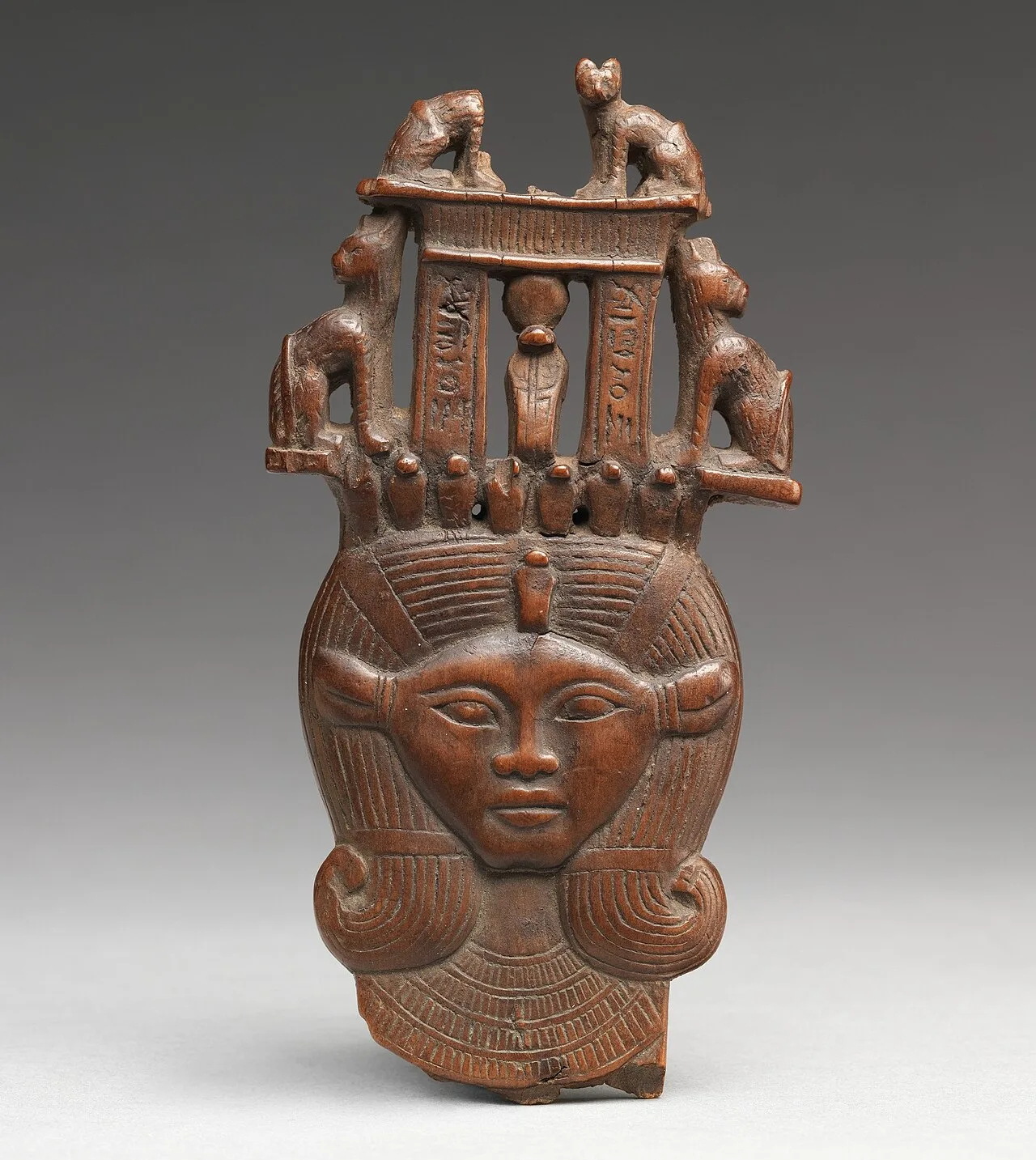
Head of Hathor with cats on her headdress, from a clapper, late second to early first millennium BC

Hypostyle hall of the Temple of Hathor at Dendera, first century AD
Hathor
Hathor was a major goddess in ancient Egyptian religion who played a wide variety of roles, notably serving as a sky deity and the symbolic mother of the pharaohs.
Punishing Humanity as a Rampaging Solar Lioness
Hathor assumed a devastatingly violent role when acting as the wrathful Eye of Ra. In the mythological narrative recorded in the Book of the Heavenly Cow, the sun god Ra dispatched her to punish rebellious humanity. Transforming into the lioness Sekhmet, the goddess initiated a merciless massacre against humans before the solar deity intervened to prevent their total annihilation.
From Wikipedia · CC BY-SA 4.0
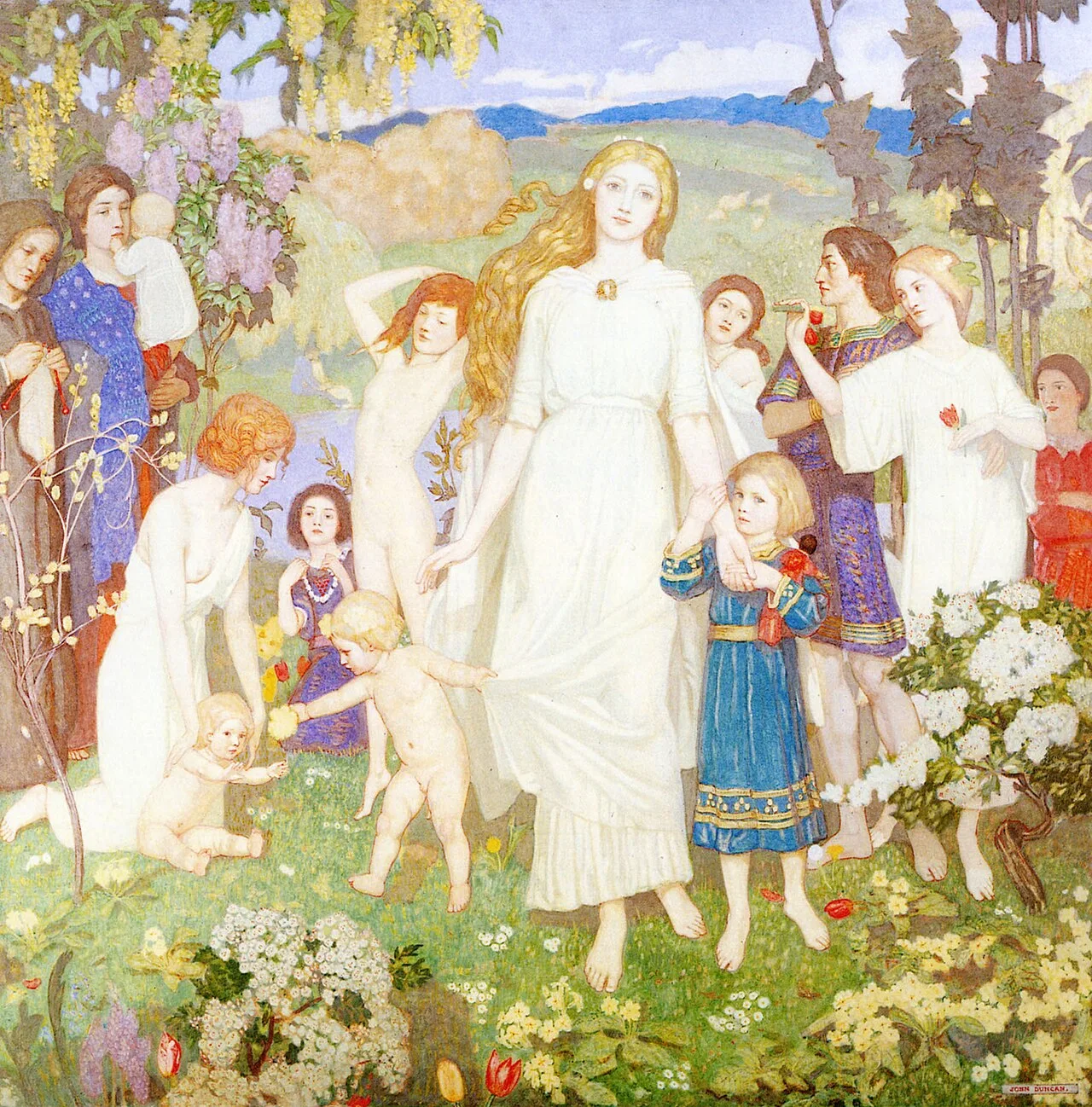
Thecomingofbrideduncan1917
Brigid
Brigid is a goddess of pre-Christian Ireland and a member of the Tuatha Dé Danann in Irish mythology, associated with wisdom, poetry, healing, protection, smithing, and domesticated animals.
A Triple Sisterhood Recorded by Christian Scribes
In Sanas Cormaic, Christian scribes in the 9th century documented Brigit not as a single figure, but as three distinct daughters of the Dagda. These sisters were venerated individually as goddesses presiding over healing, smithing, and the craft of elite poet-seers known as the filí. This medieval glossary reflects how early Irish tradition viewed the divine figure through a multifaceted triad rather than an isolated personality.
From Wikipedia · CC BY-SA 4.0

Shanhaijing Nüwa Mends the Heavens

Image of Nüwa from Gujin Tushu Jicheng by Chen Menglei, Qing dynasty
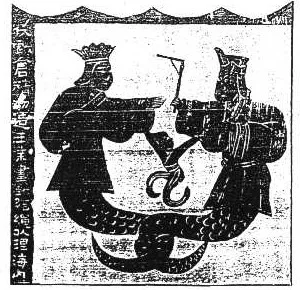
Nüwa and Fuxi on the murals (rubbing depicted) of the Wu Liang shrines, Han dynasty (206 BC – 220 AD)

Fuxi and Nüwa
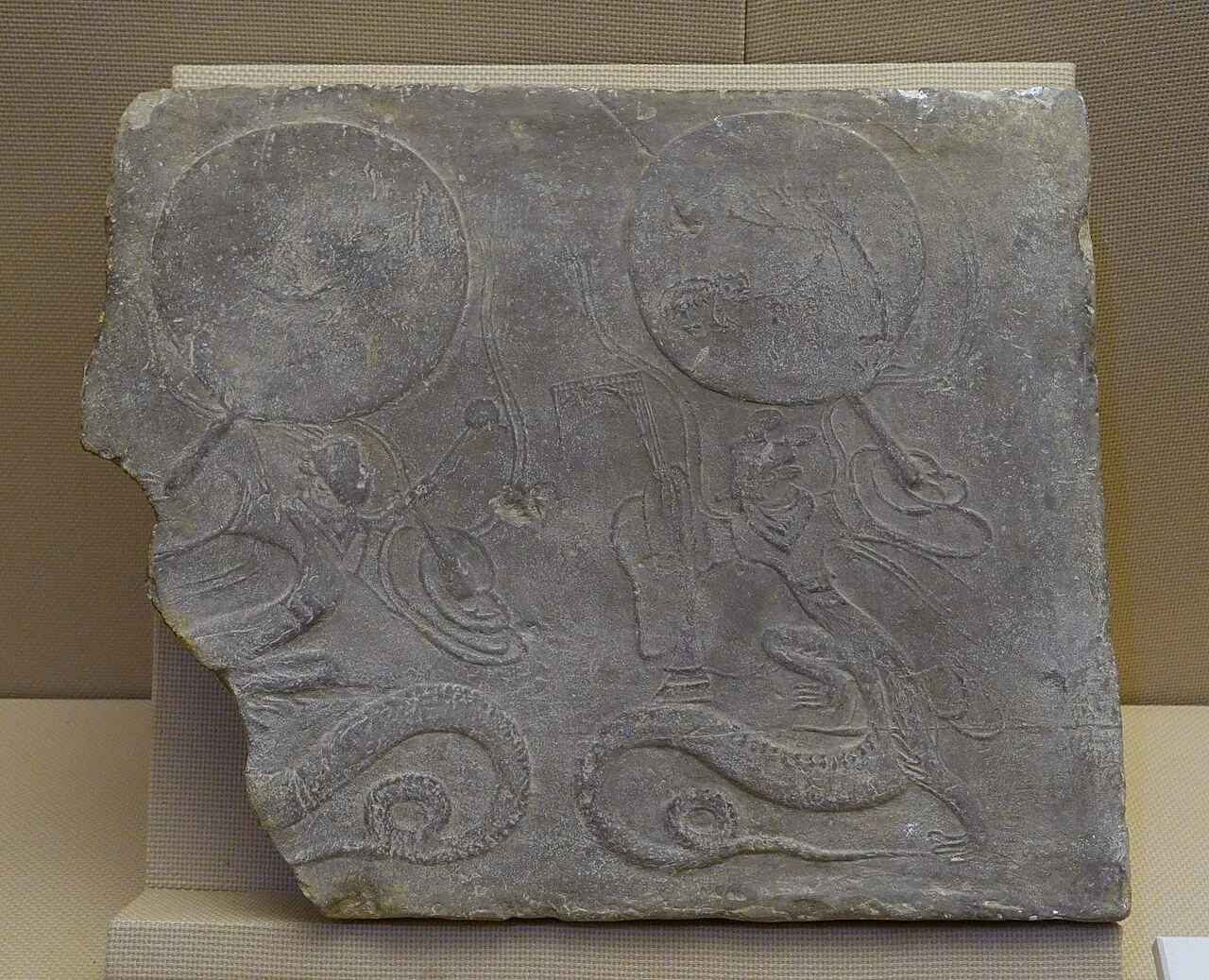
Fuxi and Nüwa holding the sun disc and moon disc respectively, Eastern Han dynasty, 25–220 AD
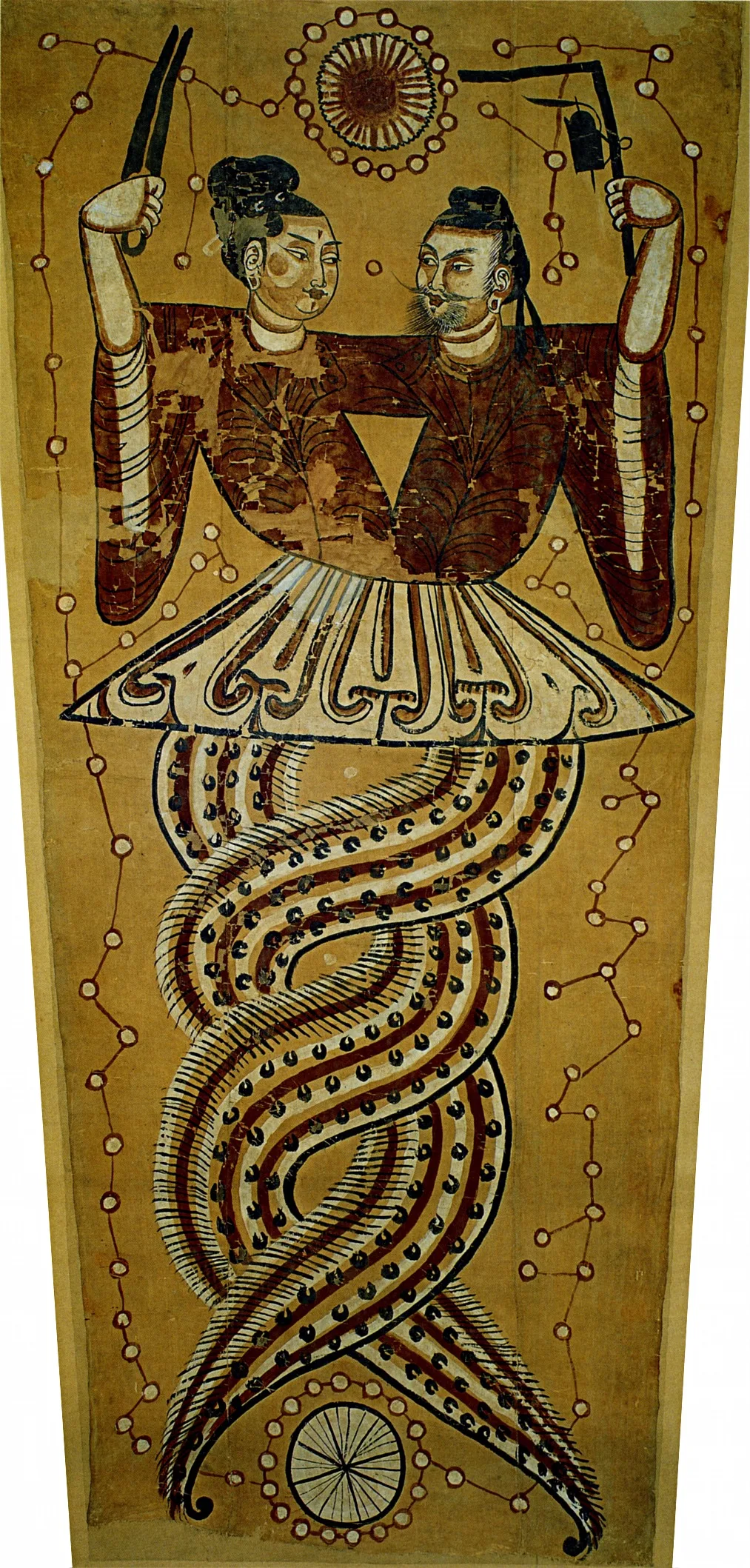
An ancient painting of Nüwa and Fuxi unearthed at the Astana Graves.
Nüwa
Nüwa is a mother goddess in Chinese mythology and religion, credited with creating humanity and repairing the Pillar of Heaven.
Helical Spirals and Sky-Measuring Compasses
The character element wa translates as spiral or helix, describing helical movement. This morphological concept connects linguistic roots directly to visual iconography. Portraits and paintings frequently picture Nüwa holding compasses in her hand, physically capturing this mythical geometry while representing the dome-like sky.
From Wikipedia · CC BY-SA 4.0
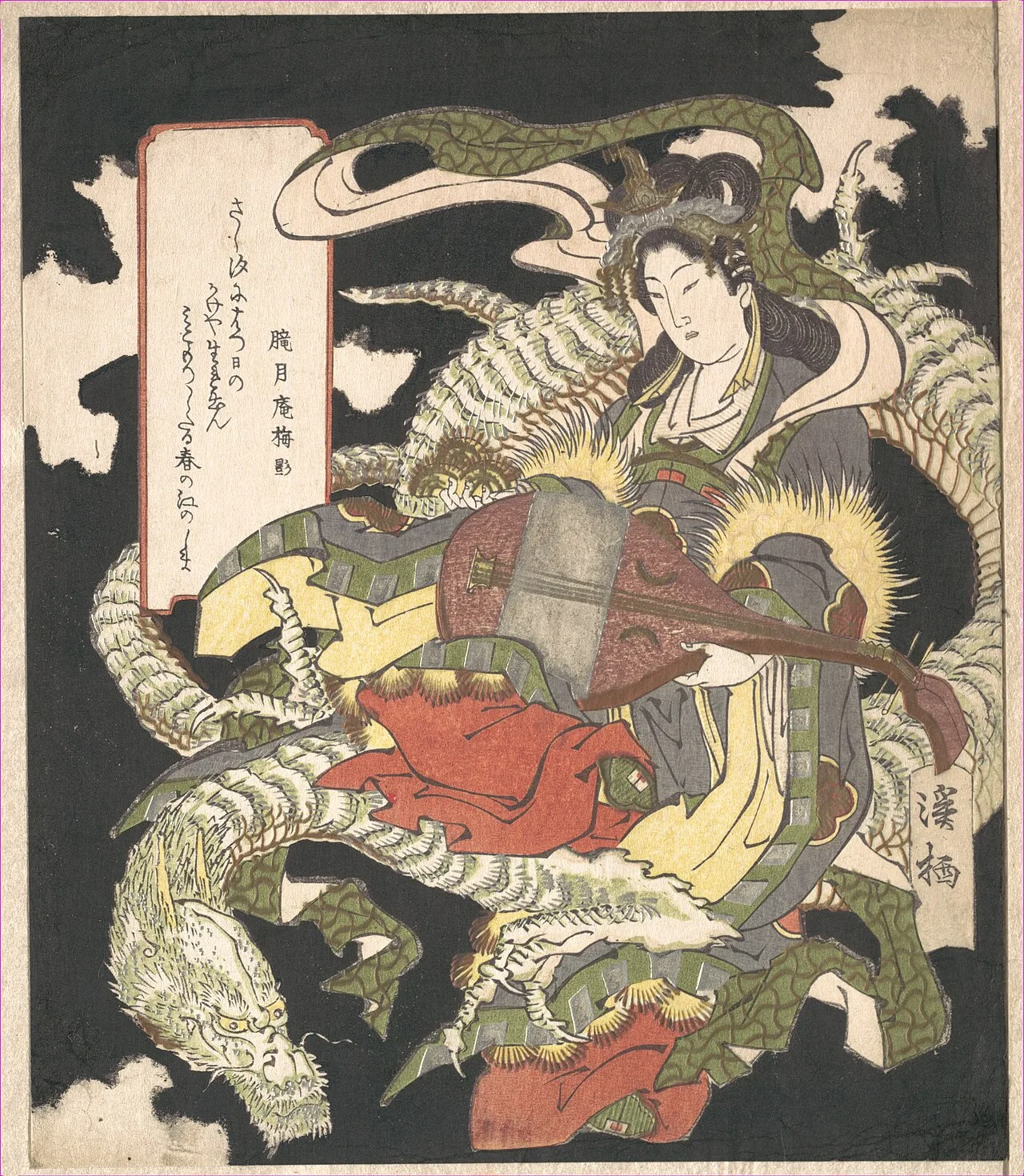
騎龍弁財天-Benzaiten (Goddess of Music and Good Fortune) Seated on a White Dragon MET DP135895
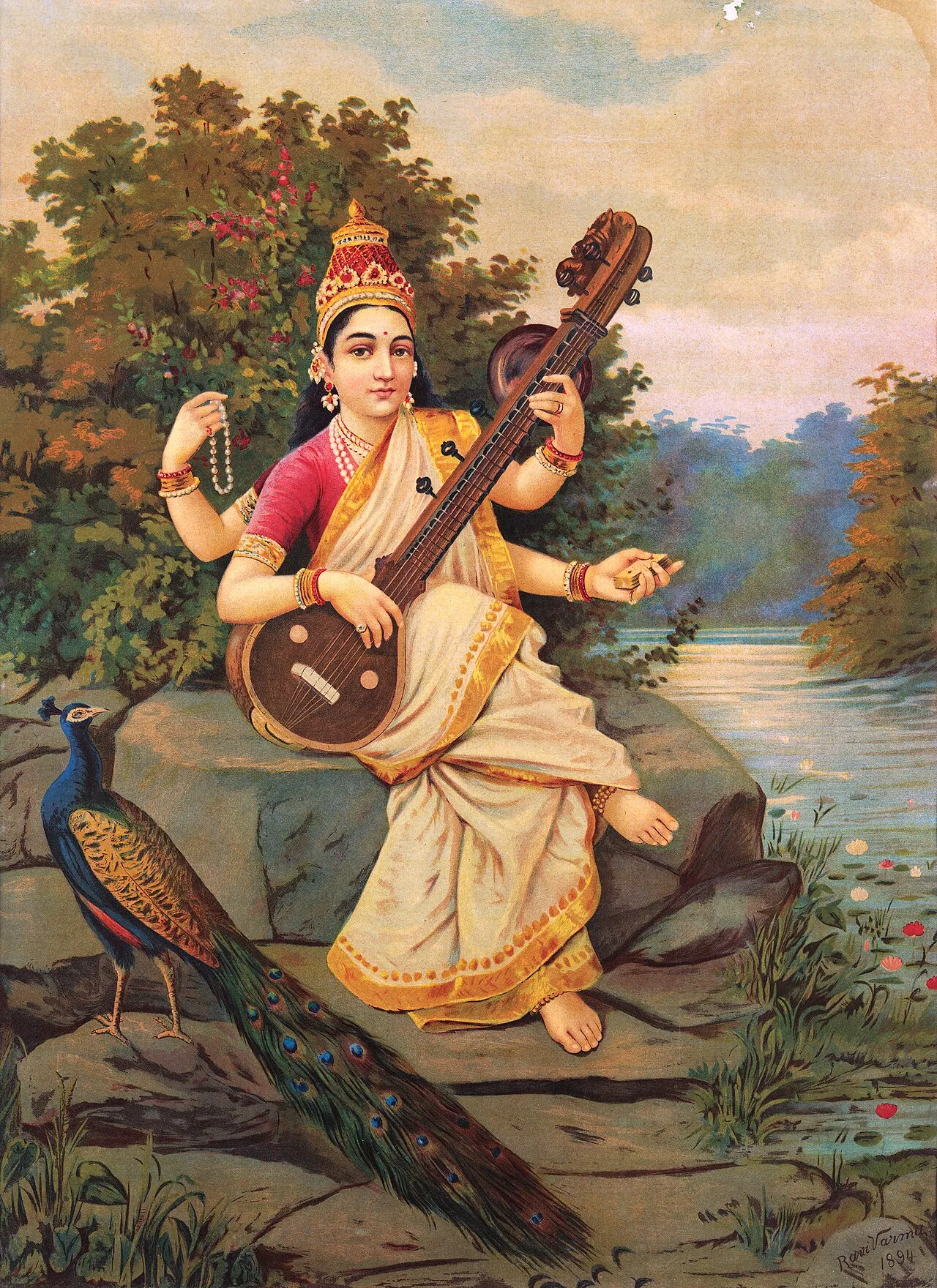
Saraswati by Raja Ravi Varma
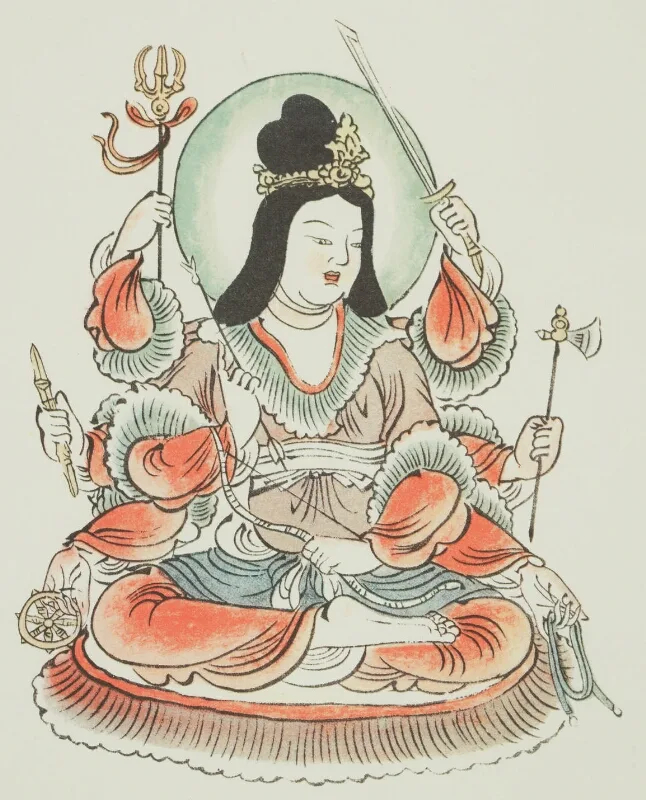
Benzaiten with eight arms holding a bow, an arrow, a sword, a spear, an axe, a single-pronged vajra, a wheel, and a noose
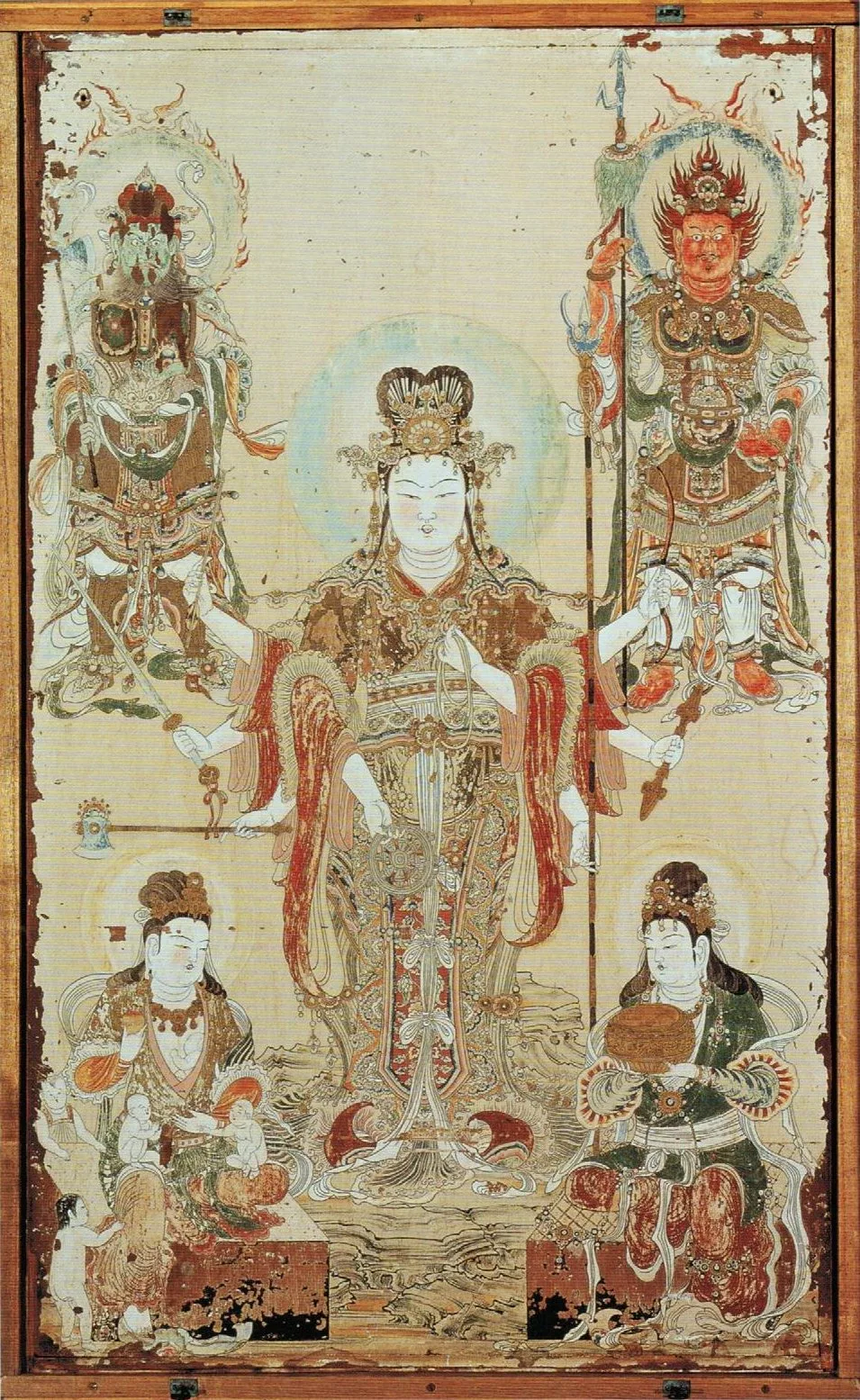
Eight-armed Benzaiten surrounded by the goddesses Kariteimo (Hariti) and Kenrōchijin (Prithvi) and two divine generals (c. 1212)

सु (su), Benzaiten's seed syllable (bīja) in Siddhaṃ script
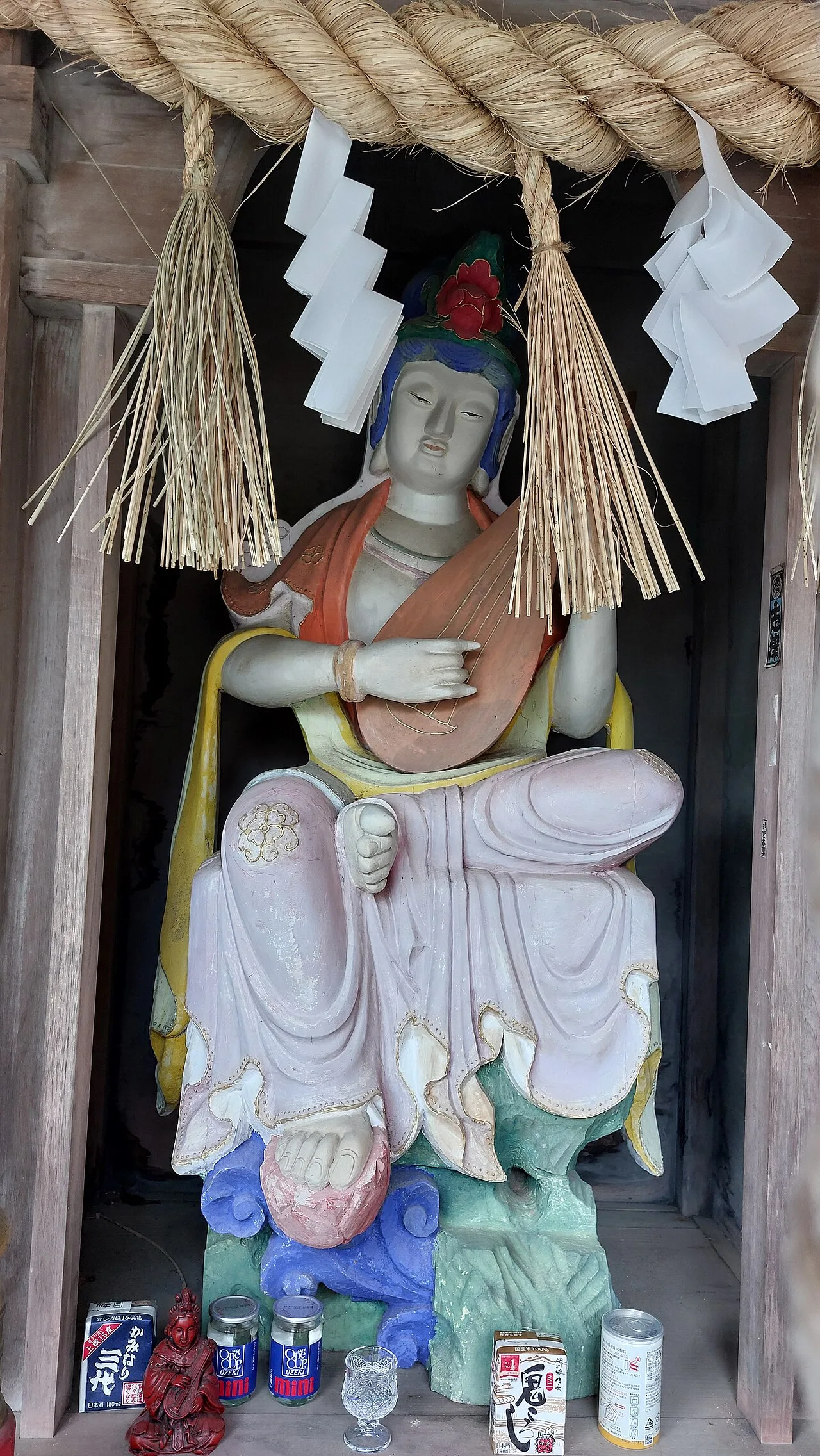
Benzaiten statue, Chikubu Island, Lake Biwa
Benzaiten
Benzaiten, or simply Benten, is an East Asian Buddhist goddess who originated from the Hindu goddess Saraswati, the patroness of speech, the arts, and learning.
The Slayer Behind the Scholar's Muse
Saraswati is widely celebrated as the peaceful patroness of speech, music, and learning, yet her earliest Vedic depictions reveal explicit warrior traits. In the Rigveda, she is called the "Vritra-slayer" and identified with martial divine forces like the Maruts. The speech goddess Vach similarly claims to bend the bow for Rudra to strike down enemies in battle. These foundational texts show that the deity possessed a weaponized identity long before her integration into East Asian Buddhism.
From Wikipedia · CC BY-SA 4.0
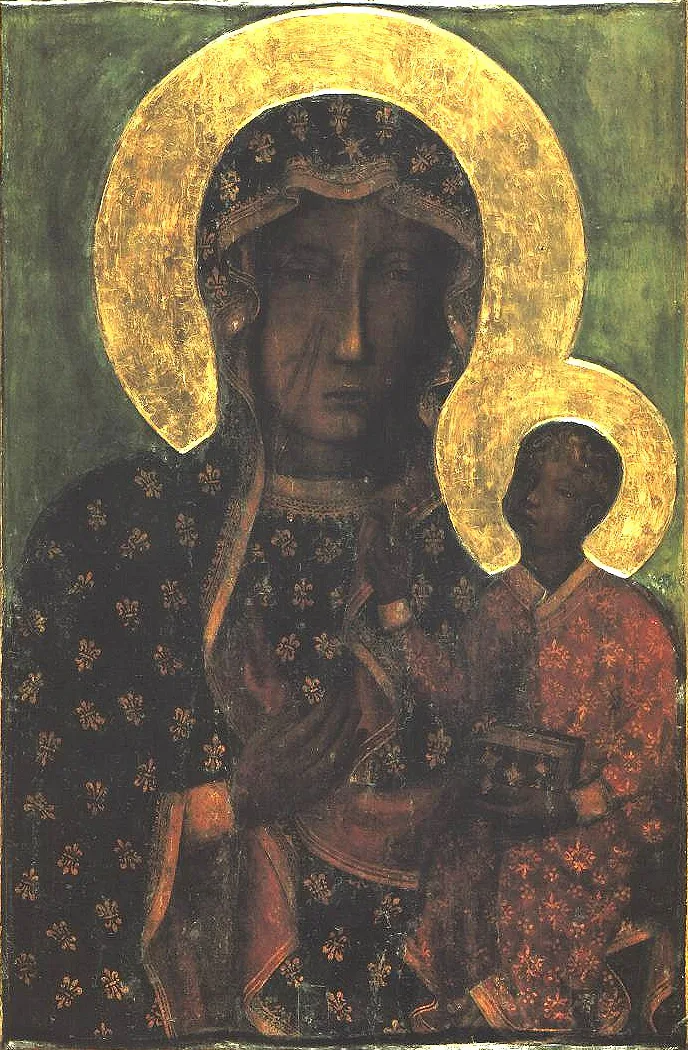
Czestochowska
Erzulie
Erzulie (sometimes spelled Erzili or Èzili) is a family of loa, or spirits, in Vodou.
Spiritual Vessels Across Gender Lines
Spirit possession within the Erzulie pantheon establishes a direct connection to femininity and feminine bodies. Rather than adhering strictly to biological boundaries, these spirits frequently select women or Masisi—effeminate or homosexual men—as their earthly vessels. During rituals, spirit possession transcends conventional sex roles to embrace fluid expressions of gender. This dynamic creates a recognized sacred space for marginalized identities within traditional Vodou practice.
From Wikipedia · CC BY-SA 4.0

The Goddess Uzume with Rooster and Mirror

Uzume dancing to lure out Amaterasu.

Saruta-hiko and Uzume illustration by William Aston

Tablet at the Ama-no-Uzume shrine in Takachiho
Ame-no-Uzume
Ame-no-Uzume-no-Mikoto is the Shinto goddess of dawn, joy, humor, and the arts in Japan, famously known for helping draw out the missing sun deity Amaterasu Omikami when she had hidden in a cave.
A Comedic Striptease as the Cradle of Sacred Dance
When Amaterasu hid in the darkness of the Heavenly Rock Cave, Ame-no-Uzume inverted the gloom by turning a tub upside down and stripping off her clothes. The divine audience erupted in laughter at this comical performance, prompting the sun goddess to peer outside. This humorous ritual dance established the origins of Japanese Kagura, transforming sacred theater into an act of direct communication with the divine.
From Wikipedia · CC BY-SA 4.0
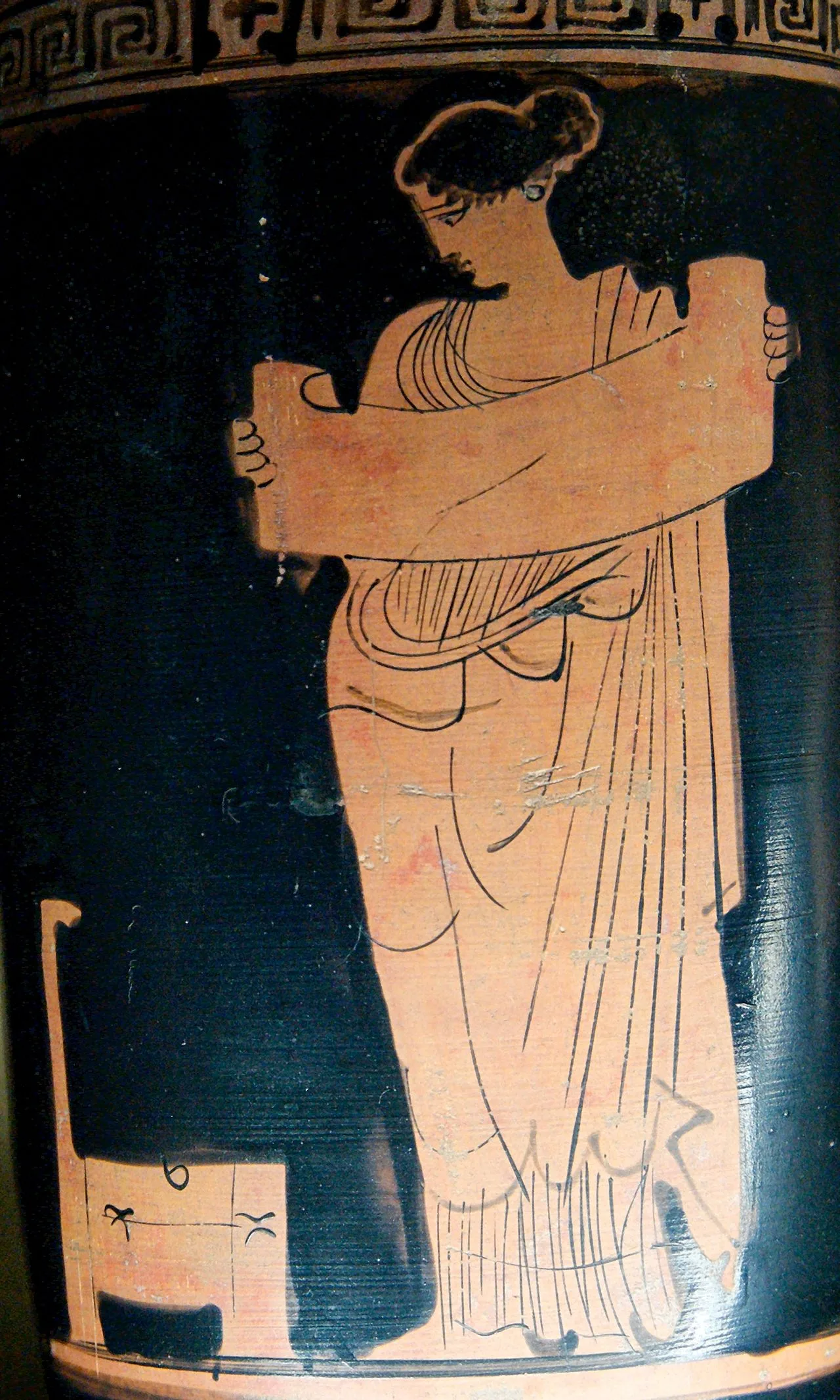
Muse, perhaps Clio, reading a scroll (Attic red-figure lekythos, Boeotia, c. 430 BC)
![Print of Clio, made in the 16th–17th century. Preserved in the Ghent University Library.[2]](https://nwjvzop1xgplmzvt.public.blob.vercel-storage.com/wikifeed/muses/1-ffad0a6b5d.webp)
Print of Clio, made in the 16th–17th century. Preserved in the Ghent University Library.[2]
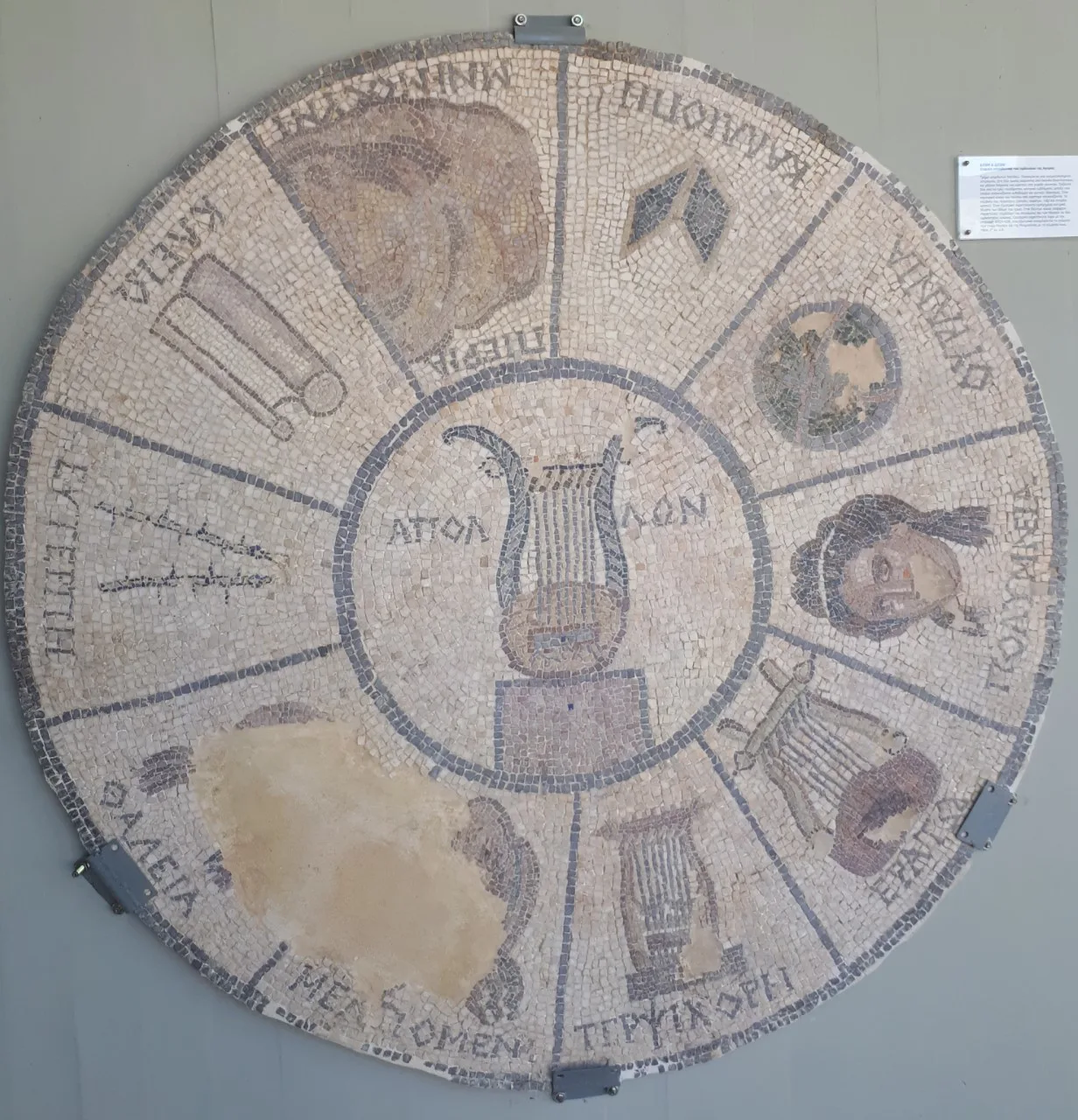
Mosaic with symbols of each Muse and Mnemosyne, 1st century BC, Archaeological Museum of Ancient Elis.
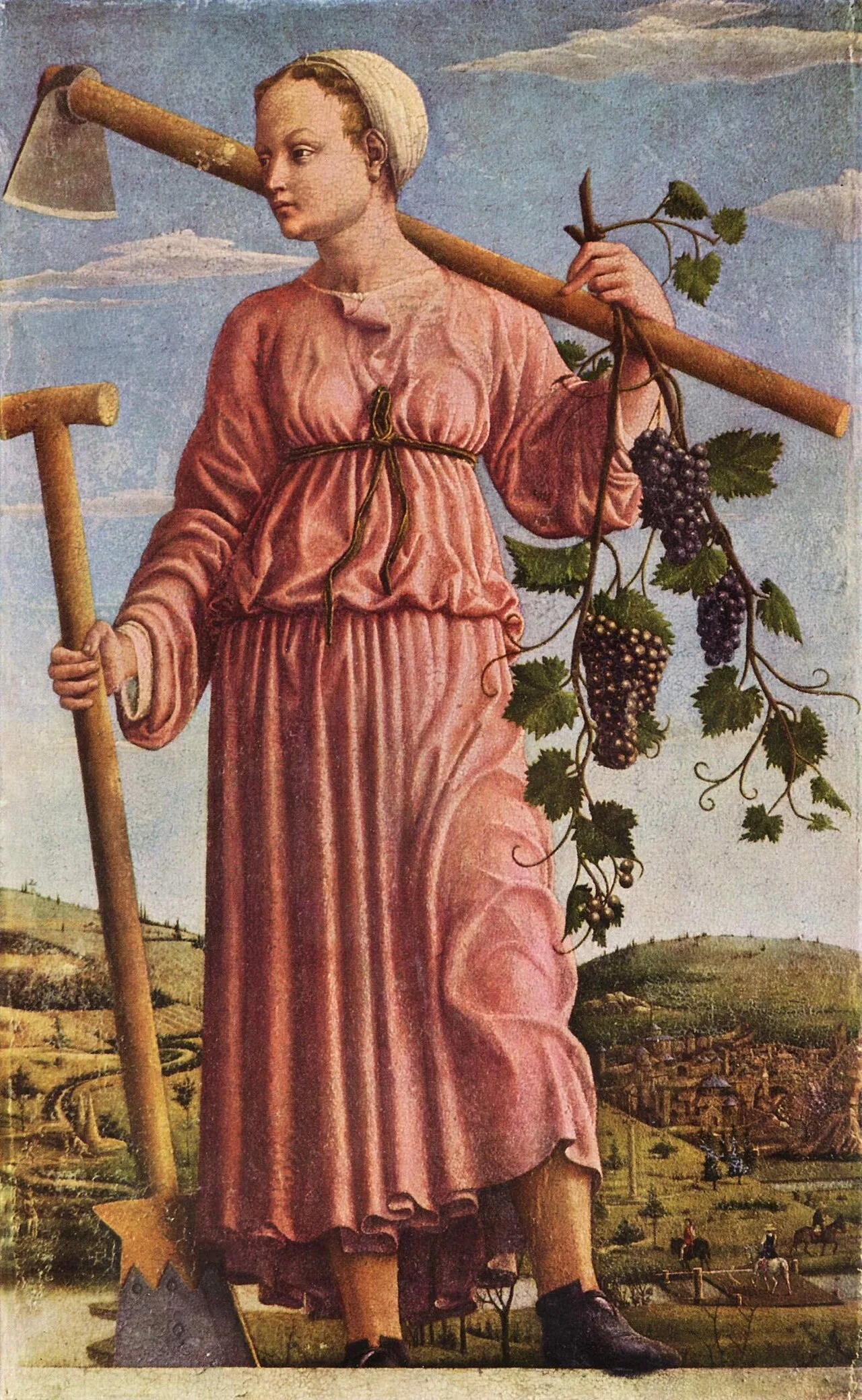
Polyhymnia, the Muse of sacred poetry, sacred hymn and eloquence as well as agriculture and pantomime.
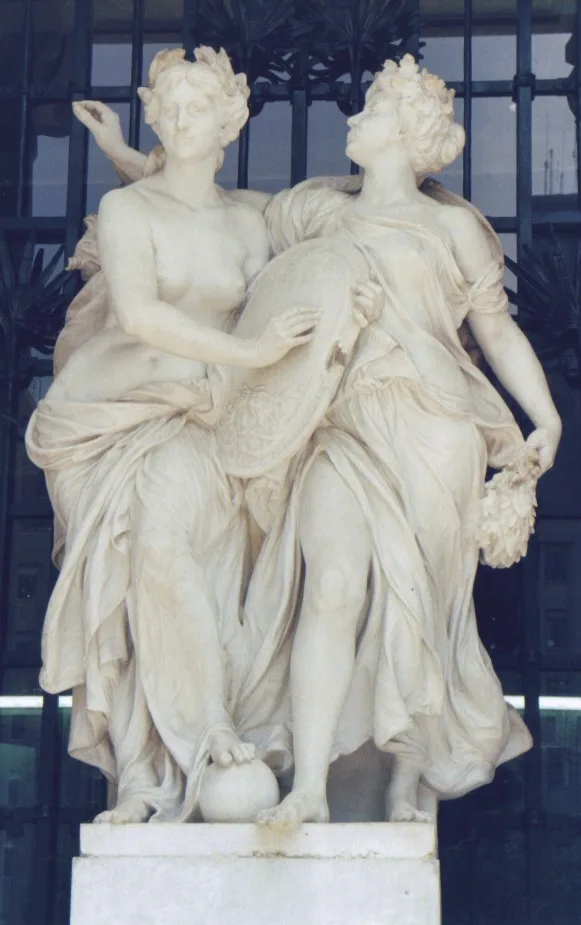
Melpomene and Polyhymnia, Palacio de Bellas Artes, Mexico
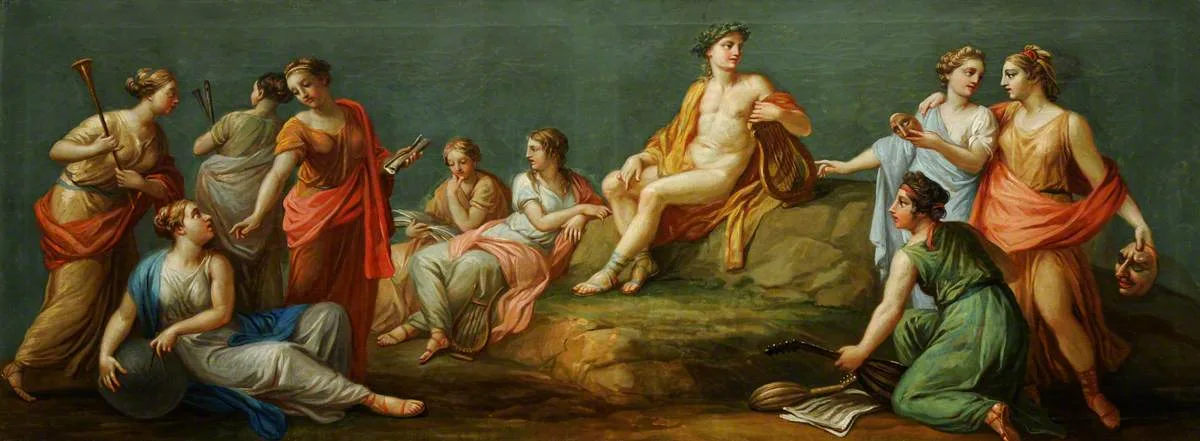
Apollo and the Muses
Muses
In ancient Greek religion and mythology, the Muses were the inspirational goddesses of literature, science, and the arts.
Acoustic Physics of the Primal Triad
Long before the standardization of nine deities, classical thinkers conceptualized the Muses as fundamental sonic phenomena. The Roman scholar Varro (116–27 BC) recorded that only three Muses existed, emerging from water movement, struck air, and the human voice. Named Melete, Mneme, and Aoide, these figures represented practice, memory, and song rather than specialized academic disciplines.
From Wikipedia · CC BY-SA 4.0
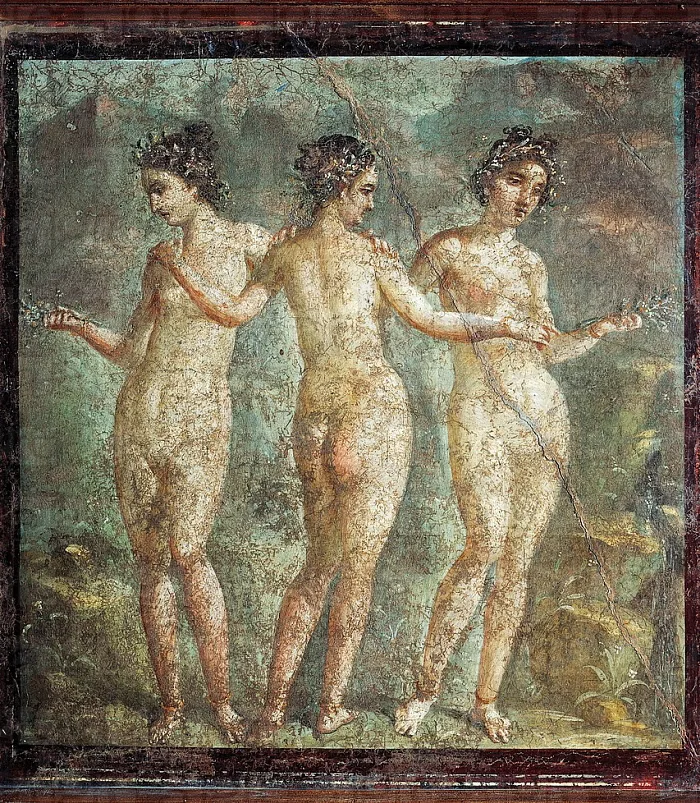
The Three Graces in a fresco at Pompeii, 1–50 AD
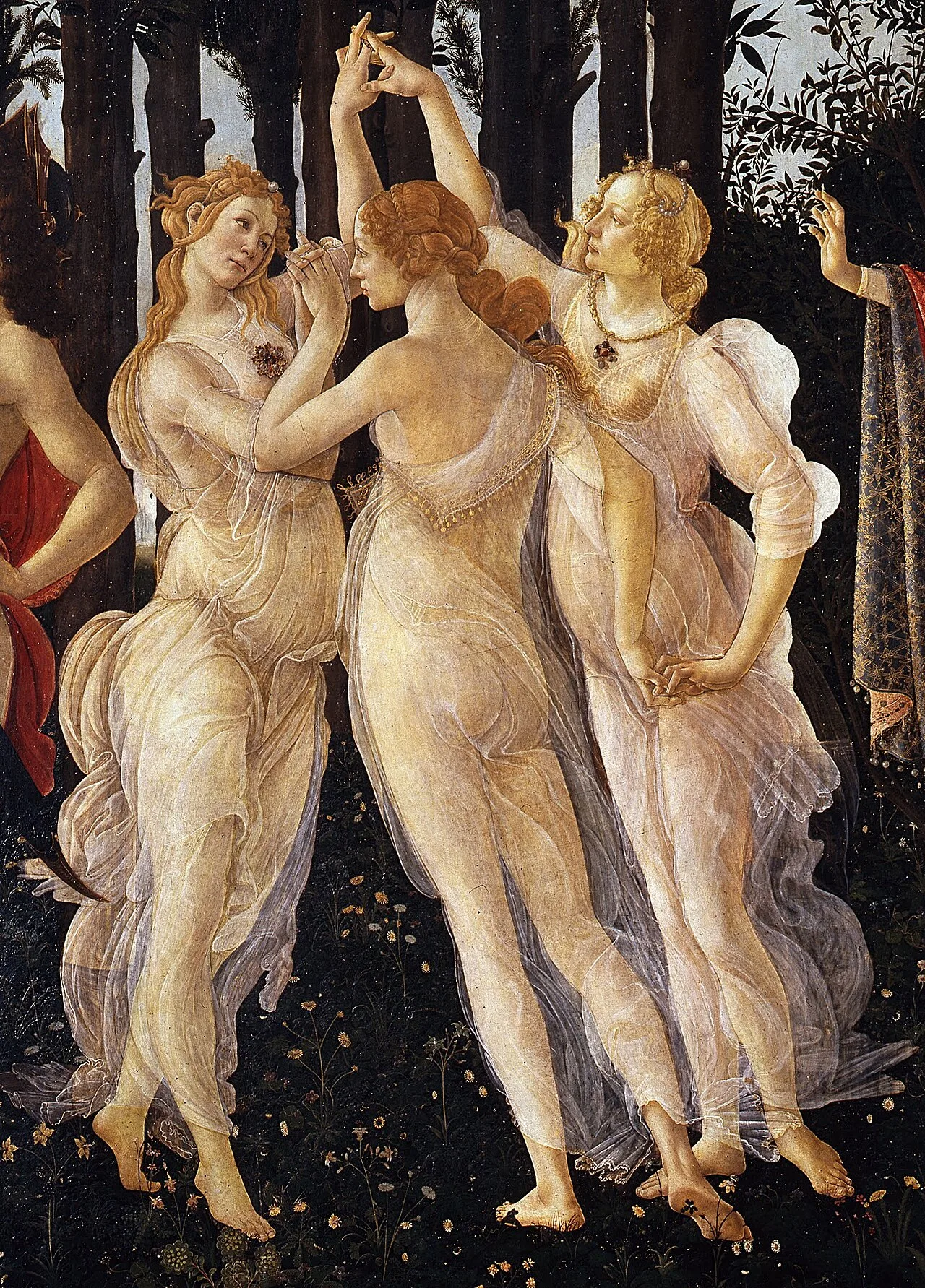
The Three Graces, from Sandro Botticelli's painting Primavera in the Uffizi Gallery.
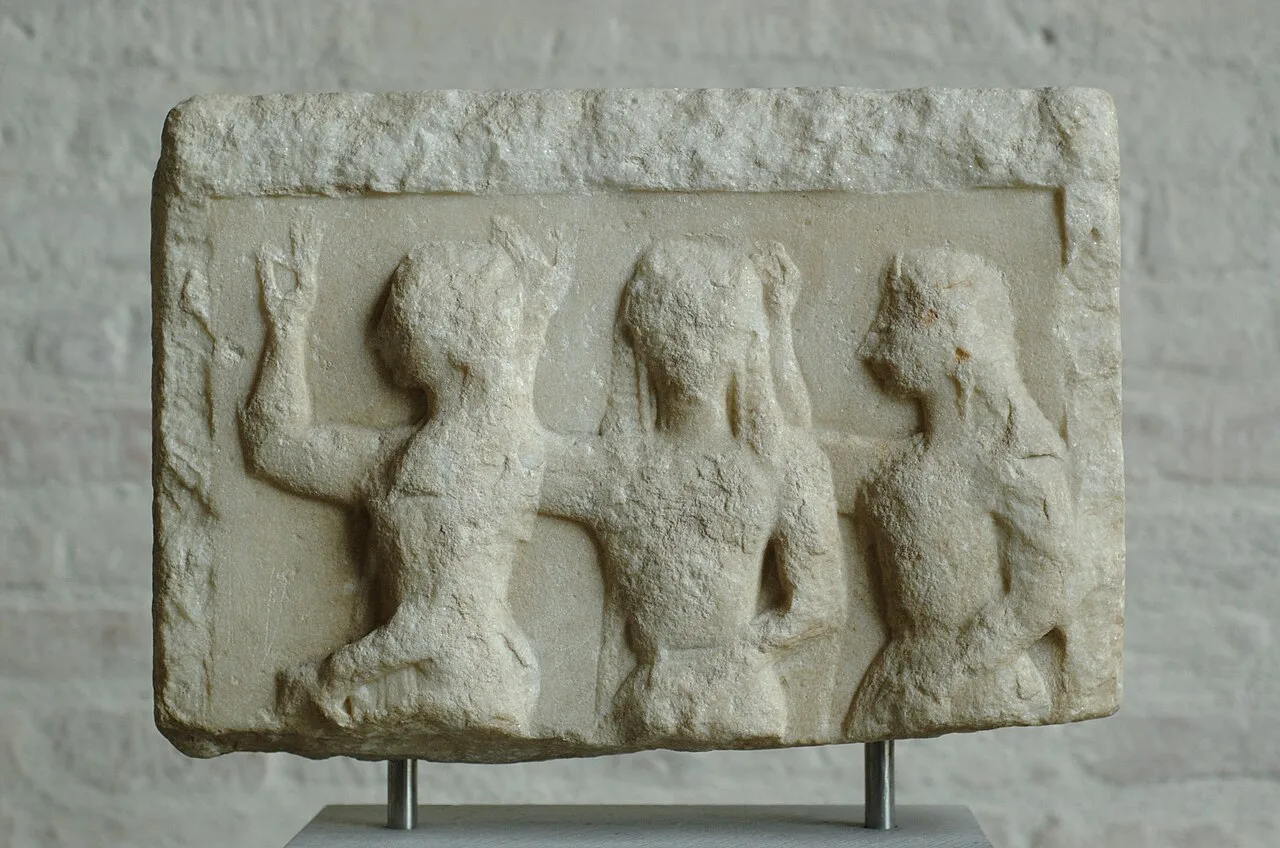
6th-century BCE relief
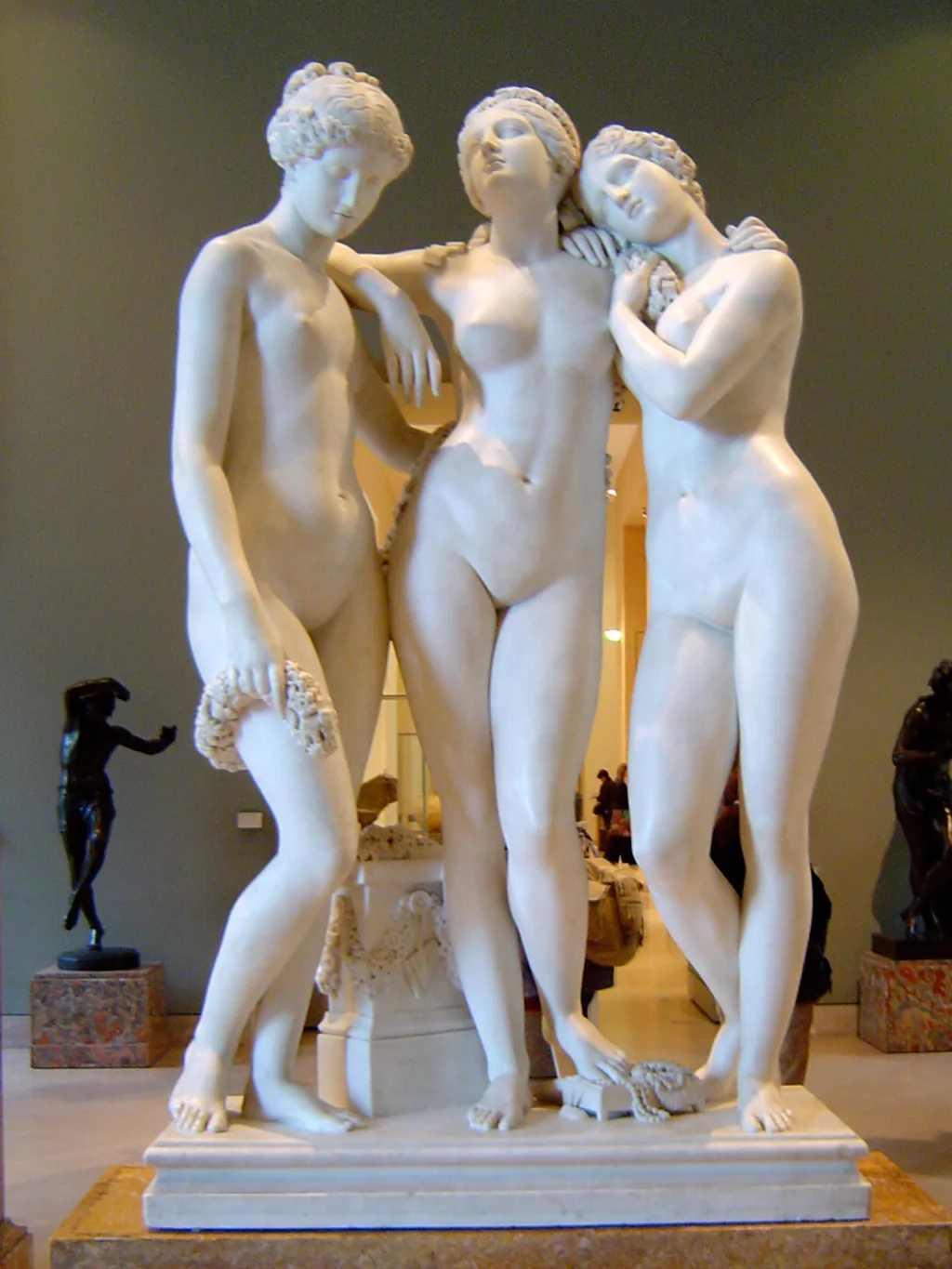
Les Trois Grâces by James Pradier, 1831. Louvre.
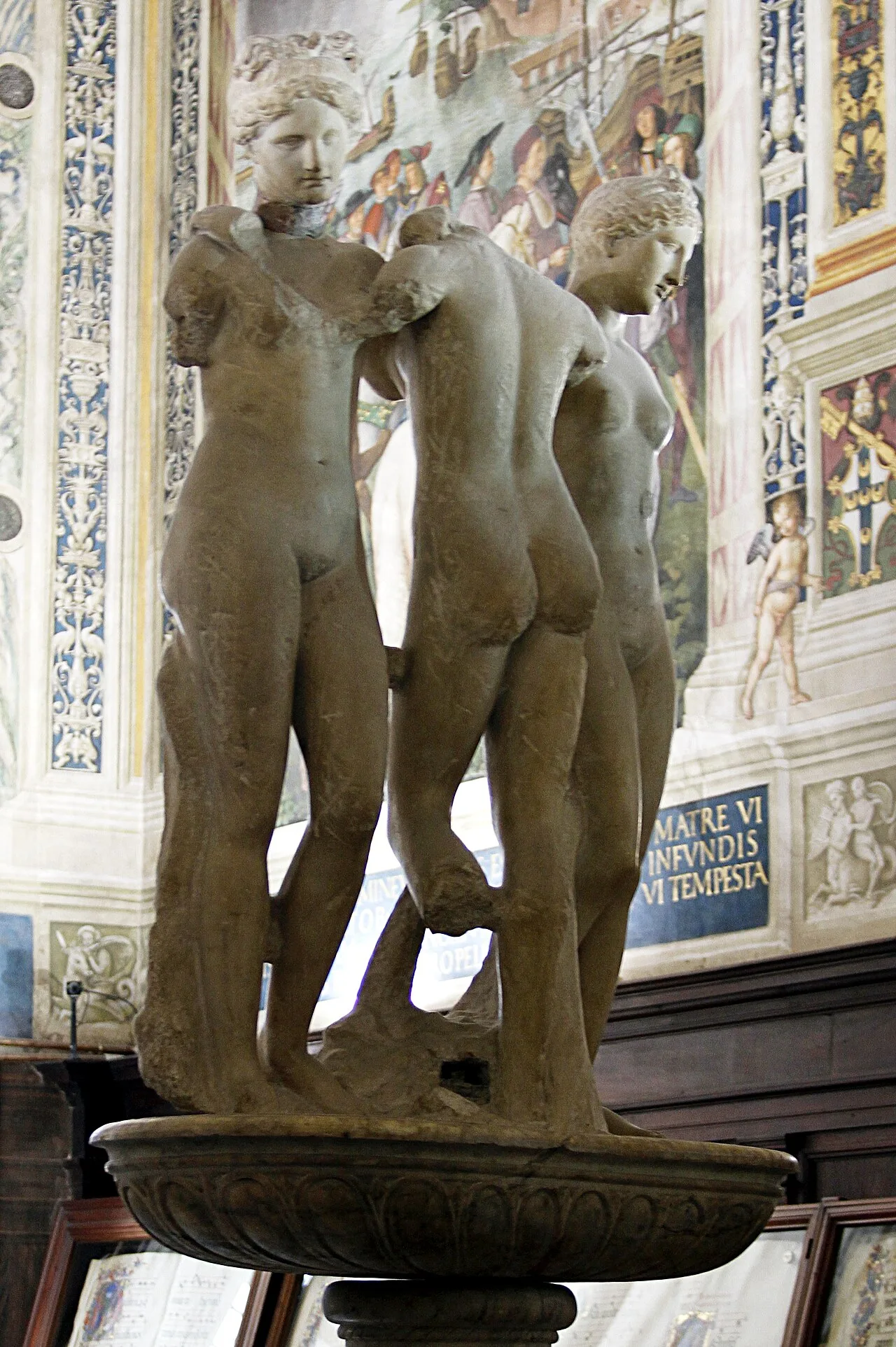
The Three Graces from the Piccolomini Library, now in Siena Cathedral
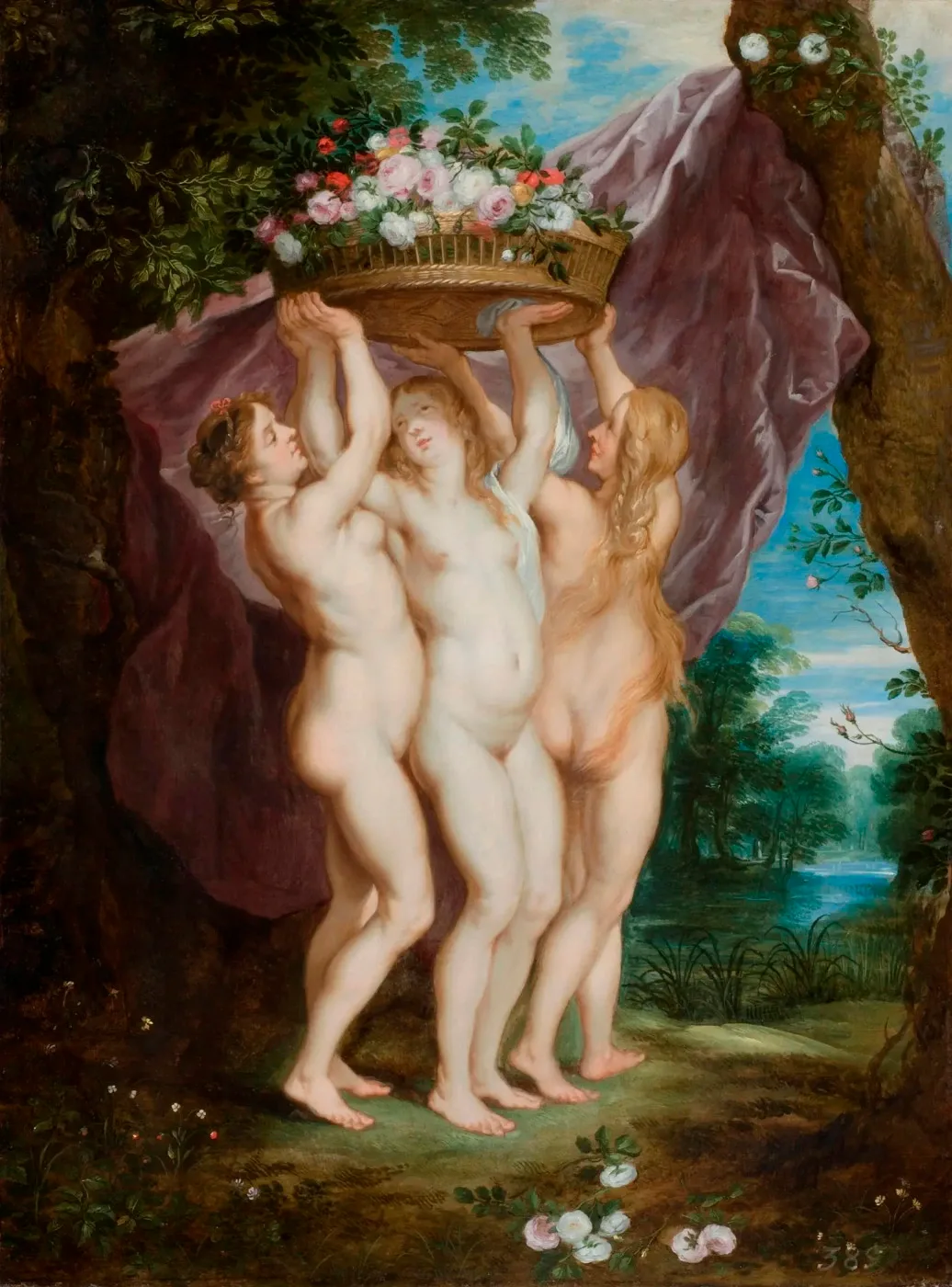
The Three Graces by Jan Brueghel the Younger (1635)
Charites
The Charites, also known as the Graces, are goddesses in Greek mythology who personify beauty and grace.
From Draped Dancers to Interlaced Nudes
Modern visual culture almost exclusively envisions the Graces as an intertwined trio of nudes. In the Greek Archaic and Classical periods, however, artists depicted them fully clothed, standing in a line, and posed in dance. The shift toward a naked, interlaced group developed later in Roman antiquity, fundamentally altering how their physical elegance was framed.
From Wikipedia · CC BY-SA 4.0
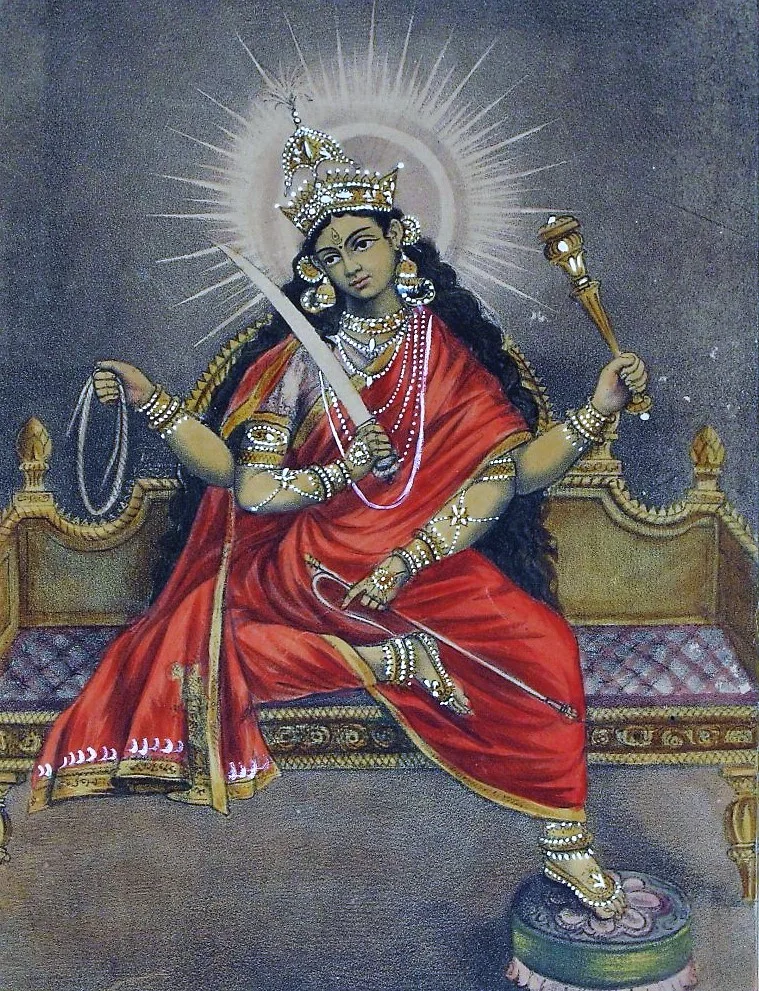
Goddess Matangi
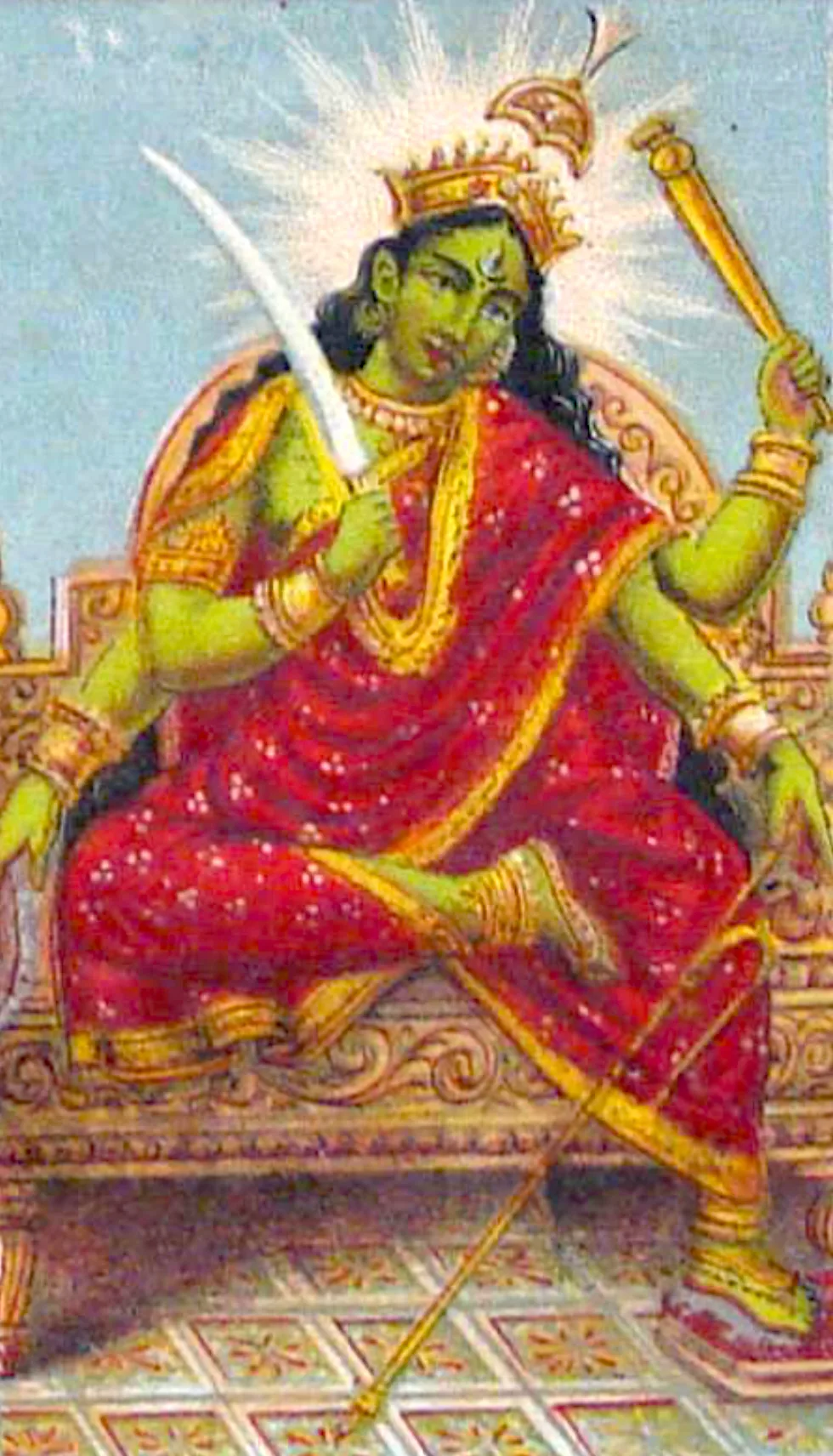
19th century lithography of Matangi.
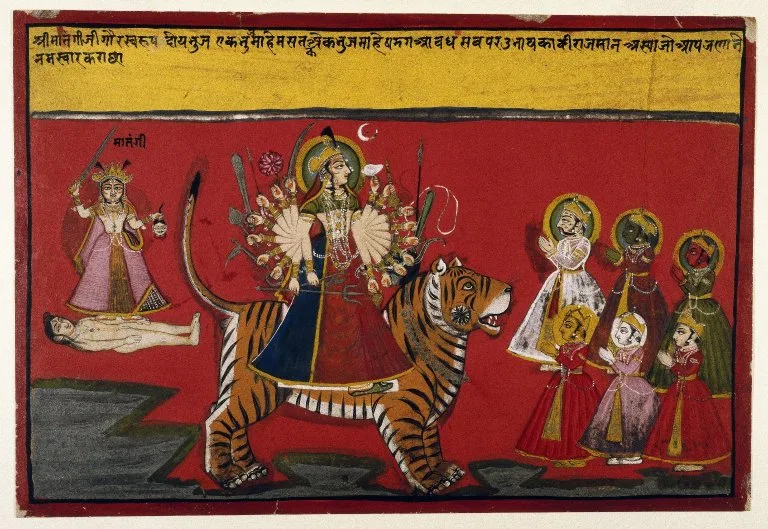
The painting of Goddess Matangi in Brooklyn Museum
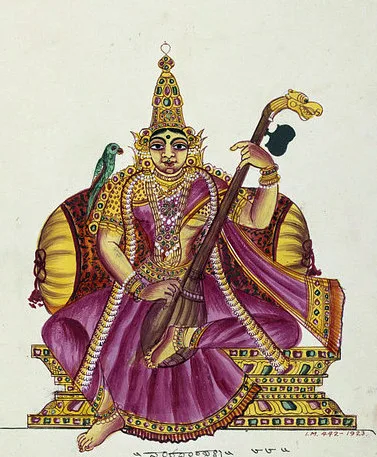
As in this early 19th century South Indian painting, Raja-Matangi is usually depicted playing the veena and with a parrot in her company.
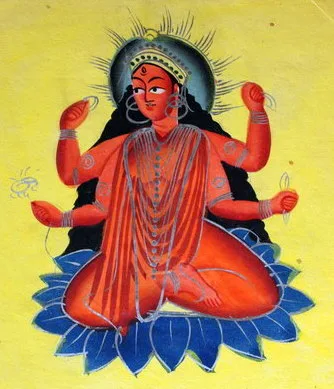
A Kalighat painting of Matangi

The yantra of Matangi, which is used in her worship
Matangi
Matangi is a Hindu goddess, one of the ten Mahavidyas and an aspect of the Divine Mother. She is considered to be the Tantric form of Sarasvati, the goddess of music and learning.
Subverting Sacred Purity through Leftover Offerings
Classical Hindu rituals mandate strict cleanliness, yet Matangi subverts these foundational tenets through her popular manifestation as Uchchhishta-Chandalini. Devotees offer her partially eaten leftovers, or uchchhishta, while remaining in an unwashed state with food on their hands. This deliberate inversion of taboo allows practitioners to face the forbidden and transcend social pollution.
From Wikipedia · CC BY-SA 4.0