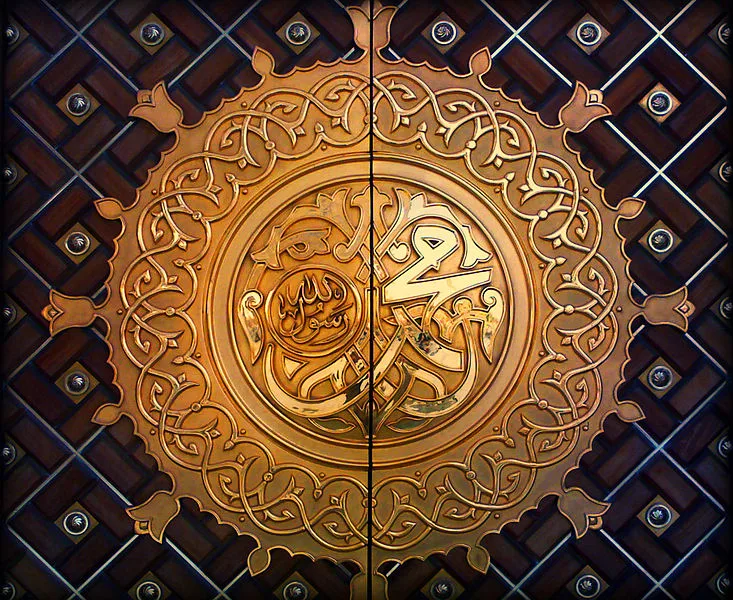
Inscription proclaiming Muhammad as the messenger of God
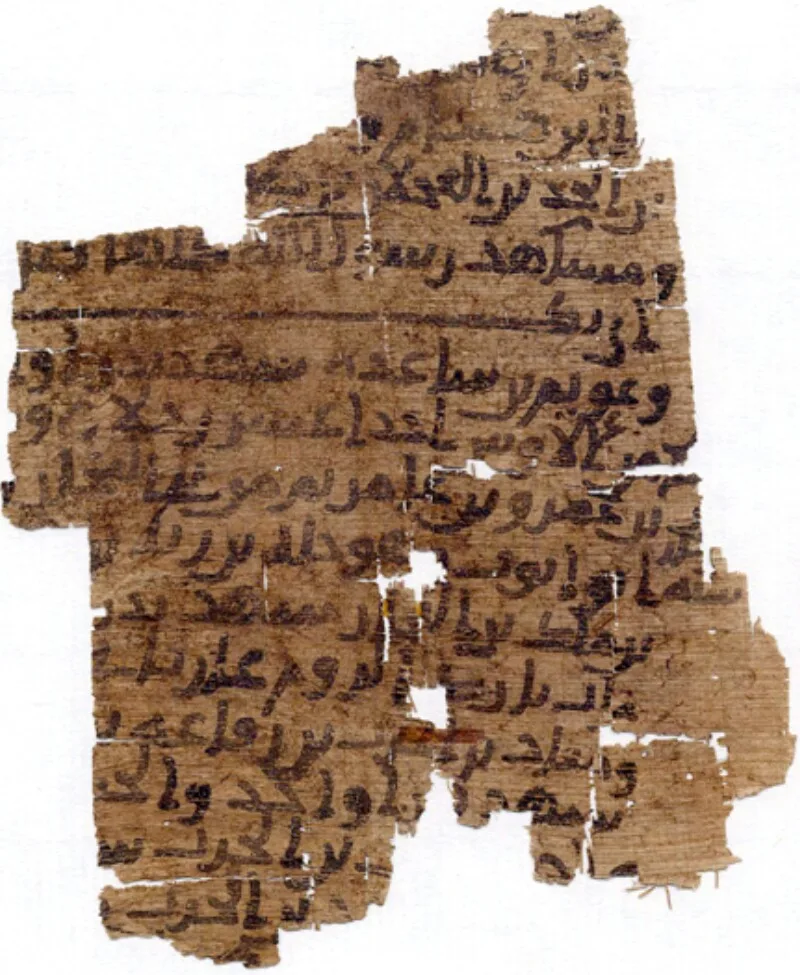
An early manuscript of Ibn Hisham's al-Sirah al-Nabawiyyah, believed to have been transmitted by his students shortly after his death in 833[12]: 61
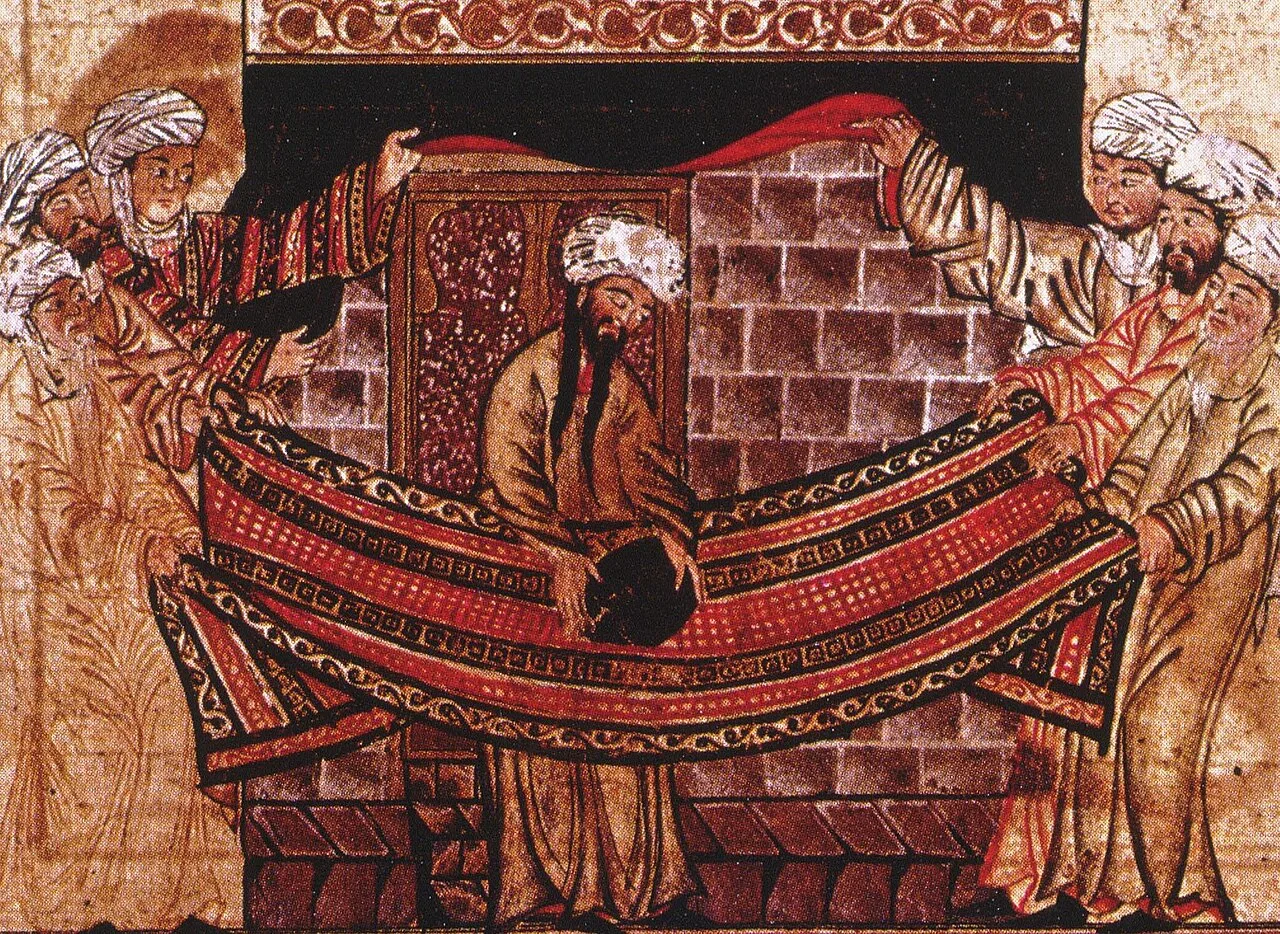
Miniature from Rashid al-Din Hamadani's Jami al-Tawarikh, c. 1315, illustrating the story of Muhammad's role in re-setting the Black Stone in 605 (Ilkhanate period)[78]
![Dome of the Rock, built during the reign of Abdul Malik. Anachronistically associated[j] with the Isra and Miraj, it is](https://nwjvzop1xgplmzvt.public.blob.vercel-storage.com/wikifeed/muhammad/3-272970b146.webp)
Dome of the Rock, built during the reign of Abdul Malik. Anachronistically associated[j] with the Isra and Miraj, it is believed to be the specific place where the Prophet Muhammad have ascended to heaven.[157]
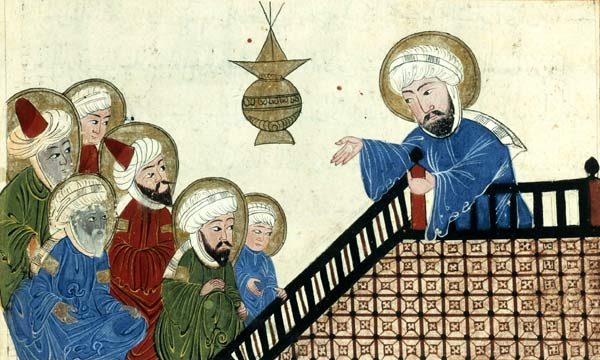
Anonymous illustration of al-Biruni's The Remaining Signs of Past Centuries, depicting Muhammad prohibiting Nasī' during the Farewell Pilgrimage, 17th-century Ottoman copy of a 14th-century (Ilkhanate) manuscript (Edinburgh codex)

Calligraphic rendering of "may God honor him and grant him peace", customarily added after Muhammad's name, encoded as a ligature at Unicode code point U+FDFA[360] ﷺ
Muhammad
Muhammad was an Arab religious, military, and political leader, as well as the founder of Islam.
A Caravan Merchant's Proposal and Monogamy
Muhammad's early poverty ended at age 25 when his distant relative Khadija, a wealthy 40-year-old businesswoman in the caravan trade, took note of his reputation. After he proved his competence leading an expedition into Syria, Khadija proposed marriage to him. Muhammad accepted her offer and remained strictly monogamous with her until her death.
From Wikipedia · CC BY-SA 4.0
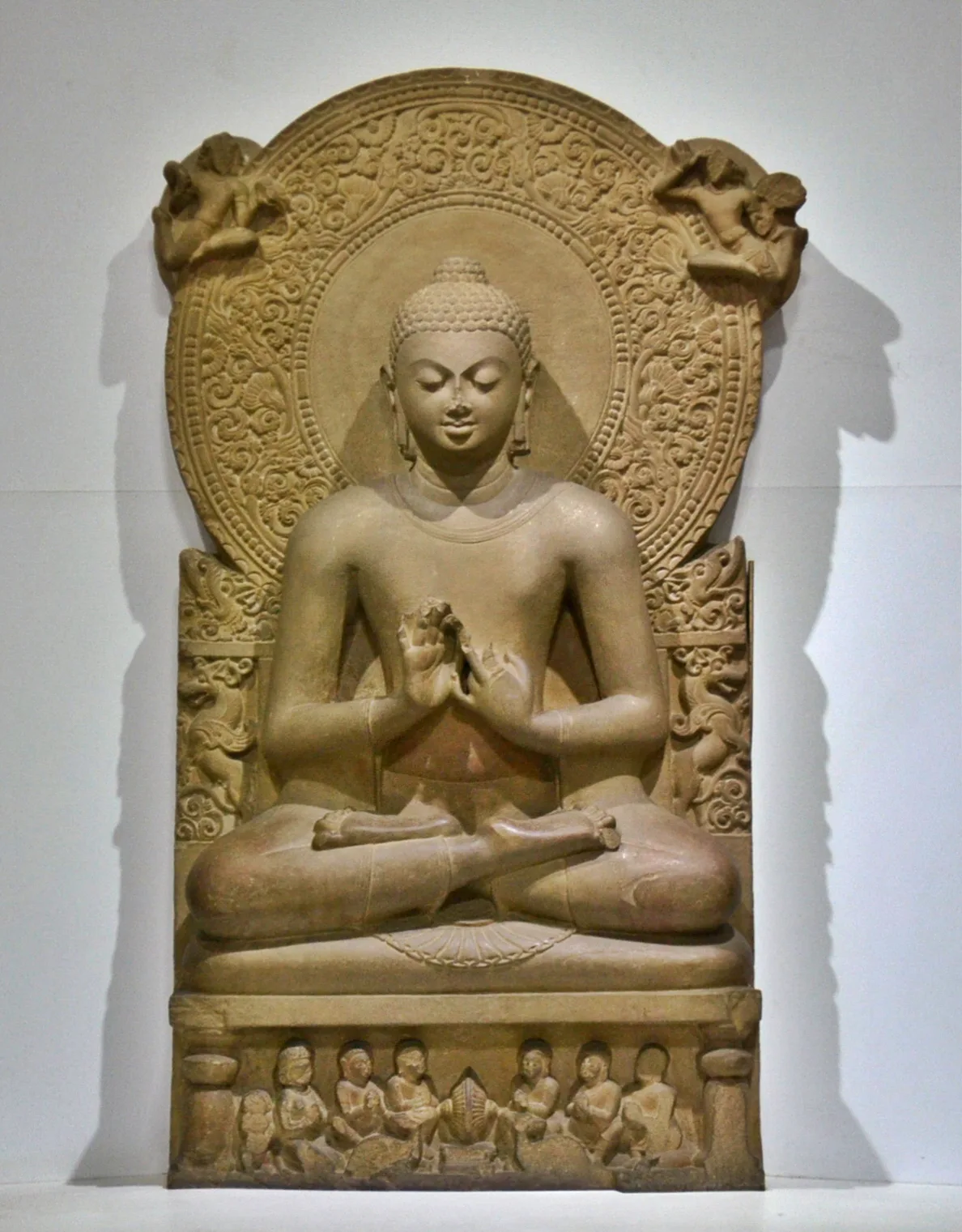
Buddha in Sarnath Museum (Dhammajak Mutra)
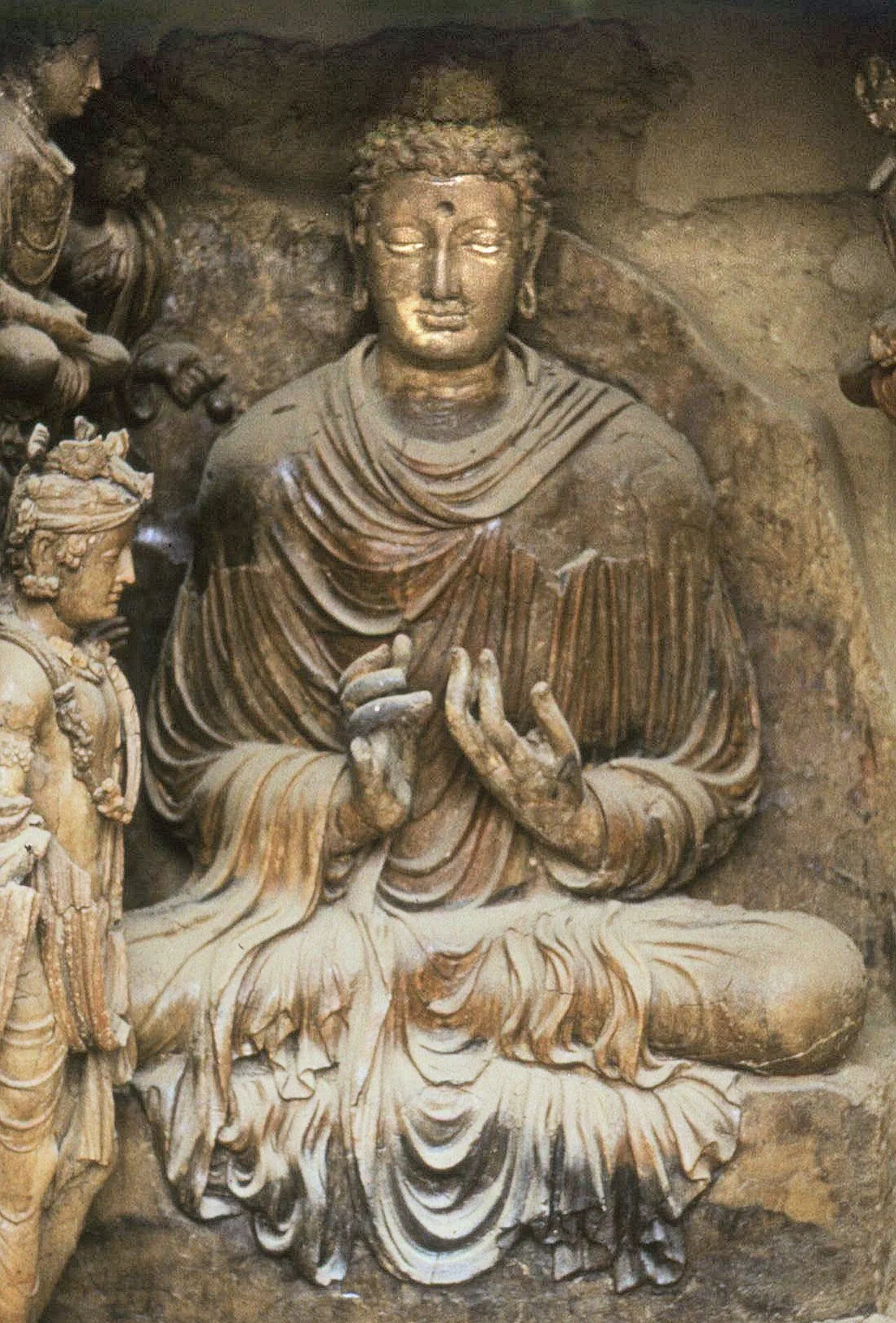
The Buddha, Tapa Shotor monastery in Hadda, Afghanistan, 2nd century CE
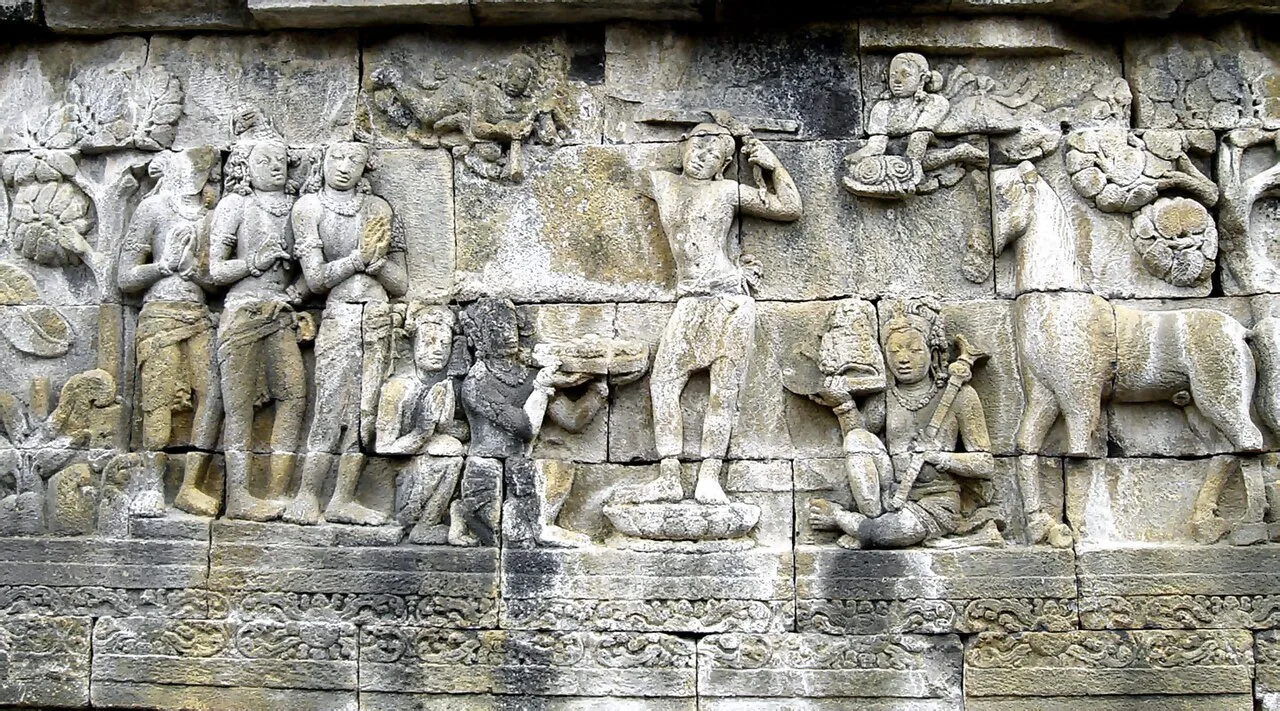
Prince Siddhartha shaves his hair and becomes a śramaṇa. Borobudur, 8th century
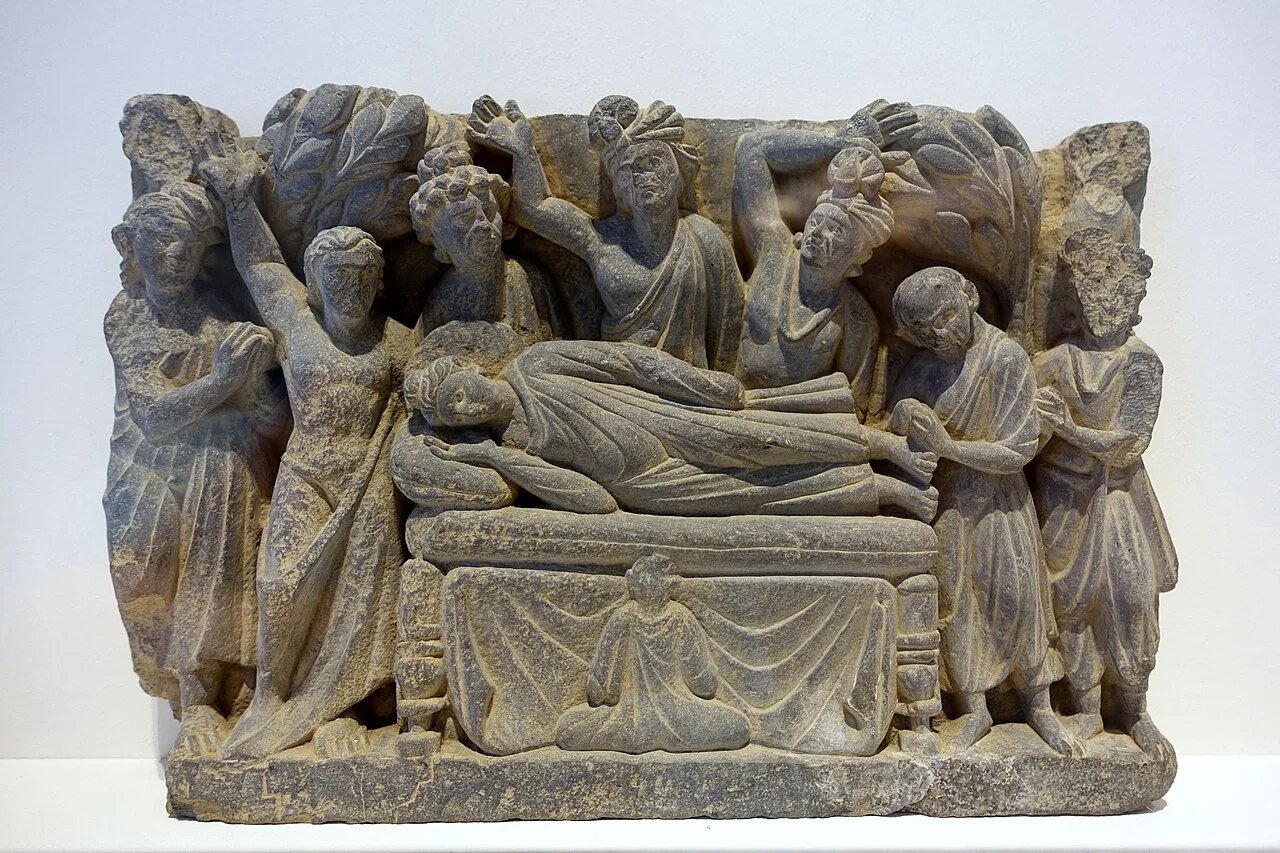
Mahaparinirvana, Gandhara, 3rd or 4th century CE, gray schist
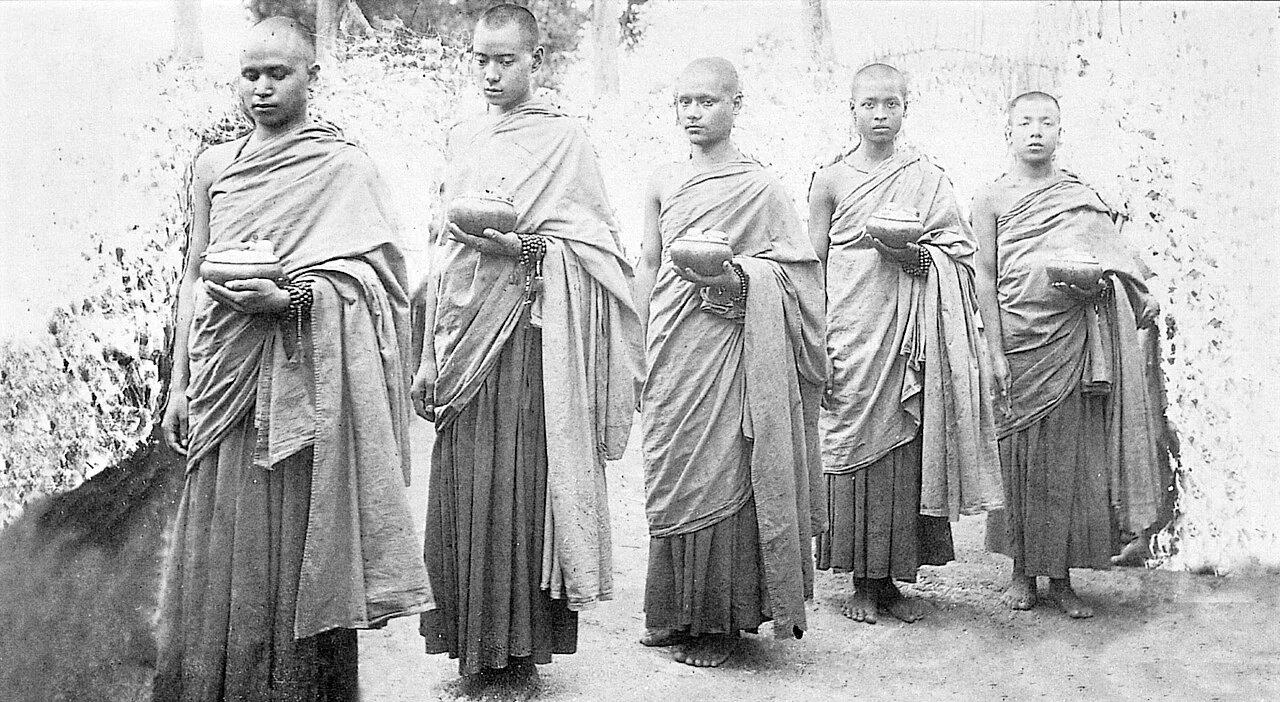
Buddhist monks from Nepal.
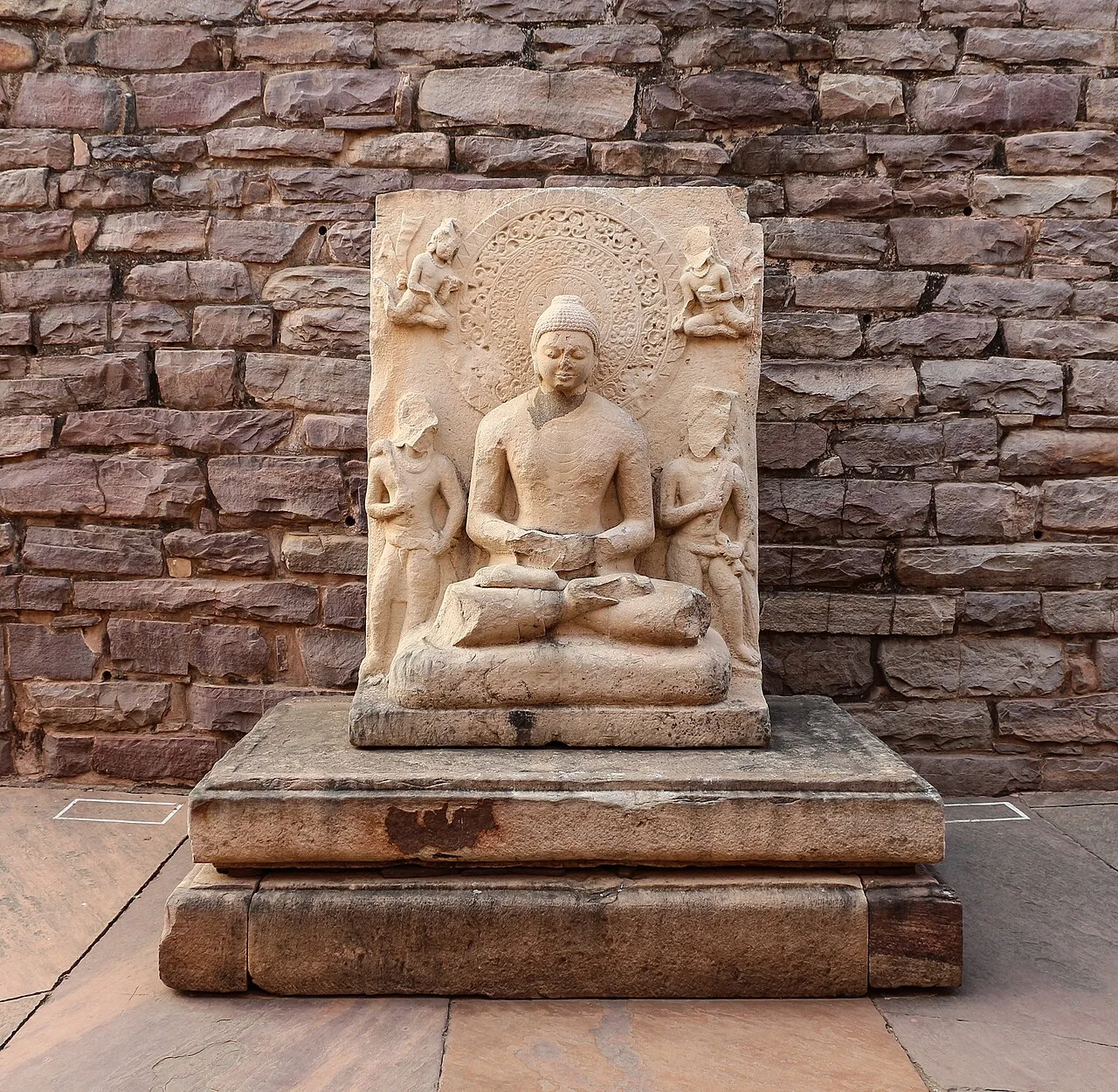
Buddha statue from Sanchi.
Gautama Buddha
Siddhartha Gautama, commonly referred to as the Buddha, was a wandering ascetic and religious teacher in the 6th or 5th century BCE who founded Buddhism.
An Aristocratic Oligarch Rather than a Monarch's Prince
Later legendary biographies commonly depict the young Gotama as an opulent prince sheltered inside royal palaces. Historical analysis suggests his father Śuddhodana was not a hereditary monarch of an empire, but merely a Shakya aristocrat (khattiya). The Shakya community was a regional republic or oligarchy on the cultural periphery of eastern India, rather than a centralized hereditary monarchy.
From Wikipedia · CC BY-SA 4.0
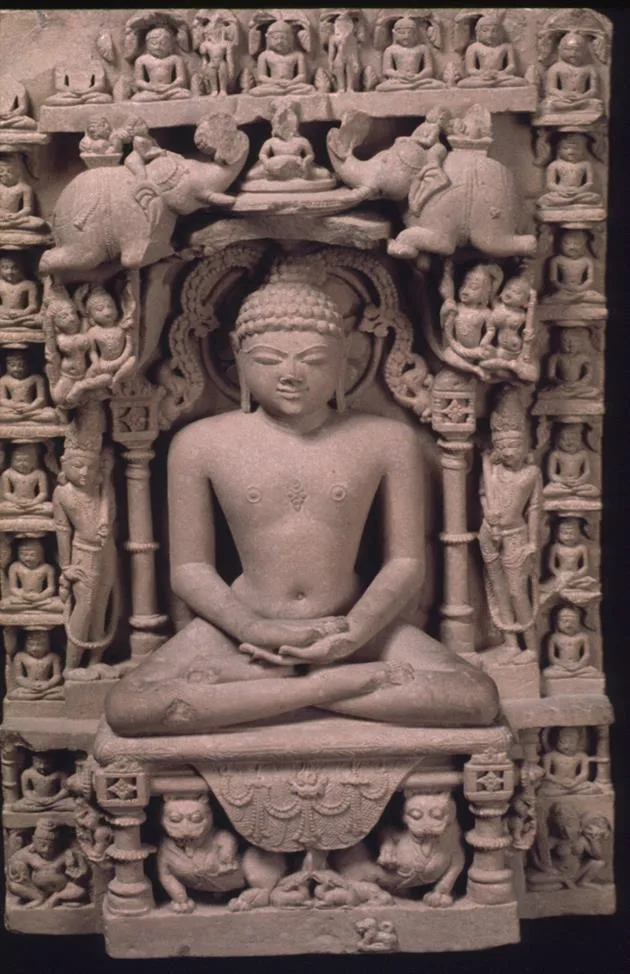
Mahavira sculpture
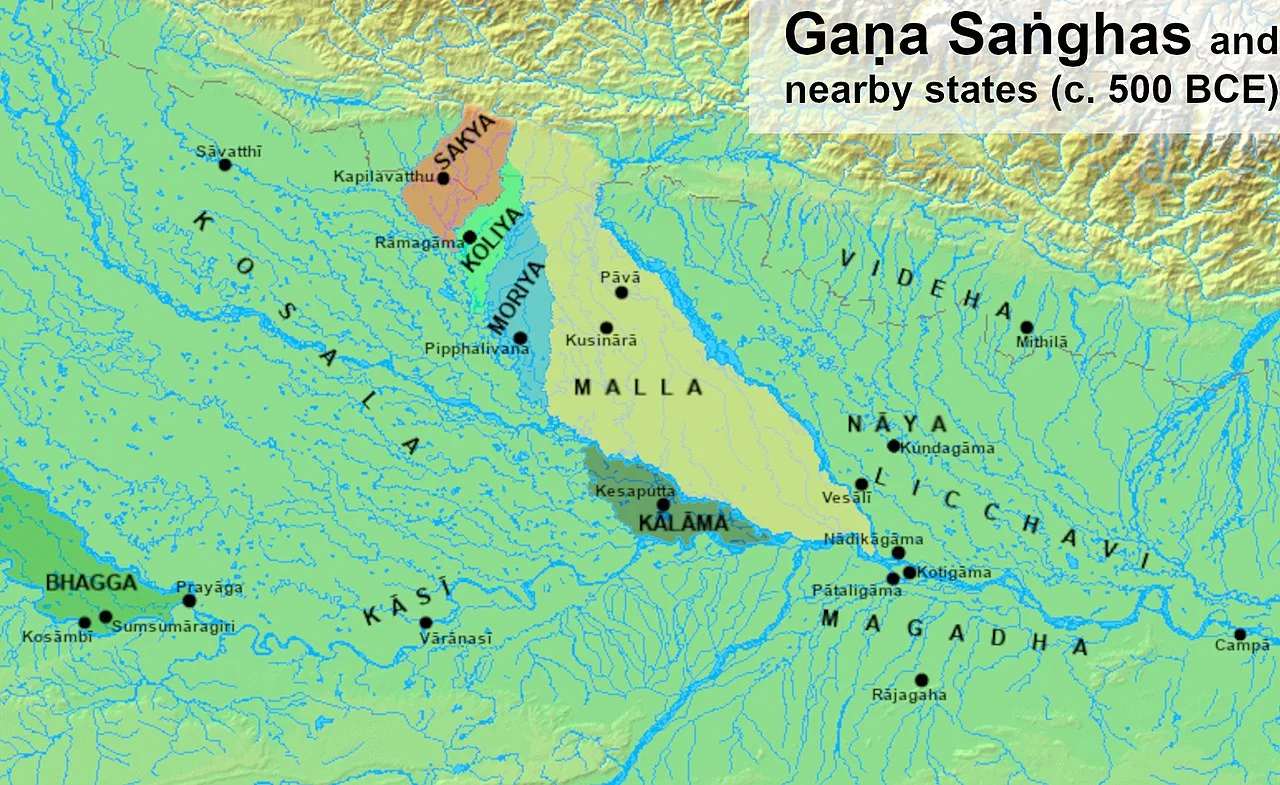
The Gaṇasaṅghas (tribal republics) at the time of Mahavira
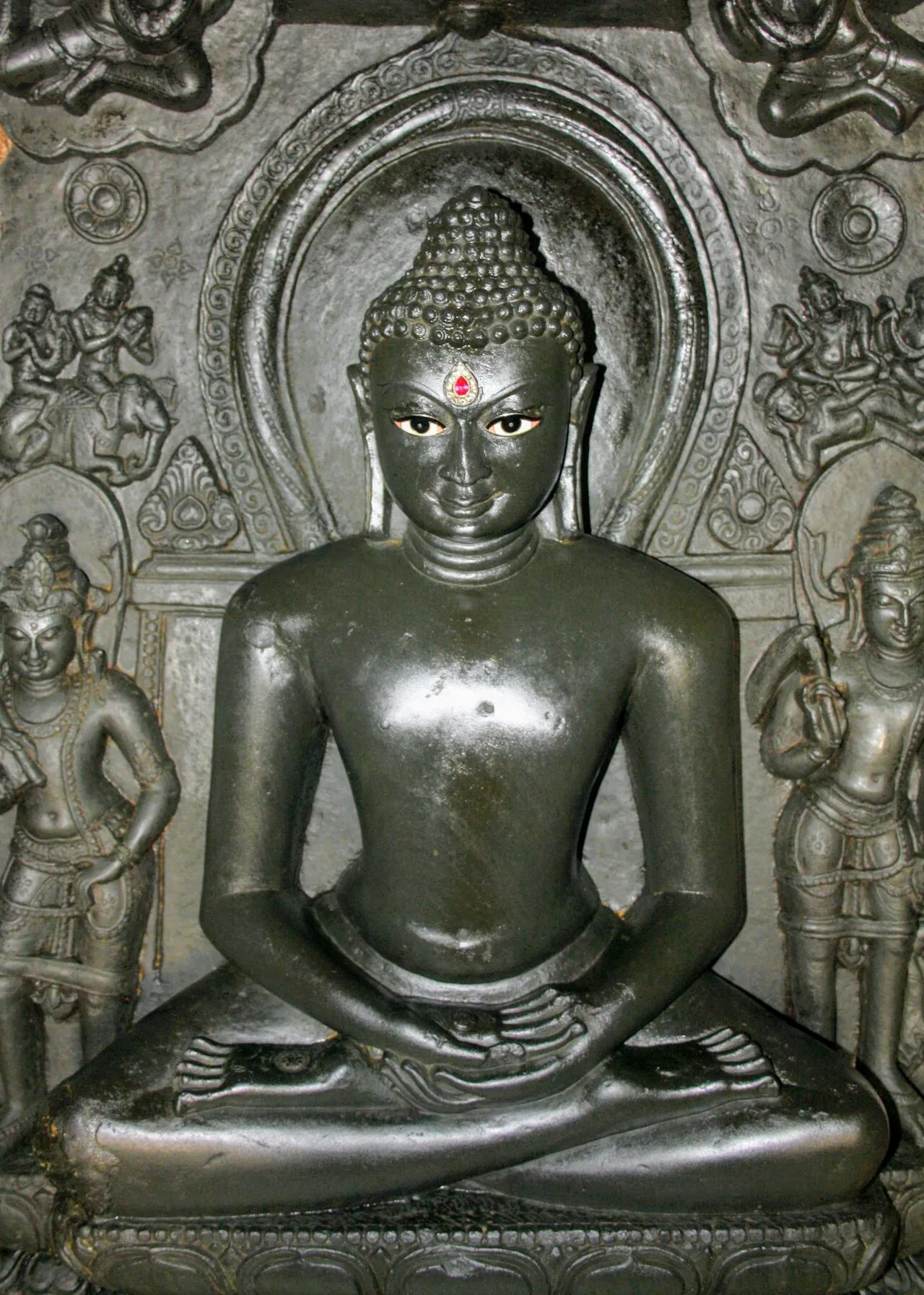
Mahavira, Kshatriyakund (birthplace in Śvetāmbara tradition)
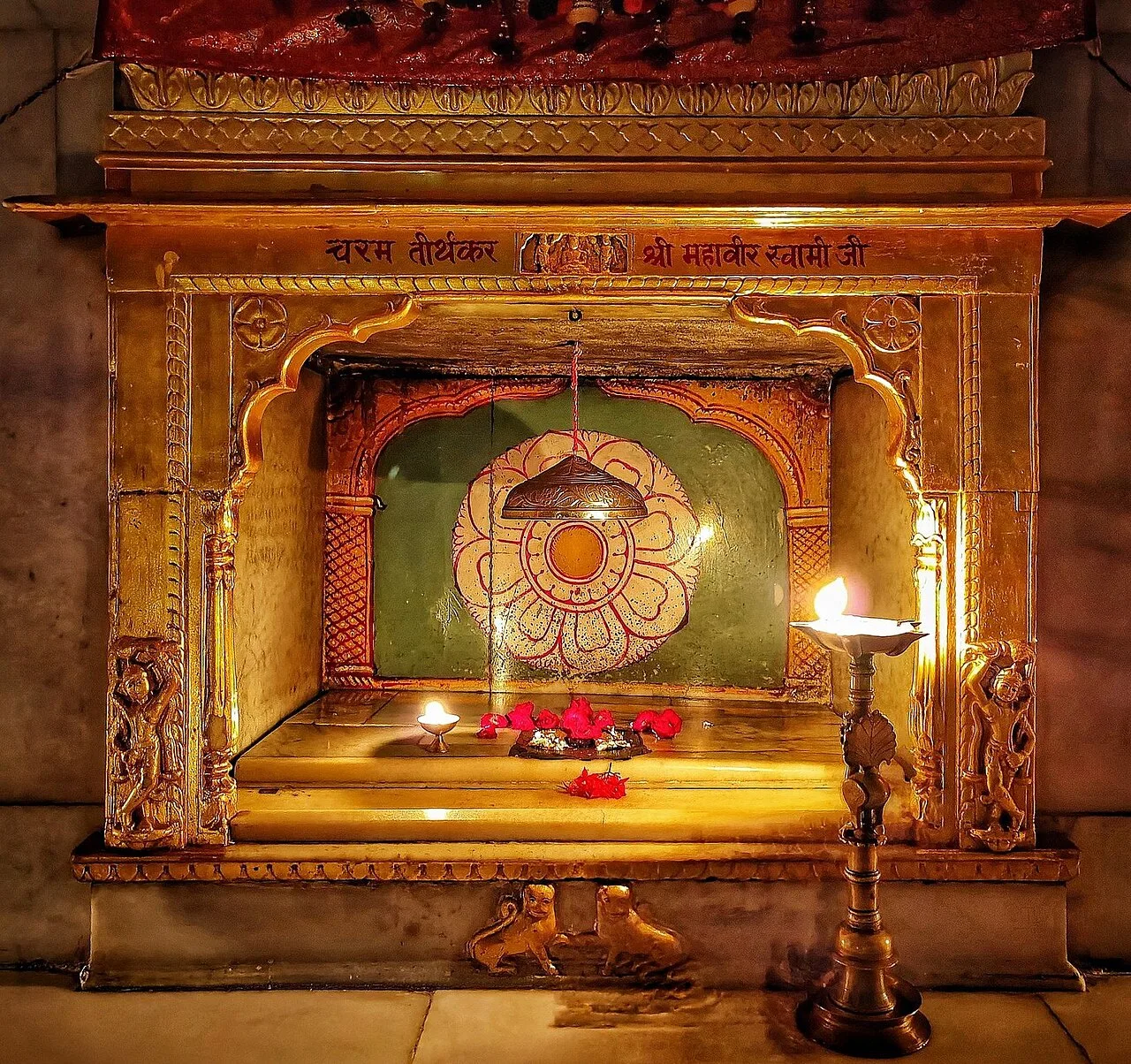
The "Charan Paduka" or foot impression of Mahavira at Jal Mandir
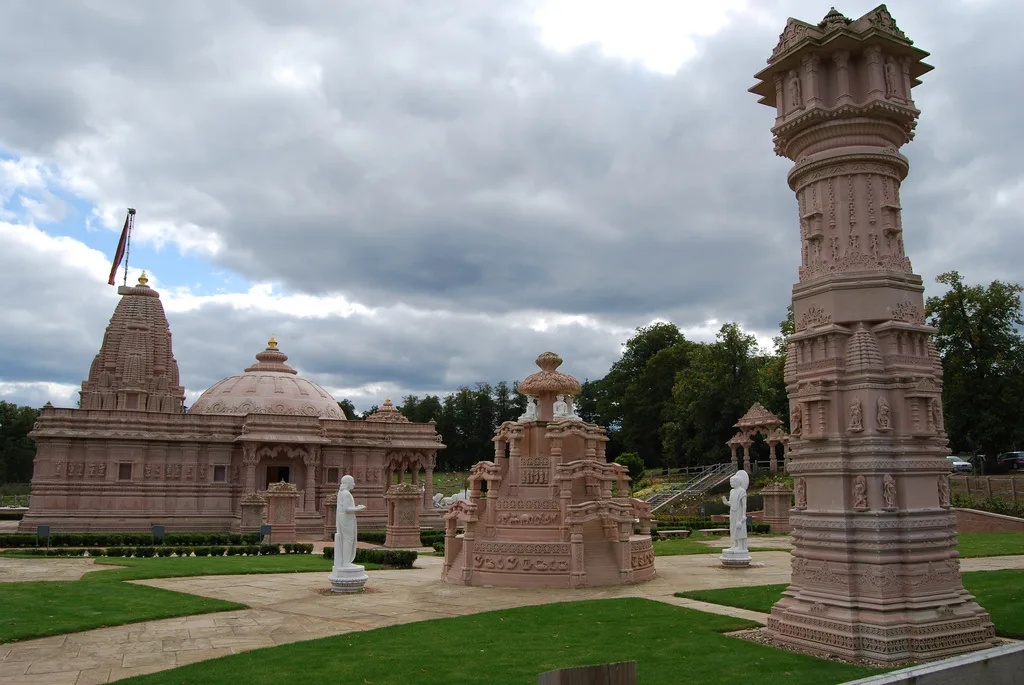
Jain temple, Potters Bar
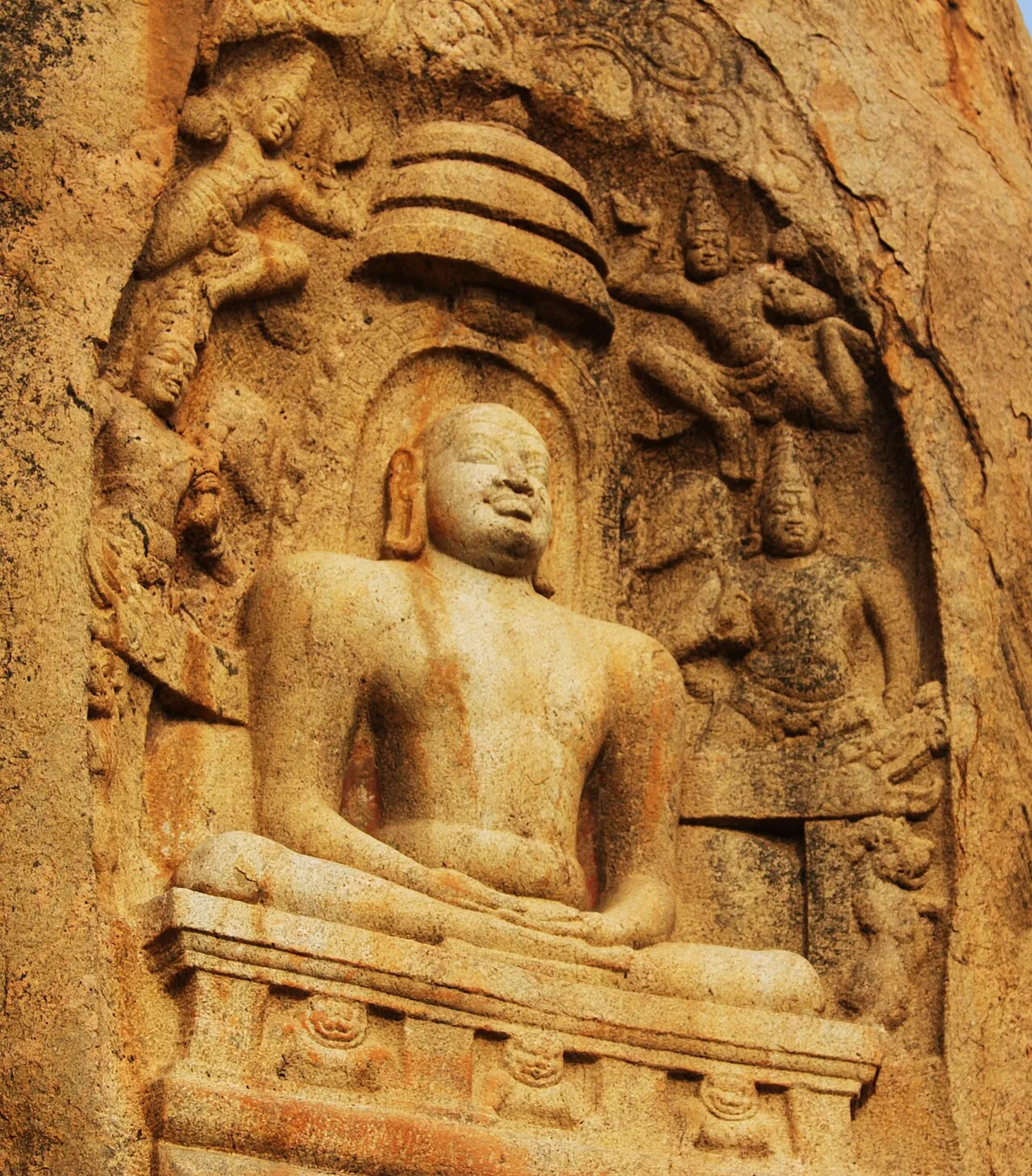
See caption
Mahavira
Mahavira, also known as Vardhamana, was an Indian religious reformer and spiritual leader considered by Jains to be the 24th and final Tirthankara of this age.
Spiritual Succession Over Original Invention
Rather than establishing a novel religion, Mahavira functioned as a reformer within an established ancient lineage. Historians and Jain scriptures place him in the tradition of Parshvanatha, who previously led a monastic community known as the Niganthas. Although traditional timelines separate the two leaders by centuries, modern scholars suggest Parshvanatha lived into the sixth century BCE, passing away only decades before Mahavira began his mission.
From Wikipedia · CC BY-SA 4.0
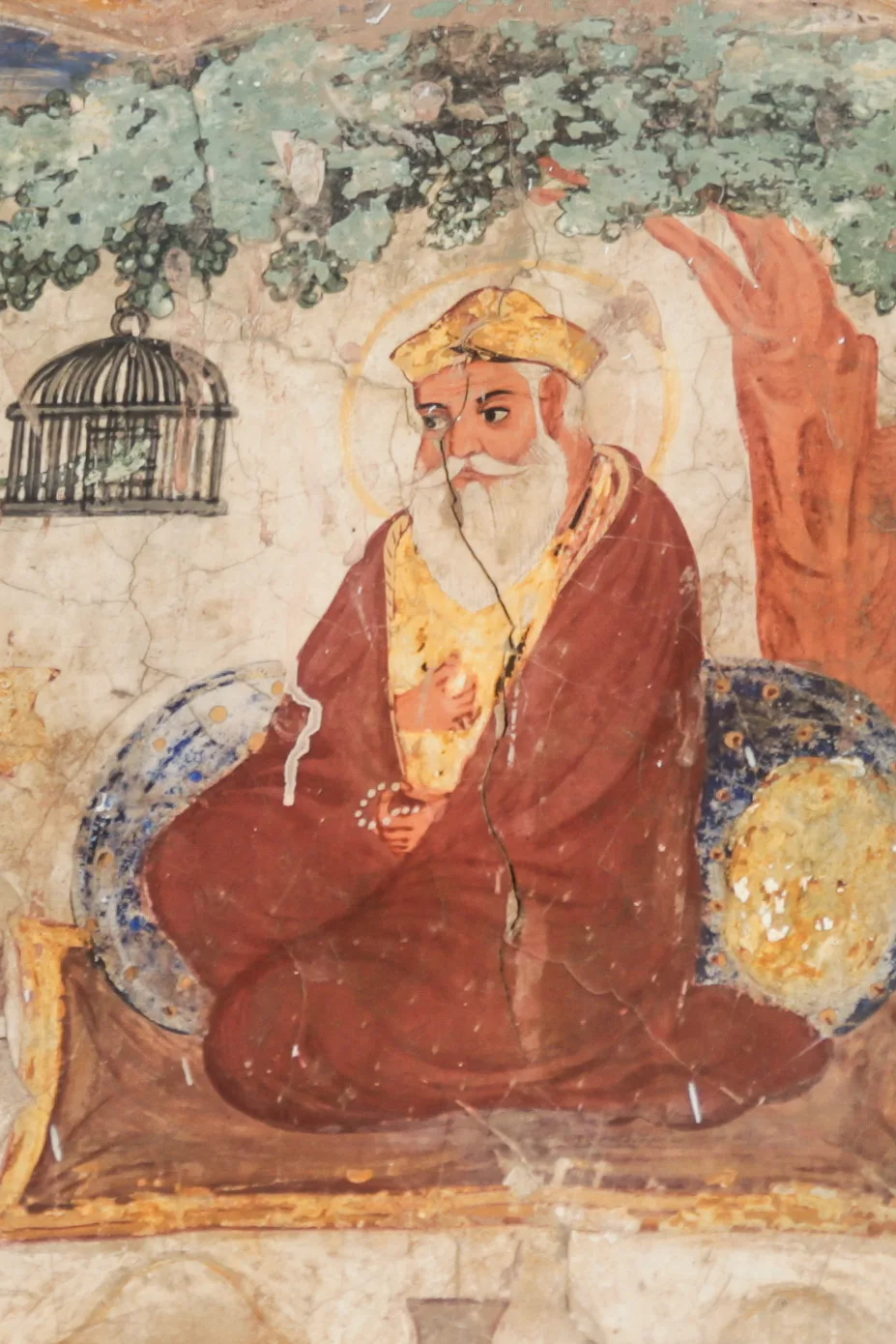
Mural painting of Guru Nanak from Gurdwara Baba Atal Rai
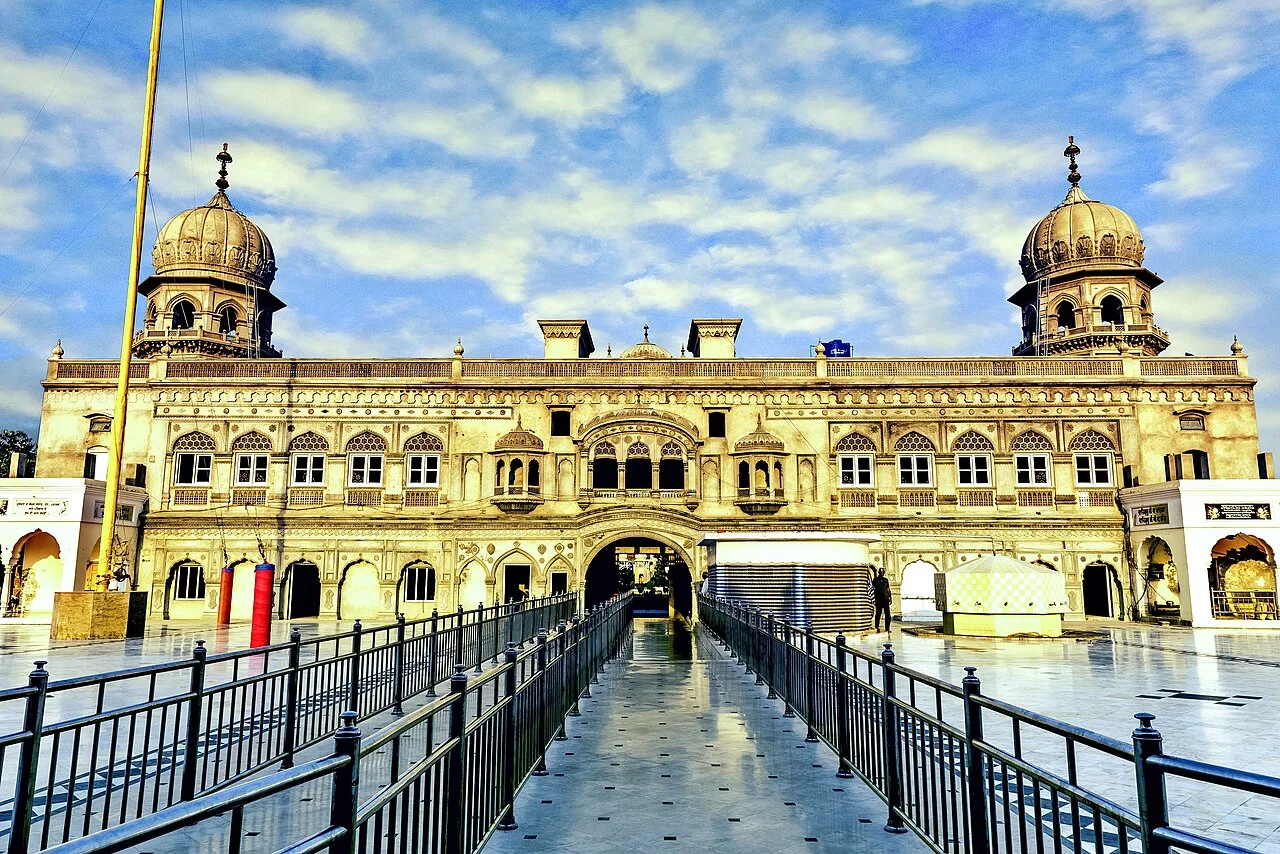
The Gurdwara Janam Asthan in Nankana Sahib, Pakistan, commemorates the site where Nanak is believed to have been born.
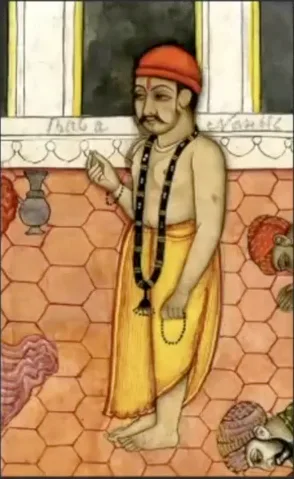
Detail of Guru Nanak from a Janamsakhi painting of Guru Nanak praying at the mosque with the Muslims. North India, circa late 18th century. Kept in the British Museum.
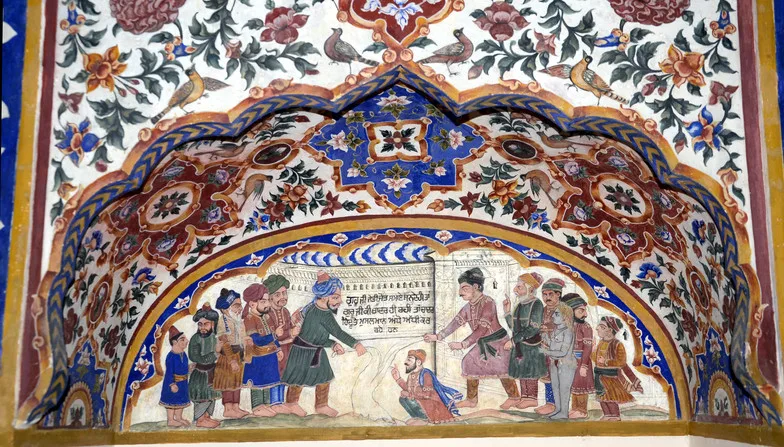
Hindus and Muslims disputing over the final rites of Guru Nanak. 19th century fresco from Gurdwara Baba Atal, Amritsar.
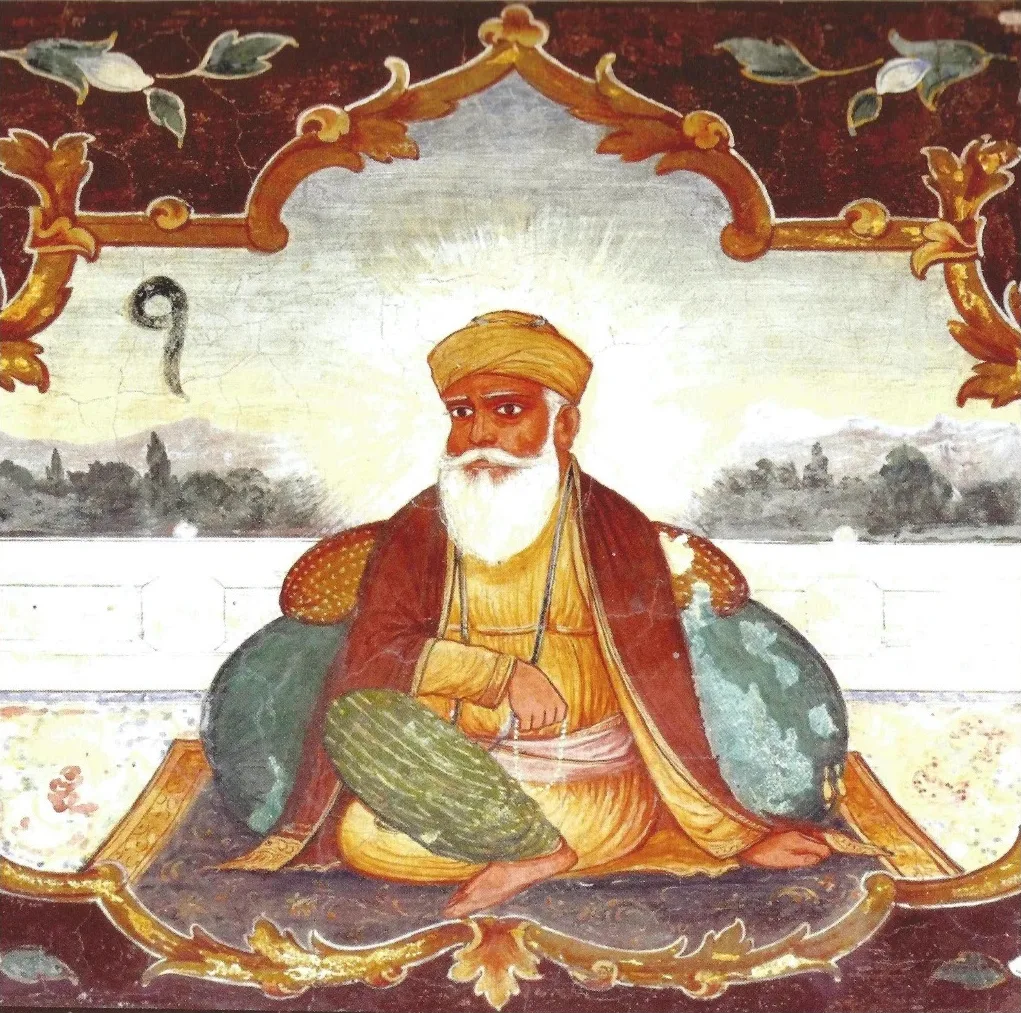
Fresco of Guru Nanak from Baoli Sahib, Goindwal
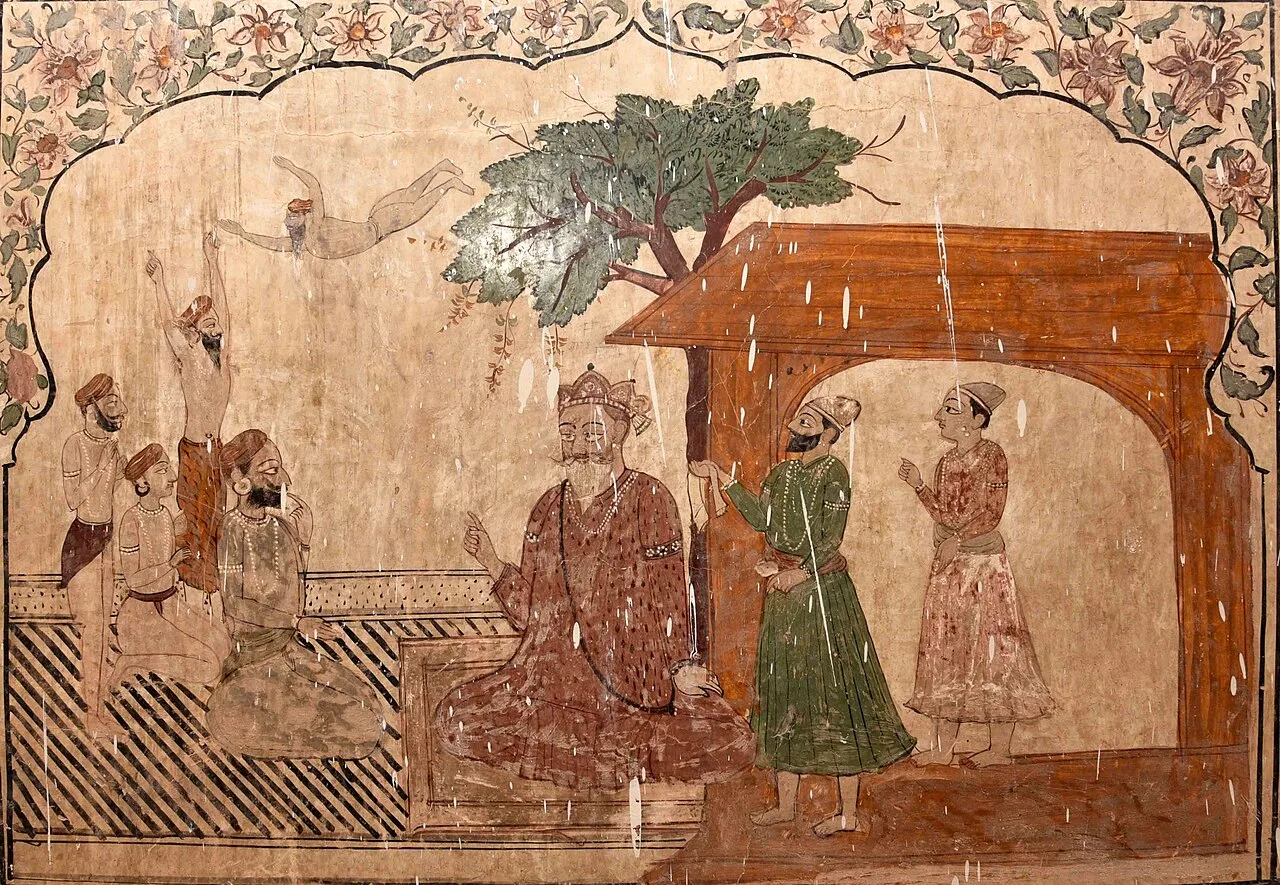
Mural of Guru Nanak from a Hindu temple in Jammu
Guru Nanak
Guru Nanak was an Indian spiritual teacher, mystic, and poet who founded Sikhism and served as the first of the ten Sikh Gurus.
Refusal of the Sacred Thread
At a young age, Nanak began challenging orthodox religious rituals that elevated outward symbolism over inner spiritual substance. When the village priest Hardyal attempted to shave his head and initiate him with the cotton janaeu thread, Nanak openly rejected the custom and criticized its impermanence. This public refusal sparked local controversy and marked his earliest decisive break with orthodox Vedic and Hindu traditions.
From Wikipedia · CC BY-SA 4.0
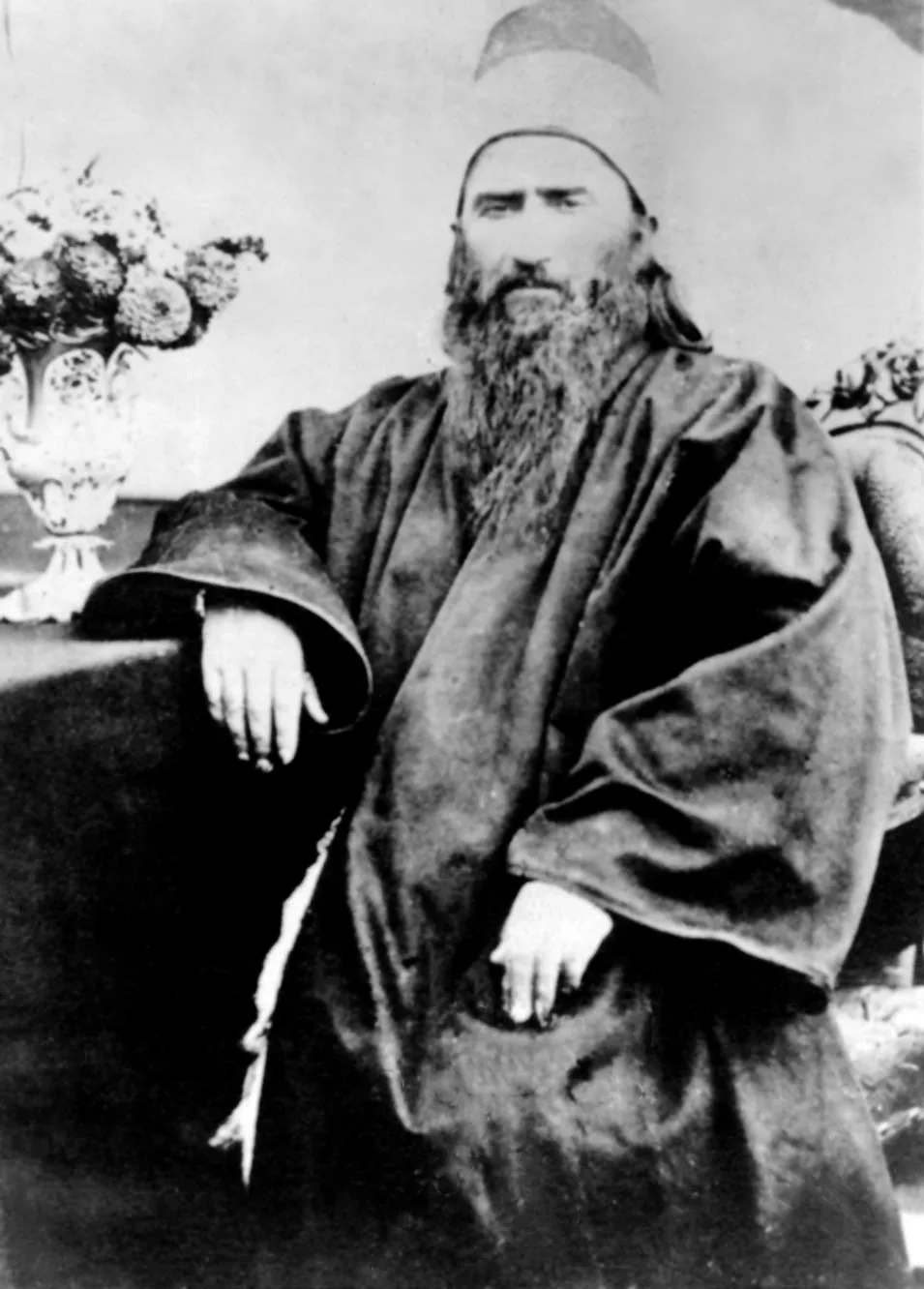
Bahá'u'lláh (Mírzá Ḥusayn-`Alí Núrí) in 1868
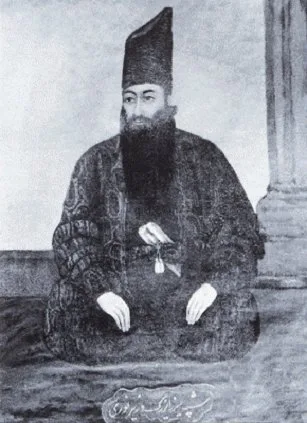
A depiction of Mírzá ʻAbbás Núrí, the father of Baháʼu'lláh
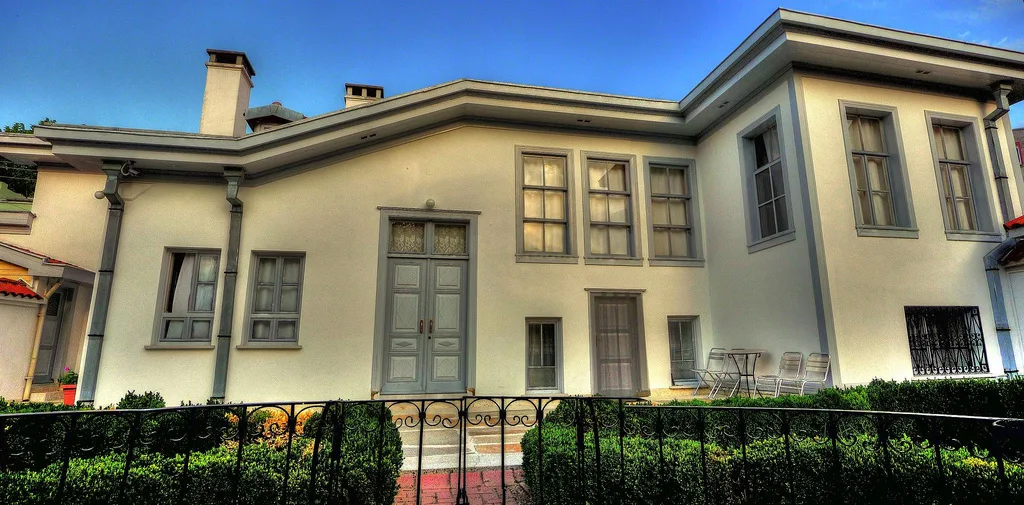
The house where Baháʼu'lláh stayed in Adrianople
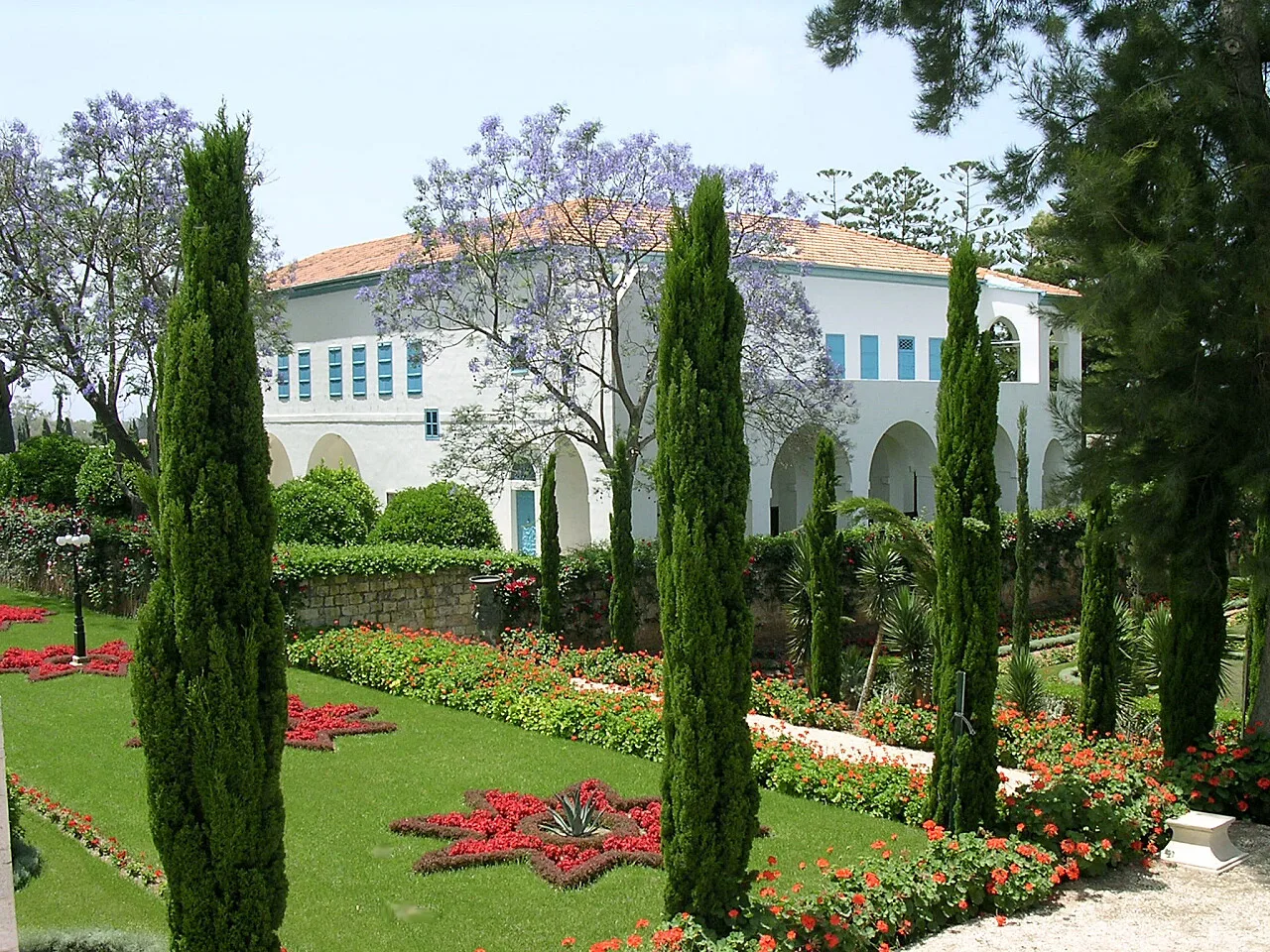
Mansion of Bahjí near Acre
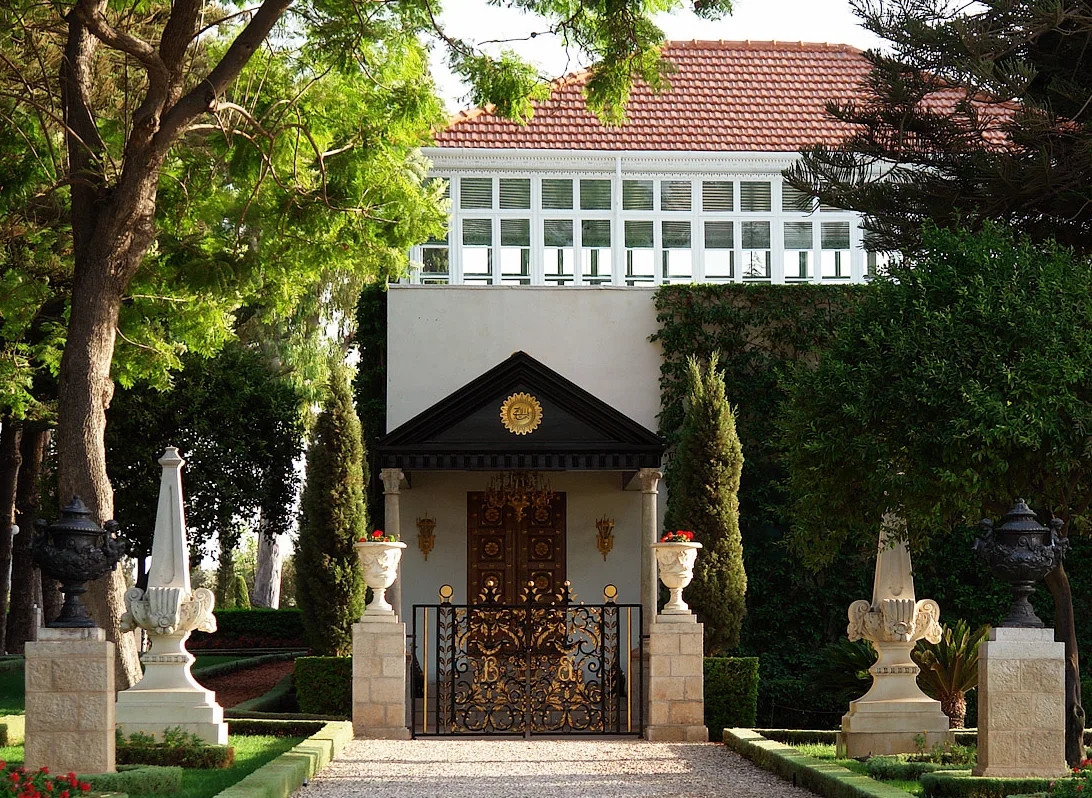
Entrance to the Shrine of Bahá'u'lláh

'Revelation writing': A shorthand script developed by an amanuensis to record first drafts as revelation flowed rapidly from Baháʼu'lláh
Bahá'u'lláh
Baháʼu'lláh (1817–1892) was an Iranian religious leader who founded the Baháʼí Faith.
The Dervish Hermit of Sulaymaniyyih
To avoid internal division within the Baghdad community, Bahá’u’lláh withdrew to the mountains near Sulaymaniyyih in Iraqi Kurdistan. Dressing as a dervish under the name Darvish Muhammad-i-Irani, he initially lived as an ascetic hermit. His penmanship and theological discourse soon attracted the leaders of the Naqshbandíyyih, Qádiríyyih, and Khálidíyyih Orders, with his book the Four Valleys dedicated to Shaykh ʻAbdu'r-Rahmán.
From Wikipedia · CC BY-SA 4.0
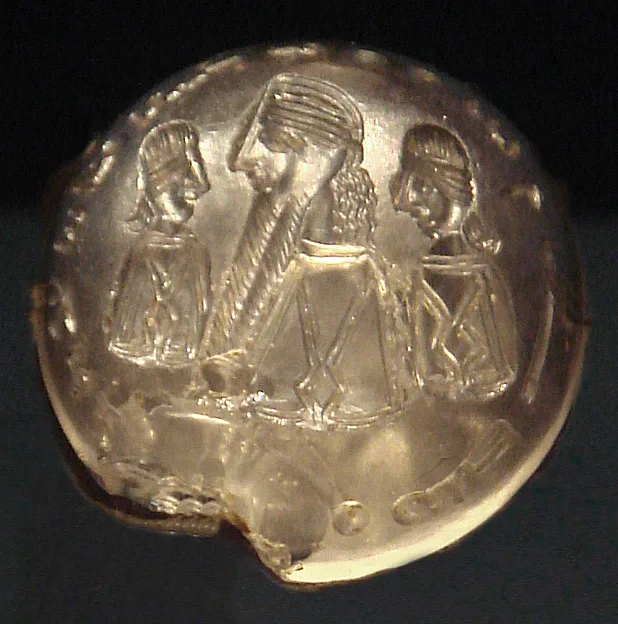
Seal of Mani (cleaned up). Seal with figure of Mani, possibly 3rd century CE, possibly Irak. Cabinet des Médailles, Paris
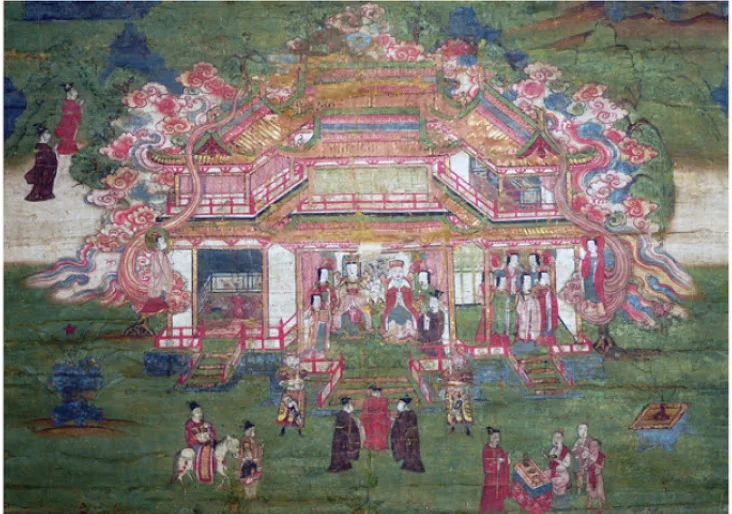
Mani's Parents, a 14th/15th-century silk painting depicts Mani's parents sitting in a palatial building.
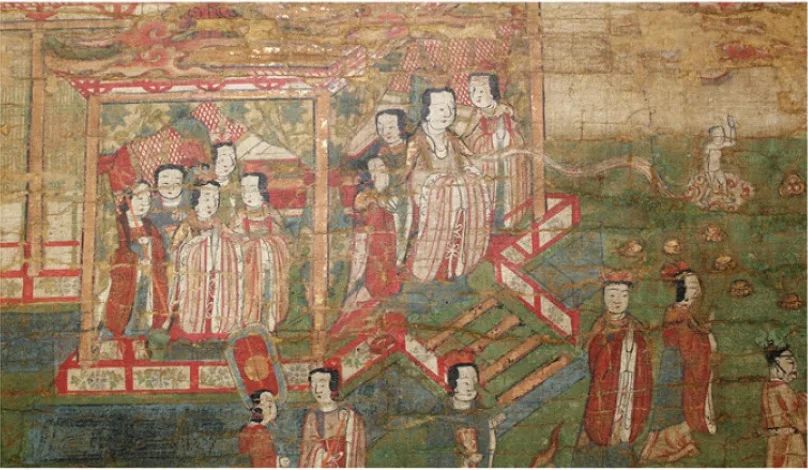
Detail of Mani's Birth, showing the newborn emerged from the chest of his mother
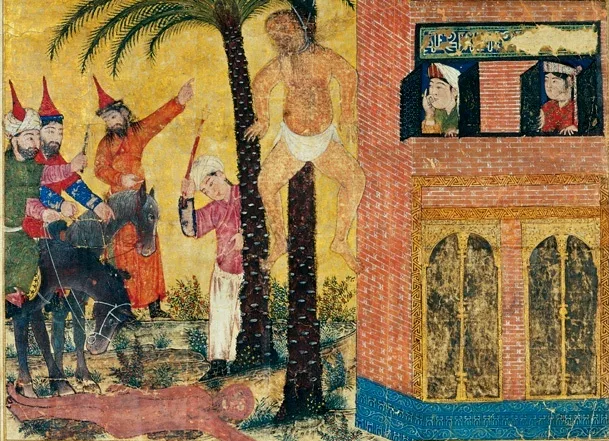
The execution of Mani as depicted in a 14th century illustration of the Shahnameh
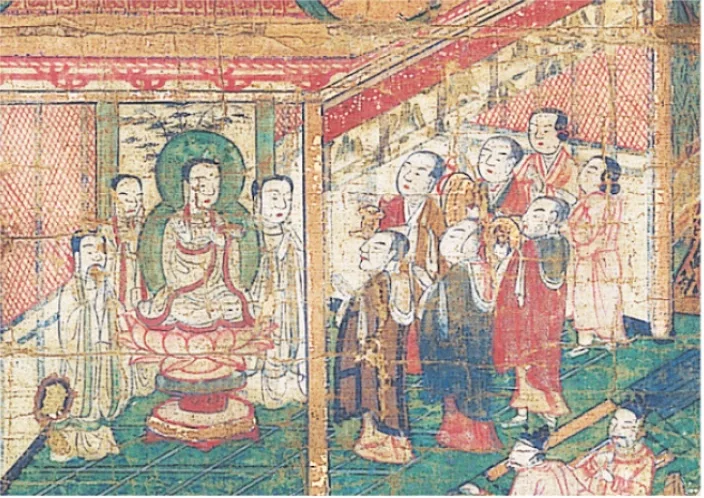
Detail of Mani's Community Established, depicting seven lay people bringing offerings to shrine with statue of Mani and three elects
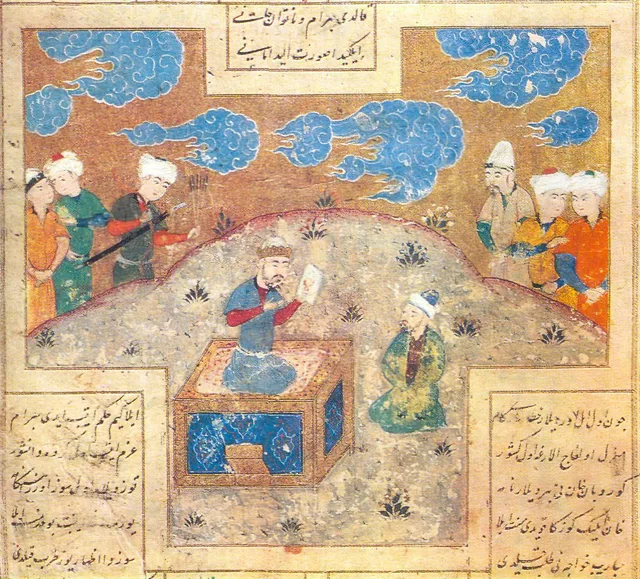
Painter Mani presenting king Bukhram-Gur (Bahram) with his drawing. 16th-century painting by Ali-Shir Nava'i, Shakrukhia (Tashkent).
Mani (prophet)
Mani (died AD 274 or 277) was an Iranian prophet and the founder of Manichaeism, a religion prevalent in late antiquity.
The Heavenly Twin at Twelve and Twenty-Four
Raised in Babylon within a Jewish Christian sect, Mani experienced profound visions of a "heavenly twin" at ages 12 and 24. This spiritual companion called him to leave his father's sect and preach the true message of Jesus in a new gospel. His physical appearance matched his hybrid background, displaying a mixture of Iranian and Mesopotamian features that made him look simultaneously like a warrior and a magician.
From Wikipedia · CC BY-SA 4.0
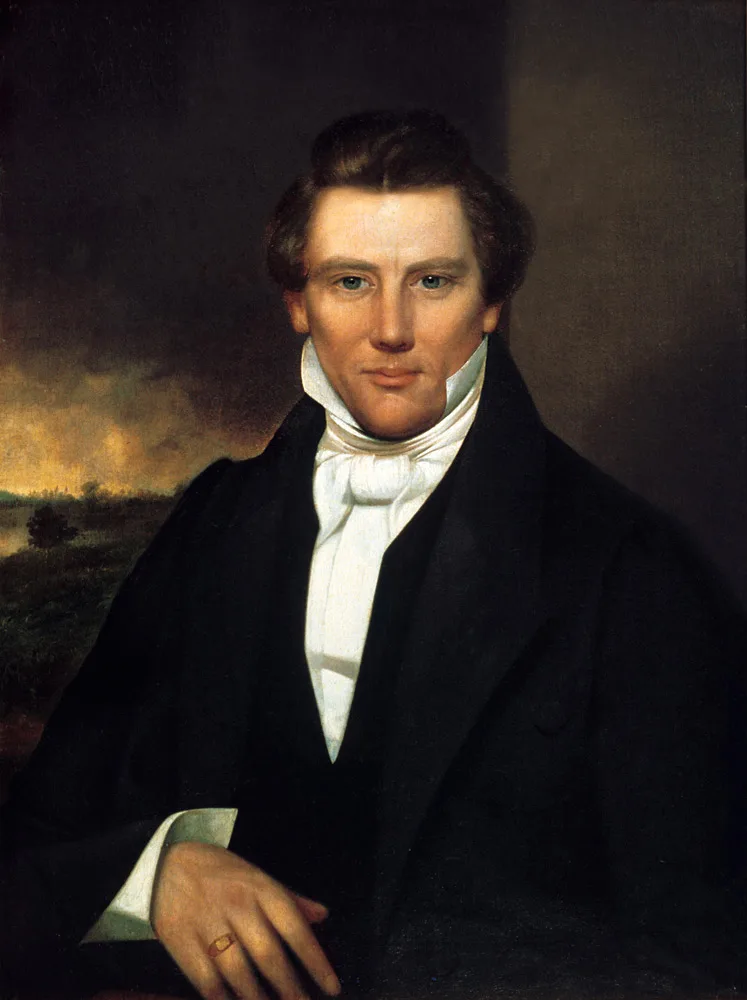
Portrait of Joseph Smith Jr.

J Smith
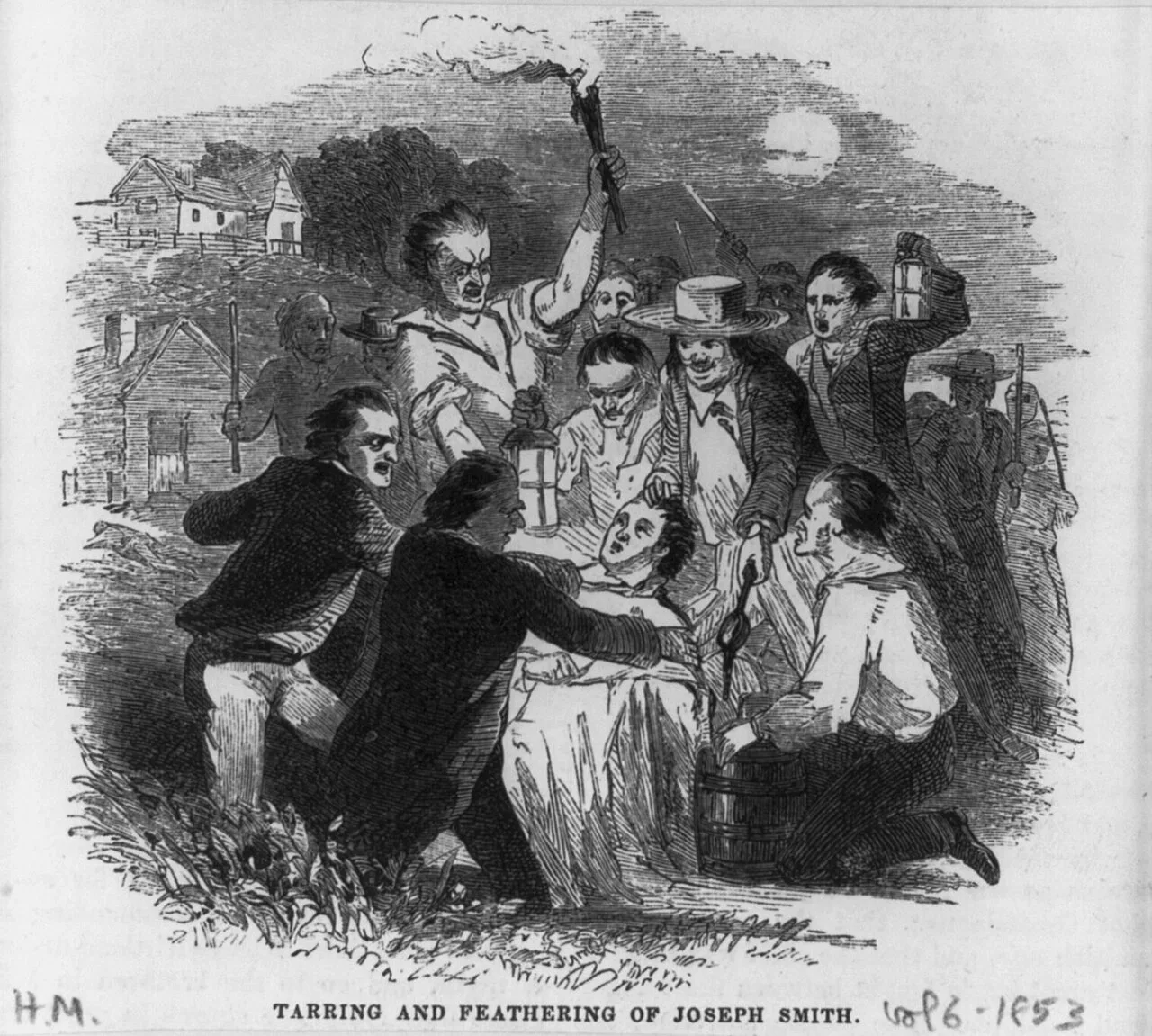
A mob tarred and feathered Smith and Rigdon on March 24, 1832. Smith was beaten, tied, stripped, scratched, burned, poisoned and almost castrated. His infant son died of measles soon thereafter, which the Smiths attributed to exposure to cold air during the attack.
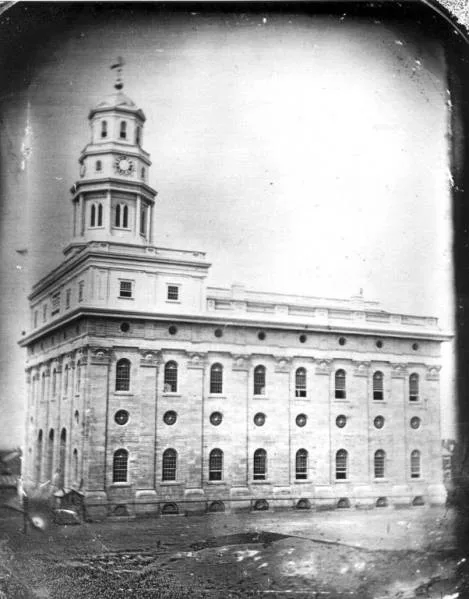
Smith planned the construction of the Nauvoo Temple, which was completed after his death.
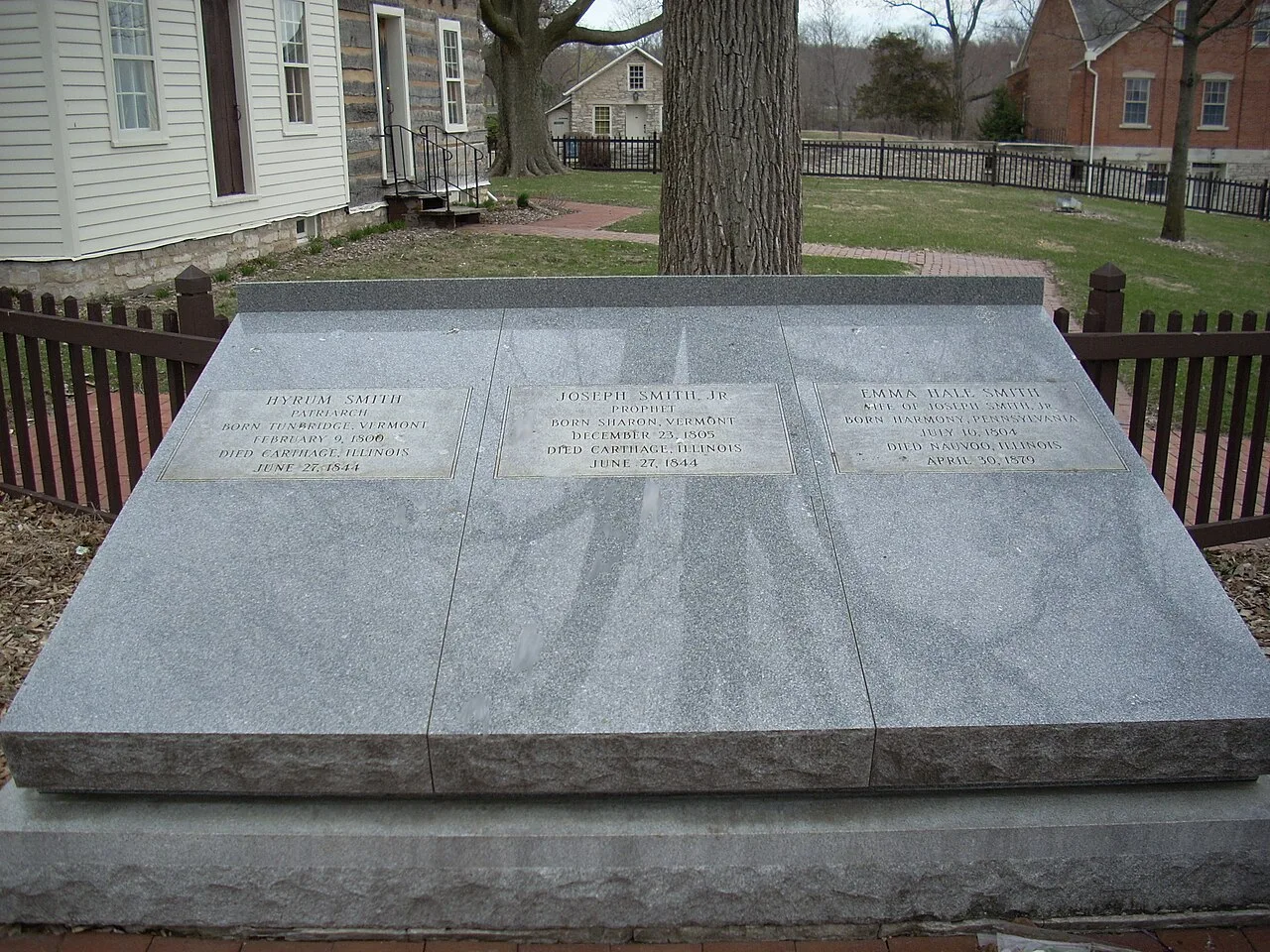
Gravesite of Joseph, Emma, and Hyrum Smith, in Nauvoo, Illinois
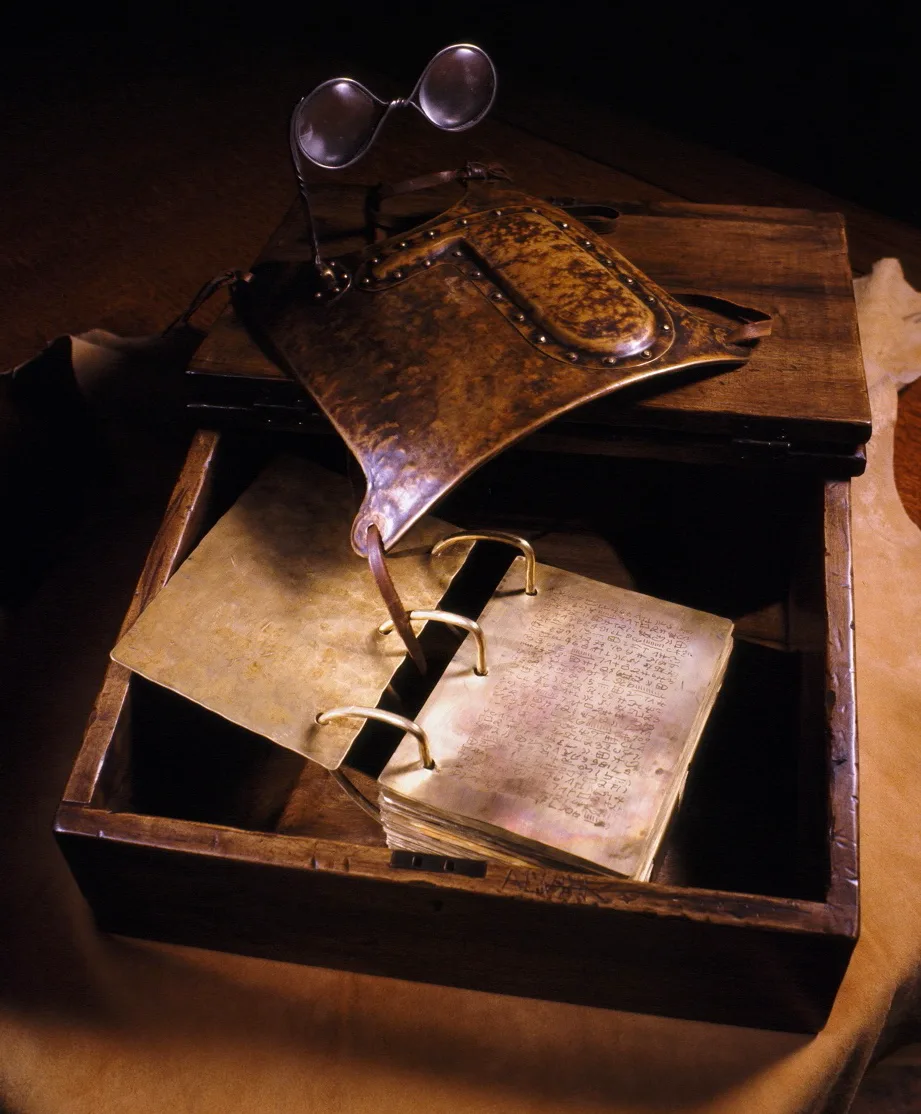
An artistic representation of the golden plates with the spectacles connected to a breastplate, based on descriptions by Smith and others.[277][278]
Joseph Smith
Joseph Smith Jr. was an American religious and political leader who founded Mormonism and the Latter Day Saint movement.
From Folk Magic Seer Stones to Scriptural Dictation
Before launching a new religious movement, the Smith family actively practiced folk magic and sought buried treasure across the countryside. Smith utilized a specific chocolate-colored seer stone placed inside a hat to direct these treasure digs. When dictating his foundational scripture, he repurposed the exact same stone and method rather than relying on traditional linguistic translation, linking early rural mysticism directly to the birth of the movement.
From Wikipedia · CC BY-SA 4.0
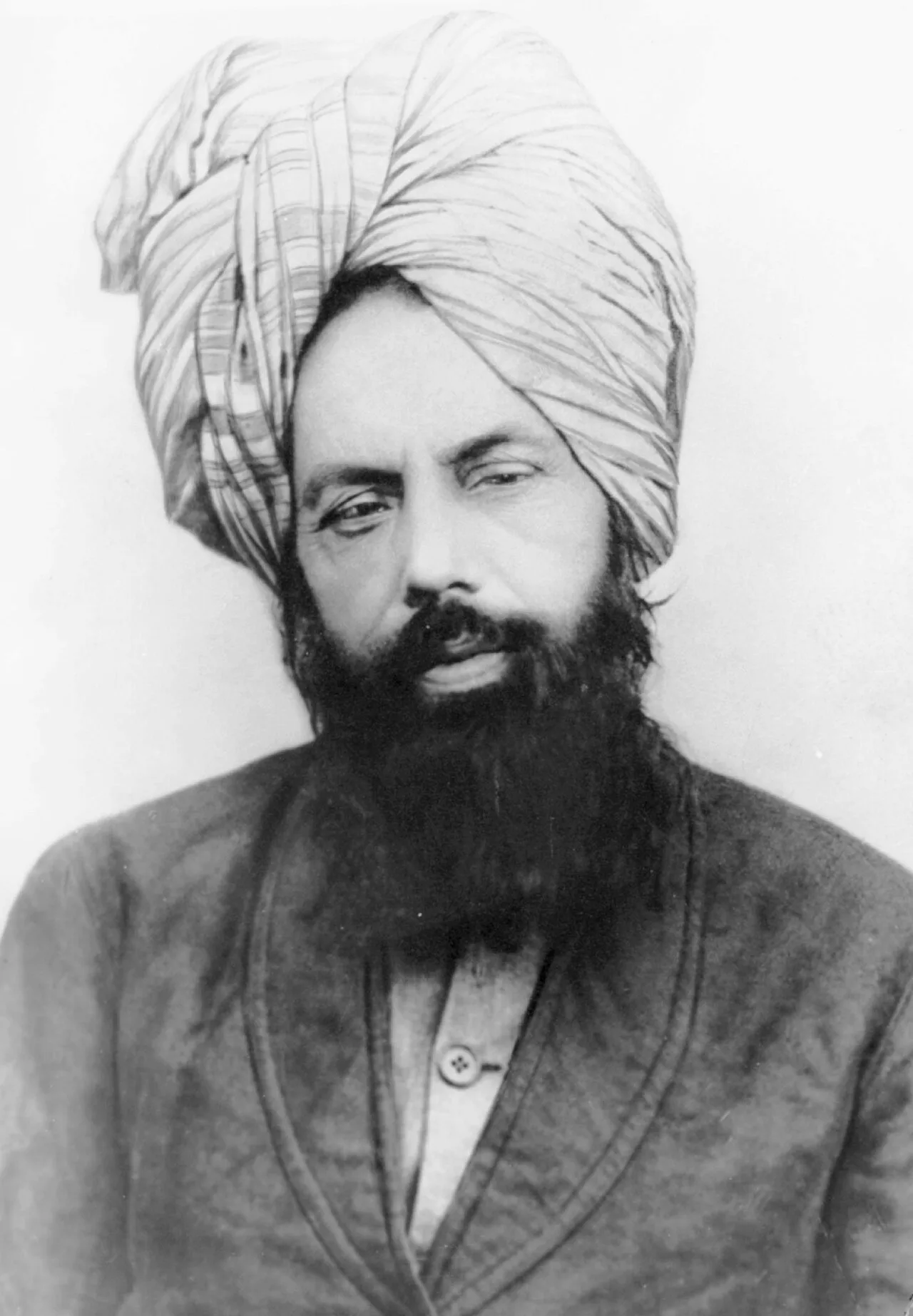
Mirza Ghulam Ahmad (c. 1897)
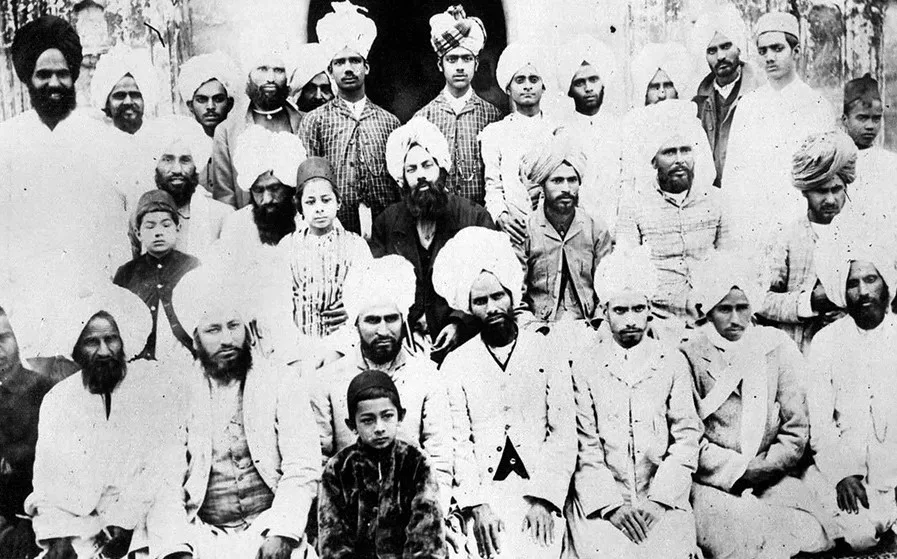
Mirza Ghulam Ahmad (seated centre) with some of his companions at Qadian c. 1899

Mirza Ghulam Ahmad of Qadian, photograph taken in 1898

Jama Masjid, Delhi, 1852, William Carpenter
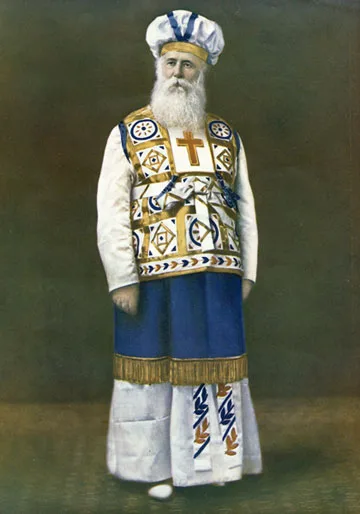
Alexander Dowie in his robes as "Elijah the Restorer"
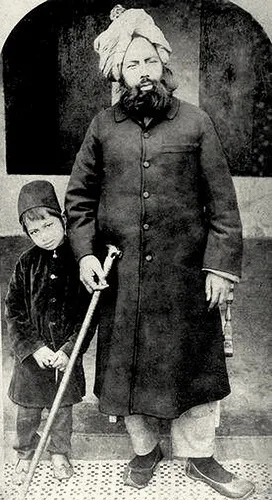
Mirza Ghulam Ahmad with his son, Mirza Sharif Ahmad.
Mirza Ghulam Ahmad
Mirza Ghulam Ahmad was an Indian religious leader and the founder of the Ahmadiyya movement in Islam.
Unifying Eschatology Across Three Faiths
Ahmad framed his mission as a fulfillment of multiple world religions rather than an isolated Islamic renewal. Beyond declaring himself the promised Messiah and Mahdi of Islamic prophecy, he also claimed to be Krishna, an Avatar of Vishnu, for Hindus. This sweeping syncretism challenged conventional boundaries between Abrahamic and Dharmic eschatology, presenting his emergence as the universal second coming expected across distinct global traditions.
From Wikipedia · CC BY-SA 4.0
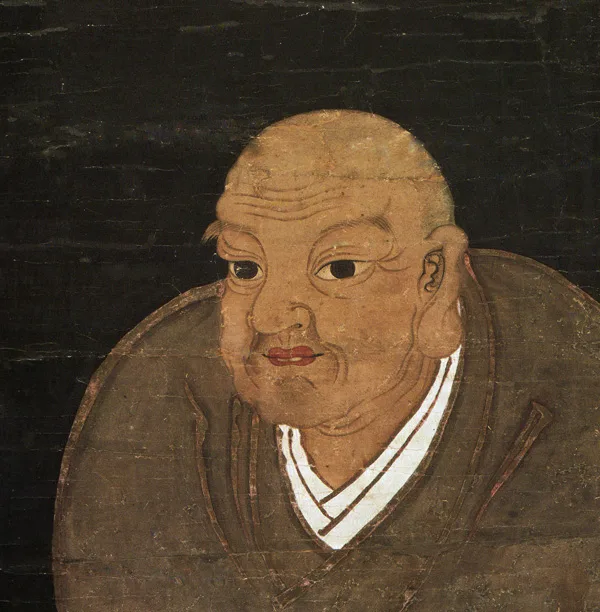
Nichiren Daishonin Hakii Portrait
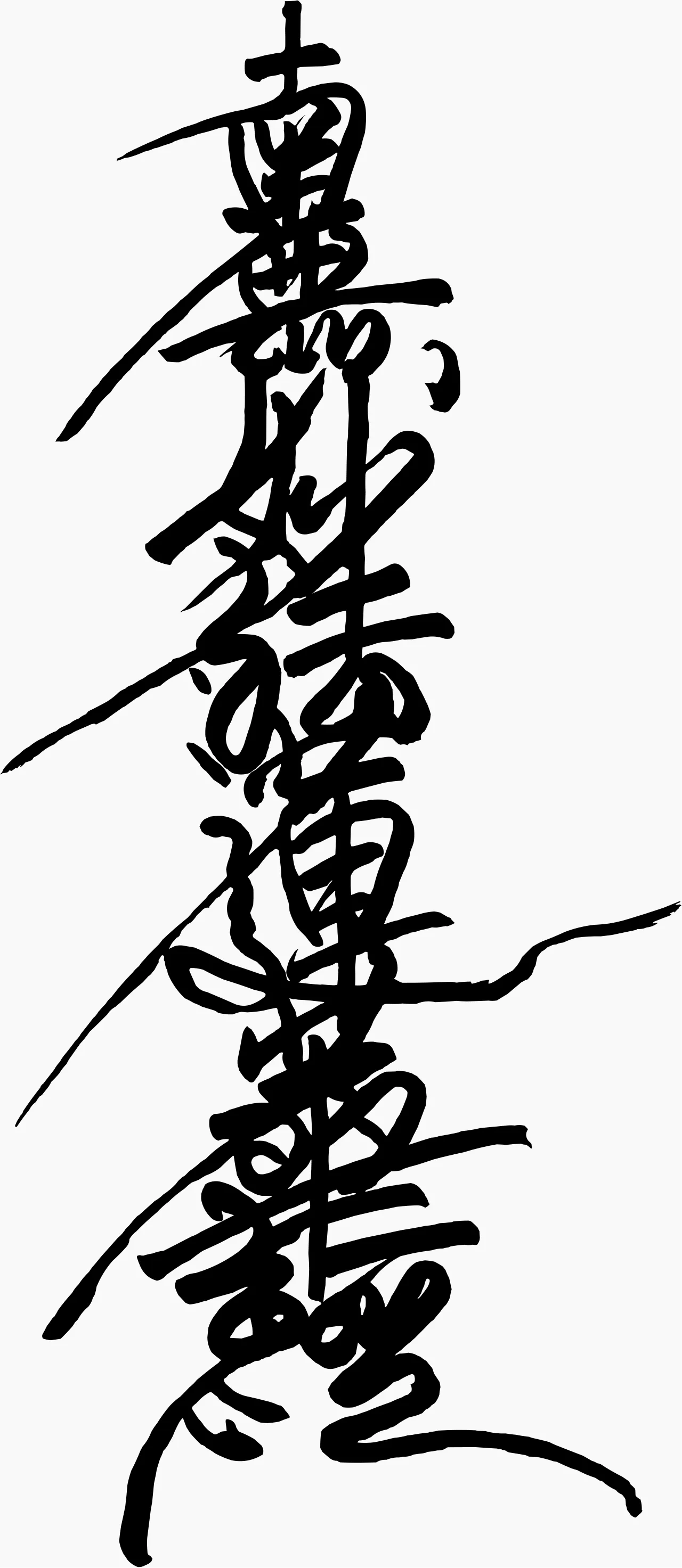
Daimoku (Nam-Myoho-Renge-Kyo) written by Nichiren
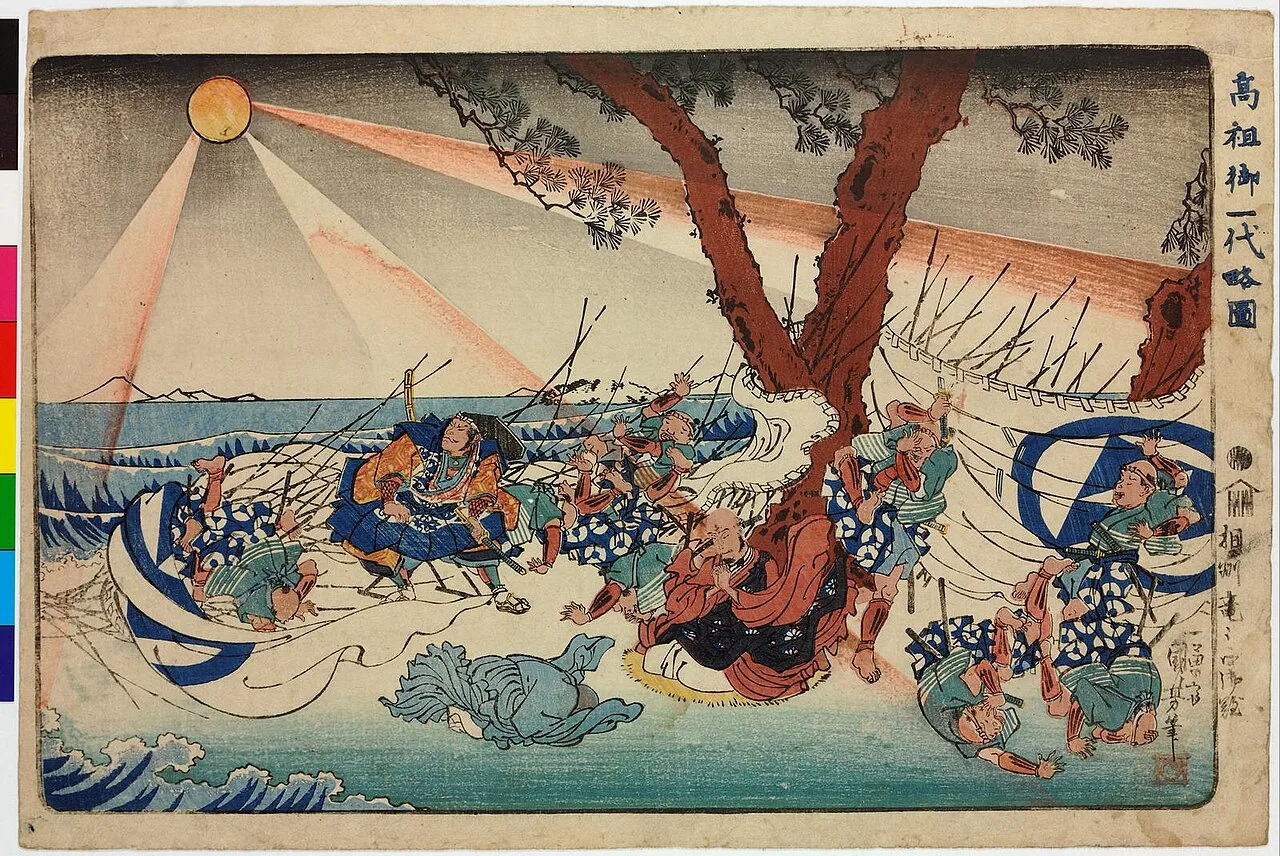
Depiction of the alleged execution event stopped by a bright orb
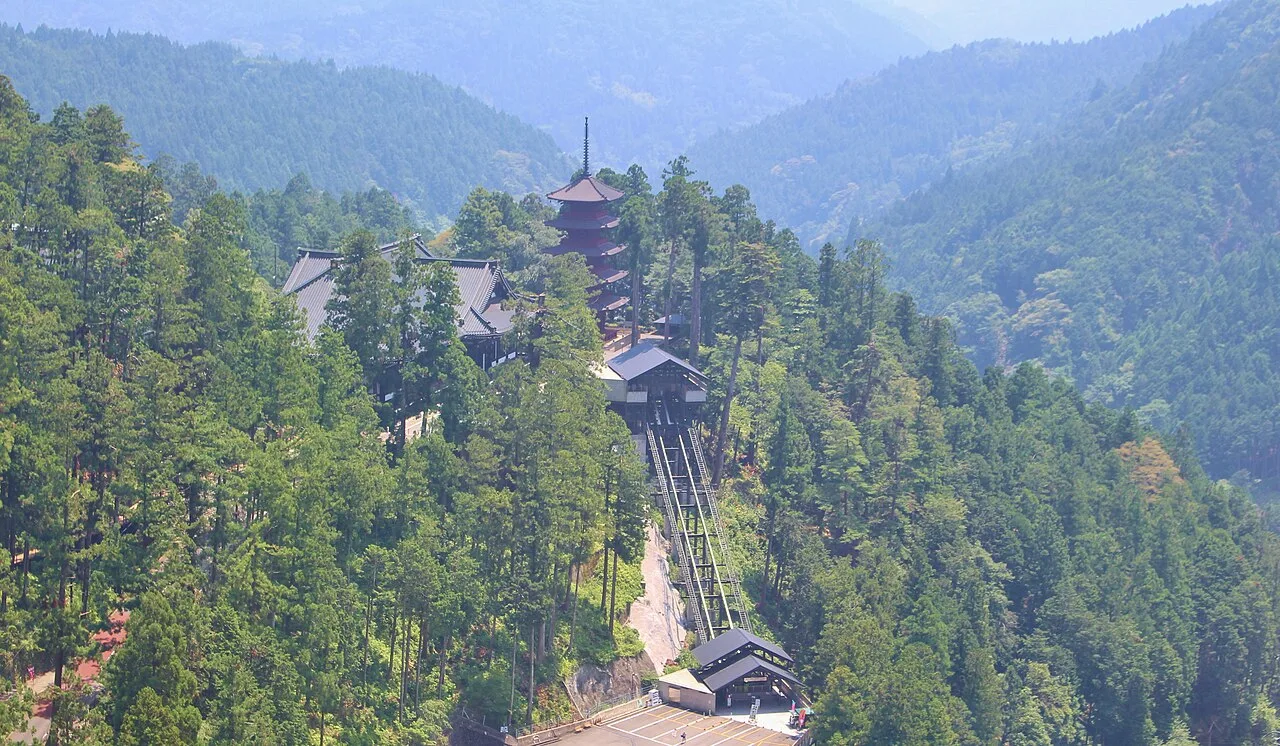
The Eternal Temple on Mount Minobu

Nichiren depicted calming a storm by chanting the daimoku.

The Assembly in Space Above Vulture Peak; from an illustrated Lotus Sutra, c. 1257.
Nichiren
A Japanese Buddhist monk and philosopher of the Kamakura period whose teachings form the foundation of Nichiren Buddhism.
Lowly Seashore Roots Amid Aristocratic Monks
Japanese religious founders such as Hōnen, Shinran, Dōgen, and Eisai arose from aristocratic or samurai lineage in the capital region of Kyoto. In sharp contrast, Nichiren identified himself as the son of a Sendara and the son of a sea-diver from an out-of-the-way strand. Although later followers attempted to ascribe a noble ancestry to him, Nichiren's own writings reflect a defiant pride in his outcast origins.
From Wikipedia · CC BY-SA 4.0
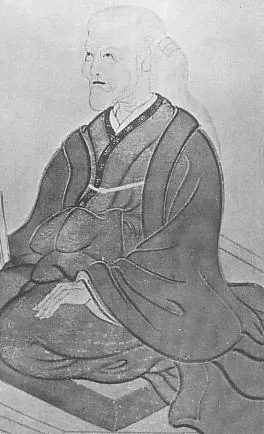
Miki Nakayama
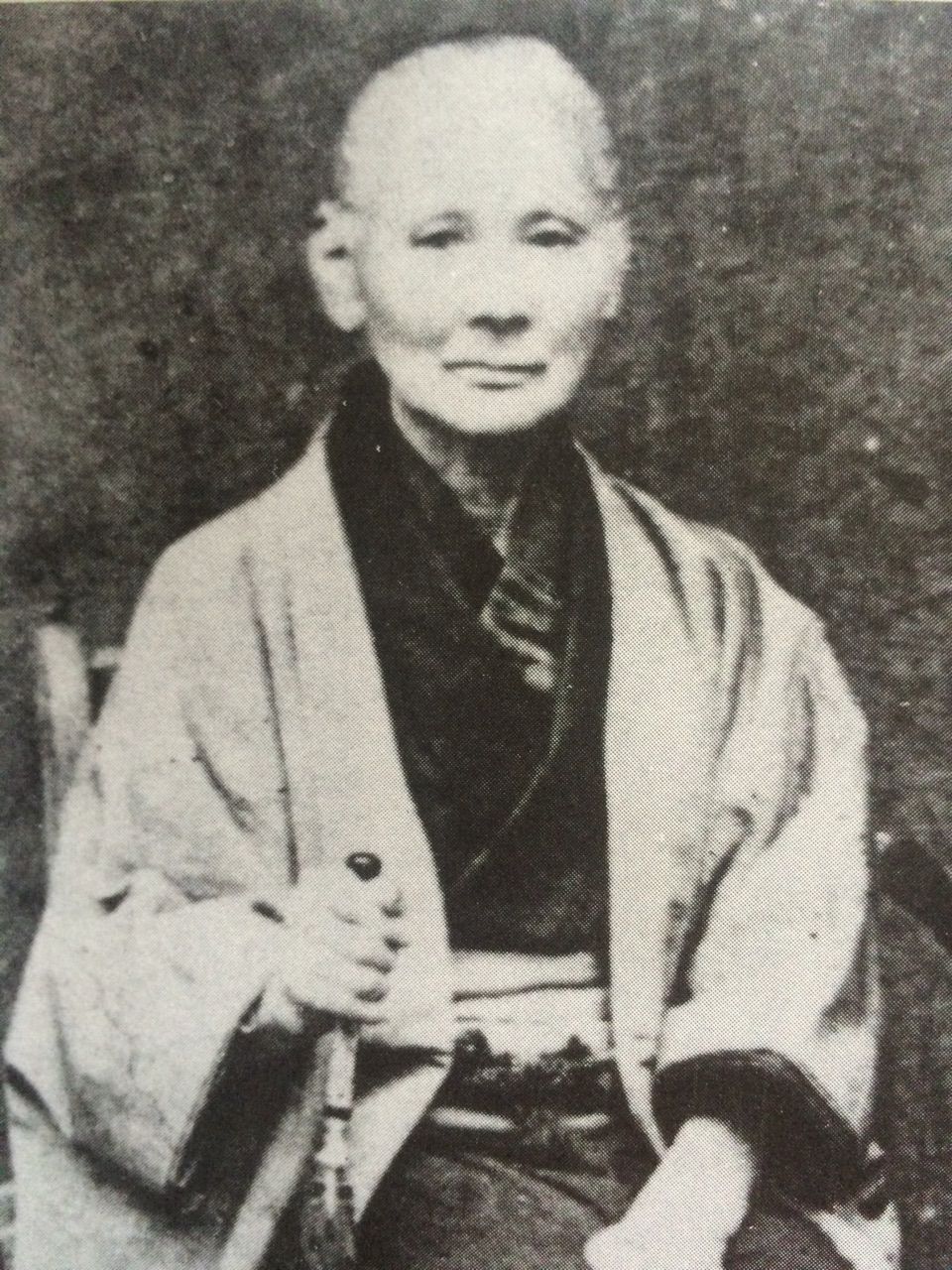
Nakayama Omasa (eldest daughter of Nakayama Miki) in her elder years
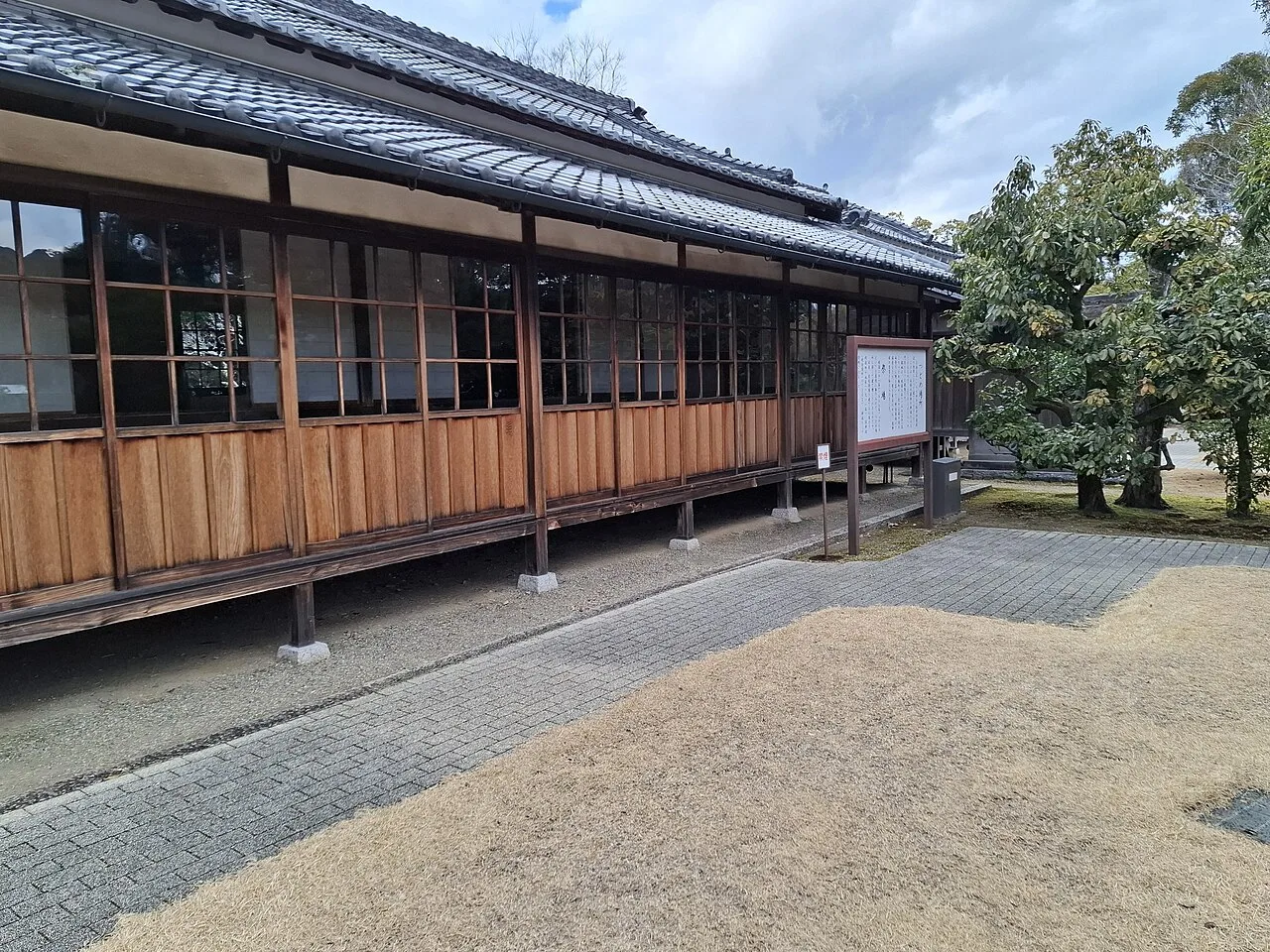
The first Tenrikyo gathering hall where Nakayama Miki's followers first assembled. The gathering hall has been moved from its original location to the north side of the Tenrikyo Church Headquarters.
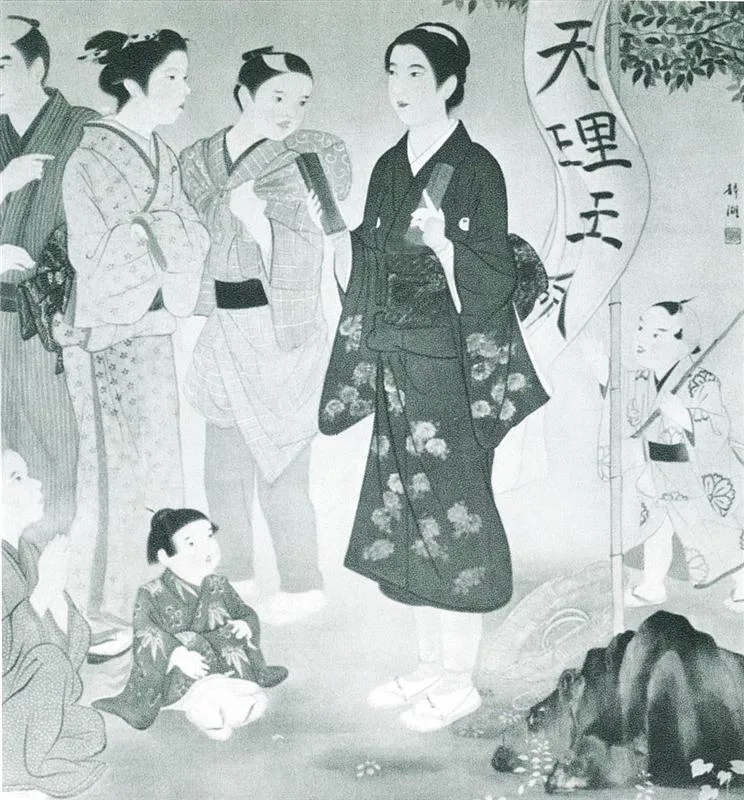
Depiction of Nakayama Kokan spreading the divine name Tenri-O-no-Mikoto (天理王命) in Osaka.
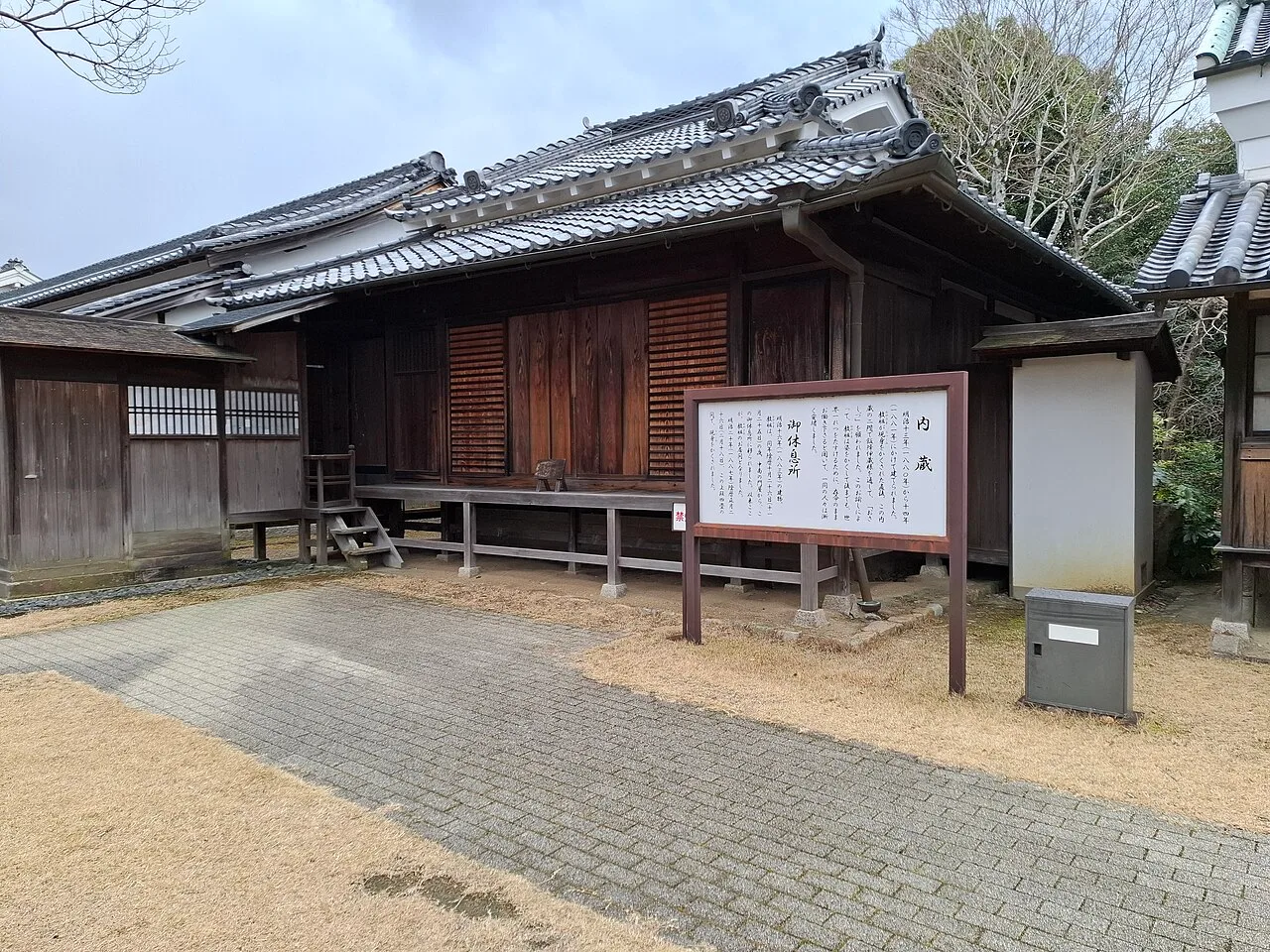
Nakayama Miki's resting house, where she died in 1887

Nakayama Miki's mausoleum in February 2025
Nakayama Miki
Referred to by followers as Oyasama, she was a nineteenth-century Japanese farmer, religious leader, and the primary figure of Tenrikyo.
Vows and Tonsure in Pure Land Buddhism
Before establishing a new religious movement, Nakayama Miki attained the highest level of orthodox Buddhist devotion. In the spring of 1816, she completed the rigorous Fivefold Transmission at Zenpuku Temple in Magata Village. During this initiation, she meditated on the teachings of Hōnen, received tonsure, and pledged to recite the nenbutsu continuously. Her deep immersion in Pure Land practice defined her early spiritual life.
From Wikipedia · CC BY-SA 4.0
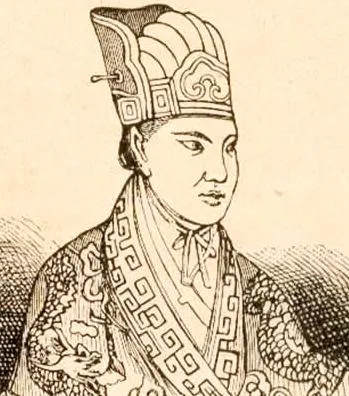
Hong Xiuquan
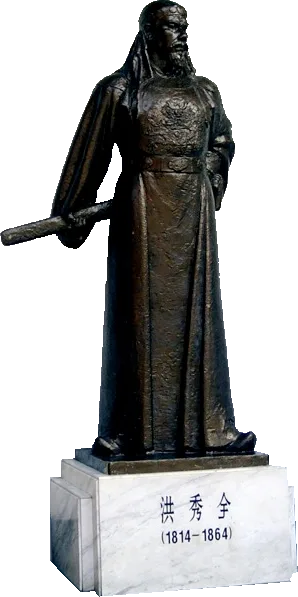
A statue of Hong in Nanjing
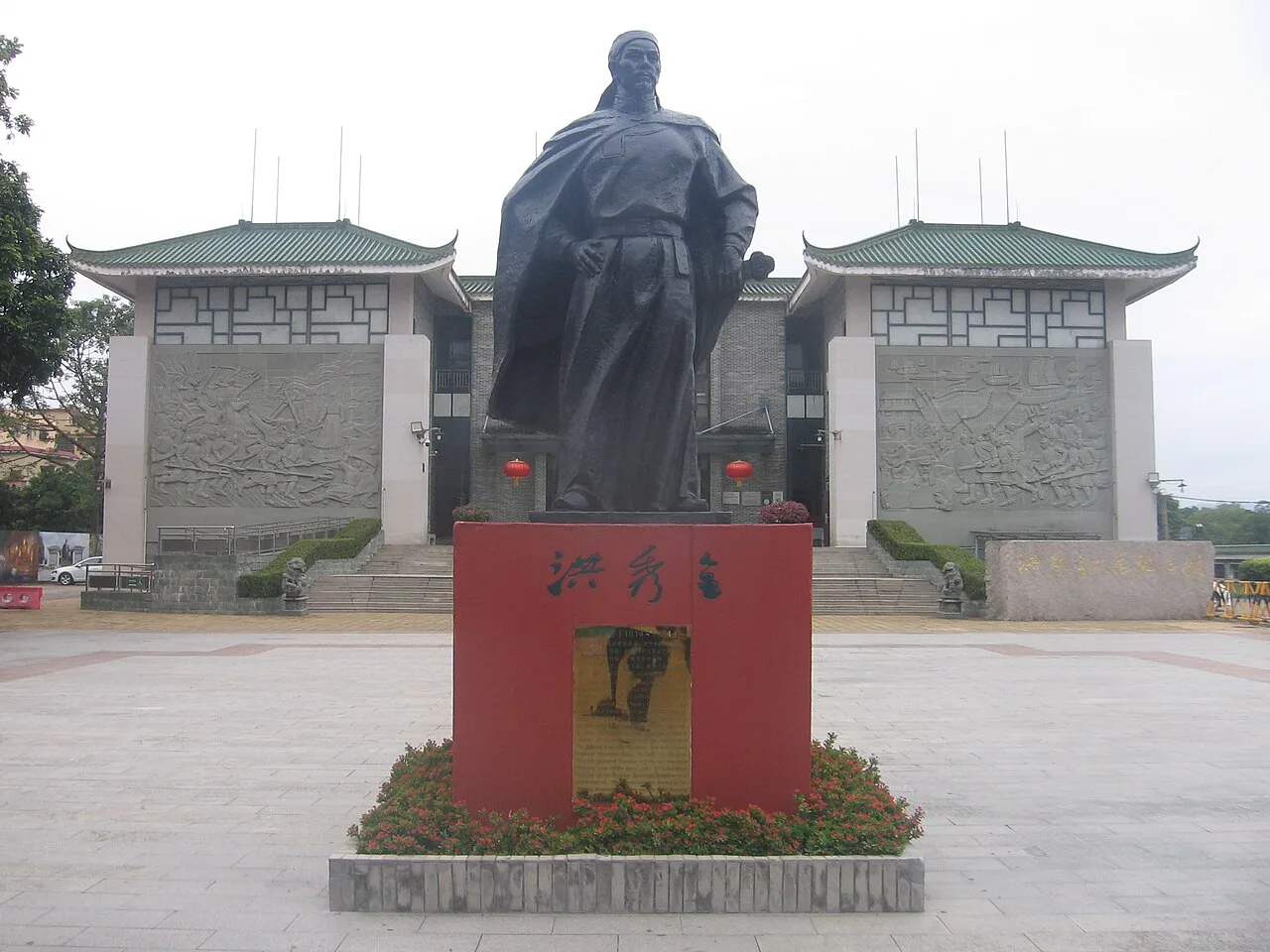
Statue of Hong Xiuquan in front of his former residence in Guangzhou
Hong Xiuquan
Hong Xiuquan was a Chinese revolutionary and religious leader who led the Taiping Rebellion against the Qing dynasty and established the Taiping Heavenly Kingdom.
Celestial Visions from Academic Breakdown
Hong Xiuquan suffered a severe nervous breakdown after repeatedly failing the imperial civil service examinations, which had a pass rate below one percent. While delirious during his 1837 recovery, he dreamed of ascending to Heaven and meeting a celestial father in a black dragon robe. Prompted years later by Christian tracts, Hong interpreted this vision literally, declaring himself the second son of God and younger brother to Jesus Christ.
From Wikipedia · CC BY-SA 4.0
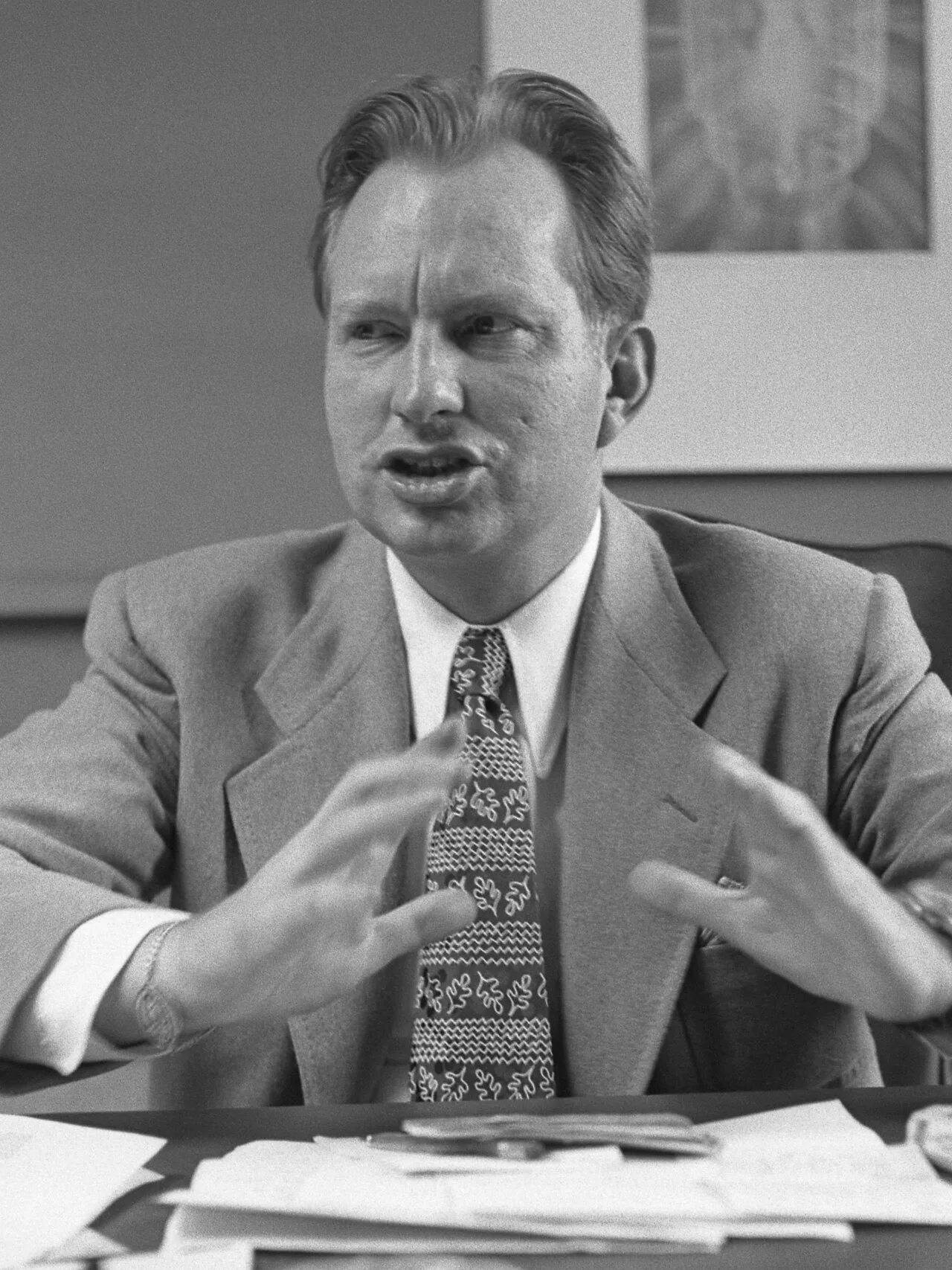
L. Ron Hubbard in 1950 (cropped 3x4)
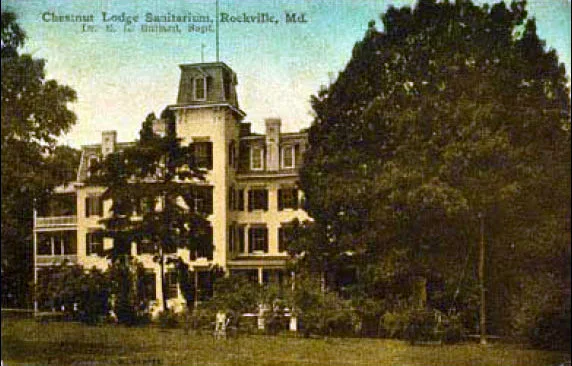
Hubbard spoke of interactions with psychiatrists at both St. Elizabeths Hospital in D.C. (top) and nearby Chestnut Lodge Sanitarium (bottom).

Hubbard's first command was a yard patrol boat in Massachusetts (top), while his second was a West Coast sub-chaser (bottom). In both cases, Hubbard was relieved of command.
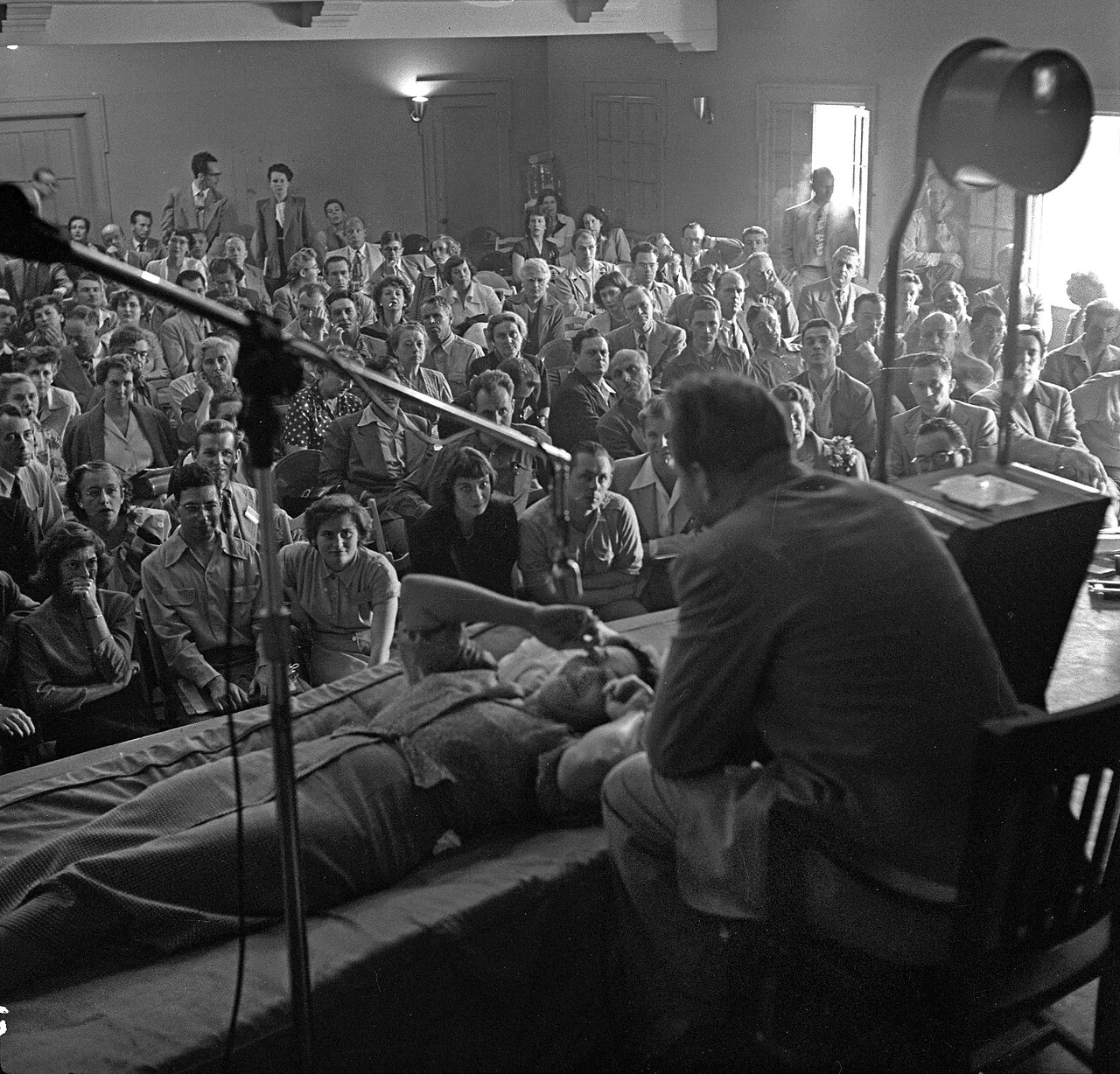
Hubbard conducting a Dianetics seminar in Los Angeles in 1950
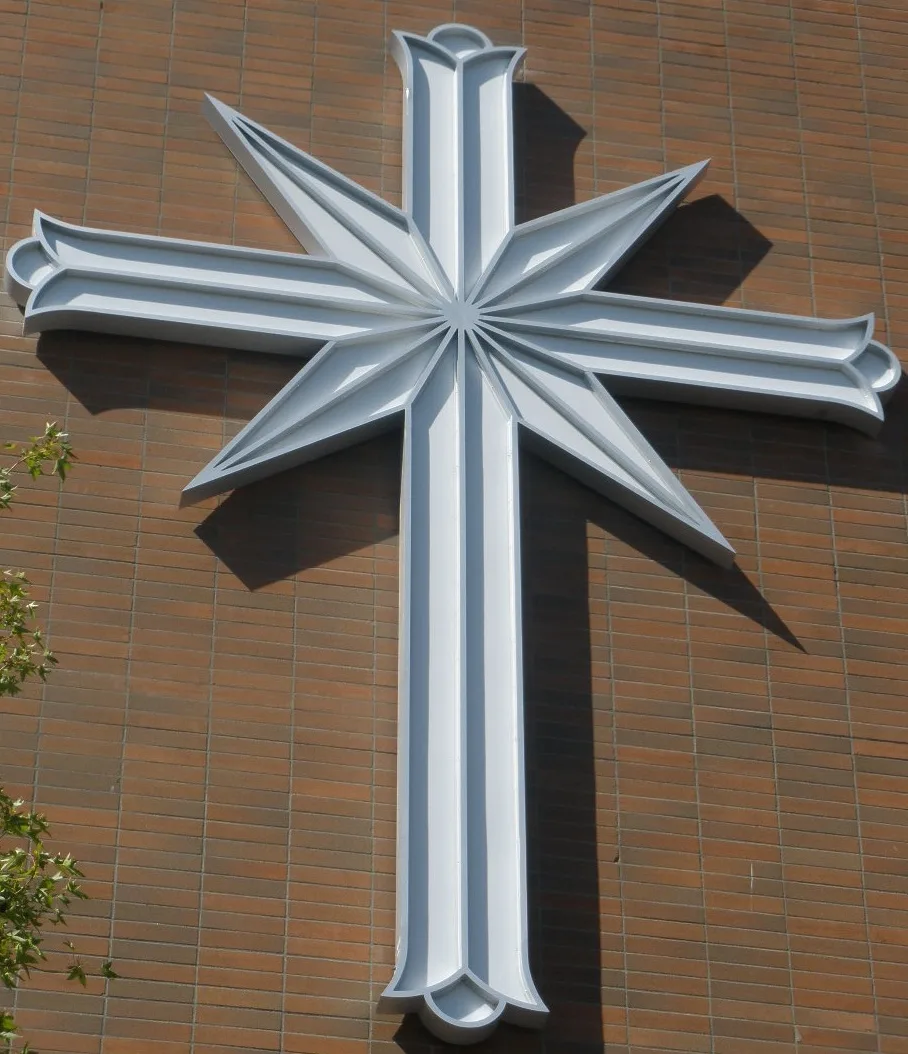
The Scientology cross came into use in 1969. Given Hubbard's private affinity for Crowley and antipathy to Christianity; it has been suggested that the cross may have been inspired by Crowley's Rose Cross or might be a "crossed-out cross" (an anti-Christian symbol).
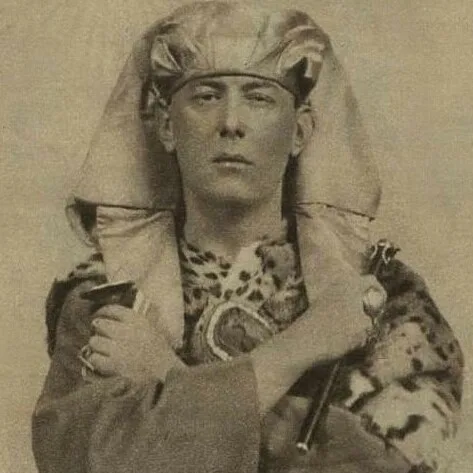
Hubbard drew upon a diverse set of teachings to create his doctrine, incorporating elements from the psychoanalysis of Sigmund Freud (top) and the occult teachings of Aleister Crowley (bottom) among many other sources.
L. Ron Hubbard
Lafayette Ronald Hubbard was an American author and the founder of Scientology.
Sex Magick Invocations in Pasadena
Before launching his own movement, Hubbard lived in California with rocket propulsion engineer Jack Parsons, a devotee of occultist Aleister Crowley. In March 1946, the two men conducted occult rituals termed the Babalon Working to summon a spiritual entity. During these ceremonies, Hubbard acted as a scribe channeling Babalon, voicing an entity said to feed upon human mortality.
From Wikipedia · CC BY-SA 4.0