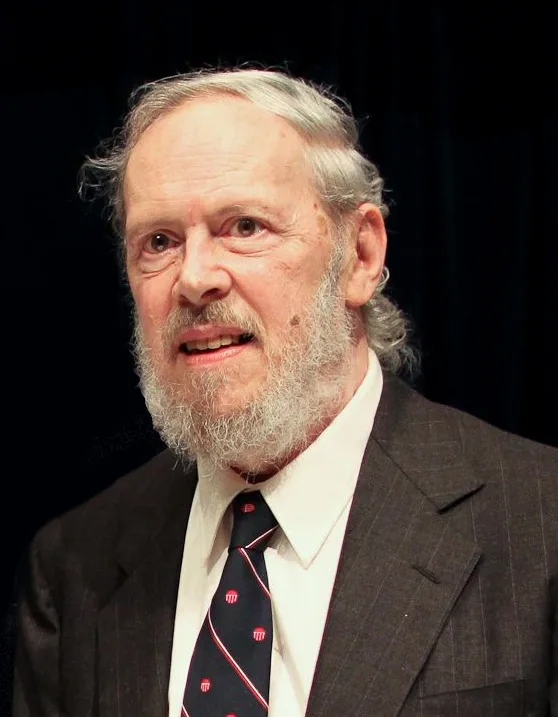
Dennis Ritchie 2011
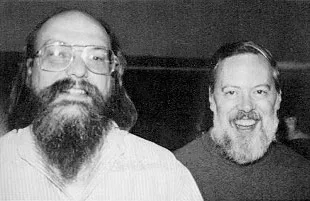
Ken Thompson (left) and Dennis Ritchie (right), in 1973
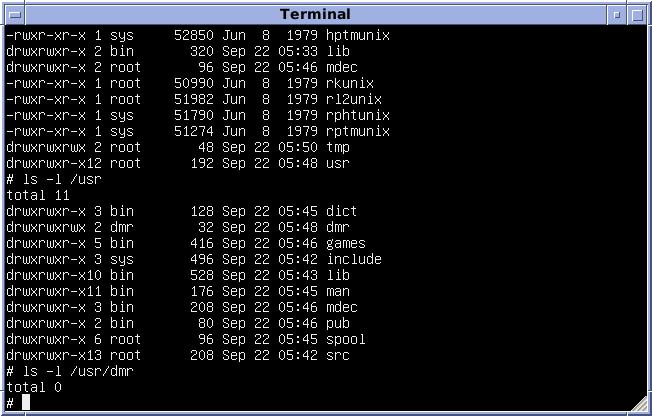
Version 7 Unix for the PDP-11, including Dennis Ritchie's home directory: /usr/dmr
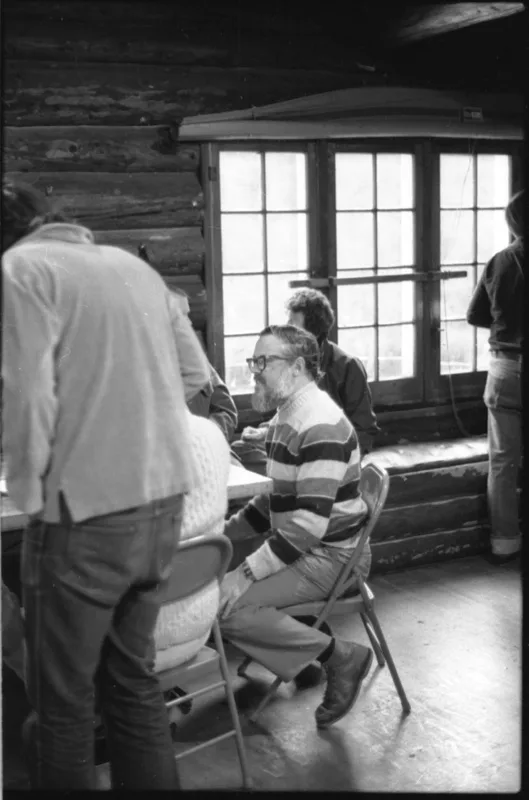
Ritchie conversing in a chalet in the mountains surrounding Salt Lake City
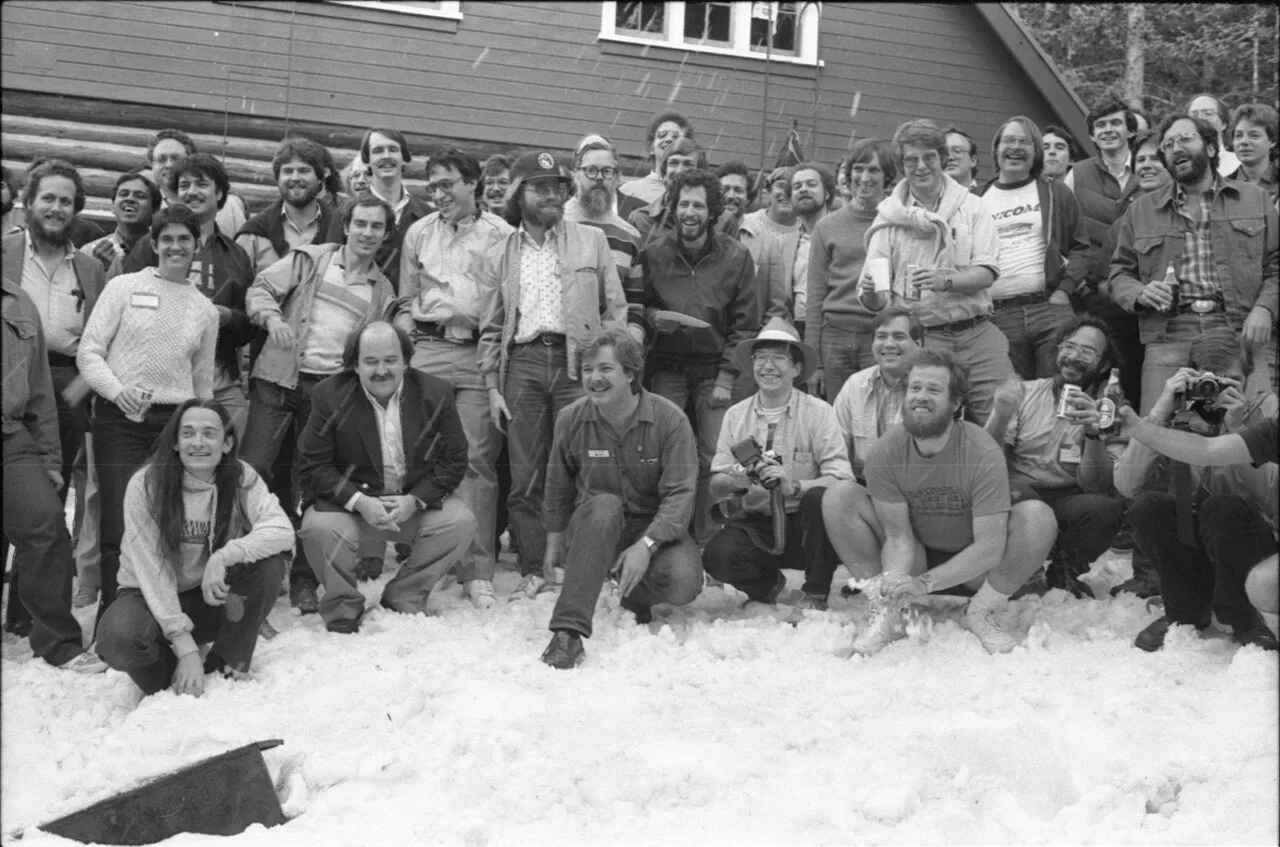
Ritchie, standing in the middle, in a striped sweater, behind Steven Bellovin in a baseball cap
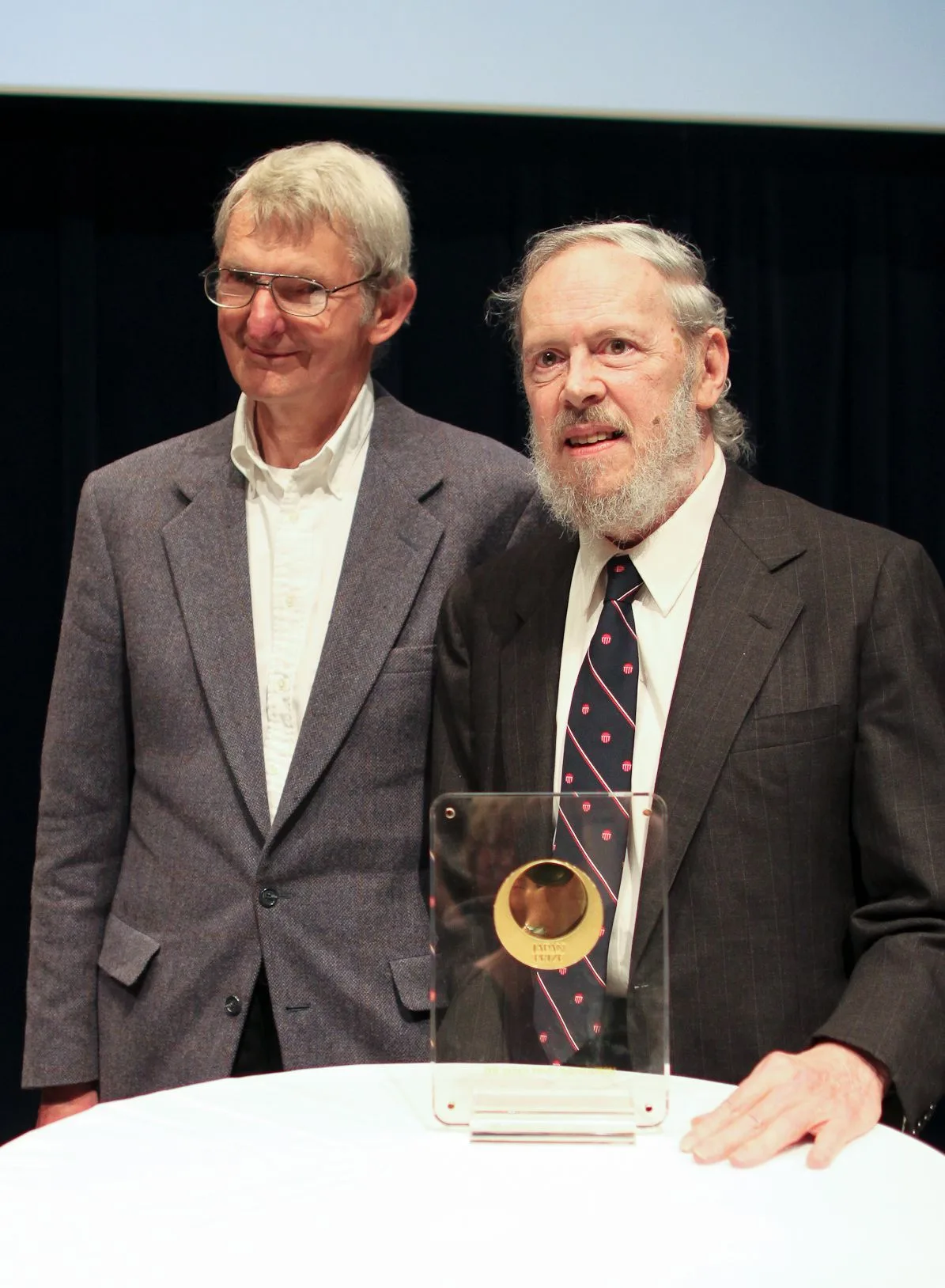
Dennis Ritchie (right) with Doug McIlroy (left) in May 2011
Dennis Ritchie
Dennis MacAlistair Ritchie was an American computer scientist who co-created the Unix operating system and the C and B programming languages.
The Cipher Attack Too Dangerous to Publish
In the 1970s, Ritchie teamed with James Reeds and Robert Morris to crack the M-209 US cipher machine using ciphertext-only methods, solving messages of at least 2000–2500 letters. After consulting the NSA, they buried the research because it applied to machines still used by foreign governments. This suppression exposes a stark tension between scientific openness and national security.
From Wikipedia · CC BY-SA 4.0
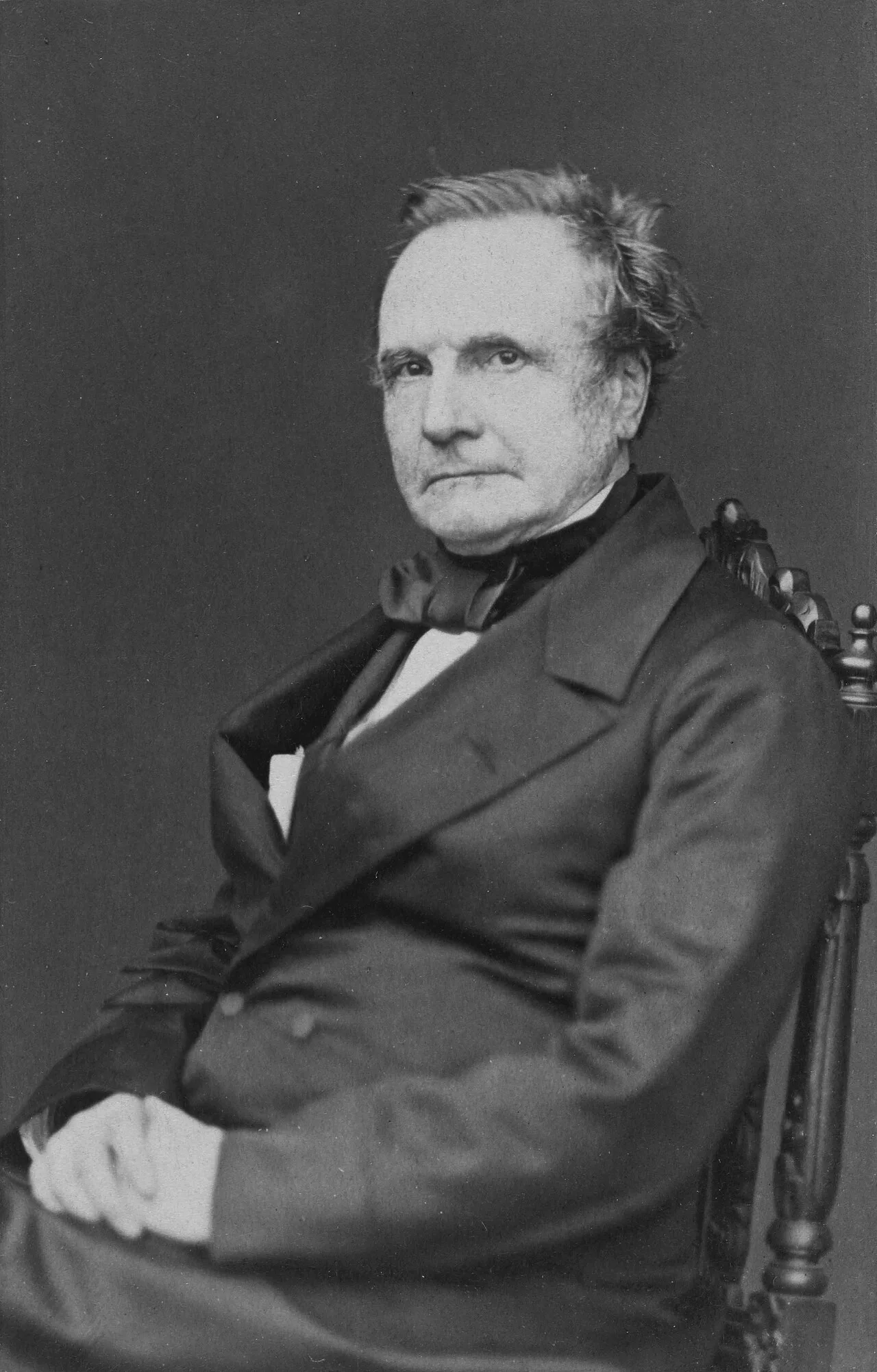
Charles Babbage - 1860
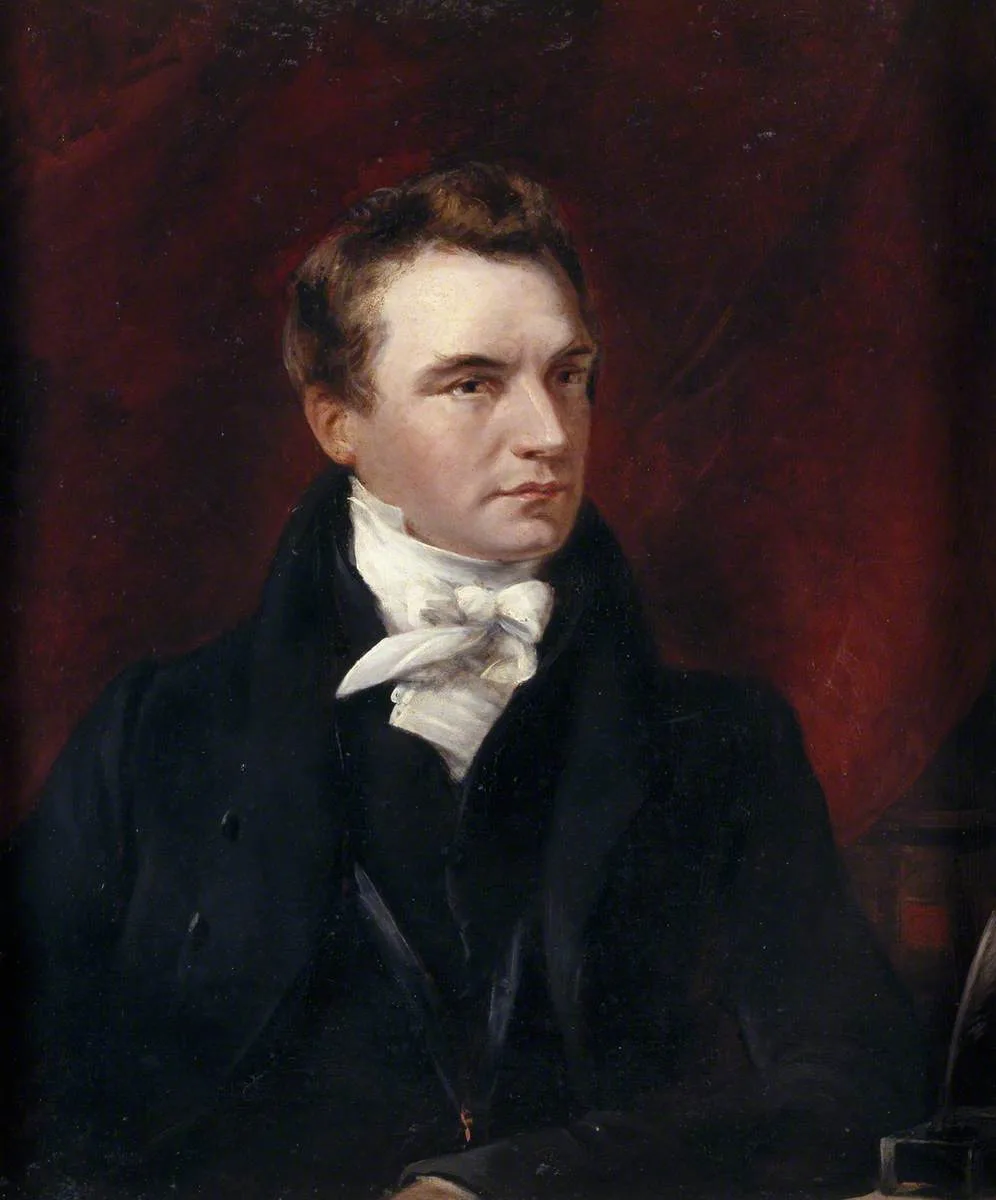
Portrait of Charles Babbage (c. 1820)
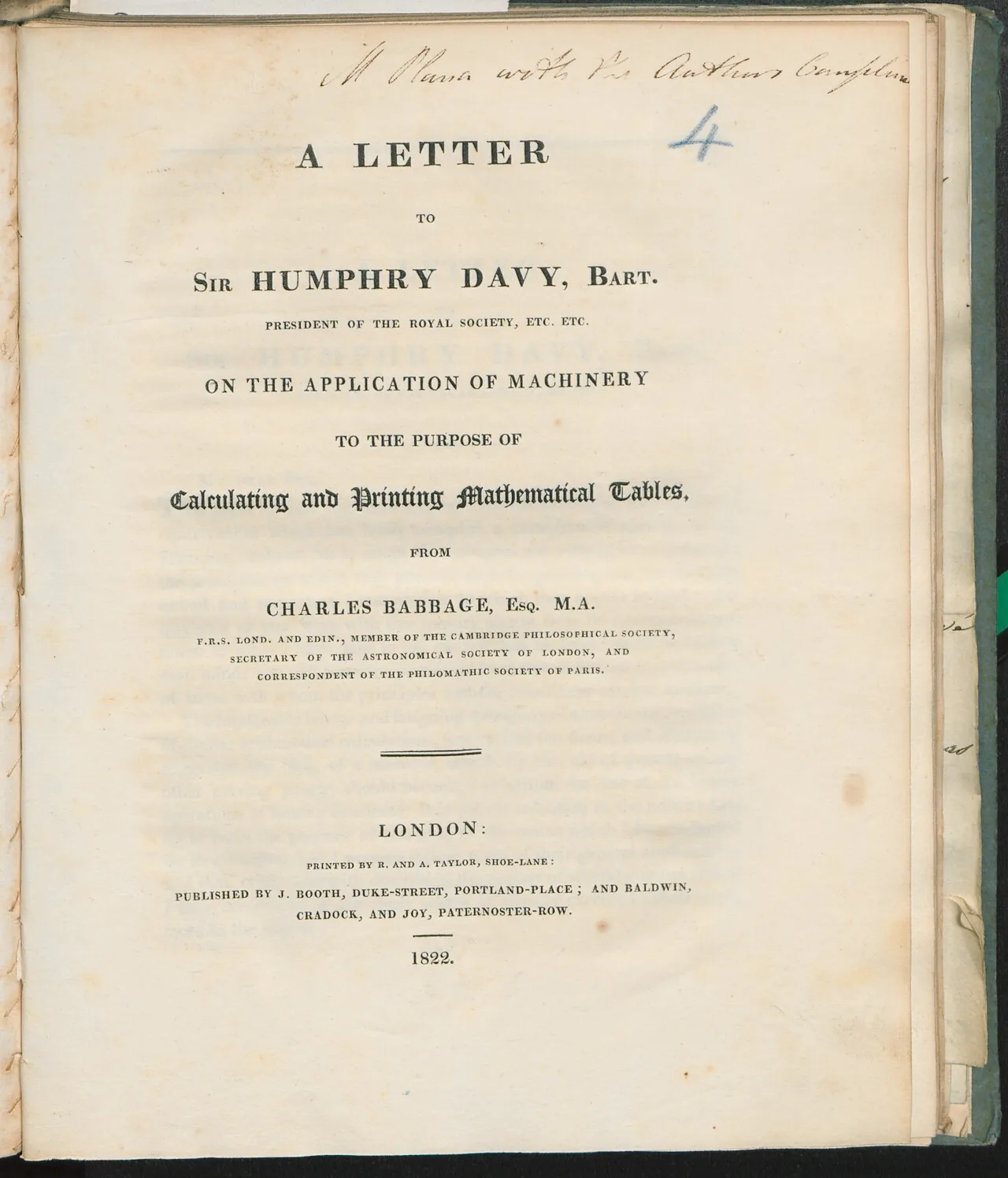
Letter to Sir Humphry Davy, 1822
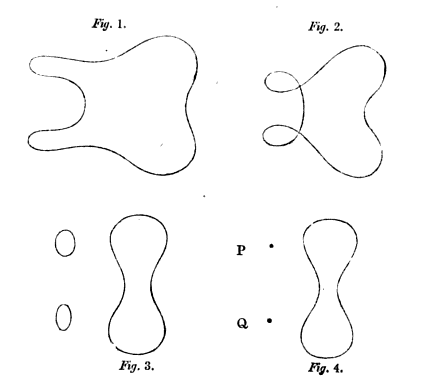
Plate from the Ninth Bridgewater Treatise, showing a parametric family of algebraic curves acquiring isolated real points
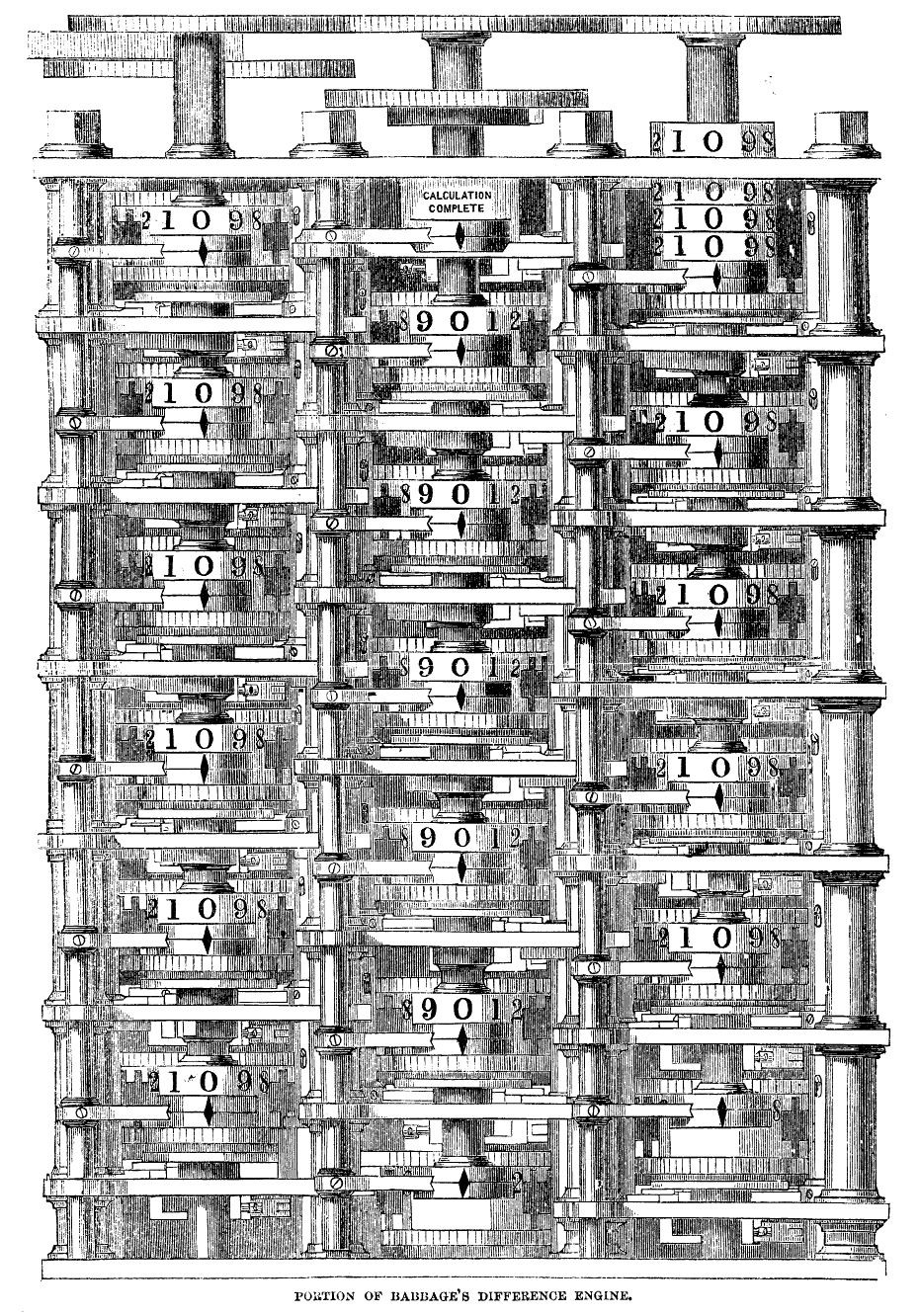
Portion of Babbage's difference engine
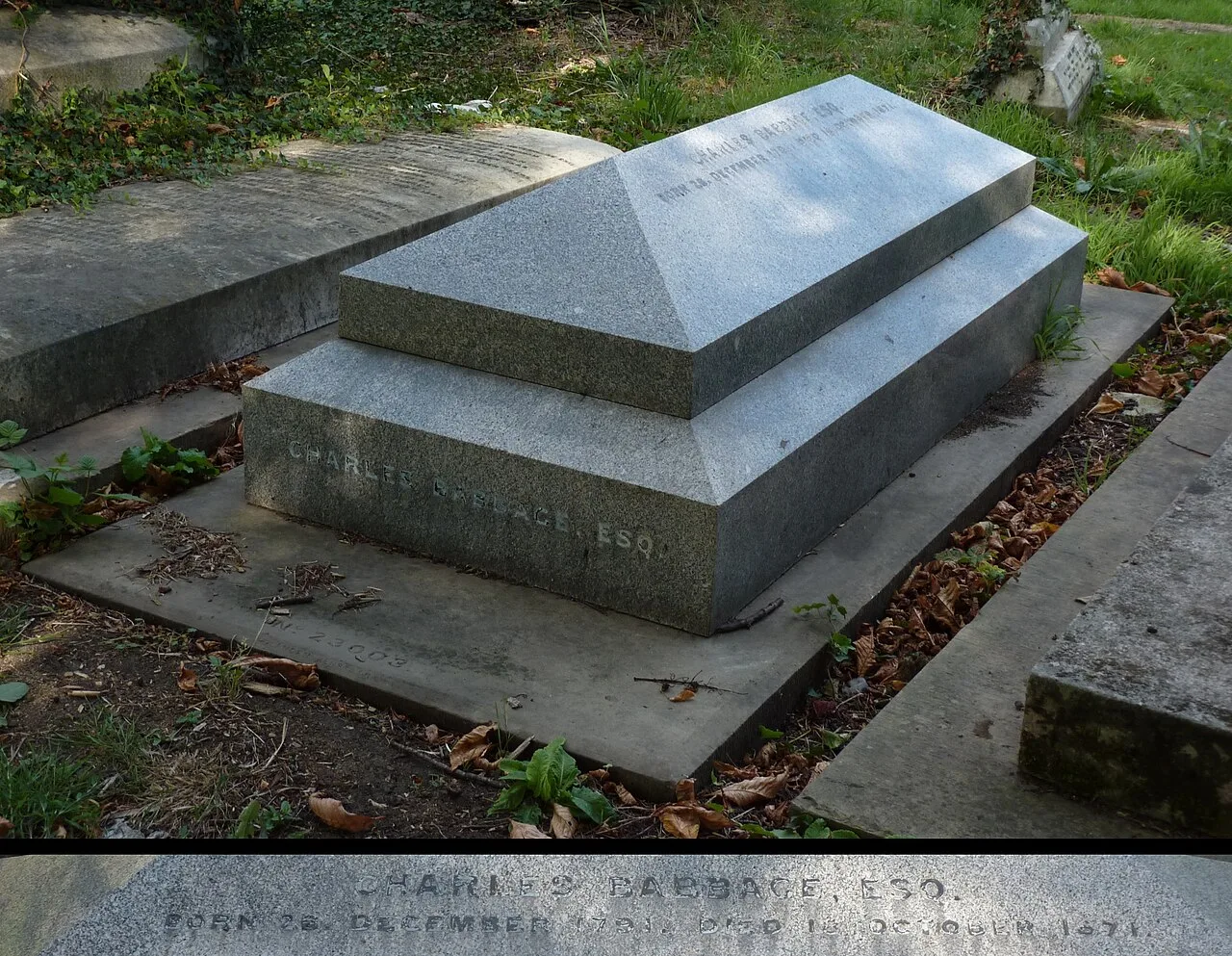
Babbage's grave at Kensal Green Cemetery, London, photographed in 2014
Charles Babbage
Charles Babbage was an English polymath, mathematician, and inventor who originated the concept of a digital programmable computer.
A Brain Divided Across Two Museums
Charles Babbage's brain is literally split in two: half resides at the Hunterian Museum in London, the other at the Science Museum. This physical division mirrors his fragmented legacy—a man whose grandiose machines never worked in his lifetime yet now stand as monuments. The autopsy report was only discovered in 1983 by his great-great-grandson, adding a detective story to his posthumous existence.
From Wikipedia · CC BY-SA 4.0
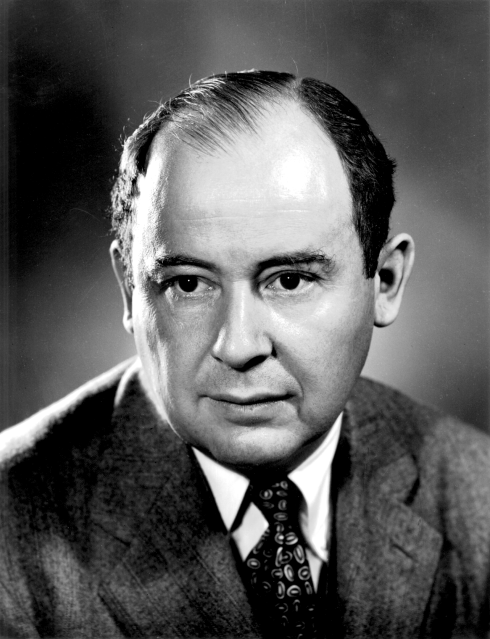
JohnvonNeumann-LosAlamos
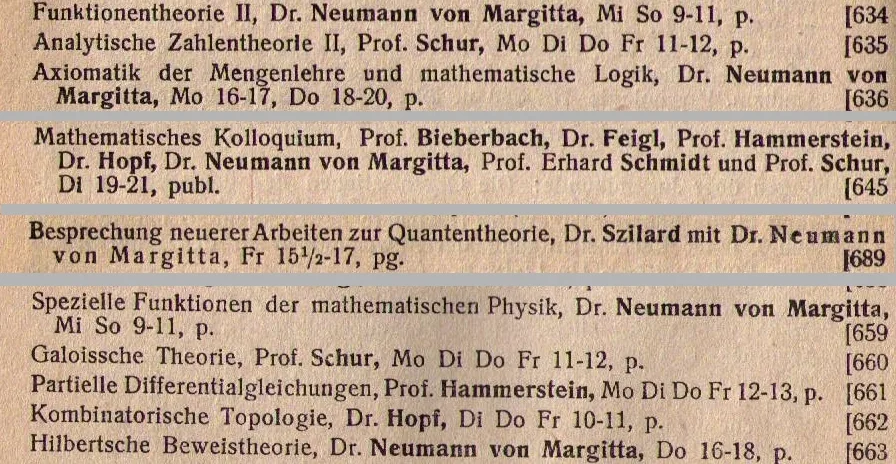
Excerpt from the university calendars for 1928 and 1928/29 of the Friedrich-Wilhelms-Universität Berlin announcing Neumann's lectures on the theory of functions II, axiomatic set theory and mathematical logic, the mathematical colloquium, review of recent work in quantum mechanics, special functions of mathematical physics and Hilbert's proof theory. He also lectured on the theory of relativity, set theory, integral equations and analysis of infinitely many variables.
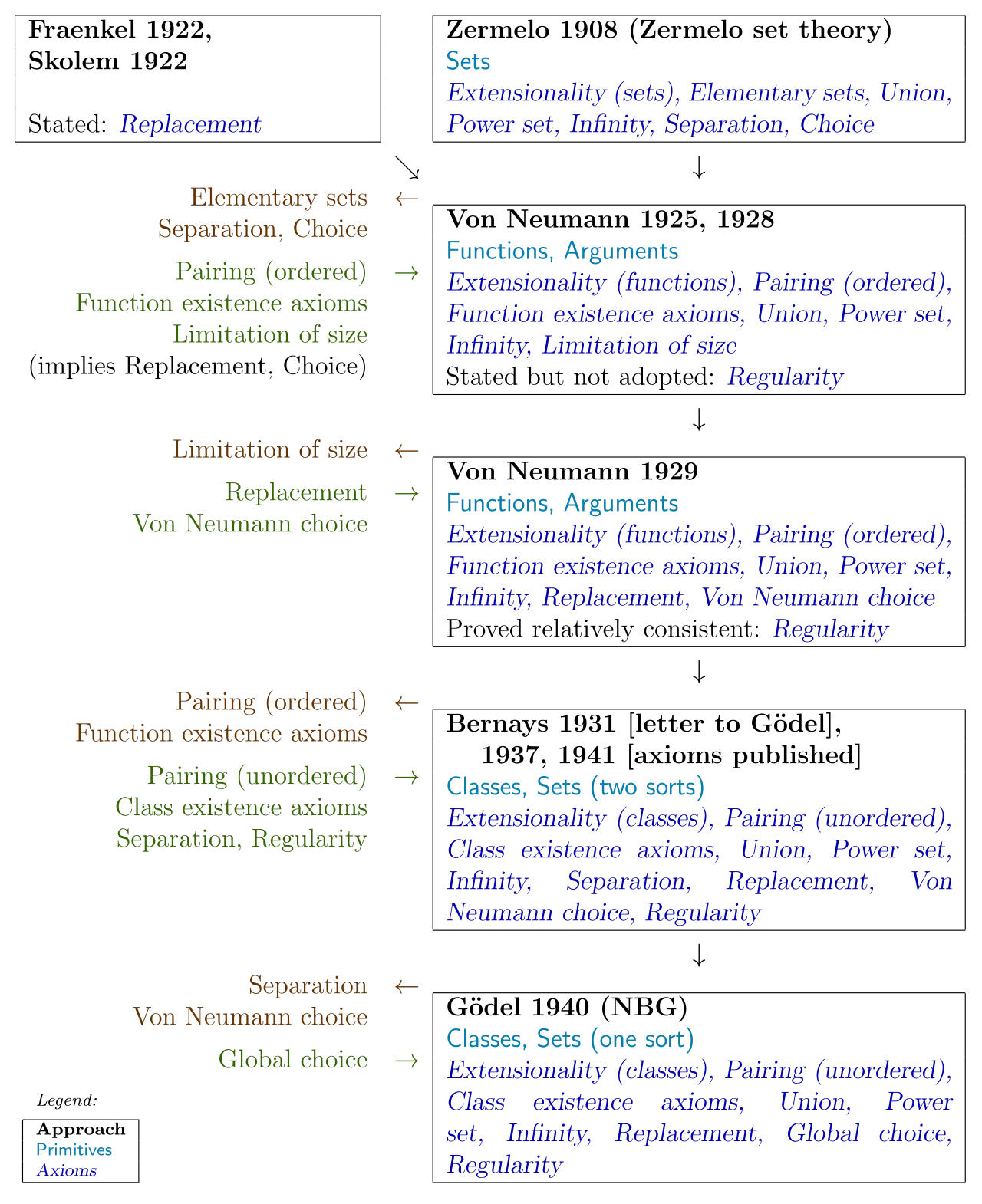
History of approaches that led to NBG set theory
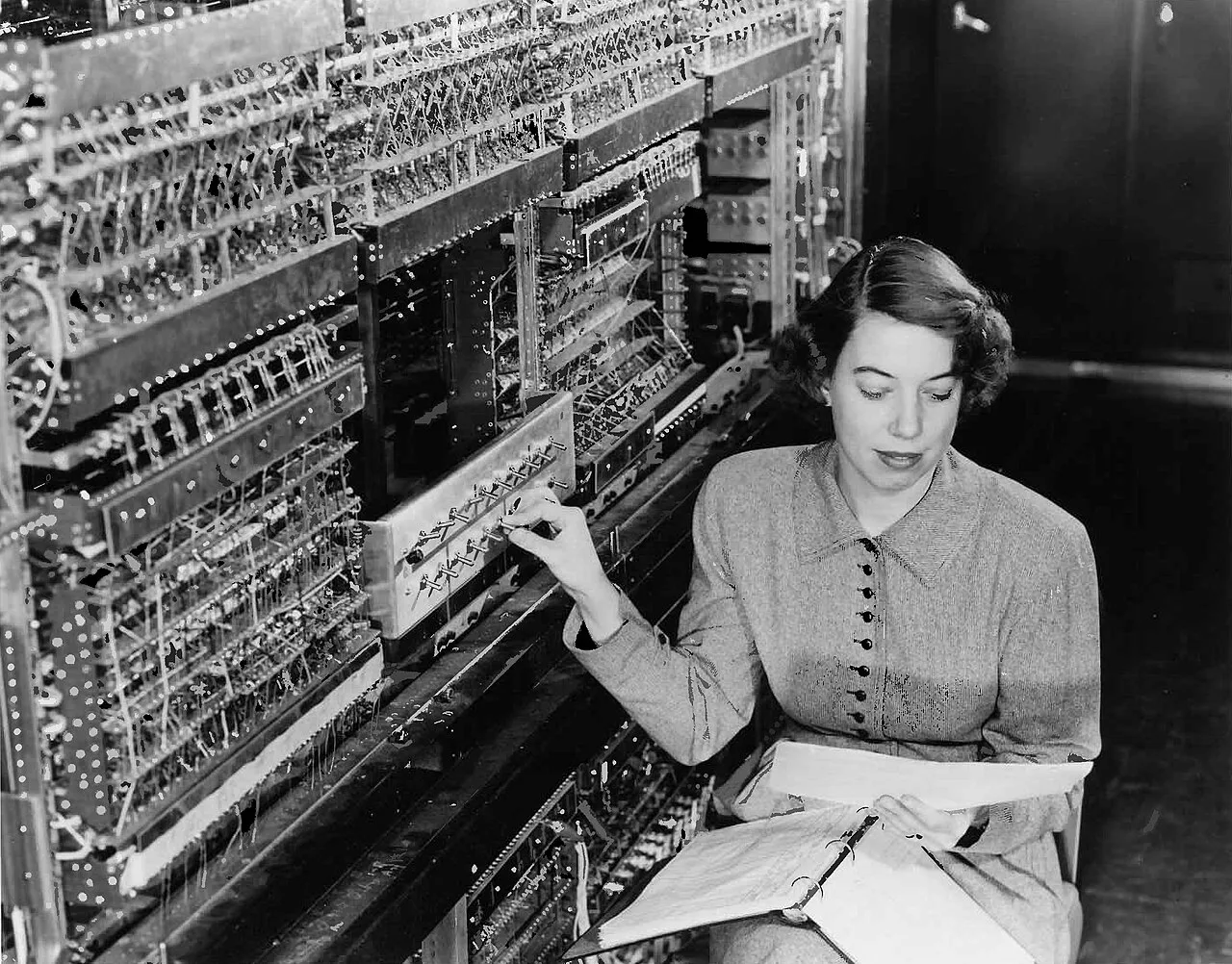
The AVIDAC computer was partially based on the architecture of the IAS machine developed by von Neumann.
![The first implementation of von Neumann's self-reproducing universal constructor.[284] Three generations of machine are](https://hmzpdsmr7uczkvx4.public.blob.vercel-storage.com/wikifeed/john-von-neumann/4-f38034d255.png)
The first implementation of von Neumann's self-reproducing universal constructor.[284] Three generations of machine are shown: the second has nearly finished constructing the third. The lines running to the right are the tapes of genetic instructions, which are copied along with the body of the machines.
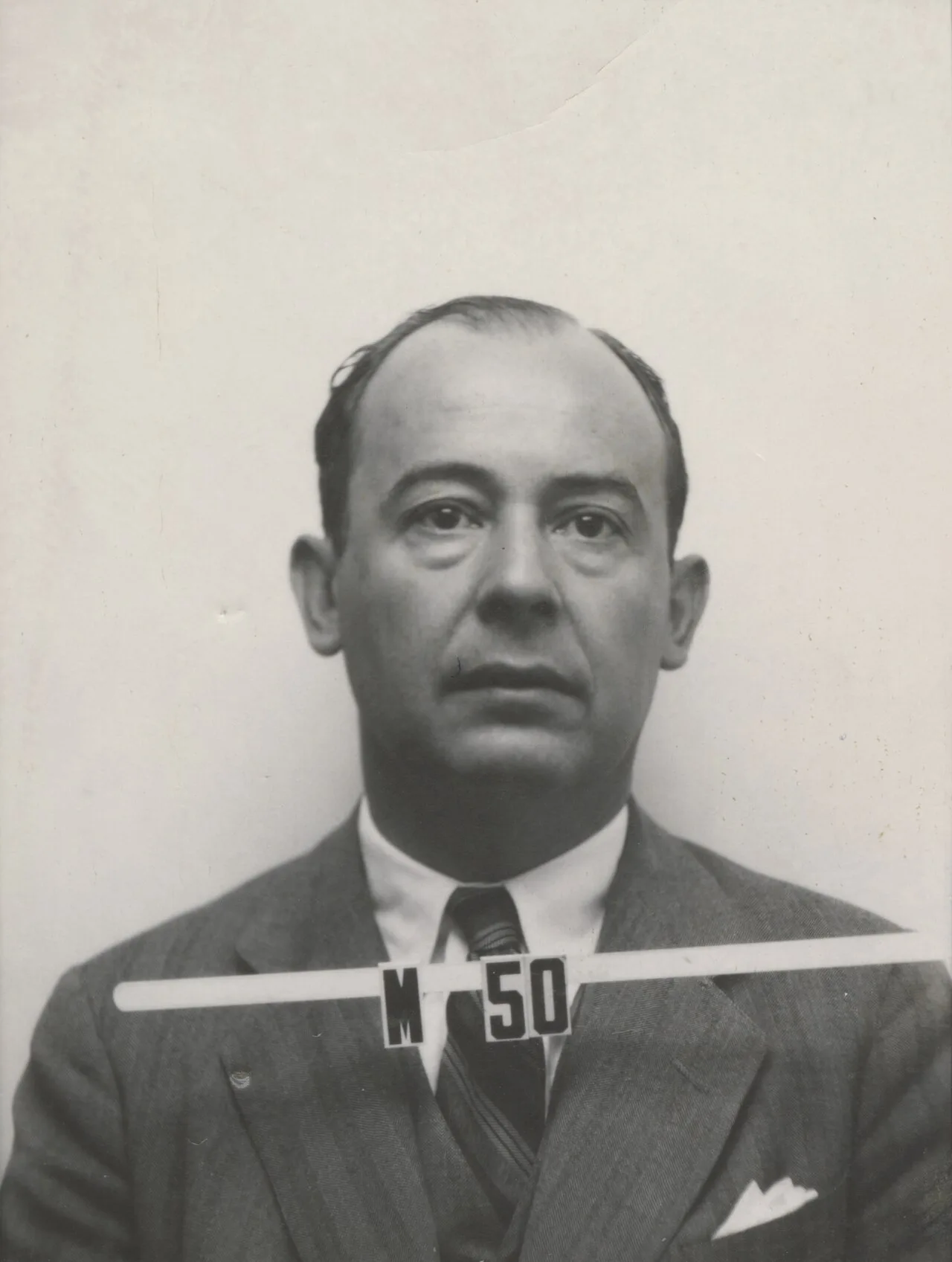
Von Neumann's wartime Los Alamos ID badge photo
John von Neumann
John von Neumann was a Hungarian-American mathematician, physicist, and computer scientist who made major contributions to quantum physics, game theory, and computing.
Summing the Infinite Series
When Max Born posed the classic two-train riddle, von Neumann answered instantly with 15 miles. Born assumed he had spotted the trick; instead, von Neumann had actually summed the infinite geometric series describing the fly's ever-shortening trips. The anecdote reveals a mind that defaulted to rigorous computation rather than shortcut insight, even when the shortcut was obvious. It is a rare window into how his intuition operated.
From Wikipedia · CC BY-SA 4.0
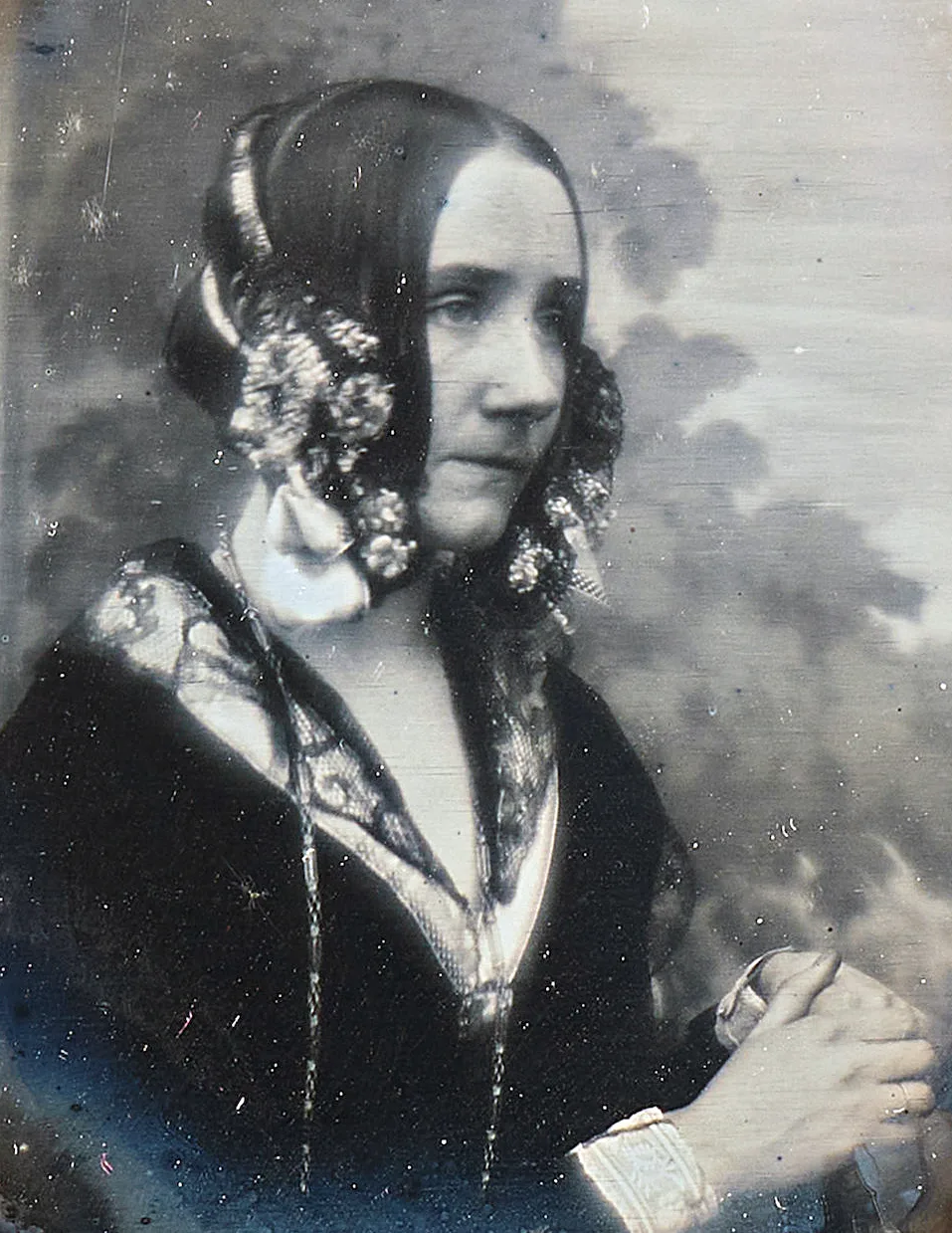
Augusta Ada King, Countess of Lovelace, daguerrotype portrait circa 1843
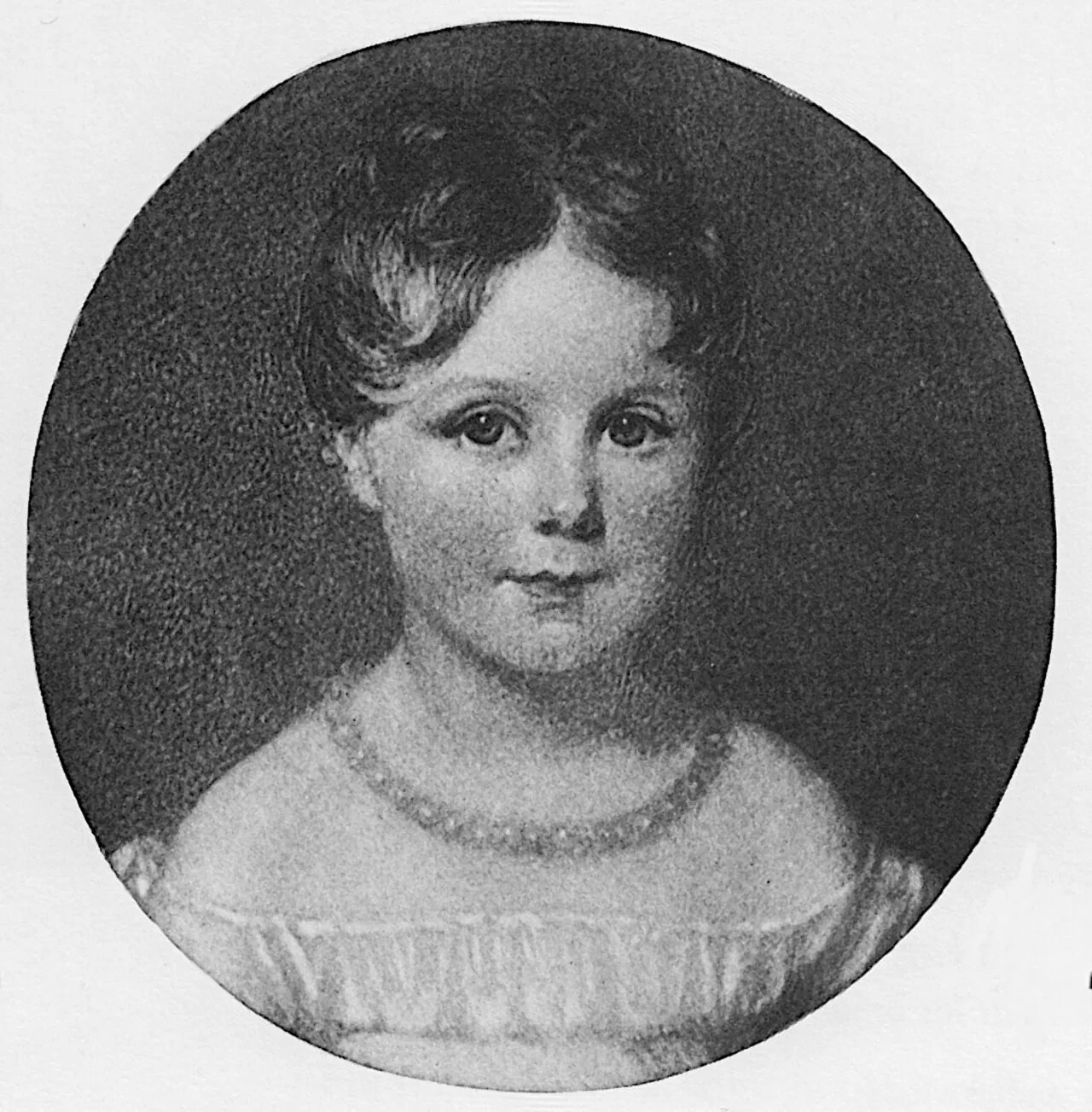
Ada Byron, aged four
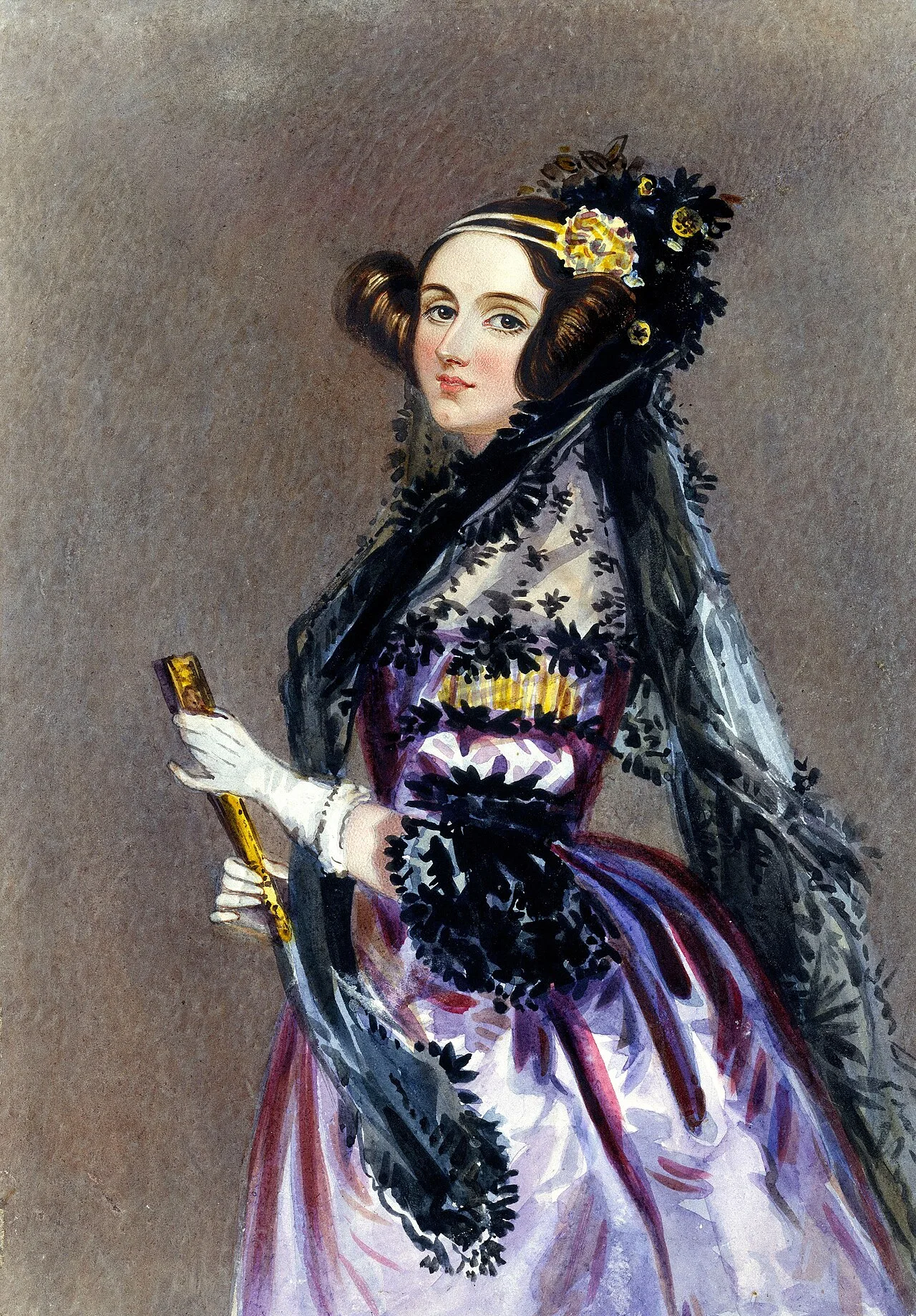
Watercolour portrait of Ada King, Countess of Lovelace, c. 1840, possibly by Alfred Edward Chalon
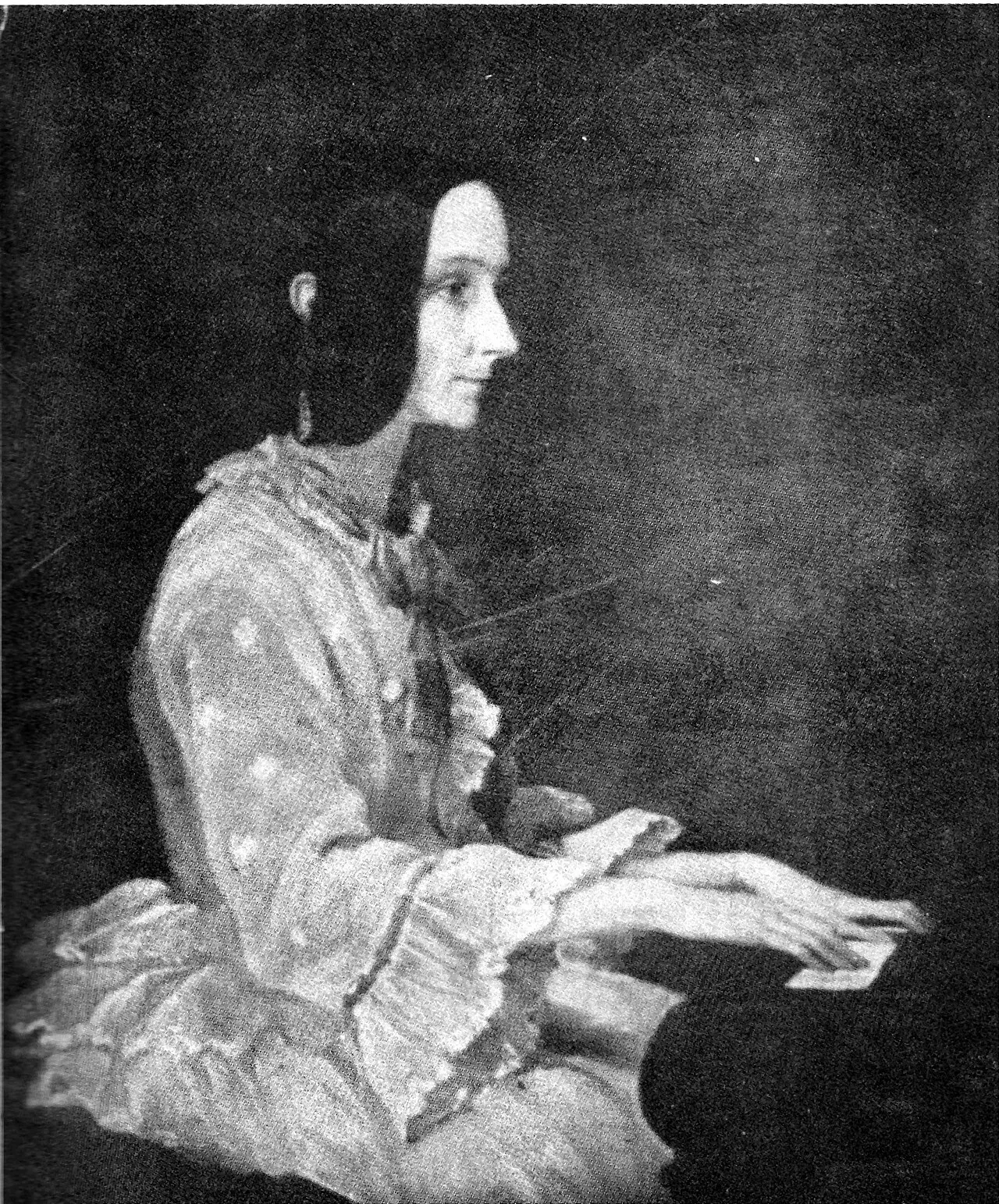
Painting of Lovelace seated at a piano, by Henry Phillips (1852). Although in great pain at the time, she agreed to sit for the painting as her father, Lord Byron, had been painted by Phillips' father, Thomas Phillips.
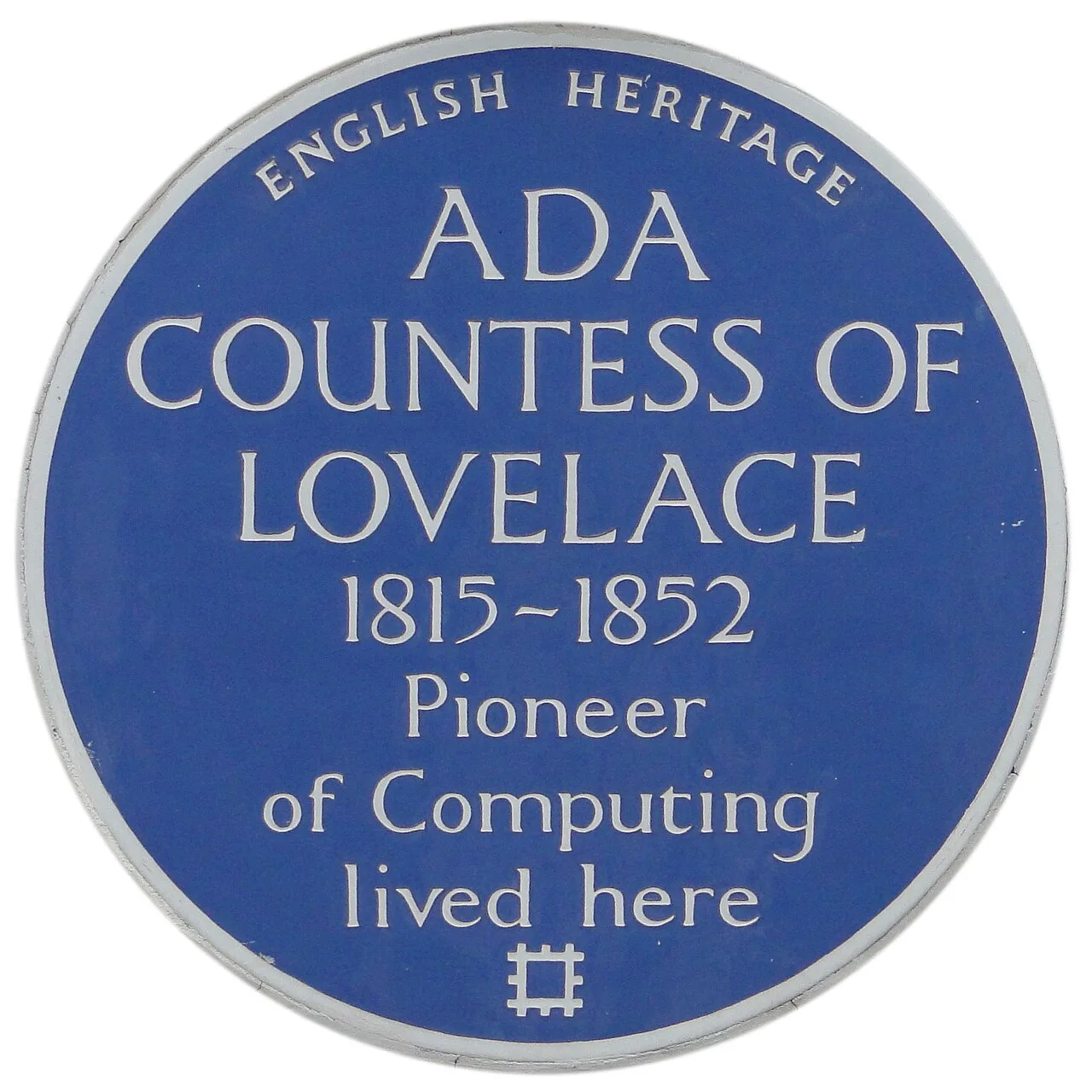
Blue plaque to Ada Lovelace in St James's Square, London
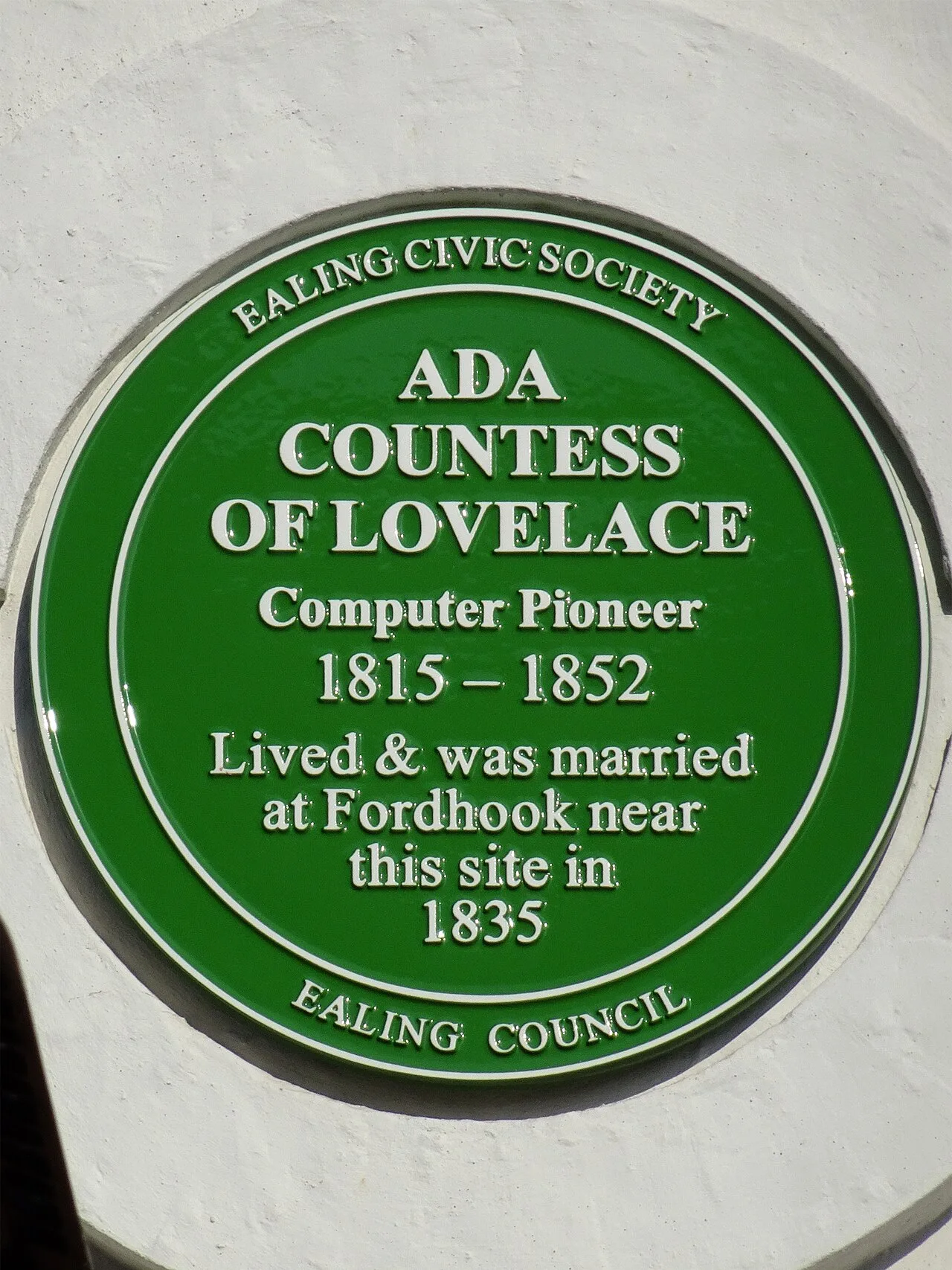
Green plaque in Ealing
Ada Lovelace
Ada Lovelace was an English mathematician and writer known for her work on Charles Babbage's Analytical Engine and is often considered the first computer programmer.
Flyology: A Twelve-Year-Old's Blueprint for Flight
At twelve, Ada Byron, the future Countess of Lovelace, methodically designed a flying machine. She investigated bird anatomy, tested materials like paper and feathers, and planned a book called Flyology with plates. She even considered using steam to power flight. This imaginative project foreshadowed her later systematic approach to computing problems.
From Wikipedia · CC BY-SA 4.0
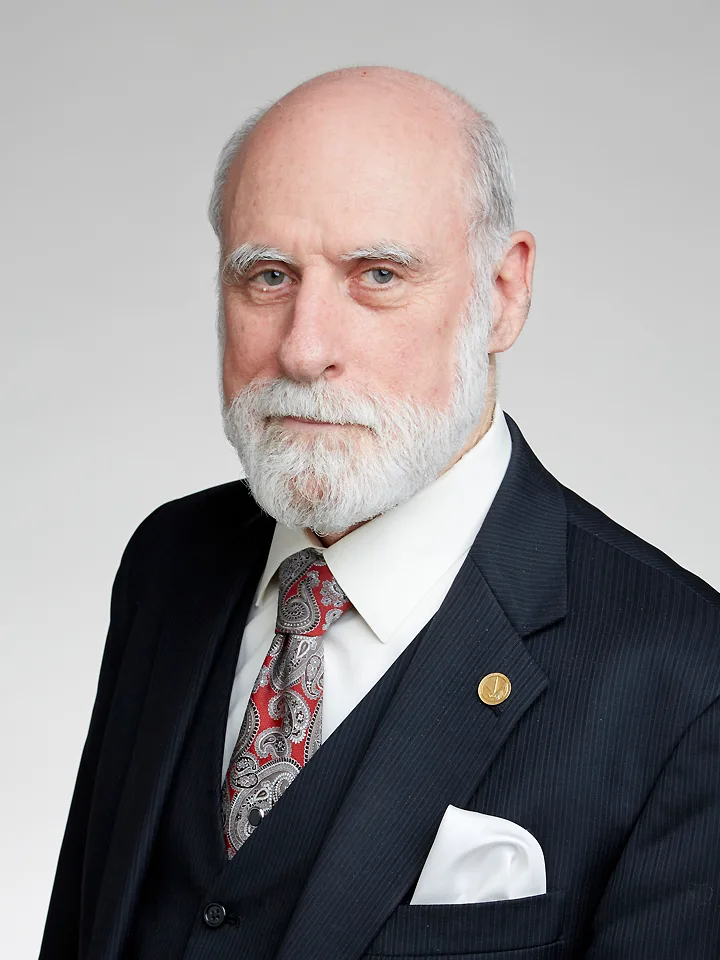
Dr Vint Cerf ForMemRS (cropped)
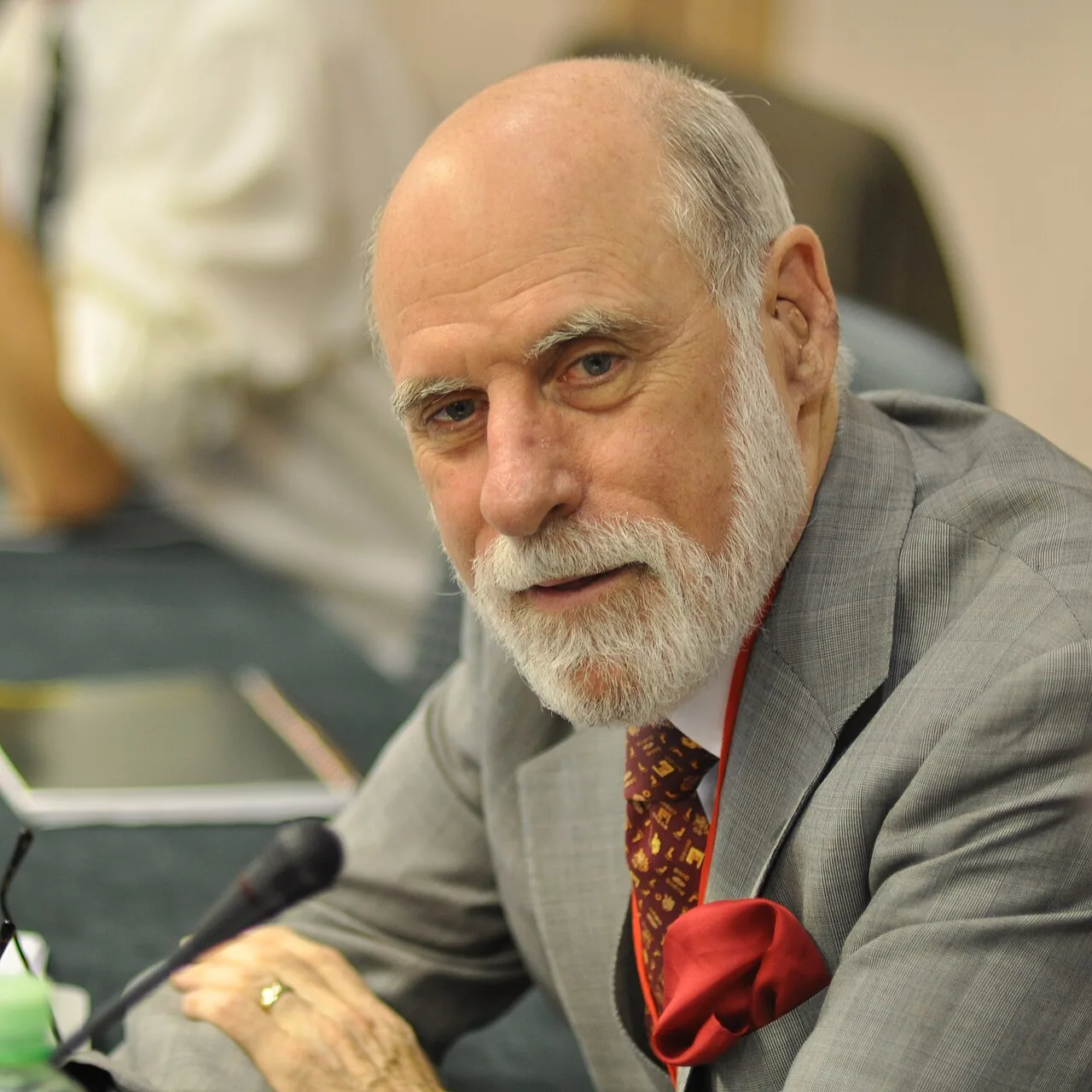
Vinton Cerf in Vilnius, September 2010
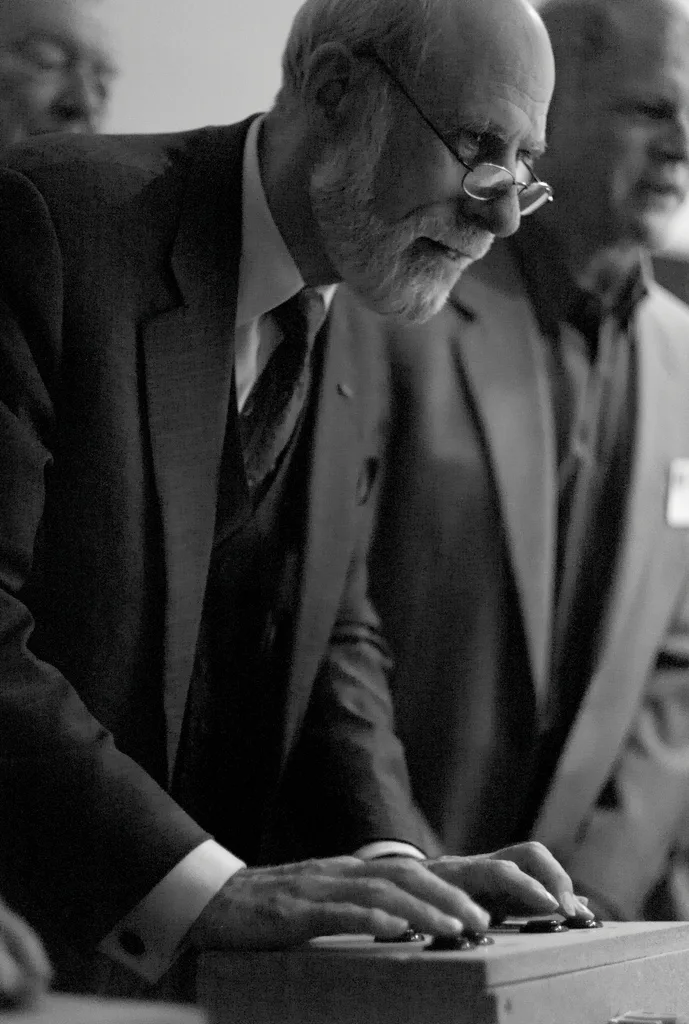
Cerf playing Spacewar! on the Computer History Museum's PDP-1, ICANN meeting, 2007
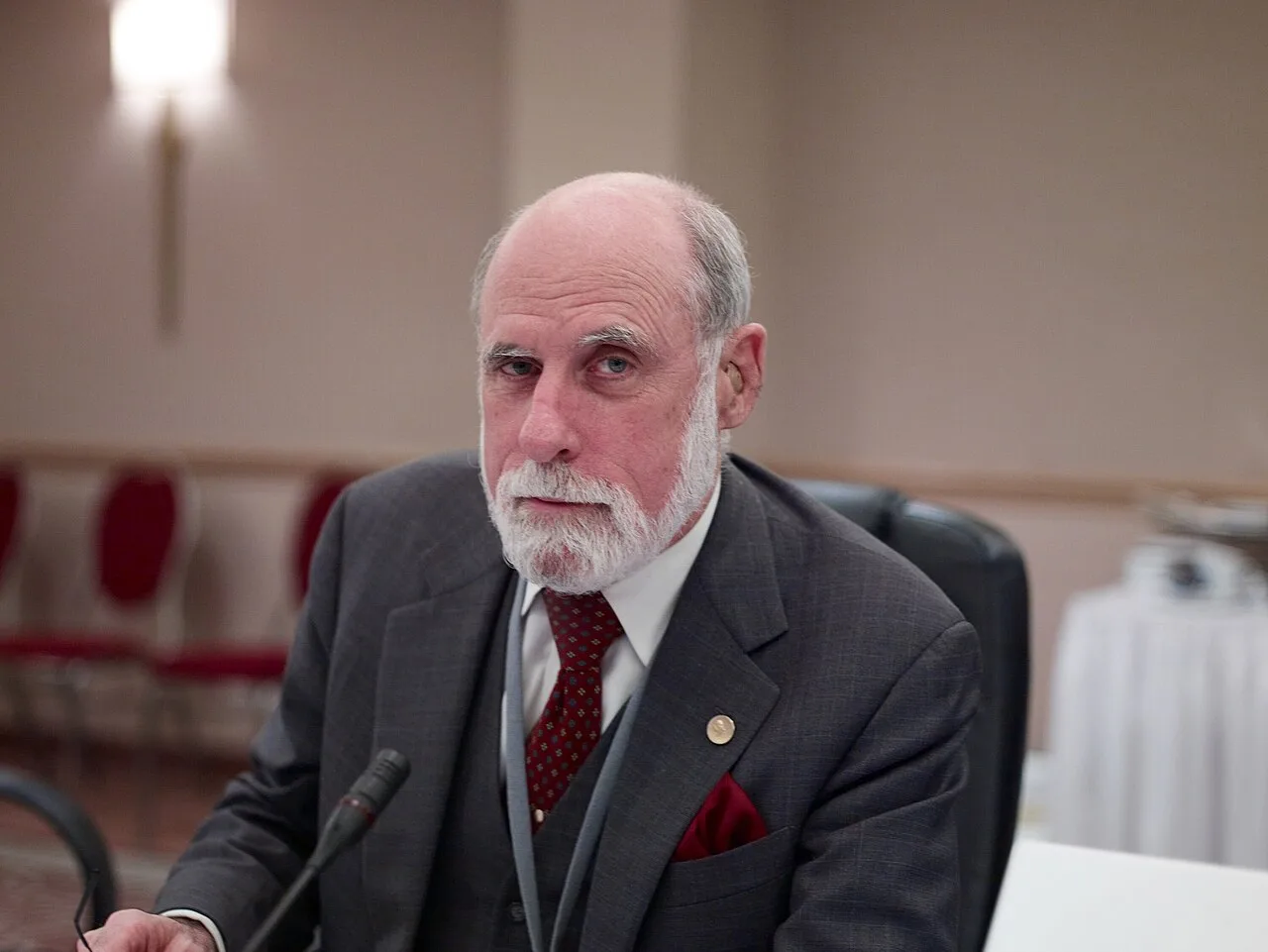
Cerf at 2007 Los Angeles ICANN meeting

Cerf and Bob E. Kahn being awarded the Presidential Medal of Freedom by President George W. Bush

Cerf and Bulgarian President Parvanov being awarded the St. Cyril and Methodius in the Coat of Arms Order
Vint Cerf
Vinton Gray Cerf is an American Internet pioneer recognized as one of the fathers of the Internet for co-developing TCP/IP.
From Rocketdyne to Packet Switching
Before he helped design TCP/IP, Cerf spent six months at Rocketdyne in high school, writing statistical analysis software for non-destructive tests of the F-1 engines that would power the Saturn V. That early aerospace work foreshadowed his later efforts to connect networks across planetary distances. The precision required for rocket engine testing mirrors the robustness he'd later demand from internet protocols.
From Wikipedia · CC BY-SA 4.0
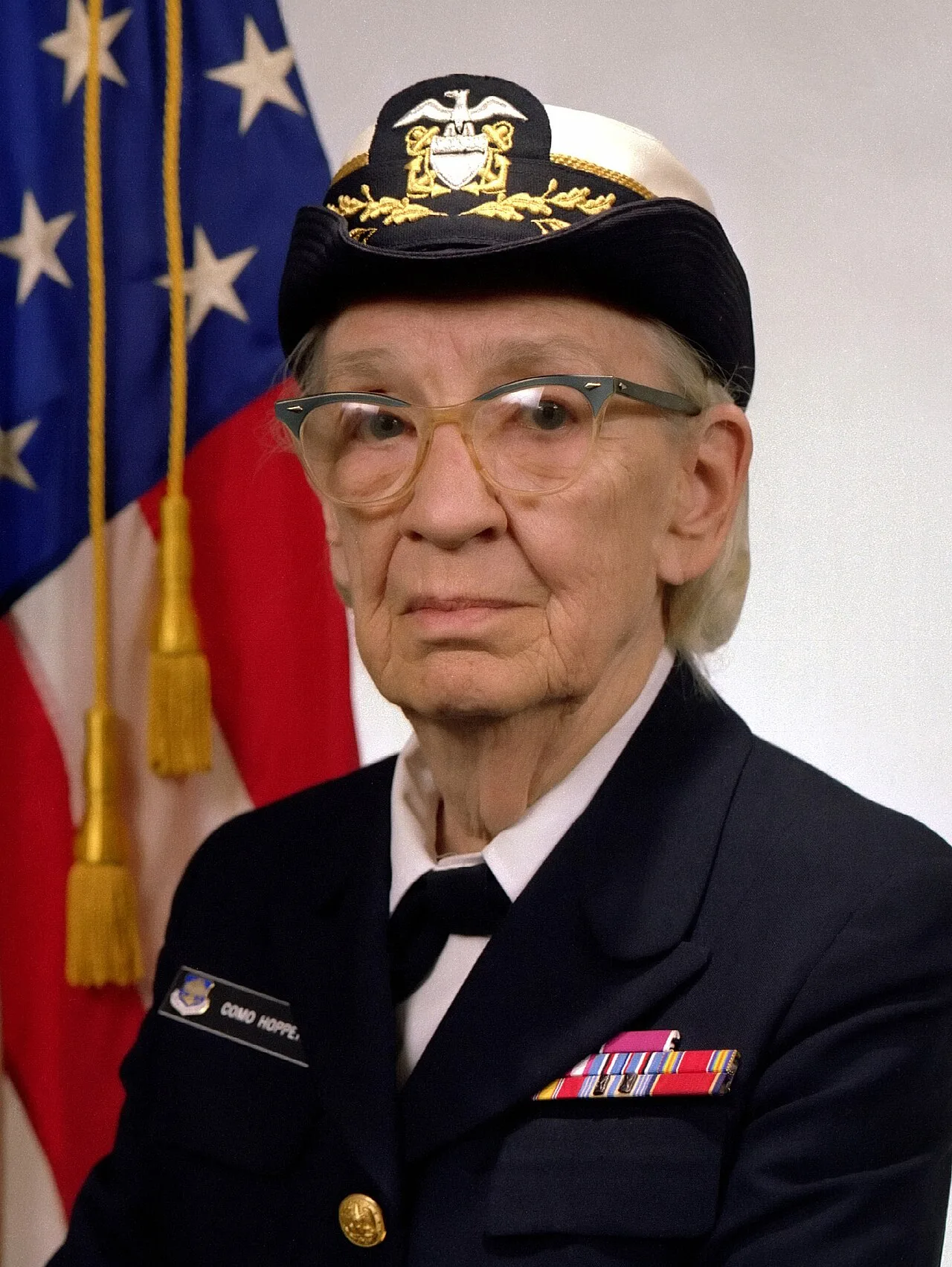
Commodore Grace M. Hopper, USN (covered) head and shoulders crop
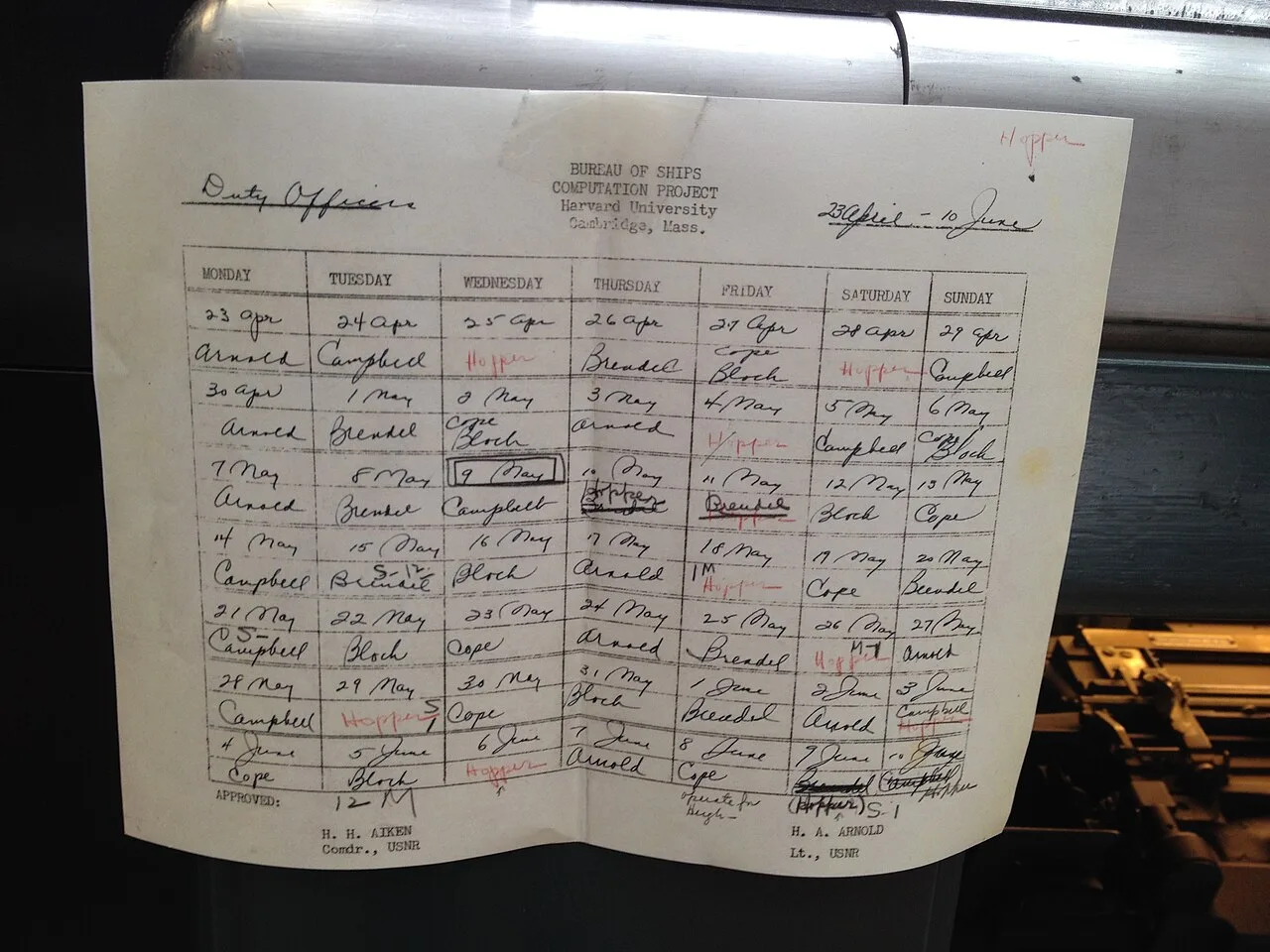
Hopper's name on a duty roster for the Bureau of Ships Computation Project at Harvard, which built and operated the Mark I
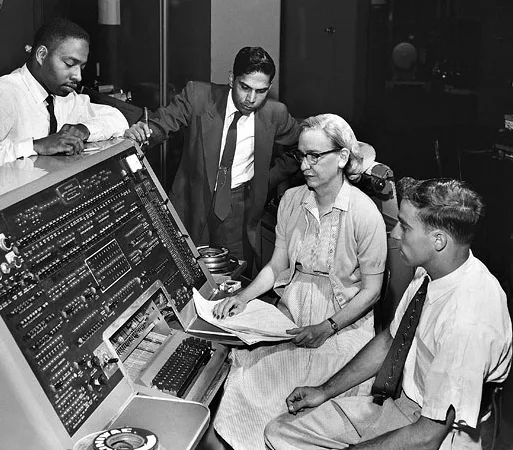
Hopper at the UNIVAC I console, c. 1960
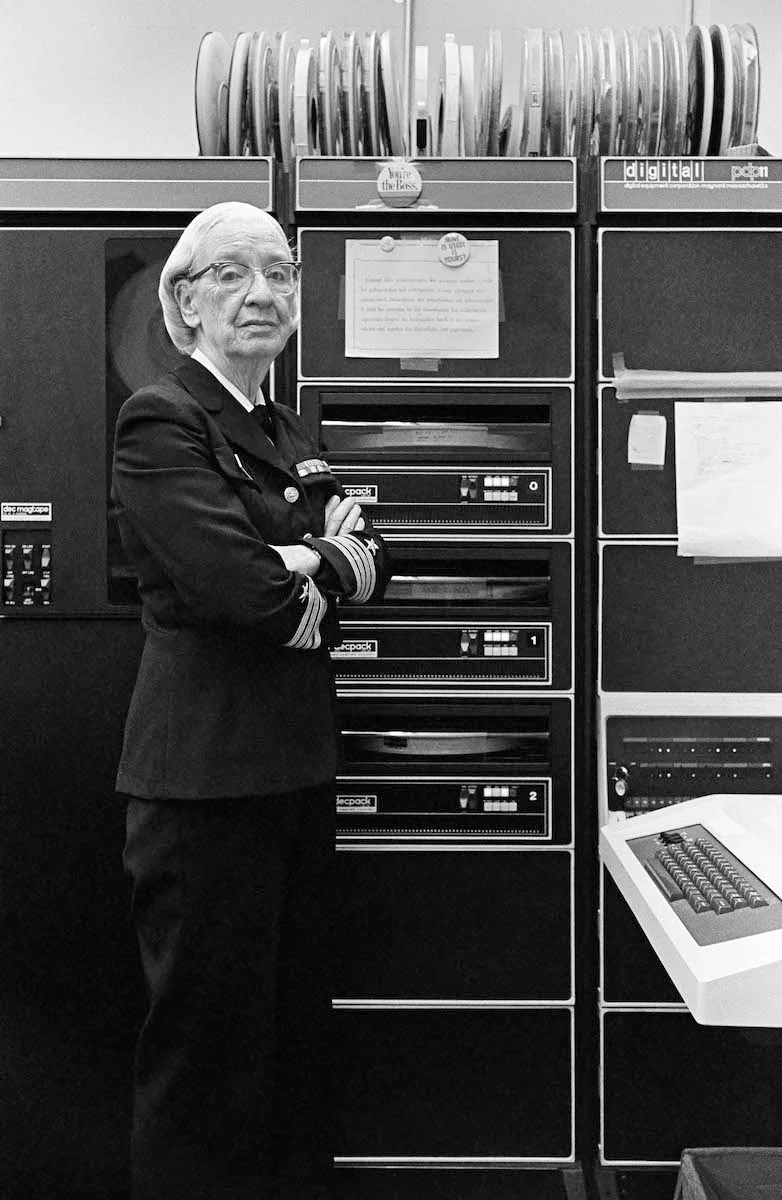
Hopper in a computer room in Washington, D.C., 1978, photographed by Lynn Gilbert
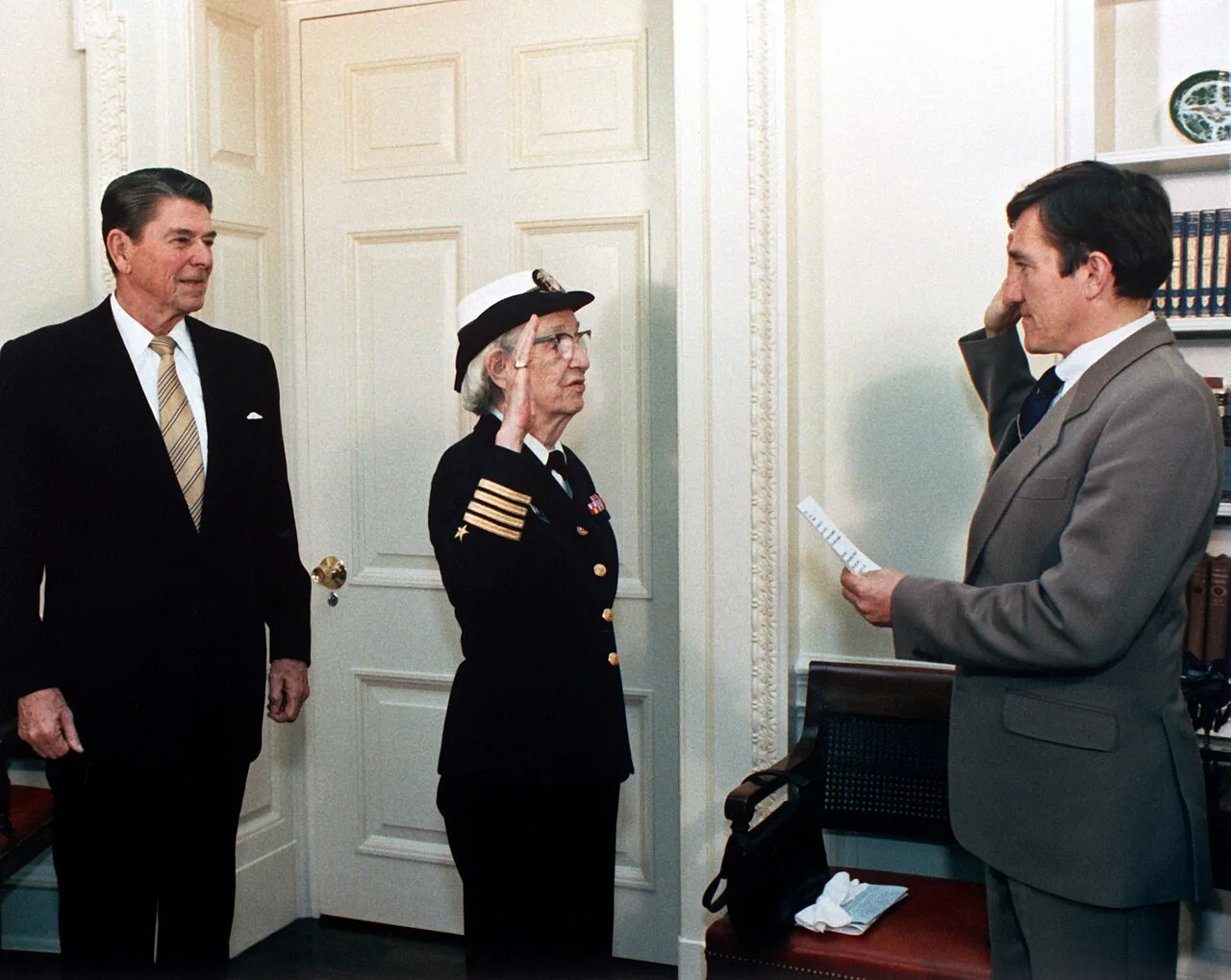
Hopper being promoted to the rank of commodore in 1983
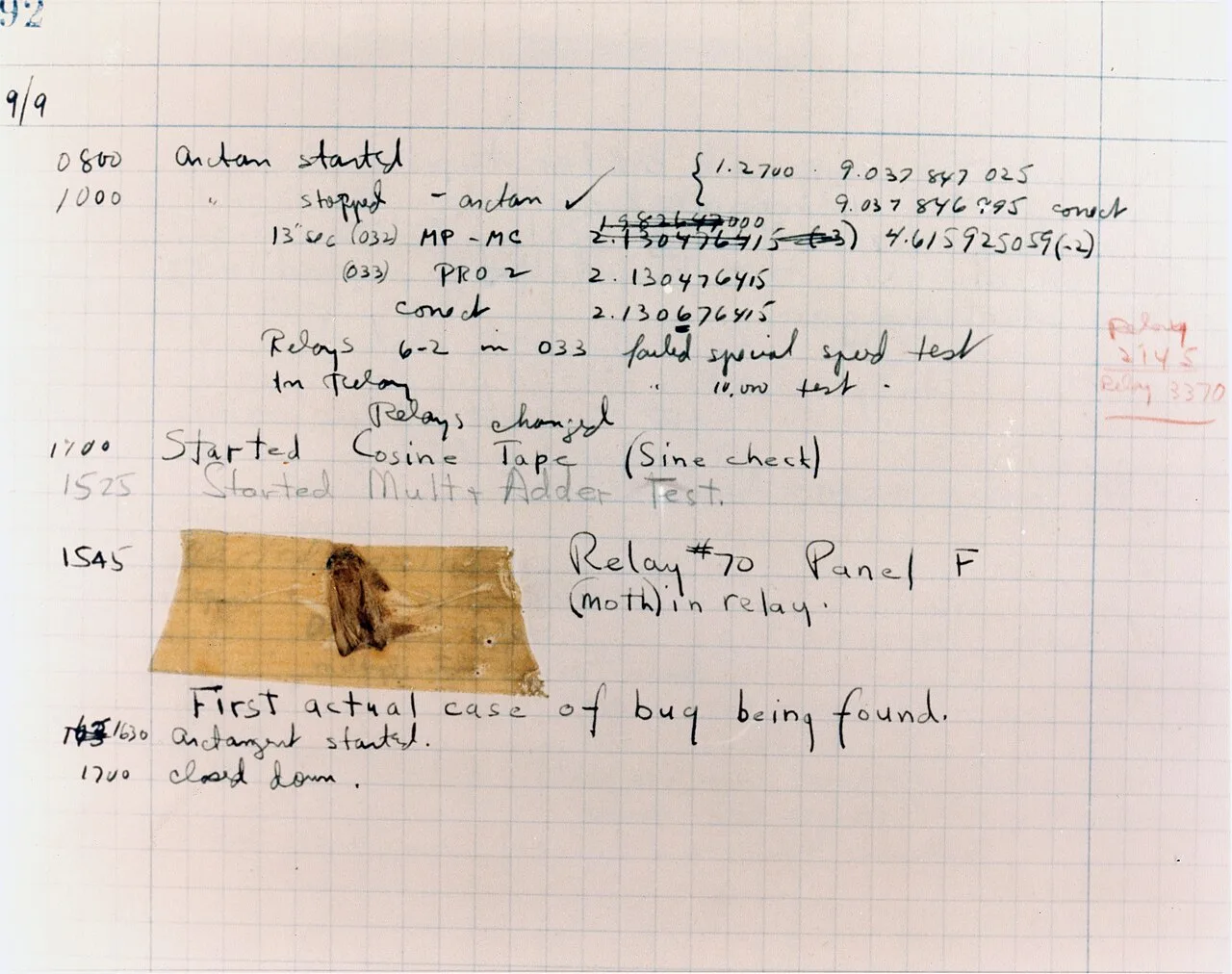
Log book showing the "bug" found caught in a Mark II relay
Grace Hopper
Grace Brewster Hopper was an American computer scientist, mathematician, and US Navy rear admiral who was a pioneer of computer programming and helped develop COBOL.
Seven Alarm Clocks, One Curious Girl
At age seven, Grace Hopper dismantled seven alarm clocks before her mother realized what she was doing—and then limited her to just one. The text describes her as 'very curious as a child; this was a lifelong trait.' That insatiable curiosity later drove her to question the boundaries of computer programming, leading her to invent English-based languages and to challenge the status quo at every turn.
From Wikipedia · CC BY-SA 4.0
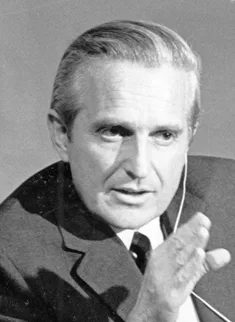
SRI Douglas Engelbart 1968 (cropped)
![Engelbart's prototype of a computer mouse, as designed by Bill English from Engelbart's sketches[14]](https://hmzpdsmr7uczkvx4.public.blob.vercel-storage.com/wikifeed/douglas-engelbart/1-e7b6ef7ff6.webp)
Engelbart's prototype of a computer mouse, as designed by Bill English from Engelbart's sketches[14]
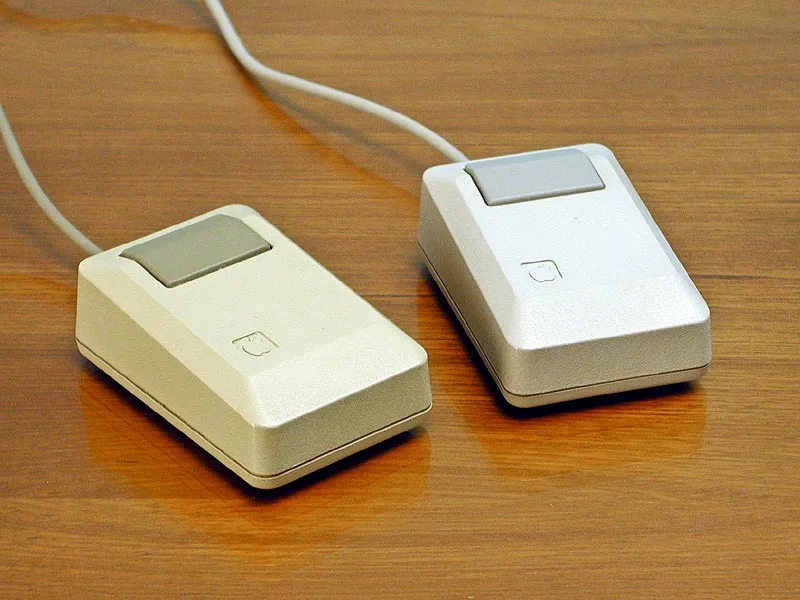
Two Apple Macintosh Plus mice, 1986
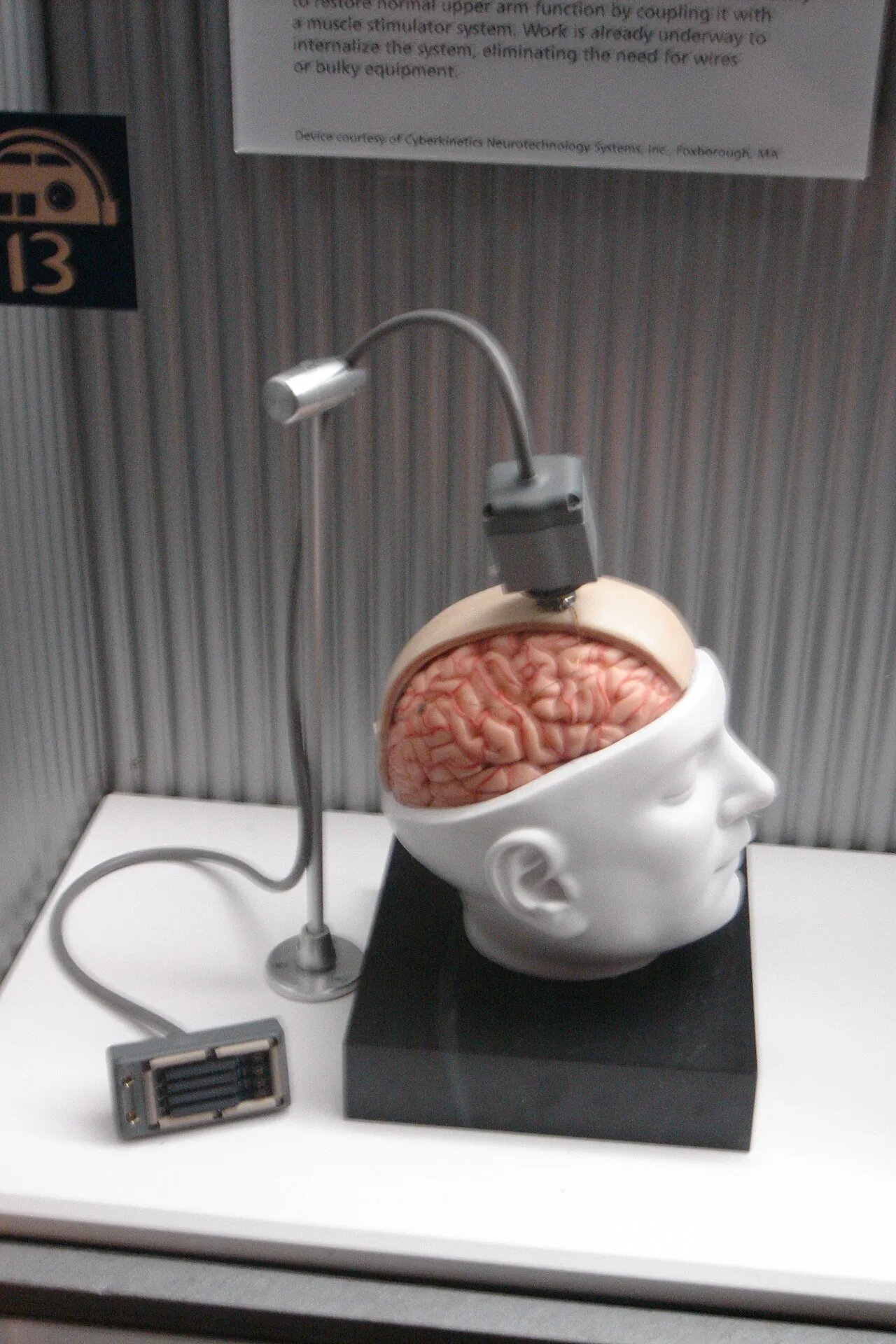
BrainGate
Douglas Engelbart
Douglas Carl Engelbart was an American engineer and computer science pioneer best known for inventing the computer mouse and pioneering human-computer interaction.
A Stilt Hut on Leyte
On the remote island of Leyte, in a stilt hut, Engelbart read Vannevar Bush's 'As We May Think.' The article would have a large influence on his thinking and work. He later made harnessing collective intellect via interactive computers his life's mission, reframing computers from number crunchers to collaboration tools.
From Wikipedia · CC BY-SA 4.0
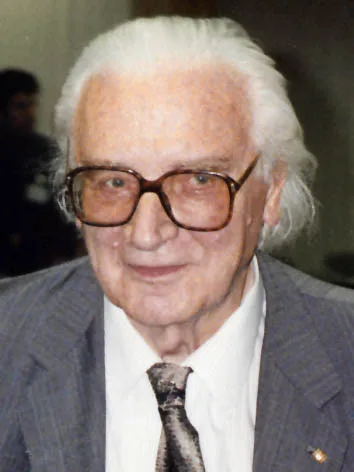
Konrad Zuse (1992)
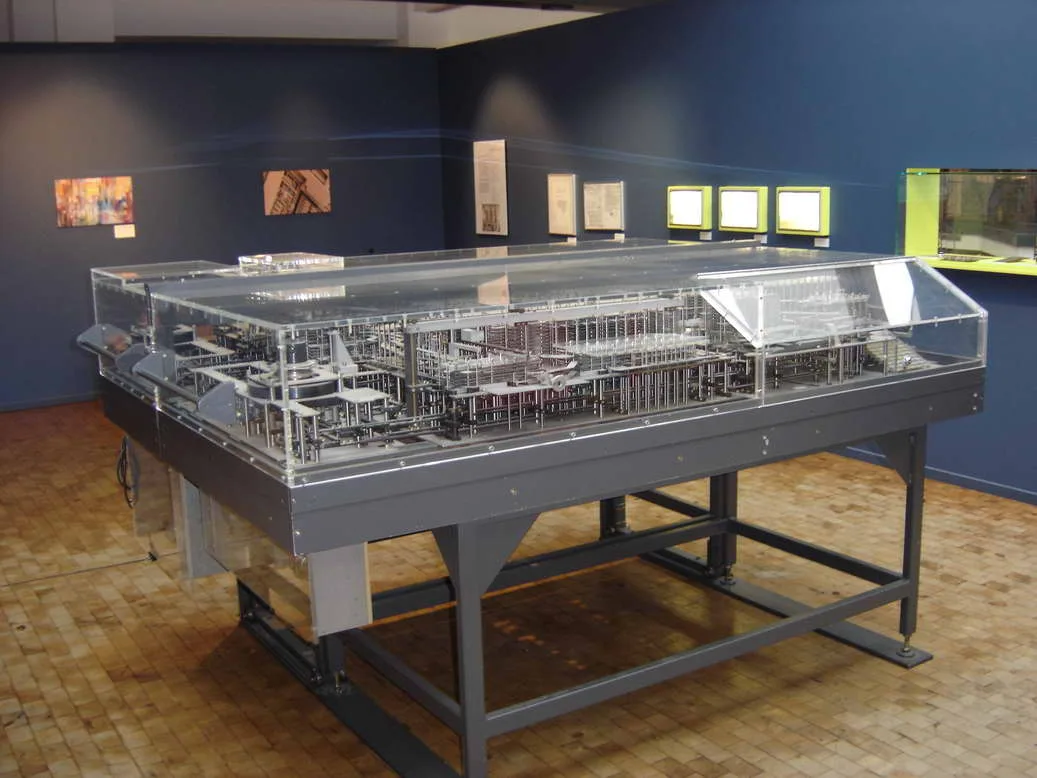
Zuse Z1 replica in the German Museum of Technology in Berlin
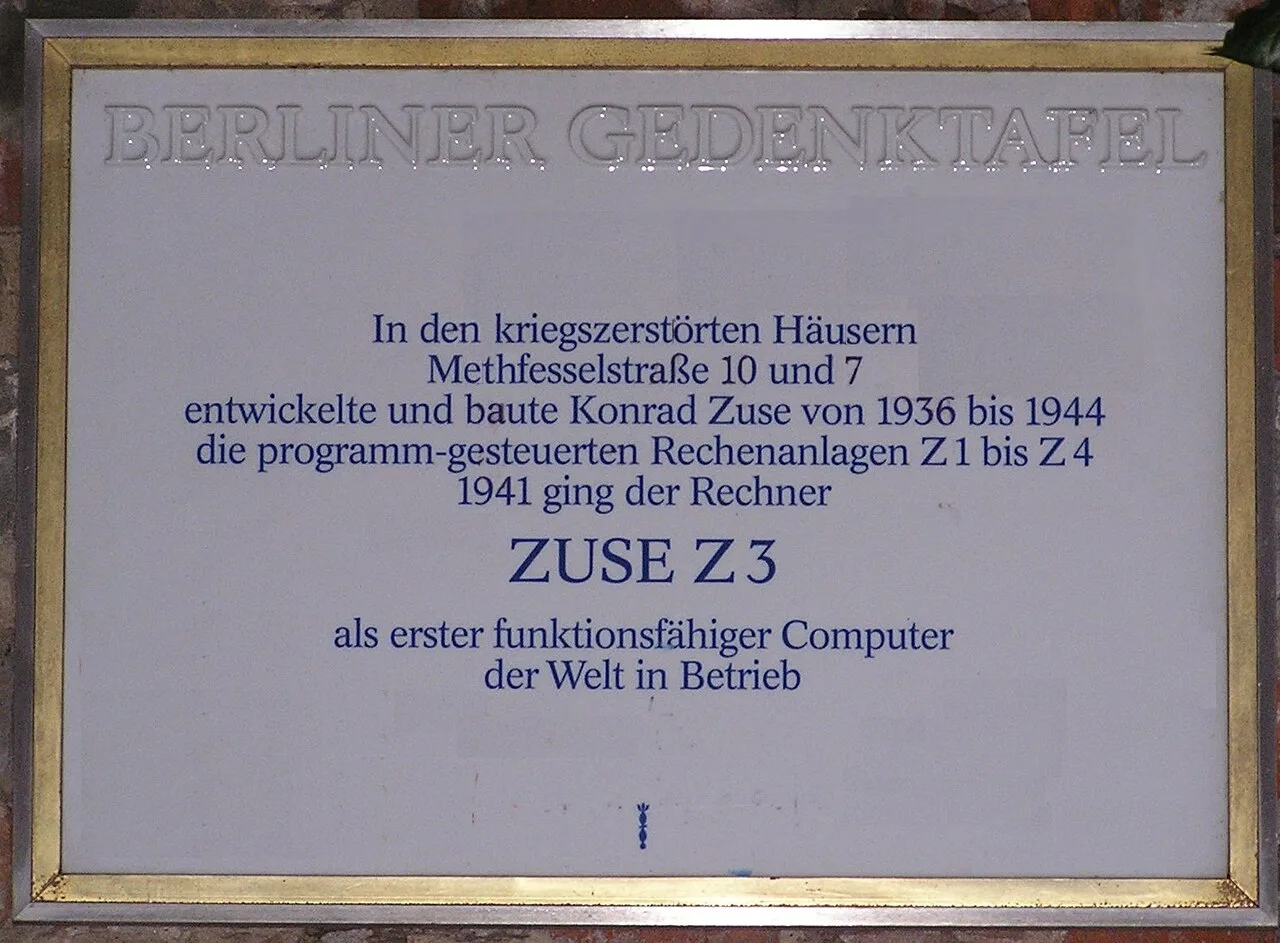
Plaque commemorating Zuse's work, attached to the ruin of Methfesselstraße 7, Berlin
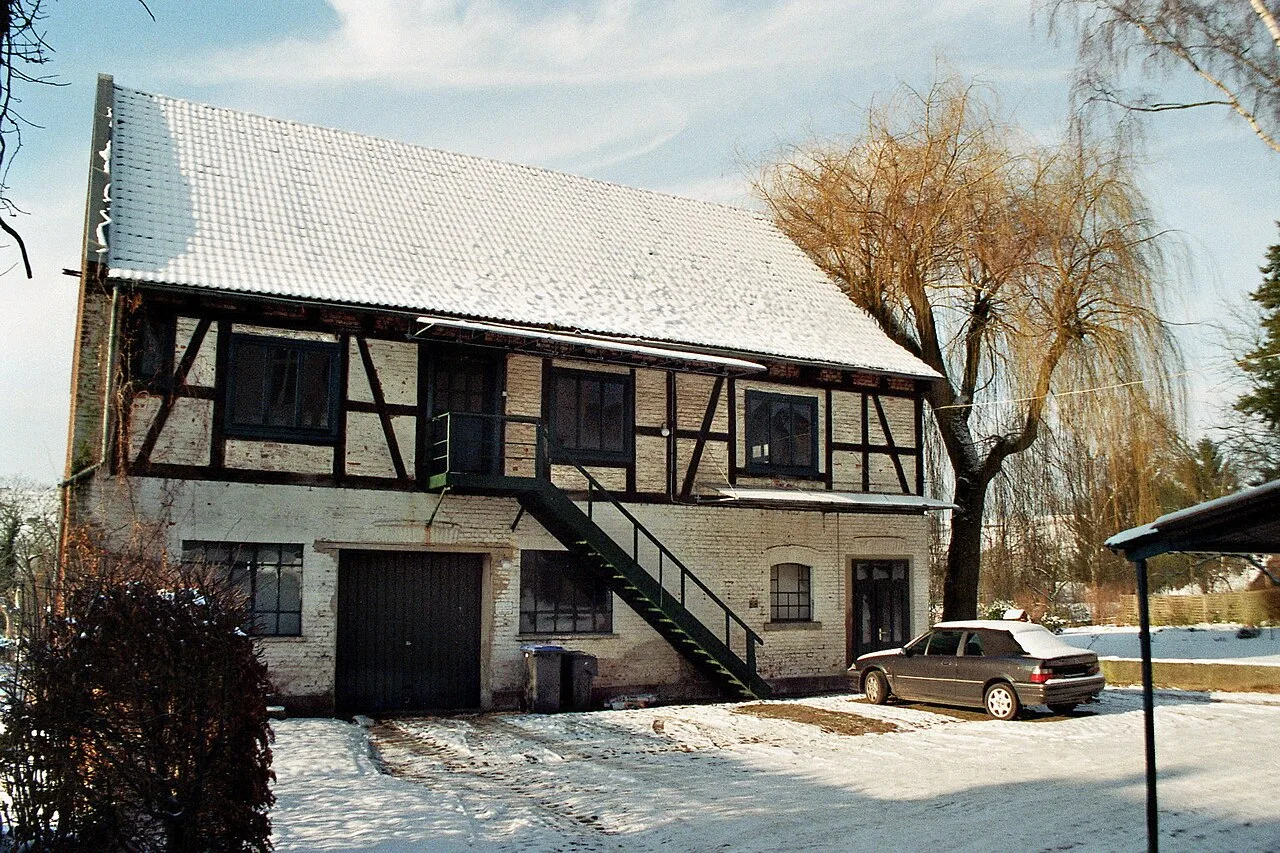
Zuse's workshop at Neukirchen, 2010
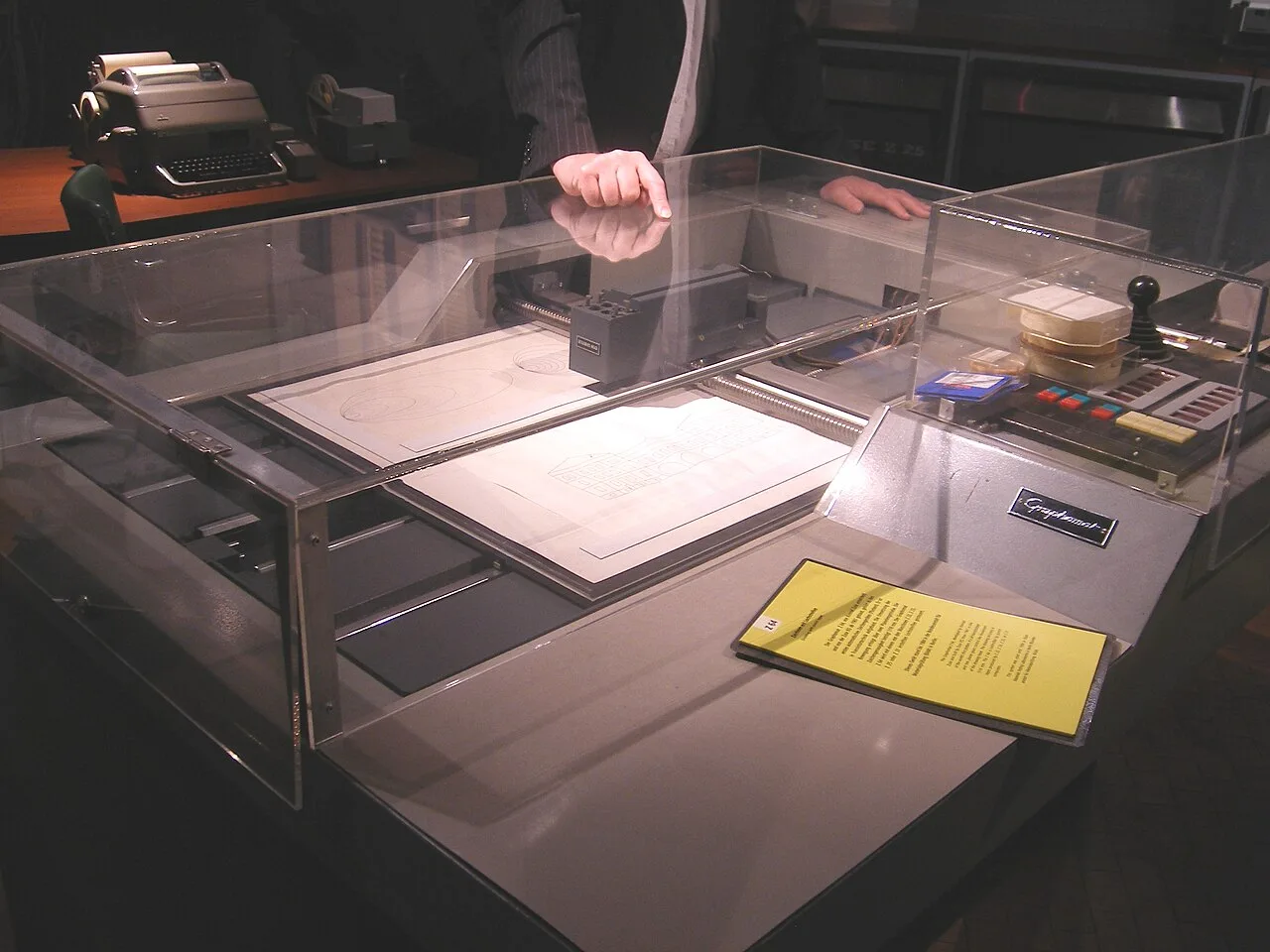
Z64 Graphomat plotter
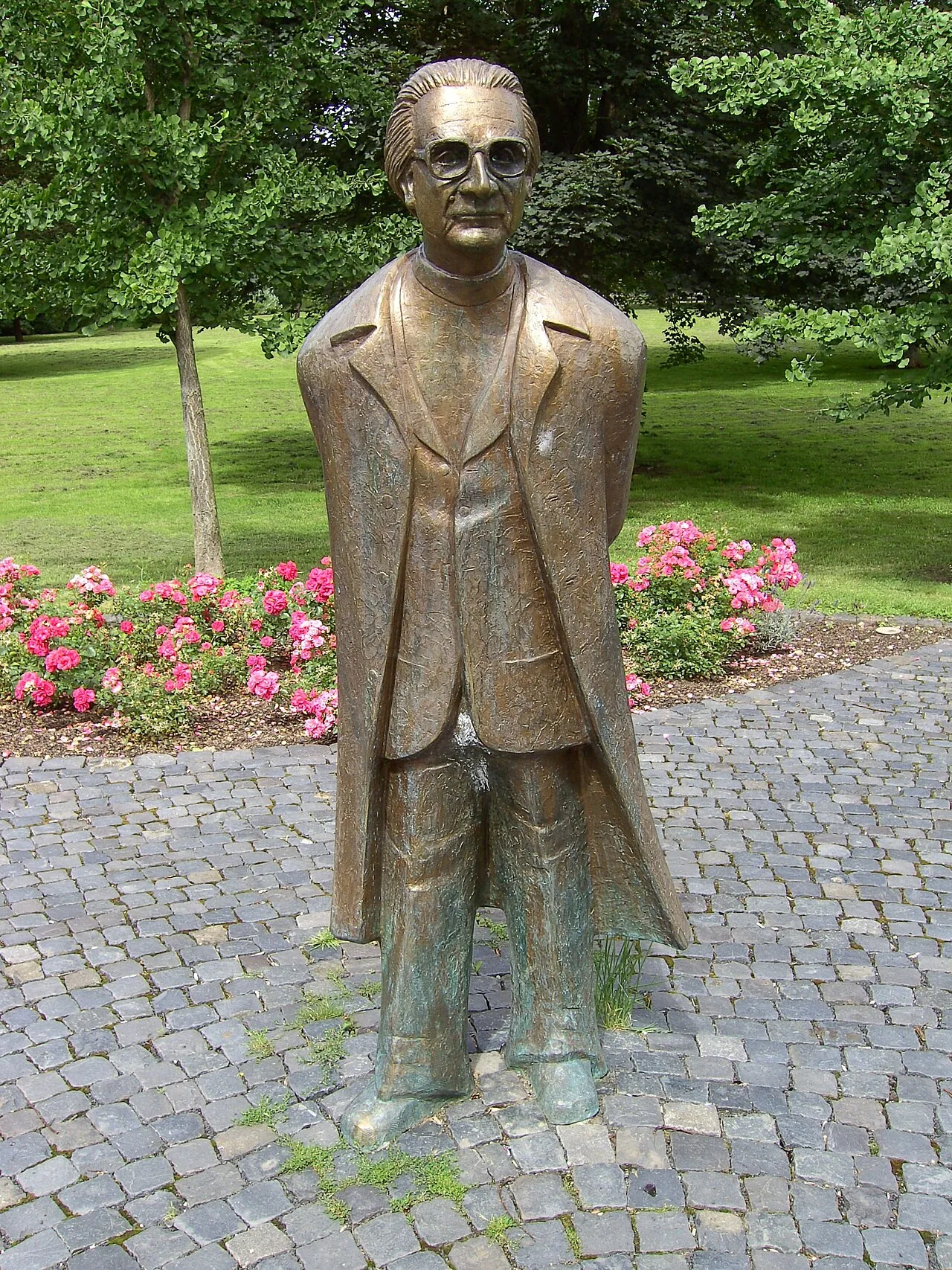
Zuse Memorial in Hünfeld, Hesse
Konrad Zuse
Konrad Zuse was a German engineer and computer scientist who created the Z3, the world's first functional programmable computer.
Rejected for a 400 Mark Oversight
Zuse's doctoral thesis, presenting the Plankalkül language, was rejected by the University of Augsburg because he forgot to pay the DM 400 enrollment fee. He was not bothered. The thesis eventually influenced ALGOL 58, but Plankalkül itself was not implemented until 1975. This trivial administrative lapse delayed recognition of his high-level programming concept.
From Wikipedia · CC BY-SA 4.0