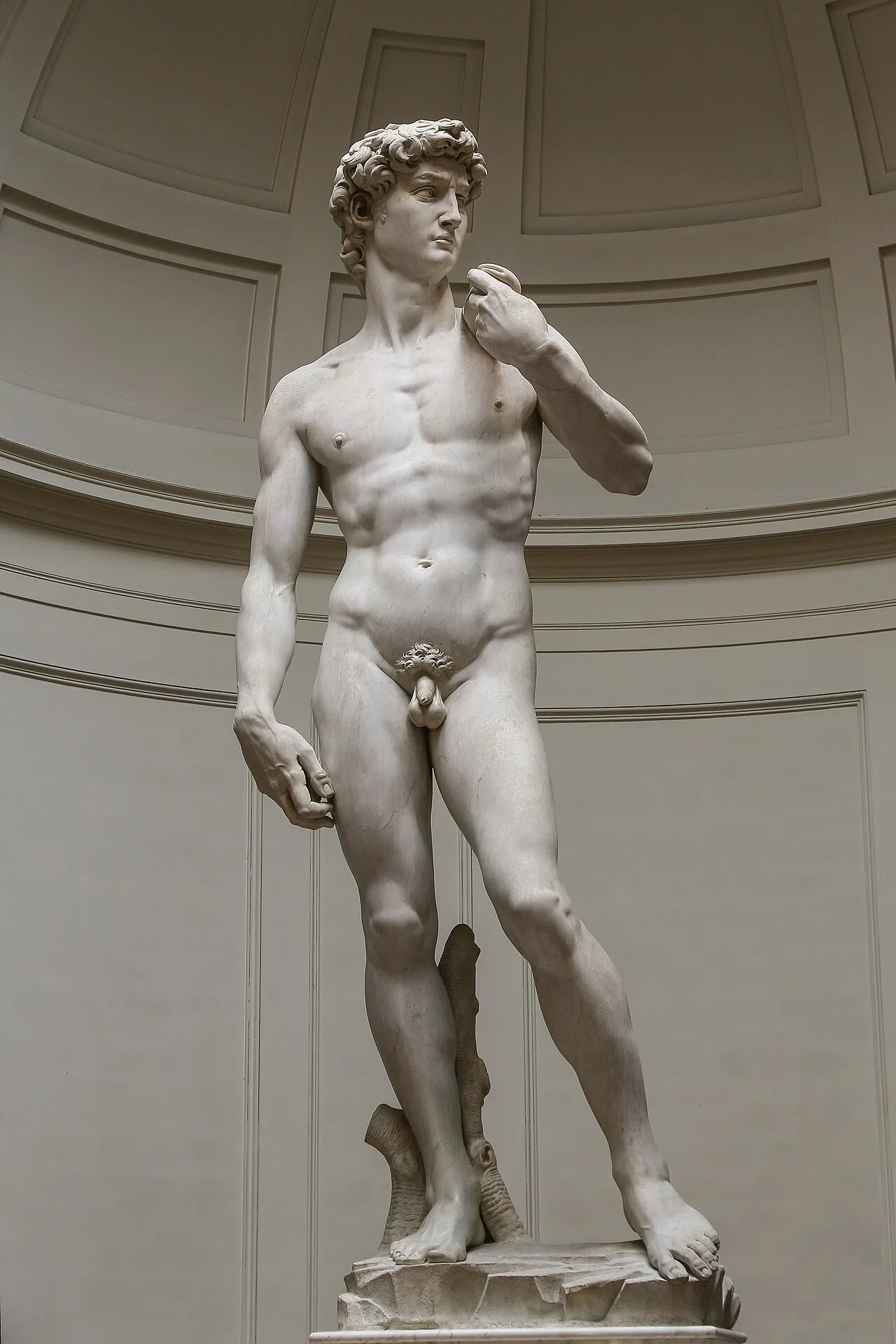
'David' by Michelangelo Fir JBU004
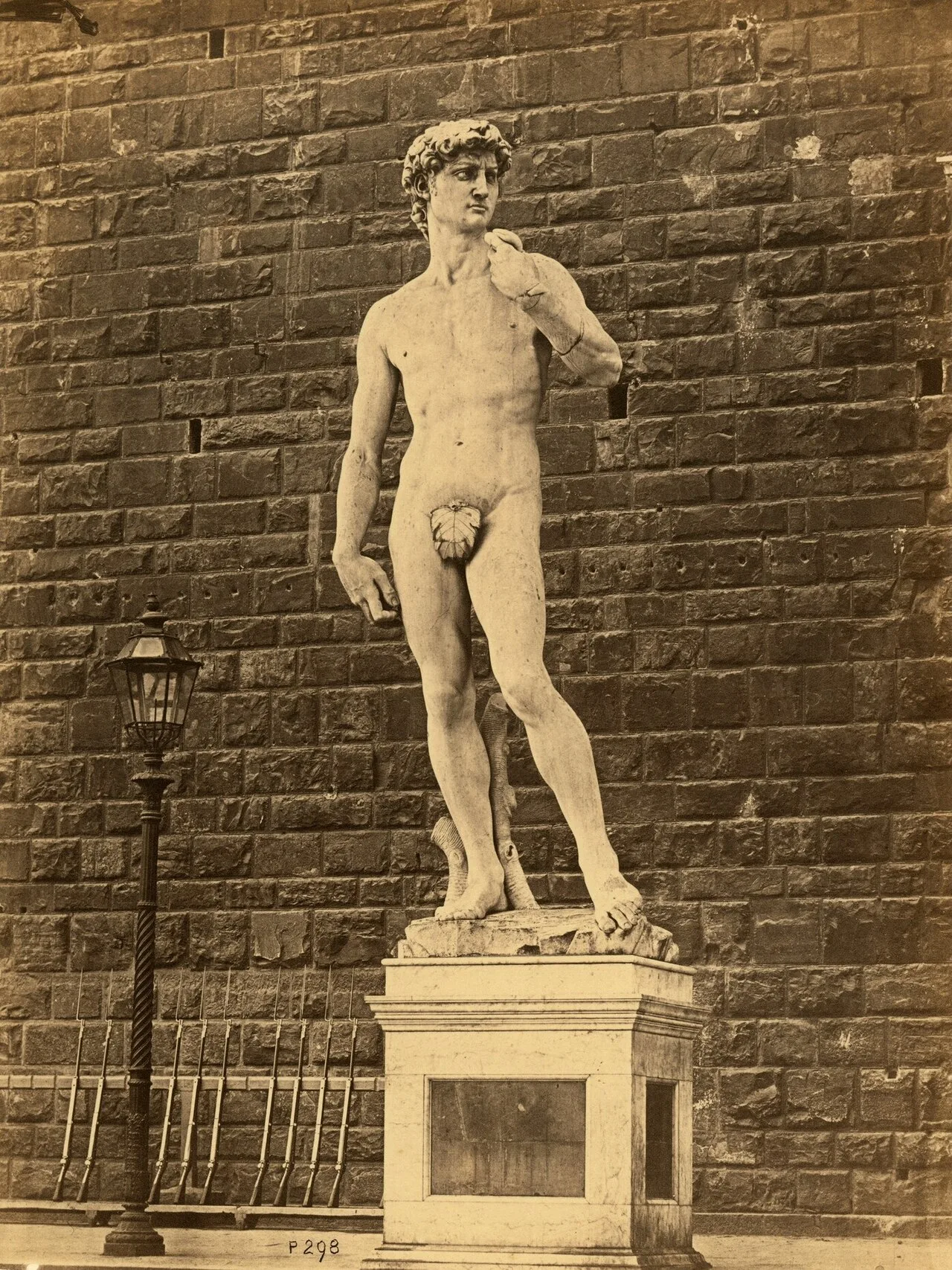
The David in front of the Palazzo Vecchio before 1873, with a leaf covering his genitals

The Pallazzo Vecchio today, with the Fountain of Neptune (1560 and 1574) and other sculptural works

Back view with the sling running down his spine into his left hand
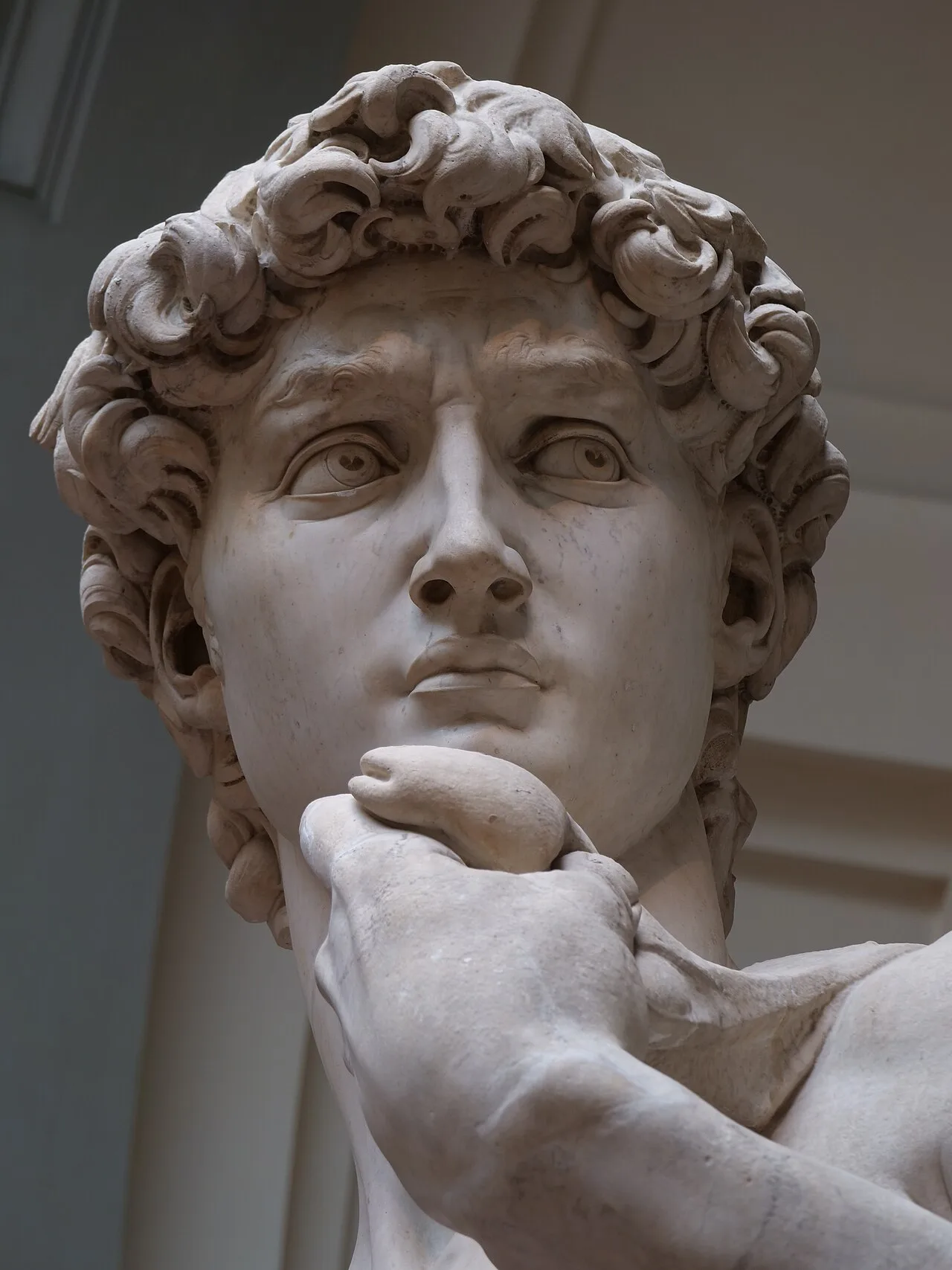
David's gaze
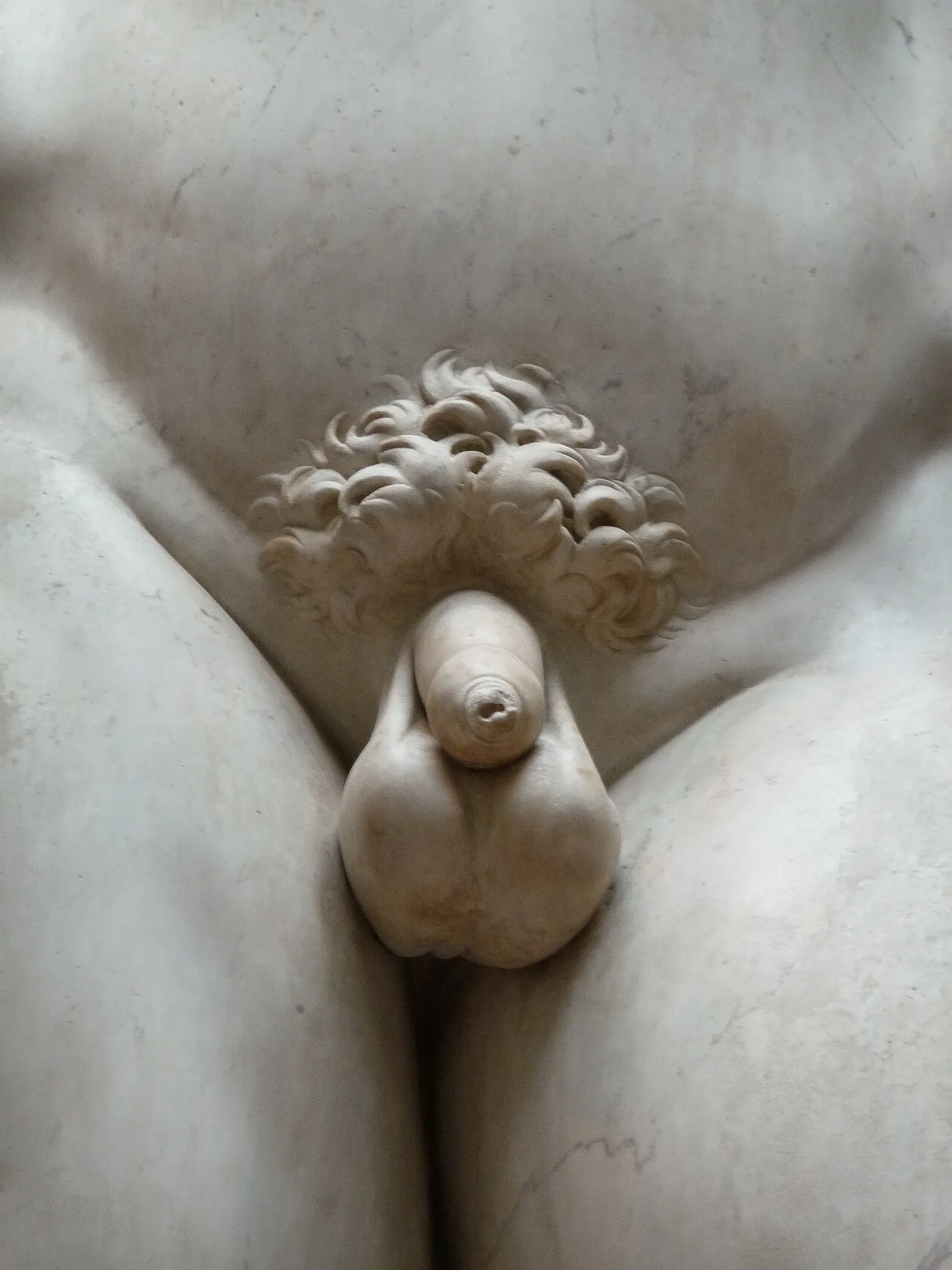
The presence of a foreskin on David's penis, though at odds with the Judaic practice of circumcision, is in keeping with the conventions of Renaissance art.
David (Michelangelo)
David is a masterpiece of Italian Renaissance sculpture created in marble from 1501 to 1504 by Michelangelo.
Rescuing a Botched Giant
Michelangelo did not begin with a fresh quarry block for his colossus. The piece of marble had been roughed out decades earlier before work stalled, leading authorities to seek a master who could salvage it. After an attempt by Antonio Rossellino was cancelled in 1476, the abandoned stone lay exposed to the weather in a workshop yard for twenty-five years before Michelangelo received the commission.
From Wikipedia · CC BY-SA 4.0
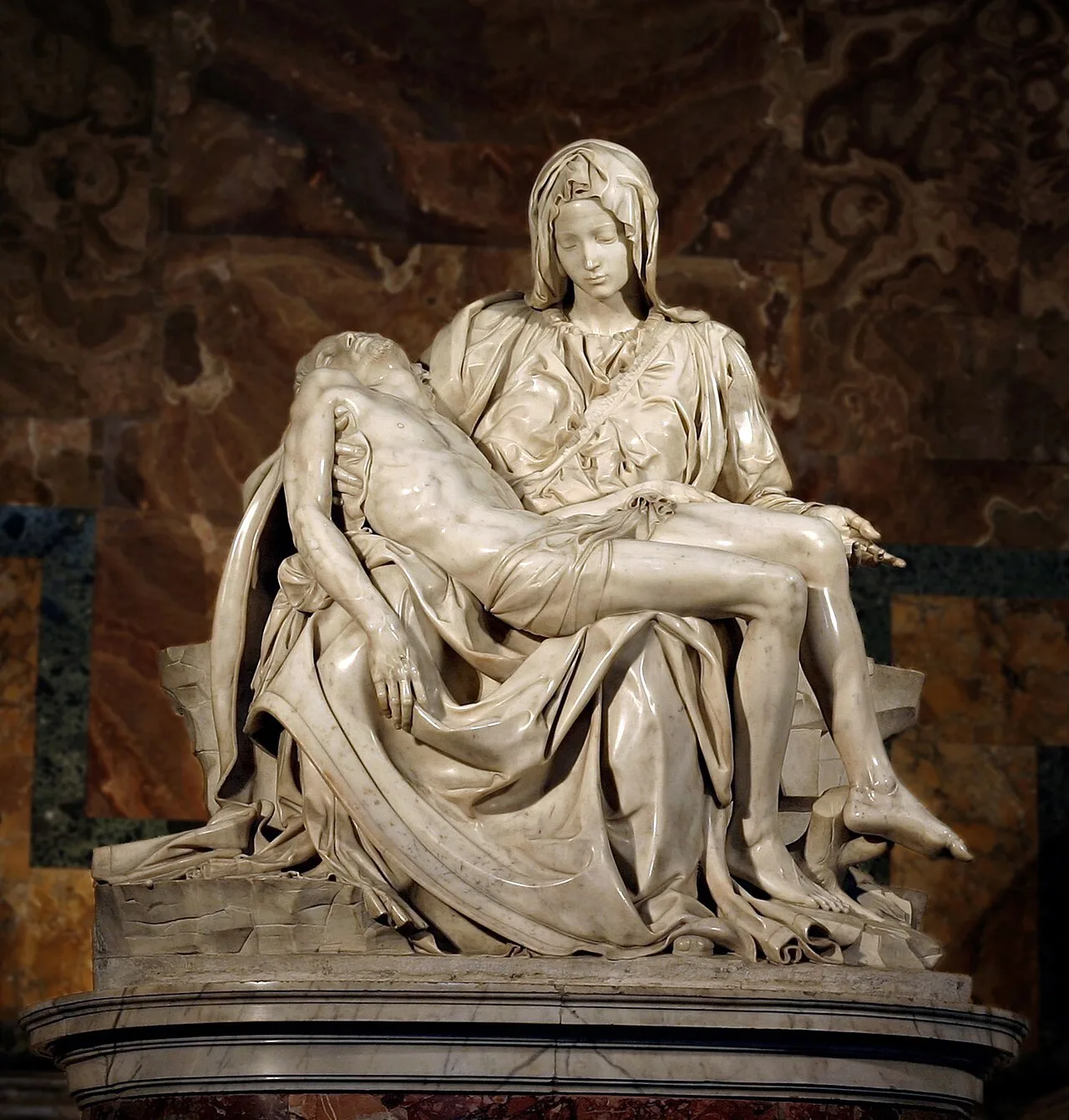
The statue features Mary holding Jesus's dead body
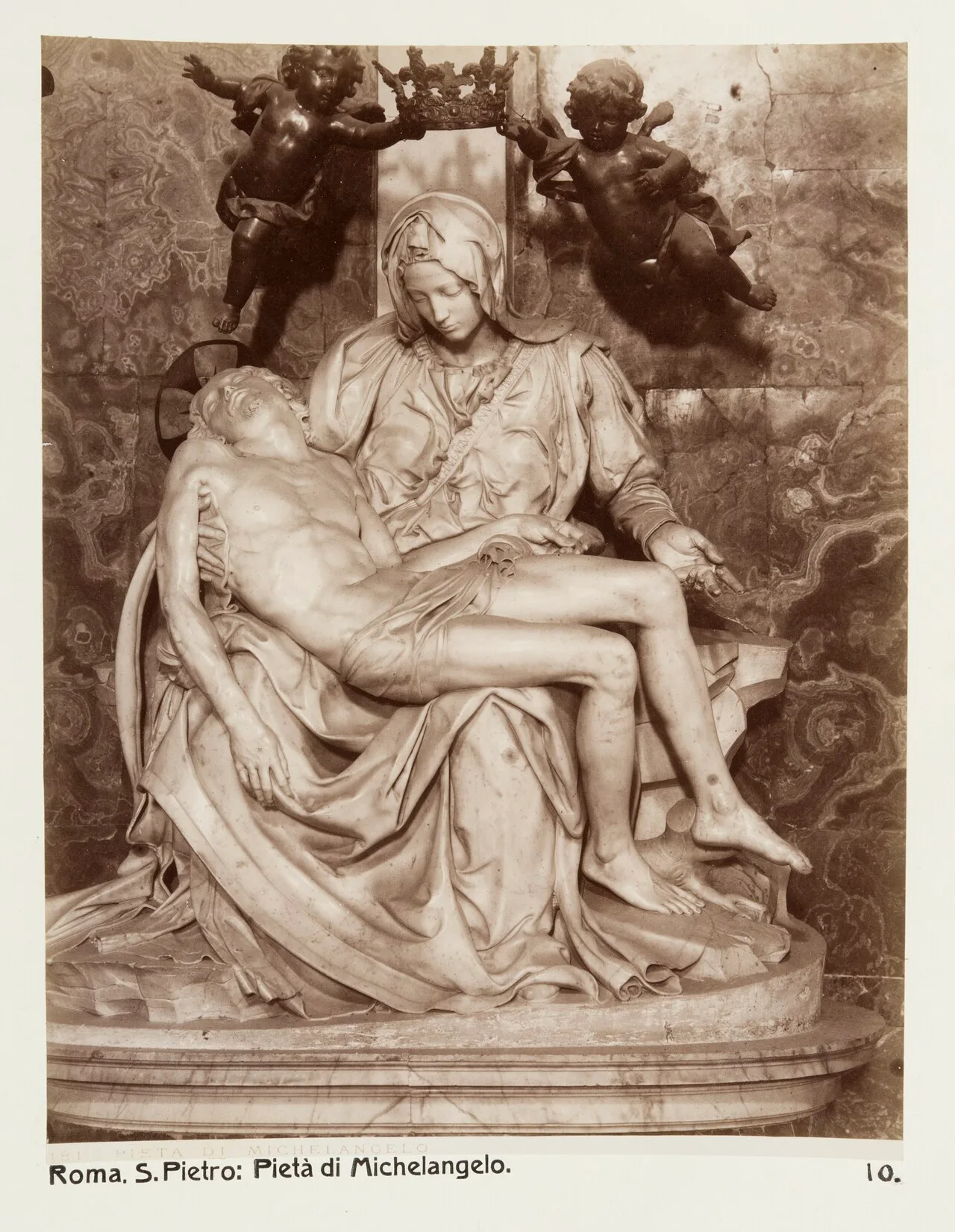
The venerated image with its original canonical crown from 14 August 1637 by the Pontifical decree of Pope Urban VIII. Photo circa, 24 May 1888.

The grand pillars of the Chapel of the Holy Choir, where the two cherubic angels were relocated from the Pietà image in 1749. The Marian image was also pontifically crowned by Pius IX (1854) and Pius X (1904), respectively.
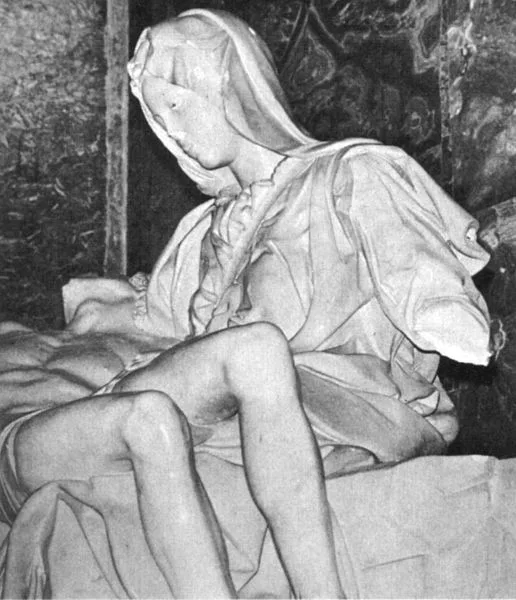
A detail view of the statue with damaged arm, nose and eye, May 1972
Pietà (Michelangelo)
The Pietà is a Carrara marble sculpture of Jesus and Mary by Michelangelo Buonarroti in Saint Peter's Basilica, Vatican City, and a key work of Italian Renaissance sculpture.
Hidden Disproportions Beneath Cascading Drapery
Michelangelo solved the mechanical challenge of cradling a full-grown adult across a woman's lap by quietly altering anatomical scale. The figures are intentionally out of proportion, with Mary's true size masked under heavy folds of fabric. This massive cascade of drapery creates a convincing visual harmony and preserves a balanced pyramidal silhouette.
From Wikipedia · CC BY-SA 4.0

Sistine Chapel ceiling 02 (brightened)

The ceiling as it may have looked before Michelangelo painted it

Libyan Sibyl, Sistine Chapel ceiling, with constellations of Draco and Ursa Minor superimposed (stars from International Astronomical Union diagrams - Ursa Minor very slightly enlarged and rotated). Sketch by Rebecca Jelbert, after Michelangelo.

Creation of the Sun, Moon, and Plants
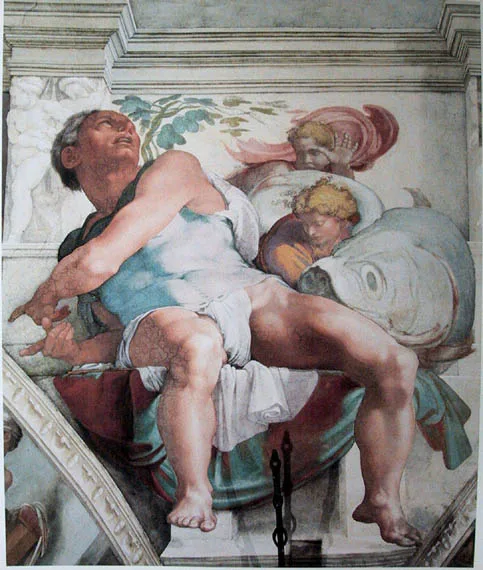
The Prophet Jonah

Ezekias spandrel
Sistine Chapel ceiling
The Sistine Chapel ceiling, painted in fresco by Michelangelo between 1508 and 1512, is a cornerstone work of High Renaissance art.
The Reluctant Sculptor's Forced Commission
Michelangelo identified as a sculptor rather than a painter and was reluctant to undertake the chapel vault. He urged that his young rival Raphael take on the work instead, but the pope remained persistent. A contract was signed on 8 May 1508 with a promised fee of 3,000 ducats.
From Wikipedia · CC BY-SA 4.0
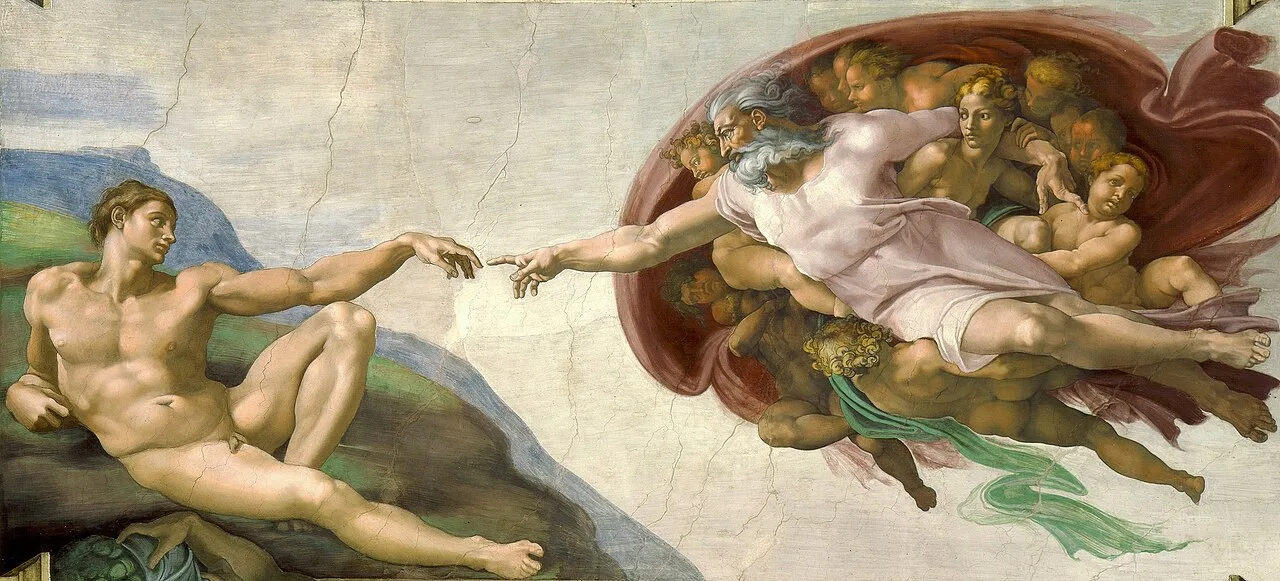
Michelangelo - Creation of Adam (cropped)

Michelangelo painted the ceiling of the Sistine Chapel; the work took approximately four years to complete (1508–1512). Between (top and bottom respectively) The Creation of Eve and Separation of Land and Water this fresco can be seen.

God (right) is depicted as a white-bearded man.
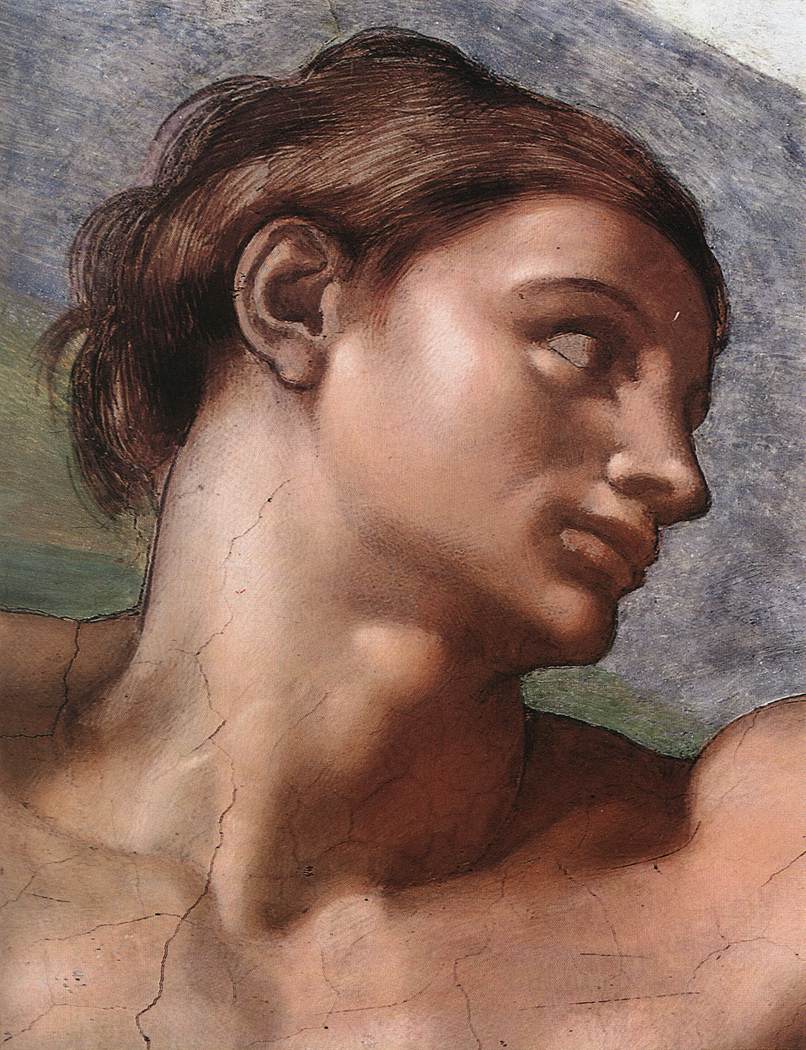
Adam

God

Scheme for the Decoration of the Vault of the Sistine Chapel: Studies of Arms and Hands, British Museum
The Creation of Adam
The Creation of Adam is a fresco painting by Italian artist Michelangelo, which forms part of the Sistine Chapel's ceiling, painted 1508–1512. It illustrates the Biblical creation narrative from Genesis.
A Commission Orchestrated for Failure
Michelangelo did not initially seek to paint the Sistine Chapel ceiling. Bramante, who was directing work on St Peter's Basilica, urged Pope Julius II to reassign Michelangelo to a medium he had not mastered, expecting him to fail. Michelangelo persevered over four years from 1508 to 1512, converting a rival's trap into one of history's defining artistic achievements.
From Wikipedia · CC BY-SA 4.0

Last Judgement (Michelangelo)

Mary and Christ

The damned in the air
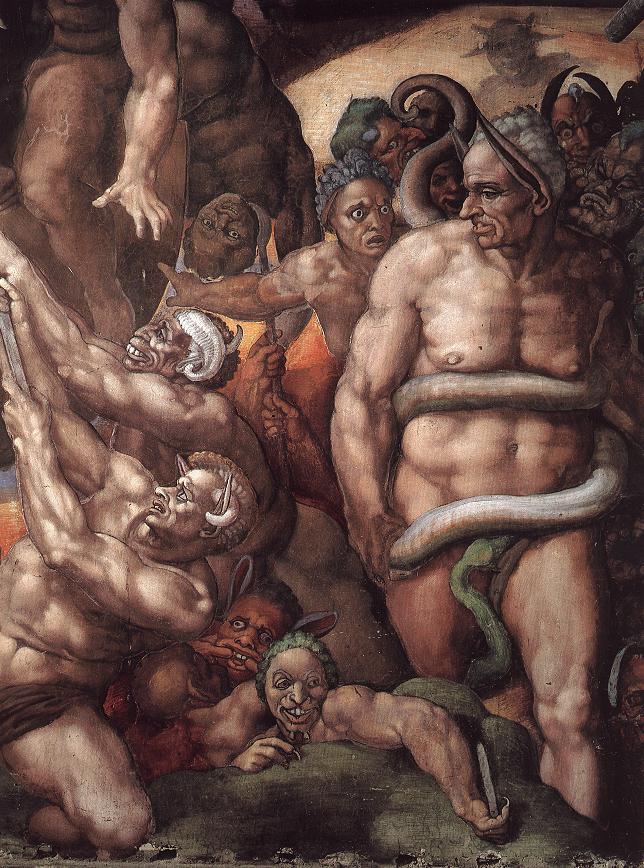
Group of the damned, with Biagio da Cesena as Minos at right

Angels at the top left, one with the Crown of Thorns

St. Peter with his keys
The Last Judgment (Michelangelo)
The Last Judgment is a fresco by Michelangelo covering the whole altar wall of the Sistine Chapel in Vatican City. It depicts the Second Coming of Christ and the final and eternal judgment by God of all humanity.
An Eleven-Inch Incline
Preparing the altar wall demanded radical structural intervention rather than painting on an existing surface. Michelangelo mandated the filling-in of two narrow windows and the removal of three cornices to secure an unbroken expanse. The entire wall was reconstructed to lean forward as it rises, creating a slant of about 11 inches over the height of the fresco.
From Wikipedia · CC BY-SA 4.0
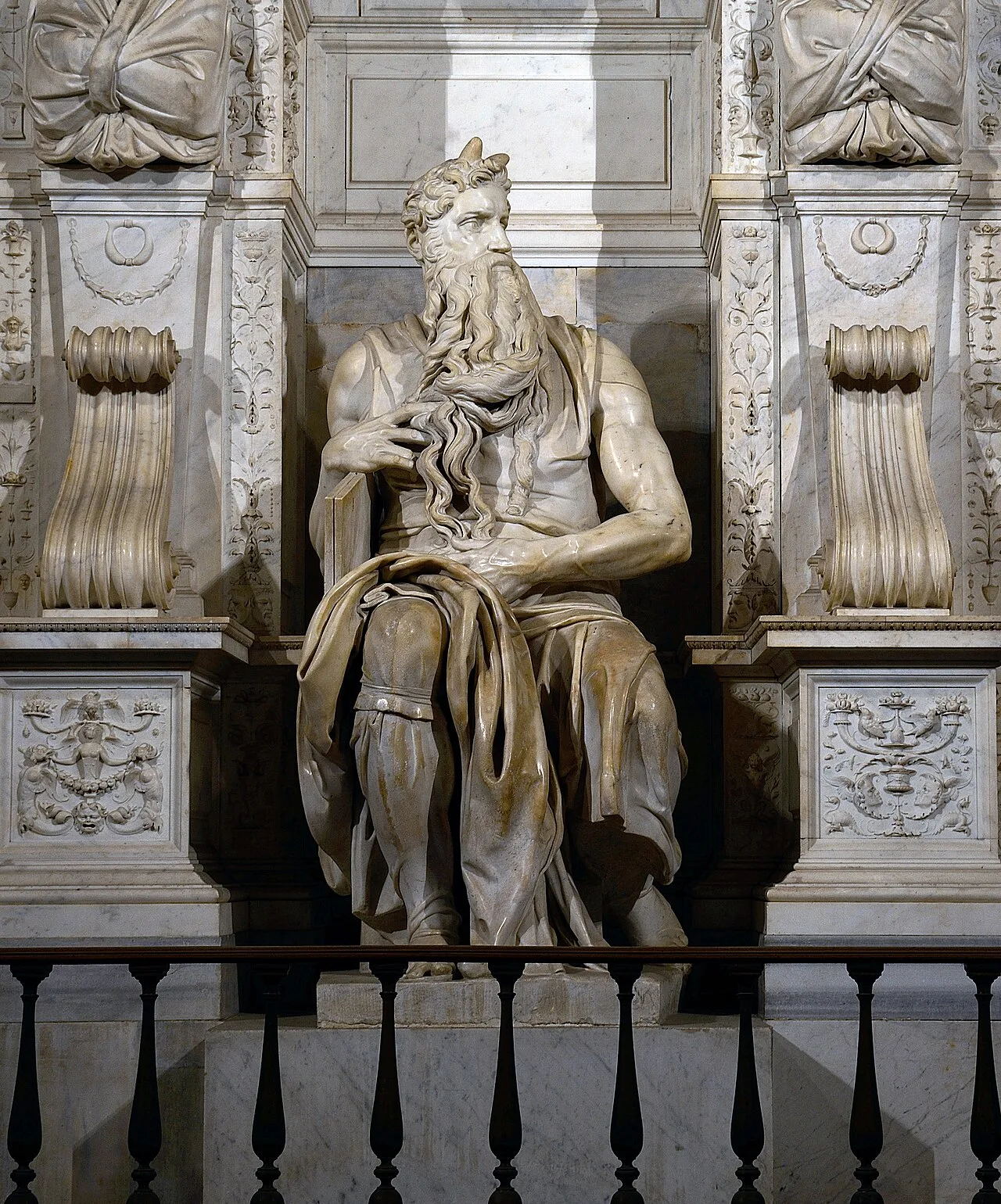
Michelangelo's Moses (Rome)
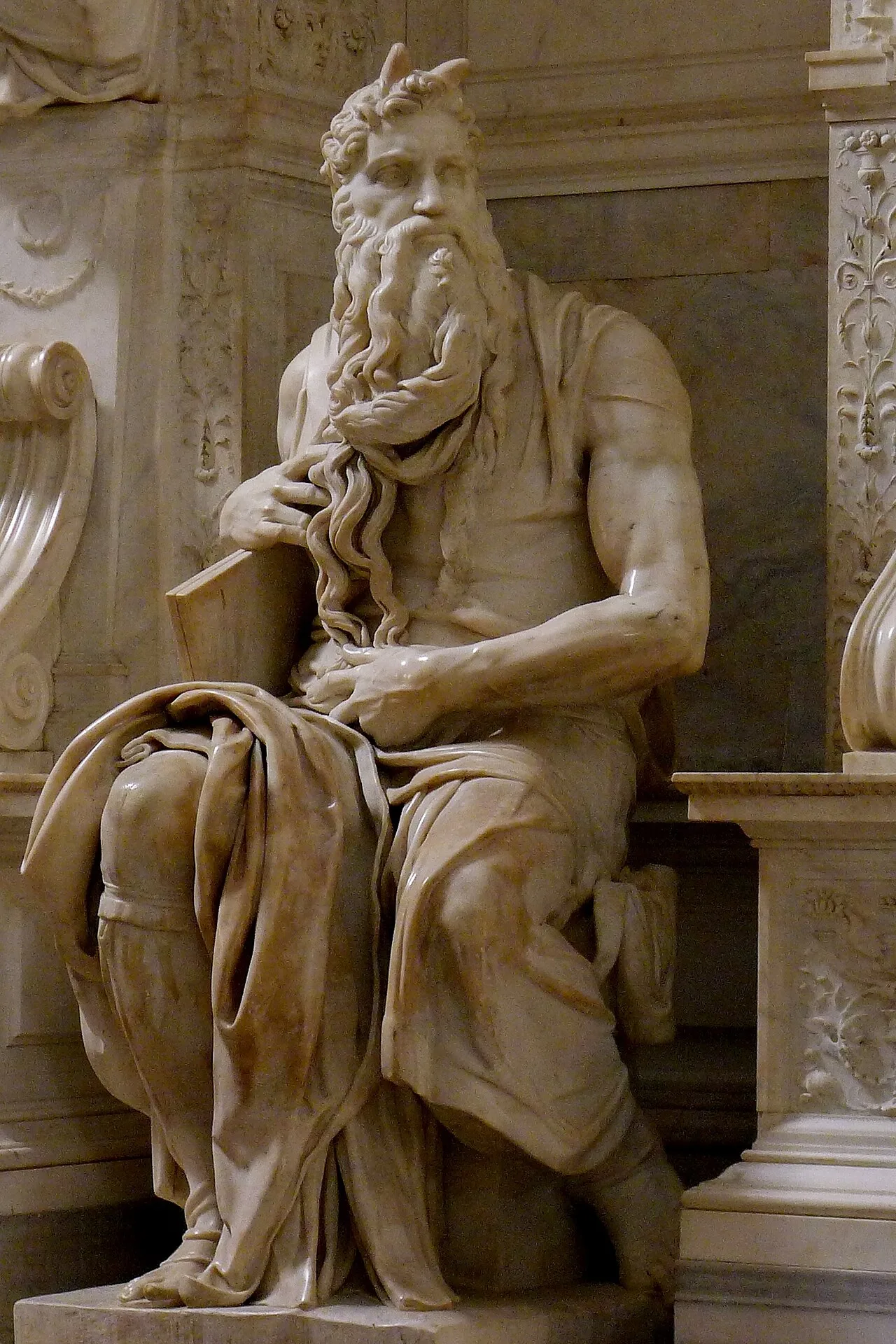
Michelangelo's Moses
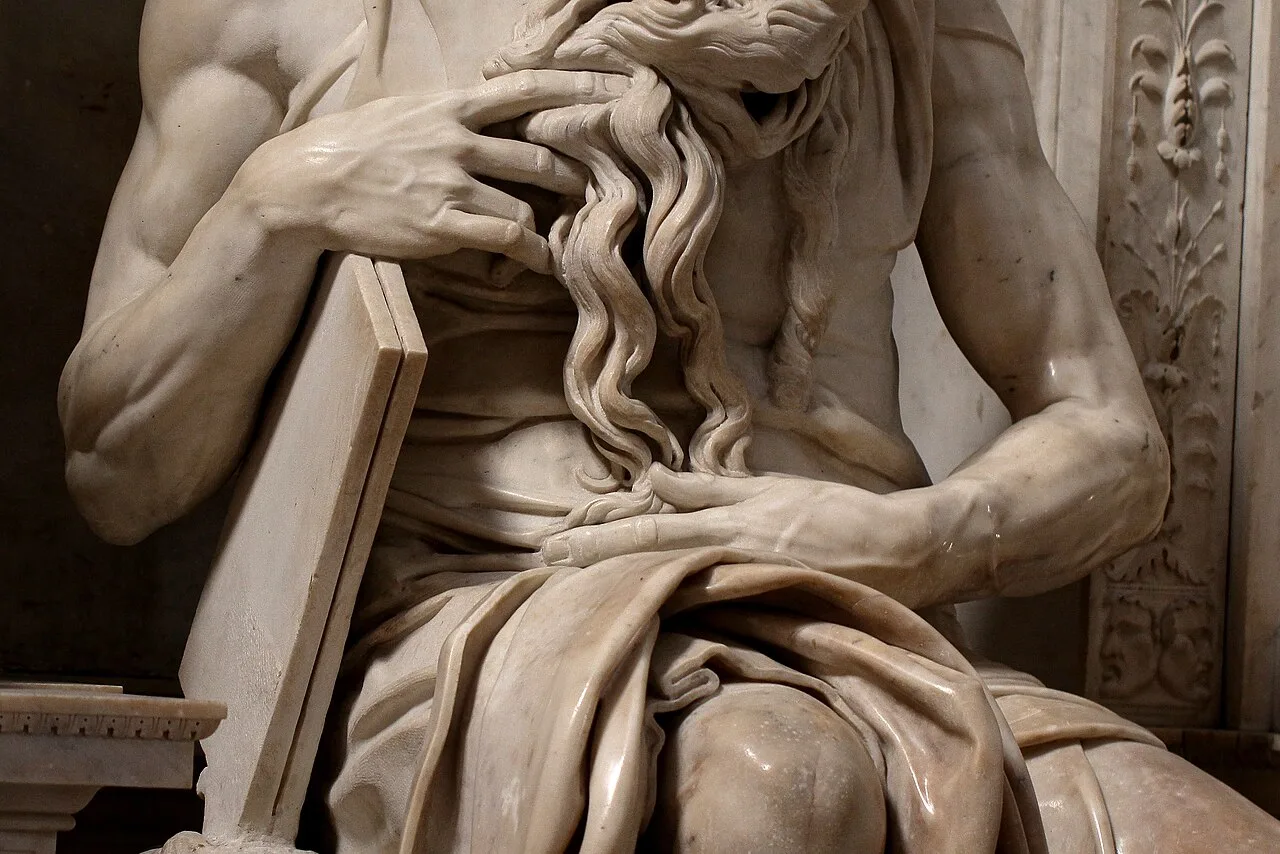
Michelangelo's Moses, detail
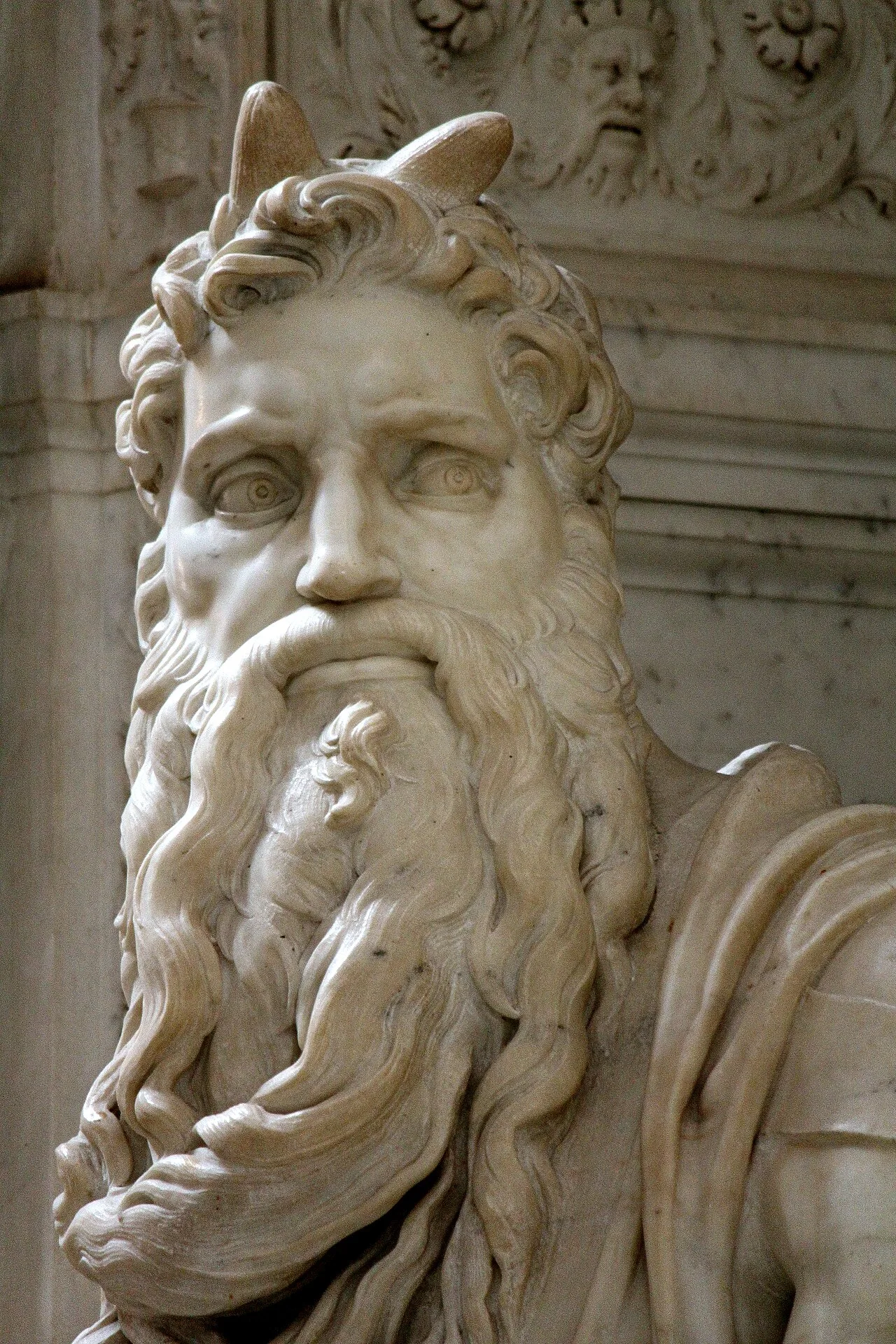
Detail of the statue's bicorned head
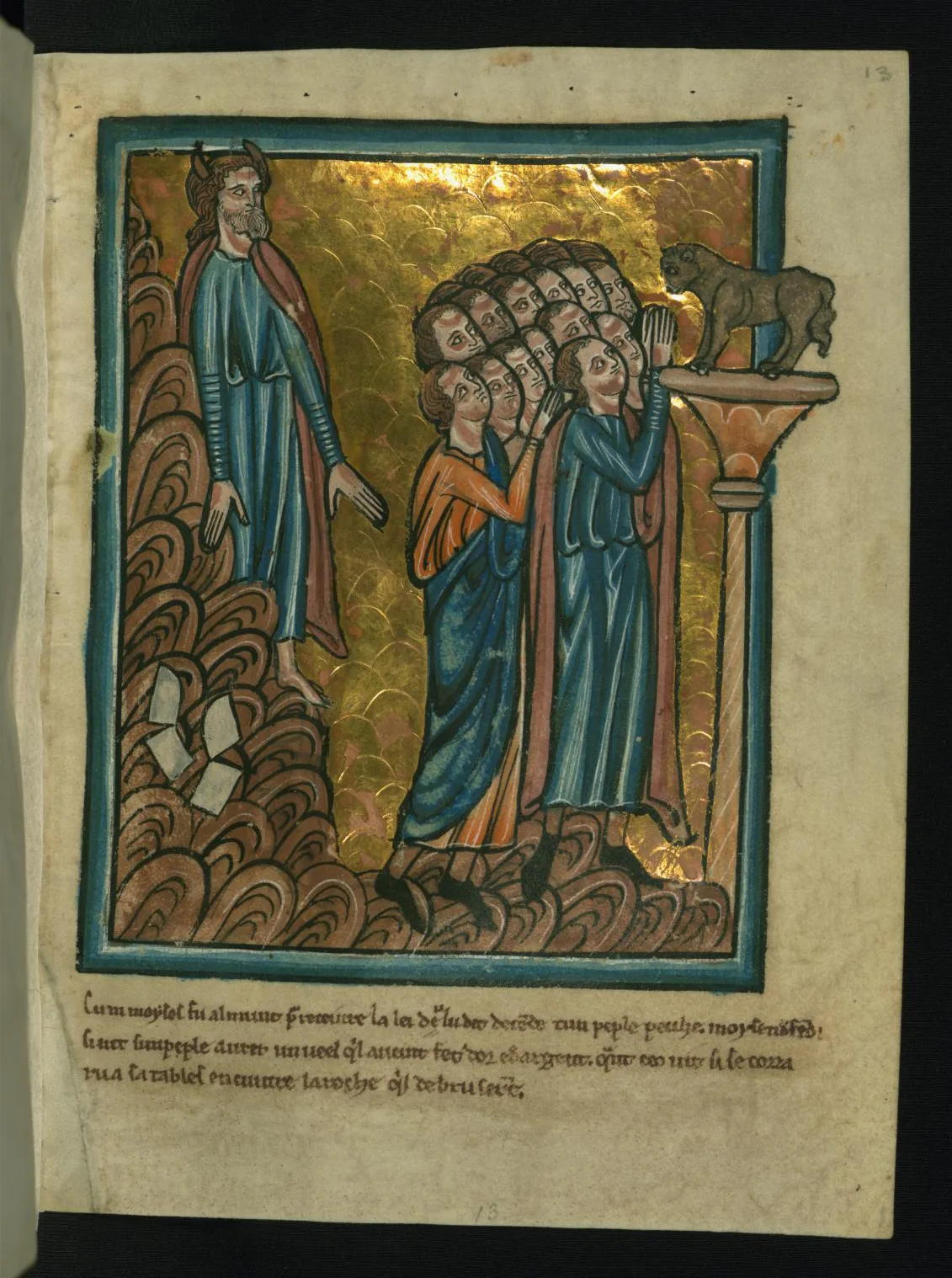
Illustration of Moses with horns from a 13th-century illuminated manuscript
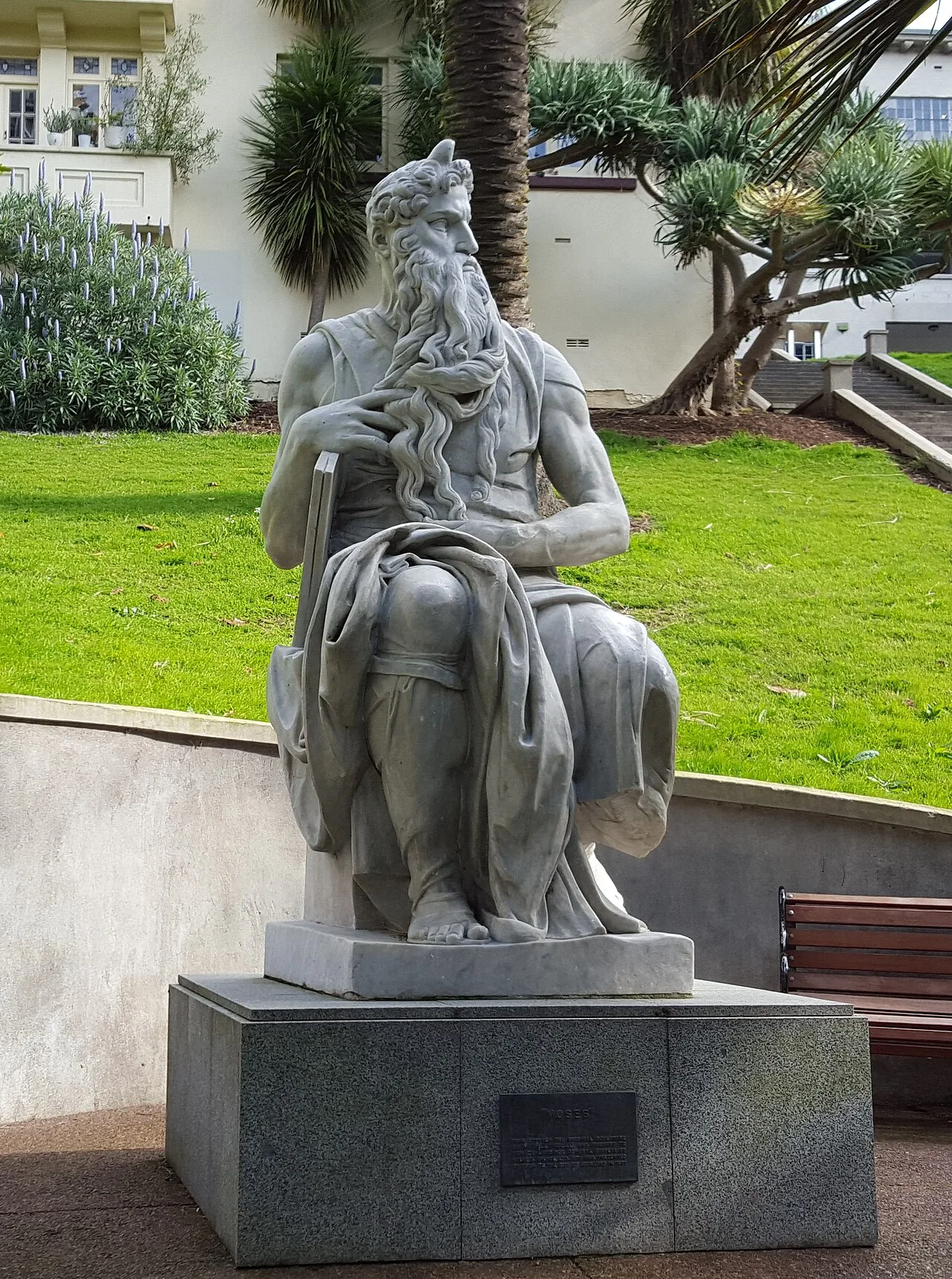
A replica of the statue in Myers Park, Auckland, New Zealand
Moses (Michelangelo)
Moses is a c. 1513–1515 sculpture by the Italian High Renaissance artist Michelangelo, housed in the Basilica of San Pietro in Vincoli in Rome.
Horns Forged from a Latin Mistranslation
The prominent horns resting upon the statue's head derive directly from Jerome's translation choices rather than traditional biblical intent. In verses 29, 30, and 35 of Exodus chapter 34, the Latin Vulgate described Moses's illuminated countenance using the term "cornuta" upon receiving the commandments. Although medieval scholars understood the word as expressing glory, this peculiar phrasing cemented an enduring iconographic tradition across Renaissance art.
From Wikipedia · CC BY-SA 4.0

Tondo Doni 2015

Evidence of Michelangelo's painting style is seen in the Doni Tondo. His work on the image foreshadows his technique in the Sistine Chapel.

The Doni Tondo was influenced by an early version of Leonardo da Vinci's The Virgin and Child with St. Anne. This is the completed version, painted in 1510.
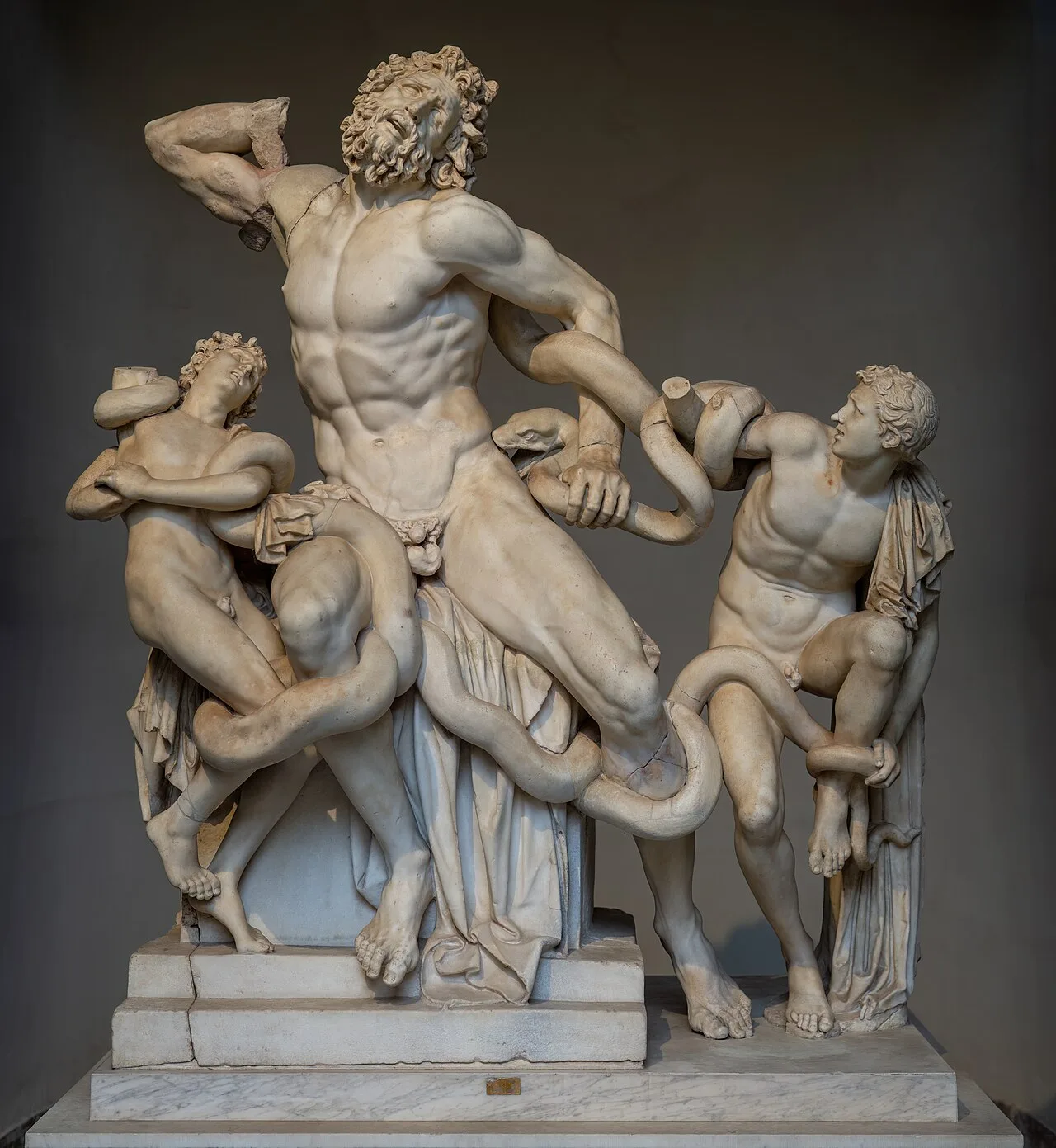
The nude figures in the tondo background are said to have been influenced by the statue of Laocoön and His Sons, found in Rome in 1506, therefore dating Michelangelo's picture later than that date.

Visitors observing Doni Tondo in Uffizi Gallery
Doni Tondo
The Doni Tondo, or Doni Madonna, is the only surviving finished panel painting by the mature Michelangelo. It is housed in the Uffizi in Florence, Italy, in its original frame.
Interlocking Moons and Lions on the Original Frame
Commissioned by Agnolo Doni, the painting likely celebrated his January 1504 marriage to Maddelena Strozzi. The original frame, which Michelangelo may have helped design, features five protruding three-dimensional heads alongside carved heraldry. Ribbons interlock the Strozzi family's crescent moons with the Doni lions, embedding secular matrimonial symbols directly into the sacred artwork.
From Wikipedia · CC BY-SA 4.0
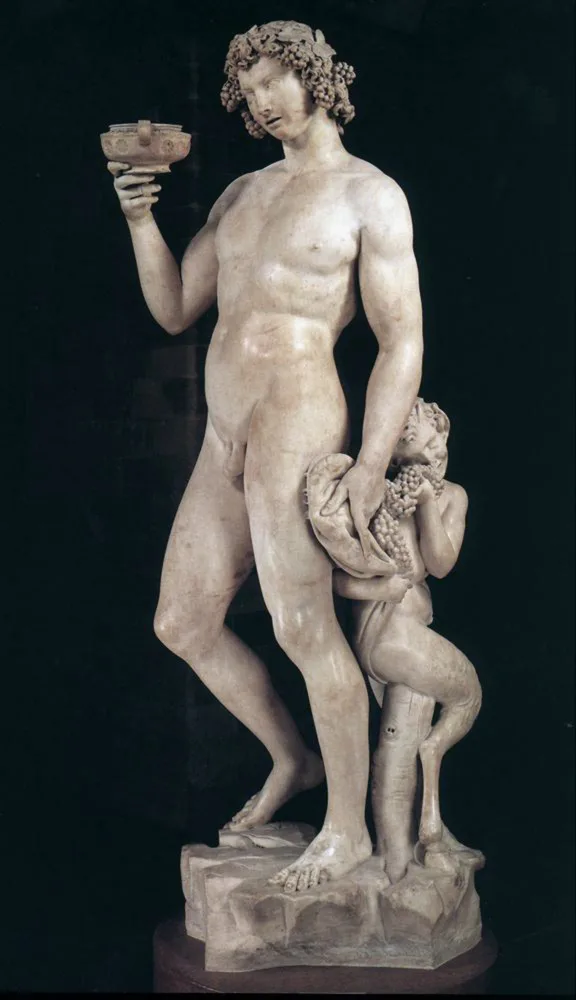
Michelangelo Bacchus

Drawing of the Bacchus in the sculpture garden of Jacopo Galli by Maarten van Heemskerck, c. 1533–1536

Rear of the sculpture
Bacchus (Michelangelo)
Bacchus is a 1496–1497 marble sculpture by Michelangelo that depicts the Roman god of wine in a reeling pose suggestive of drunkenness.
Commission Born from Unmasked Forgery
Michelangelo's commission for Bacchus arose directly from an act of art fraud. Cardinal Raffaele Riario had previously bought Michelangelo's Cupid under the impression that it was an authentic ancient carving, only to uncover the deception and demand a refund of 200 ducats. The patron then challenged the young artist to produce an original sculpture, prompting the creation of the life-sized drunken deity.
From Wikipedia · CC BY-SA 4.0
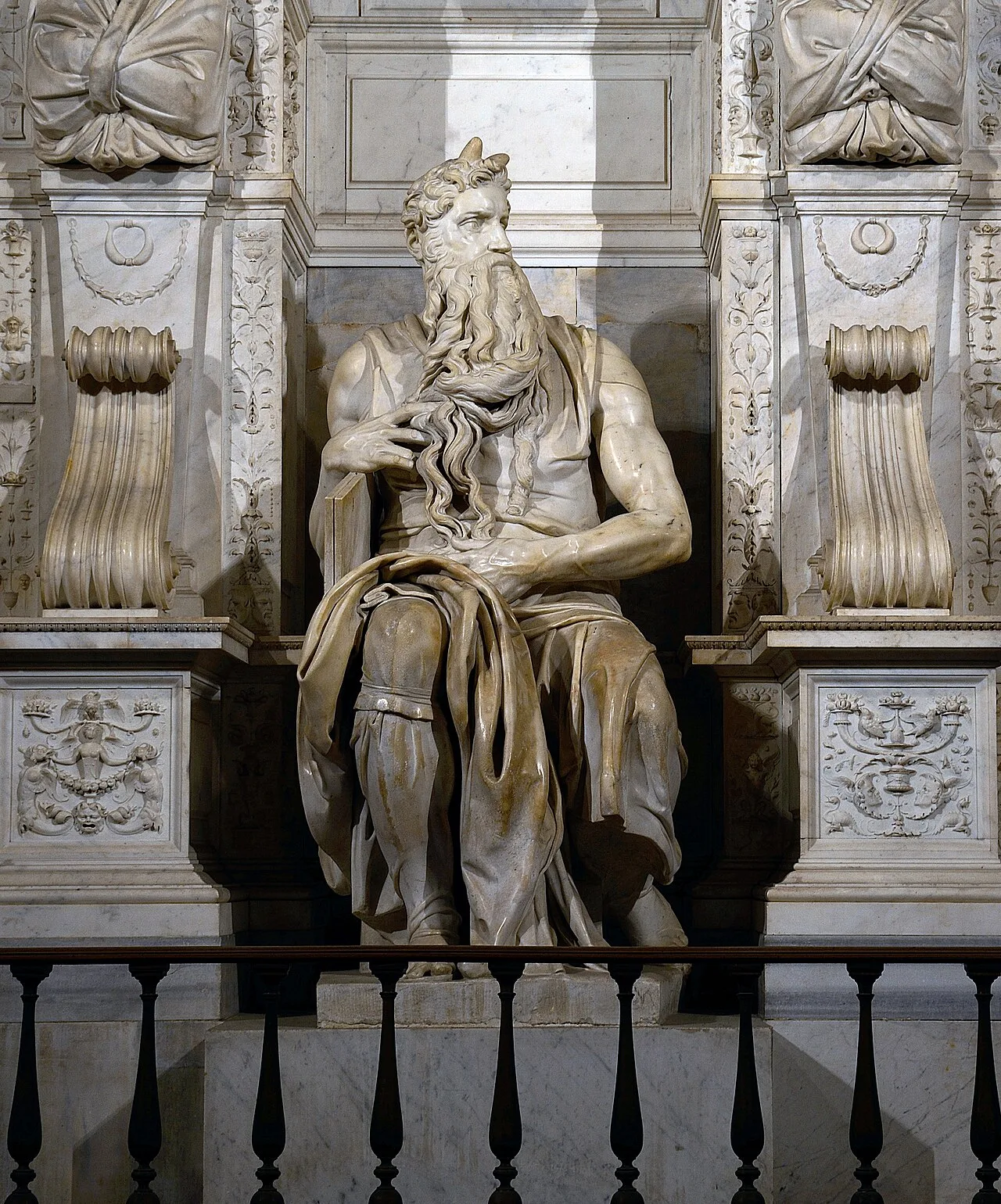
Michelangelo's Moses (Rome)
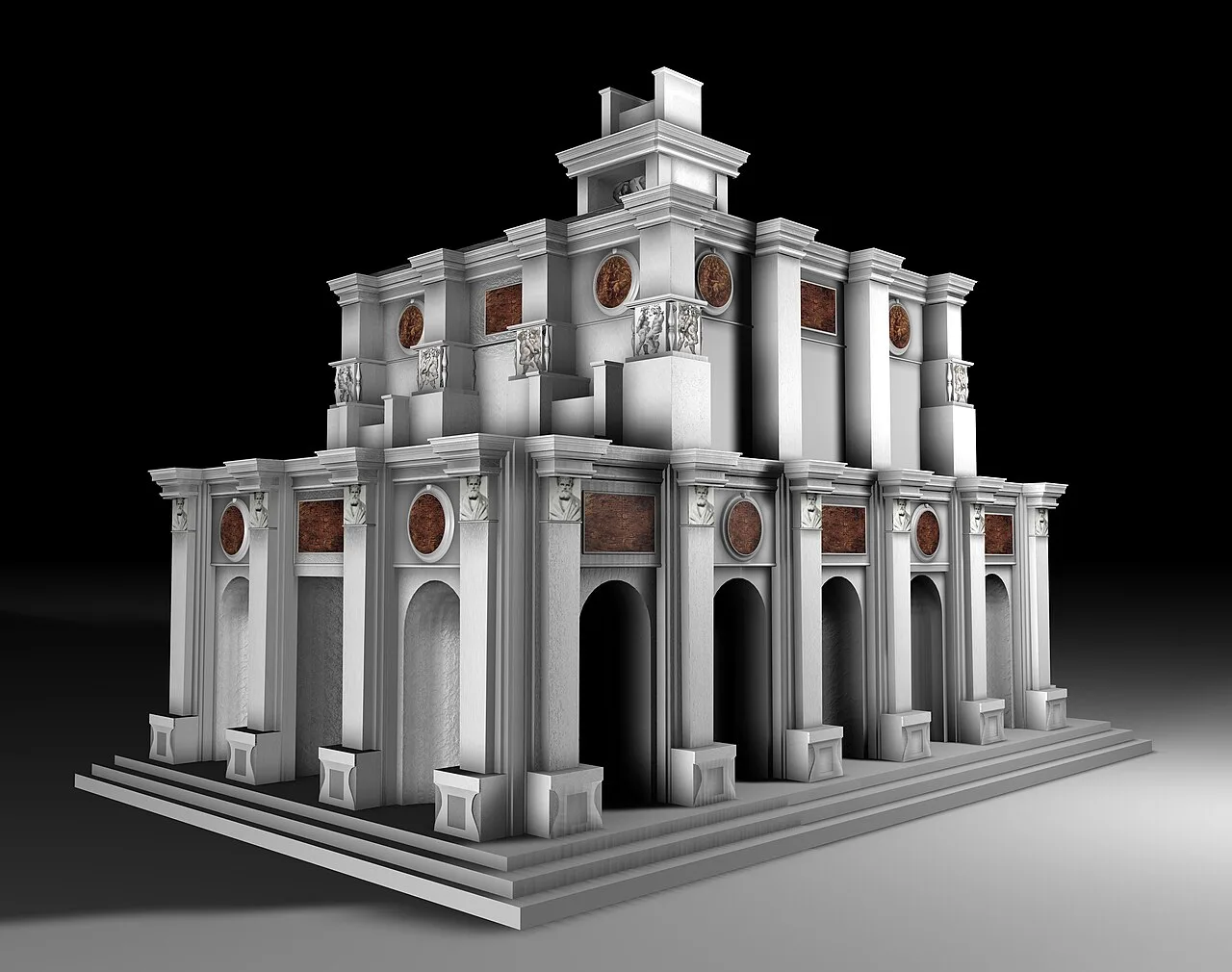
Hypothetical reconstruction of the first project for the tomb of Julius II (1505) according to a new interpretation by Adriano Marinazzo (2018).[5]
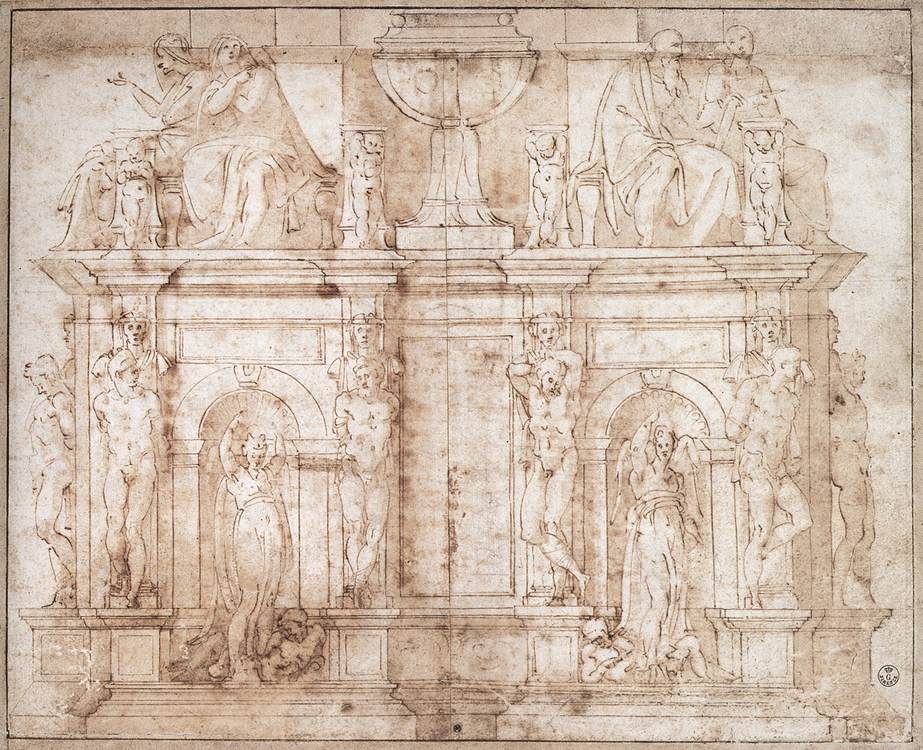
Michelangelo Second design for wall tomb for Julius II.
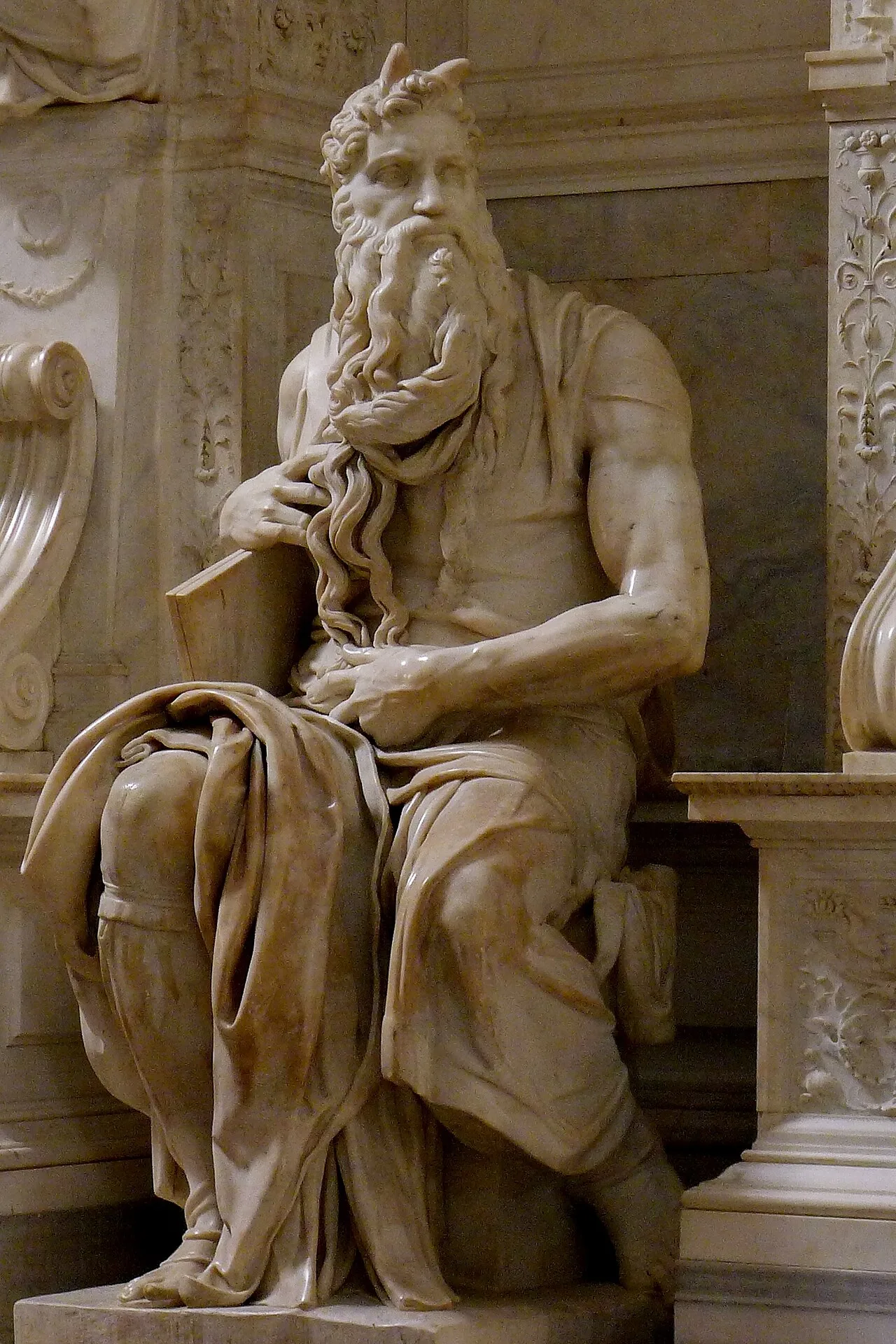
The Moses
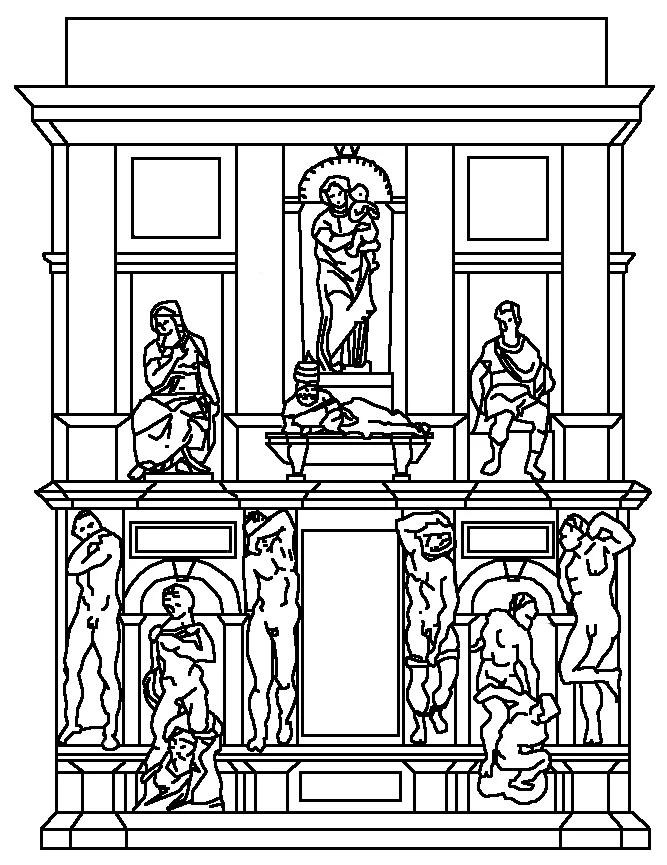
Hypothetical reconstruction of the 1532 project
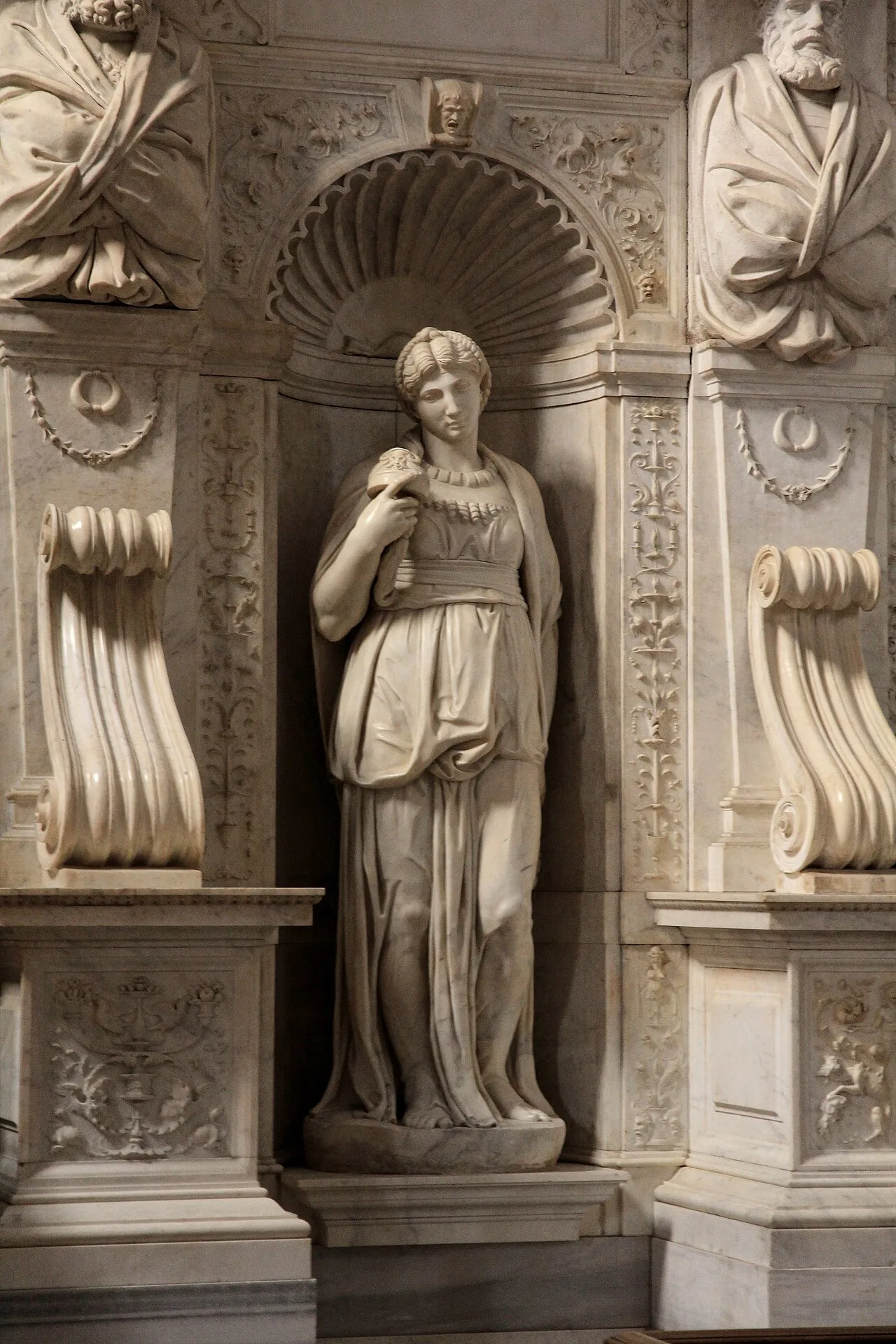
Leah
Tomb of Pope Julius II
The Tomb of Pope Julius II is a sculptural and architectural ensemble by Michelangelo and his assistants, located in the church of San Pietro in Vincoli in Rome.
A Monumental Cenotaph Without Remains
Although conceived as a grand papal resting place, the monument does not actually contain the remains of Pope Julius II. The deceased pontiff was instead laid to rest alongside his uncle Sixtus IV in St. Peter's Basilica. Decades of labor and design revisions culminated in a structure that functions entirely as a cenotaph.
From Wikipedia · CC BY-SA 4.0
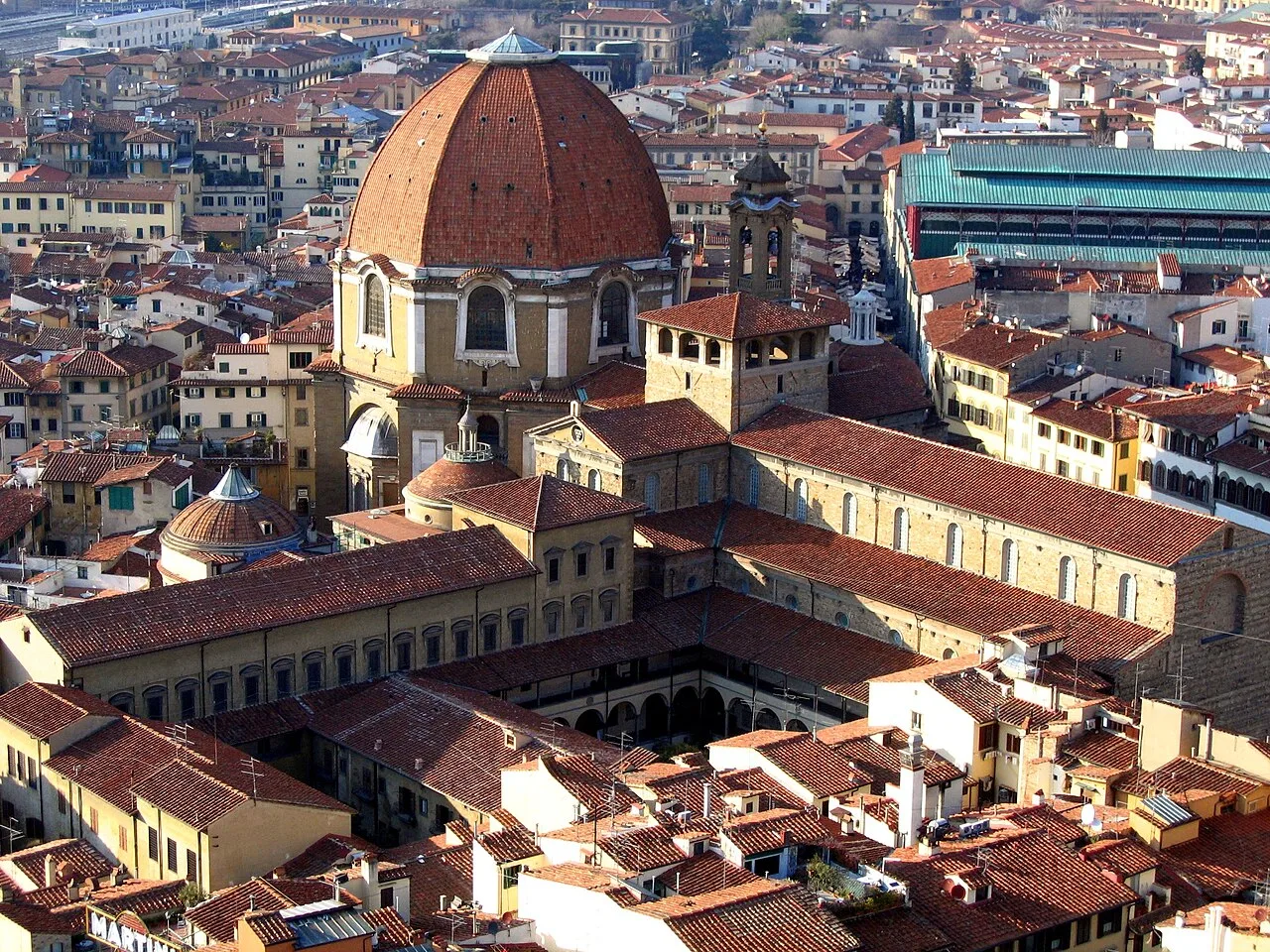
Medicibib

The vestibule

Staircase

Vestibule plan, after Banister Fletcher

The reading room

The reading room viewed from the top of the stairs
Laurentian Library
The Laurentian Library is a historic library in Florence, Italy, containing more than 11,000 manuscripts and 4,500 early printed books belonging to the private library of the Medici family.
Architectural Violence on Classical Columns
Viewers often mistake the recessed columns of the vestibule for the austere Doric order. In reality, Michelangelo subverted classical rules by utilizing the Composite order while intentionally stripping away its decorative acanthus leaves and diagonal volutes. This denuding of the capitals was viewed as an unprecedented act of violence in architectural mannerism. The deliberate removal created an unsettling sophistication that defied contemporary expectations.
From Wikipedia · CC BY-SA 4.0

Taddei Tondo

Sketch by Sir David Wilkie (c.1823)

Sketch by John Constable (1830)
Taddei Tondo
The Taddei Tondo is an unfinished marble relief of the Madonna and Child with Saint John the Baptist by Michelangelo Buonarroti, housed in the Royal Academy of Arts in London.
A Brief Exploration of Circular Composition
The circular tondo format defined Florentine Renaissance art for a century following 1430. Michelangelo briefly engaged with this established tradition, producing the Doni tondo panel painting along with two sculpted marble reliefs. After starting the Pitti and Taddei tondi, however, the artist permanently abandoned circular compositions in both painting and sculpture.
From Wikipedia · CC BY-SA 4.0
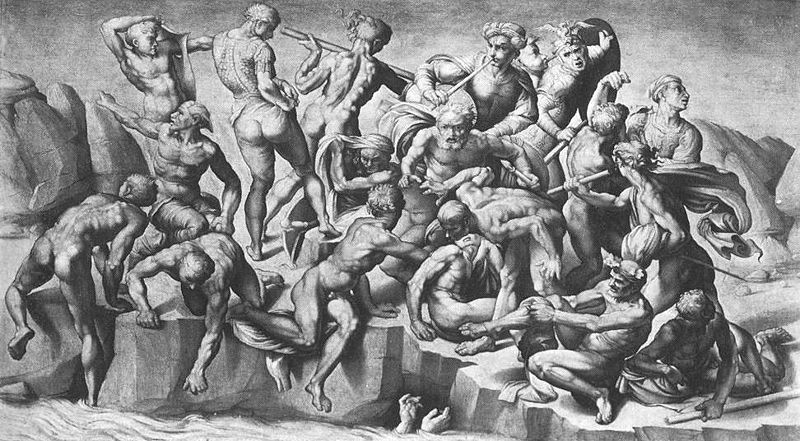
Battagliadicascina

One of the surviving study drawings for the Battle of Cascina
Battle of Cascina
The Battle of Cascina was an engagement between Pisan and Florentine troops on 28 July 1364 near Cascina, modern-day Italy, resulting in a Florentine victory.
Midday Vulnerability in the Arno River
Florentine soldiers encountered brutal heat as their armor became burning hot under the blazing sun. Many warriors chose to strip off their heavy defenses to bathe in the Arno River. Compounding the danger, commander Galeotto Malatesta succumbed to an afternoon nap while convalescing from fever, leaving the entire camp disorganized and unguarded.
From Wikipedia · CC BY-SA 4.0