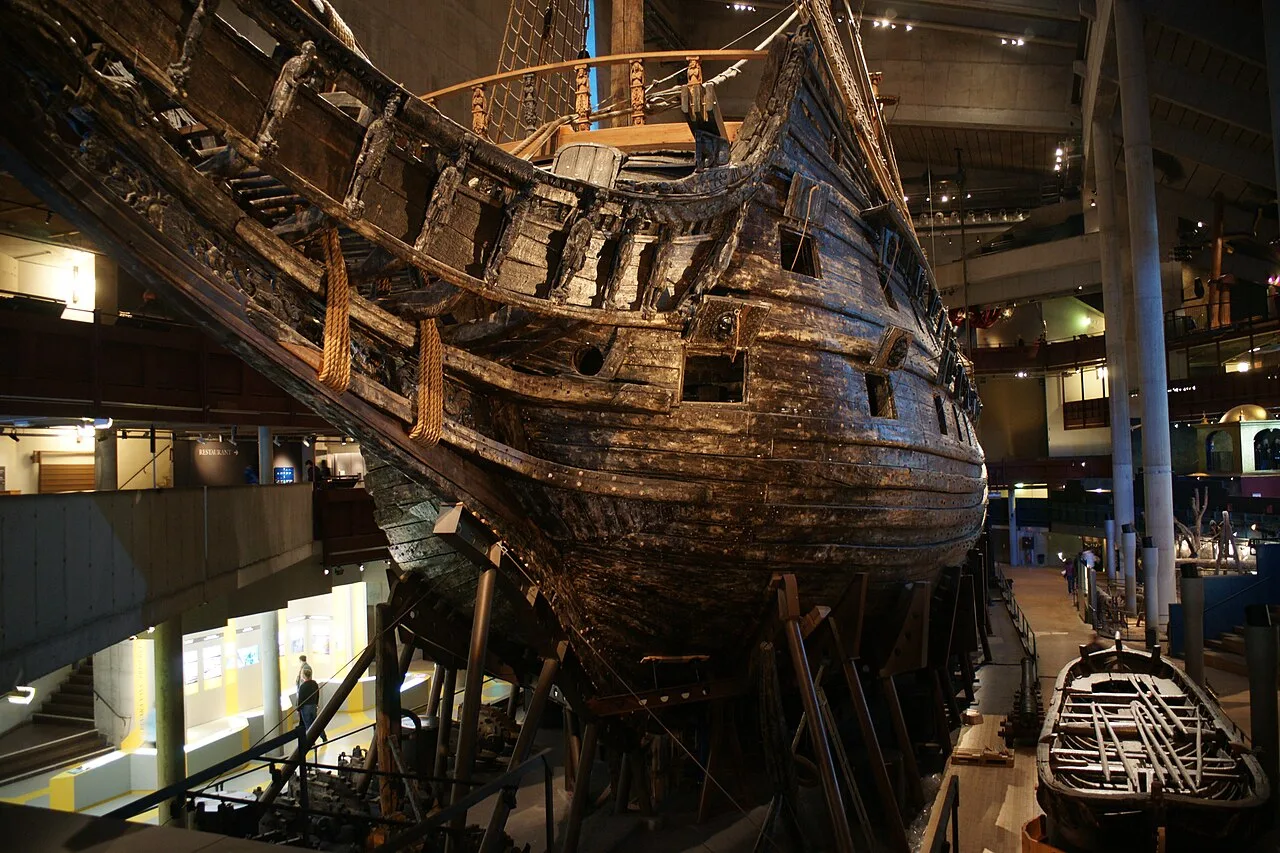
The Vasa from the Bow
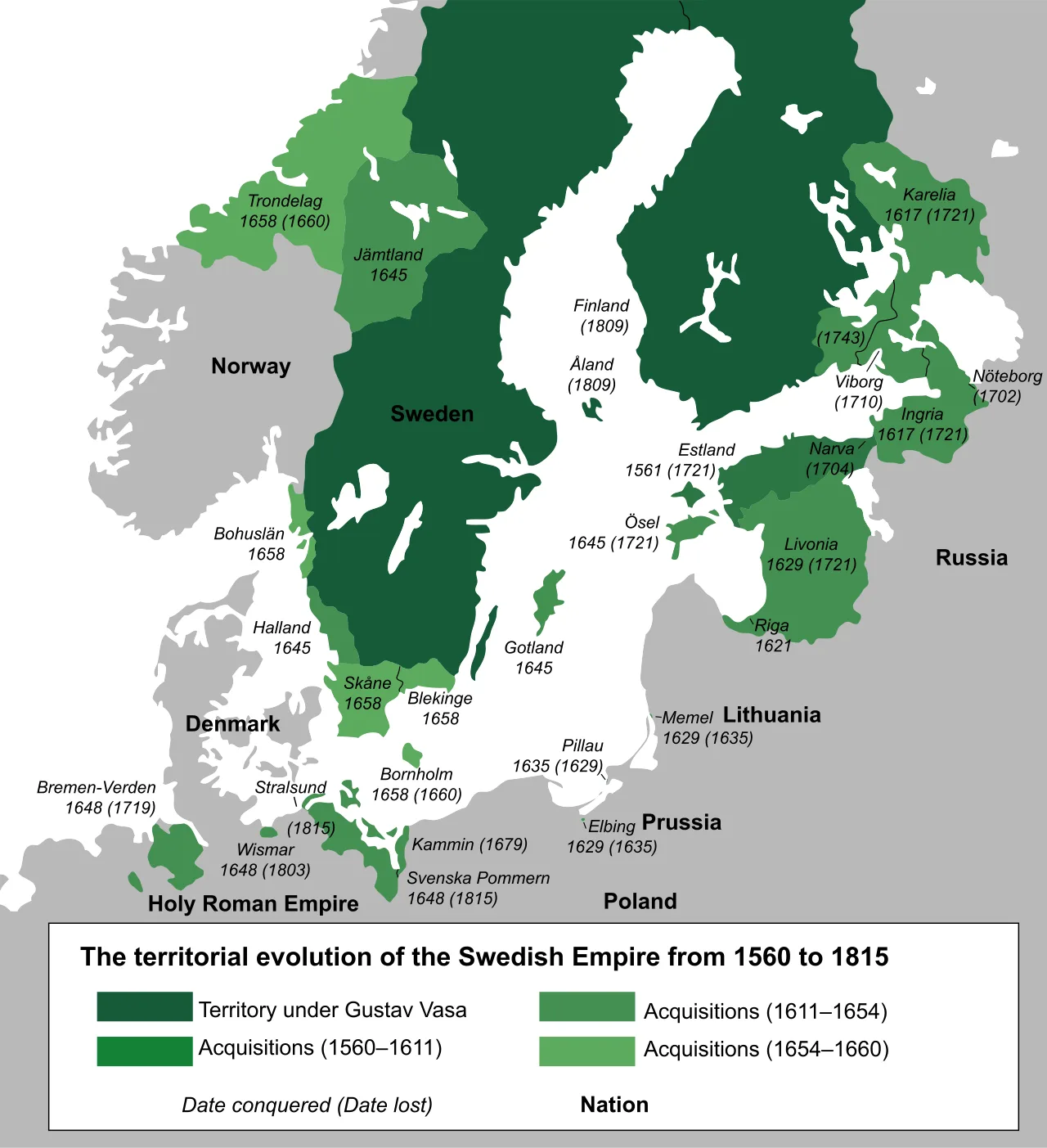
A map of Sweden's territorial gains and losses 1560–1815. In the years that Vasa was built and sank, Sweden still had not seized the southernmost of its present provinces, but possessed almost all of modern-day Finland and Estonia as well as Ingria and Karelia.
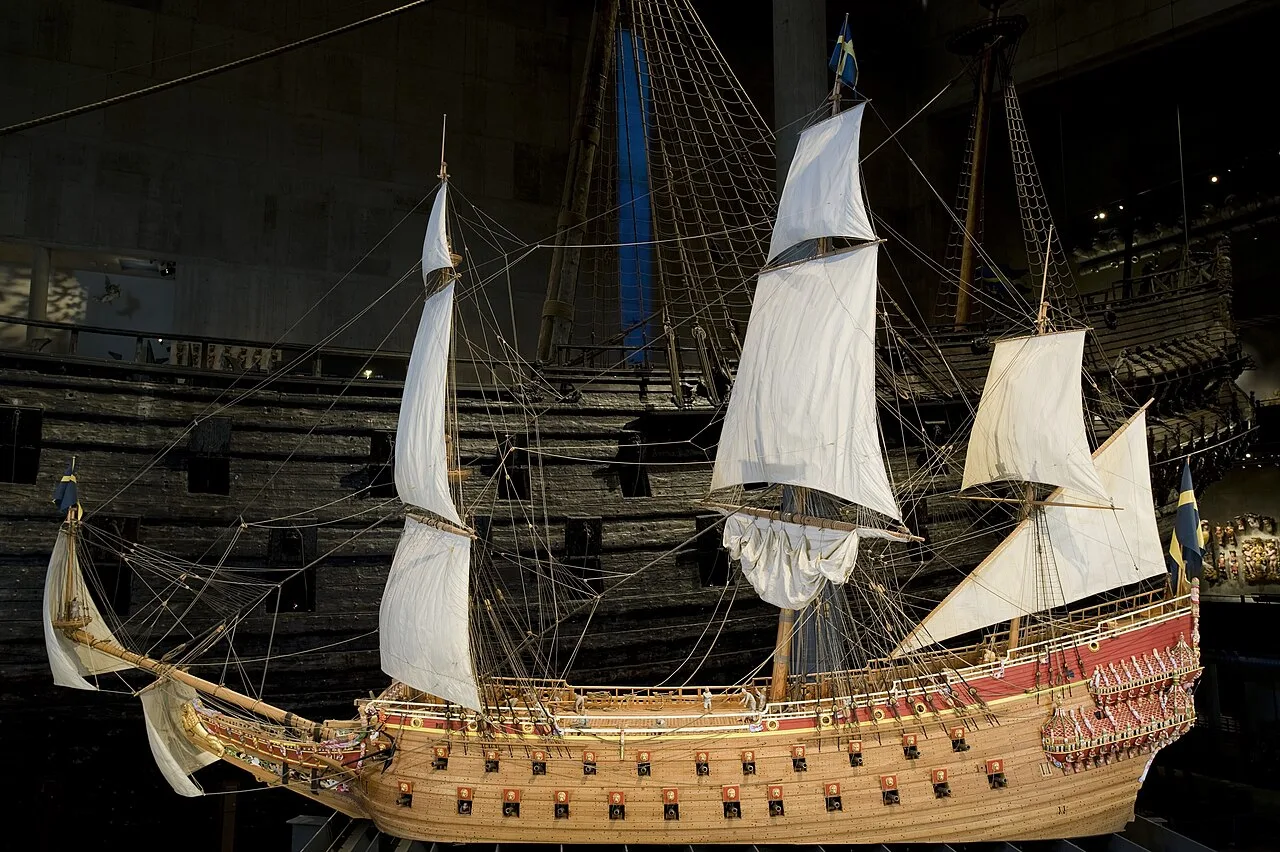
A 1:10 rigged model of Vasa
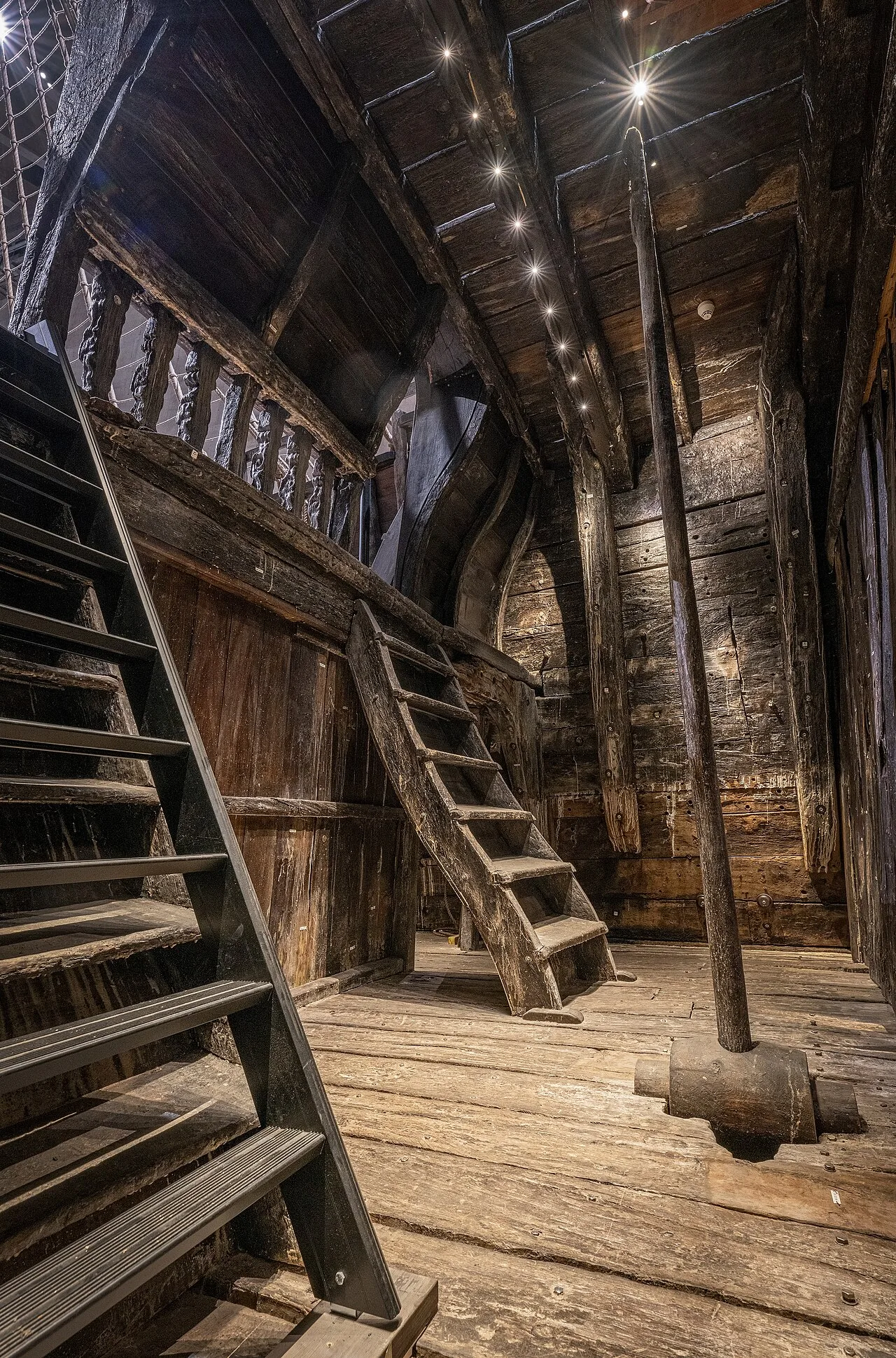
The whipstaff in the steerage compartment of Vasa. The photograph is taken from the port side. The opening which provided some view of the sails is in the upper left of the picture.
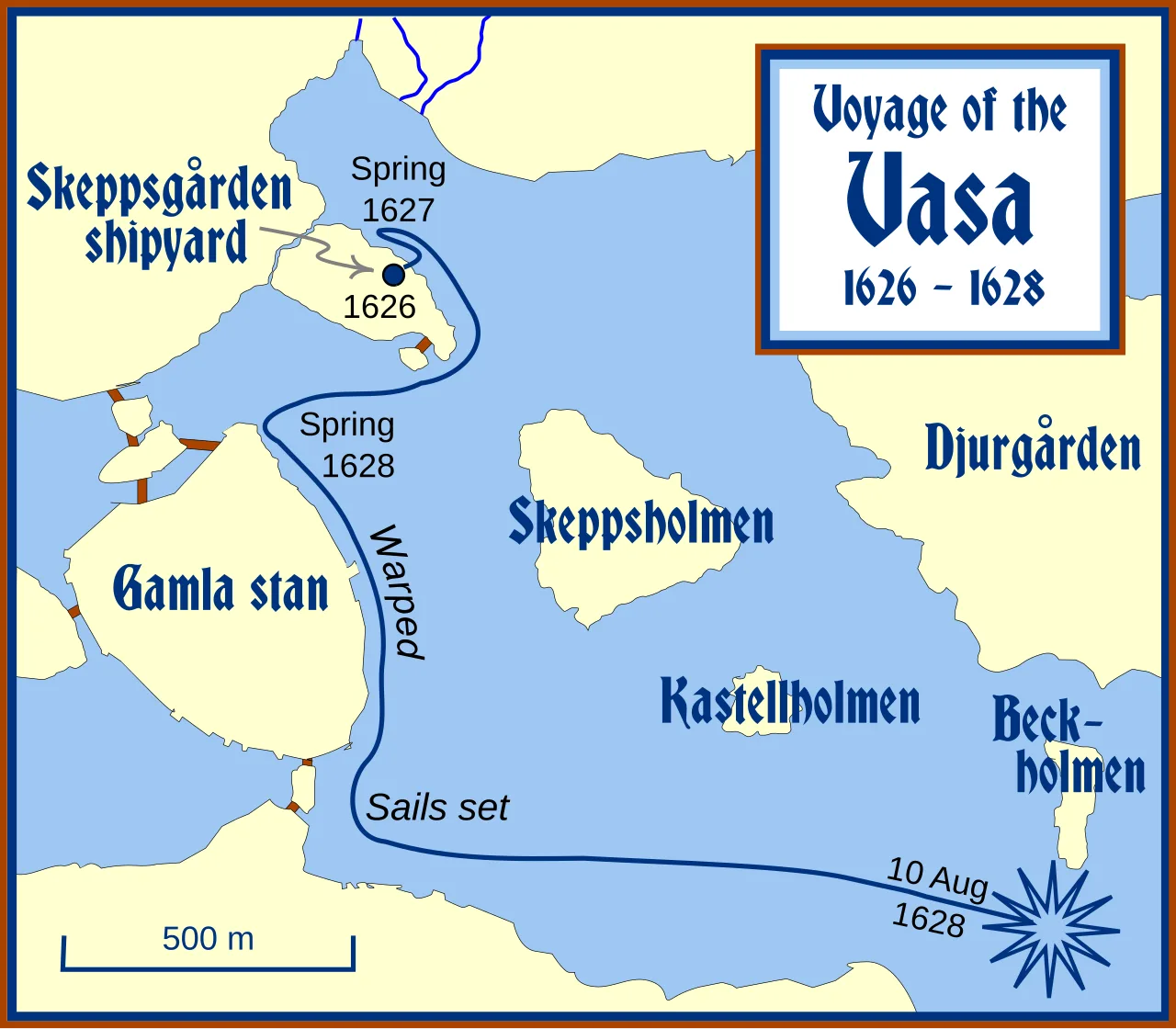
Central Stockholm and the movements of Vasa from Skeppsgården ('navy yard') to the anchoring place near the old royal castle where she was fitted and armed in the spring of 1628, and finally the location where she foundered and sank.
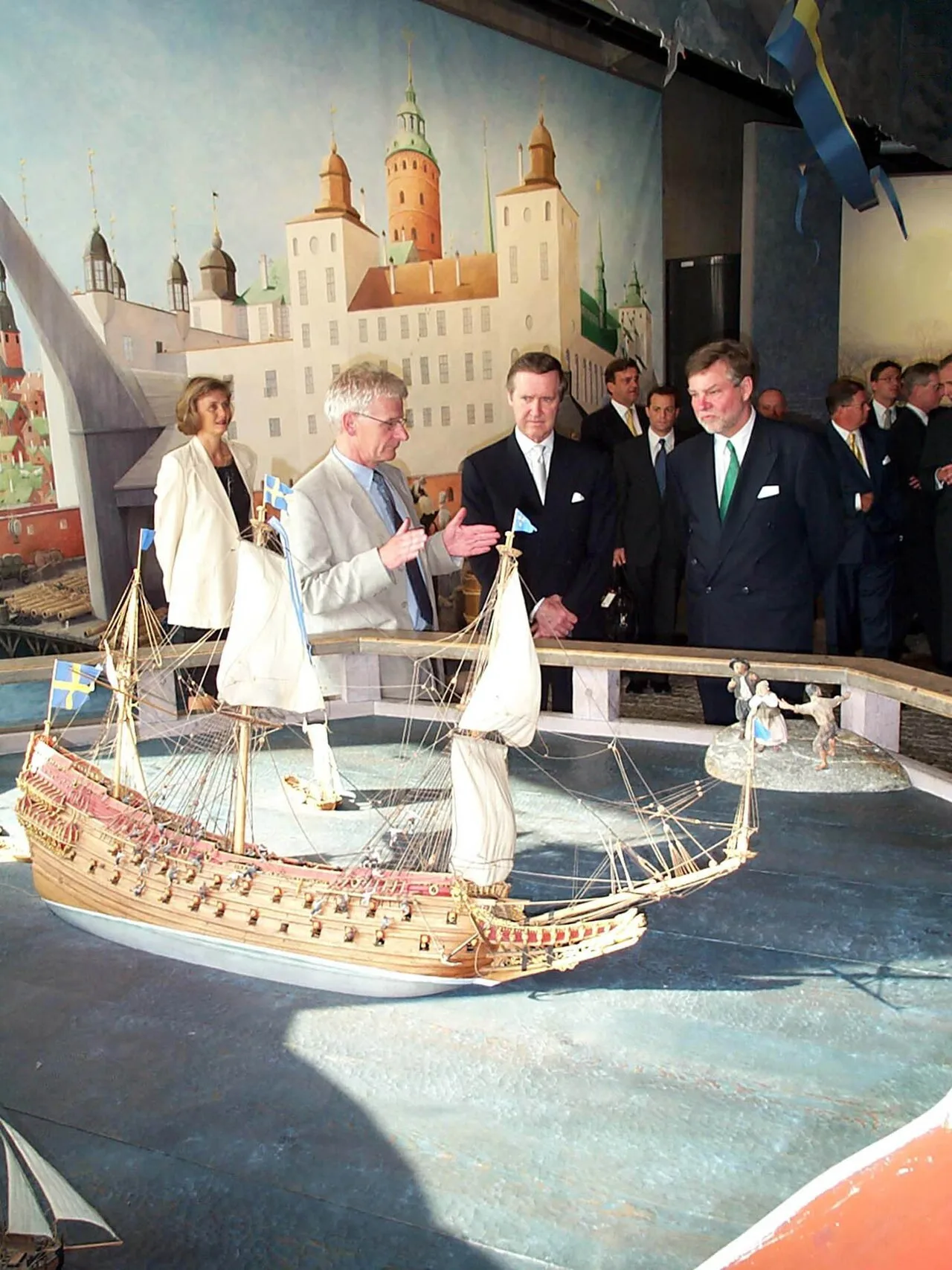
Former Vasa Museum Director Klas Helmerson (left) explaining aspects of the sinking of the ship to then US Defense Secretary William Cohen (centre) and Swedish Defense Minister Björn von Sydow (right).
Vasa (ship)
Vasa is a Swedish warship built between 1626 and 1628 that sank on its maiden voyage in 1628 and was salvaged largely intact in 1961.
Suppressed Warnings and the Thirty-Man Roll Test
Before embarking on her maiden voyage, Vasa's dangerous instability was uncovered during an informal dockside trial. Captain Söfring Hansson had thirty men run across the upper deck, but Vice Admiral Klas Fleming halted the test after three trips because the rolling hull nearly capsized. Despite witnessing this lethal design flaw, subordinates lacked the political courage to delay departure while King Gustavus Adolphus demanded the ship put to sea.
From Wikipedia · CC BY-SA 4.0
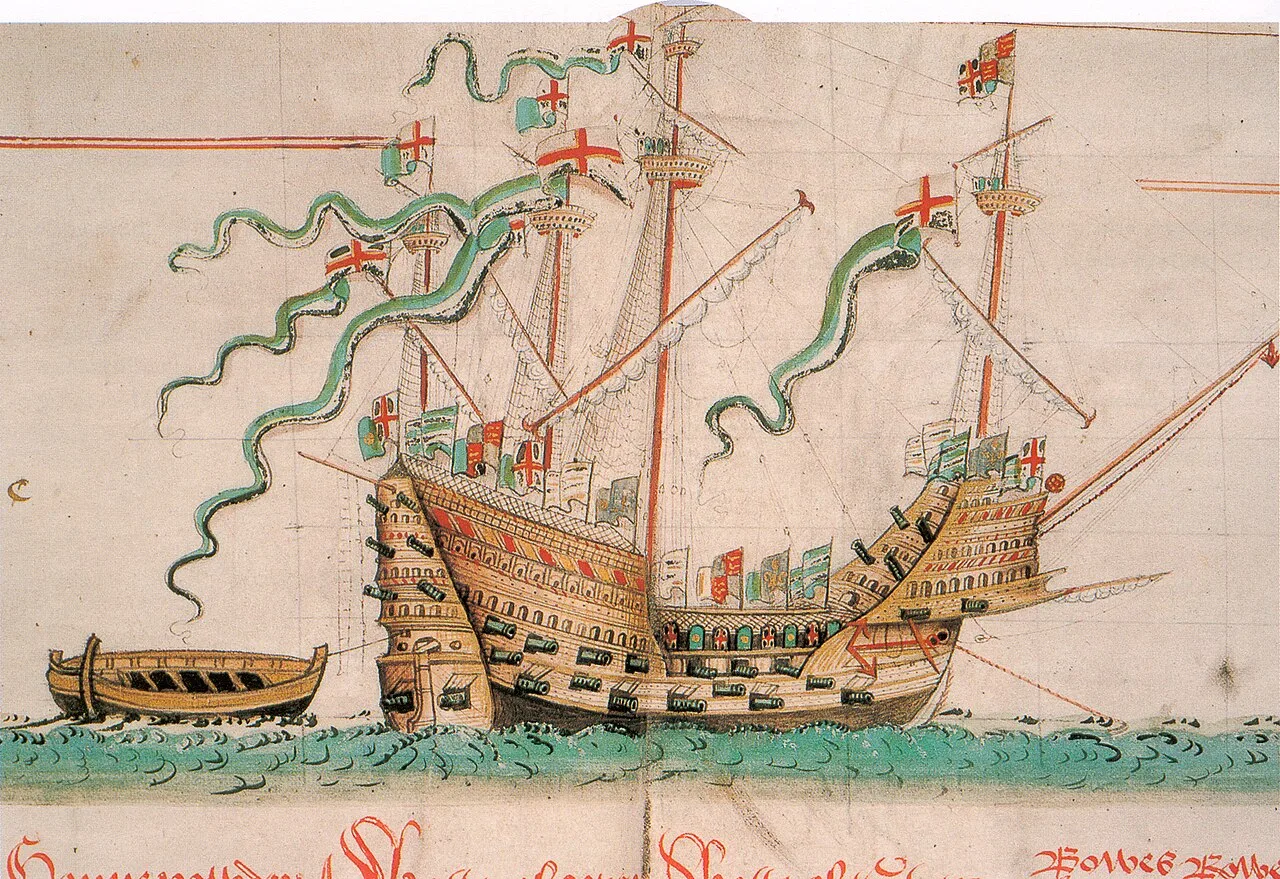
Mary Rose
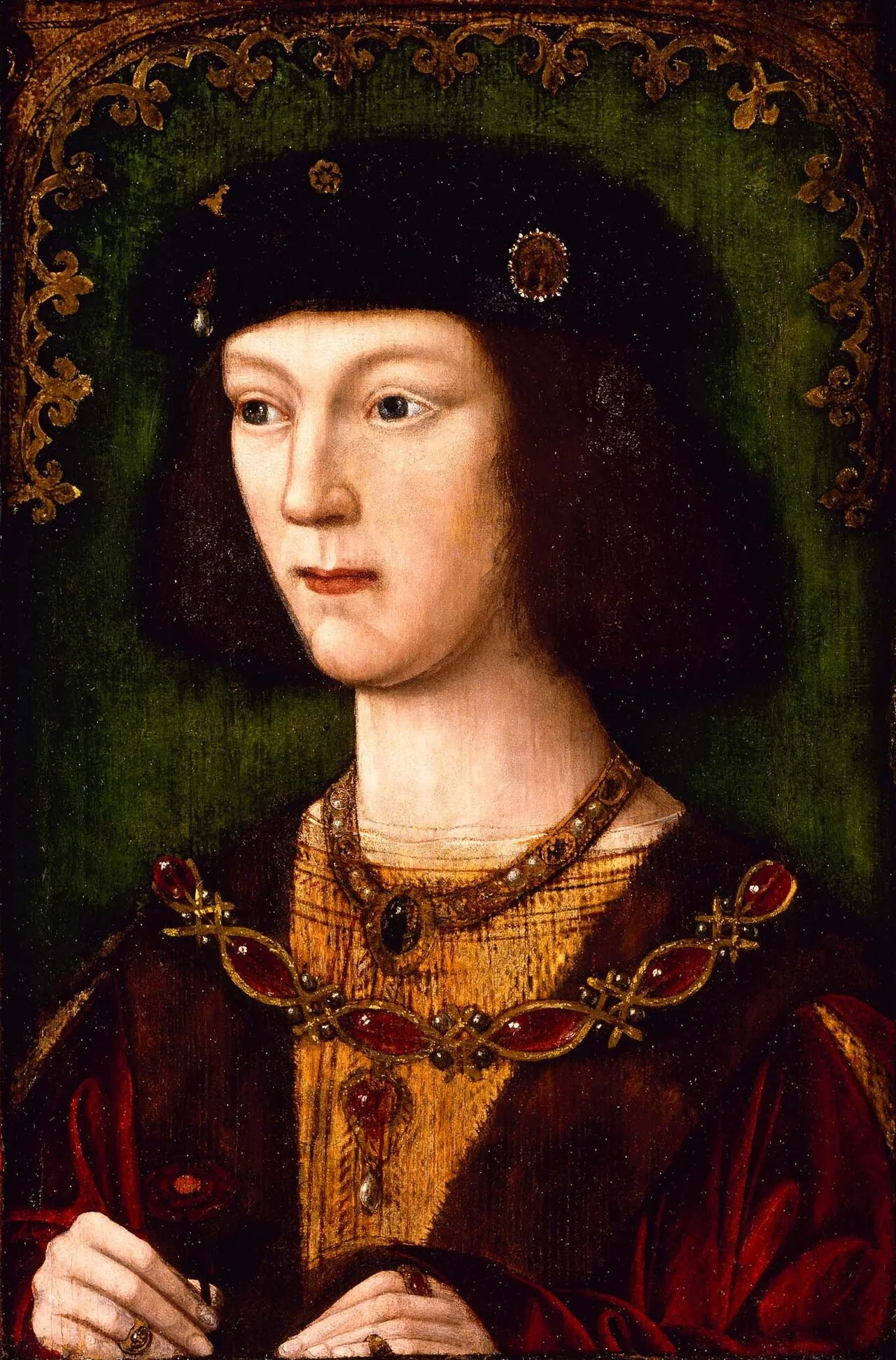
Portrait of Henry VIII in 1509, aged c.18, the year of his coronation, by Meynnart Wewyck
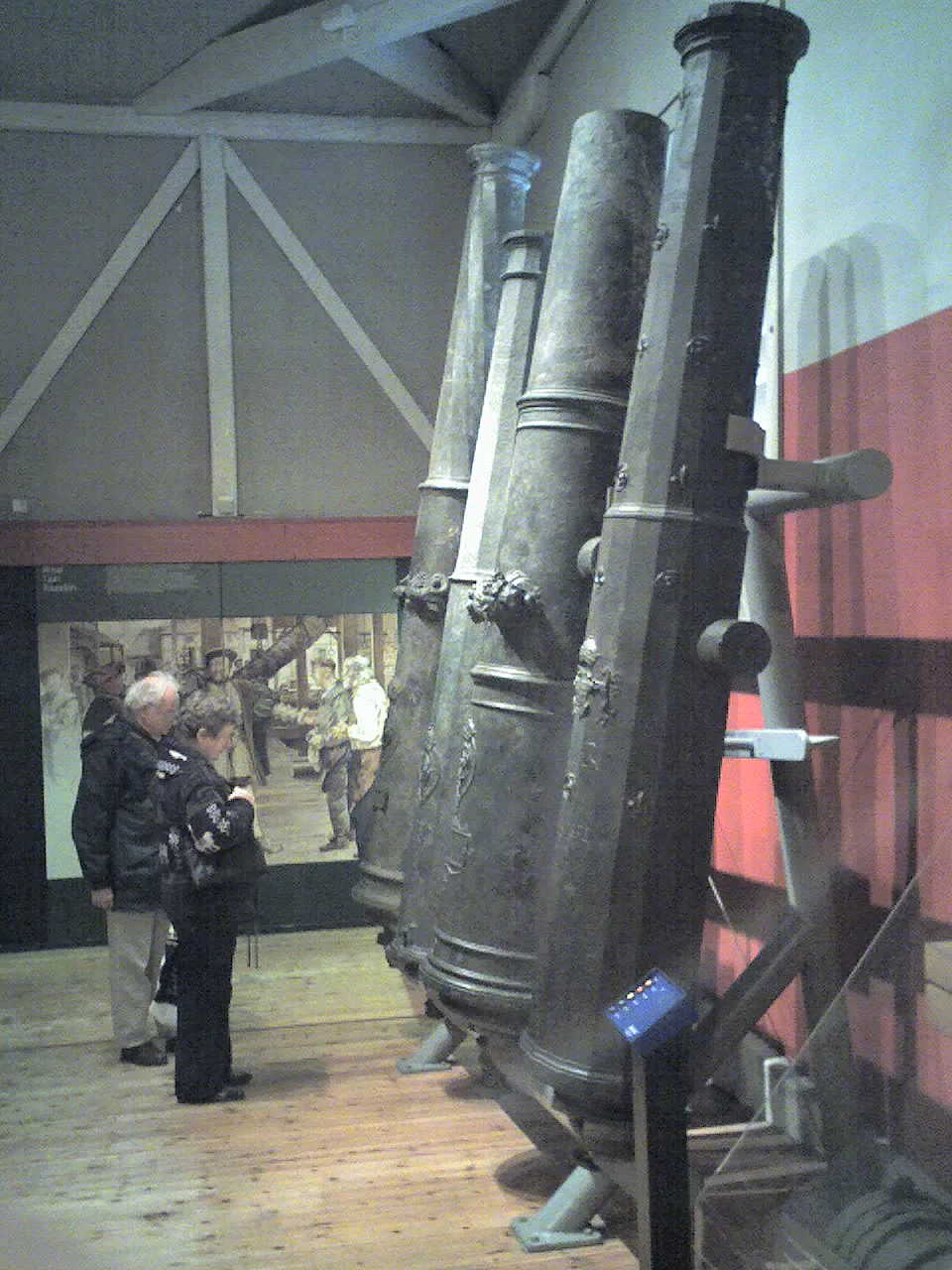
Two culverins and two demi-cannons from the Mary Rose on display at the Mary Rose Museum in Portsmouth
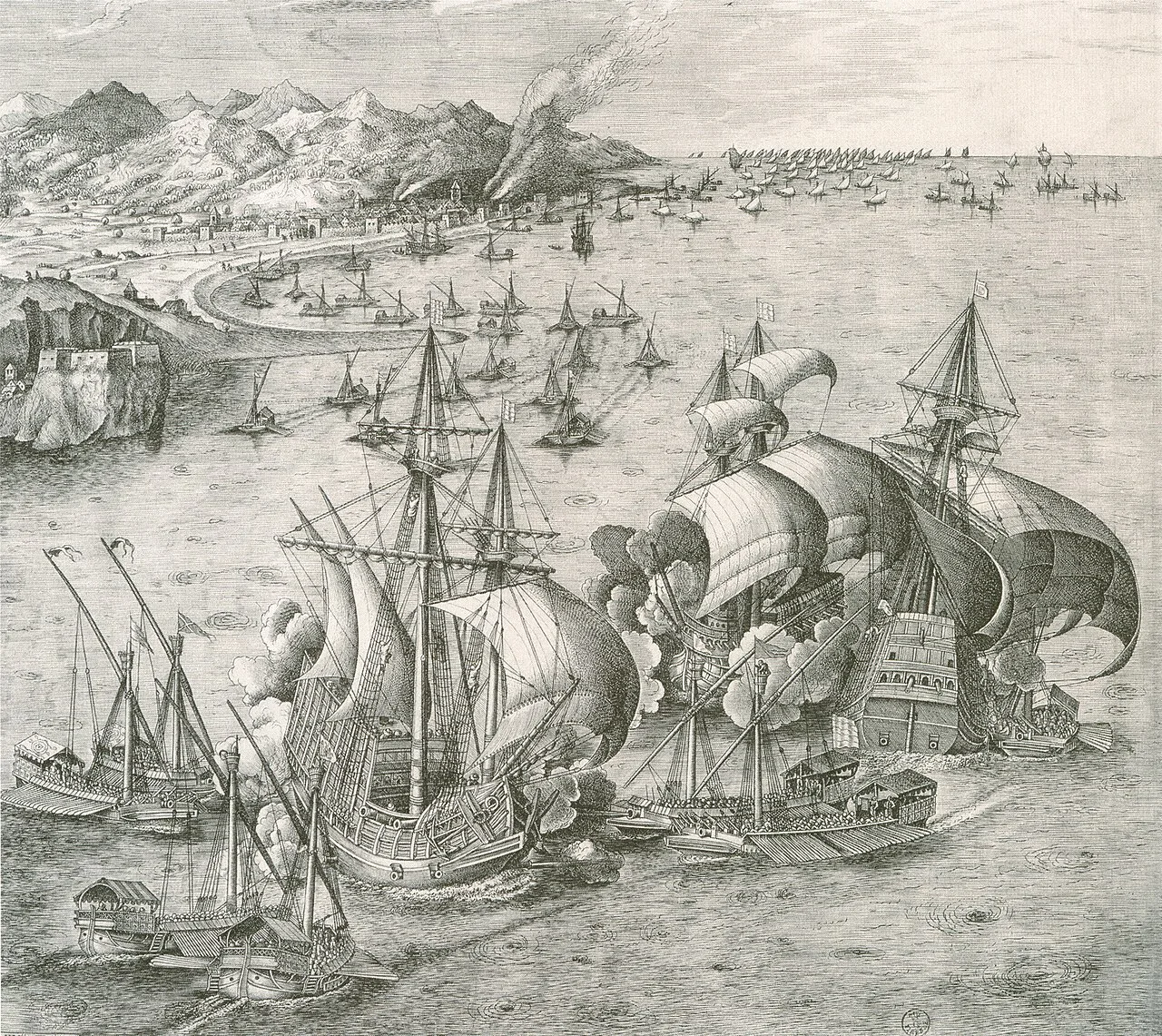
Carracks, similar to the Mary Rose, attacked by highly manoeuvrable galleys; engraving by Frans Huys after a design by Pieter Bruegel the Elder, c. 1561
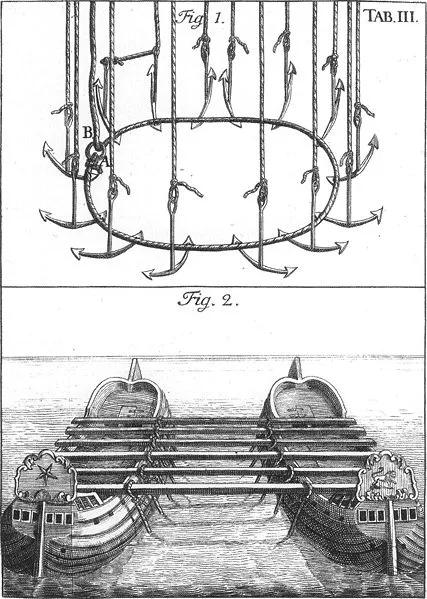
Illustration from a treatise on salvaging from 1734, showing the traditional method of raising a wreck with the help of anchors and ships or hulks as pontoons, the same method that was attempted by the Tudor era salvors

One of the many rosaries found on the Mary Rose that once belonged to one of the lower-ranking crew members
Mary Rose
The Mary Rose was a carrack in the English Tudor navy of King Henry VIII that served for 34 years before sinking in 1545 during an engagement with a French fleet.
Pious Devotion Behind the Royal Moniker
Popular belief long maintained that the warship was named after King Henry VIII's favourite sister, Mary Tudor, alongside the royal rose emblem. However, historians David Childs, David Loades, and Peter Marsden concluded that no direct evidence exists linking the vessel to the king's sister. Western European ships of this period routinely carried pious Christian invocations or royal associations instead.
From Wikipedia · CC BY-SA 4.0
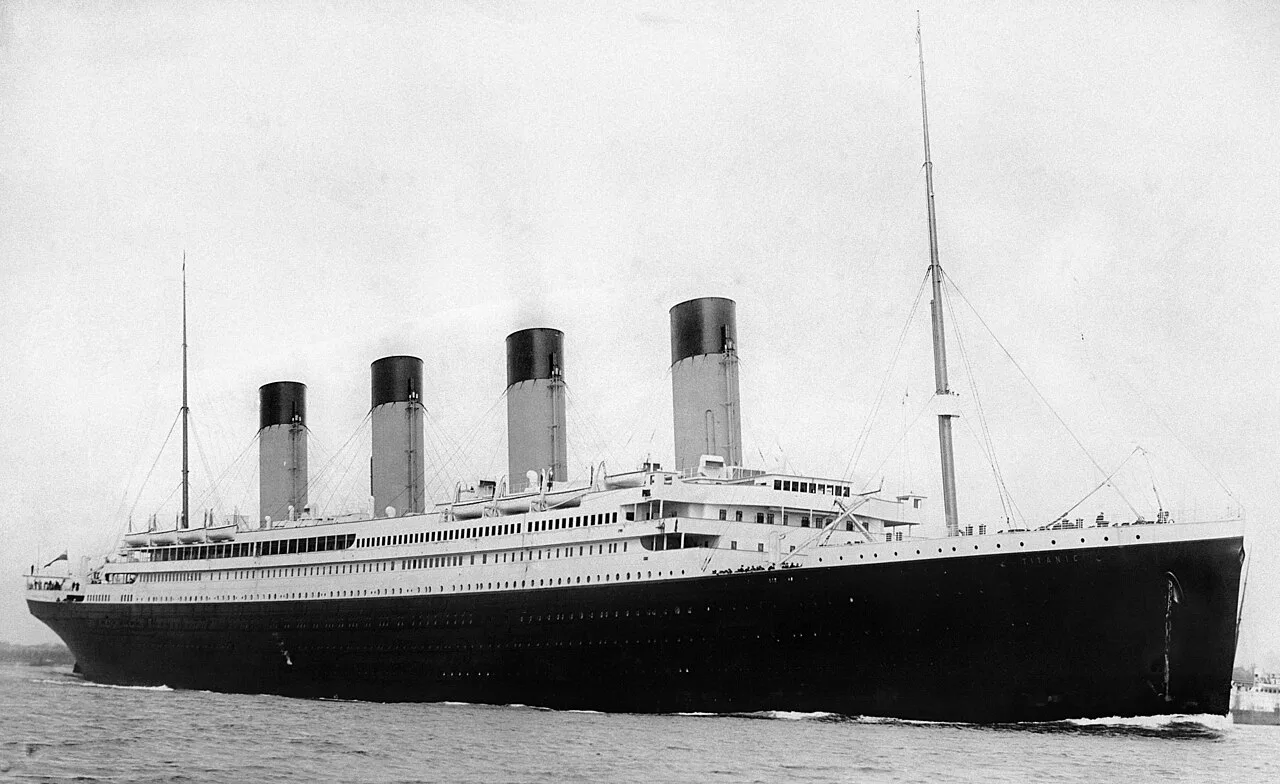
RMS Titanic 3 (cropped to ship)
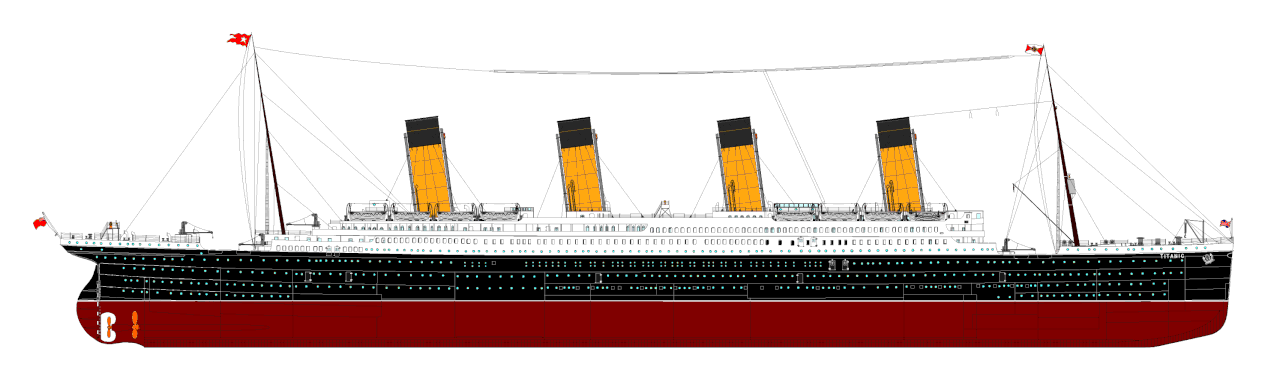
Starboard view drawing of Titanic
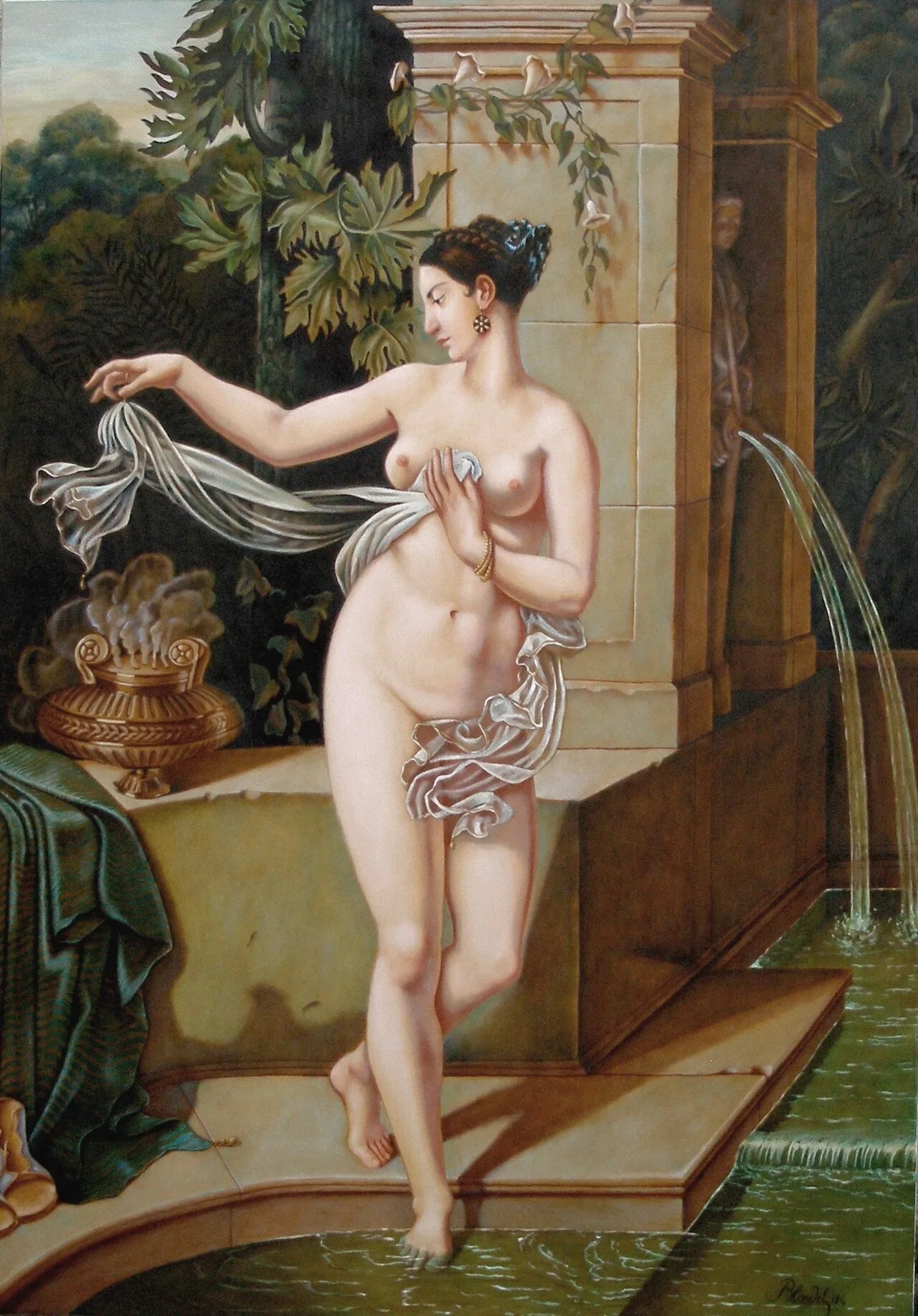
La Circassienne au Bain by Merry-Joseph Blondel; the most highly valued item of cargo lost on Titanic. This image is of a copy.[c]
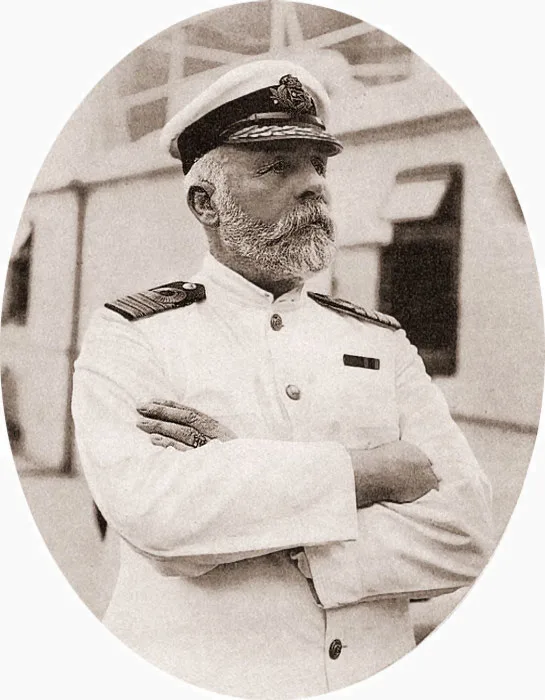
Edward Smith, captain of Titanic, on board the Olympic in 1911
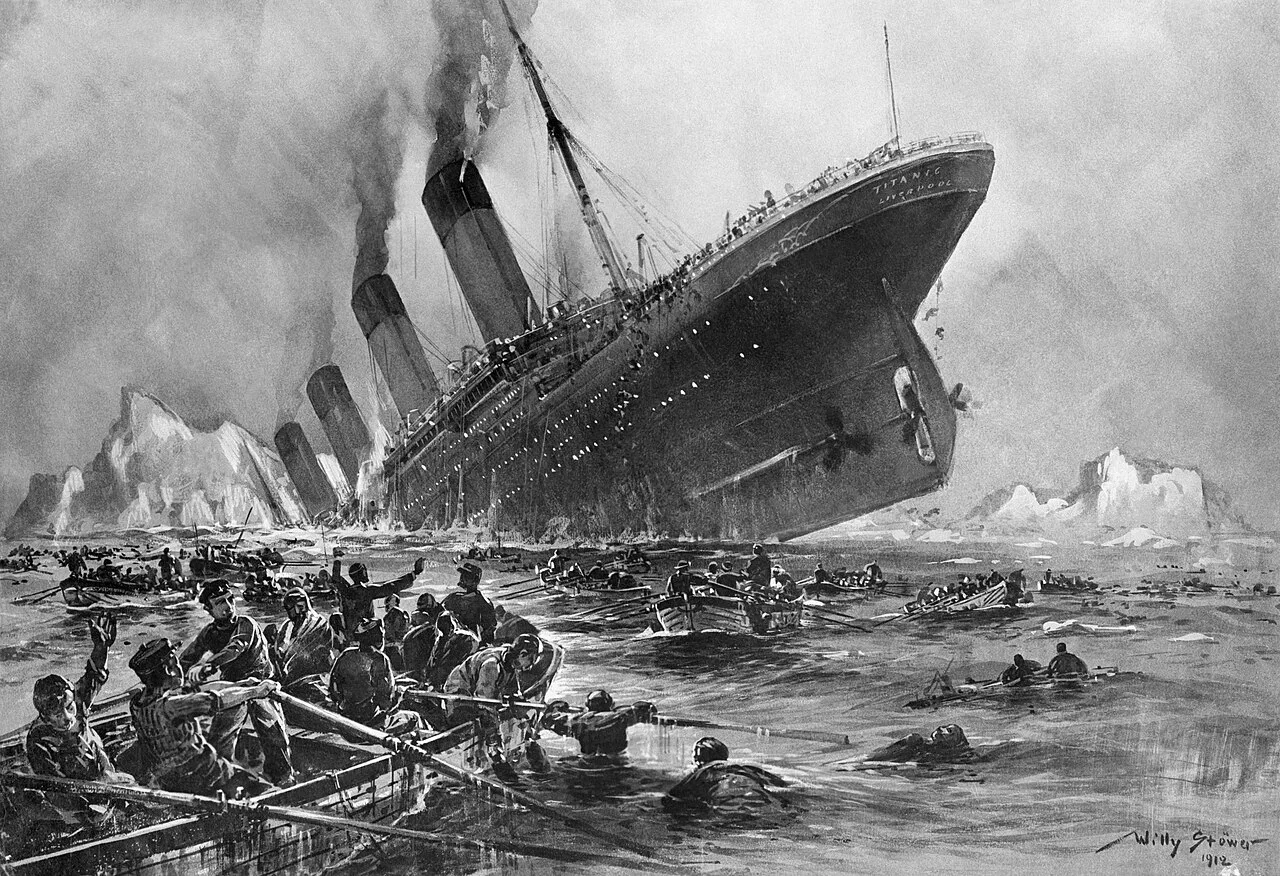
"Untergang der Titanic", as conceived by Willy Stöwer, 1912
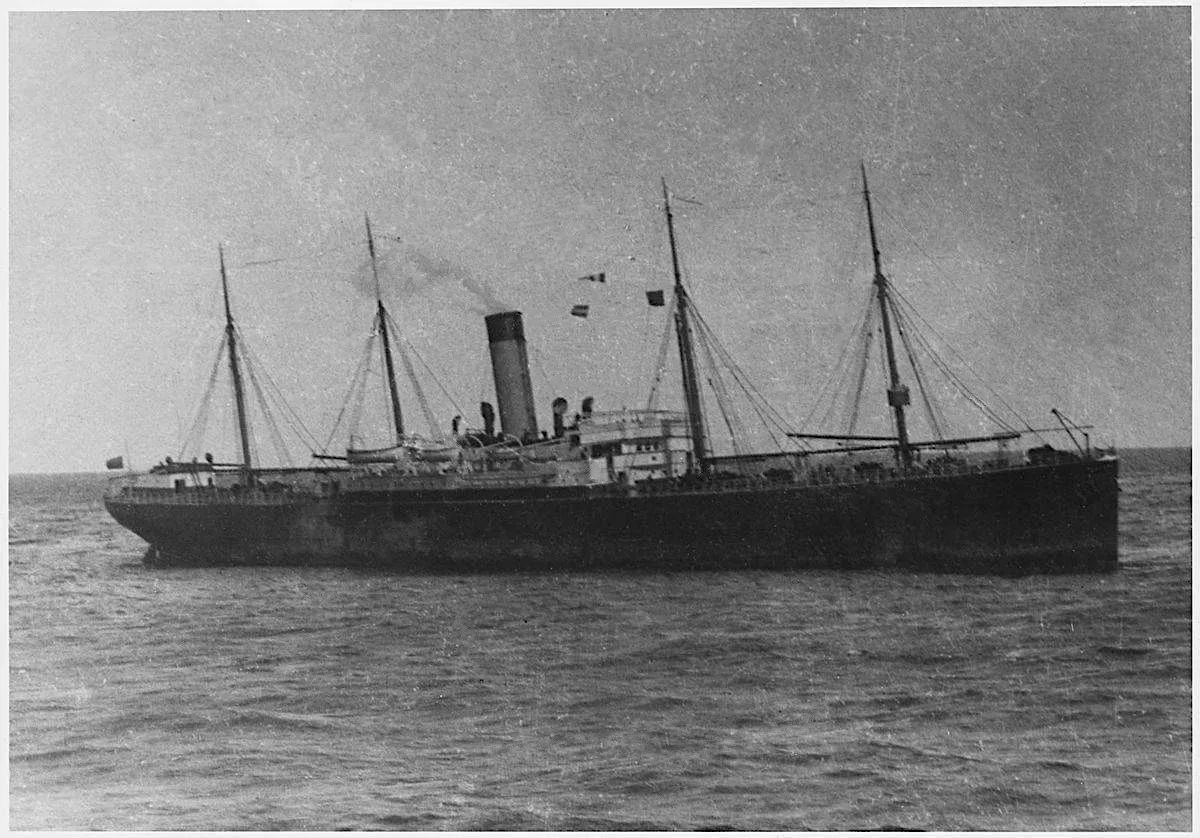
SS Californian, which had been in the ice and tried to inform Titanic of it
Titanic
RMS Titanic was a British ocean liner that sank on 15 April 1912 after striking an iceberg during her maiden voyage, resulting in approximately 1,500 deaths.
Exceeding Legal Safety Standards Yet Falling Short
The common assumption that Titanic neglected legal safety requirements is contradicted by the era's regulations. The British Board of Trade required vessels over 10,000 tonnes to carry only 16 lifeboats with a capacity of 990 occupants. Because maritime law treated lifeboats as shuttles to ferry survivors to rescue vessels rather than full-capacity life rafts, the White Star Line actually exceeded statutory standards.
From Wikipedia · CC BY-SA 4.0
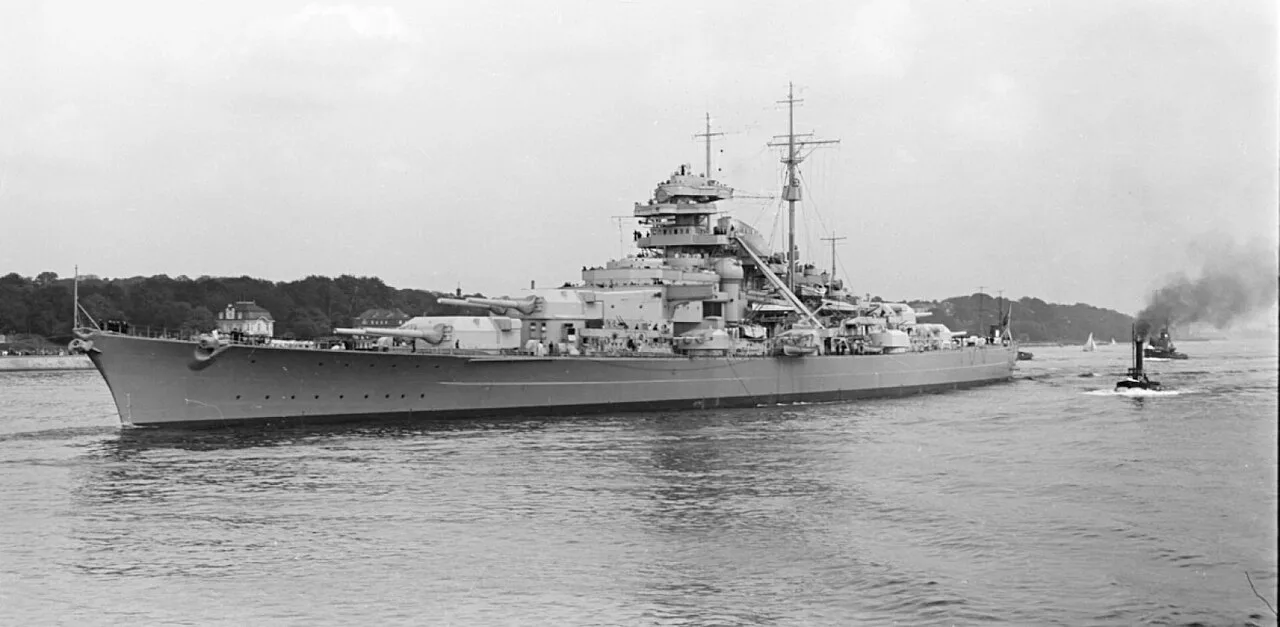
Bundesarchiv Bild 193-04-1-26, Schlachtschiff Bismarck
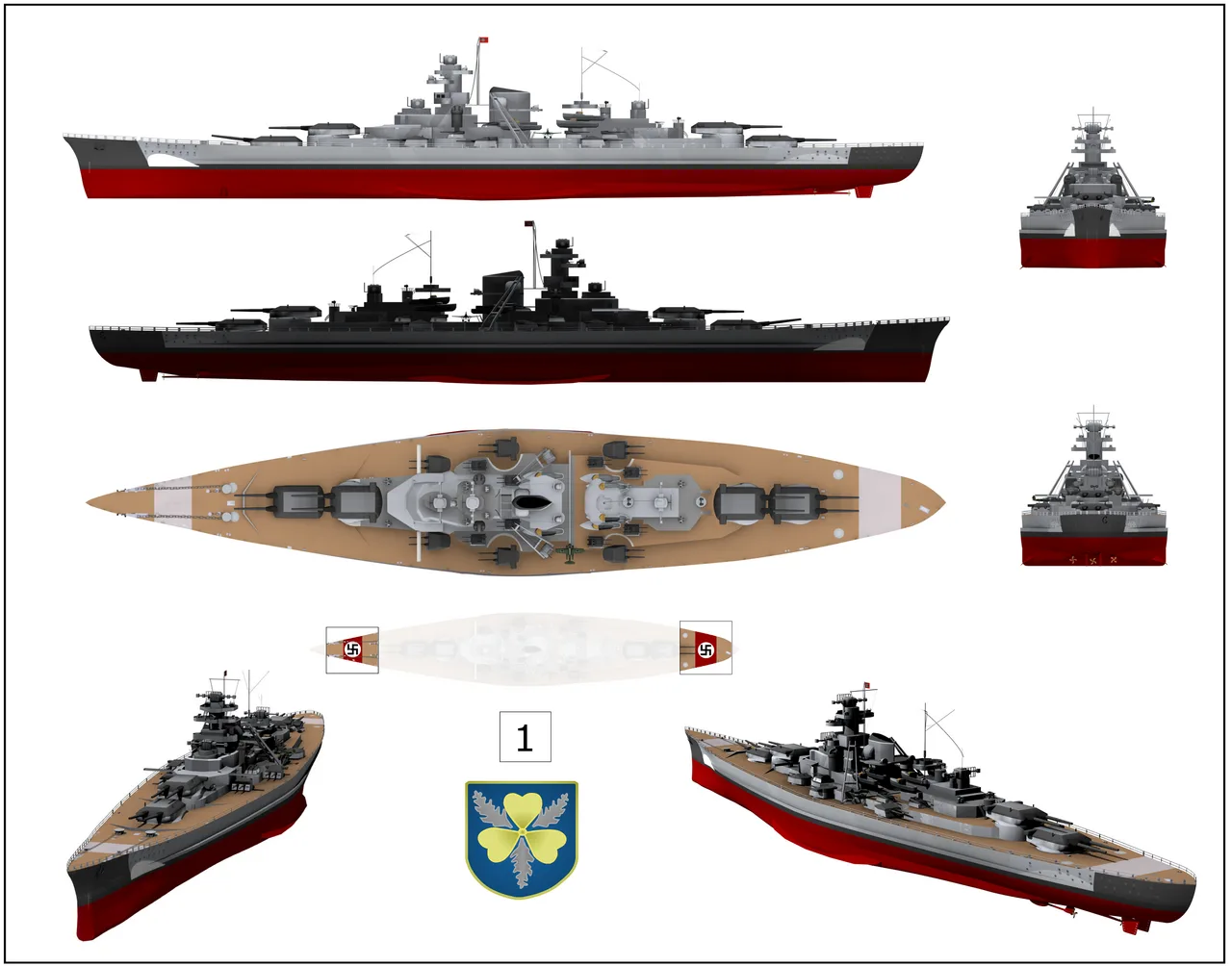
A 3D rendering of Bismarck based on her configuration during Operation Rheinübung
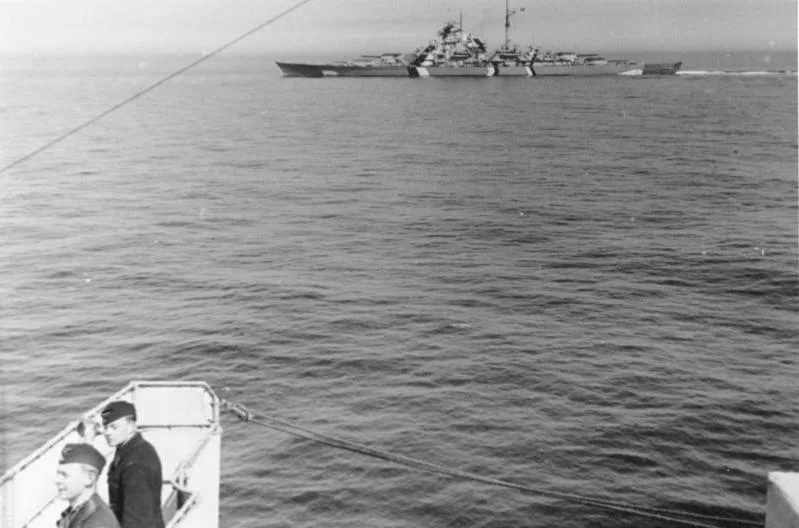
Bismarck, photographed from Prinz Eugen, in the Baltic at the outset of Operation Rheinübung
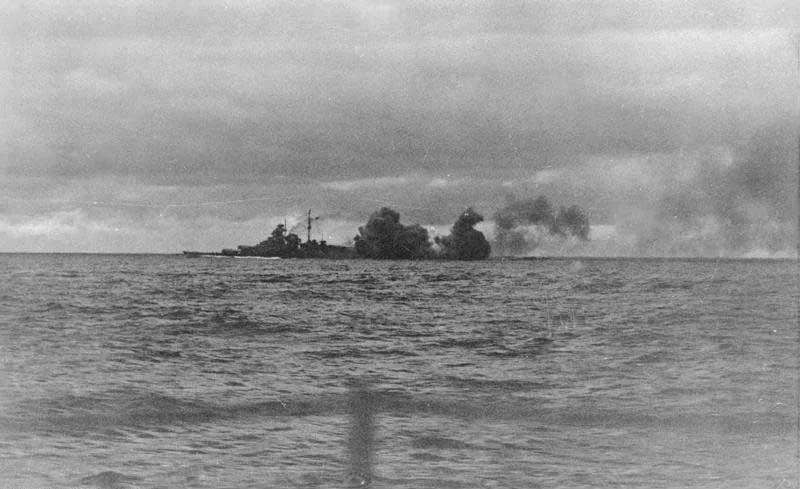
Bismarck firing her main battery during the battle
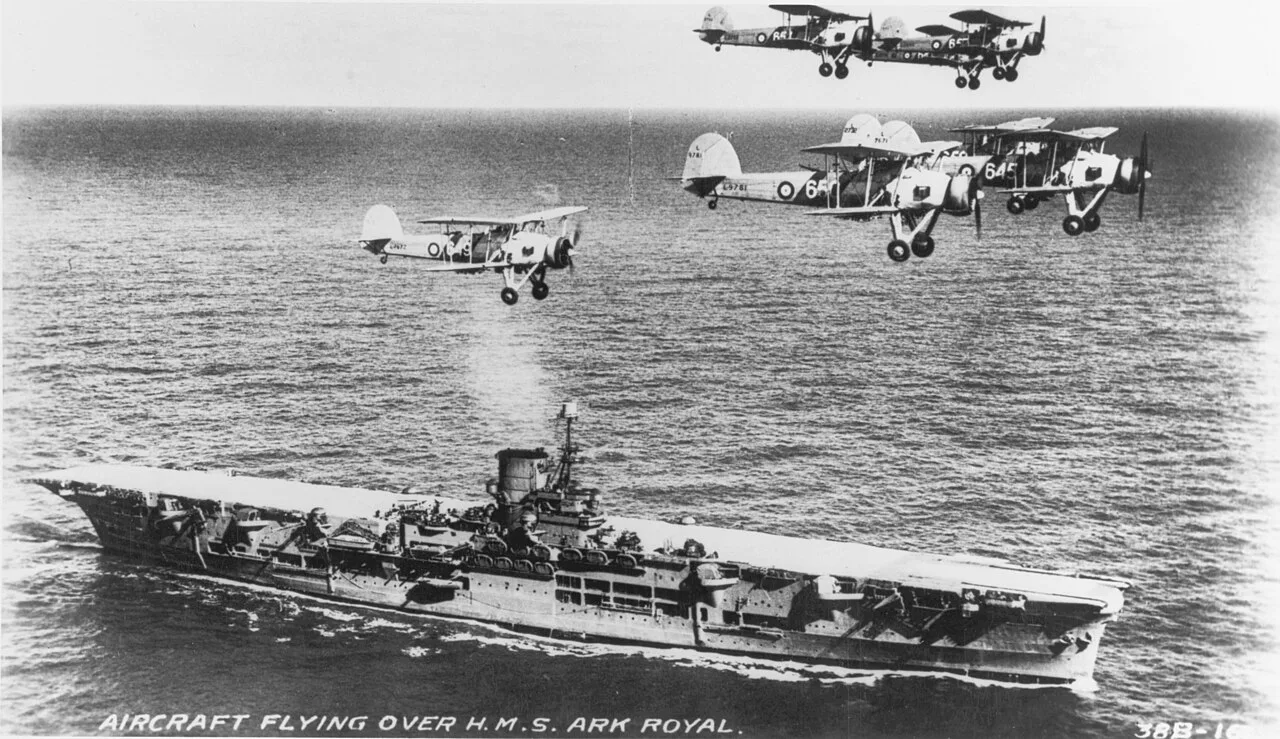
The aircraft carrier HMS Ark Royal with a flight of Swordfish overhead
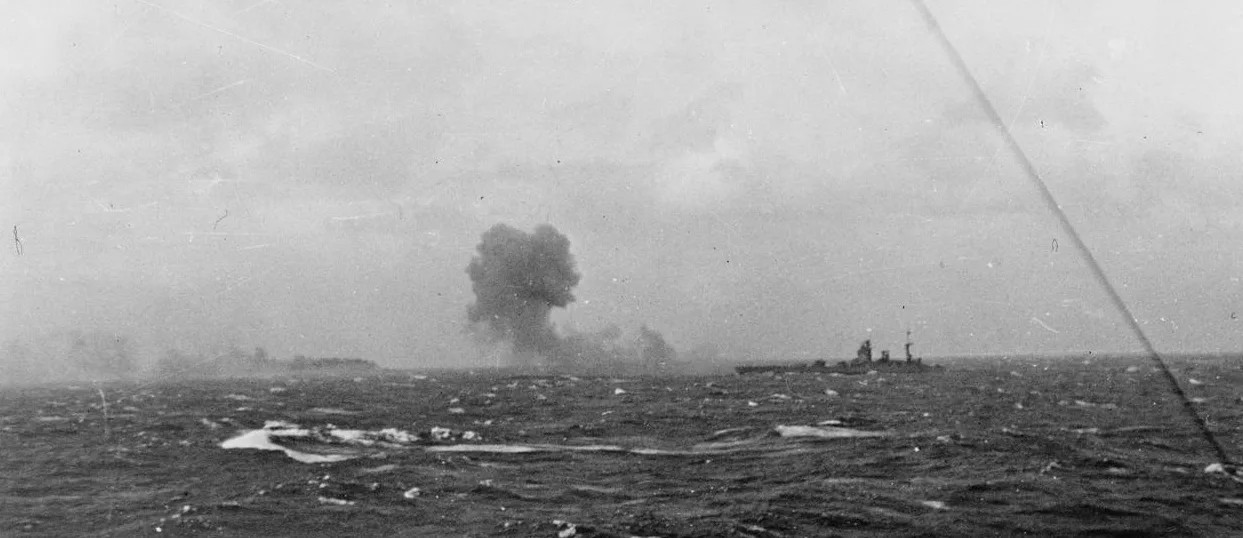
Rodney firing on Bismarck, which can be seen burning in the distance
German battleship Bismarck
Bismarck was a German battleship built for Nazi Germany's fleet. Commissioned in 1940, she and her sister ship were the largest battleships ever built by Germany.
Unresponsive Propellers in Sea Trials
When German engineers tested the battleship, they discovered a fundamental maneuvering defect. When attempting to steer solely through altering propeller revolutions, the crew learned that Bismarck could be kept on course only with great difficulty. Even running outboard screws at full power in opposite directions generated only a slight turning ability. This inherent steering weakness left the vessel helpless once its rudders were damaged.
From Wikipedia · CC BY-SA 4.0
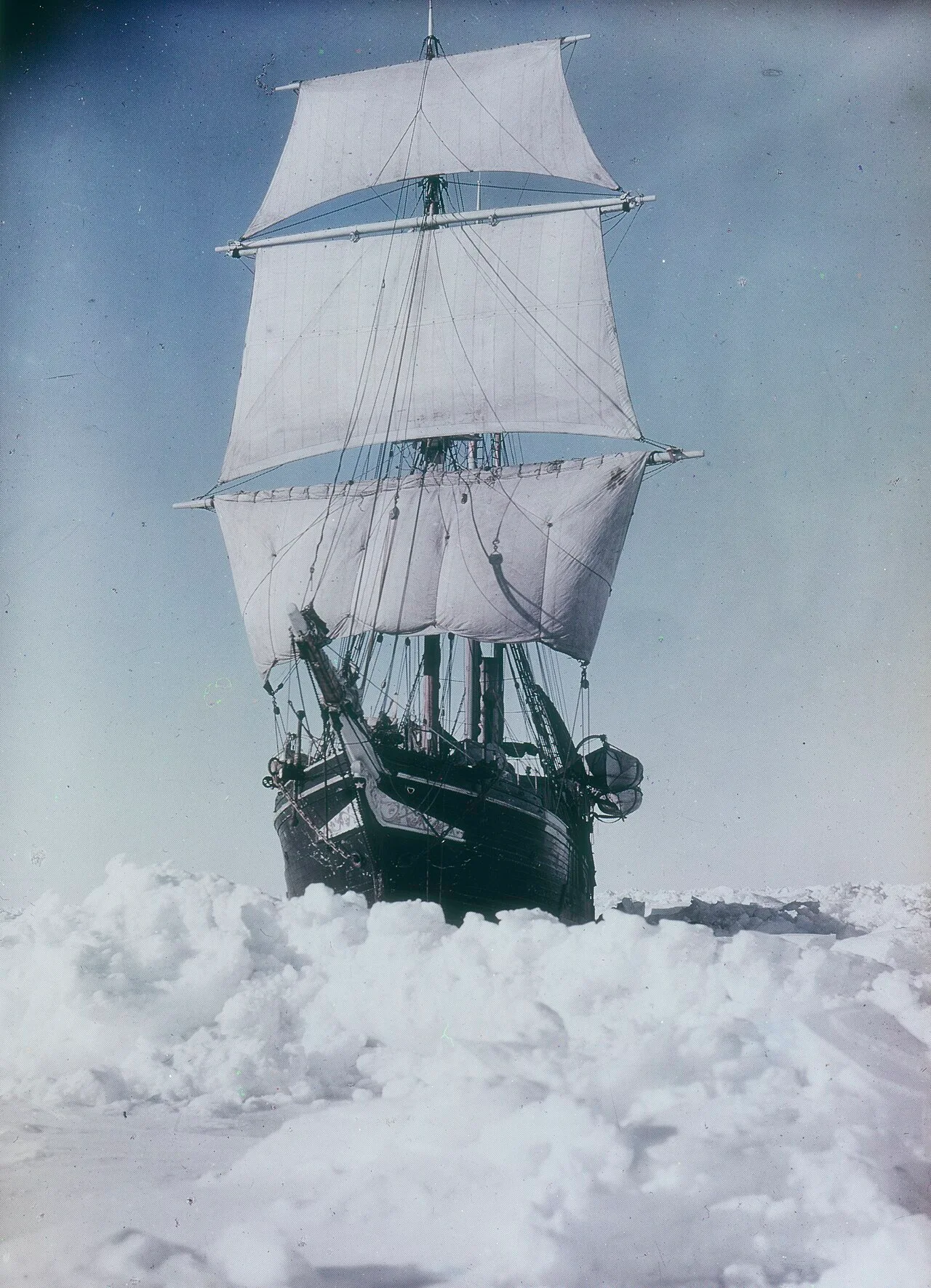
Endurance under full sail Frank Hurley State Library NSW a090012h
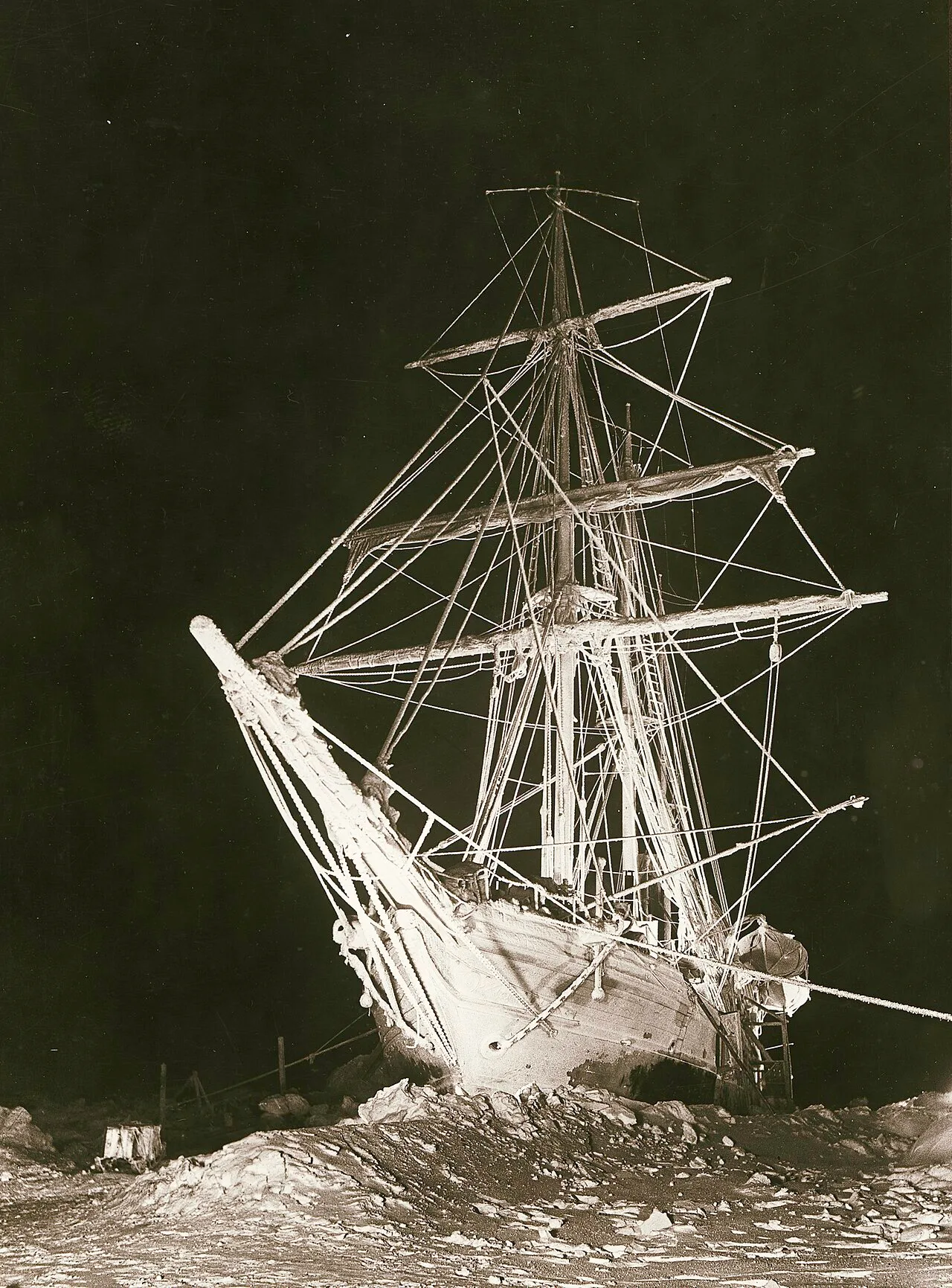
Shackleton's ship Endurance illuminated at night, 1915
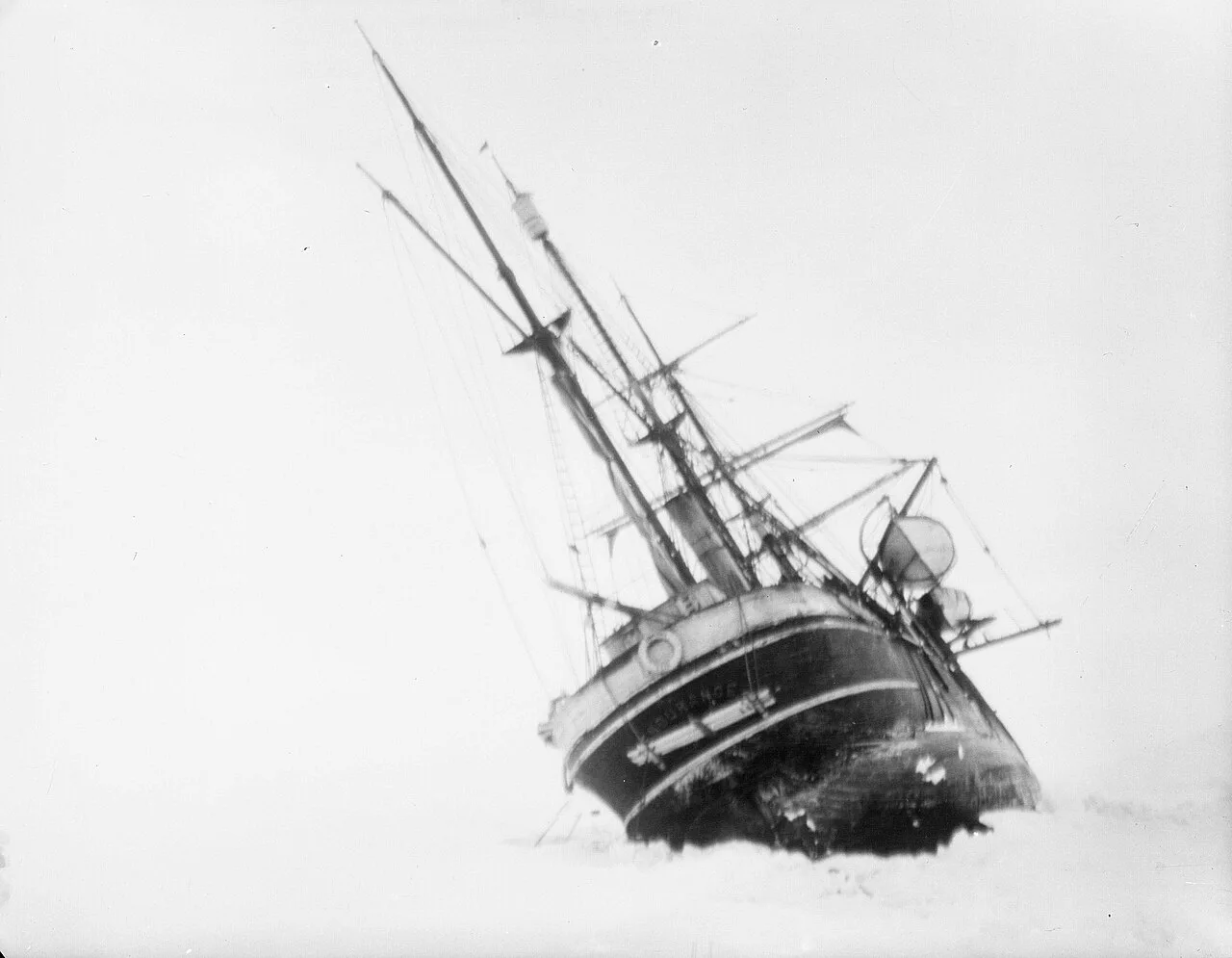
Endurance listing badly
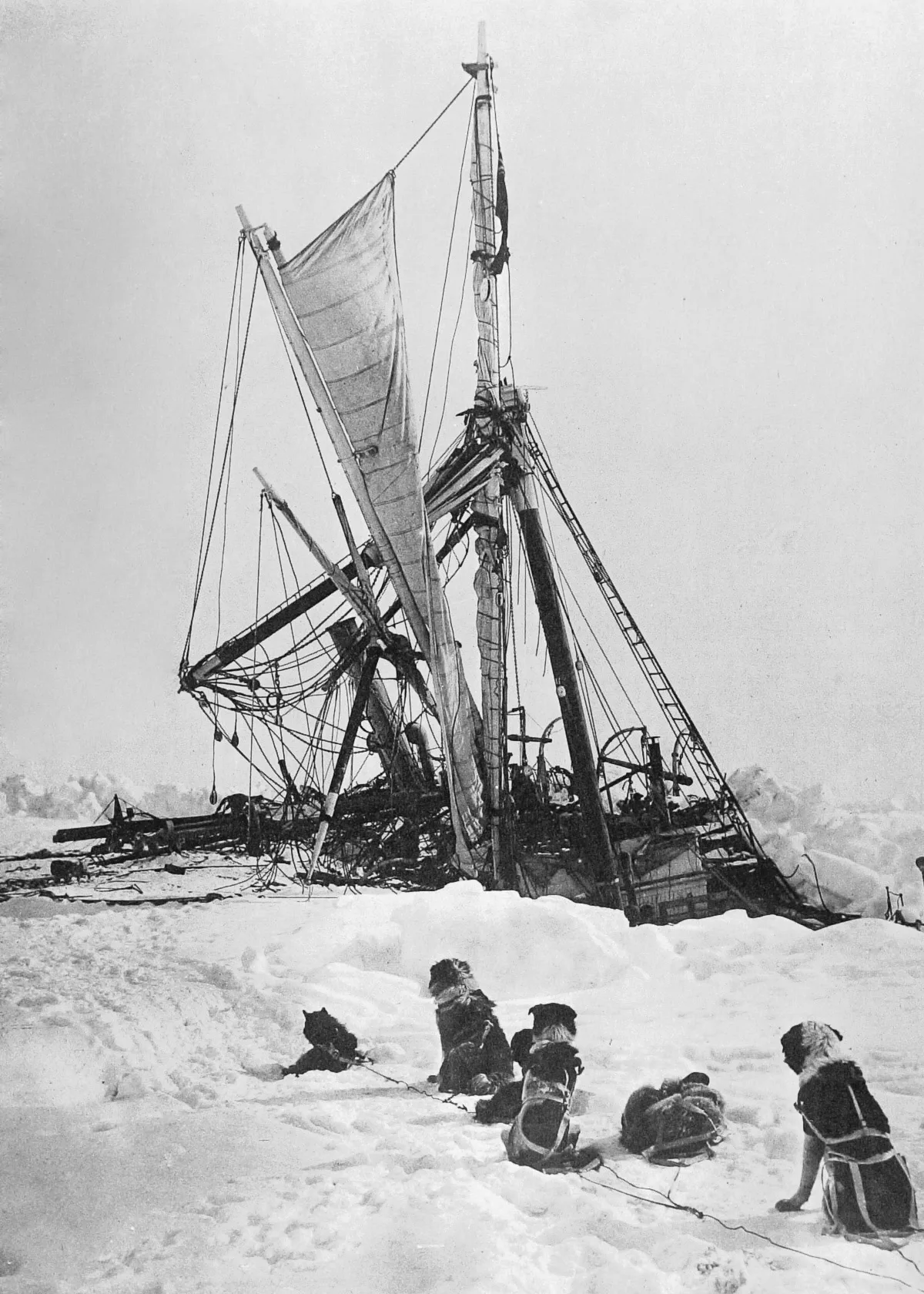
Endurance sinking, November 1915
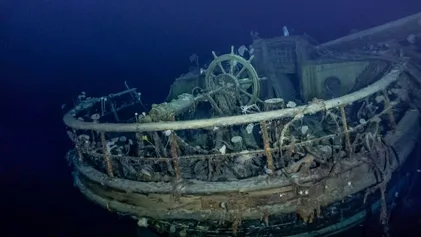
Photograph of Endurance as found by Endurance22
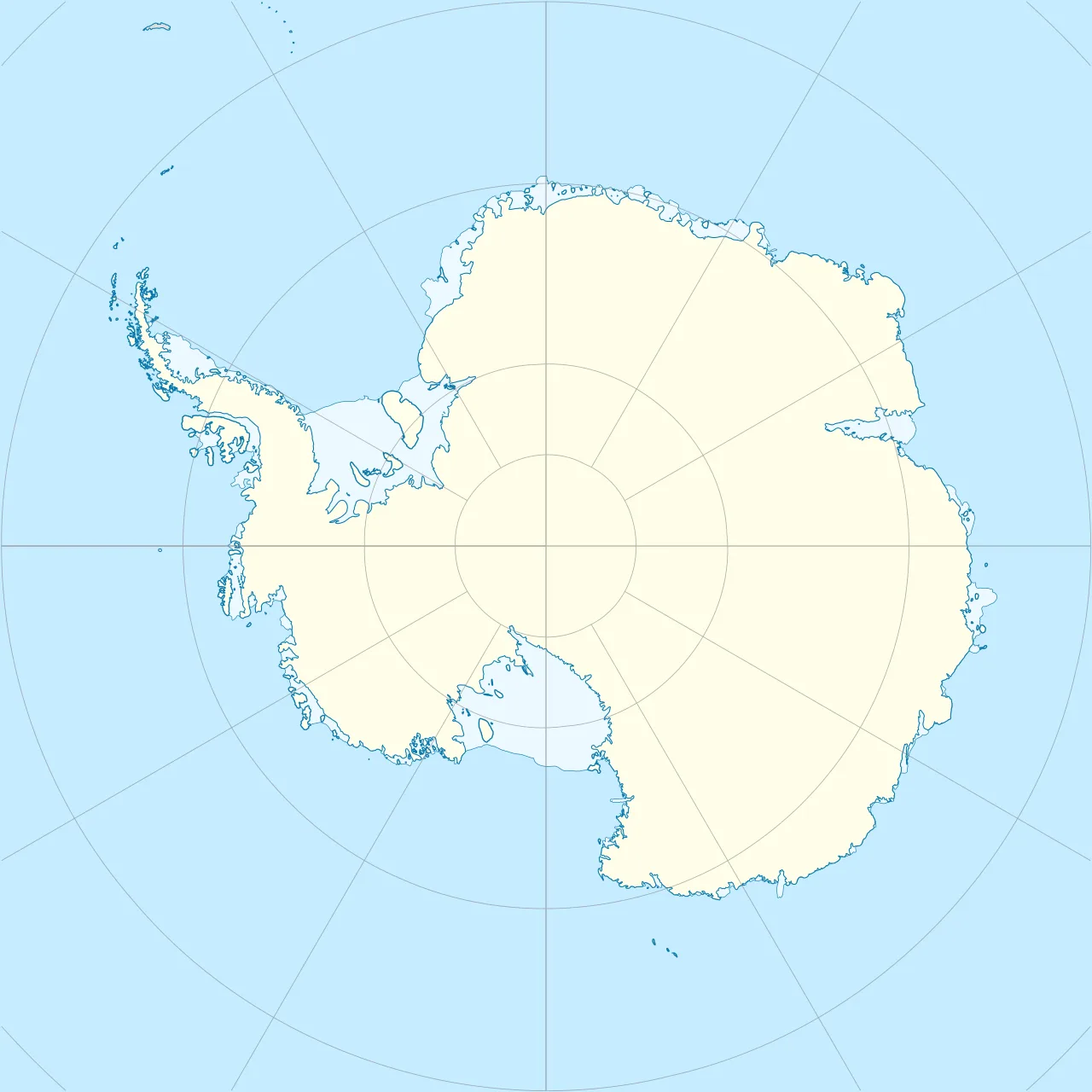
Endurance (1912 ship) is located in Antarctica
Endurance (1912 ship)
Endurance was the three-masted barquentine in which Sir Ernest Shackleton and a crew of 27 men sailed for the Antarctic on the 1914–1917 Imperial Trans-Antarctic Expedition.
From Luxury Arctic Yacht to Polar Workhorse
Rather than being conceived as a rugged exploration vessel, the ship was originally designed for Arctic leisure. Her original purpose was to provide luxurious accommodation for small tourist and hunting parties in the Arctic as an ice-capable steam yacht. When launched, she featured 10 passenger cabins, a dining saloon, a smoking room, electric lighting, and even a small bathroom. These high-end amenities stood in stark contrast to the grueling conditions of her final voyage.
From Wikipedia · CC BY-SA 4.0
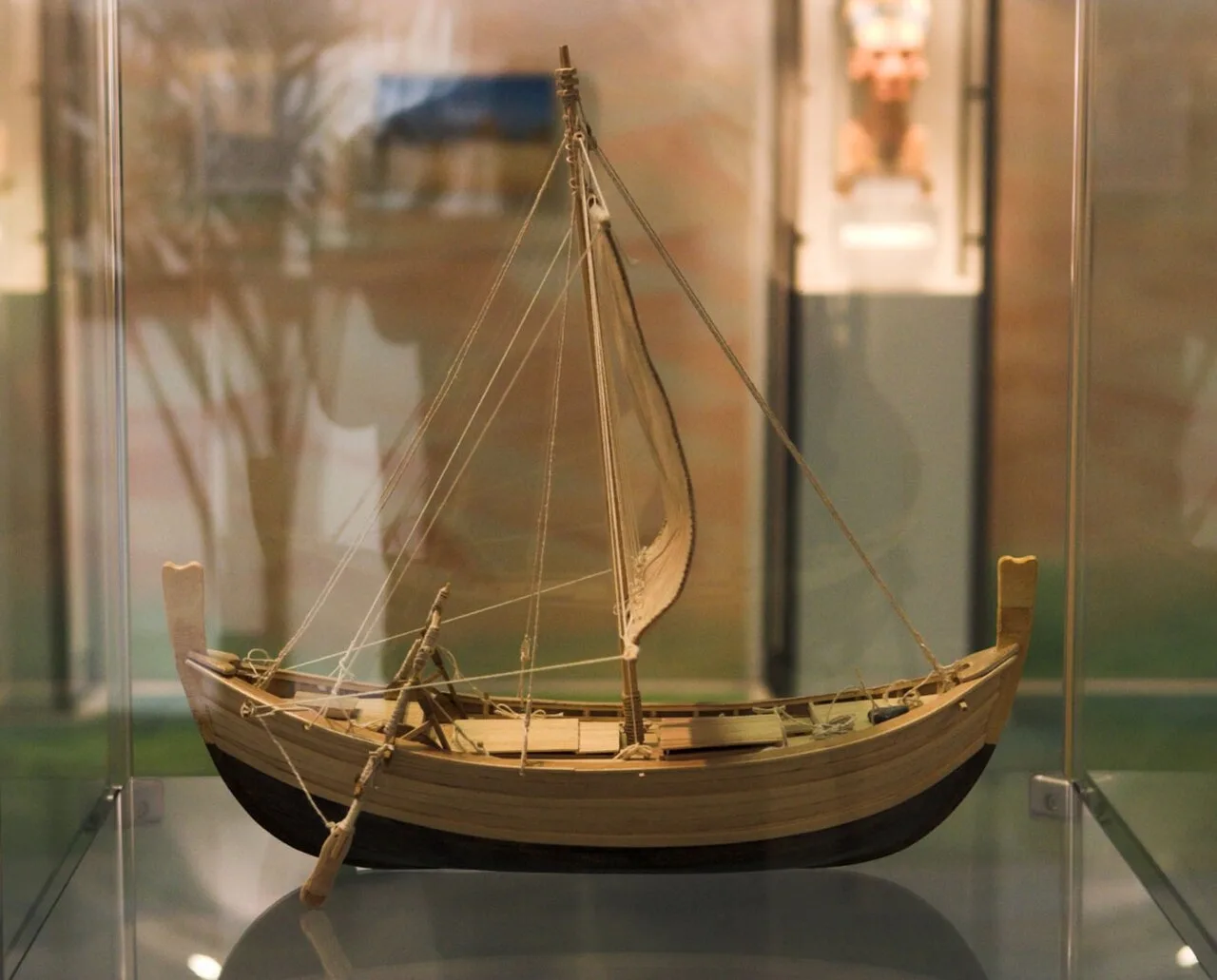
Wooden model of the ship's reconstruction
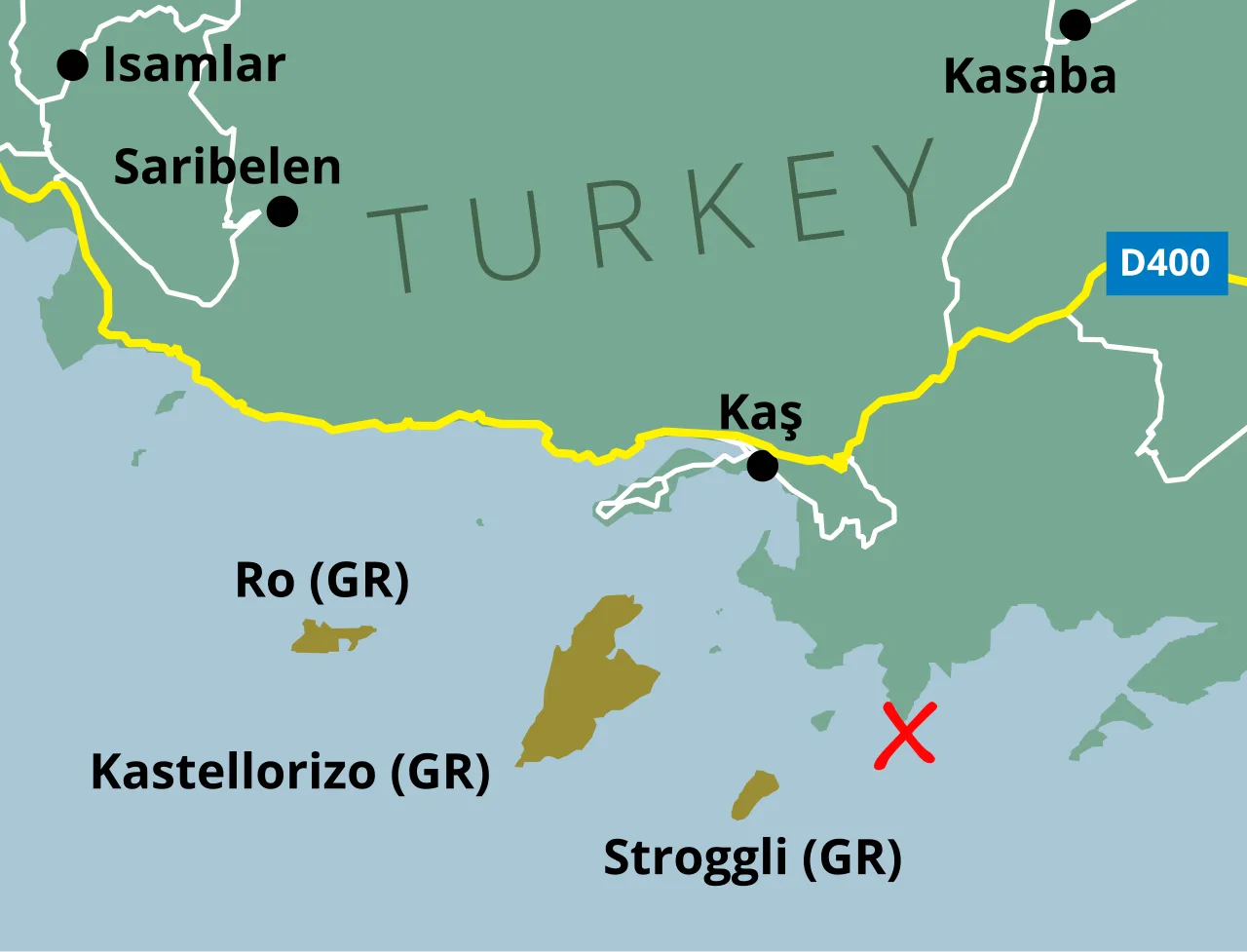
Uluburun Shipwreck Location
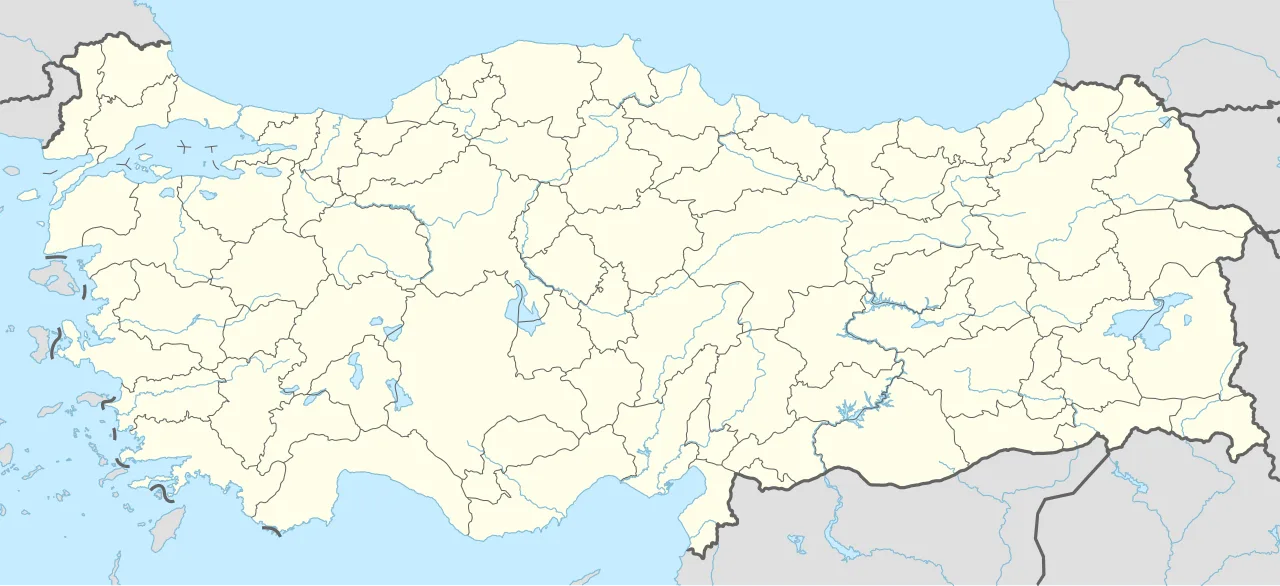
Uluburun shipwreck is located in Turkey
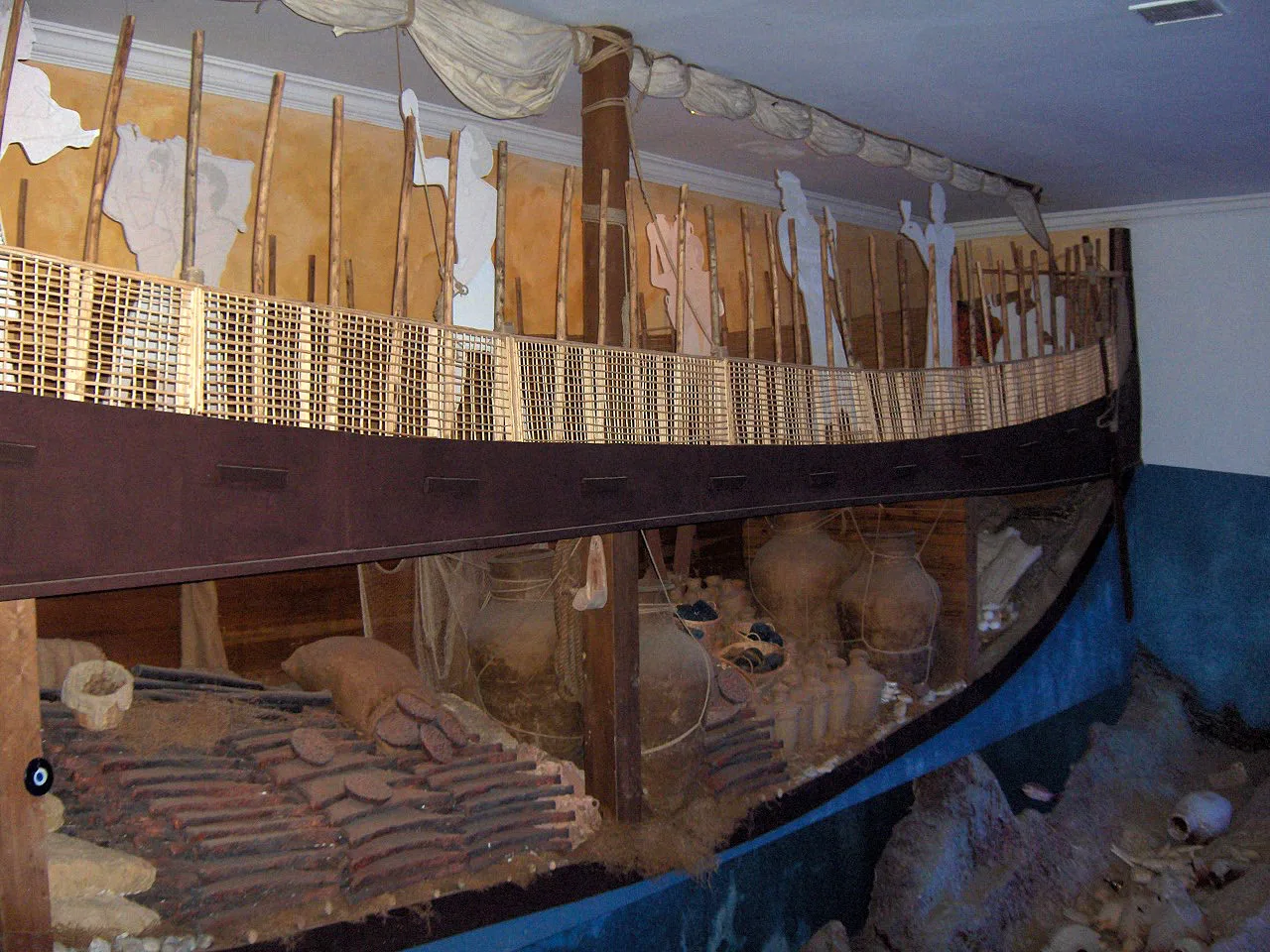
Lifesize replica at the Bodrum Museum of Underwater Archaeology.
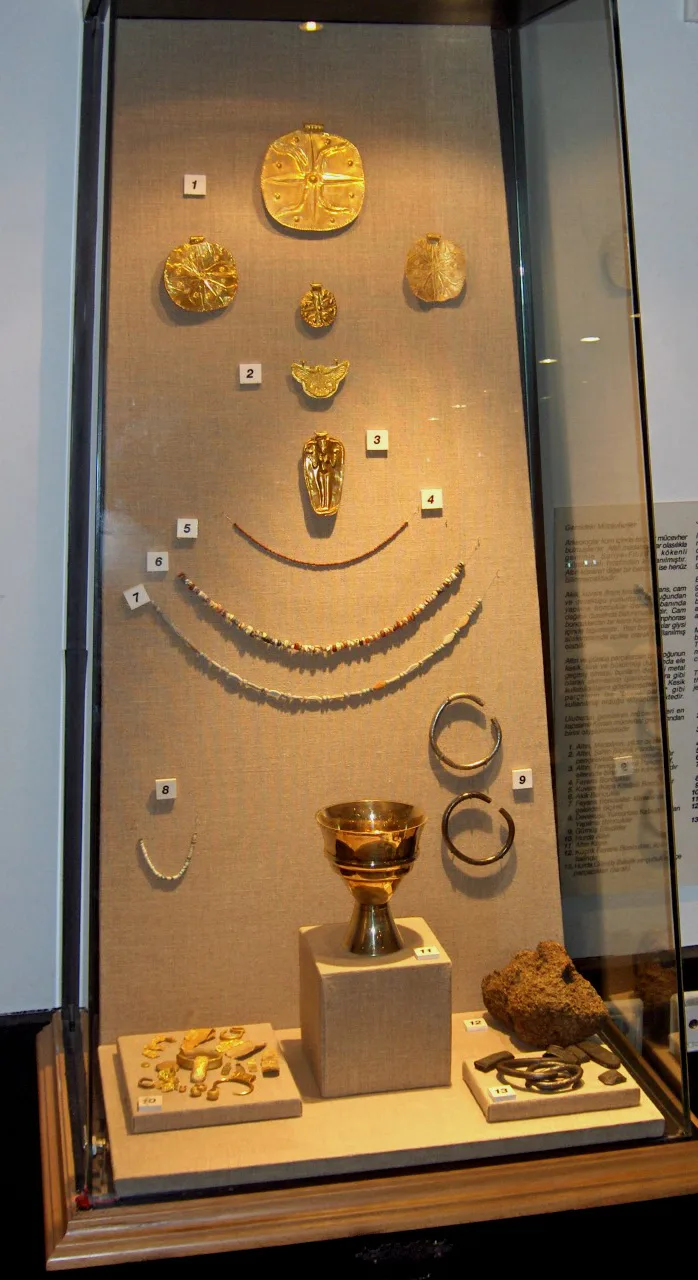
Egyptian jewelry 1 gold disk-shaped pendant 2. gold falcon pendant 3. gold goddess pendant 4. faience beads 5. rock crystal beads 6. agate beads 7. faience beads 8. ostrich eggshell beads 9. silver bracelets 10. gold scrap 11. gold chalice 12. accreted mass of tiny faience beads 13. silver scrap
Uluburun shipwreck
The Uluburun Shipwreck is a Late Bronze Age shipwreck dated to the late 14th century BC, discovered in 1982 off the coast of Uluburun, Turkey, in the Mediterranean Sea.
Biscuits with Ears off the Turkish Shore
In the summer of 1982, a local Turkish sponge diver named Mehmet Çakir sketched what he described as "metal biscuits with ears." Archaeologists recognized these sketches as ancient oxhide ingots and organized an inspection team to investigate the waters. The team quickly located several deposits of copper ingots submerged just 50 metres from the shore of Uluburun.
From Wikipedia · CC BY-SA 4.0
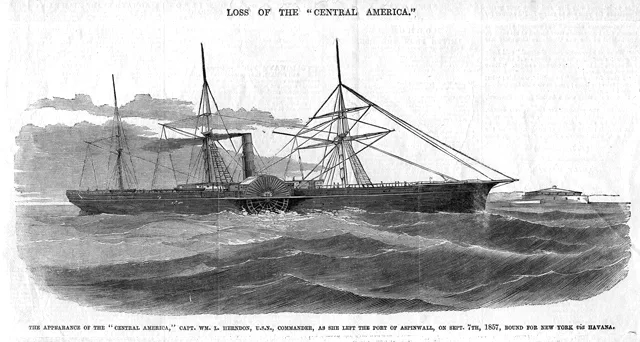
SSCentralAmerica
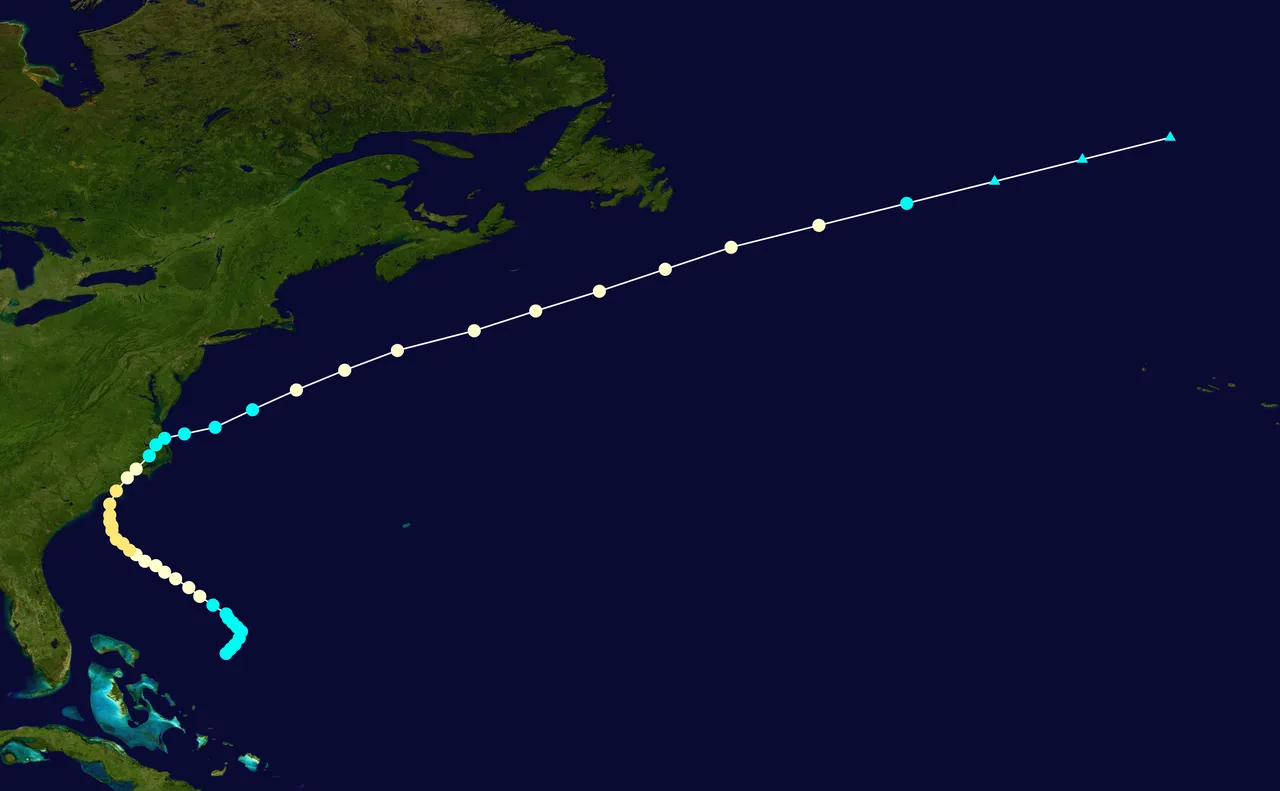
Hurricane path.mw-parser-output .hidden-begin{box-sizing:border-box;width:100%;padding:5px;border:none;font-size:95%}.mw-parser-output .hidden-title{font-weight:bold;line-height:1.6;text-align:left}.mw-parser-output .hidden-content{text-align:left}@media all and (max-width:500px){.mw-parser-output .hidden-begin{width:auto!important;clear:none!important;float:none!important}}Map keySaffir–Simpson scale.mw-parser-output .div-col{margin-top:0.3em;column-width:30em}.mw-parser-output .div-col-small{font-size:90%}.mw-parser-output .div-col-rules{column-rule:1px solid #aaa}.mw-parser-output .div-col dl,.mw-parser-output .div-col ol,.mw-parser-output .div-col ul{margin-top:0}.mw-parser-output .div-col li,.mw-parser-output .div-col dd{page-break-inside:avoid;break-inside:avoid-column} .mw-parser-output .legend{page-break-inside:avoid;break-inside:avoid-column}.mw-parser-output .legend-color{display:inline-block;min-width:1.25em;height:1.25em;line-height:1.25;margin:1px 0;text-align:center;border:1px solid black;background-color:transparent;color:black}.mw-parser-output .legend-text{} Tropical depression (≤38 mph, ≤62 km/h) Tropical storm (39–73 mph, 63–118 km/h) Category 1 (74–95 mph, 119–153 km/h) Category 2 (96–110 mph, 154–177 km/h) Category 3 (111–129 mph, 178–208 km/h) Category 4 (130–156 mph, 209–251 km/h) Category 5 (≥157 mph, ≥252 km/h) Unknown Storm type Tropical cyclone Subtropical cyclone Extratropical cyclone, remnant low, tropical disturbance, or monsoon depression
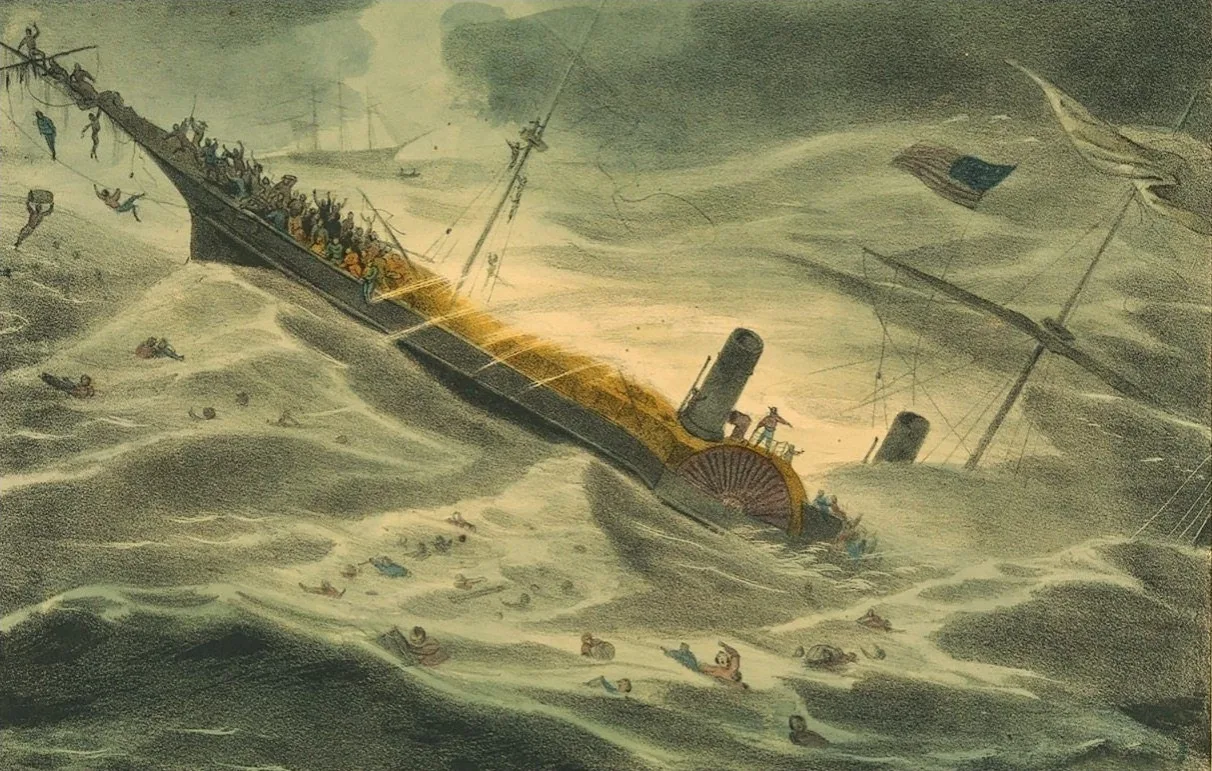
A depiction of the sinking
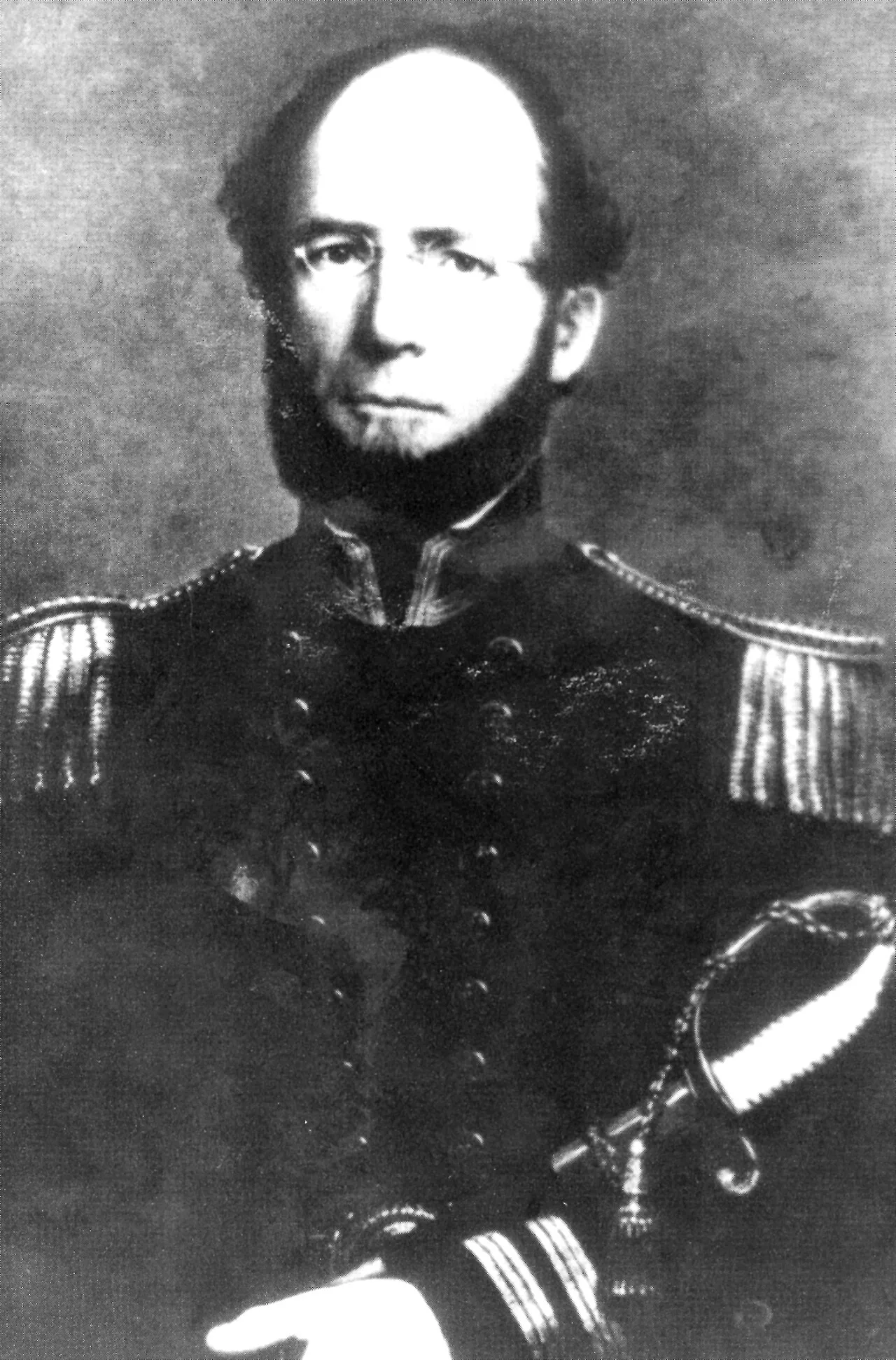
Commander William Lewis Herndon. U.S.N.
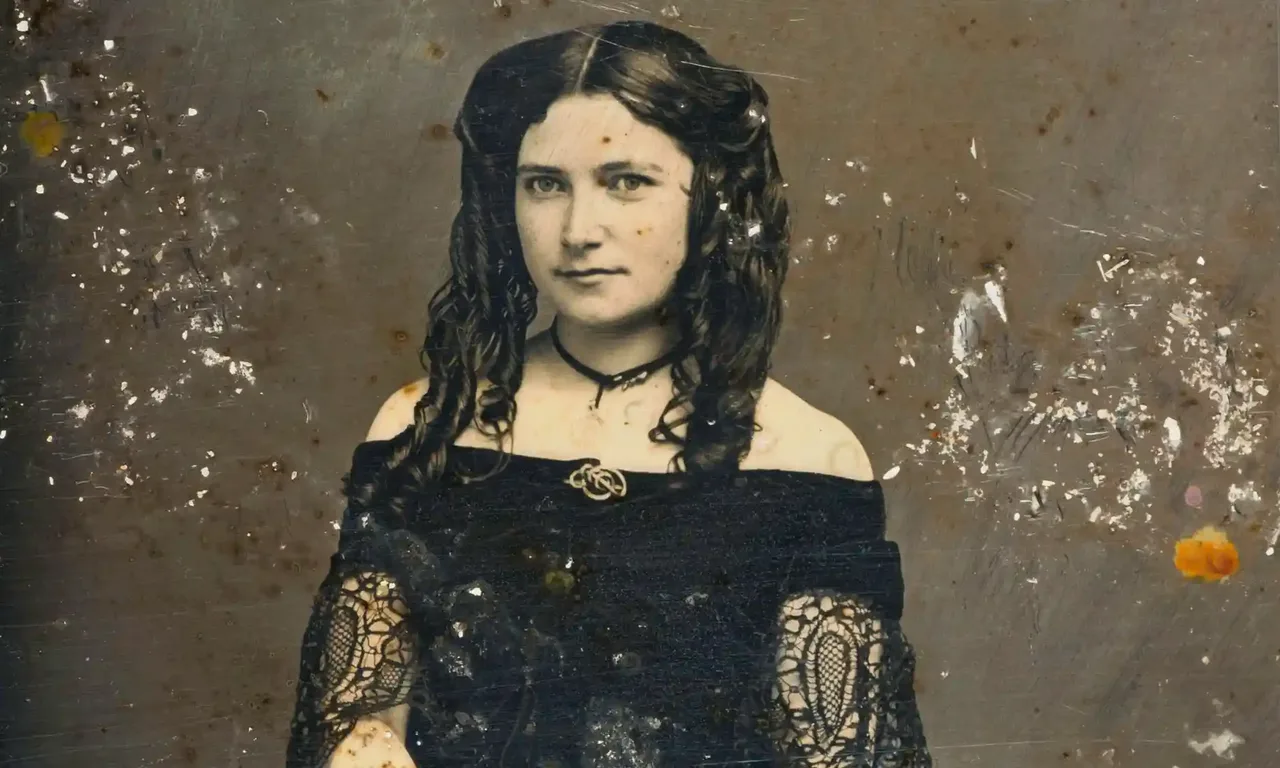
A daguerreotype photograph of a young woman found in the wreck of the ship
SS Central America
SS Central America, known as the Ship of Gold, was an 1850s sidewheel steamer that sank in an 1857 hurricane carrying 30,000 pounds of gold, contributing to the Panic of 1857.
A Shaft Seal Failure That Extinguished Steam Power
A singular mechanical vulnerability proved catastrophic for the sidewheel steamer. Water breached a seal between the paddle wheel shaft and the ship's side, precipitating an unmanageable flood. This ingress prevented the boiler from maintaining fire, which caused steam pressure to drop and deactivated both bilge pumps. Powerless and unable to pump out water, the crew could no longer keep the vessel into the wind.
From Wikipedia · CC BY-SA 4.0
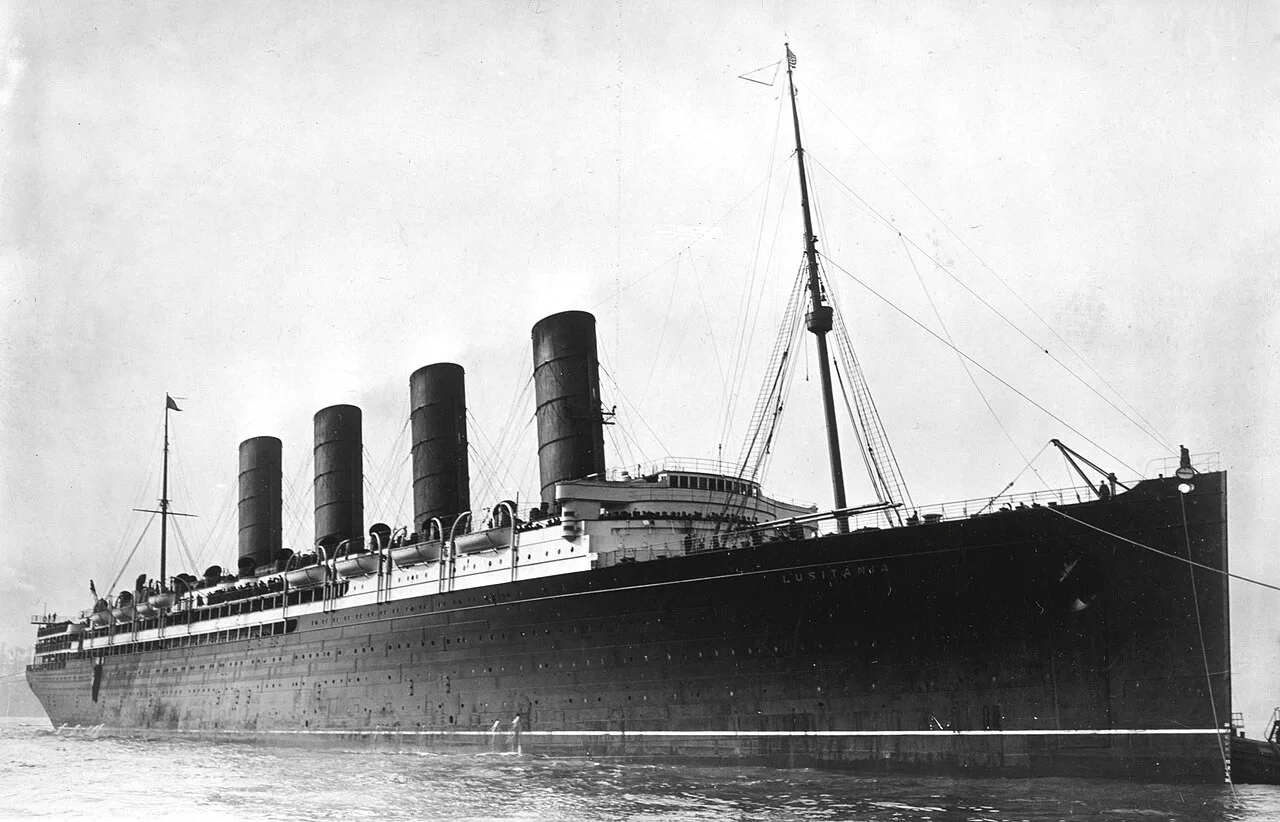
RMS Lusitania coming into port, possibly in New York, 1907-13-crop
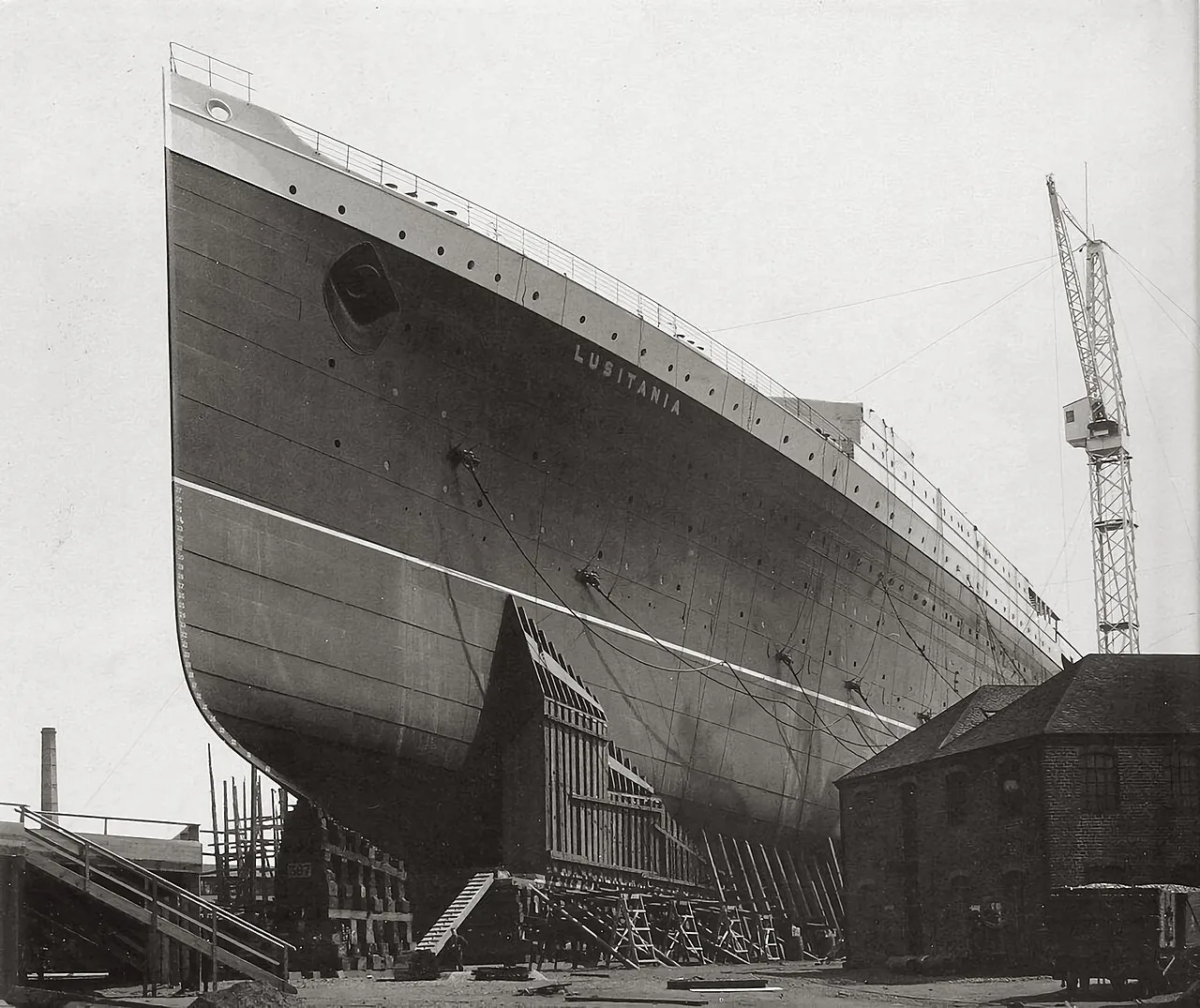
Lusitania, prior to her launch
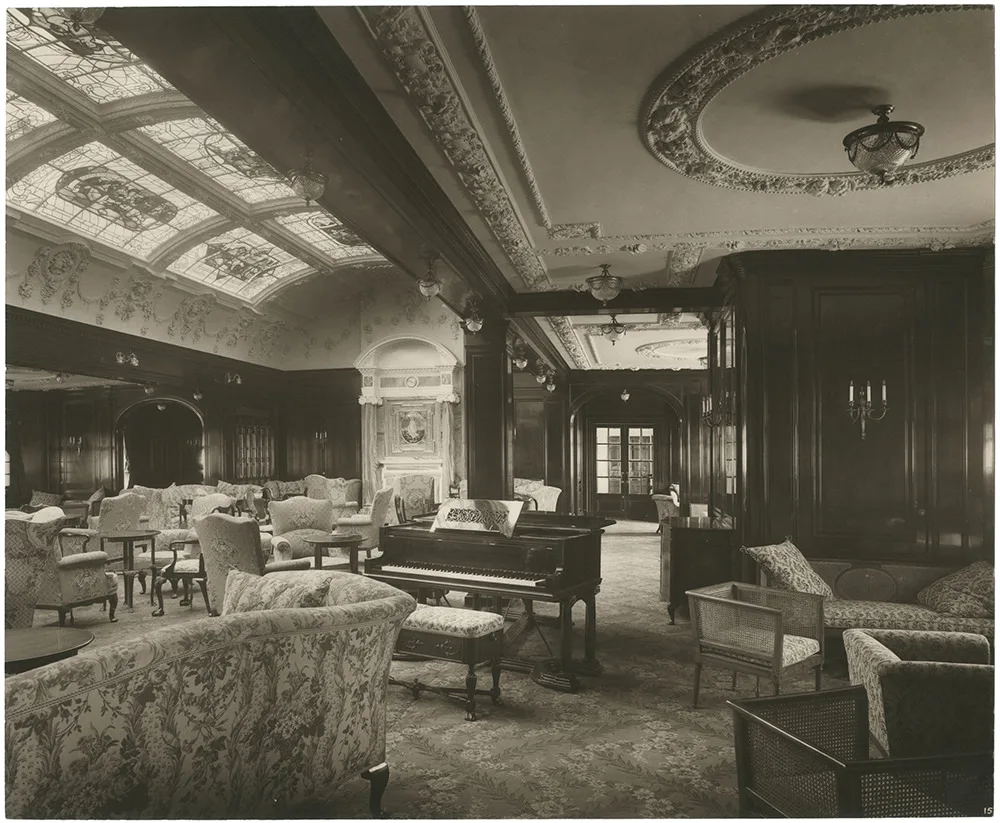
Lounge and music room
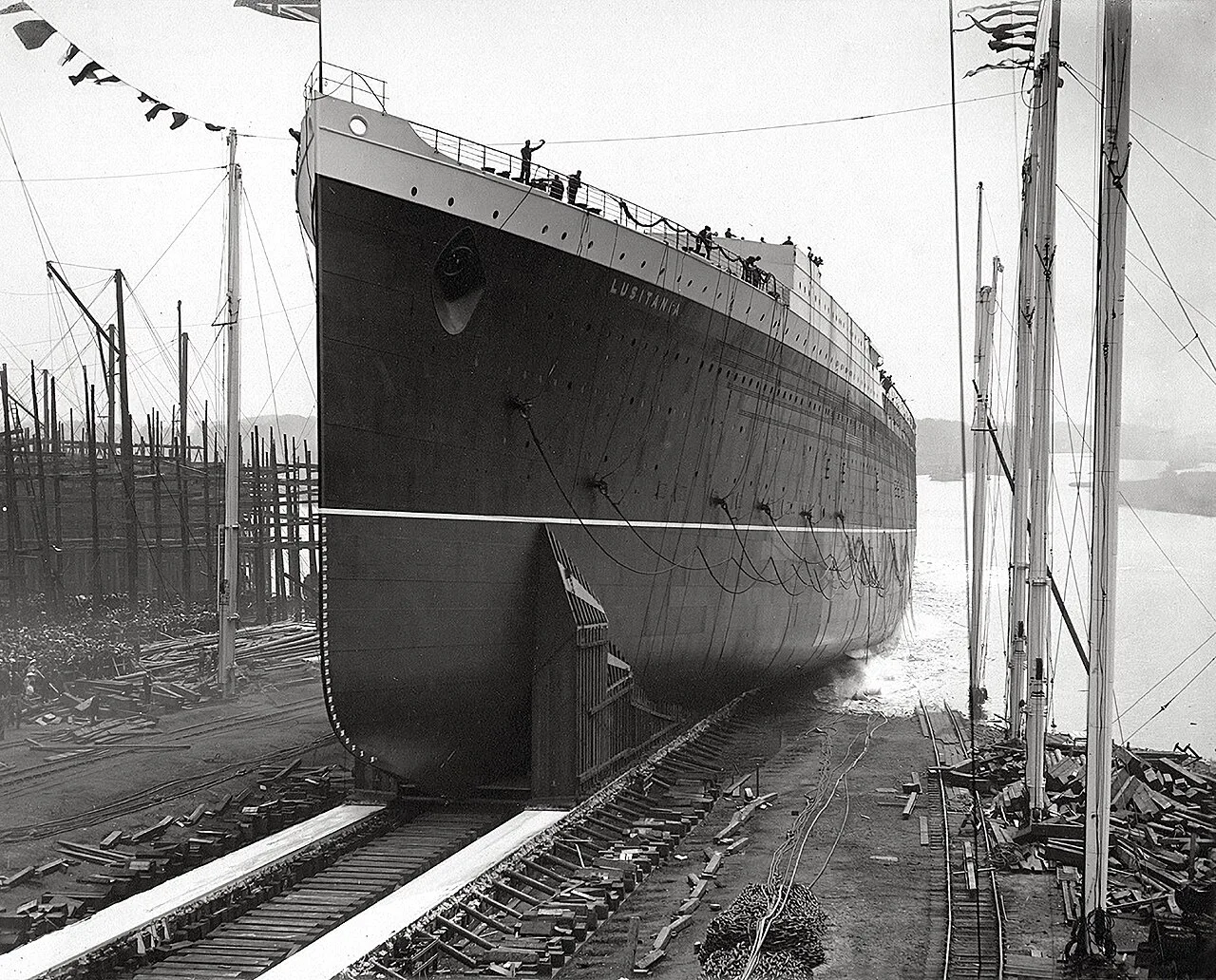
Lusitania's launch, 7 June 1906
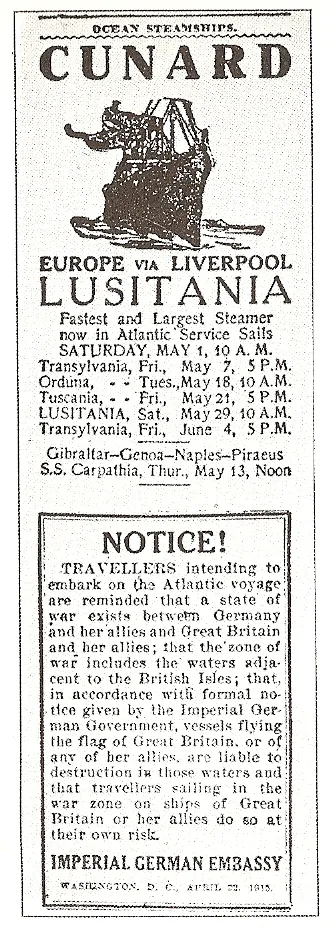
The warning issued by the Imperial German Embassy about travel to the UK, coincidentally juxtaposed with an advert for the Lusitania.[68]
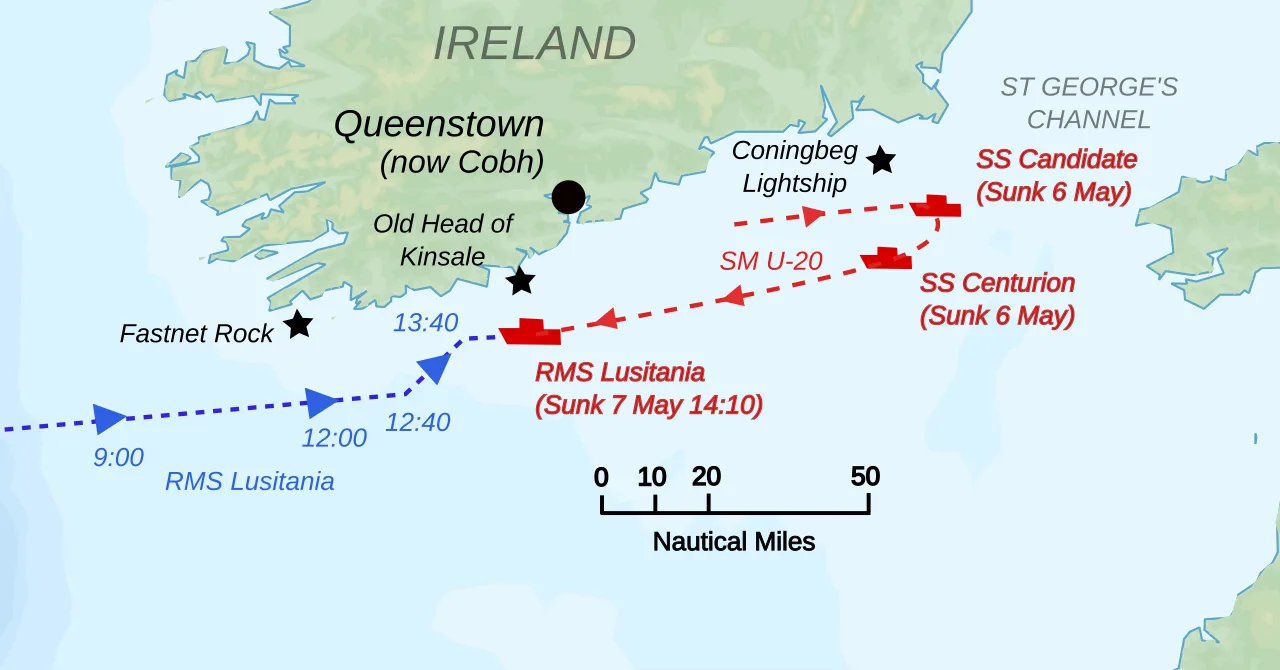
Map showing the movements of RMS Lusitania and SM U-20 prior to the sinking of the former. Marked are ships sunk by U-20 on 6 and 7 May and key geographic points.
RMS Lusitania
RMS Lusitania was a British ocean liner launched by the Cunard Line in 1906 that briefly held the title of the world's largest passenger ship and won the Blue Riband for fastest Atlantic crossing.
Secret State Subsidies and Unarmed Gun Mounts
Cunard secured state backing to construct its ocean liners by accepting military conditions from the British government. Under a June 1903 agreement, the state provided a £2.6 million loan to finance the construction of two new vessels. Although gun mounts for deck cannons were installed during construction to prepare the ship for wartime conversion, no guns were ever fitted.
From Wikipedia · CC BY-SA 4.0
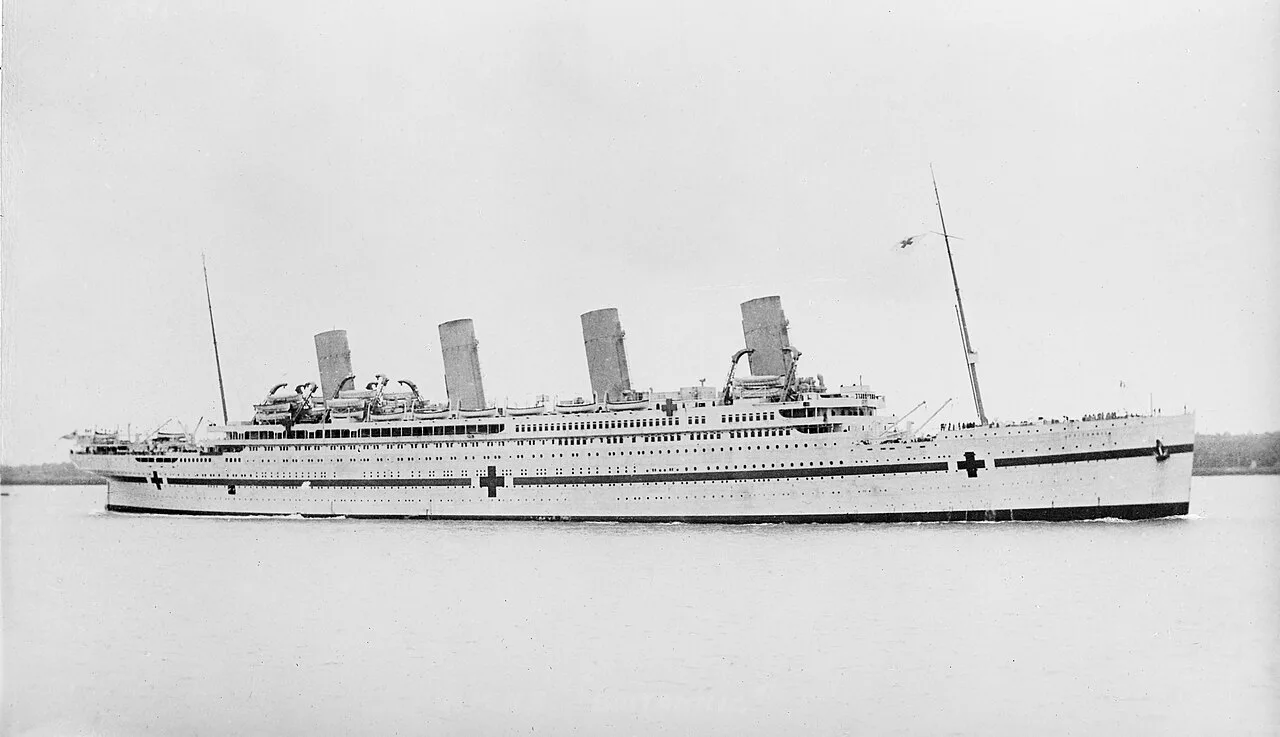
HMHS Britannic
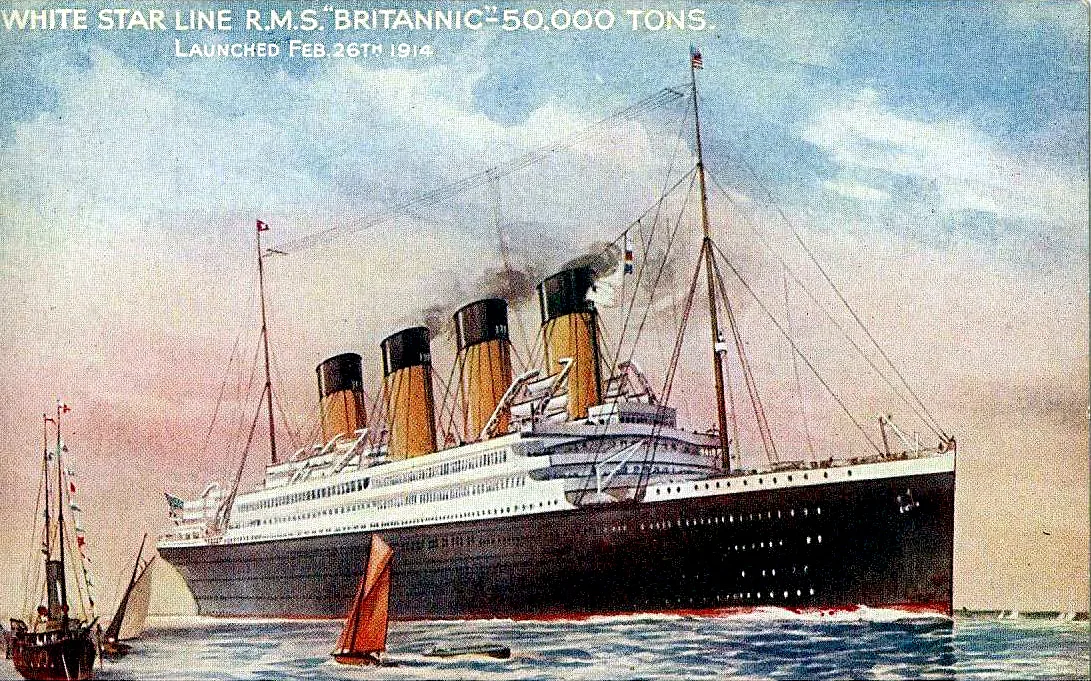
A postcard, after a painting by Charles Dixon, showing Britannic at sea in her original White Star livery
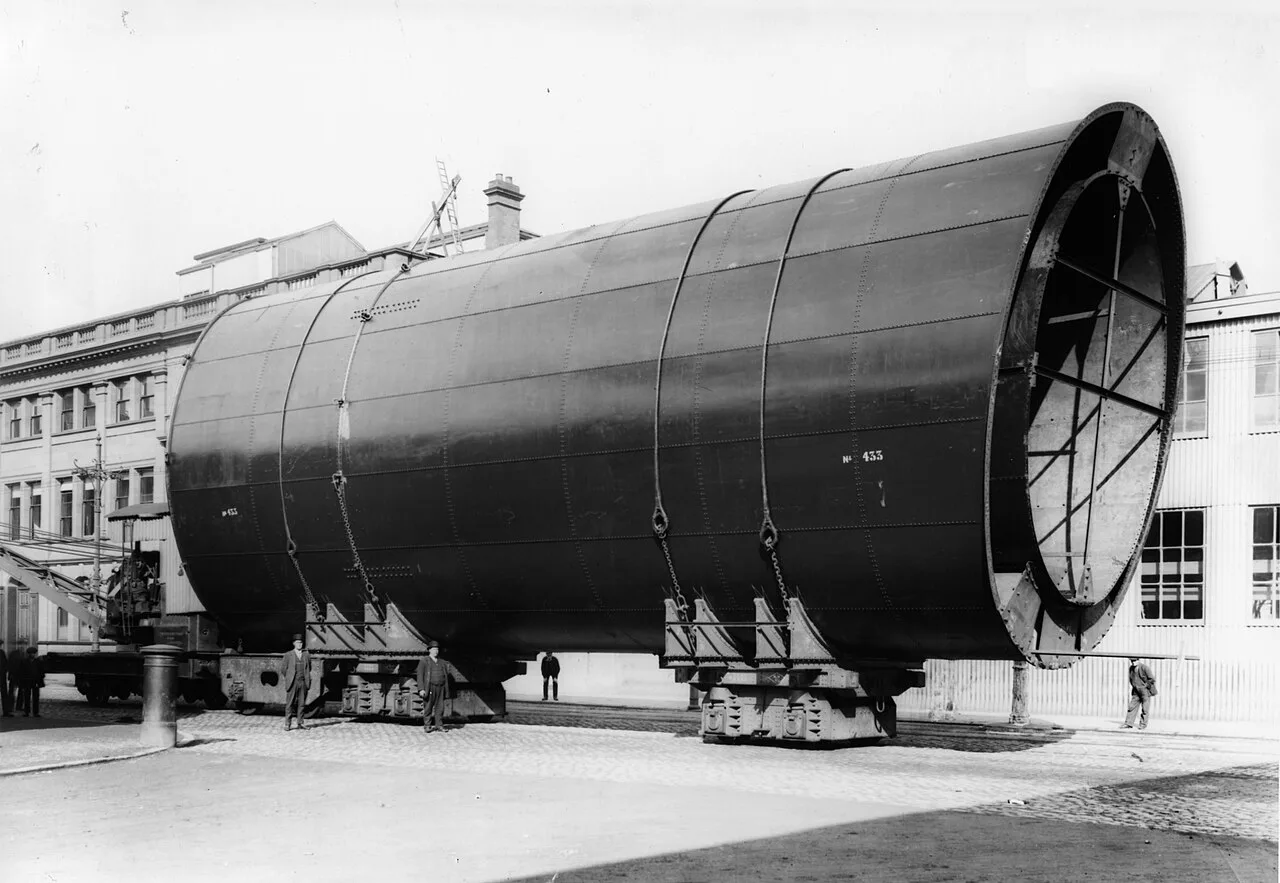
One of Britannic's funnels being transported to Harland & Wolff shipyards
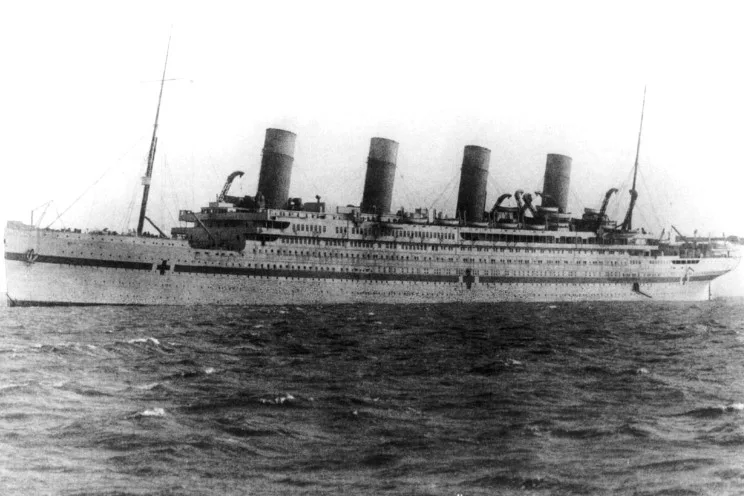
Britannic seen after her conversion to an operative hospital ship, c. January 1916
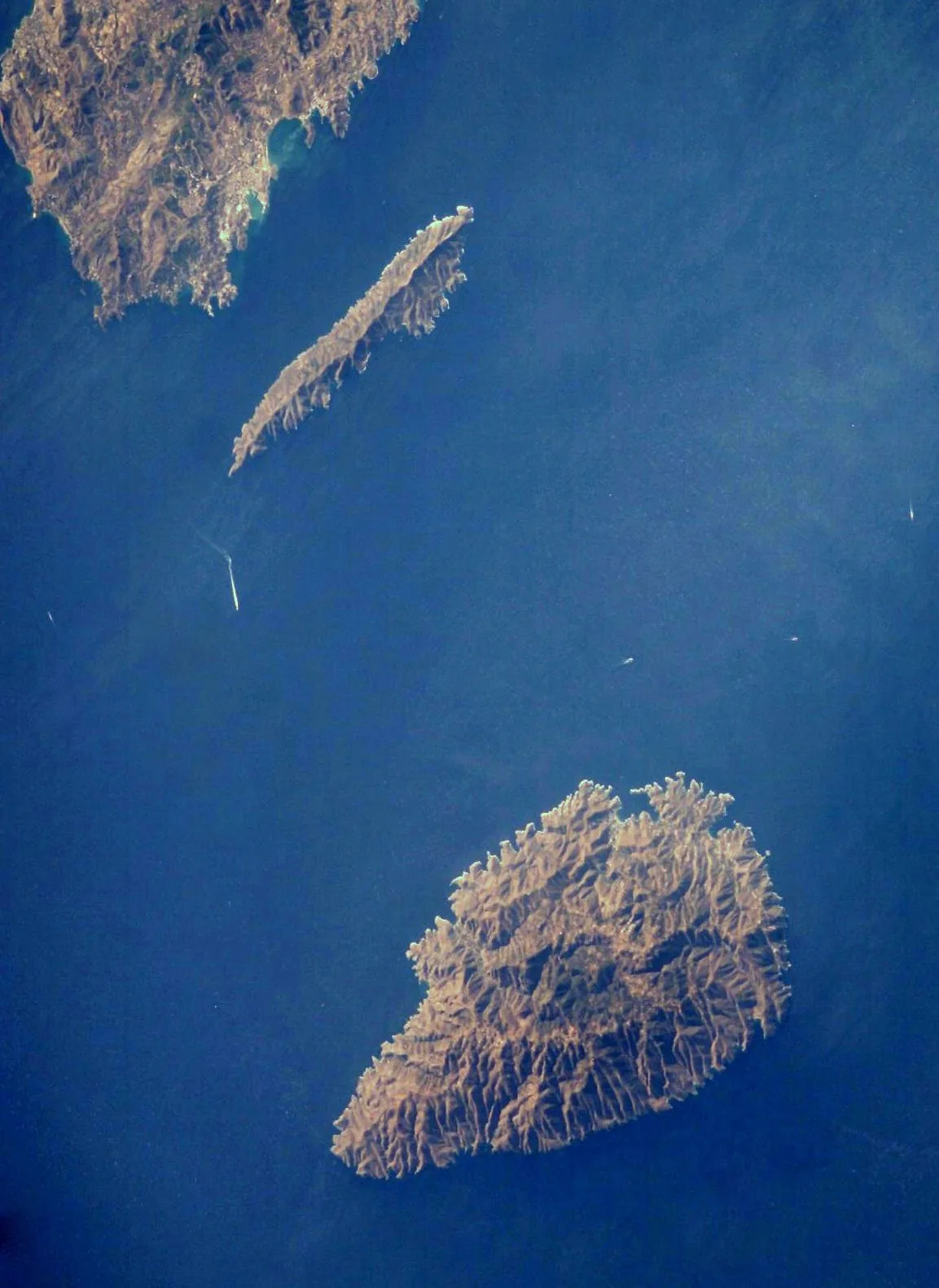
The channel between Makronisos (near top) and Kea (bottom); Britannic sank closer to Kea
![Captain John Cropper of the RAMC, who died in the sinking[61]](https://nwjvzop1xgplmzvt.public.blob.vercel-storage.com/wikifeed/hmhs-britannic/5-3e304f9499.webp)
Captain John Cropper of the RAMC, who died in the sinking[61]
HMHS Britannic
Britannic was a White Star Line ocean liner that served as a hospital ship during World War I until sinking near the Greek island of Kea in 1916.
Fortifying the Hull Beyond Titanic's Flaws
Following inquiries into the loss of Titanic, shipbuilders significantly altered Britannic while still under construction. Engineers raised six out of 15 watertight bulkheads to B Deck and added a double hull along the engine and boiler rooms. These enhancements permitted the ship to remain afloat with six compartments flooded.
From Wikipedia · CC BY-SA 4.0
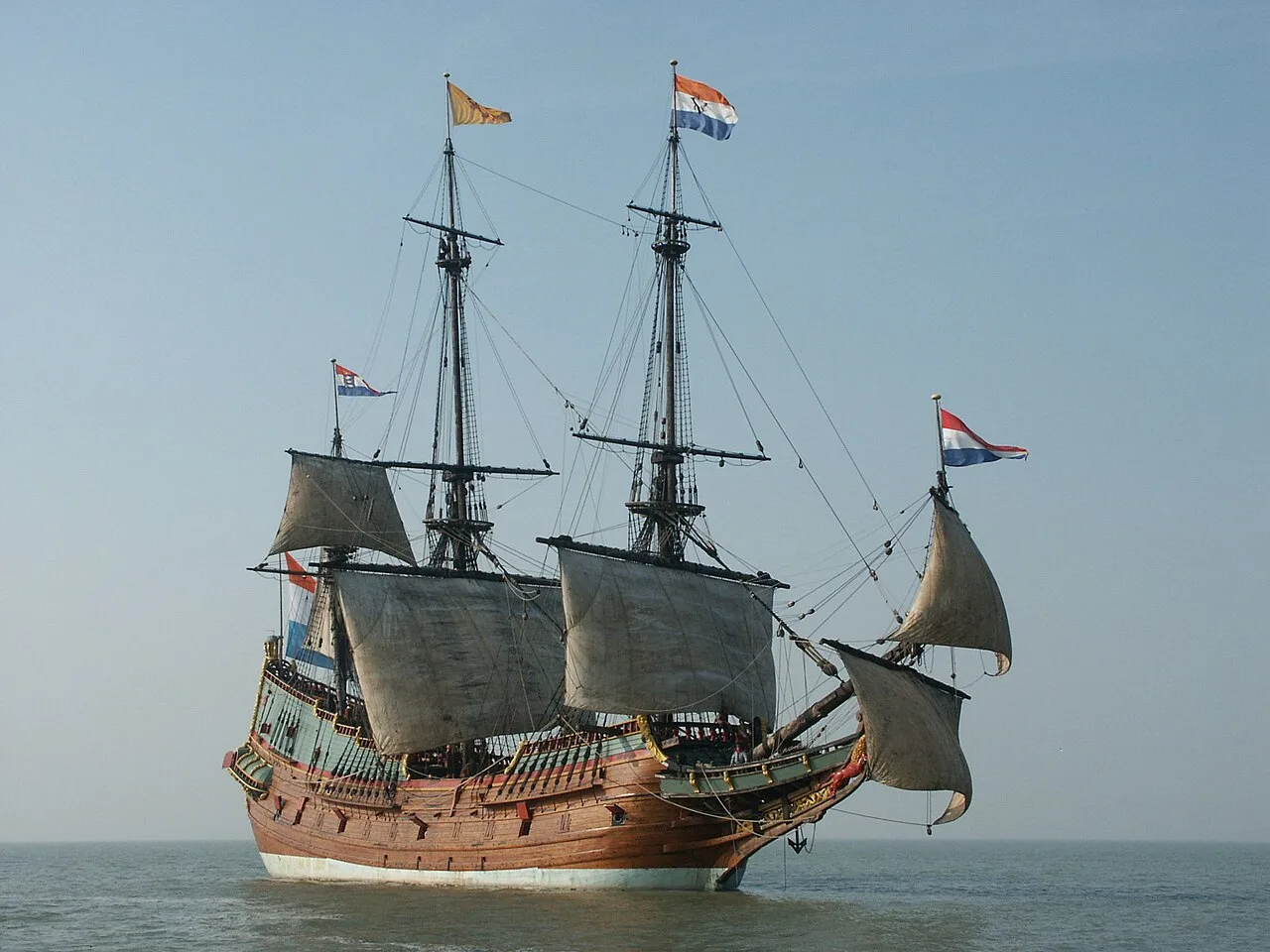
View of starboard side of three-masted sailing ship at sea with its lower sails raised
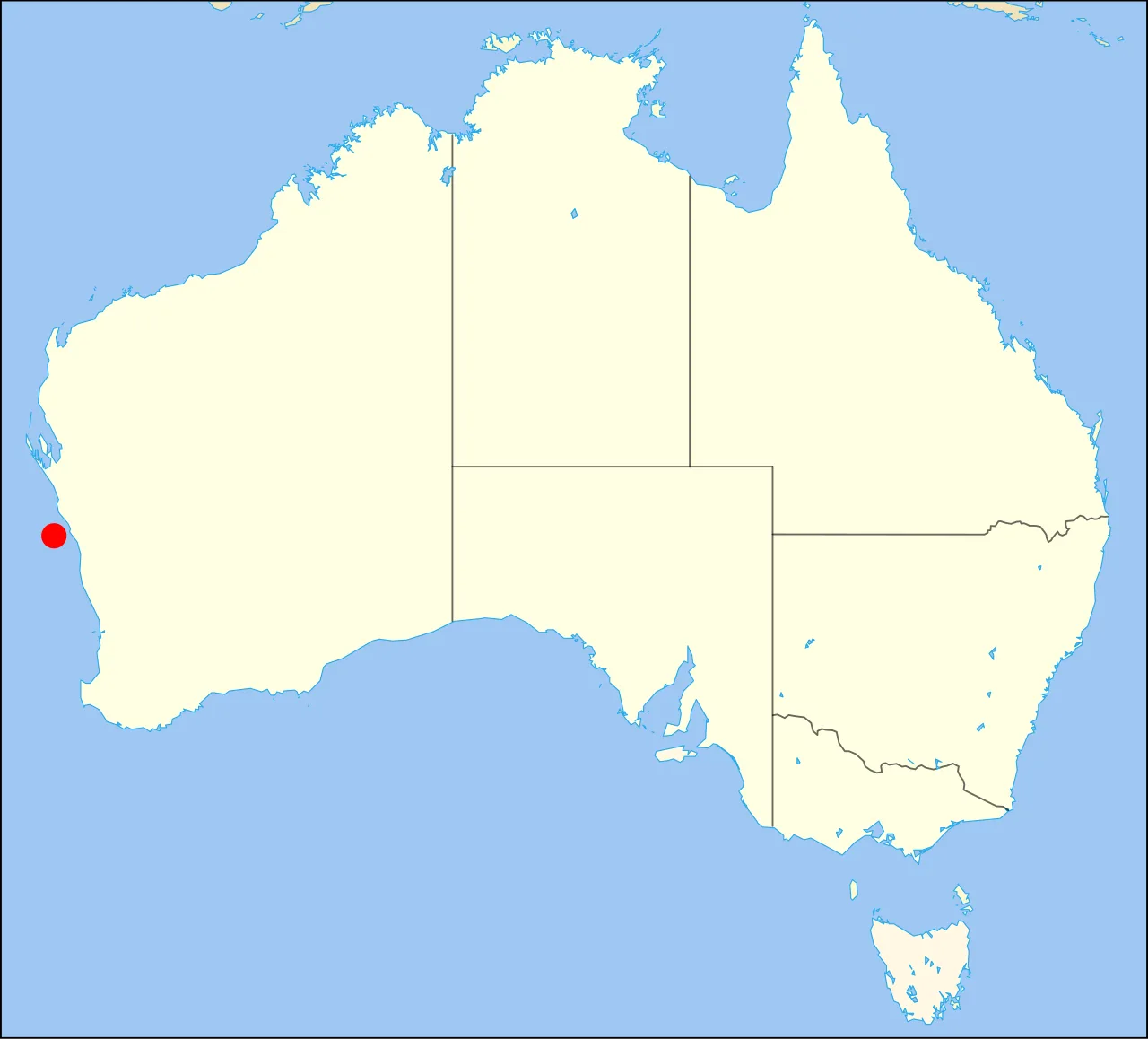
Shipwreck location near the Western Australian coast
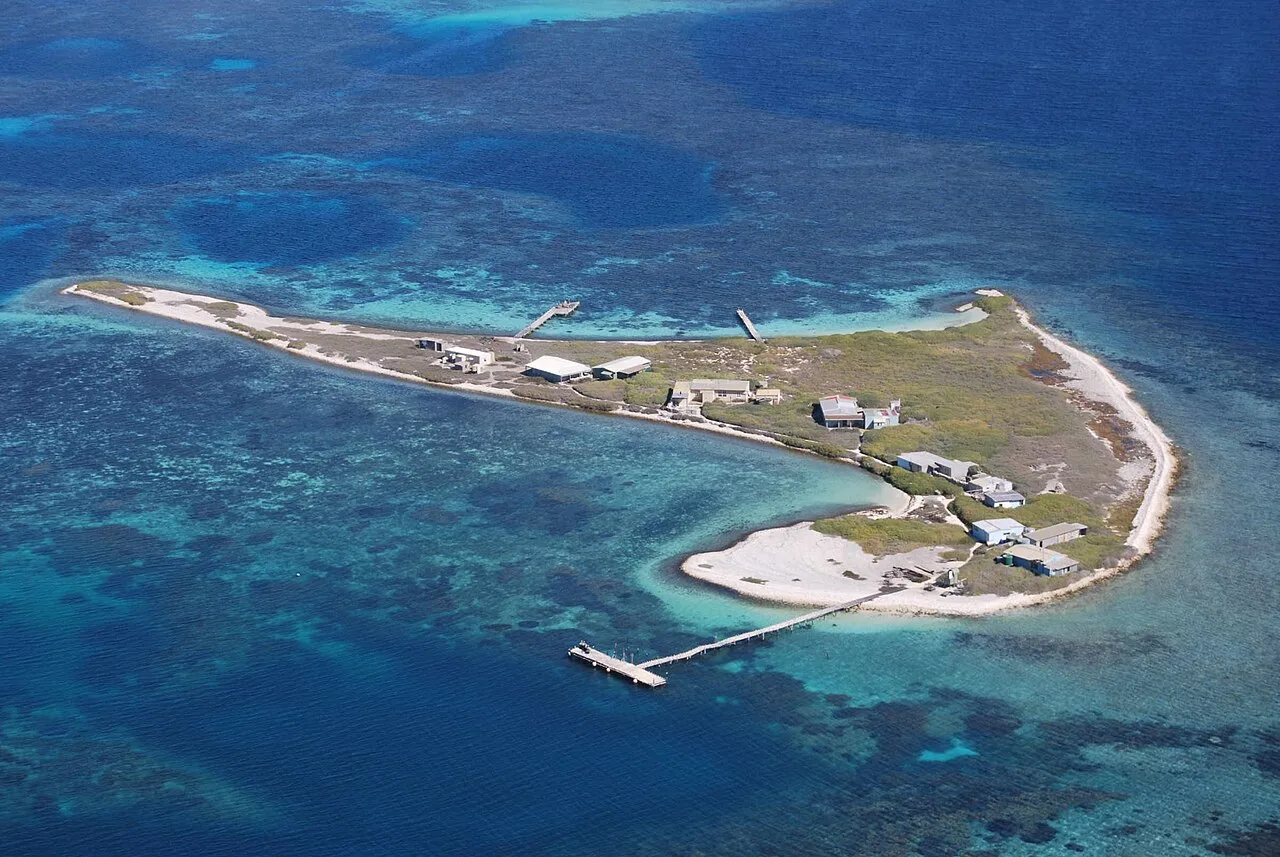
Batavia's Graveyard, now known as Beacon Island, in the Wallabi Group, Abrolhos Islands
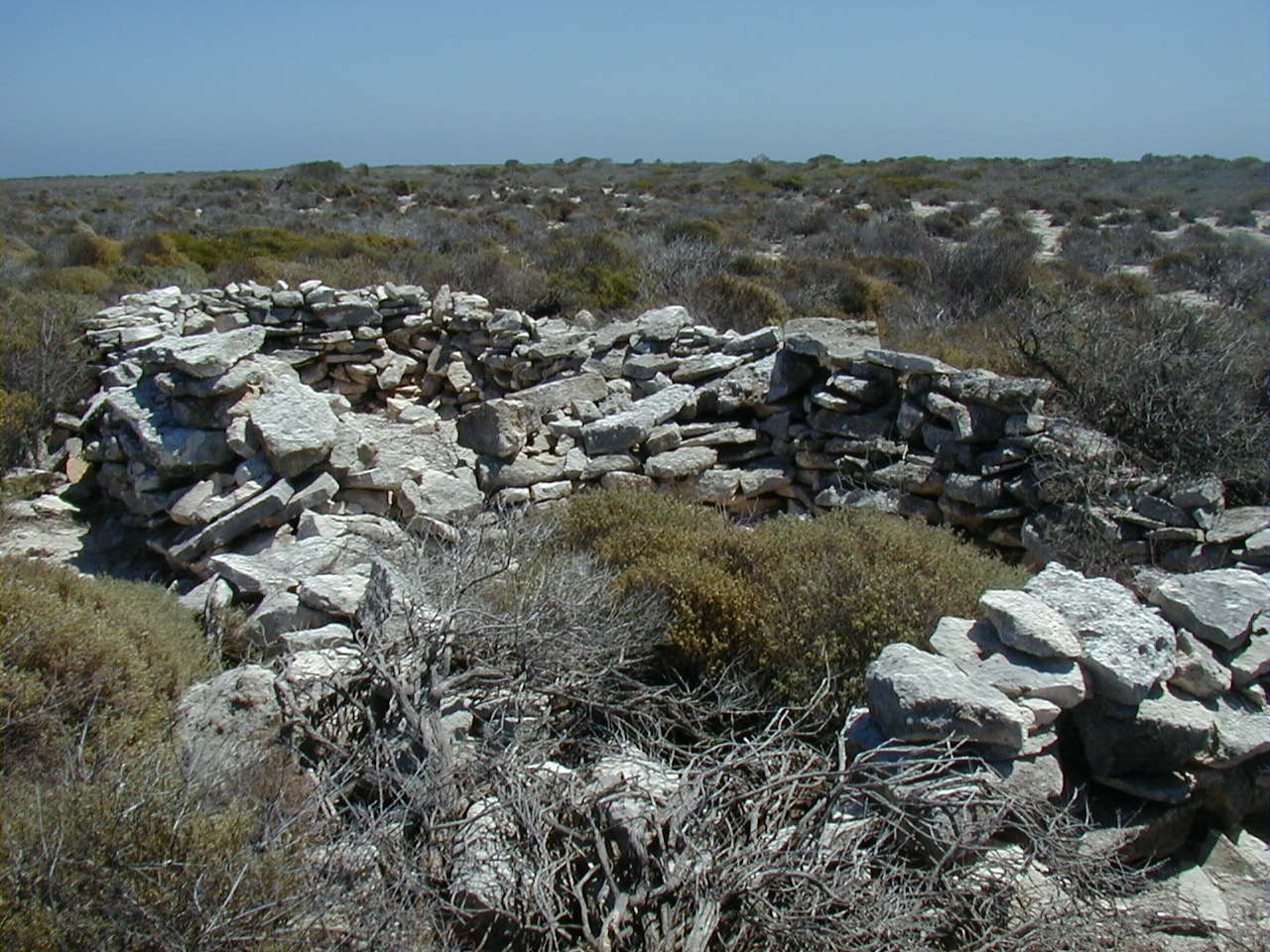
Wiebbe Hayes Stone Fort on West Wallabi Island
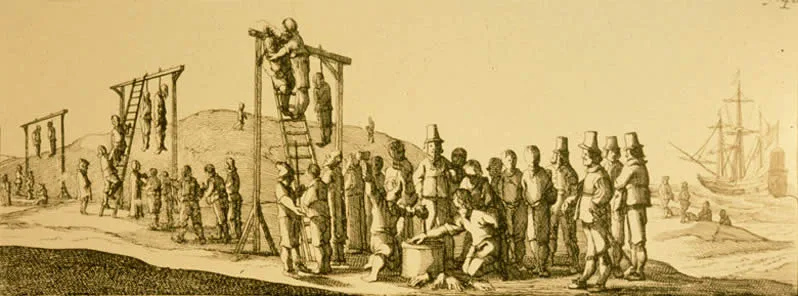
The hangings of the Batavia murderers
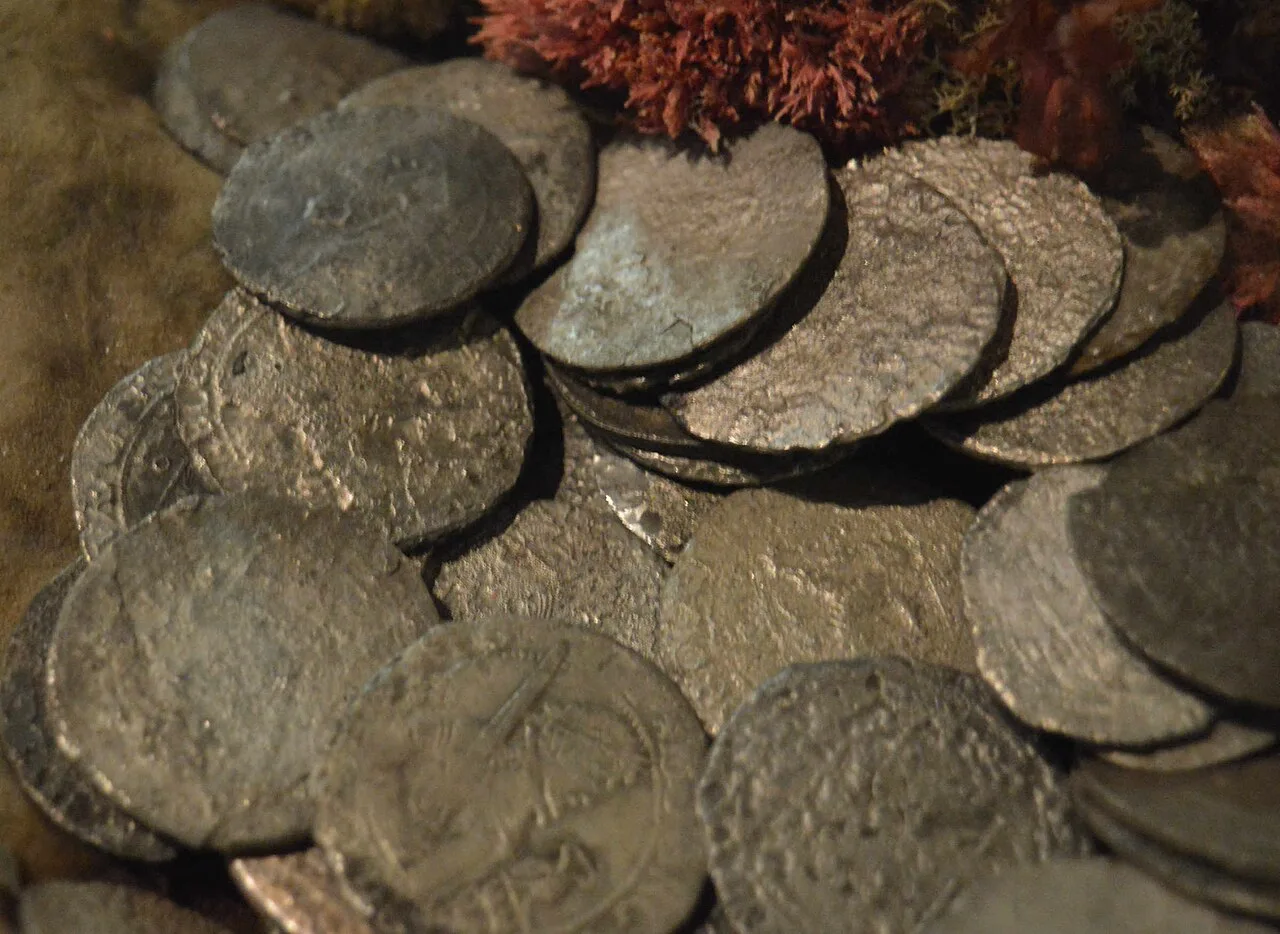
Rijksdaalder silver coins recovered from the wreck site
Batavia (1628 ship)
Batavia was a Dutch East India Company flagship built in 1628 that was wrecked on the Houtman Abrolhos islands off Western Australia on its maiden voyage in 1629.
Baltic Oak and Uncharted Hull Designs
Dutch shipbuilders did not rely on formal plans or drawings when constructing VOC vessels like Batavia. Instead, shipwrights shaped hull planks edge-to-edge using imported oak from Baltic forests bordering the Vistula. This massive demand for Baltic timber meant that Dutch shipbuilding may have caused the deforestation of the Vistula region, leading oak imports from the area to end after 1643.
From Wikipedia · CC BY-SA 4.0
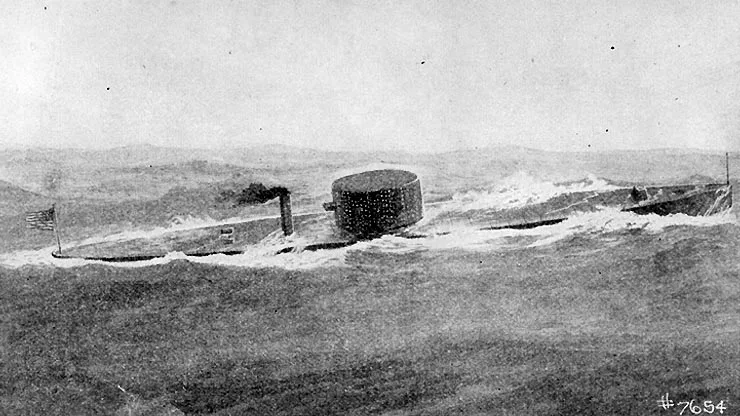
USS Monitor at sea
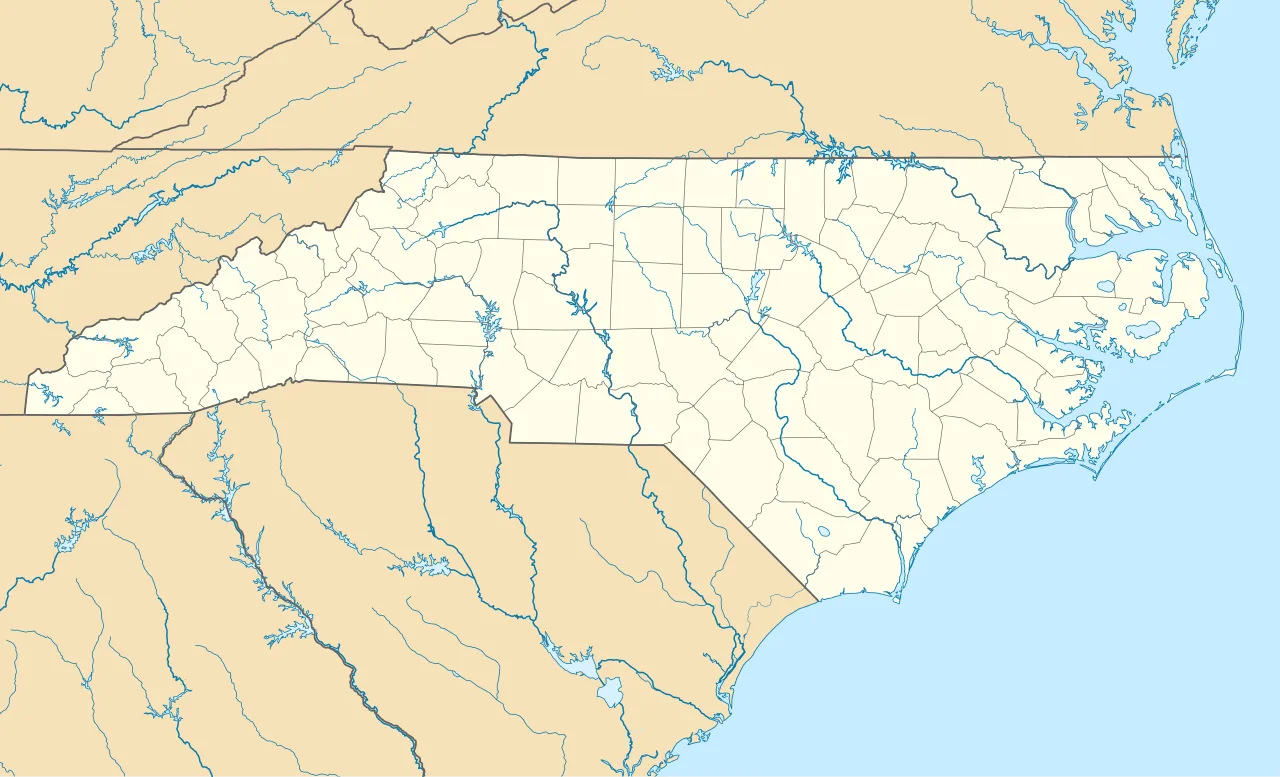
USS Monitor is located in North Carolina
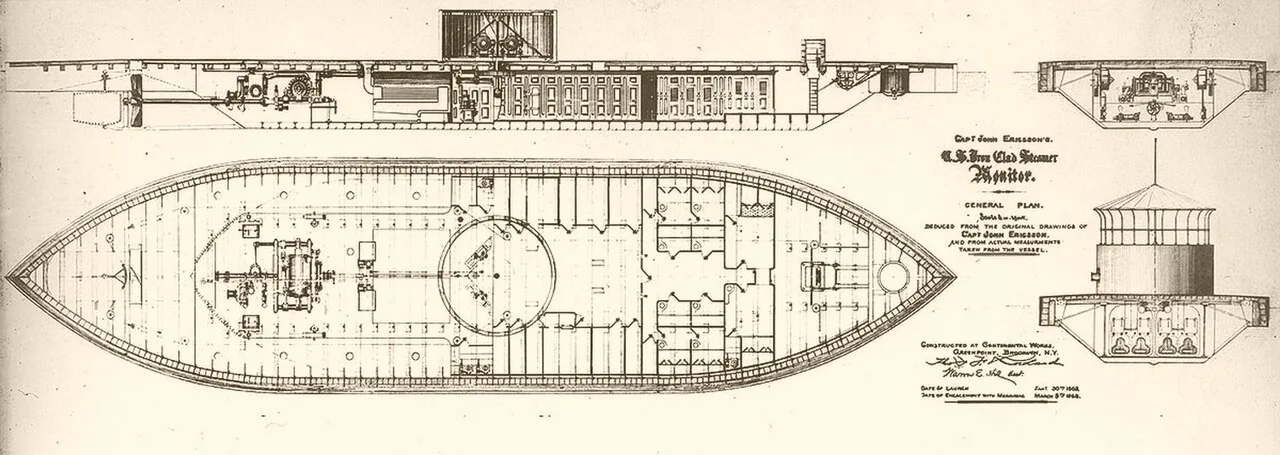
Inboard plans of Monitor
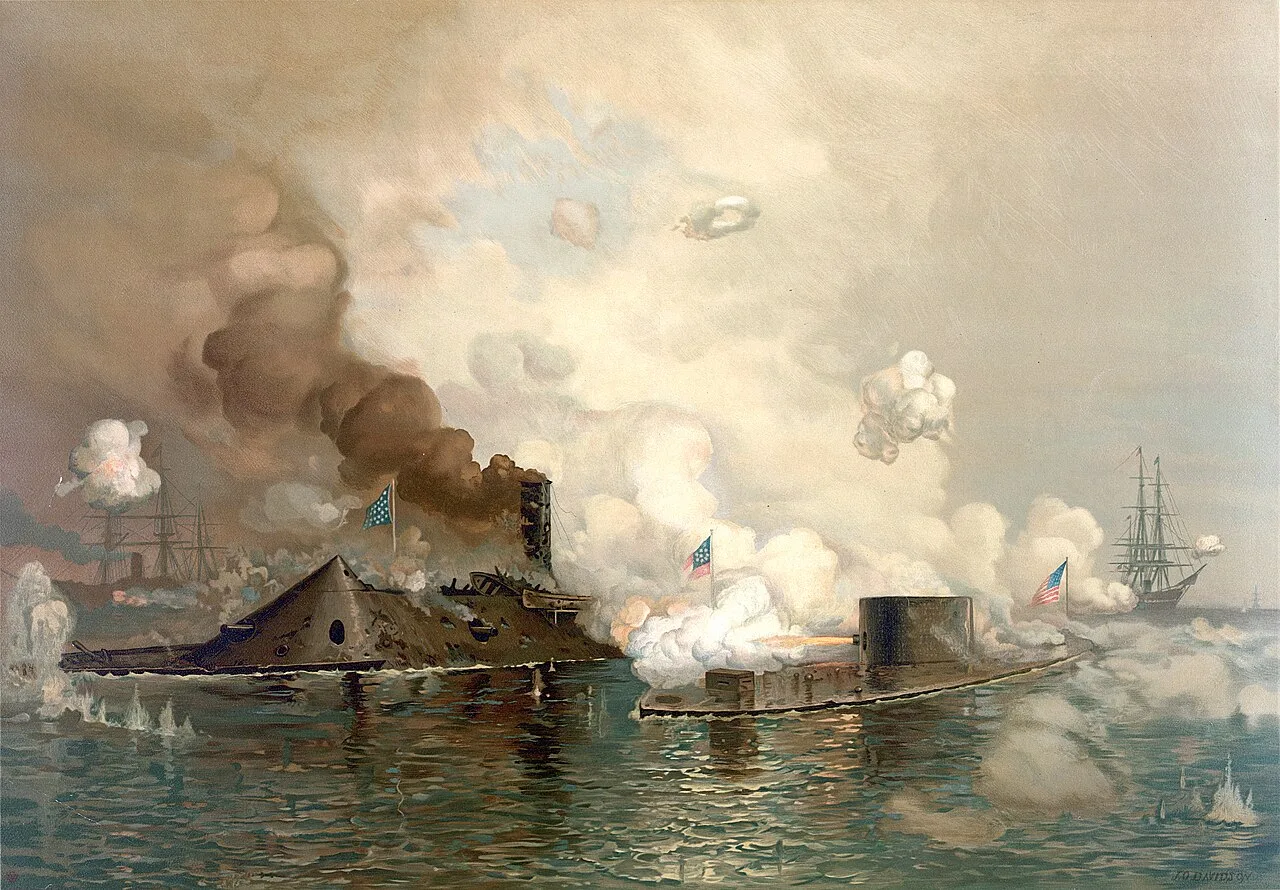
USS Monitor engaging CSS Virginia, 9 March 1862
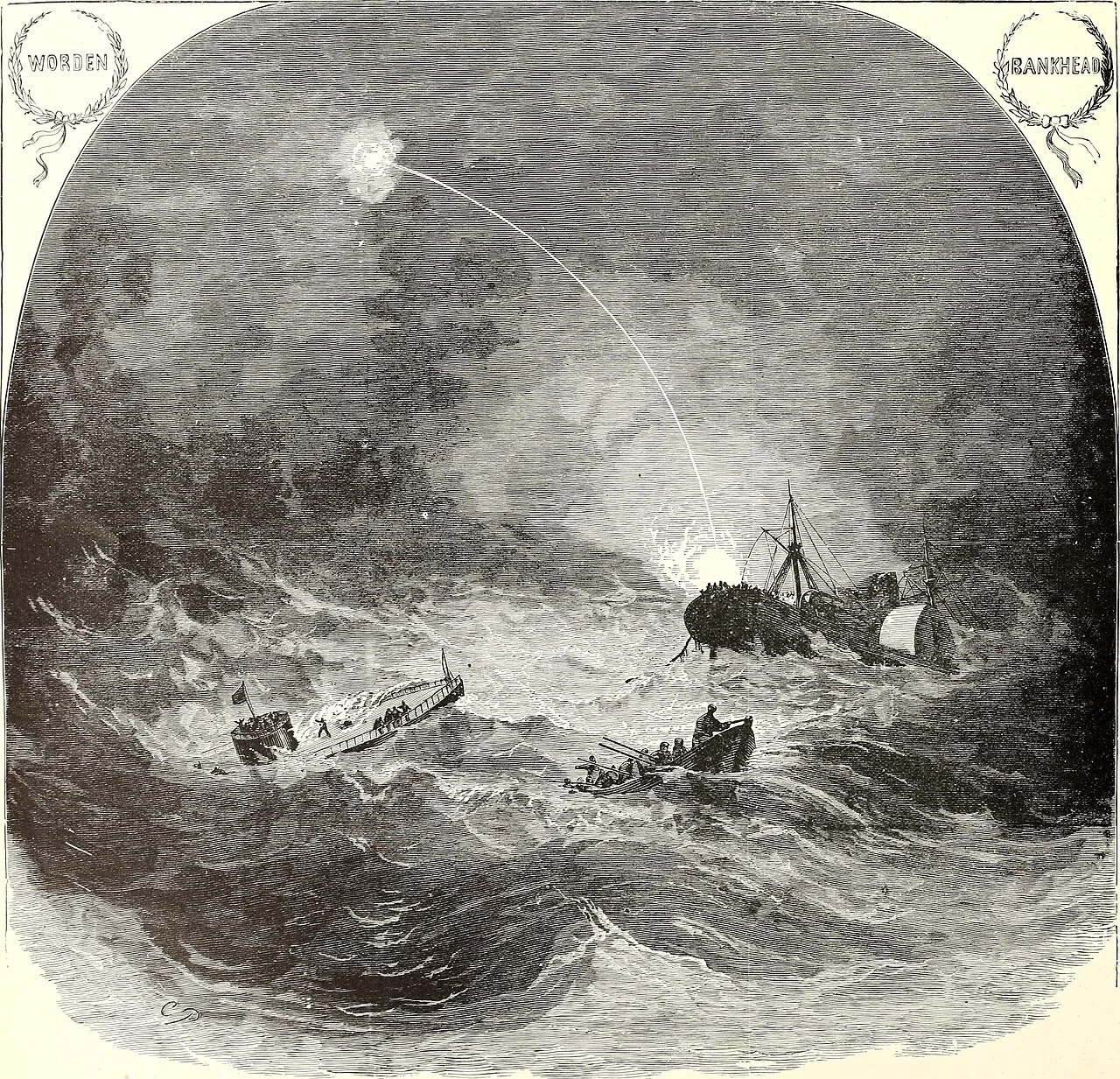
Engraving of USS Monitor sinking, with USS Rhode Island in the background

A diver examines the wreck in 2016.
USS Monitor
USS Monitor was the first ironclad warship commissioned by the United States Navy, noted for its revolving turret and its role in the American Civil War's Battle of Hampton Roads.
Intelligence Concealed in a Housekeeper's Dress
Union intelligence regarding Confederate ironclad progress hinged on an extraordinary covert mission. In late February 1862, Mary Louvestre, a freed slave working as a housekeeper in Norfolk, slipped through enemy lines. Concealed in her dress was a warning message from a Union sympathizer confirming the warship's construction. This breakthrough intelligence alerted officials to the imminent naval threat and accelerated work on the Union ironclad.
From Wikipedia · CC BY-SA 4.0