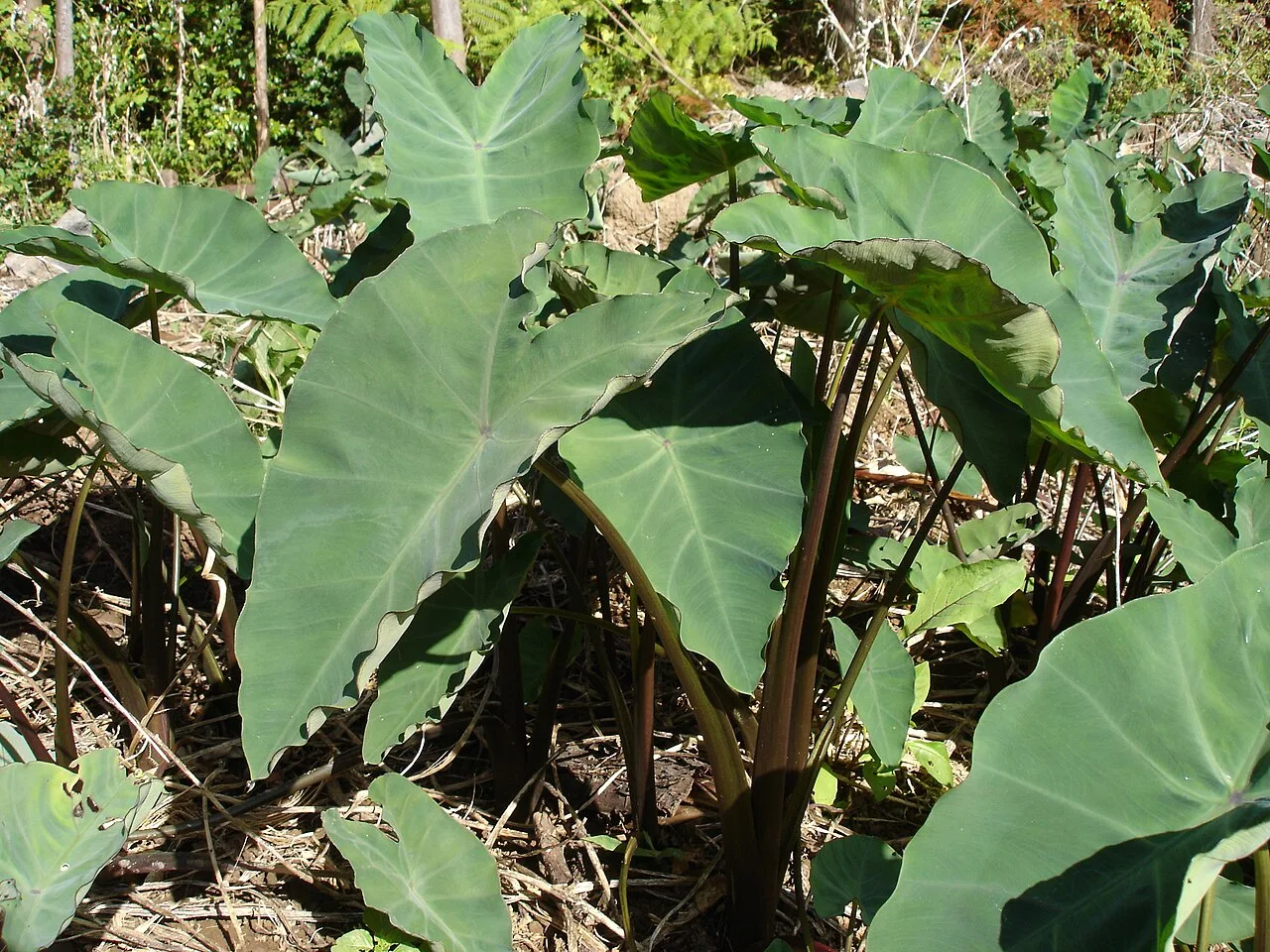
Songe-Réunion
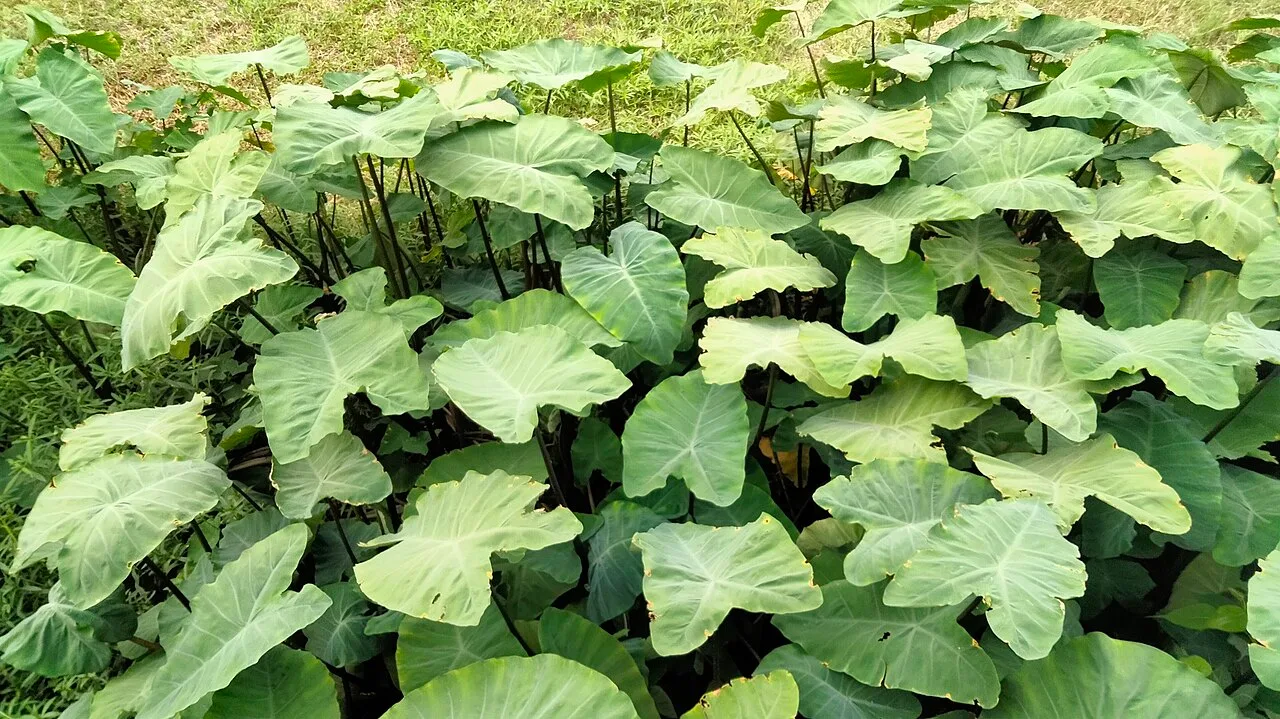
In the Mithila region of the Indian subcontinent, it is known as Kanch Gachh
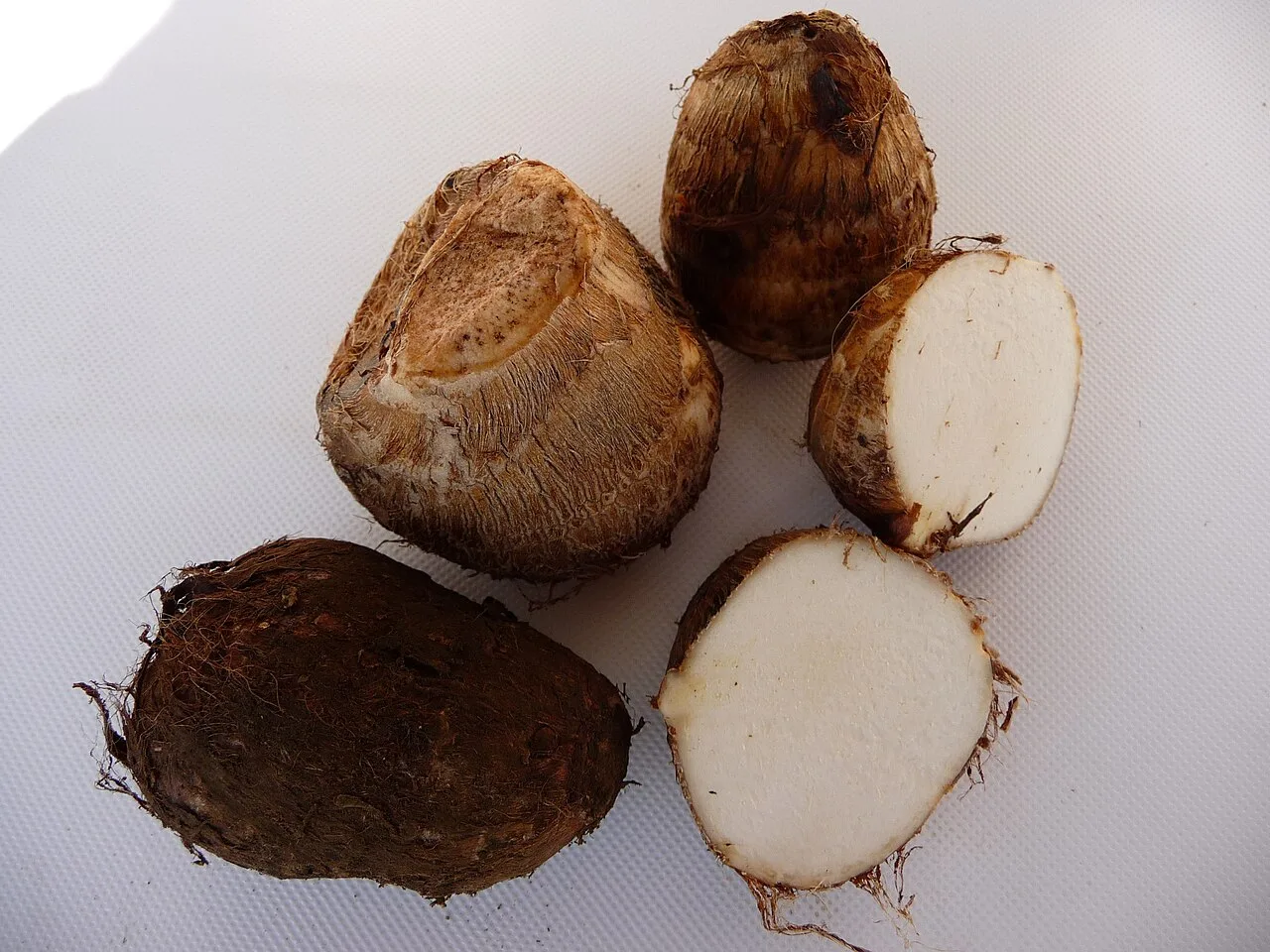
Corm with soil, may be sold (left bottom), washed (2 pcs) cross-section (2 pcs), Japan
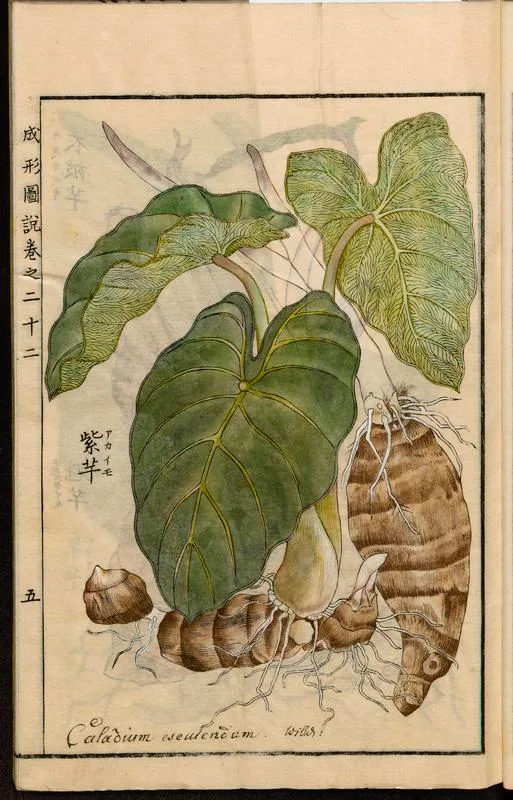
Colocasia esculenta from the Japanese agricultural encyclopedia Seikei Zusetsu
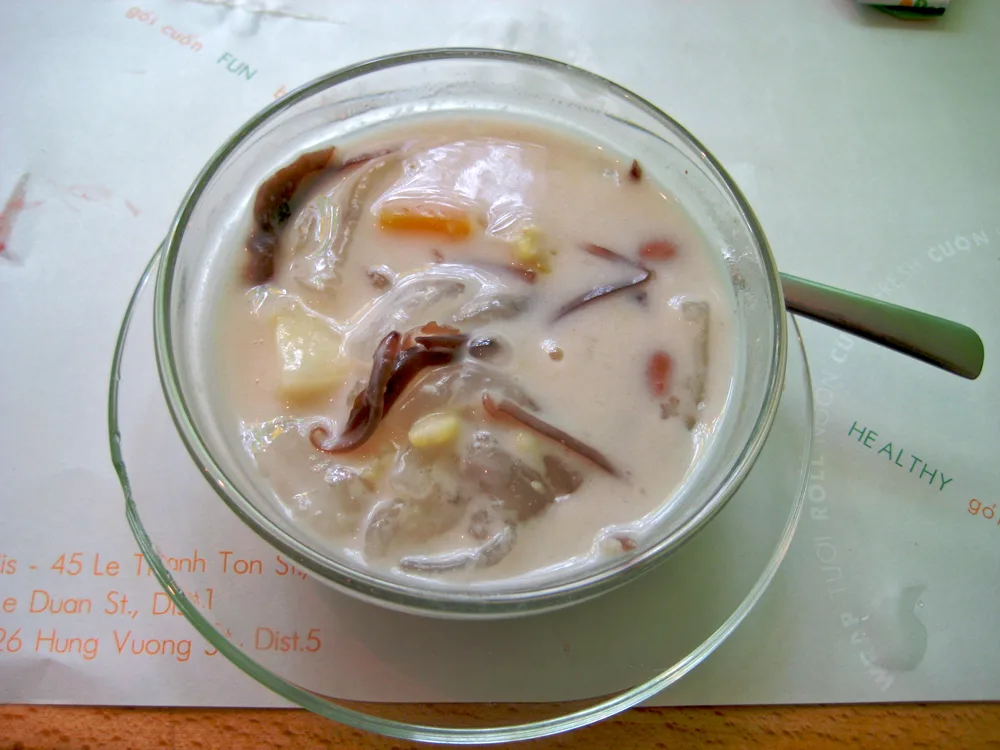
Chè khoai môn
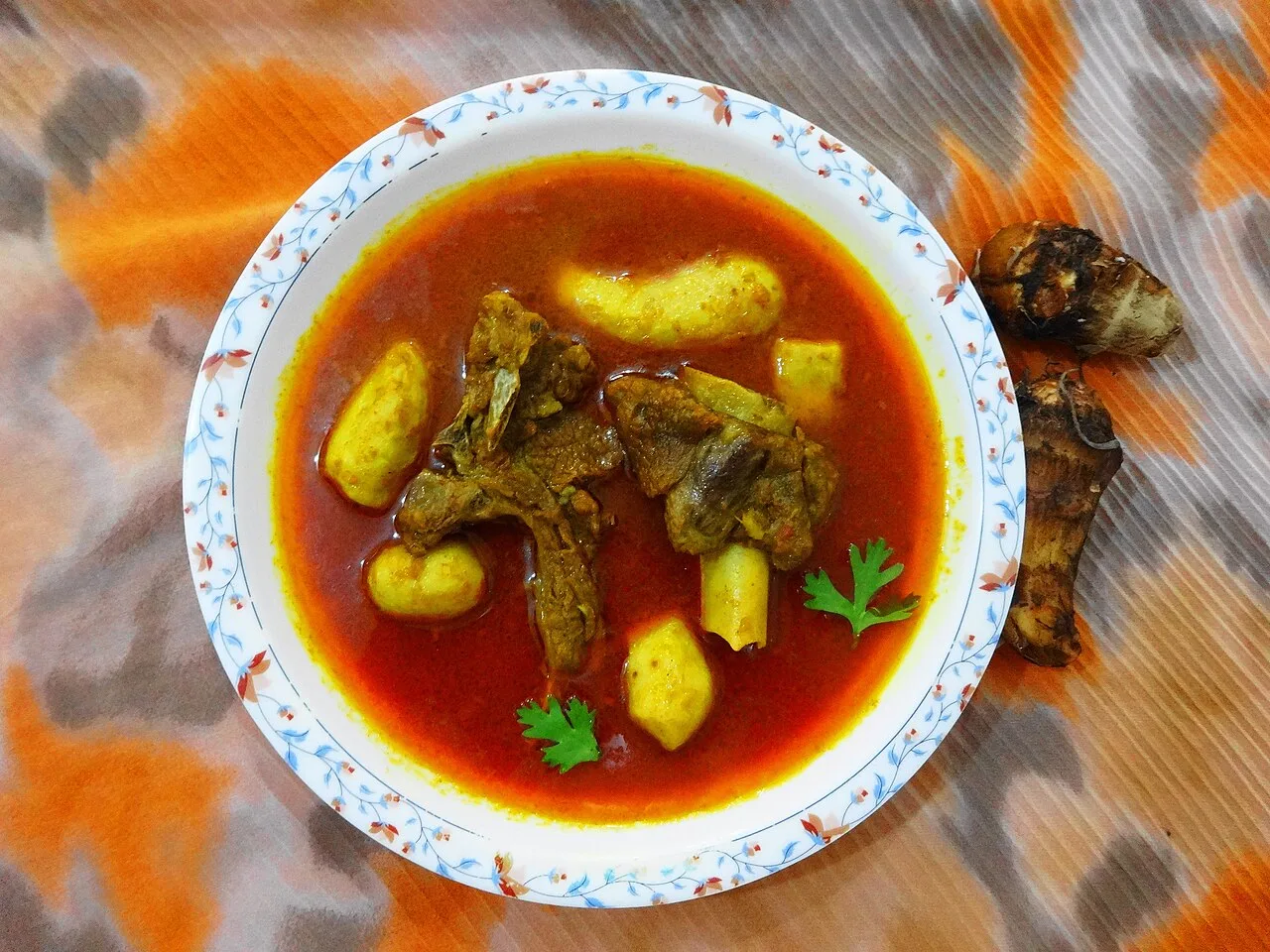
Arvi gosht
Taro
Taro (Colocasia esculenta) is a root vegetable. It is the most widely cultivated species of several plants in the family Araceae that are used as vegetables for their corms, leaves, stems and petioles.
Deep Cave Traces Predating Formal Agriculture
Archaeological remains reveal that human exploitation of taro extends tens of thousands of years into prehistory. Traces have been recovered from Kilu Cave in the Solomon Islands dating back 28,000 to 20,000 years ago, as well as Borneo's Niah Caves around 10,000 years ago. These ancient finds illustrate how early humans utilized the root well before formalized agrarian systems took hold.
From Wikipedia · CC BY-SA 4.0
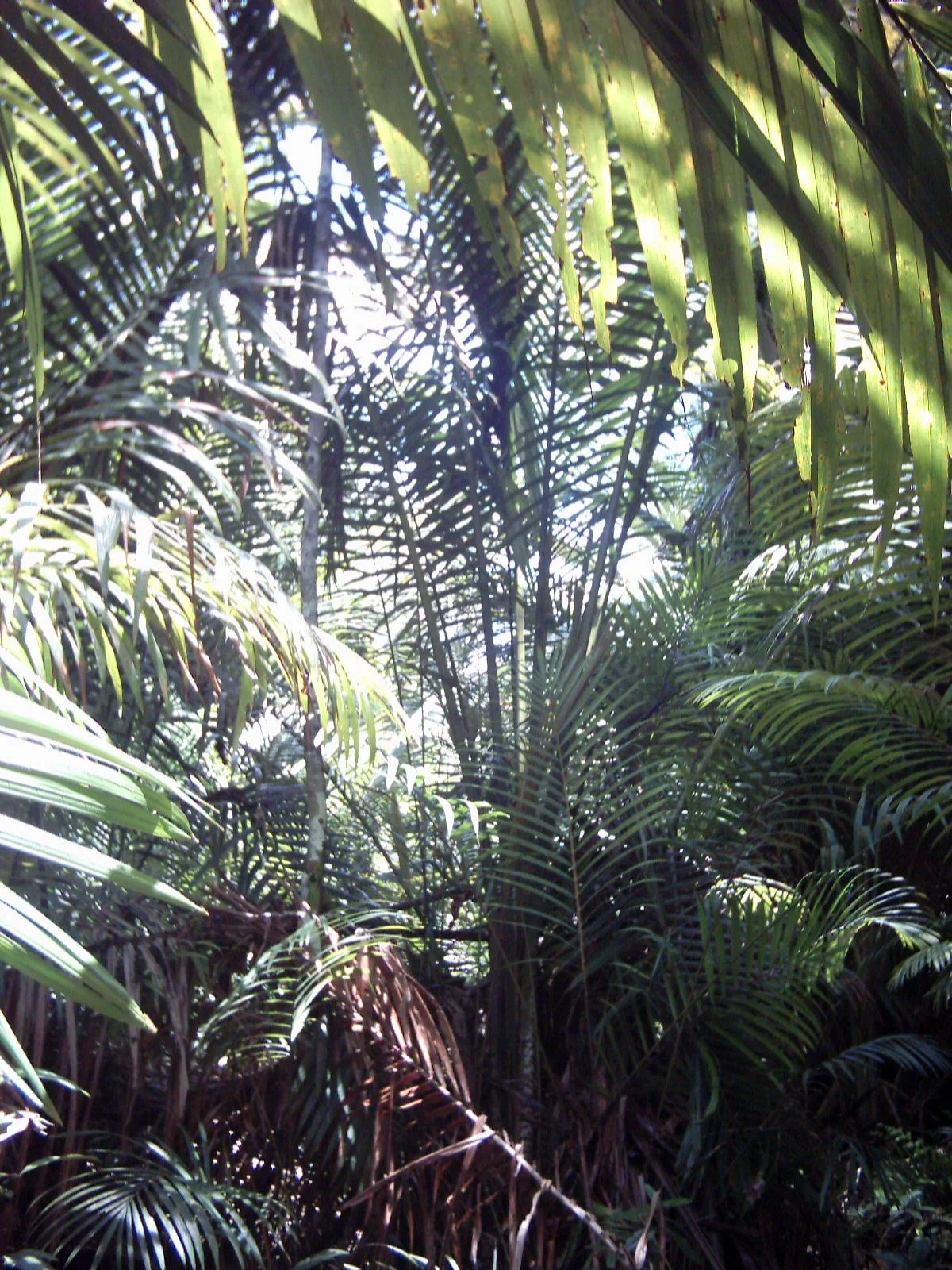
Sago palms (Metroxylon sagu) in New Guinea
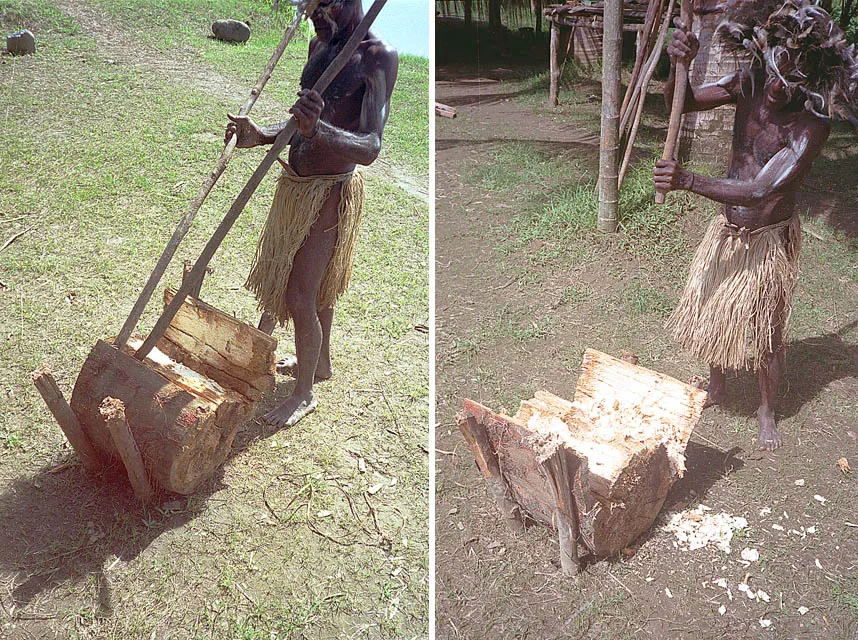
Peeling and pounding a segment of sago palm stem to produce an edible starch. Sepik River, Papua New Guinea
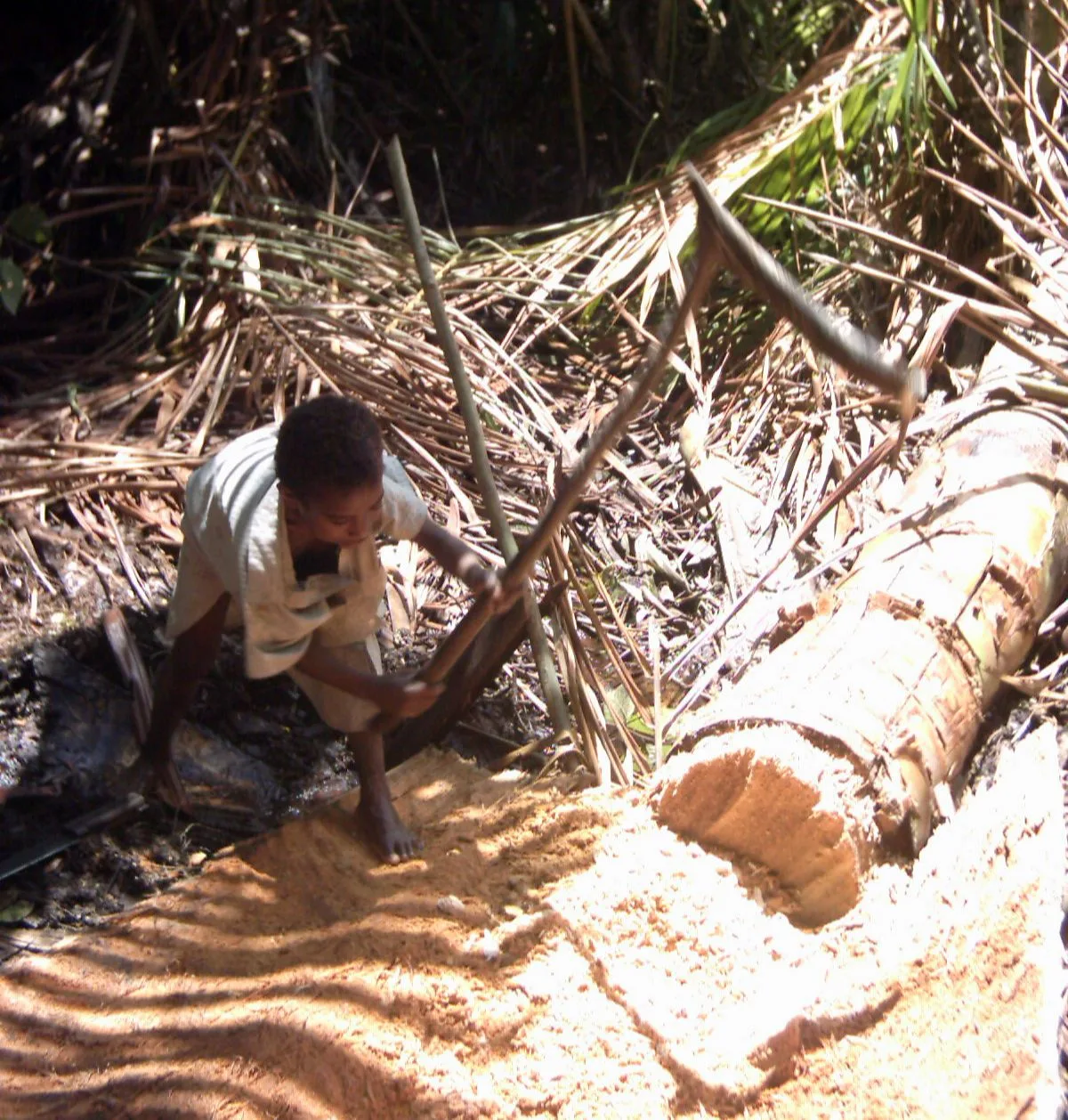
A sago palm being harvested for sago production
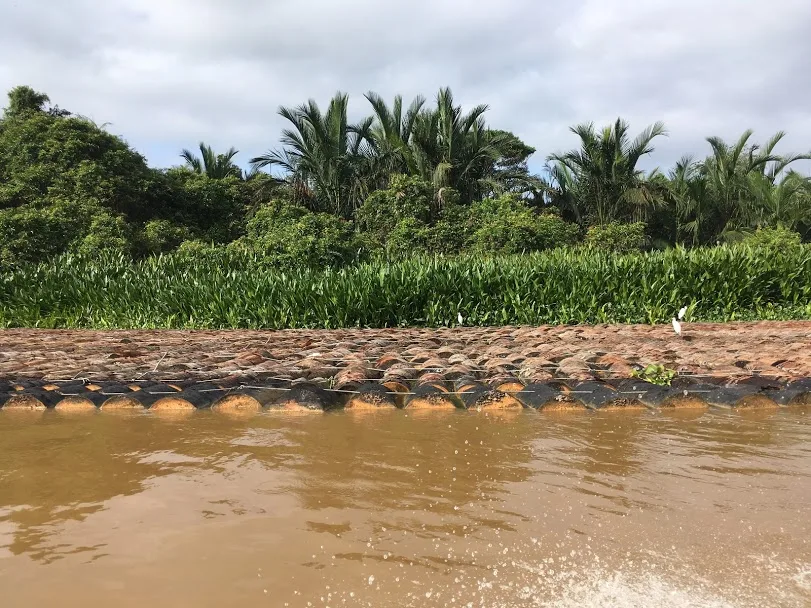
Sago logs ready for processing in Kampung Medong, Sarawak, Malaysia.
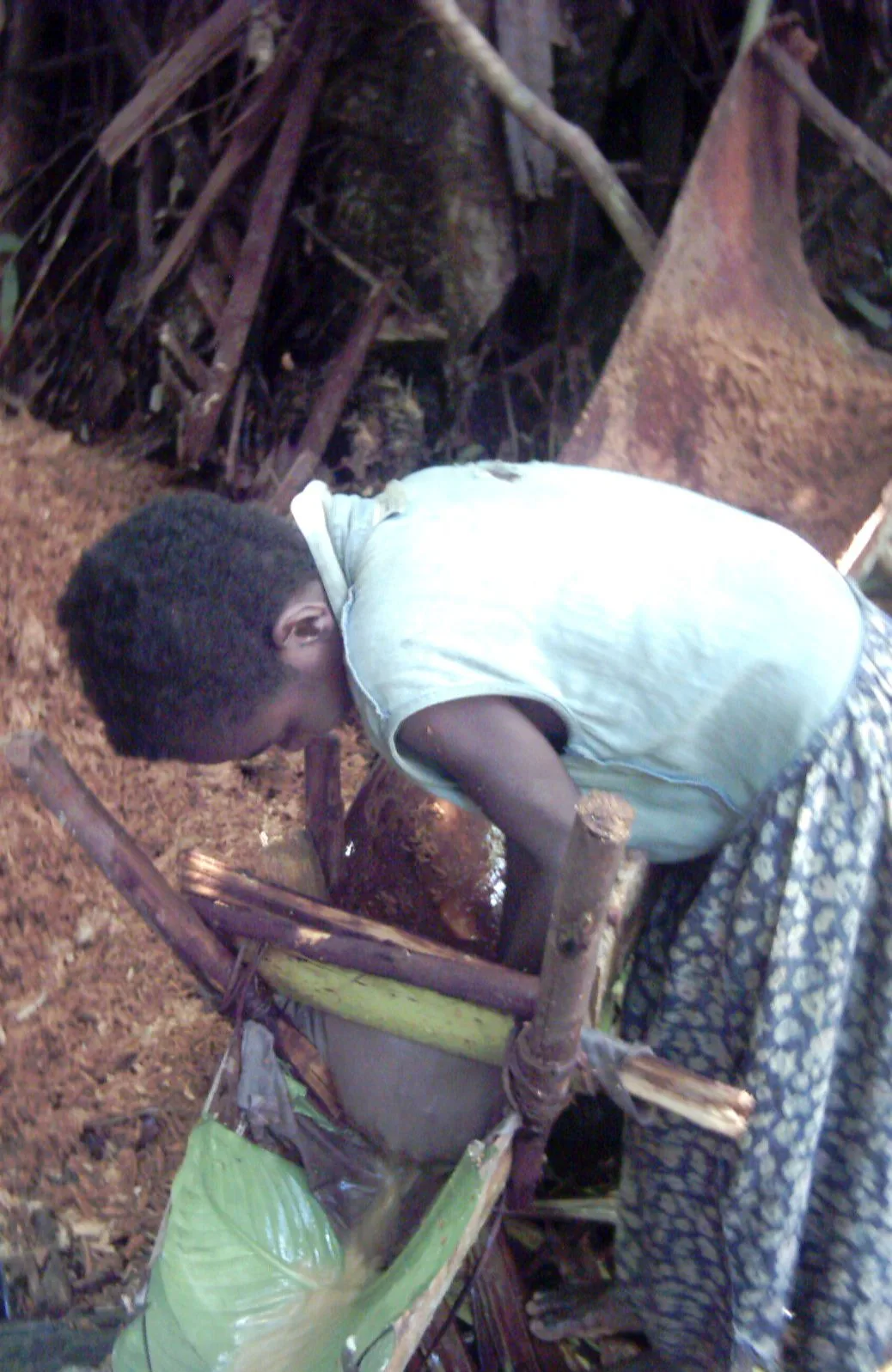
A sago starch filter
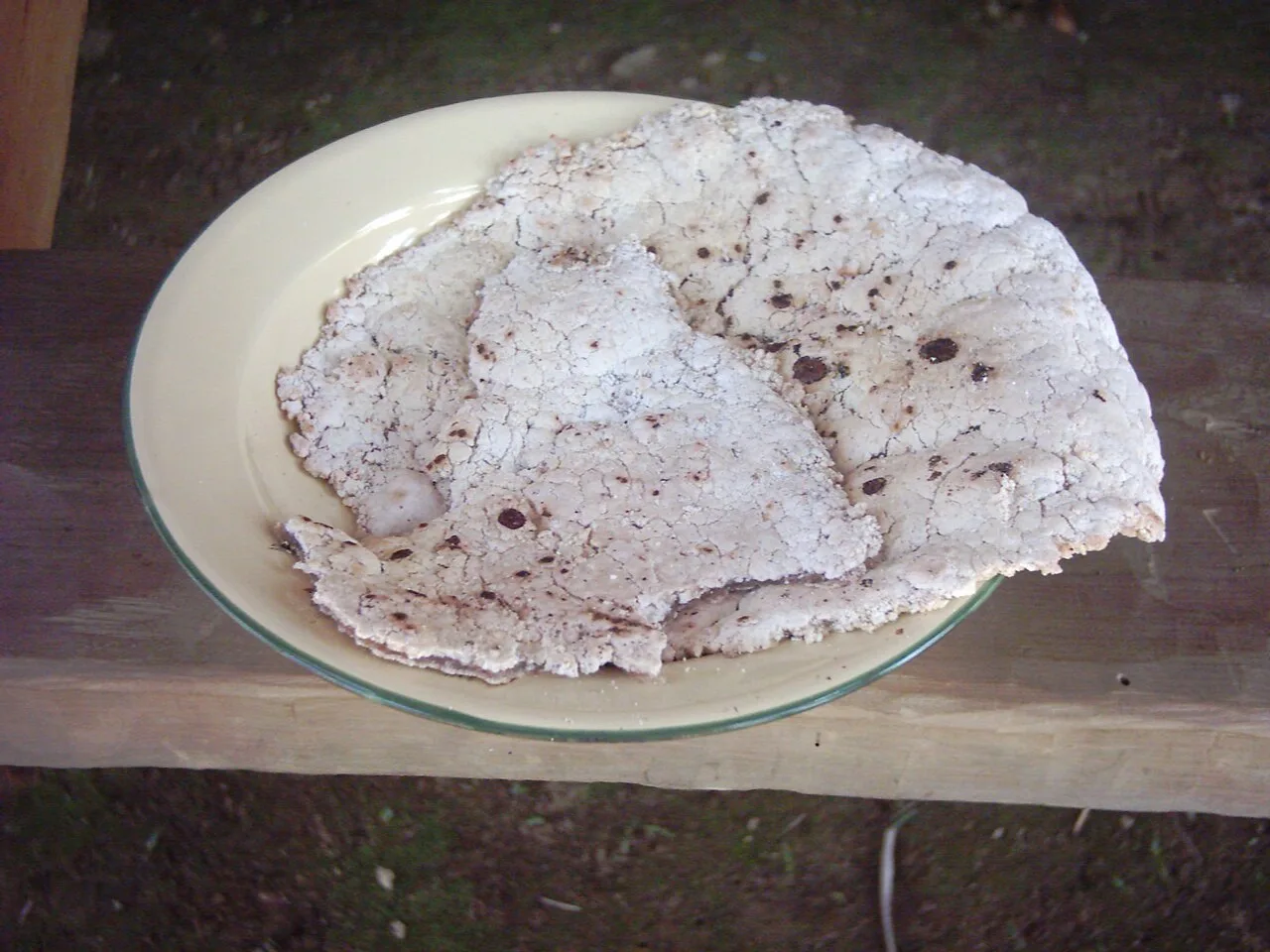
A sago pancake
Sago
Sago is a starch extracted from the soft, spongy core tissue of several tropical palm species, especially Metroxylon sagu. It is a traditional staple food across Southeast Asia and the Melanesian region.
A Terminal Harvest Before Flowering
Sago palms undergo a life cycle where they grow rapidly before producing a single inflorescence at the tip of the trunk. Harvesters must cut the tree down between the ages of 7 and 15 years, timing it precisely when the trunk is packed with starch meant for reproduction. A single harvested palm yields between 150 and 300 kg of pure starch.
From Wikipedia · CC BY-SA 4.0
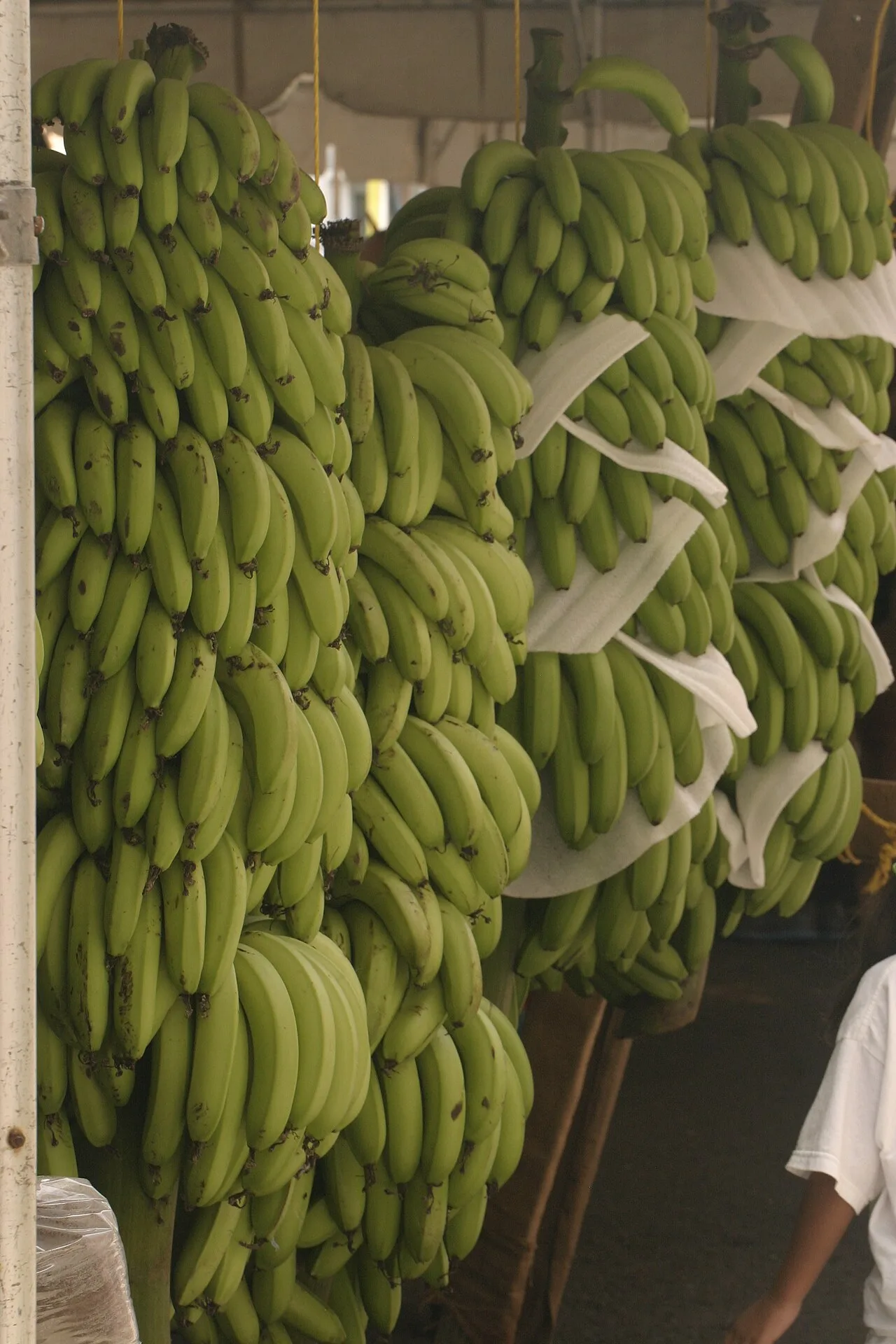
Large plaintains labeled for sale with stickers reading "BANACOL #4235 COLOMBIA", sold in Norway in what appears to be a cardboard box.
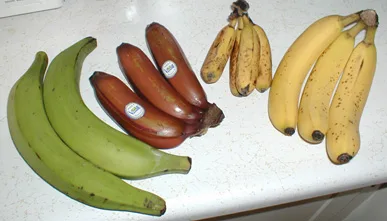
From left to right: plantain, red banana, apple banana, and Cavendish banana
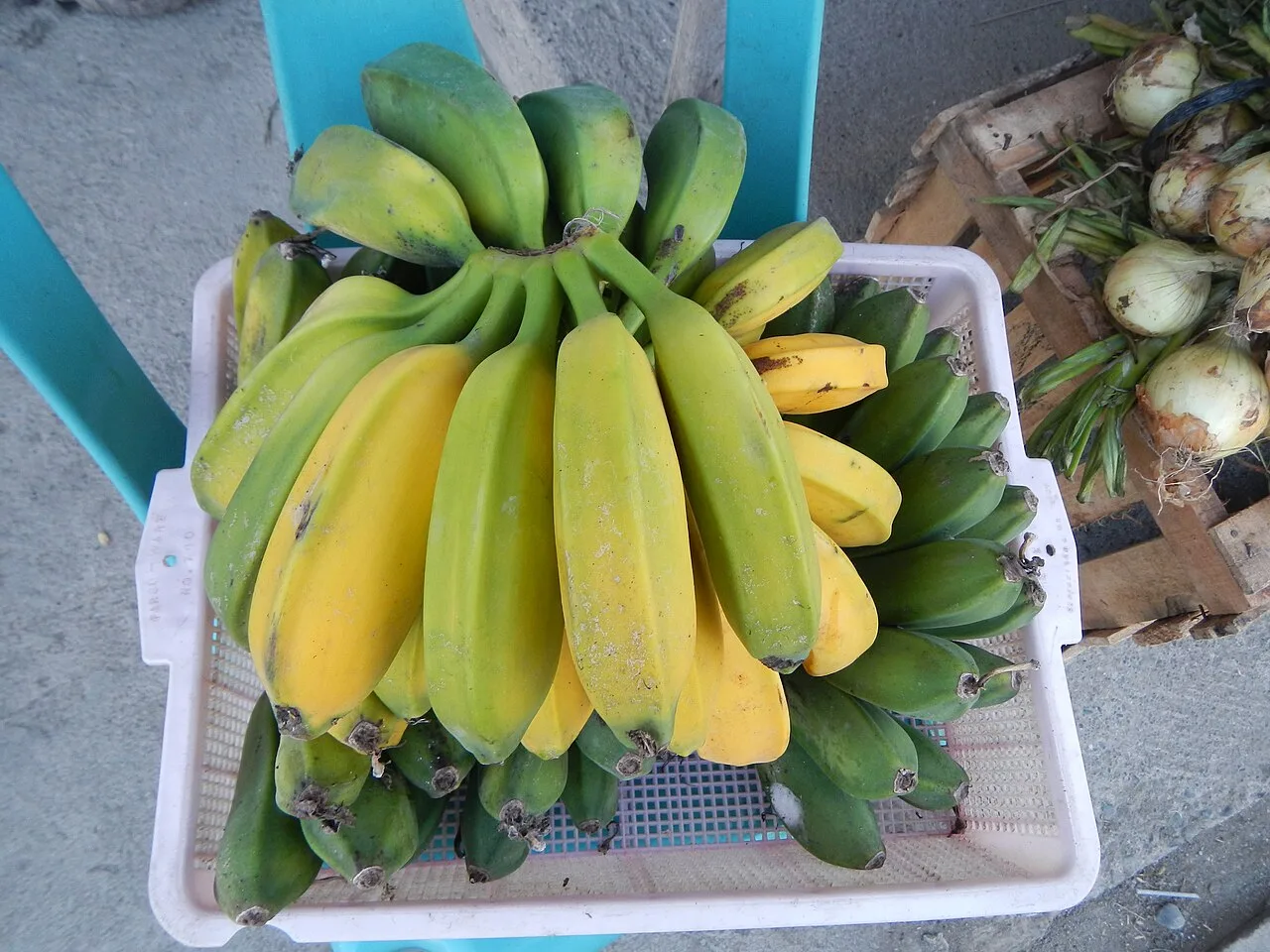
Saba bananas – Musa 'Saba' (ABB Group)
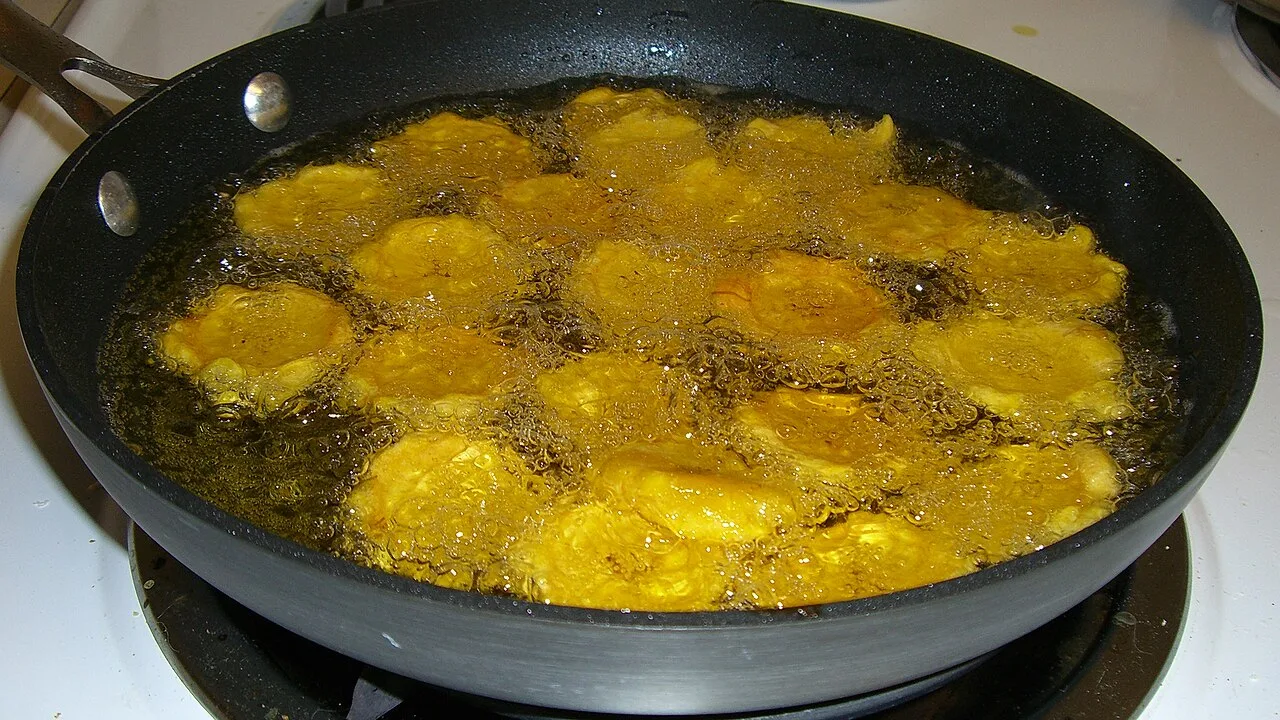
Tostones being fried for the second time
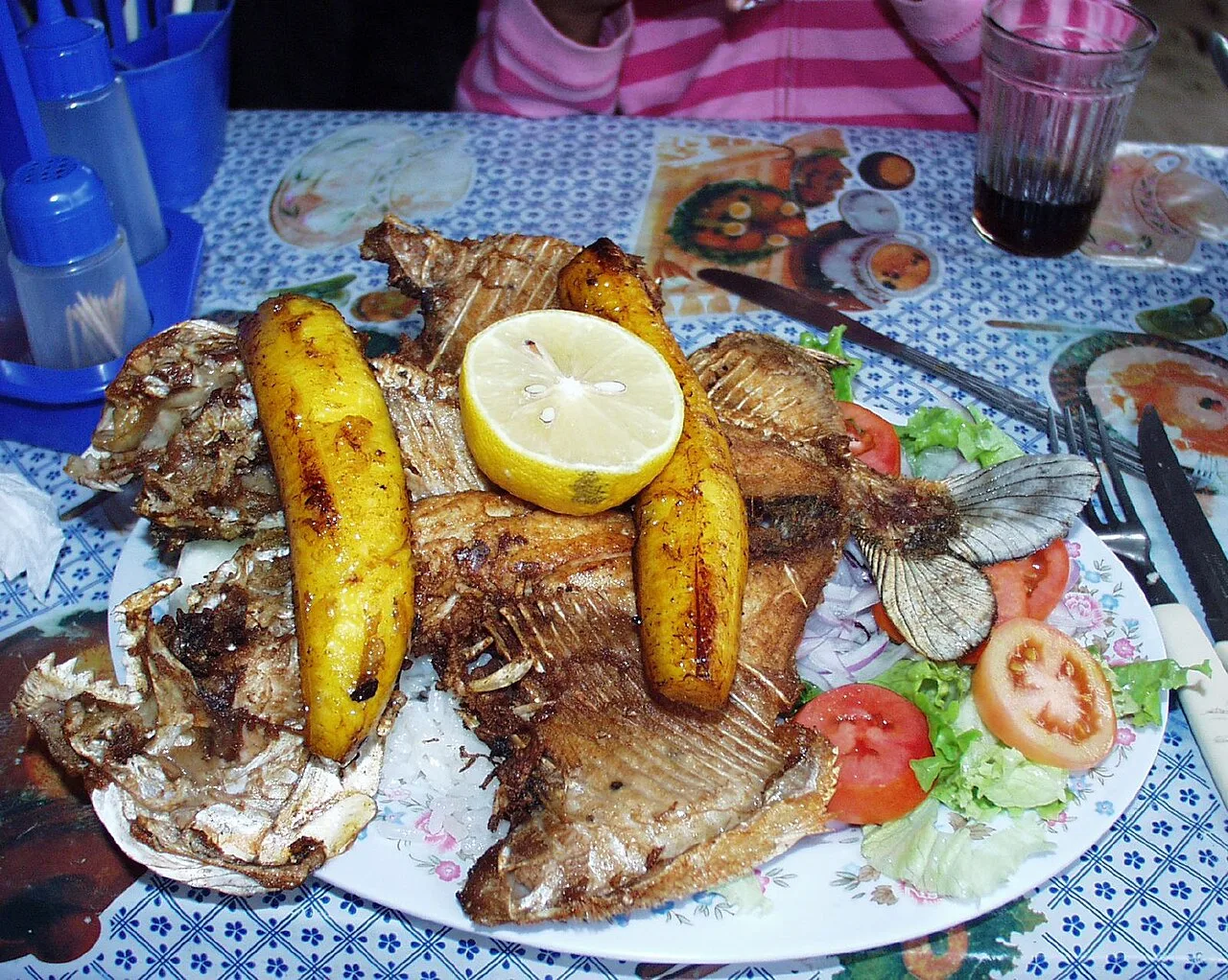
Plantains served over fried pacu (Bolivia)
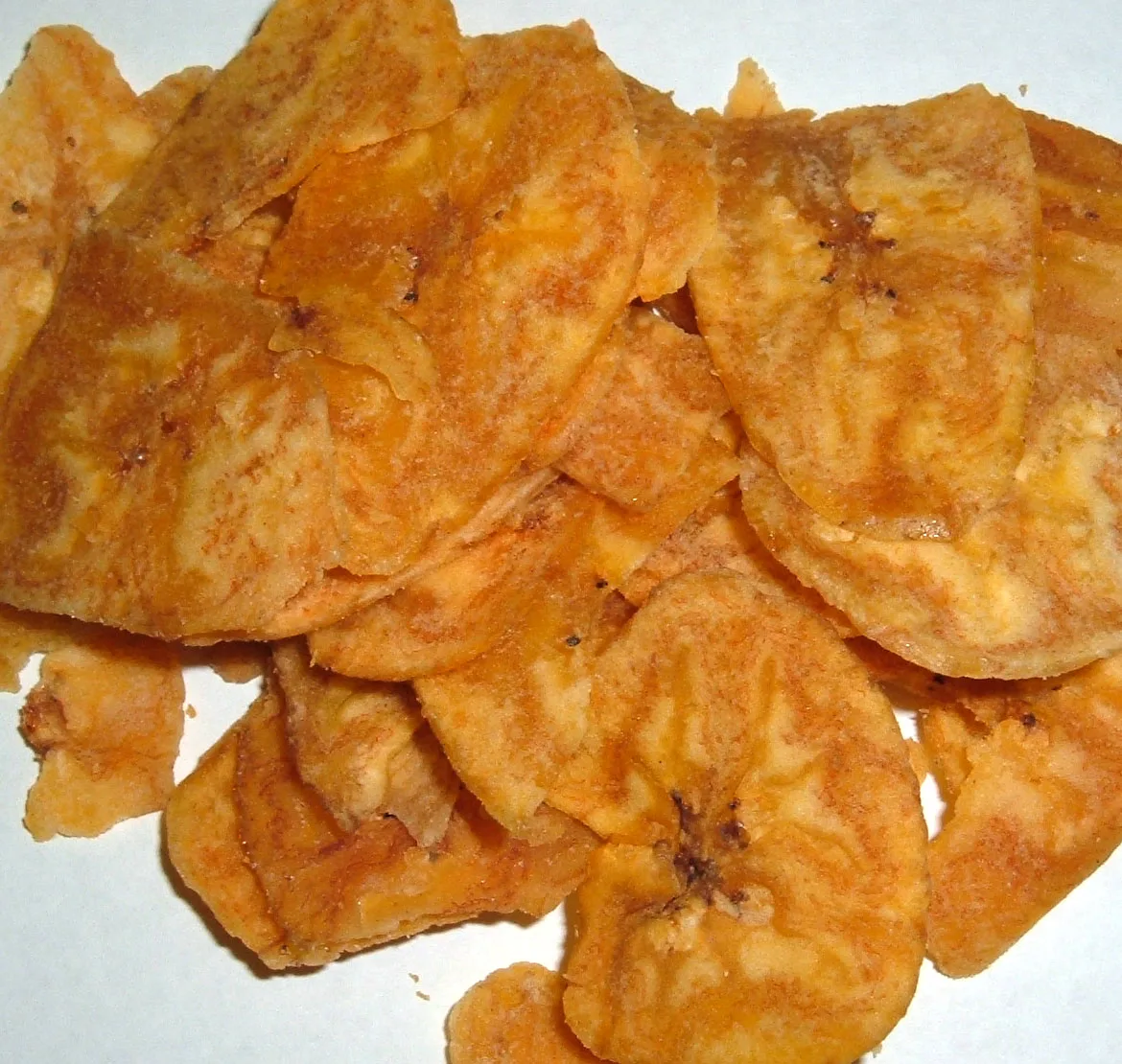
Banana chips
Cooking banana
Cooking bananas are banana cultivars in the genus Musa whose starchy fruits are used in cooking rather than eaten raw, often referred to as plantains or green bananas.
Culinary Distinction Masking Hybrid Genetics
Carl Linnaeus divided bananas into two separate species based solely on whether they were cooked as plantains or consumed as dessert fruit. Botanical genetics later revealed that both categories are actually hybrids derived from the ancestral species Musa acuminata and Musa balbisiana. Today, Musa paradisiaca serves as the collective botanical designation for these hybridized cooking and dessert varieties.
From Wikipedia · CC BY-SA 4.0

Cononut milk

Coconut being grated

Coconut milk preparation

Traditional coconut grater

A carton of coconut milk beverage, a milk substitute

Kaya coconut jam, made with coconut milk, sugar, and eggs
Coconut milk
Coconut milk is a plant milk extracted from the grated pulp of mature coconuts, traditionally used as a food ingredient in Southeast Asia, Oceania, South Asia, and East Africa.
Prehistoric Stools and Seafaring Technology
The extraction of coconut milk was deeply tied to maritime migration across ancient ocean pathways. Coconut graters, essential tools for extracting the liquid, formed an integral part of the material culture of the Austronesian peoples. Carried during prehistoric sea voyages from Island Southeast Asia, this scraping equipment reached as far as Polynesia in the east, as well as Madagascar and the Comoros in the west.
From Wikipedia · CC BY-SA 4.0

Pandanus tectorius

Male flower

Overlooking the ocean at Sawtell, Australia.

Ripe fruit

Fruit

Roots
Pandanus tectorius
Pandanus tectorius is a species of screwpine native to Malesia, Papuasia, eastern Australia, and the Pacific Islands, typically growing in coastal lowlands near the ocean edge.
Fossil Traces Beneath Hawaiian Sands
While many Pacific island populations originated from early Polynesian maritime transport, archaeological evidence reveals an older history in Hawaii. Seed and pollen deposits preserved within Kauaʻi's Makauwahi Cave demonstrate that the tree thrived on the archipelago long before humans arrived. Today, it remains recognized as an indigenous species across all main Hawaiian islands except Kahoʻolawe.
From Wikipedia · CC BY-SA 4.0
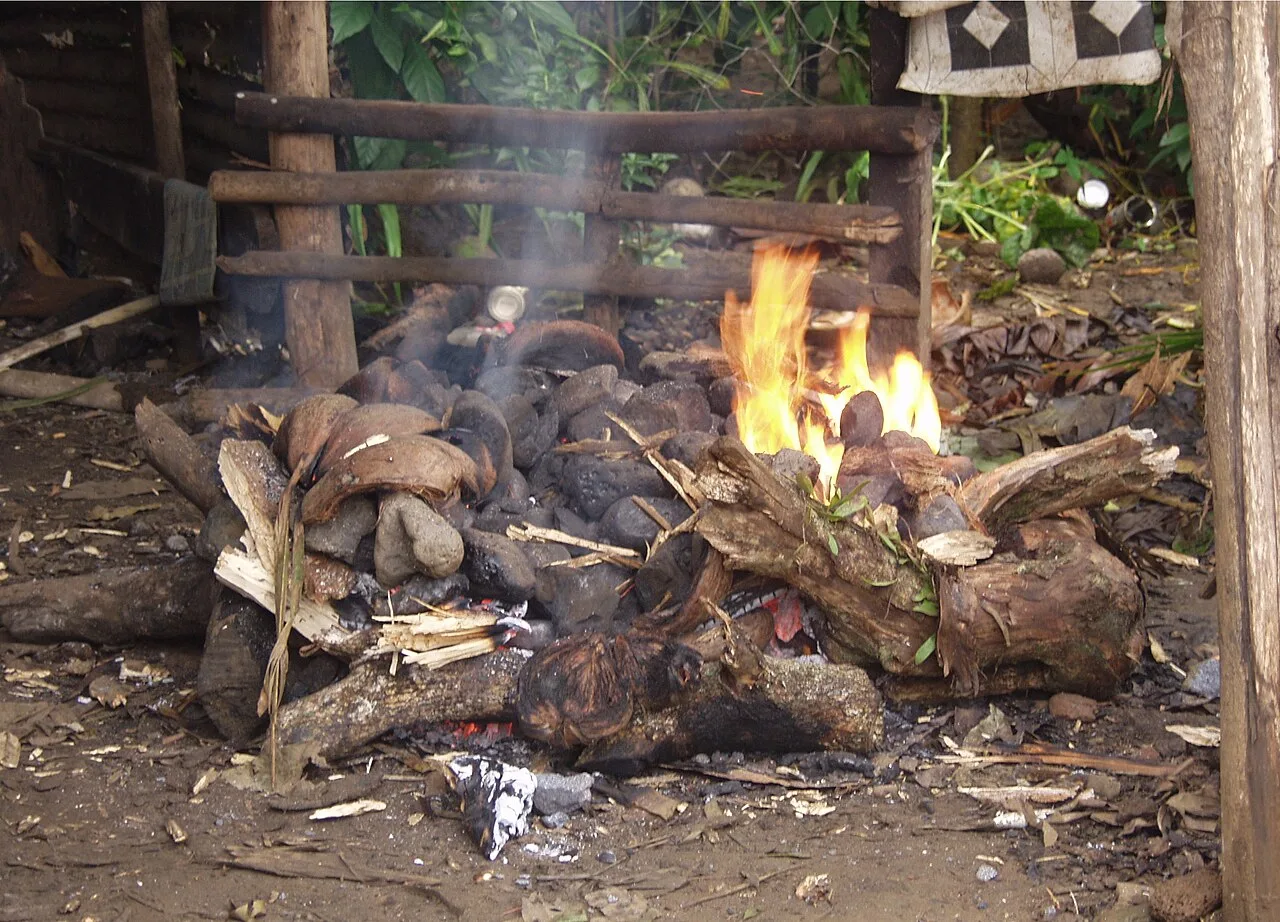
A Samoan 'umu at the early stage of heating the rocks
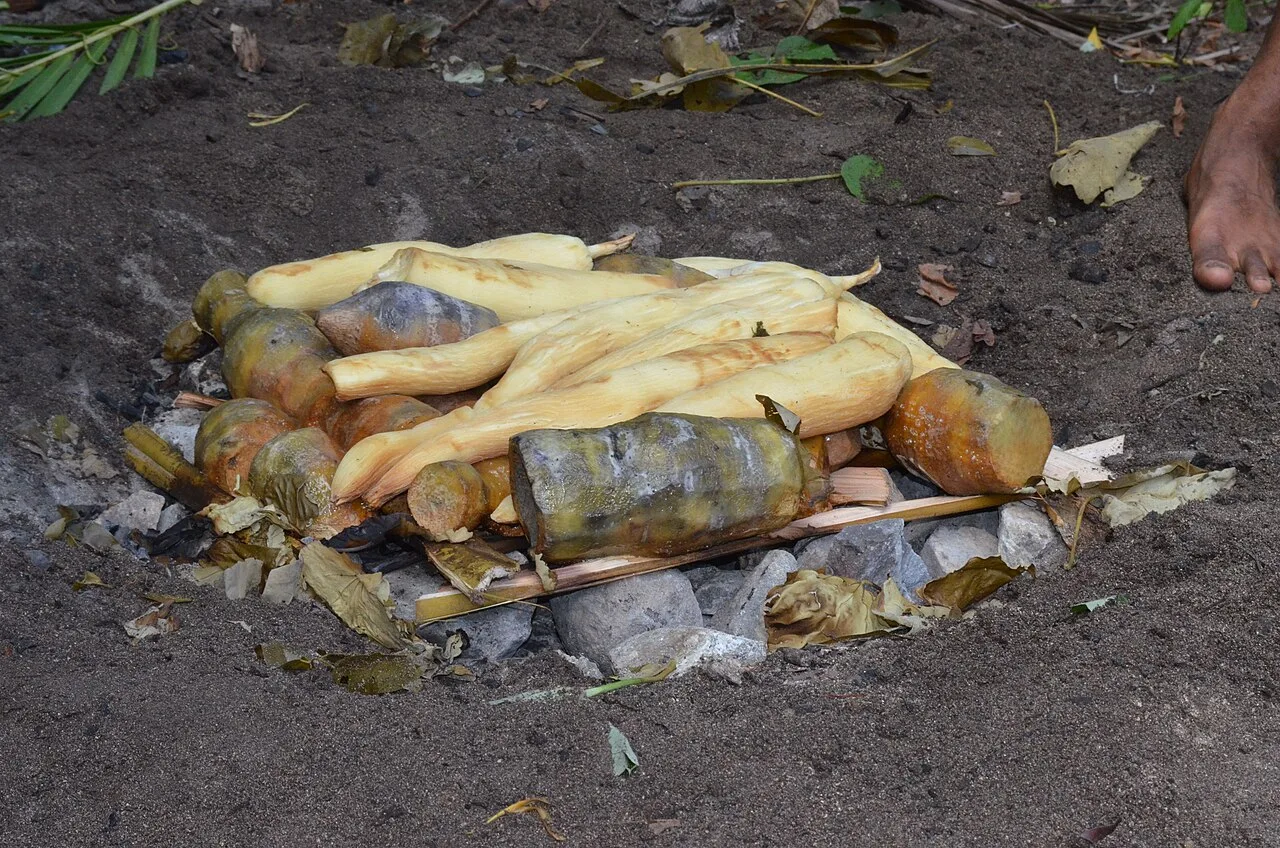
Fijian lovo of cooked staples

A modern Chinese earth oven in Zhuhai.

A Māori earth oven

Samoan umu preparation with pig, taro and breadfruit on hot rocks above ground, later covered by leaves for cooking

Preparing Hawaiian imu, to cook pig overnight, on Oahu, Hawaii
Earth oven
An earth oven is one of the simplest and most ancient cooking structures, consisting of a pit in the ground used to trap heat and bake, smoke, or steam food.
Deep Time Signatures in Central Europe
Cooking pits represent some of humanity's earliest complex structures, tracing back to 29,000 BC in Central Europe. Rather than just utilitarian tools, these subterranean spaces act as unmistakable evidence of ancient human settlement for modern archaeologists. By trapping heat underground with smouldering embers or fire-heated rocks, early communities could bake, smoke, or steam food for hours without specialized hardware.
From Wikipedia · CC BY-SA 4.0

Luaulau

uncooked laulau, ti leaf and foil wrapped

cooked palusami showing coconut cream and onion filling
Lūʻau (food)
Lūʻau and related Polynesian dishes are prepared using taro leaves as a primary ingredient, with a base recipe that is vegetarian.
Surviving the 1300 BC Toxin
Taro journeyed across maritime routes when Austronesian peoples transported it to Pacific islands around 1300 BC. While modern diners recognize taro primarily as a starchy root vegetable, ancient islanders harvested the entire plant. Preparing the foliage required thorough heat to disarm a painful defense mechanism. Uncooked taro leaves harbor calcium oxalate, a compound capable of causing serious irritation to the human mouth and throat.
From Wikipedia · CC BY-SA 4.0

Babai
Cyrtosperma merkusii
Cyrtosperma merkusii, or giant swamp taro, is a crop grown throughout Oceania and into South and Southeast Asia. Similar to taro, it has bigger leaves and larger, coarser roots.
Towering Foliage and Hundred-Kilogram Corms
The plant dwarfs Colocasia esculenta, reaching heights of four to six metres with enormous foliage. Its sagittate leaves extend up to 2.01 metres long atop thick stalks reaching 5.94 metres in length. Underground, the starchy corm can reach up to 100 kg in weight with a diameter of nearly one metre. These cream or pink corms offer a drier texture and a taste reminiscent of sweet potato.
From Wikipedia · CC BY-SA 4.0

Roasted plantain sellers in Ouagadougou, Burkina Faso
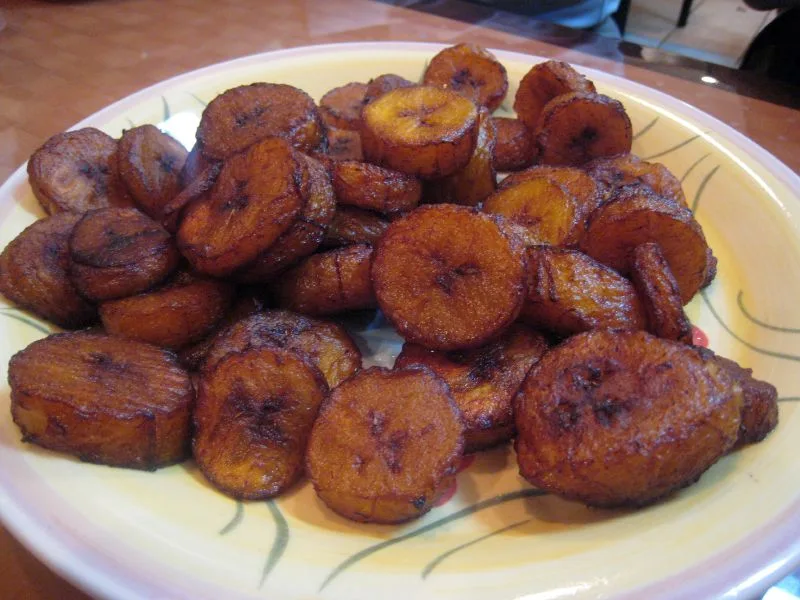
Dodo
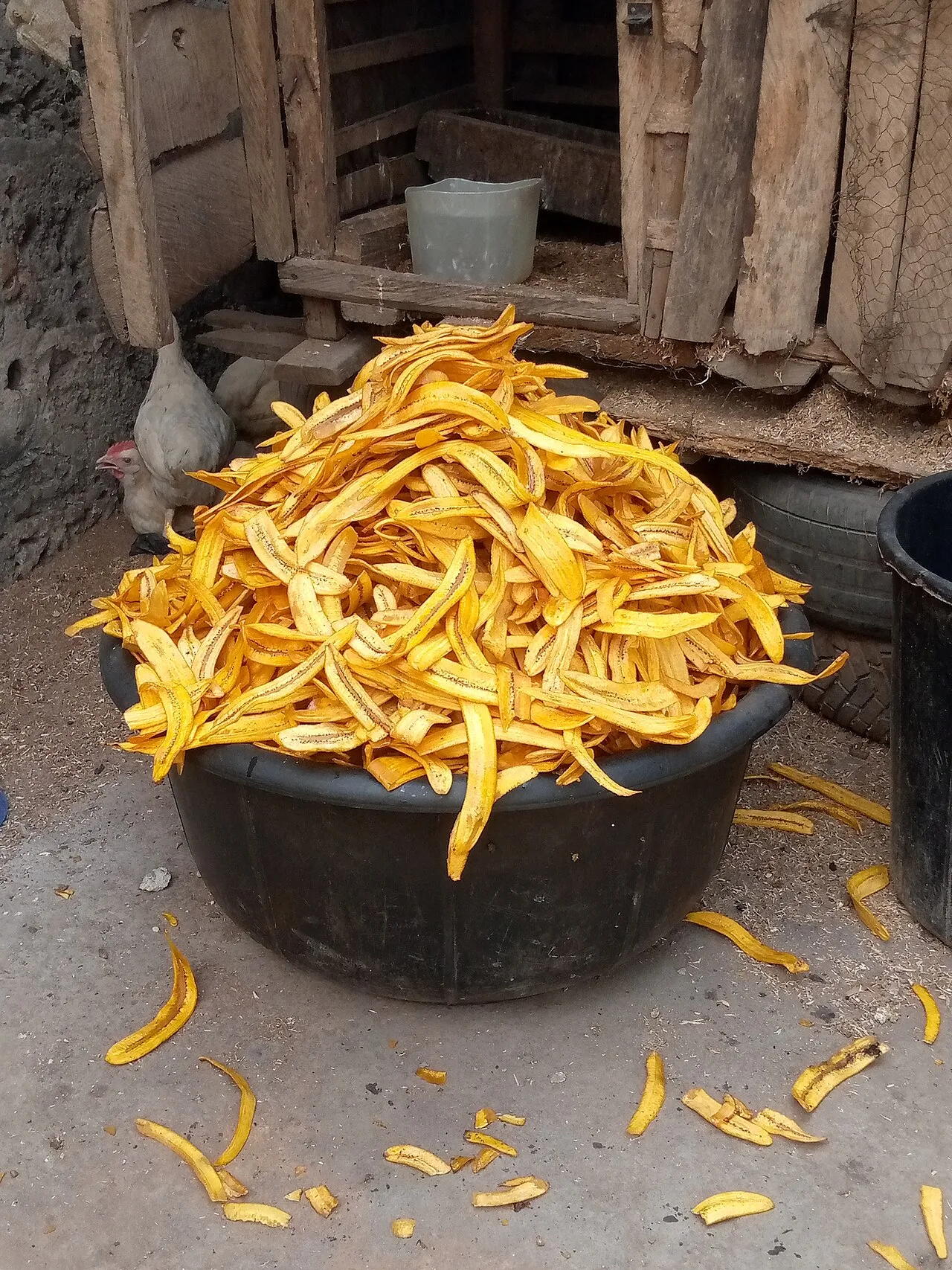
Ipekere
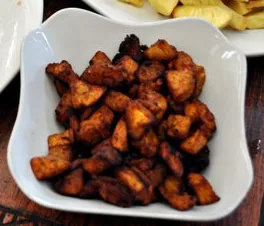
Kelewele
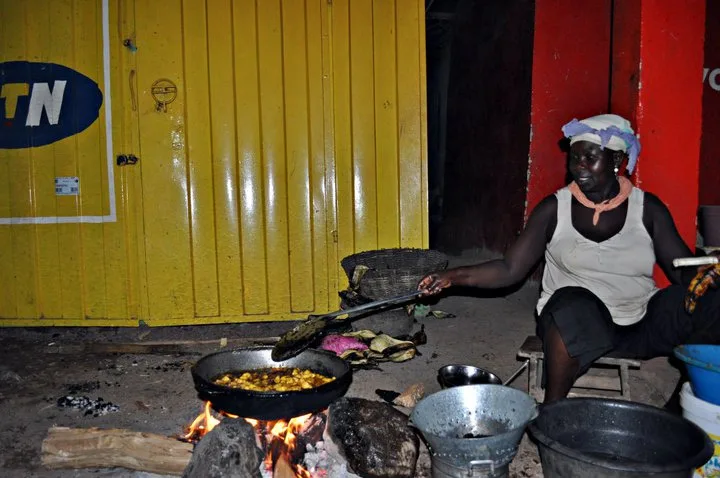
Kelewele vendor in Takoradi, Ghana
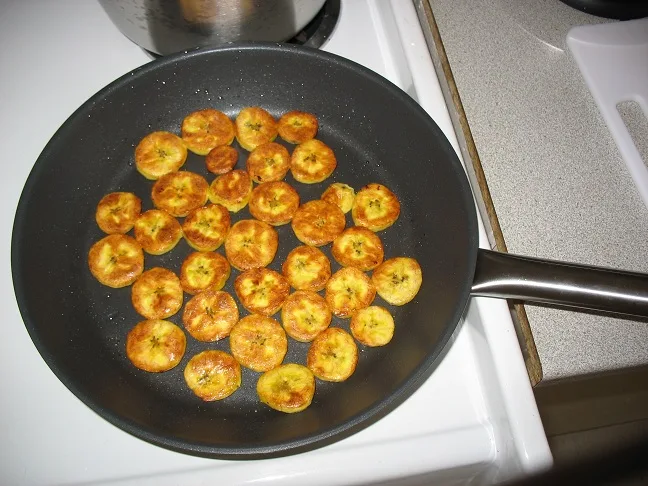
Plantains being fried
Fried plantain
Fried plantain is a dish cooked wherever plantains grow, from West and East Africa to Central America, northern South America, the Caribbean, Southeast Asia, and Oceania.
Urban Landmarks Built on the Baoulé Word for Ripeness
In Côte d'Ivoire, the beloved fried plantain dish alloco takes its name from the Baoulé term loko, which indicates whether a plantain is ripe. Rather than remaining a modest home preparation, the dish anchors vibrant street food scenes across West Africa. In the Cocody neighborhood, an entire commercial area crowded with grilled meat and fried plantain vendors earned the official moniker Allocodrome.
From Wikipedia · CC BY-SA 4.0