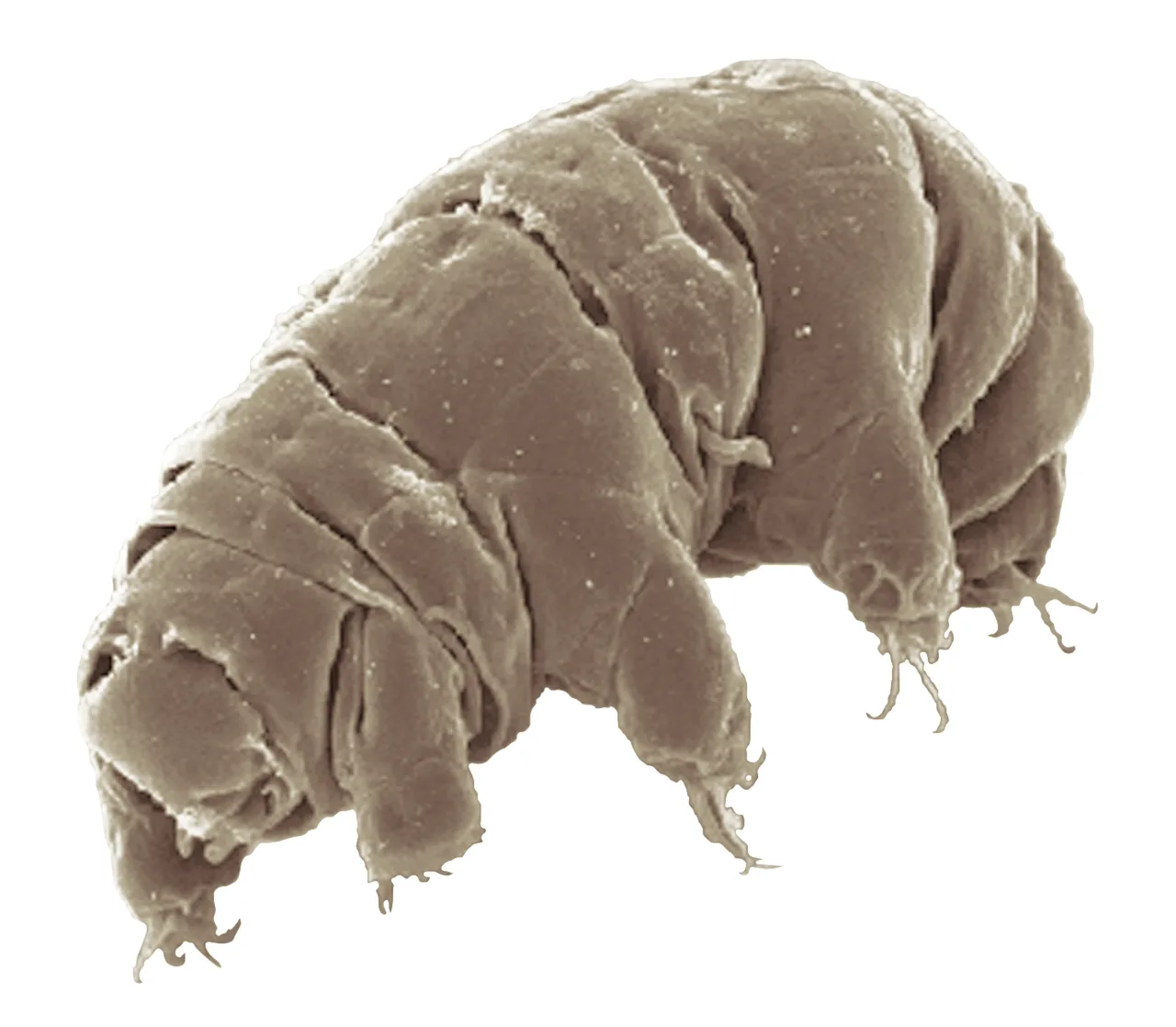
SEM image of Milnesium tardigradum in active state - journal.pone.0045682.g001-2 (white background)
![Tardigrade anatomy[3]](https://hmzpdsmr7uczkvx4.public.blob.vercel-storage.com/wikifeed/tardigrade/1-250dd28ab7.webp)
Tardigrade anatomy[3]
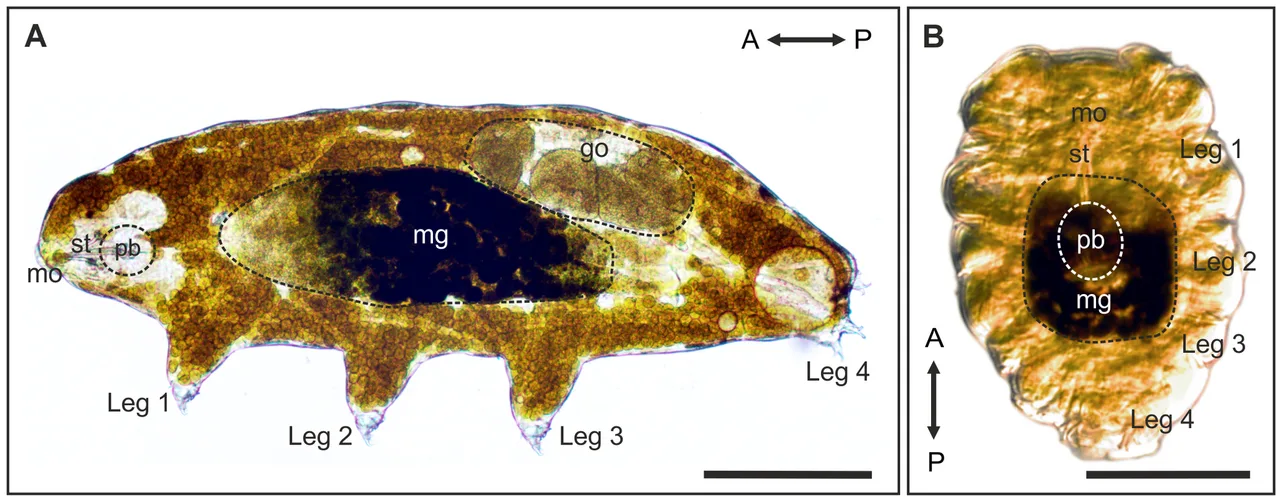
Richtersius coronifer in active and 'tun' states.A↔P = anterior-posterior; mg = midgut; go = gonad;pb = pharyngeal bulb; mo = mouth; st = styletScale bars = 100 μm
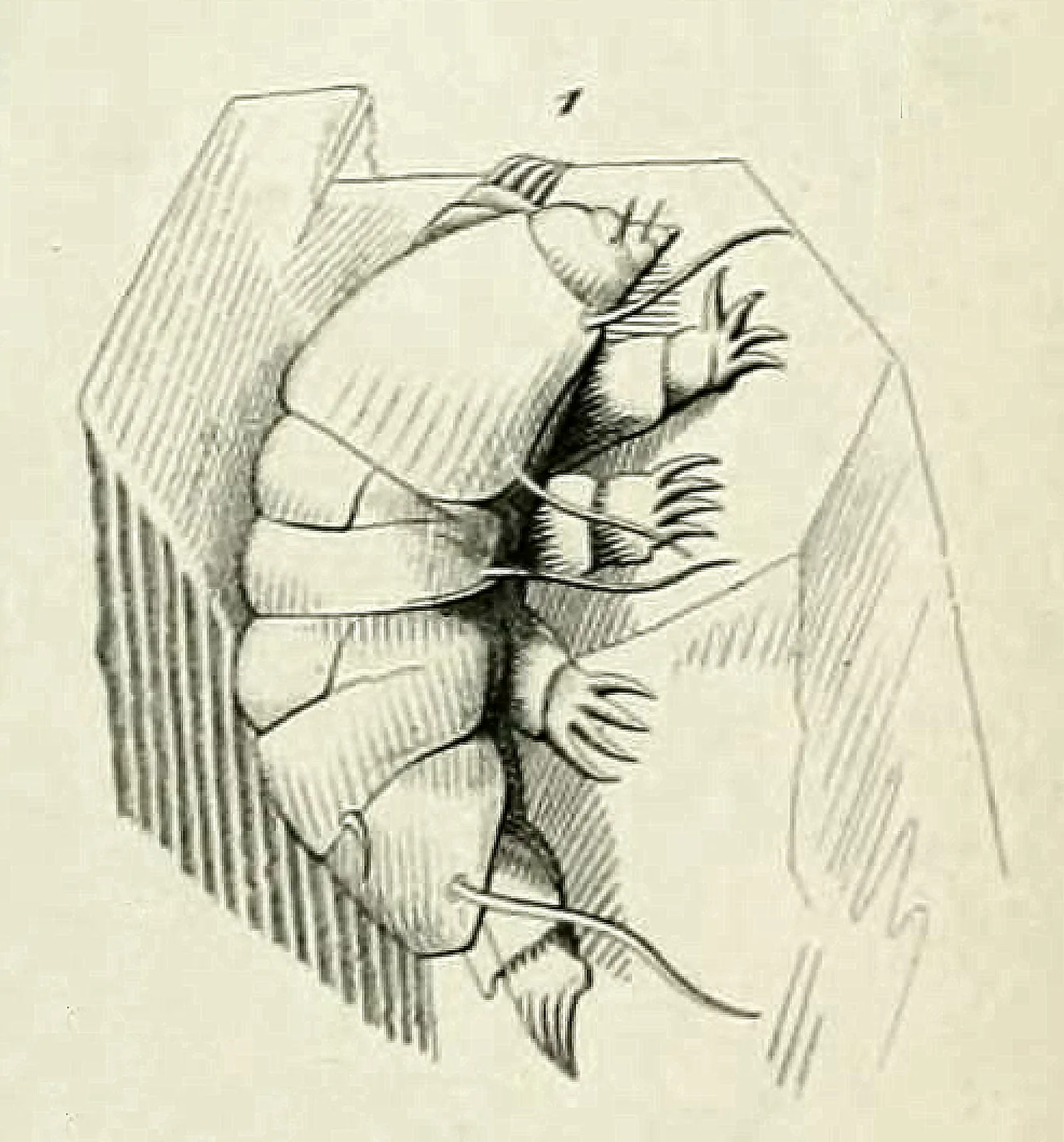
Drawing of Echiniscus testudo on a grain of sand by L.M.F. Doyère, 1840
![The lobopod-like luolishaniids from the Cambrian and Ordovician are possibly the closest fossil relatives of tardigrades. Entothyreos reconstruction shown.[57]](https://hmzpdsmr7uczkvx4.public.blob.vercel-storage.com/wikifeed/tardigrade/4-5d5046233e.webp)
The lobopod-like luolishaniids from the Cambrian and Ordovician are possibly the closest fossil relatives of tardigrades. Entothyreos reconstruction shown.[57]
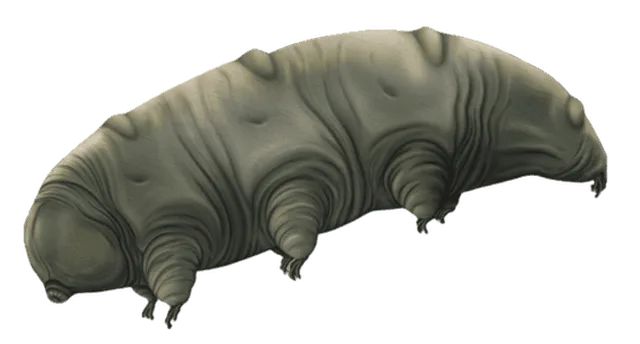
Reconstruction of Paradoryphoribius, from the Miocene (23–5.3 mya)
Tardigrade
Tardigrades, also known as water bears or moss piglets, are a phylum of eight-legged segmented micro-animals.
Anatomical Consolidation into a Walking Head
Despite their plump, bear-like appearance, tardigrades are biologically equivalent to a walking head. Through evolutionary miniaturization, they lost the middle body region corresponding to an arthropod's thorax and abdomen. Almost their entire body consists exclusively of segments homologous to an arthropod's head. Consequently, their simplified body plan reflects deep structural consolidation rather than primitive simplicity.
From Wikipedia · CC BY-SA 4.0
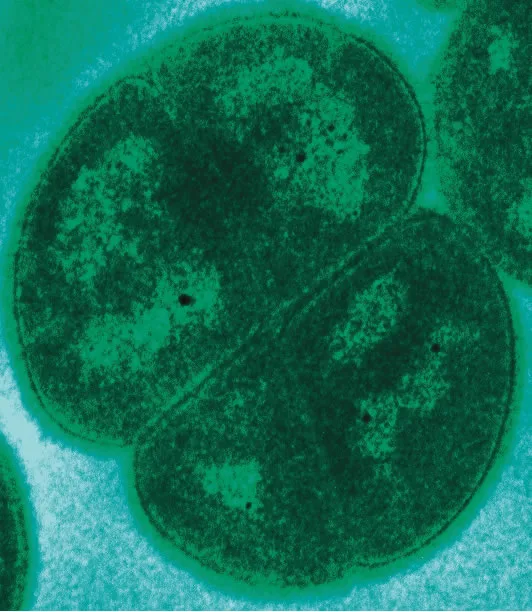
Deinococcus radiodurans as a model system for studying the cell cycle
Deinococcus radiodurans
Deinococcus radiodurans is a bacterium, polyextremophile, and one of the most radiation-resistant organisms known.
Spoiled Meat in a Sterilization Experiment
Scientists initially discovered Deinococcus radiodurans while attempting to solve a practical food preservation challenge. In 1956, Arthur Anderson exposed a tin of meat to extreme gamma radiation doses expected to eliminate all life forms. Instead of remaining sterile, the meat spoiled, enabling researchers to isolate this resilient bacterium. This unexpected outcome revealed an organism equipped to survive radiation doses that easily destroy all other known species.
From Wikipedia · CC BY-SA 4.0
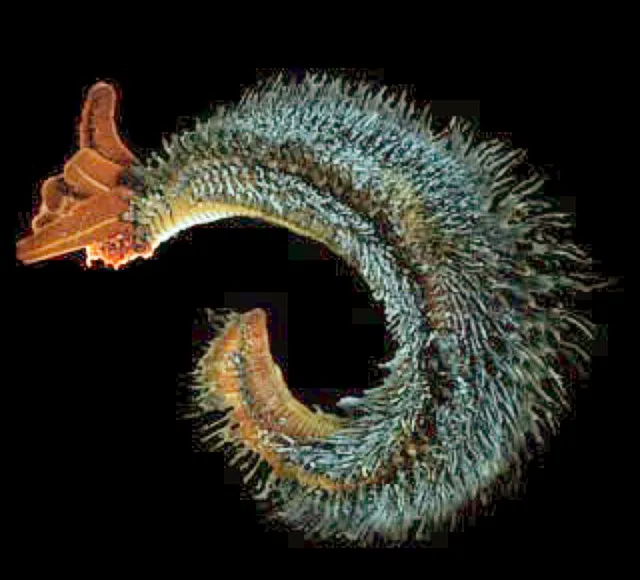
Alvinella pompejana01
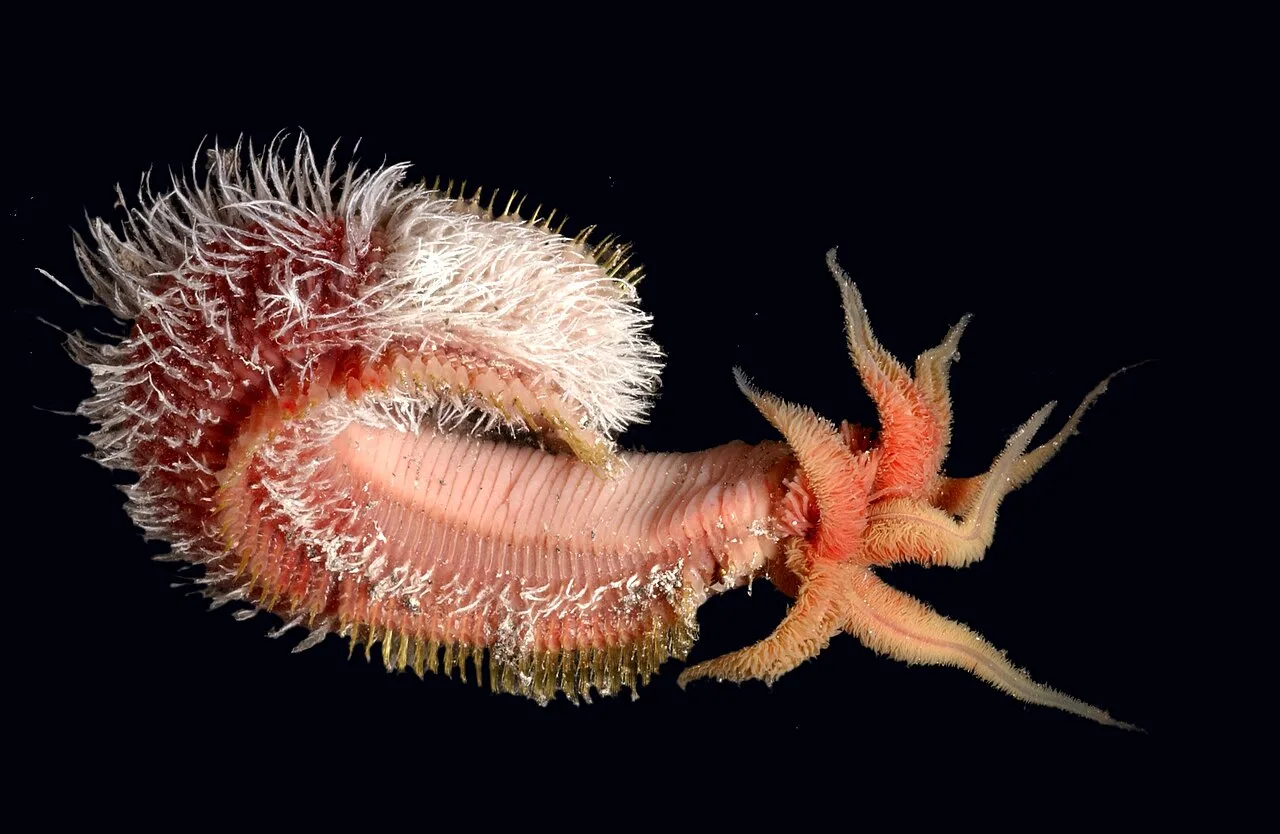
The white filaments on the worm's body are symbiotic bacteria
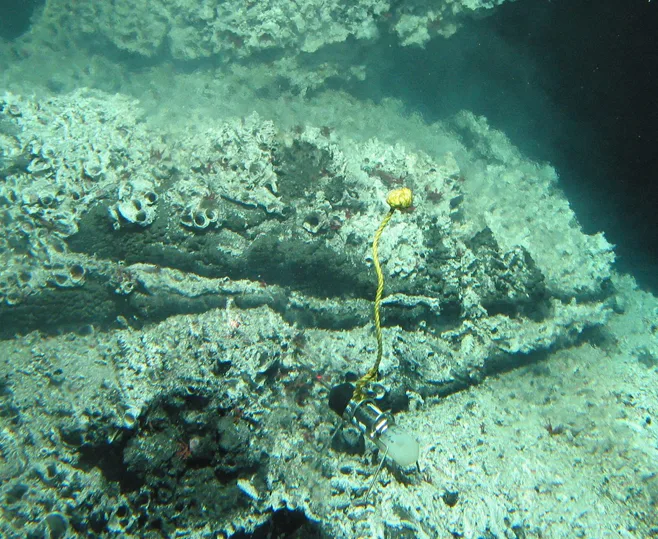
Research apparatus anchored on a colony of Pompeii worms
Alvinella pompejana
Alvinella pompejana, the Pompeii worm, is an extremophilic species of deep-sea polychaete worm found only at hydrothermal vents in the Pacific Ocean.
Eruptive Namesakes and Submersible Discoveries
The scientific taxonomy of Alvinella pompejana reflects both modern deep-sea exploration and ancient history. Identified in 1980 by Daniel Desbruyères and Lucien Laubier, the genus Alvinella honors DSV Alvin, the three-person submersible used during hydrothermal vent discoveries. Meanwhile, the specific name pompejana evokes the Roman city of Pompeii, destroyed by Mount Vesuvius in AD 79. This moniker highlights the worm's volcanic habitat along active oceanic ridges.
From Wikipedia · CC BY-SA 4.0
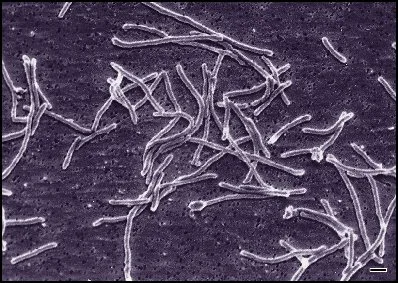
Thermus aquaticus
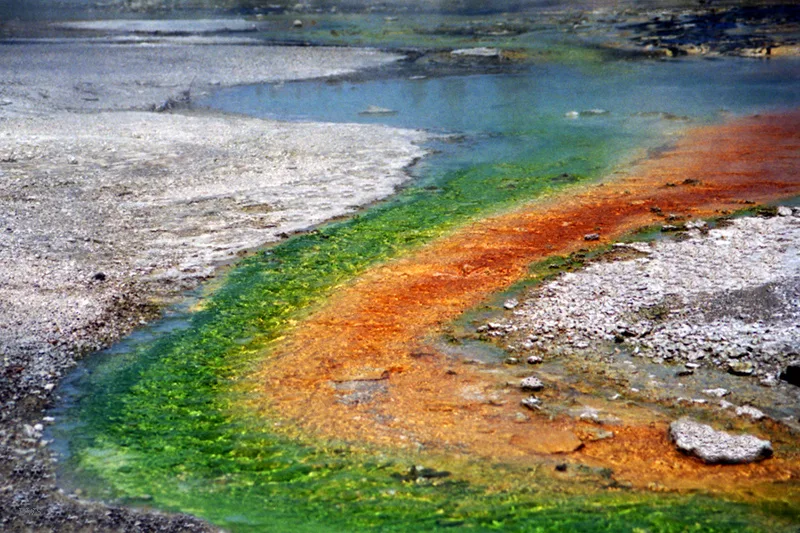
Hot springs with algae and bacteria in Yellowstone National Park
Thermus aquaticus
Thermus aquaticus is a species of thermophilic bacteria and the source of the heat-resistant enzyme Taq DNA polymerase used in PCR DNA amplification.
Shattering thermal boundaries in Yellowstone's geysers
Before the late 1960s, scientists assumed life could not be sustained in environments above about 55 °C (131 °F). That boundary collapsed in 1969 when Thomas D. Brock and Hudson Freeze of Indiana University isolated a new species, Thermus aquaticus, from Mushroom Spring in Yellowstone National Park. This finding proved that bacteria could not only survive but actually thrive in extreme thermal habitats.
From Wikipedia · CC BY-SA 4.0
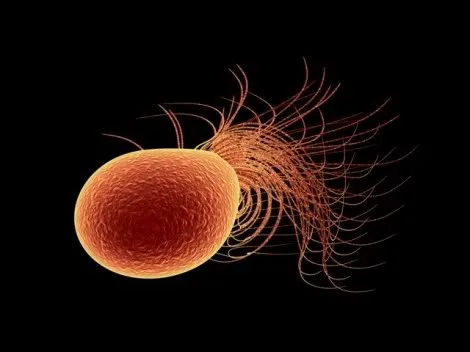
P furiosus
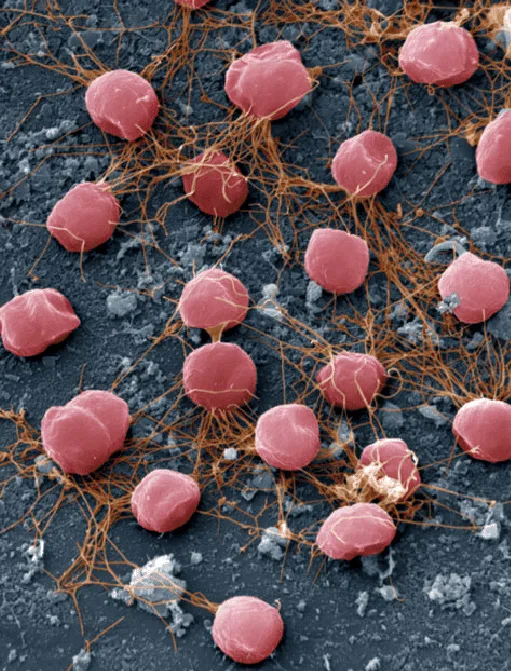
Interconnected flagella adhering to a solid surface.
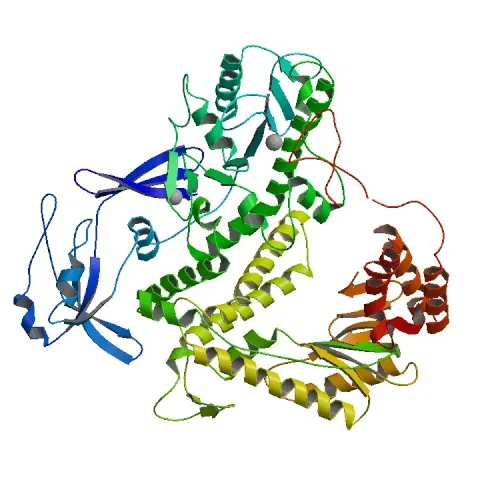
Pfu Polymerase ribbon diagram.
Pyrococcus furiosus
Pyrococcus furiosus is an extremophilic species of archaea classified as a hyperthermophile, with an optimum growth temperature of 100 °C.
A Fast-Multiplying 'Rushing Fireball'
Discovered in 1986, Pyrococcus furiosus originated a brand new genus of archaea. Its species name furiosus translates to 'rushing' in Latin, reflecting its rapid doubling time and swimming speed. Under optimal laboratory conditions, this heat-loving microbe achieves an exponential growth curve by doubling its entire population every 37 minutes. This astonishing reproduction rate makes it one of the most rapidly expanding extremophilic organisms currently known to modern science.
From Wikipedia · CC BY-SA 4.0
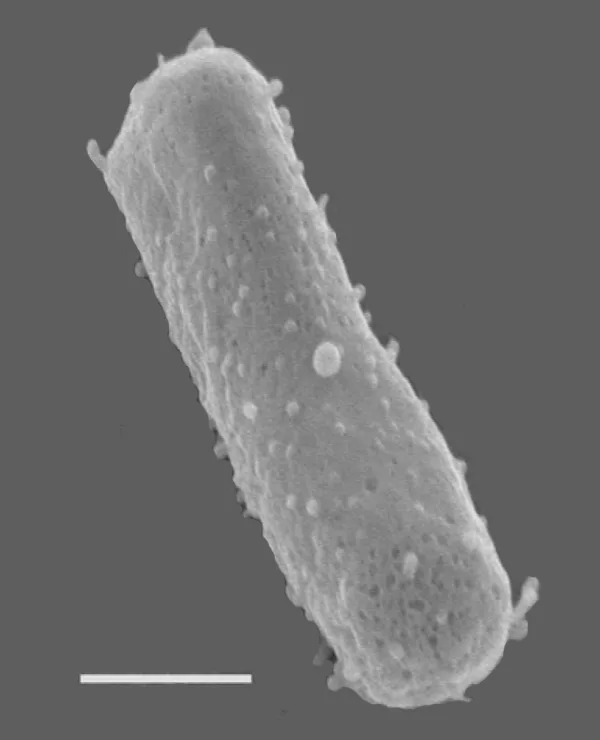
Halobacterium salinarum NRC-1
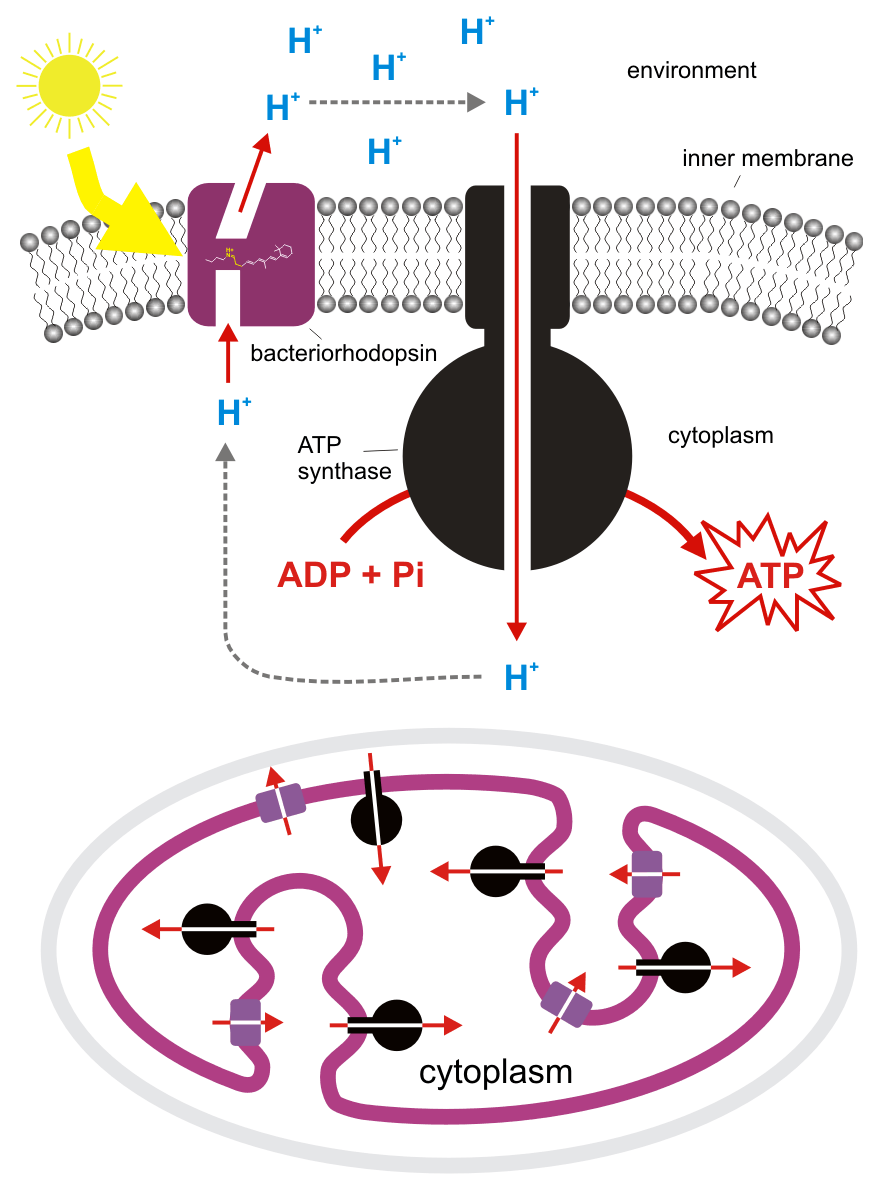
Chemiosmotic coupling between light energy, bacteriorhodopsin and phosphorylation by ATP synthase (chemical energy) during photophosphorylation in Halobacterium salinarum (syn. H. halobium). The archaeal cell wall is omitted.[9][10]

Bacterioruberin
Halobacterium salinarum
Halobacterium salinarum is an extremely halophilic marine obligate aerobic archaeon found in high-salt environments.
A Biological Identity Concealed Behind a Misleading Label
Calling an organism Halobacterium salinarum naturally suggests a common bacterial pathogen, yet this ancient creature belongs to the entirely distinct domain Archaea. It thrives in hypersaline environments that would destroy standard cells, turning commercial salterns vivid shades of red and purple. Surprisingly resistant to food preservation techniques, it frequently proliferates within high-salt foods such as salt pork, marine fish, and sausages.
From Wikipedia · CC BY-SA 4.0
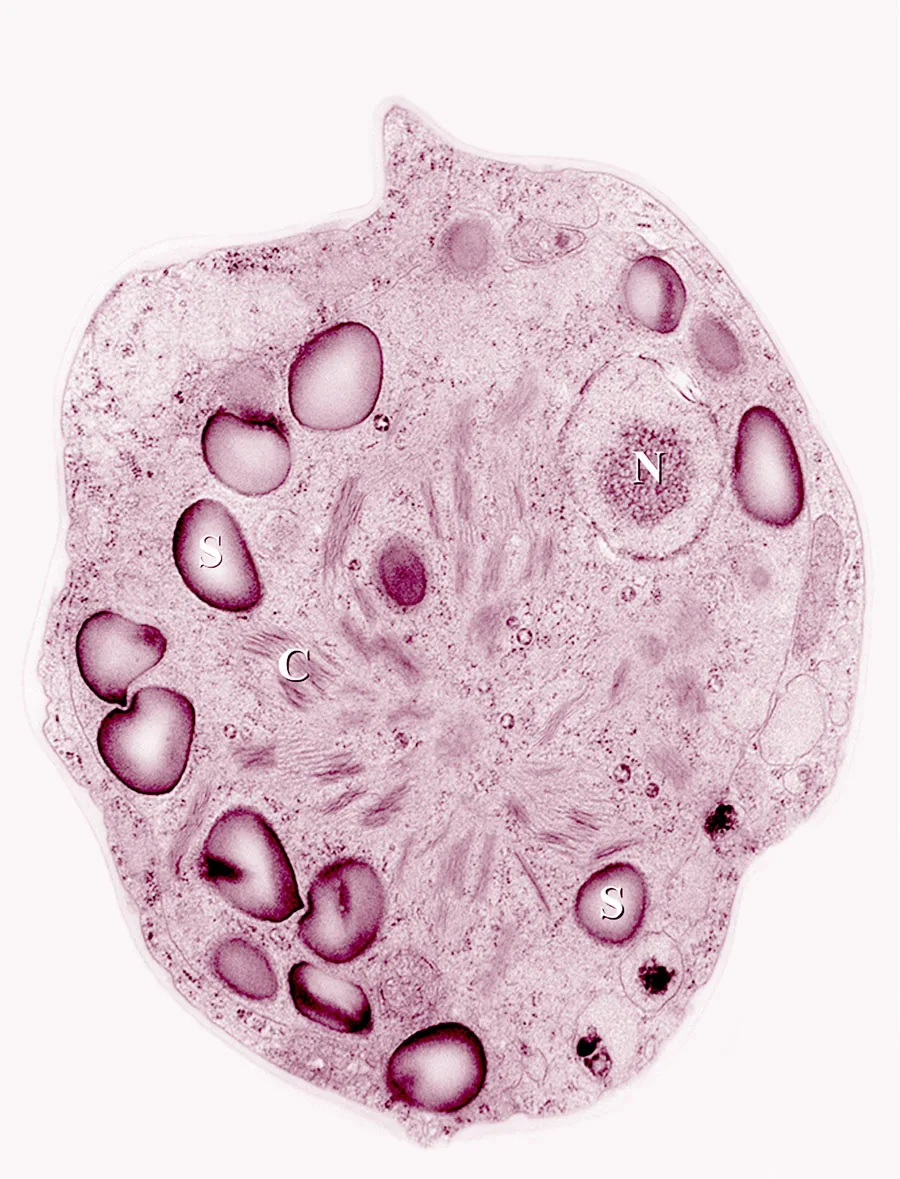
Green algal
Chlamydomonas nivalis
Chlamydomonas nivalis, commonly known as snow algae, is a unicellular red-coloured photosynthetic green alga found in alpine and polar snowfields worldwide.
Microscopic Armor Ranging from Nanometers to Microns
Cellular structures of Chlamydomonas nivalis exhibit dramatic morphological variations across their development. Spherical red cells reach 35.96 ± 4.9 μm in diameter, while star shaped cells span 40–50 μm across. To survive intense drought and radiation stress, mature cyst cell walls can thicken to between 66 to 154 nm. This rigid boundary is remarkably hard to destroy, enabling long-term survival on exposed rocks, soil, and snowfields.
From Wikipedia · CC BY-SA 4.0
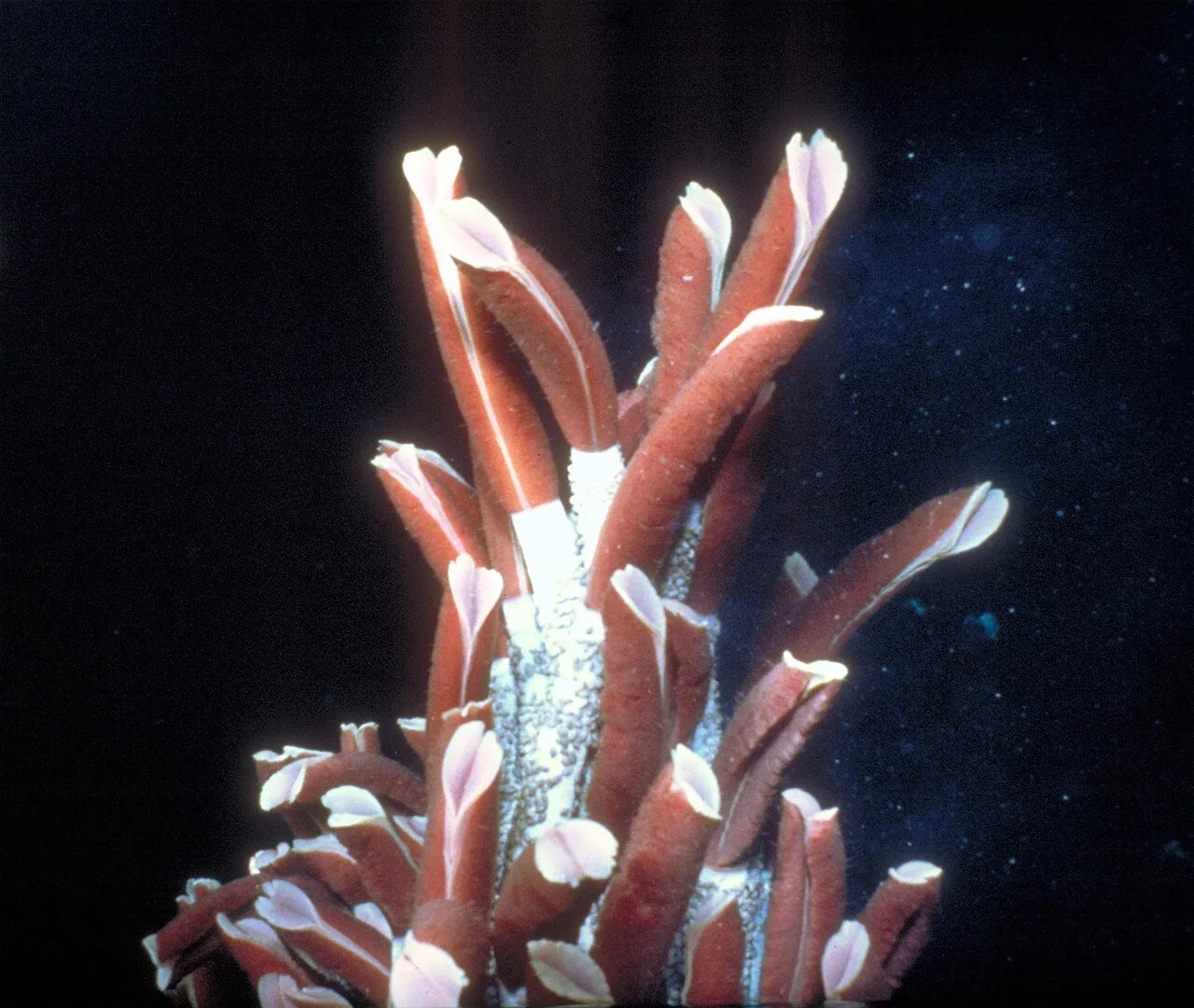
Campagne HOT - Vers géants (Riftia pachyptila) (Ifremer 00530-64223 - 52381)
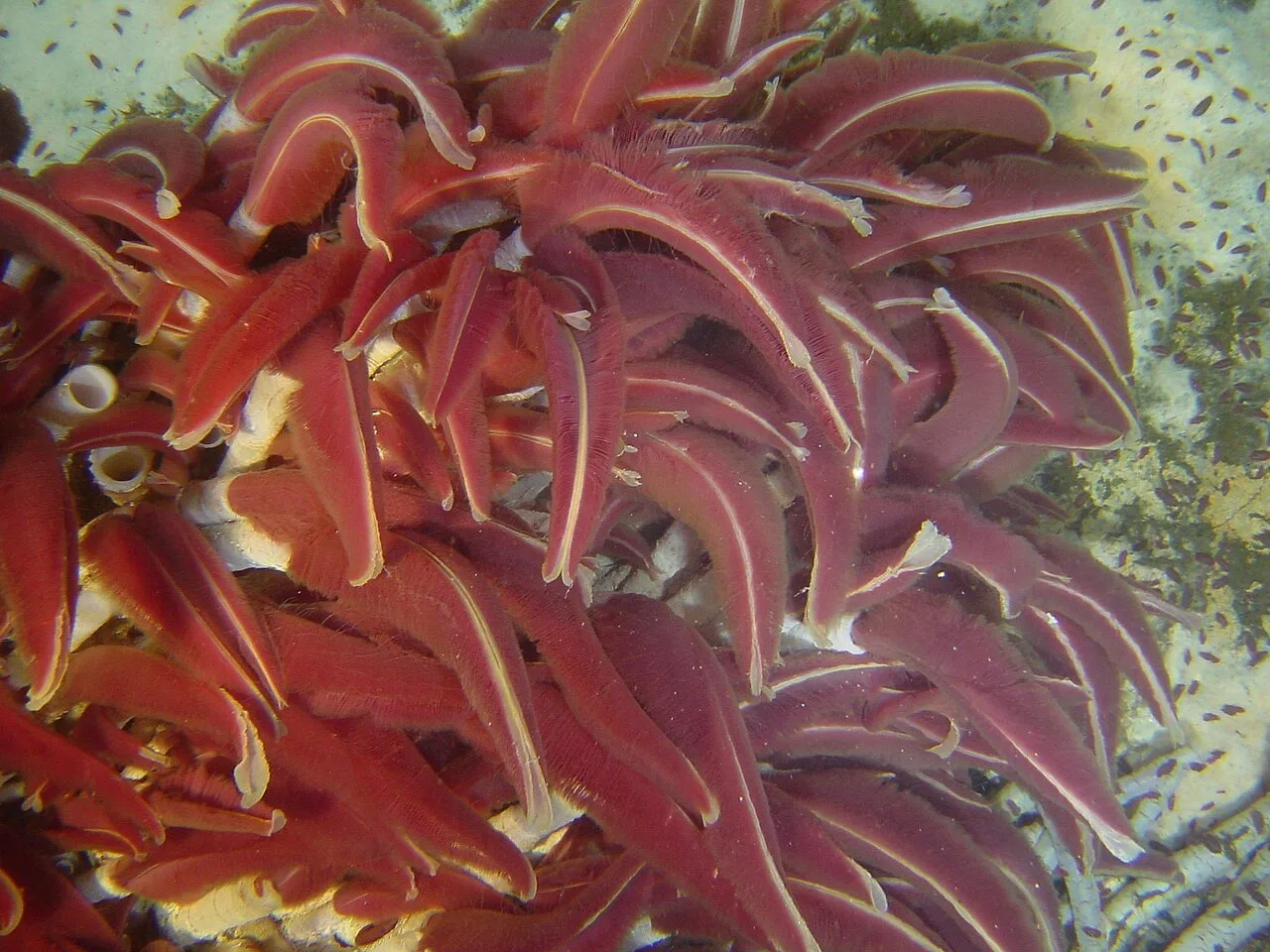
R. pachyptila community with red branchial plumes visible.
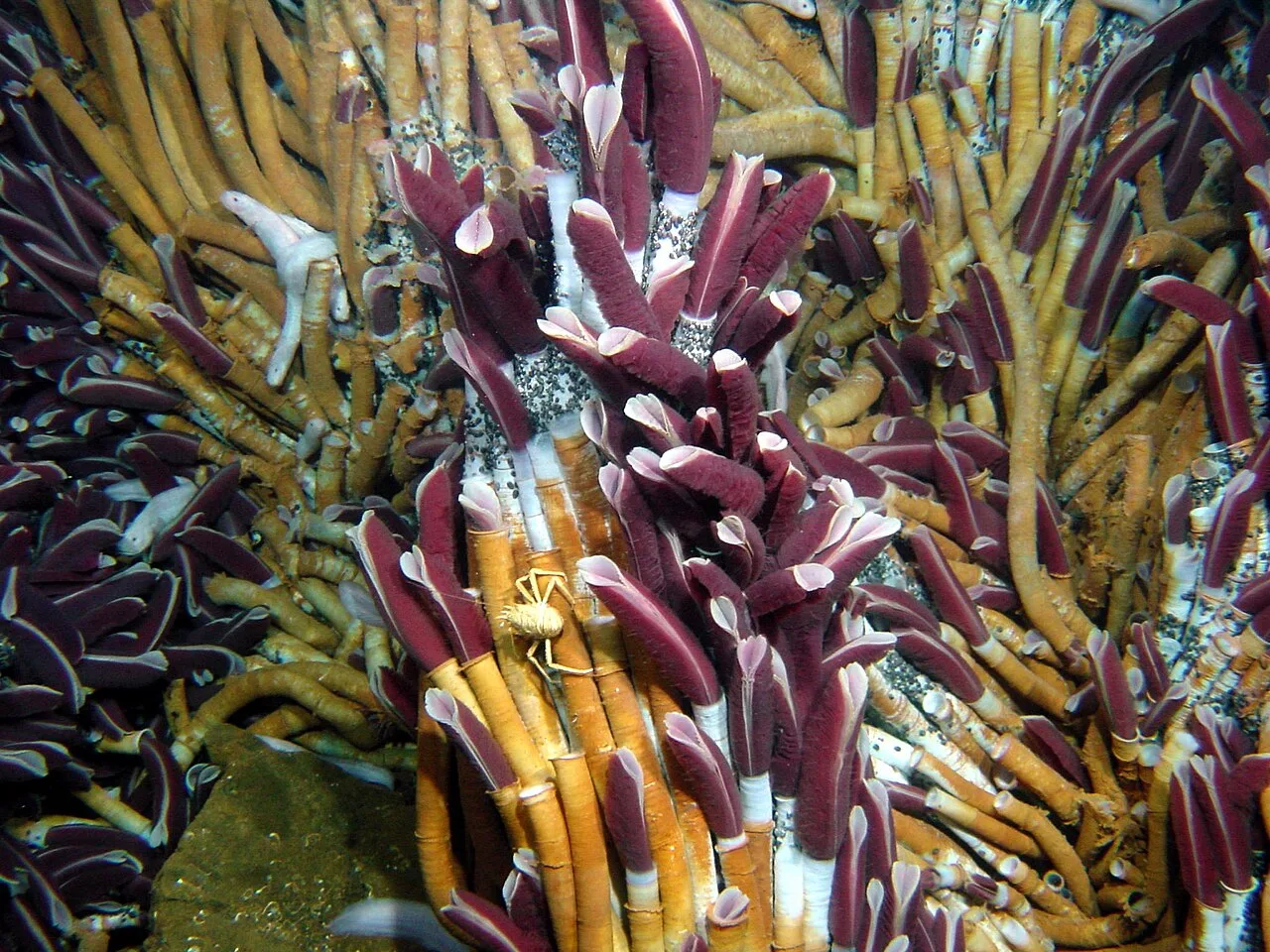
Riftia Pachyptila photographed at 2630 meters on the Eastern Pacific Ridge.
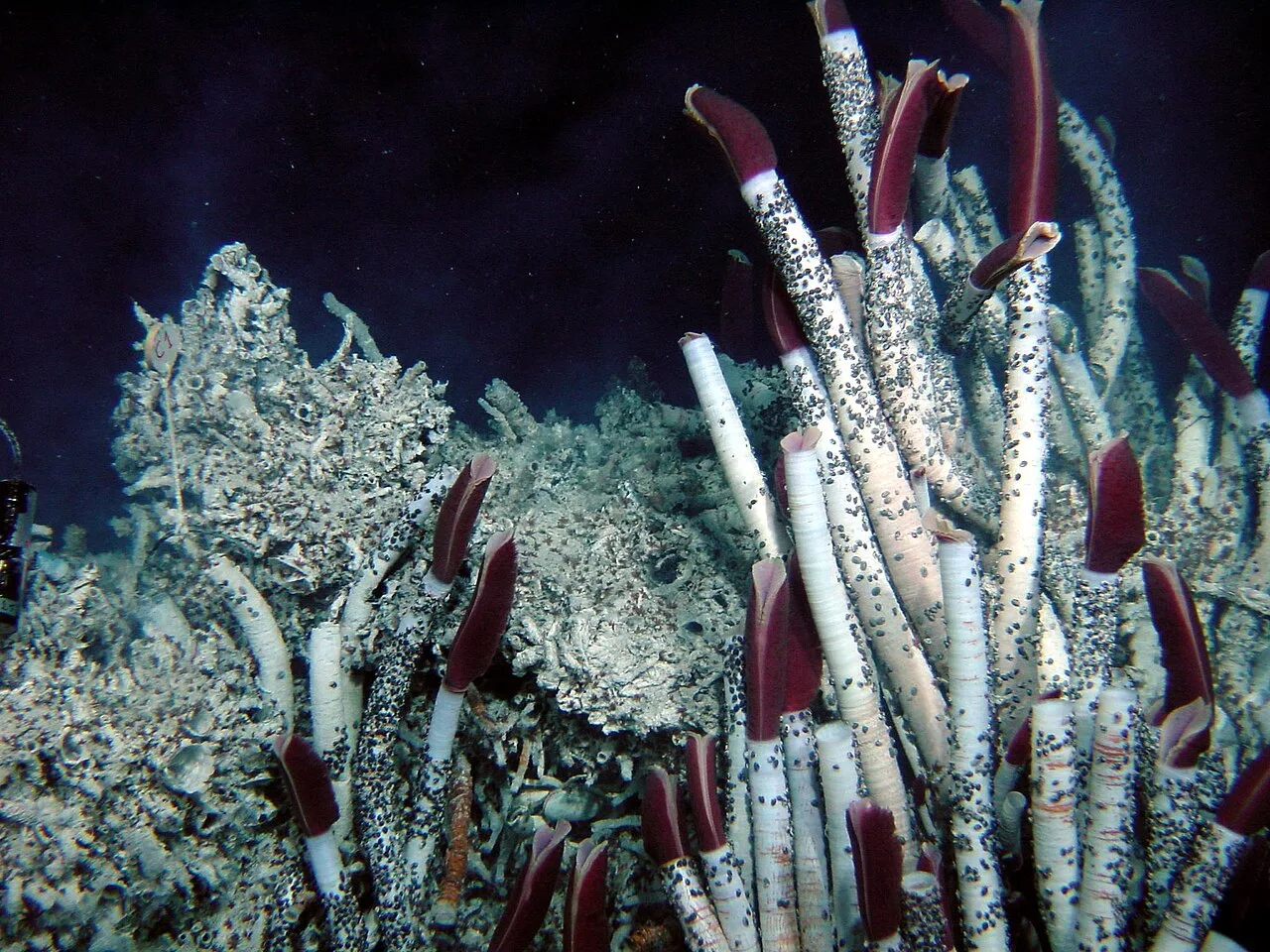
Riftia tubes covered in epibionts
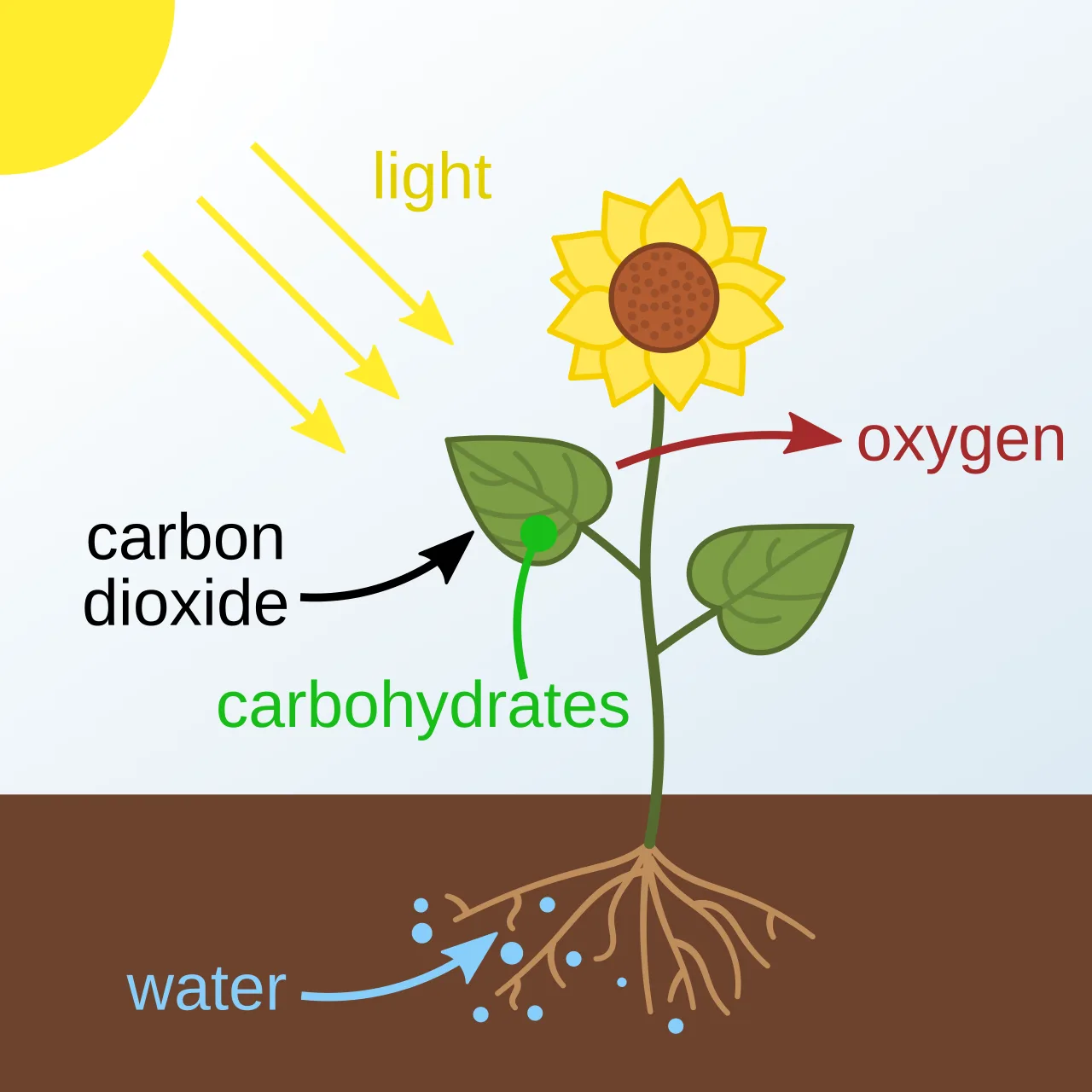
Sunlight is necessary for the process of photosynthesis.
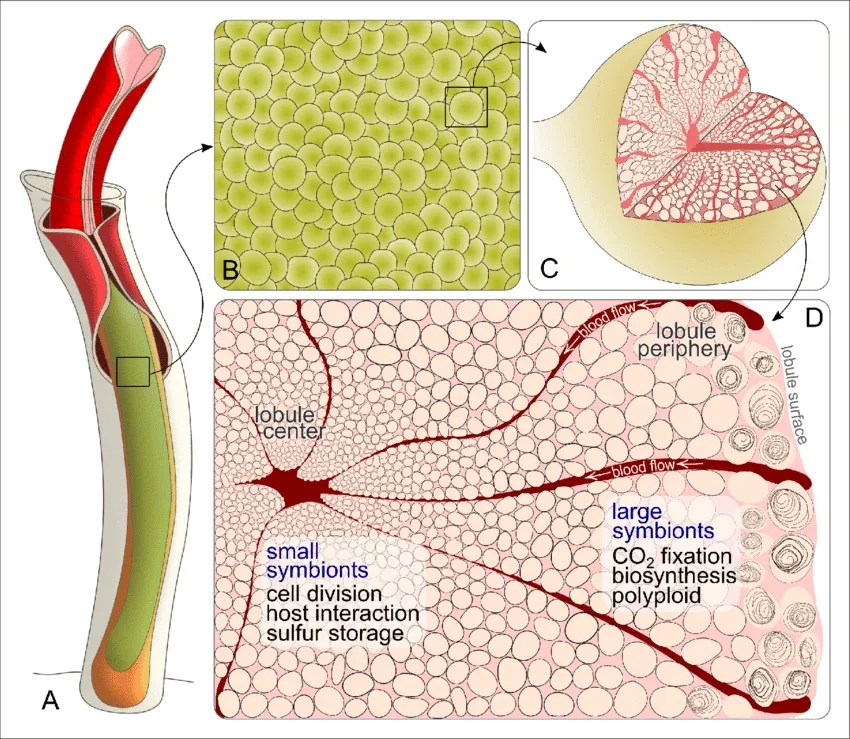
Riftia symbiont cells inside the trophosome. The spirals indicate symbionts being digested by the worm.
Riftia pachyptila
Riftia pachyptila, commonly known as the giant tubeworm, is a species of sessile polychaete annelid worm found around deep-sea hydrothermal vents.
Explosive Spurt in an Unstable Cradle
While some popular sources classify Riftia pachyptila among the world's longest-living organisms, the highly volatile vent habitat makes extreme longevity unlikely. In contrast, tube worms inhabiting stable cold seep environments like Lamellibranchia and Escarpia hold legitimate claims to living over a century. Riftia compensates for its brief persistence with the fastest growth rate of any known marine invertebrate. A colony can establish itself and grow to 4.9 ft (1.5 m) in less than two years.
From Wikipedia · CC BY-SA 4.0
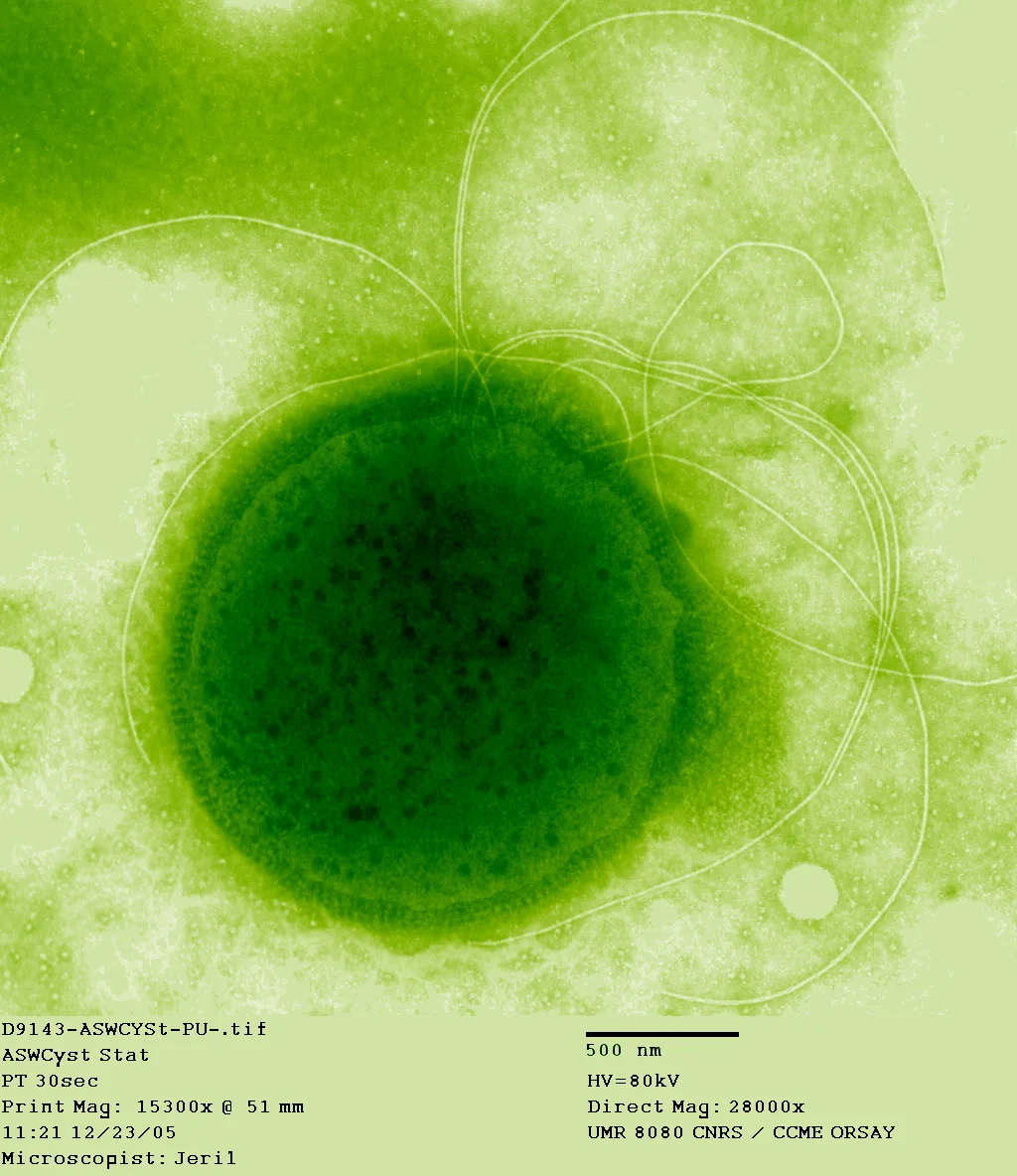
Thermococcus gammatolerans
Thermococcus gammatolerans
Thermococcus gammatolerans is an archaeon extremophile and the most radiation-resistant organism known to exist.
Submersible Exploration at 2,600 Meters Deep
Deep beneath the ocean surface, researchers aboard the submersible Nautile gathered environmental samples during the 1991 Guaynaut cruise. As reported in 2003, the type strain EJ3T was extracted from a submarine hydrothermal vent located in the Guaymas Basin off the coast of Baja California at a depth of about 2,600 m (8,500 ft). This unique archaeon thrives in complete darkness under immense oceanic pressure.
From Wikipedia · CC BY-SA 4.0