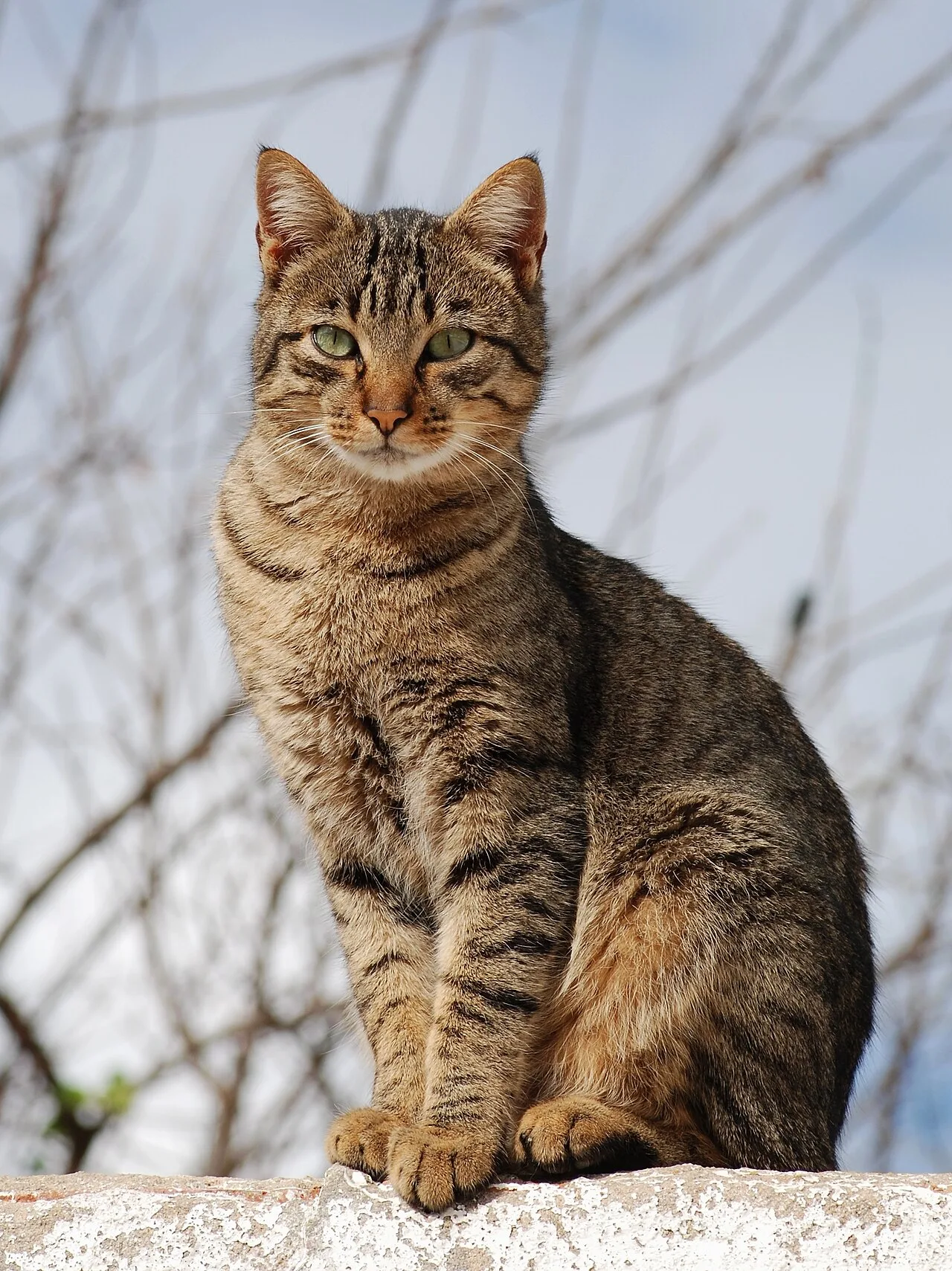
Mackerel tabby, with the distinctive striped pattern and forehead 'M'.
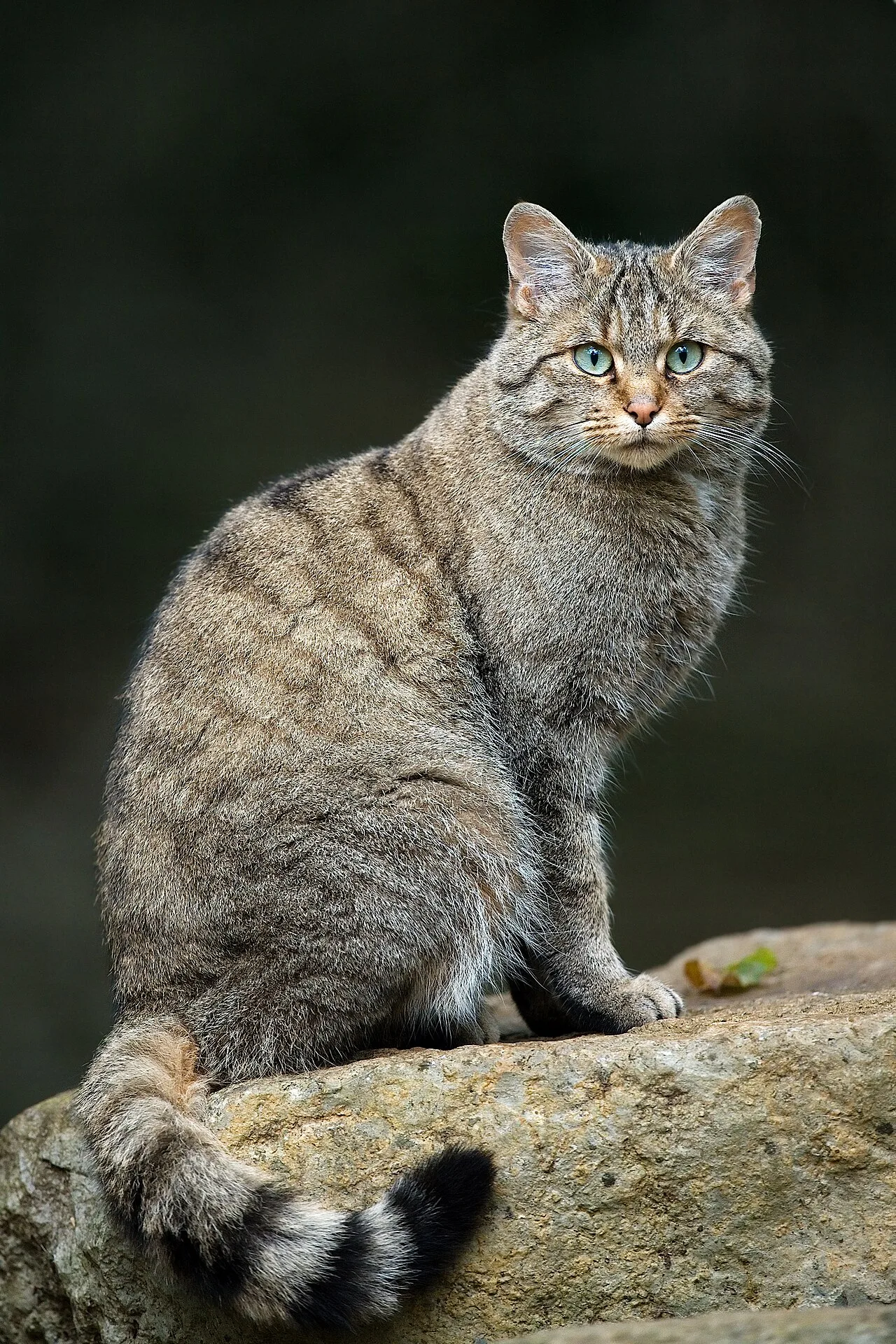
A European wildcat (Felis silvestris) bearing a similar coat pattern to that of a tabby cat. It is thought that the tabby pattern originates from the numerous related species of wildcat.
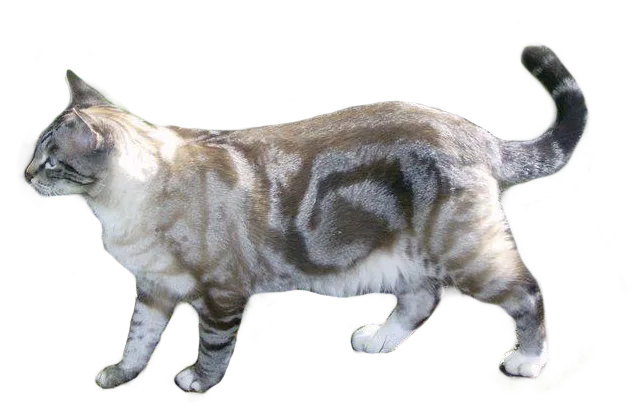
Classic or blotched
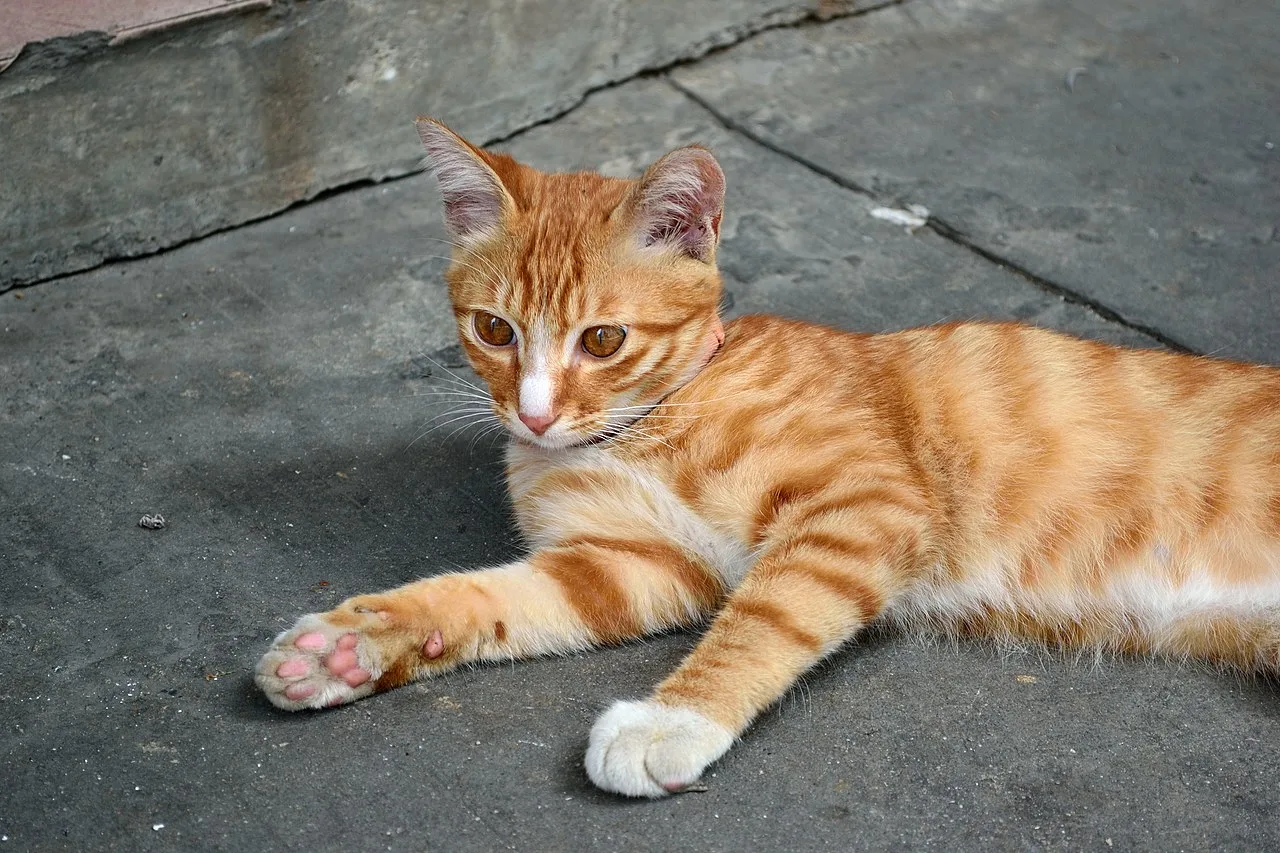
Orange tabby cat
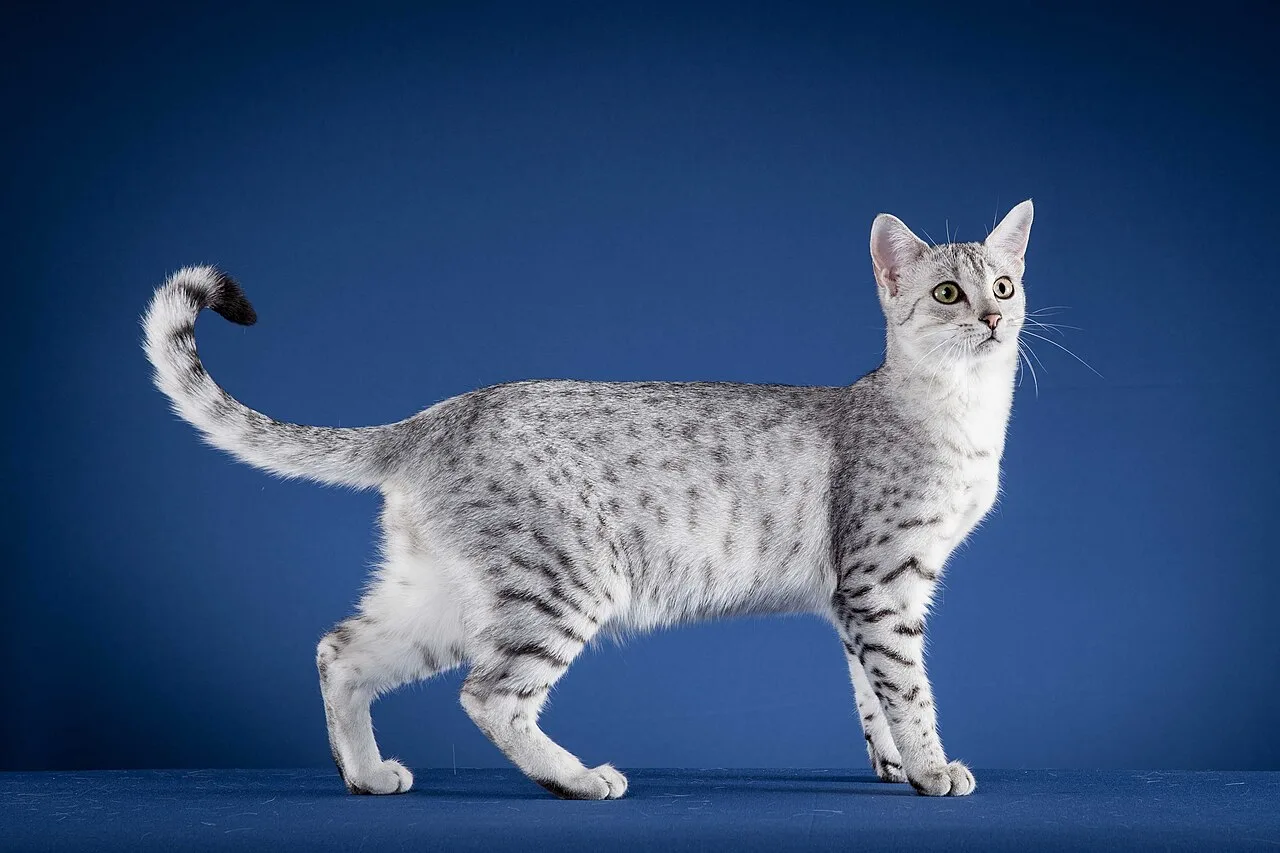
Black silver spotted tabby Egyptian Mau
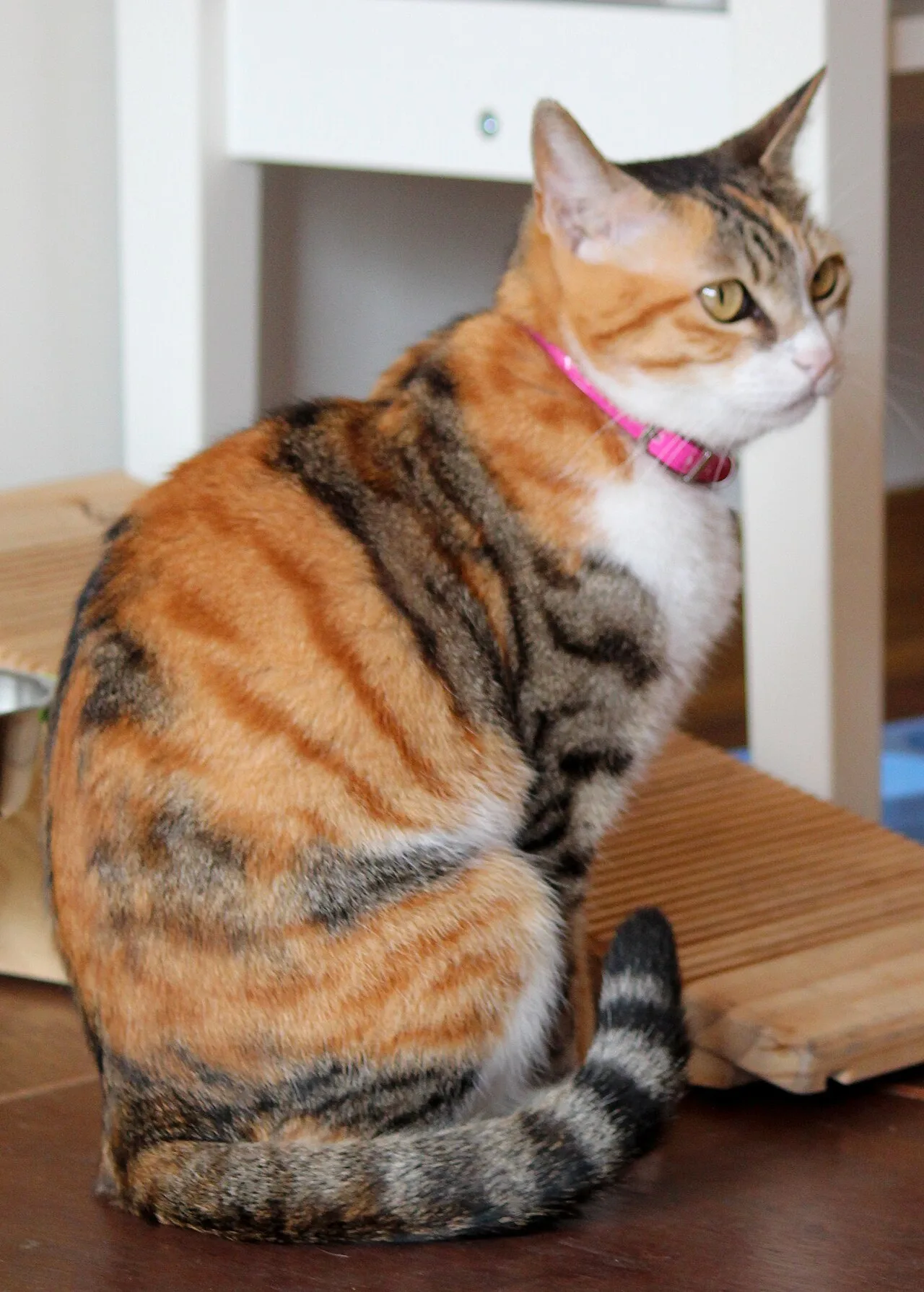
Black tortoiseshell mackerel tabby-and-white tricolor ("caliby") cat
Tabby cat
A tabby cat is any domestic cat with a coat pattern distinguished by an M-shaped marking on its forehead, stripes by its eyes and cheeks, along its back, and around its legs and tail.
From Baghdad Silk to Feline Stripes
The word "tabby" did not originate with felines, but with high-end textile commerce. It traces back to the 14th century Middle French word atabis and the Arabic term ʿattābiyya, referring to the Attabiya district of Baghdad. This neighborhood produced striped silk taffeta named after Umayyad governor Attab ibn Asid. The fabric's name eventually transferred to striped cats in the 1690s.
From Wikipedia · CC BY-SA 4.0
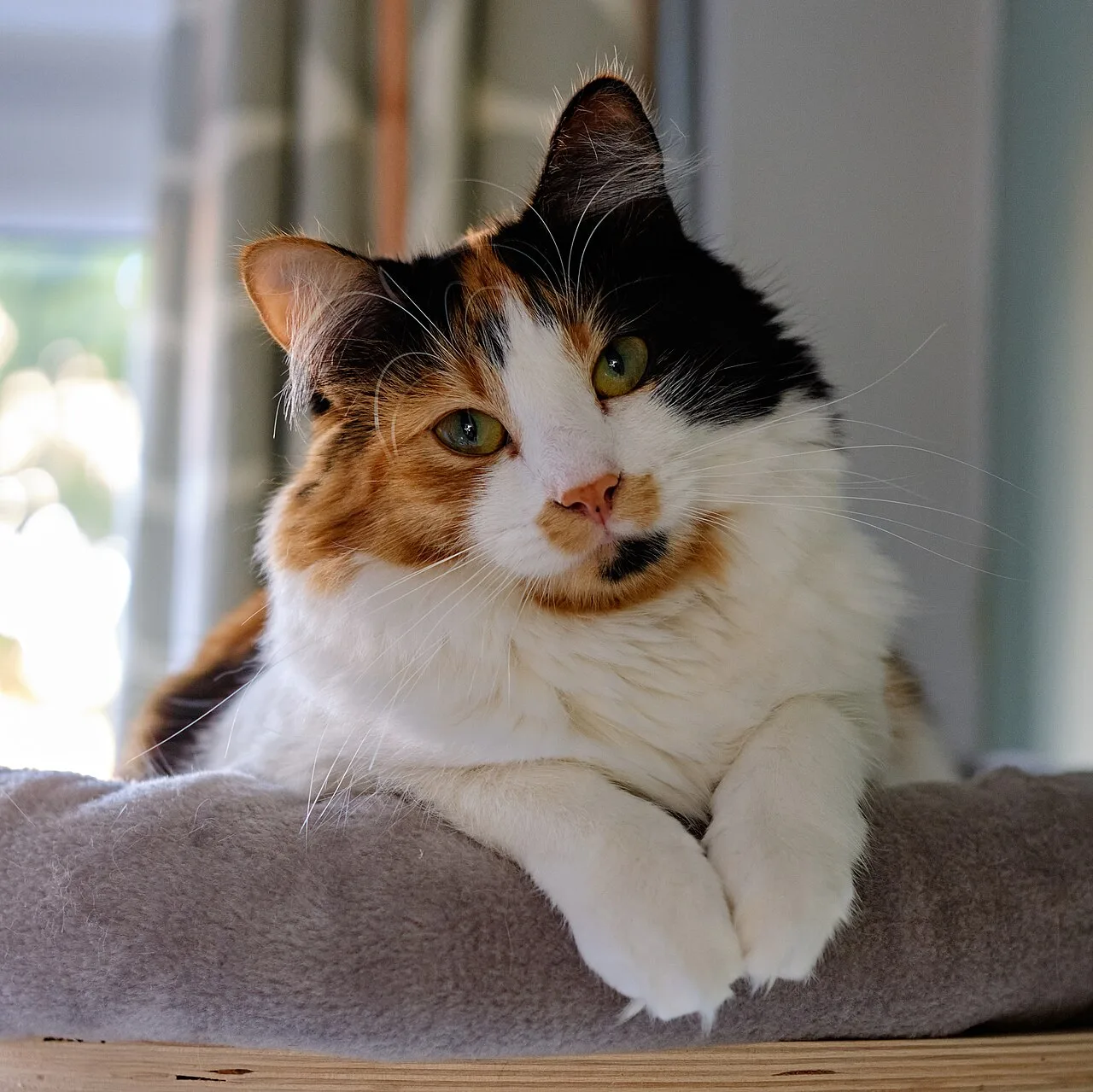
A long-haired adult calico cat
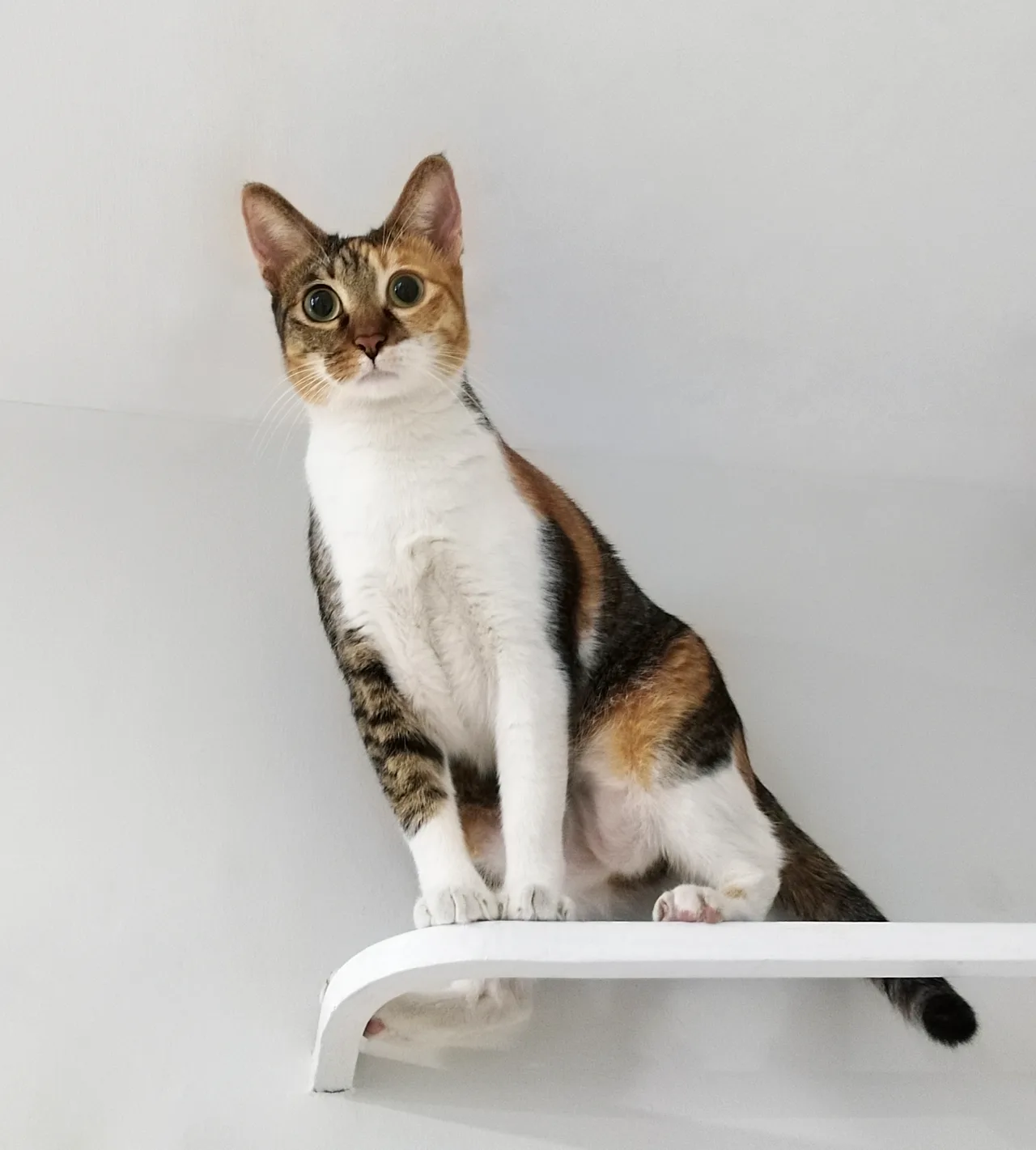
Calico cat with tabby markings (Caliby/Tabico)
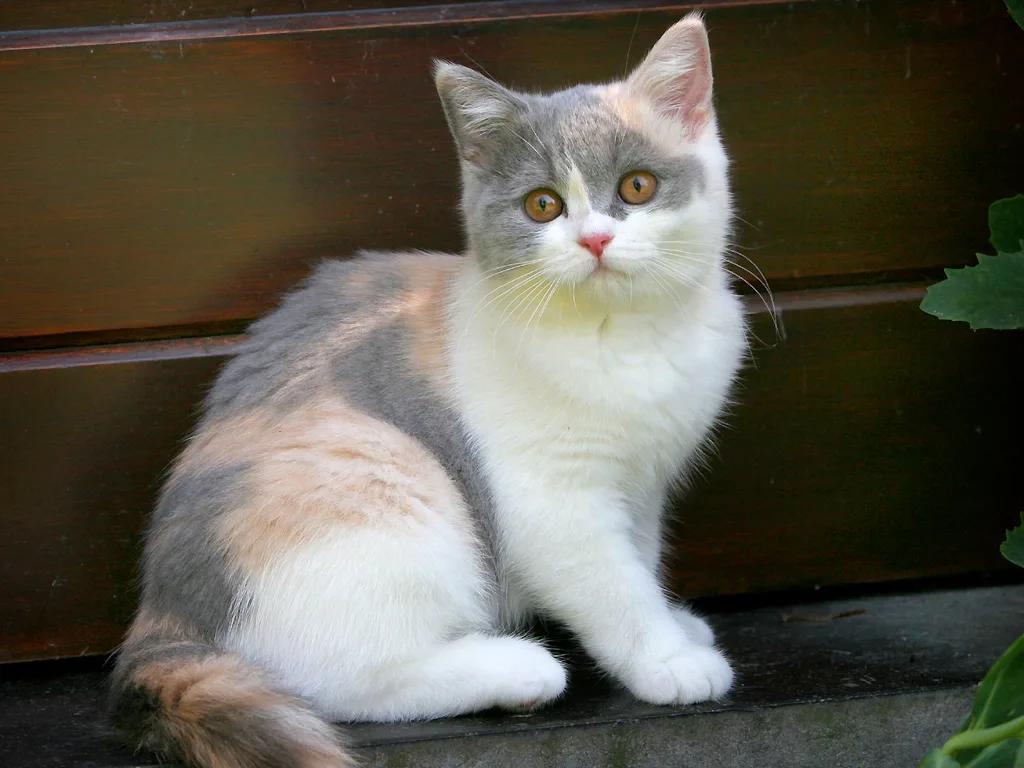
Calico cat of blue (diluted) tortoiseshell and white
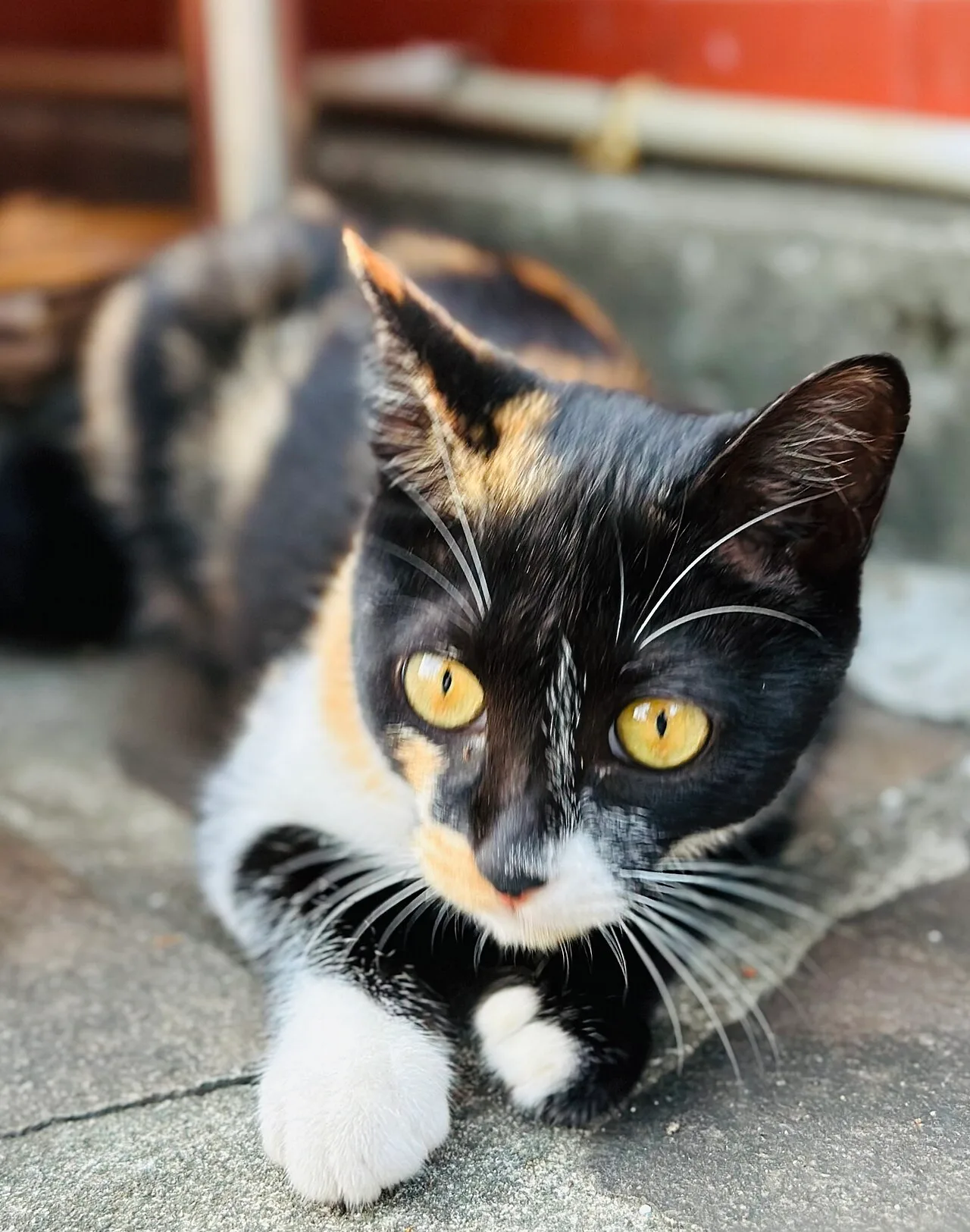
Calico cat with predominantly black coloration
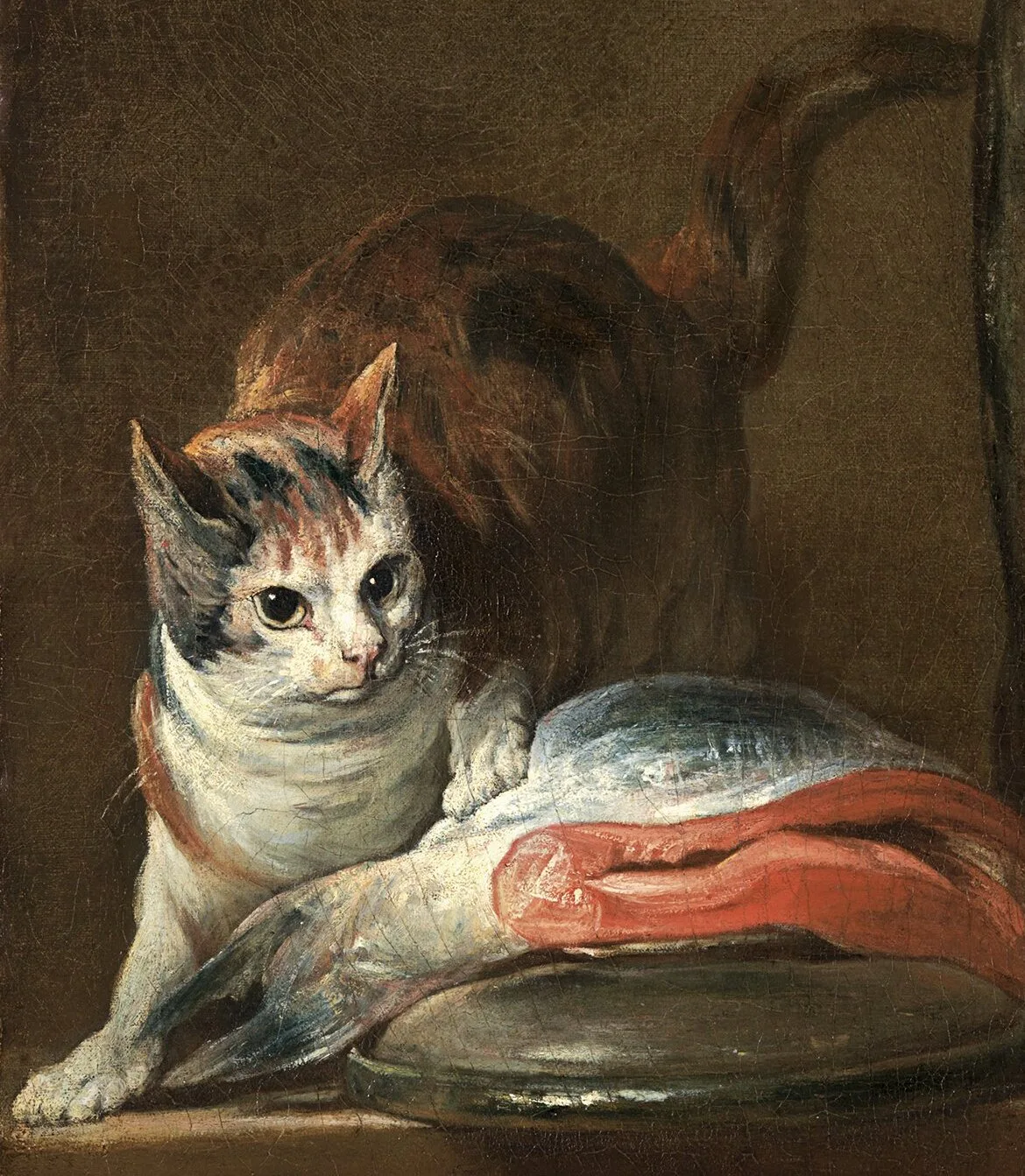
Detail from Still life with Cat and fish by Jean Siméon Chardin, 1728
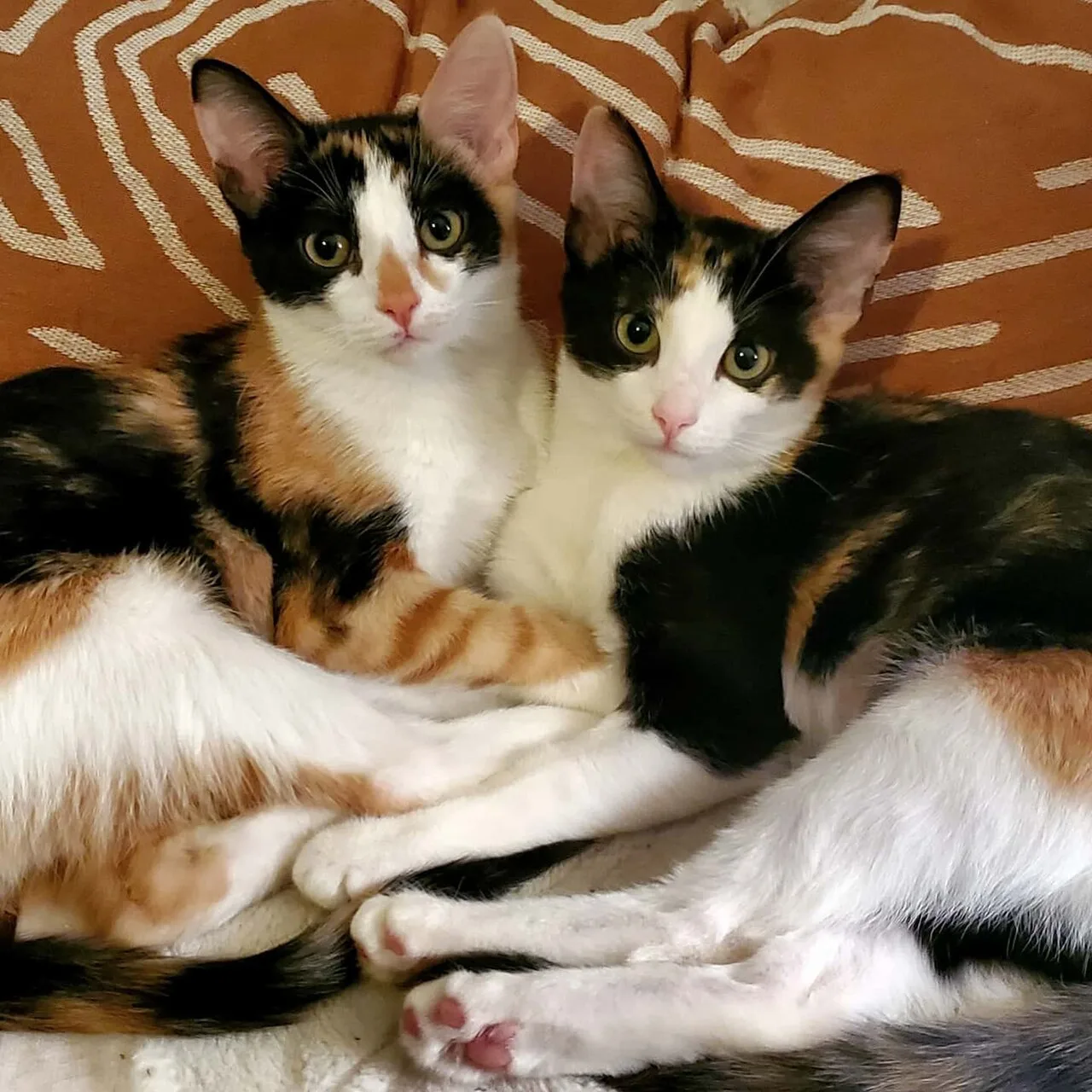
Calico cat sisters, demonstrating the variation in their coat patterns
Calico cat
A calico cat is a domestic cat of any breed with a tricolor coat of black-based and red-based pigments with white.
Transatlantic Textile Trade and Coat Terminology
The naming of tricolor cats originated in the textile trade of Calicut, India. When printed calico fabric was shipped from Lancashire, England, to the United States during the 1780s, a distinct linguistic divergence emerged. While European speakers retained the term strictly for woven cloth, North Americans adopted it to describe the mottled, multi-toned patches found across domestic cat coats.
From Wikipedia · CC BY-SA 4.0
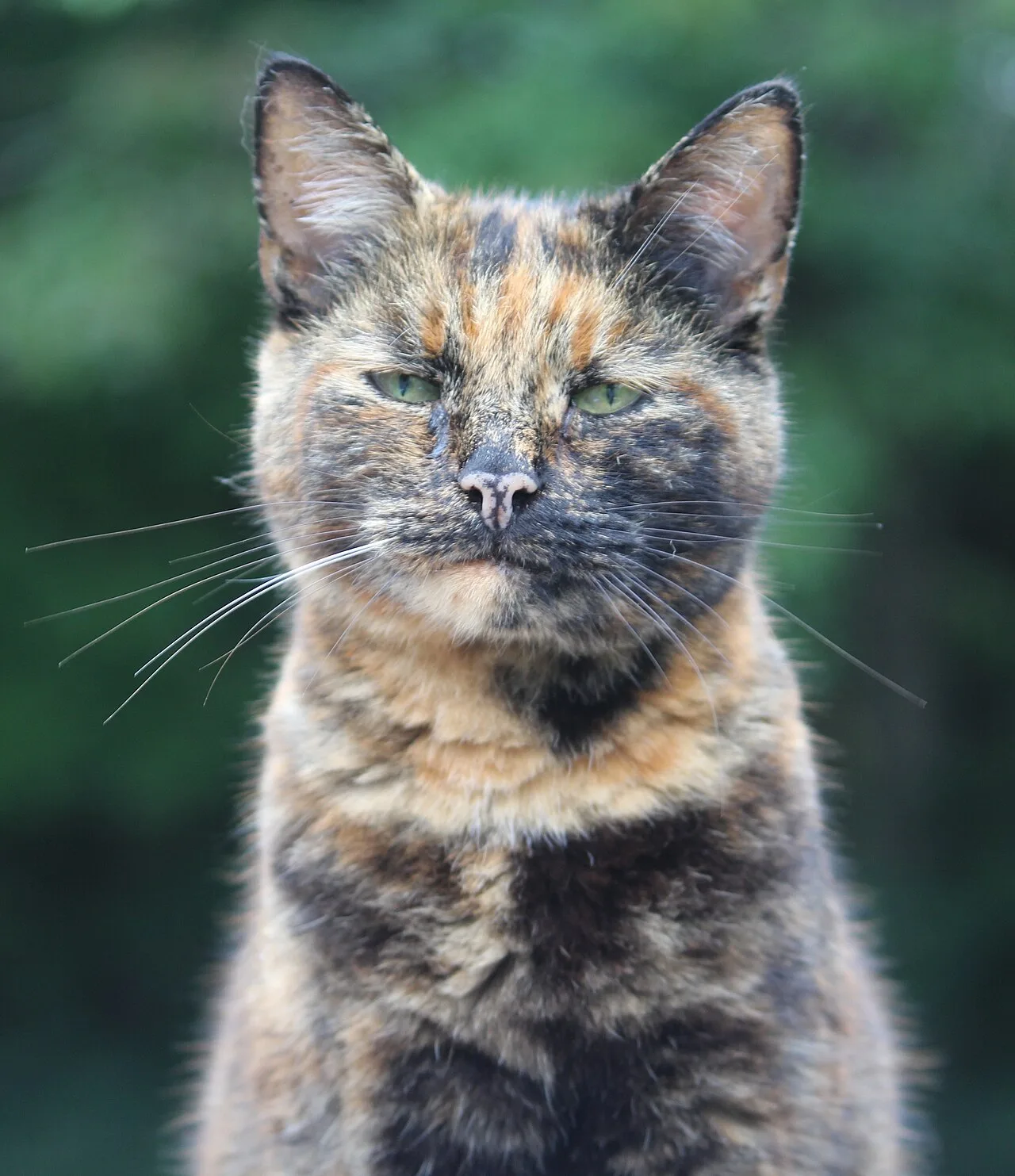
A black tortoiseshell moggy cat
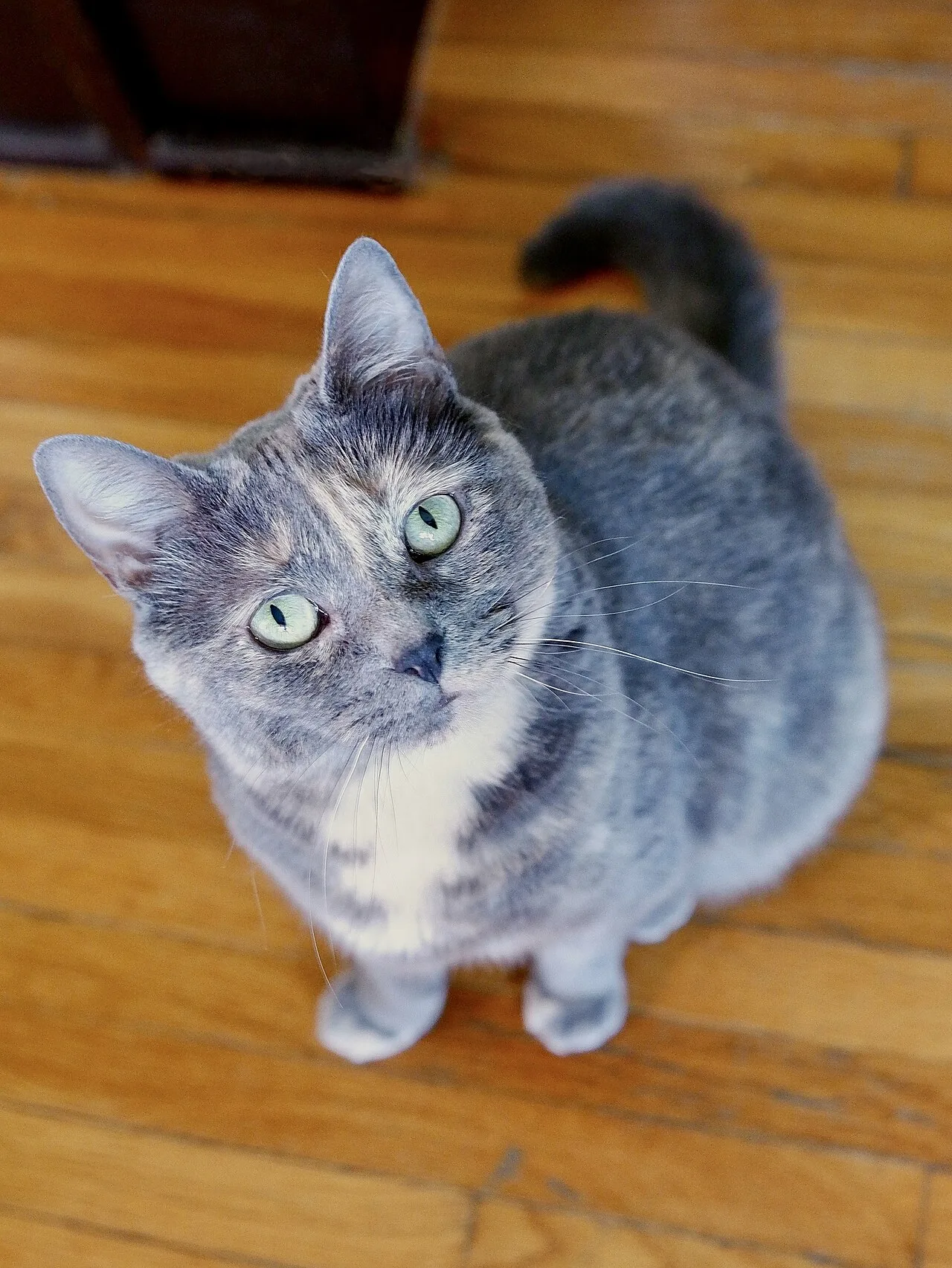
Cat with a blue ("dilute", "grey") tortoiseshell coat
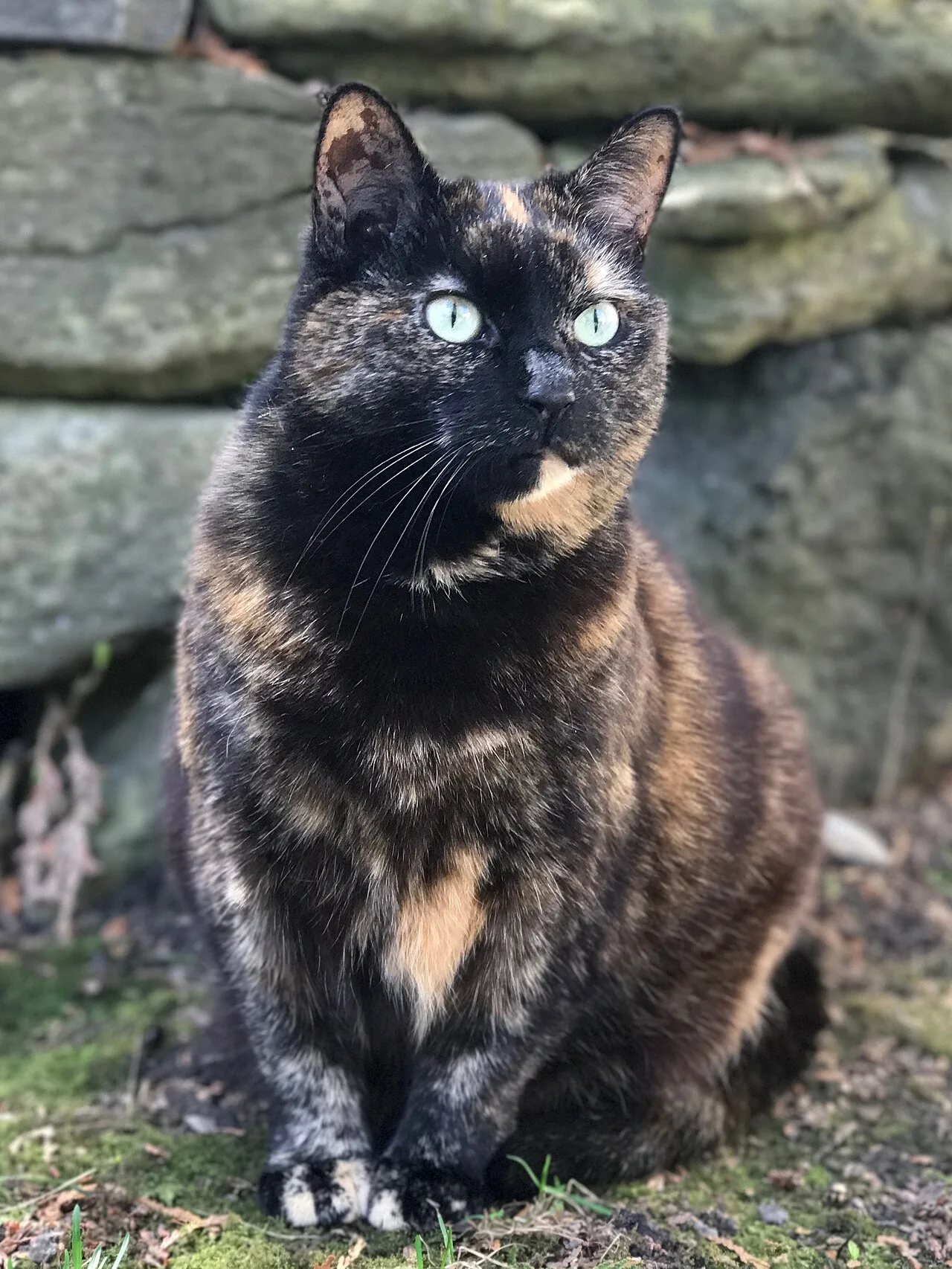
"brindled"
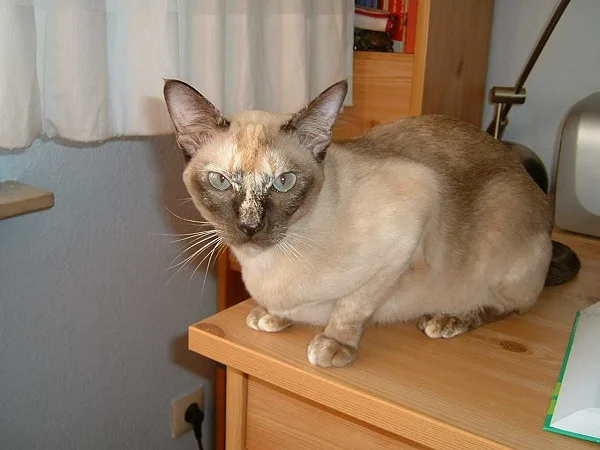
Chocolate tortoiseshell mink Tonkinese cat
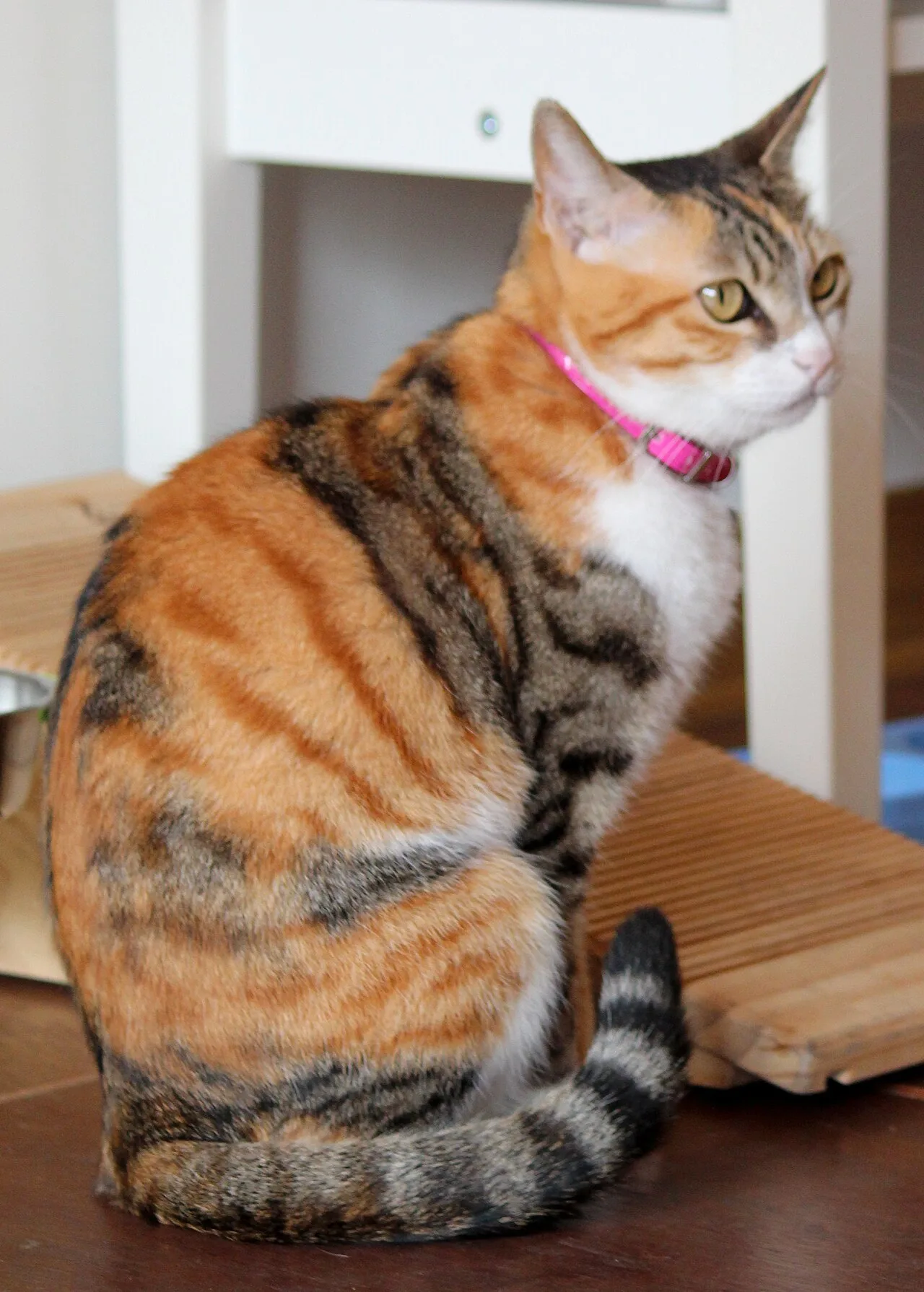
Black tortoiseshell tabby-and-white tricolour ("caliby")
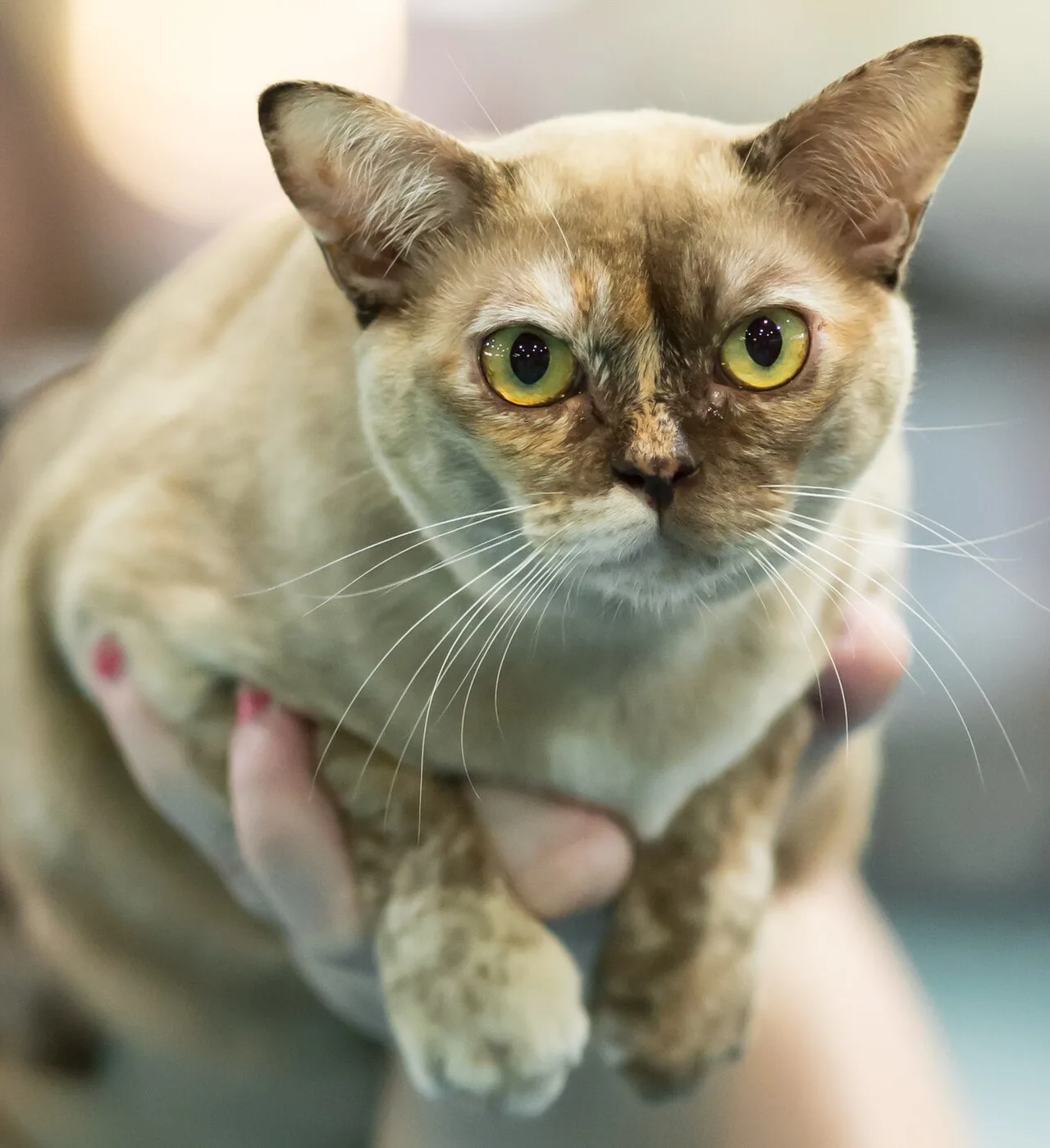
Chocolate tortoiseshell sepia Burmese
Tortoiseshell cat
Tortoiseshell is a coat colouration in domestic cats that combines two colours other than white in an asymmetrical distribution, named for its similarity to tortoiseshell pattern.
Random Barr Body Formation and Pigment Migration
Random cellular shutdown in early embryonic development creates the signature bicoloured coat. Because female cats are homogametic with two X chromosomes, individual cells turn off one chromosome at random, condensing it into a Barr body. Cells silencing the orange allele express black eumelanin, while those turning off non-orange express orange phaeomelanin. When these early-arriving melanocytes migrate to the skin surface, they intermingle to produce the classic brindled pattern.
From Wikipedia · CC BY-SA 4.0
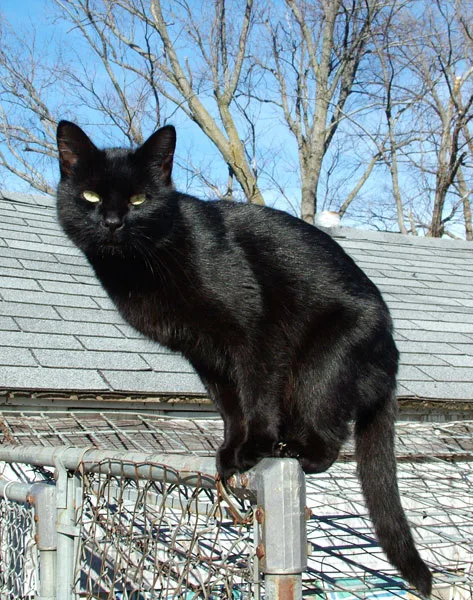
A black cat resting on a fence
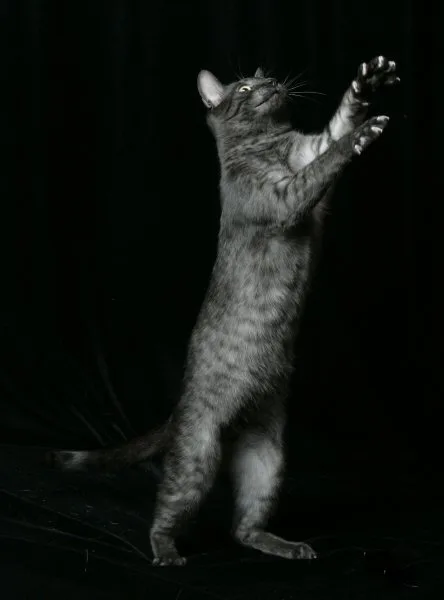
Black smoke Egyptian Mau
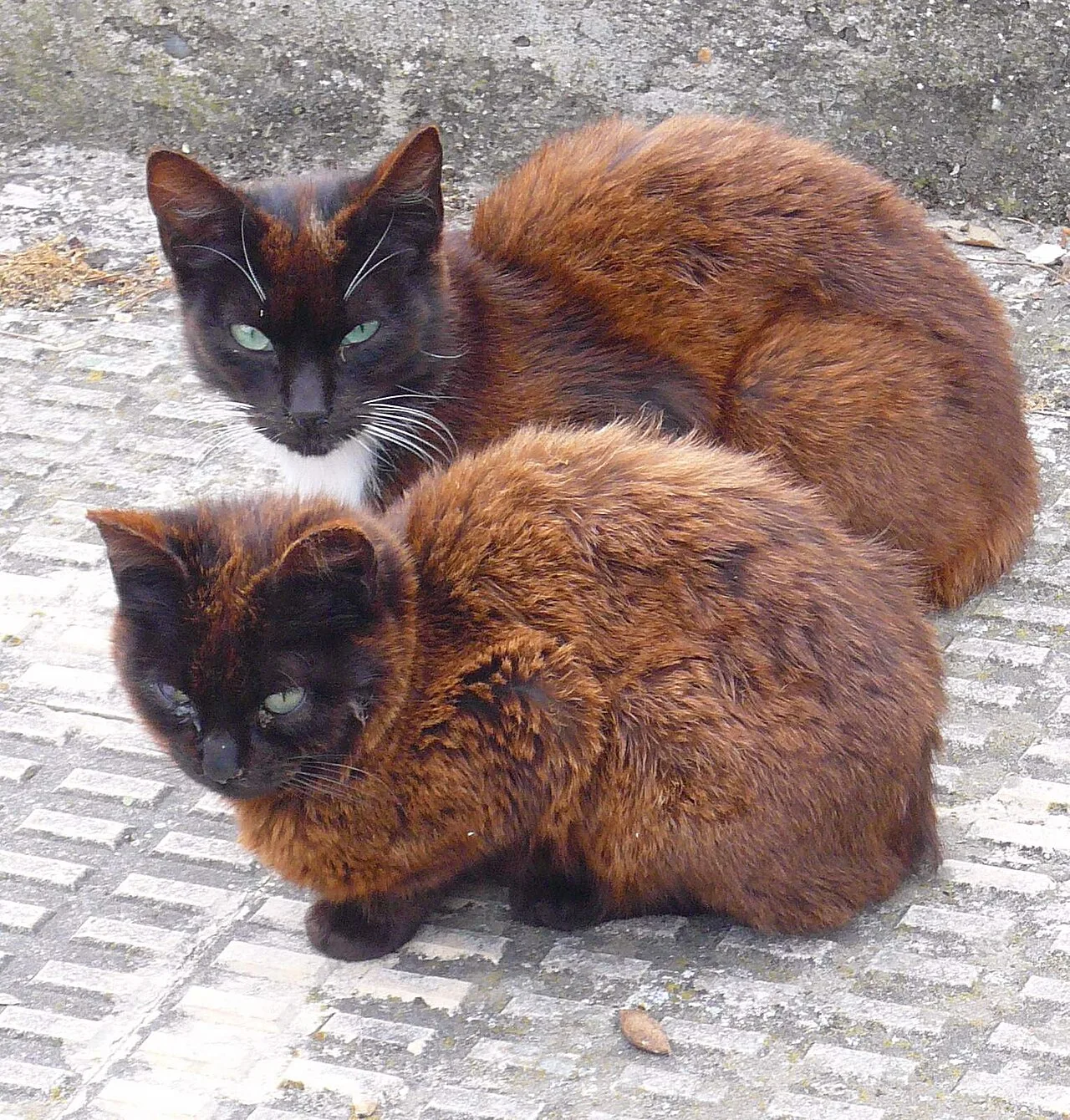
Two black cats "rusting" (coat turning a lighter brown shade) in sunlight
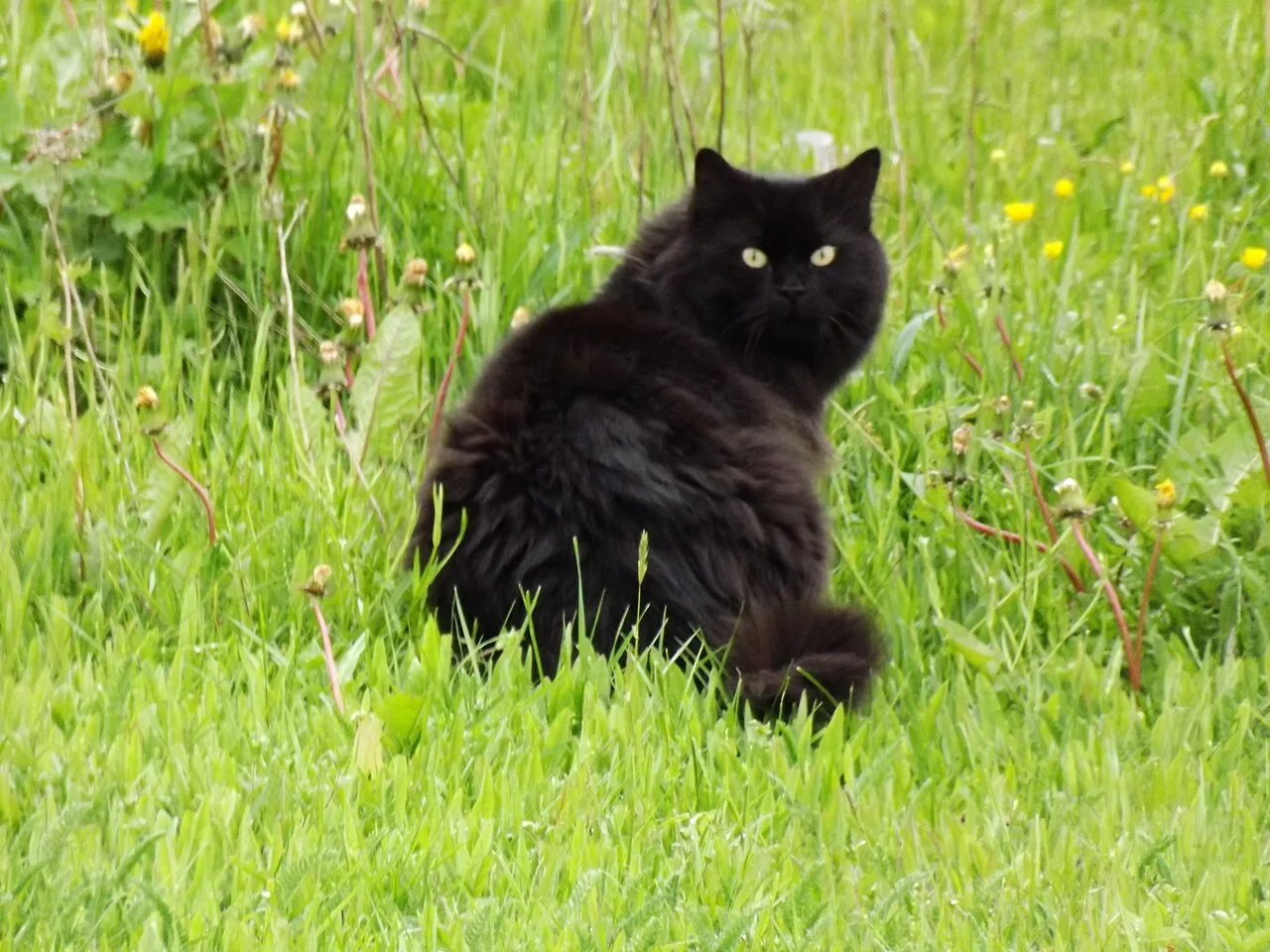
Some cultures are superstitious about black cats, ascribing either good or bad luck to them.
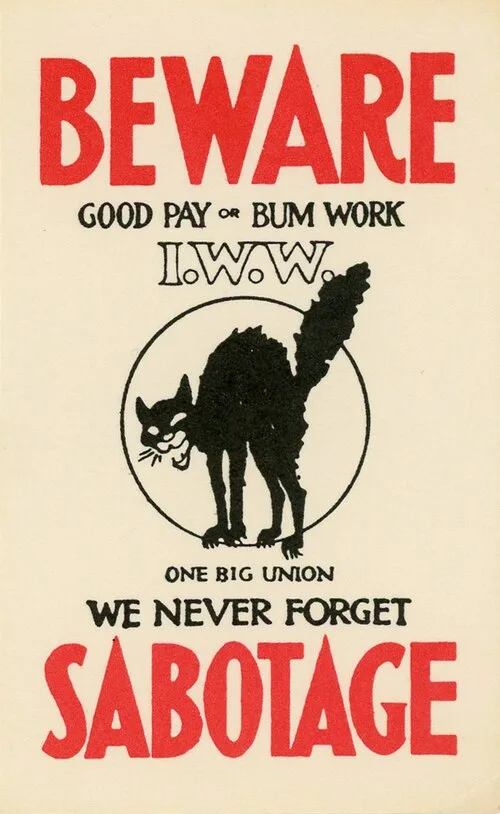
The black cat of the Industrial Workers of the World, depicted on a 1915 propaganda poster or "silent agitator."
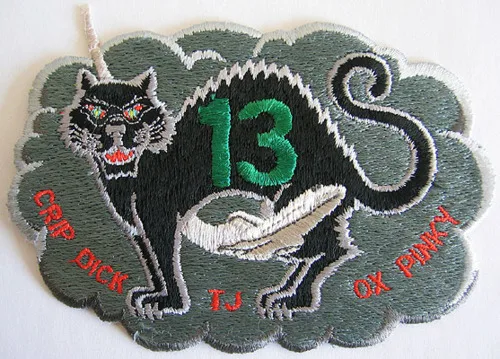
Alternate patch made for STS-41-C[19]
Black cat
A black cat is a domestic cat with black fur, which may be of a specific breed or no particular breed. Most have golden irises due to their high melanin pigment content.
Chemical Rusting in Sunlit Fur
A black cat's dark coat is not completely permanent and can alter in color through environmental exposure. Sunlight breaks down eumelanin, the fragile pigment responsible for black fur, causing the coat to shift into a brownish-red shade. This process is known as rusting and is especially visible on felines that spend substantial time outdoors in the sun.
From Wikipedia · CC BY-SA 4.0
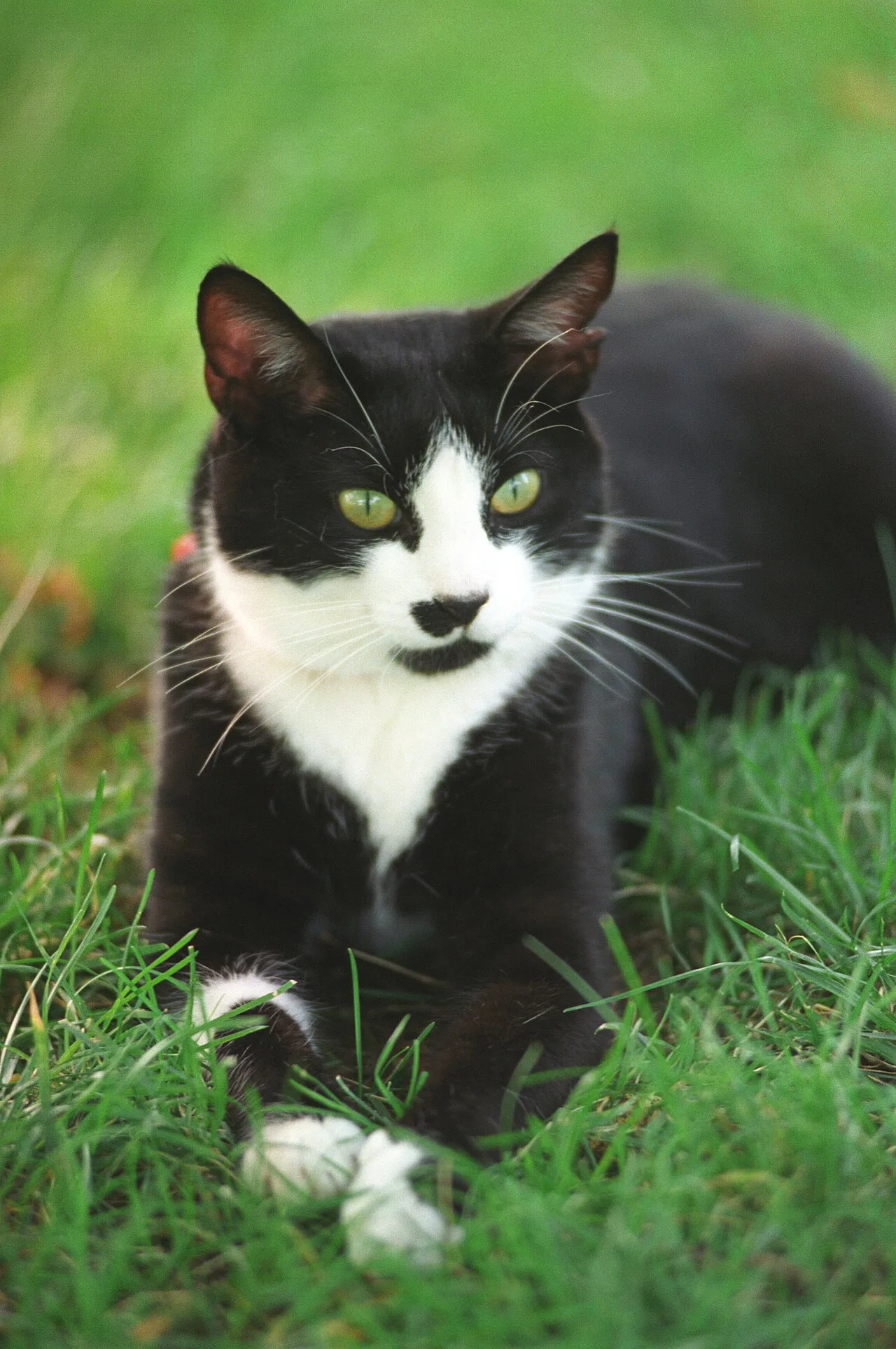
Chelsea Clinton's cat Socks (1989–2009) lived in the White House from 1993 to 2001. Socks was a bicolor cat with low-grade spotting, or tuxedo cat.
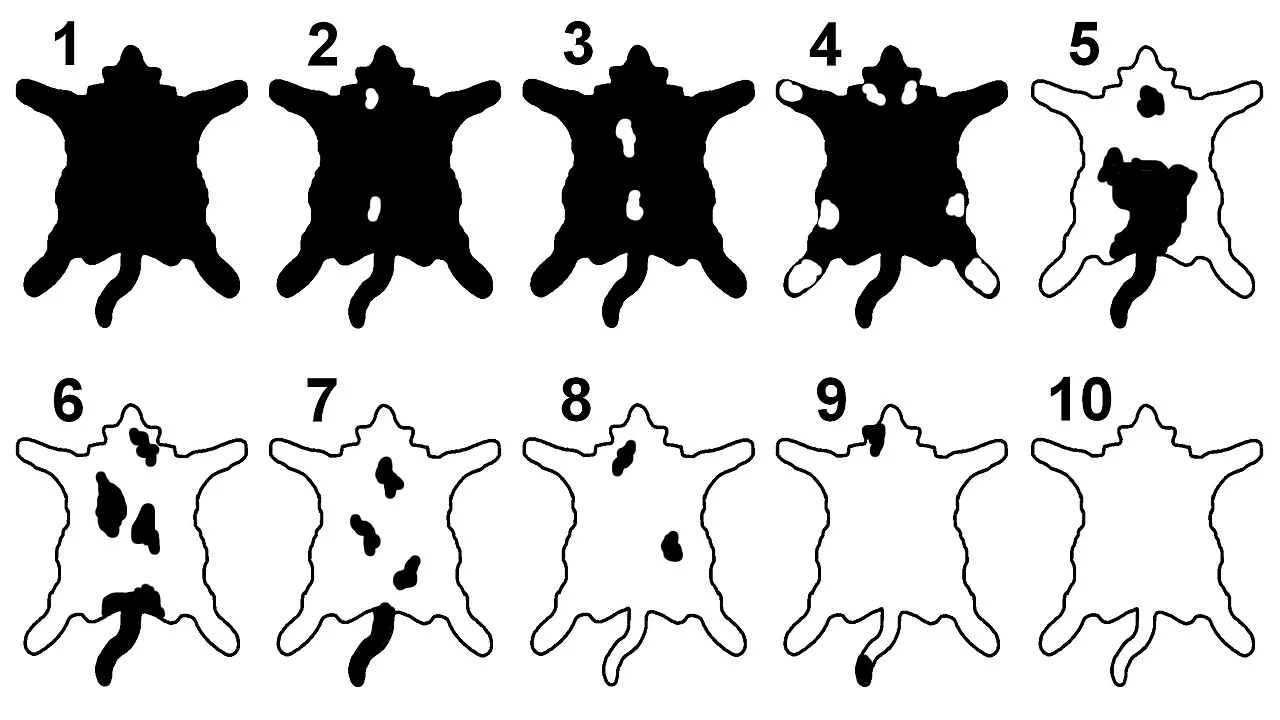
Bicolor grade chart, ranging from 1 (solid colored) to 10 (solid white)

Bicolor pattern chart
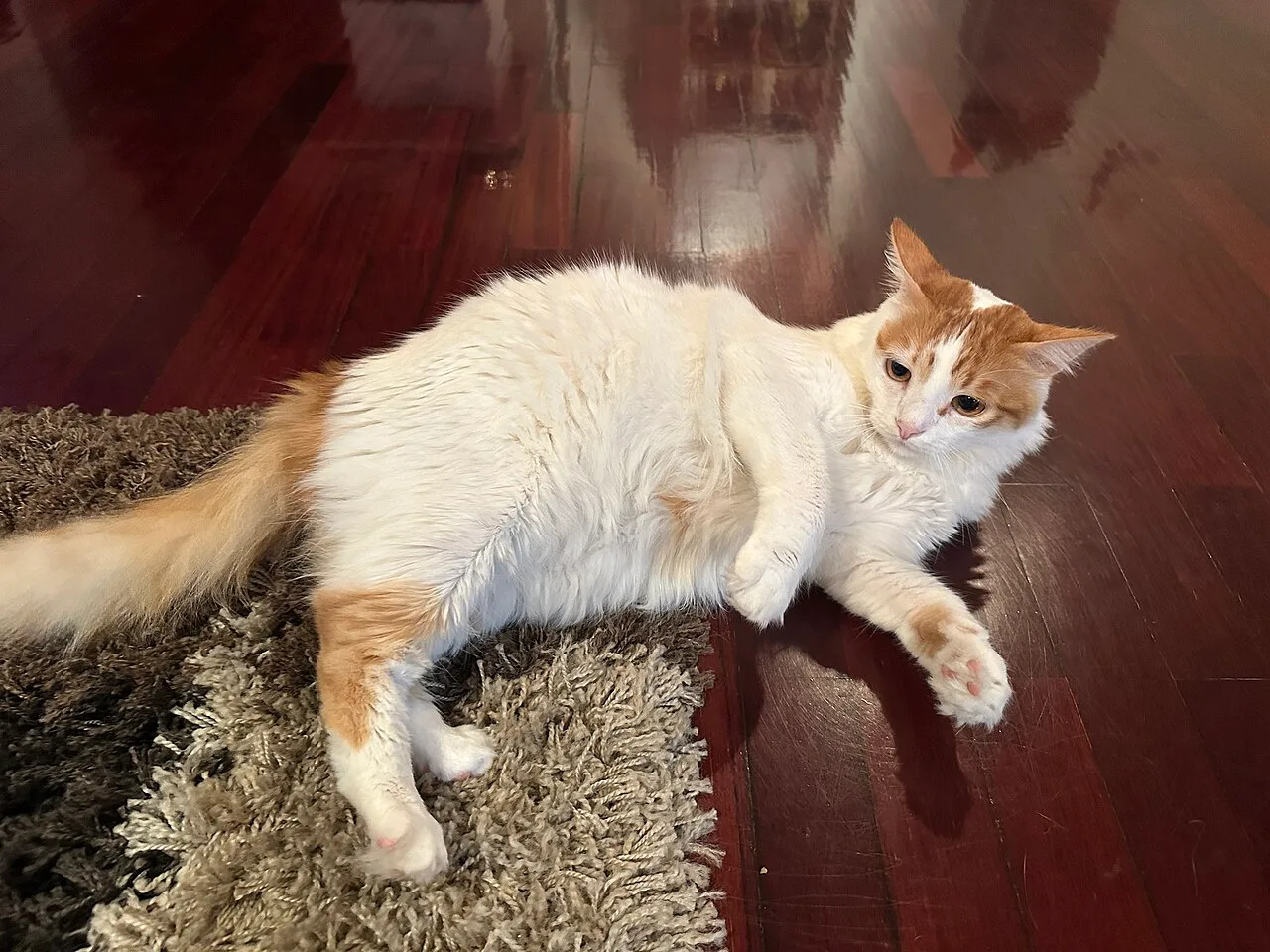
A van-patterned red tabby-and-white Turkish Van cat
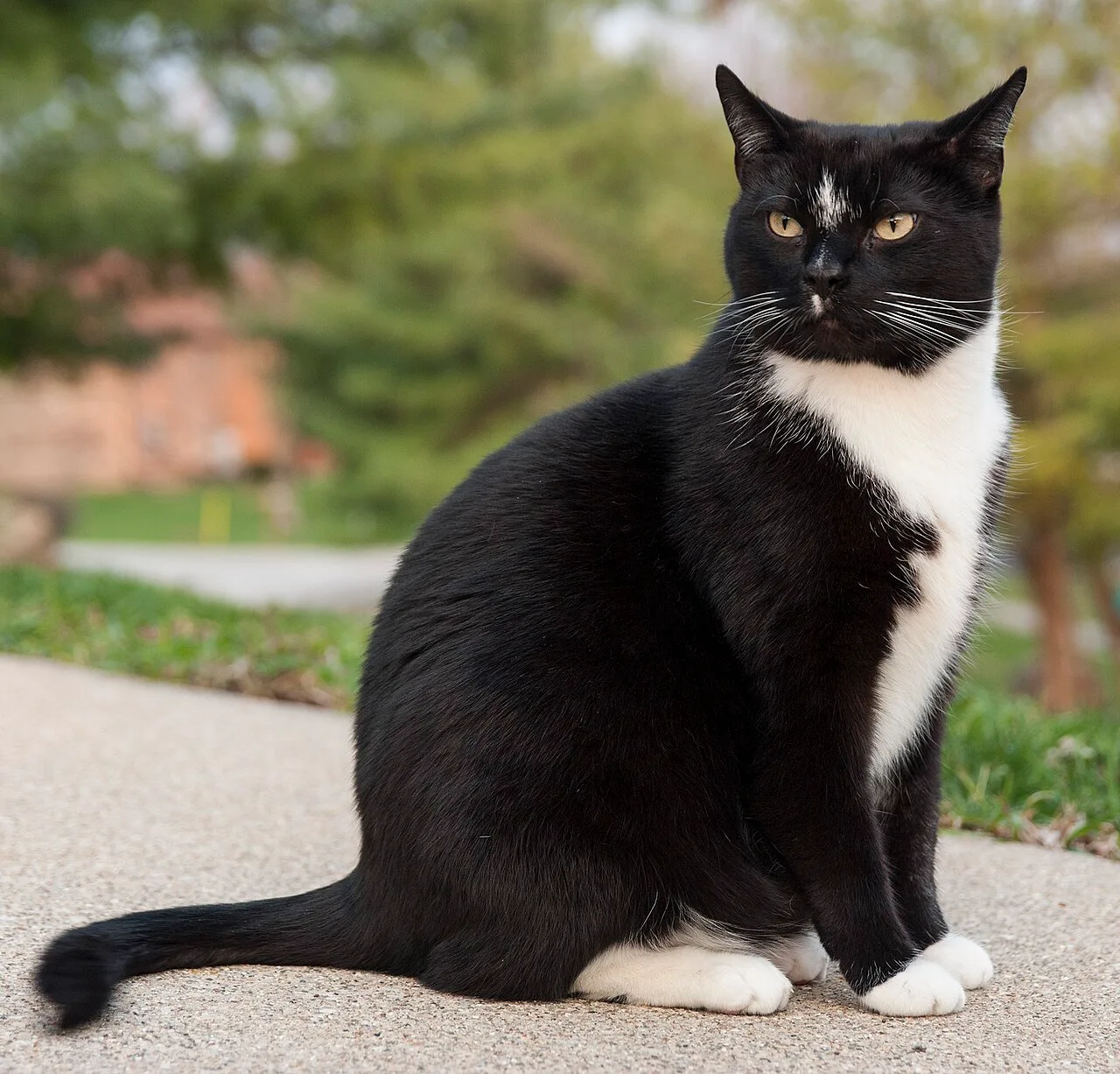
A tuxedo patterned black-and-white cat
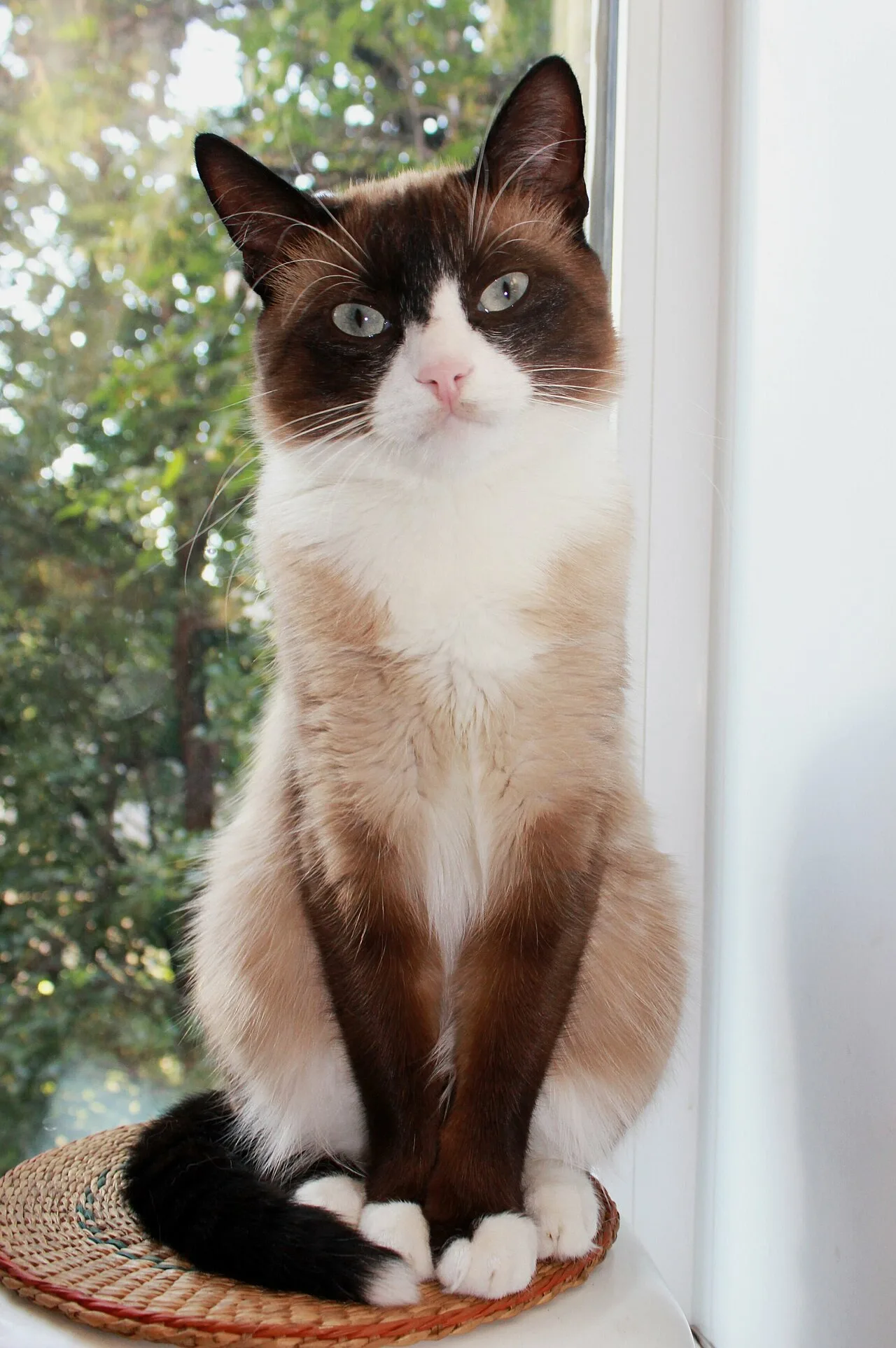
A Snowshoe cat showing the Snowshoe pattern
Bicolor cat
A bicolor cat is a cat with white fur combined with fur of some other color, such as solid black, tabby, or colorpointed. Bicolor coats come in various patterns and are found in many cat breeds.
Melanocyte Roadblocks on Hair Follicles
The basic colors and patterns across all cat coats are determined by fewer than ten genes. White patches emerge when a mutant white-spotting gene actively disrupts the migration of melanocytes into developing hair follicles. Depending on whether a cat carries dominant or recessive alleles, this genetic mechanism can produce minor white markings, medium spotting, or almost completely white fur.
From Wikipedia · CC BY-SA 4.0
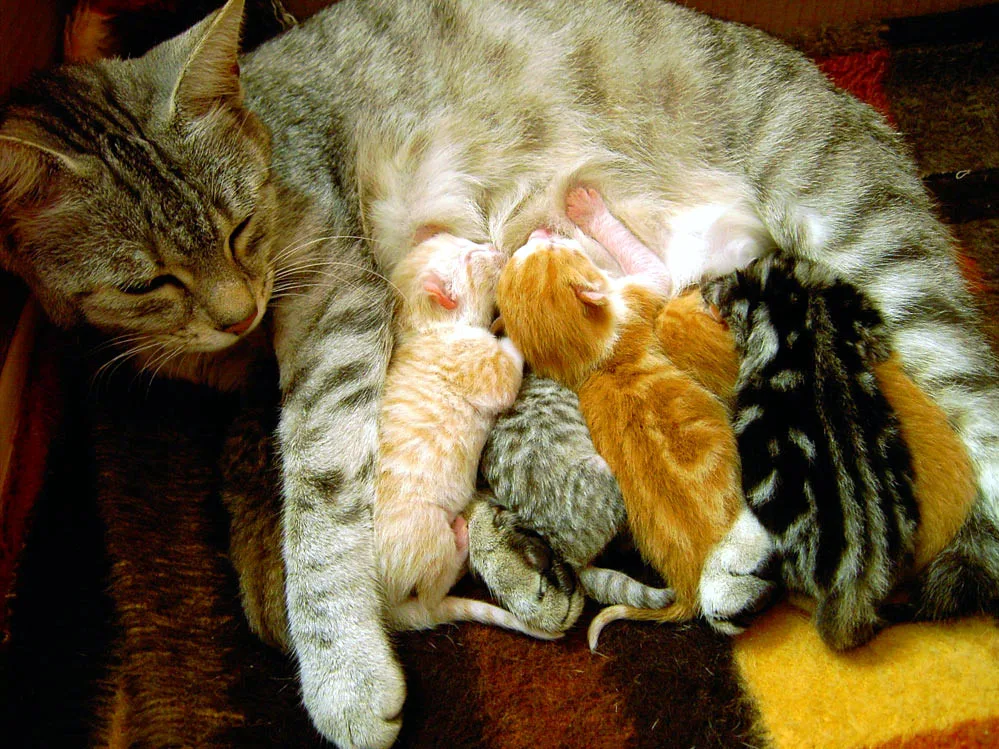
A tabby mother and her kittens, showing different colourations
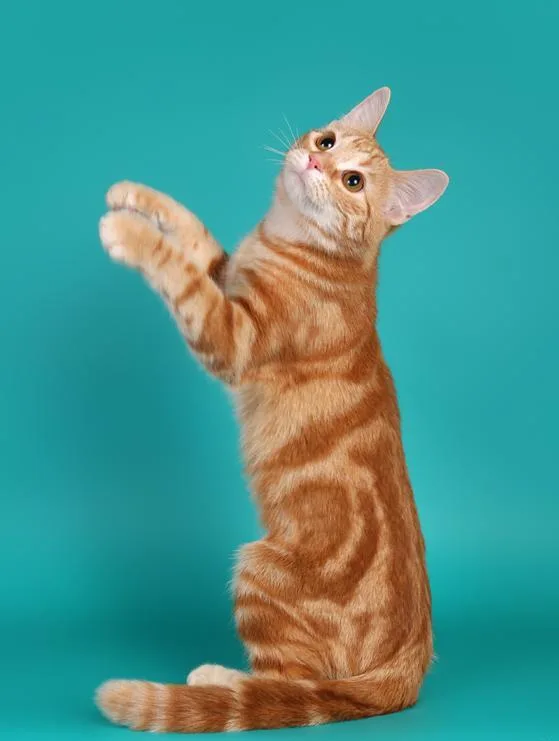
A male red tabby showing the XOY-phenotype
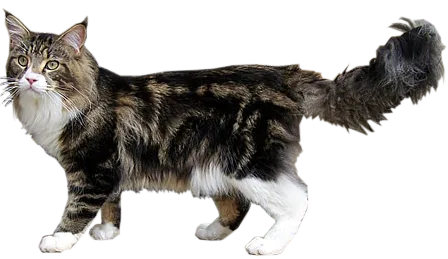
Blotched / classic
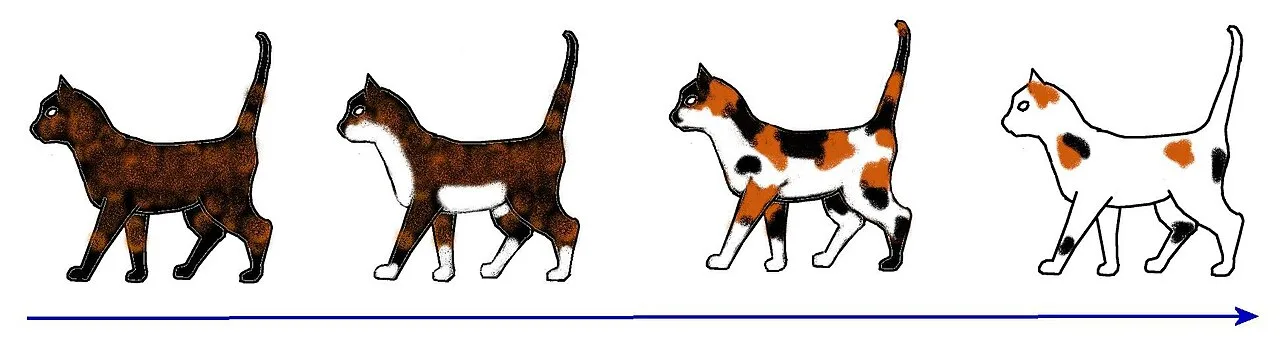
Schematic presentation of how white spotting affects tortoiseshell colour distribution. As the amount of white spotting increases, the tortoiseshell colour becomes less brindled and forms distinct patches of colour. This is related to the migration rates of pigment cells across the surface of the embryo.
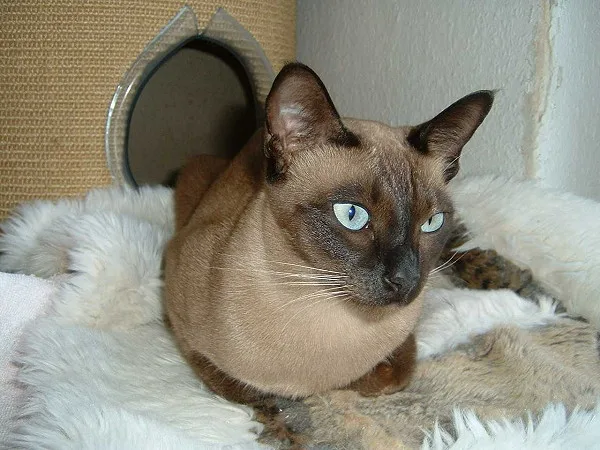
Black mink Tonkinese
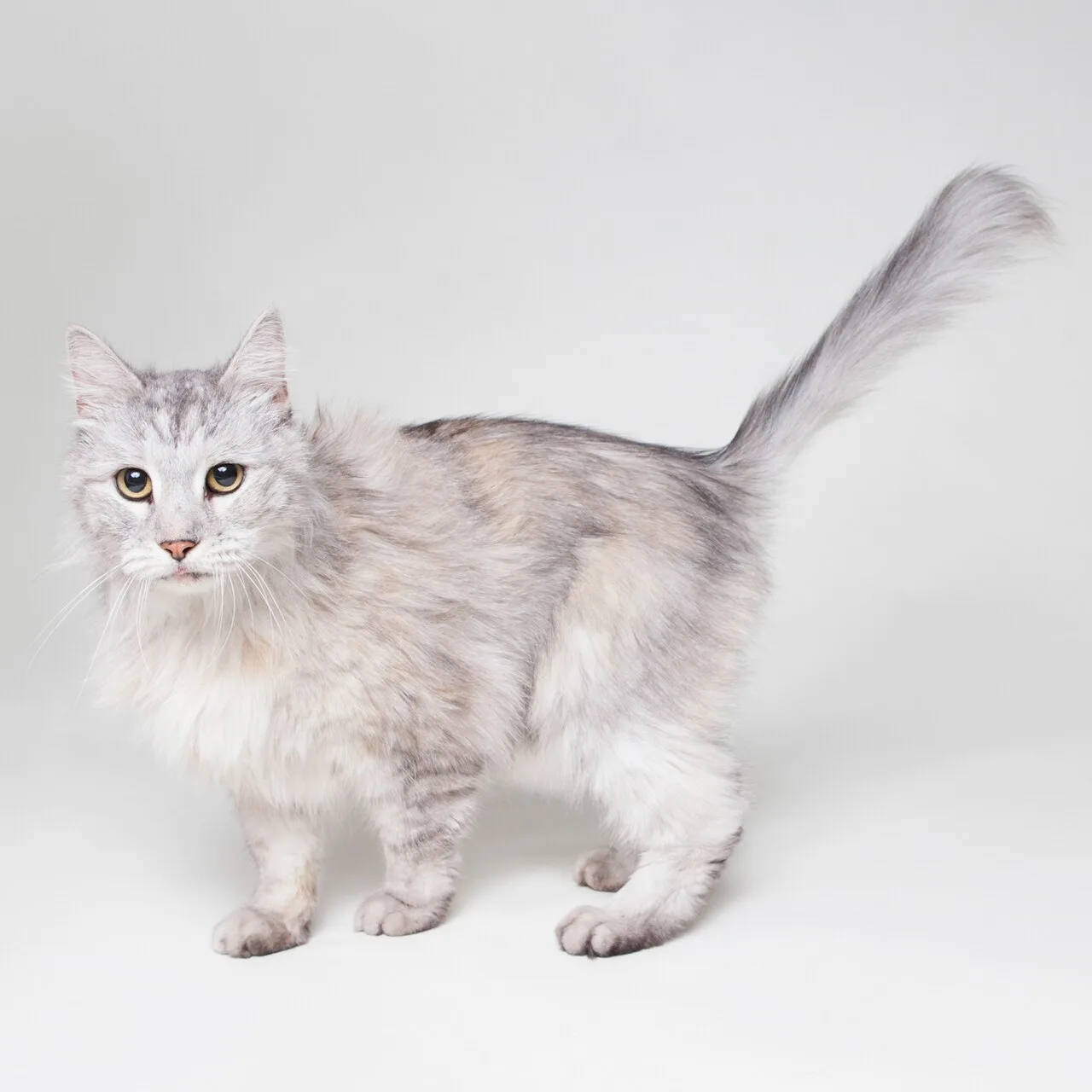
Black tortoiseshell silver shaded Domestic Longhair.
Cat coat genetics
Cat coat genetics determine the colouration, pattern, length, and texture of feline fur, which are physical properties distinct from cat breeds.
The Epistatic Tabby Architecture of Red Cats
Red pigmentation completely replaces eumelanin in cats carrying the sex-linked orange allele. While owners often assume solid orange coats exist independently of patterns, orange is epistatic to non-agouti, so all red cats are tabbies. In 2024 it was discovered that the dominant orange colour associated with the Orange locus is the result of a genomic deletion in a regulatory region of ARHGAP36, a Rho GTPase activating protein.
From Wikipedia · CC BY-SA 4.0
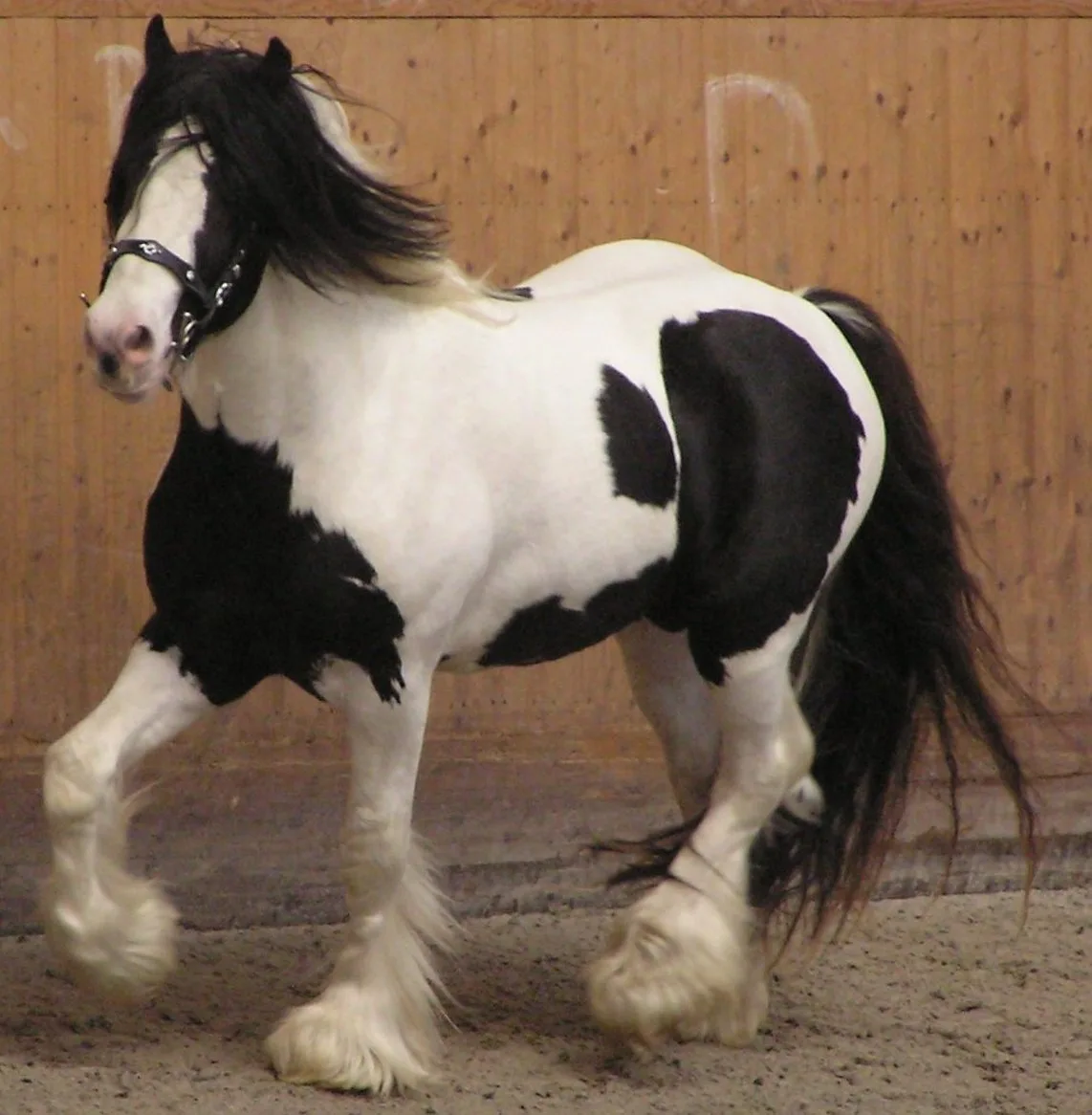
A piebald horse, Tobiano pattern
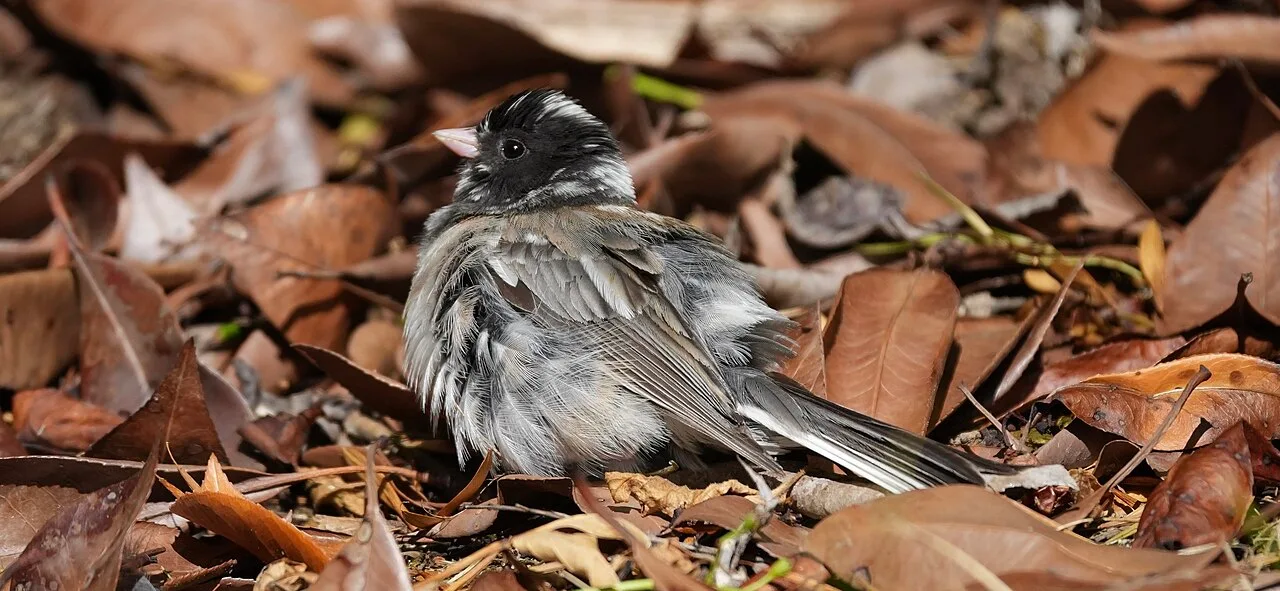
A piebald dark-eyed junco showing patchy white feather coloration
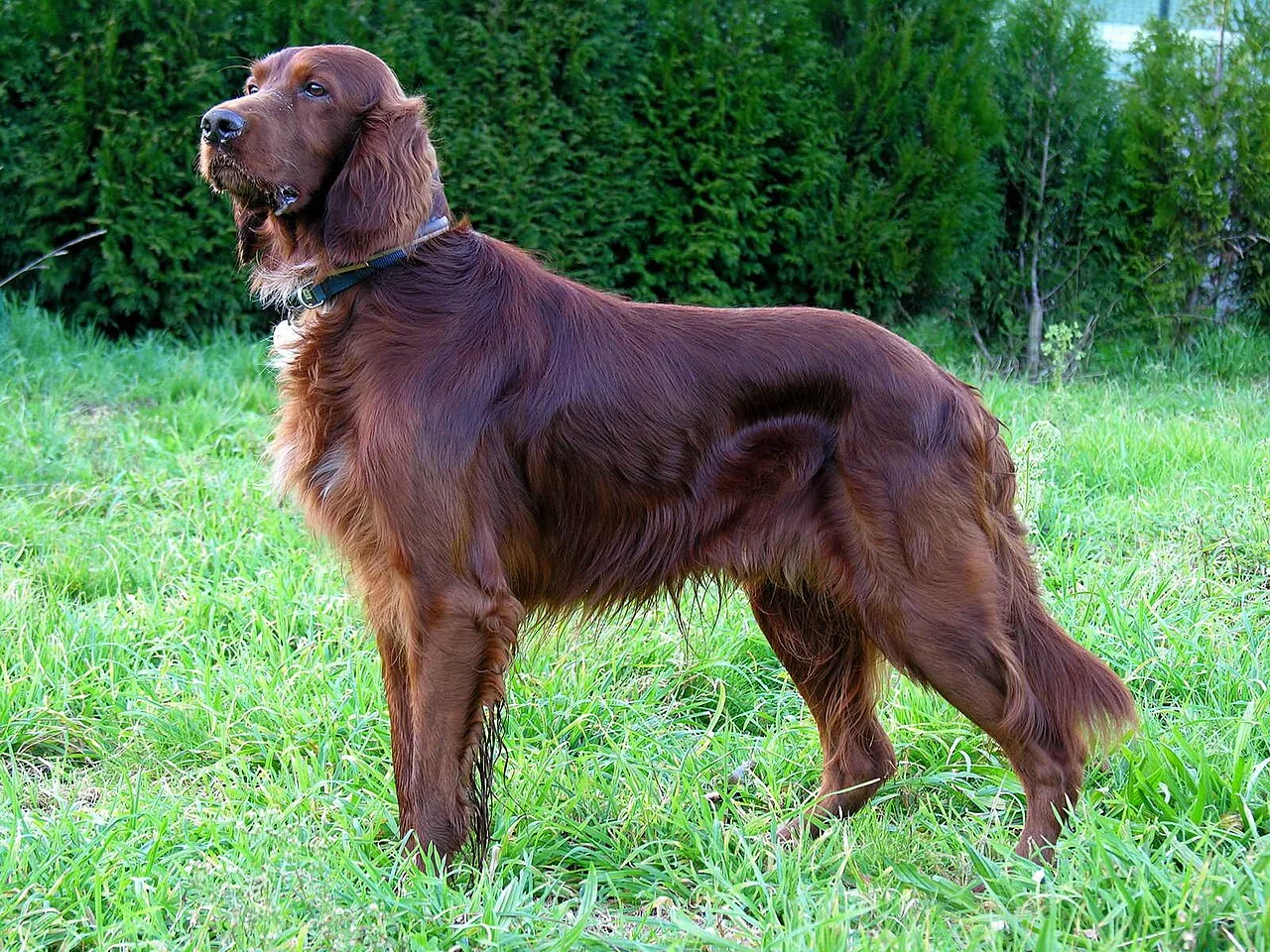
Red Irish Setter without Piebald spotting
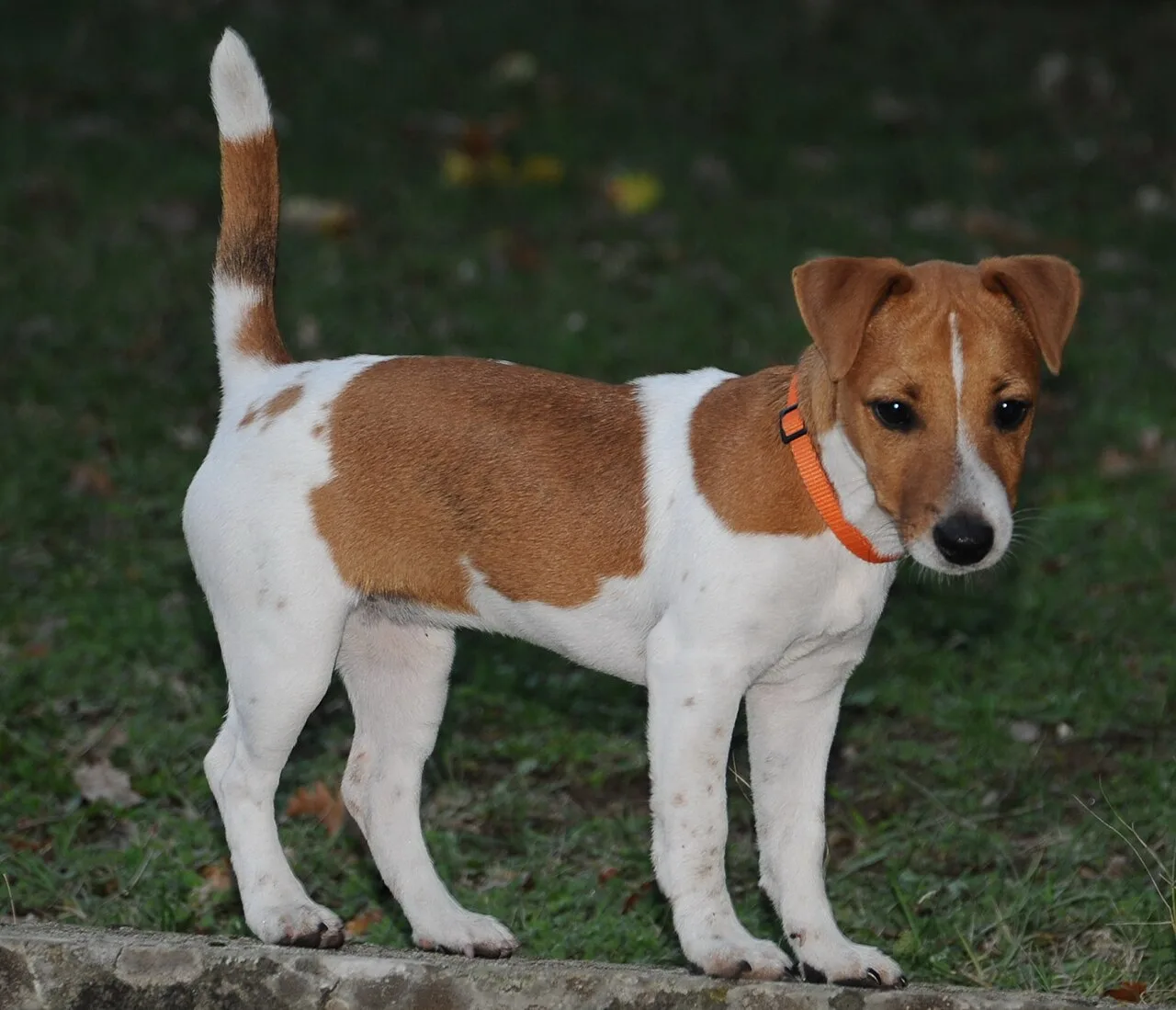
Jack Russell Terrier with recessive red and Piebald spotting.
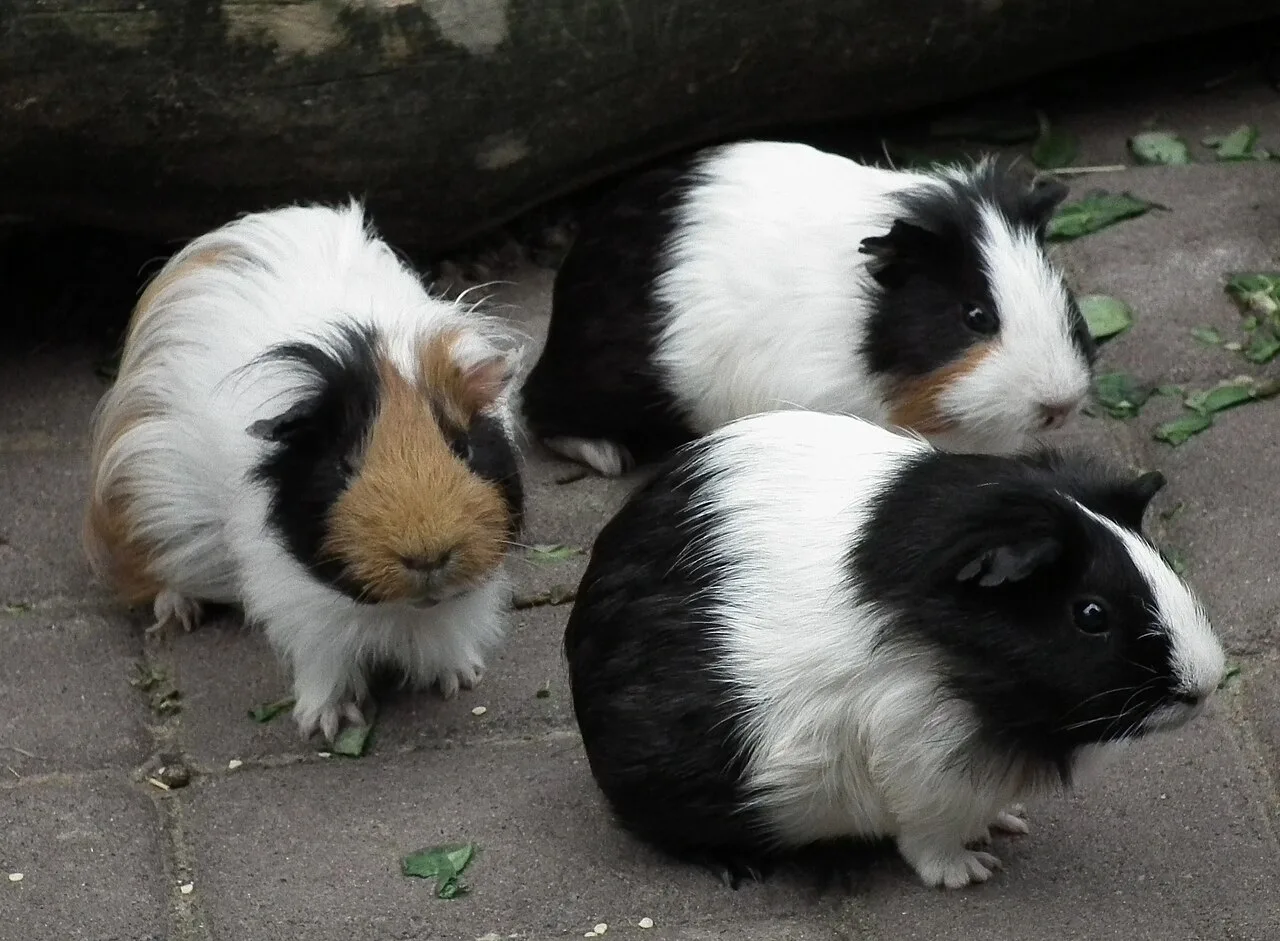
Guinea pigs
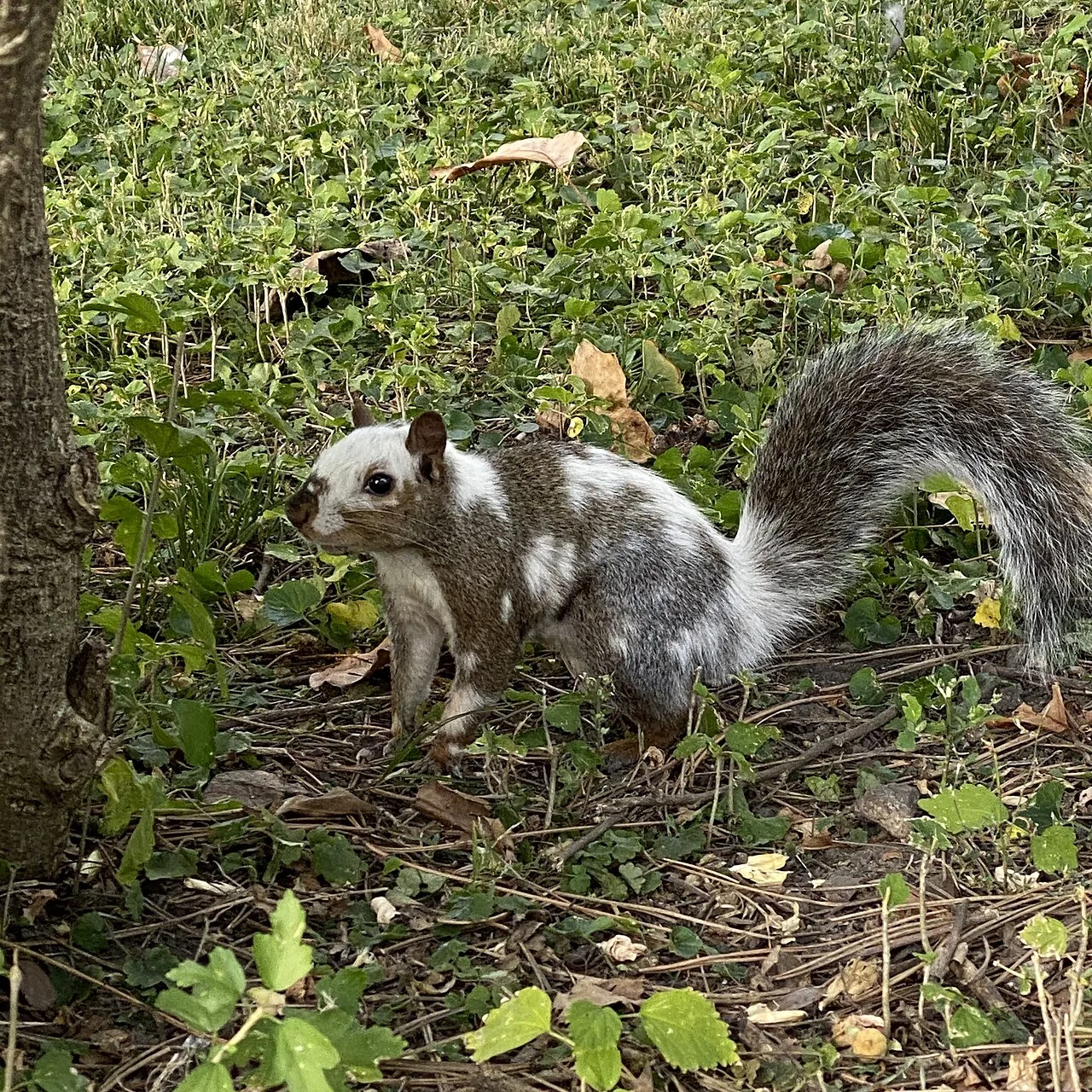
Squirrel
Piebald
A piebald or pied animal is one that has a pattern of unpigmented white spots on a pigmented background of hair, feathers, or scales.
White Patches on a Dark Canvas
A piebald coat is fundamentally a pigmented surface interrupted by unpigmented patches rather than dark spots over white skin. During embryonic development, primordial pigment cells called melanoblasts migrate from the neural crest to bilateral positions across the body. The resulting pattern appears symmetrical only when these migrating cells multiply evenly on both sides. When pigment cells proliferate excessively, they merge together and leave behind only isolated unpigmented areas.
From Wikipedia · CC BY-SA 4.0
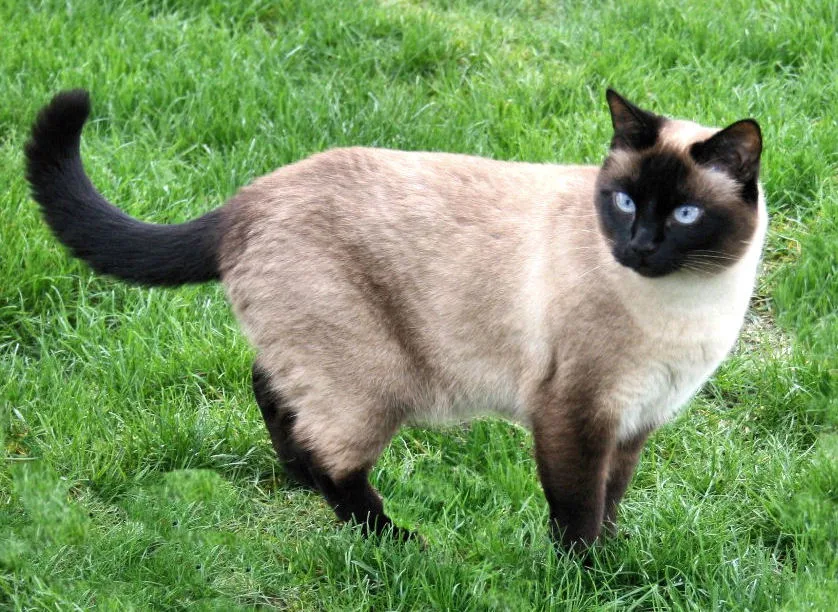
A cat with black point coloration
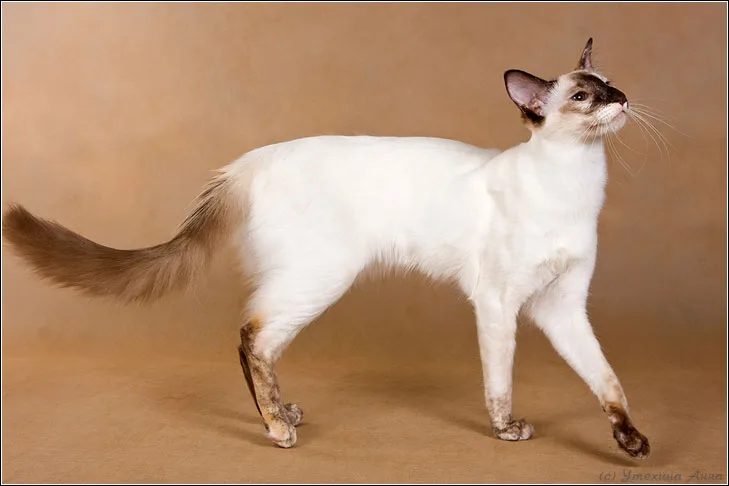
Cat
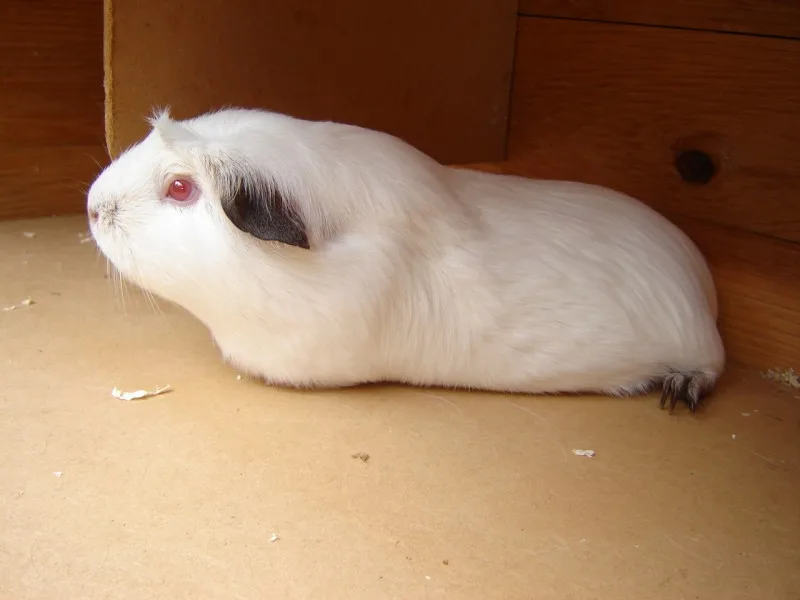
Guinea pig
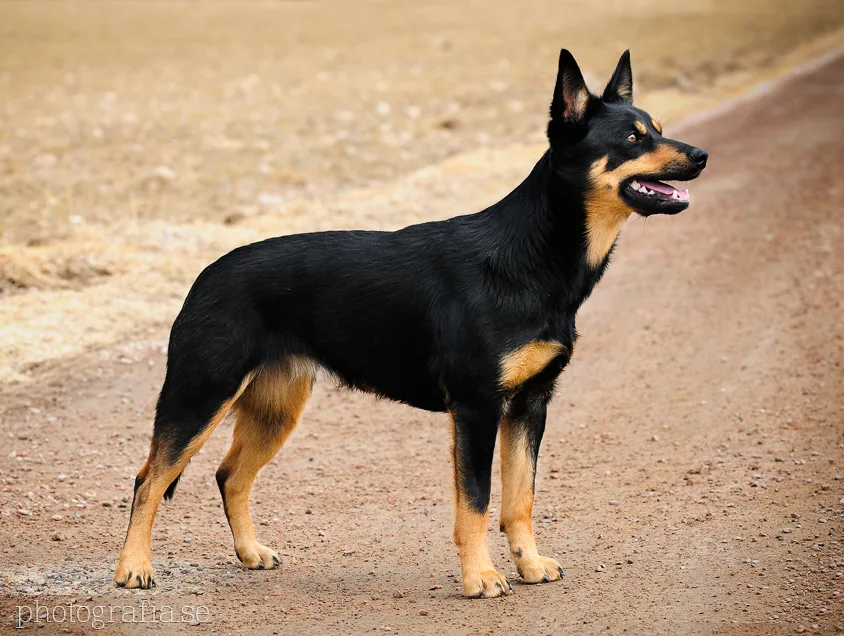
Dog with tan points
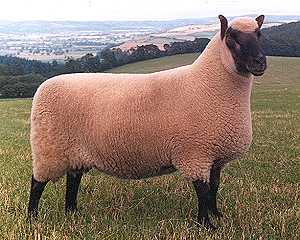
A sheep showing dark points on its face, ears, and legs
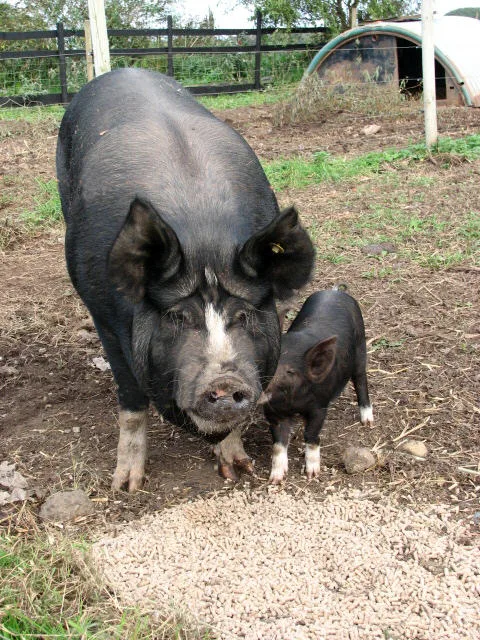
Berkshire pigs showing white points
Points (coat color)
Points are specific areas of an animal coat that are colored differently from the main body coloration, commonly appearing on extremities such as the face, ears, feet, and tail.
Thermal Activation of Melanin Synthesis
Thermal variation across an animal's body directly dictates pigment distribution in acromelanistic species. A genetic mechanism restricts pigment synthesis exclusively to cooler peripheral regions such as the face, ears, and feet. While widely recognized in domestic cats, this physiological trait also develops across fancy rats, guinea pigs, rabbits, and rarely in dogs.
From Wikipedia · CC BY-SA 4.0
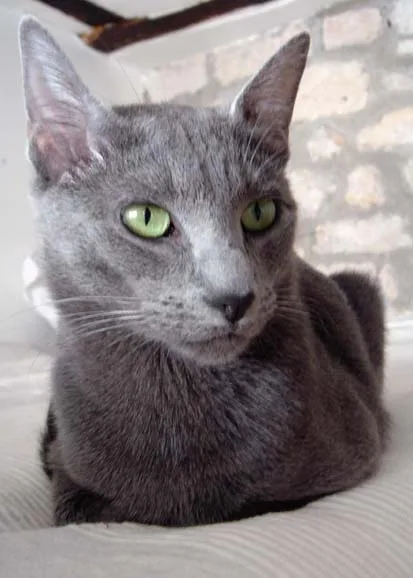
The Russian Blue is one of a number of cat breeds whose fur is always Maltese all over.
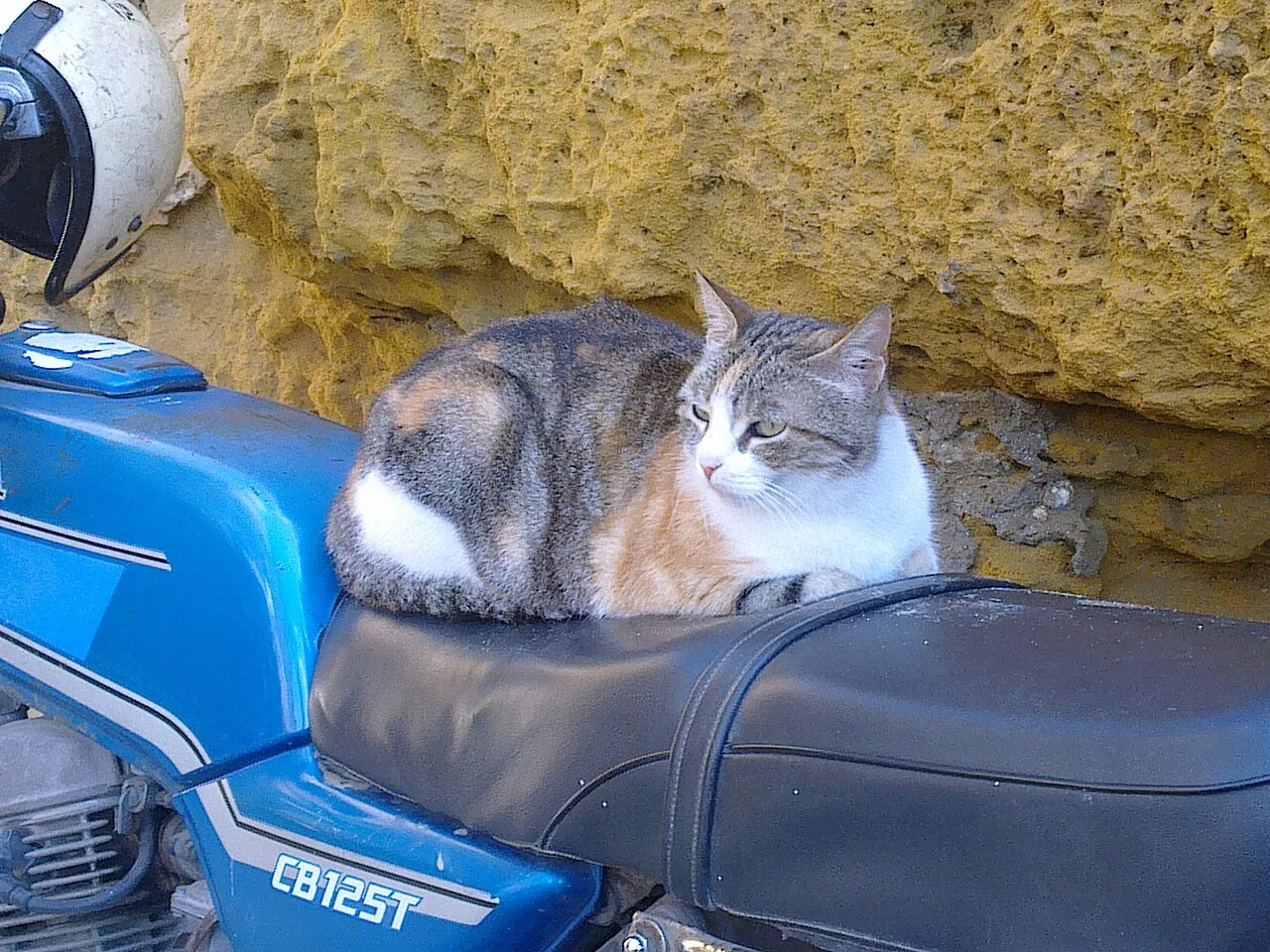
A Maltese cat resting outside The Citadella, Gozo in Malta.
Maltese cat
A Maltese cat is any cat whose fur is completely or primarily grey, regardless of breed. Maltese refers to a coat colour rather than a specific cat breed.
Coat Terminology Detached from Island Pedigree
Calling a feline Maltese does not denote an official breed or confirmed lineage from the Mediterranean island of Malta. Cat fanciers apply the term broadly to any cat whose fur is primarily or entirely solid grey, a shade frequently described as blue. While historical evidence points to an ancient grey breed on Malta that may have inspired the term, the modern label functions strictly as a colour classification across many breeds.
From Wikipedia · CC BY-SA 4.0

Oriental shorthair 20070130 caroline
Oriental bicolour
An Oriental bicolour is any cat of Oriental type, either long-haired or short-haired and in any pattern, that has white areas on its coat caused by the white spotting gene.
American Shorthair Roots and the First Champion
Modern Oriental bicolours trace their ancestry to selective breeding started in 1979 by Lindajean Grillo at Ciara Cattery. By crossing Siamese cats with bicoloured American Shorthairs, she produced offspring that were subsequently mated back to Siamese or Orientals to restore standard physical type. This breeding trajectory secured official recognition from TICA in 1983, which culminated in the historic crowning of Ciara Quite-N-Oreo as the variety's first champion.
From Wikipedia · CC BY-SA 4.0